




Abstract
This study examined how personality influences consumer behavior of electronic game players. Participants (N = 479) were respectively placed into four groups called microtransaction group (if they had made any in-game microtransactions, n = 192), free-game group (if they had only played entirely free games, n = 124), pay-to-play group (if they had only played games that needed just one-time payment upon purchase, n = 19), and non-microtransaction group (if they had not made any in-game microtransactions although the games provided such services, n = 144). The results indicated that the microtransaction group had higher levels of extraversion and openness than the non-microtransaction group. Additionally, the microtransaction group showed higher levels of dispositional greed and narcissism than all other groups. However, there were no significant differences in agreeableness, conscientiousness, neuroticism, or self-control among the groups. The study also found that the possibility of making in-game microtransactions decreased with age. These findings have important implications for game developers and marketers, who may use this information to tailor their products and marketing strategies to specific personality types and age groups.
Plain language summary
This study examined how personality influences consumer behavior of electronic game players. The analysis of variance indicated that people who purchased in-game goods appeared to be more narcissistic and greedier than those who did not. The regression analysis showed that the willingness of purchase of virtual goods decreased with age. Future research could focus on pathological consumption, and different styles of virtual consumption.
Introduction
Video Games and In-game Microtransactions
Playing video games has become one of the most popular ways of entertainment. According to Statista (2021), there were approximately 3.24 billion game players worldwide. Following China and the U.S., Japan was the third-biggest games market worldwide, with Japanese game players generating revenues of $22.1 billion in 2021, as reported by Newzoo (2021). In this report, it was also pointed out that mobile was Japan’s most prominent platform, followed by console and personal computer. In line with these statistics, Sensor Tower (2021) reported that Japan led the per capita expenditure on mobile apps and games in the first three quarters of 2021. Not only the consumer market, but Japan also occupied an influential position in the production of games as most of the top-selling game consoles are made by Sony (e.g., PlayStation series) or Nintendo (e.g., Game Boy, Wii, Nintendo Switch).
There are three main ways for game companies to make profits. One is to sell the game itself, and if this is the only revenue source for a game, the game is usually called a pay-to-play game. The second is to provide advertising space within the game for other businesses, which is the most common revenue source for entirely free games. The third is to provide in-game microtransaction services, and such games are usually called freemium games. In-game microtransaction can be at least dated back to 1990, in which Double Dragon 3 was released. Players can unlock special items, characters, and abilities by making microtransactions. However, the virtual items that players receive are not always fixed or foretold. Many games provide loot boxes, a type of virtual goods that can be redeemed to receive a randomized selection of further virtual items. In other words, players cannot see the outcomes of loot boxes until they have paid for them, and the odds of getting a particular item can be fixed or variable. This kind of virtual goods is controversial as it is structurally and psychologically akin to gambling. Actually, some countries have begun to regulate loot boxes. In China and Korea, it is mandatory to indicate the probability of loot boxes. Netherland and Belgium place many restrictions on loot boxes, and as a result, many game companies were forced to disable or withdraw their loot boxes in these regions.
In recent years, Japan has also been facing the problem of children’s microtransactions. ITmedia News (2021) reported that the number of consultations about such problems had increased 1.5 times in fiscal 2020 (3,723 cases) compared to fiscal 2019 (2,557 cases). With the at-home time getting longer due to coronavirus, there has been a sharp increase in the number of children playing on smartphones and consoles and making microtransactions without parental permission. In those consultations, the percentage of the actual amount paid (out of 3,009 cases) was 0.8% for less than 1,000 yen, 7.6% for 1,000 to 10,000 yen, 15.4% for 10,000 to 50,000 yen, 17.3% for 50,000 to 100,000 yen, 43.5% for 100,000 to 500,000 yen, 10.4% for 500,000 to 1,000,000 yen, and 5.1% for more than 1,000,000 yen. Furthermore, the microtransaction may easily cause a vicious circle, which has been proved by Shibuya et al. (2019), indicating that players tended to pay more after receiving benefits from making in-game purchases.
Microtransactions not only cause economic problems but also relate to game addiction. Kristiansen and Severin (2020) reported that 56.1% of game players in their sample engaged at some level in loot box activities, including purchase, sale, and obtainment, and there was a positive correlation between loot box engagement and problem gambling severity. Likewise, Balakrishnan and Griffiths (2018) found that online mobile game addiction was positively associated with purchasing in-game features. Li et al. (2019) provided similar evidence, showing that those who bought loot boxes were more likely to spend more time playing video games compared to non-purchasers, and they also suffered from higher levels of mental distress.
Motivations to Make In-game Microtransactions
Marder et al. (2019) proposed a classification of motivations to purchase virtual goods, which were explicitly hedonic, social, and utilitarian motivations. Utilitarian-oriented purchases occur when a player is motivated to gain competitive advantages or accelerate game progression. Social-oriented purchases arise when a player wants to look good/superior/distinct/similar to other players or as a form of social protocol within gift giving. Hedonic-oriented purchases transpire when people are motivated to purchase items to increase their pleasure within the game. However, players could buy a virtual item for multiple reasons, implying that these three motivations are not completely independent. H. W. Kim et al. (2011) emphasized the social and emotional value of digital items. They argued that social self-image expression, which was one aspect of the social value, and aesthetics and playfulness, which were aspects of the emotional value, promoted the purchase willingness of digital items. Chen and Chen (2020) also affirmed the effect of the need for self-expression, claiming that the desire for online self-presentation was an important predictor of the intention to purchase virtual goods. Apart from social value, the purchase motivations for unobstructed play and economic rationale were also found to be positively associated with the amount of money players spent on in-game content (Hamari et al., 2017). What is more, Hanus and Dickinson (2019) reported that those who played games placed emphasis on character desirability for purchase intentions, whereas those who did not play games emphasized similarity, given that similarity means “the participant resembled the character” and desirability means “the character had characteristics that the participant would like to have.”
Personality and Gaming Behaviors
Research interest in cyber and gaming behavior has increased exponentially throughout the 2000s. With the inclusion of Internet gaming addiction in the American Psychiatric Association’s Diagnostic and Statistical Manual of Mental Disorders (DSM-5) since 2013, numerous studies focusing on personality and gaming behaviors have emerged. Barends et al. (2019) conducted an experiment, letting participants choose virtual clothes and offices for their characters. Results showed that participants scoring lower on honesty-humility preferred more expensive-looking clothes and larger offices. Delhove and Greitemeyer (2020) found that participants who preferred supporting characters were more empathic and agreeable and less aggressive, with a less dark personality, than those who favored offensive characters. Besides the items and characters chosen in games, the frequency of game-playing and the diversity of games were also found to be associated with personality. In the study conducted by Potard et al. (2020), daily game players reported lower extraversion and conscientiousness and higher exploitativeness/entitlement than less frequent players. Negative correlations were found between the frequency of game-playing and openness, conscientiousness, and extraversion. Ventura et al. (2012) claimed that students high on habitual playing style (7 or more hours a week) showed significantly lower levels of conscientiousness than students low on habitual playing style (0–1 hr a week). Students who were high on the diverse style (seven or more games played a year) scored higher on openness than students low on the diverse style (0–3 games a year). In the realm of problematic gaming behavior, a study conducted by Von der Heiden et al. (2019) revealed that there was a positive correlation between potentially problematic video gaming and traits such as shyness, loneliness, and a preference for solitude. Conversely, the study found negative correlations between problematic gaming and self-esteem and self-efficacy. Dieris-Hirche et al. (2020) revealed that a higher level of conscientiousness is associated with a reduced likelihood of problematic gaming, while an increase in neuroticism enhances its probability.
Although there exists abundant research concerning purchase motivations and the relationship between personality and gaming behaviors (e.g., gaming time and frequency, character selection, problematic gaming), it remains unclear how personality associates with in-game microtransactions. In addition, due to the different ways in which various games generate revenue, current research has not yet encompassed players who engage in other types of game-related spending. Therefore, in this study, we will focus on the relationship between in-game microtransactions and several personality traits, while taking into account players who prefer pay-to-play or free-to-play games. Based on previous studies, we hypothesize that there is a positive relationship between microtransaction behaviors and narcissistic personality. Barends et al. (2019) found that people who like to brag are more likely to buy virtual items to show off. In addition, Balakrishnan and Griffiths (2018), Kristiansen and Severin (2020), Li et al. (2019), and Potard et al. (2020) reported a positive correlation between gaming time and exploitativeness/entitlement as well as microtransaction engagement. As exploitativeness and entitlement are core characteristics of narcissism (Ackerman et al., 2011; Shimotsukasa & Oshio, 2016), we suggest that narcissistic personality traits would lead to a higher tendency to purchase virtual items. H. S. Kim et al. (2017) reported that individuals who had engaged in microtransactions scored significantly higher on impulsiveness than those who had never done. Therefore, we hypothesize that people with higher self-control are better able to restrain their impulse to purchase. We also aim to investigate the relationship between Big-Five personality traits and microtransactions comprehensively. Based on previous studies, we expect that certain personality traits will be associated with microtransaction engagement. For example, extraverted individuals may be more likely to engage in microtransactions as they enjoy socializing and may view purchasing virtual items as a way to enhance their gaming experience. Conscientious individuals, on the other hand, may be less likely to engage in microtransactions as they tend to be more self-disciplined and responsible with their finances. Additionally, individuals high in openness may be more likely to engage in microtransactions as they enjoy exploring new ideas and experiences. Neuroticism, characterized by emotionally unstable and vulnerable to stress, may also be related to microtransaction engagement, as they may use virtual items as a way to cope with negative emotions.
Methods
Participants and Procedure
The whole survey was conducted through an online survey site operated by iBRIDGE Co., Ltd (https://ibridge.co.jp). We requested iBRIDGE to recruit 2,000 people from their participant pool for screening, and 692 (370 females, 322 males) of them passed the screening. Eventually, 500 participants (250 females, 250 males, mean age = 48.63, SD = 15.40) completed the main survey. Both the screening and the main survey were carried out in November of 2021. We informed participants on the cover page that the survey was completely voluntary and collected data would be securely locked up. All participants gave informed consent prior to participation, and they would receive remuneration from the company.
Two questions were set for screening. The first was “Have you played any games in the recent year?” The second was, “Does the total number of days you played games exceed 14 days in the recent year?” Both were Yes/No questions, and only participants who answered “Yes” for both questions were qualified for the main survey.
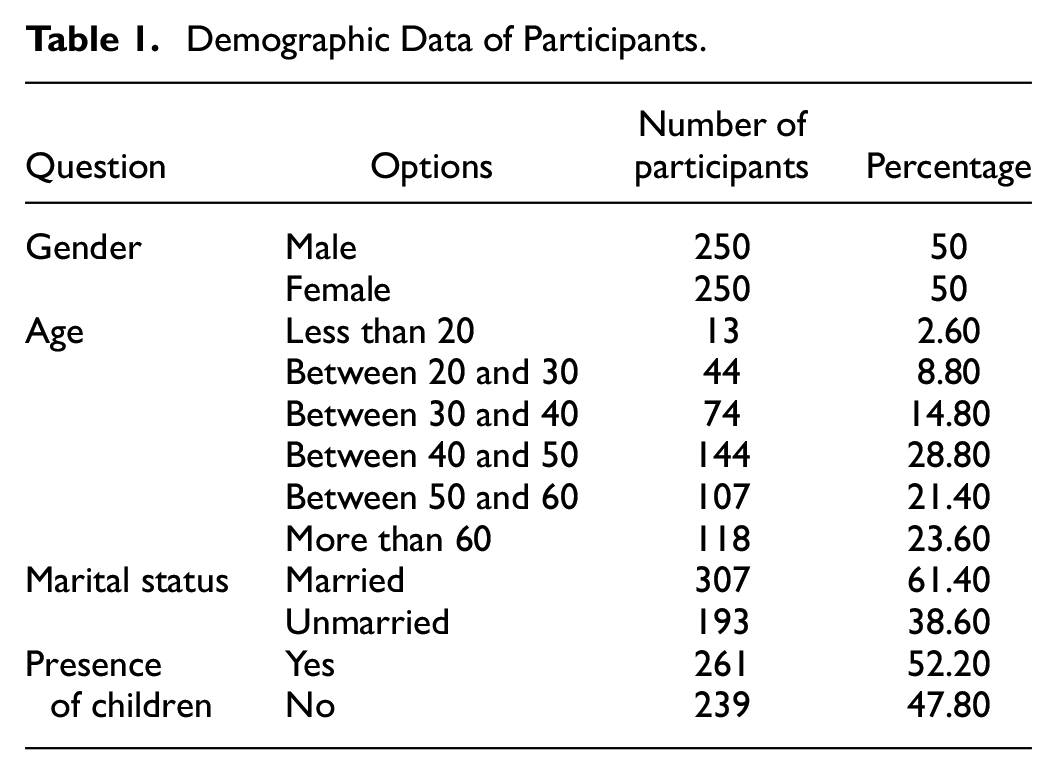
Concerning the main survey, first, we asked several personal questions (age, sex, annual household income, family, and marital status), followed by a question about the frequency of playing games in the recent year. Then we set a conditional branching, saying, “Have you made any in-game microtransactions in the recent year?” People who answered “Yes” were placed into the microtransaction group (n = 192, 96 males, 96 females, mean age = 43.73, SD = 13.75), and the others were required to choose the reason why they had not made any microtransactions. The choices were “(a) The games I have played were completely free,”“(b) The games I have played only needed a one-time payment upon purchase,”“(c) The games I have played had in-game microtransactions, but I did not want to spend money on them,” and “(d) other reasons.” People who chose the first reason were placed into the free-game group (n = 124, 73 males, 51 females, mean age = 58.90, SD = 14.99), who chose the second reason were placed into the pay-to-play group (n = 19, 11 males, 8 females, mean age = 52.16, SD = 10.40), who chose the third reason were placed into the non-microtransaction group (n = 144, 58 males, 86 females, mean age = 45.18, SD = 13.42). The remaining chose the fourth one. Finally, all participants completed the personality scales. The flow chart of the whole survey is shown in Figure 1, and the participants’ demographic data is presented in Table 1.

The flow chart of the screening and the main survey.
Demographic Data of Participants.
Materials
The Japanese Version of Ten-Item Personality Inventory (TIPI-J)
The TIPI-J (Oshio et al., 2012) is a very brief measure of the Big-Five personality domains including 10 items. Each domain (i.e., openness, extraversion, agreeableness, conscientiousness, and neuroticism) is assessed by one positively and one negatively worded item. It is a 7-point Likert-type scale ranging from 1 (disagree strongly) to 7 (agree strongly). The reliability of TIPI-J was confirmed by test-retest correlations, given that r = .86 (extraversion), r = .79 (agreeableness), r = .64 (conscientiousness), r = .73 (neuroticism), r = .84 (openness; for all subscales p < .001, n = 149; Oshio et al., 2012).
The Japanese Version of Narcissistic Admiration and Rivalry Questionnaire (NARQ-J)
The NARQ (Back et al., 2013) is a scale designed to assess the admiration facet and the rivalry facet of narcissism, each of which has nine items. The admiration facet grasps one’s striving for uniqueness and charmingness, while the rivalry facet describes one’s striving for supremacy and aggressiveness. It is a 6-point Likert-type scale ranging from 1 (not agree at all) to 6 (agree completely). We obtained permission from the authors of the original version to translate the NARQ into Japanese (NARQ-J) and got it back-translated to confirm with the original authors if the Japanese version was adequate. Several preliminary surveys were carried out to ensure validity and reliability. The Cronbach’s Alphas were .84 and .80 (N = 953) respectively for the admiration and rivalry dimension in the initial research (Back et al., 2013), and this time we got .92 and .90 (N = 500) for the two dimensions severally. The correlation matrix of NARQ-J, Big-Five personality traits, and J-DGS is presented in Supplemental Table 4 as to demonstrate the validity of the NARQ-J.
The Japanese Version of Dispositional Greed Scale (J-DGS)
The J-DGS (Masui et al., 2018) is a 7-item scale with a unidimensional structure that is used to evaluate one’s avarice. Items are rated from 1 (strongly disagree) to 5 (strongly agree). Masui et al. (2018) evaluated the reliability of J-DGS by Cronbach’s Alpha (α = .74, N = 881) and McDonald’s Omega (ω = .82, N = 881), and we got a higher internal consistency with α = .82 (N = 500) in this study.
The Japanese Version of Brief Self-Control Scale (BSCS-J)
The BSCS-J (Ozaki et al., 2016) is a unidimensional scale with 13 items that is designed to measure behavioral aspects of self-control such as overcoming temptations and concentrating on tasks. All items are administered on 6-point Likert-type scales ranging from 1 (strongly disagree) to 5 (strongly agree). The BSCS-J scored a Cronbach’s Alpha of .83 (N = 549) in the original study (Ozaki et al., 2016), and we almost duplicated the result given that α = .85 (N = 500).
Analyses
We conducted one-way analyses of variance and Tukey’s HSD tests for the four groups (N = 479) to see if there existed differences in personality traits among different types of game players. Then we implemented two patterns of logistic regression of in-game microtransaction for all participants (N = 500; coding: in-game microtransaction = 1 if the participant belonged to the microtransaction group, in-game microtransaction = 0 if otherwise); the independent variables of the first pattern included age, sex, and Big-Five personality traits, and the second pattern included narcissism, greed, and self-control as well. All analyses were implemented in R ver. 4.0.5.
Results
Analysis of Variance on TIPI-J, NARQ-J, J-DGS, and BSCS-J for Four Groups
Table 2 presents the results of the analysis of variance. The ANOVA revealed that there was a statistically significant difference in extraversion (F [3, 475] = 19.444, p < .001), openness (F [3, 475] = 24.482, p < .001), NARQ-admiration (F [3, 475] = 28.092, p < .001), NARQ-rivalry (F [3, 475] = 9.145, p < .01), and greed (F [3, 475] = 13.741, p < .001) between at least two groups. However, there was no statistically significant difference among the four groups regarding agreeableness, conscientiousness, neuroticism, or self-control.
Analysis of Variance Comparing Means of Personality Traits for Four Groups.

Note. Sample size of each group: Microtransaction Group = 192, Free-game Group = 124, Pay-to-play Group = 19, Non-microtransaction Group = 144, overall sample size = 479. Boldface indicates statistically significant difference between mean values at the 5% level.
Tukey’s HSD tests for multiple comparisons found that the mean values of extraversion and openness of the microtransaction group (Mean-extraversion = 3.83, SD-extraversion = 1.35; Mean-openness = 4.07, SD-openness = 1.21) significantly surpassed those of the non-microtransaction group (Mean-extraversion = 3.19, SD-extraversion = 1.34; Mean-openness = 3.44, SD-openness = 1.17). Further, the microtransaction group was proved to have higher NARQ-admiration, NARQ-rivalry, and greed than all other groups. Additionally, the mean value of greed appeared to show a significant decrease between the non-microtransaction group (Mean = 20.17, SD = 5.52) versus the pay-to-play group (Mean = 16.58, SD = 4.31).
Logistic Regression of In-game Microtransaction on Age, Sex, and Big-Five Personality Traits
When the independent variables were age, sex, and Big-Five personality traits, age had a negative effect (OR = 0.96, p < .001) on making in-game microtransactions whereas participants’ sex had no significant effect (OR = 1.47, p = .080). With regard to Big-Five personality traits, extraversion (OR = 1.22, p < .05) and openness (OR = 1.28, p < .01) were found to positively affect the decision of making in-game microtransactions. However, the logistic regression did not support the presence of the effect of agreeableness (OR = 0.90, p = .274), conscientiousness (OR = 1.02, p = .787), or neuroticism (OR = 1.01, p = .931).
Logistic Regression of In-game Microtransaction on Age, Sex, Big-Five Personality Traits, Narcissism, Greed, and Self-control
With the inclusion of narcissism, greed, and self-control in the second pattern of logistic regression, age still played a significant role in influencing the willingness to purchase (OR = 0.96, p < .001). Greed was found to positively affect the intention (OR = 1.08, p = .002). However, unlike the results of the first pattern, none of the factors of Big-Five personality made effects (OR = 1.14, p = .165 for extraversion; OR = 0.92, p = .467 for agreeableness; OR = 0.99, p = .920 for conscientiousness; OR = 0.94, p = .547 for neuroticism; OR = 1.18, p = .096 for openness). Last, neither narcissism or self-control was significantly associated with the decision of making in-game microtransactions (OR = 1.03, p = .214 for admiration; OR = 1.00, p = .814 for rivalry; OR = 1.01, p = .760 for self-control). The results of both patterns of logistic regression are depicted in Table 3.
Logistic Regression of In-game Microtransaction on Age, Sex, and Personality Traits.

Note. Logistic regression 1 includes age, sex, and Big-Five personality traits. Logistic regression 2 includes narcissism, greed, and self-control as well. Boldface indicates statistical significance at the 5% level.
Discussion
This study sheds light on how demographics and personality traits associate with in-game microtransactions. We divided participants into four groups based on whether they had made in-game microtransactions during the year before the survey and why they had not. The results indicated that those who had made in-game microtransactions appeared to be greedier and more narcissistic than those who had not. Additionally, the possibility of making in-game microtransactions decreased with age when sex and personality traits were controlled.
With respect to Big-Five personality traits, participants who had made in-game microtransactions (i.e., the microtransaction group) scored higher on extraversion and openness than those who purposely had not (i.e., the non-microtransaction group). As stated by H. W. Kim et al. (2011) and Marder et al. (2019), the social value of digital items was a significant motivator of purchase, and extraverts usually have more social interactions and have more occasions to present themselves, which may explain the relationship between extraversion and the willingness to purchase. Individuals with high openness have a higher curiosity for novelty, which may drive them to open loot boxes or proceed to new game stages faster through microtransactions. It is noteworthy that the effects of extraversion and openness were observed solely between the microtransaction group and the non-microtransaction group, indicating that these traits were significant predictors of in-game purchase behavior only for individuals who intentionally chose whether or not to spend money on virtual items. Regardless of whether players preferred in-game microtransactions, pay-to-play games, or completely free-to-play games, there were no differences in their Big-Five personality traits.
As expected, the microtransaction group also exhibited a higher tendency toward narcissism. There are two possible reasons. One is that narcissists are more sensitive to the rewards accompanied by risky behaviors although they assess risk levels just as much as less narcissists (Foster et al., 2009), so narcissists are more likely to open loot boxes than others with the same price and possibilities. Second, the NARQ puts emphasis on the admiration-craving and rivalry-awareness facets of narcissism, implying that people make in-game microtransactions to attain a superior position as well as win the admiration of other players, so they may try to take predominance in terms of appearance or power of characters through in-game purchases. Nonetheless, with the inclusion of narcissism, greed, and self-control in the regression analysis, the effect of Big-Five personality traits vanished. Similarly, narcissistic tendencies had no impact when other variables were controlled, suggesting that narcissism or Big-Five personality traits are not decisive factors of purchase. In contrast, dispositional greed was the only trait proved to be significantly influential in both ANOVA and regression analyses. This distinctly demonstrated that materialistic desires in the real world are also mapped into the virtual world, and it is a direct and essential factor affecting the willingness to purchase.
However, despite previous research suggesting that impulsiveness is a significant predictor of virtual consumption, we failed to verify the difference in self-control, which is considered as the opposite trait of impulsiveness, among the four groups, and in accordance with the ANOVA, it was not a noticeable factor in the regression analysis, either. This is probably because people do not perceive microtransactions as a bad habit that needs to break. Especially in Japan, where ACG (Anime, Comics, and Games) culture is highly developed, virtual consumption is more widely accepted and habitual, thus the notion that “spending money on virtual items is a waste” is relatively weak.
Concerning demographic variables, although many previous studies reported gender differences in gaming behavior (Balakrishnan & Griffiths, 2018; Greenberg et al., 2010; Wilhelm, 2018), we failed to find any direct effect of gender on the willingness of in-game microtransactions. Since women have a stronger desire to buy digital items for self-presentation (H. W. Kim et al., 2012), while males may prefer gambling-like items such as loot boxes (Kristiansen & Severin, 2020), the result may be caused by treating the microtransaction behavior as a whole without specifying purposes. As for the negative relationship between microtransaction willingness and age, a stronger sense of reality, shorter gaming time due to life pressures, lower need for showing off among middle and upper age groups are possible reasons. We could also derive a fact from the result that older people are more inclined to enjoy the fun of the game itself, such as the story of the game, rather than comparing themselves with other players.
Regarding the social contributions of this study, our findings provide insights for game developers and marketers to better understand their customers and design games that align with their needs and motivations. By identifying the personality traits and demographic factors that are associated with microtransaction engagement, game developers can tailor their games to target specific customer segments, resulting in increased engagement and revenue. Furthermore, the study’s findings give a glimpse into the underlying psychological mechanisms that drive consumer behavior in the digital age. The knowledge can be applied across various industries and domains beyond gaming, such as e-commerce and online marketing.
In addition to the practical implications for game developers and marketers, the study also provides insights into the treatment of problematic gaming behavior. So far, in the existing research on problematic gaming, the focus has primarily been on gaming time and frequency, with studies specifically examining in-game microtransactions remaining relatively scarce. By identifying the underlying factors that contribute to excessive microtransaction engagement, clinicians can develop interventions that target these specific traits and help individuals to develop more positive and healthy relationships with gaming and virtual consumption.
Limitations and Future Directions
First, an unbalanced sample size may have caused inaccuracy in the results. Compared to the other three groups, all of whose sample sizes exceeded 100, the pay-to-play group was small in sample size, which may have increased the margin of error. Second, the revenue model of a game highly depends on the type of gaming platform. For instance, most PlayStation and Xbox games require a one-time purchase, while mobile games typically generate revenue through free downloads and in-app purchases. This can blur the relationship between a player’s preferred payment method and their personality traits. Third, it remains obscure why the pay-to-play group scored lower on dispositional greed than the non-microtransaction group. Fourth, in this study, the microtransaction group refers to all people who had made in-game microtransactions in the year prior to the survey, even if the expenditure was only one Japanese yen; in other words, we did not divide normal microtransactions from pathological ones, and we did not find any difference in agreeableness, conscientiousness, neuroticism, or self-control among groups. However, Strømme et al. (2021) meta-analyzed the relationship between Big-Five personality traits and problematic gambling, confirming the positive correlation between problematic gambling and neuroticism and the negative correlation between problematic gambling and extraversion, openness, conscientiousness, and agreeableness. Future research could target problematic behaviors such as microtransactions of high amounts or making microtransactions by stealing money from parents so that we can see the common or different points between normal and problematic microtransactions. Last, as mentioned above, the playing style is related to personality (Ventura et al., 2012). Possible associations between personality and microtransaction styles, specifically, spending money only on favorite games or on most games, could be a future direction.
Supplemental Material
sj-xlsx-1-sgo-10.1177_21582440241267158 – Supplemental material for A Study on the Impact of Personality Traits on Behavior of Game Players Toward Spending on In-game Microtransactions
Supplemental material, sj-xlsx-1-sgo-10.1177_21582440241267158 for A Study on the Impact of Personality Traits on Behavior of Game Players Toward Spending on In-game Microtransactions by Qi Dai, Linzhang Huang, Hana Nagasawa, Masato Sawada and Atsushi Oshio in SAGE Open
Footnotes
Author Contributions
QD was involved in data collection, data analysis, and manuscript writing. All authors participated in the conception of this study and approved the final manuscript.
Declaration of Conflicting Interests
The author(s) declared no potential conflicts of interest with respect to the research, authorship, and/or publication of this article.
Funding
The author(s) received no financial support for the research, authorship, and/or publication of this article.

Data Availability Statement
Additional Disclosures
This study was not preregistered.
Supplemental Material
Supplemental material for this article is available online.
References
Supplementary Material
Please find the following supplemental material available below.
For Open Access articles published under a Creative Commons License, all supplemental material carries the same license as the article it is associated with.
For non-Open Access articles published, all supplemental material carries a non-exclusive license, and permission requests for re-use of supplemental material or any part of supplemental material shall be sent directly to the copyright owner as specified in the copyright notice associated with the article.
