



Abstract
Although personality has been widely studied within the academic literature, there has been little research into the relationship between personality and leadership development programs, particularly within an agricultural context for adult learners. The purpose of this research was to investigate the nature of relationships among ten aspects of the Big Five personality factors and demographic characteristics including: gender, age, organizational level, educational attainment, and geographic region within a sample of adult agricultural leadership development program participants. Results of the study indicate that there are differences between demographic groups relative to specific aspects of personality. Among the ten aspects analyzed, the most statistically significant differences between groups were observed between age groups, while the fewest statistically significant differences were observed in the educational attainment and geographic region groups. Effect sizes were also calculated with gender having the largest observed effect sizes and age having the largest number of statistically significant effect sizes.
Introduction
At the time of this writing, there are approximately 327,460,857 individuals in the United States (U.S. Population (LIVE), n.d.), each with a complex and ever evolving mix of experiences, choices, and perspectives. As such, there are also approximately 327,460,857 individual personalities. From a practical perspective, the importance of personality-related research is well established. For example, based on the work of researchers such as DeYoung et al. (2007), Soto et al. (2011), Costa and McCrae (1992), and Al Doghan et al. (2019), the relationships between personality and outcomes such as life satisfaction, job satisfaction, and job performance, among others, have been examined.
Despite the depth of existing literature and research related to personality, the importance of the topic remains of interest to both academics and practitioners alike. For example, understanding personality can not only help identify careers that may be enjoyable, but it can also assist in fostering positive and productive relationships with coworkers (Barrick & Mount, 1991; Vozza, 2014). Personality helps to understand many phenomena experienced in both educational and applied circumstances. Important topics such as managing conflict (e.g., Tehrani & Yamini, 2020) and creating inclusive environments (e.g., Peifer & Yangchen, 2017) can all be linked to underlying personality dispositions. For example, if it is known that a person is highly compliant or passive, questions can be posed allowing them to have a voice. Personality can express how to be more open as a society and how to be more successful in different environments, whether learning, social, or occupational (Vozza, 2014).
Despite a robust literature base, the need for additional personality research to inform practical and theoretical outcomes remains. For example, some studies have found personality to be a better predictor of academic success than intelligence alone; Van der Zee et al. (2002) found personality to be a superior predictor of academic success to standardized testing. These results, in combination with the finding that personality tends to be more malleable than a more static construct such as intellect (Gregoire, 2015), provide educators an opportunity to gain insights into their learners and how to best serve their needs (McKeachie & Svinicki, 2013). Beyond the classroom, research conducted in the United Kingdom found that one in three graduates had poor career placement, resulting in job loss. One of the main reasons cited was students not feeling equipped to discern how special traits and skills in certain careers were needed and how their natural inclinations may relate to these needs (The Guardian, 2016). These observations are consistent with research findings related to person-environment fit, specifically, occupational roles tend to have more homogeneous personality characteristics, than roles within specific organizations (King et al., 2017). Such results indicate the need for leadership development programs that cater to the needs of adult learners, such as those within the agricultural and natural resources occupation area, who may be seeking additional professional development or career-centric opportunities (Kaufman et al., 2012).
Leveraging personality trends and tendencies may assist educational programming and delivery methods, including leadership education focused on adult agricultural leadership development program participants and their corresponding characteristics (e.g., Lamm et al., 2020). This need is consistent with previous suggestions within the literature that recommend leadership educators consider what teaching methods will be most appropriate for specific learning audiences (Ritch & Mengel, 2009). Furthermore, a dearth of research exists regarding the combination of this topic (personality), context (agricultural leadership development), and population (adult learners). The unique characteristics of adult agricultural leadership development programs have been previously identified in the literature as well as the need to better understand this particular learning audience to inform more effective leadership education within this context (e.g., Bradshaw & Rudd, 2009; Kaufman et al., 2010, 2012). The unique characteristics of the agricultural and natural resource context are further evident within policy and governmental sources. For example, the U.S. Bureau of Labor Statistics (2021) specifically recognizes Agriculture, Forestry, Fishing, and Hunting as a distinct employment industry with characteristics unique from other employment industries. The current study provides a narrower examination of context specific personality characteristics as recommended within the literature, “Future research is needed to explore finer distinctions among occupational categories” (Denissen et al., 2018, p. 11).
Leadership in agricultural-related sectors is a crucial, worldwide necessity. In the words of Dr. Norman Borlaug, “[t]he battle to alleviate poverty and improve human health and productivity will require dynamic agricultural development” (Borlaug, 2007, para 1). Due to his work in helping resolve issues related to food insecurities and shortages that lead to famine, Dr. Borlaug was nicknamed “the Father of the Green Revolution, and was awarded the Nobel Peace Prize in 1970, the Presidential Medal of Freedom in 1977 and the Congressional Gold Medal in 2006” (“Norman Borlaug 1914–2009,” 2014, para. 1). The Nobel Peace Prize for 2020 was awarded to the “world’s largest humanitarian organisation addressing hunger and promoting food security,” World Food Programme, “for its efforts to combat hunger, for its contribution to bettering conditions for peace in conflict-affected areas and for acting as a driving force in efforts to prevent the use of hunger as a weapon of war and conflict” (Nobel Media AB, 2020, paras. 1–2). It is evident there is an ongoing need for productive agriculture and effective agricultural leaders to address some of the fundamental peace, health, and safety issues facing a growing global population. “For the foreseeable future, plants. . .will continue to supply much of our increased food demand, both for direct human consumption and as livestock” (Borlaug, 2007, para 4). Research on learner-centered leadership education for those working to meet demands of global proportions supports research priority one in the National Leadership Education Research Agenda (Andenoro et al., 2013). Specifically, to meet the need for learner-centered educational approaches, “we must seek to understand the individual differences of students and match appropriate learning opportunities to assist in their development” (p. 6). Winn and Grantham (2005) observed: Personality type affects learning preferences [. . .] When this knowledge is put into practice on a daily basis, instructors communicate more effectively with students and deliver clinical education and evaluation in a manner that maximizes the clinical learning experience for each student. (p. 213)
The learning characteristics and leadership development of this population inherently affects the well-being of the greater population. Thus, focused research involving agricultural leadership is warranted. The present study extends upon previous research and specifically addresses recommendations to explore “how specific disciplines [agricultural] are related to changes in a particular personality trait” (Wen et al., 2021, p. 8). Using 10 aspects of the Big Five personality factors, the present study is intended to provide insights for leadership educators related to personality and demographic differences amongst adult agricultural leadership development program participants to help inform educational practices.
Conceptual Framework
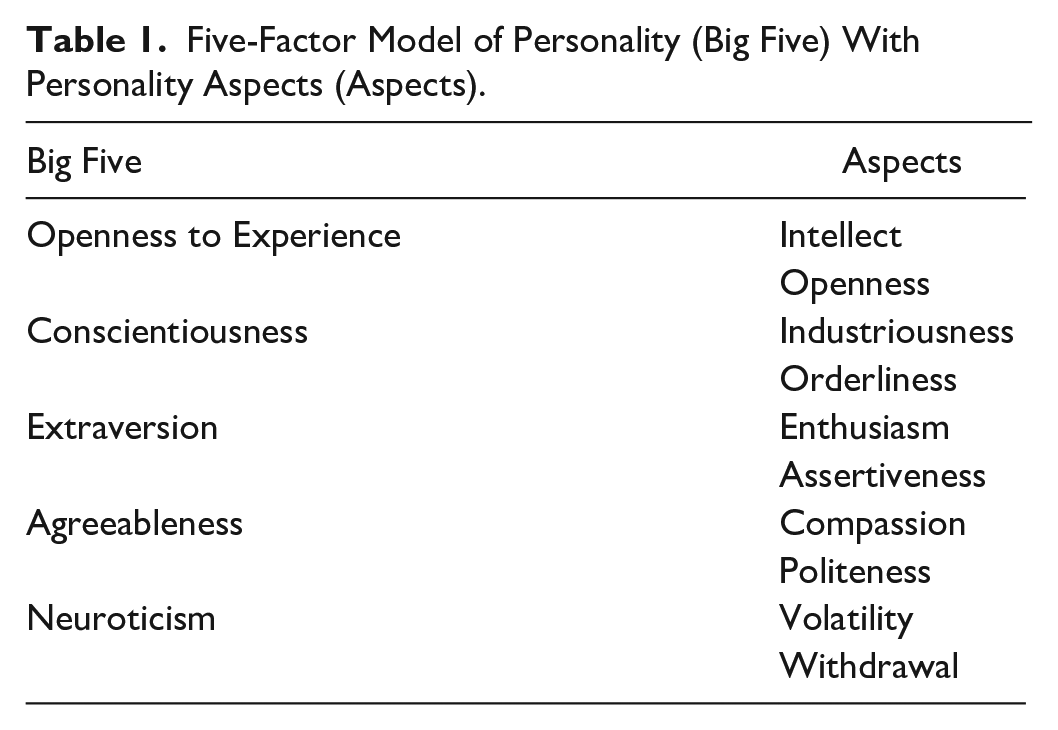
According to Nettle (2007), personality traits may be defined as “stable individual differences in the reactivity of mental mechanisms designed to respond to particular classes of situation” (p. 43). To operationalize this definition, researchers have proposed numerous frameworks to represent and describe the various aspects of personality traits (e.g., Block, 1995; Eysenck, 1992; Norman, 1963). One such operationalization, the Five-Factor Model of personality proposed by Costa and McCrae (1992) comprises five personality factors: openness to experience, conscientiousness, extraversion, agreeableness, and neuroticism. The five underlying factors are commonly referred to as the Big Five personality traits (e.g., Barrick & Mount, 1991). In much the same way that the work of Costa and McCrae (1992) extend on the work of previous scholars (e.g., Goldberg, 1990), modifications to the Five-Factor Model have been proposed, specifically suggesting that each factor is comprised of two unique aspects (DeYoung et al., 2007). The aspects are similar, conceptually, to the facets of personality within the Five-Factor Model (see Costa & McCrae, 1992). The difference comprises a view that facets compose the factors, whereas aspects represent unique fundamental characteristics of a main personality factor. The Big Five Aspects Scale (BFAS) comprises 10 aspects of personality. Aspects are unique and independent within each factor (Five-Factor Model) and therefore provide incremental validity and insights (Ones & Viswesvaran, 1996). The relationship between the Five-Factor Model of personality and personality aspects is presented in Table 1. The aspects are as follows: openness to experience: openness and intellect; conscientiousness: industriousness and orderliness; extraversion: enthusiasm and assertiveness; agreeableness: compassion and politeness; neuroticism: volatility and withdrawal. Examining the unique aspects of the higher order factors can provide additional insights and clarity that would not necessarily be otherwise available (Ones & Viswesvaran, 1996).
Five-Factor Model of Personality (Big Five) With Personality Aspects (Aspects).
Based on previous empirical research conducted by Goldberg et al. (1998), the present study focuses on similar demographic characteristics previously examined among a sample of working adults. Specifically, in the Goldberg et al. (1998) study, age, gender, education, and ethnic/racial status were considered as demographic variables of interest. For the current study, we focused on gender, age, organizational level (e.g., Judge et al., 1999), educational attainment, and geographic region (e.g., Rentfrow, 2013) characteristics.
Personality and Gender
The relationship between personality and gender has been the focus of many empirical studies. For example, Weisberg et al. (2011) examined whether any of the personality factors in the Big Five were related to gender. At the factor level, the researchers found that women tended to score higher on extraversion, agreeableness, and neuroticism than men (Weisberg et al., 2011). Significant differences were also observed at the aspect level. Considering all 10 examined aspects, women were found to have higher levels of enthusiasm (extraversion), compassion (agreeableness), politeness (agreeableness), orderliness (conscientiousness), volatility (neuroticism), withdrawal (neuroticism), and openness/creativity (openness). Men were found to have higher levels of assertiveness (extraversion) and intellect (openness) (Weisberg et al., 2011). One novel aspect of the finding was that the divergent nature of gender differences was more readily observable at the aspect level than the factor level, particularly for extraversion, openness, and conscientiousness. The researchers noted that the factor level results tended to obscure the gender differences evident at the aspect level (Weisberg et al., 2011).
In an international study of gender differences by Kajonius and Mac Giolla (2017), women were found to have higher levels of neuroticism, agreeableness and openness. Small differences were identified between extraversion and conscientiousness with women exhibiting slightly higher levels. These findings are consistent with those of Rahmani and Lavasani (2012) who also found females to exhibit higher levels of openness and agreeableness. Accordingly, replication of previous findings (e.g., Kajonius & Mac Giolla, 2017; Weisberg et al., 2011) at the aspect level with a new population of interest, adult agricultural leadership development program participants, would add greater clarity to learner trends.
Personality and Age
Theories presented in the late 1990s hypothesized that personality reaches full maturity during early adulthood (McCrae & Costa, 1996). However, alternate studies have found that personality is continuously changing at different life stages (Srivastava et al., 2003). Furthermore, Srivastava et al. (2003) studied the rate of change in personality factors correlated to age within a range from 21 to 60 years old. For example, conscientiousness was found to increase over time, although slowly. Additionally, younger (21–30 years old) presented lower levels of agreeableness compared to older individuals (31–60 years old). The empirical results also found openness levels peaked around age 30 but then declined with similar observations related to extraversion.
Similarly, Soto et al. (2011) studied change in age as it related to personality. The researchers found that children had lower levels of conscientiousness and agreeableness. However, these factors were found to increase when reaching adulthood. Furthermore, respondents exhibited elevated levels of neuroticism during the early stages of life, but a decline was seen into adulthood. No changes were detected in extraversion and openness (Soto et al., 2011). Despite the existing literature base examining the relationship between age and personality factors (e.g., Soto et al., 2011; Terracciano et al., 2006), there have been a limited number of studies that have focused on the relationship between age and personality aspects, leaving a gap within the literature.
Personality and Organizational Level
For decades scholars have examined the relationships between personality and workplace performance (e.g., Barrick & Mount, 1991; Oh & Berry, 2009). According to Furnham and Crump (2015), business leaders showed higher levels in extraversion and conscientiousness, but ranked lower in agreeableness when compared to managers and lower-level employees. Non-managers and lower-level employees showed the highest levels of neuroticism and agreeableness, in combination with the lowest levels of conscientiousness and extraversion. In their study, Judge et al. (1999) found conscientiousness positively predicted both job satisfaction, as well as income and occupational status, whereas neuroticism negatively predicted income and occupational status. Empirical research in this area has focused primarily on personality factors, providing an opportunity to study organizational levels in more depth as they relate to personality aspects.
Personality and Educational Attainment
Previous research has examined the relationship between personality and scholastic outcomes (e.g., Van der Zee et al., 2002), with the findings indicating the role that personality plays in achievement. Relatedly, according to Lleras (2008), conscientiousness is the number one personality predictor for attainment and achievement. However, a German study found that conscientiousness and emotional stability were positively associated with years of education within a study of high school students (Dahmann & Anger, 2014). Furthermore, Sutin et al. (2017) found that openness tended “to be the strongest correlate of education: Individuals who score higher in Openness tend to stay in school longer” (p. 145). Significant linkages with educational attainment and the other four domains were not found (Sutin et al., 2017). The limited literature base examining the relationship between personality and educational attainment, particularly amongst adult agricultural leadership development program participants, indicates a potential knowledge gap for leadership educators.
Personality and Geographic Region
One of the main antecedents of personality development is hypothesized to be culture or societal influences. In an empirical analysis, Rentfrow (2013) examined how the Big Five correlated with regions in the United States, as well as globally, based on the hypothesis that local or regional social norms may influence behavior and personality. Across the United States, extraversion was shown to positively correlate with agreeableness and conscientiousness. Extraversion had no correlation with neuroticism and had a strong, negative connection to openness to experience. Thereby, Rentfrow (2013) identified three personality clusters within the United States: (1) friendly and conventional, (2) relaxed and creative, and (3) temperamental and uninhibited.
Rentfrow (2013) proposed the friendly and conventional region to encompass the north central great plains and the south. Personality characteristics included: moderately high extraversion, agreeableness, and conscientiousness. Also exhibited were low neuroticism and very low openness to experience. Rentfrow (2013) proposed the relaxed and creative region to include the western United States and states along the west coast. Characteristics of this cluster included high openness to experience, low extraversion, low agreeableness, low neuroticism, and average levels of conscientiousness. Finally, Rentfrow (2013) proposed the temperamental and uninhibited region to include New England and the middle Atlantic areas. Characteristics shown were very high levels of neuroticism, moderately high openness to experience, extremely low conscientiousness and moderately low extraversion and agreeableness. Rentfrow’s (2013) findings indicated the potential for geographic region to have a relationship with personality characteristics. Additional literature expounding upon cultural variations across numerous countries (e.g., Hofstede & McCrae, 2004; McCrae et al., 2005) also speak to the connection of environmental factors in the realm of personality research. However, the lack of empirical literature across niche groups of learners within a particular domain of interest represents an opportunity for further investigation.
Purpose and Research Objectives
The purpose of this study is to examine five demographic clusters—gender, age, organizational level, educational attainment, and geographic region—to determine whether these attributes are related to personality development according to the Big Five Aspects Scale (BFAS). This study was guided by the following research objectives, summarized in Table 2.
Research Objectives.

Determine whether demographic characteristics were statistically significantly related to level of Openness to Experience: Intellect.
Determine whether demographic characteristics were statistically significantly related to level of Openness to Experience: Openness.
Determine whether demographic characteristics were statistically significantly related to level of Conscientiousness: Industriousness.
Determine whether demographic characteristics were statistically significantly related to level of Conscientiousness: Orderliness.
Determine whether demographic characteristics were statistically significantly related to level of Extraversion: Enthusiasm.
Determine whether demographic characteristics were statistically significantly related to level of Extraversion: Assertiveness.
Determine whether demographic characteristics were statistically significantly related to level of Agreeableness: Compassion.
Determine whether demographic characteristics were statistically significantly related to level of Agreeableness: Politeness.
Determine whether demographic characteristics were statistically significantly related to level of Neuroticism: Volatility.
Determine whether demographic characteristics were statistically significantly related to level of Neuroticism: Withdrawal.
Methods
Based on the study purpose and objectives, a descriptive research approach was employed (Ary et al., 2010). Data were collected as part of a larger research study examining adult agricultural leadership development programs (Lamm et al., 2016). Based on recommendations within the literature (Kirkman & Chen, 2011), it is important to acknowledge the context for the present study as well as the ways in which the present study differs from previous research. There are three primary distinctions. First, the previous study only focused on adult agricultural leadership development programs located in the southern United States. The current study includes programs across the United States, including the southern programs, as well as international programs. Second, the intent of the current study is to focus on the personality data collected previously. Although demographics are reported, the variable of interest is personality within a framework of demographics for analysis. Lastly, the present study is intended to provide baseline results for researchers and leadership education practitioners to use and better inform leadership development and learning interventions.
Sample and Procedures
The population of interest for the study was alumni or current participants in adult agricultural leadership development programs. Therefore, a census approach was employed in an attempt to gather the most comprehensive data possible (Rossi et al., 2004). Based on the literature (Kaufman et al., 2012; Lamm, Lamm et al., 2014), the International Association of Programs for Agricultural Leaders (IAPAL) was identified as an appropriate organization to locate adult agricultural leadership development programs. Programs affiliated with IAPAL were identified based on their inclusion in the IAPAL database (IAPAL, 2013). There were 35 programs listed in the database. An email invitation to participate in the study was sent to all program directors; a total of 28 agreed to participate. Of the 28 programs, 26 were located in the United States and two were located in Canada.
Data were collected from the 28 participating programs in the spring of 2014 using an online questionnaire according to recommendations associated with the Tailored Design Method (Dillman et al., 2008). The specific protocol included a pre-notice email sent from the program director informing individuals that they should expect an invitation to complete an online questionnaire. Approximately 3 days after the initial pre-notice, an invitation was sent to all potential respondents, a total of 7,668 invitations. Following the initial invitation, there were at least three additional reminders to complete the online questionnaire. Each reminder was sent between 2 and 5 days from the previous message. There were 1,171 online questionnaires completed for a 15% response rate. The response rate was considered relative to existing social science response rates, particularly online questionnaires, and deemed acceptable (Baruch & Holtom, 2008). In addition to response rate thresholds within the literature, non-response error was evaluated based on recommendations within the literature (Lindner et al., 2001). Early respondents, individuals who responded to the initial invitation prior to the first reminder, were compared with late respondents, individuals who responded after the last reminder. Specifically, respondent groups were compared on demographic and personality characteristics. No statistically significant differences were observed between the groups.
Instrumentation
Within the questionnaire, personality aspects were scored based on the DeYoung et al. (2007) BFAS scale. The scale included 100 items, 10 per aspect, and included statements such as “I can’t be bothered with other’s needs” (Agreeableness—Compassion) and “I worry about things” (Neuroticism—Withdrawal). Responses were scored on a five-point Likert-type scale ranging from 1 = strongly disagree to 5 = strongly agree. Cronbach’s Alpha was calculated for each of the 10 aspects: Openness (α = .77), Intellect (α = .81), Industriousness (α = .81), Orderliness (α = .81), Enthusiasm (α = .83), Assertiveness (α = .81), Compassion (α = .84), Politeness (α = .71), Volatility (α = .87), and Withdrawal (α = .81).
Respondent demographic characteristics were analyzed based on the proposed ecological model of leadership contexts in the literature (Lamm et al., 2020). Specifically, the model suggests considering a range of characteristics to provide a more complete perspective on the leadership observations. Within the model moving from most proximal to the individual to most distal: (1) stable person characteristics such as age and gender; (2) achievement person characteristics such as level of employment and level of educational attainment; (3) work context characteristics such as occupational category, occupational sector, and organizational size and (4) work environment characteristics such as geographic region and country.
Specific to the purposes of the present study, respondents provided demographic responses regarding several demographic characteristics. First, individuals indicated their gender (Gender) either Female or Male. Next, individuals indicated their date of birth from which their age (Age) at the time of the study was calculated. To facilitate categorical interpretation, ages were then grouped: Under 30, 30 to 39, 40 to 49, 50 to 59, 60 to 69, and 70 and Over. Respondents also indicated their level of current Organizational level (Level), as either: Nonsupervisory employee; Manager; Owner, CEO, President; or Not applicable. Individuals indicating Not applicable were then provided a text entry box to enter a further description if desired. The majority of responses included Retired, or a variation of no longer working. Respondents also indicated the highest level of education (Education) they had completed from options including: High school diploma/GED, Trade/technical training, Some college—no degree, Associate/Community college degree, Bachelor’s degree, Master’s degree, Professional degree (e.g., JD, MD), Doctorate (e.g., PhD, EdD). Geographic region of the program was assigned based on regions within the Cooperative Extension System (Lamm et al., 2016; United States Department of Agriculture, 2014). Work context characteristics, specifically, occupational sector, were informed by the context of the study, specifically, alumni or current participants in adult agricultural leadership development programs.
Data Analysis
Data were analyzed using the Statistical Package for the Social Sciences (SPSS) version 25. A one-way, between-subjects ANOVA was conducted to compare the effect of each demographic group relative to each personality aspect (Keith, 2006). Any statistically significant ANOVA observations were further analyzed using a post hoc Bonferroni test. Any statistically significant differences observed with the Bonferroni test are highlighted in the results. Any significant omnibus (ANOVA) results which failed to observe group level differences post hoc (Bonferroni test) are also identified in the results. The difference between omnibus and post hoc results was deemed acceptable based on guidance within the literature (see Chen et al., 2018). Effect sizes are also presented as partial eta squared values for each ANOVA analysis. Partial eta squared effect sizes were interpreted based on recommendations by Cohen (1969) and clarified by Richardson (2011) who indicated Cohen’s intent to “define small, medium, and large effects [. . .] based upon values of f that correspond to values of partial eta squared of .0099, .0588, and .1379, respectively” (p. 142).
Results
Openness to Experience: Intellect
Table 3 displays the descriptive statistics for the reported Openness to Experience: Intellect among each demographic cluster and sub-group. Statistically significant differences were observed between age groups (p = .02), organizational level (p = .00), and educational attainment (p = .00). Regarding post hoc tests, for the Age category the analysis indicated that the mean score for the 30 to 39 age group condition was significantly different than the 40 to 49 age group condition. The Level category analysis indicated that the mean score for the Nonsupervisory employee group condition was significantly different than the Owner, CEO, President group condition. The Education category analysis indicated that the mean score for the High school diploma/GED group condition was significantly different than the Master’s degree group condition, the Professional degree group condition, and Doctorate group condition. Additionally, the mean score for the Trade/technical training group condition was significantly different than the Professional degree group condition, and Doctorate group condition. Analysis indicated that the mean score for the Some college—no degree group condition was significantly different than the Professional degree group condition, and Doctorate group condition. Analysis further indicated that the mean score for the Associate/community college degree group condition was significantly different than the Professional degree group condition. Additionally, analysis indicated that the mean score for the Bachelor’s degree group condition was significantly different than the Professional degree group condition.
Openness to Experience: Intellect Analysis Based on Demographic Characteristics.

p < .05. **p < .01. ***p < .001.
Openness to Experience: Openness
Table 4 displays the descriptive statistics for reported Openness to Experience: Openness among each demographic cluster and sub-group as well as one-way between-subjects ANOVA analysis results between demographic characteristics and Openness to Experience: Openness. Significant differences were observed on this construct by gender (p = .00), age (p = .01), and organizational level (p = .02). Although the overall ANOVA observation was statistically significant, within the Age category analysis there were no statistically significant differences observed between groups using the Bonferroni post hoc analysis. Within the Level category analysis indicated that the mean score for the Nonsupervisory employee group condition was significantly different than the Not applicable group condition.
Openness to Experience: Openness Analysis Based on Demographic Characteristics.

p < .05. ***p < .001.
Conscientiousness: Industriousness
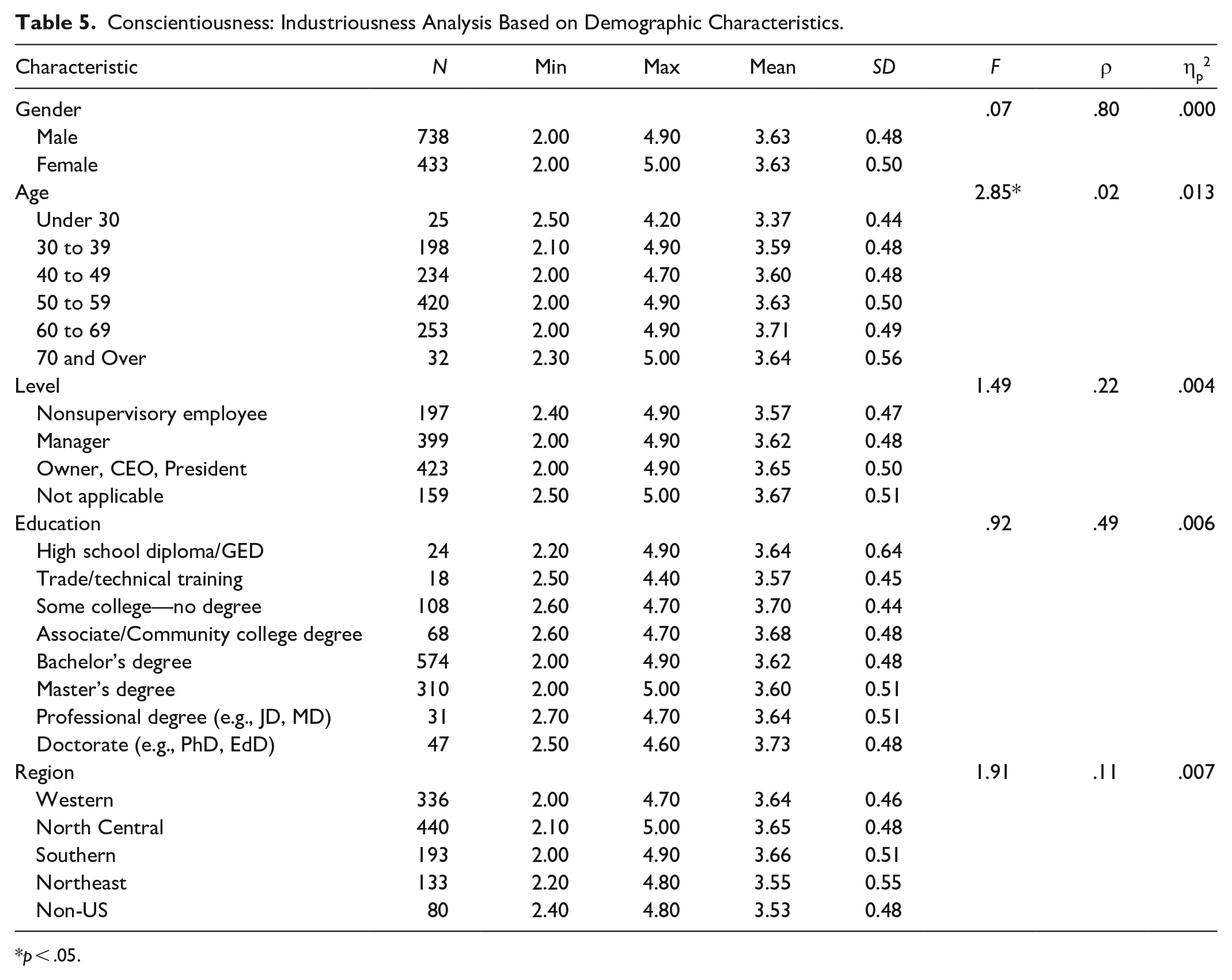
Table 5 displays the descriptive statistics for reported Conscientiousness: Industriousness among each demographic cluster and sub-group as well as one-way between-subjects ANOVA analysis results between demographic characteristics and Conscientiousness: Industriousness. Statistically significant differences were observed relative to age (p = .01). The Age category analysis indicated that the mean score for the under 30 age group condition was significantly different than the 60 to 69 age group condition.
Conscientiousness: Industriousness Analysis Based on Demographic Characteristics.
p < .05.
Conscientiousness: Orderliness
Table 6 displays statistics for reported Conscientiousness: Orderliness among each demographic cluster and sub-group as well as one-way between-subjects ANOVA analysis results between demographic characteristics and Conscientiousness: Orderliness. Significant differences were observed between groups within the gender (p = .00) and age (p = .02) characteristic categories. The Age category analysis indicated that the mean score for the 30 to 39 age group condition was significantly different than the 60 to 69 age group condition.
Conscientiousness: Orderliness Analysis Based on Demographic Characteristics.

p < .05. ***p < .001.
Extraversion: Enthusiasm
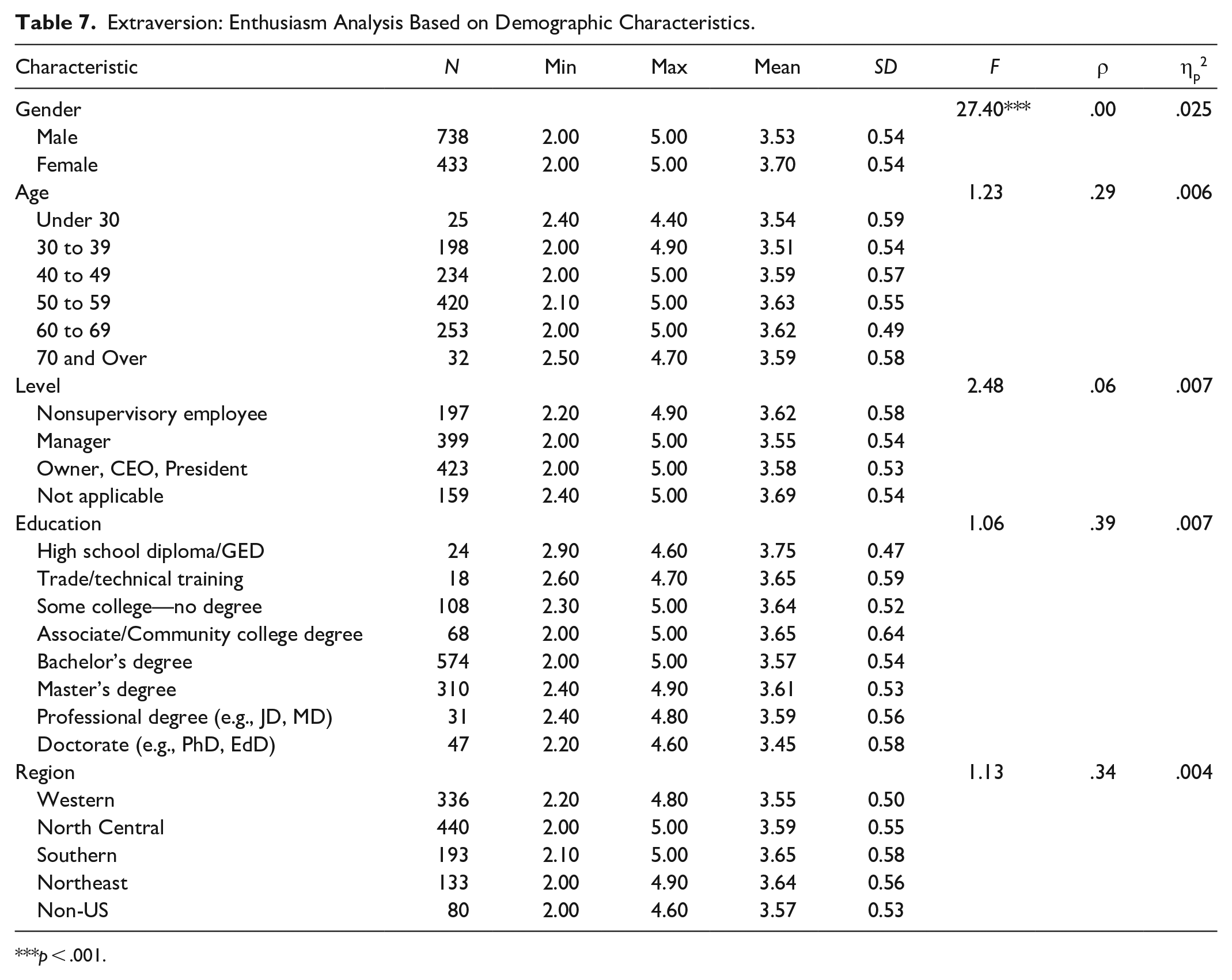
Table 7 displays statistics for reported Extraversion: Enthusiasm among each demographic cluster and sub-group as well as one-way between-subjects ANOVA analysis results between demographic characteristics and extraversion: enthusiasm. A statistically significant difference was observed when examining gender (p = .00).
Extraversion: Enthusiasm Analysis Based on Demographic Characteristics.
p < .001.
Extraversion: Assertiveness
Table 8 displays statistics for reported Extraversion: Assertiveness among each demographic cluster and sub-group as well as one-way between-subjects ANOVA analysis results between demographic characteristics and extraversion: assertiveness. Significant difference between organizational level (p = .01) groups were observed. Examination of responses found Nonsupervisory employees indicated lower levels of Extraversion: Assertiveness than did the Owner, CEO, President group.
Extraversion: Assertiveness Analysis Based on Demographic Characteristics.

p < .05.
Agreeableness: Compassion
Table 9 displays statistics for reported Agreeableness: Compassion among each demographic cluster and sub-group as well as one-way between-subjects ANOVA analysis results between demographic characteristics and Agreeableness: Compassion. Statistically significant differences were observed between gender (p = .00), age (p = .00), and organizational level (p = .01) groups. The Age category analysis indicated that the mean score for the under 30 age group condition was significantly different than the 60 to 69 age group condition. The Level category analysis indicated that the mean score for the Not applicable group condition was significantly different than the three other groups, including Nonsupervisory employees, Managers, and Owners, CEOs, Presidents. The Region category analysis indicated that the mean score for the western group condition was significantly different than the northeast group condition.
Agreeableness: Compassion Analysis Based on Demographic Characteristics.

p < .05. **p < .01. ***p < .001.
Agreeableness: Politeness
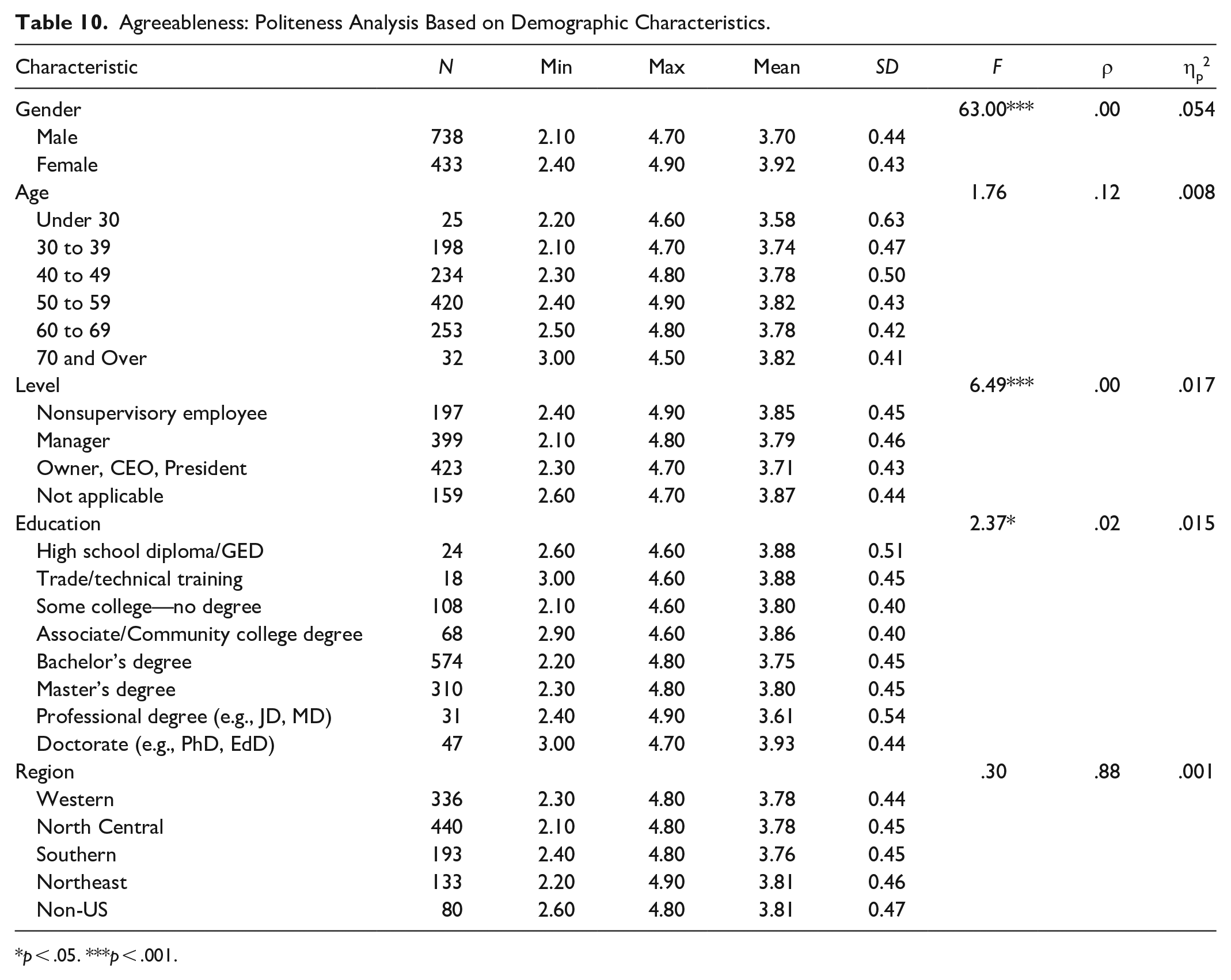
Table 10 displays statistics for reported Agreeableness: Politeness among each demographic cluster and sub-group as well as one-way between-subjects ANOVA analysis results between demographic characteristics and Agreeableness: Politeness. Statistically significant differences were observed between gender (p = .00), organizational level (p = .00) and educational attainment (p = .02) groups. The Level category analysis indicated that the mean score for the Nonsupervisory employee group condition was significantly different than the Owner, CEO, President group condition. Additionally, analysis indicated that the mean score for the Owner, CEO, President group condition was significantly different than the Not applicable group condition. Within the Education category post hoc analysis did not identify any statistically significant difference between groups, despite overall statistically significant ANOVA observation.
Agreeableness: Politeness Analysis Based on Demographic Characteristics.
p < .05. ***p < .001.
Neuroticism: Volatility
Table 11 displays statistics for reported Neuroticism: Volatility among each demographic cluster and sub-group as well as one-way between-subjects ANOVA analysis results between demographic characteristics and Neuroticism: Volatility. Statistically significant differences were observed between age (p = .00) and geographic region (p = .01) groups. The Age category analysis indicated that the mean score for the Under 30 age group condition was significantly different than the 70 and Over age group condition. The Region category analysis indicated that the mean score for the western group condition was significantly different than the northeast group condition.
Neuroticism: Volatility Analysis Based on Demographic Characteristics.

p < .05. **p < .01.
Neuroticism: Withdrawal
Table 12 displays statistics for reported Neuroticism: Withdrawal among each demographic cluster and sub-group as well as one-way between-subjects ANOVA analysis results between demographic characteristics and Neuroticism: Withdrawal. Statistically significant differences were observed between gender (p = .00), age (p = .00), and organizational level (p = .00) groups. The Age category analysis indicated that the mean score for the Under 30 age group condition was significantly different than the 60 to 69 age group condition, as well as the 70 and Over age group condition. The 30 to 39 age group condition was significantly different than the 50 to 59 age group condition, the 60 to 69 age group condition, and the 70 and Over age group condition. The 50 to 59 age group condition was significantly different than the 60 to 69 age group condition. The Level category analysis indicated that the mean score for the Nonsupervisory employee group condition was significantly different than the Owner, CEO, President group condition, as well as the not applicable group condition. Additionally, analysis indicated that the mean score for the Manager group condition was significantly different than the Owner, CEO, President group condition, as well as the Not Applicable group condition.
Neuroticism: Withdrawal Analysis Based on Demographic Characteristics.
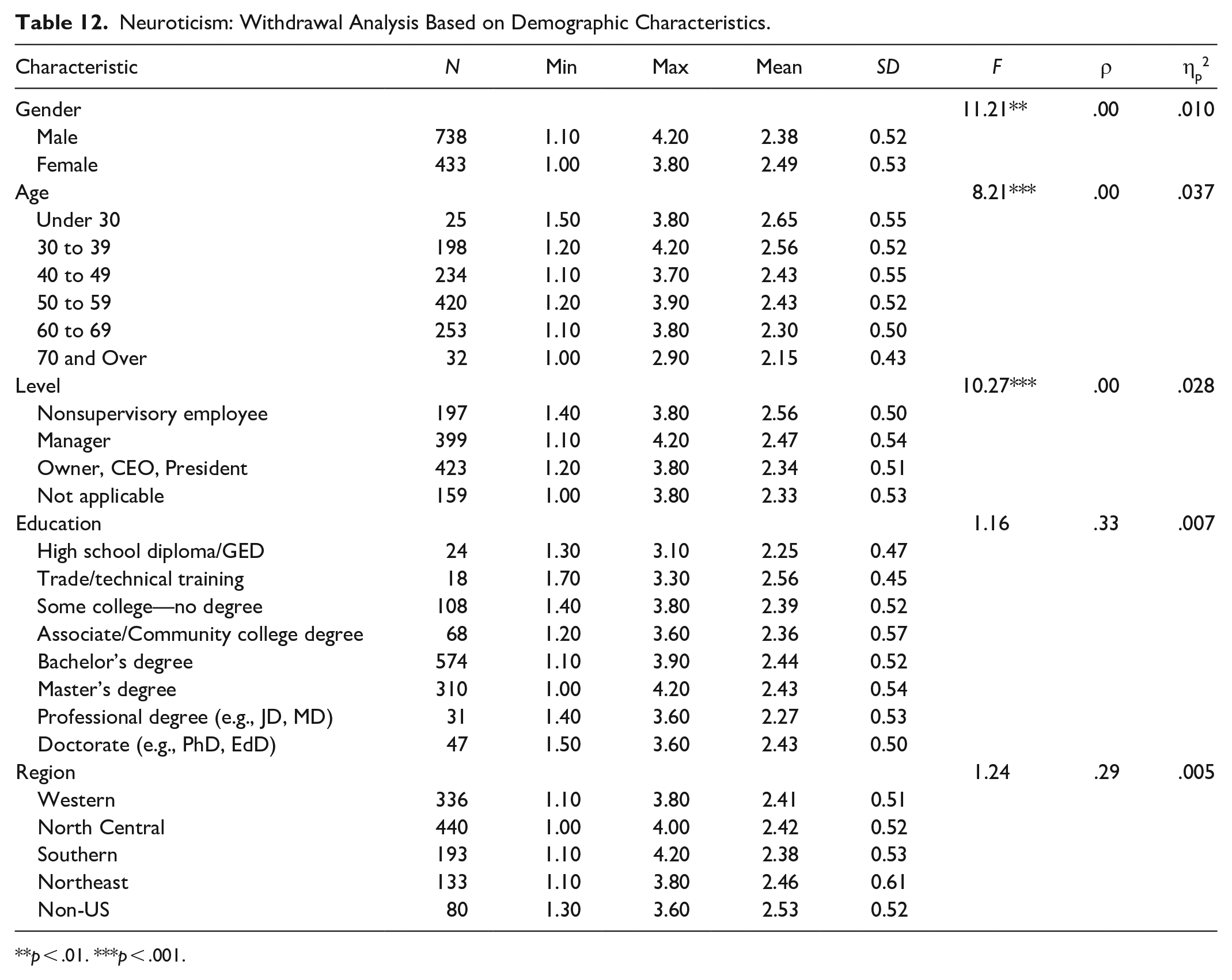
p < .01. ***p < .001.
A summary of effect sizes associated with the statistically significant, between groups tests, are presented in Table 13.
Research Findings Summary—ηp2 for Statistically Significant Tests.

Recommendation, Implications, and Limitations
In much the same way that every person has a unique fingerprint, so too does each person have their own unique personality. Based on the variance in personality dispositions across individuals, it is important for scholars and leadership educators to consider how personality can relate to different outcomes from work performance (e.g., Al Doghan et al., 2019; Barrick & Mount, 1991) to goal orientation of undergraduate leadership students (e.g., Lamm et al., 2017), to occupational fit (e.g., King et al., 2017). One of the most critical aspects for effective education to occur is to consider the needs and characteristics of learners (Iversen et al., 2015; McKeachie & Svinicki, 2013). Therefore, acknowledging the importance of personality is paramount. As has been suggested in the literature, “educators teaching leadership could start with a discussion of personality before the concept of leadership is ever introduced” (Lamm, Carter, et al., 2014, p. 33).
This study examined demographic characteristics including gender, age, organizational level, educational attainment, and geographic region to examine their relation to personality, specifically, aspects of personality associated with the Big Five Aspect Scale (BFAS), in agricultural leadership development program participants. For this study, each of the aspects of personality were examined through the lens of demographic characteristics.
Limitations of the Study
Although the results of the study provide both an empirical foundation for future research as a set of baseline data, as well as a starting point for leadership educators, particularly those involved with adult agricultural leadership development programs, to inform their curriculum, there are several important limitations associated with the study that should be acknowledged. First, the magnitude of the data collected and research objectives associated with the study are daunting. Although modifications to the presentation of the data were considered, such as breaking the study into a series of manuscripts focused on either a personality factor/aspect, or by a single demographic characteristic; ultimately, we decided it was more valuable to include all the data in a single comprehensive study. A limitation associated with this approach is the considerable volume of data presented in the results and the ability of readers to effectively process those results. To address the limitation, we tried to identify the most salient findings; however, a recommendation would be to use the data tactically as needs arise. Additionally, we included effect sizes for educators to quickly compare what relationships between demographic characteristics and personality may be most important to be aware of or focus on. An associated note regarding effect sizes is the interpretation of such values. Even though small effect sizes may have noteworthy implications (e.g., Rosnow & Rosenthal, 1989), it is important to consider the results of the present study as only a starting point. Each program and educational setting is unique and the results and effect sizes presented should provide a point upon which to begin preparations and conversations. Additionally, post hoc Bonferroni analyses were completed within any categories where statistically significant ANOVA results were observed. The additional level of between-group analysis is intended to provide greater insights on a case-by-case basis. However, based on the number of variables of interest within the study it is likely the power to mitigate type two error is limited. Therefore, an associated recommendation would be to use the overall categorical results, and between-group trends, as benchmarks of interest. Future research, with more robust power characteristics, are recommended to address narrower inquires with more depth at the variable and/or categorical levels.
A second limitation is the response rate and interpretability of results. Although statistical tests were performed to check for non-response bias, the low response rate underlies the need to interpret results thoughtfully. Specifically, the results presented should only be interpreted relative to the study respondents and should not be considered generalizable to the broader population. A recommendation would be for researchers and leadership educators to use the results presented as a baseline against which to test hypotheses. For example, leadership programming with the same learning objectives, delivered to different audiences may provide an opportunity to test whether an acknowledgement of personality aspects, and potential differences, among learners had any effect on learning efficacy.
Personality and Gender
Gender has previously been evaluated relative to the Big Five factors of personality with findings indicating that females tend to report higher levels of Extraversion, Agreeableness, and Neuroticism than males. The findings of this study agree with previous research (Weisberg et al., 2011). Specifically, in the present study, females in adult agricultural leadership development programs indicated higher levels on Extraversion through the aspect of Enthusiasm (p < .01) and Agreeableness through the aspects of Compassion (p < .01) and Politeness (p < .01). Further significant differences between gender groups was observed for Neuroticism: Withdrawal (p < .01).
The results of the study imply that there may be gender differences that educators may be able to leverage to improve learning. Although each learner should be treated as an individual, the results indicate there are trends that may help inform the creation of adult agricultural leadership learning environments that maximize efficacy. For example, the results indicate that there were statistically significant differences between gender groups as it related to both Compassion and Politeness. A recommendation would be for an adult agricultural leadership educator to use this potential difference as a point for discussion amongst learners and how personality dispositions may relate to leadership concepts, such as the human aspects of transformational leadership (Lamm, Carter et al., 2014). Specifically, in light of past research indicating that female leaders are inclined to be more transformational than males (Bass, 1999), results from this study support Bass’ (1999) call for more investigation between the combined variables of gender, personality, and transformational leadership.
Personality and Age
Across the demographic characteristics analyzed, age was the most common characteristic to observe statistically significant differences across personality aspects, specifically, Age group differences were observed in seven of the 10 aspects of personality. The findings of this study are consistent with Srivastava et al. (2003), specifically, personality disposition may change at different life stages. Findings further agreed that when examining aspects of Conscientiousness, both Industriousness and Orderliness, and age groups, significant differences were observed. However, the directionality of the trends across the two aspects represent one of the novel contributions of aspects relative to a superordinate factor. Specifically, in Figure 1 the general trend of reported levels of Industriousness increasing with age are observable and consistent with previous findings (Soto et al., 2011); however, to the contrary, in Figure 2 the general trend in reported levels of Orderliness decreasing with age are also observable which was not supported by previous findings. An implication from this finding is that the personality aspects may provide additional fidelity to particular characteristics of interest above and beyond the results of factor level analysis. It is important to note the effect size of the observations associated with the Conscientiousness aspects, both Industriousness and Orderliness, were both small, therefore caution in interpretability is warranted. However, the observable trends are of primary interest and belie the value, and bandwidth fidelity, associated with aspect level analysis among adult agricultural leadership development program participants.

Conscientiousness: Industriousness Index Scores based on age groups.

Conscientiousness: Orderliness Index Scores based on age groups.
In addition to the observations relative to the Conscientiousness aspects, statistically significant differences between Age groups were also observed within the Openness to Experiences and Neuroticism factors as the Compassion aspect of Agreeableness. Based on the results, a recommendation would be for adult agricultural leadership program educators to consider potential personality disposition differences among learners at different ages. For example, a discussion centered around different viewpoints relative to Orderliness or Industriousness may foster a learning environment where different perspectives are shared and better appreciated (McKeachie & Svinicki, 2013). Attention to such nuances may also foster more understanding and comprehension of subject matter material by learners.
Personality and Organizational Level
Differences between groups within the demographic characteristic organizational level were statistically significant relative to the factors of Openness and Agreeableness as well as the Assertiveness aspect of Extraversion and the Withdrawal aspect of Neuroticism. Results from the study are consistent with observations by Furnham and Crump (2015) where Nonsupervisory employees exhibited higher levels of Volatility and Withdrawal within the Neuroticism factor; however, levels of the individual aspects were not consistent. Higher levels of Openness were reported by respondents as organizational level increased. This finding has not been identified in previous research and should be further investigated to determine whether the observations from the present study represent more generalizable trends. Situational and contextual factors that contribute to personality changes associated with organizational advancement are also recommended for future research.
Personality and Educational Attainment
Education attainment has been identified as a prime predictor of success and achievement, with Conscientiousness serving as the greatest predictor of educational attainment (Lleras, 2008). The present study observed statistically significant differences when analyzing the Intellect aspect of Openness to Experience and the Politeness aspect of Agreeableness. The findings of the present study agree with Sutin et al. (2017), who reported individuals who scored higher in Openness to Experience tended to stay in school longer and attain higher levels of education. A new finding revealed through this research was the significance found via educational attainment relative to Agreeableness and the aspect of Politeness. This finding may relate to relational and sociocultural aspects of interacting with educators, peers, and mentors during one’s educational journey. However, it was not observed in previous research and thus further research into this aspect of Agreeableness is recommended.
Personality and Region
Although there were statistically significant differences observed between geographic region groups and the personality aspect Compassion within the Agreeableness factor and the personality aspect Volitility within the Neuroticism factor, the overall relationship between variables was small. The results of the present study are therefore inconsistent with the observations of Rentfrow (2013) who reported more pronounced differences between different geographic regions of the United States. An implication from this finding is that among the different demographic characteristics analyzed, geographic region tended to have one of the least pronounced observed relationships with personality aspects. A recommendation based on this finding is for adult agricultural leadership program educators to focus curriculum and learning interventions on the other demographic characteristics first when establishing effective learning environments.
General
Overall the results of the study provide a comprehensive review of personality aspect results across a number of demographic characteristics for adult agricultural leadership development program participants. A recommendation would be for future research to gather personality measures with similar groups, as well as with other individuals more broadly, such as undergraduate leadership students in agriculture (e.g., Wen et al., 2021) or adult leadership development program participants in programs not within an agricultural context, such as medicine (e.g., Frich et al., 2015), schools (Huber, 2004), nursing (Miles & Scott, 2019), and so forth. Continuing to build a more robust and comprehensive perspective on the personality characteristics of individuals within a well-defined context may provide more effective leadership education programs.
Conclusions
Leadership educators “must seek to understand the individual differences of students and match appropriate learning opportunities to assist in their development” (Andenoro et al., 2013, p. 6); accordingly, the results of this study attempt to provide a comprehensive review of the individual differences of participants in adult agricultural leadership development programs. Although the limitations of the present study have been noted, there is the potential for the results to help inform curricular decisions, particularly as it relates to adult agricultural leadership development programs. Engaged agricultural leaders are needed (Usadolo, 2020) and, therefore, enhancements in the way personality characteristics are used to equip and prepare this group of learners to meet challenges will remain an ongoing priority.
From an empirical perspective, the present study provides a replication of previous research and a unique set of context specific findings within the personality literature. Although many of the observations were consistent with previous research (e.g., Weisberg et al., 2011) there were other observations which were inconsistent with prior results (e.g., Rentfrow, 2013). As Makel and Plucker (2014) state, “If education research is to be relied upon to develop sound policy and practice, then conducting replications on important findings is essential to moving toward a more reliable and trustworthy understanding of educational environments” (p. 313). More data (Nosek et al., 2012) within specific contexts (e.g., King et al., 2017) has the potential to add perspective and nuance to unique circumstances, particularly for adult agricultural leadership educators.
From a practical perspective, having a set of empirical guidelines examining the relationships between demographic characteristics and personality aspects can help adult agricultural leadership educators identify what experiences are likely to resonate differently amongst learners. This awareness on the part of the prepared adult agricultural leadership educator can provide the foundation upon which to find effective entry points for observation, debriefing, or conversation amongst learners and “being prepared is indicated by the teacher’s effortless presentation of the lesson” (de la Rosa, 2005, p. 175).
Footnotes
Authors’ Note
All procedures followed were in accordance with the ethical standards of the University of Florida Institutional Review Board. Informed consent was obtained from all participants for being included in the study under protocol U-131-2013.
Don W. Edgar is now affiliated to New Mexico State University, Las Cruces, USA.
Declaration of Conflicting Interests
The author(s) declared the following potential conflicts of interest with respect to the research, authorship, and/or publication of this article: This research is supported by the University of Florida and may lead to the development of products or services. We have disclosed those interests fully to SAGE, and have in place an approved plan for managing any potential conflicts arising from this arrangement.
Funding
The author(s) disclosed receipt of the following financial support for the research, authorship, and/or publication of this article: This work was supported by the University of Florida.
