




Abstract
As more and more companies want to efficiently utilize good ideas from external personnel, the online crowdsourcing platform (OCP) has developed. Problem solvers, such as companies and organizations, post the idea recruitment information they need online. Solvers visit OCPs to search and participate in several idea contests. The objective of the current study is to explore the leading factors of recommendation intention of OCP visitors. This paper is based on a survey of OCP visitors in South Korea. The data were validated with structural model equations. The empirical results verified that outcome expectation has a significant positive effect on attitude and recommendation intention. Career promotion does not have a significant positive impact on attitude, while it affects recommendation intention. Corporate reputation is not significantly related to attitude, while it positively influences recommendation intention. The results pointed out that task identity does not have a significant influence on attitude and recommendation intention. Duration does not have a significant correlation with attitude, while it impacts recommendation intention. Attitude has a significant association with recommendation intention. The results of this study will provide useful information for seekers and solvers.
Plain language summary
Have you ever wondered why some people are eager to recommend online contests and platforms to others? Our study dives into this question, focusing on online consumer practices (OCPs) - basically, how people engage with online contests and platforms. We explored several factors that might influence someone’s decision to recommend these platforms to friends or colleagues. Firstly, we looked at “outcome expectations”– the belief that participating in an online contest can lead to positive outcomes, like learning something new or improving skills. Then, we considered “career benefits”– the idea that winning a contest could help someone’s job prospects. We also examined how the reputation of the company hosting the contest might affect recommendations, alongside “task identity” (how clear and specific the contest details are) and the duration of the contest (how long it runs). Our findings revealed some interesting points. For example, people are more likely to recommend contests when they believe participating could yield personal or professional gains. However, not all factors influenced recommendations equally. The reputation of the company hosting the contest mattered more to people than how well-defined the contest tasks were or how long the contest lasted. These insights are crucial for anyone organizing online contests or platforms, as they highlight the importance of framing these opportunities in a way that resonates with potential participants. By understanding what drives recommendations, organizers can better design and promote their contests, making them more appealing to a broader audience. In short, our study sheds light on the complex motivations behind recommending online platforms and contests, offering valuable guidelines for enhancing their appeal and reach.
Keywords
Introduction
Online crowdsourcing platforms (OCPs) have gained immense popularity in recent years due to their ability to provide access to a wide pool of resources at a lower cost (Hitlin, 2016). These platforms have revolutionized the way work is done by bringing together employers and freelancers from across the globe on a single platform (Parker et al., 2016). Companies that want to solve the problem (seeker) post the information they need in the form of idea competition or competition (Brabham, 2008). Individuals (solvers) visit OCP to explore various competitions. They choose the right competition to show their skills (Javadi Khasraghi & Aghaie, 2014) and may share good contest information with acquaintances. Many individuals form teams and participate in the idea competition (Bacq et al., 2020). In the process of forming a team, they naturally recommend certain competitions to people around them. In this sense, the need to understand the factors that drive the recommendation intention of OCP users becomes paramount.
Recommendation intention is an individual’s willingness to recommend a product or service to others (Oliveira et al., 2016). Seekers want as many people as possible to participate in their contest (Li & Hu, 2017). Since it should be exposed to as many people as possible, word-of-mouth (WOM) effects would crucial in achieving crowdsourcing purposes. In this context, recommendation intention can significantly influence the platform’s success or failure. Understanding the determinants of recommendation intention can help platform providers and researchers identify key areas of improvement and enhance user experience. Therefore, the objective of this paper is to investigate the factors affecting the recommendation intention of OCP users. To achieve the research purpose, this study reviews the existing literature on the subject and identifies the key factors that have been found to influence recommendation intention. It also surveyed OCP users to gather empirical data and analyzed the results to identify the most significant determinants of recommendation intention.
Outcome expectations in the context of OCP refer to individuals’ beliefs about the potential benefits of participating in online contests, such as enhancing their work efficiency and gaining new knowledge (Shi et al., 2022). For instance, a participant might expect that entering a coding competition will sharpen their programming skills and help them achieve personal development goals. Career benefits, on the other hand, encompass the professional advantages perceived from winning these contests, like improved job prospects or recognition of expertise (Vrolijk et al., 2021), exemplified by a designer winning a logo contest and using that achievement to bolster their portfolio. Both constructs are vital in explaining recommendation intention within OCPs because they directly impact participants’ perceived value of engaging in competitions. When individuals believe that participation will yield significant personal and professional rewards, they are more likely to recommend these platforms to others, seeing them as opportunities not just for themselves but for their peers as well.
Corporate reputation within OCP signifies the collective perception of a contest-hosting organization’s prestige, including its brand awareness and reliability (Han et al., 2021). A contest hosted by a well-known tech giant is likely to attract more participants due to the company’s esteemed standing. Task identity refers to the clarity and specificity of a contest’s objectives and requirements, such as a detailed brief in a graphic design competition that clearly outlines what is expected from the participants (Lee, 2013; S. Wu et al., 2024). Duration, meanwhile, denotes the time allotted for a contest, affecting participants’ ability to prepare and submit their entries, such as a hackathon running over a weekend versus one spanning a month (Lee, 2013). Considering corporate reputation, task identity, and duration is crucial in explaining recommendation intention because they influence participants’ perceptions of the contest’s legitimacy, clarity of expectations, and feasibility of participation. Together, these factors can significantly impact an individual’s willingness to recommend the contest to others, as they reflect both the quality and accessibility of the OCP experience.
This study addresses critical research gaps and introduces novel contributions to the literature on OCP, providing significant academic and practical insights. Firstly, it pioneers in emphasizing the recommendation intention of OCP visitors, a crucial yet understudied aspect in the context of crowdsourcing success. While previous research has extensively explored participation intentions and the quality of contributions (Hsieh et al., 2022; Shi et al., 2022; M. M. Wang & Wang, 2019), this study uniquely focuses on the willingness of visitors to recommend OCPs, highlighting the vital role of WOM in the diffusion of ideas. This shift in focus not only uncovers overlooked areas in crowdsourcing literature but also offers a new lens through which to examine the dynamics of online platforms. Secondly, by identifying attitude as a fundamental antecedent to recommendation intention, this study contributes to the deeper understanding of behavioral intentions within the OCP context. The establishment of attitude as a predictor enriches the theoretical framework surrounding online behavior, aligning with findings from various human behavior studies (Bakici, 2020; Guo et al., 2022) and reinforcing the model’s robustness. This advancement in theoretical application offers a solid foundation for future research to build upon. Thirdly, the originality of this work lies in its exploration of specific factors influencing recommendation intention, moving beyond the commonly examined variables of internal and extrinsic motivations, economic compensation, and social recognition. By delving into outcome expectations, career benefits, corporate reputation, task identity, and duration, the study broadens the scope of investigation and introduces a nuanced understanding of what drives users to recommend OCPs. This approach not only diversifies the research landscape but also provides actionable insights for platform designers and operators. Lastly, by controlling for gender and age, this study enhances the explanatory power of its model, offering a more detailed and inclusive analysis of recommendation behaviors across different demographic segments. This methodological rigor ensures a comprehensive examination of the factors at play, contributing to a more generalizable and applicable body of knowledge. Together, these contributions not only fill significant gaps in the current literature but also pave the way for future research to explore the complexities of OCPs. By bringing attention to the determinants of recommendation intention and reinforcing the theoretical underpinnings of online behavior, this study marks a pivotal step forward in the understanding of digital crowdsourcing ecosystems.
This paper is structured as follows: In Section “Theoretical Background,” this paper offers an extensive examination of the existing literature concerning online crowdsourcing platforms. Section “Conceptual Model and Research Hypotheses” covers the theoretical framework. Section “Methodology” outlines the research methodology used to gather data for the study. Section “Results” presents the results of the study and provides an analysis of the data collected. Section “Discussion” describes the discussion about the empirical results. Finally, Section “Conclusion” summarizes the key findings of the study and discusses their implications for online crowdsourcing platform providers and researchers.
Theoretical Background
As the number of organizations soliciting and leveraging ideas from outside talent has grown, interest in academia also increased. Researchers have explored various topics such as determinants of behaviors of participants, quality of ideas, and key attributes of the OCP platform.
Studies on the behavior of crowdsourcing participants have mainly focused on the intention to participate or continue. M. M. Wang and Wang (2019) extended an expectation-confirmation model for investigating the precursors of continuance intention of OCP users. The findings showed that perceived fairness, perceived benefits, and satisfaction play a prevalent role in shaping continuance intention. The authors measured chance to work and personal achievement to construct perceived benefits. Shi et al. (2022) identified the determinants of participation in OCP by applying a motivational-cognitive model. They uncovered that monetary reward, gain face, and enjoyment influence participation frequency and participation duration via outcome expectation. Hsieh et al. (2022) analyzed an event history for identifying the predictors of continuance participation in online idea competitions. They authored that community recognition positively affects continuance participation for solvers who have not won competitions. Moreover, the motivating role of community recognition may be substituted by a personal winning record, highlighting individualistic motives such as personal benefits and career enhancement. In OCPs, social interaction can help members establish strong reputations and gain peer recognition and acceptance (Yu et al., 2017). Enhancing reputation is the primary reason why OCP visitors participate in and win contests (R. Zhang et al., 2021). Liu and Liu (2019) explored the effects of perceived justice on continuance participation intention in the crowdsourcing market. They unveiled that distributive justice and interpersonal justice affect continuance intention via trust and job satisfaction sequentially. Additionally, when procedural justice and informational justice are present, trust is strengthened, leading to an increase in job satisfaction, ultimately resulting in a higher likelihood of continuing to use the system K. Wang et al. (2018) noted that interactivity and fairness affect continuance intention through motivation and platform trust. The authors included a chance for work and personal achievement as indicators of motivation. (Lee, 2013) surmised that the concreteness of idea competition enhances the intention to participate. Walter and Back (2011) clarified the antecedents of quality and amount of ideas in online crowdsourcing. They revealed that duration and specificity significantly influence the quality of ideas. It was proven that the number of ideas is affected by rewards, brand strength, and duration. Since they measured seekers’ brand strength, brand strength is similar to the corporate reputation of the current study. Cappa et al. (2019) shed light on the rewards of crowdsourcing from the perspectives of economic benefits and social recognition. The authors found that the presence of monetary rewards and social benefit raise the number of contributions. Ullah et al. (2021) validated that intrinsic motivation and extrinsic motivation are significantly associated with contribution effort.
Since OCP visitors have the purpose of collecting information about contests, they also share information about good contests with others OCP. If the intention to continue is high for a particular contest, solvers may recommend it to others. Therefore, the determinants of continuation intention may also act in forming recommendation intention. The behaviors of crowdsourcing participants are influenced by satisfaction (M. M. Wang & Wang, 2019) or attitude (Bakici, 2020). Since this paper targets contests in which OCP visitors considered participation, we adopt a more appropriate attitude for the pre-participation context as the main variable. Solvers with a more favorable attitude have higher recommendation intentions. Combining the above studies, the behavior of participation or continuation is affected by outcome expectation (Shi et al., 2022; M. M. Wang & Wang, 2019; M. M. Wang et al., 2020) and career benefits (M. M. Wang & Wang, 2019; M. M. Wang et al., 2020). If the contest that OCP visitors were considering participating in gives greater outcome expectations and improves their career significantly, it would affect attitudes and recommendation intentions. Solvers participate in contests to gain recognition and reputation (Yu et al., 2017; X. Zhang & Du, 2021). Previous studies have mainly focused on the reputation of participants (Bakici, 2020; Ford et al., 2015; Y. Wang et al., 2016). If participants value their reputation, which hosting company do they prefer? Do they prefer small and medium-sized enterprises or famous conglomerates? Since individual reputation is important in crowdsourcing, this study assumes that participants value corporate reputation. The higher the company’s reputation, the more friendly the visitors will react and recommend it to others. Each task posted on the OCP has a category of detailed conditions such as subject, volume, duration, reward, individual, or team. If these areas are better specified, solvers are more likely to make decisions. Task identity on OCP would affect attitude and recommendation intention. When duration increases, the quality and quantity of ideas increase. People will hesitate to participate if the duration of the contest is short. On the other hand, if the duration is long, solvers may perceive a high opportunity to participate. As a result, a longer period forms a more friendly attitude and a higher level of recommendation intention.
In addition, scholars have conducted research on idea quality, performance, and customer-related outcomes, and have performed literature reviews and case analyses. Javadi Khasraghi and Aghaie (2014) examined the impacts of participation history on the performance of crowdsourcing participants. They discovered that historical factors affect performance. It was verified that participation frequency and winning frequency moderate the effects of the last performance on the current performance. Blohm et al. (2011) empirically examined the impacts of collaboration on the quality of ideas in IT-based idea competitions. They suggested the sub-scales such as novelty, relevance, elaboration, and feasibility to measure the quality of an idea. As well, they asserted that promoting user collaboration is a feasible design feature to enhance the effectiveness of idea competitions. Girotra et al. (2010) suggested four factors to measure the quality of the best idea. The four factors are average quality, the number of ideas, the variance, and the ability of the group to Identify the level of the idea. According to the findings, teams employing brainstorming neither produce additional ideas nor do ideas that build on earlier ideas improve. Faullant et al. (2017) investigated the association between fairness and customer relationship-related consequences. The results indicated that distributive fairness affects product interest. It was also shown that procedural fairness is significantly related to product interest and perceived innovativeness. K. Wang et al. (2018) demonstrated the influence of exposure to an original idea on the number of ideas and originality. They mentioned that exposure to an original idea decreases the number of ideas and increases the average originality. Ghezzi et al. (2018) reviewed a wide variety of papers on crowdsourcing. The authors noted that crowdsourcing consists of two main themes: open innovation and co-creation. They emphasized that the structure of the problem, the field of application, and the capabilities of the platform manager are necessary for continuous crowdsourcing. X. Zhang and Du (2021) carried out a content analysis of 25 typical OCPs to clarify service measures. They stated that the learning, affiliated prize, authenticate requester, and structured contest illustration are service attributes.
In summary, numerous studies have been conducted on crowdsourcing. However, studies that have identified recommendation intentions for the contests considered by OCP visitors are insufficient.
Conceptual Model and Research Hypotheses
The research framework of this study is illustrated in Figure 1. This paper posits that outcome expectations, career benefits, corporate reputation, task identity, and duration are the main antecedents of attitude and recommendation intention. Also, it postulates attitude as the determinant of recommendation intention.

Research framework.
Outcome Expectation
Outcome expectations are beliefs about the positive or negative outcomes that are likely to result from a particular behavior (Fromme et al., 1997). If an individual believes that their actions will result in desired outcomes, they are more likely to engage in a specific behavior (Bandura, 2001). Studies have shown that when people have positive outcome expectations, they are more likely to share knowledge online (Ifinedo, 2017). Some scholars have suggested that solvers participate in OCPs because they want to be seen as skillful, knowledgeable, and respected (Wasko & Faraj, 2005). In the case of OCPs, the outcome expectation can motivate solvers to contribute more frequently and continuously (Shi et al., 2022). When solvers have higher expectations for performance, they will try to form a more friendly attitude toward the contest and recommend it to others. Therefore, this article proposes that:
H1a. Outcome expectation positively affects attitude.
H1b. Outcome expectation positively affects recommendation intention.
Career Benefits
Many people who participate in OCP have the purpose of obtaining help in career development or future employment (Bao et al., 2020; Sajid et al., 2022; Taylor & Joshi, 2019). M. M. Wang et al. (2019) cited new job opportunities as an indicator of perceived benefits and demonstrated the significance of perceived benefits on satisfaction. Chris Zhao and Zhu (2014) mentioned carrier promotion as a factor in external motivation and demonstrated significance for participation efforts. Visitors who believe the OCP’s award is more career-friendly form a more friendly attitude and speak more to others. H2a. career promotion positively affects attitude. Thus, this paper suggests that:
H2a. Career benefits positively affect attitude.
H2b. Career benefits positively affect recommendation intention.
Corporate Reputation
Marketing literature has proven that corporate reputation affects the behavior of consumers (Bataineh, 2015; Dijkmans et al., 2015; Keh & Xie, 2009). The concept of corporate reputation refers to the collective perception of various stakeholders regarding an organization’s identity and performance, which develops over time through identity projects and performance evaluations (Iwu-Egwuonwu & Chibuike, 2010). It’s well-recognized that a company’s reputation helps it attract new customers (Helm, 2006). The relationship between the visitor and the host organization on the OCP is similar to the relationship between the customer and the company in commerce in that OCP visitors can explore and engage in corporate contests. The reputation of a company enhances the loyalty of consumers (Khan et al., 2022; Kumar & Sathish, 2021). The higher the reputation of the host organization of crowdsourcing, the more positively visitors would respond to it and inform others. Hence, this work surmises that:
H3a. Corporate reputation positively affects attitude.
H3b. Corporate reputation positively affects recommendation intention.
Task Identity
Task identity is justified as the extent to which a worker believes the completeness of the task he/she has to do (Hackman et al., 1980). Motivation will be higher if the outcome of his work is more apparent (Kaufmann & Schulze, 2011). Lee (2013) designated concreteness as an environmental motivator and posited it as the determinant of intention to participate in idea competition. The more specific the task to be performed in the contest is, the more accurately visitors can judge it. This may consequently form a more positive attitude and leads to a higher recommendation intention. Accordingly, this research establishes the following.
H4a. Task identity positively affects attitude.
H4b. Task identity positively affects recommendation intention.
Duration
Contest duration serves as the pivotal factor in deciding the behaviors of OCP participants (Chen et al., 2021). contest duration for the tasks positively affects the number of submitted solutions for the contest (Javadi Khasraghi & Aghaie, 2014). As well, when the contest’s duration increases, more participants engage (Chen et al., 2021). The longer the contest lasts, the less psychological pressure visitors may feel. This will form a positive attitude. In addition, the more sufficient the contest duration is, the more opportunities others have to participate. In this sense, visitors may recommend it more to others. This paper posits that:
H5a. Duration positively affects attitude.
H5b. Duration positively affects recommendation intention.
Attitude
According to Ajzen (1985), an attitude refers to how someone assesses a particular event or action. It has been proven to be crucial in enhancing a person’s intention to behave, as confirmed by research conducted by Bakici (2020) and M. M. Wang et al. (2020). Attitude exerts a positive effect on recommendation intention (Guo et al., 2022). Participants who have a more friendly attitude toward crowdsourcing want to recommend it to others more. As such, this paper postulates that:
H6. Attitude positively affects recommendation intention.
Methodology
Measurement
To create the survey questionnaire for this study, previously validated measurements were used and adapted to fit the context of OCP. The questionnaire was subjected to a review by professionals and experts in the field of information research to identify any potential problems related to the content, ambiguity, or phrasing of the questions. A pilot survey was conducted to test the validity and reliability of the measurement items and the logical flow. Feedback from the expert reviews and pilot study improved the completeness of the final questionnaire. The constructs were measured using a seven-point Likert scale with “strongly disagree (1)” and “strongly agree (7)” as anchor points. Supplemental Table A1 outlines all the measurement items for the constructs.
Data Collection
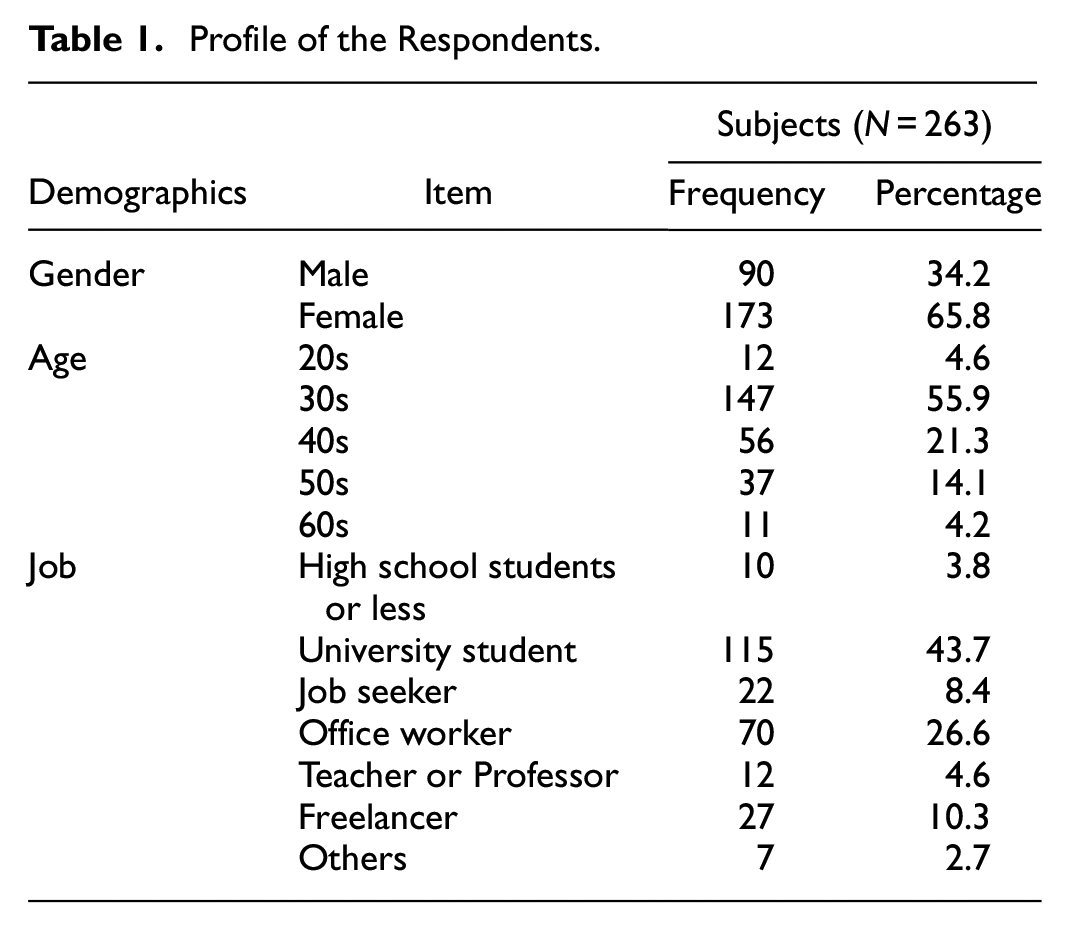
The findings of this study are derived from a single-point-in-time survey conducted online, using a cross-sectional research design. Based on the feedback from contest managers in domestic media outlets, the selection process for the most actively used crowdsourcing sites in South Korea was meticulously carried out. Various criteria, such as usage frequency and accessibility, were considered, leading to the inclusion of idea contest portals like allforyoung.com, thinkyou.co.kr, and all-con.co.kr. These sites featured a pop-up with a brief introduction and a link to the survey for about 10 days in March 2022, encouraging visitor participation. This process was carefully designed to ensure the research’s reliability and validity. Visitors could access the main questionnaire by clicking on the link. Small incentives were offered to encourage participation, and the researcher collected respondents’ email addresses to enter them into a lottery for additional rewards. Informed consent was obtained from all participants. After eliminating any insincere responses, 263 responses were used in the analysis, with 90 (34.2%) being male and 173 (65.8%) female. Respondents in their 30s were the most frequent, with 147, followed by those in their 40s with 46. Most respondents were university students. Table 1 provides more details about the respondents.
Profile of the Respondents.
Results
This study utilized the partial least squares (PLS) structural equation modeling (SEM) approach, employing SmartPLS software for the analysis, which is particularly apt for examining complex predictive models involving multiple constructs (J. F. Hair et al., 2021). Our analytical process was twofold. Initially, we conducted a confirmatory factor analysis to evaluate the measurement model, focusing on establishing convergent validity, reliability, and discriminant validity. Subsequently, the structural model was assessed through path analysis to test the hypotheses. Specific tests included bootstrapping with 5,000 resamples to derive the t-values and p-values for hypotheses testing, providing a robust assessment of the relationships between constructs. The results of these tests, including path coefficients, t-values, and significance levels, were thoroughly interpreted to validate the theoretical framework and hypotheses posited in our study.
Common Method Bias (CMB)
To examine the common method bias (CMB), a principal component analysis was conducted using SPSS software, and “Harman’s one-factor test” was applied (Harman, 1976). The findings revealed that CMB was not present in the data, as the variance of a single construct was 33.435, which is below the 50% threshold.
Measurement Model
To assess convergent validity, reliability, and discriminant validity, a confirmatory factor analysis was conducted. The reliability of the measurement scales was assessed by computing Cronbach’s alpha and composite reliability (CR), and all constructs were deemed to have adequate reliability. Convergent validity was considered acceptable when measurement constructs had an average variance extracted (AVE) of at least 0.50 (Fornell & Larcker, 1981) and item loading of more than 0.70 (J. Hair et al., 2006). The factor loadings were significant at the p = .001 levels, ranging from .698 to .943, which strongly supports the presence of convergent validity (Bagozzi et al., 1991). Table 2 provides the test results for reliability and convergent validity.
Demographic Features of Respondents.

To ensure discriminant validity, this study utilized the Fornell and Larcker (1981) criterion and the heterotrait-monotrait ratio of correlations (HTMT). Table 3 reveals that the square root of AVE values are displayed in bold italics on the diagonal, and these values are greater than any other inter-construct correlation coefficients in their corresponding rows or columns. This suggests that discriminant validity has been established for all constructs in the study.
Correlation of the Research Variables.

Next, this study examined the HTMT to ensure discriminant validity and found that the HTMT values for all constructs were below the recommended threshold of 0.85 (Henseler & Sarstedt, 2013). The HTMT results are presented in Table 4.
HTMT Matrix.

Hypothesis Test
To examine the proposed relationships between the constructs, a structural equation modeling (SEM) analysis using PLS was performed. This study used the bootstrap resampling method with 5,000 resamples to evaluate the significance of the paths in the research model. The results of the analysis are presented in Figure 2, revealing that six out of the eleven paths in the research model were found to be significant.

The structural model with path coefficients.
The findings support some of the hypotheses, while others were not supported (Table 5). Specifically, outcome expectation was found to have a significant correlation with both attitude and recommendation intention, supporting H1a and H1b. Career benefits, however, were not found to impact attitude, failing to accept H2a, but they did have a significant association with recommendation intention, supporting H2b. Reputation was not associated with attitude, failing to support H3a, but it did have a significant influence on recommendation intention, supporting H3b. Task identity did not affect attitude or recommendation intention, failing to accept H4a and H4b. Duration had a significant association with attitude, failing to support H5a, but it did not influence recommendation intention, supporting H5b. Attitude was found to have a significant correlation with recommendation intention, supporting H6. Gender and age were not found to influence recommendation intention. Overall, the structural model explained approximately 55.4% of the variation in recommendation intention.
The Results of PLS-SEM.
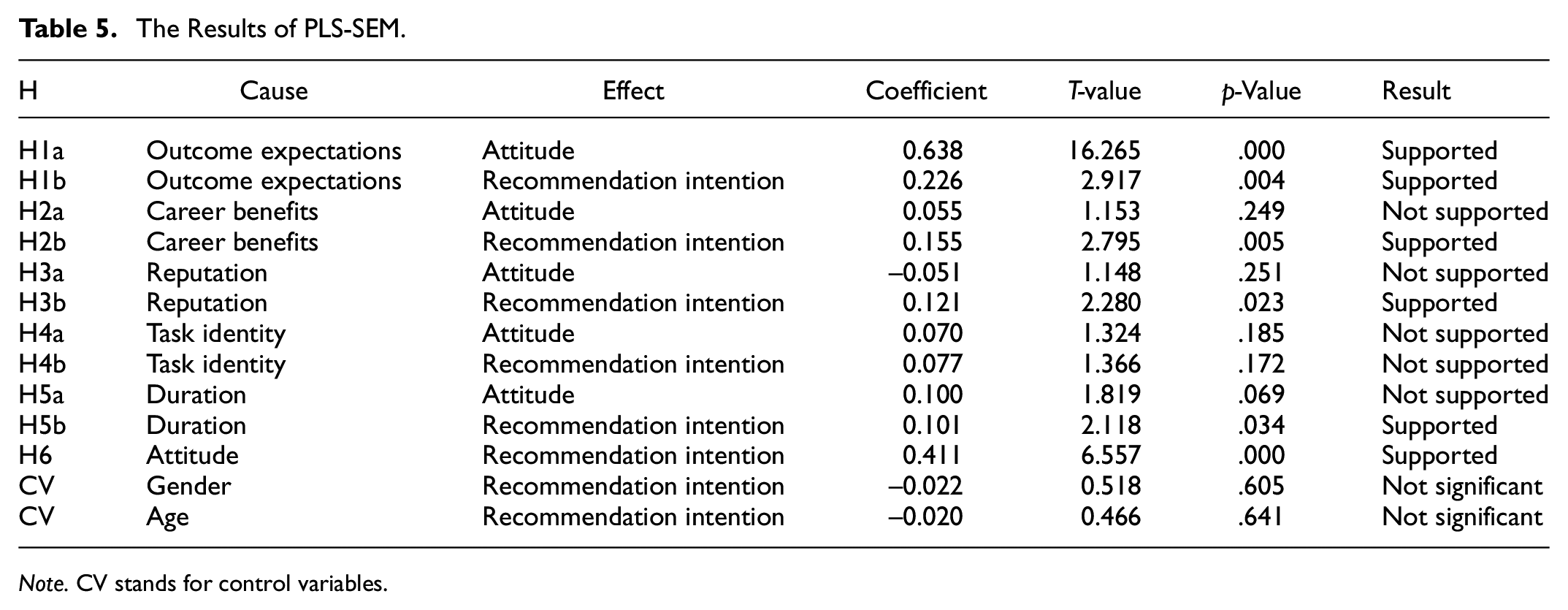
Note. CV stands for control variables.
Discussion
The objective of this research was to identify the variables that influence the intention to recommend. This was accomplished by including a number of context-specific factors.
The findings figured out that outcome expectations have a significant positive impact on attitude and recommendation. Shi et al. (2022) authored that outcome expectations motivate participants to contribute more frequently and continuously. A plausible explanation for these findings is that visitors with higher expectations for results are more favorable to crowdsourcing and more likely to spread the word about crowdsourcing to others.
The empirical results indicated that career benefits do not significantly impact attitude toward OCP, yet they do influence recommendation intention. Previous studies have highlighted the motivation behind engaging in crowdsourcing is often driven by prospects of career development or future employment opportunities (Bao et al., 2020; Sajid et al., 2022; Taylor & Joshi, 2019). Upon examining these findings, it appears that the allure of potential career advancements does not universally enhance positive attitudes toward OCPs. This discrepancy may stem from the fact that the prospect of career benefits is contingent upon winning competitions, which may not resonate with all participants equally. Conversely, the notion of career benefits bolsters recommendation intention because the potential for career advancement, regardless of the competition’s outcome, is perceived as a valuable opportunity by participants. This suggests that while the direct benefits of career opportunities may not shift attitudes significantly, the broader implications of these opportunities encourage users to recommend the platform to others, recognizing the inherent value in participation itself.
The analysis elucidated that corporate reputation does not exert a significant influence on attitude but significantly impacts recommendation intention toward OCP. This dichotomy can be understood through the lens of social validation and prestige associated with corporate entities. While a company’s esteemed reputation may attract interest, it doesn’t necessarily alter individual attitudes toward participating in OCPs. This could be because individuals may appreciate a company’s prestige without it altering their personal views or feelings toward participating in its crowdsourcing efforts. However, the perceived prestige of a company does play a crucial role in influencing individuals to recommend its contests or platforms to others. The reasoning behind this is rooted in the social value of associating with or endorsing entities that are well-regarded. People tend to believe that recommending competitions hosted by prestigious companies will be more valued by their peers, hence bolstering their own social standing. As a result, the intrinsic value of a company’s reputation significantly heightens the propensity for recommendation, driven by the expectation of social validation and the enhancement of one’s social network’s esteem toward the recommender.
The present study’s findings indicate that task identity does not significantly impact either attitude or recommendation intention toward OCP. This outcome might stem from the observation that most competitions within OCPs tend to describe task identity—essentially, the specificity and completeness of the task description—to a comparable extent. Consequently, visitors to these platforms may struggle to distinguish substantial differences in how well tasks are defined across various competitions. This lack of differentiation could dilute the potential influence of task identity on users’ attitudes and their intentions to recommend a contest. For a more nuanced understanding of how task identity affects user perception and behavior, future research should consider a more detailed and objective analysis. This could involve quantifying the degree of task specificity using measurable indicators, such as the number of words used in the description, the clarity of conditions surrounding participation (e.g., duration, rewards, team organization requirements, report page length), and other definable contest parameters. Such an approach would allow for a more sophisticated assessment of task identity’s role in shaping user engagement and recommendation behaviors within OCP environments.
The findings of this research demonstrated that the duration of contests listed on OCP does not significantly affect participants’ attitudes but does influence their recommendation intention. Given that many competitions on OCPs typically allow for submissions over a span of several weeks, the abundance of options with extended durations might dilute the potential for duration to meaningfully impact participants’ attitudes toward any single contest. This suggests that when faced with numerous choices that all provide ample time for participation, individuals may not perceive duration as a differentiating factor that alters their personal stance or feelings toward participating in these competitions. However, the study also indicates that a longer contest duration positively affects the likelihood of participants recommending the contest to others. This is likely because extended durations offer more opportunities for participation, not just for the individuals already aware of the contest but also for their networks. Participants may perceive these longer durations as more inclusive and flexible, thereby increasing the appeal of recommending these contests to peers who might need more time to decide or prepare their submissions.
The results validated that attitude has a significant positive effect on recommendation intention. These findings could be attributed to the fact that visitors who view a contest more positively are more likely to recommend it to others.
Conclusion
Implications for Researchers
This paper makes the following academic contributions. First, it contributes to the existing literature by illuminating the recommendation intention for OCP visitors. Past studies have mainly conducted participation intentions or idea quality (Blohm et al., 2011; Liu & Liu, 2019; M. M. Wang & Wang, 2019; Zhao et al., 2016). This study noted that OCP visitors are willing to participate and, thereby, have a tendency to collect information. They tell crowdsourcing to others to share information or form a team. This research is differentiated in that it analyzed OCP visitors from the perspective of recommendation rather than participation intention. Second, the attitude was set as a major antecedent factor to explain the visitors’ behavioral intentions. Many behavioral theories argue that attitude is a prerequisite for intention (Ajzen, 1991; M. M. Wang et al., 2019). The analysis results proved that attitudes strongly influence the intention to recommend. This article has academic significance in that it reinforced the existing theory and re-verified it in the context of OCP. Third, this work presents new contributions by revealing that recommendation intentions are significantly influenced by Outcome expectations, recruitment utilization, reputation, and duration. It has been found that the four variables affect participation intention, submission amount, and idea quality (Blohm et al., 2011; Walter & Back, 2011). However, there are insufficient studies that reveal their direct influence on recommendation intention. Scholars can devise measures to further activate OCP based on the results of this study. For example, they can unify the conditions of the contests to show visitors and promote information exchange between them. Finally, this study empirically confirmed the difference in recommendation intention according to gender and age. The results revealed that gender and age do not affect the intention to recommend.
Managerial Implications
This article provides some implications for practitioners. First, it proved that attitude determines the intention of recommendation. Therefore, OCP organizers should try to form a favorable response for potential participants when posting contests. Posters should be designed to better catch visitors’ eyes. Operators can give small gifts to visitors who spread word of mouth. In particular, since Outcome expectations affect attitudes, the host company should set the difficulty level appropriate to the extent that visitors can feel inherently satisfied. Second, the analysis revealed that expected utility, employment use, and reputation affect recommendation intention. The size of the path coefficient is in the order of expected utility, employment utilization, and reputation. Therefore, OCP operators should first induce visitors to strongly recognize the expected utility. They need to present topics suitable for the times and appropriate levels of categories. The OCP host companies need to give winners additional points in the future recruitment process or issue official documents such as certificates. These conditions will raise the level of recruitment utilization. Companies are encouraged to emphasize their reputation and image when posting contests. Visitors may not know exactly what companies have been up to lately or what they have achieved. Therefore, OCP marketers should attract visitors’ attention by showing the company’s recent awards or achievements along with the contest. Third, this study showed that gender and age do not affect recommendation intention. Thus, OCP planners need to take into account the above results when posting contests targeting a specific gender or age. Lastly, to ensure global effectiveness, companies seeking ideas through OCPs must tailor their emphasis on outcome expectations, career benefits, and corporate reputation to align with each continent’s unique cultural nuances. For instance, in Asia, highlighting career opportunities might resonate more due to the competitive job market, while in Europe, emphasizing corporate reputation and sustainable practices could be more influential due to a strong focus on corporate social responsibility. While originating from an Asian context, this study’s insights have vast global relevance. They underline the critical role of strategies that nurture a positive attitude toward OCPs globally.
Limitation and Further Research
This study has illuminated several areas ripe for further exploration. Firstly, the lack of data on the frequency of participation and visits represents a gap in understanding the dynamics of recommendation intentions. Future research could employ longitudinal designs to track user engagement over time, providing insights into how sustained interaction with OCPs influences recommendation behaviors. Additionally, incorporating analytics tools to monitor and analyze visit frequency and participation rates could offer a quantitative measure of engagement levels. Secondly, the omission of personal factors such as individual motivation and occupation from our analysis limits the depth of our understanding. Future studies could incorporate qualitative methodologies, such as interviews or surveys, to capture the nuanced interplay of personal motivations, occupational backgrounds, and recommendation intentions. This would allow for a more personalized analysis of user behavior on OCPs. Thirdly, the absence of satisfaction and loyalty in our model is a significant limitation. Future research should consider these constructs by conducting follow-up studies with repeat participants, utilizing scales to measure satisfaction and loyalty toward OCPs. This approach would provide a richer understanding of the long-term engagement and its impact on recommendation intentions. Lastly, the need for a more global perspective is paramount. Conducting comparative studies across various cultural and geographic contexts can shed light on the universal versus context-specific factors influencing recommendation intentions. Such studies could utilize cross-cultural analysis techniques to identify similarities and differences in user behavior, offering valuable insights for global OCP optimization. By addressing these limitations, subsequent research can build on our findings, enhancing the theoretical and practical understanding of OCPs.
Footnotes
Appendix
List of Constructs and Items.

| Construct | Item | Desc | Source |
|---|---|---|---|
| Outcome expectation | OEX1 | Participating in the contest helps improve my work and academic efficiency. |
Compeau and Higgins (1995)
Shi et al. (2022) |
| OEX2 | Participating in the contest helps develop knowledge. | ||
| OEX3 | Participating in the contest helps me achieve what I want to do. | ||
| Career benefits | CBF1 | Winning the contest is helpful when applying for a job. | M. M. Wang and Wang (2019) |
| CBF2 | Winning the contest can be beneficial to my career in recognition of my expertise in the field. | ||
| Corporate reputation | REP1 | The host organization of the contest is a large company with high public awareness. | H. C. Wu et al. (2018) |
| REP2 | The host organization of the contest has a well-known brand. | ||
| REP3 | The host organization of the contest has a reliable and fair image. | ||
| Task identity | TID1 | The subject of the contest is specific. | Lee (2013) |
| TID2 | The specification of the contest is concrete. | ||
| TID3 | The registration method of the contest is specific. | ||
| Duration | DUR1 | The duration of the contest is long. | Lee (2013) |
| DUR2 | The duration of the contest is sufficient to prepare. | ||
| DUR3 | The duration of the contest is appropriate. | ||
| Attitude | ATT1 | It is a good idea to be interested in the contest. | Ajzen (1991) |
| ATT2 | It is a wise idea to be interested in the contest. | ||
| ATT3 | It is a positive idea to be interested in the contest. | ||
| Recommendation intention | REI1 | I will speak favorably about the contests to others. | Kim and Son (2009) |
| REI2 | I will suggest the contests as a recommendation to those seeking advice from me. | ||
| REI3 | I will refer my acquaintances to the contest. |
Declaration of Conflicting Interests
The author(s) declared no potential conflicts of interest with respect to the research, authorship, and/or publication of this article.
Funding
The author(s) received no financial support for the research, authorship, and/or publication of this article.

Data Availability Statement
The data used in this study are available from the corresponding authors upon reasonable request.