




Abstract
This paper explores how digital transformation influences breakthrough innovation by adopting the AMO framework of human capital. Through the analysis of data from A-share listed companies in China’s manufacturing industry spanning from 2012 to 2021 using fixed-effect OLS and Sobel test, the study reveals that digital transformation significantly fosters breakthrough innovation within manufacturing companies. This positive impact is attributed to the enhancement of abilities, activation of motivation, and expansion of opportunities for human capital, thus facilitating breakthrough innovation. Furthermore, the study highlights that the impact of digital transformation on breakthrough innovation is particularly pronounced in state-owned and high-tech companies. Additionally, it is observed that companies located in the eastern region of China experiences more robust promotion effects compared to those in central and western regions. Significances and implications are discussed.
Introduction
The manufacturing sector plays a critical role in the real economy and holds significant importance in the country’s economic development. However, the Chinese manufacturing industry currently faces substantial challenges, notably imbalances between supply and demand, characterized by an excess of supply at the lower end and a shortage at the higher end (Zhou et al., 2022). Additionally, the emergence of American technological dominance and escalating strategic competition between China and the United States have imposed restrictions and containment on Chinese companies seeking access to key core technologies from developed nations (Zhang, 2022). Consequently, the conventional approach of relying on the introduction of advanced technology to address the supply and demand imbalance in China’s manufacturing industry and foster innovation is no longer tenable (Li et al., 2023; Yi et al., 2022). In response to these pressing issues, the 20th National Congress of the Communist Party of China underscored the urgency of accelerating the implementation of an innovation-driven development strategy, enhancing the independent innovation capabilities of manufacturing companies, and swiftly resolving the bottleneck issue surrounding key core bottlenecks.
Digital transformation has emerged as a viable path for advancing China’s manufacturing industry in both theoretical and practical contexts (Verhoef et al., 2021; Vial, 2019). However, it is important to note that the level of digitalization in Chinese manufacturing is still relatively low. According to the “2022 Accenture Digital Transformation Index of Chinese Enterprises,” over 50% of Chinese manufacturing companies are still in the early stages of digitalization, with limited implementation. Considering this situation, the “Made in China 2025” plan recognizes the digitalization of manufacturing as a crucial aspect of transforming and upgrading Chinese manufacturing companies. Additionally, “The 14th Five-Year Plan for the Development of the Digital Economy” emphasizes the future significance of the deep integration of digital technology and the real economy. This integration will facilitate the transformation and upgrading of traditional industries, while fostering new industries, formats, and models. At the national level, it is explicitly stated that the integration of the digital economy and the new generation of information technology is essential for Chinese manufacturing companies to overcome their low-end market constraints and achieve innovative development (Vial, 2019; R. Zhou et al., 2022).
Leveraging advanced technologies like artificial intelligence, big data, and blockchain, digital transformation possesses the potential to revolutionize company management and resource allocation practices (Hanelt et al., 2021; Verhoef et al., 2021; Vial, 2019). This transformation can result in substantial improvements across various business operations, including process optimization, regular updates, and organizational restructuring. Ultimately, it can usher in new business models focused on creating enhanced consumer value. However, diverse perspectives exist regarding the impact of digital transformation on innovation within manufacturing companies (Appio et al., 2021). While studies suggest a positive influence of digital transformation on innovation performance (Khin & Ho, 2018), others highlight challenges, such as resource competition and information overload, that may hinder innovation during the digital transformation process (Wang et al., 2022). Thus, achieving a consensus on the precise effects of digital transformation on innovation in manufacturing companies remains elusive (Appio et al., 2021). This ambiguity partly arises from the broad nature of innovation, where the effects and mechanisms of digital transformation may vary depending on the type of innovation activity. Consequently, further exploration is needed to fully comprehend the relationship between digital transformation and specific types of innovation activities, especially concerning its influence on breakthrough innovation that transcends technological barriers and explores new technologies (Kaplan & Vakili, 2015).
Human capital is recognized as the strategic foundation for breakthrough innovation in companies, a perspective firmly established in domains of strategic management, human resource management, and innovation management (Chen et al., 2021). The theory of technological innovation underscores human capital as one of the essential prerequisites for a company’s innovation (Cohen & Tripsas, 2018). While prior research has explored the mechanisms through which digital transformation affects company innovation from various angles, such as financing constraints and governance structure (S. Li et al., 2023; Peng & Tao, 2022; Xue et al., 2022), studies centered on the perspective of human capital are still relatively scarce and often focused on the ability dimensions of human capital. Innovation process theory posits that company innovation comprises two stages: creative initiation and innovation transformation (Galanakis, 2006). Employee knowledge and technological capabilities form the foundation for creative initiation, while the conversion of ideas into innovation and their ultimate transformation into products necessitate organizational recognition and support for employee creativity (Cohen & Tripsas, 2018). Consequently, achieving breakthrough innovation not only requires organizations to possess the abilities embedded in human capital but also entails activating of innovation motivation and providing innovative opportunities for human capital. Thus, the integration of the AMO framework for human capital is of great significance in advancing the research.
In summary, to shed light on the “black box” mechanism between digital transformation and breakthrough innovation, the study integrates the AMO framework of human capital and selects non-ST manufacturing companies listed on the A-share market from 2012 to 2021 as samples. Specifically, the study constructs and tests a unified analytical framework concerning “digital transformation—AMO dimensions of human capital—breakthrough innovation.” The findings reveal that the positive impact of digital transformation on breakthrough innovation in manufacturing firms is facilitated through the enhancement of abilities, motivation, and opportunities of human capital. These findings make the following contributions: First, it integrates the widely used AMO framework from the field of strategic human capital, providing systematic evidence for a precise understanding of the intrinsic mechanisms by which digital transformation optimizes human capital capabilities, motivation, and opportunities to achieve digitally enabled innovation. Second, it enriches and expands the relevant literature concerning the economic consequences of company digital transformation and the factors influencing breakthrough innovation, deepening understanding of how digital transformation affects breakthrough innovation in manufacturing companies and offering empirical evidence to companies engaged in digital transformation and innovation management. Third, it analyzes the impact mechanisms of digital transformation on human capital and breakthrough innovation in manufacturing companies, which holds significant policy reference value for promoting the deep integration of the digital economy and the real economy, implementing the innovation-driven development strategy, and applying the principles of the new development concept in economic issues.
Literature Background and Theoretical Basis
Literature Background
In recent years, digital transformation has emerged as a central focus in both academic and practical spheres. It encompasses a systematic process wherein manufacturing companies leverage digital technology to overhaul production, process, and various aspects of organizational operations, ultimately leading to the restructuring of business models and the innovation of customer value (Appio et al., 2021; Hanelt et al., 2021; Verhoef et al., 2021).
A substantial body of research has confirmed that the positive influence of digital transformation on company innovation (Li et al., 2023; Peng & Tao, 2022; Xue et al., 2022). Zhao et al. (2024) analyze China’s A-share listed companies spanning from 2007 to 2021 and found that digital transformation makes a significant positive influence on the innovation capability of companies. Ciampi et al. (2021) based on dynamic capabilities view to confirm the impact of big data analytics capabilities on business model innovation and this relationship is mediated by entrepreneurial orientation.
However, this consensus faces challenges from academia and industry. Usai et al. (2021) conducted a multivariate analysis of variance and confirmed that digital technologies have very low impact on innovation performance, whilst R&D expenses are most reliable predictor of innovation. Wang et al. (2022) have identified a “U-shaped” effect of digital transformation on company innovation characterized by “data-driven” and “capability curse” effects. These effects suggest that an excessive degree of digitization may lead to constraints, such as resource competition and information overload. Duan et al. (2023) have proposed that digital transformation has an inverted U-shaped impact on incremental innovation within companies.
The above discrepancies in research findings may stem from the predominant focus of existing studies on investigating the influence mechanisms of various types, stages, and intensities of digital transformation on overall company innovation. These studies tend to overlook the reality that the effects and underlying mechanisms of digital transformation may diverge due to factors such as the knowledge structure, technological complexity, and input costs associated with different forms of innovation. Consequently, directing our attention toward specific types and attributes of innovation activities and outputs can offer valuable insight into elucidating the impact and mechanisms of digital transformation on organizational innovation.
In line with Ettlie (1983), innovation can be categorized into two main types based on the degree of technological change relative to existing industry technologies: breakthrough innovation and incremental innovation. Breakthrough innovation entails more substantial changes and necessitates the disruptive reconstruction and restructuring of company production processes and output structures (Sheremata, 2000). It offers a more accurate reflection of a company’s innovation capabilities and levels. Achieving breakthrough innovation demands that companies possess more significant heterogeneous resources and capabilities. It involves pursuing technological breakthroughs and upgrading product/services based on the fusion of more radical innovative knowledge and complex technological means in a new environment (Capponi et al., 2022). The exploratory and forward-looking nature of breakthrough innovation has the potential to fundamentally drive technological substitution and upgrading manufacturing companies. This, in turn, positions them for ascending the global value chain and building international core competitiveness (Reis et al., 2021).
In summary, given the varied impacts of digital transformation on innovation, there is a strong theoretical and practical significance in delving deeper into breakthrough innovation, as a specific type of innovative activity, to explore the potential consequences of digital transformation.
Theoretical Basis: Human Capital in the AMO Framework
The AMO model posits that individual performance improvement hinges on three fundamental factors: ability, motivation, and opportunity (Bos-Nehles et al., 2023). This model serves as a widely employed framework for unpacking the “black box” that connects management practices with organizational innovation (Seeck & Diehl, 2017). Within this framework, ability pertains to the cognitive faculties such as knowledge and technical skills that individuals require to fulfill their work responsibilities. Motivation encompasses the psychological inclinations and drives that prompt individuals to engage tasks. Opportunity comprises organizational contextual elements that either facilitate or impede individual behavior.
Human capital represents the aggregate of knowledge, skills, and physical capabilities residing within employees, and is acknowledged as a crucial resource enabling organizations to gain and sustain competitive advantages (Ployhart & Moliterno, 2011). Consequently, in alignment with the AMO framework, this paper divides human capital into the three dimensions: ability, motivation, and opportunity.
Firstly, within the context of human capital, the ability dimension refers to the likelihood of employees within the organization possessing the capability to execute specific tasks and achieve organizational objectives (Ployhart & Moliterno, 2011; L. Zhang et al., 2023). In addressing the challenges posed by diverse tasks, employees must possess a range of skills and abilities, such as problem-solving skills and the capacity to approach problems from various perspectives (Choi, 2004). An individual’s educational background can, to some extent, mirror the diversity of their cognition abilities, qualities, and perspectives (Zhang et al., 2023). A higher level of education enhances an individual’s effectiveness in utilizing information to contribute to the execution of organizational strategies, thus augmenting organizational performance.
Secondly, the motivation dimension pertains to the extent to which employees are incentivized to engage in innovative actions and strive for strategic objectives. Scholar investigations have discerned that the level of compensation ranks among the foremost determinants of employee motivation for innovation (Biggerstaff et al., 2019; Phung et al., 2023). This perspective aligns with theories such as labor process theory (Omidi et al., 2023) and the efficiency wage theory (Kong et al., 2020).
Lastly, Blumberg and Pringle (1982) posited that even when employees possess the ability and motivation to undertake a particular task, their performance may still be constrained by the opportunities provided by the organization. Similarly, the potential of digital transformation to foster breakthrough innovation depends on the adequate opportunities for innovation provided by the company. Therefore, the opportunity dimension of human capital encompasses the opportunities and possibilities provided by the organization, allowing employees to execute innovative tasks, engage in creative activities, and participate in R&D projects.
In summary, this paper explores the mediating effects of the ability dimension of human capital (represented by the optimization of employee educational background structure), the motivation dimension (represented by the average compensation level of employees), and the opportunity dimension (represented by the structure of research and development positions) in the relationship between digital transformation and breakthrough innovation in manufacturing companies.
Hypotheses Development
Digital Transformation and Breakthrough Innovation
Digital transformation contributes to the realization of breakthrough innovation in manufacturing companies through various means. Firstly, digital transformation, centered around new-generation digital technologies like big data, artificial intelligence, and network connectivity, facilitates activities such as technology development prediction, identification of technology bottleneck, and integrated innovation development (Ciarli et al., 2021). From a technological standpoint, it ensures that manufacturing companies engage in organized research activities, thus providing a technological foundation for achieving breakthroughs in key core technologies (Capponi et al., 2022). Roblek et al. (2021) have affirmed that the application of digital technology enhances the level of disruptive innovation in small and medium manufacturing companies. In a similar vein, Olabode et al. (2022) have identified the positive effect of big data analysis capability on disruptive business model innovation. Additionally, the integration of digital technology and equipment into the production and operation processes of manufacturing companies inevitably leads to the transformation and reshaping of existing business logics, processes, structures, and models. This transformation results in the breaking of existing business paradigms and the formation of new value creation models. Essentially, this is also a manifestation of breakthrough innovation (Capponi et al., 2022).
Second, achieving breakthrough innovation necessitates the aggregation of a series of knowledge elements, both internal and external to the organization, as well as the linkage of knowledge elements across various domains of knowledge (Prahalad, 2012). This requires manufacturing companies to possess the ability to identify and assimilate novel external knowledge elements, in addition to the ability to recombine and integrate these novel knowledge elements with their internal original knowledge assets (Jin & Shao, 2022). Through digital transformation, manufacturing companies can utilize network technologies such as mobile interconnectivity and the Internet of Things to dismantle organizational boundaries, thereby increasing their ability to identify and acquire novel external knowledge. By empowering knowledge management through artificial intelligence, smart manufacturing, and other intelligent technologies, manufacturing companies enhance their ability to recombine and integrate both internal and external knowledge (Jin & Shao, 2022). In essence, the relational, open, and ecological nature achieved by manufacturing companies through digital transformation significantly reduce the barriers to accessing innovative resources such as knowledge and finance (Appio et al., 2021; Roblek et al., 2021). This lays a solid resource foundation for manufacturing companies to achieve breakthrough innovation. Therefore, this study posits the following hypothesis:
Hypothesis 1: Digital transformation is positively related to breakthrough innovation in manufacturing companies.
Mediating Effect of Human Capital Ability Dimension
Digital transformation inherently lead to the digitization of production methods and production relationships within manufacturing companies, primarily evident in the adaptive optimization of the human capital structure due to the “pressure” exerted by digital transformation (Ammirato et al., 2023). The Capital-Skill complementary hypothesis posits a strong adaptability between skilled labor and advanced technology (Choudhury et al., 2020), implying that the process of digital transformation in manufacturing companies, accompanied by the upgrading of production technology, inevitably trigger the optimization of human capital structure (Xiao et al., 2022). The Employee-organization fit theory also shares a similar perspective, emphasizing that the successful execution of digital transformation in manufacturing company depends on the alignment with high-quality talent (Lau et al., 2017). Consequently, digital transformation within manufacturing companies, as a comprehensive endeavor, necessitates not only the digital adaptation of hardware and equipment but also the digital adaptation of human capital, including employee knowledge and skills. This shift fosters the optimization of the ability dimension of human capital for manufacturing companies.
The optimization of the ability dimension of human capital further catalyzes breakthrough innovation within manufacturing companies. The realization of all innovation activities, including breakthrough innovation, depends on employees possessing a certain level of knowledge and the ability to exchange, absorb, and integrate new and existing knowledge (Seeck & Diehl, 2017). The optimization of the ability dimension of human capital expedites the absorption and dissemination of cutting-edge technologies, thereby enhancing R&D capabilities, efficiency, and output (Lenihan et al., 2019). With a high level in human capital, manufacturing companies can learn new knowledge more efficiently and are better equipped to connect novel knowledge with existing knowledge (Gong et al., 2022). This facilitates the integration of knowledge elements spinning different domains, enabling manufacturing companies to break free from their original technological path dependence and heightening the likelihood of achieving breakthrough innovation (Jin & Shao, 2022). Based on the theoretical analysis, we propose the following hypothesis:
Hypothesis 2: The ability dimension of human capital mediates the relationship between digital transformation and breakthrough innovation in manufacturing companies.
Mediating Effect of Human Capital Motivation Dimension
Digital transformation is believed to exert a substantial influence on the motivation dimension of human capital within manufacturing companies, primarily manifested in its ability to drive an increase in employee compensation. Firstly, digital transformation is anticipated to augment the overall compensation pool in manufacturing companies. The rise of the digital economy, coupled with the widespread application of information technology, software, and big data, leads to a gradual reduction in marginal production costs and an increasing proportion of intangible components in the total value of end products. As a result, higher levels of rent returns are expected (Martínez-Caro et al., 2020). This increase in rent returns implies a boost in the total profits available for internal distribution within manufacturing companies, subsequently leading to elevated level of employee compensation.
Secondly, digital transformation is likely to raise the average compensation level within manufacturing companies by optimizing the structural functions of employees. The increased automation and the transformation of value creation models are shifting manufacturing companies from labor-intensive to technology-intensive, leading to the replacement of inexpensive, unskilled labor with machinery (Liu et al., 2022). This transition creates new employment opportunities aimed at absorbing highly skilled labor (Balsmeier & Woerter, 2019). This virtuous complementary relationship between highly skilled labor and digital equipment capital has contributed to an upward trend in the average wages of manufacturing company employees.
Thirdly, digital transformation is expected to enhance the bargaining power of skilled personnel, leading to higher compensation levels. In the emerging field of digital technology, there continues to be a supply-demand gap in terms of talent development and provisioning, providing individuals with relatively stronger bargaining power and higher compensation levels compared to other employee types (Lee & Clarke, 2019). Consequently, digital transformation can strengthen the motivation dimension of human capital through augmenting total compensation and average compensation levels.
The enhancement of the motivation dimension of human capital, driven by the rise in compensation levels, contributes to the realization of breakthrough innovation within manufacturing companies. At the individual level, extensive research supports the notion that higher compensation levels effectively stimulate employee engagement and subsequently enhance the implementation of innovative behaviors (Phung et al., 2023). The perceived reciprocity through the social exchange theory motivate employees to engage in innovative activities as a way of reciprocating the organization’s generosity (Ganguly et al., 2019). Risk-reward theory posits that, to counterbalance the high risks associated with breakthrough innovation, employees require higher levels of compensation to incentivize their willingness and motivation to engage in such ventures (Pleskac et al., 2021). Considering the theoretical analysis above, we propose the following hypothesis:
Hypothesis 3: The motivation dimension of human capital mediates the relationship between digital transformation and breakthrough innovation in manufacturing companies.
Mediating Effect of Human Capital Opportunity Dimension
Digital transformation has heightened opportunities for human capital involvement in breakthrough innovation within manufacturing companies. The displacement effect on low-skilled labor due to the implementation of industrial robots and automation has necessitated the replacement of numerous conventional, repetitive, low-skill job positions (Xiao et al., 2022). Consequently, digital transformation compels manufacturing companies to transition from labor-intensive roles towards knowledge-intensive and technology-intensive ones. To fully leverage the benefits of digital transformation, these companies need to recruit and establish extensive teams of highly skilled and innovative talents (Xiao et al., 2022).
Meanwhile, the informatization (the utilization of computers and telecommunications devices for the storage, retrieval, transmission and manipulation of data), flattening, and transparency brought about by digital transformation (Hanelt et al., 2021; Vial, 2019) empower manufacturing companies to conduct more effective talent inventories and optimize their employment structures. By employing strategies such as role-tailored hiring, they can focus on developing talent in roles that contribute the most value to the organization. The high value-added nature of R&D allows manufacturing companies to accurately identify the strategic demand for R&D talents. Consequently, the creation of R&D positions replaces low-skilled positions, providing more opportunities for engagement in breakthrough innovation activities (Xiao et al., 2022; Yu et al., 2022).
The reinforcement of the human capital opportunity dimension further encourages manufacturing companies to realize the potential for breakthrough innovation. It is worth noting that the enhancement of human capital ability and motivation does not guarantee the realization of breakthrough innovation within manufacturing companies. This is attributed to the prevalent phenomenon of human capital mismatch, where a substantial number of technology-savvy talents with innovation potential are placed in non-production and non-innovation roles (Gradstein, 2019; Li et al., 2021). This phenomenon significantly weakens the innovative effects associated with the optimization of human capital structure and motivation. Digital transformation offers a solution to human capital mismatch in manufacturing companies (Sun et al., 2023). With the proliferation of R&D positions, manufacturing companies can strategically allocate innovative human capital to corresponding positions. This enhances their ability to recognize, absorb, and integrate new knowledge elements, thereby improving innovation efficiency (Li et al., 2021). Based on the theoretical analysis presented above, we propose the following hypothesis:
Hypothesis 4: The opportunity dimension of human capital mediates the relationship between digital transformation and breakthrough innovation in manufacturing companies.
Based on the theoretical analysis presented above, this paper has constructed a theoretical model, as depicted in Figure 1, with the purpose of examining the effects and underlying mechanism by which digital transformation promotes breakthrough innovation in manufacturing companies.
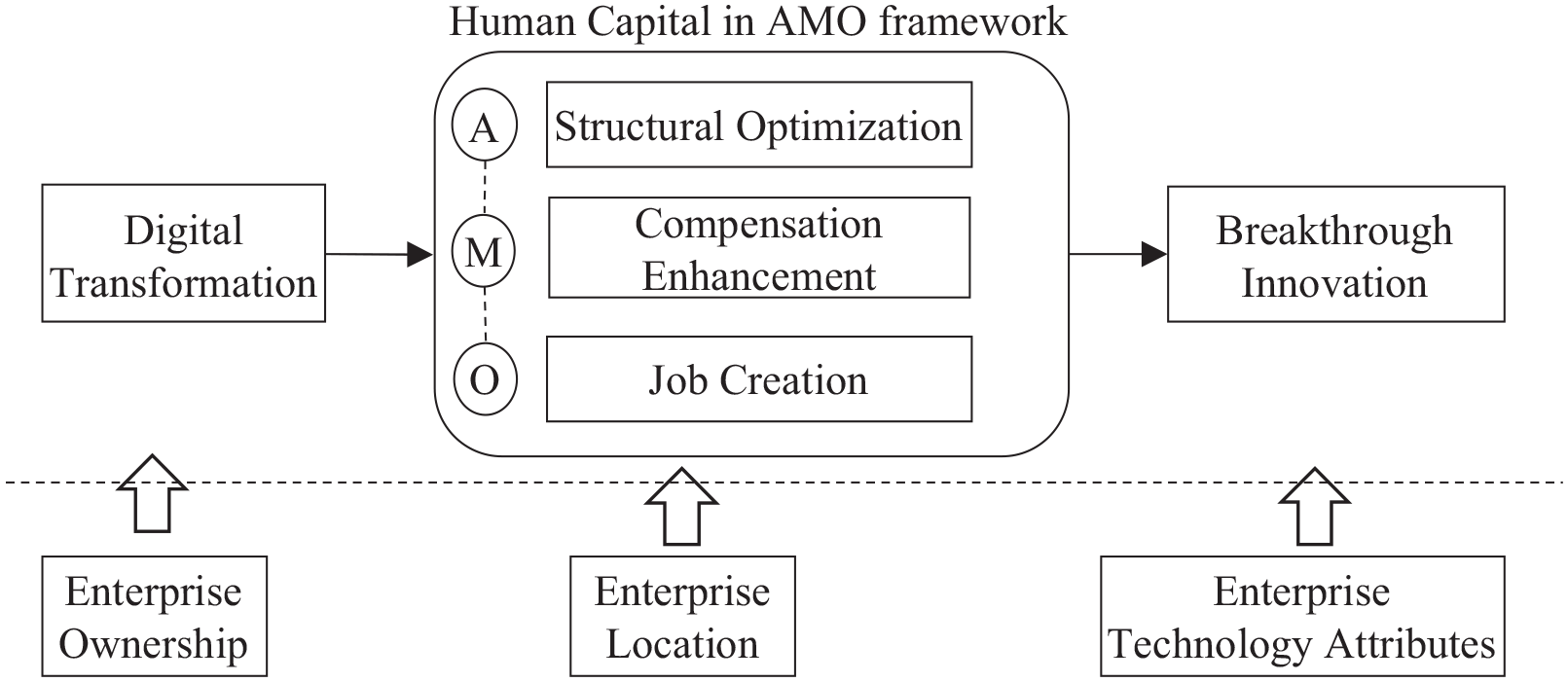
Empirical research model.
Methods
Sample and Data Description
The study selects A-share listed companies from 2012 to 2021 as the research sample. To mitigate potential policy-induced biases, this study selected A-share listed manufacturing companies from 2012 to 2021 as the research sample. The data selection process followed the following principles: (1) The exclusion of ST-listed companies and (2) The removal of samples with missing variables. Following these data selection criteria, the study ultimately gathered 18,487 “firm-year” observations. All data were sourced from WIND, CSMAR, and Find databases.
In 2012, the State Council of the People’s Republic of China, in its “12th Five-Year Plan for the Development of Strategic Emerging Industries,” initially introduced the calls for “coordinating the layout of green data centers” and “promoting the development of the digital economy and digital transformation.” Subsequently, a significant number of manufacturing companies initiated their digital transformation efforts. Figure 2 illustrates the frequency of digital transformation related keywords in the annual reports of manufacturing companies from 2012 to 2021. As shown in Figure 2, over the course of these 10 years, there has been an exponential growth trend in the practice of digital transformation within manufacturing companies.
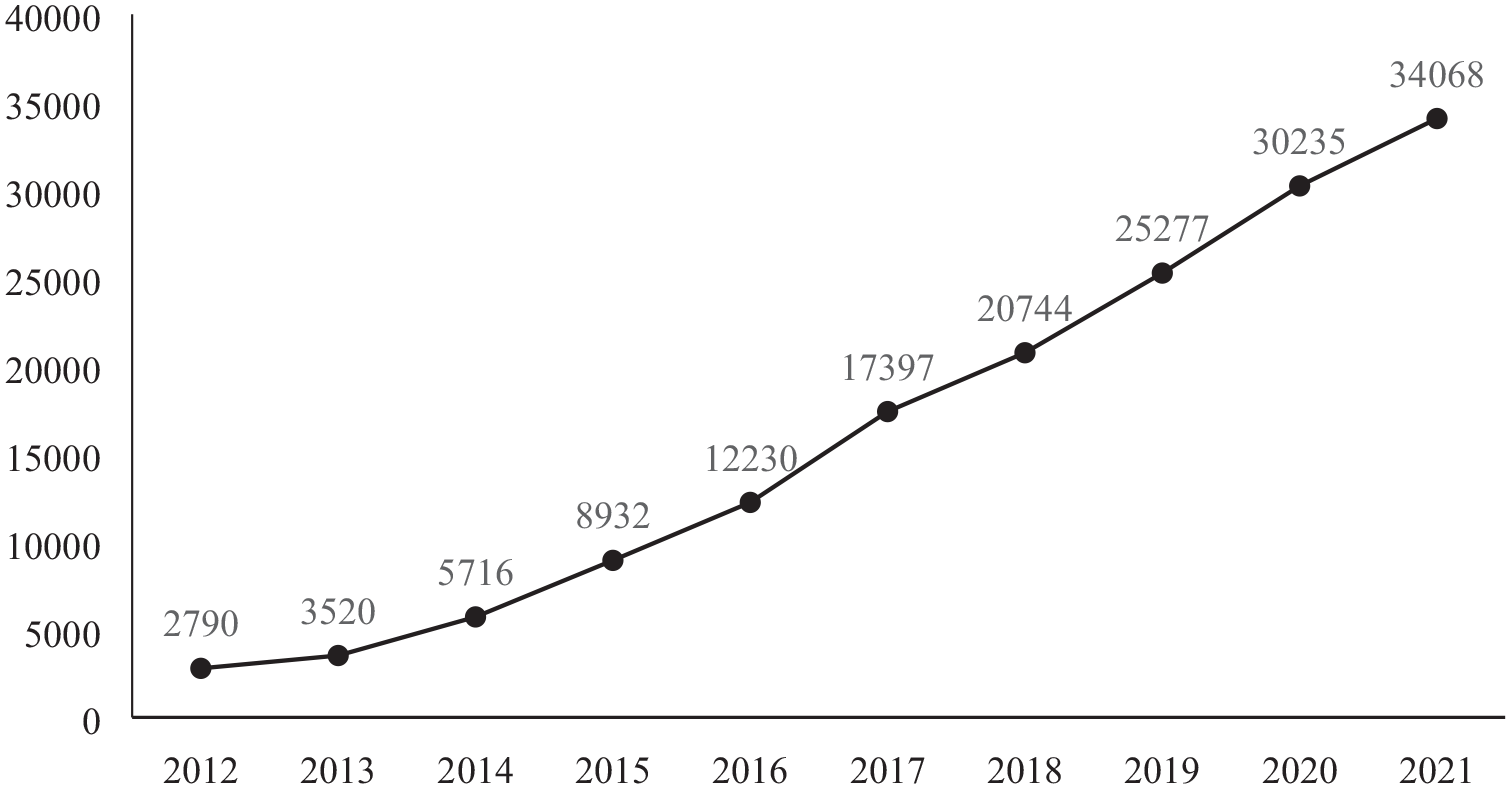
Trend of digital transformation from 2012 to 2021 for manufacturing companies
Variable Measurements
Breakthrough Innovation (RI)
Patents can be categorized into two types: invention patents and non-invention patents (Zhou et al., 2017). Invention patents pertain to novel technological solutions for products or methods, emphasizing uniqueness, novelty, substantial differentiation from existing technology, and significant advancement (Zhang et al., 2019). Non-invention patents encompass utility model and design patents, which involve improvements upon existing technology (Zhang et al., 2019). Compared to utility model and design patents, invention patents exhibit the highest level of technical complexity and value among all patent types, and they possess the lengthiest development and application cycles (Liu et al., 2023). Securing invention patents necessitates a greater depth of original knowledge and more accurately mirrors the extent of technological breakthroughs achieved. Therefore, in accordance with the measurement approach utilized in prior studies (Liu et al., 2023; Zhang et al., 2019), we assess the level of breakthrough innovation within manufacturing companies over sample period by analyzing the quantity of invention patents applications. A higher number of invention patents held by a company signifies the presence of new products or technologies that are distinct from those of its competitors.
Digital Transformation (DT)
Digital transformation is a complex process, and accurately characterizing micro-level digitization at the company level presents significant challenges. Existing research has predominantly addressed this matter from a macro perspective, often relying on regional or industry-level digital economic indicators as proxies for digitalization. In the limited empirical literature that examines company-level digitalization, some researchers have used indicators like IT investment to measure the density of company information, while others have employed questionnaire survey to assess the extent of digital application. However, these approaches come with varying limitations and do not offer a comprehensive perspective.
In recent years, with the widespread utilization of text big data in the fields of economics and finance, researchers have begun to leverage text analysis to depict company digital transformation. Notably, a representative method developed by Wu et al. (2021) for measuring company digital transformation using text analysis has been widely applied (Chen et al., 2024; Zhai et al., 2022; Zhao et al., 2024). Building on these studies, we have developed a digital dictionary comprising five dimensions: artificial intelligence technology, big data technology, cloud computing technology, blockchain technology, and digital technology applications. Subsequently, we utilize the Python “jieba” text analysis tool to conduct text analysis and word frequency analysis on the annual reports of publicly listed manufacturing companies. Finally, we calculate the cumulative word frequency and apply logarithmic transformation to measure digital transformation of manufacturing company.
The Ability Dimension of Human Capital
As represented by education structure optimization (Edu), was quantified following the methodology introduced by Xiao et al. (2022) using the vector angle method. Initially, a human capital space vector was formulated, categorizing all executives and employees with the company into four education levels: “Associate and Below,”“Bachelor’s,”“Master’s,” and “Doctorate and Above.” The proportion of employees within each education level was treated as a component of the space vector, resulting in the creation of a four-dimensional vector denoted as

In this equation,
Finally, the weights of the angles

Where
The Motivation Dimension of Human Capital
As per the methodology delineated by Xu and Wang (2022), employs the average employee salary (Salary) as a surrogate indicator. This involves the computation of the natural logarithm of the ratio of the total actual employee wage payments throughout the reporting period to the total number of employees.
To derive the total actual employee wage payments for the current year, the following calculation is performed: it is the “end-of-period debit balance for staff remuneration payable” minus the “end-of-period debit balance for staff remuneration payable in the previous year,” plus “cash payments to employees and payments on behalf of employees for the current year,” minus “the total annual salaries of directors, supervisors, and executives.”
The number of employees is determined as follows: it is “the number of employees in service” minus “the number of directors, executives and supervisors,” with the addition of “the number of independent directors” and “the number of directors, supervisors, or executives who have not received their remuneration.” A higher value for Salary indicates a greater average employee salary within the organization.
The Opportunity Dimension of Human Capital
In accordance with the approach outlined by Ramírez et al. (2020), employs the proportion of R&D positions (Job) as a substitute variable. It quantifies the ratio of employees in R&D positions to the total number of employees. A higher Job value signifies a larger proportion of personnel engaged in R&D roles within the company.
Control Variables
In addition to the variables mentioned above, we have included several widely accepted control variables to account for potential influences of other factors, as per established practice. Ratio of liability to assets (Lev) is computed by dividing the total liabilities by the total assets and multiplying the result by 100. Rate of return on common stockholders’ equity (ROE) is determined by dividing the net profit by the average shareholder equity. Cash flow ratio (Cashflow) is calculated by dividing the net cash flow from operating activities divided by the total assets. Rate of total assets turnover (ATO) is computed as the operating income divided by the average assets balance. Increase rate of main business revenue (Growth) is obtained by taking the current year’s operating income dividing it by the previous year’s operating income, then subtracting 1. These control variables have been chosen to consider various factors that could affect the research outcomes and align with established research practices.
All variables and their abbreviations, indicators are presented in Table 1.
Variable, Abbreviations, and Indicators.

Regression Equation
To examine the impact of digital transformation on breakthrough innovation in manufacturing companies, we establish a panel fixed-effects model (1). Furthermore, models (2) to (4) are developed to assess the impact of digital transformation on the capability, motivation, and opportunity dimensions of human capital in manufacturing companies, respectively. Subsequently, models (5) to (7) are formulated to evaluate the effects of the capability, motivation, and opportunity dimensions of human capital on breakthrough innovation within manufacturing companies. The results obtained from models (1) to (7) are then combined to assess and examine the mediating effects of human capital.


To address the potential issue of heteroskedasticity arising from panel data, we conducted the White (1980) test, which confirmed the presence of heteroskedasticity. In response, we have employed the fixed-effects ordinary least squares (OLS) model and have applied robust standard errors clustered at the firm level. This adjustment accounts for heteroskedasticity and enhances the robustness of our analysis. This approach is widely favored for estimating standard errors in studies that employ panel data (Benlemlih & Bitar, 2018). Table 2 presents descriptive statistics and correlations among the variables.
Descriptive Statistics of Variables.
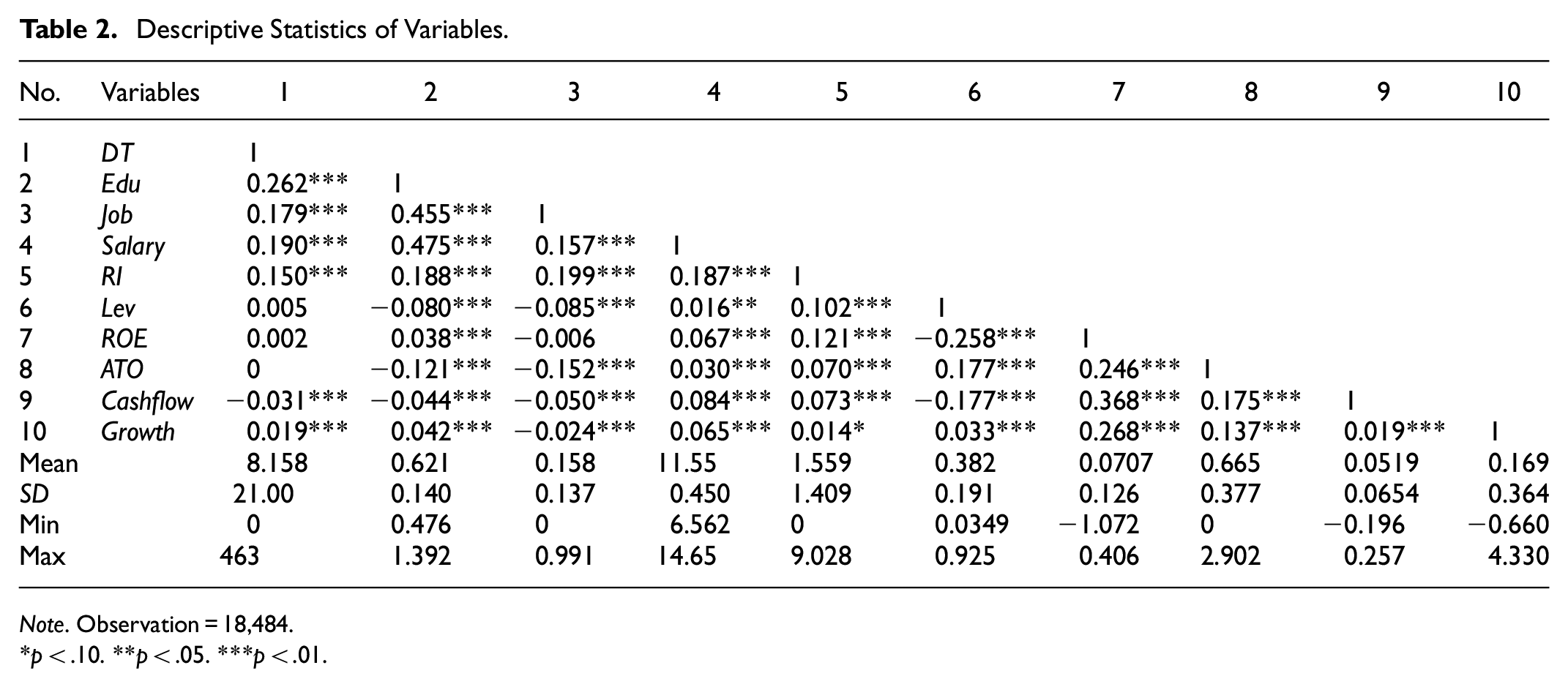
Note. Observation = 18,484.
p < .10. **p < .05. ***p < .01.
Results
Regression Analysis
In accordance with the mediation analysis approach applied in prior research, our study initially assesses the impact of digital transformation on breakthrough innovation within manufacturing companies. Subsequently, we explore how digital transformation influences the dimensions of human capital: ability, motivation, and opportunity, within manufacturing companies. Lastly, we integrate digital transformation and the various human capital dimensions to jointly investigate their impact on breakthrough innovation in manufacturing companies. The results are presented in Table 3.
Baseline Regression Model Results with Fixed-Effect OLS and Robust Standard Errors.

Note. Robust standard errors are shown in parentheses.
p < .10. **p < .05. ***p < .01.
In Table 3, we observe that in columns (1), (4), and (7), the coefficients reflecting the impact of digital transformation on breakthrough innovation in manufacturing companies are consistently 0.010 (p < .01). This compelling consistency affirms that digital transformation can indeed facilitate breakthrough innovation within manufacturing companies, thereby substantiating hypothesis 1.
Moving to columns (2), (5), and (8), we individually examine the influence of digital transformation on the dimensions of human capital: ability, motivation, and opportunity, within manufacturing companies. In each case, the coefficients are 0.002, 0.003, and 0.001, respectively, all significant at the 1% level. In essence, these results illustrate that digital transformation plays a constructive role in enhancing the optimization of the ability, motivation, and opportunity dimensions of human capital in manufacturing companies.
Turning our attention to column (3), we observe a coefficient of 0.007 (p < .01) representing the impact of digital transformation on breakthrough innovation. This suggests that even after accounting for the ability dimension of human capital, digital transformation continues to exert a positive influence on breakthrough innovation in manufacturing companies. Simultaneously, the coefficient for the ability dimension of human capital is 1.801 (p < .01), indicating a positive effect. Combining the findings from columns (1), (2), and (3), it becomes evident that the introduction of the ability dimension of human capital results in a reduction of the coefficient for the impact of digital transformation on breakthrough innovation, from 0.010 to 0.007, with all results remaining significant at the 1% level. This points to the ability dimension of human capital serving as a partial mediator between digital transformation and breakthrough innovation, thus validating hypothesis 2.
In column (6), the coefficient for the effect of digital transformation on breakthrough innovation is 0.009 (p < .01). This demonstrates that, even after controlling for the motivation dimension of human capital, digital transformation continues to positively impact breakthrough innovation in manufacturing companies. Concurrently, the coefficient for the motivation dimension of human capital is 0.575 (p < .01), signifying a significant positive effect. Combining the outcomes from columns (4), (5), and (6), it is evident that the introduction of the motivation dimension of human capital results in a decrease in the coefficient for the impact of digital transformation on breakthrough innovation, from 0.010 to 0.009, with all results remaining significant at the 1% level. This underscores the role of the motivation dimension of human capital as a partial mediator between digital transformation and breakthrough innovation, confirming hypothesis 3.
In column (9), the coefficient for the impact of digital transformation on breakthrough innovation is 0.007 (p < .01). This indicates that, even after accounting for the opportunity dimension of human capital, digital transformation retains a substantial positive influence on breakthrough innovation. Simultaneously, the coefficient for the opportunity dimension of human capital is 2.205 (p < .01), underscoring its significant positive effect. The integration of findings from columns (7), (8), and (9) reveals that the introduction of the opportunity dimension of human capital results in a reduction of the coefficient for the impact of digital transformation on breakthrough innovation, from 0.010 to 0.007, with all results remaining significant at the 1% level. This affirms the role of the opportunity dimension of human capital as a partial mediator between digital transformation and breakthrough innovation, confirming hypothesis 4.
Robustness Tests
To ensure the robustness of our findings, we conducted four distinct approaches to validate the empirical results. First, we employed alternative measures for key variables. In line with the methodology proposed by Wu et al. (2021), we measured digital transformation using the China Listed Companies Digital Transformation Index published by Guangdong University of Finance. This approach involves the establishment of three zones with nine-level evaluation criteria to assess the level of digital transformation within listed companies for a given year. These levels are AAA (highest, 9), AA, A, BBB, BB, B, CCC, CC, and C (lowest, 1). Our regression results, outlined in Table 4, affirm that the baseline regression conclusions remain valid even after substituting the measurement for digital transformation.
Regression Results Using Alternative Measures of Digital Transformation.
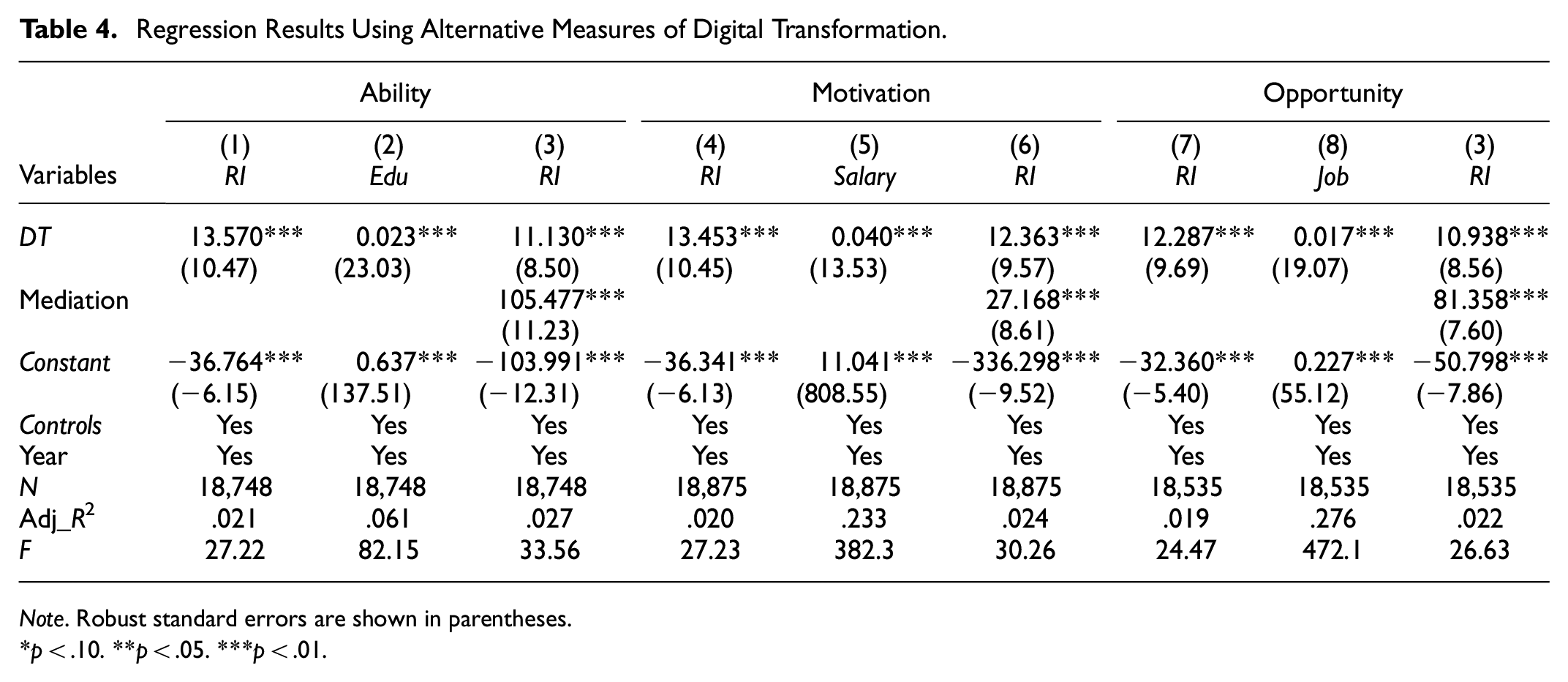
Note. Robust standard errors are shown in parentheses.
p < .10. **p < .05. ***p < .01.
Additionally, we introduced an alternative measurement for breakthrough innovation. Drawing from the work of Bi et al. (2017), we quantified breakthrough innovation by considering the level of R&D expenses, normalized by total operating revenue. The regression findings, as presented in Table 5, demonstrate that the baseline regression results remain robust despite the change in the measurement method for breakthrough innovation.
Regression Results Using Alternative Measures of Breakthrough Innovation.

Note. Robust standard errors are shown in parentheses.
p < .10. **p < .05. ***p < .01.
Second, we addressed potential omitted variables by employing panel data in conjunction with fixed-effects models. Panel data provides a richer source of dynamic individual information and, to a certain extent, mitigates errors attributable to omitted variables. Simultaneously, the fixed-effects model assists in mitigating endogeneity concerns arising from factors that remain constant over time. As depicted in column (1) of Table 6, the coefficient for digital transformation’s impact on breakthrough innovation within manufacturing companies is 0.426, and it exhibits positively significant at the 10% level.
Regression Results of Fixed-Effect Model, Heckman Two-Stage Model and Instrumental Variable Method.

Note. Robust standard errors are shown in parentheses.
p < .10. **p < .05. ***p < .01.
Third, we implemented the Heckman two-stage model. Concerns regarding self-selection endogeneity may arise when measuring digital transformation based on annual report data, where companies may undergo digital transformation in practice but choose not disclose it in annual reports. To address this concern, we employed the Heckman two-stage model. In the first stage, we introduce a dummy variable, DT_dummy (equal to 1 if the company discloses its digital transformation status in the annual report, 0 otherwise). Keeping other settings constant, this dummy variable, DT_dummy, was included in the first-stage probit regression model to compute the Inverse Mills Ratio (IMR). The IMR value was subsequently introduced as a control variable in the Heckman second-stage model. As presented in column (2) of Table 7, the coefficients for digital transformation and IMR concerning breakthrough innovation in manufacturing companies are 0.732 and 24.763, respectively, both statistically significant at the 1% level. In essence, after controlling for selection bias, the regression results continue to affirm the baseline regression findings.
Results of Heterogeneity Tests.

Note. Robust standard errors are shown in parentheses.
p < .10. **p < .05. ***p < .01.
Fourth, we adopted instrumental variable method, utilizing the regional internet penetration rate (INT) as an instrumental variable. INT reflects the local internet development situation to a certain extent, essentially serving as the infrastructure that supports digital transformation within manufacturing companies. This naturally establishes a link to digital transformation. Simultaneously, there exists no direct correlation between INT and breakthrough innovation of manufacturing companies. Available evidence does not support a significant association between INT and breakthrough innovation of manufacturing companies. Hence, INT emerges as a viable instrumental variable for examining the relationship between digital transformation and breakthrough innovation within manufacturing companies. The results are presented in columns (3) and (4) of Table 7. In the first-stage model (columns 3), INT exhibits an impact coefficient of 0.092 (p < .01) on digital transformation within manufacturing companies, satisfying the validity requirement for the instrumental variable choice. The second-stage model (column 4) reaffirms the consistency of the results with the baseline regression model.
Heterogeneity Analysis
To provide a more detailed examination of the impact of ownership, location, and technological attributes on the research findings, we conducted heterogeneity tests. The results are displayed in Table 7.
To begin with, we conduct heterogeneity tests by examining differences in company ownership. Companies with distinct ownership structures often exhibit notable variations in innovation capability and outcomes. In theory, state-owned companies (SOEs) typically possess more extensive innovation resources, experience less financial pressure, and benefit from government resource allocation as well as their inherent monopolistic characteristics. Therefore, we categorized manufacturing companies into two groups based on ownership: SOEs and non-SOEs. The regression results are presented in columns (1) and (2) of Table 7. These results reveal that, in comparison to non-SOEs, state-owned manufacturing companies demonstrate a higher propensity to enhance breakthrough innovation through digital transformation. This could be attributed to the fact that SOEs generally possess a greater appeal to talent and are more adept at attracting strategic professionals in the competitive labor market for digital-related expertise. This, in turn, bolsters their ability dimension of human capital and further augments the promotion of breakthrough innovation.
In second heterogeneity test, we examined regional disparities. According to the survey of “Accelerating ‘New Infrastructure’ to Create a New Base for Urban Competitiveness,” the eastern region, encompassing 12 provinces such as Beijing, Shanghai, Jiangsu, Zhejiang, Fujian, leads in digital economic development compared to the central and western regions, which encompass 19 provinces including Shanxi, Inner Mongolia, Gansu, Ningxia. This leadership is evident not only in the larger scale of digital economic development but also in the more advanced digital technology infrastructure. For instance, the eastern region incorporates an average of 36 projects per province in the provincial key investment plan for “New Infrastructure,” far exceeding the average of 29 projects per province in the central and western regions. In light of these distinctions, we further divided the sample companies into eastern and central-western regions to explore potential regional variations in the influence of digital transformation on breakthrough innovation. The results, as displayed in columns (3) and (4) of Table 7, reveal that digital transformation exerts a significantly stronger effect on promoting breakthrough innovation in manufacturing companies in the eastern region (0.892, p < .01) compared to the central-western region (0.204, p < .01). The contrast may be attributed to the close connection between digital business development and the availability of digital talent. On one hand, the eastern region boasts a substantially better pool of digital talent in comparison to the central-western region, with numerous elite universities concentrated in the eastern region, providing a significant workforce of digital professionals for manufacturing companies. On the other hand, the average wage level in the eastern region’s manufacturing industry surpasses that of the central-western region, rendering it more appealing to “high-caliber, high-demand” talent. This fosters the realization of the virtuous cycle objective of “high salary level—high-quality labor supply—high-quality development” in the eastern region.
For third heterogeneity test, we considered technological attributes. Manufacturing companies that obtain high-tech company certification gain access to various government financial incentives, including a 15% preferential company income tax rate and other tax benefits. These forms of support help alleviate financial pressure and financial constraints for manufacturing companies, subsequently promoting investments in R&D. Therefore, based on technological attributes, we adhered to the national high-tech company certification criteria (where R&D expenditure accounts for more than 3% of operating income) and categorized manufacturing companies into high-tech and non-high-tech entities. The empirical findings, as displayed in columns (5) and (6) of Table 7, reveal that high-tech companies achieve a more pronounced breakthrough innovation effect through digital transformation when compared to their non-high-tech counterparts. Several factors contribute to this disparity, including the generally larger scale and increased profitability of high-tech companies. Additionally, high-tech companies tend to maintain a more robust reserve of digital-related talent, offering higher compensation and performance-based incentives. To retain the policy benefits associated with high-tech company certification, these companies tend to boost R&D investments, bolster their R&D workforce, and provide numerous R&D positions, collectively rendering breakthrough innovation more likely to occur.
Conclusion and Discussion
This study focused on manufacturing A-share listed companies conducting empirical analysis using panel data from A-share listed manufacturing companies spanning the years 2012 to 2021. The study investigated the impact and mechanisms of digital transformation on breakthrough innovation within manufacturing companies. Additionally, it conducted a heterogeneity analysis, considering factors such as ownership, geographical location, and technological attributes of manufacturing company.
The results show that the implementation of digital transformation within manufacturing companies has a statistically significant positive effect on enhancing their breakthrough innovation. This conclusion remains robust even after undergoing a series of endogeneity and robustness tests. Moreover, human capital plays a partial mediating role in the relationship. Specifically, the structural changes brought about by the digital transformation contribute to the enhancement of the ability, motivation, and opportunity dimensions of human capital. These improvements, in turn, lead to enhanced breakthrough innovation within manufacturing companies. Furthermore, the marginal effect of digital transformation on the enhancement of breakthrough innovation is more pronounced for state-owned companies, companies located in the eastern region, and high-tech companies.
Theoretical Implications
By incorporating the AMO framework of human capital, this study explores an important yet controversial issue: the impact of digital transformation on breakthrough innovation in manufacturing companies. Numerous studies advocate the perspective that digital transformation fosters innovation (Ciampi et al., 2021; Khin & Ho, 2018; Liu et al., 2023; Peng & Tao, 2022; Zhao et al., 2024), while others highlight negative or non-linear relationships between digital transformation and innovation (Duan et al., 2023; Usai et al., 2021; Wang et al., 2022). The divergence in the literature arises from two main reasons: firstly, innovation is a multifaceted system, and research should concentrate on specific types of innovation; secondly, the impact of digital transformation on innovation is also a complex process that requires exploration from a systemic perspective.
Therefore, starting from the AMO framework of human capital, the study focuses on breakthrough innovation to explore the impact and mechanism of digital transformation on breakthrough innovation, aiming to provide new empirical evidence for the controversial literature. The study has the following theoretical implications:
First, integration of AMO framework of human capital provides systematic evidence that clarifies the inherent mechanisms through which digital transformation drives the optimization of human capital’s ability, motivation, and opportunity dimensions. This, in turn, facilitates breakthrough innovation within manufacturing companies. Prior research has often focused on R&D collaboration portfolio, agency cost, risk-taking level (Duan et al., 2023; Zhao et al., 2024), limited attention has been given to the role of human capital, especially in the context of its motivational and opportunity dimensions.
Second, our study contributes to the expansion of the literature concerning the consequences of digital transformation and antecedents of breakthrough innovation. By deepening the understanding of how digital transformation affects breakthrough innovation in the manufacturing companies, this study offers empirical insights that can guide companies in their pursuit of digital transformation and innovation management.
Third, through a detailed analysis, the study dissects the mechanisms through which digital transformation impacts human capital and, consequently, influences breakthrough innovation within manufacturing companies. These findings carry substantial significance in promoting the deep integration of digital and real economies, advancing innovation-driven development strategies, and facilitating the practical implementation of the new development concept.
Management Implications
Firstly, government authorities should take a proactive stance in bolstering their support for digitalization within manufacturing companies with the aim of fostering breakthrough innovation. This proactive approach entails providing policy and financial backing for crucial initiatives such as recruitment digital-related talents, the provision of digital training for employees, and driving digital transformation endeavors. Moreover, governments should incentivize companies to engage in breakthrough innovation by extending support in the form of innovation subsidies, tax incentives, and other relevant measures. By coordinating policies and creating synergies among various innovation strategies, the efficacy of these measures can be significantly enhanced.
Secondly, companies embarking on the journey of digital transformation must recognize that digital disruption will inherently influence the relationships between internal organizational components and digital elements, leading to structural changes within manufacturing companies. Hence, during the implementation of digital transformation, manufacturing companies should not disregard the systemic changes in internal leadership, organizational structure, and corporate culture. Paying attention to these aspects is crucial in elevating the quality and quantity of human capital and enabling the synergistic development of human capital and digital transformation. Specific measures in this regard encompass actively recruiting talents with digital expertise, enhancing compensation and benefits for highly skilled professionals, increasing the proportion of highly educated employees, and establishing dedicated positions and staffing for roles related to digital technology and R&D development.
Lastly, companies should seize the opportunities presented by the development of “Digital China” and actively drive digital transformation efforts while conducting a comprehensive assessment of their development stage and mode. It is essential for manufacturing companies to have a thorough understanding of digital transformation and its effects on breakthrough innovation. They should meticulously evaluate their own conditions and the suitability of digital transformation and formulate well-considered digital development strategies. Furthermore, companies should reinforce their digital foundations and deeply integrate next-generation digital technologies such as cloud computing and artificial intelligence to support various R&D and innovation activities, including breakthrough innovation. This micro-level support will contribute to addressing national key challenges.
Limitations and Directions for Future Research
This study, while confirming hypotheses and making theoretical contributions, presents the following limitations. First, as company digital transformation is still a relatively nascent field, this study predominantly explores the impact of digital transformation on breakthrough innovation through the lens of human capital. However, it is possible that more intricate mechanisms, including potential threshold effects, underlie this relationship. Future research should aim to comprehensively explore these complexities from a variety of perspectives.
Second, our measurement of company digital transformation, utilizing the commonly employed text analysis method, may provide an insightful yet not entirely nuanced representation of digitalization. Future studies should employ more precise measurement technique to capture the full extent, dimensions, and content of digital transformation within organizations.
Third, this study measures breakthrough innovation using invention patents. While this indictor has been widely adopted in previous studies, it may not precisely gauge the extent of breakthrough innovation and possesses certain limitations. Therefore, future research should contemplate incorporating measures such as forward citation of patents or focusing on the top 10% of patents cited to evaluate the “value” and “breakthrough” of innovation.
Lastly, this research has specifically focused on the manufacturing sector, observing the positive impact of digital transformation on breakthrough innovation. To gain a broader perspective, future research should diversify the sample by encompassing various industries and analyzing disparities in the influence of digital transformation on breakthrough innovation within distinct sectors.
Footnotes
Acknowledgements
We are grateful to all the participants for their contributions to this study and would also like to thank the editors and reviewers for their suggestions.
Declaration of Conflicting Interests
The author(s) declared no potential conflicts of interest with respect to the research, authorship, and/or publication of this article.
Funding
The author(s) disclosed receipt of the following financial support for the research, authorship, and/or publication of this article: This research is supported by the National Social Science Fund of China (19BGL270), the Ministry of Education of the People’s Republic of China’s Youth Foundation for Humanities and Social Sciences Research Project (22YJC790172), the Soft Science Project of S & T Plan of Hebei Province (23555305D), The Project of Corporate Governance and Enterprise Research Center (GS2024G).
Ethical Approval
This article does not involve animal and human subjects.

Data Availability Statement
The dataset that is analyzed during the current study are available from the corresponding author on reasonable request.