




Abstract
Guided by the theory of work adjustment (TWA), this study endeavors to investigate the relationship between the work adjustment of news presenters and their career decisions. Taking into account the unique circumstances of the Chinese media landscape and the applicability of TWA, a qualitative research design was adopted, in which 35 news presenters were interviewed to generate data that could be coded to construct a theoretical framework. The findings reveal that the disenchantment of professional authority and the bureaucratic management of Chinese official media have resulted in a negative work adjustment experience for news presenters. However, the study discovered no substantial departure of current news presenters from the industry. Despite the unpleasant work adjustment experiences, the ultra-stability of their jobs offered by official media and the appeal of occupational fame have drawn news presenters back to their existing careers. This study constructed a contextual framework to comprehend the work adjustment phenomenon among Chinese state-affiliated institutions, and offered advice for media managers and students of Broadcasting and Hosting Art major.
Plain Language Summary
This thesis examines how Chinese news presenters cope with the challenges of media transformation and the impact of official management practices on their profession. The research is based on interviews with 35 news presenters, who provided insights into their career decisions and the difficulties they face in adapting to changes in the industry. The study finds that the process of adapting to new media has been challenging for many news presenters, with some experiencing dissatisfaction. Despite these challenges, the prevailing mindset among them is to remain in their jobs in spite of the significant changes taking place in the industry. The research provides a deeper understanding of the practices and challenges faced by the profession in China during this period of media transition. Although the study offers valuable insights into the working conditions of Chinese news presenters, its external validity is limited, and further research is necessary to gain a more comprehensive understanding of this topic.
Keywords
Introduction
The term “Mouthpiece” has been coined by the Communist Party of China (CPC) to denote the role of news institutions as integral components of the propaganda system. The media management policy in China has consistently emphasized the significance of news-based policies in media reform. It mandates that broadcasting media should function as mouthpieces, with news programs serving as the primary focus of broadcast programs (Tan, 2019). As the last link in news broadcasts and the bridge connecting news media and the general public (G. G. Liang, 2004), News presenters are imbued with special political and symbolic significance. They are frequently regarded as mouthpieces, or by some satirists as loudspeakers with life, and are expected to perform their duties with the utmost accuracy, in order to meet the political requirements (Qi, 2019).
News presenters have emerged as an occupation in the golden age of broadcasting media in China, where the media system is characterized by a high degree of political parallelism (Halin & Mancini, 2012, p. 27). With the establishment of China’s four-level broadcasting institutions since the Reform and Opening-up, the occupational group of news presenters has experienced rapid growth, with approximately 31,000 individuals currently employed in Chinese official media institutions (National Radio and Television Administration, 2021). Recognizing the important role played by news presenters in the Chinese media landscape, China has established a university major called Broadcasting and Hosting Art (BHA) to train specialized talents in this field. Many young people aspire to study BHA in university through Gaokao (college entrance exam), with the aim of becoming news presenters in the golden age of broadcasting media. Even in the post-golden age of mass media, the number of news presenters has not witnessed a substantial departure, unlike news reporters and editors (All-China Journalists Association, 2022; National Radio and Television Administration, 2021). Moreover, there is still a large-scale enrollment in BHA programs in Chinese higher education institutions, with over 260 colleges or universities offering undergraduate programs in BHA and an annual enrollment of approximately 21,800 students.
This phenomenon has yet to be fully explored in prior studies on Chinese journalists. Chinese journalists have been a topic of interest among media researchers since the market-oriented reform of state-affiliated media in the 1990s. At the beginning of the 20th century, the market-oriented transformation of Chinese media did not have significantly impact journalists’ working conditions (Lu & Yu, 2003), and online news media was not yet a source of stress for traditional media workers (F. Wu, 2005). However, with the market-oriented and technological transformation of Chinese news media (Z. Q. Guo, 2012), employees of state-affiliated media have faced increasing challenges such as declining audience and advertising revenue. In the second decade of the 21st century, Chinese journalists began to experience a major crisis, marked by sharp declines in media revenue and increased competition from online news media (Z. Zhang & Shen, 2011). In particular, the latest phase of media transformation known as Media Convergence has resulted in significant changes to the job responsibilities and working conditions of most journalists.
Media convergence, in the Chinese context of news production, refers to the integration of traditional propaganda organizations such as newspapers, radio stations, and television stations, which has resulted in the rearrangement of staff and content production materials to align with the Internet-based communication of society (L. Li & Zhou, 2014; National Radio and Television Administration, 2020). The implementation of this media transformation strategy has led to a significant number of departures among Chinese journalists, who have sought new careers in the rapidly growing unofficial online media sector (M. Chen & Zhang, 2016; Ding, 2016). Previous studies have primarily focused on the career changes of journalists who have left official media institutions, neglecting the experiences and adaptations of those who have remained in traditional media. Despite the challenges posed by media convergence, China continues to have a substantial number of official journalists and media institutions. While a few studies have explored the challenges faced by traditional media employees in the face of this transformation (F. Y. He, 2022; Yin & Wang, 2018), the theoretical understanding of the relationship between work adjustment and career decisions in official media remains underdeveloped.
The purpose of this research is to examine the work adjustment and career decision-making of news presenters in the context of the transformation of China’s broadcasting media. This study aims to understand how news presenters have adapted to the media convergence transformation and why they have been able to maintain their careers within official media institutions. In light of China’s efforts to rebuild the influence of state-affiliated news media through media convergence, it is significant to examine how the remaining employees are adapting to the changes in their job so as to gain insights of the transformation’s impact and the progress China’s state-affiliated media has made in regaining public attention in the era of online communication. This study may also provide valuable information to journalists and students pursuing Broadcasting and Hosting Art (BHA) education in planning their future careers.
From an occupational sociology perspective, career selection and development are a dynamic process (Ginzberg et al., 1951; Schein, 1971; Super, 1954) and require a constant adaptation between workers and work itself (C. W. Guo & Sun, 2014; London, 1983). The Theory of Work Adjustment (TWA) is a classical and dominant paradigm in vocational research (Sekiguchi, 2004; Swanson & Gore, 2000) that provides a useful framework to analyze the dynamic process of work adjustment and predict its consequences in cross-context vocational research (Dahling & Librizzi, 2015; Eggerth & Flynn, 2012). In TWA, the correspondence of one’s career decision can be interpreted with satisfaction and satisfactoriness, which result from continual interactions (Dawis & Lofquist, 1984).
In the context of news presenting, the work adjustment of news presenters is largely driven by media convergence transformation. Guided by the TWA framework, the primary research question focuses on how news presenters adapt their work to meet the demands of media convergence (RQ1). The secondary research question asks why many of them choose to continue their careers in state-affiliated media (RQ2).
Literature Review
Professionalization of News Presenter
In order to analyze the work adjustment of news presenters in media convergence transformation, it is necessary to review their professionalization and illustrate their unique role in China’s news industry. According to sociologist Parsons, profession means (1) a need for formal training, (2) a high level of skill, and (3) control to ensure social responsibility (Parsons, 1968, p. 545). Moore (1970, p. 6) further highlights that professionalization is a process by which a profession gradually develops professionalism, meaning the gradual improvement of the occupation’s social status. The process of professionalization within the field of journalism is characterized by a slower and more complex evolution compared to traditional professions such as doctors and lawyers. The professionalization of journalism started to gain momentum in the mid-20th century, with the establishment of journalism programs in universities across various countries. (Banning, 1999). However, as Moore noted, there is a lack of widespread acceptance for journalism schools to have control over the training of journalists (Moore, 1970, p. 123). The professionalization of journalists is viewed as the growth of a professional ideology in the field of journalism studies (Deuze, 2005). This ideology, shaped by the experiences of journalists, is understood, employed, and implemented differently by journalists across different media platforms (Shoemaker & Reese, 1996, p. 11).
The position of a news presenter did not exist when radio and television media first emerged. Eddy Starts, recognized as the world’s first radio host in the Chinese textbook of BHA, appeared on the Happy Station in the Netherlands in 1928 (Y. Zhao, 2016, p. 11). At that time, radio programs were primarily focused on entertainment, so most radio hosts were comedians such as Milton Burrell and Ed Sullivan (H. Yu, 1996, p. 27). In the era of the Republic of China, private radio stations in China broadcast entertainment and commercial programs, and the hosts were often actors as well (Long, 2013). As broadcast journalism developed, the role of news presenters became a professional occupation. Murrow R Edward, Walter Cronkite, and other prominent news presenters became famous as broadcast news gained prominence in many countries (B. Li, 2005, pp. 278–307). The rise of these star news presenters solidified their status as the faces of radio and TV news talk shows (C. Zhang et al., 2006, p. 64), marking the evolution of news hosts into a distinct occupational group. However, in most countries other than China, the emergence of this group has not resulted in BHA majors in universities, and they typically do not claim any special social responsibilities. In other words, news presenting has not achieved professional status as defined by Parsons or Moore in these countries.
The establishment of the professional literacy and identity of China’s news presenters is closely tied to the development of the Renmin Broadcasting. Renmin is a political term constructed by the Chinese Communist Party, which carries connotations of social class and has been imbued with a moral and sacred meaning (Yuan, 2015). Following the Soviet broadcasting model, Renmin Broadcasting emphasizes political and language skills as the core professional qualities of its news presenters (Bu, 2017, p. 16). In early normative documents such as the Broadcasting Procedures, news presenters were instructed to maintain strict standards of accuracy and pronunciation, namely “not any wrong word, missing word, change the word,” when broadcasting official documents and policy decisions (S. Zhang, 2018, p. 110). Later government decrees, such as the Interim Provisions on the Administration of the Qualifications of Radio and TELEVISION Editors Journalists Announcers and Presenters, Guidelines of Professional Ethics for Chinese Radio and Television Announcer and Host, further established regulations on political literacy, broadcasting skills, and professional ethics of news presenters. Political literacy requires Chinese news presenters to constantly assess whether the content and ideology of a program align with the policies and propaganda of the CPC. Personal opinions and preferences are not permitted to be substituted in broadcasting (Y. Liu, 2009, p. 98). This means that, compared to other news professionals, it can be challenging for newscasters to form a professional ideology that is independent of the CPC under China’s traditional radio and television media system.
The professionalization of Chinese news presenters has been facilitated by the growth of the Renmin Broadcasting, which led to the establishment of the major BHA aimed at developing competent news presenters in China. In 1963, the Beijing Broadcasting Institute, the predecessor of the Communication University of China, started enrolling students in the BHA major and gradually formed a comprehensive higher education system offering bachelor’s, master’s, and doctorate degrees (P. Liu & Zhou, 2021). Even today, university professors who teach BHA are pushing to make it an independent discipline. The publication of Chinese Broadcasting is considered the starting point of the disciplinization of BHA education in China (Broadcasting and Hosting School of Communication University of China, 2015, p. 1). However, official media organizations, including broadcasting media, are still undergoing a major transformation known as media convergence, which is affecting not only the work routines of newscasters inherited from the era of mass media but also challenging the professional authority of news presenters and the BHA education system.
News Presenter in Media Transformation
Within the highly nationalized media system of China, the role of a radio or television presenter is widely regarded as a respectable and esteemed profession (Z. Yang, 2000, p. 259). However, since China initiated market-oriented reforms in the late 1990s to separate program production from broadcasting, the working conditions of media personnel, including presenters, editors, and reporters, have undergone constant changes. With the commodification of news, media practitioners have fallen into the struggle of earning working points (Xia, 2013). Working point is a system used in China to evaluate the performance of employees working in official media organizations. With this system introduced in the 1990s, media workers are evaluated based on their performance and assigned a certain number of working points. The pressure of this evaluation system can be significant, as a worker’s performance can directly impact their job security. In highly market-oriented media organizations, workers with low working points may be at risk of being laid off or demoted to lower positions.
As noted by L. Li and Wei (2022) in their examination of the situations of other news workers, the individuals within the news media industry are required to acquire new competencies and adjust to the growing marketization challenge posed by the industry. The advent of the internet has transformed the global media market, leading to a structural shift in Chinese residents’ tastes and preferences for media content, resulting in a decline in the audience of high-brow political news (Cui, 2021). This development has posed a significant crisis for news presenters, whose professional literacy was primarily focused on broadcast safety and political norms, in terms of work adjustment.
There have already been some BHA researchers who, as BHA teachers, have noticed the crisis in professionalism and offered advice on how to achieve career sustainability through work adjustments. A majority of these experts believe that news presenters should place a higher emphasis on language standardization (X. Li, 2016), enhance their artistic expression to increase audience appeal (Zang, 2017), and adjust their presentation skills and styles to accommodate to the new communication environments, recording technology, and program design (C. Liang, 2017; N. Liu, 2013; Wei, 2017; H. B. Yang, 2016; C. Yu, 2011; Z. Zhao, 2015). Some have also argued that news presenters should be trained as versatile and well-rounded journalists (L. Zhang, 2011, pp. 9–10) and that BHA education should be updated to align with the industry development by adjusting its training objectives, curriculum and teaching methodologies (H. Cai et al., 2016; Y. X. Cai, 2012, pp. 27–28; Ma, 2015; N. Zhao, 2013). However, these educators have not been involved in news broadcasting or have become distanced from the field journalist work, which limits their proposed reform strategies to adjustments of artistic skills. In the practical work setting, the skill matching is merely one aspect of the work adjustment process, while other important dimensions have been inadequately addressed in current scholarly literature.
G. Li (2011) noted that the notion of professionalism within the BHA field, particularly the career of news presenter, is in crisis and requires a reconsideration of the profession and its career development in China. However, besides offering insights for maintaining core competitiveness (Peng & Liu, 2017) and adapting to the era of Big-Oral Communication (X. Yan & Yi, 2018). Only a limited number of studies have extended beyond an examination of professional skills within the context of media convergence transformation. The lack of research is largely due to a predominant focus on the issue of work accommodation within the existing BHA education system and the conventional career path of news presenters in official Chinese media organizations.
However, the advancement of internet-based communication has led to a dynamic evolution of professional competencies and career development within official media institutions. As such, it is imperative to consider the career paths of news presenters as dynamic and multi-faceted, with career decisions reflecting the interaction between individuals and the work environment. The limited existing research on this subject may not fully capture the impact of media transformation on this career. Consequently, the provision of empirical evidence on the newscasters’ ability to adapt to new work demands and the future career planning of BHA students remains a substantial challenge.
Dynamic Perspective on Occupation and Career Development
This study aims to address the limitations of previous research on the work adjustment and career development of broadcasting media by introducing a dynamic perspective of occupation development in the study of news presenters. Occupation is a concept that has emerged with the intensification of the division of labor, which links individual actions and the social structure (Barley, 1989, pp. 41–65). Pragmatic occupation research began in the United States in the early 20th century, while the idea that career choice is more important than simply obtaining a job has been widely embraced by Americans within the context of the vocational guidance movement (Jones, 1994). Guidance specialists attempted to standardize the career guidance process with analysis, management, and diagnosis (Williamson, 1939).
By the 1940s, scholars in the field of career guidance began to reexamine traditional perspectives and acknowledge the subjective nature of job seekers in the decision-making process. The dynamic nature of work selection and career development was first recognized (Super, 1954), inciting increased interest among vocational researchers in the career development of adults (Super & Knasel, 1981). Attention was directed toward the lifespan aspect of career development, and the concept of a career was used to categorize the different stages of an individual’s career development (Ginzberg et al., 1951; Schein, 1971; Super, 1954). However, it is important to note that lifespan is merely one of the numerous factors affecting personal career decisions and that a career does not necessarily unfold in a linear fashion of continuous development. Instead, the constant alignment of an individual’s traits and work situations is what drives career development, highlighting the interplay between an individual’s personal characteristics and the job itself in shaping career decisions (London, 1983). Thus, a career can be seen as a long-term and dynamic process of fitting an individual’s personality to the appropriate job (C. W. Guo & Sun, 2014).
The potential for mobility in any career is limitless from a dynamic perspective of career development. The movement of employees across and within different organizations is a common phenomenon, as stated by Boundaryless Theory (Arthur & Rousseau, 2001). The TWA views work adjustment as an interaction between the individual and the work environment. This interaction is known as the Personality-Environment (P-E) fit and is crucial for job satisfaction and tenure. The fit means that the tasks should be performed by qualified individuals and, in return, the individual’s requirements such as compensation and preferred conditions should be met. The satisfaction and satisfactoriness of this interaction lead to job tenure, which can be predicted by the correspondence between the fit interaction (Dawis & Lofquist, 1984). In simpler terms, a career can only be successful if the worker’s skills match the job requirements and the job also meets the individual’s needs.
Due to the transformation of media convergence, official media organizations have encountered operational challenges. Both Y. Zhang (2019) and the All-China Journalists Association (2022) have observed changes in the careers of traditional media workers, particularly in the group of news reporters and editors. This occupational mobility has not only defined the “borderlands” of news production beyond official media organizations in China (X. D. Li, 2019), but also poses a risk of de-professionalization for journalists in traditional media (Q. He, 2017). Despite this, as mentioned before, there has not been a significant change in the careers of news presenters. Additionally, this occupational group is gradually expanding, and the BHA education system designed for the group is still recruiting a significant number of students. This leads us to examine a less explored question: why have these news presenters maintained their careers in official media during the industry’s transformation, and how have they adapted to the changing nature of broadcasting media in the era of media convergence?
This study sought to understand and analyze the experiences of news presenters within the framework of TWA theory. On one hand, as Z. M. Liu (2017) pointed out, the national strategy of media convergence has led to new requirements for the work skills of news presenters in traditional broadcast media. On the other hand, with the rise of the Internet and numerous MCN organizations (multi-channel network organizations, which act as intermediaries between web platforms and content creators), new job opportunities and work styles have become available to news presenters and BHA students (H. S. Li, 2018; Zhou, 2018). In the context of the TWA framework, the competency needs and reinforcer system of traditional media jobs have changed, leading to changes in career development opportunities for media professionals. To understand why and how news presenters maintain their careers in official news media, it is crucial to analyze the factors that impact their satisfaction, satisfactoriness, and the influence of adjustments they make within the framework of TWA.
Methodology
Under the backdrop of media transformation in China, the increasing mobility of journalists in Chinese official media organizations has led to a pressing issue of employee retention. It is crucial to examine the impact of the work adjustment process on the career decisions of official media employees, in order to enhance the sustainability of Chinese media organizations and provide guidance for the career development of news presenters and BHA students in China.
According to the tenets of the TWA framework, there is a positive correlation between the abilities and job requirements with satisfactoriness, and the correspondence between needs and the reinforcer system correlates with satisfaction. The satisfactoriness and satisfaction of employees play a crucial role in determining their tenure in the job (Dawis & Lofquist, 1984). To verify the validity of the TWA framework across contexts, occupational psychologists have developed a range of tools to measure the abstract concepts (Dawis et al., 1993).
This study aims to provide a context-specific framework to explain the career sustainability of news presenters in official media organizations, given the backdrop of media transformation and the high turnover rate of media workers, without intention to revise or expand the theoretical framework in the field of occupational psychology. It follows the TWA framework but remains an open-minded approach to examine the mechanism of work adjustment and career decision-making of news presenters. This study adopts an exploratory and explanatory approach, making the qualitative research methodology best suited to shed light on the work adjustment and career decisions of news presenters in the context of media convergence transformation.
The sampling method used in this study was theoretical sampling as suggested by the principles of Grounded Theory, whereas it should be noted that this study is not a strict application of Grounded Theory. Theoretical sampling enables researchers to identify comparable categories within qualitative data and understand differences in experiences (Charmaz, 2009, pp. 136–140). Participants were recruited through a combination of sources, including faculty and classmates of universities that offer Bachelor of Humanities and Arts (BHA) programs, as well as snowball sampling. The inclusion criteria for participants were: (1) full-time news presenters in Chinese official radio or television media organizations; and (2) they must also engage in new media work as part of their job requirements in the context of media transformation.
From September 2020 to January 2021, 35 news presenters from four-level media organizations (national, provincial, city, and county) were interviewed through voice calls. Each interview lasted more than 40 min. The participants were adult volunteers who agreed to share their experiences as news presenters. The sample included 15 female and 20 male participants who worked in 35 different broadcast media organizations, and the majority had received a BHA education in China.
In order to gain a deeper understanding of the impact of media transformation on the career sustainability of news presenters in transitional media organizations, this study employed qualitative methods instead of relying on the measurement tools of occupational psychology. The data collected from the interviews were analyzed qualitatively through open-ended questions. The interviews were conducted in Mandarin with three main questions: (1) What challenges have arisen as a result of media convergence transformation in your work? (2) How have you navigated these challenges in your work?, and (3) How have these challenges impacted your career plans?
Since the research institution of authors has not yet established an ethics committee, this study was conducted in accordance with the academic rules of and the ethical norms of qualitative research (Rose, 2020). The interviews were recorded with the informed consent of the participants and transcribed into written text in the Mandarin language for analysis. Thematic analysis was performed by two authors of the paper to identify the themes and categories that emerged from the participants’ responses. These themes reflected the challenges faced by news presenters in adapting to the changes brought about by media transformation, their efforts to adjust to these challenges, and their plans for their future careers. To maintain the confidentiality of the participants, similar statements were grouped and quoted in the paper, without identifying the individual participants.
The present study adopts a qualitative approach to analyze the themes and processes related to the person-environment (P-E) fit and its outcomes among news presenters in the context of media convergence transition. The study draws upon the theoretical framework of the TWA and its underlying assumptions, including the P-E correspondence and tenure. Grounded theory methodologists propose a method of integrating qualitative data with a theoretical framework, which involves several steps of concept identification, category integration, and process analysis (Corbin & Strauss, 2015, p. 169). This study draws upon the coding concepts proposed in grounded theory, but it does not engage in the bottom-up process of constructing a new theory. The coding process involved two phases. In the first phase, descriptive coding was applied to identify the initial themes and their respective categories (Saldaña, 2013, pp. 87–91). In the second phase, causation coding was used to examine the causal relationships between the categories based on the interviewees’ self-attributions (Saldaña, 2013, pp. 163–174). Two coders independently coded each interview and then compared their results to assess the inter-coder consistency of the concepts, categories, and casualties. The coding process was iterative and continued until no new themes, categories, or relationships emerged from the 20 interviews that were coded. At this point, it can be assumed that the qualitative coding has reached saturation, as suggested by grounded theory (Charmaz, 2009, pp. 144–146).
Findings and Discussion
In the classical TWA framework, the process of matching individuals to jobs involves two paths: the fit between an individual’s abilities and the job’s ability requirements, and the fit between the job’s reinforcement system and the individual’s needs. The first path determines the level of satisfactoriness, while the second path determines the level of satisfaction. These two indicators play a significant role in explaining job changes and tenure, and also influence the two paths. Additionally, the TWA framework categorizes the outcome of the matching process into five categories: promotion, transfer, dismissal, voluntary resignation, and retention.
This paper aims to examine the relationship between work adjustment and career sustainability of news presenters in the context of media convergence transformation in China, rather than to extend the classical theory of TWA framework to cross-contexts. To achieve this objective, this study incorporates elements of the TWA framework to provide a simplified interpretive procedural framework and to increase the alignment between the research findings and research questions.
First, the focus in this study was not on exploring the relationship between the four primary explanatory variables of the work adjustment process, namely, individual ability, individual needs, job quality requirements, and job reinforcer system, as outlined in the TWA framework. Instead, our attention was directed toward examining the two main correspondences between the individual and the job in the context of media transformation, which were dissatisfaction and incompetence. Furthermore, we also analyzed the coping strategies adopted by news presenters to sustain their careers, including ingratiating oneself and enhancing competence.
Second, in this study, the career decisions of news presenters within the official media system in China are analyzed and re-categorized based on the reality of the system. Unlike the five job change types described in the TWA framework, the focus is limited to cross-organizational job changes, rather than promotions or transfers within the same media organization. This approach is motivated by the background of media convergence in the official media system in China and the reality that in the state-affiliated media system in China, the majority of media workers possess a protected official organizational identification, known as bianzhi, which makes them highly unlikely to be terminated from their employment.
This study examines the relationship between work adjustment and career decisions of news presenters by addressing the two research questions posed initially.
Adjustment in Transformation: Work Challenges and Coping Strategies
To understand how news presenters adapt their work in response to the media convergence transformation, the study examines the challenges brought about by this transition and the strategies they employ to overcome these challenges. The research question aims to simplify the TWA framework’s two correspondences between the individuals and their job into a binary framework of challenge-coping strategies. The initial themes and categories of work challenges and coping strategies are presented in Table 1.
Categories and Themes of Work Challenges and Coping Strategies.
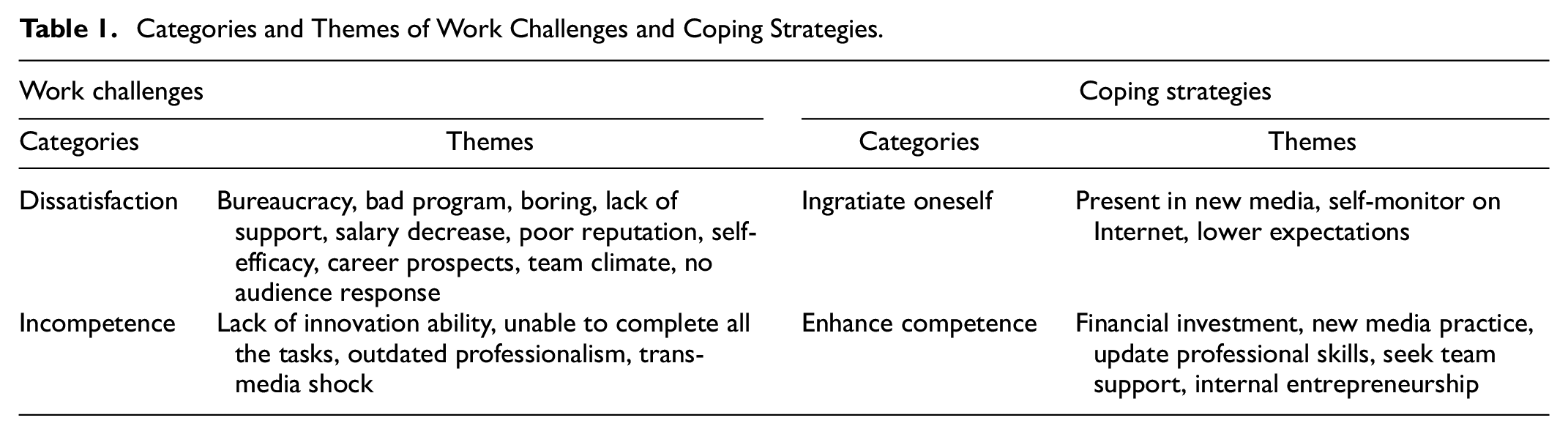
By analyzing the transcripts of interviews, there are two types of work challenges identified that reflect the correspondences outlined in the TWA framework. The first is Dissatisfaction, where the reinforcement system of the Chinese official broadcasting media fails to meet the needs of the individuals. The second is Incompetence, where the news presenters feel that their personal abilities are not adequate for the demands of integrated media work.
By analyzing the transcripts about challenges faced by news presenters in official media organizations, two coping strategies have become evident. The first strategy is Ingratiating Oneself, in which the presenters try to ease their job dissatisfaction on their own. The second strategy is Enhancing Competence, where they strive to improve their abilities to better fulfill the requirements of their job.
At the outset of the study, it is aimed to provide useful insight and potential strategies for news presenters and BHA students to adapt to challenges in their careers. However, the findings indicate that the effectiveness of the interviewees’ adjustment efforts is limited. Through the examination of the interviewees’ work experiences, the study attributes this phenomenon to two primary reasons. First, the disenchantment of professional authority in media transformation, as evidenced by the respondents’ accounts of outdated professionalism, lack of innovation, trans-media shock, and an inability to complete all tasks. Second, the shadow of bureaucracy in official media organizations, as indicated by the respondents’ statements regarding bureaucracy, poor program quality, lack of support, and a negative team climate. In the following sections, the study will delve deeper into these two propositions by analyzing the coding results and transcriptions of the interviews.
The Disenchantment of Professional Authority
In the era of mass communication, the mastery of artistic accent was considered a crucial aspect of news presenters’ professional qualities and was symbolized as a marker of their professional authority. This was especially true in China with the rise of radio and television and the establishment of the BHA education program, which institutionalized and rationalized the concept of artistic accent. According to the theory of mediatization, the media is a semi-autonomous institution that is integrated into society and culture (Hjarvard, 2018, p. 9) and shapes the ideology of journalism as a profession (Hjarvard, 2018, p. 28). However, with the emergence of the network society and widespread connectivity, the professional authority of the media is being diluted. The popularity of internet culture is rendering the traditional professional skills of news presenters, such as accent and broadcast rhythm control, reflecting a disenchantment of their professional authority.
The distinct accent of news presenters in China is often referred to as Boyinqiang. While not a strict concept, BHA specialists believe that it should be a feature of BHA that sets it apart from everyday speech and other forms of artistic language, reflecting the standardization and professionalism of radio and television work (S. Zhang & Qiao, 1990, p. 127). However, in the media industry, Boyinqiang is also viewed as a negative legacy from the revolutionary era (Fei, 1983). It is clear that Boyinqiang is less suited for online content production:
What audiences hate most about short videos is that you speak with a weird tone, they prefer sincere talk. (outdated professionalism)
New media tasks, such as online live shows, have also altered the linear rhythm and strict time control in traditional news presentations. In mass broadcasting media in China, gaps in a program are considered as work errors (Qiu et al., 1998, p. 1056). To avoid these gaps, hosts must think on their feet and speak continuously under pressure (H. J. Liu, 2015). However, in webcasts, gaps are not considered as errors. One presenter, when participating in an online live show for the first time, spoke continuously for an hour to maintain a consistent broadcast rhythm and uphold strict time control. However, at the end of the live stream, he abruptly stopped:
When it was over, they told me that I can take a break during live, and I can also talk more after the time up if I want. (outdated professionalism)
The above phenomenon highlights the fact that, as the era of mass communication comes to an end, the core skills and qualities that mass media news presenters once valued are becoming less relevant in the online communication environment. None of the interviewees’ statements emphasized the importance of having a distinctive accent (boyinqiang) or the ability to control the broadcasting program. Despite previous studies advocating for the importance of standard accent style and control capacities training in adapting to media convergence reform (Peng & Liu, 2017), the declining mass media industry and lack of professional authority among practitioners suggest that these skills may be of lesser importance in the evolving role of news presenters. Furthermore, the improper use of traditional announcing skills may even hinder the new work of news presenters.
The real challenges that news presenters face in terms of competency often stem not from traditional BHA skills, but from the cultural shock of the internet age. Many individuals who are familiar with traditional broadcast media may experience various degrees of loss, confusion, rejection, and even fear when starting new media work. This phenomenon is similar to the culture shock (Oberg, 1960) often seen in cross-cultural studies. News presenters in new media tasks are like individuals entering a new cultural context, facing a brand-new cultural space for content production that often leads to confusion due to the trans-media shock: Identity determines the words that you say, and new media requires verticality (matching users by posting the same style of content to their accounts, noted by authors). When I was facing the small screen, what should I say? Internet users don’t like esoteric words. I don’t know how to present, and I don’t know how to make my account popular. I don’t know which direction my account should go, and I constantly hesitate between different thoughts. (trans-media shock)
As specialists have suggested (L. Li & Wei, 2022), news presenters are struggling to adapt to their new role as versatile media workers. This is a stark departure from their previous role in mass media, where they only had to read scripts into the camera. When asked to interact with the netizens via social media during broadcast programs, they often feel overwhelmed: “There’s so much information, and a lot of times I get off track or can’t get my point across, which is stressful.” Additionally, when videos became popular, they were asked to make videos as well, but they find the task difficult: “I have to hold my phone steady, take my time recording and editing, and come up with topics for my videos. It takes up more time than my daily work.” Even with all these efforts, they find that the most popular videos on the Internet are not produced by news presenters, but by those who studied performance, because “their videos can be more dramatic.” These expressions highlight the challenges that news presenters face in adapting to the new demands of the transitional media landscape. The days of relying solely on their language skills are gone, and the professional authority of these skills is no longer a guarantee.
The work adjustment of news presenters shows that they are adapting to playing multiple roles, such as editor, post-editor, actor, and even internet influencer. These new roles require skills that go beyond the established knowledge structures of BHA. The traditional skills of Boyinqiang and the control of rhythm and time are no longer relevant in new media work and can even be seen as outdated online. This loss of legitimacy in the professionalism of news presenters reflects a decline in the authority of their traditional occupation identity. Work adjustment through updating skills and enhancing competence in the old BHA system may not solve the issues of transmedia shock and identity crisis.
The Shadow of Bureaucracy
According to the Personality-Environment Fit theory as described in TWA, a job must satisfy an individual’s needs for salary and working environment, which refers to the fit between the reinforcer system and the individual’s needs. The reinforcement system represents the stimulation provided by the work environment, which can be seen as the fulfillment of personal needs by the work environment (Dawis et al., 1964). In the study, many of the respondents indicated that their job dissatisfaction was directly caused by the bureaucratic nature of the management in China’s state-affiliated media organizations. Furthermore, other forms of dissatisfaction reported by the respondents were frequently linked to bureaucracy. As a result, this study will concentrate on the bureaucratic aspect of the media.
Bureaucracy is a prevalent form of organizational management in modern society, characterized by a strict division of labor and intricate regulations and rules (J. Wu et al., 2018, p. 156). In most of China’s state-affiliated media organizations, bureaucracy not only manifests as a complex management system but also as a disconnection between the old and new management systems. The bureaucratic management approach has resulted in a lack of collaboration and innovation in conducting new media tasks within media organizations, which has caused dissatisfaction among news presenters.
In the ongoing process of media transformation, the management mode for presenters is continuously evolving due to the incomplete transition from traditional to contemporary human resource management systems. Many presenters are now tasked with fulfilling both broadcasting and new media responsibilities, which results in dual supervision from multiple departments within the media organization. For instance, one of the participants is a presenter operating within a media group that is overseen by both a TV program center and an MCN organization. He often encounters a complex and challenging dilemma concerning the management of relationships with leaders from both entities:
I’m confused because the working flow is not clear. I was caught in the middle, so I don’t know whom to take orders from or what to do. (bureaucracy)
They are also puzzled by the mix of old and new performance indicators which impact their promotions and wages. Some media still use the old evaluation system, so news presenters can’t be promoted, no matter how well they perform in new media:
Now I’m working for both the Host Center and the New Media Center. You know, news presenters used to be judged by their radio programs. The new media accounts I managed to make a huge success, but there is no way to give me a corresponding review. (bureaucracy) I’m doing more work than before, but I’m making less money. (salary decrease) When I asked them why, they explained that an employee could only be paid for one job. (bureaucracy)
Another interviewee reported that when asked to work in new media, his work increased significantly but their work points and pay decreased due to difficulty in obtaining work points through new media work.
Additionally, in terms of teamwork, new media work is often perceived as less important and thus receives less support, including fewer material and team resources than traditional presenting tasks. The interviewee mentioned being asked to perform a live-streaming sales by himself and he expressed his dissatisfaction:
The division of labor of live-streaming sales is becoming finer and finer. Such a big project is impossible to be completed by a person. (lack of support)
In China, media convergence has been established as a national strategy, but the allocation of resources in many broadcast media still prioritizes support for traditional radio and television programs. In addition, despite the investment in new media, some media leaders have chosen to allocate resources toward the development of their own applications, rather than to popular platforms such as TikTok. This approach, however, has resulted in a situation where these self-developed platforms have been largely ignored by the public, causing confusion and concern among news presenters:
The device used for TikTok live streaming has never been updated. The phone can only connect to the network from other phones, and it’s not even eligible for a SIM card, so the signal was often bad. (lack of support) Only TikTok’s audiences are real people, the watching numbers on our platform are totally fake because there’s no response on it. We have always had such a feeling that our video software is self-acting, self-directing, and self-watching. (no audience response)
For leaders of state-affiliated media organizations, avoiding mistakes is considered the paramount objective, which is a major factor impeding innovation in the transformation of traditional media. While some younger broadcasters may aspire to break free from bureaucratic constraints, this often requires significant courage.
I can only use the mentality of gambling to argue with my leader. If I can get success, all the glory belongs to our radio station. If I made a mistake, it was all due to my willfulness, please dismiss me. (bureaucracy)
Choices After Adjustment: Job Comparison and Career Decision-Making
In the previous section, the study analyzed the P-E fit challenges faced by news presenters in media transformation and the strategies they have adopted. As noted, it can be difficult for individuals to alter the unfitting nature of their job, because of existing disenchantment with professional authority and bureaucratic media management. Nevertheless, as stated in the introduction, there is no significant departure from the occupational group of news presenters. This is also supported by the responses of the interviewees regarding their career plans, most of whom have no immediate plans to leave traditional media. In the next section, we will examine the relationship between their work adjustment and career decisions in order to answer RQ2.
In the TWA framework, the outcome of the interaction between the worker and the job can result in promotion, retention, transfer, or resignation. When a worker leaves a job, they enter into a new interaction process (Dawis et al., 1964). According to the hypothesis of the TWA, a lack of correspondence between the individual and the job may lead to a career change. However, in this study, it is found that most news presenters were able to maintain their careers despite encountering numerous challenges that could not be solved. Interestingly, it is discovered that most of them had multiple parallel occupation tracks, which represents a gray area in most Chinese state-affiliated media. The coding results of career decision-making are presented in Table 2. In comparison, Compare in Multiple Career was identified in addition to retaining their current job (including promotion and transfer within the organization) or leaving (including being fired or quitting) in TWA.
Categories and Themes of Career Decision.

In theory, news presenters are not permitted to hold multiple identities as mouthpieces. However, in practice, it is very common for news presenters to take on part-time jobs. As most employees of state-affiliated media have bianzhi, news presenters have the autonomy to make the decision to stay or leave. Through an analysis of their statements about career plans, we will demonstrate how they make career decisions after adjusting their work across multiple parallel occupational paths. Their statements also reflect the factors that drive their decisions to stay or leave in the face of challenging circumstances.
Push Out: The Imagination of Fame and Fortune
The poor reputation of broadcast workers was identified as a source of job dissatisfaction by several participants in the study. Many news presenters expressed their belief that the influence of broadcast media on the public has diminished. They recognize that traditional radio and television media are no longer the dominant forms of media they once were, and that their star-making abilities have significantly declined. This realization is further compounded by the recognition that much of their audience now engages with their content through new media channels, which caused great anxiety:
I’m very anxious, very panicked… The sense of crisis as a traditional media member came up. Why don’t people listen to the radio anymore? (no audience response) We don’t even have advertisers coming to us. I’m afraid of being obsolete. Sometimes we have four channels online simultaneously, but only three or four people are watching. It’s less offensive but more insulting. (poor reputation)
Following the trend of new media, numerous news presenters have begun to establish their own personal accounts on various social media platforms. This has resulted in a transformation of their image, as they move away from their traditional, serious and dignified persona, toward a style more in line with that of internet influencers. This change is mostly driven by personal interests and a desire for fame and financial rewards. Within their personal online spaces, these news presenters are not necessarily the representatives of the people (Renmin) or the Party, but rather as autonomous web users, presenting themselves to the world in a way that reflects their individual preferences:
I did an (short video) with my friend earlier and it went viral. Her account (of WeChat video) is now profitable. I put the focus of my work on the WeChat video account this year. I plan to record personal videos and make some series that fit my characteristics. (mix of retaining and changing)
In regards to compensation, news presenters tend to evaluate their part-time and full-time jobs in terms of hourly income. This approach to calculating income can also be considered a variation of working points. The revenue generated from advertising in China’s state-affiliated media has decreased significantly under the “double-track” system of media management, causing the media to rely on government handouts. This double-track system, as described by L. Li (2004), requires the media to unconditionally follow the leadership of the Party and the government while also being held accountable for their own profits and losses. Therefore, the decrease in advertising revenue has significantly impacted the salaries of news presenters. Furthermore, in the context of media convergence, the bureaucratic system of media management precludes most presenters from earning more through increased work, which has led to rationalization for their part-time work:
Compared to working outside, the money earned by taking on new media assignments in the station is symbolic. I might make 50 yuan an hour in a radio station, but I can make 300 to 400 yuan an hour outside. Most people’s work focus is no longer on the station because the salary in the station can no longer pay for your life. (mix of retaining and changing)
Pull Back: Frustration After Touching the Net and Faded Glory
Despite expressing dissatisfaction with their income and declining professional reputation, most of the respondents in this study did not have plans to leave their media organizations. They acknowledged that their current job provides a certain level of security and social prestige, which is better than the uncertainties and challenges of freelancing or entrepreneurship. This job security, paradoxically, comes from the bureaucratic nature of their workplace that they despise, where the main responsibilities are limited to presenting prepared scripts:
I usually go to the TV station to make up at 4:00 p.m., start to compare the manuscript at 5:00 p.m., and start the live broadcast at 6:30 p.m. until 6:55 p.m. That’s my typical workflow…. I have to say, the television station is a more nurturing place. It needs a lot of courage and adaptability to survive in society. Especially for presenters between 35 and 45 years old, I don’t know what else to do, to become an editor, or become a reporter? I think we have no choice. (retain single career)
Aside from the imperative need for survival, some BHA-educated news presenters hold a strong emotional attachment to this role. This occupation is a lifelong aspiration for these individuals since childhood:
I really like it. It gives me a sense of professional accomplishment to see my work, my programs, and my images on the screen. I’m willing to work here, I prefer to spend more weekend time on my work. I have witnessed the glory of television and its slow decline. But this is my home, and I want my home to be good. (retain single career)
Conclusions: The Dilemma of News Presenters Under Media Convergence
This study endeavors to examine the relationship between news presenters and their employment in the context of Chinese media convergence. Developed from TWA theory, this study employs a theoretical model of work adjustment, as depicted in Figure 1, to provide a comprehensive understanding of how news presenters adapt to these changes and how it affects their career decisions. Through an analysis of qualitative data obtained from interviews with news presenters, the study highlights that the majority of these individuals are faced with complex and multi-faceted challenges in adapting to the changes in their work environment and making career choices.
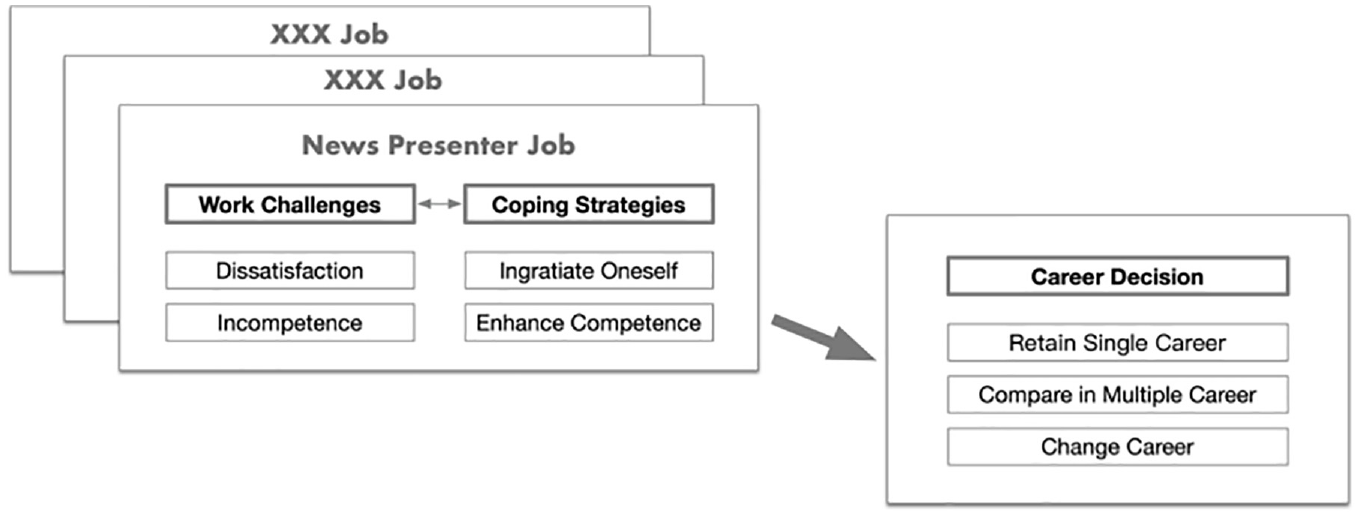
Work adjustment and career decision-making framework of news presenters.
The primary dilemma in work adjustment arises from the disenchantment of professional authority and the increasing bureaucracy of media management. The extensive reforms and opening-up initiatives implemented over the years have led to significant transformations in China’s cultural industry and the preferences of the Chinese people. In the highly competitive media industry, traditional official media organizations such as radio and television stations and newspaper offices have seen a decline in their audience base and social impact. This has resulted in decreased job satisfaction and a decline in the competencies of official media personnel, including news presenters.
As suggested by current journalism scholars in China (Tang, 2018; X. Zhao, 2016), news presenters are expected to continuously acquire and master new job skills and evolve into versatile media professionals, or, generalists. However, in practice, the existing BHA knowledge structure and management experience often poses significant limitations to this objective. The BHA education system is primarily designed to produce news presenters for the mass media era, with a focus on teaching news broadcasting in standard Mandarin with an artistic accent. In the era of internet-based communication, this once core skill has become less relevant and is even derided as boyinqiang. Meanwhile, news presenters seeking fame and fortune are becoming unsatisfied with the decline in advertising revenue and influence in broadcast media due to market competition. These challenges drive news presenters to seek ways to enhance their job competitiveness and accommodate themselves.
The most critical dilemma faced by news presenters is the ineffectiveness of the strategies employed to address these challenges. The majority of interviewees believe bureaucratic media management hinders their ability to improve their competencies and adjust to changes in their job. Although the official media has launched new media services under the media convergence policy, the old labor division and evaluation systems remain in place, leading to dissatisfaction among news presenters. The rigid evaluation system combined with increasing workload makes it difficult for them to receive fair compensation.
As a result of work adjustment, career decisions for newscasters are also in a dilemma. Despite the abundance of job opportunities in the growing Internet media industry, many news presenters opt to remain in their current positions. The social prestige and job security offered by official media organizations outweigh the challenges posed by work adjustment. Paradoxically, the bureaucratic media management system, which is a source of their work adjustment dilemmas, also provides them with an ultra-stable job environment. In the gray area of state media management, they can use personal media channels to increase their visibility and generate additional income.
This study seeks to understand why news presenters do not leave traditional media organizations, despite challenges posed by media convergence, and how they maintain a P-E fit with their job as news presenters in this context. Our research suggests that news presenters find it difficult to adapt to the integration of job requirements under the media convergence policy in a converged media landscape. As a result, they choose to continue working as news presenters after weighing the benefits and drawbacks of leaving their current positions. Based on this conclusion, the study provides recommendations for official media organizations and BHA students on how to better support and prepare news presenters for the challenges of media convergence.
For media managers, the implementation of media convergence should not be limited to a mere mechanical integration of media businesses. It is not feasible to expect all employees, including news presenters, to become generalists in the media industry. As legacy institutions from the era of mass communication, it is imperative for media organizations to address the bureaucracy issue in their management practices in order to enhance job satisfaction and job performance among their employees. To this end, media organizations should reevaluate and reorganize their division of labor, resource allocation system, and establish a supportive, fair, and incentivizing evaluation system to help employees adjust to the demands of integrated media work.
For BHA students, it is important to understand that the reliance on oral communication skills may secure them a job in official media organizations, but the professional status and advantages of being a news presenter in the era of mass media are no longer prevalent. Even if they secure a position in a state-affiliated media, they may still face challenges in adapting to the changing media landscape and making career decisions. In addition to diversifying their skills and knowledge, it is more crucial to overcome their psychological attachment to the news presenter role. To prepare for a sustainable career, BHA students must develop the ability to transition to alternative occupational tracks in case traditional media opportunities become unavailable.
Contributions
This study presents a theoretical framework for exploring the relationship between work adjustment and career change among Chinese official media employees. The framework expands on the traditional TWA framework by considering the impact of P-E fit on employees’ decisions to remain in their current position or pursue a career change. Our findings suggest that the mismatch between individual and organizational characteristics may result in a dynamic pattern of job mobility, where employees may switch back and forth between two sides of the bureaucracy rather than simply leaving the organization. This highlights the unique features of working in Chinese bureaucratic institutions and the multi-track working mentality that employees adopt. Further research should consider the stability commitment of bureaucratic institutions as an important explanatory variable for employee career changes.
The findings shed light on the lack of turnover among Chinese news presenters during the media convergence period and provide insights for media managers to improve their management strategies. Additionally, the study highlights the importance for individuals pursuing careers in broadcast media, particularly BHA undergraduates, to re-evaluate their career plans in light of the current experiences of news presenters.
Limitations
This study is an exploratory and interpretive examination. While it incorporates methodological aspects of grounded theory in constructing its explanatory framework, it must be acknowledged of the limitations of the findings in terms of credibility and validity.
First, it was challenging for external researchers to collect first-hand data from Chinese official media sources, leading to a limited diversity of evidence such as observations and focus groups for triangulation purposes. This may undermine the credibility of the study’s conclusions.
Second, while efforts were made to recruit a larger number of respondents, the sample size remains limited. Although 35 respondents are sufficient in an exploratory qualitative study, it would be beneficial to increase the sample size to enhance the external validity of the findings. It is recommended that future research verify these conclusions through larger-scale surveys with the use of questionnaires.
Footnotes
Author’s Note
The official recruitment information website ( ) of the Ministry of Education of China presents 260 colleges and universities have the major named Broadcasting and Hosting Art (130309), and the number of students is arranged and counted by the recruitment plan published by the colleges and universities.
Declaration of Conflicting Interests
The author(s) declared no potential conflicts of interest with respect to the research, authorship, and/or publication of this article.
Funding
The author(s) received no financial support for the research, authorship, and/or publication of this article.
Data Availability Statement
Data sharing not applicable to this article as no datasets were generated or analyzed during the current study.