




Abstract
Smart healthcare management is one of the frontier research directions. It is vital to achieve life assistance through data science, innovative technology, and wearable devices for residents who age at home. This paper analyzes 42 aids of intelligent communities in residents’ physical, psychological, and medical aspects to understand the demand factors for health-assisted public products and services. The results show that: (1) the importance of intelligent assistance technology is significant; (2) the demand for medical monitoring is the highest, especially for an emergency button, fall detection, sleep drop detection, electronic fence, and medication management; (3) remote nursing and telemedicine has the most significant direct and indirect effect on the need for elderly assistance respectively; and (4) health monitoring affects the need for aging assistance by affecting emergency assistance and psychological assistance. Finally, this paper proposes construction strategies for the space design and the elderly care system of communities.
Plain Language Summary
Smart healthcare management is one of the frontier research directions. It is vital to achieve life assistance through data science, innovative technology, and wearable devices for residents who age at home. This paper analyzes 42 aids of intelligent communities in residents’ physical, psychological, and medical aspects to understand the demand factors for health-assisted public products and services.
Introduction
According to the statistics of the World Bank, the proportion of the global population aged 65 and over exceeded 7% for the first time in 2002, which indicates that most countries or regions have entered an aging society. Life expectancy is increasing in the current environment of improved medical technology and living standards. People are less willing to have children, resulting in a declining birth rate. Therefore, the proportion of the elderly population will continue to grow. How to provide and fund care for the elderly population is a cutting-edge topic (Plackett, 2022). The issue of elderly care will become a global issue affecting the social transformation and economic development of various countries (Wang et al., 2019). Since the 1980s, China has continuously explored the model of elderly care services. (2006-2020 National Information Development Strategy, 2006). The 19th National Congress of China’s report proposed building an elderly care service system based on home care, supported by communities, supplemented by institutions, and combined with medical care. However, the supply of elderly care services in communities lags behind the development of aging. Besides, the application level of information technology is low, and intelligent space assistance still needs to be popularized. These are the main problems in constructing the Chinese elderly care system at this stage (B. Zhang, 2020). It is a topic worthy of discussion and attention on how to embed intelligent devices into the elderly care service environment and optimize the elderly care service system via the use of the platform of the community, big data, artificial intelligence, and other information technologies (Y. Zhang & Zhang, 2020).
Scholars have studied the construction of smart home care services since the 1980s, and there are some related studies at this stage. According to the literature search results of WOS of “smart home” and “elderly care” related topics shown in Figure 1, it can be found that the main research directions are sensors, ambient-assisted living (AAL), and health care. The core of the intelligent residential design is to use environmental sensors, object sensors, body sensors, and visual sensors to collect behavior data of users, detect their activities of daily living (ADL), and provide users with personalized services (Ashish & Jigarkumar, 2021). Through the AAL system, the smart community connects the physical condition and behavior of the residents with the smart environment. It uses the intelligent home system to realize the environment’s self-regulation and improve the residents’ quality of life (Hanif et al., 2022). In recent years, research on constructing intelligent communities for the elderly has focused on health care and Internet+ in China. X. Xu et al. (2020) constructed four health information service models according to the survey of the needs of health information of the elderly. Y. Zhang and Fang (2021) suggested three trends in the intellectual development of residential and public space, with the construction strategy of three aspects: smart maintenance to protect the health of the residents, intelligent interaction to improve the life quality of the residents, and intelligent ecology to create a friendly environment. Internet+ and wise elderly care is to rely on the existing Internet and social power, based on the community, to build a senior care information service platform, providing nursing care, health management, rehabilitation care, and other home care services (L. Xu & Li, 2021). The significance of these strategies is that the transformative development of community-based senior care services in the home provides significant opportunities. Here are five roles to help with elder care. Utilize the role of socially diversified senior care resources in the service field. Promote the formation of a competitive and orderly senior care market environment. Innovate and improve the supply and demand model of senior care services. Gradually reduce the cost of social elderly care. Promote the standardization and formation of the market of intelligent elderly care services at home.

Citespace keyword clustering map of smart community.
On the relevant studies, the factors of intelligent health assistance aids can be divided into three areas: physiological aids, psychological aids, and medical care aids.
Regarding physiological indicators, current research focuses on aiding indoor and outdoor living environments through monitoring devices, sensors and collection devices, control instruments, and daily service platforms. For monitoring devices, the fundamental approaches are access control (Kumar et al., 2017), remote nursing (Jalal et al., 2014; Standards Press of China: Beijing, C, 2003; Yu et al., 2020), environmental monitoring (Ashish & Jigarkumar, 2021). As for sensors and collection devices, the main ones are energy management (Liu et al., 2020). The instrumentation is mainly appliance control (Yu et al., 2020). Finally, the daily service platform is mainly an information service platform (Perkins et al., 2013).
The current study focused on mental recreation, social interaction, and family communication for psychological indicators. Among them, spiritual recreation was adopted from an Online education platform (Zheng et al., 2019) to observe the monthly number of readings, types of readings, online education data, and psychological counseling. Social interactions were observed for visitors, social network frequency, and the use of public facilities (Standards Press of China: Beijing, C, 2003), including weekly visitors, monthly visitors, social network frequency, and the use of public facilities. Family calls (Liu et al., 2020) include weekly and monthly calls.
The medical care aspect, the main observation of health-assisted public goods, is divided into four areas. First, current research focuses on telemedicine services, remote consultation, online appointment registration, health records, and medication management. Second, the main functions of emergency assistance (Ashish & Jigarkumar, 2021; Lu & Lin, 2018; Rawtaer et al., 2020) are the emergency button, fall detection, sleep drop detection, and restroom usage monitoring. Third, indicators observed in the study of Medical instruments (Anghel et al., 2020; Tran et al., 2018; Yu et al., 2020) include sleep monitoring, number, and duration of wake-ups, sleep incontinence detection, rehabilitation equipment usage. In the field of health monitoring (Kumar et al., 2017), the industry uses heart rate, blood pressure, blood sugar, blood lipids, oxygen saturation, body temperature, respiration, electrocardiogram, gait analysis, movement and posture analysis, and mental stress.
How to provide elderly care services for a rapidly aging society is a cutting-edge issue. Intelligent medical management has the advantages of convenience, high efficiency, and replacement of human resources. However, the content and impact path of health assistance services still need to be determined, which affects the efficiency of government public medical product services and the quality of life of residents aging at home. Through this study, the paper analyzes the key factors and impact paths of intelligent medical management to provide the goal of active health assistance. The core of this research is to use sensors and intelligent home systems to explore the demand preferences of the intelligent monitoring environment and provide timely physical, psychological, and medical assistance. The main objectives of this paper are: (1) to analyze the home care needs of the elderly in China; (2) to explore the methods and indicators of smart communities for elderly assistance, and to verify the validity and internal effects of the index system; (3) to propose optimization strategies of the construction of smart communities for the elderly.
Literature Review
In recent years, some studies have discussed how to help improve people’s needs as they age from the perspectives of Smart community, Living environment, Ambient Assisted Living, and Gerontology.
Smart Community
A smart community is one that utilizes technology and data to improve the quality of life of her residents. The idea behind a smart community is to create an environment that is more efficient, sustainable, and responsive to the needs of her residents. This can be achieved through the use of various technologies, such as the Internet of Things (IoT), artificial intelligence (AI), and smart sensors, among others. The goal of a smart community is to create a better quality of life for her residents by using technology and data to solve local challenges and improve local services. Smart home solutions for older people focus on devices for daily and healthy living and older people’s safety (Turjamaa et al., 2019). The current research provides preliminary evidence for the role of smart home technology in supporting older people’s quality of life, particularly their sense of achievement in life and future security (Aggar et al., 2023).
The research on the intelligent design of the community is mainly reflected in using indoor sensors and smart home facilities to realize AAL. Ahmad studied the elderly activity recognition system for the indoor environment in Korea, using depth sensor technology to monitor the health problems and indoor activities of the elderly (Jalal et al., 2014). The commercial popularity of smart home (SH) technology has broadened the scope of aging-in-place and home health occupational therapy (Arthanat et al., 2019). The smart home, designed to extend older adults’ independence, is emerging as a clinical solution to the growing aging population. Therefore, clinical nursing knowledge must be integrated into smart home and artificial intelligence features (Dermody & Fritz, 2019). Technology-enabled strategies of eldercare are being developed and deployed to minimize the socioeconomic costs of aging. Home-based “smart” technologies have been embraced to enable aging-in-place. Innovative technologies flatten space and time and can increase the reach of caregivers. Therefore, we attach importance to the need to understand intelligent eldercare technologies to be better situated within the varied socio-spatial contexts to which they are applied (Woods & Kong, 2020). Smart technology during the health emergency period was necessary for the meaning in the life of older populations, primarily by facilitating meaningful relations, rewarding activities, and spirituality (von Humboldt et al., 2020). Iris used a cross-sectional method to study the monitoring effect of home sensors on the behavioral patterns of the elderly in Singapore (Rawtaer et al., 2020). Inga pointed out that when network-based health information resources begin to popularize, attention should be paid to the preprocessing of sensor data to combine the relevant information and needs of the elderly to provide a complete solution (Hunter et al., 2020). Nicola reviewed websites such as Google Scholar to identify 39 ADL identification systems and analyzed each system’s monitoring techniques and principles (Camp et al., 2020). Torku et al.’s (2021) study identified five key groups of physical and environmental characteristics barriers, technological barriers, social barriers, financial barriers, and political barriers that smart cities encounter or are likely to implement age-friendly initiatives. Telehealth combined with exercise and intelligent home systems demonstrated the best evidence of effectiveness in reducing falls in community-dwelling older adults. Future research should focus on forecasting falls using smart home technology and artificial intelligence and testing promising e-interventions on larger samples to improve the strength of evidence of fall prevention by e-interventions (Chan et al., 2021). Intelligent technology has been widely applied to all aspects of city development. The future of smart communities works in five SCQOL domains, including: smart environment, smart people, smart livelihood, smart economy, smart policy, and smart mobility (Chen & Chan, 2023).
The exploration of an Internet+ intelligent community service system has begun in Chengdu, China, covering the construction of smart terminals, online platforms, and offline service agencies (Li & Huang, 2019). The usage level of community ICT has a direct and positive effect on the community satisfaction of residents. Residents who frequently use community QQ or WeChat groups can easily connect with their neighbors to enhance their neighborhood relationships or community belongings. The advantage of these intelligent communities is increased convenience. The disadvantage is that there are still fewer features. The frequency of community public information platform usage has no significant impact on community satisfaction because community public information platforms have limited functions for publishing information and do not provide direct services to residents. The construction of intelligent communities is still in the exploration phase. Cost is the central aspect to be considered due to affordability.
However, innovative home care projects for the elderly are relatively partial, and there is no perfect service system. While the construction is still in its infancy in China, it is necessary to explore further a system of indicators that meets the needs and technological developments.
Living Environment
Smart communities can be advantageous regarding human-environment relationships, living environments, mobility, resource management, public health, social capital, and trust.
Henderson pointed out that Australia has an aged services assessment and management agency to evaluate and improve aged care services (Henderson & Caplan, 2008). Fuhrman divided the government support of community aged care in the US into dietary health and nursing staff management, providing life care and medical care services (Fuhrman, 2009). Young pointed out that in 2000, the British government included intermediate care services in the National Health Service (NHS) to promote the development of community care services (Young, 2009). Low divided Australian elderly care services into three categories: community home care, short-term care, and nursing homes (Low et al., 2015). Sudo et al. (2018) analyzed the community-based holistic care system in Japan, which cooperates with services such as clinical care and pension benefits to improve the life independence and respect of the elderly. Smart city developments integrate digital, human, and physical systems in the built environment (Caird & Hallett, 2019). On the demand side, Ito researched the embedded facility system in Japanese elderly communities (Ito et al., 2020). The system includes daycare, medical care services, and other facilities, which can flexibly respond to the needs of older adults. Liu et al. (2020) used the Kano model and questionnaires to propose an intelligent service system that connects the psychological and physical needs of the elderly and explored the possibility of building a smart home environment that is widely interconnected and fully supported. Yu et al. (2020) conducted research and segmentation on the residential lifestyle of the elderly in South Korea, compared and analyzed the real needs of different groups for smart home functions, and proposed the technical development direction of comfort, healthcare, and safety services. Those literature studies show that intelligent environments and equipment can better meet the medical care needs of the elderly at home. The variables involved include telemedicine, emergency assistance, medical instruments, health monitoring, and healthy diet. Social capital is essential in the development of smart communities and smart cities. Using social capital in the community can encourage community empowerment activities because trust and cooperative attitudes are built among residents. Social capital will affect the habits and actions of individuals in society, such as the development process of protecting the environment (Herdiansyah & Januari, 2021). The basic principle concept of a smart city is simple: the smart city should improve the quality of life of its citizens while simultaneously simplifying the management of the city. The global megatrends of population growth and fast urbanization have caused cities the need to invent new ways to improve their social, economic, and environmental sustainability. The latest ICT innovations are expected to solve the problems, especially in city governance, planning, transportation and mobility, citizen engagement and participation, sustainability, economy, and safety (Shamsuzzoha et al., 2021). The smart city contains a smart environment, smart people, and smart livelihood. The public is more supportive of citizen-centric smart city development (SCD) (Chen & Chan, 2023).
Incorporating the theory of living environment into the construction of intelligent communities is conducive to better meeting the physical and psychological needs of the elderly and building a comprehensive elderly care service.
Ambient Assisted Living
Ambient assisted living (AAL) refers to using information and communication technology in a person’s daily life and work environment, providing artificial intelligence support in life. The industry and production sector considers AAL a concept, including digital technology solutions, designed to help older people live better independently (Somesh et al., 2021).
Technology can assist older adults to remain living in the community. For example, AAL systems are more responsive to user needs and living patterns, fostering physical activity for a healthier lifestyle and capturing behaviors for prevention and future assistance (van Hoof et al., 2011). Sallis constructed the Active Living ecological model based on behavioral research and sorted out the healthy environments at home and in the community (Sallis et al., 2006). Nadine conducted a systematic review of the literature on home care in Europe. She pointed home care and combined medical and nursing services have become the preferred care mode for residents (Genet et al., 2011). James analyzed the relationship between the neighborhood environment and residents’ health (James et al., 2015). Monitoring the activities of daily living (ADLs) and detecting deviations from previous patterns is crucial to assessing the ability of older adults to live independently in their community and early detection of upcoming critical situations. “Aging in place” for an elderly person is one key element in ambient assisted living (AAL) technologies (Debes et al., 2016). Amina introduced the Longines project, which aimed to create an intelligent and unified working and living environment for people over 70 (Amara et al., 2018). Human activity recognition (HAR) from sensor readings has proved to be an effective approach in pervasive computing for smart healthcare. Approaches in ambient assisted living (AAL) within the home or community setting offer people independent care and improved quality of living. The SmartWall framework suits single and multi-dwelling environments well and offers a pervasive sensing environment for the elderly, disabled, and carers. Using machine learning, novel RFID-Enabled ambient human activity recognition suits unobtrusive health monitoring (Oguntala et al., 2019). Ionut introduced the application of artificial intelligence in healthy buildings, pointing out that intelligent technology can promote the personalization of elderly care services and reduce the burden on the public health care services system (Anghel et al., 2020). The project realized cognitive assistance and re-education of the elderly through human-computer interaction so that the elderly can get holistic respect, reducing the tendency for geriatric depression. Sarah used a gray literature approach to search the databases of 13 key institutions, outlining eight emerging technologies in the field of healthy buildings for home care and potential support for the elderly (Abdi et al., 2020). Among them, AI health applications and wearable devices can provide psychological, and self-care support for the elderly, and home voice devices can assist the elderly with medication reminders. Somesh sorted out the latest application of AAL and its role in helping the elderly live healthier lives from a management perspective (Somesh et al., 2021). Ashish focused on scene-based environmental assisted ecosystems, that is, helping the elderly to live independently in a well-built environment, subject to continuous health monitoring and guaranteeing their privacy simultaneously. Ambient Assisted Living (AAL) facilities offer personalized care to inhabitants using their profiles and surrounding environments. The services provided by AAL are listed as health, indoor activities, daily routines, and many others (Patel & Shah, 2021). Smart silver villages using wireless sensor networks embedded in cyber-physical systems using the Internet of Things (IoT) as an infrastructure, along with big data and machine learning, can support older adults to stay independent longer in their community and mitigate the risk of events leading to ill health and disability. Ambient Assisted Living technologies offer older adults the real-time control of activities in their villages. They are expected to improve the control of the decline in functional capacities of older adults and, therefore, improve their quality of life. Ambient intelligence could enable older adults to live safer and, thus, longer in their villages and postpone or even prevent their relocation to a nursing home (Drobež et al., 2021). Integrating Ambient Assisted Living (AAL) frameworks with Socially Assistive Robots (SARs) have proven helpful for monitoring and assisting older adults in their homes. Socially Assistive Robots integrated with monitoring and stimulation platforms can be successfully used for long-term support to older adults. The robot’s presence significantly incentivized the use of the system but slightly lowered the system’s overall acceptability. Real-world, long-term deployment of SARs introduces a significant technical, organizational, and logistical overhead that should be addressed and considered in pursuing long-term robust systems. In the meantime, Real-world long-term deployment of SARs introduces a significant technical, organizational, and logistical overhead (Luperto et al., 2023).
Those literature studies show that intelligent environments and equipment can better meet the physiological and psychological needs of the elderly at home. The variables involved include remote nursing, environmental monitoring, appliance control, information service platform, online education platform, telemedicine, emergency assistance, medical instruments, and health monitoring. Applying AAL to the community-based elderly care system can provide direct and immediate changes to the living environment of the elderly so that the elder can intuitively feel the convenience of home care.
Gerontology
The construction of smart communities is based on the theory and content of geriatrics. The goal of construction conforms to the norms and requirements of ethics, health, psychology, medical treatment, nursing, and humanistic care.
In terms of psychology, Martin Seligman put forward the view of positive psychology in Flourish: A Visionary New Understanding of Happiness and Well-being. Seligman pointed out that the overall happiness of people was vigorous development and the whole experience, so positive psychology included five dimensions: P (positive emotion), E (engagement), R (relationship), M (meaning), and A (accomplishment). Geboy et al. (2012) conceived of community-based living in old age, pointing out the community’s environmental response to the physical health and living normality of the elderly. Vandenberg et al. (2018) investigated four elderly communities in metropolitan Atlanta based on environmental gerontology and obtained the intervention effect of community assistance on adaptation to aging and health decline. Greenfield et al. (2019) proposed a basic framework for community gerontology, emphasizing the process by which older adults participate in community change and the impact of community settings on the health of the elderly to facilitate the experience of aging. Kim et al. (2019) researched telemedicine for dementia care interventions and provided optimization methods. To be created a happy and livable community environment, many elderly care services are currently set up concerning the positive psychology model. Community-based teams were more concerned about gaining information on the patient’s social environment. The potential benefits of technologies, but they were concerned that the information they received should be preprocessed, integrated with current information systems, and tailored to the older people’s unique and changing situations. Furthermore, cost, privacy, security, and usability barriers must be resolved. Research highlights the importance and complexity of management and governance of systems to collect and disseminate such information (Hunter et al., 2020). Research showed the potential effectiveness of smart home technologies on a range of health outcomes (physical activity, activities of daily living, sleep, anxiety, depression, agitation, irritability, risk of falls, cognitive functioning, night-time injury, unattended home exits) (Moyle et al., 2021). Participants with direct experience in smart homes will trust the researchers who installed and maintained the system. The technology would be more acceptable if it was possible to customize functionality and features (Ghorayeb et al., 2021).
The rapidly expanding modern world has left behind a vast number of old-aged people alone at home. The intelligent system can ensure better security and immediate attention of caretakers. It is aimed to provide a quick response to rapid changes in vitals, thereby ensuring the availability of immediate attention, with a firm assurance of privacy that only the necessary information will be sent out to the outer world (Mathew & Mani, 2022). Smart home technology should be personalized toward elders’ needs, protect their dignity and independence, provide user control, and not be isolated. Provide interfaces via intelligent devices to control and configure the monitoring system with feedback for the user (Pirzada et al., 2022). Research on the construction of elderly care services in intelligent communities rarely mentions the relevant knowledge of gerontology. However, analyzing the physiological function changes and medical care needs of the elderly from the gerontology perspective can provide targeted humanized assistance for the elderly and create an age-friendly living environment according to their needs.
Methodology
To fully understand the needs of the elderly and their children for assisted aging, this paper uses literature research, case analysis, and word frequency analysis to select indicators.
Case Studies
As shown in Table 1, this paper selects three representative smart elderly care communities in Shanghai, Osaka, and Singapore for case studies. As the three countries with severe aging degrees, China, Japan, and Singapore have differences in the construction of age-appropriate community and elderly care service systems. Vanke Shenyang Zhihuifang of Shanghai is a community-embedded elderly care center. The primary customer groups are elderly residents in the community and surrounding communities. The intelligent home system was initially introduced to provide small-scale, refined medical elderly care services. Zhihuifang aims to explore the experience of building retirement communities in China. The smart home setup is mainly based on sensors and security monitoring.
Case Studies of Elderly Care Communities.
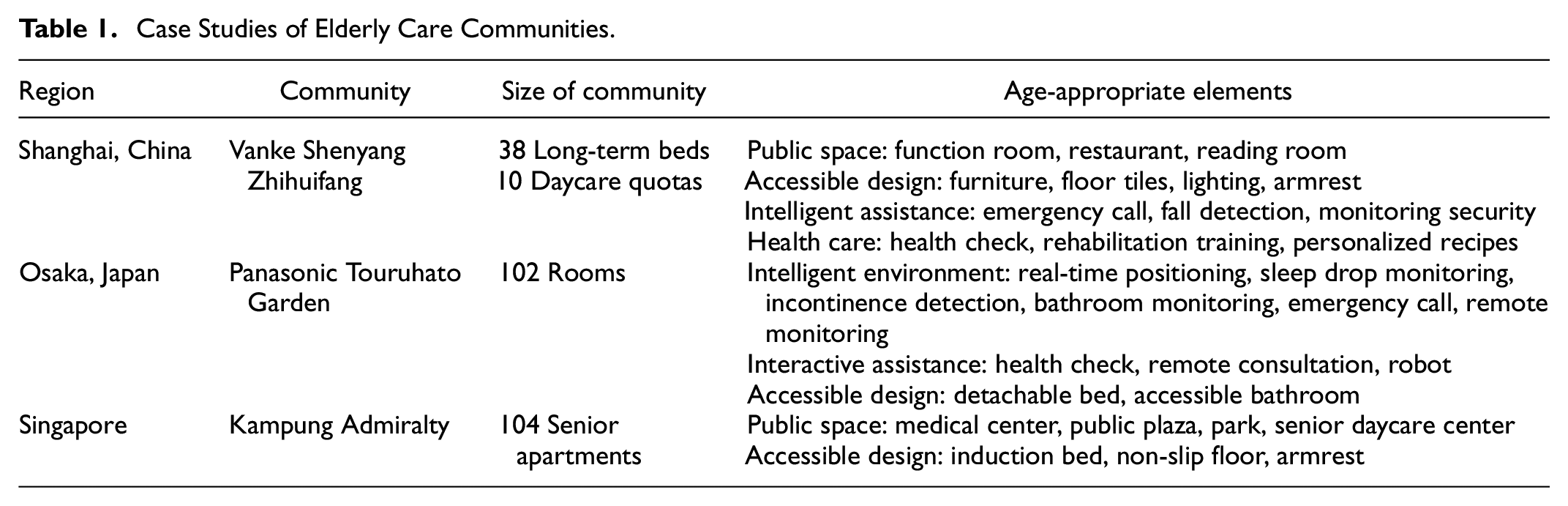
For example, an emergency call button is at the bedroom’s bedside. The alarm button is linked to the nurse’s station on each floor. If there is an emergency, the staff can deal with it in time. Human sensing detectors are arranged at the entrance of the bathroom. Fall detection of the elderly is performed according to the sensing interval. Within 7 days of the senior’s stay, the community will develop a care plan for the senior’s health condition. For example, low-glycemic recipes and regular health monitoring are developed. The community joins with the neighboring hospitals to provide care and medical services to the elderly, realizing the service goal of combining hospital and community elderly care.
Relying on the Internet, Zhihuifang initially formed an information service platform. Three primary functions can be realized through the intelligent bracelet: connecting and sharing the information of the elderly with their children and caregivers, uploading the data of physical signs to the central database, and making an emergency call for help. In addition, they are integrating intelligent technology into the service. As a mature, smart nursing home, Osaka Touruhato Garden has complete facilities, a perfect service system, high intelligence, and a large scale. It is open to elderly residents with high economic conditions. Kampung Admiralty, Community of Singapore, is an urban community complex invested by the government. It integrates commercial, medical, and entertainment facilities into the community vertically, with the elderly as the main body of residence and children and young people as auxiliary service objects to promote intergenerational communication. In terms of services provided, the three communities all involve medical care, living assistance, and social interaction, which reflect the importance of these three indicators in the elderly care service system. When using intelligent equipment and information integration, indoor sensing, monievices, and alarm linkage devices are more popular. Among them, Osaka Touruhato Garden has applied assisted nursing equipment such as barrier-free bathrooms, induction beds, and life-assisting robots, which is worth learning from the age-friendly application of the facility. Life-assisting robots include chatbots, hair-shampooing robots, and feeding robots.
The differences between the three case study communities are construction orientation, facilities, functions, and services. The Shanghai community provides small-scale refined medical elderly care services considering cost factors. The Osaka community is open to elderly residents with certain economic conditions, a comprehensive service system, and a high degree of intelligence. Finally, Singapore communities are mainly about habitat, spatial assistance, and intergenerational interaction.
Indicator System
Model Hypotheses
In this paper, three hypotheses are proposed.
According to the theory of smart community and living environment, six indicators of access control, remote nursing, energy management, environmental monitoring, appliance control, and information service platform are set up in the physiological dimension (Sudo et al., 2018). By providing a full range of behavioral assistance and quantitative analysis of the monitoring content, the physical functions of the elderly can be better understood, and personalized services can be provided (Liu et al., 2020). Therefore, the physical needs of the elderly living at home can be better met.
According to the PERMA positive psychology theory, three indicators are set up in the psychological dimension: online education platform, social interaction, and family calls. With the goal of happy retirement, the mental health of the elderly can be understood through the monitoring and analysis of indicators, and mental health problems such as depression in older adults can be better prevented (Anghel et al., 2020). Therefore, the psychological needs of the elderly can be better met.
According to the theory of geriatric medicine and artificial intelligence, five indicators of telemedicine, emergency assistance, medical instruments, health monitoring, and a healthy diet are set in the dimension of medical care (Greenfield et al., 2019). The health status of the elderly can be followed up in real-time through the monitoring of various vital signs, and home care guidance and disease prevention services can also be provided. In this way, seniors can access medical and nursing support at home.
Indicator Selection
Physiological aids are more immediate and familiar in the daily life of elderly residents. However, in the future, psychological aids are gradually gaining importance and will rely on instant communication and interactive technology to get more convenient and more prosperous assistance. There is also significant scope for medical facilitation through developing sensors and monitoring devices. This paper initially determines the elderly assistance indicator system of intelligent communities and divides it into three dimensions, including physiological assistance, psychological assistance, and medical assistance. Among them, 14 latent variables are set up, including 53 explicit variables. The selection basis of each indicator is shown in Table 2.
The Elderly Assistance Indicator System of Smart Communities (primary Election).

Initial Theoretical Model
The factors in Table 2 were analyzed and tested by SPSS software. Based on the above theory, this paper constructs an initial model of the elderly assistance indicator system of smart communities (Figure 2). First, the observation indicators with small mean values (<3.5) would be deleted through descriptive questionnaire analysis. Next, factors with descriptive statistics mean below 3.5, with six factors, including employment consultation (19), the monthly number of readings (20), types of readings (21), online education data (22), monthly visitors (25), and social network frequency (26). Considering the low level of resident satisfaction, they were removed. These factors are distributed in employment, education, and socialization. These factors indicate room for growth in the current needs of elderly residents in this area. At the same time, through validity analysis, the indicators with small loads on the corresponding principal components (<0.5) would be deleted, and the latent variables would be optimized. Those five factors included monthly trips (2), weekly visitors (24), number and duration of wake-ups (39), rehabilitation equipment usage (41), and intelligent menu (53). A total of 11 indicators were removed in two steps.

Initial theoretical model.
Data Collection
This paper conducts a questionnaire survey for the preliminarily determined indicator system. The survey sample is older adults aged 60 years or older and their children in China region. The purpose is to analyze the actual needs of the elderly for age-appropriate assistance in intelligent communities. China is aging rapidly with a large population, and the characteristics of aging in place are apparent. At the same time, mobility in China is high, and it is common for children and the elderly to live separately.
Moreover, children wish to have more demand for online assistance from their parents. Therefore, the sample in the China region is of research significance. The survey samples are from 17 provinces in China, with Guangdong Province as the primary source of the survey. The reason is that residents in Guangdong province have higher incomes and acceptance of intelligent assistive means. In addition, the popularity of smart communities in Guangdong Province is better. The sample was selected by random sampling. Street interviews and household surveys dominate the sample in Guangdong Province. In addition, an electronic questionnaire has completed the sample from outside Guangdong Province. These respondents’ children live in Guangdong Province, participate as volunteers, and have undergone survey training. The questionnaire uses a five-point Likert scale, divided into five levels according to needs: very important, relatively important, general, not so important, and not significant (scores are 5, 4, 3, 2, and 1, respectively). The time is from March to May 2021. Two hundred thirty copies are issued, and 220 valid data are recovered. Reliability (reliability) is reliability, consistency, or stability. The most commonly used measure at present is the Cronbach coefficient. If the reliability coefficient of a scale is 0.9 or higher, it means that the scale has good reliability. The questionnaire passes the Cronbach reliability analysis and the Bartlett spheroid test with a significance of .05, indicating high data reliability and validity quality.
Data Analysis
SPSS 22.0 is used for exploratory factor analysis to divide the dimensions of the index system, and AMOS 26.0 is used for confirmatory factor analysis to verify the model’s adaptability and obtain factor loading. Subsequently, a structural equation model is constructed. The path analysis is performed to explore the direct and indirect effects of the indicators on the target layer and to analyze the interaction between the indicators. The factor analysis method is used to calculate the weight of the indicators. On the one hand, the index system constructed in this paper has many indicators. The objectivity of the factor analysis method can effectively simplify the system’s structure and avoid subjective errors. On the other hand, this method can intuitively demonstrate the correlation between the latent variables, which meets the needs of this research. The path coefficients between the latent variables in the structural equation model and the overall effect on the need for elderly assistance determine the weights of the latent variables. The specific calculation formula is as follows:

The weights of the observed variables are allocated according to the factor loading between the observed variables and the latent variables, and the calculation formula is as follows:

Finally, this paper conducts in-depth interviews with relevant parties in the intelligent elderly care community to understand the elderly residents’ evaluation of assisted elderly care facilities and the cost, technology, and management feasibility. In addition, recommended standards are set for the indicator system.
Results
Descriptive Analysis of the Survey
The statistical results of the 220 data collected in this study are shown in Table 3. The score for the importance of intelligent assistive technology is 4.65. Therefore, most of the older adults and their children in the survey recognize the use of intelligent technology to assist aging; this paper has great practical significance. From the average point of view, the mean values of all indicators are more significant than 3.5, showing that the overall evaluation is good. Among them, there are 37 indicators with a mean value above 4, accounting for 88% of the total indicators.mo Therefore, they can be considered to have reached the “relatively important” evaluation level and above.
Descriptive Statistics.

In detail, the scores of the three first-level indicators are all higher than 4, among which the score of medical monitoring is the highest (4.63), which can be considered that the respondents pay more attention to assistance and care in this area. In terms of monitoring items, the scores of an emergency button, fall detection, sleep drop detection, electronic fence, medication management, blood pressure, and heart rate monitoring are all higher than 4.5, indicating the highest demand.
Personal information is set to be collected in the questionnaire. Statistical analysis can be carried out. Age options were categorized as 60 to 69, 70 to 79, and 80+. About 60 is the current retirement age. Self-care ability is classified as fully, partially, and unable to care for themselves. The respondents filled in the options. The difference in self-care ability significantly impacts their needs more than the needs of the elderly of different age groups, genders, and self-care abilities. In this survey, the elderly with completely self-care ability account for the majority, and the elderly who are partially or unable to take care of themselves account for a quarter of the total number, which is in line with the current social status of China. According to Table 4, fully self-care elders have higher demands on emergency buttons (4.75), fall detection (4.68), and electronic fences (4.60). Partially self-care elders also pay attention to sleep fall detection (4.66). At the same time, the elderly who cannot take care of themselves concentrate more on remote monitoring (5), electronic fences (5), and monthly calls (5). It can be seen that older adults with different self-care abilities have different needs for various assistance, and services and monitoring with different emphases can be provided for this variable in the construction of an age-appropriate environment and the design of assistance for aging.
Assistive Needs of the Elderly With Different Self-Care Abilities.

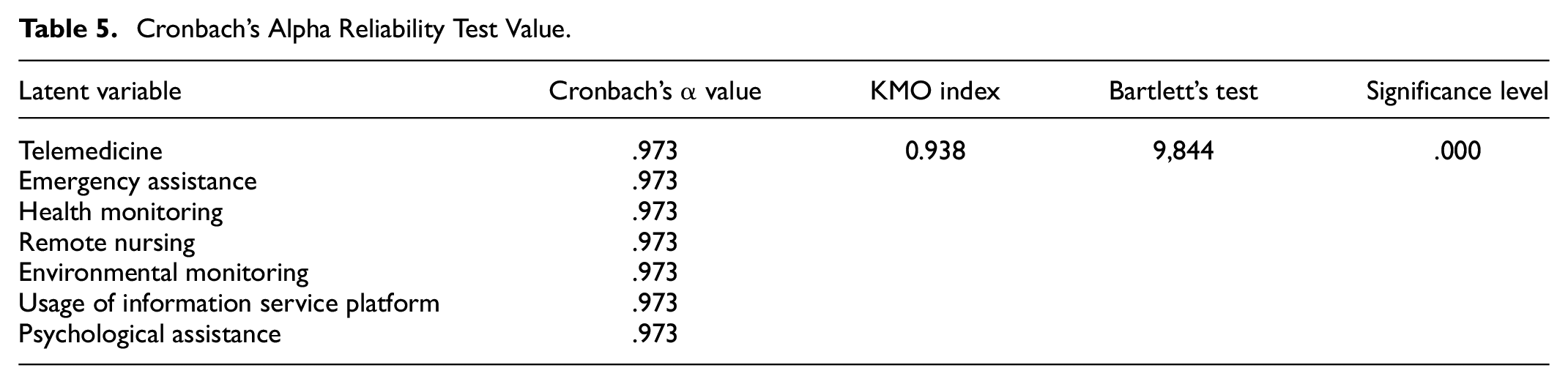
As shown in Table 5, the standardized Cronbach’s α coefficient of the data in this paper is .973 (>.9), indicating that the reliability of the data is high and can be used for further analysis. In addition, the KMO value of the data in this paper is 0.938 (>0.9), and it has passed Bartlett’s test with a significance of .05, indicating that the data validity quality is high.
Cronbach’s Alpha Reliability Test Value.
Regression Equation Model of Intelligent Assistance Needs
To further understand the causal relationship between the index layer and the target layer, that is, the impact of various indicators on the overall assistance needs of the elderly, this paper conducts multiple linear regression analysis via SPSS 22.0. According to the factor loading of indicators calculated above, five indicators with higher loading are selected as independent variables for regression analysis. The dependent variable is the overall demand for elderly assistance.
According to the degree of fit analysis, the five indicators of the electronic fence, medication management, fall detection, emergency button, and sleep monitoring, can meet the needs of 42.1% of the elderly. In terms of the regression analysis, the significance coefficient of the electronic fence, medication management, fall detection, and sleep monitoring are all less than .05, which can significantly affect the score of age-appropriate assistance. At the same time, the emergency button fails to do so. Besides, the regression coefficients of these four indicators are all positive, indicating that the four indicators positively affect the score of intelligent assistive technology. That is, the provision of this equipment or technology can meet the needs of the elderly for age-appropriate assistance.
Structural Equation Model
According to the confirmatory factor analysis and the assumption of the relationship of each variable, a relationship model between latent variables is initially constructed, and the paths with insignificant effects are deleted. The final output model path is shown in Figure 3. By analyzing the revised model path coefficients, the direct and indirect effects of latent variables on the variable of elderly assistance can be obtained. The software used for structural equation modeling is AMOS.
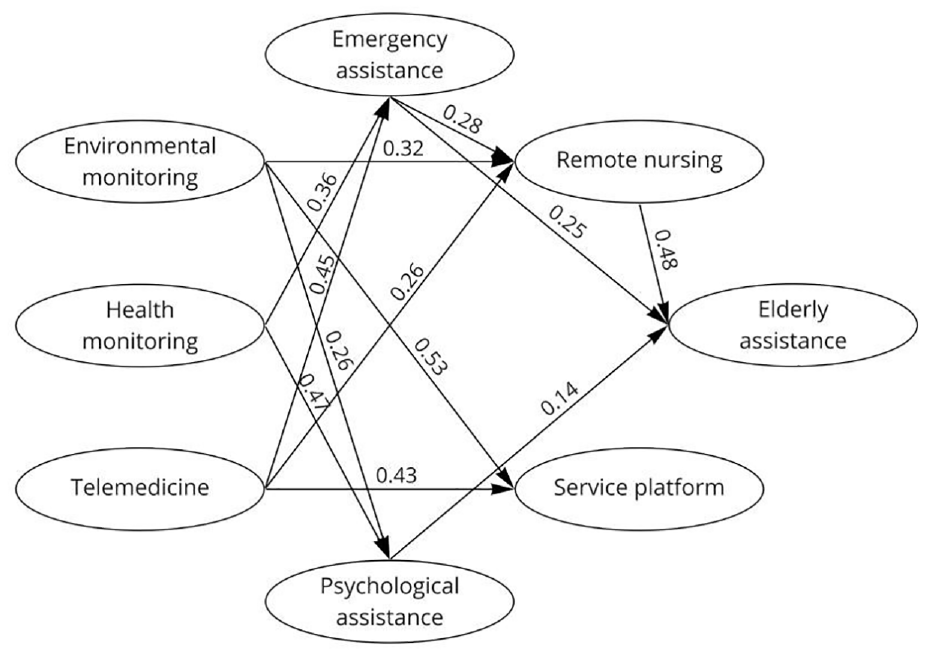
Modified structural equation model path.
This paper uses factor analysis to determine the weights of all latent and observation variables in the indicator model, as shown in Table 6.
Weights of Indicators of the Elderly Assistance Indicator System of Smart Communities.

The final structural equation model is shown in Figure 4, and the fitting result is good. The connections of the seven latent variables and the 42 observation indicators construct the measurement model and the influence intensity of the observation indicator on its dimensions measured by the standardized load coefficient. The factor loading of the model is all greater than 0.6, indicating that the model’s measurement relationship and dependent path are apparent.

Final structural equation model.
It can be seen from Table 7 that the statistics of each index meet the fit requirements, indicating that the constructed model can accurately describe the actual observed variable relationship.
Overall Fit Coefficient of the Model.

Concepts and Results Related to Structural Equation Modeling
According to the study content and design, potential variables were categorized into the same, related categories by hierarchical analysis. Seven variables related to telemedicine, remote nursing, and health monitoring were categorized into seven level 1 indicator. For example, remote nursing was grouped into one category by study design, with services enabled by sensors, radio frequency cards, positioning devices, and remote monitoring devices as first-level indicators. It includes four second-level indicators: an electronic fence, Daily trips, real-time positioning, action track, and remote monitoring. Figure 3 shows the model of the seven first-level indicators. Figure 4 is a model including seven first-level indicators and 42 second-level indicators.
Structural equation modeling allows observation of the relationships, paths, and weights among the variables. The analysis includes the presence or absence of direct and indirect effects (Shen & Zeng, 2014). A direct effect is a direct effect between two factors, showing the number, path, and weight in the structural equation model. For example, in Figure 4, remote nursing (e47) has the most significant direct effect (overall effect 0.43) on the need for elderly assistance (e50). Other direct effects were emergency assistance (e46, 0.25), service platform (e48, 0.18), and psychological assistance (e49, 0.15). Indirect effects were two variables that occurred through the third variable, not shown numbered, but with a path of influence. In Figure 4, health monitoring has the most significant indirect effect (overall effect 0.53) on the need for elderly assistance (e50). It has an indirect effect on the need for elderly assistance(e50) by affecting two variables, emergency assistance (e46) and psychological assistance (e49). Other indirect effects were telemedicine (0.19) and environmental monitoring (0.16).
This result indicates that although the importance scores of health monitoring and telemedicine were high, they did not directly affect meeting the elderly’s need for age-appropriate aids but indirectly affected the need for age-appropriate aids by affecting emergency assistance and psychological aids. The survey shows that the elderly attach more importance to the daily testing and recording of various health data but lack an intuitive understanding of the testing results of various vital signs. Their understanding of physical health is more through mobility and cognitive function changes.
Discussion
Aging-Aided Model for Smart Community
Remote nursing has the most significant direct effect on the need for aging assistance, with an overall effect of 0.425. This result shows that the use of monitoring and indoor sensors to collect data and images of the living of the elderly and transmit the data to the community terminal and the guardian’s mobile phone realize the remote care of the elderly can best meet the needs of older adults. On the one hand, it does not interfere too much with the daily life of the elderly, gives the elderly respect, and protects their privacy, which combines intelligence and humanity. On the other hand, it is convenient for children to provide timely attention to their parents in different places, as well as online and offline assistance. Furthermore, timely assistance can be provided to the elderly in the event of an accident, ensuring their safety and quality of life.
Telemedicine has the most significant indirect effect (0.188) on the need for age-appropriate assistance, while health monitoring has the slightest effect (0.124) and only has an indirect effect. This result shows that from the perspective of demand, the attitude of the elderly toward wearable devices is two-sided. On the one hand, they recognize the benefits of timely monitoring and call for the help of smart devices when breathing and heart rate are abnormal. On the other hand, some of them are resistant to wearing such devices in daily life. Higher-level needs are the light of psychological needs, social needs, respect needs, and self-worth realization. Through these social interaction devices, psychological, social needs, respect needs, and self-worth realization can be achieved. From the perspective of PERMA positive psychology, the elderly pursue a sense of family, neighborhood, self-realization, social value, and belonging. The survey results show that a higher proportion of demand weighting is given to relevant secondary indicators. In Table 6, these secondary indicators and numbers are call frequency (40, 41), accompanying service (38), legal aid (34), and the use of public facilities (39). Monitoring these projects can assist in understanding the social interactions of the elderly, which are in line with their psychological needs.
Health monitoring indirectly affects aging assistance by affecting emergency and psychological assistance. The model-fitting results show that although health monitoring and telemedicine have high scores, they have no direct impact on meeting the elderly’s needs for age-appropriate assistance but have indirect effects by affecting emergency and psychological assistance. It shows that the elderly pay attention to the daily testing and recording of various health data and recognize the convenience of intelligent testing equipment. However, they lack an intuitive understanding of the testing results, and the understanding of physical health is more through mobility and cognitive function changes. We provide residents with medical knowledge and disease prevention, such as home care through an online knowledge base, robot Q&A, and online doctor service. Significantly, knowledge management can reduce the time and energy of visiting the doctor and instantly do convenient and efficient assistance through text query, image query, and voice Q&A. These are the future service functions of the intelligent community. Therefore, when providing medical assistance, smart communities should pay attention to the popularization of medical knowledge and disease prevention, especially the interpretation of various health data, so that the elderly and their children can detect the signs of disease through health monitoring and achieve disease prevention in advance. However, most of the instruments required for emergency assistance and psychological assistance are various types of sensors with convenience, so most families are willing to accept them, and they are more likely to be popularized in intelligent communities.
Age-Appropriate Assistance Needs and Construction of Smart Communities
In general, there are differences in the needs of the elderly for various types of intelligent assistive devices. Medical care assistance is in the highest demand, and the scores of an emergency button, fall detection, sleep drop detection, electronic fence, medication management, blood pressure, and heart rate are all above 4.5. For the needs of age-appropriate assistance, remote nursing has the largest direct effect (0.425), telemedicine has the largest indirect effect (0.188), and health monitoring has an indirect effect by affecting emergency assistance and psychological assistance. The secondary weight of family calls is high, which can realize psychological assistance to the elderly.
There is a quantitative relationship between the demand for aging assistance in smart communities and electronic fences, medication management, fall detection, and sleep monitoring:

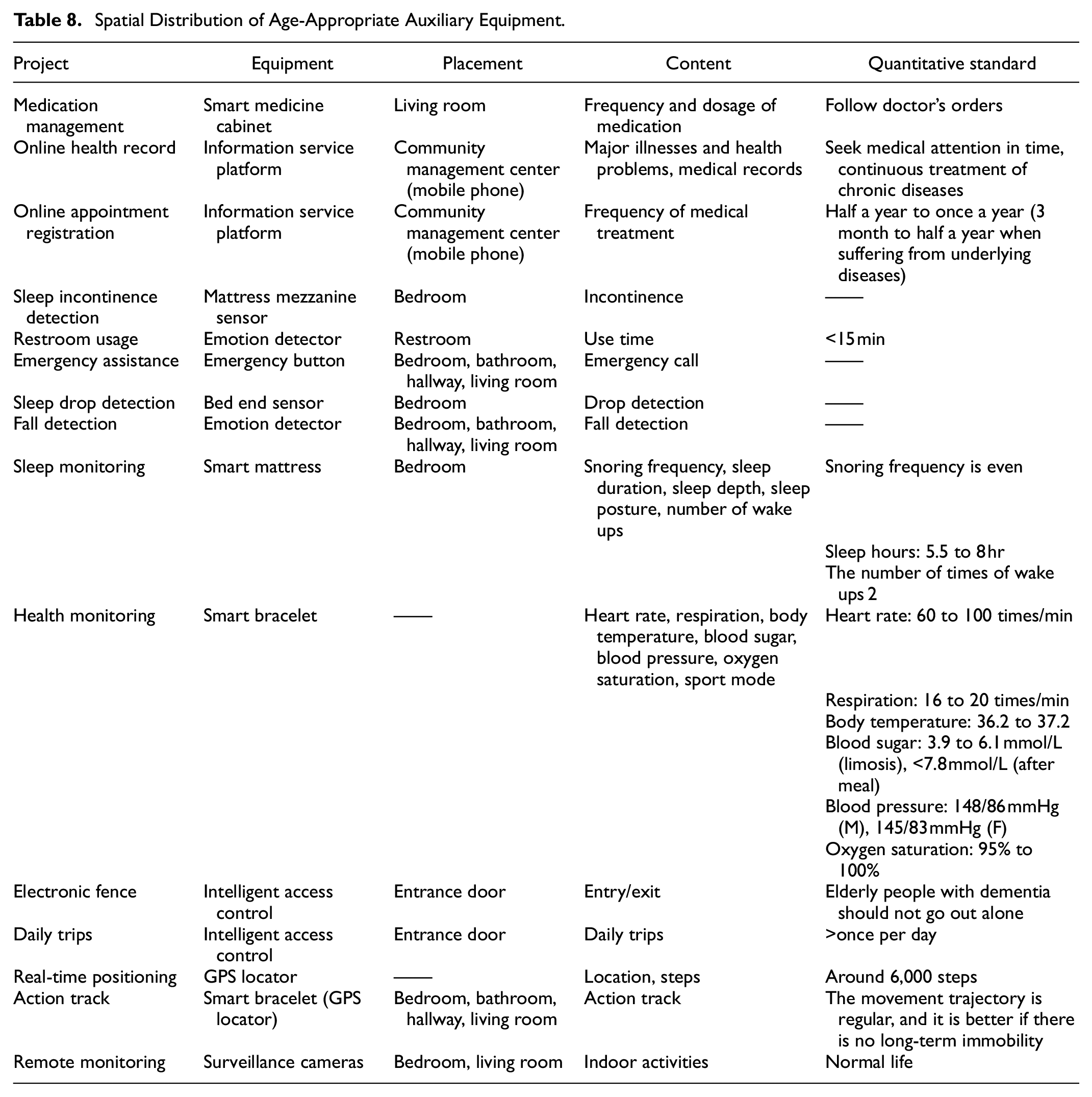
It is the direction of construction and development of age-appropriate communities to combine the need of elderly residents, build space-embedded supporting facilities, strengthen the connection between age-friendly auxiliary equipment and building space (see Table 8), improve its coordination and inclusiveness, and create an innovative and livable environment for the elderly. At the same time, the level of intelligent development in different regions and communities, as well as the economic conditions and needs of the elderly, should be considered, and auxiliary facilities should be allocated at different levels. In addition, a unified top-level design and efficient service system should be formed, the surrounding medical, education, and other municipal facilities should be reasonably utilized to improve the efficiency of responding to the needs of the elderly, and an information service platform should be established to archive data collection and allocate resources for the elderly, and provide services for the elderly in more convenient and reliable ways.
Spatial Distribution of Age-Appropriate Auxiliary Equipment.
In-Depth Interviews and Implementation Recommendations
After the study results were analyzed, an in-depth interview was also conducted for specific operational recommendations. The interviews were conducted with five representatives of the elderly community residents, community builders and operators, and doctors. The interviews were conducted with the five indicators that have the most significant impact on the target level of the “Smart Community Aging Assistance”: remote care, emergency assistance, telemedicine, and health monitoring and psychological assistance, which have greater weight. Some key points of the interview are as follows. Currently, remote monitoring devices mainly focus on monitoring and electronic fencing, with controllable costs and mature technology. These devices are the more common intelligent aids. Emergency call buttons are the most common to ensure that the elderly can call for help nearby. Currently, some wearable monitoring devices are technically mature, with acceptable costs and easy management (Anghel et al., 2020).
Finally, recommendations were formed based on the research findings and in-depth interviews. Considering the degree of wisdom development in different regions and communities, as well as the economic conditions and stratification of the needs of the elderly, the aging-appropriate assistive facilities were divided into three categories: primary, general, and preferred. Among them, the essential items are those with the highest weight and lower cost and have the conditions for universal access. The general items are those with higher weight and moderate cost or those requiring specific operational skills of managers. Each community and elderly residents can be equipped according to their situation. Preferred items are indicators with higher costs or more targeted. Communities and senior residents in a position to do so can be equipped selectively. Specific recommendations are shown in Table 9.
Aging-friendly Auxiliary Equipment Grading Configuration Recommendations.

Active Health Assistance in Senior Living Communities
Smart healthcare management is one of the cutting-edge research directions. With the accelerated rate of aging, the burden of senior care for society and individuals is increasing. Considering China’s national conditions, the income of elderly residents is not high enough to spend the service cost of professional senior care institutions in the long term, and aging at home is a more suitable path for senior care. Therefore, it is essential to realize life assistance through data science, smart technology, and wearable devices for residents who age at home (Hunter et al., 2020). The smart community concept is introduced to build a community information-assisted (information-assisted) environment for aging in place through lower-cost assistive devices and means to assist the health and safety of the elderly. In this paper, we analyze 42 aids of smart communities in residents’ physical, psychological, and medical aspects to understand the demand factors for health-assisted public products and services. These factors provide value engineering factor recommendations in the field of engineering management. Following the path-goal and value engineering theories, inputting these crucial factors will result in optimal demand satisfaction and increased social welfare.
It is an excellent strategy to speed up building an aging-friendly smart community to provide a comfortable and safe environment for elders to age in place (Fuhrman, 2009). The main findings of this paper are: (1) the importance of intelligent assistance technologies is significant; (2) medical monitoring has the highest demand, especially emergency buttons, fall detection, sleep drop detection, electronic fencing, and medication management; (3) telecare and telemedicine have the highest direct and indirect effects on the demand for elderly assistance, respectively; (4) health monitoring has the highest demand for elderly assistance by influencing emergency assistance and psychological assistance impact.
Based on these findings and path-goal theory (Pahi et al., 2020), strategies for community space design and construction of elderly care systems are proposed. The demand for the four assistance items of electronic fencing, medication management, fall detection, and sleep monitoring is high. The provision of public medical goods for these four services is expected to be targeted to improve social welfare. In addition, pre-intervention from a community-building perspective by strengthening the connection between aging-appropriate assistive devices such as emergency call buttons, blood pressure and heart rate, health detection, smart access control, real-time positioning, remote monitoring, and building spaces will also yield good results. It is hoped that through a series of wearable devices and embedded sensors, smart devices will be integrated with the senior living space to achieve continuous health monitoring and telemedicine services for the elderly and to realize an economical, efficient, convenient, and appropriate home aging environment.
Conclusions
How to care for a rapidly aging population is a frontier topic. Elderly care will become a global issue affecting individual countries’ social transformation and economic development. In the future, home-based elderly care will be the primary way of elderly care, and supporting home-based elderly care is strategically essential to the elderly care industry. This paper uses information technology such as big data and artificial intelligence to embed smart devices into the elderly care service environment in families and communities. The demand preference for an intelligent monitoring environment will be exploded with sensors and smart home systems to assist the health and safety of elders and provide timely physiological, psychological, and medical assistance. This paper investigates the localized elderly care needs of the elderly in China. The exploration of smart community age-appropriate assistance methods and evaluation indicators in South China is carried out to verify the effectiveness and internal effects of the indicator system. In the future, elderly care needs are more likely to consider low-cost and high-efficiency information technology assistance, supported by a sound knowledge map of elderly care in the background. This study reproduces these possible research perspectives.
This study illustrates the importance and widespread need for vibrant health and aging technology responses. Residents recognize the use of artificial intelligence technology to assist aging. Relevant points include those below. The demand for medical monitoring is the highest. Emergency buttons, fall detection, sleep drop detection, electronic fence, medication management, blood pressure, and heart rate monitoring scored at the top in demand. The demand for telemedicine, remote nursing, emergency assistance, health monitoring, environmental monitoring, usage of information service platforms, and psychological assistance is also of great interest. Services such as family calls and accompanying services reflect the psychological and mental assistance needs of elderly residents. Telemedicine and remote nursing have a high weight on age-appropriate assistance and are appropriate for the current rapid development of information technology. Health monitoring indirectly affects the need for aging assistance by affecting emergency and psychological assistance. Finally, there is a quantitative relationship between age-appropriate assistance of smart communities and electronic fences, medication management, fall detection, and sleep monitoring.
Limitations
The limitations of this paper include two main aspects. The first aspect is the level of technological development. The intelligent assistance function in this paper considers the future technology direction and the short-term level that the market’s popular electronic devices and computer-aided tools can reach. When technology develops to a higher level, and the industry and market carry out transformative product iterations, the adaptation scenarios in this paper will need to be updated. For example, biomedical engineering, robotics, mixed reality, and quantum communication can enter the lives of ordinary people. As a result, the tools, influencing factors, pathways, decision-making behaviors, and operational mechanisms of intelligent assistance will have new content. In the second aspect, the analysis of assisted aging in influence factors and paths is based on the metropolitan cities with serious aging. The demand population has the characteristics of aging in place. Unlike long-term care communities and retirement apartments, residents rely more on themselves and family members to assist in living. The residents in this paper also have the limitations of community mutual aid, social capital networks, and relatively mature urban support facilities. Intelligent assistive devices rely on these environmental and behavioral contexts to provide convenience and are economical and immediate.
Footnotes
Declaration of Conflicting Interests
The author(s) declared no potential conflicts of interest with respect to the research, authorship, and/or publication of this article.
Funding
The author(s) disclosed receipt of the following financial support for the research, authorship, and/or publication of this article: This research was funded by the Natural Science Foundation of Guangdong Province, grant no. 2020A1515010765; the Opening Foundation of the State Key Laboratory of Subtropical Building Science, grant no. 2021ZB15; the National Natural Science Foundation of China (Grant No. 72271086); Innovation and Entrepreneurship Talents Program in Jiangsu Province, 2021 (Project Number: JSSCRC2021507, Fund Number: 2016/B2007224); the “13th Five-Year” Plan of Philosophy and Social Sciences of Guangdong Province (2019 General Project) (GD19CGL27); the Fundamental Research Funds for the Central Universities (B210201014).

Data Availability Statement
Data will be made available on request.