




Abstract
Innovativeness is becoming increasingly significant in driving organizational competitiveness and relevance; however, studies advancing the impact of innovation-based human resource management are sparse. In this study, we examine the relationship between innovation-based human resource system (IBHRS), employee proactivity, innovative work behavior, and employee performance, as well as the individual and parallel mediating role of both employee proactivity and innovative work behavior on the relationship between IBHRS and employee performance. Empirical results based on data collected from 247 dyads of passenger-contact employees and their managers in Nigerian airports indicate that IBRHS positively affects employee proactivity and innovative work behavior. In addition, we found that employee proactivity and innovative work behavior fully mediate the relationship, and the significant difference in the mediating effects suggests that innovative work behavior is a more significant mediator of the two. Theoretical contributions and practical implications were discussed based on these findings.
Plain Language Summary
Although research on the impact of innovation-based human resource management is scarce, it is critical for organizational competitiveness. The purpose of this research is to investigate the relationship between innovation-based human resource systems (IBHRS), employee proactivity, innovative work behavior, and employee performance. It also investigates the function of employee proactivity and inventive work behavior in moderating the IBHRS-employee performance link. Empirical findings from 247 dyads of Nigerian airport employees and managers reveal that IBHRS favorably promotes employee proactivity and innovative work behavior. Employee proactivity and innovative work behavior both fully moderate the connection, with the latter being the more important mediator.
Keywords
Introduction
Successful organizations know for a fact that employees are drivers of organizational success and they understand that a human resource system is an integral tool in shaping their desired behaviors into their employees (Lee et al., 2019). From a strategic human resource perspective, a coherent set of human resource practices in organizations’ formal management program will result in carving employees’ behavior and attitudes which will ultimately lead to increased motivation, competence, and empowerment toward actualizing the organizational strategic goals (Han et al., 2019; Wright et al., 2018). On the other hand, an innovation-based human resource system (IBHRS) incorporates creativity and innovativeness into the pre-existing qualities of human resource systems to form a new breed of a hyper-dependable human resource system that consistently delivers the benefits of human resourcing to organizations (Stock et al., 2014).
The constructive ability of IBHRS in shaping employees to a desired quality is particularly needed in the hospitality industry. The industry is characterized by high demand and low-paid jobs which may contribute to demotivation of employees. Coupled with the complexity and difficulties of the African business environment, organizations must deliberately act toward creating the qualities they desire in their employees. Employee proactivity which is defined as “self-starting and change-oriented action in organizations” (Lee et al., 2019) is a desired employee behavior as it is vital to the promotion of innovation in the workplace. With the increasing decentralization of management in hospitality establishments, employees will often be required to depend on their initiatives to get the job done (Lee et al., 2016, 2019). Since employees are better placed to have intimate knowledge of customer needs, happenings in the field, and the inefficiencies of the system, organizations will fare well to depend on their proactive employees to identify and amend areas of development at work (Hussain & Zhang, 2022). (Bos-Nehles et al., 2017; Schuh et al., 2018) defines employee’s innovative work behavior which refers to “employees’ intentional efforts to generate, promote, and realize innovative ideas to benefit work performance, the group, or the organization.” Like proactivity, an employee’s innovative behavior is vital to shaping innovative employee behavior and effective leaders nurture its creation and implementation. It aids organizations’ ability to adapt and advance their services, products, and processes to suit the ever-changing and dynamic nature of today’s business world (Janssen & Van Yperen, 2004).
While employee proactivity and innovative work behavior are highly desired, they may easily be misunderstood as counterproductive work practices as proactive employees may engage in activities like chatting with colleagues to harness feedback which are crucial for the flaming of their innovative ideas or spend time researching novel ideas which may not seem connected to the assigned task and responsibilities. Thus, the onus rests on the HR systems of the organizations to identify these qualities and nurture them to fruition. Unfortunately, the extant literature on HR practices have placed attention on such issues as recruitment, and rewards, and less attention has been geared toward identifying talents and managing them in the organization, especially in complex industry such as airport.
This study makes several important contributions to the existing body of knowledge. Firstly, it advances the understanding of the relationship between IBHRS, employee proactivity, innovative work behavior, and employee performance in the Nigerian aviation industry. The aviation industry, characterized by its dynamic nature, strict safety protocols, and global operations, demands a workforce that is not only technically skilled but also adaptive, proactive, and innovative. Against this backdrop, the study’s exploration of the relationships between IBHRS, employee proactivity, innovative work behavior, and performance gains significance, offering valuable insights tailored to the unique challenges and opportunities within aviation, especially the Nigerian aviation industry is experiencing rapid growth and increasing competition (Stephens et al., 2014), emphasizing the need for organizations to leverage employee proactivity and innovative work behavior to maintain competitiveness and achieve sustainable success. By examining these relationships, the research provides insights into the factors that drive employee behaviors associated with innovation and performance. Secondly, the study investigates the mediating roles of employee proactivity and innovative work behavior, highlighting their significance in linking IBHRS to employee performance. This offers a deeper understanding of the cognitive processes through which HRM practices impact performance outcomes. Thirdly, this study significantly contributes to the academic discourse on innovation-based human resource management (IBHRS), employee proactivity, innovative work behavior, and employee performance by addressing critical gaps in the existing literature. Previous research has often focused either on individual-level factors or organizational-level factors, creating a disconnect between these levels. In response, this study explicitly examines the relationship between IBHRS and both employee proactivity and innovative work behavior, offering a comprehensive view that integrates individual and organizational levels. Doing so contributes to a more holistic understanding of how IBHRS impacts individual employee behaviors and, consequently, overall organizational performance.
Fourthly, the existing literature has not thoroughly explored the evolving effects of IBHRS over time. While many studies have focused on the immediate impact of IBHRS on employee behaviors, the long-term consequences remain less explored. In this study, we address this gap by not only examining the immediate effects of IBHRS but also delving into the evolving nature of these relationships. This unique approach allows us to construct a more nuanced and dynamic theoretical framework, providing valuable insights into how the effects of IBHRS unfold and change over an extended period. Furthermore, the strategic use of a time lag for data collection enhances the robustness of our study. By incorporating a time lag, we gain the advantage of capturing data at multiple points, enabling a more in-depth understanding of the dynamic changes in employee behaviors influenced by IBHRS. This extended timeframe facilitates a comprehensive exploration of how the impact of IBHRS manifests and evolves, offering a more nuanced depiction of the relationship dynamics. Therefore, the strategic implementation of a time lag not only strengthens the study’s methodological rigor but also contributes to a more comprehensive understanding of the long-term effects of IBHRS on organizational outcomes.
Another critical gap in the existing literature is the limited consideration of contextual factors influencing the relationships examined. Studies often neglect the potential variation in the impact of IBHRS across diverse organizational and cultural contexts. This study explicitly recognizes the significance of context by conducting research in Nigerian airports. The choice of this specific context not only enriches the external validity of the findings but also encourages future research to consider the specific context in which HRM practices operate. Furthermore, the identification of potential moderators that may shape the relationships between IBHRS and employee behaviors is a key contribution. By suggesting these moderators, the study opens avenues for further research, prompting scholars to explore additional factors that could moderate the impact of IBHRS. This approach enhances the robustness and applicability of the theoretical framework, making the study a valuable contribution to the evolving field of human resource management and organizational behavior. Moreover, by investigating the parallel mediation effects of innovative work behavior and proactivity, this study seeks to shed light on the mechanisms through which these variables influence employee performance.
Lastly, the findings of this study have theoretical implications for the application of self-determination theory in the context of IBHRS and practical implications for organizations in the Nigerian aviation industry. SDT emerges as a superior framework for HR practices compared to alternative theories due to its holistic approach, consideration of intrinsic motivation, and adaptability to diverse workplace contexts. The emphasis on autonomy, competence, and relatedness aligns with the evolving understanding of employee motivation, emphasizing not only external rewards but also the internal drivers that lead to sustained engagement, innovation, and performance. SDT provides a more nuanced and contemporary lens through which HR practices can be designed to meet the complex and diverse needs of today's workforce, making it a more comprehensive and effective guide for organizational success.
The subsequent sections of the study are structured as follows: Section “Literature Review” conducts an extensive literature review to synthesize existing research and establish hypotheses. Section “Method” elucidates the research methodology, detailing the approach and data collection procedures. Section “Result” presents the results derived from regression and mediation analyses. Finally, Section “Discussion” provides a comprehensive discussion of the implications of the findings for both theory and practice. Additionally, this section addresses research limitations and offers recommendations for future studies.
Literature Review
Self-Determination Theory
Self-determination theory (SDT) postulates that individuals possess intrinsic psychological needs—autonomy, competence, and relatedness—that significantly influence their motivation and behavior (Deci & Ryan, 1985; Ryan & Deci, 2000; see Figure 1). Autonomy involves the need for individuals to feel a sense of volition and choice in their actions. It doesn’t imply complete independence but rather a feeling that one’s actions are self-endorsed. Balancing autonomy with organizational goals can be challenging, particularly in work contexts characterized by strict hierarchies and procedures. Competence, on the other hand, revolves around individuals feeling effective in their interactions with the environment (Yu et al., 2022). It’s about mastering challenges and experiencing a sense of accomplishment. The definition of competence can vary across different cultures and industries. What is perceived as challenging and rewarding may differ, adding complexity to its application in diverse workplace settings. Relatedness pertains to the need for meaningful connections with others. It involves feeling understood and cared for and having a sense of belonging (Allen et al., 2021). The extent to which an organization fosters a sense of community and collaboration can be subjective and influenced by organizational culture, further complicating its application.

Self-determination theory (Deci & Ryan, 1985; Ryan & Deci, 2000).
In HR practices, the principles of SDT find application in various areas. Employee engagement can be enhanced by encouraging autonomy in task completion, providing opportunities for skill development, and fostering a collaborative work environment. However, aligning individual goals with organizational objectives poses a challenge, requiring a delicate balance. Performance management benefits from setting challenging yet attainable goals, involving employees in the goal-setting process, and promoting teamwork. Striking a balance between individual and organizational goals is crucial, as an overemphasis on extrinsic rewards may undermine intrinsic motivation.
Leadership styles, particularly transformational leadership, align well with SDT by addressing autonomy, competence, and relatedness. However, different organizational cultures may necessitate varying leadership approaches, with some contexts favoring a more directive style. In training and development, providing opportunities for skill-building, allowing employees to have a say in their learning paths, and fostering a supportive learning environment can enhance development. The challenge lies in balancing individualized development plans with organizational needs and identifying universally beneficial training programs.
While SDT provides a valuable framework for understanding human motivation and behavior, its application in HR practices necessitates a nuanced approach. Successfully integrating SDT involves recognizing and addressing the nuances while striving to create environments that support autonomy, competence, and relatedness (Deci & Ryan, 2002). The delicate balance between individual needs and organizational objectives, coupled with the influence of cultural and contextual factors, adds complexity to the effective implementation of SDT in the workplace (Gagné & Vansteenkiste, 2013) Grant, Nurmohamed, Ashford, and Dekas (2011).
Innovation-Based Human Resource System
According to Kofman (2018), the value of a business is a function of how well the financial capital and the intellectual capital are managed by the human capital. He stated “You’d better get the human capital part right”; this means that the most important component of an organization is the human capital which makes human resource management a very crucial factor in organizational development and sustenance.
The heterogeneity of the human resource construct implies that different organizations use distinct human resource orientations to manage their human capital to achieve their organizational objectives. Some function-specific human resource management used include competency-based (Gangani et al., 2006; Nasriyah et al., 2016; Parikh & Desai, 2018), integrity-based (Krauss, 2016), knowledge-based (Kianto et al., 2017) to mention a few. Innovation-based human resource system (IBHRS) is defined as human resource management practices intentionally crafted to stimulate innovation processes within the organization (Zehir et al., 2016). The authors further used the AMO framework to categorize IBHRS into three: innovation-based recruitment (ability), innovation-based reward (motivation), and innovation-based training and development (opportunity). Innovation-based recruitment has a strong and explicit focus on conscripting employees who possess strong innovative and proactive abilities; the innovation-based reward is an interconnected but distinct system that is used in motivating employees who generate/create and share novel ideas; innovation-based training and development is consistently upgrading the profundity and extensiveness of employees’ innovativeness and expertise, adapting training to suit employees’ needs to ensure continuous innovation in the organization.
Investigating the relationship between IBHRS and proactive employee behaviors unveils a crucial interplay in organizational dynamics. Proactive behaviors, encompassing actions initiated by employees to positively impact their work environment, align closely with the innovative elements embedded in IBHRS. Research by Lasisi, Eluwole, et al. (2020) suggests that IBHRS, with its emphasis on creating a work environment conducive to innovation, significantly influences employees to exhibit proactive behaviors. This is evident in employees taking the initiative to suggest novel ideas and problem-solving approaches and contributing to organizational innovation.
Contextual factors play a pivotal role in shaping the relationship between IBHRS and proactive employee behaviors. External elements such as broader industry dynamics, economic conditions, and cultural nuances can act as facilitators or barriers to the effectiveness of IBHRS in stimulating proactivity among employees. For instance, in industries characterized by rapid technological advancements, IBHRS may need to be adaptable and responsive to ensure that employees can engage in innovative behaviors that align with industry trends (Koster & Benda, 2020).
Economic conditions also play a role, as financial stability and resource availability may impact the feasibility of implementing certain aspects of IBHRS. In times of economic uncertainty, employees may exhibit proactive behaviors geared toward cost-saving measures or process improvements to navigate challenging economic conditions (Segarra-Ciprés et al., 2019). Cultural nuances further shape the IBHRS-proactive behavior relationship. The extent to which innovation is valued and encouraged within a specific culture influences the effectiveness of IBHRS in eliciting proactive behaviors. Research by Javanmardi Kashan et al. (2021) highlights the importance of a supportive cultural context for fostering employee creativity and innovation.
IBHRS, Innovative Work Behavior, and Employee Proactivity
Proactive behavior is defined as a future-focused, self-directed action taken by an individual in an organization to bring about change, either externally (e.g., introducing new work methods, influencing organizational strategy) or internally (e.g., learning new skills to cope with future demands) (Kim, 2023). According to Altura et al. (2021), employee proactivity has been broadly categorized into three: perceived work environment, job-related factors such as autonomy, and individual differences such as proactive personality.
The underlying categorization has focused on the role of individual-dispositional factors that influence employee proactivity while the role of organizational-dispositional factors such as function-specific HR systems has not been used to explicate proactive behavior in employees. IBHRS leaning on SDT, is oriented towards recruiting innovation-inclined individuals, rewarding innovativeness, and keeping abreast on improving their ingenuity through training. Therefore, it will permit autonomy and flexibility in a work environment that fosters proactivity.
For a human resource system to encourage employee proactivity, it is expected that communication skills, innovativeness, and creativity are addressed. IBHRS will foster interaction and sharing of innovative ideas and collaborative decision-making, which gives employees a sense of autonomy and autonomy-oriented individuals are often proactive individuals (Cai et al., 2018). According to SDT, individuals have innate psychological needs for autonomy, competence, and relatedness. IBHRS, by its nature, provides employees with greater autonomy, allowing them to exercise self-direction and take initiative in their work. Through the provision of resources, support, and decision-making authority, IBHRS empowers employees to make decisions and take proactive actions that align with organizational goals and objectives. This sense of autonomy satisfies employees’ need for self-determination, thereby enhancing their proactivity.
Moreover, the theory of proactive personality suggests that some individuals possess a dispositional inclination to be proactive in their work. These individuals are characterized by their high levels of self-motivation, initiative, and persistence in pursuing goals. IBHRS can amplify and leverage the proactivity of such individuals by creating an environment that supports and rewards their proactive behaviors. By providing training, knowledge-sharing platforms, and a supportive climate, IBHRS enables employees to develop and express their proactive tendencies, resulting in increased proactivity. Furthermore, IBHRS can also enhance employee proactivity by fostering a culture that values and encourages innovation and risk-taking. When employees perceive that their innovative ideas and proactive efforts are welcomed and rewarded, they are more likely to engage in proactive behaviors. IBHRS can create opportunities for employees to experiment, share ideas, and collaborate with colleagues, thereby stimulating their proactivity and creating a work environment that supports and nurtures their proactive contributions. Therefore, we posit that:
Hypothesis 1a: IBHRS is positively related to employee proactivity.
Innovative work behavior (IWB) has several definitions in literature and is often considered to be a set of extra-role or discretional behaviors by employees (van Essen et al., 2022), that are centered on idea generation, promotion, and implementation in the organization. IWB is considered by Sanz-Valle and Jiménez-Jiménez (2018) to be a multi-dimensional construct that consists of several employee behaviors: opportunities or problem identification, ideas generation to take advantage of the opportunities or to proffer solutions to the problems, idea evaluation, promotion, fund generation and implementation of ideas.
There have been different constructs that are antecedents of IWB; these include psychological construct (Niesen et al., 2018), leadership (Miao et al., 2018), exploratory learning (Escribá-Carda et al., 2017) to mention a few; all these constructs together are linked to human resource management. Previous studies have revealed that coworkers (Montani et al., 2012), reward (Montani et al., 2012; Rehman et al., 2019), and training(Shih & Susanto, 2011) have an influence on IWB and by extension, innovation-based HR practices will foster IWB.
An organization’s ability to be innovative, achieve its organizational objectives, and remain competitive is largely dependent on its ability to use the intellectual capital of its human capital. Therefore, an organization with innovation-based human resource practices will adequately put to use the intellectual capital of its employees; therefore, fostering innovative work behavior. By integrating the insights from SDT and the theory of proactive personality, it becomes evident that IBHRS plays a crucial role in promoting and enhancing employee innovative work behavior. The provision of autonomy, competence support, and opportunities for growth and development within IBHRS aligns with the psychological needs and proactive nature of individuals. This fosters an environment that encourages employees to embrace innovation, take risks, and contribute their creative ideas and solutions. As a result, employees are more likely to engage in innovative work behavior, leading to increased innovation within the organization and improved employee performance. We therefore posit that:
Hypothesis 1b: Innovation-based human resource system is positively related to innovative work behavior.
IBHRS and Employee Performance
Shahanipour et al. (2020) opined that when managers use HRM, it gives employees contextual cue that allows them to subconsciously construe their environment. IBHRS enables managers and supervisors to channel employees’ attention toward generating and implementing innovative ideas. For instance, IBHRS (such as recruiting innovation-inclined individuals, rewarding and training on innovativeness) may build a social climate of cooperation, and trust and facilitate exchange of knowledge and human capital development that encourages autonomy.
IBHRS, particularly through a positive social environment, work engagement, supportive leadership, rewarding, and enhancing employees’ abilities, skills, and knowledge; are expected to proliferate innovation by emphasizing individual effort in the achievement of organizational goals. IBHRS characterized by the implementation of strategies that promote creativity and idea generation, has been identified as a crucial driver of organizational innovation (Tsai, 2022). One key aspect of these practices is the creation of a positive social environment, where employees feel supported, encouraged, and empowered to share their ideas and collaborate with others (Hsieh et al., 2022). This positive social environment fosters a sense of psychological safety and belongingness, which has been found to significantly enhance innovative behavior and outcomes. Furthermore, work engagement, defined as the level of energy and dedication individuals invest in their work, has been linked to higher levels of innovative behavior (Salamon et al., 2021). Engaged employees are more likely to actively seek out new solutions, take risks, and persist in the face of challenges, contributing to the proliferation of innovation within the organization.
Supportive leadership plays a crucial role in promoting innovation within organizations. Leaders who provide guidance, support, and resources to their employees create an environment that encourages innovation and risk-taking (Begum et al., 2021). These leaders establish clear goals, communicate expectations, and recognize and reward innovative efforts, thus motivating employees to actively contribute to innovation (Haim Faridian, 2023). Rewarding innovative behavior is another important aspect of IBHRS. Intrinsic and extrinsic rewards, such as recognition, promotions, and financial incentives, have been shown to positively influence employees' motivation to engage in innovative activities (Lin et al., 2022). By linking rewards to innovation, organizations signal the value they place on creative contributions and encourage employees to invest their efforts in achieving organizational goals through innovation.
Several authors (e.g., Edgar et al., 2021; Johar et al., 2022) have opined that employees perform better when they possess the ability, motivation, and opportunity. IBHRS provides employees with the ability, opportunity, and work motivation to be more effective at their tasks through working with like-minded individuals, autonomy, reward, and training.
The use of IBHRS by organizations will give employees the perception of having control over their actions, a sense of competence, mutual respect, and feeling connected with their coworkers which by extension, will give them the feel of inclusiveness and opportunity to invest in their work. This will further help employees to customize or seek new ideas to meet and exceed customers’ and organizations’ expectations which will ultimately lead to achieving high performance (Martinaityte et al., 2019). By aligning with the principles of Self-Determination Theory, IBHRS can positively influence employee performance. By promoting autonomy, competence, and relatedness, IBHRS fosters intrinsic motivation, encourages innovative work practices, and creates a supportive work environment. These factors contribute to improved employee performance as employees are more motivated, engaged, and equipped with the necessary skills and resources to excel in their roles. We therefore hypothesize that:
Hypothesis 2: IBHRS is positively related to employee performance.
Employee Proactivity, Innovative Work Behavior, and Employee Performance
In the study of Organizational Behavior and HRM, employee performance according to van der Vaart (2021) is one of the most imperative constructs. Due to its multidimensionality, (Chen et al., 2022) argued that it is difficult to have a universally accepted definition. Employee or job performance is defined by Iqbal et al. (2020) as the contribution and achievement of individuals in quantifiable and practical terms. An alternative definition was given by Unsworth et al. (2021) stating that employee performance entails employees engaging in or bring about scalable actions, behavior, and outcomes that are linked to and contribute to organizational goals.
Employee performance according to Hitka et al. (2020) is a function of at least two factors: (a) skills (acquired or natural) and abilities possessed by employees, and (b) motivation to use the skills and abilities to effectively carry out their duties. Based on the theory of proactive personality (Crant, 2000), we infer that employees with proactive personalities will create opportunities and favorable environments for themselves in their organizations. They will also endeavor that there is conformity with their environments with regard to their abilities and needs. Put in more perspective, they structure their work environments in a way their job resources and demands are tailored to their abilities and needs (Rodrigues et al., 2020).
Based on these theories, we presume that employees who possess proactive personalities will likely ask for social resources (feedback and help) as well as preemptively improve their work environments, for instance, asking for structural resources (training), creating skill variety, and asking for autonomy. Additionally, proactive employees will search for challenges (i.e., when they feel under-stimulated, they ask for more work) (Bakker et al., 2020), thereby performing excellently at their jobs (see Figure 2). Therefore, we posit that:
Hypothesis 3a: Employee proactivity will lead to employee performance.
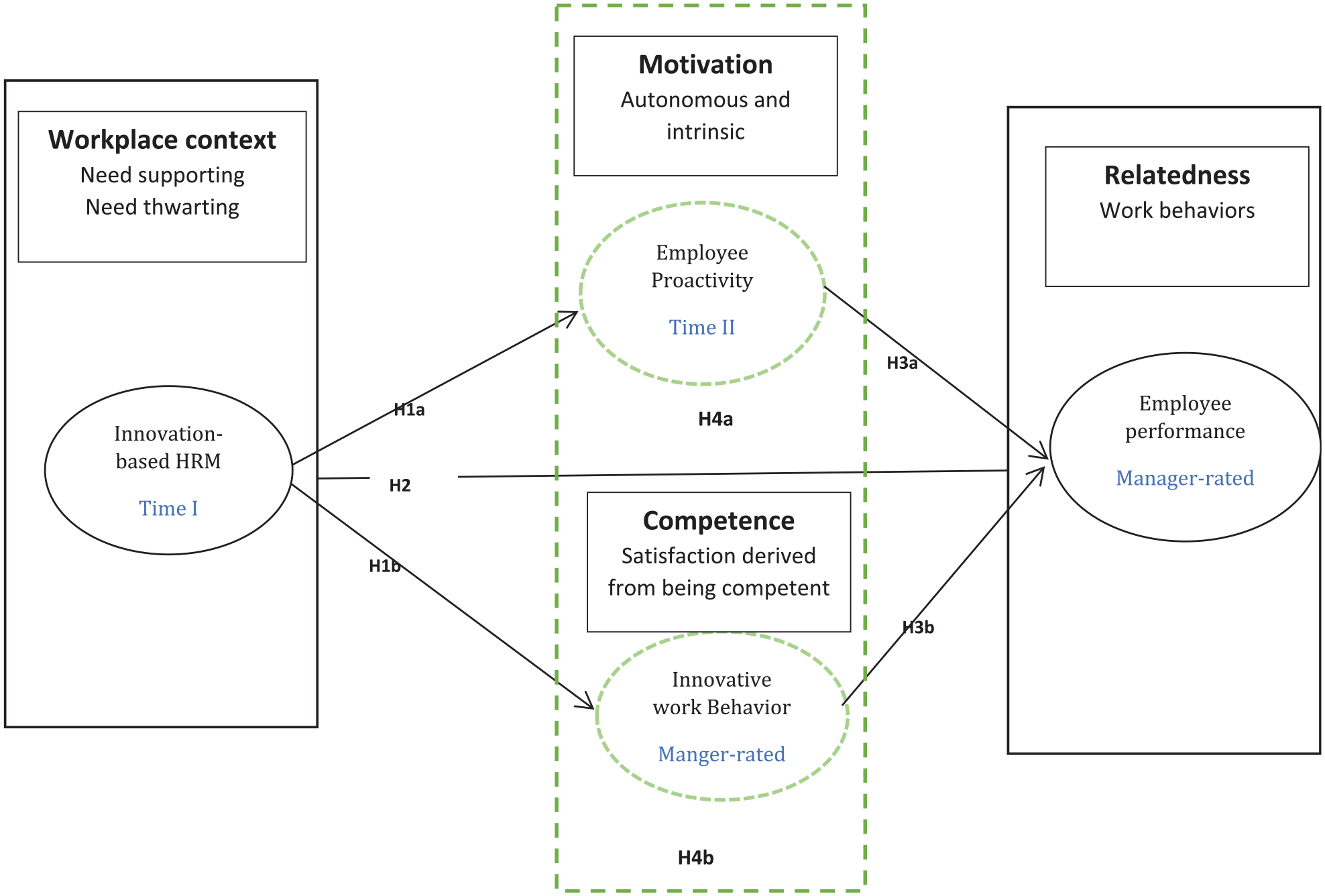
Research/hypothesized model.
The theory of performance suggests that employees’ performances are affected by their abilities. Research by van Essen et al. (2022) indicated that IWB is an ability factor that is related to employee performance. Even though there is evidence that confirms that research on the effect of IWB on performance is deficient, there are several logical perspectives that support the supposition that IWB results in performance advantages such as improved adaptation to achieve aims and objectives, reduced error rate and increased work quality and productivity (Gkontelos et al., 2022).
Firstly Zhang et al. (2021), suggest that creativity is positively related to employee performance. Gkontelos et al. (2022) argued that the creative element of IWB denotes generating novel retorts useful in carrying out duties. To be creative at the workplace entails developing new procedures or processes to accomplish tasks, finding alternative procedures or processes that are more operational, or refining existing ones which, according to White (2021) will enhance employee performance.
Secondly, Alessa and Durugbo (2022) opined that innovative work behavior constitutes introducing and applying new work methods and technologies that are “superior” to existing ones. Although Hodder (2020) argued that introducing and applying new technologies/work methods can cause resistance to change, disrupt job routines, and result in stress reactions from employees, it is expected to lead to effectiveness and/or efficiency gains (Nazir et al., 2021) especially in an employee who exhibits innovative work behavior.
Thirdly, Siregar et al. (2022)asserted that IWB motivates employees to improve the work environment and/or themselves through innovation. This implies that IWB helps employees effectively adapt to their jobs, thereby leading to the enhancement of job performance. Doron and Martinent (2021) discovered that coping effectively with change is positively linked to performance which supports the aforementioned argument. Similarly, Ghasemaghaei and Calic (2020) claimed that innovative performance, efficiency, and performance quality are positively related. Drawing on the underlying nexuses, we hypothesize that:
Hypothesis 3b: Employee’s innovative work behavior will lead to employee performance
Mediating Role of Innovative Work Behavior and Employee Proactivity
Even though past research (e.g., Chin et al., 2017; Lee et al., 2019) has shown that generic human resource management relates to employee performance, drawing on SDT, we expect that innovation-based human resource management relates to employee performance but indirectly through employees’ innovative work behavior and proactivity. As previously discussed, there are direct relationships between innovation-based human resource management (IBHRS) and both employee proactivity and employee innovative work behavior. These direct relationships suggest that IBHRS practices positively influence employee proactivity and employee innovative work behavior. In turn, employee proactivity and employee innovative work behavior have been found to positively impact employee performance. Therefore, the presence of these mediators, namely employee proactivity and employee innovative work behavior, helps explain how IBHRS practices indirectly influence employee performance. By fostering a work environment that promotes employee proactivity and innovative work behavior, organizations can enhance employee performance outcomes. We therefore suggest two mediated hypotheses:
Hypothesis 4a: Employee proactivity will mediate the relationship between IBHRS and employee performance.
Hypothesis 4b: Employees’ innovative work behavior will mediate the relationship between IBHRS and employee performance.
Method
Sample and Data Collection
Data for this current study were gathered from passenger-contact employees of two Nigerian international airports (Lasisi, Eluwole, et al., 2020). Prior to the actual survey administration, the researcher requested and received official permission from relevant authorities. This study population was selected due to its contribution towards the development of tourism as an alternative source of government revenue for the country. Economic policymakers are poised to diversify and create multiple sources of government revenue to curb the current over-dependence on crude oil. Thus, research such as this which investigates and proposes functional models for thriving air transport systems will be handy in the larger scope of things for the nation.
Response Bias and Common Method Bias
To mitigate against the potential of response bias such as social desirability bias and method bias, the study employed the following procedural remedies before and during the data collection. First, as social desirability is associated with people wanting to appear to be desirable, the researcher attempted to minimize it by assuring anonymity, confidentiality, the voluntary study participation, and the importance of the study on the cover page of each questionnaire. Further, the authors collected the complete variables from multi-raters (employees and managers), then, authors also applied a time-lagged designed in the collection process and later used different introductory messages and anchor scales for each construct (Podsakoff et al., 2003), these aforementioned procedures not only minimizes the social desirability bias but also that of method bias. In addition, questionnaires were delivered to the respondents with return envelopes and instructions that only sealed questionnaires were eligible for use in the research (Chen et al., 2015).
Data Collection
Of the 300 surveyed questions distributed in Time I, 247 were returned in the final lag, which represents an 82.3% response rate.
Table 1 shows the demographic details of the participating employees. In terms of age distribution, the table reveals that the participants span a range of age groups. The largest age group consists of individuals between 28 and 37 years old, accounting for 35.2% of the sample. This suggests that a significant portion of the participants falls within the mid-career stage. On the other hand, participants aged 48 to 57 years make up the smallest group, comprising only 5.3% of the sample. This indicates a lower representation of individuals in the later stages of their careers. Also, the gender composition of the sample shows that the majority of participants are male, accounting for 58.7% of the sample, while females make up 41.3%. Regarding educational background, the table presents the distribution of participants based on their level of education. The majority of participants (67.2%) hold a university degree, indicating a relatively high level of formal education within the sample. Meanwhile, 12.2% of participants have a vocational school education, while 20.6% hold a master’s or PhD degree. These educational variations suggest a diverse mix of academic qualifications among the participants. Furthermore, the table provides information on the organizational tenure of the participants. It shows that the largest proportion of participants (34.0%) has been with the organization for 6 to 10 years, followed closely by those with 1 to 5 years of tenure (31.6%). This distribution suggests a considerable number of participants with a moderate level of experience within the organization. It is worth noting that there are no participants with more than 20 years of tenure, which may reflect the relative youthfulness of the workforce or the nature of the industry. Lastly, the table presents the marital status of the participants. It reveals that 55.9% of participants are single or divorced, while 44.1% are married.
Subject Profile (n = 247).

Measures
As recommended by previous scholars (Karatepe & Avci, 2019; Netemeyer & Maxham, 2007), all survey instruments used in this study from existing literature were adapted to suit the current study context. This particular study was conducted with three sets of questionnaires distributed at three different times. The predictor variable (IBHRS) was distributed in Time I, mediating variable (EmPR@) in Time II while both IWB and EmPerf were rated by the managers. Although English is the official language in Nigeria, the uniqueness of the context of the study necessitated the conduct of a pilot test. Thus, the researcher pre-tested the Time I and Time II surveys with 50 passenger-contact employees, while five supervisors/managers pre-tested the Time III surveys. In all, the responses demonstrated that the participants understood the questions and no revision was deemed necessary.
To measure IBHRS, the authors adapted Stock et al.’s (2014) nine-item scale. This scale was subdivided into training, rewards, and recruitment in 3 bound of 3 items each. The sample item from each subgroup of this measure includes “Employees with extraordinary innovation orientation are rewarded highly,”“Competencies for the management of innovations are an important criterion for recruiting,” and “During training sessions for innovativeness, the development of technical skills is the focus.” The measure was answered on a 7-point scale (1 = strongly disagree to 7 = strongly agree).
Employee proactivity was measured with a four-item scale adopted from Parker et al. (2006). A sample item includes: “If I believe in an idea, no obstacle will prevent me from making it happen.” The response format was a 5-point scale with anchors that ranged from 1 (almost always) to 5 (never).
Innovative work behavior was assessed using six items of Hu et al. (2009). A sample item includes: “This employee seeks new service techniques, methods, or techniques.” The response format was a 7-point scale with anchors ranging from 1 (I completely disagree) to 7 (I completely agree).
Finally, employee performance was assessed with six items Salanova et al. (2005). Supervisors were asked to assess the performance of their subordinates by stating their agreement or disagreement to items like; “This employee understands specific needs of customers (empathy).” The response format was a 7-point scale with anchors that ranged from 1 (I completely disagree) to 7 (I completely agree). The complete summary of all measurement items, and their sources is tabulated and provided in Appendix A.
Statistical Analyses
To determine the adequacy of the sample size of the study, the researchers used Soper’s (2017) a priori sample size calculated. The resultant calculation indicated that 137 samples is the minimum size required to detect a moderate effect (anticipated effect size = 0.3 moderate effect size; desired statistical power level = 0.8; number of latent constructs = 4 [ IBHRS, EMPERF, EMPR@, and IWB]; number of observed variables = 27 [IBHRS = 9, EMPERF = 6, IWB = 6, EMPR@ = 4, and 2 control variables], and probability level = 0.05). The current study used 247 samples which is greater than the minimum required sample for the proposed structural model. Extant literature similarly supports studies using samples below 247 with 20 to 25 observed variables (Lasisi, Ozturen, et al., 2020).
The estimation of our statistical analyses was done with AMOS 23.0 and SPSS 23.0. The confirmatory factor analysis was initially performed in AMOS to scrutinize the quality of our measurement model that is the model fit of the data, and also to ascertain both discriminant and convergent validity. Further, with the aid of the (Hayes, 2013) SPSS PROCESS macro, the proposed path analysis was tested for statistical relevance. However, following the recommendation of George and Mallery (2010), the normality of our data through Skewness and Kurtosis was checked before actual data analyses were performed. With results ranging from −2 to 2, our data seemed to be normally distributed.
Result
Measurement Model
The result of the confirmatory factor analysis showed that the model is a perfect fit for the data: x2 = 440.90; df = 266; x2/df = 1.66; CFI = 0.968; IFI = 0.968; TLI = 0.964; PNFI = 0.819; RMSEA = 0.052. Additionally, for the assessment of both discriminant and convergent validity, (Fornell & Larcker, 1981) criteria were used. Internal consistency (α), composite reliability (CR), average variance extracted (AVE), and standardized factor loadings of all constructs are provided in Table 2. All items are loaded onto their respective latent constructs. All AVEs of the latent constructs were above the threshold of 0.50 while all CR and α values were also greater than the minimum required value of 0.70. In Table 3, inter-construct correlation was given together with the square root of each AVE. As expected, the inter-construct correlation of all other variables was less than the square roots of AVE. Put together, the above evidence gave support for discriminant and convergent validity.
Psychometric Properties of Study Variables.

Note. All loadings are significant. AVE = average variance extracted; CR = composite reliability; CFI = comparative fit index; PNFI = parsimony normed fit index; RMSEA = root mean square error of approximation.
Summary Statistics and Correlation of Observed Variables.
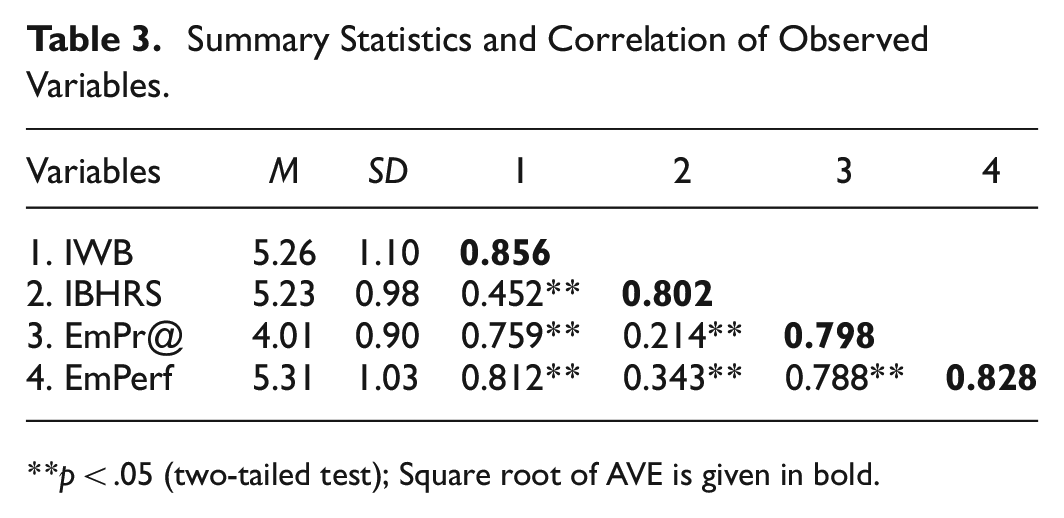
p < .05 (two-tailed test); Square root of AVE is given in bold.
Hypotheses Testing
SPSS PROCESS Model 4 was used to estimate the hypothesized relationships. Table 4 gives an exhaustive presentation of the results and conclusions of the investigated relationships. All direct relationships under investigation received empirical support at p < .0001. Specifically, Hypotheses 1a and 1b which proposed a direct effect of IBHRS on EmPr@ (β = 0.197, t = 3.471) and IWB (β = 0.474, t = 7.285), respectively. Hypothesis 2 proposed a direct effect of IBHRS on EmPerf. This relationship was also empirically supported (β = 0.325, t = 5.118). Moreover, the direct effects of the mediating variables (EmPr@ and IWB) on the dependent variable (EmPerf) were proposed in Hypotheses 3a and 3b, respectively. Similarly, these hypotheses were also supported (see Table 4).
Direct and Indirect Effects of IBHRS on EmPr@, IWB and EmPerf.

Note: IBHRS = innovation-based human resource system; EmPr@ = employee proactivity; IWB = innovative work behavior; EmPerf = employee performance, A bootstrapping method with a 10,000 sample size generated at 95% confidence interval (CI) was adopted to test the significance of the indirect effects.
Furthermore, Hypotheses 4a and 4b proposed the mediating effect of EmPr@ and IWB on the relationship between IBHRS and EmPerf. To test and confirm the mediating effects, a 95% bias-corrected and accelerated confidence interval (BCa CI) bootstrap with 5,000 resamples was performed. As reported in Table 4, the direct path (c1) became insignificant in the presence of the mediators while the indirect effects were significant; thus suggesting a full mediation effect and thereby providing support for H4a and H4b. Additionally, variance accounted for (VAF) which refers to the ratio of indirect effect to total effect (Bayighomog & Araslı, 2019) was used to further scrutinize the magnitude of the indirect effects. In particular, EmPr@ and IWB cumulatively explained 98.03% of the effect of IBHRS on EmPerf. Further, there was a statistical significance in the difference between the two specific indirect effects; thus, it is inferred that IWB has a greater variance in explaining the effect of IBHRS on Emperf than Empr@.
Discussion
Built on self-determination, proactive personality, and performance theories, this study investigates the interrelationships of innovation-based human resource systems, employees’ proactivity, performance, and innovative work behavior. Also, employee proactivity and employee innovative work behavior were examined as the sequential mediators of IBHRS and employee performance in the aviation context. The aviation industry, as a highly dynamic and safety-critical sector, demands a workforce that is not only technically proficient but also adaptive, proactive, and innovative (Pereira et al., 2021). In the aviation sector, where precision and safety are paramount, the role of employees and the systems that govern their behaviors become crucial elements in ensuring operational excellence. The integration of an IBHRS into aviation organizations becomes a strategic imperative, shaping the landscape of employee proactivity, innovative work behavior, and overall performance (Gadomska-Lila & Rogozińska-Pawełczyk, 2021).
In aviation, the landscape is marked by ever-evolving technological advancements, stringent safety regulations, and the continuous quest for operational efficiency (Okine et al., 2024). This necessitates a workforce that goes beyond traditional competencies, requiring employees to be proactive in identifying potential challenges and innovative in finding solutions. An IBHRS tailored to the aviation context becomes instrumental in fostering these qualities, creating an environment where employees are not only encouraged but empowered to take initiative and contribute novel ideas (Kankaew, 2020). Employee proactivity in the aviation industry goes beyond the conventional understanding of the term. It involves a proactive mindset in identifying and addressing potential safety concerns, anticipating operational challenges, and actively seeking opportunities for continuous improvement (Pasman et al., 2020). In an industry where the margin for error is minimal, cultivating a culture of employee proactivity through an IBHRS becomes a linchpin for maintaining the highest standards of safety and efficiency. Innovation, another critical aspect within the aviation sector, extends beyond technological advancements to encompass novel approaches in operational processes, customer service, and overall organization. An IBHRS designed for the aviation context plays a pivotal role in encouraging and harnessing innovative work behavior among employees (Kankaew, 2020). This involves not only ideation but also the practical application of creative solutions to address the unique challenges posed by the industry.
Moreover, employee performance in aviation is not merely a measure of individual productivity; it is intricately linked to the industry's overarching goals of safety, reliability, and customer satisfaction. An effective IBHRS becomes the catalyst for elevating employee performance, and aligning individual efforts with organizational objectives (Gadomska-Lila & Rogozińska-Pawełczyk, 2021). The positive relationships observed in this study—between IBHRS and employee proactivity, IBHRS and innovative work behavior, and their subsequent impact on employee performance—underscore the strategic relevance of adopting an innovation-centric human resource approach in aviation (L. Liu et al., 2023). As the aviation industry faces ongoing challenges and opportunities, the study’s exploration of IBHRS, employee proactivity, innovative work behavior, and performance provides valuable insights into shaping a workforce that not only meets the industry's current demands but is also prepared for the future (Kankaew, 2020). The unique characteristics of the aviation sector necessitate a nuanced understanding of how HR practices can be tailored to cultivate a workforce capable of navigating the complexities and contributing to the industry's sustained success (Ryley et al., 2020).
The empirical findings delineate strong support for the hypothesized relations. Hypotheses 1a, 1b, and 2 posited the positive relationship between IBHRS (dependent variable) and employee proactivity, innovative work behavior, and employee performance, which corroborates findings in recent studies (e.g., Lasisi, Eluwole, et al., 2020). IBHRS focuses on recruiting employees with strong innovative and proactive abilities. This strategic approach aligns employee attributes with the organization’s emphasis on innovation, creating a workforce that is naturally inclined to take proactive actions and generate innovative ideas. Research suggests that individuals with proactive personalities are more likely to engage in proactive behaviors, such as seeking opportunities and proposing new ideas. Therefore, by selecting employees with these qualities, IBHRS establishes a foundation for fostering a culture of proactivity within the organization. Also, IBHRS incorporates an interconnected system of innovation-based rewards. By recognizing and rewarding employees who generate, create, and share novel ideas, IBHRS taps into employees’ intrinsic motivation. Intrinsic motivation is driven by a sense of personal satisfaction and fulfillment, and when employees feel intrinsically motivated to contribute to the organization’s innovation efforts, they are more likely to engage in proactive behaviors and exhibit innovative work behavior. Studies have shown that intrinsic motivation positively influences employee performance and contributes to a higher level of engagement in innovative activities (S. S. Kim et al., 2023).
Moreover, IBHRS places a strong emphasis on training and development programs to enhance employees’ innovativeness and expertise. These programs provide employees with the necessary knowledge, skills, and resources to contribute innovative ideas and engage in proactive behaviors. By continuously upgrading employees’ skills and knowledge, IBHRS boosts their confidence and competence, leading to a higher propensity for exhibiting innovative work behavior and improved performance (Wang & Chen, 2013; Zhang et al., 2022). Additionally, IBHRS fosters a supportive organizational culture that encourages and rewards proactivity and innovative work behavior. By valuing and recognizing employees’ innovative efforts, IBHRS creates a positive work environment where employees feel empowered to take risks, experiment with new ideas, and actively contribute to the organization’s goals. This supportive culture nurtures employee proactivity and creates a psychological safety net that encourages employees to engage in innovative behaviors, leading to enhanced performance outcomes. Nigerian culture is often characterized by a strong sense of community and collectivism (Onah, 2020). IBHRS that foster teamwork and collaboration align well with this cultural aspect. Proactive employees may be more likely to initiate positive changes and contribute to the collective success of the organization, reflecting the communal values prevalent in Nigeria.
The positive relationship between IBHRS and employee performance in the aviation context stems from the system’s ability to align with industry-specific demands. An effective IBHRS, which emphasizes continuous learning and skill development, ensures that employees are equipped with the latest knowledge and competencies needed to navigate complex aviation systems (Ryley et al., 2020). This alignment between the IBHRS and industry demands enhances employee performance by fostering a workforce that is not only proficient in current practices but is also adaptive to emerging technologies. Secondly, the collaborative nature of aviation operations underscores the importance of effective teamwork and communication. An IBHRS that encourages collaborative problem-solving, open communication, and knowledge sharing contributes to the development of cohesive and efficient teams. This, in turn, positively influences employee performance by creating an environment where employees can work seamlessly together to achieve common objectives. Moreover, the aviation industry places a premium on safety and error prevention. An IBHRS that prioritizes safety training, risk management, and a culture of accountability contributes directly to employee performance by reducing the likelihood of errors and enhancing overall safety outcomes (Pasman et al., 2020). This is particularly crucial in an industry where precision and adherence to protocols are paramount. In addition, the global and diverse nature of aviation operations requires employees to adapt to a variety of situations and work with individuals from different backgrounds. An IBHRS that promotes diversity and inclusion, as well as cross-cultural training, positively impacts employee performance by preparing individuals to navigate the complexities of a multicultural work environment (Liu et al., 2021).
While the study highlights the positive outcomes of an IBHRS-focused approach, it is essential to consider potential negative implications and limitations. Overemphasis on innovation within the human resource system may lead to challenges such as employee burnout, resistance to change, or unrealistic expectations (Anastasiu et al., 2020). While IBHRS strategies are designed to foster innovation and creativity, over-reliance on this approach may lead to certain downsides. One significant limitation lies in the potential for burnout among employees (Tenzer & Yang, 2020). The emphasis on constant innovation and creativity can create an environment where employees feel pressured to continuously generate groundbreaking ideas, contributing to stress and decreased job satisfaction. Additionally, an exclusive focus on IBHRS might inadvertently sideline other essential aspects of employee well-being. Traditional HR functions related to employee development, performance management, and work-life balance may be overshadowed, leading to neglect in areas crucial for maintaining a healthy and productive workforce (Cross & Swart, 2022).
Another challenge is the risk of fostering a culture that prioritizes quantity over quality. In a bid to meet innovation targets, organizations may encourage a rapid generation of ideas without sufficient vetting or evaluation, potentially resulting in the implementation of less feasible or poorly thought-out innovations (Francia et al., 2020). Furthermore, the reliance on IBHRS may not align with the preferences or work styles of all employees. Some individuals may thrive in a more structured and predictable work environment, finding constant change and innovation unsettling. This misalignment can lead to a disengaged workforce and may even result in talent attrition. Overemphasis on IBHRS might also pose challenges in terms of resource allocation. Organizations may invest heavily in technology, training programs, and creative spaces, expecting immediate returns. However, the return on investment may take time, and in the interim, financial resources may be strained, impacting overall organizational stability (Shahanipour et al., 2020).
Employee proactivity was found to enhance employee performance (hypothesis 3a), which is in congruence with previous studies (e.g., Al-Tit, 2020; Zhang & Edgar, 2021). In accordance with the self-determination theory posits that individuals are motivated to engage in activities that fulfill their psychological needs for autonomy, competence, and relatedness. Proactive employees, who take initiative and demonstrate proactive behavior, experience a sense of autonomy in their work. They are self-directed and empowered to make decisions and take ownership of their tasks. This autonomy fosters a sense of competence as they develop and apply their skills to achieve desired outcomes (Sun et al., 2023). The Nigerian aviation industry often involves a high degree of complexity and interdependence among various functions and stakeholders (Nalianda et al., 2015). Proactive employees are more likely to engage in cross-functional collaboration, share information, and contribute innovative ideas. This collaborative approach fosters a positive work environment and facilitates the exchange of knowledge, which is crucial for addressing complex issues and optimizing overall performance. Additionally, proactive employees often seek opportunities to collaborate and contribute to the organization’s goals, satisfying their need for relatedness (Saleem et al., 2023). The fulfillment of these psychological needs promotes intrinsic motivation, leading to higher levels of engagement and commitment. Consequently, proactive employees are more likely to perform at a higher level due to their internal drive and sense of fulfillment.
The theory of performance highlights the role of goal-setting, feedback, and self-regulation in driving performance (Van Iddekinge et al., 2023). Proactive employees tend to set challenging goals for themselves and actively seek feedback to monitor their progress. They continuously evaluate their performance and make adjustments to improve their outcomes. By taking the initiative to set ambitious goals, proactive employees strive for higher levels of achievement. Feedback serves as a valuable tool for self-regulation, allowing proactive employees to identify areas for improvement and make necessary adjustments. This proactive approach to goal-setting, feedback-seeking, and self-regulation facilitates continuous improvement, leading to enhanced performance outcomes (AlMazrouei, 2022). The theory of proactive personality suggests that individuals possess inherent characteristics that drive them to take initiative and engage in proactive behaviors. Proactive employees are more likely to exhibit traits such as self-confidence, self-efficacy, and a proactive mindset (Naz et al., 2020). These traits enable them to anticipate opportunities, identify problems, and take the initiative to address them. Proactive employees have a natural inclination to seek out new challenges, take calculated risks, and explore innovative solutions. Their proactive personality enhances their ability to adapt to changing circumstances, seize opportunities, and overcome obstacles, all of which contribute to improved performance outcomes.
As supported by previous research and findings in related studies, there is a clear and consistent association between employee innovative work behavior and performance (hypothesis 3a and b). These findings are highly relevant and applicable to the aviation sector, where proactive employees who exhibit innovative work behaviors play a crucial role in driving organizational success (Ali Al-Shami et al., 2022). Proactive employees in the aviation sector demonstrate a higher level of engagement, creativity, and problem-solving skills, which directly impact their job performance (Mansour et al., 2021). By taking initiative, suggesting innovative ideas, and seeking out opportunities for improvement, proactive employees contribute to the overall performance of the organization. Their ability to identify and address challenges, propose novel solutions, and adapt to changing circumstances enables them to excel in their roles and achieve higher levels of productivity, efficiency, and effectiveness (Buil et al., 2019).
Moreover, innovative work behavior is strongly associated with employee performance in the aviation sector (Lasisi, Eluwole, et al., 2020). The nature of the industry, with its constant need for improvement, adaptation, and innovation, requires employees to engage in innovative work behaviors to remain competitive. Proactive employees are more likely to exhibit innovative work behaviors, such as generating creative ideas, experimenting with new approaches, and challenging existing processes. These behaviors contribute to improved performance outcomes in terms of efficiency, safety, customer satisfaction, and overall organizational success (Suseno et al., 2020). These positive relationships can be attributed to several factors. Firstly, proactive employees actively seek opportunities to improve their skills and knowledge, which enhances their expertise and enables them to perform their tasks more effectively (Parker et al., 2013). This increased competence positively influences their performance outcomes. Secondly, proactivity and innovative work behavior foster a culture of continuous learning and adaptation in the aviation sector. Organizations that encourage and support proactive and innovative behaviors provide employees with the necessary resources, autonomy, and freedom to explore new ideas, experiment, and contribute to the organization’s goals (Suhandiah et al., 2023). This culture of innovation enables employees to stay ahead of industry changes, identify new opportunities, and drive performance improvements. Lastly, proactive employees demonstrate a greater sense of ownership and commitment to their work. Their intrinsic motivation and dedication to excellence contribute to their overall performance outcomes and the success of the organization.
The mediating roles of proactivity and innovative work behavior were found to be crucial factors in enhancing the positive relationship between IBHRS and employee performance as posited by hypotheses 4a and b. Proactivity acts as a bridge between IBHRS and employee performance by empowering employees to take initiative and proactively seek opportunities for growth and improvement. When organizations implement IBHRS, employees who exhibit proactivity actively utilize the resources and opportunities provided to drive their performance (Jiang et al., 2021; Renkema et al., 2022). They take charge of their work, anticipate challenges, and engage in proactive problem-solving, ultimately enhancing their performance outcomes. Similarly, innovative work behavior serves as another mediator in the relationship between IBHRS and employee performance. IBHRS stimulates employees’ creativity and provides them with the necessary tools and platforms to generate and implement innovative ideas (Zhou et al., 2022). Employees who engage in innovative work behavior actively introduce and promote new processes, products, or services, contributing to improved performance (Vuong et al., 2022). By leveraging the opportunities provided by IBHRS, employees enhance their performance and play an active role in driving innovation within the organization (Lindblom & Martins, 2022).
Both proactivity and innovative work behavior contribute to enhanced motivation and engagement, further reinforcing the positive relationship between IBHRS and employee performance. Proactive employees are self-motivated and driven to take on challenging tasks, resulting in increased engagement and effort (Renkema et al., 2022). Similarly, employees who engage in innovative work behavior feel motivated and engaged as they witness the direct impact of their creative efforts on organizational outcomes (Zhou et al., 2022). This heightened motivation and engagement translate into improved performance as employees are more invested in their work and strive for excellence (Renkema et al., 2022; Zhou et al., 2022). Furthermore, proactivity and innovative work behavior enable employees to effectively leverage the resources and opportunities provided by IBHRS (Vuong et al., 2022). Proactive employees actively seek out and utilize the training, knowledge-sharing platforms, and decision-making authority offered by IBHRS(Grant & Ashford, 2008). Employees engaged in innovative work behavior leverage the supportive climate created by IBHRS to experiment, share ideas, and collaborate with colleagues (Zhou et al., 2022). By capitalizing on these resources and opportunities, employees enhance their performance by accessing valuable knowledge, expanding their skill set, and implementing innovative solutions (Lindblom & Martins, 2022).
Conclusion
As revealed by the results of this empirical study, the proposed relationships were all supported. More specifically, significant positive relationships exist between innovation-based human resource systems and employee proactivity, innovation-based human resource systems and employees’ innovative work behavior, innovation-based human resource systems, and employee performance. Moreover, the relationship between an innovation-based human resource system and employee performance was fully mediated by both employee proactivity and innovative work behavior.
This result suggested that when employees are recruited through innovative systems, trained, and rewarded in the same manner, such employees will be proactive and innovative in delivering their assigned tasks. In other words, innovation-based human resource systems boost employees’ proactivity and their innovative work behavior which implies that passenger-contact employees not only deliver on their prescribed duties but are better equipped and suited to envisage and meet customers’ needs in manners that are creative and effective. Such personal resources are required for the successful running of operations in the high-pressured context of air transport organizations. Further, our result suggests that such employees who are proactive and innovative in their work environment will better forecast the foreseeable and unforeseeable demands of the job thereby leading the way to better outcomes in terms of job performance and positive employer expectations.
Academic Implications
Firstly, our research helps in further understanding the relationship between human resource management and employee performance. Past studies have mostly focused on how generic HRM can foster performance especially organizational performance(Ogunyomi & Bruning, 2016; Tian et al., 2016) and on organizational outcomes (Noe et al., 2017; Rothenberg et al., 2017). In recent times, the focus has shifted to how specific HRM can influence employee performance (Bal & De Lange, 2015; Cooper et al., 2019; Martinaityte et al., 2019).
In contrast, our study suggests that IBHRS not only influences employee behavior but also employee outcomes such as employee performance. More specifically, this present research is the first to reveal in a parallel mediation model that employees’ behaviors can mediate the relationship between organizational variables and performance outcomes. This finding is of importance as it provides corroboration for a cognitive perspective on employee performance evaluations; suggesting that employee proactivity and innovative work behavior shape how IBHRS affects employee performance. Furthermore, this finding is relevant and interesting as it links three needs of self-determination theory (need for autonomy, competence, and relatedness) (Deci & Ryan, 2002) with the three aspects of IBHRS (recruitment, training, and reward).
Secondly, research regarding airports in general has focused mainly on technological, environmental, and economic aspects (Qin et al., 2017; Seo & Park, 2018). However, few research such as Vasumathi (2017) have focused on employee satisfaction and/or performance but have not used specific HRM such as done in the present study to bridge a gap in the attendant literature focusing on airports. This gives room for future research on specific HRM such as change-based, cloud-computing-based, and knowledge-based HRM for airport organizational and employee outcomes.
Lastly, research on the airport industry in developing countries is very limited and few publications have also focused on economic and environmental aspects (Akan et al., 2011), especially within the remit of Nigeria. The extant research has focused on the impact of airport construction/management on the nation’s economy (Stephens & Ukpere, 2011) while recent research (Adeniran & Fadare, 2018) on the airport industry used the SERVQUAL model to assess service quality and passenger satisfaction. With a wide range of research in the service industry, there is a dearth of literature regarding Nigerian airport service which this research will bridge.
Theoretical Implication
The present study has numerous theoretical implications that contribute to the existing literature in the fields of human resource management, organizational behavior, and innovation research. Firstly, the incorporation of the self-determination theory (SDT) as a theoretical framework provides a valuable contribution to comprehending the motivational processes that underlie the relationship between innovation-based human resource systems (IBHRS) and employee performance. By emphasizing the fulfillment of employees’ autonomy, competence, and relatedness needs, SDT sheds light on the intrinsic motivation that drives proactive and innovative behaviors. This theoretical perspective goes beyond the traditional emphasis on extrinsic rewards and incentives, highlighting the significance of establishing an organizational environment that fosters employees’ internal motivation and sense of ownership. The integration of SDT in this study enhances our understanding of how IBHRS practices can impact employee behavior and performance outcomes.
Secondly, the parallel mediation model examined in this study contributes to a deeper understanding of the mediating roles of employee proactivity and innovative work behavior. While previous research has often investigated these constructs independently, this study recognizes their interrelated nature and explores their joint mediating effects. By considering both proactivity and innovative work behavior as parallel mediators, this study reveals the intertwined processes through which IBHRS practices translate into enhanced employee performance. This integrated perspective aligns with the dynamic and complex nature of the contemporary work environment, where employees are expected to be proactive, adaptive, and innovative. The findings contribute to theory development by offering a more comprehensive understanding of the underlying mechanisms that connect IBHRS, proactivity, innovative work behavior, and employee performance.
Furthermore, this study extends the existing literature on HR practices by emphasizing the importance of talent identification and management within the hospitality industry, specifically in the Nigerian aviation sector. While previous research has predominantly focused on recruitment and rewards, this study highlights the need for organizations to nurture and develop talents such as employee proactivity and innovative work behavior. By addressing the unique challenges faced by the hospitality industry, this study provides insights into the specific application of IBHRS practices in cultivating desired qualities in employees. This theoretical implication expands our knowledge of HR practices in complex industries and provides practical implications for organizations in similar contexts.
Additionally, the theoretical implications of this study extend to the broader field of innovation research. By highlighting the mediating roles of proactivity and innovative work behavior, this study underscores the importance of employees’ proactive engagement and generation of novel ideas in driving innovation within organizations. The findings contribute to our understanding of the factors that facilitate the creation and implementation of innovative ideas, which can lead to improved performance outcomes. This theoretical insight is particularly relevant in today’s fast-paced and competitive business environment, where organizations need to continuously innovate to stay ahead.
Practical/Managerial Implications
A lot of practitioners and scholars in the organizational management field have begun to understand the importance of human capital in achieving their organizational goals and objectives (Bendickson & Chandler, 2019; Wang & Zatzick, 2019). To handle this responsibility, airport organizations as well as service/product organizations should endeavor to provide IBHRS to foster innovative work behavior and employee proactivity. According to this research findings, airport organizations need to put in place IBHRS which meets the needs of autonomy, competence, and relatedness in employees and which, not only reinforces innovation but also encourages proactivity resulting in employee performance and ultimately organizational performance. More specifically, airport organizations or organizations, in general, should prioritize IBHRS whether their current employees are inclined to innovate or not. This is essentially because such prioritization will ensure that new recruitment focuses on innovation-inclined individuals, and train and reward their current innovative employees as well as newly recruited ones. In addition, this research compellingly encourages top management and human resource managers to establish core values that emphasize innovation when their IBHRS policies are formed. It is also important that employees who have innovation values are hired. Human resource managers in airport organizations should recruit and select employees who have similar inclinations toward innovation. They can set examples by emphasizing their innovation values in job listings and also use situational questions with regard to innovation when evaluating applicants in the interview process. Also, it is expedient for HR managers to provide training to the employees with regards to innovation as such will help employees to fully understand the organizations’ policies with respect to innovation and also enhance employees’ awareness of the importance of innovation in the industry. Lastly, airport HR managers should take into consideration reward systems such as financial and non-financial incentives to stimulate employees’ participation in innovation.
The findings of the research further revealed that employee proactivity and innovative work behavior significantly mediate the relationship between IBHRS and employee performance. The research therefore emphasizes the need to create a system that enhances employee performance as an organization’s effectiveness is embedded in employees’ efficiency (Mastrangelo et al., 2014). Therefore, airport HR managers should encourage autonomy, creativity, and “thinking-outside-the-box” behavior. Furthermore, this research suggests that IBHRS is configured in a way that an organization’s climate encourages positive employee behaviors such as proactivity and innovative work behavior.
Limitations and Future Research
This study contributes to the body of literature; however, some caveats should be stated. Firstly, data was collected from passenger-contact employees of the airport through their managers which can create selection bias. Several studies such as (Karatepe & Choubtarash, 2014) have used this means for data gathering. Future research should ensure this data collection process is done directly with the employees to control the highlighted bias. Secondly, a 1-week time lag in three waves which was used in this study to describe some substantiation about temporal causality can be extended in future studies. Accordingly, future studies should obtain data using a longer time period. Thirdly, data was obtained from only two international airports in Nigeria; future studies should consider and compare results from different airports, especially with local airports.
Footnotes
Appendix
Univariate and Multivariate Normality and Collinearity Test.
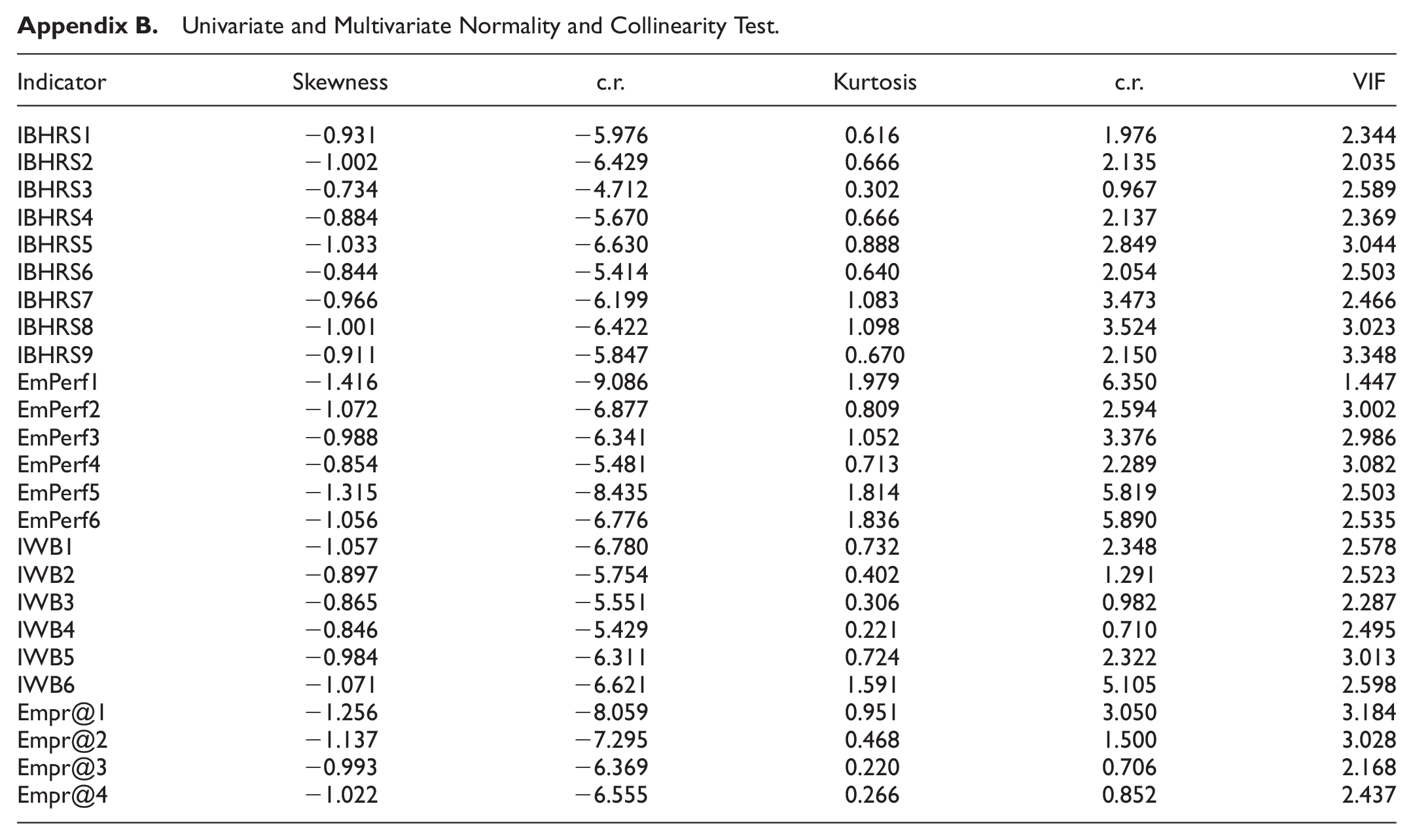
| Indicator | Skewness | c.r. | Kurtosis | c.r. | VIF |
|---|---|---|---|---|---|
| IBHRS1 | −0.931 | −5.976 | 0.616 | 1.976 | 2.344 |
| IBHRS2 | −1.002 | −6.429 | 0.666 | 2.135 | 2.035 |
| IBHRS3 | −0.734 | −4.712 | 0.302 | 0.967 | 2.589 |
| IBHRS4 | −0.884 | −5.670 | 0.666 | 2.137 | 2.369 |
| IBHRS5 | −1.033 | −6.630 | 0.888 | 2.849 | 3.044 |
| IBHRS6 | −0.844 | −5.414 | 0.640 | 2.054 | 2.503 |
| IBHRS7 | −0.966 | −6.199 | 1.083 | 3.473 | 2.466 |
| IBHRS8 | −1.001 | −6.422 | 1.098 | 3.524 | 3.023 |
| IBHRS9 | −0.911 | −5.847 | 0..670 | 2.150 | 3.348 |
| EmPerf1 | −1.416 | −9.086 | 1.979 | 6.350 | 1.447 |
| EmPerf2 | −1.072 | −6.877 | 0.809 | 2.594 | 3.002 |
| EmPerf3 | −0.988 | −6.341 | 1.052 | 3.376 | 2.986 |
| EmPerf4 | −0.854 | −5.481 | 0.713 | 2.289 | 3.082 |
| EmPerf5 | −1.315 | −8.435 | 1.814 | 5.819 | 2.503 |
| EmPerf6 | −1.056 | −6.776 | 1.836 | 5.890 | 2.535 |
| IWB1 | −1.057 | −6.780 | 0.732 | 2.348 | 2.578 |
| IWB2 | −0.897 | −5.754 | 0.402 | 1.291 | 2.523 |
| IWB3 | −0.865 | −5.551 | 0.306 | 0.982 | 2.287 |
| IWB4 | −0.846 | −5.429 | 0.221 | 0.710 | 2.495 |
| IWB5 | −0.984 | −6.311 | 0.724 | 2.322 | 3.013 |
| IWB6 | −1.071 | −6.621 | 1.591 | 5.105 | 2.598 |
| Empr@1 | −1.256 | −8.059 | 0.951 | 3.050 | 3.184 |
| Empr@2 | −1.137 | −7.295 | 0.468 | 1.500 | 3.028 |
| Empr@3 | −0.993 | −6.369 | 0.220 | 0.706 | 2.168 |
| Empr@4 | −1.022 | −6.555 | 0.266 | 0.852 | 2.437 |
Acknowledgements
Taiwo Temitope Lasisi, gratefully acknowledge the financial support of the Specific Research Project “Information and Knowledge Management and Cognitive Science in Tourism” of FIM UHK.
Authors’ Note
This research was conducted while Kayode Kolawole Eluwole was at Istanbul Gelisim University. They are now at Masaryk University and may be contacted at
Declaration of Conflicting Interests
The author(s) declared no potential conflicts of interest with respect to the research, authorship, and/or publication of this article.
Funding
The author(s) received no financial support for the research, authorship, and/or publication of this article.

Data Availability Statement
Data sharing not applicable to this article as no datasets were generated or analyzed during the current study.