




Abstract
SuperAging deserves special attention from researchers in the field of the psychology of aging, because it denotes the preservation of multiple cognitive abilities in very old age. Currently, very little is known about lifestyle factors that could be related to SuperAging. The main goal of the present narrative review was to bring together available evidence involving social factors related to SuperAging and to target avenues for future research. The review summarizes the findings of studies published between 2005 and 2022. Low social participation in midlife age and high social participation in older age were found to be related to SuperAging. In contrast, social network size and diversity did not differ between SuperAgers and cognitively normal older adults. The synthesis of the results indicates that having positive, close, high-quality relationships and a high frequency of social contact may be considered to be hypothetical predictors of superior cognitive performance in later life.
Plain Language Summary
The study provides the overview of empirical research involving social factors related to SuperAging, that is, the preservation of cognitive abilities in very old age. The review summarizes the findings of studies published between 2005 and 2022. Less frequent social contact in midlife and more frequent social contact in older age were found to be related to SuperAging. In contrast, social network size and diversity did not differ between SuperAgers and cognitively normal older adults. The synthesis of the results indicates that having positive, close, high-quality relationships and a frequent social contact predict better cognition in very old age.
Introduction
Successful cognitive aging is closely related to the absence of cognitive decline that could be diagnosed as a mild cognitive impairment or dementia in late adulthood. Apparently, successful cognitive aging is very desirable to be reached. Many researchers are working in this field to reveal what factors influence successful aging, which older adults show signs of cognitive decline and which show relatively healthy cognitive functioning. Maximizing the functional ability and maintenance of good cognitive function in older adults is also recommended by the World Health Organization (WHO, 2017). For these reasons, the attention of researchers in this field is ever more focused on investigating older adults with very well-preserved cognitive abilities.
The phenomenon of SuperAging belongs to a very recent and highly topical issue in the field of psychology of aging. SuperAgers are adults older than 80 years of age who show very good cognitive abilities, especially a superior memory (Harrison et al., 2012). A SuperAger is primarily defined as an older adult who has superior episodic memory compared to normative values of younger adults (Gefen et al., 2014). Borelli et al. (2018) later widened the definition of these cognitively high-performing older adults to also consider superior performance in further cognitive domains, such as executive functioning, inhibitory control or regulation of attention. Therefore, SuperAgers are sometimes called cognitively elite older adults (Saint Martin et al., 2017).
In comparison to the relatively new research on SuperAging, the opposite end of cognitive aging spectrum, that is, neurodegeneration and dementia, has been a matter of substantial research up to now. Bio-psycho-social lifestyle-related factors for dementia have been revealed, and it was also shown, for example, that low social contact belongs among the 12 risk factors recently identified (Livingston et al., 2020; Weber, 2016). In contrast to these findings, the lifestyle factors that could be related to the preservation of high-functioning cognitive abilities in older age are less investigated (but see Ihle et al., 2020; Yu et al., 2020). This issue is, however, highly topical, because the findings from this field can be practically utilized in lifestyle counseling as well as in the planning of public health policy for the aging population. Moreover, the phenomenon of SuperAging demonstrates not only the possibility of preserving high cognitive functioning in very late life but may even weaken some negative stereotypes about the aging population in general (Keating, 2022; Maccora et al., 2021).
The present study focuses specifically on the social factors that may be considered as being protective against age-related cognitive decline or that can support the preservation of multiple cognitive abilities in older adulthood (Ybarra et al., 2008). To our knowledge, no review focused on social factors in SuperAgers has been published so far, although some interesting insights are provided by Fratiglioni et al. (2004) and Zahodne (2021). The first of these two studies summarizes the findings of longitudinal studies investigating the effects of social, mental and physical lifestyle components on cognition, also taking into consideration their protective effects against dementia. “Social support, social influence, social engagement, person-to-person contact and access to resources” were found to be social lifestyle components that affect people behaviorally, psychologically and physically (Fratiglioni et al., 2004, p. 349). Social engagement in particular was found to be related to better mental and physical health (Bath & Gardiner, 2005; Bennett, 2005). In contrast, a poor social network and a lack of social activity were found to worsen cognitive functioning and increase the risk of dementia. Taken together, the findings summarized in the above-mentioned reviews show that an active social lifestyle has a positive effect on cognition in later life.
Furthermore, the review by Zahodne (2021) also provides some interesting insights into the psychosocial protective factors in cognitive aging. The study focuses on perceived control, religious involvement and social relations. Greater perceived control, which might be modifiable by experience, seems to help with building a cognitive reserve and thus being connected with better cognition in older age (Zahodne, 2021). Social relations have been studied by the mentioned author in the life course approach looking at social network structure, its function and quality. Friendship in general was found to play a key role in developing a cognitive reserve and thus may have high potential to optimize cognitive aging. Moreover, more frequent interactions with non-family members, that is, friends, were found to be the strongest predictor of better memory aging in the study by Zahodne et al. (2019). In contrast to the impact of frequent interactions with friends, the frequency of interactions with family members was not found to be uniquely associated with memory aging (Zahodne, 2021).
Aside from the above-mentioned empirical evidence, the link between cognitive performance and social factors is also considered in the theory of psychological aging. For example, Kelly et al. (2017) suggest that social activities are a type of cognitive stimulation that support cognitive performance in later life through building a cognitive reserve, that is, the brain’s resilience built through mental stimulation and life experiences, which helps delay cognitive decline. Furthermore, within the context of the cognitive enrichment approach, social activities are suggested to contribute to the maintenance of cognitive performance in late adulthood because these contexts are cognitively demanding and thus represent opportunities for cognitive enrichment (Bourassa et al., 2017). Taken together, interacting with others in one’s social network may be generally expected to be beneficial for a subject’s cognition.
Nevertheless, more theoretical development is needed in this field because there is an insufficient differentiation between variables of social life. General terms, such as sociality, social activities or social engagement, are commonly used in the literature. However, these general terms may indeed mean and cover more indicators of the social life of older adults. There are structural variables of social life, such as social network size and social network composition, and these variables inform us about the size and structure of social network, but they do not convey any information about the quality of social relationships. However, the mere quality of the social contact may be a key aspect for cognitive enrichment, because close relationships enable older adults to disclose their deep concerns and worries. Importantly, Kelly et al. (2017) expect that different aspects of social life may affect cognitive domains in different ways. While social support is suggested to have a buffering effect on stress and may thus consequently affect memory and executive functioning, social interactions are expected to influence reasoning, attention and processing speed.
All these theoretical insights point to the fact that human social life is a multidimensional, highly complex phenomenon, involves various aspects and affects human cognition in different ways. Therefore, distinguishing between different aspects of social life is important for a better understanding of the link between cognitive performance and social life in late adulthood.
As mentioned above, a review on SuperAging and its relations to social life is missing. SuperAging is a relatively new concept, and the summarization of results would be very helpful for targeting future research. Since the prevalence of cognitive impairments is increasing, it is necessary to search for strategies on how to decrease the socioeconomic burden and support cognitive function preservation in the older population. Non-pharmacological interventions in particular are highly appreciated because they do not have the side effects of medications on the health of older adults. In this perspective, an increase in the number of SuperAgers in the population may also have important socioeconomic effects. For all these reasons, the present study aims to summarize and synthesize the findings from the available studies focused on the social life of SuperAgers/cognitively elite older adults. New avenues for future research are formulated in the Discussion section of the present study.
Methods
The main question of the present narrative review was: What factors of social life may be related to SuperAging? Thus, the present review summarizes and synthesizes the empirical results of studies that investigated social variables in older adults with excellent cognitive abilities. Based on this empirical evidence, several avenues for future studies were determined, and some controversies in the past findings discussed.
In order to capture the relevant empirical literature, the authors conducted a search of the scientific literature in the Web of Science, PubMed and Google Scholar databases. Following the above-mentioned main question of the review, the key words “SuperAging,”“SuperAgers,” and “social” combined in various ways using “AND” and “OR” operators were used for search.
The following inclusion criteria were used for the present review: (a) the article was published between January 2005 and December 2022 in a scientific peer-reviewed journal; (b) the article presents empirical quantitative or qualitative research evidence (longitudinal or cross-sectional) gathered in SuperAgers/cognitively elite older adults; (c) the article presents empirical quantitative or qualitative research evidence (longitudinal or cross-sectional) mapping a domain (or domains) of the social life or social activities of SuperAgers/cognitively elite older adults; (d) the article is written in English; and (e) a full-text version of the article is available.
The exclusion criteria were: (a) the article was published in 2004 or earlier; (b) the article was published in other than a scientific peer-reviewed journal (e.g., a Master’s thesis, grey literature); (c) the article presents only evidence gathered in subjects with cognitive impairment/dementia; (d) the article does not provide data about the cognitive performance of older adults; (e) the article is not written in English; and (f) a full-text version of the article is not available.
An additional literature search was conducted via a backward and forward snowballing strategy. In other words, the reference lists of the retrieved manuscripts were scanned for relevant sources. These sources were later retrieved and scanned for relevance. Forward tracking was conducted using the “Times cited” tool provided by the Web of Science and “Cited by” tool provided by Google Scholar. The relevant sources were then retrieved.
The database searches generated 152 occurrences (Figure 1). The titles of records were screened and duplicates were removed. The titles and abstracts of the remaining sources were then scanned for relevance independently by two evaluators (the authors of this review). The source was considered to be relevant for the purpose of the present review if it met all the inclusion criteria (see above). The two evaluators reached agreement in all the evaluated sources. Based on this scanning, only nine empirical articles dealing with the social life of SuperAgers/cognitively elite older adults were found. Their full texts were retrieved, and all the articles were read to verify whether all the inclusion criteria were present. All nine of these articles met the inclusion criteria.
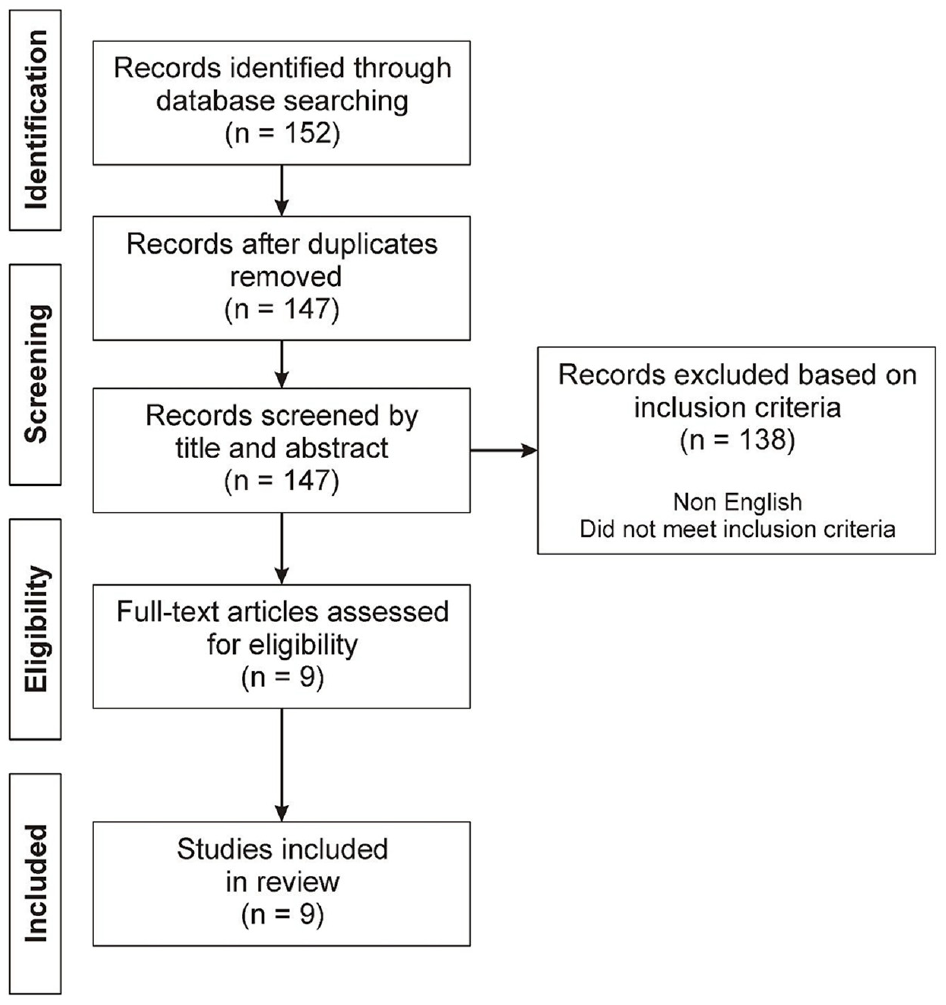
PRISMA diagram.
In the next stage, a focused excerpting of the retrieved articles was conducted concentrating on empirical findings that considered both measurements of cognitive functions and social variables. For the purpose of the present review, the empirical findings were grouped into the following categories: social network size and diversity, social participation in midlife, and social participation in older adulthood. The main insights within each group of findings are presented in the following subsections (see also Table 1).
Summary Table.

Note. SA = SuperAgers; CA = cognitively average; CE = cognitively elite; CN = cognitively normal; CI = cognitively impaired; SCA = successful cognitive aging; MCI = mild cognitive impairment; CNC = cognitively normal control.
Results
Social Network Size and Diversity
The structural variables of social life involve mostly a subject’s social network size and social network composition. These variables inform us about the richness of social contact in terms of the number of social actors with which a subject maintains long-term social relationships.
The Argentinian study by Calandri et al. (2020) measured social network size and diversity using the Social Network Index (Cohen et al., 1997), which assesses participation in 12 types of social relationships, such as spouses, children, neighbors, friends, etc. Only those relationships where respondents reported talking to someone at least once every 2 weeks were considered. The authors aimed to determine whether social network size and diversity, among other factors, influenced exceptional memory performance in participants over 80 years old. The results revealed no difference in social network size and diversity between SuperAgers and cognitively normal older adults.
Social Participation in Midlife
Higher participation in social activities is a variable of social life that may be expected to be related to SuperAging. Participation in social activities may stimulate cognitive processing of a subject and thus contribute to the preservation of cognitive abilities in later life. Previous research investigated participation in social activities both in midlife and in older adulthood (see the next subsection).
Yu et al. (2020) investigated the frequency of participation in social activities in midlife in SuperAgers and cognitively normal older adults. The method of retrospective recall of previous lifestyle habits was used in this study. The frequency of participation in social activities was measured by the question “How often did you participate in social activities at around the age of 45?” Surprisingly and counterintuitively, “the super-cognition group, relative to the normal participants, reported significantly less frequent participation in social activities, as well as more frequent instances of working more than 9 hr a day and feeling more stressed” (Yu et al., 2020, p. 5). The results of this study are very interesting, because they showed that a lower frequency of participation in social activities in midlife could be a predictor of superior cognitive abilities in older adulthood.
Social Participation in Older Adulthood
Maccora et al. (2021) investigated the impact of participation in social activities in the last 6 months on superior memory in SuperAgers, as well as in a cognitively normal sample of older adults aged 68 to 74 years within the framework of the Wave 3 of the Australian Personality and Total Health Through Life (PATH) Cohort Study. Participation in social activities in the last 6 months, for example, attending religious services, participating in club activities, helping others with their personal problems or working as a volunteer, was found to be related to superior memory recall, but only in men (see also Philippe, 2022 for how memories can guide actions and behaviors). Men also showed a greater variability in the engagement in social activities than women. In contrast, neither total positive social exchanges per week nor negative social exchanges per week in the last 6 months were found to be predictors of superior memory. Thus, this study showed that the frequency of participation in social activities may be a supportive factor for the preservation of memory for men in later life, but not for women.
The study by Cook Maher et al. (2017) was conducted on SuperAgers and cognitively normal older adults in the USA. This study was primarily focused on well-being, but one of the measured domains of well-being also included positive relations to others. SuperAgers had more positive relations to others when compared to cognitively normal older adults.
In contrast, a Czech study showed no differences between SuperAgers and cognitively normal older adults in terms of time allocated to social activities in the last 2 years (Heissler et al., 2021). Furthermore, a moderate correlation between time allocated to social and other leisure cognitive activities was found. This study had a small proportion of SuperAgers in the sample (N = 19), which was acknowledged as a limitation preventing the generalizability of these findings.
The study by García-Chanes et al. (2022) was conducted as part of a longitudinal project by the Mexican Health and Aging Study (MHAS). Participating older adults between 55 and 75 years of age were divided into three groups: successful memory agers, average memory agers, and adults with memory impairment. Participation in recreational and social activities, including taking care of older people, taking care of children, voluntary work, training, attending sports events, reading, playing board games, talking to people, and doing crafts, was found to predict successful memory aging in this study.
A study by de Frias and Dixon (2014) examined the effect of lifestyle factors on the state of executive function in older adults. Participants (53–90 years old) were taken from the Victoria Longitudinal Study, Canada (VLS; Dixon & de Frias, 2004). Data were obtained from two time periods 4.5 years apart. At baseline, participants were divided into three groups: cognitively elite, cognitively normal and cognitively impaired based on their performance in several cognitive domains. Six tests from the VLS neuropsychological battery were used to assess executive functions, specifically inhibition, shifting and updating. Frequency of engagement (from never to daily) in seven types of social activities in the last 2 years was self-reported in the VLS Activity Lifestyle Questionnaire. Social engagement moderated cognitive differences in executive function, particularly in the cognitively impaired group. The results supported the social engagement hypothesis that higher social activity among older adults is associated with better executive functions. However, engagement in social activities showed no association with cognitive maintenance over time in any of the three groups.
In contrast, the Prognostic Indicator of Cardiovascular and Cerebrovascular Events project in France revealed the important impact of participation in social activities on the preservation of cognitive abilities in later age. Saint Martin et al. (2017) focused on an active lifestyle, specifically the physical, intellectual and social activities performed in the last 2 years, and its impact on three cognitive abilities (information processing speed and attentional performance, executive function, and memory). The cognitive abilities of retired volunteers were examined twice, at the age of 67 and again later at the age of 75. Participants at 75 years of age were examined for cognitive abilities and completed lifestyle questionnaires involving the frequency of social activity engagement using the Social Activity Index (SAI). The sample was divided into three groups—the cognitively elite (CE), cognitively normal and cognitively impaired—at both evaluations. “CE subjects had scores above the mean for each of the three cognitive domains” (Saint Martin et al., 2017, p. 638). The results revealed a positive association between cognitive performance and frequency of participation in social activities in the past 2 years. In particular, the CE group engaged more frequently in social activities than other groups. This indicates that the more an individual participated in social activities, the better cognitive performance he/she showed in later life. In contrast to some of the previously mentioned studies, no gender differences were found. Although this study did not involve CE participants older than 80 years, the CE group showed the highest social engagement, which indicates that social engagement may be a significant factor in maintaining cognitive functions. These results suggested that “cognitive stability, a sign of successful aging, may be dependent on the interplay between individual cognitive reserve and a socially engaged lifestyle” (Saint Martin et al., 2017, p. 643).
The impact of participating in social activities on cognitive aging is hard to distinguish in the study of Yang et al. (2022). The authors grouped together the impact of mental, physical, and social activities and worked with an aggregate variable “late-life leisure activity.” For this reason, the impact of social activities alone cannot be recognized.
Discussion
The present review showed that empirical evidence in the field of social characteristics of SuperAgers is sparse. This situation calls for the revealing of gaps that could be avenues for future research. The following subsections aim to do just that while discussing the available results with other related findings in the field of psychology of aging.
Quality of Social Relationship Versus Social Network Size and Diversity
Recent research indicates that social network size and diversity do not play a key role in the preservation of cognitive abilities in very old age (Calandri et al., 2020). At the same time, SuperAgers were found to have more positive relations with others when compared to cognitively normal older adults (Cook Maher et al., 2017). The later finding stressed the important role of the quality of social relationships for SuperAging. In this context, the study by Miceli et al. (2019) also showed that satisfaction with one’s social network had a positive effect on the preservation of cognitive function in older people over time. This study explored the influence of various social factors, including social network size and diversity, on several aspects of cognitive function, in particular, immediate and delayed verbal recall tests and semantic verbal fluency over time. Data from healthy participants over 50 years old collected in two-time waves from the Survey of Health, Ageing and Retirement in Europe (SHARE) were used in this study.
Taken together, it seems that mostly the quality of social relationships in later age may be a social variable with a positive impact on the preservation of cognitive abilities in very old age. In contrast, structural variables, such as a subject’s social network size and social network composition, do not seem to play a key role. Future research should reveal whether older adults having positive, close, high-quality relationships also tend to show very good cognitive performance.
Low Social Participation in Midlife Versus High Social Participation in Older Age
Interestingly, SuperAgers reported lower social participation in midlife when compared to cognitively normal older adults (Yu et al., 2020). This finding is counterintuitive and in contrast to findings of another study showing higher social participation in older adulthood to be positively related to SuperAging (Maccora et al., 2021). When seeking a possible interpretation of this contrast, further findings from the study of Yu et al. (2020) should also be considered. Aside from less frequent participation in social activities, SuperAgers also reported more frequent work and more frequent instances of feeling stressed. These results may indicate that SuperAgers spend a lot of time working and that they also chose more stressful jobs in their midlife. One may hypothesize that spending a lot of time in busy work in midlife may be highly stimulating for the brain, may stimulate the building of a cognitive reserve and may also prevent later cognitive decline. This hypothesis may inspire future research.
In contrast to midlife, higher social participation may be hypothesized to be highly stimulating for the brain in older adulthood. In this period of life, many older adults are retired and do not spend much time in jobs at all. Therefore, social contact may be much more important for the preservation of cognitive abilities in this developmental stage. This assumption is also supported by the following findings showing a positive impact of social contact on the preservation of cognitive abilities in various populations of older adults.
A study by Liu et al. (2020) investigated the impact of different areas of lifestyle domains and healthy living on cognitive function. Participants were over 65 years of age with no signs of dementia, although their overall cognitive performance was rather low. Social activities were assessed using two questions related to engagement in social activities during a typical week and participation in formal or informal group activities. A “yes, at least 3 days in a week” answer to either of these questions was counted as being active. This study found a small but positive effect of participation in social activities on cognitive ability in women, as women were more socially active.
Furthermore, Mousavi-Nasab et al. (2014) explored the relationships between different types of social and cognitive activities and episodic as well as semantic memory. Participants (65–85 years old) completed a questionnaire regarding leisure activities and performed several tests measuring episodic and semantic memory three times over 10 years. More frequent participation in social activities showed positive impacts on episodic memory. Interestingly, no significant relationship was found between participation in social activities and the state of semantic memory (tests of Vocabulary and Verbal Fluency). However, social engagement was found to be a predictor of better episodic memory in a long-term perspective. This is relevant in our context because excellent episodic memory is one of the characteristics of SuperAging.
It is important to note that social engagement encompasses multiple aspects. Krueger et al. (2009) examined the relationship between social network size, frequency of social activities, and cognitive ability. Although not differentiated into SuperAgers versus non-SuperAgers, at least half of the participants were at the age of 80 or older, and all participants were without dementia. The frequency of social activity was measured by asking how often during the past year participants took part in six typical activities (restaurants/sporting events, trips, visits, unpaid volunteer work). Cognitive abilities were measured using 19 performance tests, seven of which tested episodic memory. The results showed a positive effect of social activity and social support on cognitive performance. Particularly, a higher frequency of social activity was associated with higher performance in several cognitive domains, such as episodic memory, semantic memory, working memory, processing speed and visuospatial ability.
Interestingly, some studies also indicate that the impact of frequency of social contact on cognition may weaken in very old age. The longitudinal Spanish study by Béland et al. (2005) investigated the impact of frequency of social contact with family members on the state of cognitive functions. Both social contact and the state of cognitive functions were monitored from the age of 65 years in all participants. Even though this study did not analyze the super-cognition group specifically, participants who had more frequent contact with relatives, including extended family members, and had a higher number of relatives seen at least monthly “maintained better cognitive function up until 80 years of age than respondents with lower levels of both these social indicators” (Béland et al., 2005, p. 326). Interestingly, this difference diminished and these social indicators did not play a significant role for the preservation of cognitive abilities after the age of 80. As seen from this brief overview, there are inconsistencies in findings across studies, and therefore this calls for conducting further research in this field.
The Impact of Social Support
Social support, that is, receiving assistance, help or care from the others, is a candidate for being a further social variable possibly influencing cognitive aging in older adulthood. There is research showing an important role of social support for cognitive aging (but see also the findings of Kats et al. (2016), who showed that higher social support was associated with greater global cognitive functioning in midlife but did not predict a change in global cognitive function into older adulthood 20 years later). Unfortunately, these studies did not distinguish between a super-cognition/cognitively elite group in their population samples of older adults. However, their main results are at least briefly introduced in this subsection to indicate an important avenue for future research on the impact of various social characteristics for the preservation of cognitive abilities in older adulthood.
A study by Gow et al. (2013) explored the relationship between social support and cognitive abilities in 70-year-old participants. Perceived social support was operationalized as the level of support received and the participant’s level of satisfaction with this support. In the cognitive domain, memory, intelligence (IQ) and processing speed were measured. Perceived social support was found to be related to all measured cognitive abilities.
Another study distinguished between four types of perceived social support and explored the relations to various domains of cognition in non-demented older adults (Pillemer & Holtzer, 2016). Cognitive indicators, that is, immediate and delayed memory, attention, language and visuospatial abilities, were measured by neurocognitive paper-and-pencil tests in this study. Interestingly, only two of four types of social support were found to have significant relationships to cognitive functions: emotional/informational social support and a higher frequency of social interactions that participants perceived as positive. Emotional/informational social support is defined as nurturance and the provision of advice from others (Pillemer & Holtzer, 2016). Interestingly, the relationship between better cognitive function and higher emotional/informational support was found in women, but not in men.
Furthermore, Zahodne et al. (2014) observed the beneficial effect of emotional social support on various cognitive functions in a sample of older adults between 55 and 85 years of age. Social support received in the past month was divided into two types, emotional support and instrumental support. Emotional support denotes if individuals in subject’s social network are ready to listen to subject’s problems, while instrumental support involves material support for completing daily tasks (Zahodne et al., 2014). The state of executive functioning, working memory, processing speed and episodic memory were measured in this study. Instrumental social support showed no association with any of the measured cognitive functions. In contrast, greater emotional social support was associated with better executive functioning and processing speed. Surprisingly, episodic memory was not found to be related to social support.
The results of the above-mentioned studies indicate that emotional social support, rather than material and functional help, represents a potential supportive factor for better cognitive functioning in older adults. On the other hand, the benefit of social support in SuperAgers is questionable given some non-significant results concerning the impact of social support on episodic memory. These insights aim to inspire the designing of future empirical studies, because the relationship between social support and SuperAging remains unexplored at present.
Practical Implications
Supporting social activities in older adults is generally desirable not only because they provide cognitive stimulation, but also because of they reduce feelings of loneliness, improve mental and emotional well-being and enhance the overall quality of life for older individuals. There are a lot of different programs for stimulating social activities in late adulthood.
For example, senior centers or community centers offer activities such as group exercise classes, arts and crafts workshops or various discussion groups. These activities provide older adults with opportunities to connect with and meet new peers. These programs are very important for older adults with an insufficient number of social relationships or insufficient opportunities for social interactions in their everyday life.
Furthermore, the synthesis of empirical results presented above suggests that the quality of social relationships, rather than social network size and composition, may play a key role in the preservation of cognitive abilities in very old age. Therefore, programs supporting close, high-quality relationships seem to be quite essential. Intergenerational programs are programs that bring different generations together, such as older adults and their offspring or other relatives, for shared activities. These common activities may support improvements in already existing social relationships. In the case of disturbed social relationships with relatives, these programs also have the potential to remove some communication barriers or elicit mutual forgiving for past wrongs. These processes may be very positive for the reinstatement of past close social relations via the loss of feelings of resentment.
Currently, technology-based intervention programs are providing new opportunities for older adults. Digital tools, like video conferencing platforms, social media and online forums, enable older adults to connect with their friends and family, despite physical distance. These tools represent new opportunities for social interactions and help physically disabled older adults or older adults living far away connect with their families or close friends. Furthermore, close, high-quality social relationships may be effectively maintained or reestablished via these means. Future development of technology-based intervention programs may be inspired by the results of the present review and focused on designing tools that support long-term, close social relationships as well as a positive tone of online social contact.
Limitations
The present study has several limitations. Only papers published in English were included in the review, which could limit the richness of the results. The studies included in the review used different methods for measuring social variables, and this made comparing their results difficult. The studies also gathered data mostly on a self-reported basis. A further limitation was that some lifestyle factors could not be distinguished in the studies selection because they were not categorized as social, although they contain a social component, for example, collective activities, such as exercise, sports, games, or tourism.
Concluding Remarks
The goal of this narrative review was to suggest the main areas of interest for further research on superior cognitive aging and various aspects of social life, such as participation in social activities, quality of social relationships or social support. This effort should ideally lead to effective measures that the individuals may take to reach their full potential in cognitive health in older age, not only to do their best to prevent dementia but to become SuperAgers. Such SuperAgers may be successful anti-ageism agents in society.
Footnotes
Declaration of Conflicting Interests
The author(s) declared no potential conflicts of interest with respect to the research, authorship, and/or publication of this article.
Funding
The author(s) disclosed receipt of the following financial support for the research, authorship, and/or publication of this article: This work was supported by the Czech Science Foundation (GACR), Project No. 22-24846S “Cognitive SuperAging in Physically Active Women.”
Ethical Approval
This is a review article, therefore, this is not applicable.

Data Availability Statement
Data sharing not applicable to this article as no datasets were generated or analyzed during the current study.