




Abstract
This study explores the relationship between social media influencers (SMIs) and followers’ engagement, social attractiveness, and establishing brand loyalty. The study seeks to redefine current theoretical frameworks and provide practical insights for marketers by investigating the mediating role of followers’ engagement (FE) and social attractiveness (SA) and the moderating influence of parasocial interactions. The present study utilized a quantitative research methodology. The researchers employed the Smart PLS 4 structural equation modeling (SEM) technique to analyze the data. The data was obtained from the participants using the convenience sampling technique. This study’s findings reveal that the sole influence of social media influencers’ homophily on brand loyalty was insignificant; the presence of a substantial mediator, namely consumer engagement, suggests that engagement plays a role in channeling the impact of homophily on brand loyalty. Furthermore, the SA played a crucial role in mediating, emphasizing the significance of aesthetic and emotional appeal. The study revealed that parasocial relationships did not have a significant moderating effect on FE. However, they significantly modified the association between SMIs’ homophily and brand loyalty. These study findings highlight that marketers operating within the laptop industry specifically utilize engagement activities, emphasize visual harmony, and foster parasocial relationships to maximize the influence of influencers on brand loyalty.
Plain language summary
The study seeks to redefine current theoretical frameworks and provide practical insights for marketers by investigating the mediating role of followers’ engagement (FE) and social attractiveness (SA) and the moderating influence of parasocial interactions. The present study utilized a quantitative research methodology. The researchers employed the Smart PLS 4 structural equation modeling (SEM) technique to analyze the data. The data was obtained from the participants using the convenience sampling technique. This study’s findings reveal that the sole influence of social media influencers’ homophily on brand loyalty was insignificant; the presence of a substantial mediator, namely consumer engagement, suggests that engagement plays a role in channeling the impact of homophily on brand loyalty
Keywords
Introduction
The ubiquitous presence of social media in modern life has fundamentally altered the environment of marketing and brand management (Harriger et al., 2023). The advent of social media platforms and the subsequent prominence of social media influencers (SMIs) as influential brand advocates have significantly transformed how consumers interact with and develop brand loyalty (Intyaswati et al., 2021; Qalati et al., 2022; Wang & Tsai, 2023). In the contemporary era characterized by widespread digitalization, wherein information is swiftly propagated and prominent online celebrities influence individuals’ perspectives, comprehending the intricacies of brand loyalty in social media assumes paramount significance (Joshi et al., 2023). There is a growing recognition among organizations of the potential benefits of employing SMIs to engage with their intended target market effectively. Furthermore, customers’ ongoing interaction with brands through social media platforms is crucial for organizations aiming to succeed in a competitive market to possess a comprehensive understanding of the complex mechanics that drive this engagement (Ki et al., 2022). This research researches the complex relationships of brand loyalty, explicitly focusing on the influence of follower engagement, social attractiveness, and parasocial relationships within influencer marketing.
In the modern era of digital advancements, brand loyalty has experienced a significant shift, primarily attributed to the rise of SMIs who wield considerable power as brand endorsers. According to Lou et al. (2023), SMIs have an unparalleled ability to influence and shape the opinions and actions of customers, providing organizations with a distinctive opportunity to engage with their desired target market. Through social media, influencers repeatedly act as intermediaries connecting brands with prospective customers. These individuals establish a sense of relatability and trust with their followers through homophily in interests, backgrounds, preferences, or lifestyles (Khanam et al., 2023). The concept of homophily, which refers to the boundary of resemblance between influencers and their followers, is a crucial factor that significantly impacts the efficacy of influencer marketing techniques (Gross et al., 2023; Ki et al., 2023). The presence of homophily can substantially influence the effectiveness of brand communications delivered through influencers. Martínez-López et al. (2020) reported that when individuals see a significant similarity with an influencer, they are more inclined to interact with the content actively, perceive the influencer as socially appealing, and subsequently establish a more robust affiliation with the promoted brand. Gaining a comprehensive understanding of how homophily influences brand loyalty is of utmost importance for marketers who aim to enhance the effectiveness of their influencer initiatives.
Social media has emerged as a potent platform through which individuals actively influence customer opinion (Chen et al., 2023). One of the notable trends in this domain is the emergence of SMIs, whose influence over followers extends beyond mere following. Yu et al. (2023) maintained that the impact of this influence is determined not only by the number of followers but also by the level of engagement fostered with the audience. Bhattacharya (2023); M. Kim and Baek (2023) explored that as consumers actively consume the information produced by influencers, the concept of social attractiveness gains prominence. This involves the recognition and acceptance of the perceived likability, relatability, and charisma of influencers, which effectively captivate their followers. The reciprocal and influential relationship between influencers and their followers is of utmost importance in cultivating brand loyalty, as influencers operate as mediators who promote the link between consumers and organizations. In this particular setting, a complicated network of connections also leads to parasocial relationships, when individuals who engage with influencers form unilateral, pseudo-intimate connections. Hence, it is imperative to comprehend the complex dynamics between social media influencers (SMIs), the level of involvement from followers, the appeal of the social media presence, the loyalty toward the business, and the development of parasocial interactions. The comprehension of this concept is essential in order to comprehend the complexities linked to contemporary digital influence. This research aims to thoroughly understand the complex dynamics involved in these relationships, thereby clarifying the underlying mechanisms that promote mutually advantageous relationships between influencers and their online followers.
This research contributes to the expanding body of influencer marketing and consumer behavior within social media in several ways. First, the study aims to further our comprehension of the intricate relationship between SMIs and brand loyalty by investigating the impact of influencers on brand loyalty. Second, based on the social media self-efficacy (SMSE) exploring followers’ engagement and social attractiveness as mediating variables offers a comprehensive understanding of how influencers impact consumers’ brand loyalty tendencies. Furthermore, including parasocial interactions as a moderating variable brings a fresh aspect to the study. Third, by acknowledging the importance of parasocial interactions within influencer marketing, we aim to shed light on the circumstances determining how the connections between influencers and their followers can influence brand loyalty to varying degrees. Drawing on the SMSE theory, adopting this nuanced approach enhances the development of theoretical frameworks about parasocial relationships in the context of social media. In addition, our work addresses the need for increased empirical investigation into influencer marketing and its impact on customer behavior. Lastly, using brand loyalty as a dependent variable in our study links our research with the overarching objective of marketing endeavors. Gaining insights into the association between influencer interactions and establishing enduring brand loyalty is essential for academic researchers and industry professionals. The results of our research have the potential to provide valuable insights for marketing strategies, specifically in the area of influencer campaigns. These insights can help create effective campaigns that effectively engage consumers and establish long-lasting connections between organizations and their intended target audiences.
Literature Review
Theoretical Framework
Social Cognitive Theory (SCT)
Bandura formulated social cognitive theory (SCT) in the beginning (Bandura, 1986; Ma et al., 2020). According to this view, the social environment, subjective cognition, and individual behavior are dynamic and interactive. Subjective cognition comprises two fundamental components: self-efficacy and outcome expectancy. Self-efficacy pertains to an individual’s perception of their capability to take action to accomplish a particular objective, as well as the level of assurance they have in their own capabilities. An individual’s resultant expectation is a valuation of the potential outcome of completing their undertaking. Both individual and environmental factors impact behavior, and it is possible to forecast behavior by utilizing perception, expectation, and an environmental evaluation based on individual factors (Pekkala & van Zoonen, 2022). The primary advantage of the SCT is its emphasis on behavior maintenance, an aspect often overlooked by other theories. Due to this rationale, an important aspect of this article is the incorporation of SCT in the construction of the suggested model. In order to gain a better understanding of how individuals learn, imitate, and interact with content on social media platforms, Social Cognitive Theory can be employed. When it comes to determining behaviors that are associated with social media influencers, brand loyalty, follower engagement, and social attractiveness, the theory highlights the significance of observational learning, vicarious reinforcement, self-efficacy, and the reciprocal relationship that exists between personal factors and environmental influences (Lin & Chang, 2018).
Observing models in their social environment can provide individuals with the opportunity to learn and witness behaviors that are related to social attractiveness. A few behaviors that could fall under this category include effective communication, positive body language, and other social abilities that society considers attractive. Individuals may be more likely to mimic particular behaviors if they perceive that those behaviors are socially rewarded (reinforcement) and lead to beneficial results. The opposite is true for behaviors that result in social punishment; these behaviors may be less likely to be emulated (Bussey & Bandura, 1999). Self-efficacy has been shown to correlate with perceptions of social attractiveness. People can experience increased levels of self-assurance in their social interactions and relationships if they believe that they possess the social abilities and attributes that others consider attractive. Personal factors, such as self-perception, behavioral factors, such as engaging in behaviors that are viewed as attractive, and environmental factors, such as social context and norms, can all interact in a dynamic way to potentially influence social attractiveness (Bussey & Bandura, 1999).
Literature
Homophily is a phenomenon that pertains to the resemblance observed in demographic attributes, lifestyle choices, and personal interests (Shoenberger & Kim, 2023). This implies that those who follow influencers are enthusiastic and receptive to interacting with them when they possess similar attributes, share shared interests, or find themselves in parallel circumstances. Homophily is a concept that encompasses four distinct dimensions: The individual’s attitude, development, values, and looks are significant factors to consider (Alboqami, 2023; Bu et al., 2022). The first-dimension philosophy pertains to the extent to which followers’ cognitive and behavioral tendencies toward SMIs exhibit similarity. The second dimension explains the degree of similarity in the socio-economic standing of consumers with influencers. The concept of third-dimension values pertains to the similarity in individual and societal standards and values. Finally, the appearance dimension highlights SMIs’ visual attributes. In their study, Sicilia and López (2023) discovered a positive relationship between homophily and consumer behavior. They observed that influencers are likelier to establish connections with followers who share similarities in attitudes, background, values, and appearance.
The emergence of the internet has significantly influenced the marketing landscape in recent years, mainly due to the growing prevalence of advertisements on social media platforms (Sheikh et al., 2023). This marketing strategy leverages the knowledge and influence of SMIs, such as vloggers and social media personalities, to endorse and advertise a brand (Hudders & Lou, 2023). The field of influencer marketing is witnessing a significant increase in scholarly investigation because of the growing frequency of campaigns involving various SMIs like Instagrammers, Facebookers, Threaders, and YouTubers (Shamim & Islam, 2022). Consequently, there is an increasing focus on thoroughly delineating and scrutinizing the function, attributes, and aspects of SMIs (Joshi et al., 2023).
The concept of loyalty has consistently occupied a prominent position within marketing literature, attracting the interest of both marketing scholars and professionals (Wattoo & Iqbal, 2022). Brand loyalty is characterized by a steadfast and persistent commitment to consistently repurchase or remain loyal to a favored brand in subsequent transactions (Hussain et al., 2023). It is manifested by the consistent purchasing behavior characterized by the repetitive choice of a particular brand. This statement suggests the inclination of consumers to exhibit brand loyalty by consistently favoring a specific brand. Due to this rationale, the importance of brand loyalty has witnessed a significant increase and plays a substantial role in enhancing the financial viability of an organization. These justifications have garnered support from previous studies that contend that cultivating, preserving, and augmenting brand loyalty have become crucial strategies in a fiercely competitive marketplace (Castillo-Abdul et al., 2021). Therefore, brand loyalty has emerged as a central area of academic inquiry and is widely acknowledged as a critical intangible resource for organizations.
In recent years, there has been a scholarly focus on comprehending the engagement exhibited by followers on social media networks. Followers’ engagement refers to their audience’s active involvement, interaction, and response to the content they share, including likes, comments, shares, and other forms of participation, indicating the influencer’s level of connection and impact on their followers (Dinh et al., 2023). Past studies have suggested that individuals are more likely to be actively involved and interact with information when it is congruent with their self-concept (Dinh et al., 2023; Sinha & Srivastava, 2023). According to Fetais et al. (2023), the significance of emotional content should not be underestimated since posts on social media platforms elicit positive feelings, resulting in greater engagement. Further, scholarly research underscores the importance of interactivity and responsiveness for SMIs, highlighting that actively engaging with followers boosts their perception of belongingness and commitment (Kabadayi et al., 2023). This literature review highlights the complex interaction between SMIs and the level of engagement followers’ exhibit on social media platforms.
The emergence of SMIs in recent years has significantly transformed how customers interact with online information. One significant determinant impacting this interaction is homophily (Khanam et al., 2023). The concept of homophily pertains to the inclination of followers to actively engage with influencers who exhibit similar ideals, lifestyles, or interests (Ladhari et al., 2020). Numerous scholarly investigations have examined the influence of homophily on the level of involvement shown by customers (Mainolfi & Vergura, 2022; Wong & Wei, 2023). Those who follow influencers perceive them as relatable, primarily owing to shared interests or identities; they tend to be more inclined to connect with the content. This engagement may manifest in several forms, such as liking, sharing, and commenting on articles. Establishing this relationship engenders a communal atmosphere and cultivates a more profound connection between influencers and their followers, resulting in heightened levels of engagement.
Hypotheses Development
Wong and Wei (2023) state that SMIs substantially influence customer behavior in the digital landscape. Individuals who have a substantial influence on social media platforms exhibit the ability to cultivate authentic and relevant relationships with their followers, leading to heightened levels of trust and active engagement. According to Sohaib and Han (2023), influencers adeptly acquaint their followers with organizations in a tailored and persuasive manner by seamlessly integrating brand mentions into their content. Influencers foster a sense of community and inclusivity focused on a particular brand through consistent and meaningful engagements, fostering emotional connections beyond transactional relationships. According to Shah et al. (2023), followers who regularly engage with SMIs often cultivate a heightened sense of affinity and loyalty toward companies endorsed by these influencers whom they admire. This phenomenon can be attributed to the fact that the support of influencers offers social validation and imparts a perception of endorsement from a reliable and trustworthy authority.
SMIs are widely acknowledged as an effective marketing tactic for fostering mutually advantageous consumer relationships Gross et al. (2023). Organizations use social media platforms to connect, interact, and communicate with customers. This objective is accomplished by the establishment of a customer brand experience and the provision of value that is associated with the brand. As a result, these endeavors improve customers’ behavioral reactions toward the company on social media platforms. Prior studies asserted that SMIs could foster brand loyalty (Fetais et al., 2023; Ooi et al., 2023; Tyrväinen et al., 2023). Lacap et al. (2024) and Khanam et al. (2023) suggest that individuals who cultivate a solid emotional bond with a brand exhibit a higher propensity for repurchasing and demonstrating loyalty. The presence of emotional connection plays a crucial role in the formation and sustenance of enduring partnerships. According to Oliver (1999), the four sequential loyalty phases suggest that the affective attitude component significantly determines consumers’ conative intention to exhibit loyalty toward a specific person. Stated formally:
Furthermore, the beneficial impact of homophily on the level of involvement exhibited by followers can be ascribed to the psychological mechanisms that underlie social influence. Followers tend to be more susceptible to the influence of those they view as similar or relatable, as this engenders a sense of trustworthiness and reliability. Social media influencers effectively leverage the psychological inclination of individuals to identify with and be influenced by those who represent traits or lifestyles that resonate with their followers (Kabadayi et al., 2023). Shah et al. (2023) documented that the audience is not solely attracted to the influencer’s content but also actively engages in debates, shares personal experiences, and seeks guidance. This interaction establishes a reciprocal process, strengthening the association between homophily and the level of involvement followers exhibit (Gross et al., 2023). As a result, influencers who understand their followers and customize their content to coincide with the interests and values of their followers are more effective in cultivating significant relationships and promoting increased engagement within their audience. The study of homophily and its effects on followers’ engagement is of utmost importance for influencers and marketers seeking to effectively utilize social media platforms for communication and brand promotion, given the ongoing evolution of these platforms. Thus, stated formally:
Social attractiveness pertains to the subjective perception of an individual’s charm, likability, and appeal, subsequently influencing their popularity and involvement within online communities (Tran, 2023). Scholars have investigated the influencers’ physical appearance, psychological attributes, and social activities on their perceived attractiveness among their followers (Filieri, 2023, p. 112; H. Kim & Park, 2023;). Research indicates that individuals who exhibit authenticity, relatability, and confidence as influencers are more likely to be perceived as socially attractive by their audience (Tiago et al., 2023). It is imperative to acknowledge that several elements, including visual appeal, fashion sense, and lifestyle choices, significantly contribute to forming influencers’ social attractiveness. The impact of social attractiveness on customer behavior and purchasing choices has been a central focus of marketing research (Goi et al., 2023; Sohaib & Han, 2023). This emphasis highlights the economic consequences associated with the social attraction of influencers.
The study predicts that SMIs’ homophily may significantly influence social attractiveness. Past research investigations have indicated a positive association between homophily and social acceptability (Essendi et al., 2023). Demonstrating similar characteristics by SMIs may cultivate a perception of relatability and familiarity within their followers. The resemblance between SMIs and followers may foster a robust emotional bond, resulting in the influencer’s heightened social attractiveness. According to Bouttier-Esprit et al. (2023), followers are more likely to be drawn toward influencers who mirror their identities or aspirations, enhancing a sense of belonging and social validation. Therefore, the association of traits between influencers and their followers, influenced by homophily, has a substantial impact on the social attractiveness of influencers, launching the basis for establishing and maintaining long-lasting online connections. Hence, stated formally:
Past studies have shown a positive association between the level of involvement exhibited by followers on social media platforms and their loyalty toward a company (Hussain et al., 2023; Rather et al., 2023). According to Castillo-Abdul et al. (2021), followers who demonstrate active involvement in brand-related discussions, post-sharing, and feedback provision are likelier to establish heightened emotional attachments to the brand. The higher degree of interaction frequently leads to a rise in brand loyalty, seen through repeated purchases, favorable word-of-mouth recommendations, and a genuine fondness for the brand (Goi et al., 2023). Engagement activities, such as liking posts, leaving comments, and sharing content, cultivate a sense of community and belonging among individuals who follow a brand. This, in turn, contributes to developing trust and loyalty within the community. In addition, followers who actively participate are more inclined to see the brand as responsive and customer-centric, strengthening favorable brand associations. The interdependent connection between engagement and brand loyalty highlights the importance of social media as a potent instrument for brands to foster and sustain a devoted client base within the contemporary competitive market. Stated formally:
H2. Followers’ engagement positively influences brand loyalty.
The concept of social attractiveness, which is deeply connected to human sociability and interpersonal connections, significantly impacts how customers perceive and form attitudes toward brands (Wong & Wei, 2023). Customers who see a brand as socially appealing tend to develop a favorable emotional bond, resulting in heightened trust, contentment, and affiliation (Ibrahim & Aljarah, 2023). The establishment of a favorable emotional connection between customers and a brand may lead to the development of brand loyalty. This loyalty is reflected in consumers’ tendency to make repeated purchases and demonstrate increased dedication to the brand with desirable social attributes. Past research has emphasized the importance of social attractiveness cues, including brand personality, celebrity endorsements, and social influence from peers and online communities, in augmenting brand loyalty (Sokolova & Kefi, 2020). Social attractiveness can captivate attention, stimulate initial interest, and maintain enduring relationships between customers and brands, emphasizing its crucial significance in modern marketing techniques. Stated formally:
In the digital era, organizations place significant importance on cultivating brand loyalty. Recent investigations indicate that followers’ engagement is crucial in this association (Castillo-Abdul et al., 2021; Dinh et al., 2023; Tran, 2023). Based on the literature, this study predicts that when customers feel similar to influencers, they are more inclined to interact actively with their content. The increased level of engagement may facilitate the development of a communal atmosphere and trust, which impacts how followers perceive and make decisions regarding a brand. Essentially, the stronger the sense of homophily followers feel with the influencer, the more engaged they become. This leads to enhanced brand loyalty as they are more receptive to the influencer’s brand endorsements and recommendations. The complex relationship between homophily, engagement, and brand loyalty underscores the intricate mechanisms that shape consumer behavior within the context of social media influence.
The current study predicts that social attractiveness mediates the relationship between SMIs and brand loyalty. This implies that the perceived social attractiveness of an influencer could potentially elucidate the mechanism by which homophily influences the development of brand loyalty. There is a positive correlation between social attractiveness and homophily, affecting consumer-related attitudes. Social media influencers (SMIs) play a significant role in influencing brand loyalty, and this relationship is mediated by purchase intention (H. Kim & Park, 2023; Shah et al., 2023). The characteristics of SMIs, including homophily, knowledge, trustworthiness, attractiveness, credibility, and informativeness, are crucial factors influencing purchase intention, consumer engagement, brand equity, and brand loyalty. Notably, there is a positive connection between attractiveness and purchase intention, although past literature also reports a negative relationship (Hussain et al., 2023). Additionally, research indicates that trust plays a critical role in mediating the effects of knowledge, authenticity, and homophily on both loyalty and marketing outcomes (Harrigan et al., 2017). The presence of source traits that are both credible and attractive can lead to the development of positive relationship qualities and brand loyalty simultaneously, without influencing each other. Hence, it is plausible to suggest that the association between homophily among social media influencers and brand loyalty could be affected by social attractiveness.
Parasocial relationships pertain to on-sided connections in which followers cultivate sentiments of intimacy and companionship with influencers, notwithstanding the absence of face-to-face engagement (Lacap et al., 2024). This dynamic engenders a perception of proximity and emotional attachment through digital information. The proliferation of social media platforms such as Instagram, YouTube, and TikTok has facilitated the development of unilateral relationships between users and influencers, eroding the distinction between offline friendships and mediated engagements. Academic researchers have investigated the psychological mechanisms that inspire interactions, emphasizing the significance of perceived intimacy, authenticity, and relatability in cultivating parasocial bonds (Wong & Wei, 2023). Research indicates that these ties can significantly alter consumers’ views, habits, and purchase decisions, highlighting influencers’ influence in shaping customer opinions (Joshi et al., 2023). Nevertheless, scholars also underscore the possible disadvantages associated with this phenomenon, including the perception of a close bond that can result in emotions of betrayal when the genuineness of influences is called into doubt.
Past research has examined the influence of parasocial relationships on consumer loyalty and their intention to make purchases (Daniel et al., 2018). Nevertheless, the extent to which parasocial relationships moderate the relationship between SMIs homophily and brand loyalty has not been thoroughly examined. Sokolova and Kefi (2020) documented that influencer attractiveness impacts the association between SMIs and followers mediated by customer loyalty and readiness to share personal information. According to Pinto and Paramita (2021), individuals who consider themselves to have a close and intimate relationship with influencers may be more susceptible to homophily, strengthening their brand loyalty. This implies that the establishment of emotional bonds within parasocial relationships can enhance the power of SMIs homophily, resulting in increased levels of brand loyalty as individuals perceive the brand associations to be more genuine and personally relevant. Comprehending this intricate interplay is imperative for marketers seeking to effectively utilize social media influencers, emphasizing the importance of considering not only the influencers’ homophily but also the parasocial relationships they establish, as these affective connections can greatly influence followers’ decisions regarding brand loyalty. Thus, stated formally:
Prior studies have demonstrated that parasocial interactions have the potential to augment the persuasive efficacy of SMIs through the amplification of their credibility (Mainolfi & Vergura, 2022; Zhang & Mac, 2023). The homophily has been observed to have a positive relationship with followers’ engagement toward SMIs. Nevertheless, parasocial relationships could potentially attenuate the association between SMIs’ tendency to associate with similar individuals and the level of engagement exhibited by their followers. Those with more parasocial relationships with SMIs may demonstrate a higher propensity to interact with SMIs with comparable features or share common interests. Hence, the influence of parasocial relationships in regulating the association between SMIs’ homophily and followers’ engagement is contingent upon the intensity of the parasocial bond established between the follower and the influencer, as well as the degree of interest exhibited by the follower in the subject matter being shared by the influencer (Figure 1).
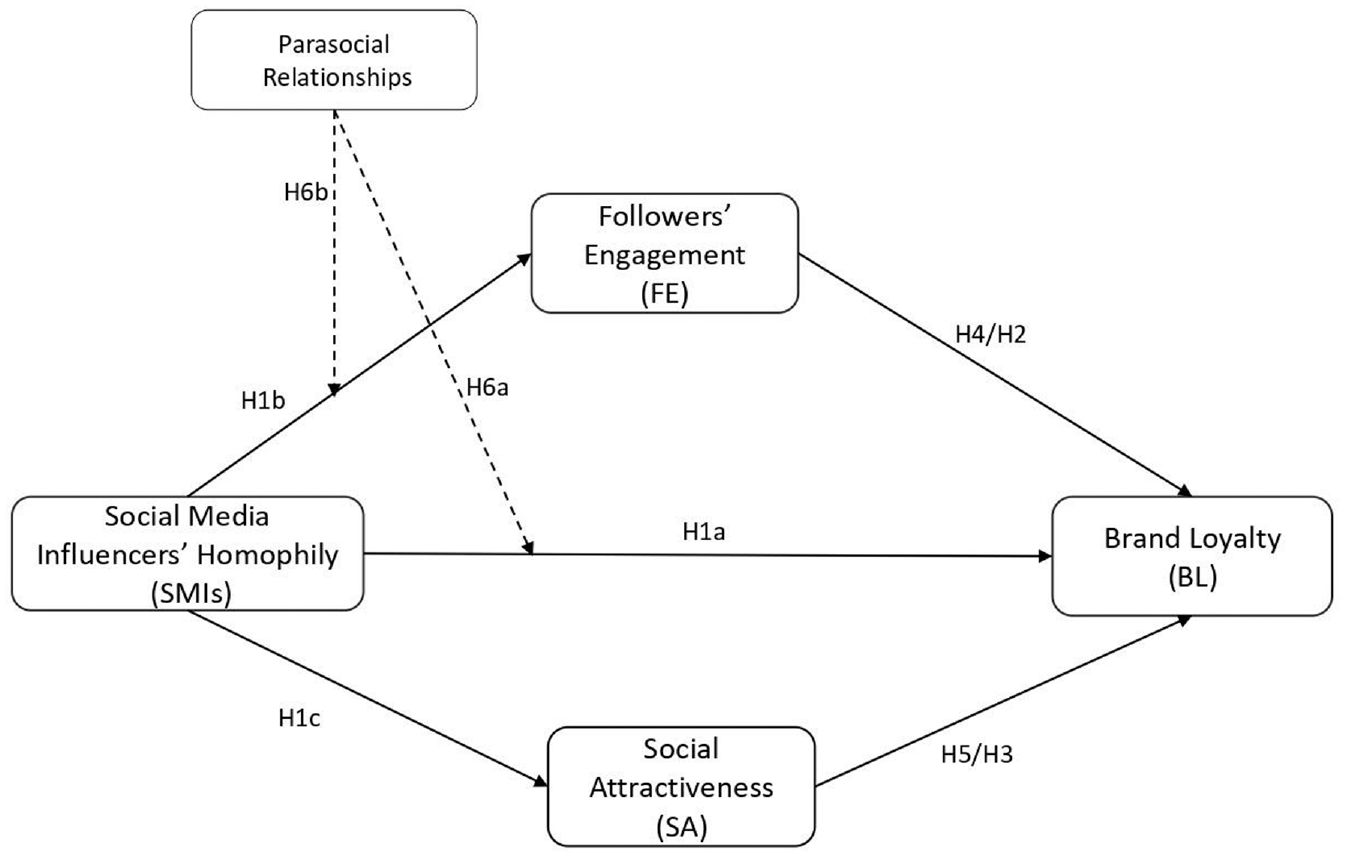
Research model of this study.
Methodology
Respondents and Procedure
This research employed a quantitative design and a convenience sampling method to validate the proposed hypotheses. More precisely, data were gathered using self-administered online surveys. The questionnaire comprised two parts—section 1 collected data on the demographic characteristics of the respondents. Section 2 included items designed to assess trustworthiness, attractiveness, expertise, and purchase intention with five-point Likert scales. To ascertain the reliability and validity of scales, the authors ran a pilot test by distributing questionnaires to 40 social media users to identify any potential flaws. An initial assessment of the variables’ reliability was performed. All variables of Social Media Influencers Homophily (SMIH), Brand Loyalty (Ibrahim & Aljarah), Followers’ engagement (FE), Social attractiveness (SA), and Parasocial relationships (PR) have Cronbach’s alpha (CA) values above the threshold of .7, suggesting good internal consistency. The population under study consists of individuals who use laptops of various brands and belong to different age groups residing in Pakistan. The sample frame for this research was selected from the laptop industry, considered a very dynamic and profitable sector in Pakistan. According to Statista (2023), the industry is projected to see an annual growth rate of 5.4% from 2023 to 2027.
Furthermore, this industry functions within a highly competitive landscape marked by a fierce price war and aggressive promotional operations to capture customer interest. Studying this area is crucial due to the country’s efforts in implementing the “Digital Pakistan Policy” to generate around USD 60 billion by 2030. Therefore, it is essential to comprehend the significance of SMIs in captivating the interest of prospective laptop buyers in this nation. To obtain replies from laptop users, we disseminated the questionnaire over the internet and several social media platforms like WhatsApp, LinkedIn, Facebook, and Instagram. In addition, the authors utilized the G*power 3.1.9.4 software (Faul et al., 2007, 2009) to determine the sample size, with the following configuration: The effect size (f2) was determined to be .15, indicating a medium effect. The significance level (α) was chosen at .05. The number of predictors in the model was 5. The desired power level was set at 95% based on the study by Gefen et al. in 2011. A sample size of 89 was necessary to evaluate the current model adequately. To meet this requirement, a comprehensive screening and cleaning process was conducted on a self-administered questionnaire completed by 323 participants. This was done to ensure the accuracy and reliability of the gathered data. Out of all the responses submitted, 295 were considered appropriate for analysis.
Instrument Development
The study instrument was created by modifying 5-point Likert scales, ranging from “strongly disagree” to “strongly agree,” used in previous research investigations. The Social Media Influencer Homophily (SMIH) scales were derived from the research conducted by Ladhari et al. (2020) for measuring homophily, Xiong et al. (2022) for brand loyalty, Farivar et al. (2022) for followers’ engagement, for social attractiveness, and for parasocial relationship.
Data Analysis
The data for this investigation was analyzed using the SmartPLS 4 software, which employs partial least squares structural equation modeling (PLS-SEM) (Jamal et al., 2023; Ringle et al., 2015). Considering this study’s objectives, Partial Least Squares Structural Equation Modeling (PLS-SEM) was deemed appropriate and adequate. Additionally, PLS-SEM is well-suited for estimating models with small sample sizes while maintaining high statistical power.
Common Method Variance
Harman’s one-factor test was performed in confirmatory factor analysis. The findings indicate that no individual factor explained more than 32% of the variance, below the 50% threshold proposed by Podsakoff and Organ (1986). This suggests that common method bias (CMB) was not a concern in the present investigation.
Measurement Model
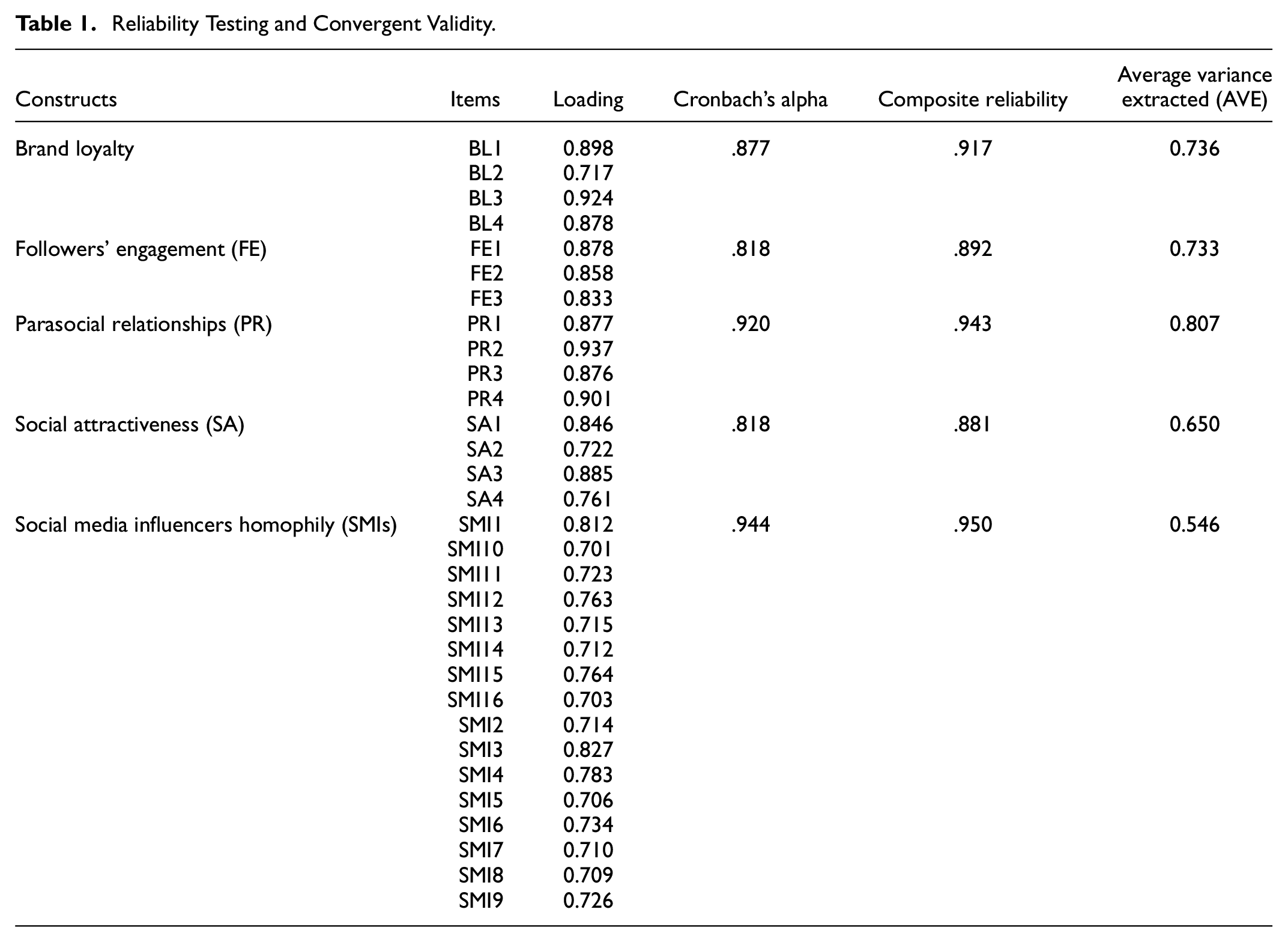
Evaluating the measuring model’s quality entailed estimating internal consistency and assessing convergent and discriminant validity for all reflective constructs evaluated using multi-item scales. In this study, we adhered to the guidelines proposed by Hair et al. (2017) to assess the measurement model. Internal consistency of measures is established when CA, rho_A, and composite reliability (CR) values are above .7 (Hair et al., 2017). Table 1 demonstrates that the CA, rho_A, and CR values are above the acceptable threshold of .7, indicating strong internal consistency. The factor loadings and average variance extracted (AVE) were the measurements employed to evaluate the convergent validity. Usually, the factor loadings and the average variance extracted (AVE) should exceed .8 and .5, respectively. Table 2 satisfied the requirements for achieving convergent validity (Hair et al., 2017).
Reliability Testing and Convergent Validity.
Discriminant Validity Analysis.

The bold values refer to the square root of the AVE of each construct.
The discriminant validity was the ultimate evaluation of the measurement model. To verify that the partial least square (PLS) model was not affected by the problem of discriminant validity, the square root of the average variance extracted (AVE) of each construct must be greater than the correlation with any other construct, as stated in the Fornell and Larcker criterion (Fornell & Larcker, 1981). The HTMT values should not exceed 0.9 since this could indicate a potential issue with discriminant validity, commonly referred to as the HTMT criterion (Henseler et al., 2015). Tables 2 and 3 demonstrate that both conditions were met. In addition, the bootstrapped confidence interval of HTMT values did not surpass 1, indicating a lack of discriminant validity violation.
Discriminant Validity—HTMT.

Structural Model Analysis
After confirming the validity of the measurement model, the structural model was computed to evaluate the hypotheses. The Smart PLS technique was employed to examine the hypothesized correlations among variables. The Smart PLS 4 routes’ significance was established using bootstrap testing, as depicted in Figure 2. The model results divulged a non-significant influence of SMIs on BL (H1a: β = .082; p = .194). SMIs (H1b: β = .243; p < .001) positively and significantly impact FE. Besides this, SMIs positively and significantly influence SA (H1c: β = .427; p < .001). Hypotheses H2 and H3 revealed a significant influence of FE and SA on BL (H2: β = .378; p < .001), (H3: β = .369; p < .001). Based on these results, except for hypotheses H1a, all hypotheses H1b, H1c, H2, and H3 are accepted. The model explains that 46.4% of the variance exists in Brand loyalty. The overall results are provided in Table 4.

Path Analysis.
Items Loading and Cross Loading.
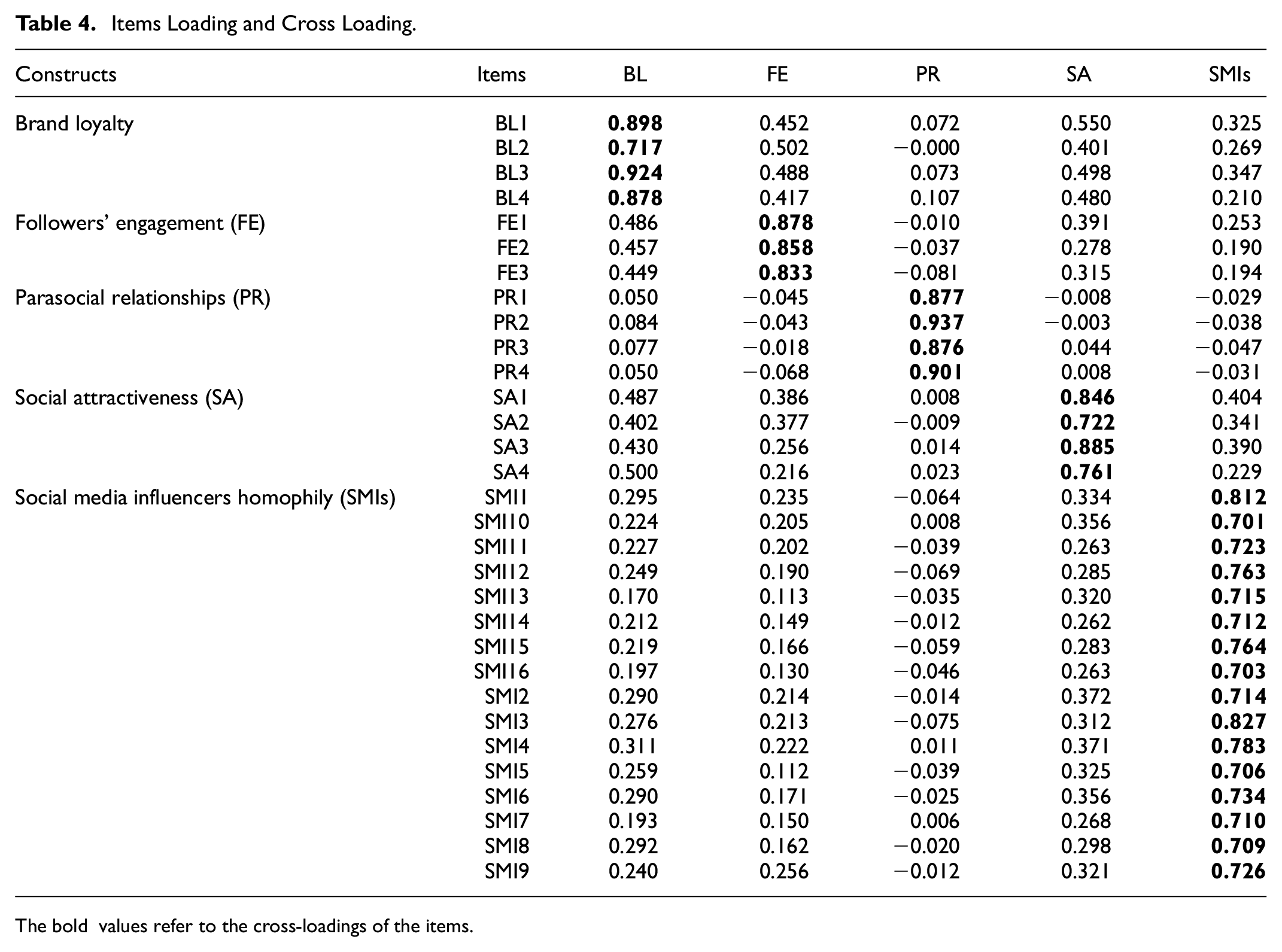
The bold values refer to the cross-loadings of the items.
Direct effect and Total effect.

Mediation and Moderation Analyses
The indirect impact of followers’ engagement (FE) on the relationship between Social Media Influencers Homophily (SMIs) and Brand Loyalty is statistically significant at a 95% confidence interval, exclusive of zero (CI.95 = 0.044, 0.155). This study indicates that followers’ engagement (FE) mediates the impact of Social Media Influencers Homophily (SMIs) on Brand Loyalty (Ibrahim & Aljarah). Social attractiveness (SA) also significantly mediates the relationship between (SMIs) Homophily and Brand Loyalty (CI.95 = 0.099, 0.234). As shown in Table 6. Furthermore, As shown in Table 7, parasocial relationships (PR) did not moderate the effect of Social Media Influencers Homophily (SMIs) on followers’ engagement (FE) (H6b: β = .047; p > .05); however, it moderates the influence of Social Media Influencers Homophily (SMIs) on the brand loyalty (H6a: β = .87; p = .030), In line with these findings, H6b is rejected, while H6b is accepted (Table 6). Figures 3 and 4 graphically represent the significant slopes.
95% Bootstrap Confidence Intervals for the Indirect Effect.

The results of the moderation effect of the PR.


Interaction effect of SMIs and parasocial relationship.

Interaction effect of SMIs and parasocial relationship.
Discussion
The current study investigated the complex relationship between social media influencers (SMIs) homophily, followers’ engagement, social attractiveness, and brand loyalty in laptop users. Drawing on the SCT theory, the present study contribute to this discussion, our objective is to analyze the consequences of our research outcomes and offer perspectives on the mechanisms that regulate consumer behavior in the era of digitalization. In contrast to our first hypothesis, our study yielded results indicating no significant impact of social media influencers’ homophily on brand loyalty. The study implies that the revealing existence of social media influencers with characteristics comparable to their followers doesn’t necessarily result in heightened brand loyalty within the laptop sector. This finding challenges the dominant belief that homophily alone is a substantial determinant of brand loyalty. The subject in question requires additional examination of the intricate elements that contribute to developing brand loyalty in the context of social media influencers. In contradiction to the lack of significant impact on brand loyalty, our research has revealed a strong positive correlation between social media influencers’ homophily and the level of followers’ engagement. This suggests that when social media influencers adopt the traits and qualities of their followers, it substantially increases the amount of audience engagement. The laptop sector appears to derive advantages from influencers that effectively align with the preferences and demographics of their followers, thereby building a more involved and participatory community.
Analyzing the influence of social media influencers’ homophily on social attractiveness revealed significant findings. The results of our study highlight a strong and statistically significant correlation between social media influencers’ homophily and their social attractiveness. This suggests that influencers who share comparable characteristics with their followers contribute to a higher perceived appeal of the laptop brand. This finding is consistent with the notion that relatability and resemblance play a substantial role in the social appeal of influencers and, by extension, the brands they promote within the laptop market. Our research goes beyond the direct impact of social media influencers’ homophily. We found that both the level of followers’ engagement and the social attractiveness of influencers significantly contribute to the development of brand loyalty in the laptop sector. The findings suggest that two variables have a notable and favorable effect, implying that an actively involved audience, attracted by the relatability of social media influencers, plays a substantial role in fostering brand loyalty. In addition, the influencers’ social appeal amplifies this phenomenon, generating a potent synergy that cultivates long-lasting associations between customers and laptop brands.
Additionally, our research reveals a significant mediation effect, where the followers’ engagement mediates the association between social media influencers’ homophily and brand loyalty. This finding indicates that increased levels of involvement mediate the impact of homophily on brand loyalty. In order to cultivate brand loyalty within the laptop industry, marketers should direct their attention toward influencers with characteristics that align with their target audience. Additionally, they should prioritize the implementation of methods that encourage active involvement. The involvement of followers’ engagement is crucial in revealing a strategic opportunity for marketers to strengthen the connection between influencers and brand loyalty by implementing focused engagement strategies.
In addition, our research uncovers an additional dimension of complexity in the influence of influencers, as we discover that social attractiveness plays a substantial role in mediating the connection between social media influencer homophily and brand loyalty. This suggests that the attractiveness of influencers, influenced by their resemblance to followers, is a significant determinant in influencing brand loyalty. In order to capitalize on the power of social media influencers in promoting laptop brands, marketers need to design advertising strategies that prioritize relatability and visual congruence strategically. The significance of the emotional and aesthetic components in shaping consumer loyalty in the laptop sector is highlighted by the mediating role of social attractiveness.
Furthermore, contrary to initial predictions, parasocial interactions did not serve as a moderating factor in the impact of social media influencers’ homophily on the level of engagement exhibited by their followers. As mentioned above, the finding suggests that parasocial interactions neither amplify nor reduce the influence of homophily on engagement. However, they do significantly regulate the association between homophily in social media influencers and brand loyalty. Parasocial ties play a significant role in influencing consumer loyalty toward laptop companies. Furthermore, our research sheds light on the role of parasocial relationships as moderators, enhancing the impact of social media influencers’ homophily on consumer loyalty toward brands. This observation indicates that the perceived association between followers and influencers enhances the influence of homophily on loyalty toward a business. Hence, marketers must foster and exploit the growth of parasocial relationships between followers’ engagement to augment brand loyalty within the laptop industry.
Theoretical Implications
This research contributes to the theory in different ways. First, the current study empirical investigate and validates that integrating followers’ engagement and social attractiveness as mediators provides theoretical insights into the intricate mechanisms by which influencer qualities influence brand loyalty, enhancing our holistic comprehension of consumer behavior. Scholars comprehensively researched the digital influencers homophily as a key determinant of the user’s behavioral decision making (Shoenberger & Kim, 2023). Similarly, Filieri et al. (2023) influencers homophily plays a significant role in the individual buying behavior, which leads to the positive behavioral outcomes. To the best of knowledge, limited literature measured the homophily in the context of digital behavioral loyalty of the online users. Thus, the present research improves the extant literature on the underlying mechanism of the digital influencers homophily associate with positive behavioral outcomes. Second, the presence of parasocial relationships assumes a dual role within academic study. On the one hand, it is observed to have a limited impact on engagement, serving as a non-significant moderator. On the other hand, it assumes a more prominent position as a substantial moderator in the context of brand loyalty. This duality introduces intricacies that necessitate a deeper understanding and development of existing theoretical frameworks. This observation highlights the significance of distinguishing between the influence of parasocial relationships on engagement and their specific contribution to the development of brand loyalty.
Third, drawing on the SCT theory, this study establishes a fundamental basis for a comprehensive framework in influencer marketing research. This study incorporates the functions of engagement, social appeal, and parasocial relationships, establishing a foundation for forthcoming theoretical developments that comprehensively elucidate the complexities inherent in the influencer-consumer dynamic. The results of this study make a valuable contribution to the existing body of knowledge on relationship marketing theories. Specifically, they emphasize the importance of emotional and aesthetic aspects in influencing the dynamics between influencers and consumers within the laptop business. These findings imply that the interactions between influencers and consumers in this industry go beyond mere transactional exchanges. Finally, this research
Practical Implications
Implications for Brand Managers
The research provides practical implications for brand managers, SMIs, and consumers. First, brand managers should not depend only on influencer collaborations as the critical catalyst for establishing enduring brand loyalty. It is advisable to prioritize a holistic and multifaceted brand strategy encompassing a range of customer offerings beyond the scope of influencer marketing. For example, in the Pakistan laptop industry, a brand manager may prioritize technical specs, customer support, warranty services, and engaging in influencer collaborations. This multifaceted strategy would produce a more comprehensive approach to cultivating brand loyalty.
The impact of homophily among SMIs on their followers’ engagement and social attractiveness suggests that brand managers should exercise caution when choosing influencers who align with the brand’s values and target market. The alignment of homophilous characteristics might potentially boost engagement and social attractiveness, making a favorable contribution to the overall perception of a brand. Furthermore, acknowledging the intermediary role of followers’ engagement and social attractiveness in the association between influencer homophily and brand loyalty highlights the significance of nurturing substantial connections and interactions between influencers and their followers to foster brand loyalty. For example, brand managers may partner with influencers with lifestyles and inclinations comparable to their intended consumer base. In Pakistan, a laptop brand might potentially foster a feeling of community and brand loyalty by encouraging its followers to share their experiences.
Implications for Social Media Influencers
Firstly, influencers must acknowledge their genuineness and unwavering adherence to a particular laptop brand to substantially foster trust and loyalty. Influencers can cultivate a more profound and significant rapport with their audience through the authentic integration of the brand into their daily routines and professional processes. This entails presenting the brand’s attributes in a pragmatic and relevant fashion, accentuating the laptop’s smooth integration into both professional and personal endeavors. Authenticity cultivates a perception of dependability, motivating individuals to perceive the laptop brand as a crucial and reliable component of their existence.
Second, influencers ought to utilize parasocial interactions to augment their involvement with their followers. Establishing a sense of closeness and familiarity through the regular dissemination of comparable content contributes to developing a parasocial relationship, wherein followers regard the influencer as a personal acquaintance. Within the domain of laptop brands, influencers can imbue the product with a sense of human connection by divulging personal narratives, obstacles, and achievements intertwined with their use of the brand. This phenomenon fosters a heightened emotional connection with the audience and establishes the laptop as a companion during the influencer’s personal journey. Consequently, this reinforces the parasocial tie and subsequently impacts the followers’ preferences toward certain brands.
Lastly, influencers must acknowledge the interdependent connection between engagement and brand loyalty. Engaging with follower comments, facilitating Q&A sessions, and soliciting feedback on laptop-related content enhances audience engagement and showcases a sincere concern in the audience’s perspectives. Within the domain of laptop brands, influencers can employ engagement analytics to customize their content strategy, assuring its congruence with the inclinations and requirements of their target audience. The utilization of this iterative methodology not only amplifies the comprehensive follower experience but also reinforces the influencer’s position as a reliable authority on laptop recommendations, fortifying brand allegiance among their followers.
First, the promotion and favorable portrayal of a laptop brand by an SMI can cultivate a perception of reliability and authenticity among prospective consumers. The act of influencers demonstrating the practicality and characteristics of a specific laptop amplifies the perceived worth of the product. It develops a bond between the influencer’s audience and the brand. Consequently, there is a potential for heightened brand loyalty, as consumers exhibit a greater propensity to select a laptop brand that corresponds with the influencers they follow and hold in high regard. Second, the phenomenon of parasocial relationships has the potential to influence consumers’ attitudes about laptop brands. Parasocial interactions encompass the unidirectional affiliations that individuals experience with influencers, wherein they perceive a sense of personal familiarity akin to acquaintances. The inclusion of laptops in the everyday routines of influencers, together with the subsequent sharing of these experiences with their followers, has the potential to foster a parasocial connection between customers and the influencer, hence extending to the affiliated laptop brand. Establishing an emotional bond can substantially impact consumer choices, as individuals may be more motivated to select a laptop that embodies the lifestyle and preferences of their esteemed influencers. Fundamentally, the practical implication suggests that laptop companies can utilize parasocial interactions to establish a more intimate and relatable brand image, influencing customer decision-making and brand preferences.
Research Limitations
Like previous investigations, this study also possesses certain limitations. The participants in this study were individuals who actively involve laptop buying in Pakistan. The results could potentially vary if the data were gathered from an alternative geographical location or distinct cultural context. Therefore, it is advisable for researchers to conduct further examinations of our model in diverse cultural settings to ascertain its generalizability.
Footnotes
Declaration of Conflicting Interests
The author(s) declared no potential conflicts of interest with respect to the research, authorship, and/or publication of this article.
Funding
The authors disclosed receipt of the following financial support for the research, authorship, and/or publication of this article: This work has been funded by National Center of Science (NCN), Poland under project grant number: 13/020/PBU24/0093 hosted by the Silesian University of Technology. This work has been funded by the project BA grant #TDA23\230135.

Data Availability Statement
Data sharing not applicable to this article as no datasets were generated or analyzed during the current study.