




Abstract
This paper presents a comprehensive bibliometric literature review that aims to analyze and synthesize the existing research on the digital supply chain. By employing a bibliometric approach, this study provides insights into the trends, key research themes, influential authors, and relevant journals in the field of DSC. Furthermore, it explores the geographical distribution of publications, collaboration networks among researchers, and the evolution of research topics. The comprehensive bibliometric analysis of literature in DSC is performed through data visualization and content analysis. Data visualization enables the analysis of publication performance and science mapping by examining prolific journals, authors, countries, influential papers, and conducting citation, co-citation, and bibliographic coupling analyses. Content analysis is carried out by examining the occurrence and clustering of textual data. The bibliometric literature review and content analysis were carried out on 114 documents indexed in the Scopus database, which were selected using the Prisma protocol. The data visualization analysis of the literature review through VOSviewer draws the landscape of scholarly research in the digital supply chain. Based on the research landscape, the content analysis demonstrates the significant effects that the incorporation of digital technology into supply chain management has had on several important research topics. The main research trends in digital supply chain according to the content analysis are: intelligent supply chain management, technologies to drive supply chains performance, circular supply chains, information reliability in supply chains, and sustainable supply chains. The findings of this review highlight the transformative potential of digital technologies in supply chain management and its performance optimization.
Introduction
In today’s rapidly evolving business landscape, the integration of digital technologies has become crucial for organizations seeking to enhance their strategies and operations. The supply chain function, like all corporate functions, has been revolutionized by digitalization. The rise of the digital supply chain (DSC), which utilizes innovative technologies such as data analytics, Internet of Things, artificial intelligence, blockchain, and robotic process automation, has indeed transformed traditional supply chain processes (Dutta et al., 2020; Dweekat & Al-Aomar, 2018; Gunasekaran et al., 2016; Puica, 2022; Toorajipour et al., 2021).
The advent of digital technologies has enabled organizations to transform their supply chain operations, leading to improved efficiency, enhanced visibility, and increased responsiveness to customer demands. This digital transformation has revolutionized the way supply chains operate, creating both new opportunities and challenges for businesses across industries.
The integration of digital technologies into supply chain management had a profound impact on various key areas. Firstly, digitalization has revolutionized supply chain visibility by providing real-time data and insights into every step of the supply chain process. With the help of advanced tracking systems, organizations can now monitor and track their inventory, shipments, and production processes in a much more detailed and efficient manner. This enhanced visibility enables better decision-making, proactive issue resolution, and improved overall supply chain performance (Abdul Zahra et al., 2022; Covaci & Zaraté, 2019; Dweekat & Al-Aomar, 2018; Kumar Jena & Singhal, 2023).
Secondly, digital transformation has enabled supply chain collaboration and integration on a whole new level. Through digital platforms and technologies, organizations can now seamlessly connect and collaborate with their suppliers, manufacturers, distributors, and customers. This improved collaboration fosters closer relationships, streamlines communication, and facilitates the sharing of critical information and resources. As a result, organizations can achieve greater supply chain efficiency, reduce lead times, and respond more effectively to changing market demands (Tasche et al., 2023; Zhang et al., 2022).
Furthermore, the adoption of digital technologies in supply chain management has paved the way for data-driven decision-making and predictive analytics. With the abundance of data generated throughout the supply chain, organizations can leverage advanced analytics tools and techniques to gain valuable insights, identify patterns, and make more accurate forecasts (Gunasekaran et al., 2016). This data-driven approach helps optimize inventory management, demand forecasting, and resource allocation, leading to cost savings, improved customer service, and better overall supply chain performance (Benhamida et al., 2021; Ivanov et al., 2019; Jha et al., 2022; Praveen et al., 2019; Sanders, 2014).
Lastly, the digital transformation of supply chains has opened up new avenues for innovation and customer-centricity. Organizations can now leverage digital platforms and e-commerce technologies to offer personalized and tailored experiences to their customers (Dolgui & Ivanov, 2022; Zhang et al., 2022). The ability to integrate online and offline channels, provide real-time product information, and offer flexible fulfillment options has transformed the way customers engage with supply chains (Puica, 2022).
As the DSC continues to shape and redefine global supply chain operations, it is imperative to understand the scholarly landscape surrounding this phenomenon. The primary objectives of this literature review are to map the intellectual structure of DSC research, identify research gaps, and shed light on emerging directions for future studies. In addition, we aim to study all areas of innovation research related to DSC and the technologies that are often associated with it. To reach our study objective, our research question is the following: What are the key research themes, influential authors, and emerging areas of study in digital supply chain management based on a bibliometric analysis of scholarly publications?
We selected a comprehensive collection of articles focusing on the DSC through examination of the academic Scopus database. Various bibliometric techniques, including co-citation analysis, co-authorship analysis, and keyword and data text analysis were employed to extract key insights from the selected literature.
The results of this literature review provide insights into the current state of research in the DSC field by emphasizing the most important papers and indicating potential subject areas for further research. Moreover, they provide valuable guidance to researchers aiming to embark on new research projects within the field of digital supply chain management.
Research Methodology of Literature Review
Several researchers recognize the value of bibliometric analysis in understanding research trends, mapping intellectual structures, and identifying influential authors and works. They have increasingly adopted this methodology to explore and contribute to the scholarly discourse in business research (Donthu et al., 2020; Donthu, Kumar et al., 2021).
To conduct a bibliometric literature review and analyze the body of literature on DSC, we perform an iterative process of identifying appropriate research keywords and determining categorization outcomes.
Search Method
The literature review considers publications on DSC from 2000 to 2023. We did not exclude the documents published during the year 2023 due to their relevance, even though the year is not yet completed. The study of the literature is based on a thorough and systematic search of scholarly publications that have been peer-reviewed. It includes definitions of DSC as well as quantitative and analytical modeling of DSC. The search for relevant publications was conducted using the Scopus citation databases. The list of papers was obtained from multiple publishers. To identify the most relevant and prevalent categories of academic publications, information clustering was performed using the VOSviewer program (Liu, 2017; Waltman et al., 2010). VOSviewer is a software utilized for visualizing and analyzing bibliometric data. It allows the creation of maps of collaboration networks, co-citation networks, and keyword co-occurrence networks, providing insights into the structure and trends within a specific research field. Additionally, it enables users to identify clusters in the data and analyze text data to understand the intellectual landscape of scientific literature.
Methodology Implementation and Datamining
The keywords combination used to identify the literature review dataset of Scopus indexed documents is: KEY ( “digital supply chain” ) OR KEY ( “digital Supply-chain” ) OR KEY ( “supply chain 4.0” ) OR KEY ( “supply-chain 4.0” ). On June 19, 2023, a total of 372 papers were identified as a result of the research query. Data mining was conducted in the Scopus citations database applying the following exclusion criteria:
Document type: 145 conference papers, 22 review papers and 3 editorial papers were excluded. Excluding conference papers helps ensure that the study is based on more rigorous and substantive research outputs. The primary objective of the bibliometric study is to analyze and understand original research contributions. So, the exclusion of review articles helps to maintain the focus on primary research articles. Editorial papers do not present original research findings, so excluding them helps maintain a focus on scholarly contributions that contribute to the creation of new knowledge.
Publication stage: 22 articles in press were excluded. The status of articles in press is not definitive as they may lack complete bibliographic information and may undergo significant changes before official publication. Excluding them helps maintain the reliability and stability of the dataset.
Language: 0 non-English papers were excluded. Limiting the analysis to English papers optimizes text-data processing through VOSviewer and increases study efficiency.
Reviewing, Refining Database
After identifying the 180 papers through the initial query and exclusion criteria, we proceeded to an analysis by reviewing their titles and abstracts. Based on academic judgment, we were able to filter out 69 irrelevant papers. Despite containing keywords related to “digital supply chain” or “supply chain 4.0,” the main subject of these 69 papers did not align with the scope of the study.
A reference search was also conducted out to find relevant articles that were not identified by the search process. Using the ResearchRabbit software, we found three relevant papers that were not included in the database through an analysis of paper connections. The Figure 1 displays the paper connection analysis using the ResearchRabbit application.

DSC Papers connection analysis.
The articles were reviewed, improved, and filtered to provide a comprehensive coverage that includes key aspects of the overall structure of the DSC literature. A total of 114 articles were reviewed as part of this literature study on DSC. Figure 2 illustrates the paper selection methodology according to the PRISMA Protocol.
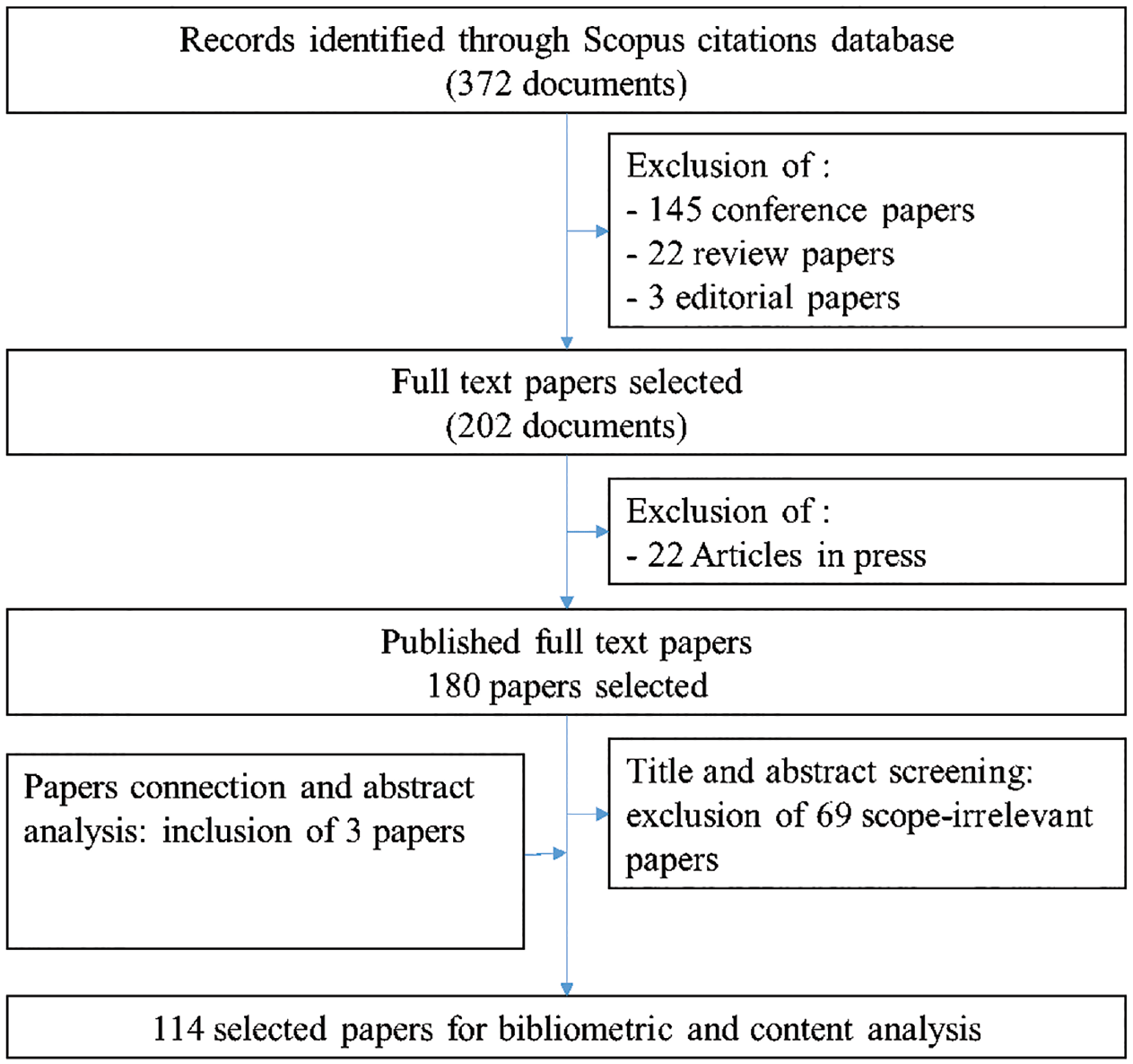
DSC literature review PRISMA Protocol.
The findings of the literature review are composed of data analysis of titles and abstracts, geographic analysis of contributing organizations, analysis of prolific journals and authors, and clustering of keywords. Additionally, data text analysis is conducted based on an analysis of titles and abstracts.
Figure 3 below displays the methodological architecture that was adopted to drive the DSC bibliometric literature review.

Adopted research design of the paper.
Through the use of VOSviewer software, we conducted a comprehensive bibliometric analysis of literature based on the laws and principles of Bradford, Lotka, and Zipf. This analysis enabled us to identify the most frequently cited articles, terms, and authors in scientific papers (Figueiredo et al., 2019).
According to Bradford, it is important for each field of knowledge to evaluate the relevance of journals in order to promote a higher quality core. Lotka’s method examines the most prestigious papers in a specific field. Zipf recommends analyzing the occurrence of words related to the research topic in scientific texts (Figueiredo et al., 2019).
Data Visualization Analysis of Literature Review
According to Donthu et al., “Bibliometric analysis techniques can be split into two main categories: performance analysis and scientific mapping” (Donthu, Kumar et al., 2021). In this study, we will first examine the contribution of research in DSC to expose its literature performance. Then, we will perform a scientific mapping to illustrate the relationships between different research elements in DSC.
Performance Analysis
The aim of literature performance analysis is to examine the contributions of research in DSC through a description of the bibliography. This is the hallmark of bibliometric studies (Donthu, Reinartz et al., 2021). Therefore, we will outline the characteristics of the literature dealing with the subject of DSC through an analysis of scientific production, the most productive journals, the most productive countries, and influential authors.
Total Publication
Figure 4 illustrates the trend observed in the number of scientific publications in the field of DSC. Despite being in its initial phase of growth and expansion, these results show a continuous geometric increase in the number of published documents. The progression of the number of articles published follows a normal distribution and has not yet reached its peak. The upward trend of scientific publications began in 2019 with eight publications and reached a maximum of 36 publications in 2022. However, it is important to note that the number of scientific publications in 2023 is incomplete as the total publication analysis covers only the first 6 months of the year until 09/06/2023.

DSC total documents per Year.
The total number of publications in this bibliometric study excludes conference papers and proceedings according to the filters applied the Prisma protocol. Consequently, the scientific publications considered consist of 4% of books (4 documents), 25% of book chapters (29 documents) and 71% of scientific articles (81 documents).
Most Prolific Journals
The 81 articles were published in 63 journals. Figure 5 reveals the presence of dominant journals in this subject. Eighteen journals produced more than two articles on the DSC topic, while 45 journals only published one article each. The seven most productive journals are as follows: International Journal Of Supply Chain Management (7 articles), Sustainability Switzerland (6 articles), Computer Aided Chemical Engineering (4 articles), Uncertain Supply Chain Management (4 articles), International Journal Of Production Economics (3 articles), International Series In Operations Research And Management Science (3 articles) and Lecture Notes In Logistics (three articles).

The 18 Most prolific journals about DSC Articles.
Geographical Scholar Production
Figure 6 represents the geographical distribution of scientific organizations contributing to the overall scientific production on DSC. We utilized Excel-Map to represent the geographical distribution of bibliographic data.
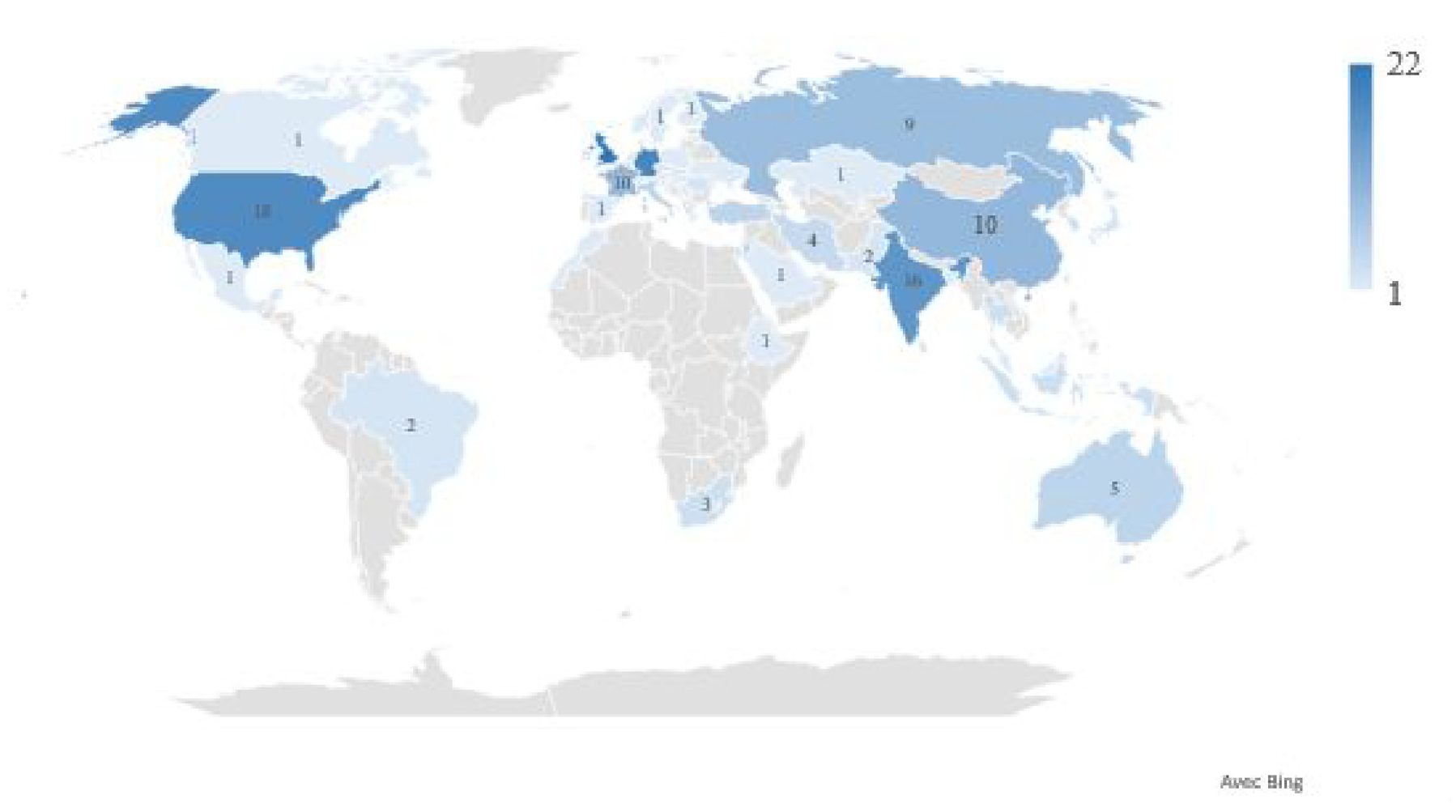
Geographical scholar production repartition.
Research institutions from the United Kingdom are the largest contributors with 22 scientific publications. Germany follows closely with 19 publications, while the USA and India have 18 and 16 publications, respectively. China and France with 10 publications, then Russia with 9 contributions, and institutions from Australia, Turkey, Jordan and Italy with 5 scientific publications each. The remaining countries participate with less than 4 publications.
Figure 7 illustrates multinational collaboration in DSC research among the most productive countries in the field. The most robust scientific partnership can be observed among France-United Kingdom, France-India, Germany-India and Germany-Turkey.

The Multinational collaboration in DSC research.
Most Prolific Authors
Figure 8 illustrates the top 15 contributing authors in the DSC field and the number of papers they have authored or co-authored.

The 15 most prolific authors in DSC field.
According to the data, Ivanov, D. stands at the top of the list with seven publications. It should be noted that Ivanov and MacCarthy as well as Dolgui and Das, have several collaborative publications. Büyüközkan, G. and MacCarthy, B.L. are tied for second place with four publications each in the DSC theme but none jointly. Büyüközkan has published three works in collaboration with Göçer, F. In the third position come the following authors with three publications each: Bag, S., Dolgui, A., Grossmann I.E., Göçer, F., Kolesnikov, A.V., Perez, H.D., Srai, J.S., Wassick, J.M. The other authors have produced no more than two publications in DSC field.
Most Influential Papers
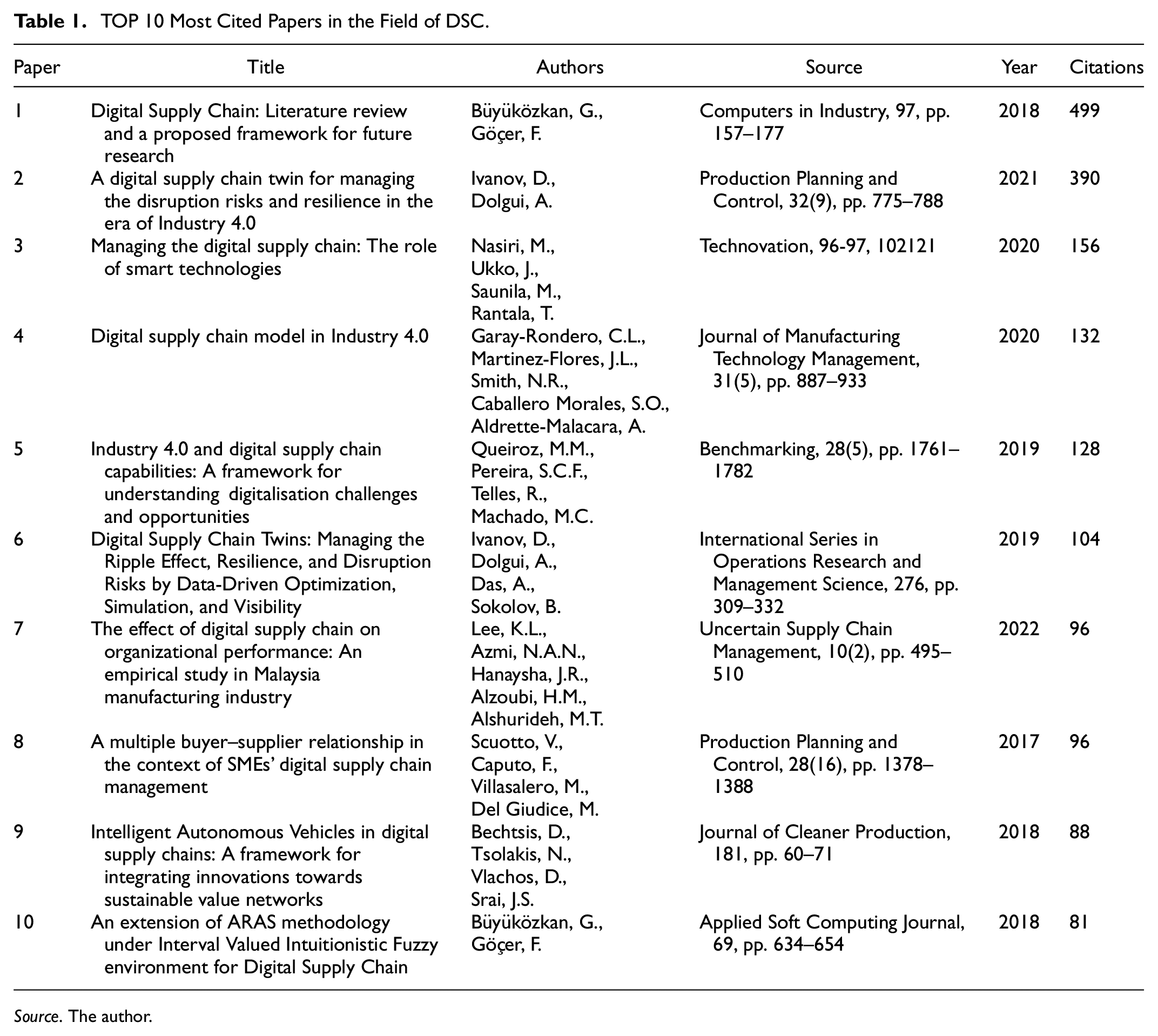
In accordance with the previously presented results of the most prolific authors/co-authors, we find that Büyüközkan, G. and Ivanov, D. are not only the most prolific authors, but they are also co-authors of the most cited articles. Büyüközkan, G. is the author/co-author of four articles, including the first and tenth most cited articles with 499 and 81 citations respectively (Büyüközkan et al., 2021; Büyüközkan & Göçer, 2018a, 2018b; Buyukozkan & Gocer, 2021). Ivanov, D. is the author/co-author of seven articles, including the second and the sixth most cited articles with 399 and 104 citations respectively (Das et al., 2019; Dolgui & Ivanov, 2022; Ivanov et al., 2019; Ivanov & Dolgui, 2021; MacCarthy & Ivanov, 2022a, 2022b; Zhang et al., 2022).
Table 1 displays the most influencing and most cited articles in the field of DSC.
TOP 10 Most Cited Papers in the Field of DSC.
Source. The author.
Science Mapping
Scientific mapping consists of examining the connections between articles (Baker et al., 2021a, 2021b; Cobo et al., 2011). This research employs citation analysis, co-citation analysis, bibliographic linkages, co-occurrence analysis, and co-authorship analysis to examine the intellectual exchanges and structural relationships among publications in DSC. These methods allow the presentation of the bibliometric and intellectual structure of the study field in conjunction with network analysis (Baker et al., 2021a; Tunger & Eulerich, 2018).
Citation Analysis
In Figure 9, we conducted a citation analysis using VOSviewer to examine the connections between publications by finding the most significant articles in the DSC topic (Podsakoff et al., 2005).

Scientific documents citation mapping.
Each node in the network represents a paper. The size of the node indicates the occurrence of the paper, while the link between the nodes represents the co-occurrence between papers. The thickness of the link signals the occurrence of co-occurrences between papers (Donthu, Kumar et al., 2021).
Co-Citation Analysis
To provide an overview of the evolution of key concepts in the field of DSC, Figure 10 examines the connections between documents (Fahimnia et al., 2015). We conducted a co-citation analysis of documents with at least 3 co-citations and identified 36 articles out of the 114 scientific documents. Based on the results of the most cited papers, Büyüközkan and Göçer (2018b) is the most co-cited paper showing a strong relationship with Hofmann and Rüsch (2017). In a different cluster, the paper by Ivanov and Dolgui (2021) holds the second position in terms of co-cited references.

Documents co-citation network.
Co-Authorship Analysis
In order to investigate the social links or connections between authors, their affiliations, and the associated impacts on the advancement of the study field (Acedo et al., 2006), we conducted a co-authorship analysis.
We examined the authorship of authors cited at least once. The total number of these co-authors is 322 and they are divided into 86 clusters (see Figure 11). The largest group of connected authors consists of 13 co-authors who are connected to Kolesnicov, a.v. but they are not the most cited authors.

Co-authorship network.
Each node in a network represents an author. The size of the node indicates the production of the author, while the link between the nodes represents the collaboration between authors. The thickness of the link signals the occurrence of authorship (Donthu, Kumar et al., 2021).
We examined the authorship of authors with at least two citations through Figure 12. Büyüközkan, G., the second most prolific and most influential author, has a co-authorship relationship with Göçer, F. Ivanov, D., the most prolific and second most influential author, has co-authorship relationship with Dolgui, A., Das, A. and Sokolov, B.
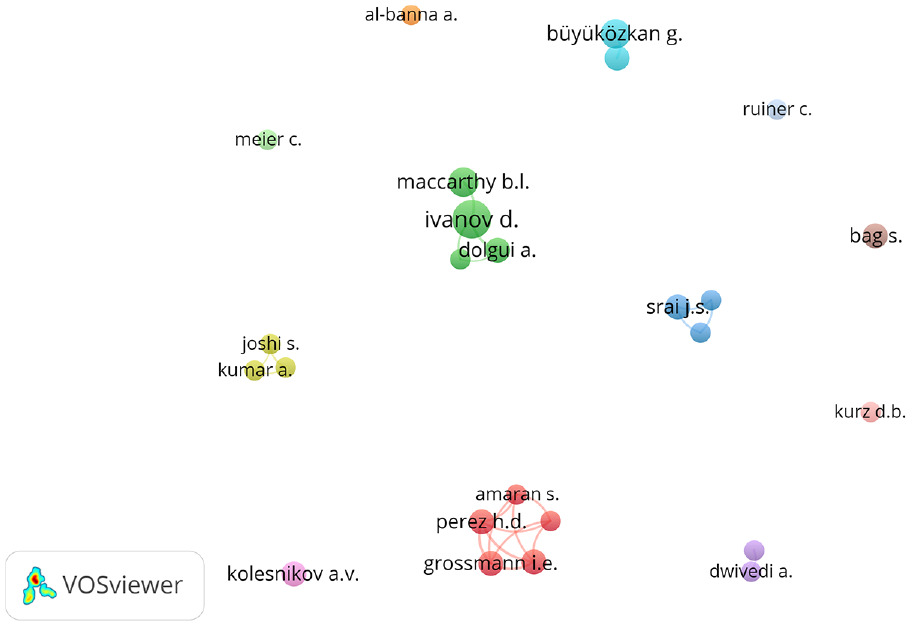
Authorship network of authors having at least Two citations.
Bibliographic Coupling
Bibliographic coupling enables the scientific mapping of publications that share common references and are expected to have convergent research content (Donthu, Kumar et al., 2021). Unlike co-citation analysis, bibliographic coupling reveals thematic clusters formed by the most influential cited publications. Figure 13 presents the DSC bibliographic coupling which identifies nine clusters (represented by nine different colors) that represent the latest developments in the DSC field. This analysis is based on 91 references connected to the 114 selected papers.

Documents bibliographic coupling network.
Büyüközkan and Göçer (2018b) and Ivanov and Dolgui (2021) are the most influential papers, and they belong to two different clusters which means they may have different research content. Clustering is a bibliometric analysis method, and its objective is to create thematic or sociological clusters to understand the flow and development of a study topic (Zupic & Čater, 2015).
In order to identify the main research field of each cluster, a content analysis was performed, on the 91 references in the documents coupling network, through a textual title analysis, as shown in Table 2.
Main Research Field by document Clusters.

Source. The author.
Documents in Cluster 1 mainly address the issue of resilience and the performance of DSC. Documents in Cluster 2 focus on the contribution of DSC to Industry 4.0 and its impact on manufacturing optimization. Cluster 3 includes literature reviews and conceptual model proposals on DSC. Research in Cluster 4 focuses on the strategic level of the DSC and the changes made to the organization’s business model. Research papers in Cluster 5 concern the field of decision-making and mathematical modeling. Cluster 6 includes studies on the DSC that integrate technological innovations such as digital twins, artificial intelligence, machine learning, Internet of Things, blockchains, etc. Clusters 7, 8 and 9, respectively, delve into the areas of human resources, business operations and knowledge management in relation to DSC.
Content Analysis and Future Research Opportunities
We conducted a content analysis of the 114 selected documents through keywords analysis and text-data analysis based on document titles and abstracts. The purpose of this analysis is to identify the current topics in DSC research and future research trends.
Keyword Network Analysis
The clustering analysis of the document bibliographic coupling provided a slightly vague summary of research content on DSC. To gain a more in-depth understanding of search trends and topics, we conducted a content analysis based on keyword occurrence. Figure 14 displays the most frequently used indexed keywords with an occurrence higher than 2.
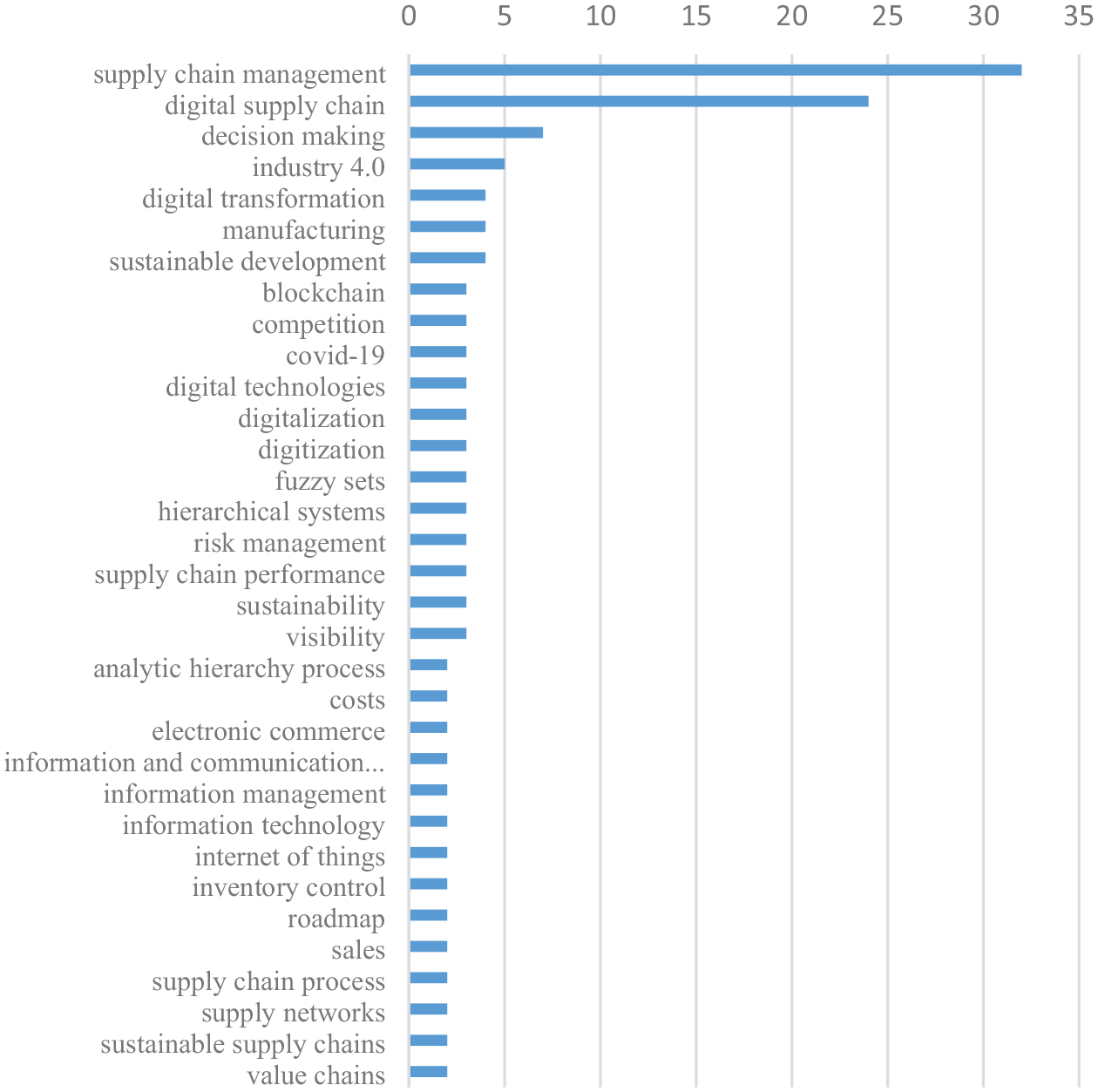
Top 33 keywords occurrences.
The two most frequently used keywords by the authors are “digital supply chain” and “supply chain management’, with occurrences of 24 and 23 respectively. This finding aligns with the focus of our bibliometric literature review. In the third and fourth positions, we find “decision making” and “sustainable development” both occurrencing seven times. These topics are commonly associated with DSC research. Other research topics closely associated with DSC include “blockchain,”“industry 4.0,”“analytic hierarchy process,”“digital transformation,”“manufacturing,” and “risk management.”
We conducted a co-word analysis of indexed keywords to investigate the current and potential links between issues in a specific study area. This analysis focused on the textual content of the publications themselves (Emich et al., 2020). Figure 15 presents the results of this co-word analysis through a chronological overlay visualization. This visualization allows us to explore the relationship between keywords in terms of research and trends over time. The Occurrences property, which is used to interact with keywords, shows the number of documents that include a particular keyword (Donthu, Kumar et al., 2021).

Chronological co-occurrence keywords map.
In Figure 15, each node in the network represents a keyword, and the size of the node indicates the occurrence of the keyword. The links between nodes represent the co-occurrence between keywords, and the thickness of the links indicates the frequency of co-occurrences between keywords (Donthu, Kumar et al., 2021).
The first DSC research was initiated in 2019 in topics related to “information technology” and “information and communication technologies,”“electronic commerce” and the operational notion of the “supply chain.” Since 2020, researchers have been conducting research in the field of “Digital supply chain.” During this period, DSC studies have been linked to the topics of the “hierarchical system” and the “analytic hierarchy process,”“supply networks,” and “sales” in general. In 2021, there was significant growth in research into “supply chain management,” with interactions with themes such as “decision making,”“value chains,”“information management,”“risk management,”“blockchain” and the “internet of things.” In 2022, the COVID-19 crisis has stimulated research in DSC, particularly in interaction with the themes of “digital technologies” and “digitization,”“industry 4.0” and “manufacturing,” with a specific interest in “sustainability” and “sustainable supply-chain” as well as “supply-chain performance.”
Text Data Map
To conduct a more comprehensive content analysis, we analyzed the co-occurring textual terms extracted from the titles and abstracts of the 114 selected documents. By utilizing natural language processing algorithms, we can identify terms within the text data. These terms can then be used to create a network of co-occurrence links (X. Deng, 2022). The Occurrences of terms attribute’s definition employs a binary counting approach to determine the number of documents in which a term appears at least once.
Figure 16 shows the text data map based on a textual content analysis of the titles and abstracts of the 114 selected papers.
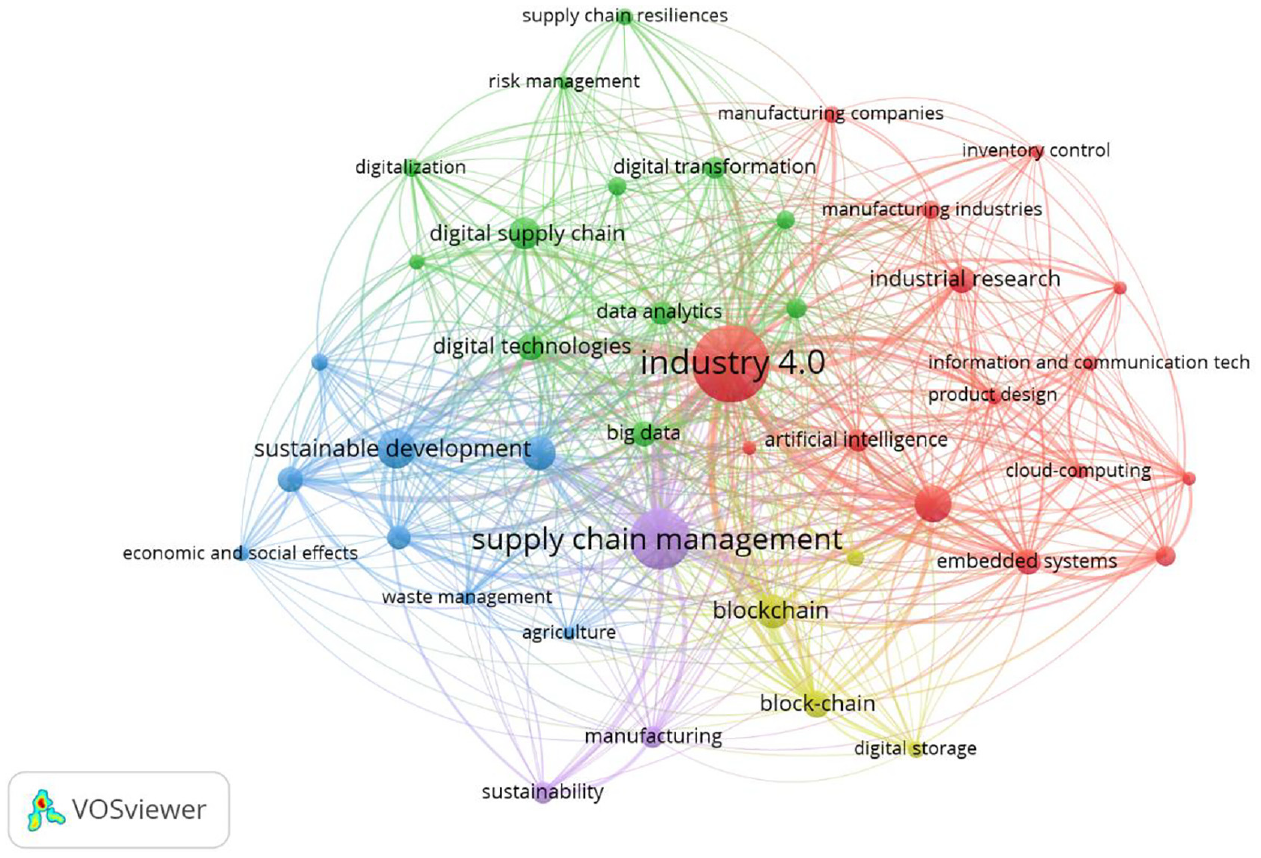
DSC Topics map based on Text-data analysis.
Cluster analysis enables us to identify the concepts that have been mentioned in studies dealing with similar themes in DSC. Table 3 below shows the classification according to the five clusters identified in Figure 17. For each cluster, we identified a unifying theme refering to a central idea or concept that brings together the various topics of the clusters.
DSC Topics Clusters Identified in Text-Data Analysis.

Source. The author.

Chronological DSC Topics map based on Text data analysis.
To analyze research trends in DSC, we utilized a text data analysis schema with a chronological layout. The objective of Figure 17 below is to examine the chronological evolution of DSC search trends based on the concepts interacting with DSC.
The first trends in DSC research in 2020 focused on themes linked to industry 4.0 such as “manufacturing,”“industrial research,”“inventory control” and “embedded systems.” Starting from 2021, there is an increase in themes related to digital transformation, covering topics like “big data” and “data analytics,”“blockchain,”“digital technologies,”“internet of things,” as well as “sustainability,”“waste management” and “supply chain resilience.” These themes aim to optimize “risk management,”“decision making” and “supply chain performance.” In 2022, DSC research continues to address themes like “block-chain,”“cloud computing,”“digitalization,”“cyber-physical systems,”“circular economy” and “performance.”
Discussion
According to the results of the content analysis, which was based on text data analysis, we will discuss the trend topics involving DSC that have been identified. These topics are divided into five unifying themes, as shown in Table 3: Intelligent Supply Chain Management, Technologies to drive Supply Chains Performance, Circular Supply Chains, Information Reliability in Supply Chains, and Sustainable Supply Chains.
Intelligent Supply Chain Management
The modern business landscape has been significantly transformed by the integration of cutting-edge technologies, giving rise to the concept of intelligent supply chain. Intelligent Supply Chain Management represents a paradigm shift in the way organizations conceptualize and execute their supply chain operations. The convergence of various cutting-edge technologies has given rise to a dynamic and interconnected ecosystem, enhancing efficiency, agility, and responsiveness in the supply chain.
Industry 4.0 has engendered a paradigm shift in the realm of supply chain management (Abdirad & Krishnan, 2021; Hofmann & Rüsch, 2017; Tjahjono et al., 2017). This discussion centers on the integration of key technologies that support an intelligent supply chain.
Indeed, Artificial intelligence (AI) facilitates data-driven decision-making through advanced analytics and predictive modeling. AI-driven demand forecasting and predictive maintenance optimize inventory management and enhance production scheduling, thereby minimizing inefficiencies (Benhamida et al., 2021; C. Deng & Liu, 2021; Praveen et al., 2019).
Additionally, automation coupled with robotics, transforms traditional manufacturing and distribution processes. Automated systems streamline repetitive tasks, minimize errors, and improve overall operational efficiency. According to Tiwari, from automated warehouses to robotic assembly lines, the integration of automation enhances speed, reduces costs, and ensures precision in supply chain activities (Tiwari, 2021). Many authors state that robotic process automation (RPA) in warehouses exemplifies the fusion of automation with intelligent supply chains (Puica, 2022; Rhouati et al., 2021; Viale & Zouari, 2020).
Cloud computing enables real-time data sharing, enhancing collaboration across supply chain partners. Coupled with Cyber-physical systems, it enables seamless integration of physical processes with digital technologies. This integration enhances visibility, control, and coordination among supply chain stakeholders. Additionally, embedded systems enable the collection and exchange of data from various sensors and devices in real-time (Chatterjee et al., 2022). This interconnectedness allows more adaptive and intelligent decision-making throughout the supply chain.
The Internet of Things (IoT) is a fundamental enabler of intelligent supply chains (Abdul Zahra et al., 2022; Dweekat & Al-Aomar, 2018; Lee, 2016). According to Dweekat and Al-Aomar, the IoT connects physical devices, creating an ecosystem where objects communicate and share information (Dweekat & Al-Aomar, 2018). Smart sensors and devices facilitate real-time tracking, condition monitoring, and data collection from various stages, leading to improved visibility, efficiency, and traceability.
Intelligent supply chains optimize inventory control through data-driven insights. According to Niaz, organizations can maintain optimal inventory levels, reduce holding costs, and minimize stockouts by leveraging advanced technologies (Niaz, 2022). Intelligent manufacturing processes enhance efficiency, quality, and customization, adapting to dynamic market demands. Companies can leverage intelligent systems to optimize production processes, enhance product quality, and adapt designs based on real-time market feedback. This level of agility is crucial to satisfy meeting rapidly changing consumer preferences.
In summary, intelligent supply chain management represents a transformative approach to the traditional supply chain, where advanced technologies synergistically contribute to efficiency, adaptability, and innovation. The integration of AI, automation, cloud computing, cyber-physical systems, and other components facilitates a more intelligent, responsive, and interconnected supply chain ecosystem. As organizations continue to embrace these technologies, the future of supply chain management holds the promise of unprecedented optimization, resilience, and strategic advantage.
Technologies to Drive Supply Chains Performance
The landscape of supply chain management is undergoing a profound transformation with the advent of new technologies. The integration of cutting-edge technologies, including 3D printers, big data, data analytics, and digitalization enhance supply chain performance. As organizations face the complexities of a globalized market, the strategic adoption of these technologies becomes imperative for achieving efficiency, resilience, and sustained success in supply chain operations.
3D printing technology introduces a paradigm shift in manufacturing and distribution processes. Its role in supply chain performance is multi-faceted, allowing for on-demand production, rapid prototyping, and decentralized manufacturing. By leveraging 3D printers, organizations can reduce lead times, minimize inventory costs, enhance customization capabilities, and optimize overall supply chain efficiency.
The proliferation of big data in the supply chain provides a wealth of information that offers valuable insights. From demand forecasting to route optimization, data-driven decision-making improves efficiency, reduces costs, and enhances overall supply chain performance (Chavez et al., 2017; Kamble & Gunasekaran, 2020; Korherr et al., 2022; Long, 2018; Sanders, 2014). Additionally, real-time analytics empower organizations to respond dynamically to market changes, contributing to agility and competitiveness.
As organizations embark on digital transformation projects, the digital supply chain becomes a catalyst for improved visibility, traceability, and responsiveness, fostering a more resilient and adaptable supply chain ecosystem. With digital technologies at the forefront, information management becomes the backbone of enhanced performance and operational excellence.
While the integration of new technologies brings unprecedented benefits, it also introduces new challenges and risks. According to several authors, robust risk management strategies are essential to mitigate potential disruptions, cyber threats, and uncertainties associated with digital supply chain initiatives (Kwak et al., 2018; Sabahi & Parast, 2020; Wang et al., 2020). Balancing innovation with risk management is crucial for sustaining high performance in the digital landscape.
Supply chain resilience is a key outcome of adopting new technologies. The ability to adapt to disruptions, whether caused by external shocks or internal changes, is heightened through the strategic implementation of digital tools. Enhanced visibility, real-time monitoring, and predictive analytics contribute to a resilient supply chain that can withstand and recover from challenges (Mari et al., 2013; Negri et al., 2021; Pettit et al., 2010)
The transition to a digital supply chain is central to achieving resilience. By digitizing processes, organizations achieve heightened agility, responsiveness, and adaptability to unforeseen disruptions (Chan et al., 2019; Grover, 2022).
In summary, the integration of 3D printers, big data, data analytics, and other digital technologies is reshaping the landscape of supply chain management. The transformative impact of these technologies on supply chain performance emphasizes the interconnected themes of efficiency, resilience, and strategic decision-making. As organizations continue to embrace and innovate with these technologies, they are poised to unlock new levels of supply chain excellence in the digital era.
Circular Supply Chains
Circular supply chains have emerged as pivotal strategies to address the ecological and economic challenges posed by linear consumption patterns (De Angelis et al., 2018; Geissdoerfer et al., 2018; Genovese et al., 2017; Goyal et al., 2018; Jia et al., 2020; Theeraworawit et al., 2022).
The transition from linear to circular supply chains is indispensable in mitigating the ecological impacts of modern consumption patterns (Chiaraluce et al., 2021). Circular supply chains can rejuvenate agricultural practices and foster environmental resilience.
Circular supply chains, rooted in circular economy principles, promote resource efficiency, waste reduction, and the reintegration of materials into the production cycle. These principles align seamlessly with the goals of sustainable agriculture.
Effective circular supply chains in agriculture necessitate informed decision-making. Data-driven approaches and life cycle assessments guide choices that optimize resource utilization, reduce waste, and ensure sustainable outcomes (Hertwich, 2005). Additionally, incorporating environmental technologies, such as precision agriculture and IoT-enabled monitoring, bolsters the efficiency and sustainability of circular supply chains. These technologies facilitate informed decision-making, minimize resource waste, and optimize yields.
In summary, the circular supply chain ethos extends to social equity by fostering inclusive value chains, supporting local economies, and ensuring fair wages and working conditions (De Angelis et al., 2018).
Information Reliability in Supply Chain
The contemporary supply chain heavily relies on accurate and timely information. Decisions regarding procurement, production, and distribution depend on the accuracy and timeliness of the data. Any disruption or inaccuracy in the information flow can lead to inefficiencies, increased costs, and operational delays (Y. Li et al., 2017). As supply chains become more complex and interconnected, the need for robust mechanisms to ensure information reliability becomes paramount. Emerging technologies such as blockchain, digital storage, and machine learning contribute to ensuring the integrity, transparency, and efficiency of the information flow.
Blockchain’s decentralized and immutable ledger ensures secure, transparent, and tamper-resistant transactions (Chang & Chen, 2020; Dutta et al., 2020; Francisco & Swanson, 2018; Istvan et al., 2020; Schmidt & Wagner, 2019). Immutability and cryptographic security ensure data integrity, protecting against tampering. The decentralized architecture and consensus mechanisms eliminate single points of failure, enhancing overall trust. Transparency is achieved with an open ledger, providing real-time visibility and end-to-end traceability. Smart contracts automate agreements, reducing reliance on human trust. Blockchain’s secure data sharing and controlled access mechanisms build accountability, creating a foundation of trust among supply chain participants (Korpela et al., 2017). This technology is poised to revolutionize supply chains by mitigating fraud, enhancing traceability, and fostering trust among stakeholders.
Digital storage technologies provide scalable and secure repositories for supply chain data (Bhargava et al., 2013; Kuo & Su, 2020; H. Li et al., 2021). Digital storage solutions, such as cloud storage, ensure easy accessibility to data from anywhere at any time. This accessibility enhances the availability of information, reducing delays and improving the overall efficiency of the supply chain (Giannakis et al., 2019; Toka et al., 2013). Digital storage allows for efficient data backup and redundancy, minimizing the risk of data loss. Redundancy ensures that even if one storage location fails, the data remains accessible from alternate sources, contributing to the reliability of information. Cloud-based platforms offer real-time accessibility, enabling efficient collaboration and data-driven decision-making.
Machine learning algorithms analyze vast datasets to reveal patterns, trends, and anomalies. In the supply chain context, machine learning optimizes demand forecasting, inventory management, and predictive maintenance (El Filali et al., 2022; Feizabadi, 2022; Filali et al., 2021). Machine learning models can predict potential issues in the supply chain based on historical data. This predictive capability enables proactive decision-making, preventing disruptions and improving overall reliability. Additionally, machine learning systems continuously learn and adapt to new data, improving their performance over time. This adaptability ensures that the algorithms stay relevant and effective in maintaining data quality and reliability (El Filali et al., 2022).
Sustainable Supply Chains
Sustainable supply chains represent a paradigm shift in contemporary business models. The imperative for sustainable practices has reshaped the landscape of manufacturing and supply chain management (Genovese et al., 2017; Tay et al., 2015; Theeraworawit et al., 2022). The integration of sustainability considers economic, environmental, and social dimensions, ensuring a holistic impact assessment and fostering long-term organizational resilience (Murino et al., 2011; Negri et al., 2021).
Effective supply chain management is central to achieving sustainability goals. Sustainable supply chain management transcends manufacturing and extends across the entire value chain. By adopting environmentally conscious manufacturing processes, collaborating with responsible suppliers, and prioritizing sustainability in decision-making, organizations can achieve lasting positive impacts on the environment, society, and their bottom line. According to Karaman et al., supply chain management becomes a driving force in enhancing the overall sustainability performance of supply chains by optimizing logistics and minimizing waste (Karaman et al., 2020).
Conclusion
This bibliometric literature review aims to provide a comprehensive and systematic analysis of the existing body of knowledge on the digital supply chain (DSC). By synthesizing the vast array of research findings, this study seeks to contribute to the advancement of the DSC field, foster innovation, and guide future research efforts to address the emerging challenges and opportunities in the dynamic world of supply chain management.
The findings of this review highlight the transformative potential of digital technologies in supply chain management and also the interdisciplinary collaboration within the academic community. Digital transformation has revolutionized supply chain collaboration and integration, enabling data-driven decision-making and predictive analytics that optimize inventory management, demand forecasting, and resource allocation. Industry 4.0 introduces a holistic transformation across the supply chain, with smart manufacturing integrating information, communication, and production technologies to enhance efficiency, reduce lead times, and minimize waste. Digital technologies enhance supply chain resilience, enabling rapid adaptations and fostering collaboration through real-time communication and scenario planning. Circular supply chains offer a transformative approach for agriculture, promoting sustainable development, minimizing environmental impact, and enhancing economic resilience. Additionally, the digital transformation fosters innovation and a customer-centric approach, allowing organizations to provide personalized experiences in today’s competitive business landscape.
The comprehensive analysis of the digital supply chain (DSC) landscape in this bibliometric review points toward the need for further academic exploration. One of the most important subjects to explore is the dynamic of resilience in digital supply chains and how organizations rapidly adapt to unforeseen challenges. Additionally, there is a need to explore ethical and privacy considerations associated with digital technology adoption in supply chains to ensure responsible practices. Also, human-centric approaches in the digital transformation, focusing on employee well-being, skill development, and organizational culture, need more academic investigation.
For professionals in supply chain management, the digital transformation underscores the importance of strategic adaptation to the evolving landscape. Embracing digital literacy and investing in workforce training are critical for staying competitive. The implications also extend to the need for ethical and responsible practices in the adoption of digital technologies. Overall, professionals should proactively integrate digital solutions, such as blockchain and machine learning, to enhance operational efficiency, resilience, and customer-centricity, aligning their practices with the transformative potential of the evolving digital supply chain.
Footnotes
Declaration of Conflicting Interests
The author declared no potential conflicts of interest with respect to the research, authorship, and/or publication of this article.
Funding
The author disclosed receipt of no financial support for the research, authorship, and/or publication of this article.

Data Availability Statement
The data that support the findings of this study are available from the corresponding author upon reasonable request.