




Abstract
Previous studies have shown that inquiry-based learning (IBL) and flipped learning effectively promote student engagement and learning outcomes in language classrooms. Meanwhile, technology-enhanced formative assessment (TEFA) with well-designed instructional strategies can provide engaging learning opportunities for learners of English as a Foreign Language (EFL). However, research on combining these three teaching approaches to enhance foreign language skills is scarce. Specifically, this study integrated IBL and TEFA in flipped EFL writing instruction to address the research gap. A mixed-method design was employed to explore 48 students’ writing performance and their perceptions of these creative teaching strategies. The results of the quantitative analysis indicate that combining IBL and TEFA increased students’ writing quality, as shown by the significant difference between their pretest and posttest writing scores. In addition, qualitative analysis of their written reflections indicated that they appreciated the dynamic and interactive learning atmosphere, displayed positive attitudes, and perceived the value of IBL and TEFA. The students also provided insights regarding the difficulties they experienced with this teaching method. The implications concerning the impact of IBL and TEFA in teaching flipped EFL writing are discussed, highlighting future suggestions for EFL educators.
Keywords
Introduction
The nature and complexity of writing training predict negative attitudes among EFL learners, which is most common in traditional one-way lecture and memory-directed teaching approaches (Huang et al., 2023; Yu & Wang, 2016). Experiences of negative emotions, including anxiety and frustration over the writing process, are pervasive in EFL classrooms in China (Yu & Yu, 2017). Such experiences may limit EFL learners’ cognitive development and mastery of conceptual ideas. To solve this issue, flipped instruction has been applied in teaching EFL writing to decrease students’ negative emotions and enhance learning quality (Tsai, 2019; Yu & Wang, 2016). Literature on flipped EFL teaching has been promising; however, researchers have also argued that the teaching approach utilized in a flipped EFL classroom is a crucial factor that should be further examined in relation to other instructional strategies (Adhamin & Taghizadeh, 2022; Aghaei et al., 2020; Hung, 2017). Language scholars have found that inquiry-based learning (IBL) increases class engagement through active learning, which positively impacts the development of students’ language skills (Dellatola et al., 2020; Lee, 2014).
IBL enables students to find answers through self-discovery (minds-on) and helps them become active learning agents through an engaged process (Adhami & Taghizadeh, 2022; Barrow, 2006). Students are expected to become independent learners and successfully apply what they have learned to real-world situations because they experience active learning in student-centered contexts. IBL focuses on learning by doing and deep thinking (Inel-Ekici & Ekici, 2021; Wale & Bogale, 2021). Accordingly, employing IBL in language classrooms enables students to discover knowledge independently and empowers them to develop higher-order thinking skills (Aghaei et al., 2020; Lee, 2014).
The integration of emerging technology is widely available and affordable in 21st-century classrooms. Teachers can ask students questions for clarification through technology-enhanced formative assessment (TEFA) and promote student participation by using smartphones as a student response system (SRS) in-class activities (Alawadhi & Abu-Ayyash, 2021; Yu & Yu, 2017). The concept of Bring Your Own Device in flipped classrooms creates a situation where students can view their mobile devices as SRSs, answer teachers’ questions through this technology, and receive test results in real-time (Hung, 2017; C. Liu et al., 2018). The class instructor can immediately check and probe students’ understanding of the lesson and address misconceptions to help them achieve the learning goal(s).
Teachers should apply effective teaching strategies to enhance EFL students’ learning performance. The traditional teacher-centered lecture and rote learning approaches are no longer suitable for students in the digital age; instead, technology-enhanced interactive teaching methods are modes of learning embraced by 21st-century learners (Huang, 2021; Hung, 2017; C. Liu et al., 2018). In Vygotsky’s (1978) sociocultural theory, the nature of social conversations in a student-centered learning context boosts students’ cognition in language learning. Hence, establishing an IBL and TEFA learning context allows EFL learners to experience a student-centered and interactive in-class discussion atmosphere that meets their learning preferences. Specifically, this study integrated and determined the effectiveness of IBL and TEFA learning in flipped EFL writing instruction within the framework of sociocultural theory. Investigating students’ experiences and perceptions of this creative teaching method advances EFL teachers’ understanding of the necessity of an active learning atmosphere in EFL writing classes.
Literature Review
Sociocultural Theory
Cognitive development occurs in the social context between the individual and others (Marshall & DeCapu, 2013; Love et al., 2015; Tirado-Olivares et al., 2021). This concept echoes the sociocultural theory proposed by Vygotsky (1978). Vygotsky claimed that people construct knowledge through interactive conversation between individuals and more capable persons, and he indicated that the child learns new knowledge through social level (between people) and individual level (inside the child) interaction (Vygotsky, 1978, p. 57). Meaningful interactions and support from capable people can stimulate less competent learners to achieve better learning outcomes (Vygotsky, 1978, 1986). When learners receive scaffolding provided by others in their zone of proximal development (ZPD), they gradually experience gains in their cognitive development through social interactions. ZPD refers to the distance between the learner’s independent performance and potential development under the guidance of capable people. Social interactions include providing support, guidance, and meaningful conversation for cognitive development to enhance the understanding of problem-solving (Justice et al., 2007; Warschauer, 2005). Learning occurs in the ZPD after recognizing learners’ current abilities and providing scaffolding to help them develop independent skills, along with making connections among different learning concepts.
Previous studies (Hung, 2017; Marshall & DeCapu, 2013; Tsai, 2019) indicated that EFL teachers, acting as facilitators, provide students with scaffolding (i.e., assistance) to better understand course concepts through interactive conversations in a student-oriented learning context. According to Vygotsky’s sociocultural theory, scaffolding within learners’ ZPD is crucial in helping them accomplish the learning task. Previous studies (Jiang et al., 2020; Huang, 2021) supported Vygotsky’s perspective, highlighting how students move from their zone of current development to the ZPD with the help of competent others. The learning activities employed in an IBL flipped learning approach exemplify the practice of sociocultural theory.
Inquiry-Based Flipped Learning
Education aims to improve students’ cognitive development through inquiry and interactions in conducive learning environments (Vygotsky, 1978; Wale & Bogale, 2021). IBL is a practical approach whereby students generate questions pertaining to the learning content and work together to solve these problems in and out of class, resulting in the acquisition of knowledge (Lane, 2007; Lee, 2014). According to Wale and Bogale (2021), students in an IBL group can acquire better writing skills than those in the control group because they are provided with an active learning atmosphere for developing autonomous learning. Common challenges that students face in writing classes include writing a thesis statement, producing a topic sentence, and giving evidence for supporting arguments. Applying an IBL strategy in the flipped classroom could engage students in the inquiry process because they would be required to find problems in the learning content and become problem solvers by searching for answers from various sources with their peers (Adhami & Taghizadeh, 2022; Aghaei et al., 2020).
Based on students’ involvement and the teacher’s role in the inquiry learning process, Banchi and Bell (2008) developed four inquiry levels: confirmation inquiry, structured inquiry, guided inquiry, and open inquiry (p. 26). Among these four levels, EFL learners tend to fall into the guided inquiry level while taking essay writing classes. They answer the question provided by the teacher and clarify their ideas about the learning content by investigating, collecting, analyzing, and evaluating solutions to problems (Kuhlthau et al., 2007). In the prewriting tasks of essay writing classes, students engage in guided inquiry to create meaningful interactions by following more capable peers and experts to facilitate learning gains (Lee, 2014; Wale & Bogale, 2021). Students focus on the interactive process of problem-solving through questioning (Barrow, 2006; Justice et al., 2007; Love et al., 2015). After adapting IBL methods, teachers can guide students to the appropriate path in seeking answers and negotiating meaning through working with peers (Justice et al., 2007; Vygotsky, 1986). Moreover, teachers challenge students to critique their assumptions and guide them to critically explain their rationale (Lazonder & Harmsen, 2016). The dialogic process helps students improve metacognitive skills and consolidate new knowledge into long-term memory (Adhami & Taghizadeh, 2022; Barrow, 2006). Students no longer passively receive knowledge through teacher lectures in traditional transmission-based approaches; instead, they participate in a student-centered and active IBL classroom where they use “question-answer interactive information exchanges” (Lee, 2014, p. 1236) to discover new knowledge and enhance metacognition (Wale & Bogale, 2021).
Previous studies have substantiated the effects of using IBL strategies in flipped language classrooms (Adhami & Taghizadeh, 2022; Dellatola et al., 2020). These studies indicated that students experience active engagement and meaningful discussions in these environments. For instance, Dellatola et al. (2020) conducted a quasi-experimental design study and found that students learning through IBL strategies in flipped classrooms produced promising learning performance on EFL writing activities. Similarly, Adhami and Taghizadeh (2022) examined non-English major students’ writing performance in IBL flipped classrooms. They verified how students in an inquiry-based flipped EFL writing group significantly outperformed those in comparison groups. Students’ increased engagement, motivation, satisfaction, and positive affective factors were observed in their study. Nevertheless, there is a dearth of research on the learning experiences of Chinese English major students in EFL writing courses that specifically investigates IBL flipped teaching combined with TEFA.
IBL and TEFA Learning
Integrating technology in IBL contexts improves students’ inquiry learning quality (Inel-Ekici & Ekici, 2021; Tirado-Olivares et al., 2021). Technological tools, such as computers, mobile devices, and Internet access, support interactive and deeper learning in the IBL process (Lu et al., 2022). Several studies have focused on exploring the effectiveness of technology-supported IBL (Tirado-Olivares et al., 2021; van Dijk & Lazonder, 2016) and how technology promotes class engagement (Alawadhi & Abu-Ayyash, 2021; Kocak, 2022; C. Liu et al., 2018). These studies indicated that technology integration positively facilitates students’ cognitive development in the IBL process. Using technology to assess students’ IBL quality, such as formative assessment, also shows potential (Tirado-Olivares et al., 2021).
Considering the nature of formative assessment, TEFA allows students to receive immediate feedback from the instructor after recognizing their wrong answers to test questions (Balta et al., 2018; Hung, 2017; Kent, 2019). After applying SRS as an assessment tool, the class instructor asks students to answer specific questions to understand their thinking patterns (Alawadhi & Abu-Ayyash, 2021; Yu & Wang, 2016). Tirado-Olivares et al. (2021) applied the IBL and TEFA in history courses for a teacher training program. It was observed that pre-service teachers’ learning outcomes significantly improved after receiving IBL and TEFA teaching compared to a control group that was provided with a conventional teaching approach. As a teaching approach, IBL and TEFA provide teachers with an effective teaching strategy to enhance students’ higher-order thinking skills and create an interactive dialogue with students during class time (Jiang et al., 2020; Kent, 2019; Kocak, 2022). Thus, by using this approach, teachers create an interactive learning environment for students to experience new learning strategies from lower-order (e.g., remembering and understanding) to higher-order thinking skills (e.g., application, analysis, evaluation, and creation) (Tirado-Olivares et al., 2021).
Purpose of the Study and Research Gap
The literature review supports the assertion that IBL and TEFA in flipped EFL classrooms create active learning contexts and promote knowledge reinforcement and retention (Adhami & Taghizadeh, 2022; Dellatola et al., 2020; Hung, 2017; C. Liu et al., 2018; Yu & Wang, 2016; Yu & Yu, 2017). However, previous studies have mainly focused on grammar, speaking, and non-English majors’ writing skills in flipped EFL classrooms. More empirical research is needed to specifically focus on English major students’ essay writing performance in Chinese EFL classrooms. Fortunately, previous scholars have provided a roadmap for future research, including using active teaching strategies to promote discussions in SRS-supported flipped EFL writing courses (Yu & Wang, 2016), exploring the impact of second language acquisition (Yu & Yu, 2017), and investigating EFL writing performance in SRS-based flipped classrooms (C. Liu et al., 2018).
Based on our best knowledge, as of the middle of 2022, only one study explored students’ learning outcomes in an IBL and TEFA learning context. This study was conducted by Tirado-Olivares et al. (2021), who investigated students’ learning potential in a teacher training program and found increased academic quality after receiving instruction using an IBL and TEFA teaching method. However, their study context did not utilize a flipped design. Furthermore, studies on how language educators design higher-order activities during in-class flipped teaching remain limited (Jiang et al., 2020). To bridge the research gap, the purpose of this study is to utilize an IBL and TEFA approach to create an engaging learning atmosphere in flipped EFL writing courses. To explore the effectiveness of this creative teaching method, we addressed the following two research questions:
Are there any significant differences between pretest and posttest essay writing scores?
What are the students’ perceptions of the use of IBL and TEFA learning in flipped EFL writing?
Research Method
Research Context and Participants
The convenience sampling method was used. The participants willingly joined the study out of curiosity about the new teaching approach introduced in writing classes for undergraduate English majors. Their level of English proficiency was determined to be pre-intermediate based on their test scores in China’s College Entrance Language Examination. This English proficiency level is equivalent to the A2-B1 levels of the Common European Framework of Reference for Languages (CEFR) (European Union and Council of Europe, 2004). Specifically, 48 English-major sophomores studying at a public 4-year university in southern China participated in the study. There were 7 males and 41 females, and their ages ranged from 19 to 21 years old. The students were enrolled in two semester-based required writing courses with 100-min class time per week.
None of the students had previously experienced flipped writing approaches nor IBL and TEFA learning. The course aimed to improve students’ essay production, particularly their argumentative writing skills. They were in a cohort program and learned how to write essays from the same class instructor on the same day but at different class times.
Research Design
This study used a convergent, paralleled mixed-method research design. Quantitative and qualitative data were analyzed to form an overall interpretation of the findings. Moreover, the design allowed researchers to triangulate their findings from multiple perspectives, leading to a more robust and nuanced interpretation of the data (Creswell & Creswell, 2017). The study was conducted in two natural classroom contexts taught by the same instructor, and all the participants underwent the same teaching procedures. A within-subject design was applied to compare students’ learning performance at the beginning and end of the course. Note that this study is not a quasi-experimental research. There were no experimental and control groups that were compared. Instead, this study explored student learning outcomes and perceptions of the IBL and TEFA in flipped EFL writing instruction.
Course Design
To ensure that all the research participants consistently experienced the instructional approach and strategy being investigated, they were all taught by the same course instructor. Following the flipped learning approach, the class teacher (the first author) posted instructional videos on the university’s Schoology system (www.schoology.com) before the weekly classes. The students were required to watch the lesson videos for self-paced learning and answer assigned questions (such as the basic concept of the learning unit) in pairs on Schoology. During the class, students worked in groups to collaboratively answer web-based questions shown on Padlet (https://padlet.com) (see Figure 1a). Padlet provides a web-based wall that displays students’ answers to the questions for the whole class to see. It can also be a learning tool for assessing students’ comprehension of a particular lesson (see Figure 1b). The procedure of the IBL and TEFA in flipped EFL writing instruction is illustrated in Figure 2. Table 1 presents teacher and student roles and a four-step cycle for each unit, including self-paced learning for pre-class activity and the other three steps for in-class tasks.
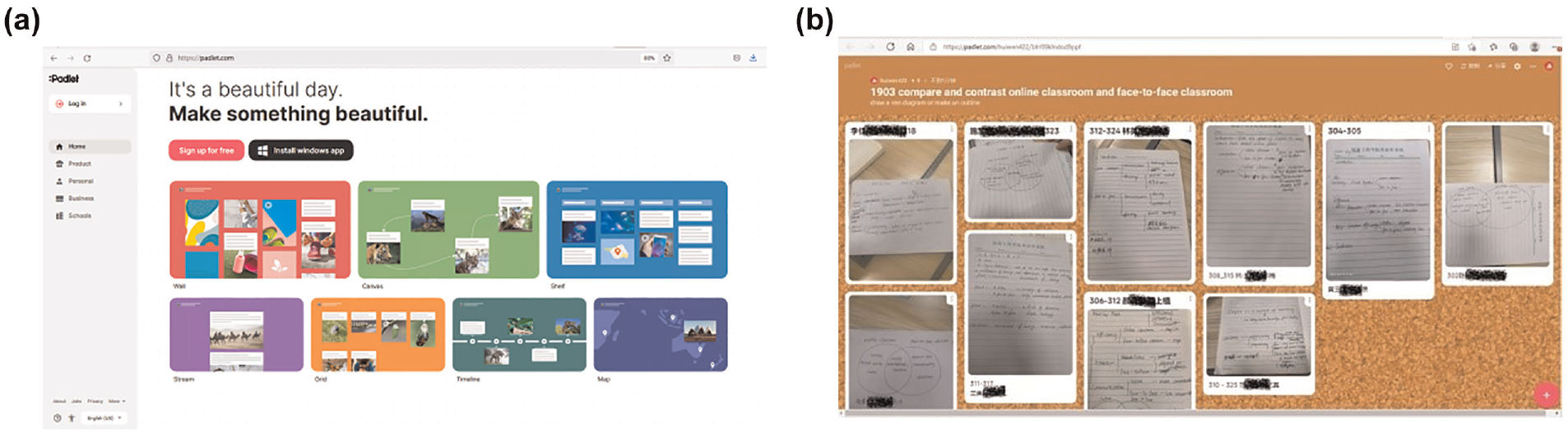
Screenshots of TEFA strategy in Padlet: (a) Padlet website and (b) students’ answers.

Procedures for the IBL and TEFA in flipped EFL writing instruction.
Teacher and student roles

The above figures outline the pre-class and in-class instructional steps that were carried out during the weekly EFL writing class. The procedures were as follows: (1) the teacher posted questions (such as the key points of the instructional videos to check students’ comprehension) on Padlet the day before class; (2) during class, students worked in pairs but shared one smartphone to respond to the questions on Padlet within a specified time limit; (3) the teacher checked the students’ answers; (4) the teacher asked the students to explain their answer; (5) the teacher assisted students to re-think their answers through guided logical reasoning; and (6) the teacher announced a quiz on Padlet as a formative assessment to determine whether the students understood the unit lesson. The reason students were paired with one another and asked to share only one smartphone to discuss their answers is to reduce individual addiction to smartphones in class. That is, it can reduce students’ chances to scroll through their phones in class inattentively. The questions at the sixth step posted by the teacher on Padlet were related to essay writing skills in different units, such as “how to write a topic sentence,”“thesis statement’s function,”“compare and contrast A and B,” and others. These instructional steps engaged and scaffolded the development of the EFL learners’ writing skills.
Data Collection
This study collected data from two sources: pretest and posttest essay writing and final reflection assignments. In the first week of the physical class, students wrote an essay within a 40-min time limit for the pretest data collection. Then, they wrote a similar essay but on a different topic for the posttest data collection in the 15th week of the course. It was again a physical class, and students were given a 40-min time limit. The pretest and posttest writing activities were in conjunction with an assigned reading wherein students had to share their views and insights regarding the text (See Appendix A). Specifically, the essay topics were based on the Test for English Majors-Band 4 (TEM-4) competencies, the Language Examination for English majors in China. In addition, after the 16-week teaching intervention, the students answered an open-ended question to assess their reflection responses about their perceptions toward IBL and TEFA in flipped EFL writing. The reason for using typed final reflections on papers was that they could provide in-depth answers rather than superficial ones (Borg & Alshumaimeri, 2017).
Data Analysis
Quantitative analysis was carried out using the Statistical Package for the Social Sciences (SPSS) version 24 to analyze the students’ writing performance scores. Specifically, a paired samples t-test was used on students’ pretest and posttest scores at
The students’ writing performance was measured using a 20-point scoring system that covered holistic writing areas such as content, organization, grammar, and comprehensibility. After receiving a 2-hr writing assessment training in the TEM-4 writing rubric (see Appendix B) for evaluating argumentative essays, two research assistants (RAs) served as raters. They scored all the student essays separately. In addition, a Pearson correlation coefficient test was used to determine inter-rater reliability and rater consistency in the scoring of the student’s essays between the two raters.
For the qualitative data analysis, content analysis was employed to categorize and analyze students’ reflections. The coding scheme used in analyzing the data was based on a rubric created by Thomas (2006). The two RAs followed the following procedures. First, they read all the reflections independently to get a general understanding of the content. Second, the two RAs independently coded the students’ reflections. Third, they grouped similarly coded responses into categories and themes. Fourth, they checked the identifying categories they grouped individually with the other RA and discussed the results until an agreement was reached. Fifth, after the two RAs agreed on classified categories, the first author (main researcher) re-checked the results to ensure the correct codes were used. If there were any differences in coding, the three analysts discussed them together in order to reach a consensus (Vaismoradi et al., 2016). Finally, the frequency and percentages of occurrence of the classified categories were counted to understand student perceptions.
Data integrity and trustworthiness of the content analysis were ensured in several ways. The first author met with the two raters and discussed their observations and the variances in the analyzed data. Then, the three re-analyzed the student responses again until they agreed on the most appropriate categories and themes. Excerpts of student responses were included in the results section to further establish data validity. These steps mentioned above were taken in exploring student perceptions, including benefits and difficulties, of engaging in IBL and TEFA in flipped EFL writing instruction.
Ethical Considerations
Each participants signed a consent form after understanding the purpose of this study, and their rights as research subjects were explained to them. To ensure the students’ privacy, we replaced names with numbers. The time of data collection and the name of the educational institution the participants belong to are not identified to ensure privacy.
Results
RQ1: Are There Any Significant Differences Between Pretest and Posttest Essay Writing?
The Pearson correlation coefficient test was used to investigate inter-rater reliability in the scoring of the pretest and posttest essay writing measures. Specifically, the pretest and posttest were .88 and .90, respectively, at p < .001. The results indicate a high agreement between the two raters.
Before conducting a paired samples t-test, the normality of the pretest and posttest scores was assessed using a Shapiro-Wilk test. The results of the test (W(48) = .95, p = .06) indicated that the assumption of normality was not violated, as the p-value was greater than .05. This suggests that the collected data follows a normal distribution, and the normality assumptions testing yielded satisfactory results. Additionally, no outliers were detected after checking the graphical displays in the Q-Q plot. These findings support the suitability of proceeding with the subsequent statistical analysis.
A paired samples t-test was used to compare the means of the pretest and posttest scores. Table 2 illustrates that students’ essay writing performance improved from the pretest mean score of 9.77 to a posttest mean score of 15.15 (t = 15.44, p < .001). The significant difference between the pretest and posttest writing measures indicates that students’ essay writing abilities improved after introducing the new teaching approach. Cohen’s d = 2.23 for the effect size suggests a large effect size (Cohen, 1988). This significant change provides additional evidence of how IBL and TEFA in flipped EFL writing courses improved the students’ writing performance.
Summary of Paired Samples t-Test Results (Differences Between the Pretest and Posttest Writing Scores).

RQ2: What Are the Student Perceptions of the Use of IBL and TEFA in Flipped EFL Writing?
In addition to examining students’ actual writing performance, the qualitative analysis provided additional insights regarding the students’ perceptions of applying IBL and TEFA in flipped EFL writing in answering RQ2. Students were asked an open-ended reflection question, “As an English learner, what are your perceptions (any benefits and difficulties) of applying IBL and TEFA in flipped EFL writing instruction? Give examples to support your answers.”
The students stated that they were clear about possessing essay writing skills, such as recognizing and producing writing structures like introductory, body, and conclusion paragraphs. They understood how to write hooks, thesis statements, and topic sentences after experiencing the IBL instruction method. They recognized that this new teaching strategy allowed them to promote active engagement over the process of class activities, provide in-depth group discussions, and improve comprehensive concepts of essay writing structures, resulting in them becoming active learners. They viewed smartphones as learning tools for formative assessment in writing activities. The students’ perceptions reflected in the responses to the open-ended question provided additional evidence of their improved writing outcomes.
In other words, technology integration enhanced their motivation to learn essay writing. It helped them cultivate a positive attitude toward class participation, leading to increased writing quality. Summarized in Table 3 are the categorical themes that describe the pros and cons of this new teaching method based on the students’ responses.
Learners’ Perceptions of IBL and TEFA in Flipped EFL Writing (n = 48).

Note. *Some students’ reflections were grouped into more than one category because the categories were not mutually exclusive.
Content
The students mentioned that they better understood essay writing skills after completing IBL activities, leading to perceived language production. According to a student, “During the question-answer (Q&A) activities, I learned how to effectively do online searches to find responses to the teacher’s questions with my partners. This was good to help me enhance essay writing skills” (Student #28). Another student stated, “I learned clear essay writing structures and became active in class through this new learning method” (Student #36). Furthermore, one student reported that she “could pay full attention to discover answers to the teacher’s questions and reinforce new knowledge after having group discussions” (Student #39).
The students also perceived that the IBL activities allowed them to identify their learning process through SRS formative assessment. One student expressed that she was happy because she “gave the correct answers to demonstrate her learning outcomes in the Padlet quiz” (Student #10). Meanwhile, a student commented, “it is a good way to use technology to evaluate our understanding, and we can see others’ answers in Padlet” (Student #26). Another student shared, “I am confident that my essay writing skills are improving because I learned the differences between claim and evidence in paragraph writing. A claim should be arguable, while evidence is used to support the claim” (Student #48).
Overall, the students agreed that the new teaching method improved their essay writing quality compared to conventional teacher-centered writing classes. They clearly understood the essay writing structures and correctly distinguished the differences between claim and evidence in paragraph writing, leading to persuasive and convincing essays.
Engagement
The majority of students (77%) indicated that this new teaching method allowed them to foster class engagement. The dynamic Q&A sessions facilitated students’ discussion in developing essay writing skills. One student wrote about her immersive experiences in the group discussions, “IBL helped me activate my brain to think about explaining new knowledge with confidence after having group discussions” (Student #15). Another student commented, “I found this new teaching method extremely helpful to maintain my attention span and increase my active engagement” (Student #27). Likewise, a student mentioned that “I noticed that my group members were willing to find related learning materials for better class discussions based on the teacher’s questions” (Student #8). Regarding the technology used for formative assessment to increase engagement in class, one student said that he “enjoyed using smartphones to answer questions and seeing other groups’ responses in Padlet to develop digital competence” (Student #42).
About 65% of the students reported high learning involvement in their reflection responses. Examples of statements pertaining to this included, “I was proud to see my learning growth after completing quiz practice, which showed my understanding in essay writing” (Student #8) and, “I noticed that I had better concentration levels in this class because of the question-answer information exchange in IBL” (Student #45). Students were more engaged with the course content and experienced effective learning by following the flipped teaching mode. Some students reported less anxiety while actively participating in class activities. For example, two students said that “By watching the teaching videos in advance, we had enough time to discuss with peers and interact with the teacher” (Student #23) and “The class activities of Q&A led to in-depth discussions as we already got ready before entering the class and had the confidence to answer the teacher’s questions” (Student #12). A student confirmed the benefit of watching instructional videos before class in IBL tasks. He mentioned, “I usually had difficulties in essay writing, but I learned how to write an essay in this course after conducting an online search with peers. I liked this new teaching method, from getting my brain ready for learning to find solutions to the problems by ourselves” (Student #5). Accordingly, the pre-class preparation and IBL tasks led to a more profound learning experience, resulting in more engagement and higher-order thinking.
The results show that students perceived the new teaching method to be effective, and it enabled them to pay full attention to course materials without wasting class time on activities they viewed as boring. This high degree of learning engagement resulted in better essay writing quality.
Teamwork
Over two-thirds of students indicated that working in groups to find solutions together helped foster their teamwork and communication skills. They could learn from each other and provide the necessary support for effective group discussions. A student wrote, “I found my own learning shortcomings through working with my peers, and I could learn from them. I liked this learning method because I can become a problem-solver during the process of group discussions” (Student #19). Similarly, another student wrote, “This new learning method helped me realize the meaning of learning because I could better understand the course materials and discover answers while doing teamwork. My classmate and I were excited to join this project” (Student #23). Finally, students could improve their communication skills in group collaboration. One student expressed, “I learned how to express my opinions effectively in group discussions to avoid misunderstanding” (Student #39).
Decreasing students’ negative emotions in teamwork is important to promote successful learning performance. This new teaching method allowed students to better overcome learning anxiety and frustration after working with team members. One student stated, “I felt nervous at the beginning of the semester because of the new teaching method; however, working with my peers to figure out the answers released my anxiety. I appreciated the teamwork activities in this class” (Student #46). Other students expressed that they could bring full attention to group collaboration. For example, two students argued that “We conducted an online search to answer the teacher’s questions after group discussion, which allowed us to have more thoughtful ideas in learning” (Student #17) and “I felt less frustrated and anxious because I had the chance of discussing with my team members after surfing the Internet before the class. We experienced active participation and dynamic conversations in class to share our ideas with the class” (Student #33).
The findings confirmed that the students benefited from working with and having group discussions with peers to exchange information and negotiate meaning, thus, producing satisfactory essay writing quality. The new teaching method provided the students with opportunities to acquire the learning content in different ways. It also allowed them to practice building lifelong skills to communicate with others effectively.
Challenges
Some students wrote about the challenges related to their unfamiliarity with some inquiry questions and the limited class time. A student commented about the difficulty of answering the teacher’s questions because he “was concerned about the unpreparedness for group discussions in classes” (Student #14). Additionally, the findings did reveal some frustration due tothe lack of experiencing with IBL tasks at the beginning of the project because “it was my first time to experience this new teaching method” (Student #9). Regarding the issue of limited class time, several students expressed their struggle with “less class time to explore in-depth discussions” (Student #21) and “without generating good answers in time” (Student #38). One student reported that she sometimes “felt nervous in answering questions in Padlet due to the time limit” (Student #4).
The IBL and TEFA approach are not perfect solutions in education. Encountering challenges are inevitable when applying these methods in classes. However, based on students’ reflections, the pros of this new teaching method outweigh the cons in the specific educational context in which it was applied. The data results show an increased understanding of course content, high engagement, and the development of group collaboration skills despite the challenges expressed by the participants.
Discussion
The findings indicated that students’ posttest essay writing scores significantly improved compared to their pretest scores after experiencing the IBL and TEFA methods in flipped instruction. Pairing SRS-based formative assessment with the IBL flipped instructional approach created student-centered learning contexts that positively impacted students’ learning performance. The improvements observed in the students’ writing performance can be explained by the increased preparedness for learning content, group discussion before class to answer online questions, and the active learning engagement that characterized the IBL and TEFA flipped learning approach.
The results support previous studies (Adhamin & Taghizadeh, 2022; Aghaei et al., 2020; Wale & Bogale, 2021), indicating that integrating IBL in flipped classrooms could provide students with an efficient way to increase learning quality in and out of the classroom. Moreover, negative emotions, such as anxiety and helplessness, could be reduced due to pre-class preparedness for the in-class inquiry learning activities and search-related learning content with group members in the flipped instructional approach. The findings also align with Dellatola et al.’s (2020) and Love et al.’s (2015) studies, reporting students’ positive attitudes toward IBL flipped learning. Hence, this teaching method helps students turn their roles from passive learners to active ones, resulting in accountability for their learning.
Another explanation for the essay writing improvement might be that students were provided with technology integration using SRS to assess learning quality. During the learning process, SRS-embedded formative assessment allows teachers to do comprehension checks to identify students’ misunderstandings. Doing so can help teachers decide whether and how to modify their instructional pacing during in-class activities to meet the students’ needs and provide immediate feedback that simulates cognition (Hung, 2017; Kocak, 2022; Yu & Wang, 2016). Furthermore, the appropriate integration of technology in classrooms increases student motivation and engagement, which are all crucial in activating cognitive development.
This study provided empirical evidence that allowing students to work in pairs to answer the teacher’s questions in Padlet was helpful for them. The students actively explained and discussed the learning content with each other and then came up with correct answers, leading to a better understanding of the concepts in the learning unit that they were studying. In other words, the students scaffolded each other’s cognitive development alongside the guidance of the classroom teacher. Doing so helped the students reach their own ZPD, which resulted in better essay writing quality, as observed in this research. This assertion is broadly confirmed by previous studies (C. Liu et al., 2018; Yu & Yu, 2017), highlighting the role of technology integration in flipped EFL classrooms and how optimal cognitive development is achieved (Vygostsky, 1978). More specifically, the results of this study supported Tirado-Olivares et al.’s (2021) research, indicating that teachers can better guide students to maximize their potential and provide them with scaffolding to boost their cognition after obtaining the assessment feedback from the SRS technology.
Furthermore, the IBL flipped instruction approach allows teachers to deliver differentiated instruction that enables students to better understand and practice the learning contents during actual class time (Dellatola et al., 2020; Love et al., 2015; Richards & Rodgers, 2014). Students established new knowledge of essay writing skills with the teacher’s scaffolding and peer discussions during the inquiry process. The questions posed by the teacher provided scaffolding within the students’ ZPD to help them meet their learning expectations. The interactive course design immersed the students in an engaging learning atmosphere compared to the passive one-way traditional lecture that Chinese EFL students often experience. The participants became proactive in learning the content and displayed greater accountability for their learning. Such an observation can also positively impact their future as lifelong learners. A learner-centered approach supported students in developing teamwork and critical thinking skills simultaneously. The teacher’s role in this new teaching method was to ask questions, provide appropriate support, and guide students to develop a deeper understanding of essay writing through IBL. The findings support the concepts of Vygotsky’s sociocultural theory and Bloom’s taxonomy of knowledge, highlighting active interactions to stimulate individual thinking in a social context and showing how to focus on students’ higher-order cognitive skills in IBL instruction (Adhami & Taghizadeh, 2022; Aghaei et al., 2020; Lee, 2014; van Dijk & Lazonder, 2016).
Regarding students’ reflections on the IBL and TEFA flipped teaching approach, they mentioned that this method could enhance their understanding of learning content, increase class engagement, and develop communication skills in group work. Their positive reflections could be attributed to the fact that this student-centered approach with active participation stimulates cognitive functions, encourages students to acquire knowledge through online searching activities, and boosts learning transfer in long-term retention. This new teaching method created a learning environment that helped students think logically about knowledge construction through questioning and dialogue. With students being able to prepare for the learning content before class, teachers could spend more class time clarifying students’ essay writing misconceptions. The exchange of Q&A sessions and teacher-student dialogue facilitated active learning.
However, the students in this study did express some challenges they had encountered. They were worried about being unfamiliar with the inquiry questions asked by the teacher and the limited class time for group work. Although they had watched the assigned videos and answered online questions before entering the classroom, they still experienced difficulties concerning these two aspects. These concerns may be because they were unfamiliar with the new teaching method introduced, leading to the possibility of failing to find solutions. Additionally, students may need more time to do in-depth group discussions in IBL activities. These findings agree with the observations of Dellatola et al. (2020), who stated that students required time to adapt to IBL flipped learning. This study also corroborates the findings of Adhami and Taghizadeh (2022) and Lee (2014), indicating that it does take much time to conduct sequences of IBL tasks.
Pedagogical Implications
Given that the implementation of IBL and TEFA in EFL classrooms has been scarce, this study proposed an innovative teaching approach to examining the impact of technology integration on the writing performance of Chinese EFL learners. We employed the sociocultural theory proposed by Vygotsky (1978) as an instructional design framework to help students experience active engagement and meaningful discussions in an effective learning context. From a practical perspective, we present the positive impact of IBL and TEFA on EFL learners’ writing performance and provide an effective teaching strategy for EFL educators to consider embracing a digital-first approach to teaching in tertiary education. EFL teachers apply an inquiry-based teaching strategy to improve students’ writing performance and increase engagement through a technology-assisted language learning process.
The research findings show that implementing IBL and TEFA in flipped EFL writing instruction effectively achieves student learning goals and has other practical implications. First, the class teacher plays a crucial role in stimulating learners’ active engagement in learning. Students can foster cognitive development through online searches and discover answers through teamwork. They receive scaffolding from competent persons to leverage their full potential, which aligns with the core assumptions of sociocultural theory. Optimal learning occurs when students are cognitively engaged in: (a) social interactions with capable people, (b) interacting with mediating tools (instructional videos, SRS), and (c) accomplishing organized learning activities. The IBL and TEFA approach is effective when accompanied by teachers’ differentiated scaffolding and in-class flipped teaching guidance (Tirado-Olivares et al., 2021). Second, EFL educators must encourage students to practice learning content during class rather than giving one-way lectures. EFL educators should not merely focus on delivering linguistic and grammatical knowledge; instead, they should assist students in building cognitive skills which can be applied in real-life situations. The IBL method instills a sociocultural learning environment that allows students to discover new knowledge for themselves, and their cognitive functions are activated simultaneously, conducive to brain and language development. By doing so, students engage in meaningful contexts to develop problem-solving skills. Finally, increasing students’ active participation in the learning process is an urgent task for teachers in 21st-century classrooms. Students should be equipped with autonomous and self-regulated learning skills, developing active motivation for lifelong learning (Justice et al., 2007). With appropriate support and help, integrating IBL and TEFA in flipped classrooms can help EFL learners maximize their potential to enter the future workforce successfully. It makes this new teaching method worthy of consideration in foreign language classrooms.
Conclusion
This article presented and discussed the preliminary findings of applying IBL and TEFA in flipped EFL writing instruction in China. The findings indicated that this new teaching approach improved the students’ essay writing quality. In addition, students’ reflections showed that they positively perceived this new teaching approach as helpful in learning EFL writing-related content, promoting active participation, and developing teamwork skills. Hence, combining IBL, TEFA, and flipped course design showed positive gains that are beneficial to EFL teaching and learning.
Although this study provided evidence regarding higher student engagement, it is necessary to acknowledge some of the limitations of this study. First, the sample size is small and cannot be generalized to the other population of EFL students in China. Recruiting more participants and using a control group would increase the validity of the research. Second, this study did not evaluate the impact of students’ cognitive load. The design of future research can consider ways to control this confounding factor.
To sum it up, this novel teaching method serves as a model for EFL teachers to create a learner-centered and dynamic classroom that fosters active and deeper learning among EFL students. The ultimate objectives of this new teaching strategy are to cultivate students’ autonomy and empower them to take ownership of their learning process. This will enable students to achieve their long-term goals for success and prepare for real-world situations. The incorporation of IBL and TEFA in flipped classrooms provides students with opportunities to experience meaningful interactions with teachers and peers in an interactive and engaging learning context.
Footnotes
Appendix A
Appendix B
Acknowledgements
A part of this paper was presented at the 6th International Conference on Computer Science, Engineering, and Education in 2024. The first author expressed her appreciation to the participants in this study.
Original Submission Statement
The corresponding author, Hui-Wen Huang, confirms that the manuscript is unpublished and not under consideration by another journal.
Author Contributions
All the authors listed on this manuscript confirm that we have contributed to the research, analysis and development of the article for the final version to be published.
Declaration of Conflicting Interests
The author(s) declared no potential conflicts of interest with respect to the research, authorship, and/or publication of this article.
Funding
The author(s) received no financial support for the research, authorship, and/or publication of this article.

Data Availability Statement
The data of this study are available from the corresponding author upon request.