




Abstract
Industry and higher education are increasingly utilizing online environments due to digitalization. As a result, the learning experiences in these new digital learning ecosystems as communities must be re-examined critically. This study incorporates the second cycle of the design-based research (DBR) study developing the design principles and theoretical framework for a digital learning ecosystem in Information and Communication Technology (ICT) engineering education in Lapland University of Applied Sciences (UAS), Finland. This cycle examines students’ learning experiences in a project and Industry 4.0-based approach in a digital learning ecosystem with authentic industry assignments and involvement. The study examines the learning experiences of ICT engineering students in a project and Industry 4.0-based approach in a digital environment with authentic industry assignments and involvement. The study was carried out using the Community of Inquiry (CoI) approach. Rasch Rating Scale Model was used to analyse first-, second-, and third-year students’ responses to a translated and adapted CoI questionnaire. Open-ended questions were added to the questionnaire, which was then analysed using content analysis. The results indicate that students perceived project-based learning in an online setting positively. However, the findings point to issues with social interactions and the actual application of learnt knowledge and skills. Challenges in task management and scheduling, as well as receiving feedback, had a somewhat negative impact on the learning experience, particularly during the first year of study. Finally, this paper concludes by presenting a visual model summarizing the design framework developed through a broader DBR study informed by the previous DBR cycles. The findings may benefit practitioners in developing similar communities and ecosystems.
Keywords
Introduction
The COVID-19 pandemic has accelerated the introduction of online and blended learning at all levels of education (Ali, 2020), and teleworking is increasingly being used by the software industry (Russo et al., 2021). The benefits of online learning include flexibility, diversity, inclusion, equality, internationalization, accessibility, and sustainability (Ghanem, 2020). Student satisfaction and enrollment have also been found to improve and the dropout rate decrease when transitioning to online or blended learning (Martínez et al., 2020). However, moving to an online learning environment also poses challenges related to collaboration and communication. The challenges further include the need for a high-quality educational infrastructure to support online and distance learning (Long, 2020) and Massive Open Online Course (MOOC) platforms’ shortcomings in interactivity and collaboration (Gamage et al., 2020). The importance of collaboration and teamwork is emphasized in both learning and preparing the students for working life (Boles & Whelan, 2017). Online technologies will most likely serve as a supplement to traditional teaching and will not be able to completely replace it (Kaur et al., 2021). Blended, online, and distance learning are projected to remain in the post-pandemic educational culture (Park et al., 2021; Qadir & Al-Fuqaha, 2020).
Project-based learning (PjBL) (Granado-Alcón et al., 2020; Hanney, 2018), characterized by student autonomy, collaboration, and communication, not only enables the development of technical skills but is also found to increase so-called “soft skills” (Vogler et al., 2018), such as communication and teamwork (Souza et al., 2019; Vogler et al., 2018). Industry 4.0 (Benis et al., 2021; Fitsilis et al., 2018; Gupta et al., 2019) with its key technologies, such as the Internet of Things (IoT), robotics, data analytics, virtual reality, and cloud services, requires Information and Communication Technology (ICT) engineering students to quickly adopt new skills based on industry needs. With the inclusion of new and emerging technologies and methods in the ICT engineering education curriculum, the students’ working life skill development may be supported by providing them with the most authentic learning environment possible, such as working with real-world projects as part of a community involving both peers and industry representatives.
This study represents the second cycle of a broader Design-Based Research (DBR) developing the design framework with accompanying design principles for a digital learning ecosystem in ICT engineering education in a way that supports industry-specific emerging methods and practices. In this second cycle, the students’ learning experience is explored in a completely online environment with industry representation through a theoretical lens of the Community of Inquiry (CoI) framework introduced by Garrison et al. (1999). The present study seeks answers to the following research question: “How do students experience teaching, social, and cognitive presence in an online environment?.” Finally, in addition to answering the research question, the reader is provided with a visual model of a CoI-based design framework of design principles that summarizes the results of the cycles. Currently, to the best of the authors’ knowledge, there are no corresponding reference studies or frameworks pertaining to ICT engineering education within the existing literature.
Design Framework
Blended learning (e.g., Olapiriyakul & Scher, 2006) is combining face-to-face (FTF) and online activities (N. D. Vaughan et al., 2013, p. 8), that is, it combines digital online discussions, development, and resources with traditional classroom learning. Cronje (2020) challenges the definition to also take the context, theory, method, and technology into account and broadens the definition to a combination of the former to optimize learning. A collaborative CoI is needed for a successful blended learning educational experience, where according to N. D. Vaughan et al. (2013, p. 4) the study strategies and techniques should fuse FTF and online learning. CoI is a collaborative approach to thinking and learning while being a fusion of the personal and social (Garrison, 2016, p. 11). The theoretical framework of CoI, presented in Figure 1, describes its three interdependent elements: Social Presence (SP), Cognitive Presence (CP), and Teaching Presence (TP), establishing procedures for critical inquiry and the collaborative construction of personal, meaningful, and shared understanding.

Theoretical framework of CoI.
In CoI, social presence (SP) is the individuals’ ability to identify themselves with a group and communicate openly in a trusting environment (Garrison, 2016, pp. 22–27). For example, Ng (2022), drawing on earlier research, discovered that SP is crucial for interaction with other students and knowledge acquisition. Students enjoyed collaborating in an online lab during online sessions, as long as the social functions of the online tools were utilized (Ng, 2022). SP has even been found to be a critical factor in improving students’ successful online learning experiences and outcomes (see e.g., Lim, 2023). On the other hand, according to Akyol and Garrison’s (2008) research results from a study on dynamics of an online educational experience through the lens of the CoI, social presence did not affect learning, but it was associated with satisfaction. Mutezo and Maré (2023) even argue that deficiencies in meeting social needs may result in students not being able to focus on learning course content.
According to Anderson et al. (2001), teaching presence (TP) is “the design, facilitation, and direction of cognitive, and social processes for the purpose of realizing personally meaningful and educationally worthwhile learning outcomes.”Zhang et al. (2019) found, for example, that timely feedback promotes student participation, as well as progress management, rational arrangement of learning, and online communication and discussions had an encouraging effect on learning. The TP has indeed been found to have also an association with students’ satisfaction (see e.g., Arsenijevic et al., 2023; Kyei-Blankson et al., 2019; Tayeh, 2021). In fact, it has been discovered that the TP benefits both SP and CP, as well as indirectly on learning performance as a facilitator of students’ cognitive thinking and social interaction (Law et al., 2019). However, Padayachee and Campbell (2022) emphasize that TP is not only about the teacher’s presence but about the students’ joint responsibility and control in the teaching and learning dynamics, where the students can be the teachers themselves who guide and supervise their learning in cooperation.
In cognitive presence (CP), learners construct and confirm meaning through sustained reflection and discourse (Garrison et al., 1999). In terms of cognitive presence, teaching, and social presence can be considered to represent the processes needed for epistemic engagement and cognitive presence in online environments (Shea & Bidjerano, 2009). Fostering cognitive presence is important for success in higher education, and requires strategies carefully designed and implemented. According to Moore and Miller’s (2022) literature review on cognitive presence in online courses, useful suggestions for instructors were for example, providing clear participation requirements, versatile integration of technologies and well-structured discussion forums. They also encourage trying different approaches to improve SP, which is also considered to help with cognitive presence (Moore & Miller, 2022).
Factor analyses have been conducted to reconceptualize structure and identify the possible existence of a fourth component, such as Emotional Presence by Cleveland-Innes and Campbell (2012). Other elements, such as Learning Presence (Shea & Bidjerano, 2010) and Autonomous Presence (Lam, 2015) have also been proposed. According to Garrison’s arguments, the issue of regulation has been incorporated into CoI through Shared Metacognition (Garrison, 2016, p. 31), which is a fusion of self-regulation and co-regulation (Garrison, 2016, p. 63) and is located at the intersection of TP and SP (Garrison & Akyol, 2015; N. Vaughan & Wah, 2020).
The present study adheres to the original three CoI elements: TP, SP, and CP. Table 1 presents the CoI presences and categories (Garrison et al., 2006) that have served as a basis for the development of a quantitative CoI survey instrument developed and validated by (in alphabetical order) Arbaugh et al. (2008). The instrument contains 34 questions in English. The questions are divided into presences (CP, SP, and TP) and further into categories. Responses are represented with a five-level Likert rating scale, where 1 = Strongly Disagree, 2 = Disagree, 3 = Neutral, 4 = Agree, and 5 = Strongly Agree. Abbitt and Boone (2021) recommend analysing the psychometric properties of the CoI survey with the Rasch Rating Scale Model (Andrich, 1978) to achieve a stronger understanding of the factors of successful online learning experience referred to by Akyol and Garrison (2008) and to account for the non-linearity of the Likert rating scale.
Categories and Indicators.

Source. From “Revisiting methodological issues in transcript analysis: Negotiated coding and reliability” by Garrison et al. (2006), The internet and higher education, 9(1), p. 1-8 (10.1016/j.iheduc.2005.11.001). Copyright year by Elsevier (2006). Reprinted with permission.
The COVID-19 pandemic has substantially increased the need for research related to online learning and the three CoI presences. Aslan (2021) found that cooperative synchronous learning experiences positively influenced IT students’ CoI perceptions and interaction levels. According to a CoI-based survey by Riese and Kann (2021), computer science students who switched to distance learning in the early stages of the pandemic listed advantages such as flexibility, accessibility, and less commuting, but also disadvantages, such as lack of social interactions, decreased motivation, concentration, and study discipline, lack of structure, poorer quality of education, and technical difficulties.
Project-based learning is a method in which the context of learning is provided in real-life problems through learning-by-doing and applying ideas (Llorens et al., 2017). It facilitates authentic learning (McDermott et al., 2017) as a learner-centered approach to construct knowledge through real-life and open-ended problems (Isomöttönen et al., 2019). Project-based learning aims at broader learning outcomes and emphasizes the personal and professional development of students (Edström & Kolmos, 2014). PjBL has been widely used in higher education as a method in broader project studies, where it is often called the capstone project (Deepamala & Shobha, 2018; Joo et al., 2019; Khakurel & Porras, 2020). Further, project-based learning applies mainly to individual subjects in engineering (Hormigo & Rodriguez, 2019; Intana, 2020; Sanchez-Romero et al., 2019; Younis et al., 2019), rather than systematically in the integrations formed by subjects (Pereira et al., 2017) or integrated semesters (Mielikäinen, 2022). According to Llorens et al. (2017), project learning responds to almost all generic skills required in the ICT industry, such as teamwork, decisiveness, proactive approach, innovativeness, ability to find information, and communication skills. The challenges include the lack of technical tools (Gómez-Pablos et al., 2017), “hitchhikers” who contribute little to the project, and coordination difficulties (Shpeizer, 2019). Working remotely in projects requiring physical equipment further introduces challenges related to the equipment and devices (Hou et al., 2021). Various solutions have been developed to support remote learning, including open-source and modular remote laboratory concepts based on global networks (Letowski et al., 2020) and at-home lab kits (DeBoer et al., 2019).
Methodology
Design-Based Research
The present study is a part of the broader DBR study to develop design framework with accompanying design principles for the digital learning ecosystem in ICT engineering education at (see Mielikäinen, 2022; Mielikäinen et al., 2023). DBR was chosen because of its suitability for designing educational interventions (Design-Based Research Collective, 2003) and producing guiding design principles (Gundersen, 2021; van Den Akker, 1999) for complex and practical educational design problems (McKenney & Reeves, 2019, p. 6). In DBR, the iterative development of solutions to complex real-world educational problems provides a context for empirical research (McKenney & Reeves, 2012, p. 8). DBR relies on the role of the researcher as an active player (Barab & Squire, 2004) which is also realized in the present study. DBR is based on iterative cycles, which include steps such as analysis and exploration, design, and construction, evaluation, and reflection, and implementation and spread (McKenney & Reeves, 2019, p. 89). This study presents the second cycle, where mixed methods are used to analyse an intervention’s outcomes and refine the DBR intervention (Design-Based Research Collective, 2003).
During the analysis and exploration phase of the first cycle, the stakeholders’ (students, teachers, R&D personnel, and industry representatives) experiences and expectations about the current integrated curriculum and project-based pedagogy in ICT engineering education were investigated (Mielikäinen, 2022). Based on the results, the students perceived PjBL as a motivating pedagogical model. The reviews included in agile methods provided the students with the desired discipline in terms of schedules and served as feedback channels. Teachers found PjBL to be an effective but relatively time-consuming way to teach. The students suggested a stronger industry involvement in the projects. The following main design principles were needed for the intervention:
PjBL will be applied as an integrated curriculum context, with particular attention paid to the orientation phase.
Collaboration in PjBL should be further supported.
PjBL should be applied with authentic project management methods and reviews used in the industry.
Deploying a team collaboration platform (TCP) is needed to facilitate communication and promote accessibility.
The involvement of industry representatives needs to be promoted.
Emergent technologies related to the Industry 4.0 concept should be utilized.
The PjBL model was transferred to a TCP-supported learning ecosystem, and the blended learning model was applied (Mielikäinen et al., 2023) in accordance with the design principles described above and Garrison’s (2016, p. 112) design principles of CoI. The experiences of the second and third-year students (N = 56) were collected with a CoI questionnaire instrument adapted to the PjBL environment. TCP and developer platform server data were also collected to further explore the students’ behavior on the platforms. Altogether 83% of the responses to the CoI survey were positive (either Agree or Strongly Agree). The results were analysed using the Rasch Rating Scale Model. The results showed that a vast majority of students thought the online medium was an excellent tool for social interaction, but questions associated with discussing through the online medium were relatively harder for the students to agree with. The analysis of the TCP and developer platform data showed that students worked mainly during office hours but also during other times of the day, including weekends, and that the TCP’s common channels were not largely used among the students.
The main design principles and their relationship to the CoI design principles by Garrison (2016, p. 112) are summarized in Table 2.
Design Principles and Strategies Transferred for the Second Cycle.
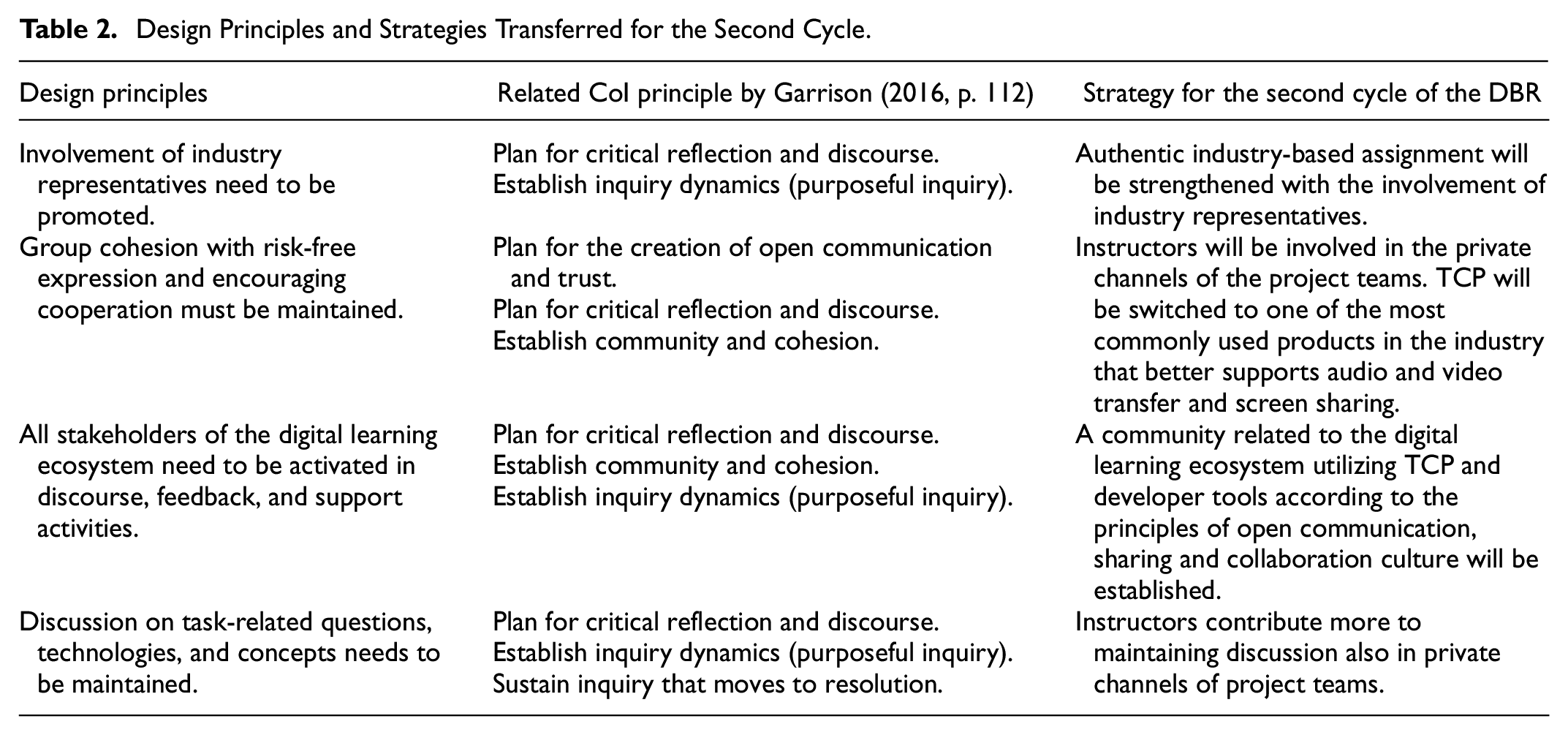
The results are transferred as design principles for this second cycle. The present second cycle proceeded through analysis and exploration, design and construction, and evaluation, and reflection phases, and these will be described next.
Context and Participants
In the design and construction phase of this second cycle, all first, second, and third-year ICT engineering students at Lapland UAS were invited to participate in the second DBR cycle described in the present study. The cycle was carried out between January and April 2020, during the COVID-19 pandemic. The curriculum did not include a semester project for the fourth-year students at the time of the study, which is why the fourth-year students were excluded from the analysis. The semester was implemented completely online. The design of the cycle was based on the design principles formulated as a result of the previous cycle
In the semester projects, the courses of the semester were holistically integrated forming a total of 20 to 30 ECTS. Students’ project groups were given an open-ended Industry 4.0-related assignment based on the objectives of the courses. Except for the first-year assignment, the topics came from the industry to provide an authentic learning experience and to promote student engagement and motivation. Industry representatives were invited to join the TCP’s common channels and participate in evaluating the outcome.
The first-year students’ open-ended assignment for the semester project was to implement an autonomous vehicle whose features, such as acceleration, location, battery charge, and power consumption, can be monitored through a web-based interface. The device platform for prototyping was a radio-controlled autonomous vehicle, which was controlled with Arduino and a Raspberry Pi control unit. The architecture consisted of a Python application with WebSockets, Node.js runtime services, and a MongoDB database. The following courses were integrated into the semester project: Simulation Project of Intelligent Technologies; Basics of Electronics; Server Programing; Networks; and Electromagnetism, five ECTS each. The second-year students’ open-ended assignment was to implement a mobile application for the audience of a real snow-cross event. Machine learning may have been optionally included through image recognition to observe the activities of the event. The students applied the following technologies and platforms in their implementations: Android, Google Cloud Platform, AWS, and a robotic building system. The second-year semester project integrated the following courses: Product Development Project; Entrepreneurship and Business; Product Development; System-Oriented Programing; and Information Management. The third-year student’s open-ended assignment was to produce a mobile application and measurement system for a modern, versatile apartment building with sensors. The applied technologies included Android OS, MQTT, IBM Cloud, Raspberry Pi, Pycom, Arduino, and Azure DevOps. The third-year semester project integrated the following courses: IoT Project; Advanced Mobile Programing; Measurement Systems; Management and Leadership; and Professional English for ICT Engineers.
The students worked in teams of 3 to 4 students. The first and second-year students’ project groups were assigned randomly, and the third-year students formed the groups themselves. The first-year students’ project management was based on the Project Management Body of Knowledge (Project Management Institute [PMI], 2017), which includes standard guidelines for project management. The second and third-year students applied the agile software development method Scrum (Gonçalves, 2018; Takeuchi & Nonaka, 1986), and the projects were carried out in 2-week Scrum sprints. The source code was distributed through GitLab following the discipline standards. The devices and components needed were given to the students to be used at home. MS Teams was used as the TCP. In addition to the common channels, the project teams created private channels with the instructors involved. The instructors supported discursion through the TCP using chat, shared screen, and video calls, often also outside of common office hours. Industry representatives were involved in the TCP’s common channels. The project outcomes were presented to the public and industry representatives following the unit’s traditions at the final exhibition of the semester, this time held virtually in MS Teams. Each course was assessed independently from the project outcome according to each course’s assessment criteria.
Data Collection and Analysis
In the analysis and exploration phase of this second cycle, experiences were collected from the students to refine the design principles for the digital learning ecosystem. The data comprise 34 CoI survey questions supplemented with four open, free-text questions about the students’ challenges, successes, and aspirations. Participating in the study was voluntary for the students. An ethical review statement from a human sciences ethics committee was not required based on the Finnish National Board on Research Integrity (TENK. Finnish National Board of Research Integrity, 2019) guidelines. The CoI survey questions were adapted to the semester project context and translated from English to Finnish by the authors. The data collection was conducted using Webropol 2.0 survey tool. The CoI survey questions adapted from Arbaugh et al. (2008) and the open questions are presented in Appendix A.
The survey was delivered to all first, second, and third-year students, of which 34 were first-year students, 26 second-year students, and 32 third-year students. Altogether 79 students responded to the survey, yielding a response rate of 86%. In total, 41% (32 students) of the respondents studied in their first year, 29% (23 students) in their second year, and 30% (24 students) in their third year. The response rates for the three study groups were 94%, 88%, and 75%, respectively. Missing and “Not Applicable” responses were allowed, resulting in a unique response rate for each item. Altogether 77 students (32 first-year, 23 second-year, and 22 third-year students) responded to at least one of the open questions. The students’ responses to each item of the CoI survey are summarized in Appendix B.
The survey data were analysed using the Rasch Rating Scale Model. The three CoI elements, that is, TP, SP, and CP, were analysed separately as each of them represents a separate latent attribute. The model fit for both students and items was assessed using infit and outfit mean-square (MNSQ). Outfit MNSQ values higher than 1.4 were interpreted as misfits and were excluded from the final models based on recommendations by Wright and Linacre (1994). Item difficulty estimates were calculated for each item to examine the item difficulty ordering and the data were visualized. Data were analysed in R version 3.6.2, and TAM version 3.7 for R was used for the Rasch Rating Scale Models.
The students’ responses to the four open questions were analysed using inductive and to some extent deductive content analysis. CoI was used as the classification framework for open questions Q1 to Q3. The data relating to Q1 to Q3 were first coded, after which categories were formed by grouping together codes related to each other through their content or context. The data were then quantified by counting the number of instances of each category. The analysis was carried out for each study group separately. The coding structure is presented in connection with the results in Tables 7 to 9 and in Appendix C. Open question Q4 was analysed by counting the number of positive, neutral, and negative responses.
Results
Rasch Analysis of the CoI Survey
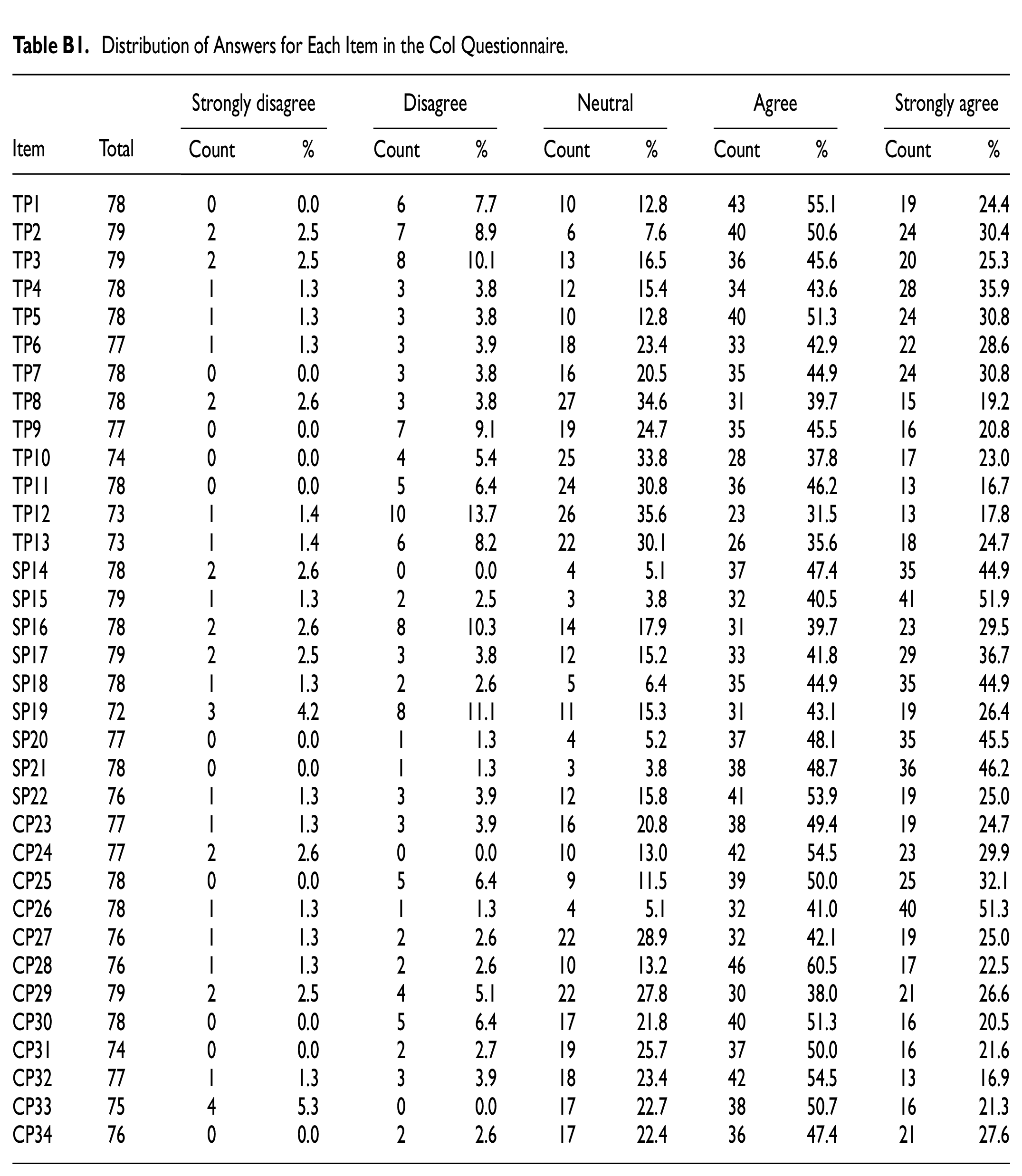
The distribution of the students’ responses to the CoI survey are summarized in Table 3 and Appendix B. In total, 75.6% of the responses were positive (Agree or Strongly Agree), 6.2% were negative (Disagree or Strongly Disagree), and 18.2% were neutral. In addition, 2.6% of the responses were missing. SP had the most positive responses (84.4%), and TP had the most negative responses (7.9%). Third-year students had both the highest percentage of positive responses (79.7%) and the lowest percentage of negative responses (3.3%). First-year students had the lowest percentage of positive responses (73.5%) and second-year students had the highest percentage of negative responses (8.5%). First-year students had the highest percentage of missing responses (4.0%).
The Distribution of Responses by CoI Presence and Study Group.

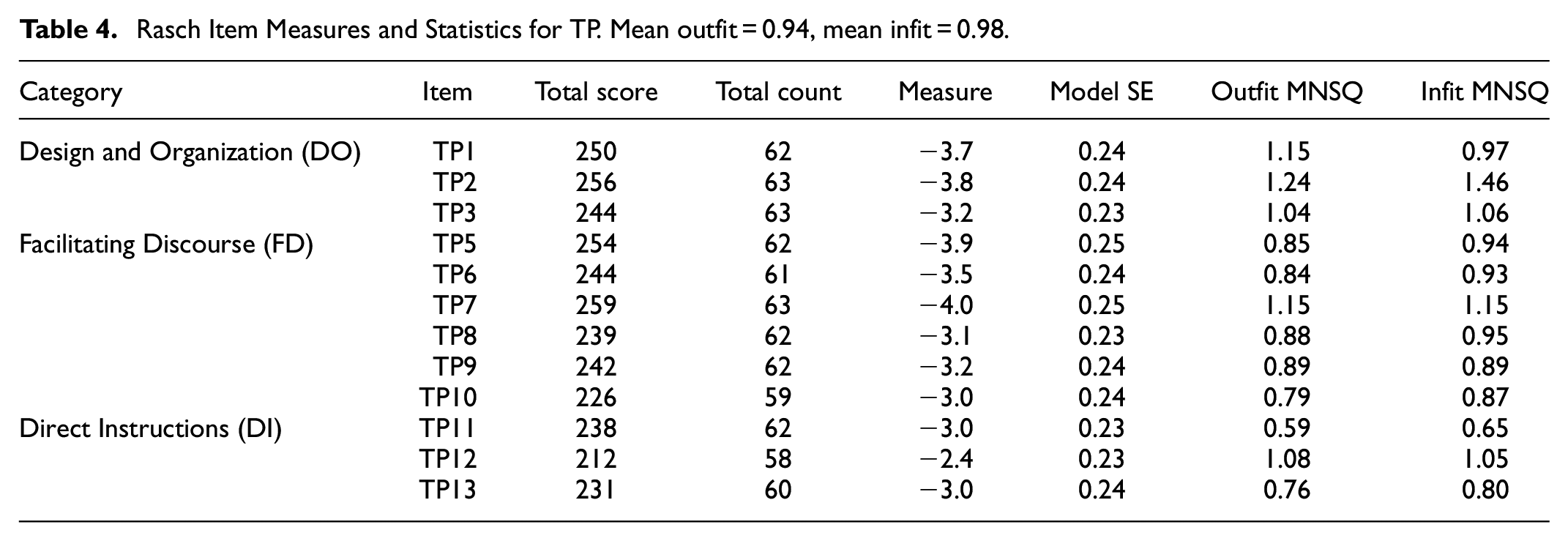
Three Rasch Rating Scale Models were constructed from the CoI survey data, one for each CoI element. The measures and statistics of the final TP, SP, and CP models are presented in Tables 3 to 5. The total score indicates the sum of the numerical Likert scores and the total count is the number of responses. The measure indicates the Rasch item difficulty measure in logit units. Model SE is the standard error of the item measure in logit units. Outfit and infit MNSQ indicate outlier and inlier sensitive MNSQ fit statistics.
Rasch Item Measures and Statistics for TP. Mean outfit = 0.94, mean infit = 0.98.
Rasch Item Measures and Statistics for SP. Mean outfit = 0.87, mean infit = 0.93.

Teaching Presence
The Rasch model for TP is summarized in Table 4. Item TP4 (“The instructors clearly communicated important due dates and time frames for learning activities”) exhibited a possible misfit with the Rasch model based on the outfit MNSQ values and was excluded from the model. Likewise, 16 students were excluded from the final model based on the same criteria. The person and item separation reliabilities were 0.92 and 0.94, respectively.
Figure 2 presents the item difficulty estimates in the TP category. Items associated with Direct Instructions (DI) are on the higher end of the continuum, indicating that these items were the most difficult for the students to agree with relative to the other items on SP. Item TP12 had the highest item difficulty estimate and also the most negative (Strongly Disagree or Disagree) responses within the TP category, as can be seen from Appendix B. Items TP10, TP13, and TP11 are clustered, indicating little difference in item difficulty between these items. Items TP5 and TP7, both associated with Facilitating Discourse, were the easiest to agree with by the students, indicated by lower item difficulty estimates.

Rasch item difficulty estimates in TP. Higher estimates indicate items that were relatively harder to agree with by the students.
Social Presence
Table 5 summarizes the Rasch model for SP. Item SP19 (“I felt comfortable interacting with team members from other teams”) and 12 students were excluded from the model based on the outfit MNSQ values. The person and item separation reliabilities for the SP model were 0.85 and 0.90, respectively.
Figure 3 presents the items difficulty estimates in the SP category. Items related to online communication (SP16, SP22, SP17) were the most difficult to agree with by the students relative to the other items on SP. Highlighting the relative nature of the item difficulty estimates, 69% of the responses to item SP16 were positive (Agree or Strongly Agree), as can be seen from Appendix B. Items associated with each CoI subcategory, that is, Personal/Affective (PA), Open Communication (OC), and Group Cohesion (GC) are scattered across the continuum. Item SP15 was the easiest to agree with by the students, followed by a cluster of items SP21, SP20, SP14, and SP18.

Rasch item difficulty estimates in SP. Higher estimates indicate items that were relatively harder to agree with by the students.
Cognitive Presence
The summary of the CP model is presented in Table 6. Item CP27 (“Brainstorming and finding relevant information helped me resolve content-related questions”) and 16 students were excluded from the final model based on outfit MNSQ values. The person and item separation reliabilities were 0.90 and 0.91, respectively.
Rasch Item Measures and Statistics for CP. Mean outfit = 0.98, mean infit = 1.01.

Figure 4 presents the item difficulty estimates in the CP category. Items related to Resolution (R) were relatively harder for the student to agree with, CP32 having the highest item difficulty estimate. Item CP26 related to the versatile use of information sources was the easiest for the students to agree with. Items associated with Triggering Events (TE) related to the students’ interest and motivation were also easy to agree with by the students.
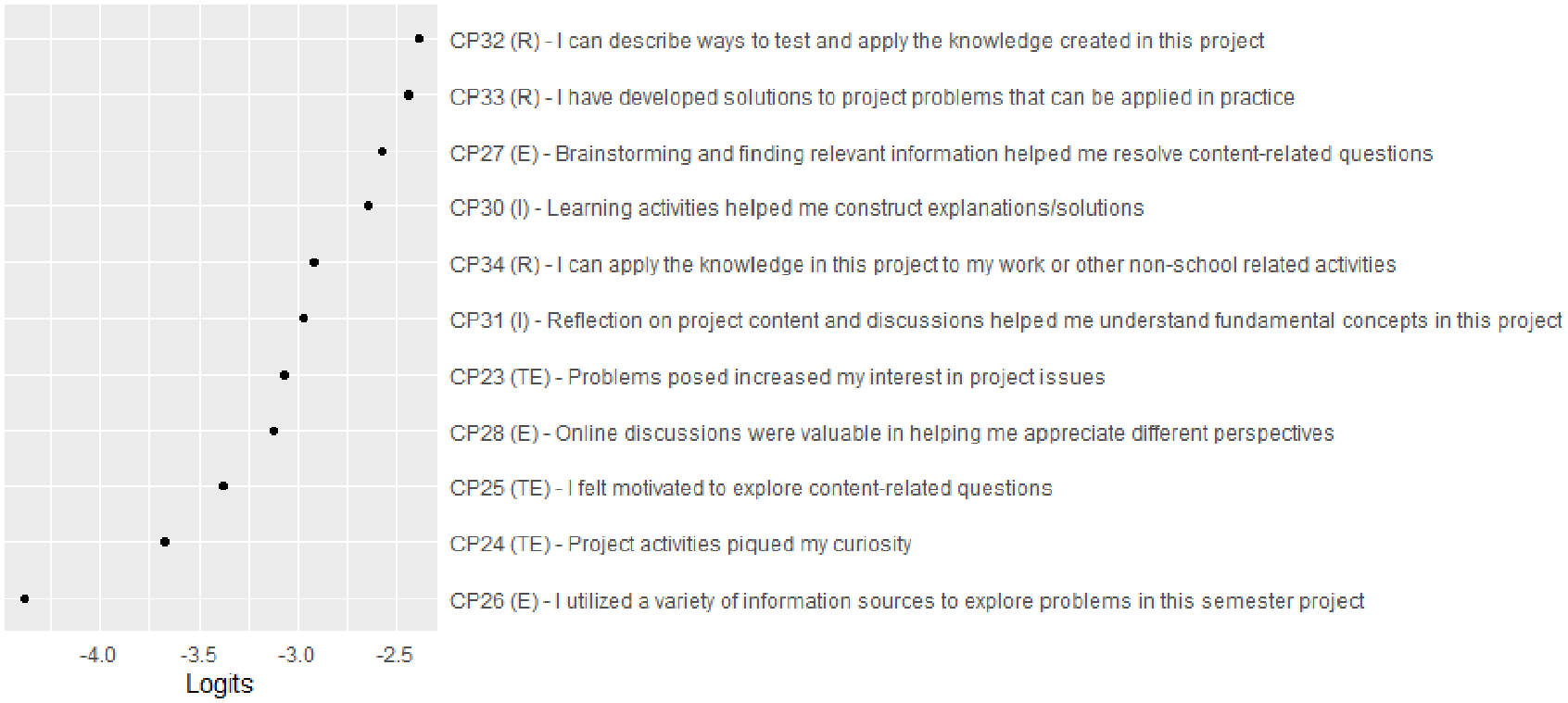
Rasch item difficulty estimates in CP. Higher estimates indicate items that were relatively harder to agree with by the students.
Content Analysis of the Open Questions
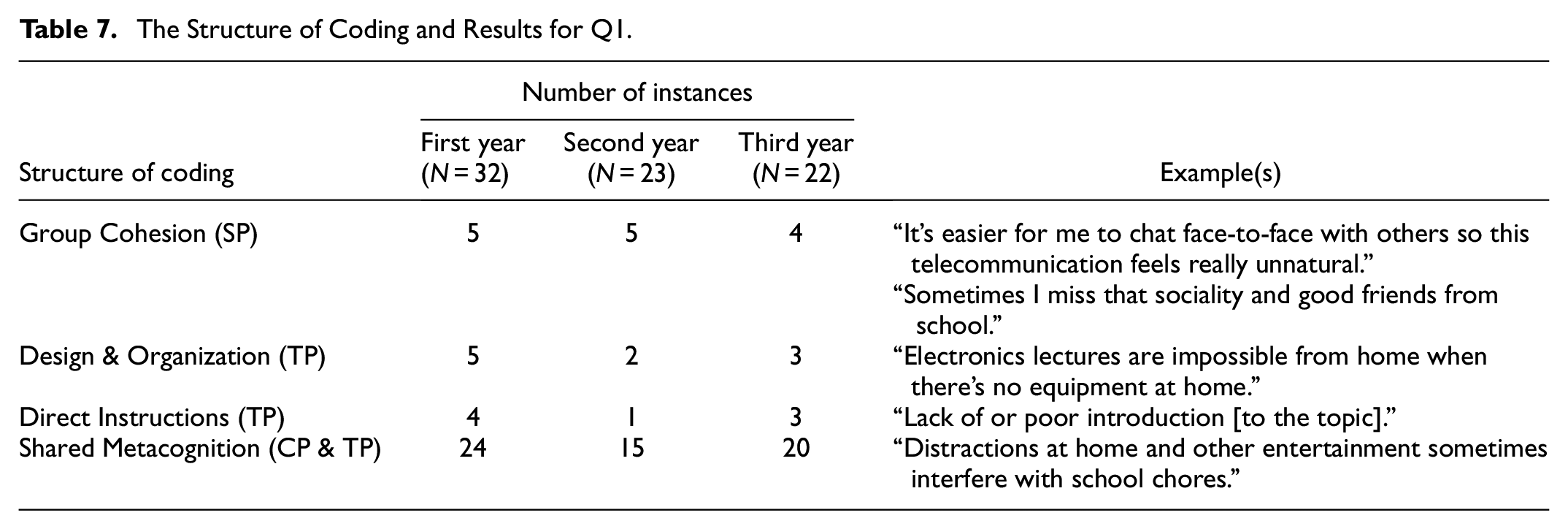
The results of the content analysis of Q1 to Q3 are presented in Tables 7 to 9, after which the students’ responses to Q4 are summarized. Tables also include the structure of coding following the CoI framework.
The Structure of Coding and Results for Q1.
The Structure of Coding and Results of Q2.

The Structure of Coding and Results of Q3.

The results of the content analysis of Q1 (“Which challenges have you experienced during the online learning period this spring?”) are presented in Table 6. The main challenges are associated with Shared Metacognition at the intersection of CP and TP with 59 (76.6%) instances. Students commented on challenges in management and scheduling, online learning as a learning strategy, as well as issues in motivation. Management and scheduling problems were related to for example, lack of daily routines, accumulation of tasks, home distractions, and other environmental stimuli. Online learning as a learning strategy was perceived to be for example, more numbing, requiring more time and initiative, and more challenging for learning through practice. Some responses suspected that the transition to online learning was the main reason for the loss of motivation. Other challenges were associated with Group Cohesion (14 instances, 18.2%) where communication issues and lack of social contacts posed the most issues, Design & Organization (10 instances, 13.0%) where issues included lack of equipment or problems in using them and Direct Instructions (seven instances, 9.1%) where students reported challenges related to lack of support and guidance and trouble using materials offered in English.
Table 8 summarizes the results of the content analysis of Q2 (“What worked well? What things or elements of the semester project would you keep in the future?”). Support and guidance, associated with Direct Instructions, appeared in 23 (29.9%) instances. The TCP with chat made it easier for the students to reach instructors and receive support. Students also found video records of lectures and support videos useful. Group Cohesion was related to 20 (26.0%) instances through team spirit and collaboration, with almost all mentioning MS Teams as the main reason for success. Shared Metacognition appeared in 18 (23.4%) instances in connection to for example, task management and scheduling and online learning due to the opportunity to better manage their own time and focus on peace, for instance.
The results of the content analysis of Q3 (“How would you develop the online learning/working approach?”) are summarized in Table 9. Nearly all ideas were related to the TP category. Ideas related to Design & Organization were mostly from first-year students and included more learning and support materials, better preparation from the instructors, and expanding the recording of the lectures to cover all activities. In Direct Instructions, the suggestions were focused on closer guidance. Ideas in the Facilitating Discourse category included closer interaction with the instructors as well as efficiency and versatility in the use of the platforms. In Group Cohesion, students expressed their wishes for improved collaborative learning. In addition to the results in Table 9 (11.7%) students stated that there was nothing to improve, and eight (10.4%) students said they did not know how to develop the online learning/working environment.
Students were also asked about their opinions on remote project progress and sprint reviews in Q4 (“How did you feel about the remote reviews?”). In total, 61 responses were interpreted as positive, five as neutral, seven as negative, and one included both positive and negative comments. The positive responses included ease and speed of the reviews as well as the possibility to share your screen and make better use of your own computer. Negative responses included the limited possibilities for demonstrating product features and one comment sought more critical feedback from the instructors.
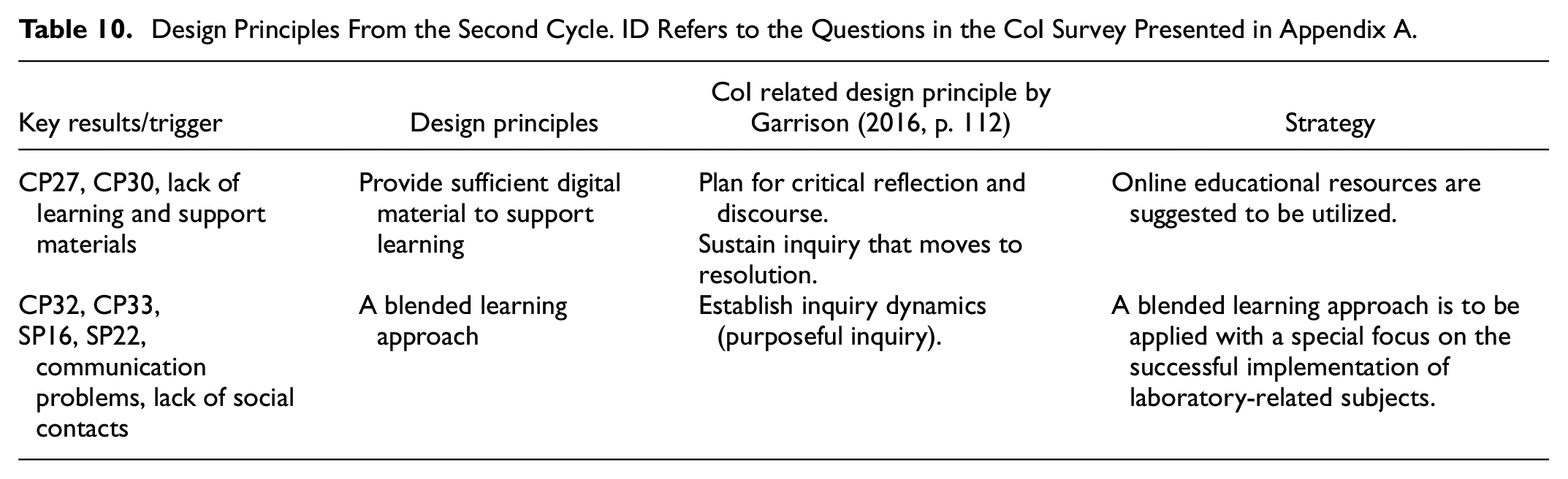
The results of this second cycle suggest that the setting was successful in the online environment and that most of the student responses indicate a positive learning experience in all three core elements of CoI. Overall satisfaction with the learning experience also increased in subsequent years being at its lowest in the first year of study. However, problems related to sociality in SP and shared metacognition at the intersection of TP and CP became more pronounced, as well as the application of knowledge and skills in practice in the CP category proved to be the most challenging. The students’ development proposals, on the other hand, were mainly focused on the TP category. The analysis and reflection phase of this second cycle contributed the design principles described in Table 10.
Design Principles From the Second Cycle. ID Refers to the Questions in the CoI Survey Presented in Appendix A.
As a result of the overall DBR study, a synthesized and summarized visual model of the design framework based on the CoI (Figure 5) can be presented. It illustrates the elements of the digital learning ecosystem in ICT engineering education that supports educational policies and embrace industry-specific emerging methods and practices.
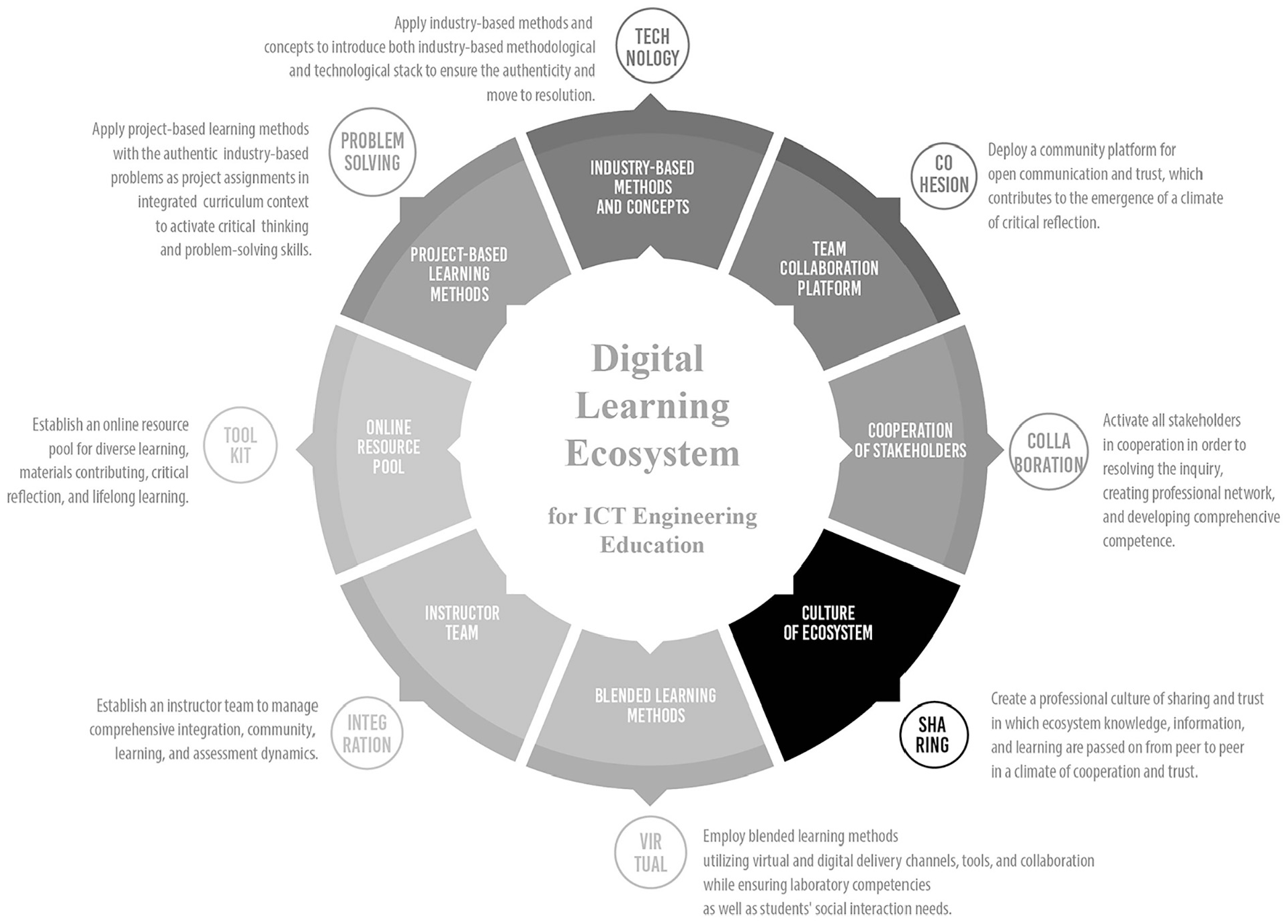
The design framework of digital learning ecosystem in ICT engineering education.
This visual model summarizes the design principles of both cycles of the DBR study, the first cycle described previously (Mielikäinen, 2022; Mielikäinen et al., 2023) and the second cycle of the DBR study described in the present study. The inner circle of the model represents eight design principles, each with a unique central characteristic that is applied to the digital learning ecosystem and displayed in the outer circle. Additionally, a brief and concise description of each design principle is provided on the outer circle to enhance the comprehensibility of the visual model.
Discussion
The purpose of this study was to gather students’ experiences in an online environment to refine design principles for a digital learning ecosystem in ICT engineering education as part of a broader DBR study. During the second cycle, the CoI framework was incorporated by applying Garrison’s (116, p. 112) CoI design principles to the three elements of CP, SP, and TP in the context of integrated PjBL in an online environment. To support the quantitative results produced by the Rasch rating scale analysis, qualitative data were also analysed through content analysis. CoI was used as an analysis framework in both type of data enabling interpretable comparisons between quantitative and qualitative results through the same scientific lens. Qualitative results supported numerical estimates by providing background information and explanations for quantitative results. The validity of this study has been sought to be improved by carefully reporting on study propositions, interventions, and findings, in order for readers to assess the trustworthiness and confirmability of the results, which correspond to Lincoln and Guba’s (1985, p. 290) criteria for trustworthiness (McKenney & Reeves, 2019, p. 260).
The overall results obtained in this DBR study suggest that the PjBL approach is perceived as a successful strategy by the students, which is in line with the empirical studies, such as Berselli et al. (2020), Chang and Yen (2021), and Coronado et al. (2021). Also, from a transformative perspective, in addition to understanding the evolution of global technology, students gain experiences of success, which increases confidence in their own abilities. The courage to come up with ideas and experiment in a trusting environment, as well as the understanding of the importance of cooperation and community as a resource for achieving goals, is increasing. With digitalization, project teams often work globally in a decentralized manner in industry, and communication takes place on collaboration platforms. COVID-19 has contributed to accelerating the adoption of these pragmatic approaches in both the industrial and scientific communities. However, the learning experience in the community needs to be looked at critically in different contexts.
In terms of TP, the role of the facilitator in keeping the project team committed and maintaining a dialog as well as in helping to make the right choices and solutions was the easiest to agree with. Based on the students’ open responses, chat support in TCP facilitated the availability and reachability of instructors. Recording and sharing lectures were perceived positively. It would also appears that the professionalism and technical competence of instructors has been valued, although open Industry 4.0 problems were not been tried or solved in advance by instructors. Instead, providing individual feedback on strengths and weaknesses in relation to project objectives was considered the most challenging as well as timing the feedback correctly. More interaction between instructors and students was also anticipated in the open responses. In particular, the results of the first-year students confirm the notion that at an early stage, however, the need for close contact is emphasized. Szeto (2015) states in his study of first-year engineering students that the importance of teaching presence is the most essential of the three elements of the CoI framework. Feedback was mainly provided in the context of progress or sprint reviews. In the meantime, instructors participated in project discussions, mainly in the form of technical support. The role of TP is essential, according to Garrison (2016, s. 117), to ensure the transition to the integration and resolution phase. However, increasing the amount of all discussion and feedback has a significant impact on teachers’ resources and coping, which was a concern for teachers based on the responses collected in the analysis and exploration phase of the first iteration of the broader DBR study (Mielikäinen, 2022). Further, students suggested adding learning materials, extending the recording of lectures to all instructors, better preparation, and more general information.
The students made extensive use of information sources to solve the problem. According to a study by Levy and Ramim (2017), instructors saw information acquisition and critical thinking as one of the most important skills a student should have to succeed in online learning. The project also aroused the students’ curiosity and motivated them to explore content issues and problems. Several studies have summed the enhanced motivation for the benefits of PjBL (see e.g., Guo et al., 2020; Hogue et al., 2011; Mills & Treagust, 2003; Shpeizer, 2019; Vasiliene-Vasiliauskiene et al., 2020). However, the responses in open questions did not address CP issues as success factors or problem areas. Based on the quantitative responses, students found resolution issues challenging, which emerged in the online setting described especially in the present study, in contrast to the first cycle of this DBR study, which in the blended learning setting, where the subsequent application of knowledge and skills was perceived as the second easiest to agree with. Some studies have presented PjBL-related challenges, for example, the uncertainty of the project assignment (Hussein, 2021) and a less rigorous understanding of engineering Fundamentals (Mills & Treagust, 2003). In the case of a completely online environment, studying engineering skills without physical experience in the laboratory can negatively affect about the Resolution, which would favor the choice of a blended learning approach by combining FTF and online activities (Garrison, 2016, pp. 100–108) for issues requiring laboratory work. Also, not everyone had the necessary equipment or components at home.
Under the structure of shared metacognition, issues at the intersection of TP and CP (Garrison, 2016, pp. 63–65) were particularly highlighted in open-ended responses. Students report a decrease in motivation, and they report for example, a lack of daily routines as well as challenges in concentration in the home environment. In that respect, the results of this study emphasize the found effect of shared metacognition in CoI. This is in line with for example, the systematic literature review by Rasheed et al. (2020) with the results on the challenges of the online component of blended learning, where self-regulation, as well as the challenges of student isolation, were also reported as challenges. Indeed, online environments require motivation and self-regulated learning (Park et al., 2020; Rasheed et al., 2020). Because motivation initiates, directs, and maintains activities controlling learning (Akyol & Garrison, 2011), it may be reflected in Resolution-related perspectives in CP. Lin et al. (2016) suggest group awareness and peer assistance to foster self-regulation. Also, studying project management, including task management and scheduling, is justified from the very beginning of the studies, contributing to the facilitation of the problems raised in the open answers in the management of study-related tasks and as well as in coping and life management.
Regarding SP, items related to Group Cohesion proved to be the easiest to agree with. Further, students would seem to have been able to create a clear picture of their team members as well as have a sense of belonging to a project team. These observations were also supported by open responses that team spirit was high, and collaboration was largely good. Management and scheduling were also perceived as positive in some responses, as the online approach made it easier to plan and manage one’s own time. The most difficult items to agree with were the claims that online discussions helped to develop a sense of collaboration and to feel comfortable when conversing through the online medium. Thus, online communication works collaboratively, but using it as the only form of communication compared to, for example, face-to-face communication does not necessarily have a positive effect on the learning experience. Especially in the first year, social contacts with other peers are likely to strongly promote group cohesion and reduce feelings of isolation when second and third-year students had already grouped and gotten to know each other. The open responses also suggested promoting group cohesion through collaborative learning. The results seem to indicate the need for social interaction and collaboration, which, according to Ngereja et al. (2020), suggests that knowledge acquisition, reflection, conceptualization, and testing (experience) can best be achieved through interaction. The TCP used can be compared to places of social interaction and networking (Rasheed et al., 2020), which, however, contributes positively to social presence and was perceived as a successful solution in open responses.
Limitations
Although this study was carried out according to the methodology recommended in educational research, certain limitations should be pointed out. This study has been conducted over one semester in a degree program of one university, which limits the generalizability of the results. Alternative disciplines may yield different results when replicating the setting of the present study. Furthermore, a modest sample size might influence the generalizability as well as the reproducibility of the item difficulty hierarchy. It should be noted that while we utilized CoI questionnaires and the Rasch Model as tools for collecting and analysing experiences, our primary focus in this paper was not to refine or further develop them. Translating CoI questionnaire items from English to Finnish may also have changed the nuances or even the meaning of the items. Lastly, attributing the results to the online approach is not without problems as multiple factors, such as the teachers, project topic, team members, or the COVID-19 pandemic may have impacted the results. DBR cannot claim causality with the same convincing rigor as randomized controlled trials (Bakker & van Eerde, 2015).
Conclusions
This paper describes the second cycle of DBR study, mapping the experiences of students with PjBL and an integrated curriculum in a fully online environment. The present study was part of a broader DBR study to develop a design framework alowith accompanying design principles for the digital learning ecosystem in ICT engineering education. The PjBL-based solution of the digital learning ecosystem also successfully incorporated industry presence in the setting. The students’ experiences were analysed through the theoretical lens of the CoI framework with the Rasch Rating Scale Model and content analysis. The Rasch Rating Scale Model was used to produce a hierarchy of item difficulties. The phenomena behind the experiences were mapped out with a few open questions through content analysis. Finally, the presented visual model of the design framework of the design principles for the digital learning ecosystem based on the CoI framework is presented for further discussions and research. Implications are not limited to ICT engineering education but also extend across other areas of engineering and disciplinary fields.
Footnotes
Appendix A
Open questions.

| Q1 | Which challenges have you experienced during the online learning period this spring? |
| Q2 | What worked well? What things or elements of the semester project would you keep in the future? |
| Q3 | How would you develop the online learning/working approach? |
| Q4 | How did you feel about the remote reviews? |
Source. Adapted from Arbaugh et al. (2008). Copyright 2008 by Elsevier. Adapted with permission. Also adapted from Caskurlu (2018). Copyright 2018 by Elsevier. Adapted with permission.
Adapted from Developing a community of inquiry instrument: Testing a measure of the Community of Inquiry framework using a multi-institutional sample by J. B. Arbaugh et al., 2008, The Internet and Higher Education, 11(3-4), pp. 133-136 (10.1016/j.iheduc.2008.06.003). Copyright 2008 by Elsevier. Adapted with permission.
Also adapted from Confirming the subdimensions of teaching, social, and cognitive presences: A construct validity study by S. Cascurlu, 2018, The Internet and Higher Education, 39, p. 1-12 (10.1016/j.iheduc.2018.05.002). Copyright 2018 by Elsevier. Adapted with permission.
Appendix B
Distribution of Answers for Each Item in the CoI Questionnaire.
| Item | Total | Strongly disagree | Disagree | Neutral | Agree | Strongly agree | |||||
|---|---|---|---|---|---|---|---|---|---|---|---|
| Count | % | Count | % | Count | % | Count | % | Count | % | ||
| TP1 | 78 | 0 | 0.0 | 6 | 7.7 | 10 | 12.8 | 43 | 55.1 | 19 | 24.4 |
| TP2 | 79 | 2 | 2.5 | 7 | 8.9 | 6 | 7.6 | 40 | 50.6 | 24 | 30.4 |
| TP3 | 79 | 2 | 2.5 | 8 | 10.1 | 13 | 16.5 | 36 | 45.6 | 20 | 25.3 |
| TP4 | 78 | 1 | 1.3 | 3 | 3.8 | 12 | 15.4 | 34 | 43.6 | 28 | 35.9 |
| TP5 | 78 | 1 | 1.3 | 3 | 3.8 | 10 | 12.8 | 40 | 51.3 | 24 | 30.8 |
| TP6 | 77 | 1 | 1.3 | 3 | 3.9 | 18 | 23.4 | 33 | 42.9 | 22 | 28.6 |
| TP7 | 78 | 0 | 0.0 | 3 | 3.8 | 16 | 20.5 | 35 | 44.9 | 24 | 30.8 |
| TP8 | 78 | 2 | 2.6 | 3 | 3.8 | 27 | 34.6 | 31 | 39.7 | 15 | 19.2 |
| TP9 | 77 | 0 | 0.0 | 7 | 9.1 | 19 | 24.7 | 35 | 45.5 | 16 | 20.8 |
| TP10 | 74 | 0 | 0.0 | 4 | 5.4 | 25 | 33.8 | 28 | 37.8 | 17 | 23.0 |
| TP11 | 78 | 0 | 0.0 | 5 | 6.4 | 24 | 30.8 | 36 | 46.2 | 13 | 16.7 |
| TP12 | 73 | 1 | 1.4 | 10 | 13.7 | 26 | 35.6 | 23 | 31.5 | 13 | 17.8 |
| TP13 | 73 | 1 | 1.4 | 6 | 8.2 | 22 | 30.1 | 26 | 35.6 | 18 | 24.7 |
| SP14 | 78 | 2 | 2.6 | 0 | 0.0 | 4 | 5.1 | 37 | 47.4 | 35 | 44.9 |
| SP15 | 79 | 1 | 1.3 | 2 | 2.5 | 3 | 3.8 | 32 | 40.5 | 41 | 51.9 |
| SP16 | 78 | 2 | 2.6 | 8 | 10.3 | 14 | 17.9 | 31 | 39.7 | 23 | 29.5 |
| SP17 | 79 | 2 | 2.5 | 3 | 3.8 | 12 | 15.2 | 33 | 41.8 | 29 | 36.7 |
| SP18 | 78 | 1 | 1.3 | 2 | 2.6 | 5 | 6.4 | 35 | 44.9 | 35 | 44.9 |
| SP19 | 72 | 3 | 4.2 | 8 | 11.1 | 11 | 15.3 | 31 | 43.1 | 19 | 26.4 |
| SP20 | 77 | 0 | 0.0 | 1 | 1.3 | 4 | 5.2 | 37 | 48.1 | 35 | 45.5 |
| SP21 | 78 | 0 | 0.0 | 1 | 1.3 | 3 | 3.8 | 38 | 48.7 | 36 | 46.2 |
| SP22 | 76 | 1 | 1.3 | 3 | 3.9 | 12 | 15.8 | 41 | 53.9 | 19 | 25.0 |
| CP23 | 77 | 1 | 1.3 | 3 | 3.9 | 16 | 20.8 | 38 | 49.4 | 19 | 24.7 |
| CP24 | 77 | 2 | 2.6 | 0 | 0.0 | 10 | 13.0 | 42 | 54.5 | 23 | 29.9 |
| CP25 | 78 | 0 | 0.0 | 5 | 6.4 | 9 | 11.5 | 39 | 50.0 | 25 | 32.1 |
| CP26 | 78 | 1 | 1.3 | 1 | 1.3 | 4 | 5.1 | 32 | 41.0 | 40 | 51.3 |
| CP27 | 76 | 1 | 1.3 | 2 | 2.6 | 22 | 28.9 | 32 | 42.1 | 19 | 25.0 |
| CP28 | 76 | 1 | 1.3 | 2 | 2.6 | 10 | 13.2 | 46 | 60.5 | 17 | 22.5 |
| CP29 | 79 | 2 | 2.5 | 4 | 5.1 | 22 | 27.8 | 30 | 38.0 | 21 | 26.6 |
| CP30 | 78 | 0 | 0.0 | 5 | 6.4 | 17 | 21.8 | 40 | 51.3 | 16 | 20.5 |
| CP31 | 74 | 0 | 0.0 | 2 | 2.7 | 19 | 25.7 | 37 | 50.0 | 16 | 21.6 |
| CP32 | 77 | 1 | 1.3 | 3 | 3.9 | 18 | 23.4 | 42 | 54.5 | 13 | 16.9 |
| CP33 | 75 | 4 | 5.3 | 0 | 0.0 | 17 | 22.7 | 38 | 50.7 | 16 | 21.3 |
| CP34 | 76 | 0 | 0.0 | 2 | 2.6 | 17 | 22.4 | 36 | 47.4 | 21 | 27.6 |
Appendix C
The Coding Structure for Open Questions Q1 to Q3.
Declaration of Conflicting Interests
The author(s) declared no potential conflicts of interest with respect to the research, authorship, and/or publication of this article.
Funding
The author(s) disclosed receipt of the following financial support for the research, authorship, and/or publication of this article: The funding for this publication was provided by Lapland University of Applied Sciences, covering the publication fee and the expenses for language editing.
