



Abstract
Global warming (GW) refers to the gradual increase in Earth’s average surface temperature caused by human activities. This phenomenon has far-reaching consequences that affect the environment, society, and economy and has created a multitude of challenges for the wine industry, affecting grape cultivation, wine production, aging, and quality management. To analyze the negative impact of GW on the wine industry and to examine the equilibrium that maximizes welfare and profit in the face of climate change. A mathematical model that considers the various stages of wine production to examine the wine industry’s equilibrium that maximizes welfare and profit. Global warming impacts the wine industry’s equilibrium, causing measurable distortions and an inefficient market solution. However, our analysis also indicates that adaptation to GW is possible by adopting and adjusting new agricultural practices. Our findings suggest that GW has a notable negative impact on the wine industry. Winemakers should consider adapting their agricultural practices. In addition, policymakers need to take action to mitigate the effects of climate change on the wine industry. Policymakers should promote the adoption of renewable energy sources and sustainable farming practices in the wine industry and provide financial incentives and regulatory support to maximize welfare.
Plain Language Summary
Global warming is a phenomenon that refers to the gradual increase in Earth’s average surface temperature caused by human activities. This phenomenon has far-reaching consequences that affect the environment, society, and economy and has created a multitude of challenges for the wine industry. The wine industry faces many problems due to global warming, affecting grape cultivation, wine production, aging, and quality management. To analyze the negative impact of global warming on the wine industry and to examine ways to maximize welfare and profit in the face of climate change, we used a mathematical model that considers the various stages of wine production. Our analysis shows that global warming affects the wine industry’s equilibrium, causing measurable distortions and an inefficient market solution. However, our analysis also indicates that adaptation to global warming is possible by adopting and adjusting new agricultural practices. This means winemakers can adjust their agricultural practices to adapt to the changing climate and still produce high-quality wine. Our findings suggest that global warming has a notable negative impact on the wine industry. To address this issue, policymakers should promote the adoption of renewable energy sources and sustainable farming practices in the wine industry. They should also provide financial incentives and regulatory support to maximize welfare.
Introduction
Climate change is a multifaceted problem that significantly impacts various sectors and systems, including health, ecosystems, food supply, and energy use. As such, it requires interdisciplinary attention from experts in different fields (Huber et al., 2014; Wilby et al., 2009). Global warming (GW) is an urgent matter that requires immediate action (Al-Ghussain, 2019; Anderson et al., 2016; Mehmood et al., 2020; Mella, 2022; Miralles-Quirós & Miralles-Quirós, 2022). The impact of climate change significantly affects the viability of agricultural production. Temperatures have increased, precipitation patterns have changed, and frequent extreme weather events have taken place, all leading to negative consequences on crop yields, soil quality, and water availability, and thereby affecting food security (Jones, 2005; G. S. Malhi et al., 2021; Moonen et al., 2002; Nemani et al., 2001; Pareek et al., 2020). The wine industry is also affected by climate change, as it impacts the growth of vines, wine production, wine quality, and grape quality (Fraga, 2020; Gutiérrez-Gamboa et al., 2021; Piña-Rey et al., 2020; Santos et al., 2020).
Grapevines thrive in a diverse range of climates across six continents. These climates encompass a variety of environments. Consequently, the primary environmental constraints for grape production, as well as the range and magnitude of environmental factors affecting growth, vary significantly from region to region, resulting in a different impact on grape composition, such as changes in sugar and acidity levels and other components, like polyphenols or aroma compounds. Generally, climatic changes affect grape varieties differently (Schultz, 2016), so the economic impact of climatic changes is challenging to assess. Given the complexity and variation of the impact of global warming on grapes, vines, and wine, it is necessary to make certain assumptions when performing an economic analysis in light of global warming effects.
This paper presents a comprehensive economic analysis of the impact of global warming on the wine industry. It highlights the negative impact of climate change on the wine industry and provides an overview of the related challenges faced by grape and wine producers. The paper takes an original and unique positive approach to the influences of climate factors on the wine industry, by proposing a novel model that describes the trajectory of wine production in terms of planting, harvesting, aging, and consumption, and focuses on maximizing both profit and welfare.
The paper suggests that policymakers and businesses in the wine industry should take a proactive approach to adapting to the challenges of climate change in order to ensure the industry’s long-term sustainability and profitability. For policymakers, the paper highlights the importance of developing policies that support the wine industry’s transition to a more sustainable and climate-resilient future. This includes funding research and development of new technologies; implementing regulations to reduce greenhouse gas emissions; offering financial incentives for winemakers to adopt sustainable practices; and promoting the adoption of renewable energy by highlighting the environmental impact on the wine industry and the potential benefits of transitioning to renewable energy sources.
For businesses in the wine industry, the paper suggests that adapting to climate change can provide a competitive advantage and can ensure long-term sustainability. This includes investing in climate adaptation measures, such as irrigation systems and sustainable farming practices, developing new products, and utilizing new marketing strategies that cater to changing consumer preferences and expectations.
Literature Review
Global Warming
Climate change has a significant impact on various sectors and systems, including health, ecosystems, food supply, and energy use. Therefore, it is a complex problem that demands interdisciplinary attention (Huber et al., 2014; Wilby et al., 2009).
The impact of global warming (GW) is of utmost urgency and requires immediate action (Al-Ghussain, 2019; Anderson et al., 2016; Mehmood et al., 2020; Mella, 2022; Miralles-Quirós & Miralles-Quirós, 2022). Greenhouse gases such as carbon dioxide (CO2), methane (CH4), nitrous oxide (N2O), and water vapor—all caused by human activities such as excessive use of fossil fuels—contribute to an increase in the Earth’s average surface temperature (Al-Ghussain, 2019; Fawzy et al., 2020), which leads to an increase in the intensity of extreme weather conditions such as droughts, hurricanes, tropical storms, heat waves, floods (Dosio et al., 2018; Ginis, 2021; Knutson et al., 2021; Lee et al., 2021), snow, and ice melting. In addition, researchers are noticing changes in the chemistry of water, which affect marine life cycles (Riebeek, 2010; Yadav et al., 2020) and the growth and survival of plants, animals, and crops (Dosio et al., 2018; Ginis, 2021; Knutson et al., 2021; Lee et al., 2021). Global warming severely affects human health, including increased reports of fainting, heatstroke, and cramps (Ahima, 2020; Gulzar et al., 2021; Patz & Olson, 2006; Somerville et al., 2012). Therefore, it is crucial to have a better understanding of climate change and its potential effects on natural systems and humans (Y. Malhi et al., 2020; Pörtner et al., 2022). It is essential to implement mitigation and adaptation strategies simultaneously to tackle global warming effectively. This approach is not only the most scientifically sound but also the most economically viable (Al-Ghussain, 2019).
Climate Change Impacts Agriculture
The viability of agricultural production is significantly affected by the impact of climate change. In recent years, there has been an increase in temperature, changes in precipitation patterns, and more frequent extreme weather events, all of which have consequences on crop yields, soil quality, and water availability (Jones, 2005; G. S. Malhi et al., 2021; Moonen et al., 2002; Nemani et al., 2001; Pareek et al., 2020).
Climate Change Effects on Vineyards and Wine
The influence of climate change on vineyard production quality has already been observed in vineyards all over the world (Droulia & Charalampopoulos, 2021; Gutiérrez-Gamboa et al., 2021; Quénol, 2014; Santos et al., 2020). A long history of grape growing has resulted in the finest wines being associated with geographically distinct vine-growing areas. Climate change causes geographical displacements and expansion from areas that were suitable for grapevine cultivation, but are no longer (Droulia & Charalampopoulos, 2021). The overall effects of climate on agriculture will ultimately depend on the physiology of the plant, seasonality, and intensity of GW changes (Butterfield et al., 2000; Fatima et al., 2020; Liu et al., 2022; McCarthy et al., 2001). The importance of understanding the effects of climate change on agriculture is particularly evident with the cultivation of vines. Climate has a powerful influence on different seasons of vine phenology and grape composition (van Leeuwen et al., 2004). Climate controls vine growth, physiology, yield, and composition, determining wine attributes and typicity (Santos et al., 2020). Solar radiation, heat buildup, extreme temperatures, precipitation, winds, extreme weather events such as hail, and the length and temperatures of the growing season are all critical factors that affect the ability to ripen grapes to optimal levels of sugar, acidity, and taste (Hewer & Brunette, 2020; Jones, White et al., 2005; Piña-Rey et al., 2020).
Climate Change and Wine—Economic Implications
Wine is a unique agricultural product that can be particularly interesting for economic analyses, especially with respect to climate change (Ashenfelter & Storchmann, 2016). Weather conditions in the grape-growing regions significantly impact the quality and quantity of wine produced, ultimately determining the prices and revenues (e.g., Ashenfelter, 2010; Ashenfelter & Storchmann, 2010). Grape-growing conditions determine the longevity of wine. Unlike most other agricultural products, wine can be stored for a very long time, and in some cases, it holds its nominal value and grows in absolute value with age (e.g., Fogarty, 2010; Fogarty & Sadler, 2014; Masset & Henderson, 2010; Sanning et al., 2008). Since grape yields are highly sensitive to weather conditions, changing climate will affect the prices, quality, and quantity of wine produced, as well as profits and revenues (Gutiérrez-Gamboa & Moreno-Simunovic, 2019). Adaptation opportunities are likely to come up, but implementation will be slow since it takes several years to reach total production. Therefore, short-term losses are sometimes unavoidable (e.g., Gladstones, 1992).
Adaptive Strategies for Vineyard Management
Climate change adaptation is essential for the future of agriculture, a particularly vulnerable economic sector that heavily relies on weather and climatic conditions (Naulleau et al., 2020). Climate change adaptation can broadly be defined as the set of actions and processes societies must take to limit the negative impacts of the changes and maximize their beneficial effect (Carter, 1996). In the case of grape growing, the potential adaptation levers are numerous, encompassing both the temporality of technical operations along the production chain—including planting, annual crop management, winemaking, spatial variations due to existing diversity of cropping systems (Droulia & Charalampopoulos, 2021; Fraga, 2020; Gutiérrez-Gamboa et al., 2021; Santos et al., 2020; Viguie et al., 2014). Therefore, strategies aimed at sustaining yield and quality must be developed (Jogaiah, 2023). These strategies can be short-term, aiming to optimize grapevine growth and development, or long-term, aiming to create suitable management practices before critical threshold levels of some climatic parameters are reached (van Leeuwen & Darriet, 2016). Long-term strategies include site-specific planting choices, which allow an increase in the viticultural area under a particular climate. Short-term strategies include flexible management practices that enable vine productivity to be adjusted to specific local climatic conditions, such as water management, soil management, nutrient management, and harvest and post-harvest management (Naulleau et al., 2020).
Wine Sustainability Consumer Awareness
Despite the great relevance of sustainable development (see Ali et al., 2023; Asif et al., 2023; Ali et al., 2023), there is a lack of a unified approach toward sustainable viniculture, as pointed out by Baiano (2021). Sustainable wine production has gained the interest of both consumers and producers, as noted by Fabbrizzi et al. (2021). Wine sustainability is implemented in all stages of the wine production process, including wine growing, wineries, distribution chain, and waste management. Given the increasing impact of global warming on grape and wine production due to extreme weather events, wineries can take measures to improve the sustainability of the entire wine sector. They can make structural changes in the vineyard, adopt professional and systematic sustainability management practices, use renewable resources, and recycle, among other things, as suggested by Jobin Poirier et al. (2021). In recent years, consumers have become more conscious of the environmental, health-related, and social impact of the products they purchase. While various theoretical approaches have been used to understand “green” purchasing behavior, only psychological criteria have been found to correlate with green purchasing behavior strongly. Therefore, these criteria effectively identify environmentally conscious consumers, as highlighted by Dangelico and Vocalelli (2017). According to Sogari et al. (2016), consumers who have positive attitudes toward sustainable wine and hold high environmental protection beliefs are more likely to pay for sustainable wine.
Government Policies and Incentives
There is a growing conversation about the responsibility of governments in addressing the negative impact of environmental practices and the depletion of natural resources (Schimmenti et al., 2016). As a result, policymakers and consumer advocacy groups are urging companies to prioritize economic, environmental, and social values rather than simply striving for increased profit (Caracciolo et al., 2016; Cembalo et al., 2016; A. Lombardi et al., 2015; Migliore et al., 2015). The wine industry has taken action by implementing sustainable wine production initiatives (Borsellino et al., 2016; Corbo et al., 2014; Zucca et al., 2009). In order to achieve sustainable outcomes that benefit society and minimize adverse effects, policymakers should make informed decisions and lead initiatives that promote sustainable development (P. Lombardi et al., 2013; Migliore et al., 2012; Rizzo & Lo Giudice, 2013;(Ramos, 2019; Trigo et al., 2023).
The Model
Viticulture is a vital agricultural industry with substantial economic significance (Costa et al., 2016; González-Barreiro et al., 2015). Environmental and geological conditions such as climate and soil, play a significant role in influencing the productivity of grapevines, grape and wine quality, and sensory attributes of wines (van Leeuwen & Seguin, 2006). These factors strongly impact the sale price of grapes, thereby affecting the income of winegrowers (Gutierrez-Gamboa & Moreno-Simunovic, 2019).
The timing of planting grapes and the subsequent months leading to wine production can vary significantly depending on several factors, including climate, grape variety, and local practices. However, the general timeline for grape cultivation and wine production in the present paper is shown in Figure 1:

The cycle of wine production.
Grape cultivation for wine production involves a planting period (in most regions, grapevines are planted during the spring, typically from March to May), followed by a several-year growing process, a grape harvest season (in most regions in late summer), and finally fermentation, aging, and bottling.
The present study employs a mathematical model that examines two distinct scenarios. The first scenario, which serves as the baseline, does not account for the impact of global warming. It draws on existing research on wine production, including the works of Goodhue et al. (2009) and Gonen et al. (2021), which does not incorporate global warming into mathematical models. The second scenario is a novel addition in that it considers the effects of global warming.
Weather and climate profoundly influence the production of quality grapes and wine. Solar radiation, heat accumulation, precipitation, wind, hailstorms, and extreme temperatures are among the weather and climate patterns that can impact grape development and wine quality. The length of the growing season and the temperature during this period are also crucial because they significantly affect the grapes’ ability to ripen to the desired levels of sugar, acid, and flavor for producing high-quality wines of a particular style. Jones, White et al. (2005) emphasized these factors’ importance as they influence the grape’s ability to reach the optimum level of maturity and produce wines with the desired quality. Solar radiation, heat accumulation, extreme temperatures, precipitation, wind, and extreme weather events such as hail are some of the weather and climate factors that have a significant impact on grape growth and wine quality. The length of the growing season and its temperature also play a crucial role in the ability to ripen grapes to optimum levels of sugar, acid, and flavor, which is vital in maximizing a given style of wine and its quality (Jones, White et al., 2005).
We focus on two types of adverse effects of GW:
Decrease in quantity and quality of the grapes (used in the next stage of winemaking) in traditional wine-growing regions due to the combined effects of increased temperature and water deficit (Gutiérrez-Gamboa et al., 2021; Hannah et al., 2013; Jones, White et al., 2005; Schultz, 2016; White et al., 2006).
Accelerated phenological stages for grapevines, including harvesting and growing (Fraga et al., 2012; García de Cortázar-Atauri et al., 2017; Jones & Davis, 2000; Jones, White et al., 2005; Ramos & Martinez de Toda, 2020; Schultz, 2000). These changes occur during the warmer period of grapevine growth and entail detrimental negative impacts on grape and wine quality (Comp’es & Sot’es, 2018).
The following section introduces wine grape production without GW and in the new environment with GW by examining quantity, quality, and price.
Case 1: Without Global Warming Influence
In this section, we will commence with the scenario in which the demand for grapes as a crucial input in wine production is unaffected by the influence of global warming.
The following defines several notations discussed in the first stage.
tg—is defined as the length of grape growing time, from the time of planting until delivery to the winery for the aging process.
R—is defined as the grape’s quality without GW conditions. It is defined as a parabolic function.

Z—represents the overall quality that is achieved for high-quality wine due to climate conditions, temperature, etc., that are affected by GW. Its shape is a parabolic function that is dependent on tg.

A—represents several more factors affecting the grape quality, when no GW exists.
We will embed Equation 1 within Equation 2, resulting in:

The final production of high-quality wine requires two stages of production processes. In the initial stage, the grapes are produced at a high quality and used as raw material. In a later stage, the aging process takes place, during which the wine is delivered to the vineyard to remain in barrels for a certain period of time. We assume a linear production function representing the relationship between high quality wine output, Q, and high-quality grape input, G, as introduced in Equation 4.

Q is defined as the quantity of high-quality wine that is produced from high-quality grapes and β represents the coefficient that measures a linear relationship between grape input and wine production in Equation 4.
Next, we introduce the marginal production cost in Equation 5.

where C is the marginal production cost of a high-quality wine and f represents the influence of grape quality on the marginal production function of this high-quality wine.
θ represents the marginal cost induced from additional production of high-quality wine.
The function of the producer’s total cost, TC, is shown in Equation 6.

The total cost (TC) is divided into two parts:
In the next stage of the model, the demand side of wine is defined as presented in Equation 7 below.

P represents the wine price that depends on the quantity of high-quality wine and the quality of wine resulting from grape quality in the growing period. The price also depends positively on wine aging duration. D represents the threshold price of high-quality wine. γ represents the coefficient that converts the high-quality wine into monetary terms. A represents the coefficient that converts the quality of grapes into monetary terms.
This leads to presentation of the objective function of profit maximization in Equation 8.

Based on Equations 3, 7 and 8 we get Equation 9.

Or

Based on Equation 10, we derive optimization of the F.O.C. with respect to three decision variables as presented in Equations 11, 13 and 15.

From Equation 11 we get the optimal level of grape production as follows:

From the F.O.C. derivative of profit,

Thus, the optimal growing time of grapes is shown in Equation 14 as follows:

From F.O.C. derivative of profit,

Thus, the optimal aging time of wine is in Equation 16 as follows:

Using Equations 12, 14, and 16 we can recalculate the values of optimal quantity of grapes without GW impact, in terms of the parameters of the independent variables.

Using Equations 4 and 17 we can recalculate the value of high-quality wine, Q.

Using Equations 3, 14, 16, and 18 in Equation 7, we get the price of high-quality wine in Equations 19 or 20.

Or

Based on the discussion above, we can calculate the value of the consumer surplus, CS.

Based on Equations 18 and 21, we can rewrite the level of consumer surplus (CS) in Equation 22 as follows:

Based on Equations 10, 14, 16 and 17, we can measure the profit, π, in Equation 23 as follows:

Or

Based on Equations 22 and 24, we can measure the social welfare, W, in Equation 25 as follows:

Case 2: Under the Influence of Global Warming and Associated Factors
In this section, we will examine the scenario in which the demand for grapes as a vital input in wine production is impacted by global warming.
The impact of global warming is characterized by the following equation:

B—represents several factors that negatively affect the quality of grapes excluding tg.
e—represents the coefficient that describes the influence of the grape growing period on the quality damage due to GW.
In contrast to the situation without GW, in which functions R and Z are identical, when GW exists, the following takes place:

We will embed Equations 1 and 26 within Equation 27, resulting in:

This is illustrated in Figure 2.
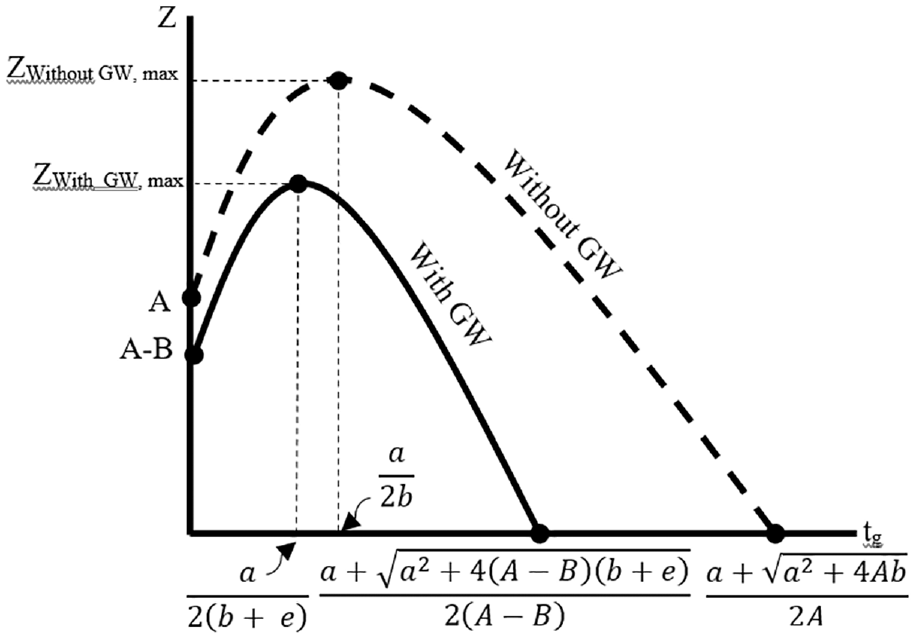
Grape’s quality in the case of existence of GW and without GW.
The quality trajectory of wine exhibits an initial phase of augmentation until it attains its zenith, whereupon it subsequently experiences a decline. As illustrated in Figure 2, the influence of global warming exerts a deleterious impact on wine quality. On one hand, it curtails the overall lifespan of wine, and on the other hand, it leads to a diminished quality of the final product as compared to conditions without the influence of global warming.
We will incorporate into the profit equation, denoted as Equation 8, the variable representing the quality of wine influenced by global warming, delineated in Equation 28, resulting in the following expression:

Or

Based on Equation 30 we derive optimization of the F.O.C. with respect to three decision variables as presented in Equations 31, 33 and 35.
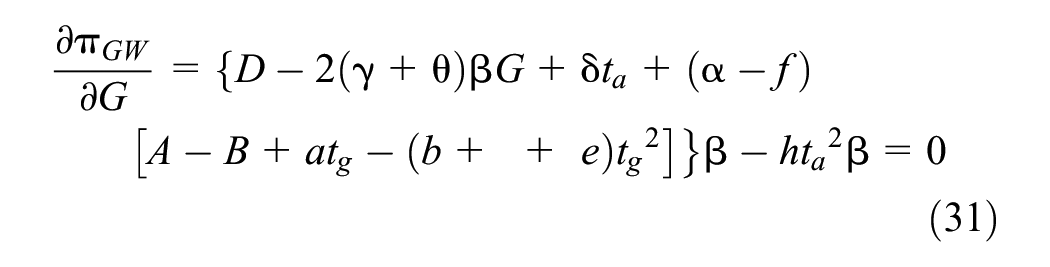
From Equation 31 we get the optimal level of grape production as follows:

From the F.O.C. derivative of profit,

Thus, the optimal growing time of grapes is shown in Equation 34 as follows:

From F.O.C. derivative of profit,

Thus, the optimal aging time of wine is in Equation 36 as follows:

Using Equations 32, 34, and 36 we can recalculate the values of optimal quantity of grapes under GW in terms of the parameters of the independent variables.

Using Equations 4 and 37 we can recalculate the value of high-quality wine,

Using Equations 3, 34, 36, and 38 in Equation 7, we get the price of high-quality wine in Equations 39 or 40.
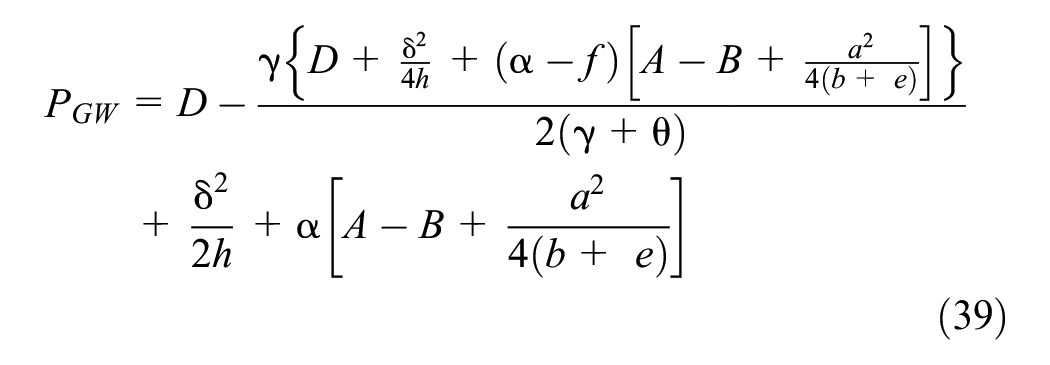

Based on Equations 38 and 21, we can rewrite the level of consumer surplus (CS) in Equation 41 as follows:

Based on Equations 30, 34, 36 and 37, we can measure the profit,

Or

Based on Equations 41 and 43, we can measure the social welfare,
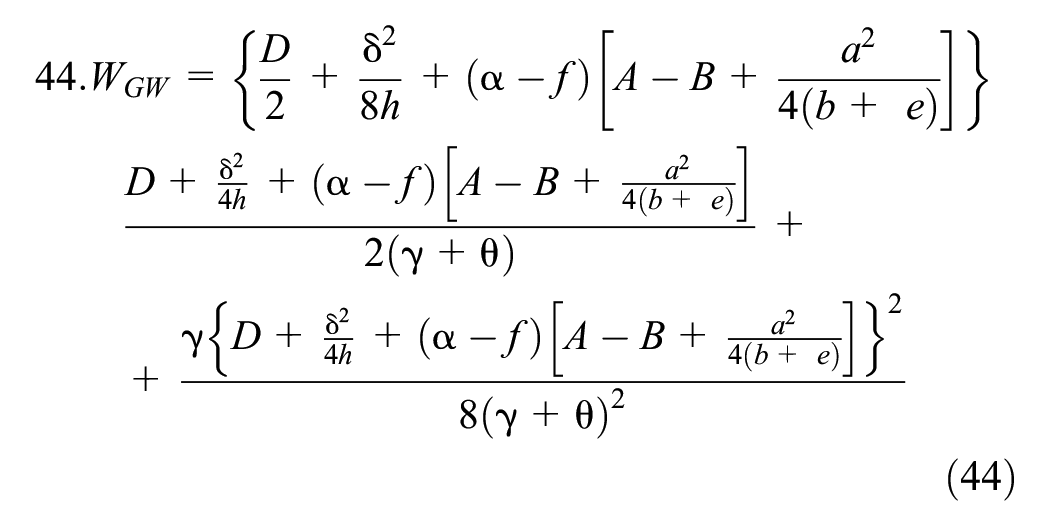
Comparative Analysis of Case 1 and Case 2
This section analyzes the effects of climate change on key variables in stylized models of grape and wine markets. Table 1 summarizes the equilibrium solutions for two model specifications: Case 1, which does not incorporate climate impacts, and Case 2, which does.
The Comparison Comparison Between the Parameters at Equilibrium Between the Cases With and Without the Existence of GW.

Several notable differences emerge when contrasting these two cases. Under climate change conditions, the lifespan and yields of grapes decline, resulting in lower aggregate grape output in Case 2 versus Case 1. The reduced grape supply consequently constrains wine production and availability, despite no direct climate impacts being modeled in the wine market. As a result, consumer surplus, firm profits, and overall welfare are uniformly lower in the climate change scenario compared to the baseline no-climate change case. To summarize, the introduction of climate change effects into stylized models generates measurable distortions away from the efficient market equilibrium. Key output and welfare metrics uniformly decline under simulated climate impacts. The analysis highlights the potential for climate change to introduce significant inefficiencies and losses in agricultural commodity markets.
A Practical Numerical Example
The model presented in the study is predicated upon a precise characterization of the social cost of global warming, which is modeled as a negative function during the era of global warming. It also considers the adverse impact of GW on the demand for grapes. Utilizing these functional relationships, we proceed to derive numerical solutions for two distinct scenarios: one in which global warming is absent (referred to as Case 1), and the other in which global warming is a prevailing environmental factor (referred to as Case 2).
The primary objective of this chapter is to elucidate the practical implications arising from the theoretical constructs and postulations, by employing a practical numerical example. The parameters that govern the underlying models are delineated as follows:
In the grape market: A = 10, a = 0.7 and b = 0.5.
In the wine market: D = 20, β = 0.7, f = 0.3, θ = h = δ = α = 0.4 and γ = 0.5.
Global warming effect: B = 9 and e = 0.9.
The approach adopted herein commences with the incorporation of these specified parameters into Model 1.
The objective function of profit maximization is:
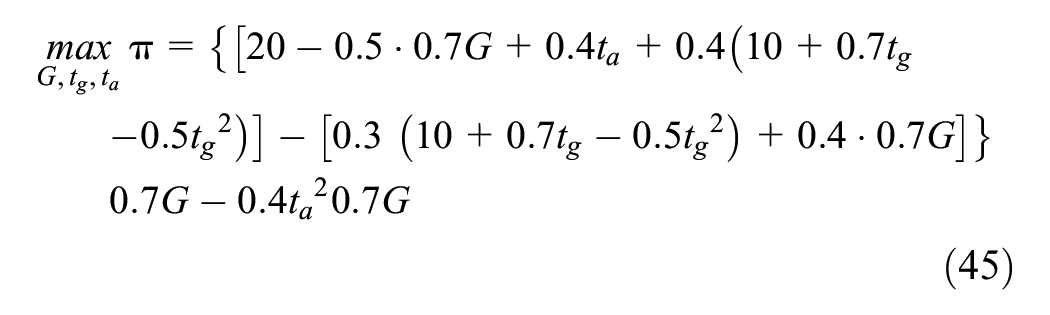
The outcomes pertaining to the decision variables, as accepted through the process of profit function derivation, are as follows:



The quantities of wine and their associated prices are as follows:


The total cost is:
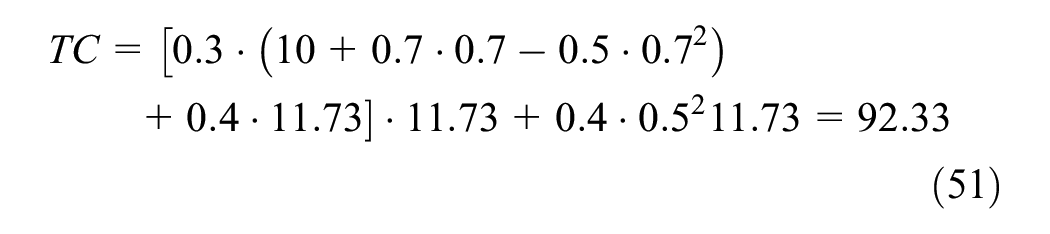
The profit, consumer surplus, and welfare measures are as follows:



We will now proceed with the incorporation of the variables into Model 2.
The objective function of profit maximization is:

The outcomes pertaining to the decision variables, as accepted through the process of profit function derivation, are as follows:


The quantities of wine and their associated prices are as follows:


The total cost is:

The profit, consumer surplus, and welfare measures are as follows:



To enhance the lucidity of the findings, this study has incorporated five figures, with particular attention given to the impact of variations in parameter D.
The findings depicted in the illustrations serve to substantiate and fortify the conclusions and propositions posited within the confines of the theoretical model. Following a comprehensive examination of the illustrations, it is evident that in all cases, the values pertaining to scenarios devoid of global warming (indicated by a black line) surpass those in scenarios marked by the presence of global warming (indicated by a gray line). More specifically, the quantities and prices of wine are greater in scenarios without global warming, than in those with global warming. Moreover, when considering aggregate variables such as profit, consumer surplus, and welfare, they are all higher in scenarios devoid of global warming. Furthermore, it is noteworthy that as the value of parameter D escalates, both scenarios exhibit an increase in all of these variables.
Our key findings are outlined in the discussion that follows.
Discussion
The wine industry may change significantly in the coming years due to global warming (Gutiérrez-Gamboa et al., 2021; Maciejczak & Mikiciuk, 2019). Producers may need to invest in new technologies and to adapt their production methods to mitigate the adverse effects of global warming on their crops. This may result in higher production costs and lower profits for vineyard owners. Overall, the wine industry will need to adapt to the challenges posed by global warming in order to continue producing high-quality wine for consumers (Gutiérrez-Gamboa et al., 2021; Maciejczak, 2020; Ollat et al., 2016).
By adopting a triple bottom line—profit, planet, and people approach—and by prioritizing sustainability and environmental responsibility, wineries can not only reduce their environmental impact and contribute to the well-being of local communities, but can also enhance their brand reputation, attract environmentally conscious consumers, and achieve long-term profitability and success (Gbejewoh et al., 2021).
Some of the most innovative and effective sustainable practices in the wine industry today include:
Organic and biodynamic farming: Many wineries are adopting organic and biodynamic farming practices, thereby prioritizing soil health, biodiversity, and natural pest control. These practices can reduce synthetic pesticides and fertilizers and promote the long-term health and productivity of vineyards.
Water conservation and management: Water is a critical resource for wine production, and many wineries are implementing water conservation and management strategies to reduce their water use and improve efficiency. This can include drip irrigation systems, recycling and reusing wastewater, and implementing rainwater harvesting systems.
Renewable energy: Some wineries are investing in renewable energy sources, such as solar and wind power, to reduce their reliance on fossil fuels and to minimize their carbon footprint. This can also help wineries to save money on energy costs in the long term.
Sustainable packaging: Many wineries are exploring sustainable packaging options, such as lightweight glass bottles, recycled paper labels, and alternative packaging materials like cans and boxes. This can reduce the environmental impact of wine packaging and appeal to environmentally conscious consumers (Sánchez-García et al., 2023).
To scale up and replicate these sustainable practices, wineries can share their experiences and success stories with other wineries and stakeholders and collaborate on research and development initiatives that will improve sustainability practices and technologies. Industry associations and certification programs can also play a role in promoting sustainable practices and providing guidance and support to wineries that are interested in adopting more sustainable practices. Additionally, policymakers can incentivize and support sustainable practices through regulations, funding, and other policy mechanisms, which can help to accelerate the adoption of sustainable practices across the industry (P. Lombardi et al., 2013; Migliore et al., 2012; Rizzo & Lo Giudice, 2013).
Consumers can play a significant role in promoting sustainability in the wine industry by making more informed purchasing decisions and supporting wineries that prioritize sustainable practices. One way that consumers can do this is by looking for eco-certifications and other sustainability labels on wine bottles, which indicate that the wine has been produced using environmentally friendly and socially responsible practices. Consumers can also research wineries and vineyards online to learn more about their sustainability practices and track records, and then choose to support those that prioritize sustainability and transparency. Additionally, consumers can reduce their environmental impact by choosing wines that are produced locally or regionally, which reduces transportation-related emissions, and by choosing wines that are packaged in eco-friendly materials, such as recycled glass or paper. By making more informed purchasing decisions and supporting sustainable wine producers, consumers can help to promote a more sustainable and resilient wine industry and can contribute to a more sustainable future for all (Capitello & Sirieix, 2019; Fabbrizzi et al., 2021; Palmieri & Perito, 2020).
Conclusions
Global warming impacts the wine industry’s equilibrium, causing measurable distortions and an inefficient market solution. The growing period has become shorter than the desired time, and lower-quality grapes receive the same aging treatment, leading to a decrease in quality and quantity of wine. However, adaptation to global warming is possible via the adoption of new grape varieties that are more resistant to heat and drought, and the adjustment of agricultural practices. The study highlights the need for policymakers to take action to mitigate the effects of climate change on the wine industry.
Limitations
Future Research
Following is a list of different areas of future research that could build upon the findings of the present study.
Firstly, researchers could focus on implementing the recommendations provided in the study. Policies could be designed and tested to support the wine industry’s transition to a more sustainable and climate-resilient future. The adoption of renewable energy sources and sustainable farming practices by wineries could also be investigated.
Secondly, it would be useful to investigate the impact of climate change on specific wine regions and grape varieties. While the present study presents a general analysis of the impact of climate change on the wine industry, future research could look into how climate change affects particular regions and grape varieties which may be more vulnerable.
Thirdly, it would be interesting to study the impact of climate change on the wine industry from a consumer perspective. Research could investigate how changing consumer preferences and expectations impact the wine industry and how wineries can adapt to these changes.
Footnotes
Authors’ Note
We confirm that neither the manuscript nor any parts of its content are currently under consideration or published in another journal.
All authors have approved the manuscript and agree with its submission to (journal name).
Authors’ Contributions
The authors contributed to the conception, design, analysis and interpretation of data and the writing of the paper. The authors have approved the version being submitted.
Declaration of Conflicting Interests
The author(s) declared no potential conflicts of interest with respect to the research, authorship, and/or publication of this article.
Funding
The author(s) received no financial support for the research, authorship, and/or publication of this article.

Data Availability Statement
Data sharing not applicable to this article as no datasets were generated or analyzed during the current study.