



Abstract
The advent of social media platforms has brought about a paradigm shift in the dissemination of information, consequently giving rise to a new breed of individuals known as Social Media Influencers (SMIs). These SMIs have exerted a substantial influence on individuals and society as a whole. Within the domain of fitness education and training, the emergence of Social Media Influencers (SMIs) has significantly disrupted conventional approaches to disseminating information. The purpose of this study is to examine the SMIs’ practices of self-leadership and further explained in terms of their challenges, practices, and strategies of online fitness coaching. Qualitative interviews, coding, and thematic analysis were used to address three key research questions. From findings, these SMIs practice several contextual challenges; which include creating quality digital content, lack of creativity, low digital literacy, lack of financial, physical, and marketing skills, falling out of trends, designing unique programs, and adapting to changing environments. To overcome these challenges, SMIs practice self-leadership by upskilling in content and digital marketing, graphic design, and video-making, seeking constant feedback, leveraging word-of-mouth inquiries, and participating in trending workshops and interest groups. By effectively managing these challenges, SMIs can provide valuable fitness education to their audience and have a significant impact on promoting health and wellness.
Plain Language Summary
This research aimed to explore how Social Media Influencers (SMIs) in Henan Province, China, manage their roles in online fitness education and training, focusing on their strategies and the challenges encountered. To achieve this, surveys and interviews were conducted with 12 local SMIs, and the collected data underwent thorough thematic analysis. The results highlight the significance of self-leadership skills for SMIs in navigating the dynamic fitness education landscape in Henan Province. Implications include practical guidance for both current and aspiring influencers, as well as potential benefits for fitness enthusiasts and policymakers in enhancing the quality of online fitness education. Nevertheless, the findings should be considered in light of possible cultural biases, the regional specificity of Henan Province, and the influence of the Covid-19 pandemic context.
Keywords
Introduction
Enhancing self-leadership in the realm of online fitness education and training has become increasingly crucial (Ardianto et al., 2021; Stragier et al., 2016), particularly for Social Media Influencers (SMIs) operating in Henan Province, China, where there exists a significant level of dynamic within the online fitness industry, according to the research conducted by He (2022). SMIs, in this context, are individuals who maintain an active online presence by consistently posting online fitness coaching content, a commitment that has persisted since before the Covid-19 pandemic.
Shifting our focus to the dynamics of influencers, two distinct categories emerge: micro-level and macro-level influencers, as illuminated by Balaban and Mustăţea (2019). Micro-level influencers, with their smaller yet specialized audiences, excel in fostering deeply engaged and loyal followers by prioritizing authenticity and relatability (Kim & Kim, 2021). They openly share personal fitness experiences, creating personal connections through direct interactions, and building strong, tight-knit communities, as expounded by Su et al. (2021). In contrast, macro-level influencers leverage their extensive following, often numbering in the millions (Micallef et al., 2021), to disseminate fitness and health-related information broadly, often collaborating with industry professionals for evidence-based guidance (Kaplan & Mazurek, 2018). They also form strategic partnerships with major fitness brands, offering their followers access to premium resources and training programs (Kim & Kim, 2021). Notably, both categories of influencers offer fee-based fitness coaching services dedicated to enhancing the overall well-being and fitness levels of their clients (Hudders et al., 2021).
In recent years, the field of online fitness education and training has experienced a significant surge in popularity, driven by individuals seeking guidance and inspiration on their fitness journeys through social media platforms (Dessart & Duclou, 2019)., In this landscape, a unique group of influencers from Henan Province, China, has emerged as key players. These influencers have taken on the role of educators and motivators, utilizing their online presence to share valuable insights and engage with a wide audience seeking health and wellness advice (Sun et al., 2020). Henan Province, with its substantial and diverse population of 100 million people (Guohua, 2020), ranks as the third-largest province in China. Prominent SMIs in Henan Province have dedicated themselves to inspiring followers to join their fitness communities, regularly updating content, sharing fitness tips, and offering personalized online fitness coaching services through platforms like TikTok, Weibo, and Xiao Hong Shu (Di Lan et al., 2020; Xiaoli, 2022). However, amid the growing influence of these online fitness gurus, various challenges have emerged, ranging from maintaining credibility in a saturated market to addressing misinformation propagated through social networks. These influencers confront obstacles that demand strategic solutions (Weller, 2016).
This study delves into the strategies employed by influencers who manage fitness-focused social media pages with follower counts exceeding 1,000, aiming to foster self-leadership skills among their followers. Additionally, it explores the unique challenges they face within this context—ranging from cultural barriers to technological limitations—while proposing effective solutions. In the context of online fitness coaching, self-leadership entails SMIs taking responsibility for their own health and wellness while also serving as role models and guides for their followers (Hou et al., 2021). Self-leadership emerging influencers undertake a multifaceted journey to disseminate their expertise (Hudders et al., 2021), expand their networks (Vrontis et al., 2021), and create positive effects. Crucial tactics include sincerity, expertise motivated by passion, and meticulous content production (Shan et al., 2020). It involves setting personal fitness goals, making informed choices about exercise and nutrition, and demonstrating a commitment to their own well-being (Byambasuren et al., 2019). Furthermore, SMIs inspire and empower their followers to do the same, fostering a sense of self-motivation and self-accountability among their audience s (Furtner et al., 2018; Goldsby et al., 2021). By shedding light on this largely unexplored area, we aim to provide valuable insights and offer practical recommendations for both aspiring and established social media influencers seeking to excel in the realm of online fitness education and training (Bicen et al., 2020).
Background of the Study
In addition, the advent of social media has profoundly revolutionized the dissemination of knowledge and the mechanisms by which individuals are influenced (Al-Qaysi et al., 2020), thereby giving rise to a formidable cohort commonly referred to as Social Media Influencers (SMIs) (Dhanesh & Duthler, 2019). This influencing aspect has resulted in a considerable revolution in the field of fitness instruction and training, where German Pamela Reif (Rodrigues et al., 2020) and Chinese Liu Genghong (Peng et al., 2022; R. Wang et al., 2022) have already established themselves as fitness sensations. In the contemporary era, the emergence of social media platforms has disrupted traditional means of disseminating information. In China, these platforms provide a readily available and user-friendly means for individuals to disseminate their content (Li et al., 2020). The emergence of new communication channels has provided opportunities for fitness enthusiasts who possess specialized knowledge or unique viewpoints to gain worldwide recognition and exert significant influence (Harris & Metzler, 2018; Liang et al., 2023).
In addition, the efficacy of SMIs stems from their capacity to leverage their substantial online audience and convince others to adopt their perspectives, inclinations, and actions in the realm of fitness education and training (W. Zhou et al., 2022). By means of engrossing content generation, these influencers have positioned themselves as authoritative figures within their respective domains, frequently surpassing conventional sources such as gym trainers or certified professionals. A prime example of a successful SMI in China named Liu Genghong, who has pioneered the introduction of fitness into Chinese households through his weekly program consisting of five workouts and gained over 60 million TikTok followers (Guo, 2023).
Within the online fitness domain, influencers hold a pivotal role in molding purchase behavior through a spectrum of strategic methods. Central to their influence is the establishment of trust and authenticity, achieved by sharing genuine fitness content, rendering their endorsements of fitness products particularly compelling (Lal & Sharma, 2021). The provision of detailed reviews and demonstrations pertaining to fitness products or services is instrumental, delivering valuable insights to guide followers’ informed purchasing choices, encompassing workout equipment or subscriptions to fitness programs (Agnihotri et al., 2023). Invariably, influencers engage in collaborations with fitness brands to proffer exclusive discounts and promotions to their audience, effectively incentivizing purchases. Furthermore, they function as tangible proof of the efficacy and allure of specific fitness products or workout regimens, vividly illustrating their fitness journeys and achievements (Kadam et al., 2021). In a bid to forge a sense of community within their fitness followership, influencers cultivate a connection that impels followers to align their fitness preferences with those of their influencer (Lee et al., 2022). This alignment is reinforced by the influencers’ perceived expertise and the careful alignment of content with the interests of their fitness-focused audience. Crucially, maintaining transparency concerning sponsorships and partnerships is paramount in upholding trust and authenticity within the fitness sphere (Selenius et al., 2022).
The swift rise of SMIs in the realm of fitness education brings forth a range of prospects and obstacles (Murthy, 2018). On one hand, it facilitates the process of democratization, allowing individuals with valuable insights to establish themselves as influencers, regardless of their formal qualifications (Nurhandayani et al., 2019).
Nevertheless, there are apprehensions surrounding the caliber and reliability of information these influencers propagated without adequate scrutiny or regulation. The increasing prevalence of SMIs necessitates that traditional fitness education institutions adapt their methodologies (Pop et al., 2022; Vrontis et al., 2021). As these influencers accrue credibility within their follower base, they present a significant competitive force that has the potential to disrupt established educational systems, such as certifications for personal training or memberships to fitness centers. The influence exerted by Social Media Influencers extends beyond individual decision-making and has implications for the market dynamics within the fitness industry (Taillon et al., 2020). Brands actively pursue collaborations with prominent influencers for product endorsements or partnerships, as they possess the capacity to directly engage with extensive audiences via social media platforms, thereby reducing reliance on conventional advertising techniques.
Alternatively, it can be observed that social media platforms have significantly transformed the way information is disseminated and exert a pervasive influence across diverse domains (Pei & Mayzlin, 2022). The advent of SMIs has had a significant impact on the field of fitness instruction and preparation, utilizing digital platforms to effectively engage a wide range of individuals and shape their perspectives on matters related to health and wellness (Ooi et al., 2023). Upon thorough examination of the discourse presented within this essay, it becomes evident that SMIs occupy a crucial position in disseminating invaluable fitness-related information through their meticulously curated content. The capacity to establish interpersonal connections with viewers fosters trust and serves as a catalyst for individuals to embrace healthier lifestyles (Ouvrein et al., 2021). Through adept utilization of their digital presence, SMIs have the ability to motivate their audience to enact constructive transformations by providing practical advice, recounting tales of success, and debunking fallacies surrounding physical well-being.
Additionally, social media platforms function as a medium for professionals within the fitness industry to engage in collaborative efforts. SMIs collaborate with professionals in the fields of nutrition, training, and other relevant areas to develop inclusive content that integrates a wide range of perspectives (Lee & Eastin, 2021). The utilization of an interdisciplinary approach enhances endeavors to facilitate the exchange of knowledge, while concurrently bolstering the implementation of evidence-based practices. Moreover, it is imperative to recognize that the impact of social media goes beyond conventional educational approaches, as it effectively reaches demographics that may prove difficult to engage using traditional methods alone (Ki & Kim, 2019; Kim & Kim, 2023). The digital platforms allow individuals from diverse backgrounds to access cost-effective or free fitness resources at their convenience, thereby enhancing accessibility and convenience.
Despite its potential as an educational tool for fitness enthusiasts worldwide, it is crucial to acknowledge the prevalence of misinformation resulting from the lack of regulation or quality control mechanisms within these platforms (Goanta & Ranchordás, 2020; Jin et al., 2019). Consumers are advised to engage in a critical evaluation of source credibility and to seek guidance from qualified professionals when contemplating significant lifestyle changes solely based on recommendations from SMIs (Khamis et al., 2017). Therefore, this investigation into the influence of SMIs on fitness education and training demonstrates their significant capacity to serve as agents for reshaping societal perspectives on strategies for promoting health. Their distinctive position as relatable entities within the digital domain enables them to exert a significant influence in terms of inspiring and educating with exceptional efficacy.
Context of Study
Henan Province, situated in central China, has garnered recognition for its thriving fitness culture and the swift rise of SMIs focused on online fitness education and training (Xing & Wang, 2022). Henan province exhibits a diverse cultural legacy and a robust economic landscape, thereby wholeheartedly embracing the escalating inclination toward prioritizing health consciousness and physical well-being (Huang et al., 2020). This study explores the distinct challenges encountered by SMIs as they strive to successfully navigate self-leadership in the context of online fitness education and training. The central argument of this study asserts that Henan Province exhibits a thriving fitness culture in conjunction with a growing sector of SMIs focused on providing online fitness education and training. Nevertheless, it is important to recognize that these SMIs face unique obstacles in effectively managing self-leadership in this field (Alves de Castro et al., 2021). To fully comprehend the importance of these challenges, it is necessary to thoroughly examine the contextual environment surrounding Henan’s enthusiastic fitness culture, as well as the constantly evolving landscape of SMIs with a focus on digital platforms.
Henan Province is notable as one of the most densely populated provinces in China, hosting a diverse population actively participating in a wide range of physical activities (Z. Chen et al., 2022). The historical roots of the region’s dedication to fostering health awareness can be discerned over an extended period through the utilization of various practices, including Tai Chi, Qigong, martial arts, and traditional Chinese medicine (S. Zhou et al., 2019). The long-standing customs have cultivated a setting in which individuals fervently prioritize their physical health while embracing comprehensive approaches to overall well-being (Smith et al., 2021; Y. Zhao et al., 2020). A study conducted by Zheng (2023) analyzing user activity on Chinese TikTok found that Henan users have a strong preference for content featuring local imagery, culture, sports, and fitness trends. For instance, the 2023 China Supercar Championship held in Zhengzhou garnered significant attention (Y. Wang, 2023). This highlights the importance of tailoring content to regional interests to engage users effectively.
Furthermore, the advent of recent technological breakthroughs has brought about a paradigm shift in the way individuals obtain information pertaining to health and physical well-being. In the contemporary era, online platforms have emerged as a convenient avenue for individuals seeking personalized guidance or professional certification (Kraxenberger & Lauer, 2022). These platforms offer virtual courses that are provided by reputable institutions or independent trainers located in Henan Province. The emergence of these specialized SMIs focusing on online fitness education offers promising prospects for entrepreneurs, as they cater to the growing societal need for conveniently accessible exercise programs that are customized to meet individual requirements. Nevertheless, within the context of this notable expansion, there are distinct challenges that arise in relation to the management of self-leadership (Bum, 2018). Entrepreneurs who aspire to enter the online fitness education industry frequently face challenges when it comes to establishing their credibility and cultivating a loyal customer base.
The existing body of literature indicates that Henan Province in China is recognized for its dynamic fitness culture which had been pointed by Jun (2023) and Pan (2023), which has played a significant role in the emergence of SMIs that focus on digital fitness education and training. SMIs have a crucial role in facilitating the promotion of health and well-being by utilizing online platforms (Borchers, 2019). These platforms offer individuals the chance to participate in fitness activities remotely. Nevertheless, notwithstanding the growth and potential of the industry, it encounters distinctive obstacles in terms of efficiently overseeing self-leadership in the realm of online fitness education and training (Neck et al., 2019).
This study acknowledges the importance of comprehending these circumstances to analyze the development of fitness culture in Henan Province and its influence on SMIsengaged in online fitness education. By illuminating these factors, this study can acquire a deeper understanding of how external events may have impacted the demand for online fitness services and the strategies implemented by SMIsoperating in Henan Province. In addition, the promotion of discourse among scholars, policymakers, businesses, and non-governmental organizations from the United States, China, and other Asian countries regarding environmental challenges has been a continuous effort supported by initiatives such as the China Environment Forum within the Environmental Change and Security Program (Turner & Hildebrandt, 2006). Although it may appear unrelated at first to the investigation of the thriving fitness culture in Henan Province, the emphasis on dialog in this context serves to underscore wider societal patterns of cross-border collaboration. When examining the efficacy of self-leadership in the context of online fitness education and training provided by SMIs located in Henan Province, it is important to acknowledge the interactions of these SMIs with international stakeholders who possess expertise in environmental concerns impacting China (Shifflett et al., 2015). Collaborations enable cross-cultural exchange, which contributes to the enrichment of global perspectives and influences business practices in specific industries such as physical wellness. Drawing upon the prior investigation conducted by Turner and Hildebrandt (2006), this study acknowledges that the predicaments encountered by SMIs in Henan Province encompass a multitude of issues, with environmental concerns being merely one facet. With the increasing number of individuals opting for online fitness education and training, it is crucial for these businesses to effectively navigate the dynamic digital environment while maintaining a strong commitment to self-leadership. This involves effectively overseeing both internal operations and effectively responding to changing consumer preferences and advancements in technology. The presence of uncertainty in global health crises has the potential to cause changes in consumer behavior and expectations. These changes can impact the demand for online fitness education services and also influence the development of innovative approaches used by SMIs. In summary, Henan Province exhibits a flourishing characterized by a growing presence of SMIs that specialize in the provision of online fitness education and training (Xing & Wang, 2022). Nevertheless, these SMIs face specific challenges when it comes to efficiently implementing self-leadership in this domain. A more comprehensive understanding of the dynamics within the industry in Henan Province can be achieved by examining broader contextual factors, such as international collaborations on environmental issues, such as the Covid-19 outbreak reporting.
Therefore, this study focuses on the thriving fitness culture and the growth of SMIsin online fitness education and training in Henan Province, China. It also acknowledges the unique challenges faced by individuals with serious mental illnesses when trying to establish self-leadership in online fitness education and training (S. Chen et al., 2021). Henan Province’s flourishing fitness culture suggests a strong interest in health-oriented activities, making it an attractive hub for specialized SMIs in online fitness education and training (B. Liu, 2022). The rise of SMIs specializing in digital fitness education reflects the increasing demand for convenient fitness resources through virtual platforms, driven by factors like time constraints and geographical limitations (Brutti & Rojas, 2022). Moreover, this study emphasizes the distinct challenges faced by SMIs in Henan Province in establishing self-leadership effectively within online fitness education and training, including managing remote teams and maintaining quality standards across digital platforms (Wei & Kang, 2019).
Further research is needed to understand the specific obstacles faced by individuals with SMIs involved in self-leadership in online fitness education and training in Henan Province. Identifying these barriers will help devise tailored solutions (Heidorn & Huet, 2020). Analyzing successful strategies from different regions can provide insights for creating effective frameworks for SMIs in Henan Province. Additionally, exploring the influence of cultural variables on the fitness sector’s growth in Henan Province is beneficial.
Problem Statement
In recent years, it is evident that Henan Province in China is widely recognized for its flourishing fitness industry and the rapid expansion of specialized SMIs focused on online fitness education and training. SMIs operating in Henan Province encounter distinct obstacles in effectively overseeing self-leadership within the domain of virtual fitness education and training (Goanta & Ranchordás, 2020). In this article, we have examined the emergence of Henan Province as a center for fitness enthusiasts who are actively seeking diverse opportunities to enhance their physical well-being. The province’s abundant cultural heritage and pronounced emphasis on health have fostered a dynamic environment that encourages the adoption of active lifestyles. Since cultural heritage is at the heart of a community’s identity and pride, fueling vibrant festivals and preservation initiatives (Gillman, 2010; Mirzaeva, 2021). Its diversity enhances the environment by providing a diverse range of cultural activities and artistic manifestations (Holtorf & Högberg, 2020). Embedded in the historical records and narratives of Henan Province is a legacy of ancient cultural practices deeply intertwined with health awareness (Yuming et al., 2017). Centuries-old practices like Tai Chi and Qigong have not only survived (C. C. Wang et al., 2019), but have evolved into modern active lifestyles that promote physical well-being and mindfulness within the province’s population (Song et al., 2014). The correlation between fitness culture and residents’ health awareness is symbiotic. Fitness culture encourages healthy behaviors by encouraging preventive measures, emotional well-being, and access to wellness services (McKenzie, 2016). Concurrently, increased health awareness promotes the expansion of fitness culture, leading to more active lifestyles and better public health outcomes (Andrews et al., 2005). In a dynamic setting, online fitness education gives simple access to fitness information (Tsao, 2013), adapts to cultural contexts (Qi & Tong, 2022), and encourages social support for active lives (Srikanth et al., 2015). It enables people to personalize their fitness regimens, track their progress, and raises awareness about the benefits of regular exercise, promoting healthy living in the dynamic community (Gildner et al., 2020). Furthermore, the proliferation of specialized SMIs in the field of online fitness education has notably expanded the availability of virtual training programs among various demographic groups (Khamis et al., 2017).
However, through the application of several perspectives, a thorough grasp of the unique obstacles encountered by social media influencers in the field of online fitness instruction and training in Henan Province has been developed. Using a combination of online and media channels (Manroop et al., 2022), local influencers who had shared anecdotal accounts of their struggles were extensively examined in order to begin this method. Insights from regional experts and people working in the fitness and social media sectors also contributed to the research’s enrichment by providing context-specific knowledge. Additionally, comparative research was done (Zeng, 2023), comparing and contrasting these influencers with those from other areas, particularly the West. These comparative studies supported the researchers’ dedication to learning more about this fascinating field of study by highlighting the distinctive qualities and difficulties particular to Henan Province.
Those SMIs face distinct challenges when it comes to practicing self-leadership within the context of online fitness education. Entrepreneurs and educators must continually adapt to the dynamic digital landscape (Pop et al., 2022). Achieving equilibrium between technological progress and proficient leadership approaches can present difficulties as educational institutions address concerns such as sustaining learner involvement, providing tailored remote instruction, cultivating virtual collaborative settings, and guaranteeing the implementation of data privacy and security protocols (Ouvrein et al., 2021). The examination of the intricate aspects pertaining to self-leadership in the realm of online fitness education, particularly within the specific context of Henan Province, brings attention to various areas that warrant further investigation in the future. The investigation of novel methodologies that integrate technology with pedagogy has the potential to enrich educational encounters while effectively tackling the unique obstacles encountered by SMIs operating in this field (Ooi et al., 2023). Additionally, an examination of cross-cultural dimensions may yield valuable insights into the diversities observed in educational practices, which are shaped by sociocultural factors pertaining to health beliefs and exercise preferences in distinct geographical areas or nations. In summary, Henan Province is characterized by a vibrant fitness culture, which is complemented by a rising presence of SMIs that specialize in providing online fitness education. Various organizations face unique challenges in effectively implementing self-leadership strategies within the context of virtual instruction (Vrontis et al., 2021). In future research endeavors, it is imperative to place emphasis on the advancement of innovative pedagogical approaches that effectively incorporate technology, all the while considering the various cross-cultural diversities that exist.
Purpose of Study
The purpose of this study is to provide clarity on the strategies employed by SMIs in Henan Province, China, in effectively managing their self-leadership within the realm of online fitness education and training. As a purpose statement, this research aims to comprehensively explore the multifaceted landscape of self-leadership strategies employed by SMIs to navigate the dynamic and ever-evolving field of online fitness education and training. Furthermore, it seeks to investigate the efforts made by SMIs to enhance their self-leadership skills in this context. Additionally, it is essential to identify and address the challenges associated with content creation and delivery that SMIs encounter while practicing self-leadership in the field of online fitness education and training.
What are the practices of self-leadership in online fitness education and training among Social Media Influencers (SMIs) in Henan Province, China?
What are the main challenges these Social Media Influencers (SMIs) in Henan Province, China experienced in the content of online fitness education and training?
How did these Social Media Influencers (SMIs) in Henan Province, China, overcome the challenges in the content of online fitness education and training?
Theoretical Foundation
Several well-established theories have been used to inform and direct the examination into the primary areas of focus in this research. These theoretical foundations serve as lenses through which the phenomena under investigation can be analyzed and comprehended (Puig, 2022). The Table 1 are developed to clearly and concisely summarize the major topics, their respective theoretical underpinnings, and brief summaries. To better understand the theoretical underpinnings and the breadth of this study, this table can be used as a handy reference tool (Luft et al., 2022).
Matrix Table Linking Between the Key Areas and the Theoretical Foundation.

Methodology
Research Design and Approach
This qualitative study investigates individuals with significant SMIs in Henan Province, China, who have demonstrated self-leadership and attained a considerable following through their delivery of online fitness education and training during the Covid-19 pandemic. These individuals possess a substantial number of followers across various social media platforms (W. Zhou et al., 2022). The research design for this study was chosen to be a case study, as it is commonly employed to provide a comprehensive understanding of how a system operates (Gillham, 2000). Additionally, case studies are well-suited for testing novel theories or providing further evidence for existing ones. Broadly speaking, the primary characteristic of a case study is its focus on a particular incident or instance that provides a more profound comprehension (Thomas, 2021), as opposed to formulating generalizations about the entire population. The utilization of the case study research design presents an opportunity to identify and address prevailing challenges by providing solutions that are tailored to the specific context. Consequently, the researchers conducted a comprehensive examination of each of these selected Social SMIs in Henan Province, China. This province was specifically selected as a unique case study due to its appropriate selection criteria (Alam, 2020). Moreover, the data presented in this cross-sectional case study would provide readers with an understanding of the constraints and approaches adopted by SMIsfollowing the implementation of city-wide lockdowns due to the Covid-19 pandemic. Additionally, it would shed light on the role of self-leadership among SMIs this context.
Participants
In this study, the selection of SMIsin Henan Province, China was conducted by the researcher. In recent years, there is a surge in the prevalence of social media within China (X. Han et al., 2020), which has subsequently led to the emergence of novel celebrities and influencers, such as Liu Genghong, commonly referred to as “SMIsin China” (Tian et al., 2022). These individuals have demonstrated commendable self-leadership on various social media platforms by taking responsibility for their successes and setting objectives for the content and personal branding.
The chosen SMIs were those who possessed the highest number of followers and endorsements, as determined by a predefined set of criteria. The five criteria included a substantial follower count, proficiency in online fitness coaching, and the ability to effectively administer a fitness-oriented social media platform for instruction and training purposes. Of the study participants selected, they are the SMIs who run fitness-focused social media accounts, had 1,000 to 10,000 followers, and post about online fitness coaching at least three times per week. The study was conducted in November 2022, utilizing purposive and snowball sampling techniques (Bloor & Wood, 2016; von der Fehr et al., 2018). Snowball sampling was employed to enhance the overall sample size of the surveyed participants (Parker et al., 2019). The researcher have conducted a multifaceted approach that considers several key indicators to select SMIs. The influencers’ social media postings are analyzed for fitness-related content quality and type (Zhu & Liu, 2021). This analysis evaluates their postings’ relevancy, correctness, and interaction (likes, comments, shares). Social media engagement indicators of influencers are also assessed. This assessment examines follower growth, interaction frequency, and community participation (Agnihotri et al., 2022). Moreover, influencers are evaluated to ensure ethical and competent coaching and social media interactions (Chen & Cheung, 2018). Consequently, a total of 40 individuals with SMIs were invited to participate in an online survey, with a response rate of 25 participants. Nineteen participants who completed the online questionnaire survey and met the criteria for follow-up interviews were identified. Out of these, 15 participants indicated their willingness to participate in the subsequent interviews. However, additional participants dropped out during the course of the procedure, resulting in a final sample size of 12 participants for the analysis. Hence, the principal objective of the study was to elucidate the challenges faced by the 12 individuals and their cognitive processes involved in decision-making.
Data Collection Methods
Field trips, diaries, and checklists are not deemed suitable for inclusion in this study due to their lack of accessibility during the Covid-19 pandemic (Feng et al., 2021). The researchers initially utilized online surveys featuring closed-ended questions as a means of screening participants. The assessment of respondents’ knowledge, skills, and perspectives on SMIs was conducted using a 5-point Likert scale as provided in the questionnaires. The researchers would conduct a subsequent inquiry with the participants who provided the most comprehensive responses, once their answers have been properly validated for accuracy (Clark & Vealé, 2018).
In the context of the online interview, the researchers employed sub-research questions to further investigate the participant and generate more comprehensive and detailed responses (Sutton & Austin, 2015). The researchers additionally developed an interview protocol to promote a conducive environment for open dialog regarding SMIs. It is imperative to establish a protocol that is mutually agreeable in order to facilitate a productive conversation between the interviewee and the interviewer (Lin et al., 2018). In order to promote equitable participation and facilitate the expression of diverse perspectives, the researchers took into account both the methodologies employed during interviews and the unique attributes of each individual involved. The researchers employed matrix tables as a means of establishing connections between research topics, sub-questions, and types of questions with theoretical frameworks and empirical evidence (Barrett & Twycross, 2018). This approach facilitated a more streamlined process in the design of questionnaires.
The reliability of the specifically crafted questionnaires is upheld by employing two evaluations conducted by experts (Franklin & Ballan, 2001). These evaluations encompass the scrutiny of survey forms and interview protocols, utilizing a standardized evaluation form. The involvement of expert reviews facilitated effective collaboration between researchers and questionnaire designers (Taherdoost, 2016), allowing them to actively engage in discussions pertaining to the questionnaire’s content, cognitive load, and user-friendliness. What’s more, UMREC (University of Malaya’s Research Ethics Committee) have authorized the self-designed online survey form and interview protocol after two experts’ panel validation. In addition, 30 online fitness instructors were solicited from social media platforms to attend the pilot study, to answer demographic-related queries, perceptions, sentiments and statements provided. The participant’s responses were subsequently collected and analyzed utilizing Cronbach’s alpha test for reliability measures internal consistency or reliability within items under inquiry using SPSS program delivery (Hayes & Coutts, 2020). A Cronbach’s alpha score of .70 is typically regarded to be a sufficient degree of the construct’s dependability, as determined by the results that were presented by Hair et al. (2019).
Data Analysis Procedures
Various forms of qualitative data were gathered in the present study, encompassing survey responses, audio recordings derived from online interviews, and the subsequent transcription of the audio content into textual format for the purpose of coding (Clark & Vealé, 2018). Surveys are employed as a means of collecting the perspectives of SMIS regarding challenges and strategies associated with online fitness education and training. These surveys focus on aspects the content. Additionally, audio recordings are utilized to capture the voices of SMIs, allowing for playback at a later time or sharing with individuals who hold diverse biases and beliefs. Transcript interviews involve the documentation of the study participants’ subjective perspectives and personal experiences, typically through written or electronic means. The researchers systematically structured and presented the information in a manner that aligns with their preferred approach, subsequently applying coding techniques to analyze conceptual data. The development of codes for data sources was achieved through a rigorous evaluation process, which incorporated the utilization of the Pettigrew processual analysis method. Additionally, thematic analysis was employed to effectively interpret the gathered data and ensure alignment with the research objectives (Clarke et al., 2015). Codes are employed in the process of thematic analysis to establish distinct categories or themes (Elliott, 2018). This enables researchers to discern patterns within the data and subsequently provide explanations grounded in these identified patterns (Terry et al., 2017). The researchers demonstrated a high degree of selectivity in determining the information to incorporate within a chart that integrated statistical data with astute commentary on the progression of the event. In this research endeavor, the scholars employed the software tool ATLAS.ti 22 to transcribe audio samples into textual format for the purpose of coding (Alam, 2020). This particular method of coding is one among several viable approaches for qualitative research.
Furthermore, the researchers ensured that the themes employed for data coding remained consistent throughout the duration of the study in order to mitigate any potential bias in the analysis (Eakin & Gladstone, 2020). This approach guarantees the thorough examination of all pertinent data gathered during research endeavors, thereby resulting in findings that are more dependable. Furthermore, the researcher took into consideration the limitation of cultural bias while examining the results (Norris, 1997), as the presence of cultural bias presented a distinct challenge within the context of this study conducted in China, owing to variations in societal norms and values.
Findings
What Are the Practices of Self-Leadership in Online Fitness Education and Training Among Social Media Influencers (SMIs) in Henan Province, China?
Due to rapid technological advancement and social media use, many industries, including health and wellness, have changed. Since the COVID-19 pandemic, SMIs have become popular for spreading exercise and good living advice. With their massive followings on their platforms, these SMIs affect how people view and approach fitness. Thus, from the first analysis, self-leadership is the ability to inspire, create goals, and assume responsibility for actions to achieve desired results. According to their transcripts, these SMIs need self-leadership to connect with and motivate their audience, provide accurate information, and promote effective fitness habits in online fitness instruction and training. Figure 1 shows the key points that are tied to this theme of self-leadership. The quotations from the selected SMIs will be highlighted to exemplify the key points.

Practices of self-leadership in online fitness education and training among Social Media Influencers (SMIs) in Henan Province, China.
The notion of self-leadership pertains to an individual’s capability to assume responsibility for their actions, motivations, and objectives, and to competently guide themselves toward the intended results. It encompasses various routines and conduct that individuals employ to advance their personal development, self-drive, and general efficiency.
One critical aspect of self-leadership is “Coaching with and from others.” This means appreciating the value of learning from others and actively seeking their advice and help. Coaching with mentors, colleagues, or subject-matter experts helps people learn, gain new views, and receive feedback. This practise improves their self-leadership skills by improving their abilities, expertise, and personal development. As mentioned by participant 12:
To lift up my self-leadership skills, I sought advice from an experienced fitness expert online and found it to be incredibly valuable. Through therapy sessions, I am gradually developing the skill to create effective solutions based on reliable and practical knowledge gained from trustworthy sources and real-life experiences.
Participant 12, line 63 from ATLAS.ti
Another essential component of self-leadership involves “Daily problem-solving.” To develop self-leadership, these people must solve challenges regularly. Working on problem-solving skills helps one approach issues with a proactive approach. This involves analyzing problems, coming up with creative solutions, making educated decisions, and executing solutions. Practicing daily problem-solving helps build resilience, adaptability, and self-leadership by helping people overcome hurdles. As mentioned by participant 5:
I need to provide tailored solutions that enable clients to achieve their fitness goals effectively, during the process, my self-leadership skills have been improved a lot. For example, I actively listen to clients, ask probing questions, and analyze their fitness-related concerns and goal. And also, I have already develop a range of potential solutions that align with my client’s goals and limitations. These solutions can include personalized workout plans, dietary recommendations, behavior modification strategies, and lifestyle adjustments.
Participant5, line 12 from ATLAS.ti
Furthermore, “Nurturing a high self-esteem” is imperative for effective self-leadership. Self-leadership requires a positive self-image and high self-esteem. Self-confident people take charge, set lofty goals, and persevere. Self-compassion, praising achievements, and focusing on strengths can boost self-esteem. This is essential for self-leadership. As also mentioned by Participant 1,
People often ask me why I picked my job, and really it’s because I love helping others. I’ve been into sports since forever and have always been pretty active on the regular. I know how firsthand how feeling strong and incorporating movement into a lifestyle can improve quality of life.
Participant 1, line 31 from ATLAS.ti
A fundamental trait of self-leadership is the “Willingness to learn.” Having a growth mindset and actively seeking out opportunities to improve their skills, knowledge, and personal growth helps people adapt to varied settings, overcome problems, and achieve their goals. Being open to new ideas, accepting critiques, and taking ownership of one’s education all help develop self-leadership. Participant six highlighted,
As online fitness coaches, we try to gain new skills and knowledges to find more and more opportunities. For myself, I prefer to earn new certifications. This may also help me expand my expertise and find a new specialty. And after getting new certifications, we could do more efficiently in conducting training sessions that are most beneficial to student development.
Participant 6, line 22 from ATLAS.ti
“Keeping up with knowledge and trends” is also imperative for effective self-leadership. Self-leadership requires being current on one’s field’s expertise and trends. This requires continuous learning, substantial research, and professional development. Attending seminars or webinars, reading industry magazines, aggressively seeking information, and constantly educating oneself might give one an edge. They can make informed judgments and adapt their methods to current knowledge and trends. As supported by Participant 7,
Improving fitness education and training level is important for fitness trainers, so trainers need to keep up with the fitness trends. And we need to spend a lot of time experimenting in the gym to gain knowledge. We must put the necessary effort into marketing themselves to succeed. Without a doubt, knowledge base and developments are essential for providing superior guidance and support to my clients.
Participant 7, line 22 from ATLAS.ti
Another crucial element of self-leadership entails “Taking part in skill-building activities.” This includes attending workshops, training programs, or courses to improve personal or professional skills. By purposefully learning new skills, people can strengthen their self-leadership and improve their ability to overcome obstacles and achieve goals. This is also highlighted by Participant 9,
I like to invest to improve my skills, for example, getting certified as a personal trainer and working in the field of fitness coaching involves a significant amount of effort and a significant amount of time spent studying. My certification expires every two years, and in order to keep it current, I have to complete some different types of classes. In order to develop as a fitness expert and advance my career, I believe that expanding my knowledge and keeping up with my education is essential.
Participant 9, line 72 from ATLAS.ti
An additional essential feature of self-leadership is “Communication and networking skills.” Language skills allow people to communicate coherently, build relationships, and positively impact others. However, networking abilities help one’s professional network grow, opening up new chances and allowing collaboration with like-minded people. Communication and networking skills help people build meaningful relationships, leverage resources, and lead themselves. As also mentioned by Participant 1,
When I was doing fitness coaching online as a social media influencer, I always looked for new ways to interact with people and build strong connections. This is the key of cultivating self-leadership. I prefer to set new goals for connecting with others within a period. Work on interaction strategies such as reading all comments/tweets and replying to them instantly.
Participant 1, line 24 from ATLAS.ti
As a summary of this section, it is evident that self-leadership among these SMIs comprises a range of techniques and conduct that individuals may embrace to augment their personal development, self-drive, and general proficiency. By means of coaching associations, regular troubleshooting, fostering strong self-regard, being open to learning opportunities, staying up-to-date with knowledge and advancements, engaging in activities that enhance skill sets, and cultivating communication and networking abilities, individuals can reinforce their aptitude for self-leadership and effectively steer themselves toward fulfilling their objectives.
What Are the Main Challenges These Social Media Influencers (SMIs) in Henan Province, China Experienced in the Content of Online Fitness Education and Training?
Understanding SMI challenges is crucial in our investigation for several reasons. First, it illuminates the complexities and nuances of online fitness education and training to show how these influencers struggle to spread correct and credible information. Second, by recognizing these challenges, stakeholders may develop strategies and actions to solve them by highlighting current practise gaps and weaknesses. Acknowledging SMIs’ challenges in Henan Province helps improve online fitness teaching and training by improving understanding of context-specific issues.
Qualitative research is used to identify the issues Henan Province SMIs have when adopting online fitness education and training. Twelve varied SMIs were completely interviewed to represent different perspectives and experiences. Thematic analysis of the data revealed SMIs’ limitations in online fitness teaching and training. This is shown from Figure 2 below.
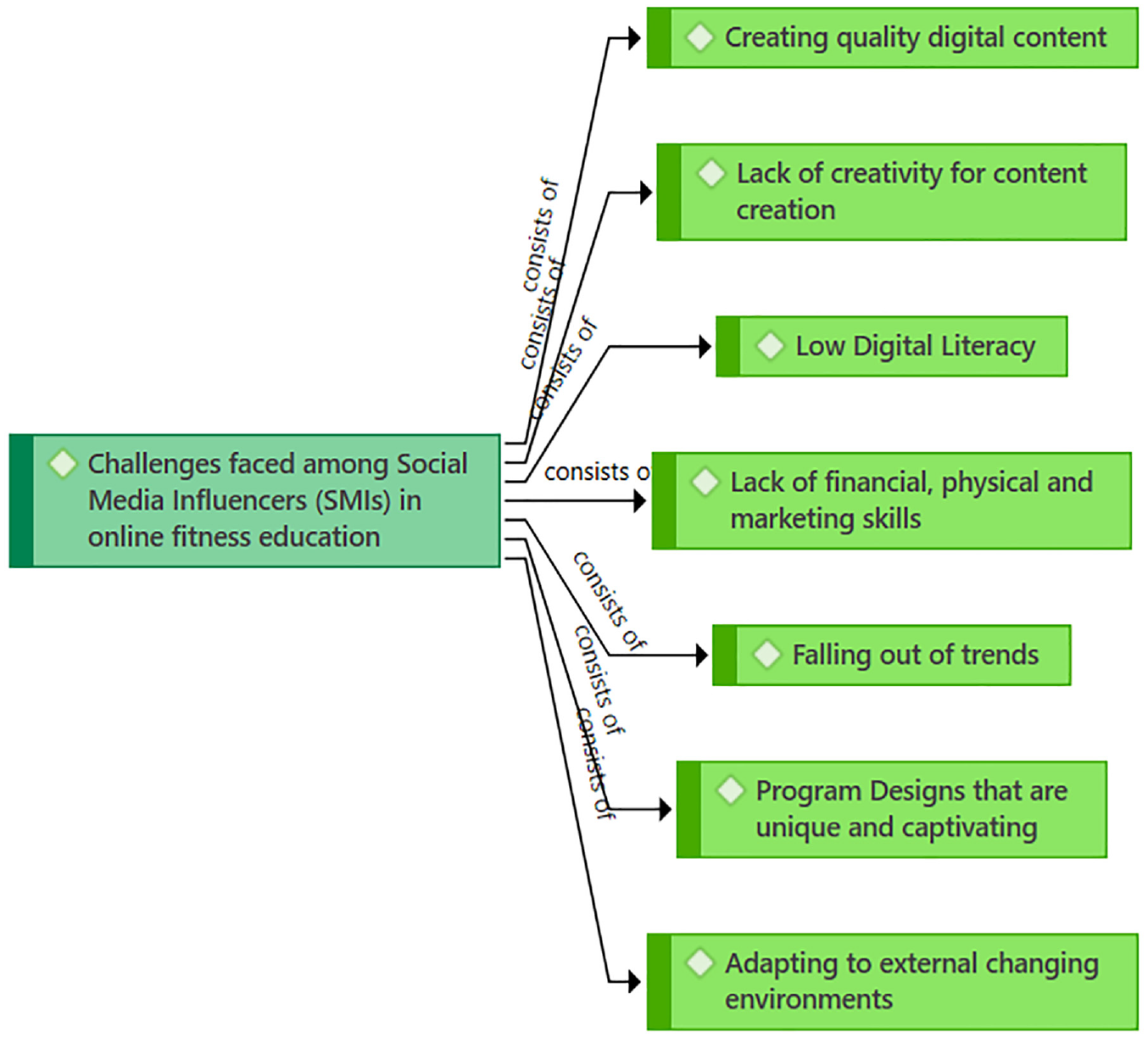
Challenges faced among Social Media Influencers (SMIs) in online fitness education.
“Creating quality digital content” is a major issue. It means Social Media Influencers struggle to create high-quality digital content. It involves creating educational and appealing films, graphics, and writing. Maintaining visual appeal while providing useful content is the difficulty. SMIs must spend a lot of time researching, planning, and refining their content creation process to produce high-quality, audience-relevant content. As supported by Participant 11,
At times, I find myself facing significant challenges when it comes to generating new and engaging content for my audience on a daily basis. It’s a complex task as the content not only needs to align with the latest trends but also cater to the preferences of my audience. To tackle this, I have recognized the importance of preparing and accumulating a substantial amount of captivating content in advance.
Participant 1, line 44 from ATLAS.ti
Another challenge centers on “Lack of creativity for content creation.” Lack of originality may make SMIs’ content creation harder. Since there is so much fitness content, it can be difficult to present it in new ways. SMIs must actively seek inspiration, try new content formats, and come up with creative solutions to address this challenge. As mentioned by Participant 2,
Lately, I’ve been feeling a bit stuck in a creative rut. It’s been a real challenge to come up with fresh and exciting ideas that resonate with my audience. One of the main challenges is the constant pressure to keep up with the ever-changing trends and interests of my audience. It feels like I need to be on top of every new viral video, meme, or topic. Sometimes, I find myself overthinking and second-guessing if my content will be engaging enough. : I’ve tried a few strategies to overcome this hurdle. One thing I do is take breaks and allow myself time to recharge.
Participant 2, line 40 from ATLAS.ti
“Low Digital Literacy” poses another obstacle for SMIs. SMIs struggle with digital literacy, which includes social media, analytics, SEO, and digital marketing. To overcome this challenge, SMIs must take online classes, attend workshops, or self-learn to improve their digital literacy. As also mentioned by Participant 3,
One of the main challenges I face is staying updated with the ever-changing trends and platforms. It feels like every day there’s a new app, algorithm update, or trend to keep up with. Sometimes, I find it overwhelming to adapt and understand these changes, which affects my content strategy and reach. I also struggle with data privacy and security concerns. I want to make sure I’m protecting my audience and myself online, but I often feel uncertain about the best practices.
Participant 3, line 45 from ATLAS.ti
Additionally, “Lack of financial, physical, and marketing skills” can impede SMIs in their journey. Insufficient financial, physical, and marketing capabilities may hurt SMIs. Effective budgeting, video production, marketing, and relationship building are essential. Mentors or specialists may help them overcome this obstacle. They can also improve their skills through skill-building. Participant 2 highlighted,
In the beginning, I invested money in my objective social media platform to get and acquire more attention from followers through the management of platform organizations. Unfortunately, I did not think the money that I put in bring the ideal results. It seemed that the time, effort, and cost invested in the project were wasted, and my marketing objectives had not been met.
Participant 2, line 49 from ATLAS.ti
“Falling out of trends” is another challenge. To stay current, they must study industry advances, famous individuals, and literature, and engage with their audience to understand their interests. To stay current and avoid falling behind, SMIs should investigate and update their content and strategy. As highlighted by Participant 1,
The fitness industry is constantly evolving, and it is crucial for fitness coaches to stay updated with the latest developments. Failure to keep up with these changes can significantly impact their chances of survival in this competitive field. Various indicators point to the evolution of physical activity and fitness trends, and it is imperative for coaches to adapt and stay abreast of these advancements.
Participant 1, line 59 from ATLAS.ti
Moreover, another difficulty is focused on “Program Designs that are unique and captivating.” These SMIs need originality, resourcefulness, and a deep understanding of their customers to stand out in a crowded market. To overcome this challenge, they must investigate, test program designs, incorporate client feedback, and improve their offerings. As mentioned by Participant 8,
As an online fitness coach, it is not easy to develop a range of coaching services and programs that align with my niche and ideal client. Because, we need to update more and more attractive services, add new spirit and designs during the coaching period.
Participant 8, line 12 from ATLAS.ti
Lastly, “Adapting to external changing environments” presents a significant challenge. SMIs struggle to succeed in a fast-changing online environment. Their settings may change due to new social media algorithms, platforms, and consumer behaviors. Modifying to these changes requires staying educated, adaptable, and modifying techniques. SMIs should watch industry developments, engage with their audience, and be open to new technology and methods to achieve this. Participant 10 mentioned,
The ever-evolving laws and regulations in China that govern social media platforms provide a challenging policy and environmental environment. In this case, I reach and engagement with my followers may be significantly impacted by the frequent changes made to the rules and algorithms of platforms like Tiktok, sometimes external difficulties beyond my control, such as competition from other influencers, changing trends in the fitness and wellness business, and the effect of current events and societal changes, may offer substantial hurdles.
Participant 10, line 65 from ATLAS.ti
As a summary of this section, these SMIs who provide online fitness education encounter various obstacles, such as generating top-notch digital materials, limited imaginative capacity, insufficient digital knowledge, and inadequate financial, physical, and marketing expertise. They must also keep up with current trends while creating original and captivating program designs that can adapt to external changes. To overcome these challenges, SMIs should focus on building their skill set through learning opportunities and seeking inspiration. They should stay informed about the latest developments in the field of fitness education and remain flexible to ensure they deliver high-quality and engaging content to their audience.
How Did These Social Media Influencers (SMIs) in Henan Province, China, Overcome the Challenges in the Content of Online Fitness Education and Training?
The selected SMIs in Henan Province, China struggled to give their followers with high-quality content in the changing sector of online fitness teaching and training. According to other research, these challenges include maintaining credibility and authenticity, complying with regulations, and satisfying different audiences.
This final research finding must explain how SMIs overcome various challenges. The first is that it highlights SMIs’ adaptability and perseverance in conquering online fitness challenges. By studying these influencers’ strategies, stakeholders can better their online fitness training. Second, identifying SMIs’ excellent strategies and tactics improves our grasp of the issue and allows us to create fitness community best practices. Thirdly, understanding how SMIs overcome challenges helps us understand Henan Province’s contextual elements and the unique dynamics that affect the online fitness sector in this region. Figure 3 below shows results of this research show the various approaches used by SMIs in Henan Province to deal with the challenges in online fitness education and training.
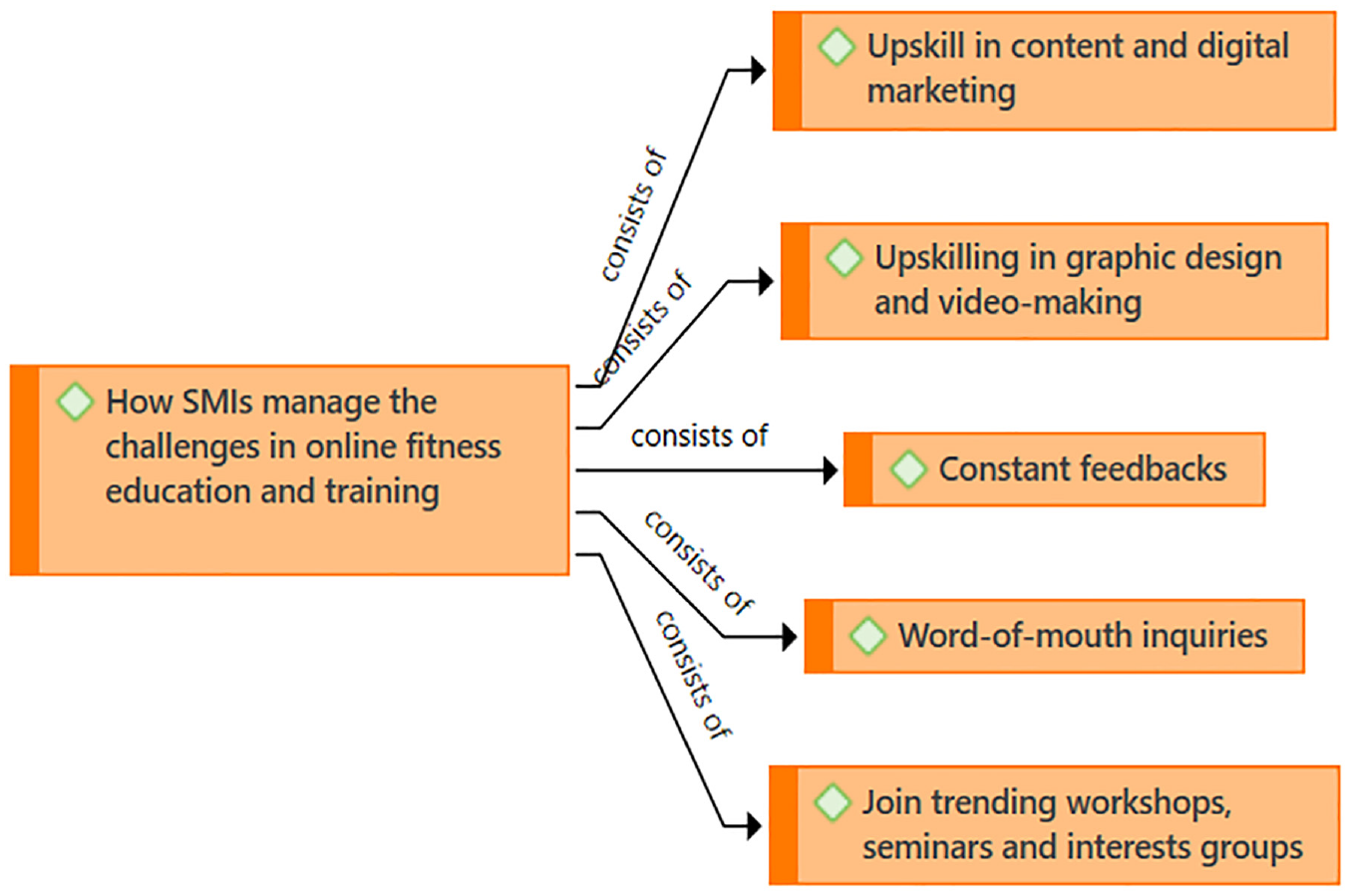
How SMIs manage the challenges in online fitness education and training.
As explanations, the effective management of their challenges in online fitness education and training requires the implementation of specific tactics and methodologies by these Social Media Influencers (SMIs). These strategies are designed to overcome challenges and guarantee that the delivery of their content is successful. For example:
One effective approach is “Upskill in content and digital marketing.” To confront the task of producing superior digital content, SMIs can upgrade their abilities in content creation and digital marketing. One effective approach for doing so is to participate in applicable courses, workshops, or online programs that focus on areas like content planning, storytelling, copywriting, and the utilization of social media algorithms. This upskilling empowers SMIs to enhance their knowledge and skills and boost the quality and reach of their digital content. Participant 7 mentioned,
To improve my content-creation skills, I decided to enroll in online content marketing courses. These courses are provided free of charge and comprise a total of 12 lessons. Throughout the course, I gained valuable knowledge on various topics such as utilizing video content, creating and repurposing content, developing a long-term content strategy, and measuring the effectiveness of my content marketing efforts. The insights and skills acquired from the course have proven to be immensely beneficial in overcoming my content creation struggles.
Participant 7, line 68 from ATLAS.ti
Additionally, “Upskilling in graphic design and video-making” can help offer visually appealing content. Lack of inventiveness and esthetically appealing content can be solved by improving graphic design and video skills. SMIs can study graphic design basics, design software, and video editing. The acquisition of such abilities can help SMEs create attractive images and engaging videos that attract their target audience. Participant 9 highlighted,
I began my journey by enrolling in an online professional development program specifically tailored to video-making and graphic design. This program aims to equip participants with the essential knowledge and skills needed to proficiently edit graphic design content for diverse writing styles, publication mediums, and target audiences. I strongly believe that this experience has proven immensely valuable to me.
Participant 9, line 60 from ATLAS.ti
“Constant feedback” is another vital strategy for effective content management. SMIs must aggressively seek and incorporate audience feedback to overcome problems. Establishing feedback channels like comments, surveys, and direct communications can help. SMIs better understand audience preferences, interests, and needs by consistently collecting feedback. Thus, they may update their content to maintain relevancy and value. As supported by Participant 12,
In order to enhance the effectiveness of the training, I opt to give my clients a brief questionnaire after each session. This allows them to share their key takeaways from the session and offer feedback on what they found most valuable. I also conduct regular check-ins to assess their progress and determine if they require any additional support.
Participant 12, line 70 from ATLAS.ti
“Word-of-mouth inquiries” can be instrumental in acquiring new audiences. SMIs can effectively address the issue of acquiring new audiences by capitalizing on the influence of word-of-mouth inquiries. By offering superior content and exhibiting proficiency, they can procure commendations and favorable appraisals from contented clients or admirers. SMIs have the ability to motivate their audience to disseminate their experiences and suggestions, thereby making use of the natural expansion possibilities that stem from word-of-mouth marketing. As also mentioned by Participant 9,
Building a community surrounding my fitness brand is definitely something businesses should be considering these years. In order to strike for it, I have come up with world-of-mouth marketing in the future. Word-of-mouth marketing is a big deal for fitness businesses. Right now we’re seeing that the willingness of the fitness consumer to engage online and tell their friends is about service, results, and the experience.
Participant 9, line 67 from ATLAS.ti
“Join trending workshops, seminars, and interest groups” can help SMIs stay informed about industry trends and continuously upgrade their skills. By attending popular workshops, seminars, and interest clubs, these SMIs can stay current and improve their skills. SMIs can network, share expertise, and learn from industry experts through several channels. Attending these events helps them learn new things, keep up with trends, and improve content delivery and problem-solving. Participant 5 said,
And also, in order to improve my online coaching experiences and skills level, I joined an online coaching membership community, which is a supportive online community with hundreds of other driven, like-minded professionals. It is an online platform filled with hundreds of hours of training programs sourced from some of the top coaches, trainers, and business experts in China.
Participant 5, line 69 from ATLAS.ti
In summary, these SMIs in the online fitness education and training industry tackle their challenges by enhancing their skills in content creation, digital marketing, graphic design, and video production. They proactively seek feedback to modify their content according to audience preferences and rely on word-of-mouth promotions for organic expansion. Moreover, they engage in popular workshops, seminars, and interest groups to stay informed and boost their competencies. By utilizing these strategies efficiently, SMIs can proficiently handle obstacles and provide significant online fitness education and training services to their target audience.
Discussions
Discussions on Social Media Influencers in Fitness Education and Training in Henan Province, China
The fitness industry in Henan Province has undergone a significant transformation in recent years (Di Lan et al., 2020). The robust governmental policy is generating numerous business prospects to bolster the burgeoning sports and fitness sector (Xing & Wang, 2022). Prominent figures in the realm of social media have entered and captured the fast-growing opportunities and meanwhile, devised a novel approach to leverage their platform for the betterment of society. The “TikTok Sports and Fitness Report” of 2022 disclosed that Henan Province obtained the fourth position in China with respect to the quantum of online fitness education and training videos uploaded by SMIs in each province (Tian et al., 2022). SMIs serve as a source of inspiration and facilitate the formation of communities among individuals who share common interests, as determined by their respective channels. The employment of social media as a tool to cultivate a sense of community and encourage the participation of residents has become more prevalent in the local government sector. This is especially true given the ubiquitous nature of social networking sites in the lives of individuals who have grown up in the digital age.
Moreover, in the aftermath of China’s stringent measures to curb the spread of Covid-19, the local government had issued at least five times a proclamation requesting that citizens stay within the home unless deemed necessary (Cheng, 2020). As the result, the province of Henan has witnessed a surge in the demand for online fitness education and training at that time. Those prominent SMIs have already accumulated sufficient fitness materials in advance and then seized the opportunity to generate the viral momentum during the pandemic daily. They strived to inspire followers to be part of their community, aiming at improving an individual’s physical fitness, overall health, and performance through structured programs and educational interventions (Coole et al., 2020). The fitness education and training designed from them are intertwined processes that combine knowledge and practical application to promote physical fitness, health, and well-being (Ardianto et al., 2021). Additionally, through influencer-driven marketing strategies, SMIs kept on updating pictures or blogging about fitness changes, sharing fitness tips and providing online fitness coaching services, leveraging several platforms (Zhang, 2022). As such, most of Henan SMIs’ brands have amassed a following of at least 10,000 people who rely on their fitness routines and dieting stories
Furthermore, it is noteworthy that those influential SMIs from Henan in fitness areas did not achieve their status overnight, they continually changed their digital image and seized public exposure possibilities. A collaborative Weibo initiative, titled “The Plan of Keeping Fit at Home,” was promoted by notable Henan SMIs in May 2022 (Shi, 2022). This project has garnered over 3 million views, a commendable outcome in comparison to similar content postings. Subsequently, the local authority and policy makers seek to capitalize on the power of Henan SMIs to cooperate and establish an official online community in fostering health and fitness behaviors and attitudes. These SMIs have emerged as influential figures and creators within the healthcare sector of Henan province (Xing & Wang, 2022).
The Self-Leadership in Online Fitness Education and Training
The Self-leadership in online fitness education and training is the internal process and represents the ability from coach to proactively influence clients’ knowledge, skills, and expertise in order to achieve personal and professional goals (Neck et al., 2019). The attainment of personal growth, development, and effective leadership of others necessitates a substantial level of self-awareness, self-regulation, and self-motivation. The fundamental principle underpinning online fitness education and training is self-leadership (Bum, 2018). Individuals who possess the skill of effectively managing their health and well-being engage proactively in the care of others while simultaneously establishing their personal wellness goals.
Numerous research studies have been conducted to examine the effectiveness of self-leadership within the realm of online fitness and education. Y. S. Zhao and Destech Publicat (2017)conducted an exploratory qualitative case study that spanned a period of 2 years, gathering historical and empirical data on an online fitness program. The analysis of the survey data revealed that the self-leadership had a positive impact on the instructors’ self-confidence, provided clients with role models, and was perceived as an “empowering” experience by both the instructors and the participants. And as Shen (2022) stated, there were several characteristics associated with online fitness self-leader, such as efficient self-management of behavior, which leads to stronger task commitment. This was supported by Alvarez (2019), who agreed that fitness instructors who obtain self-leadership, could literately increasing job satisfaction and mental and psychological well-being.
When relating this study’s findings to other contemporary research, there are many ways to develop as a self-leader in the field of virtual fitness training. If fitness instructors want to improve their understanding of online fitness education and training, Z. Liu et al. (2023) pointed out the significance of keeping up with the most recent research, trends, and advances in the field, by keeping up with trade periodicals, going to seminars and conferences, and networking with other industry experts. And according to Hu et al. (2023), in order for online fitness trainers to succeed in their area of work, they must also continuously enhance their skill sets, like communication and problem-solving skills. Alternative methods for enhancing personal abilities in online fitness education and training have been investigated by Guo (2023). Regarding to this research, coaches can take part in skill-building activities including role-playing, attending workshops, and asking customers for feedback. What’s more, it is imperative that online coaches maintain a positive mindset and sustain high levels of motivation and passion in their professional endeavors. In order to cultivate positive attitudes within the context of online fitness education and training, coaches may focus on cultivating personal attributes such as empathy, compassion, and patience toward individuals seeking guidance.
Challenges and Limitations of Social Media Influencers in the Contents of Online Fitness Education and Training
As mentioned earlier, SMIs are emerging more and more frequently in Henan Province, China. The challenge these influencers face is the quality of the content is essential in online fitness coaching since it reflects the expertise and professionalism of SMIs (Liao, 2022). The training regimens, dietary advice, and instructional films that SMIs offer should all meet the greatest standards of precision and quality. Additionally, in order to stand out from the sea of SMIs offering comparable online fitness services, it is critical to offer content that is both unique and captivating. Other forms that could be used to deliver the content in a new and interesting way include infographics, social media posts, and podcasts (T. Han, 2022). Nevertheless, it would be more crucial for SMIs to be able to adapt to new regulations, rules, and consumer needs as the COVID-19 outbreak progresses. This could be employing cutting-edge distribution techniques, responding to client feedback, or changing content to reflect current events. In essence, it is the responsibility of these SMIs to make their knowledge accessible to all, especially those who might face financial or physical obstacles to using the internet or other digital resources. Providing Supplemental Materials or services, such as audio descriptions or closed captioning, may be necessary to assist users in gaining access to content (Anjum et al., 2021).
Strategies to Overcome Challenges Among SMIs in Online Fitness Education and Training
However, there are numerous techniques that instructors in this sector can use to lessen these challenges. Some instructors invested in continuing education, attended workshops and seminars, and kept up with the most recent research and advancements in the field of fitness training in an effort to advance their professional careers (Ku & Hsieh, 2020). Another approach is improving the quality of their marketing materials by enrolling in editing and graphic design programs taught by industry professionals. Other SMIs made it feasible for their followers to participate in the development of new services and programs because they recognized its worth. These SMIs also recognized the value of obtaining client feedback in order to improve their coaching methods and give their clients a more positive experience (Y. S. Zhao & Destech Publicat, 2017). It is recommended that future studies focus on examining the effective strategies utilized by successful SMIsoperating in c contexts outside of Henan Province yet facing comparable obstacles pertaining to self-leadership in the realm of online fitness education and training.
In summary, this study examines the manner in which SMIs have engaged with online fitness education and training, while also emphasizing areas that may require enhancement. By conducting a comprehensive examination of the advantages and disadvantages associated with this phenomenon, it is anticipated that readers will acquire a deeper understanding of the most effective strategies for navigating this dynamically progressing domain.
Conclusions
This study embarks on a journey to explore how enhancing self-leadership can play a pivotal role in overcoming these challenges faced by social media influencers involved in online fitness education and training within Henan Province, China. By analyzing the strategies employed by these individuals while also delving into the specific issues they encounter regularly, we aim to shed light on actionable steps that can be taken toward improving overall engagement with audiences seeking reliable information regarding their personal fitness goals. The underlying objective is clear—empowering individuals through enhanced self-leadership skills will enable them to navigate through an increasingly complex digital landscape effectively. In doing so, it is hope that these findings would contribute not only to improved outcomes for those pursuing online fitness education but also foster greater trust between influencer-educators and their followers. Through this investigation into enhancing self-leadership among social media influencers within Henan Province’s context specifically, this study has not only focus on theoretical insights, but highlighted practical strategies that can be implemented by both current practitioners and aspiring professionals alike. The ultimate goal being facilitation of positive change within an evolving industry where knowledge dissemination plays such a fundamental role.
In conclusion, this study has provided valuable insights into the strategies employed by SMIs in Henan Province, China, to effectively manage their self-leadership within the realm of online fitness education and training. With the rise of social media platforms and the increasing influence of SMIs, this study showed the importance to understanding their role and the challenges they face. From the investigation on the SMIs to enhance their self-leadership skills and addressing the challenges associated with content creation and delivery, this research has contributed to the existing knowledge and provides practical implications for SMIs and aspiring influencers in the field of online fitness education and training. In terms of significance, the findings on challenges from these SMIs in Henan Province would inform fitness enthusiasts, business professionals, and policymakers involved in the field of online fitness education and training. It is anticipated that they will find the knowledge gained from this research to be useful. Ultimately, these stakeholders can collaborate to develop strategies and solutions that improve the caliber, legitimacy, and impact of online fitness education and training in Henan Province and elsewhere by acknowledging and addressing the challenges faced by SMIs. Ultimately, more future findings are needed to further explain the practices and approaches that contribute to the success of SMIs, enabling them to better guide and motivate their online audiences.
Footnotes
Declaration of Conflicting Interests
The author(s) declared no potential conflicts of interest with respect to the research, authorship, and/or publication of this article.
Funding
The author(s) received no financial support for the research, authorship, and/or publication of this article.

Data Availability Statement
Data are available upon reasonable request. All data relevant to the study are included in the article or uploaded as online supplemental information.