




Abstract
As the volume of research on intercultural adaptation of international students (IAIS) increases significantly over the past decades, a systematic review of the diverse literature on a global scale and its development process becomes essential. This study conducted a thorough bibliometric analysis for the knowledge domain of IAIS research using relevant articles (N = 1,126) from 1990 to 2022 in Thompson Reuter’s Web of Science (WoS) database-Core Collection. This work aims to analyze the advances and trends on the subject using a set of bibliometric analytical tools, including Bibliometrix, VOSviewer, and BibExcel. The research findings demonstrate that the number of published articles projects an ostensible upward trend in terms of temporal distribution, especially since 2007. The USA occupies a leading position in terms of the largest publication output and a greater influence therewith. The most productive journal, author(s), and institution(s) are International Journal of Intercultural Relations, Brown L and Wang KT, and the University of Hong Kong and the University of Queensland, respectively. Collaboration in this field has become mainstream but still needs to be enhanced among researchers and at national and institutional levels. The frequency and co-occurrence analysis of keywords reveals that the main keywords for discussion include international students, adjustment, acculturation, adaptation, acculturative stress, identity, social support, stress, experiences, and depression, while cultural intelligence and intercultural sensitivity, culture shock and intercultural challenges, and integration and migration serve as the emerging themes. The study would aid academic researchers and policymakers in understanding the intricacies of IAIS and identifying areas that require further investigation.
Plain Language Summary
1. This research conducted an extensive analysis of 1,126 pertinent articles published between 1990 and 2022, sourced from Thompson Reuter’s Web of Science (WoS) database-Core Collection. Employing various bibliometric tools like Bibliometrix, VOSviewer, and BibExcel, the study aimed to uncover trends and advancements in IAIS research. 2. The findings revealed a significant increase in the publication of IAIS articles, particularly after 2007, signifying the growing importance of this field. The United States emerged as a central hub for research, leading both in terms of publication volume and influence. Notably, the International Journal of Intercultural Relations (IJIR) stood out as the most prolific journal, while authors Brown L and Wang KT, along with institutions like the University of Hong Kong and the University of Queensland, made substantial contributions. 3. Collaboration among researchers in IAIS has gained traction but offers opportunities for further development, both at individual researcher levels and within national and institutional contexts. Keyword analysis highlighted key topics, including international students, adjustment, acculturation, and related factors like acculturative stress, identity, and social support. Emerging themes encompassed cultural intelligence, culture shock, intercultural challenges, and issues concerning integration and migration. 4. This study holds significance for academic researchers and policymakers by providing a comprehensive overview of IAIS research trends. It aids in unraveling the complexities of international student adaptation, thereby pinpointing areas deserving of more in-depth investigation.
Introduction
In today’s era of globalization, an increasing number of students are seeking higher education outside of their home cultures (Rienties & Tempelaar, 2013). The educational experiences in other cultures provide students studying abroad with opportunities to enhance their intercultural competence, expand their worldview, and achieve personal growth, which can benefit their future career prospects (Rienties et al., 2014; Strange & Gibson, 2017). In 2020, over 5.6 million people worldwide made outbound journeys for higher education, with the United States taking up the most significant share, followed by the United Kingdom and Canada, a slight rise compared to 5.3 million in 2019 (IIE, 2020; see Table 1).
Top 10 Host Destinations Worldwide in 2019 and 2020.
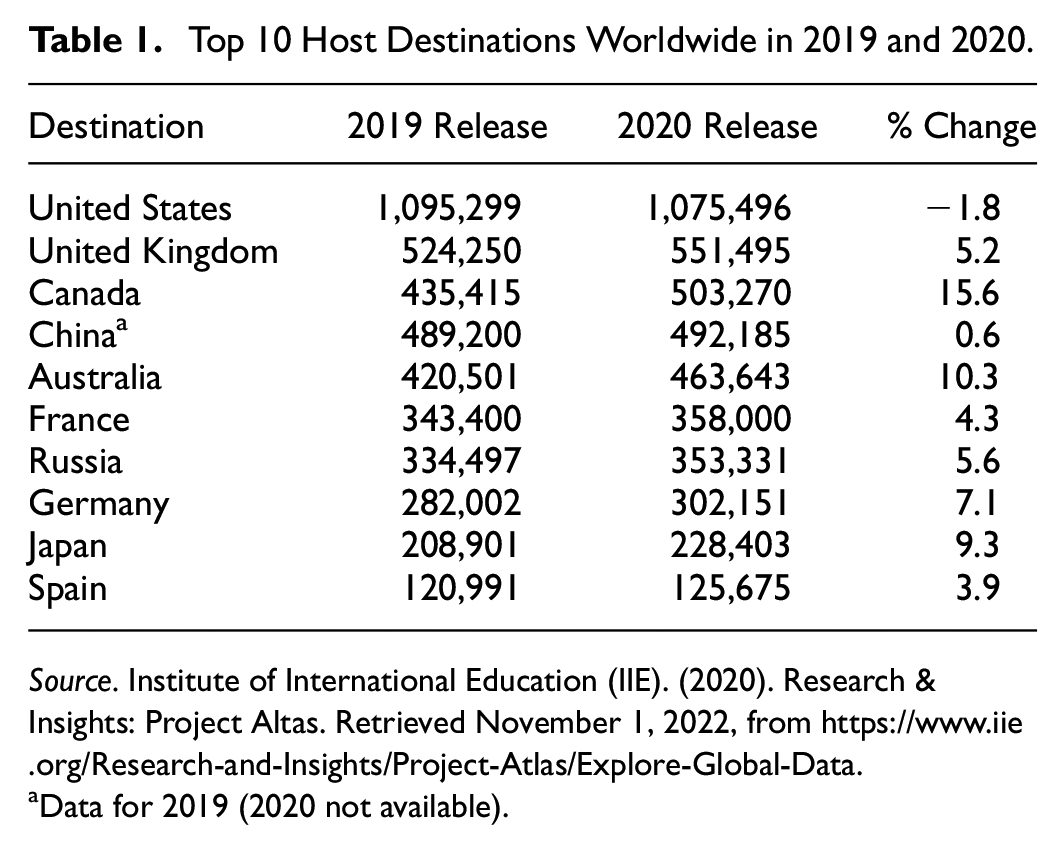
Source. Institute of International Education (IIE). (2020). Research & Insights: Project Altas. Retrieved November 1, 2022, from https://www.iie.org/Research-and-Insights/Project-Atlas/Explore-Global-Data.
Data for 2019 (2020 not available).
In their transition to study overseas, international students bring a diverse range of knowledge and skills across multiple disciplines, enriching their host country’s intellectual capital and workforce (Smith & Khawaja, 2011). The international community is recognizing the importance of international students, leading many countries to implement programs to attract them for economic, cultural, academic, and political benefits. Globally, the importance of international students has created interest among scholars and inspired us to conduct this study. Based on this background, acquiring a clear systematic review can help researchers form insights into the significant characteristics of IAIS research.
Based on a bibliometric overview of IAIS research from 1990 to 2022, the primary objectives of this study are listed as follows: (i) to examine the overall publication trends and subject categories in terms of publication output; (ii) to identify major achievements made by highly prolific scholars, countries/regions, and institutions; (iii) to investigate co-authorship and find highly cited references; (iv) to explore the research hotspots; and (v) to offer insights into the emerging trends and future research directions. Furthermore, this research aims to encourage inventive concepts and measures among researchers, educators, institutional leaders, and policymakers to formulate practical policies and initiatives that can boost IAIS.
The field of IAIS particularly needs this type of bibliometric self-assessment. Intercultural adaptation is an interdisciplinary field lacking most disciplines’ traditional boundaries, making it challenging to assemble a comprehensive collection of publications for bibliometric analysis. Moreover, it has been more than 10 years since any similar and comprehensive analysis has been conducted in this field (e.g., Smith & Khawaja, 2011), and the subsequent expansion of literature in this area in the past decade highlights the necessity for another comprehensive review that integrates the recent developments. The present study provides an updated systematic analysis of the research field regarding IAIS, revealing significant changes over time in its leading researchers and research focus to provide current researchers with a holistic perspective in this field to explore the boundaries of research, thereby promoting cross-cultural research practice. Furthermore, the dataset compiled for this study involves rigorous searching, meticulous manual coding, and thorough data cleansing. These methods may be valuable to those interested in performing similar review studies across various disciplines. Additionally, the dataset could serve as a valuable resource for future investigations into the content, trends, and breadth of the IAIS field, employing alternative methods like network analysis or lexical analysis.
Intercultural Adaptation
Intercultural adaptation, a concept first introduced by anthropologists, refers to how sojourners deal with and adjust to an entirely new cultural environment (G. M. Chen & Starosta, 2003). It occurs when individuals step away from their familiar home cultures to new, unknown cultural environments where they adjust to establishing (or reestablishing) and maintaining stable, reciprocal, and functional relationships within the new environments (Y. Y. Kim, 2000). In terms of adapting to different cultures, there are three levels to consider: individual, interpersonal/intergroup, and sociocultural (J. L. Li, 2015). The individual level focuses on psychological and cognitive changes. At the interpersonal and intergroup levels, cultural adaptation is viewed as a dynamic experience that involves a cycle of stress, adaptation, and growth. This cycle is made up of two interconnected processes: acculturation, which involves actively learning new ideas and social practices, and deculturation, which involves rejecting or denying old ideas and practices (Y. Y. Kim, 2008). At the sociocultural level, individuals actively engage in learning experiences to grow and transform themselves. These experiences can lead to a new worldview or even a new cultural identity, improving their ability to interact with members of the host culture and handle everyday situations (Wang & Huang, 2008).
Typically, intercultural adaptation can be assessed by two measures: psychological and sociocultural (Berry, 1997; Ward & Kennedy, 1992). Psychological adaptation pertains to how content and ease an individual feels while residing in the host country. In contrast, sociocultural adaptation encompasses the practical or behavioral aspect of how effectively an individual manages their daily life in the host country (Ward & Rana-Deuba, 1999). When it comes to important factors affecting individuals’ adjustment to a new culture, language competence, cultural distance, a system of values and beliefs, and social support can be put in the spotlight. These elements concerning intercultural adaptation were highlighted in the two dimensions proposed by Colleen Ward, who charted a distinction between psychological (emotional/affective) and socio-cultural (behavioral) adaptation (See Figure 1, Ward & Kennedy, 1992).

Models of intercultural adaptation process.
Previous Literature Reviews
Various prior efforts have been made to try to qualitatively and/or quantitatively capture the development of the IAIS research field.
One approach has been to provide a holistic review of dominant acculturation models and theories applied to international students. A good example is the widely cited Smith and Khawaja (2011) article that documents leading international students’ acculturation models to examine the degree to which they represent the acculturation experience of international students. This study also integrates the range of potential acculturative stressors and the subsequent impact of social support and coping strategies on their intercultural adaptation. Drawing upon these models, researchers have conducted empirical studies to test their applicability from various perspectives in different cultural contexts (e.g., Lai et al., 2022; Lashari et al., 2023; Umami et al., 2022). Another example is Zhou et al. (2008), which reviews the overall development of theories of culture shock and considers their relevance to the adaptation process of student sojourners to seek to clarify and extend them involving this group.
Another approach has been to present reviews of acculturation determinants and processes focusing on challenges and coping mechanisms. Specifically, some literature reviews have previously examined the array of problems and stressors international students encounter in a foreign context (e.g., Candel, 2021; C. P. Chen, 1999; Mori, 2000; Wilczewski & Alon, 2023; Yan & Berliner, 2011), while others have explored the coping strategies leading to better cross-cultural adaptation (e.g., Fu, 2015; Kuo, 2014). For instance, Wilczewski and Alon (2023) conducted a bibliometric analysis to review 313 articles on language and communication, significant challenges international students have to deal with during intercultural adaptation to a new environment. Furthermore, several review studies have provided overviews of the predictors of international student’s cross-cultural adjustment in specific contexts. For example, based on 64 articles, Zhang and Goodson (2011a) systematically examine predictors of psychological adjustment of international students (undergraduate and graduate) in the United States. Similarly, the review by Brunsting et al. (2018) also investigates predictors of international student (undergraduate) psychosocial adjustment to US universities, focusing on studies of typical psychological adjustment outcomes. Meanwhile, a more recent study by Cao and Meng (2022) reviews six clusters of predictors of international student adjustment in China, with all three domains taken into consideration: psychological, sociocultural, and academic adjustment. In addition, some IAIS-related review articles focus on the developments and effectiveness of cross-cultural training when applied to culture-crossers, including international students (e.g., Littrell & Salas, 2005; Sit et al., 2017).
These reviews offer an understanding of how and why the IAIS field has been shaped into what it is today. They provide valuable recommendations but do not diminish the relevance and significance of the current study as they focused solely on a specific group or country (e.g., Brunsting et al., 2018; Cao & Meng, 2022; Yan & Berliner, 2011) or examined only some aspects regarding IAIS (e.g., Candel, 2021; C. P. Chen, 1999; Fu, 2015; Wilczewski & Alon, 2023). To the best of our knowledge, despite the rapid growth of scientific literature in the IAIS field, systematic literature reviews that capture various aspects of IAIS on a global scale have yet to be conducted. Thus, the present study attempts to complement the earlier studies with a more comprehensive synthesis of the extant IAIS literature using bibliometric analysis to assist the development of future studies and programs/services for international students.
Method
Bibliometric Analysis
“Bibliometrics,” a term first coined by Pritchard (1969), refers to the quantitative analysis of literature widely used in academic research since the early 1900s (Diem & Wolter, 2013). Over the years, bibliometric analysis has become increasingly popular in the study of intercultural and cross-cultural domains (e.g., Wang & Zhang, 2022; Yari et al., 2020). Bibliometric studies, if performed well, can lay solid foundations for promoting a field of research in meaningful and proactive ways since they help and enable researchers to (i) obtain an overall picture, (ii) perceive knowledge or research gaps, (iii) acquire novel and creative ideas for further investigation, and (iv) identify their potential contributions to the field (Donthu et al., 2021). Within academic circles, scholars have numerous choices of data platforms suitable for bibliometric analysis, such as Scopus, WoS, Google Scholar, and Science Direct.
In this study, the WoS is used for bibliometric analysis of the publications on IAIS due to the following reasons: (i) the WoS offers a broad interdisciplinary range corresponding to the research topic; (ii) the database contains a series of practical tools available for bibliometric analysis. Moreover, the WoS-Core Collection is chosen for its ability to offer a dependable and sturdy literature source that covers over 21,000 scientifically reviewed journals of high quality. It also covers some 250 research fields, including natural and technical sciences, humanities, and social sciences. The database was last updated on 26 November 2022.
Data Extraction and Analysis
Bibliographic data was obtained from Clarivate Analytics’ WoS - Core Collection using a stepwise approach for data search and collection as described below:
First, keywords used in the study were typed for Topic Search that would, to the most considerable extent, cover the topic subject to our research by entering the searching query in November 2022, as follows: (“international student*” OR “overseas student*” OR “foreign student*” OR “offshore student*” OR “inbound student*” OR “outbound student*” OR “cross border student*” OR “study* abroad” OR “international education*” OR “cross border education*” OR “foreign education*” OR “overseas education*” OR “exchange student” AND “intercultur*” OR “cross-cultur*” OR “cultur*” OR “ trans-cultur*” OR “multicultur*” AND “adapt*” OR “adjust*” OR “acculturat*” OR “integrat*”). This search yielded 2,620 sources. WoS filters were used to refine the results based on broad categories, including document type (Article), database (WoS - Core Collection), language (English), and the period (1990-2022), which finally reduced the sample to 1,557 articles.
Second, we carefully examined all retrieved articles and screened their abstracts and titles for eligibility. When the title and abstract did not match the keyword search categories, we reviewed the entire article to determine if it should be included or excluded. Through conscientious examination, we excluded those articles that (i) studied the other stakeholders irrelevant to our subject of research; (ii) focused on international students’ experiences outside of institutions of higher education; (iii) reported on uncorrelated research areas; (iv) included the keywords like “adaptation,”“adjustment,” or “integration” collocated with words irrelevant to intercultural adaptation. After eliminating sources independent of the current study, we obtained 1,126 articles suitable for the study. For bibliometric analysis, we extracted the items from them, such as authors, titles, citations, affiliations, abstracts, journal names, and publication dates. The detailed processes are described in Figure 2.
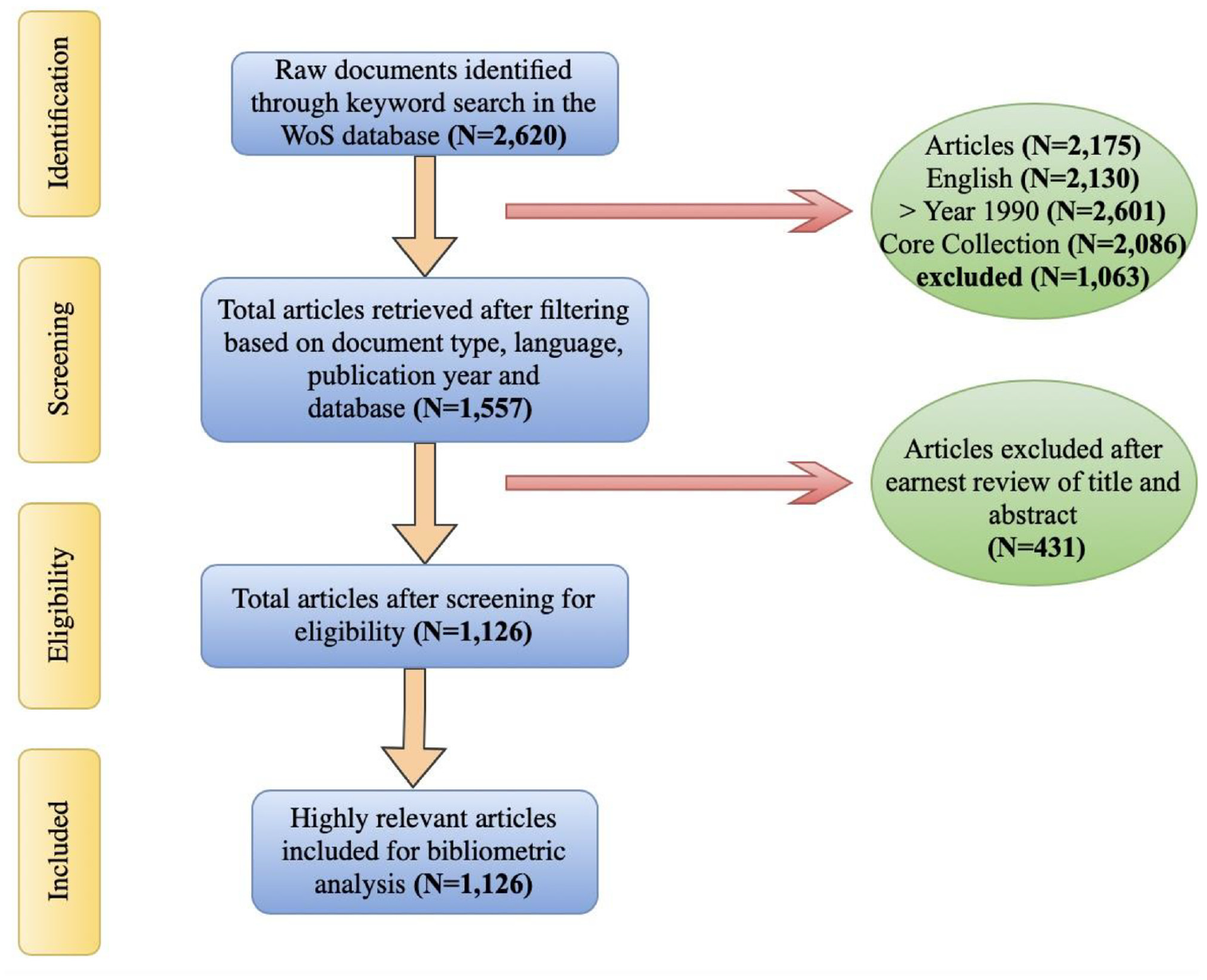
Flow chart describing data extraction and filtration of publications about IAIS from the WoS database.
Research Tools and Procedures
In this study, an array of analytic tools was used to carry out the bibliometric analysis, including the WoS analytic tool, VOSviewer, a commonly used software for visualizing bibliometric analysis, which was initiated by van Eck and Waltman (2010), and Biblioshiny, the web-based interface of R-tool (Bibliometrix 4.2.2) and a relatively new and practical bibliometric analytic tool written in R language developed by Dr. Aria at the University of Naples Fedrico II in Italy (Aria & Cuccurullo, 2017).
First, we used the Bibliometrix to generate the general and temporal distribution information and plot a three-field plot of the retrieved sample. Secondly, the software was also used to quantitatively analyze countries/regions, institutions, journals, authors, and keywords. In the meantime, the WoS analytical tool was introduced to examine the subject categories of the top 10 journals. Thirdly, we employed VOSviewer (version 1.6.8) to generate various bibliometric networks and maps. Specifically, we performed bibliometric analysis of the co-authorship, co-occurrence, and citation to create visualization maps reflecting the network of (i) the co-authorship among researchers, countries, and institutions, (ii) cited scientific journals, and (iii) the co-occurrence of keywords. In each of these maps, the size of items is determined by their “total link strength,” while the thickness of each connection is based on the “link strength.” Fourthly, BibExcel, originated by Brin and Page (1998), was used to conduct a PageRank analysis of the selected documents. Fifthly, Bibliometrix was reused to draw graphs to analyze keywords and hotspots in IAIS research further. Finally, the research findings were presented.
Results and Discussion
Principal Information and Three-Fields Plot
Table 2 shows the principal information of the data sample about IAIS. 1,126 documents from 459 sources cited 35,656 references from 1990 to 2022. Notably, the annual growth rate of publications is 13.56%, with an average age of 6.06. In the meantime, the average citation per document is 18.41, implying that many articles own relatively few citations. Also, 2,491 authors used 2,527 author keywords and 1,444 keywords. From our analysis, it appears that the majority of articles had contributions from two authors. Of all the documents we studied, 259 were written by a single author, making up approximately 23% of the total sample. This indicates that collaborative work between authors was prevalent in the research of IAIS.
Primary Information About the Collected Samples.
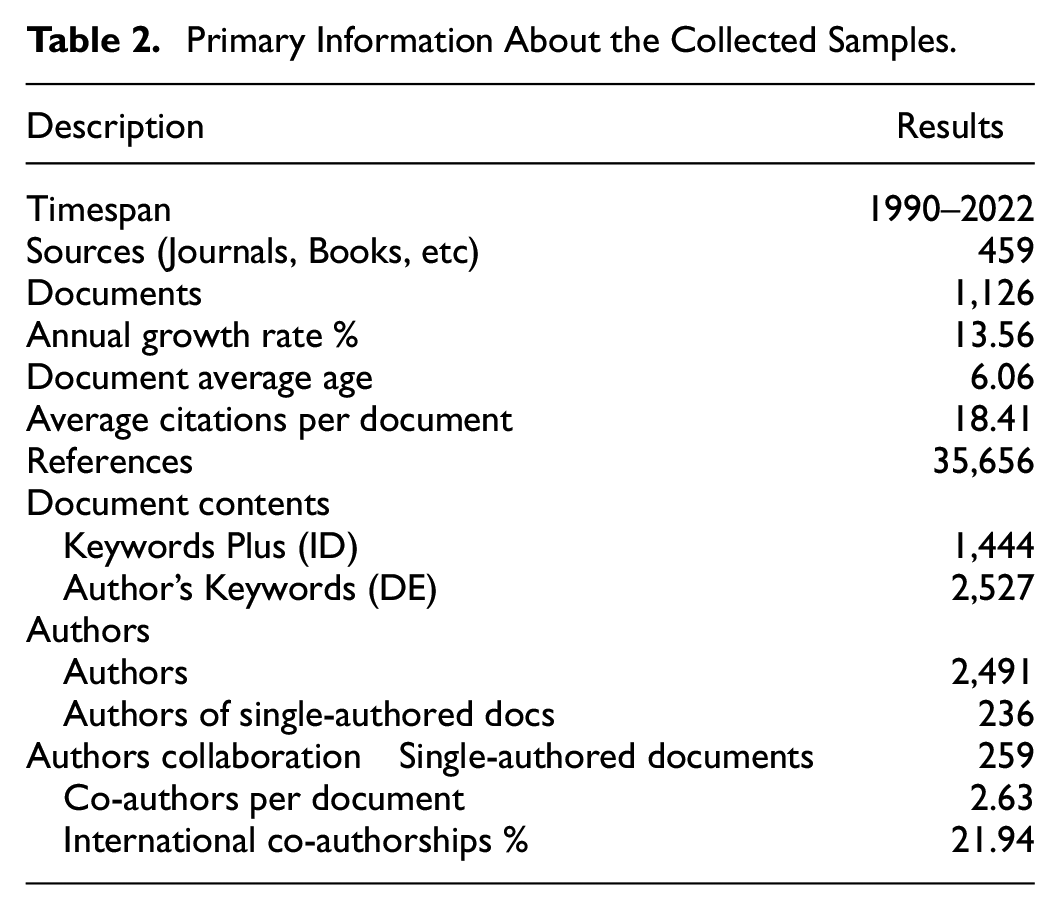
Figure 3 displays a three-field plot showing the correlation of the top 10 most productive countries (left), the most relevant sources (middle), and frequently appeared author keywords (right) (Munim et al., 2020). It is obvious enough that the bulk of articles on IAIS published in International Journal of Intercultural Relations and Journal of International Students are primarily written by researchers from the USA, China, Australia, Canada, and the UK. American scholars are also productive in studying IAIS, with the largest share of their works published in Counseling Psychologist and Journal of Studies in International Education. By contrast, scholars from China contribute more to the publications in Frontiers in Psychology. Broadly speaking, all listed countries account for virtually the same proportion of publications in Higher Education, Sustainability, Journal of Cross-Cultural Psychology, Studies in Higher Education, and Journal of College Student Development.

Three-field plot of top 10 countries, journals, and author keywords.
Temporal Trend of Publications
The popularity and research progress of a specific field can be reflected by the number and trend of publications, which is essential for bibliometric analysis. Figure 4 shows an increasing trend in the annual number of publications about IAIS over the study period. Notably, the publications of IAIS underwent a threefold upsurge from 2016 (N = 42) to 2021 (N = 131), while the years spanning from 1990 through 2007 saw a relatively steady trend without striking increases or decreases. The general trend registers a substantial rise following 2007 despite the ups and downs seen in the output, which may be explained by the driving of global perspectives and accelerated internationalization of higher education across the globe, Asian countries in particular (An & Chiang, 2015; Paik et al., 2015). It is apparent that 2021 was the most productive year, occupying 11.6% of the total amount, after which publications dropped moderately. It is worth noting that the studies on IAIS are likely to increase as the collection of publications up to November 2022 was incomplete.

Distribution of publications over time.
Major Publication Countries/Regions and Institutions
The sum of published articles can reveal the main contributors from countries/regions and institutions. In this study, 60 countries and regions participated in IAIS research. Table 3 lists the top 10 most productive countries, which yielded 77.62% of the total article volume. As is shown in the table, only the USA, China, and Australia, out of the top 10, published over 100 articles. In contrast, Germany, Russia, South Korea, Malaysia, and Japan produced less than 30 articles, respectively. Undoubtedly, the USA comes first, accounting for almost one-third of the total since it is the largest receiving country of international students. Likewise, China’s second place with 144 articles may be explained by the fact that China ranked the world’s first and fourth in sending and attracting international students, respectively, according to the 2020 Project Atlas Infographics (IIE, 2020). It can be demonstrated by the indicator of Freq, with the USA (0.323) standing at the top position, followed by China (0.128), Australia (0.093), the United Kingdom (0.080), and Canada (0.041). In sharp contrast, each of the 42 countries/regions at the bottom, as shown in Biblioshiny, yields less than 10 articles, making it clear that there exists much room for them to conduct more studies in the field of study. Interestingly, China ranks first in terms of MCP, which may indicate that scholars from China have a stronger tendency to collaborate with their counterparts from other countries/regions. Regarding SCP, the USA secures the top spot with 329 articles written without co-authors from other countries/regions.
Top 10 Most Productive Countries.

Note. Freq = the country’s publication(s)/sum total; MCP_Ratio = MCP/Articles (A larger value indicates more cooperative articles between countries).
With the help of Biblioshiny, 1,025 institutions were identified in 1,126 articles. In this study, the first batch of the 19 most important research institutions (with over 10 articles) were listed in Table 4 for bibliometric analysis. As revealed in Table 4, the University of Hong Kong and the University of Queensland are in the lead with an equal proportion of 24 publications, followed by Bournemouth University contributing 21 articles, and Monash University with 18 articles. It can be observed that six out of 19 institutions come from Australia, five from the USA, three from the United Kingdom, two from New Zealand and Hong Kong respectively, and one from Russia.
Most Relevant Research Institutions.

The VOSviewer software was used to plot Figure 5, which displays the leading institutions publishing articles and the collaborative network between universities within the research field. The nodes in the network represent institutions, with links between nodes indicating collaborative relationships. The links’ thickness and the nodes’ proximity reflect the level of collaboration. We can see that all but the universities on the map had somewhat cooperative relationships, and the University of Hong Kong, the University of Queensland, and the University of Melbourne stand out among others. However, a few institutions on the far end of the map, such as Indiana University, Universiti Putra Malaysia, Newcastle University, Universiti Teknologi Malaysia, Universiti Sains Malaysia, University of Canberra, and University of Surrey, had fewer cooperative articles, which might reflect the fact that cooperation in IAIS research among these universities still needs to be strengthened in the future.

Map of institutional collaboration.
Top Productive Journals
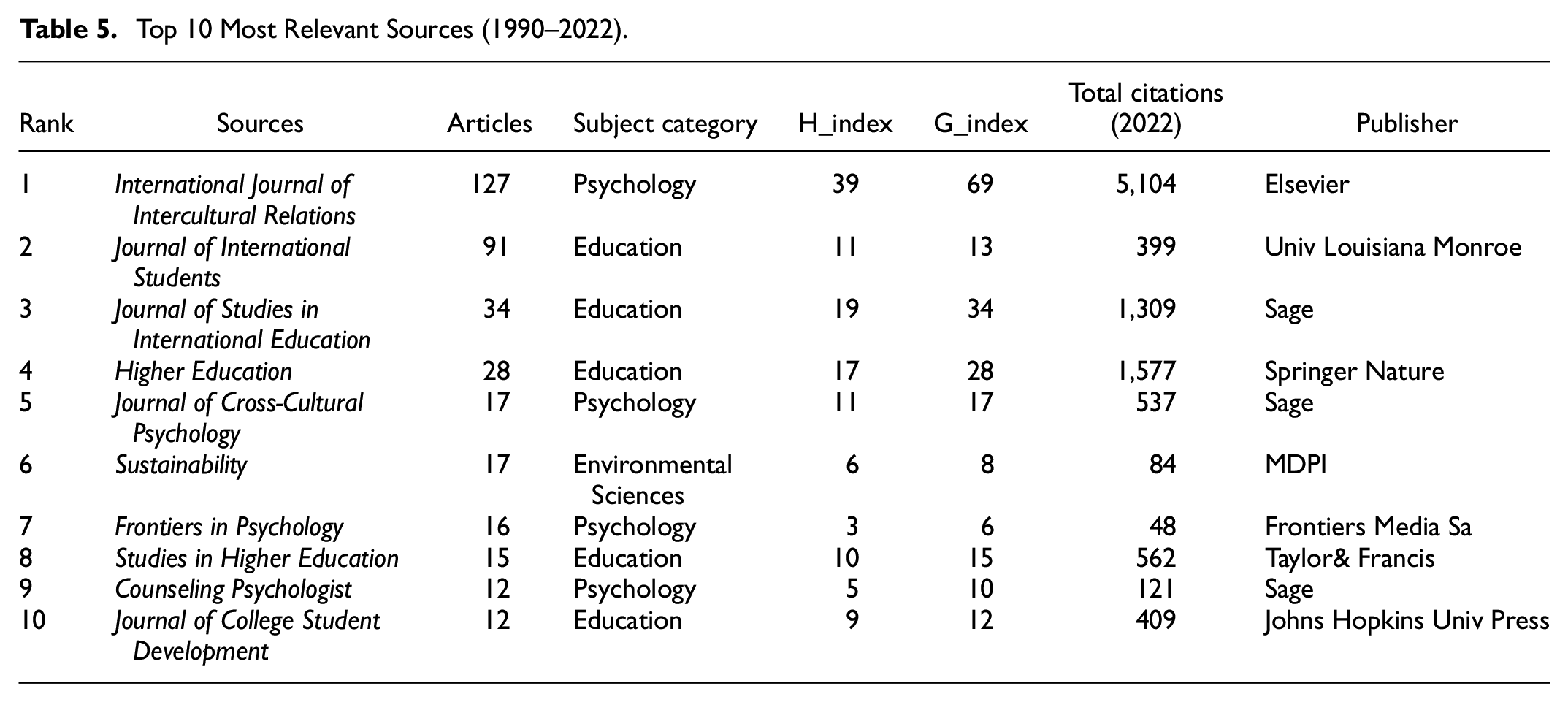
The 1,126 articles were published in 459 journals spanning 109 subject categories, as categorized by WoS. Table 5 reflects the primary information about the top 10 most relevant sources or productive journals pertaining to IAIS research. It is evident that International Journal of Intercultural Relations with Elsevier claimed the top position with 127 articles published and the highest count of citations (5,104) as well as h_index(39) and g_index (69) followed by Journal of International Students with Univ Louisiana Monroe in terms of the number of articles (91) and Higher Education with Springer Nature as far as citations are concerned (1,577). When it comes to the subject categories in the field of study, education, and educational research (486, 43.16%), psychological social (120, 10.66%), social sciences interdisciplinary (111, 9.86%), sociology (92, 8.17%) and psychology multidisciplinary (71, 6.31%) were among the top five most popular topics regarding IAIS in according with the tree map demonstrating the most popular 10 subject categories (see Figure 6). The top 10 high-yielding journals were mainly categorized into psychology, education, and environmental sciences, with education being the most prevalent.
Top 10 Most Relevant Sources (1990–2022).

TreeMap showing the top 10 subject categories.
Figure 7 illustrates the annual occurrences of the top 10 most productive journals. It is worth mentioning that Journal of International Students began publishing articles about IAIS in 2016. In the 2 years that followed, the number of publications on this topic increased significantly and reached its peak in 2018 (N = 25), but then dropped by over 50% (N = 11) in 2019. The annual output of all other journals was, on average, less than five articles in almost all years from 1990 through 2022 except the years 2012 for Journal of Studies in International Education (N = 6), 2022 for Frontiers in Psychology (N = 10), and nearly all years for International Journal of Intercultural Relations which retook the top spot in 2021 (N = 18).

Top 10 journals’ annual occurrences.
Most Prolific Authors
Author Productivity
Figure 8 shows the production of the top 10 authors in the research field between 1990 and 2022. Table 6 presents their publication and citation counts. In Figure 8, each node on the line represents the number of publications by an author, while the darkness of the circle represents the total citations per year (TC/Y) (Shi et al., 2020). It is revealed that Ward C with Victoria University of Wellington was the first scholar to conduct IAIS dating back to 1990, whereas Brown L with Bournemouth University and Wang KT with University of Missouri–Columbia both had the most articles published (N = 11). Altogether, the number of publications by the top 10 prolific authors reached 88 from 1990 to 2022 (November 26th), and most of their research works were done between 2008 and 2020 (N = 73, 82.95%). As for the count of citations, Ward C ranks first with 1,237 total citations out of his 10 publications, followed by Brown L (531), Rienties B (485) with Open University, Pan JY (236) with Hong Kong Baptist University and Wang KT (225).

Top 10 most active authors’ production over time.
Major Information on the Top 10 Most Active Authors.

Co-Authorship
The impact of researchers on a field can be gaged by their research works, citations, and co-authored publications within the field (Pham et al., 2021). Figure 9 illustrates a map representing co-authorship of authors in the field of study. The 94 authors fell into 47 clusters as research teams ranging from one scholar as a solo author (e.g., Brown I) to 10 scholars as a research team (e.g., Wang KT). In Figure 8, the authors with bigger nodes have stronger link strength or cooperative relationships with others. Wang KT and Pan JY both enjoy the strongest link strength of 11, followed by Meng Q, Wei M, and Pederson ER (nine links), Cao C (eight links), Jonkmann K, and Chuang CC (seven links). By and large, cooperation among scholars in the IAIS research should be intensified given that 29 out of 94 (30.85%) researchers published IAIS articles as solo authors with no links with others.

Overlay visualization based on co-authorship of authors (94 authors; threshold three articles).
Figure 10 represents the co-authorship map of global publications from 54 countries/regions with a minimum of two documents. The size of each node represents the number of documents produced by countries, and the color indicates their maturity in IAIS research. In that sense, we can conclude that countries like the USA, the UK, Australia, Canada, and Japan (color purple) embarked on IAIS research earlier than those countries like China, Germany, Malaysia, South Korea, and Thailand (color green). Scholars from the purple nodes of countries/regions have more experience in IAIS research than those in green, yellow, and other colors. In Figure 10, the widths of the lines among the varied nodes indicate the number of documents coauthored between respective countries/regions. The line connecting China and the USA is the thickest (link strength: 25), demonstrating that cooperation between the two countries is the most active and productive, with 31 publications coauthored. This is followed by the cooperation from scholars between China and Germany (16 publications), China and the UK (16 publications), the USA and South Korea (11 publications), the UK and Netherlands (6 publications), and the USA and Canada (6 publications).

Overlay visualization based on co-authorship of countries (54 countries/regions; threshold two articles).
Highly Cited References
It is widely accepted that the frequency of an article’s citation reflects its impact on the field to some extent. In general, cited literature is considered the intellectual base for bibliometric analysis (Persson, 1994). To better perceive the intellectual base in IAIS research, Figure 11 displays the density visualization of the highly cited references in the field with a minimum number of citations set as 50, which resulted in 107 documents. Color intensity in Figure 11 corresponds to the number of citations for selected references, with darker colors indicating higher citation counts. Table 7 lists the top 10 references with the highest global citations. We can see that Searle W was the first batch of authors in IAIS research, with an influential article published in 1990, followed by Ward C in 1991 and Sandhu DS in 1994.

Density visualization based on citation of documents (104 articles; threshold 50 citations).
Top Cited References Based on GCS.

Concerning the highly cited literature, Wendy Searle and Colleen Ward (Searle W) obtained the first position (GCS = 665) with their article published in International Journal of Intercultural Relations. Their study empirically attempted to explore the differences between psychological and sociocultural adjustment forms based on questionnaires involving 105 international students in New Zealand. It was found that during their cross-cultural transitions, the psychological form of adjustment was primarily predicted by variables including social difficulty, life changes, extraversion, and satisfaction with contact with hosts. In contrast, predictors such as anticipated difficulty and cultural distance were more associated with sociocultural adjustment (Searle & Ward, 1990). Their research approach and findings have significant practical implications for IAIS scholars.
The second top-cited literature comes from Jenny J. Lee and Charles Rice (Lee JJ), published in Higher Education in 2007 and received 458 citations. Their research focuses on the experiences of international students in the U.S. Southwest by interviewing a sample of 24 students from 15 countries. The study revealed some underlying reasons (e.g., the foreign national status) as to why international students struggle in a foreign context. Their research is innovative and influential as they have introduced the concept of neo-racism as a theory that can aid in IAIS research. This theory can help identify direct and indirect factors that may hinder international students from fully integrating into their host community. Additionally, it can guide educational institutions in implementing welcoming policies and combating discrimination toward cultural differences such as language barriers and unfamiliar accents (J. J. Lee & Rice, 2007).
Ranking third (GCS = 415) is the article published in Journal of Counseling & Development in 2000 by Sakurako Chako Mori (Mori S). Mori’s study mainly identified the sources of major psychological concerns among international students, the reasons for their insufficient use of existing psychological counseling services, and the viable means to offer more culturally sensitive services. The study reveals that international students in the US often do not take advantage of counseling services to address their psychological issues due to conflicting cultural values and beliefs with the traditional American view on mental health (Mori, 2000).
Citations for the other two top-cited references are about the same, with the fourth having 299 and the fifth 280, respectively. The fourth article was published in International Journal of Intercultural Relations in 2011 by Blake Hendrickson et al. In this paper, based on 84 international students, the researchers examined the correlation between owning more host country friends and individuals’ enjoyment, gratification, diminished homesickness, and social connectedness through a social network lens. Interestingly, their findings were contrary to prior research as they found that international students with a higher ratio of friends from the host country reported feeling more pleased, content, and less homesick. Likewise, those who claimed to have more friendship variability with host country students asserted that they were more satisfied and socially connected (Hendrickson et al., 2011). The fifth article by Sandhu and Asrabadi (Sandhu DS) published in Psychological Reports in 1994 generally explores the major contributing factors leading to the acculturative stress inflicted upon overseas students, such as discrimination, homesickness, fear, guilt, perceived hatred, and stress (Sandhu & Asrabadi, 1994).
PageRank Analysis of Cited References
Numerous scholars have recognized the importance of using various scientific methods when conducting research. Citations count stands out amongst all methods available as one of the efficient and simplest methods (Ding & Cronin, 2011). As a measure of literary popularity, prestige indicates how often an article is cited by highly reputable documents (Ding et al., 2009). A highly cited article may not necessarily be considered a reputable research paper as per prestige indicator despite a positive association between the count analysis of citations and prestige indicator. Hence, we adopted the PageRank method in the study, which was originated by Brin and Page (1998) to rank web pages during an online search of keywords to measure the popularity and prestige of cited references. In our study, we have used the following formula promoted by Xu et al. (2018) to measure the PageRank of the highly cited articles.
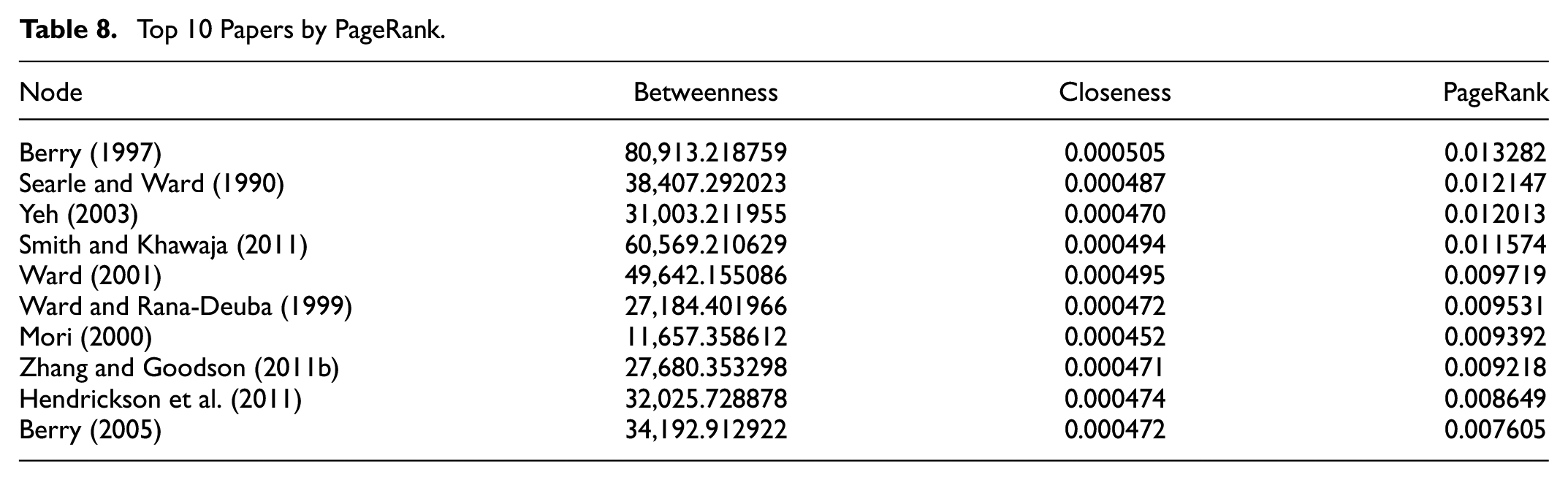
As regards this formula, PR(X) stands for the page rank of paper X, and d is referred to as the damping factor with the value set between 0 and 1. T1…Tn points to a series of research papers that quoted paper X while C(T1)…C(Tn) means citation count of papers T1…Tn (Jain et al., 2022). Within our sample of 1,126 retrieved documents, we have identified 1,123 articles co-cited by others for PageRank analysis. Table 8 lists the top 10 articles with the highest PageRank measure. It is obvious that the results measured by PageRank somewhat differ from the ranking in terms of citation count. In Tables 7 and 8, we can notice that only three articles secured the positions within both tables, denoting that these three articles represent the powerhouse of citation and ample prestige. Berry (1997) ranks first according to PageRank score, though it has fewer global and local citations than Searle and Ward (1990), which ranks first in global and local citations.
Top 10 Papers by PageRank.
Keywords and Research Hotspots
To identify research hotspots in specific fields, keyword analysis is reliable and effective. Keywords are commonly used to generalize research topics in articles (Peng et al., 2020). Keyword co-occurrence indicates how often a given term appears together with some other terms. The keywords examined in this study comprise titles, abstracts, and keywords of the published articles retrieved. Analyzing the co-occurrence of keywords in a specific area can help researchers effectively examine research hotspots. This approach helps scholars understand how subject knowledge has developed over time (Callon et al., 1991).
The 1,126 retrieved articles contain 3,603 keywords, and the threshold of a minimum number of occurrences of a keyword was set as 5, resulting in 368 meeting the target threshold to be visualized in Figure 12 composed of six clusters, 11,982 links and a total link strength of 25,107. In Figure 12, a node’s size signifies a keyword’s occurrence. The larger a node is, the more a keyword is included in the selected samples. The distance between keywords represents the relationship strength, meaning a shorter distance suggests a more intimate relationship. Keyword clusters are useful tools for researchers, as they provide a clearer understanding of research’s current state and progress. The 368 keywords were divided into six clusters marked by various colors, and the nodes of a uniform color belong to the same cluster.

Network visualization map based on co-occurrence of keywords (368 keywords; threshold five keywords).
The top 10 keywords with the most occurrences were listed in Table 9 alongside their occurrences and total link strength for detailed analyses. The total link strength reflects the number of articles in which two keywords appear. Based on Table 10, the keyword “international students” ranks first in terms of the frequency and total link strength (467; 3,078), followed by the keywords “adjustment” (266; 1,937), “acculturation” (263; 1,903), “adaptation” (175; 1,281), and “acculturative stress” (119; 1,007). It can be concluded that the IAIS research mainly focuses on international students as a research subject, the process of their adjustment and acculturation, and their experiences and challenges in intercultural adaptation. However, as depicted in Figure 12, some of the nodes are very small, with few links with the others, which means that the occurrences of some keywords are relatively low with weak link strength (e.g., stigma (5), creativity (5), counseling services (5), barriers (8)). This analysis indicates a need for further research in those domains with no strong link strength.
Co-occurrence of Keywords.

Identified Keyword Clusters.
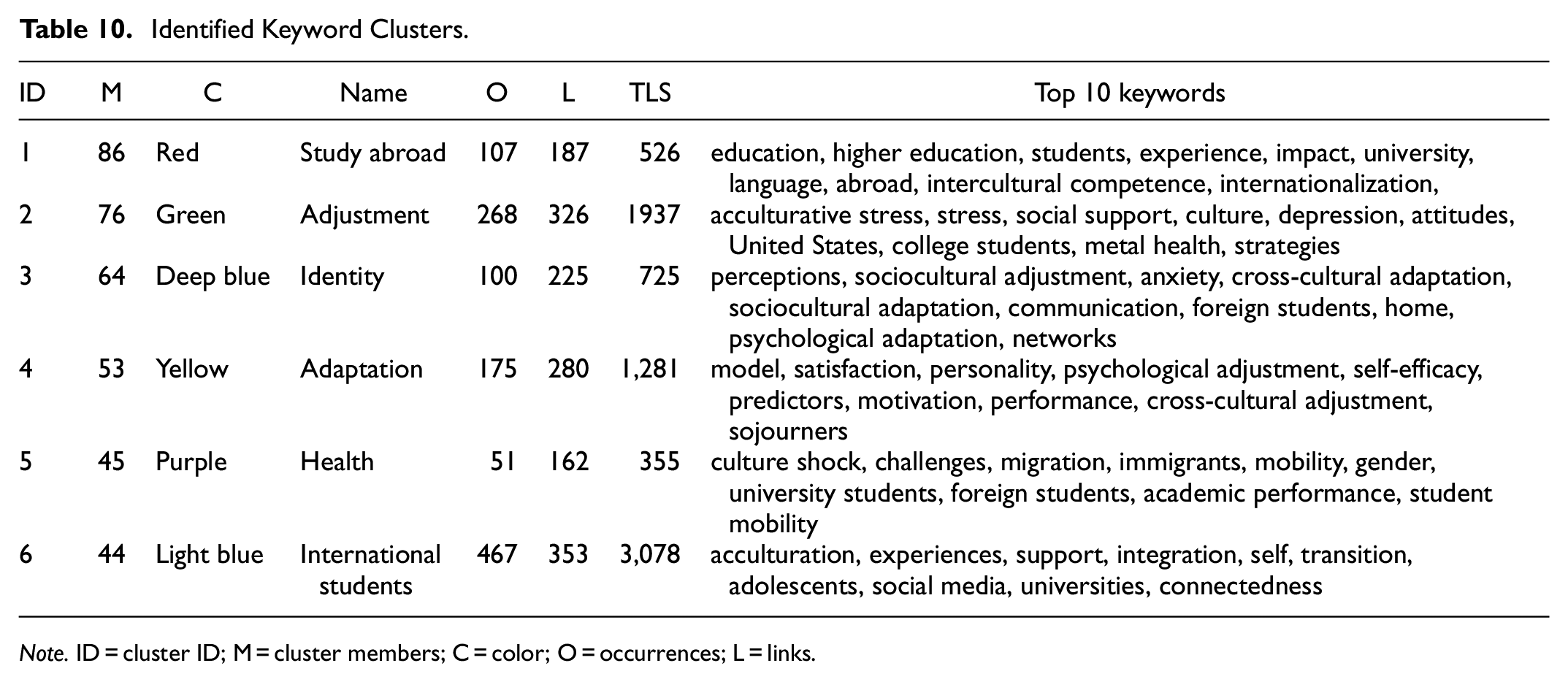
Note. ID = cluster ID; M = cluster members; C = color; O = occurrences; L = links.
Furthermore, we conducted keyword analyses on the top 10 countries to compare IAIS research trends and hotspots. It is interesting to note that scholars from different countries focus on various aspects of IAIS research, resulting in varying research foci. Specifically, in the USA, research scholars tend to focus more on the sociocultural adaptation of students and coping strategies, whereas in South Korea and Malaysia, there is more emphasis on their acculturative challenges and psychological well-being. Meanwhile, scholars in China, Japan, Russia, Australia, and the UK show a greater interest in the academic adjustment and performance of students in higher education settings as well as intercultural learning and communication. In Canada, researchers tend to focus on intercultural contact and the development of intercultural competence among host country nationals, whereas German scholars prioritize international mobility, intercultural motivation, and attitudes.
Table 10 provides key information on the six clusters shown in Figure 12, labeled by color according to the most frequent keywords and ranked by the percentage of keywords involved. Cluster 1 (red, 86 keywords), study abroad; Cluster 2 (green, 76 keywords), adjustment; Cluster 3 (deep blue, 64 keywords), identity; Cluster 4 (yellow, 53 keywords), adaptation; Cluster 5 (purple, 45 keywords), health; cluster 6 (light blue, 44 keywords), international students. The table also contains information about the weight of the link and total link strength, and 10 critical keywords with the most occurrences.
Cluster 1 enjoys the most items of 86 keywords, with research hotspots focusing on international education and academic experiences as students move to study abroad for higher education. The internationalization of the higher education system is a global phenomenon that has incentivized countries and higher education institutions to devote resources to the recruitment of international students. The last two decades have witnessed an increase in the popularity of study-abroad programs. Most of these programs are designed to enhance international students’ academic skills (e.g., language skills), professional development (e.g., communication), personal development (e.g., open-mindedness), and intercultural competence (e.g., diminished ethnocentrism) (Anderson et al., 2006). These issues have become the foci in IAIS research. In particular, international students’ social integration and academic experiences in the host country have been increasingly of concern to scholars and governments worldwide (e.g., Jieyi et al., 2022; Martinez-Taboada et al., 2018; Rienties & Tempelaar, 2013).
As displayed in Table 10, the research in Cluster 2 is more associated with the adjustment process, with much attention paid to the acculturative problems facing international students. Studies have demonstrated that maladjustment among international students has a negative impact on their psychosocial well-being and increases their likelihood of experiencing mental health problems, including anxiety, depression, or even suicidal ideation. Among the keywords with respect to adjustment, the keywords related to mental health often appear. The acculturation process can cause acculturative stress for students due to differences in culture and environment between their home and host countries. Studies on acculturative stress, particularly among international students, have been widely conducted in recent years. Most of the research has focused on subjects in North America (Kuo, 2014), particularly among the Latina/Latino community and international students from China. Meanwhile, how to deal with acculturative stress for better intercultural adjustment is also a concern shared by some scholars. Thus, research on stress-coping strategies like social support has been conducted on various samples (e.g., Crockett et al., 2007; L. Li & Peng, 2019).
The researchers in Cluster 3 focus on how international students perceive themselves in relation to sociocultural and psychological adaptation, as indicated by the core term “identity.” We have suggested that acculturation involves an intergroup dimension. One of many issues that international students experience is identity and cultural transformation. Recent research has incorporated social and cultural identity as central constructs of intercultural adaptation (e.g., Amiot et al., 2018). When international students arrive in a new country, their behaviors and social and cultural identities are likely to change relatively rapidly, which may have a significant impact on their socio-cultural and psychological adaptation. As a result, the study of identity in the IAIS field has been extensively investigated by researchers and scholars (e.g., Kiang et al., 2021; Lou, 2021).
Cluster 4 mainly relates to international students’ cross-cultural adaptation, feelings, and emotions. In the process of cross-cultural adaptation, international students often feel overwhelmed by the concepts and beliefs widely accepted in the social life of the host country due to cultural pressure. This can lead to emotional manifestations such as anxiety, depression, hostility, and feelings of alienation, resentment, indecision, discouragement, frustration, and grief. Such conflicts can result in a sense of loss, deprivation, and even physical pathology. Therefore, many researchers have focused on the psychological states of international students (e.g., Zhong et al., 2020). Some researchers have also examined issues like predictors of sociocultural and psychological adaptation, such as personality, self-efficacy (J. Y. Lee & Ciftci, 2014), language proficiency (e.g., Yu & Shen, 2012), and social contact (e.g., Szabó et al., 2020).
Cluster 5 focuses on international students’ acculturative challenges and mental health as they study abroad. Multicultural experts have observed that studying in a foreign country presents challenges, including language barriers (e.g., Yu & Shen, 2012), culture shock (e.g., Presbitero, 2016), cultural distance (e.g., Ladum & Burkholder, 2019), discrimination (e.g., J. J. Lee & Rice, 2007), and racism (e.g., Rojas et al., 2021). Acculturative stressors in college or university settings often involve anxiety from unknown experiences, academic pressure, financial worries, relationship concerns, and isolation feelings (Bradley, 2000). These pressures can affect all students, whether domestic or international, and may lead to mental health issues and poor academic performance (Sheng et al., 2022). Thus, the effects of these acculturative challenges on international students’ mental health have also become the research focus in the IAIS field.
Cluster 6 focuses on the cultural adaptation and integration of international students into local communities while transitioning to a foreign culture. Existing studies have investigated the different dimensions of international students’ adaptation to the host culture. Cognitively, international students often experience prejudice and discrimination when interacting with their hosts (e.g., Sodowsky & Plake, 1992). Affectively, a certain amount of support from friends may help international students feel less homesick (e.g., Hannigan, 1997). Behaviorally, international students may undergo reduced social difficulties (e.g., Ward & Kennedy, 1993) and see their communication competency and adaptation skills, as well as social connectedness, enhanced if they interact with hosts on a regular daily basis (e.g., Zimmermann, 1995). Existing studies explain international students’ adaptation experiences as culturally universal rather than culturally specific. Furthermore, with the rapid development of digital technology, many scholars have begun to explore the vital role of social media usage in predicting international students’ adaptation to the host society (e.g., Pang, 2020; Rui & Wang, 2015).
Figure 13 shows the year-wise trend topics of IAIS. The maximum number of words per year is set as 3, and the minimum word frequency is 5, which leads to 29 trend topics. Each dot represents the frequency of a topic, with larger dots indicating higher frequency. It is evident that Figure 13 corresponds well with Figure 12 with “international students,”“acculturation,”“study abroad,” and some others acting as significant research topics. We also noticed that some research topics were more prevalent in a specific year than others. For instance, in 2012, IAIS research concentrated more on “nursing students” and “psychological distress,” while the year 2020 focused more attention on “Chinese international students,”“mental health,” and “coping strategies” with topics like “COVID-19,”“cultural distance,” and “international student mobility” hotly explored in 2021. Furthermore, analyzing the frequency of keywords can assist scholars in identifying upcoming trends and directions in particular research fields. An increase in the occurrence of a particular keyword can indicate a possible avenue for future research (Qian et al., 2019). Figure 14 displays the dynamics of the top 10 IAIS research keywords that underwent various levels of increase in frequency during the given period. According to the graph, we can predict that keywords like “acculturative stress,”“international/higher education,” and “Chinese international students” might function as potentially important topics or research fronts as regards IAIS research.

Trend topics over time based on author’s keywords.

Word dynamics over time.
Thematic Evolution Through Chronological Time Mapping
To better understand the thematic evolution in IAIS studies, we introduced the Snakey diagram derived from Bibliometrix. This helped explore the developmental relationships, paths, and trends associated with different thematic content and structure over time. The Sankey diagram in Figure 15 visually displays correlations between different themes and their changing directions over the decades (Aria et al., 2020). The boxes’ length and the arrows’ width are directly proportional to the frequency of publications (Soundararajan et al., 2014). The period in our study was split into three different periods: 1,990 to 2,002, 2003 to 2012, and 2013 to 2022. In Figure 15, the flow between nodes representing different themes shows the evolution of the specific research theme. It is clear that “international students” has remained the focal topic of the whole period, and some keywords such as “discrimination,”“Chinese international students,” and “study abroad” have relatively longer lengths, indicating that these keywords were the research hotspots of given years. For instance, the topic of discrimination against international students was extensively researched and discussed, especially during the years between 2003 and 2012. Many studies have examined the unfavorable and discriminatory intercultural experiences international students encounter, including their perceptions of discrimination (e.g., J. J. Lee & Rice, 2007), group differences in perceived discrimination (e.g., Poyrazli & Lopez, 2007), protective factors against discrimination (e.g., R. M. Lee, 2005), and the negative impact of discrimination on their intercultural attitudes and social adaptation (e.g., Duru & Poyrazli, 2011; Swami, 2009), on psychological adaptation (e.g., Virta et al., 2004) and mental health outcomes, such as self-esteem, depression, and life satisfaction (e.g., Greene et al., 2006; Prelow et al., 2006). Moreover, keywords like “intercultural competence,”“support,”“internationalization,” and “acculturative stress” were also popular themes merging with others.

Sankey diagram depicting thematic evolution based on keywords over three periods.
Conceptual Structure Map
To better understand the conceptual structure of keywords in the IAIS study, we introduced Multiple Correspondence Analysis (MCA), as shown in Figure 16. The graph demonstrates the intellectual thrust, diversity, and breadth of IAIS research keywords grouped into two clusters in red and blue colors. The red group on the left is the central cluster. It incorporates keywords that are concerned with the intercultural adaptation processes and coping mechanisms, containing keywords such as “acculturative stress,”“cultural distance,”“culture shock,”“integration,”“social support,”“cultural intelligence,”“intercultural education,” and “intercultural competence.” Representative articles include Presbitero (2016), who investigated the functions of cultural intelligence in both culture shock and reverse culture shock, Spencer-Oatey et al. (2017), who examined the significant barriers to Chinese international students’ integration into the host society, and Yassin et al. (2020) who investigated intercultural learning challenges undermining the academic sustainability of overseas students in Malaysia with the help of a proposed measurement model. The blue cluster on the right comprises adaptation-related themes like “psychological, sociocultural, cross-cultural, and academic adaptation” and “perceived discrimination.” This cluster deals with research topics concerning the specific outcomes of intercultural adaptation, including sociocultural, psychological, and academic adaptation, focusing on topics such as psychological well-being, life satisfaction, and academic performance. Representative documents include Cruwys et al. (2021), who explored the impact of social identity change among international students on their academic performance, academic retention, mental health, and life satisfaction, Brisset et al. (2010), who investigated possible elements that facilitate or impede Vietnamese international students’ sociocultural and psychological adaptation in France, and Gopalan et al. (2019) that explored international students’ cultural adaptation and learning experiences from the ecological systems perspective and identified potential aspects impacting on academic performance and turnover by inspecting three different stages in intercultural adaptation: arrival, adjustment, and adaptation.

Conceptual structure map (MCA method) based on keywords.
Thematic Map
In bibliometric analysis, we constructed a two-dimensional thematic map based on the author’s keywords (see Figure 17) to depict the concentration of IAIS research-related themes. Bubbles in the map are named based on the keywords with the highest occurrence value. The bubble size is in proportion to the number of word occurrences. The position of a bubble should be interpreted according to the density and centrality of the theme. The Y-line is the density that reveals the development degree of major themes calculated by the internal ties amongst the selected keywords. The X-line stands for centrality, demonstrating the relevance degree of major themes as measured by the external ties amongst the selected keywords (Wilczewski & Alon, 2023). In Figure 17, the thematic map is composed of four quadrants: (i) niche themes considered significantly developed and isolated themes are characterized by high density and low centrality with slightly important external ties in comparison to internal ties, (ii) motor themes considered to be developed and vital themes are characterized by high centrality and density with solid and important internal and external ties, (iii) emerging or declining themes are characterized by low density and centrality with weak internal and external ties, and (iv) basic-and-transversal themes are characterized by low density and high centrality with robust external ties but weak internal ties (Bretas & Alon, 2021).
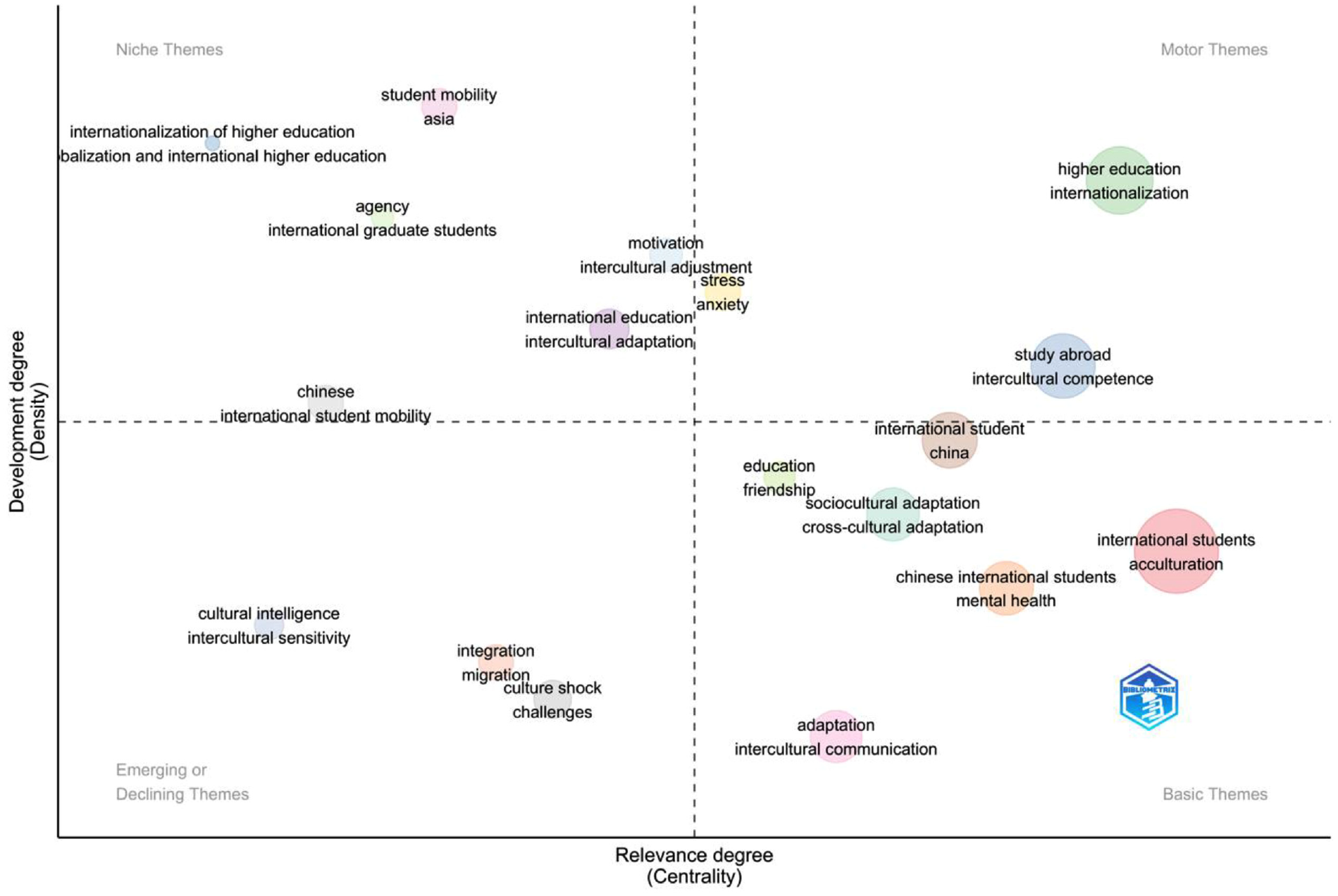
Thematic map based on keywords.
Specifically, in terms of motor themes, we can see that the hot topics mainly concern psychological challenges such as stress and anxiety, the development of international students’ intercultural competence, and the internationalization of higher education. These themes are developed themes and are essential for organizing the study topic. Researchers have used a diverse set of perspectives to examine such topics. For instance, based on Chinese international students, English et al. (2022), focusing on the relationship between COVID-19 stress and individuals’ anxiety, examined the critical roles of Acceptance, Reframing, and Striving (ARS) coping as well as family support coping strategy and wise reasoning. Schartner (2016), using a longitudinal approach, investigated the impact of studying a full degree abroad on intercultural competence (IC) development and found that studying abroad may impact more on the attitudinal/cognitive aspects of IC than its behavioral aspects. The niche themes are exemplified by studies on student mobility, especially in Asian countries like China, as well as their intercultural adjustment. As the population of international students, especially from Asia, has been expanding rapidly, researchers are paying attention to the various aspects of their intercultural adaptation in foreign contexts, such as academic adjustment (Quan et al., 2016; Wang & Hannes, 2014), mental health (Shim et al., 2014), acculturative stressors (J. Y. Pan & Wong, 2011; Wei et al., 2012), and coping strategies (Rhein, 2018). Regarding the basic themes, topics like higher education, Chinese international students, mental health, intercultural communication, sociocultural adaptation, and intercultural friendship are highly relevant research themes in the IAIS field. Although an array of studies has examined these topics (e.g., Glass et al., 2014; Khukhlaev et al., 2022; W. Li et al., 2014), these basic themes and hot topics represent central topics that are not fully developed within the IAIS field, thus having the potential for future research. As for the last quadrant, three aspects of research topics, including cultural intelligence and intercultural sensitivity, culture shock and intercultural challenges, and integration and migration, unfold as emerging/declining themes. To figure out whether these topics belong to emerging or declining themes, we took a closer look at specific articles with respect to international students’ adaptation within these three aspects. Among 124 documents closely related to these themes, 72 (58.06%) articles were published over the past 5 years (2017–2022) (e.g., Jieyi et al., 2022; J. Kim, 2020; J.-Y. Pan et al., 2019; Yang et al., 2018; Zhu et al., 2021), suggesting an emerging trend. These research topics are less developed, low in centrality, and possibly emerging themes, thus deserving more investigations. Overall, the thematic analysis in our study may provide important clues and directions for scholars within the domain to carry out more IAIS-related studies in the future.
Conclusion, Limitations, and Future Directions
Based on the WoS-Core Collection database, a detailed analysis was conducted examining the overall development conditions of IAIS research from 1990 to 2022 using bibliometric and network analytical tactics. 1,126 publications were obtained from particular manual filtration, illustrating 2,491 authors, 459 journals, and 1,025 institutions across 60 countries/regions. The key conclusions of the current study are as follows:
The field of IAIS has developed rapidly, especially since 2007, with the number of publications rising at an average growth rate of 13.56% per annum. Despite a slight drop between 2020 and 2022, partly because of the COVID-19 pandemic, this rising trend will probably continue, demonstrating that IAIS is a burgeoning research topic with a promising future and is attracting increasing attention.
At a country level, developed nations, especially the USA, secured vital leadership positions in terms of overall strength with the biggest publication output and a greater academic influence. As a representative of the world’s developing countries, China returned an excellent performance when it comes to high-yield institutions and authors. However, a gap remained between China and other leading developed countries. The top five most prolific institutions contributed 10.75% of all publications in the IAIS field, in which the University of Hong Kong and the University of Queensland generated the largest volume of publications. In terms of the productive journals, despite a wide distribution of articles published in different journals, the top five contributed 27.89% of the total publications, in which the most productive journal was International Journal of Intercultural Relations, accounting for 11.28% of all publications.
IAIS research is a multidisciplinary field since the related publications covered 109 subject categories. Education & Educational Research, Psychology Social, and Social Sciences Interdisciplinary were the top three subject categories that witnessed the publication of the most articles, accounting for 63.68% of the total. Furthermore, the different focus of each discipline warrants further research.
Brown L and Wang KT were the most productive scholars in this area, whereas Ward C, with the highest number of citations, exerted a significant influence in the field. Furthermore, academic cooperation in this area has become mainstream, with the USA and China being the most active and productive in terms of co-authorship publications. However, cooperation among scholars in the IAIS research needs to be enhanced, given that 30.85% of researchers’ publications were without academic collaborators. Academic collaboration should be intensified at national and institutional levels since currently, cooperation is limited to a few countries and institutions, and research foci vary between countries. Collaboration on research in the IAIS field can improve the quality and impact of research, while also encouraging cultural understanding and the creation of better support systems for international students. Concerning the number of citations in the study sample, the average number of citations of each paper is 18.41. It is also interesting to argue that the most-cited papers on IAIS, so far, are documents published from 1990 to 2010 and that despite the exponential growth in the number of articles published in the last decade, this has yet to be reflected in the citation count in most recent publications.
The article titled “The Prediction of Psychological and Sociocultural Adjustment during Cross-Cultural Transitions” is the most cited paper, indicating its prominent impact in this field, while the specific reasons contributing to this warrant further investigation since a host of factors can affect the citation count of publications. However, based on PageRank metrics, the article titled “Immigration, Acculturation and Adaptation” secured the topmost position in terms of prestige in the IAIS field.
The clustering and frequency analyses and knowledge mapping of the keywords reveal that the hot research themes in the field of IAIS can be mainly summarized in six categories: study abroad, adjustment, identity, adaptation, health, and international students. Through the analysis of keywords, this paper also examines the changing trends of hot topics that scholars are concerned about in the IAIS field. We observed that the research foci were dynamic and underwent temporal changes ranging from social capital, friendship, and sojourners around 2014 to topics like international student mobility, cultural distance, and COVID-19 around 2020. Moreover, the conceptual structure of IAIS research can be classified into two clusters encompassing intercultural adaptation processes and coping mechanisms (e.g., culture shock, cultural distance, social support, and cultural intelligence) as well as psychological, sociocultural and academic adaptation as IAIS outcomes (e.g., psychological well-being, life satisfaction, and academic performance). This conceptual structure is essential in developing an agenda for future research in the IAIS field. Also, our analysis based on the trend topics and word dynamics indicates that topics like acculturative stress, Chinese international students, international/higher education, coping strategies, and cultural distance may be seen as essential research fronts or hotspots in future studies. Finally, thematic development suggests a promising research trend in this area, particularly in analyzing cultural intelligence and intercultural sensitivity, culture shock and intercultural challenges, integration and migration using longitudinal panel data techniques or mixed methods.
With due reference to the significant research findings, we summarize the potential directions for future research progress on IAIS.
(1) IAIS research is expected to be more frequent and essential as the world is getting more economically, politically, and culturally connected, and an increasing number of students cross borders for education partly due to the internationalization of higher education. As a result, researchers should conduct more studies on the various aspects of IAIS, especially the major predictors, coping strategies, and outcomes. Meanwhile, research on Asian international students, particularly Chinese international students, may warrant further attention since this group forms a substantial portion of the global student community. Understanding their intercultural adaptation experiences can provide insights into broader trends and challenges related to international education. Furthermore, as China’s global influence continues to grow, studying the intercultural adaptation of its students can also provide insights into how global education dynamics might evolve, helping educators anticipate and address future challenges.
(2) Given that IAIS research involves various disciplines, such as education, psychology, sociology, linguistics, anthropology, health care sciences, etc., and current studies are mainly confined to individual disciplines, future research theorizing IAIS from the multidisciplinary perspective or based on a multidisciplinary approach is highly recommended.
(3) Brown L and Wang KT, the most productive scholars, and Ward C, the most-cited scholar, along with the International Journal of Intercultural Relations, the most prolific journal in this domain over the past decades, offer invaluable references for future researchers and policymakers as they are leading the frontier of IAIS research. Other influential researchers and journals are also good references for scholars delving into the realm of IAIS. Nonetheless, a meticulous evaluation of the distinct contributions made by these scholars and influential journals is imperative, given that a multitude of factors contribute to the citation rates and rankings of these authors and journals.
Although we have tried to integrate all the concepts related to IAIS research, inevitably, this study has its limitations. First, there may exist concepts that the authors have used that were not captured in the present study. For future studies, more consideration should be given to searching various and specific terms and examining their pivotal points in the field of IAIS research. Second, the WoS has been used as the only data source for this study even though it has been recognized as one of the most important; relying on only one database may not encompass all the relevant papers and articles regarding IAIS. Therefore, future studies should include various other sources such as Scopus, PubMed, ProQuest, ScienceDirect, or Google Scholar or use analysis of specific journals. Third, all the research articles retrieved from the WoS–Core Collection database are English-based, which may neglect important contributions of some studies in other languages like French, German, Chinese, Spanish, etc. Thus, future studies should include more languages other than English. Further study needs to make a comparison analysis among different languages from various academic and scientific databases in the domain of IAIS. Finally, the dataset was limited to journal articles, potentially not encompassing the entirety of available literature on IAIS. Subsequent research attempts could contemplate broadening the scope of data collection through the inclusion of other publication types (such as conference papers, book chapters, books, dissertations, and theses), thereby potentially enhancing readers’ understanding of the most recent advancements in the IAIS domain.
Footnotes
Acknowledgements
Thanks to Chang’an Zhang and Yu Cui for providing great support and academic guidance throughout the study.
Author Contributions
Declaration of Conflicting Interests
The author(s) declared no potential conflicts of interest with respect to the research, authorship, and/or publication of this article.
Funding
The author(s) received no financial support for the research, authorship, and/or publication of this article.

Data Availability Statement
Data sharing not applicable to this article as no datasets were generated or analyzed during the current study.