



Abstract
With the development of information and communication technology, virtual mobility, as an approach to internationalising education, allows students to receive cross-border education without going abroad through online educational interactions. Additionally, the outbreak of the COVID-19 pandemic accelerates the development of virtual mobility, and the challenges of virtual mobility come into the front, which leads to concerns about its sustainability in the post-pandemic era. This study aims to analyse the state and trends of virtual mobility research through a bibliometric analysis of the existing literature. A bibliometric study of 540 virtual mobility-related publications from the Scopus database, spanning from 1998 to July 2024, has been conducted. Performance analysis is utilised to examine the annual publication distribution, the main contributors (authors, journals, articles, affiliations and countries), and the top author keywords in virtual mobility research. Science mapping is adopted to reveal the social network and intellectual structure followed by themetic evoluation of keywords within virtual mobility research domain. The results indicate that the publication trend can be identified in three waves, with a sharp increase in the latest period. The dominant research hotspot is international students’ online education caused by COVID-19; and collaborative online international learning (COIL), student engagement, e-learning, and programme for international student assessment (PISA) are the four research areas with potential for further research.
Plain language summary
This study explores virtual mobility as a method for internationalising education, allowing students to access cross-border education online without travelling abroad, a trend accelerated by the COVID-19 pandemic. The research includes a bibliometric analysis of 540 publications from 1998 to 2024, sourced from the Scopus database. It examines publication trends, key contributors and top keywords in virtual mobility research, and uses science mapping to uncover the social network and intellectual structure of the field. The findings aim to support the sustainable development of virtual mobility and inform internationalisation strategies in higher education.
Introduction
In an era of growing global economic connectivity and interdependence, internationalisation has been a fundamental aim and centrality in higher education for decades (Knight, 2012; Rajagopal et al., 2020). Student mobility can encourage respect for diversity, self-improvement and employability, promote linguistic diversity, and increase cooperation and competition in higher education (Serpa et al., 2020), making it one of the top priorities of internationalisation (Knight, 2012; Villar-Onrubia & Rajpal, 2018). It is believed that intensifying engagement, interaction and dialogue among students and staff from different countries through student mobility leads to increased interactions and understanding among students, which has enormous potential to develop their intercultural competence (de Hei et al., 2020; Geibel, 2020). Furthermore, Ramaswamy et al. (2021) highlighted that student mobility was an instrument for delivering global citizenship and assisting in achieving the United Nations’ 2030 Sustainable Development Goals (SDGs) through improving cultural diversity. Therefore, promoting student mobility emerges as a fundamental policy in higher education (Aguado et al., 2014; Beech, 2018; Yang et al., 2022).
Student mobility has been more prevalent due to the increasing marketisation and internationalisation of education (Beech, 2018). However, various constraints, including financial, family, or occupational commitments, make it impossible for most of the students (Kim & Lawrence, 2021). As a replacement for physical mobility (Koris et al., 2021), virtual mobility can reduce these main obstacles (Altmann & Clauss, 2020). Additionally, COVID-19 has sped up the development of virtual mobility because of the lockdown policies, attracting a growing number of scholars to take virtual mobility as their research topic. Nonetheless, the lack of systematic understanding of the literature on virtual mobility highlights the urgent research need.
Acknowledging these imperatives, we delve deeply into the relative research publications on virtual mobility in this review paper. Notably, virtual mobility has inadequately been covered in bibliometric review papers, and the thematic evolution of keywords has not been applied in the bibliometric analysis of virtual mobility research, thereby future research trends and areas of exploration on virtual mobility have remained unclear. To bridge this gap, we employ the bibliometric technique to achieve the following objectives:
To examine the publications’ distribution in virtual mobility research.
To identify the top contributors, such as publications, authors, sources, affiliations and countries in virtual mobility research.
To explore the social connections and intellectual structure as well as thematic evolution of keyword within virtual mobility research domain.
The annual distribution of publications in virtual mobility research can provide insight into how the field is developing (Chen et al., 2022). Identifying top contributors may serve as guidance for academics and policymakers. Exploring social connections and intellectual structure can show the evolution and hotspots of the research and the tendency in the future (Sun et al., 2024). The findings will offer a deep understanding of virtual mobility, which benefits the development of virtual mobility and accelerate the educational internationalisation.
Literature Review
Definition and Theoretical Arguments of Virtual Mobility
There is a wide range of definitions attached to the term virtual mobility. In the context of education, virtual mobility refers to information and communication technology (ICT) supported activities that enable international learning, teaching, or collaborative experiences (Poce et al., 2019). Altmann and Clauss (2020) introduced virtual mobility from an intercultural perspective and described it as ICT-supported education involving cross-border cooperation with individuals studying together to enhance knowledge exchange and intercultural understanding. UNESCO defined it as the mobility that promotes cross-border academic, cultural, and experiential exchanges and collaboration with ICT, whether awarding credit or not (UNESCO, 2023). In traditional student mobility, students move across borders for education by transportation, while in virtual mobility, knowledge travels with the help of ICT. In this study, virtual mobility refers to any international education activities conducted through ICT to offer students cross-border education.
According to the fragmentation theory, various activities may increasingly be carried out virtually and become less reliant on time and location, which supports the development of virtual mobility (Konrad & Wittowsky, 2018). Based on cross-cultural theory, virtual mobility with more inclusion (Wadhwa et al., 2024), provides students an equal opportunity to acquire intercultural competencies (Davies-Vollum et al., 2024), bringing more inclusivity and equity to educational internationalisation (Carr & Beaudry, 2023). Therefore, virtual mobility, as an innovative instrument for internationalisation, has reformed the global education landscape.
Benefits of Virtual Mobility
It is costly to move physically in terms of time, money and energy, along with social costs (Jon, 2013; Ramaswamy et al., 2021; Storme et al., 2017). Though student mobility enriches intercultural experiences, it is expensive for students, educational institutions and society (L. Guan et al., 2023; Ubachs et al., 2010). Research findings have shown that students cannot benefit from traditional student mobility because of financial limitations or health crises (Guillén et al., 2020; Wadhwa et al., 2024). Eventually, physical mobility is not commonly accessible, and a few privileged students have the chance to receive international experiences (Altmann & Clauss, 2020). Combining internationalisation and digitalisation, virtual mobility ensures students obtain cross-border education without travelling (Hardiman et al., 2022; Poce et al., 2019), making student mobility much more accessible.
Moreover, virtual mobility provides intercultural experiences in a flexible, versatile, and inclusive way (Selmer et al., 2022; Villar-Onrubia & Rajpal, 2018; Woodman et al., 2023), especially for those with a physical disability who cannot move physically (López-Duarte et al., 2022; Maček & Ritonija, 2016), individuals unable to leave home (Selmer et al., 2022), and lifelong learners balancing work and family commitments (Eynon & Malmberg, 2021). To a certain extent, virtual mobility makes education much more widespread because it successfully removes geographical, physical and financial barriers (López-Duarte et al., 2022; Ng, 2022).
Maček and Ritonija (2016) pointed out that virtual mobility can serve as preparation for physical mobility. Institutions may offer their students international learning experiences by employing virtual mobility (O’Dowd, 2021). Virtual mobility enables students to be confident enough to overcome the challenges in their physical mobility because students can prepare for their physical experience in various ways, psychologically, interculturally and linguistically, through virtual mobility (Griggio, 2018).
Challenges of Virtual Mobility
Though virtual mobility has benefits, the lack of technology and infrastructural supply significantly challenges virtual mobility (W. Li et al., 2021). Higher education institutions (HEIs) should invest in virtual mobility to ensure successful implementation, such as constructing network infrastructures, maintaining stable internet access and developing the digital skills of faculties. The initial investment required for virtual mobility platforms is substantial, with limited short-term returns (Chirikov et al., 2020). In developing countries, funding for online learning is limited in HEIs (Ouma, 2021), which hinders the development of virtual mobility.
Reaching out to more students via virtual mobility can assist in reducing disparity in internationalisation but may also result in increased inequality (OECD, 2021). Underdeveloped technology, unstable internet connection and limited ICT infrastructure are the most prominent challenges in virtual mobility (Bali et al., 2021; M. Li & Ai, 2022; López-Duarte et al., 2022; Ouma, 2021). In South Africa, HEIs and students in rural locations face poor internet connectivity or even no access to the internet (Magadane et al., 2021). In Bangladesh, students cannot successfully attend online courses because of the unstable internet (Dong, 2020). The inequality of virtual mobility happens because of the uneven development of ICT technologies in different countries and even areas, which takes years and funds to develop.
Apart from the unstable internet connection, the quality of virtual mobility is greatly influenced by other factors, such as time differences, decreased teacher-student interaction, student engagement, limited feedback, the learning environment and digital skills (Huang, 2020; W. Li et al., 2021; Vyas, 2023), and even students’ prejudice and negative attitude (Ouma, 2021). Furthermore, due to a lack of technical literacy, various teachers cannot modify online teaching methods on time (Limaymanta et al., 2021), and students studying at home may find it challenging to focus, resulting in poor teaching quality and low learning outcomes (Yang et al., 2022).
In addition, students participating in virtual mobility may not have a deep sense of belonging to the HEIs (Yıldırım et al., 2021). Even though students have online interaction, they lack a sense of belonging compared with studying on campus, which can provide them with a great learning environment and good experiences of face-to-face interactions with others. All these interactions, participation and learning environments can contribute to a sense of belonging, which can hardly be attained through virtual mobility.
Development of Virtual Mobility After COVID-19
Regardless of the rapid advancement of ICT, virtual mobility is just beginning to be implemented in higher education (Altmann & Clauss, 2020). Still, a lot of people cannot enjoy access to virtual mobility (Bali et al., 2021). COVID-19 forced schools to close and shift education from onsite to online, dramatically altering student mobility from 2020 onwards (Hammond & Radjai, 2022; Wang, 2022), further accelerating the development and prevalence of virtual mobility (Minaeva & Taradina, 2022). A survey done by the International Association of Universities reported that 60% of HEIs around the world increased virtual mobility in 2020 (Marinoni et al., 2020), and 1 year later, 81% of HEIs reported an increase in virtual mobility (Jensen et al., 2022). For example, HEIs in Japan have expanded collaborative online international learning (COIL) programmes to facilitate virtual mobility (Hammond & Radjai, 2022).
Before the outbreak of the pandemic, HEIs hardly carried out virtual mobility projects (M. Li & Ai, 2022). Because of COVID-19, higher education has undergone a digital revolution (Strielkowski, 2022), and HEIs gradually realised the huge potential of virtual mobility. The unprecedented pandemic has allowed virtual mobility to be popularised and improved (Yang et al., 2022). The frequency of online activities increased significantly because of COVID-19 (Mouratidis & Peters, 2022). COVID-19 has increased public awareness of virtual mobility and its significant contribution to internationalisation, innovation and inclusiveness in higher education.
Research Gap
As virtual mobility develops, its benefits and challenges come to light, attracting the researchers’ attention. Moreover, maintaining the sustainable development of virtual mobility in the post-pandemic era becomes an issue, which leads to extensive research on virtual mobility. With the increasing publications in this research field, a systematic review of the publications on virtual mobility becomes essential.
Researchers have made bibliometric analysis of ICT-supported educational activities from various perspectives, such as e-learning (Djeki et al., 2022; Putro, 2023; Sobral, 2021b), massive open online courses (Sobral, 2021a; Wahid et al., 2020), distance education (Amoozegar et al., 2018; Hebebci, 2021; Yavuz et al., 2021), blended learning (Raman et al., 2021), telecollaboration and virtual exchange (Barbosa & Ferreira-Lopes, 2023) and flipped classroom (Limaymanta et al., 2021), but seldom bibliometric research has been done from the perspective of virtual mobility.
Furthermore, most of the science mapping in these bibliometric analysis within the research area focuses on co-author (Amoozegar et al., 2018; Djeki et al., 2022; Hebebci, 2021; Raman et al., 2021; Sobral, 2021a; Wahid et al., 2020; Yavuz et al., 2021), co-citation analysis (Hebebci, 2021; Raman et al., 2021; Sobral, 2021a; Wahid et al., 2020; Yavuz et al., 2021), and co-word analysis (Amoozegar et al., 2018; Djeki et al., 2022; Hebebci, 2021; Heradio et al., 2016; Limaymanta et al., 2021; Putro, 2023; Raman et al., 2021; Sobral, 2021a, 2021b; Wahid et al., 2020; Yavuz et al., 2021), without covering the thematic evolution and thematic map analysis. Barbosa and Ferreira-Lopes (2023) have brought in the thematic map, but without thematic evolution analysis, with a short covering year from 2008 to 2020. Our research intends to fill this gap by adopting thematic evolution analysis.
Methodology
Analytic Procedure
Because of online databases and professional analytical tools, there has been a boom in interest in the systematic study of scientific literature within certain research topics in recent years. Bibliometric analysis (Zupic & Cǎter, 2015), a rigorous tool to investigate and analyse huge amounts of data, can offer significant quantitative data in academic literature to present performance and science mapping, assess the research field development and predict future research trends. A few examplers of biblopmetric analysis include Ghasemy et al., (2023), Ghani et al., (2022), Sharma & Sharma, (2023), Limaymanta et al., (2021), Y. Li & Wang, (2023), and Jiangmei & Ghasemy (2025). To present the state and trends of virtual mobility research in a descriptive and visualised way, we adopted bibliometric analysis in this study.
Data Retrieval
Data mining was carried out on the Scopus database on July 31st, 2024. For bibliometric analysis, two of the most used databases are Web of Science (WOS) and Scopus (Singh et al., 2021). In our research, Scopus was chosen because of its broader coverage and wider range of disciplines (Baas et al., 2020; Ghasemy et al., 2023; Pham-Duc et al., 2023) and its more extensiveness than WOS in education (Pham et al., 2021).
As ICT and cross-border education are two fundamental elements of virtual mobility (López-Duarte et al., 2022), in order to best cover the literature related to our research topic, we used the term ‘virtual mobility’ OR ‘virtual learning’ OR ‘virtual exchange’ OR ‘online learning’ OR ‘e-learning’ OR ‘elearning’ OR ‘hybrid learning’ OR ‘blended learning’ OR ‘distance learning’ OR ‘open and distance learning’ to cover ICT supported educational activities. Given that COIL and internationalisation at home (IaH) are two primary forms of virtual mobility, we added ‘collaborative online international learning’ OR ‘COIL’ OR ‘international*ation at home’ OR ‘IaH’ into the search query. The combination of the terms ‘international learning’ OR ‘international education’ OR ‘cross-border learning’ OR ‘cross-border education’ OR ‘international student*’ OR ‘foreign student*’ OR ‘cross-border student*’ was adopted to limit the literature within the cross-border education context. The final query string is: TITLE-ABS-KEY ( ‘virtual mobility’ OR ‘virtual learning’ OR ‘virtual exchange’ OR ‘online learning’ OR ‘e-learning’ OR ‘elearning’ OR ‘hybrid learning’ OR ‘blended learning’ OR ‘distance learning’ OR ‘open and distance learning’ OR ‘collaborative online international learning’ OR ‘COIL’ OR ‘international*ation at home’ OR ‘IaH’ AND ‘international learning’ OR ‘international education’ OR ‘cross-border learning’ OR ‘cross-border education’ OR ‘international student*’ OR ‘foreign student*’ OR ‘cross-border student*’ )
Under the guidance of the PRISMA chart (Moher et al., 2009) and the PRISMA 2020 statement (Page et al., 2021), we generated Figure 1 to present the data extraction process. Firstly, we searched the query string on the database and then used Scopus filters to limit the data to journal articles. The conference papers, book chapters, reviews, notes, letters and data papers were excluded. Further, we chose the publication in English. Then, with the help of Publish or Perish 8.14.4639.8980, we evaluated the publications’ relevance to virtual mobility by checking the titles and abstracts, and 540 publications were generated as the final data to review.

Process of data extraction.
Data Refinement
Data including the publication’s title, author(s) name, affiliations, author keywords, abstract, journal name, volume, issue, page range, citation and the publishing year was extracted in RIS and CSV formats for data analysis and data visualisation. The extracted data usually needed cleaning, such as removing duplicate references and standardizing affiliation abbreviations. OpenRefine 3.7.6 was used to clean data by removing duplicates and merging synonyms. For example, we standardized terms by merging ‘Collaborative Online International Learning’ into ‘COIL’ and aligning ‘internationalization’ with the British English spelling ‘internationalisation’.
Data Analysis and Visualisation
Bibliometric analysis techniques can be divided into performance analysis and science mapping (Cobo et al., 2011). Performance analysis is a descriptive approach to presenting the productivity and impact of different research constituents (e.g., author, journal, article, affiliation, and country (Donthu et al., 2021)). Science mapping can classify and visualise the quantitative data, revealing the connections and thematic evolution (Zupic & Čater, 2015). To obtain a structured and comprehensive view of the literature on virtual mobility, we adopted both performance analysis and science mapping in this research.
We used Microsoft Excel to generate various diagrams and tables to describe and compile the annual publication distribution and the main contributors (authors, journals, articles, affiliations and countries). Biblioshiny feature of Bibliometrix R package 4.3.2 was utilized to develop the word cloud of the top author keywords to facilitate performance analysis in virtual mobility research.
Science mapping was realised with the help of VOSviewer 1.6.20 and Biblioshiny. VOSviewer was used to create a range of scientific maps to visualise quantitative relationships between research constituents to present co-word and co-author analysis. Biblioshiny was adopted to draw the thematic evolution and thematic maps of author keywords in three different periods to visualise the evolution of the themes in virtual mobility research. These analytics aided in the identification of both foundational and emerging research areas.
Results and Discussion
The research findings include basic results, performance analysis and science mapping. The performance analysis presented various aspects of virtual mobility research, including the publication trend, the leading authors, the top journals, the most influential articles, the most productive affiliations and countries and the top keywords. Additionally, science mapping was used to examine the collaboration network between countries, the thematic evolution of keywords, and thematic maps during three different periods.
Basic Results
Based on the primary data obtained from all the publications, 540 papers were authored by 1,591 researchers (average of 3.2 coauthors per publication), while 116 papers were single-authored. Notably, international co-authorship was relatively high, accounting for 27.59% of all publications. The average number of citations per document was 11.57. The dataset spans from 1998 to July 2024, covering 26 years, with a significant annual growth rate of 17.27%.
Performance Analysis
Citation analysis is the main technique for evaluating research performance, where the total citation (TC) a publication receives indicates its significance level within the research area (Heradio et al., 2016). The h-index is widely regarded as a reliable metric for assessing the quantity and influence of a researcher’s scholarly publications (Rojas-Sanchez et al., 2023). Number of publications (NP) is normally the primary indicator of research productivity (Raman et al., 2021). In this study, performance analysis adopted TC, NP as well as h-index which had been calculated from the 540 retrieved publications to identify the main contributors to virtual mobility research.
Publication Trends
Figure 2 presents the yearly publications’ distribution and citation trends. The first article on virtual mobility was published in 1998. The publication trend can be identified in three waves divided by the vertical blue dotted line. The first wave started from 1998 to 2009, with a relatively stable NP under 10 and low TC, which can be seen as the starting period. NP showed a steady uptrend from 2010 to 2020, with much higher TC, representing the second wave. This period can be considered as the stable growth stage. NP increased sharply in the third wave from 2021 until July 2024, entering the booming stage, mainly because COVID-19 accelerated the development of virtual mobility and attracted research on virtual mobility.

Annual distribution of the publications and citations.
Leading Authors
Table 1 lists the leading authors in the virtual mobility research field. Considering NP and TC, the most influential and productive scholars in virtual mobility research were Mei Tian from Xi’an Jiaotong University, Jie Hu from Zhejiang University and Ashley Gunter from the University of South Africa. Notably, they are experts in the research field of international students, ICT and distance education. According to our investigation, these researchers had contributed significantly to virtual mobility research, with a particular emphasis on sustainable development, and their work was garnering more and more attention.
Leading Authors.

Note. NP = number of publications; TC = total citations.
Top Publication Sources
Regarding the primary source of publications, 18 sources had at least 5 publications (see Figure 3). Most of these sources were logically relevant to education, educational technology and international education.

Top sources with NP ≥ 5.
Table 2 presents the most influential publication sources based on h-index (calculated from the 540 retrieved publications), TC, and NP. The Journal of Studies in International Education, with an h-index of 9, possessed 23 publications, making it the top journal in this research field.
Most Influential Sources.

Note. TC = total citations; NP = number of publications.
Most Influential Publications
The 10 most influential publications based on TC, along with their corresponding journals, are shown in Table 3. Notably, three publications received more than 200 citations. Demuyakor (2020) used an online survey to find out how satisfied Ghanaian international students were with online education in Chinese HEIs during COVID-19 and found that most students favoured online learning programmes, while they encountered significant challenges like expensive internet connection and time zone differences. Soria and Troisi (2014) compared the students in an IaH programme with students in physical mobility and found that IaH may result in higher perceived advantages in developing global and intercultural competence. Rovai and Downey (2010) discussed the key factors influencing the success of online global programmes: planning, faculty development, quality assurance, financial management, marketing and recruitment, student retention and online course design and pedagogy.
Top Publications With TC > 90.

Note. TC = total citations.
Among the top 10 publications, four focused on exploring IaH, and two explored online education during the pandemic. it is noteworthy that IaH and COVID-19 were two research hotspots in virtual mobility research, which attracted researchers’ attention. From the methodology perspective, virtual mobility was equally important for quantitative and qualitative researchers.
Top Affiliations
Altogether, researcher affiliated with 696 institutions participated in publishing research on virtual mobility. Figure 4 displays the top 10 affiliations according to NP. Coventry University took the leading position with 25 publications, with a significant contribution from its Research Centre for Global Learning. Zhejiang University possessed 22 publications, mainly from the School of International Studies. The investigation discovered that four institutions were based in China (including one in Hong Kong), two in the United Kingdom, two in Australia, one in Japan, and one in the United States.

Top affiliations with NP ≥ 12.
Top Countries
The top countries, according to NP, are presented in Figure 5. It is evident that, with an impressive 140 publications, the United States held a dominant position followed by China, the United Kingdom and Australia, each with 74, 71 and 57 publications, respectively. The top 10 countries included four European countries, two Asian countries, two American countries, one Oceanian country and one African country, covering five continents. Figure 5 also reveals that developed countries took the leading position in the virtual mobility research since 8 developed countries were in the top 10.

Top 10 countries with NP > 16.
Top Author Keywords
Keyword analysis facilitates the further development of research hotspots and enables the discovery of novel frontier problems (Rejeb et al., 2022). With the help of Biblioshiny, word cloud analysis was conducted by selecting the author keywords that made at least five appearances, and the result is presented in Figure 6. The word’s magnitude in the word cloud map represents its frequency. The top three author keywords were international students, online learning and COVID-19, with respective frequencies of 92, 83 and 79. As the high frequency of keywords reflects the hot topics in the research field (Lu et al., 2021), the top three keywords might indicate that international students’ online education caused by COVID-19 is a hotspot in virtual mobility research.
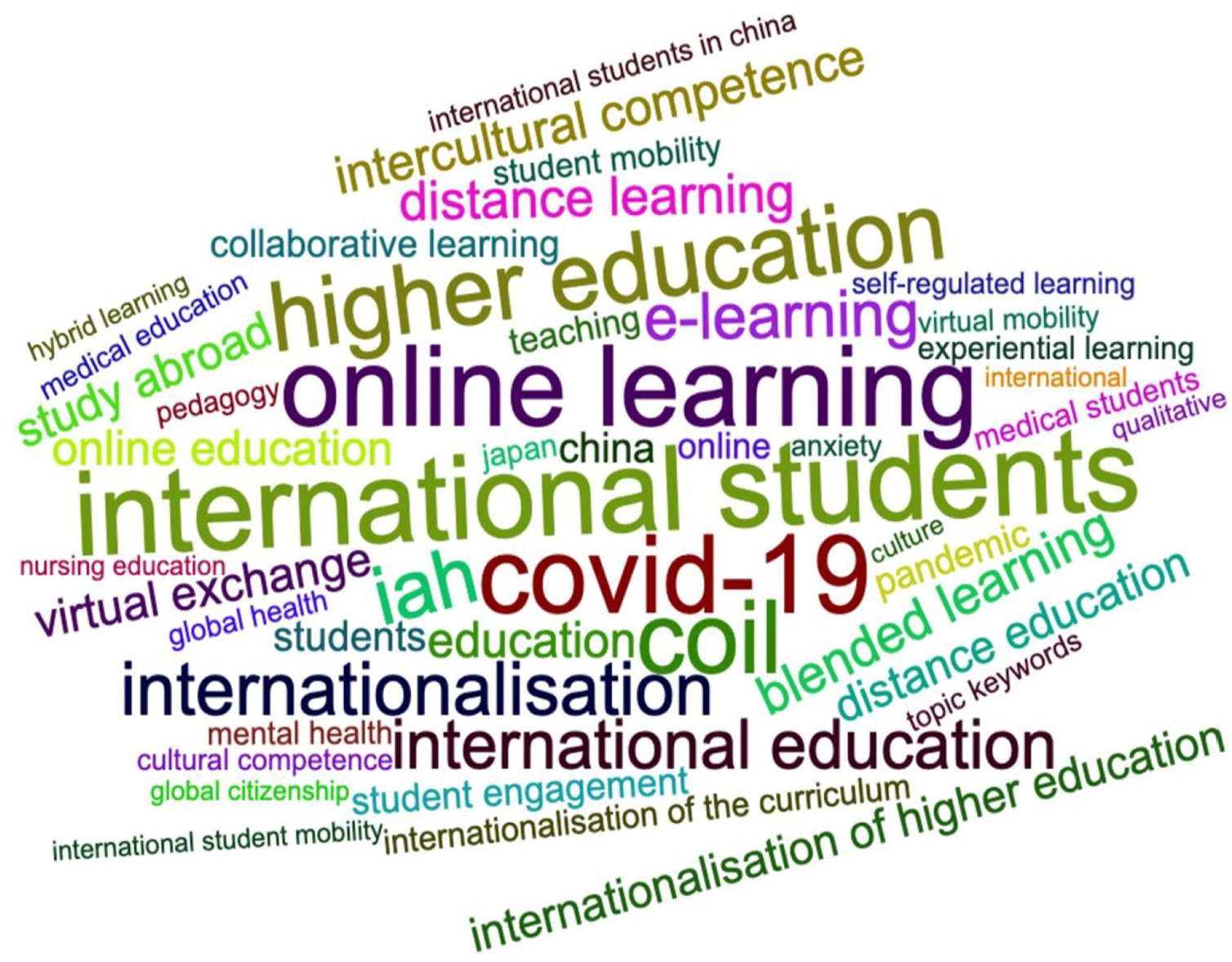
Word cloud of author keywords with occurrences ≥5.
Science Mapping
In this section, science mapping, investigating the connections between research constituents (Donthu et al., 2021), is provided to support and enhance the performance analysis of the virtual mobility research. Co-word and co-author analyses, as two primary methods of science mapping, were utilised to present the social network and intellectual structure of the research field. Co-author analysis may investigate cooperation at the institutional and national level, which is a reliable indicator of social connections (Zupic & Čater, 2015). Co-word analysis, with the network of themes and the relationships between these themes as output, can construct interconnections and establish the intellectual structure of the research area (Zupic & Čater, 2015).
Collaboration Network Between Countries
Based on co-author analysis, the collaboration network between countries (Figure 7) was generated using VOSviewer. The collaboration network indicates the development level of the research field. The greater the frequency of collaboration, the more profound the development in the research field (Y. Li & Wang, 2023). Regarding the number of publications, 94 countries in the world contributed to this area of research, and 30 countries had at least five publications. As Ukraine has no connection to other countries in virtual mobility research, Figure 7 presents the collaboration network between the other 29 countries.

Collaboration network between countries.
These countries were grouped into seven clusters with distinct colours. The size of the words and nodes presents NP from the countries, and the lines’ thickness shows their links’ strength. According to this approach, the diagram indicates that the United States, the United Kingdom, China, and Australia significantly contributed to the research field with strong collaboration with other countries. Despite belonging to different clusters, the United States maintained strong cooperation with China and the United Kingdom, as evidenced by the thickness of the line connecting countries. The global collaboration networks in this research field remained independent of geographic proximity, besides some degree of cooperation between neighbouring nations.
Co-Occurrences of Author Keywords
Co-word analysis can be used to analyse keywords, focusing on the concept as the unit of analysis (Zupic & Čater, 2015). Keywords are indicative of the fundamental information that represents the primary substance of the publications (Kavacik et al., 2023; Y. Li & Wang, 2023), and the keyword co-occurrence analysis can show the evolution (Donthu et al., 2021).
VOSviewer was used to analyse the co-occurrence of 1,498 author keywords, with 5 as the minimum number of occurrences of a keyword and the result showed that 46 author keywords met this threshold. Based on these keywords, Figure 8 was generated to present the connection between them. The size of the nodes determines the weight of the occurrences. The distance between the two nods reflects the strength of their relationship. Typically, a shorter distance reveals a stronger relationship. The thickness of the line connecting two author keywords indicates their frequency of co-occurrence. As shown in Figure 8, international students, COVID-19, higher education, and online learning had solid relationships and high frequencies of co-occurrence, indicating that international students’ online learning caused by COVID-19 was a research hotspot in virtual mobility research.

Co-occurrences of author keywords.
A cluster comprises keywords with the same theme (Goyal & Kumar, 2021; H. Guan et al., 2023) and is presented in nodes with the same colour. Six keyword clusters were distinguished by the different node colours in Figure 8. Table 4 was generated to show the detailed results of the six clusters of author keywords.
Six Clusters of Author Keywords.
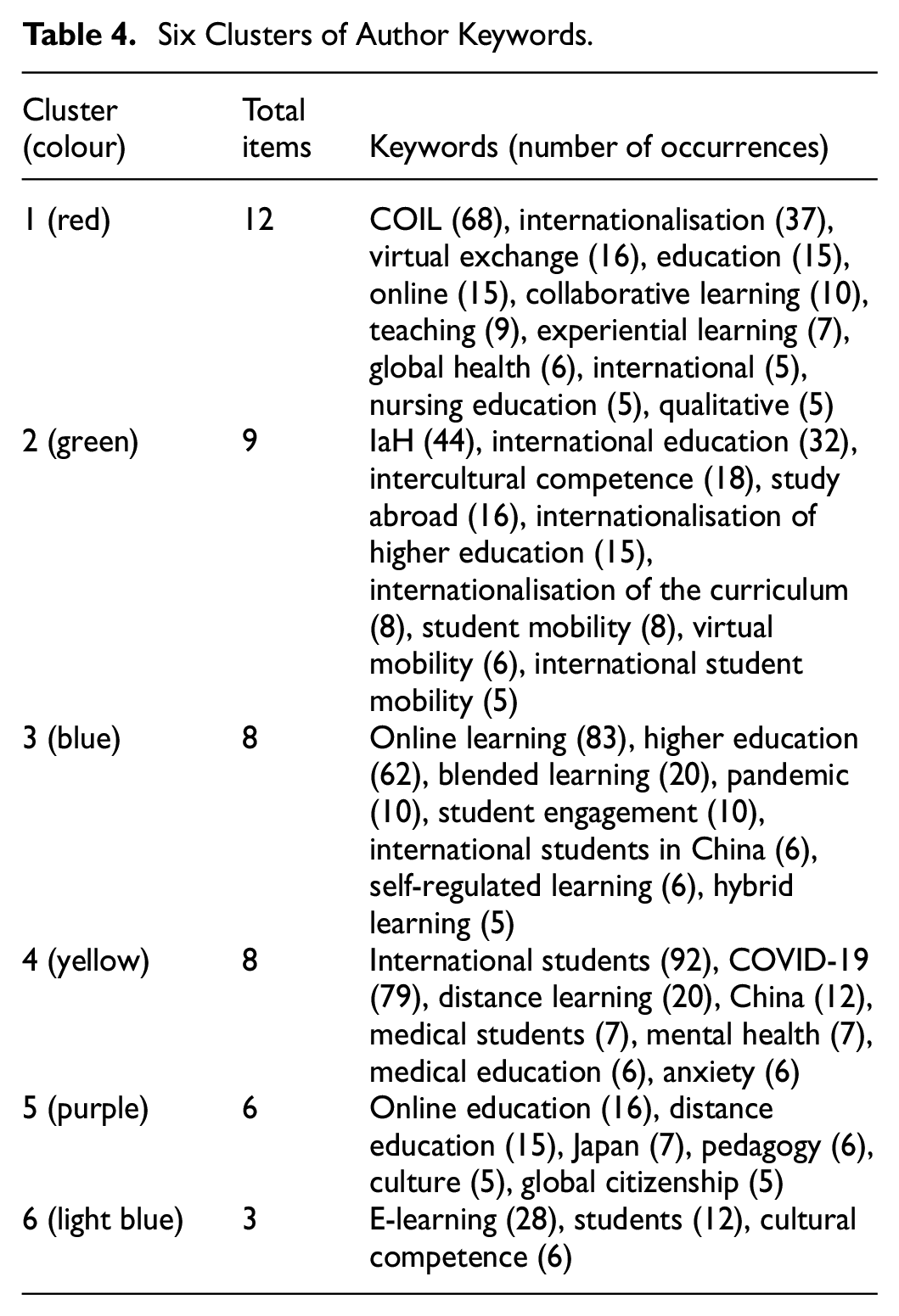
Cluster 1 is the biggest cluster, with 12 items revolving around COIL and its impact on internationalisation. Cluster 1 also highlights the importance of experiential learning, global health and nursing education. Cluster 2 focuses more on IaH and international education. The intercultural competence of international students during virtual mobility is a research hotspot. Cluster 3 emphasises the importance of online learning in higher education, especially during the pandemic period. Keywords in Cluster 3 also underscore the popularity of research on student engagement and self-regulated learning in online learning. Cluster 4 mainly centres on the distance learning of international students during the COVID-19 period. Medical education, mental health and anxiety are the research hotspots in this cluster. Cluster 5 highlights the importance of pedagogy, culture and cultivating global citizenship in online education. Cluster 6 is the smallest cluster, with three items focusing on students’ cultural competence in e-learning.
The co-occurrence analysis of author keywords offers a comprehensive overview of research hotspots and a deep understanding of the virtual mobility research landscape, which may guide academics, educators and policymakers in promoting the research and development of virtual mobility in the future.
Thematic Evolution of Author Keywords
Cobo et al. (2011) asserted that in mapping science, a theme refers to a cluster of interconnected keywords, and the thematic evolution can be quantified and visualised by analysing co-words in a longitudinal framework. To delve further into the author keywords, Biblioshiny was used to generate a thematic evolution map to provide an insightful analysis. The default parameters of Biblioshiny (number of words is 250, min cluster frequency per thousand documents is 5, weight index is inclusion index weighted by word-occurrences, and min weight index is 0.1) were used with additional settings (number of labels for each cluster is 1, and for time slices, the number of cutting point is 2 with the cutting years 2009 and 2020 following the above mentioned three waves of publication trend).
Figure 9 clearly shows the changing tendency of the themes in virtual mobility research. The development of the themes throughout time is indicated by the rectangles that go from left to right (Helal et al., 2023). From 1998 to 2009, online education, distance learning, higher education, culture, and IaH were significant themes in the research field. The themes increased to 13 between 2010 and 2020, with novel fields emerging, such as international students, international education, online, pedagogy, employability, education, student engagement, COIL, blended learning, innovation and China. These emerging themes revealed that research on virtual mobility became much more specialised in this period. In the third period, from 2021 to 2024, COVID-19, COIL, online international learning, e-learning, and student engagement were the areas of interest in this research field. These themes indicated that publications in this period mainly centred on international students’ online learning caused by COVID-19. COVID-19 significantly affected and dominated the virtual mobility research. This was in accordance with the sharply increased publications in this period. Notably, student engagement was the research focus lasting from 2010 to 2024, indicating that student engagement in virtual mobility was a great concern to the researchers.
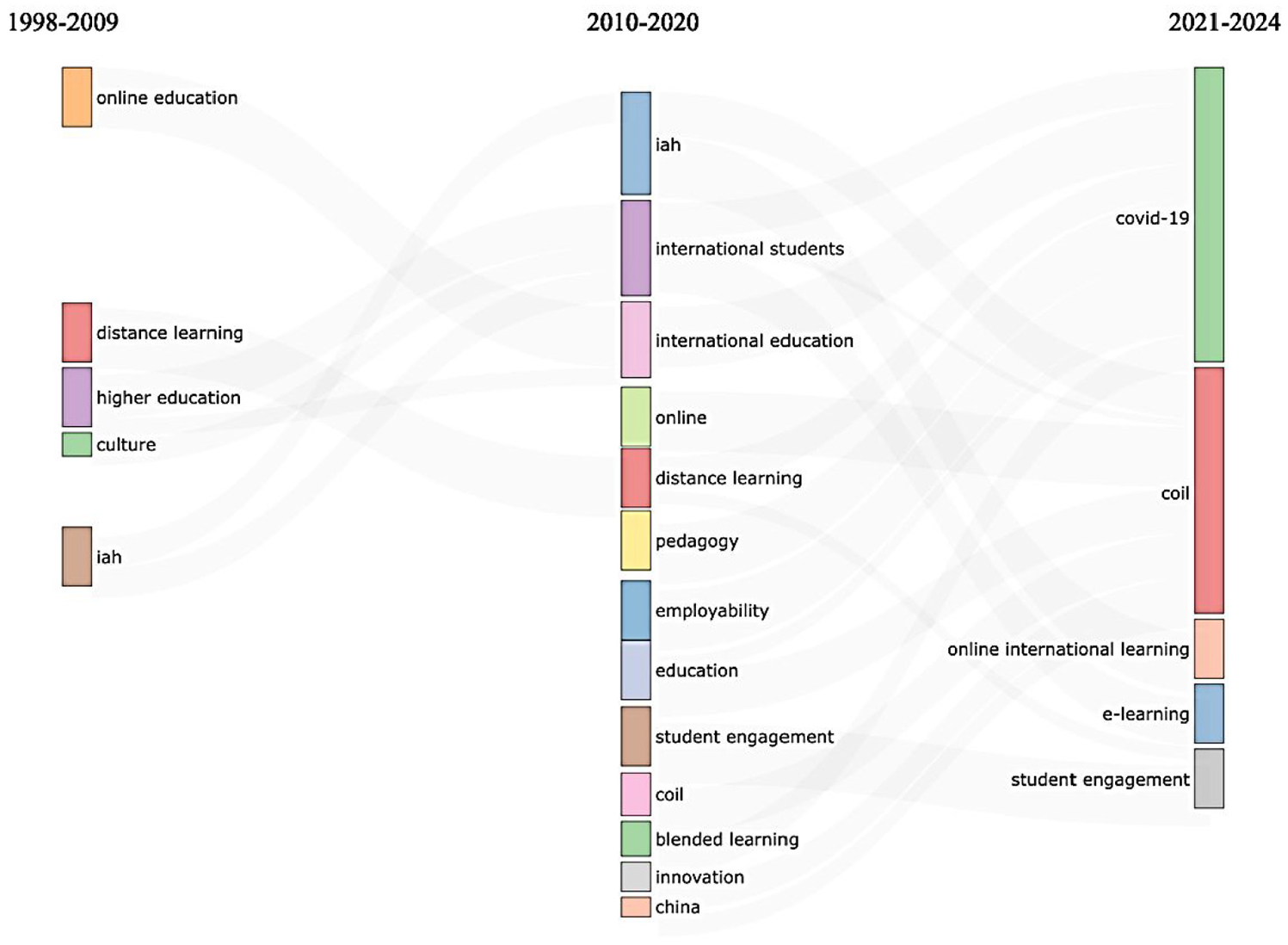
Thematic evolution of author keywords (1998–2024).
Thematic Map of Author Keywords
A thematic map is a two-dimensional strategic diagram with four quadrants mapped according to the centrality and density rank values, making a research field visualisable (Cobo et al., 2011; Helal et al., 2023). According to Cobo et al. (2011), the themes in the upper-right quadrant are motor themes, which are well-developed and crucial for structuring a research field and have an external relationship with concepts that apply to other closely related themes conceptually. The themes in the upper-left quadrant are niche themes with only marginal importance for the research field. They have strong internal but weak external ties, making them highly specialised and distinctly peripheral. The themes in the lower-left quadrant are emerging or declining themes with low density and low centrality, which are poorly developed and marginal, mainly representing emerging or disappearing themes. The themes in the lower-right quadrant are basic themes, significant for a research field but lacking development, making them transversal, general and essential.
We created three thematic maps based on the author keywords’ thematic evolution. Each cluster is labelled with the author keywords that occur most frequently, and the size of each circle represents the frequency of the keywords in that cluster, signifying the relative importance of the thematic cluster.
As shown in Figure 10, five clusters of author keywords were identified from 1998 to 2009. Culture and higher education are clusters categorised into motor themes, indicating their importance in virtual mobility research. Open and distance learning, and online education are the two overlapping clusters situated between niche themes and emerging or declining themes. These two clusters signify a connection between uncommon themes and more specific topics within virtual mobility research. The cluster IaH belongs to emerging or declining themes, indicating that it is significant to the specialised trends of the research field. Cluster distance education is a basic theme, showing its importance in future research.

Thematic map (1998–2009).
Eighteen clusters of author keywords were found between 2010 and 2020 (see Figure 11). Among these clusters, innovation belongs to the niche themes, providing a more specialised understanding of the research field. IaH, distance learning, blended learning, elearning and China are five clusters that stand out as motor themes. These clusters reflect the most influential and prominent trends in virtual mobility research from 2010 to 2020. Four clusters fall into the basic themes, pedagogy, COIL, education and international students, which are essential and popular in the research field. Lastly, the cluster of international education and seven overlapped clusters, which are employability, online, conversation analysis, interactive learning, student engagement, engineering education, and virtual learning environment, are emerging or declining themes. These low centrality and density clusters are not well developed in this period. The comparison between Figure 10 and Figure 11 shows that the cluster distance learning moves from basic theme to motor theme, demonstrating that distance learning as a future research trend from 1998 to 2009 has become the research hotspot from 2010 to 2020.

Thematic map (2010–2020).
The thematic map during the period from 2021 to July 2024 was presented in Figure 12, including 14 clusters of author keywords in the research field of virtual mobility. Among these clusters, COIL, teaching and digital reading are categorised as motor themes. These clusters show well-developed and vital keywords in the research field in this particular period. One interesting finding is the cluster COIL located in the basic themes in Figure 11 from 2010 to 2020 moves to the motor themes quadrant with only a tiny portion in the basic themes quadrant in Figure 12 from 2021 to 2024, indicating it has become the research trend and attracted research on it. Four clusters of keywords are identified as the niche themes, including IaH, collaborative online learning, information literacy and educational innovation. These clusters represent a specialised trend in the research field. Furthermore, three clusters belong to emerging or declining themes. These themes, including Chinese as a foreign language, online educational learning and Chinese international students, may have a decline or transition in focus in the future. Finally, our analysis finds four clusters under basic themes, which are COVID-19, student engagement, programme for international student assessment (PISA), and e-learning. These general themes need further research and may become crucial in the research field in the future.
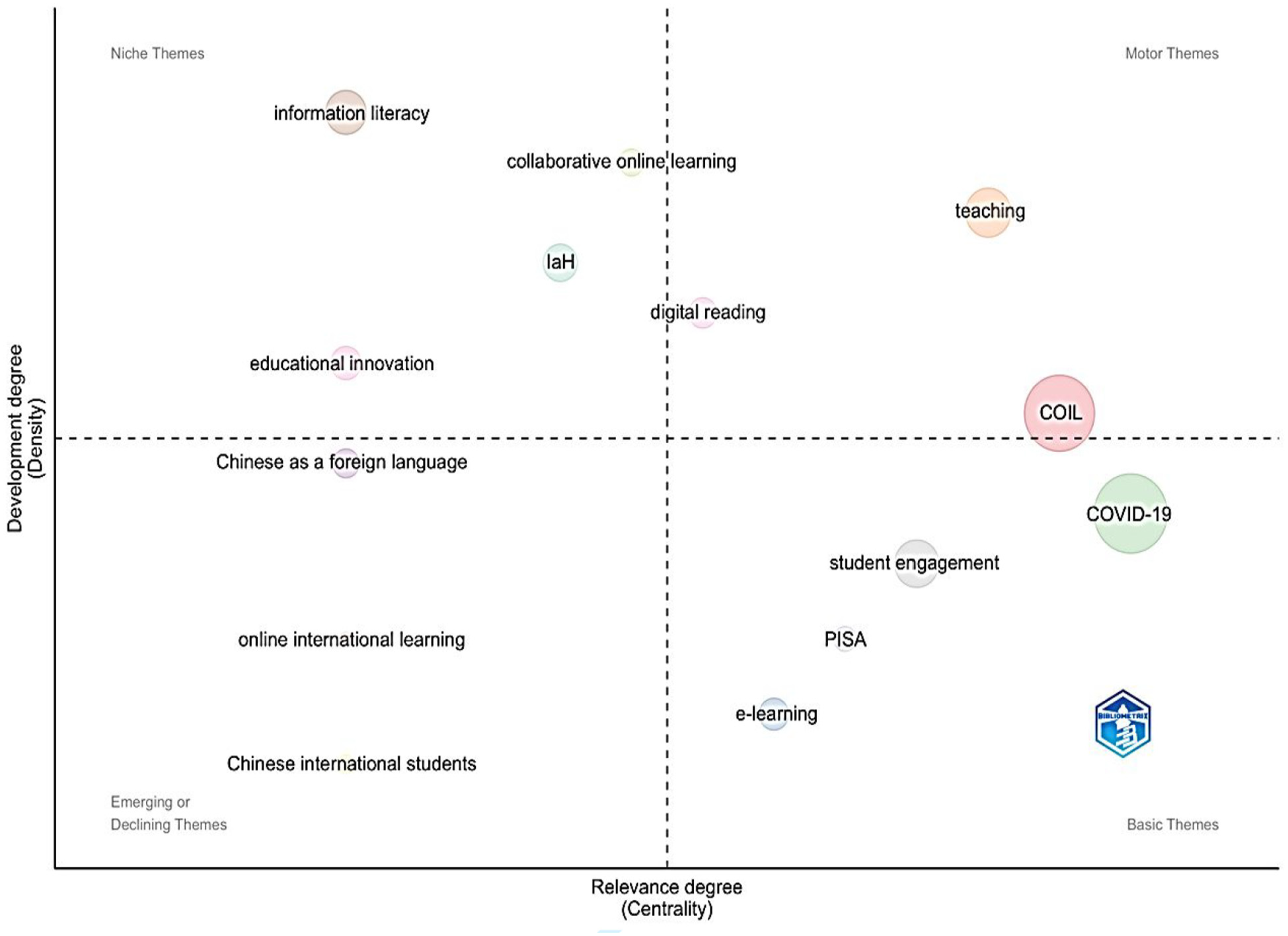
Thematic map (2021–2024).
Conclusion
In this study, a series of scientific knowledge graphs within the virtual mobility research domain from 1998 to 2024 were drawn using publication data from the Scopus database. The state and evolutionary trends of the research on virtual mobility were presented. These findings provide a fundamental and essential foundation for future research on virtual mobility, supporting its growing prominence in international education.
Publications have been steadily increasing, with a notable rise in the last 4 years after the outbreak of COVID-19. It is worth noting that the prevalence of virtual mobility during the COVID-19 period attracted several research on it. There is significant potential for further development in virtual mobility research, especially exploring the sustainability of virtual mobility in the post-pandemic era.
Mei Tian from Xi’an Jiaotong University, Jie Hu from Zhejiang University and Ashley Gunter from the University of South Africa are the most productive and influential authors with high NP and TC. All of them are authors from developing countries. Interestingly, an analysis of the top 10 contributing countries revealed that developed nations produced the majority of publications. This highlights the need for enhanced collaboration between developed and developing countries to further advance both the quantity and quality of research on virtual mobility.
The Journal of Studies in International Education was identified as the most productive and influential source in virtual mobility research, revealing that virtual mobility is a research interest for scholars specialising in international education. As an important way to promote the internationalisation of education, virtual mobility may lead international education in a novel direction with rapid development.
The study Demuyakor (2020) was found to be the most influential article in virtual mobility research with the highest TC.
International students, online learning and COVID-19 were also found to be the top three author keywords in virtual mobility research. The thematic evolution revealed that student engagement is the only theme lasting for two periods, which is a great concern to the researchers in virtual mobility. Hence, further research on student engagement in virtual mobility programmes is highly suggested. The thematic maps presented the distribution of research hotspots in the three periods and indicated research trends in the future. We observed that topics such as COVID-19 (or any other similar health crisis of the same scale), COIL, student engagement, e-learning and PISA are potential research topics in the coming years. Future research can rely on these existing research hotspots to delve deeper.
This systematic review of virtual mobility provided a comprehensive overview of its development since 1998, addressing a significant gap in the literature. The study identified key research themes and offered a valuable foundation for future scholarly exploration and theory development in international student education.
The findings offer practical insights for academics, educators, and students interested in advancing the field, while also guiding policymakers in designing or reforming virtual mobility programmes to support internationalisation efforts. For HEIs, the study might be useful in formulating strategies to enhance student engagement, improve support services, and overcome challenges in implementing virtual mobility. Ultimately, the research contributes to the sustainable development of international education, particularly in the post-pandemic era.
Limitations and Future Research
This study has a few limitations. First, relying solely on the Scopus database may have resulted in the exclusion of relevant studies indexed elsewhere. Future research could enhance the comprehensiveness of analysis by incorporating multiple databases. Second, the focus on English-language publications may have overlooked valuable studies in other languages; this limitation could be addressed by including non-English sources in subsequent research. Lastly, only journal articles were analyzed, whereas future studies may consider a broader range of document types.
Footnotes
Acknowledgements
The authors would like to express their sincere appreciation to their families for their unwavering support throughout the completion of this study. This paper is based on the PhD research of Wang Ting, conducted under the supervision of Dr. Majid Ghasemy, titled “A Study on Cross-Cultural Adaptation of International Students in Chinese Higher Vocational Colleges.”

Ethical Considerations
The Universiti Sains Malaysia (USM) ethical committee protocol code of this study is ‘USM/JEPeM/PP/23050425’.
Funding
The author(s) received no financial support for the research, authorship, and/or publication of this article.
Declaration of Conflicting Interests
The author(s) declared no potential conflicts of interest with respect to the research, authorship, and/or publication of this article.
Data Availability Statement
The publications analysed in this bibliometric study can be accessed from the Scopus database using the query provided under the methodology section of this paper.