




Abstract
This study examines the role of graffiti as a medium in urban spaces, particularly in the context of Macau. Graffiti, seen as a form of artistic expression, has the potential to invigorate and enliven public spaces. Utilizing visual ethnography methods and analyzing cultural policies, the paper aims to examine the presence of graffiti in various neighborhoods within Macau. The concept of nostalgia also serves as a theoretical framework to understand how graffiti can evoke memories and create an emotional connection to the past. By investigating hotspots like Largo do Estaleiro, Rua de S. Tiago da Barra, and the vicinity surrounding Ruins of St. Paul’s through interviews with residents and an examination of distribution patterns, we aim to comprehend how these graffiti sites can establish a link to history and contribute to a shared memory and sense of locality. The findings of this research have important implications for urban planning and cultural policy in Macau, as they highlight the significance of incorporating graffiti as a legitimate form of public art that can contribute to the cultural identity and sense of nostalgia in urban spaces.
Plain Language Summary
Nostalgia and Graffitti This study examines the role of graffiti as a medium in urban spaces, particularly in the context of Macau. Graffiti, seen as a form of artistic expression, has the potential to invigorate and enliven public spaces. Utilizing visual ethnography methods and analyzing cultural policies, the paper aims to examine the presence of graffiti in various neighborhoods within Macau. The concept of nostalgia also serves as a theoretical framework to understand how graffiti can evoke memories and create an emotional connection to the past. By investigating hotspots like Largo do Estaleiro, Rua de S. Tiago da Barra, and the vicinity surrounding Ruins of St. Paul’s through interviews with residents and an examination of distribution patterns, we aim to comprehend how these graffiti sites can establish a link to history and contribute to a shared memory and sense of locality. The findings of this research have important implications for urban planning and cultural policy in Macau, as they highlight the significance of incorporating graffiti as a legitimate form of public art that can contribute to the cultural identity and sense of nostalgia in urban spaces.
Introduction
Graffiti has emerged as a popular art form in urban spaces, adding vibrancy and vitality to public areas. It is an expressive artistic creation and a form of visual communication that aims to attract the attention of the audience and provoke thought (Decker & Curry, 2020). The alternative views emphasize that graffiti is not just an act of vandalism or a sign of social disorder, but rather a form of artistic expression that can foster cultural identity and solidarity with communities (Bruce, 2019). In recent years, scholarly research has started to examine graffiti from various perspectives, including its social, artistic, and political context. Studies have also explored the role of graffiti in uncovering deeper urban temporalities and influencing the actions of modern inhabitants (Shi, 2022). However, there is limited research that specially examines the role of graffiti in evoking nostalgia and constructing cultural identity in the context of urban spaces. Therefore, this paper aims to address this research gap by exploring how graffiti can serve as a mechanism for evoking nostalgia and promoting cultural identity in urban spaces, particularly within the context of Macau. The significance of this study lies in its utilization of visual ethnography methods and analysis of cultural policies to provide a comprehensive understanding of the role of graffiti in establishing a link to history and contributing to a shared memory and sense of locality in Macau.
Macau, People’s Republic of China, a previous colonial region of Portugal, holds a rich cultural heritage that is reflected in its architecture, language, and traditions. The fusion of Chinese and Portuguese influences has created a distinctive cultural identity in Macau (Mo, 2013). Graffiti, as a form of visual expression, has the potential to capture and convey this cultural hybridity in a way that resonates with the inhabitants of Macau. By examining the graffiti in Macau through the lens of nostalgia, we can gain insights into how this public art contributes to the construction and preservation of cultural identity in the city. Furthermore, understanding the role of graffiti in evoking nostalgia can also shed light on how urban spaces are transformed and shaped by the collective memory of its inhabitants and how they engage with their surroundings. Moreover, analyzing the cultural policies related to graffiti in Macau will provide insights into the official stance on public art and its role in preserving and promoting cultural heritage.
This study will adopt a visual ethnography approach, which involves observing and analyzing the graffiti in Macau to understand the themes, symbols, and messages embedded within these artworks. In addition to visuals, other research methods can also be employed to further understand the cultural significance of graffiti in Macau and its role in evoking nostalgia. These include informal interviews with community members, passersby, and local artist, archival research to trace the historical development of graffiti in Macau, and analysis of social media platforms and public discourse surrounding graffiti in the city. The fieldwork began at the end of 2021 and lasted for 18 months, encompassing different seasons and capturing the evolving nature of graffiti art in Macau. During the fieldwork, we visited 184 sites at a frequency of 2 to 3 times per week to observe graffiti images on the Macau Peninsula, Taipa, Coloane, and Cotai.
The perceptions of the participating researchers were positioned as part of the research, acknowledging their subjectivity in interpreting, and understanding the graffiti artworks. Additionally, the selection criteria for graffiti objects in this study are related to the cultural programming and policy context of Macau as well as the themes and messages conveyed by the artists throughout their work.
Studies of Graffiti from a Global and Local Perspective
Graffiti is a form of artistic expression that involves the creation of visual imagery, symbols, and messages on public surfaces such as walls, streets, and buildings without permission from the property owner (Chehade, 2018). Many saw graffiti art as a way of expressing themselves and their identities, but also as a means of telling a story about their lives and/or social commentary (Tsilimpounidi, 2015; Zhang, 2017). According to Abel and Buckley Basthomi, graffiti encompasses a wide range of forms, including symbols, scratches, drawings, signs, and paintings found on walls or anywhere, regardless of the inspiration behind them (Al-Khawaldeh et al., 2017). The prevalence of imagery, graffiti in this case, in the built environment plays a meaningful role in our daily experience of urban space. Investigating the content depicted, story told, colors painted against concrete or wooden texture, text displayed, helps us to understand the values of social and cultural surroundings. In the context of this research, graffiti is defined as the visual artworks and messages created in public spaces, typically using spray paint or any form of marking facades to communicate ideas, emotions, or cultural memories.
The writing tradition of graffiti can be traced back to ancient civilizations, where markings and inscriptions on walls served as a means of communication and expression. In ancient Egypt, for example, hieroglyphics were a form of graffiti that conveyed important religious and historical information. Similarly, the inscriptions found in Pompeii provide valuable insights into the daily lives and beliefs of its inhabitants (Lewisohn, 2008). In the modern context, however, graffiti has often been associated with rebellion, vandalism, and illegal activities (Brewer, 1992). Although there are certainly instances where graffiti crosses the line into vandalism, it is important to recognize that graffiti also has a rich artistic and cultural value. Contemporary graffiti artists often incorporate a variety of techniques and materials, such as spray paint, stencils, stickers, and wheat-pasting, to create their artworks (Verhoeven et al., 2022). These artworks are often characterized by their vibrant colors, intricate designs, and powerful messages (Feitosa-Santana et al., 2020). In Asia, graffiti has received increased recognition and acceptance as a legitimate form of art in recent years (Chang, 2019; Kamaruddin & Ishak, 2022). This trend can be attributed to the growing appreciation for urban art and the acknowledgment of its role in promoting cultural identity and artistic expression. Additionally, as McAuliffe (2012) pointed out, rich cultural programs and public art policies have played a crucial role in fostering the growth and recognition of graffiti as a medium of expression in urban spaces.
The examination of graffiti in Macau is positioned within the larger framework of graffiti research in China and throughout Asia as a whole. Previous Chinese graffiti studies have highlighted various socio-cultural factors that influence the production and reception of graffiti, including political climate, social norms, and urban development (Pan, 2015; Smith, 2020; Valjakka, 2015). While the relevance of these studies to this paper is weak, they provide a broader context for understanding the role of graffiti in Macau. In the case of Singapore, government initiatives to embrace street art and graffiti in public spaces have contributed to a flourishing urban art scene, examining the fine balance between artistic expression and public order (Chang, 2020). This a positive example for Macau to consider in its own approach to graffiti.
In Macau, in terms of the academic notions of street art, mural, and graffiti, there is still a need for further research and exploration. Locally, general speaking, in the eyes of public, graffiti is often regarded as a form of vandalism or illegal activity while street art is seen as a more ambiguous and inclusive term. Mural art, for example, is often commissioned by local authorities or businesses and is viewed as a way to beautify and enhance public spaces. However, the distinction between mural art and graffiti becomes blurred when considering the creative and expressive elements that graffiti can encompass. Therefore, it is vital to differentiate between graffiti as a legitimate form of artistic expression in order to fully appreciate its cultural significance (Kizilkan & Ocakçi, 2020). Fortunately, there are efforts to change this perception and promote graffiti as a legitimate art form in Macau. Macau has long been known as the “gambling city,” but since 2000, 1 it has been actively working toward diversifying its art and cultural scene. The Macau Special Administrative Region (SAR) government has invested in various cultural projects, including public art initiatives, to promote and preserve its cultural identity. One such initiative is the inclusion of graffiti art in public spaces (Zhang & Chan, 2022). Policymakers in Macau recognize the power of graffiti as a form of public art to engage and connect with residents and visitors, allowing them to explore and experience Macau’s unique cultural heritage in a contemporary way. For example, the Macau Urban Art Festival, 2 held annually since 2016, showcases the work of local and international graffiti artists, providing them with a platform to display their talent and creativity.
Graffiti has continued to develop in Macau in the past 10 years, according to an interview participant. 3 Lam Ka Hou, a leading figure in the field of graffiti art in Macau, has devoted considerable time and energy to advancing the local street art scene. He and his partner Anny Cheong organized graffiti workshops, exhibitions, and community art projects, encouraging the participation and engagement of local residents in the creation of street art. These initiatives not only contribute to the beautification of urban spaces but also foster a sense of community and pride among residents. The sponsored artwork displayed on the exterior of Nam Kwong warehouses 4 in Macau serves as a compelling illustration of how graffiti has the power to revitalize neglected or empty areas, imbuing them with vitality and captivating visuals that mirror the distinct cultural essence of the city. According to an interviewee, 5 this transformation evokes nostalgic emotions among both residents and visitors alike. On the other hand, the role of cultural policies and institutions such as the Cultural Affairs Bureau cannot be ignored in understanding the development of graffiti art in Macau. These policies and institutions have provided funding, support, and recognition for graffiti artists, enabling them to pursue their craft and contribute to the cultural landscape of the city.
Theoretical Framework
This study is guided by several theoretical frameworks that underpin the significance of graffiti as a medium in urban spaces and its role in evoking nostalgia and contributing to cultural identity. One such framework is the concept of visual ethnography, which involves the study and interpretation of visual expressions within a cultural context. Visual ethnography allows researchers to analyze and understand the cultural meanings, social dynamics, and historical contexts embedded in graffiti art. Another important framework is the notion of nostalgia, which refers to a longing for the past and an emotional connection to memories and experiences associated with a specific time or place. In the context of graffiti in urban spaces, nostalgia plays a significant role in eliciting emotions and creating a sense of belonging among residents and visitors. Additionally, the concept of cultural policy is also central to this study. A third framework that informs this study is the concept of cultural policy. Cultural policy refers to the set of strategies, rules, and regulations put in place by governments or institutions to promote and support cultural activities and expressions within s specific community or society.
Visual Ethnography
The essence of visual ethnography, as a research methodology that using the theories and practices of various visual approaches to understand the world (Pink, 2021), is to visit the local area in person and document in photos worthy of research for the local area. Visual ethnography, as employed in this study, involves the use of photography and walking as a means (P. Liu, 2018, 2021, 2022) to explore and document the graffiti art in urban spaces as Macau. In the context of graffiti, visual ethnography allows researchers to capture the visual expressions, styles, and messages conveyed by graffiti artists in Macau. Additionally, visual ethnography enables researchers to analyze the cultural significance and social dynamics surrounding graffiti in Macau, including its role in evoking nostalgia and contributing to cultural identity. By employing visual ethnography, researchers can gain a nuanced understanding of the context and motivations behind the creation of graffiti art in Macau.
In the case of Macau, conducting visual ethnography could involve photographing various graffiti artworks found in public spaces throughout the city. These photographs would capture the visual aesthetics and messages conveyed by the graffiti artists, providing valuable insights into the emotions, memories, and cultural narratives associated with Macau’s graffiti art scene. By examining the styles, symbols and themes present in the graffiti, researchers can gain a deep understanding of how these artworks contribute to the construction and preservation of cultural identity in Macau. Moreover, visual ethnography allows for an examination of relationship between graffiti and nostalgia in Macau.
This methodology is akin to a visual, urban ethnography—an embodied exploration of the city through walking and photography. This approach allows for a comprehensive and immersive understanding of the graffiti art scene in Macau, capturing the nuances and complexities of this form of expression within the urban landscape. Documenting graffiti through photography is a straightforward and ongoing endeavor, as new works sometimes appear while others are removed or altered. Using the e-images and electronic data collected during the fieldwork, we can analysis the various elements of graffiti art in Macau, such as the style, content, and location.
The Concept of Nostalgia
The concept of nostalgia plays a significant role in understanding the cultural significance of graffiti in Macau. The term nostalgia was proposed by Swiss medical student Johannes Hofer in the 17th century as a condition afflicting individual who were far from their homeland. Hofer described nostalgia as a longing for one’s homeland, a yearning for familiar places and experiences (Kunuroglu et al., 2016). Boym (2008)’s definition further expands on this concept, stating that nostalgia is not simply a longing for the past, but also a coping mechanism for dealing with the disorientation and uncertainty of the present. Other definitions of nostalgia highlight its association with sentiment longing, romanticizing the past, and an emotional attachment to memories. In addition, studies have shown that nostalgia is not just a personal sentiment but also a social and cultural phenomenon (Meng, 2020; Sedikides & Wildschut, 2023).
Landwehr’s (2018) argument gives the specific framework in this article of nostalgia, which is an active engagement with time, producing a distinct temporal experience. It goes beyond simply replicating the past and instead involves a complex interplay between different temporal dimensions. Through this interaction between the present and carefully chosen moments from the past, “something new is being created” (p. 265). That is to say that nostalgia is not just a passive reminiscence of the past, but an active process of engaging with and reinterpreting memories in the present. This new form of time, shaped by nostalgia, is a key component in understanding the significance of graffiti as a medium in urban spaces.
Nostalgia, in the context of graffiti in Macau, refers to the emotional and sentimental longing for the past that is evoked by the presence of graffiti in urban spaces. Graffiti art in Macau often incorporates nostalgic elements such as vintage images, retro fonts, and references to historical events or cultural icons. These nostalgic elements serve to evoke a sense of collective memory and connection to the city’s history, creating a bridge between the past and present. By visually documenting and analyzing the graffiti art scene in Macau, researchers can explore how nostalgia manifests in these artworks and examines its role in shaping cultural identity and creating a sense of place for the residents of Macau. This focus on nostalgia in graffiti art highlights the importance of cultural memory and historical narratives in the urban landscape.
The way nostalgic experiences are interpreted in this study will involve a multidimensional analysis that examines the visual elements, themes, and historical references present in the graffiti art of Macau, as well as the interactions and interpretations of these artworks by the viewers (including the researcher herself). Furthermore, the study will also consider the social-cultural context in which these artworks are created and consumed, and how they contribute to the overall urban experience.
Cultural Policy
When examining the role of graffiti is a medium in urban spaces, it is essential to consider the framework of cultural policy that governs the production and consumption of public art. The cultural policy framework influences the perception and reception of graffiti as a form of public art. Moreover, it shapes the attitudes and responses of both the general public and the authorities toward graffiti in urban spaces.
According to Bell and Oakley (2015), a cultural policy researcher, cultural policy can be understood as a mechanism through which governments and other institutions can shape and promote cultural development within a society. Cultural policies dictate the rules and regulations regarding public art, including graffiti, in a given city or region. These policies influence the availability and accessibility of spaces for graffiti artists to create their artwork, as well as the level of acceptance and support from the local government and community. The cultural policy framework also determines the resources and funding allocated to public art initiatives, which can either promote or hinder the presence of graffiti in urban spaces. The concept of cultural policy goes beyond the mere management and regulation of public art; it also encompasses the broader goals of cultural development, preservation, and representation (Ursić et al., 2020). In the case of graffiti in urban spaces, the cultural policy framework can either support or hinder its presence and recognition as a legitimate form of artistic expression.
The role of the notion of cultural policy in this paper is to provide a lens through which the impact and significance of graffiti as a medium in Macau can be critically analyzed. The Macau government has implemented cultural policies that aim to promote and preserve the city’s cultural heritage, including public art forms such as graffiti. These policies are designed to strike a balance between preserving the city’s cultural identity and promoting modern artistic expressions in urban spaces. For instance, the Macau government has designated specific areas or walls where graffiti is permitted, allowing artists to express their creativity while maintaining the city’s overall aesthetic appeal. Rua de Tomás da Rosa is just one example of a street in Macau where graffiti is officially allowed and embraced as a form of public art. 6 In this regard, cultural policy plays a crucial role in shaping the perception and acceptance of graffiti as a medium in Macau. By providing designated spaces for graffiti and officially recognizing it as a form of public art, cultural policy in Macau contributes to the legitimization and promotion of graffiti as a legitimate form of artistic expression. By examining the cultural policies and strategies implemented in Macau, one can gain insights into how graffiti as a medium is incorporated into the broader urban development and cultural identity of the city.
Empirical Discussion
Graffiti in Macau: A Nostalgic Journey Through Time
Graffiti and street art are not a new phenomenon in Macau’s urban spaces. There are graffiti works of different themes and sizes on Gwaan Cin Street and Gwo Laan Street for example, which are not far from Ruins of St. Paul’s, the landmark of Macau. As a visual representation of urban public spaces, graffiti artworks become part of the environment in a natural way and leave their mark on the viewer’s mind. Street art has a particularly significant potential for engaging passersby in an intimate way. As a famous Greek song goes, “[t]his street has its own story, someone painted it on the wall” (Abarca, 2016, p. 62).
The artwork shown in Figure 1 was placed on the door of a street-facing store near Rua dos Ervanarios (Gwaan Cin Street) in Macau. According to the handwritten hint above the door, the exact address here is 50 Rua da Tercena, or Gwo Laan Street in Cantonese. In the Macau context, the term ‘Gwo Laan’ refers to shops dealing in exotic fruits. However, although it is called “Fruit Street,” there is not a single fruit store here. In the memory of locals in Macau, Travessa do Armazem Velho (Rotten Ghost Building) and Rua dos Ervanarios are the characteristic old streets of Macau. This area retains some shops dealing in local traditional industries, such as antiques and incense, according to an interview participant. 7

The graffiti located at 50, Rua da Tercena depicts an image of a man turning a lightbulb.
On the surface of the gate, a man with an oriental face is depicted changing the light bulb with one hand. The upper part of the picture shows with large and small “hanging” lamps, which are quite retro. In the lower left corner is a lightbulb outlined with golden lines with the store’s name ‘Seon Gei’ (信記) written in traditional Chinese characters. The whole work is full of nostalgia, as if it brings the audience back to Macau decades ago. Through the imagery, people can think of the meaning of “light” and connect it to life in the past era with few entertainment activities.
The artist embedded the existing texture on the door into the color and shape, making the light fixture appear more three-dimensional. These textures attract viewers into the aura of history while making tactical communication with them. Various questions emerge concerning the imagery, such as why the artist paint on this door with lamps having a larger footprint than people. At this time, for the work itself, its purpose has been achieved; it just wants people to enter their own inner world through the appearance of this work. In other words, this graffiti art form provides viewers with the opportunity to connect directly to their past experience. This kind of communication allows viewers to fall into infinite thinking, and enhances our ability to observe, helping us sort out our relationship with reality.
One can see a large hand spinning a light bulb in Figure 1. The hand belongs to an older man with a wrinkled forehead and white hair on his temples. His eyes are fixed on the light bulb, with a look of anticipation. This is an artistic statement that highlights the importance that Chinese people have always attached to “lighting a lamp.” A lamp represents family, light and hope, and sincere affection. The lamp was originally just a concrete substance that could give us illumination and guide the way. However, if we consider these lamps symbolically, they express the human desire for light, firm belief, and the victory of justice, and in this sense, it has become a lamp of the heart, and a lamp of the spirit.
Graffiti and street art has created a gap between cities, or more precisely, a new space for communication based on the formation of new communities and tolerance for others (Tsilimpounidi, 2015). The work stands quietly on the wall, waiting for people to interact with, who can always give the work a fresh meaning. The street is not a blank canvas. It is an assemblage of objects, each with a specific potential derived from its physical properties and relationship to the workings of the city and local history. In a carefully crafted work of art, “these forms and meanings are not backgrounds, they are working materials” (Abarca, 2016, p. 60). As Calvino reveals, there is never a single urban story, but multiple narratives inscribed on the urban fabric: “The city, however, does not tell its past, but contains it like the lines of a hand, written in the corners of the streets, the gratings of the windows, the banisters of the steps, the antennae of the lightning rods, the poles of the flags, every segment marked in turn with scratches, indentations, scrolls” (Calvino, 1978, p. 11).
The work presents a warm tone of reddish brown, which is in line with the warm tone of Macau society. The state of life of the Macanese is stable and peaceful. Macau has been the melting pot of Eastern and Western cultures for hundreds of years. Overall, there is more tolerance than separation, harmony more than conflict, and balance more than confrontation, forming a multicultural pattern with Chinese culture as the mainstream (Cheng, 2004). This work uses graffiti, a spontaneous and free art form, to present an oriental atmosphere. Thus, graffiti is not only about adding a multi-colored appearance to the urban fabric, but also creating a space for thinking, a space for dialog—for the viewers to redefine themselves, for the creator to receive responses and feedback, and to engage in an active way in an ongoing discussion about the public visual surface of the city.
On the other hand, the placement of the work also represents a type of discourse. The painting graffiti shown in Figure 1 is not far from the famous historical and cultural heritage of Macau, and it acts as an “accompaniment.” Beside it, there are several other works of art, as shown in Figure 2, that also express the theme of people’s livelihood and form a series with it, showing that graffiti artists “have a mature practice in placing their works in this structured space, where carefully selected the location of the piece often win more trust than the work itself” (Irvine, 2012, p. 12). The strategic placement of graffiti in proximity to historical and cultural landmarks in Macau signifies a deliberate intention to create a dialog between the contemporary medium and the city’s rich history. The streets of Macau in the past were a thriving and prosperous scene, especially during the reform and opening-up period in the 1980s, when the streets were full of street vendors and crowds. Later, the urban development center moved inwards, and many shops were rearranged. For example, according to an interview participant that hardware stores were mostly concentrated near Templo de A-Má, oil and fishery product stores in New Riverside Street, and ships and machinery shops in Fireboat Head Street. 8 The old alleys are quiet and serene, and the streets are lively and bustling. The two are closely intertwined to create the unique style of this small city of Macau. By incorporating elements of nostalgia into their graffiti art, artists in Macau evoke a sense of longing for the vibrant streets of the past, capturing the collective memories and cultural identity associated with those spaces. The local artists as a part of their practice, use graffiti as a medium to not only express their personal relationships with these spaces, but also to engage with the larger community and provoke a sense of nostalgia for the shared urban experience. As Abarca (2016) argues, “the most contextual works are often created by the artist in his or her own city or in a place he/she frequents” (p. 61).

The graffiti artwork depicts the historical scenes of Macau inhabitants engaging in traditional trade activities such as selling rice, cooking oil and fruits.
Macau has gained significance as a vital hub for trade along the Maritime Silk Road 9 since the 16th century. It serves as an important junction point for cultural exchange between Western and Chinese civilizations. The urban identity of Macau is profoundly influenced by the Maritime Silk Road, where the essence of marine culture permeates all aspects of the city’s architecture, religion, way of life, and artistic expressions. The image depicted in Figure 3 conveys the narrative of the sunset casting shadow on the lighthouse, while gentle waves lap against the ferry that continuously traverses between destinations. This scene triggers nostalgic memories for the people of Macau as their lives were intricately intertwined with the sea crossings before the construction of bridges and roads, according to an interview with the older generation. 10 For them, traveling on a ferry with close friends was a source of joy, and even missing the ferry due to tide variations became an unforgettable part of their lives, a shared experience that they fondly reminisce about. These personal anecdotes and collective memories of crossing the sea have gradually merged into a rich tapestry of cherished recollections. It can be argued that the nostalgia evoked by graffiti as a medium in urban space offers viewers a journey through time, allowing them to connect with their past experiences and engage in a deeper exploration of cultural identity.

The graffiti is located at Largo do Estaleiro in Coloane, showcasing images of ocean waves, lighthouses, and vessels.
According to Landwehr (2018), individuals often experience a sense of nostalgia, characterized by wistful longing for the past and a desire to revisit more favorable moments. This nostalgic sentiment is often portrayed in warm sepia tones, evoking feelings of comfort and yearning for one’s youth or the positive aspects of days gone by. This feeling of nostalgia aligns with the contents presented in Figure 3. The graffiti artwork amplifies the sentimentality of the experience: the depiction of the sea in this image, with its evocative yellow lines tracing its outline, captures and preserves treasured memories held by long-time residents. The inclusion of fishing boats and sails further enhances the nostalgic atmosphere; conjuring images reminiscent of a time when countless vessels would gather at these shores. This seamlessly merges with the actual coastline that lies adjacent to it. This interplay of graffiti, nostalgia, and place identity underscores the deep connection between individuals and their environment. As Boym (2007) argues, nostalgia is not simply a longing for the past, but a powerful tool for reimagining and reshaping one’s identity in the context of their surroundings. In this way, graffiti becomes a medium through which individuals can navigate the complexities of their past and present, weaving together personal narratives and shared cultural histories.
The artist known as PIBG, or Lam Ka Hou, drew inspiration from the myth of Taam Gung, the sea god, in creating the artworks featured in Figure 4. By incorporating elements of the past and infusing them with contemporary aesthetics, PIBG not only pays homage to the cultural heritage of Macau, but also bridges the gap between tradition and modernity. According to the folklore, Taam Gung has allegedly appeared in various form as a child to assist families involved in fishing occupations, according to an interview participant. 11 Through this artistic reinterpretation, PIBG not only revitalizes the myth of Taam Gung, but also highlights the importance of preserving cultural traditions. Harnessing the power of nostalgia and collective memory, PIBG’s artworks serve as a medium through which the artist engages with the past, reimagines it in a contemporary context, and shapes the construction of a Macanese identity that is both rooted in history and adaptable to the changing times.
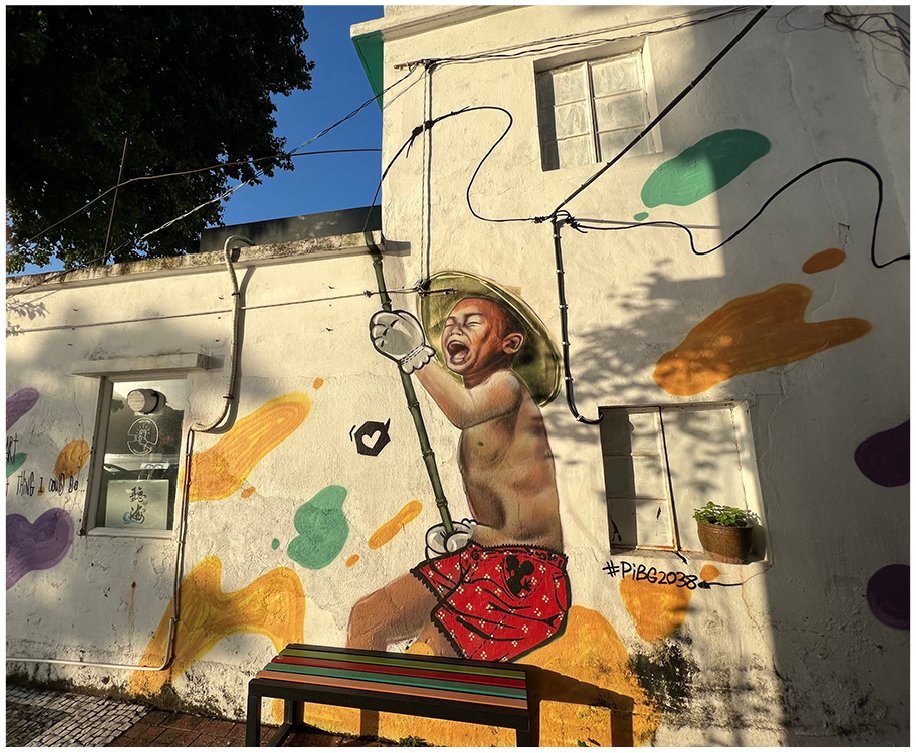
The graffiti portrays a young child engaging in the activity of fishing while wearing a sun hat.
Exploring Cultural Identity in Urban Spaces Through the Medium of Graffiti
As a former Portuguese colony, Macau possesses significant cultural assets that reflect its distinct and hybrid cultural identity (Wan, 2019). One notable aspect of Macau’s cultural identity is its rich history and architectural heritages, which is intertwined with its urban spaces. These urban spaces, characterized by narrow streets, small shops, and vibrant street vendor culture, have played a crucial role in shaping the cultural fabric of Macau. The impact of history has demonstrated that cultural identity is not stagnant in an unchanging past. Instead, it undergoes constant transformation and reconstruction as a result of power dynamics between history and culture (Li, 2005). To gain a comprehensive understanding of Macau’s diverse cultural character, graffiti writers have a need to traditional customs and examine the streets and alleys that are rich with the historical significance. By reinterpreting the varied cultural elements, they can help shape and redefine the local identity of Macau.
Local artists are eager to articulate their individual identities and cultural affiliations, finding resonance with the art derived from their lived experiences, according to an interview participant. 12 They possess a deep knowledge of the local landscape, skillfully identifying spaces where distinctive characteristics can be embodied in their work. For example, Rua de Cinco de Outubro and Patane, traditional communities in Macau situated in the Inner Harbor area, boast a rich cultural ambiance and unique features that are deeply ingrained within their identity. In the past, the Inner Harbor was a vibrant and flourishing hub for fishing boats. The air resonated with the melodies of sea shanties that would ebb and flow. Wharves, fish farms, oyster sauce shops, and docks thrived in this bustling area. Fishing boats eagerly sought moorings while pedestrians hurried along the busy street. These scenes depict the tales of Macau’s diligent and unpretentious inhabitants from bygone eras. As urbanization and modernization have transformed Macau’s landscape, remnants of its historical past can still be found in these traditional communities. Graffiti artists, in their exploration of cultural identity, can use the medium to evoke nostalgia for these disappearing aspects of Macau’s history. Through their art, graffiti writers in Macau can serve as custodians of cultural heritage, preserving the memories and values attached to these traditional spaces.
The graffiti depicted in Figure 5 is a strip-shaped artwork measuring 50 m in length and 2.4 m in height, situated on Rua de S. Tiago da Barra. Each frame within the artwork draws inspiration from real historical photos, combined with the artist’s subjective imagination and understanding, according to an interviewee. 13 Against an expansive ocean backdrop, the synthesis of distinct local elements, including traditional cultural structures and almond cookies, is harmoniously blended with the depictions of historical scenes depicting fishermen engaged in their trade and oyster harvesting. The combination of these visual elements in the graffiti artwork serves as a visual testament to Macau’s historical identity as a port city and its close connection to the sea. The local graffiti artists Jing Daan Wai and Vitorino Vong skillfully integrates elements of the past with their own artistic interpretation, creating a visual narrative that captures the essence of Macau’s historical identity.
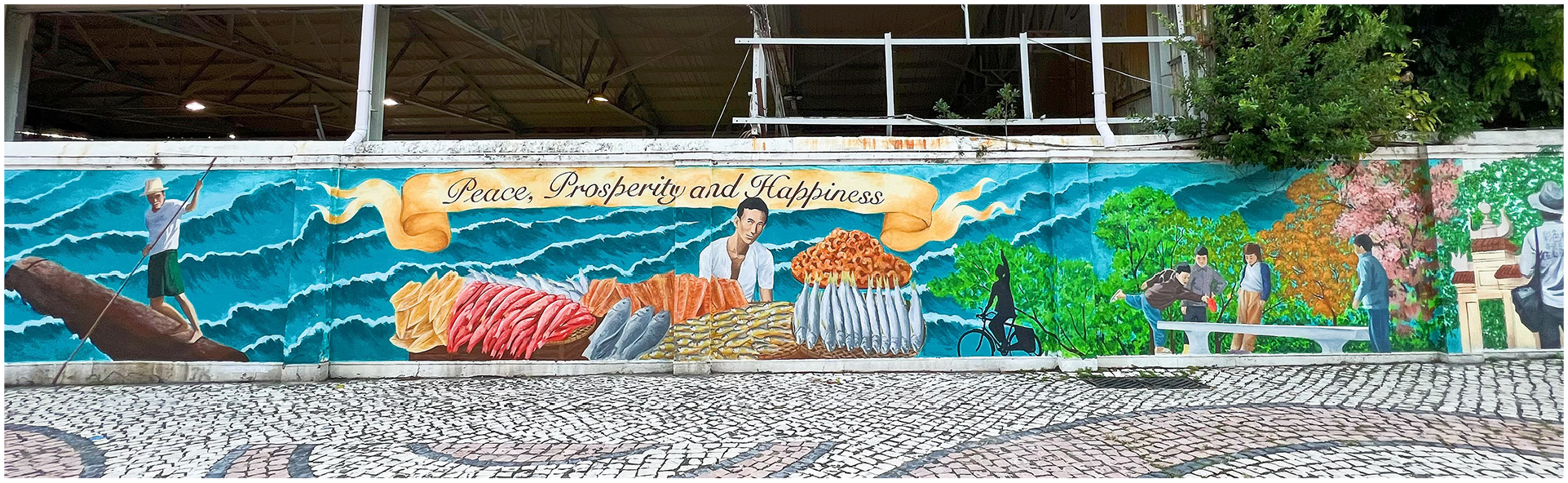
The extensive graffiti showcases the rich historical narratives of Macau’s Inner Harbor area, portraying its cultural heritage and significance (partially pictured).
Urban spaces provide a canvas for graffiti authors to express their relationship with the various facets of their identity and reclaim visibility on city walls. In accordance with Bourriaud (2020), the dissemination of information tends to overshadow the interconnectedness that exists within controlled spaces, resulting in social connections being fragmented into distinct products. In contrast, artistic endeavors seek to establish meaningful connections by breaking down barriers and reuniting various layers of reality that have become disconnected from one another. By using languages, symbols, and diverse attachments, graffiti authors showcase their urban identities and the memories and values attached to specific places. In the case of Figure 5, the presence of graffiti serves as a source of nostalgia for older residents, evoking memories of the past. For younger generations who didn’t personally experience that time period, the images themselves create a nostalgic sentiment because they represent a “past” they are unfamiliar with. While today’s youth may not have direct knowledge of historical events, reflecting on the past can still offer them an imaginative lens through which to envision their own future. This form of artistic expression allows for a connection between the space and the people, bringing the gap between generations and fostering a sense of cultural continuity.
Graffiti and murals serve as a visual representation of the cultural, historical, and social context of a city (Kizilkan & Ocakçi, 2020). They can act as a form of storytelling, conveying important messages and narratives about the lives and experiences of the individuals and communities that create them. Like other forms of public art, the final product of a graffiti artwork is determined by both existing elements and the intended meaning conveyed by the artist (Abarca, 2016). In the context of Macau, the local artists actively engage with the built environment, responding to the physical surroundings and drawing inspiration from the city’s cultural heritage into their artwork. Therefore, the presence of graffiti in this setting not only adds vibrancy and contemporary expression but also contributes to the ongoing narrative of the city’s history and cultural identity.
The aged exterior facade of the architectural complex represents the most ancient temple in Macau, as illustrated in Figure 6, known as the A-Má Temple (Templo de A-Má in Portuguese). Adjacent to it stands a mural wall that features vibrant and contemporary graffiti artwork. This juxtaposition of traditional and modern elements showcases the dynamic nature of Macau’s cultural landscape, where tradition and innovation coexist harmoniously. The A-Má Temple, with its traditional Chinese design, represents the deep-rooted cultural heritage of Macau and serves as a reminder of the city’s ancient roots. On the other hand, the graffiti mural portrays contemporary artistic expression and provides a platform for social commentary and personal expression. It is interesting to note how these two forms of art, with their distinct styles and narratives, coexist harmoniously on the same street.

The image portrays the juxtaposition of the red outer wall of the ancient A-Má Temple and graffiti artwork, which are situated facing each other on a shared street.
This demonstrates that Macau’s rich historical background can be represented in various ways. In other words, this serves as a representation of the multifaceted historical narratives present in this location. The graffiti wall and the ancient temple both contribute to the cultural diversity and richness of Macau, showcasing its ability to embrace and integrate different art forms and traditions. Together, they serve as a juxtaposition of the old and the new, symbolizing the transformation of Macau over time while also emphasizing the preservation of cultural heritage. This combination of traditional and contemporary art forms reflects the dynamic and multicultural nature of Macau as a city that values both its past and its present.
Similarly, the graffiti artwork in Figure 7, situated at Largo Camões in Taipa Village of Macau, demonstrates a harmonious integration of diverse artistic styles and cultural influences. This example depicts another instance of coexistence, where vibrant graffiti artwork and the traditional architecture of Pak Tai Temple, a Chinese temple, exist side by side. According to recent research by Vanessa Mitschke et al. (2017), there is a positive correlation between the duration of viewing an object and its perceived aesthetic worth. Therefore, as we devote more time to observing and exploring this location, the visual encounter of witnessing the fusion of graffiti with conventional architecture enables us to develop a profound admiration for the artistic merit and cultural importance embodied in both art forms. As viewers, we are able to appreciate the juxtaposition of the graffiti artwork and the ancient architecture (see Figure 8), recognizing the value in their coexistence and the enriched narrative that emerges from their symbiotic relationship.

The graffiti shows a girl of Western descent with her arms extended, engaging with a bird. This artwork can be found at Largo Camões in Taipa.

This image depicts the researchers conducting a thorough examination of the site and discovering an optimal viewpoint that enables us to understand the relationship between the graffiti and the Pak Tai Temple.
This graffiti in Figure 7 can be interpreted as a symbol of unity and connection between different cultures, suggesting the importance of embracing diversity in a globalized world. Furthermore, the graffiti serves as a reflection of Macau’s history as a former Portuguese colony and its status as a multicultural city. Through this artwork, the artist seeks to celebrate the blending of Eastern and Western influences in Macau’s cultural identity, emphasizing the harmonious coexistence and mutual enrichment of different cultural traditions.
From the researchers’ perspective in Figure 8, it is evident that the graffiti artwork and Pak Tai Temple complement one another, creating an interdependent relationship that showcases the dynamic and ever-evolving nature of art and architecture in a multicultural context. Pak Tai Temple, which is at least 160 years old, represents the rich historical and spiritual heritage of the Chinese community in Macau. Its traditional architecture style and intricate craftmanship serve as a reminder of Macau’s deep-rooted Chinese heritage. In contrast, graffiti is often associated with contemporary urban culture and is frequently viewed as a form of transgression and self- expression in Western societies. By bringing these two distinct art forms together, the graffiti artist challenges traditional notions of artistic boundaries and bridges the gap between the past and the present, creating a dialog between history and contemporary culture.
Apart from the placement of the graffiti artwork, the physical environment and surroundings also have a substantial impact on enhancing the texture, ambiance, and overall perception of the art. In Figure 7, the intricate details and use of natural elements in the graffiti, such as weeds and greenery, as well as the weathered walls, not only add visual interest but also convey a deeper meaning. These elements symbolize the connection between nature, history, and art, highlighting the interplay between human culture and the natural environment. The presence of Pak Tai Temple provides a sacred and spiritual backdrop for the graffiti works, adding depth and meaning to the overall composition. In a tranquil setting surrounded by lush greenery, the graffiti stands out as a vibrant and unconventional element that disrupts the traditional architectural landscape. This contrast between the sacred and the urban creates an intriguing juxtaposition that sparks conversation and invites viewers to reconsider their preconceived notions of art, heritage, and the relationship between the old and the new. “I WISH” and “STAY WITH ME” written in pink English letters on the graffiti wall can be interpreted as messages of longing, hope, and connection. These messages speak to the universal human desire for meaningful connections and emphasize the power of art in breaking down barriers and fostering emotional connections.
Positioned as the “viewer” depicted in Figure 8, we are confronted with a multi-layered visual experience that encapsulates the complexities of cultural identity, artistic expression, and urban transformation. In addition, the use of Western graffiti style combined with traditional Chinese aesthetics further contributes to the nostalgic atmosphere and sense of cultural fusion in the urban space. The interplay between the graffiti artwork and the historical architecture of Pak Tai Temple serves as a powerful symbol of cultural exchange and hybridity, reflecting the dynamic and ever-evolving nature of Macau as a city.
Investigating the Distribution of Graffiti and Its Connection to Cultural Policy in Macau
The distribution of graffiti in Macau and its relationship with cultural policy is an important aspect to consider when examining the role of graffiti in the city’s cultural landscape. Graffiti forms a part of Melbourne city’s place identity and its unique laneway culture (Geng et al., 2023). Similarly, graffiti in Macau can also be seen as a form of place-making and a reflection of the city’s identity. Nevertheless, the complex nature of graffiti in Macau raises questions about its relationship with cultural policy. The relationship between graffiti and cultural policy in Macau is complex, as it involves navigating the tensions between artistic expression, public perception, and preservation of cultural heritage.
We conducted a study in which we examined 184 locations where graffiti was present across four regions in Macau. As discussed by Riggle (2010), graffiti can be divided into two categories—“artistic graffiti” and “mere graffiti” (p. 251). In our study, we extensively documented and captured photographs of both forms of graffiti in Macau, preserving them as digital images. In the graffiti scene of Macau, apart from Coloane and Cotai where artistic graffiti dominates, the areas of Macau Peninsula and Taipa are a mix of both artistic and mere graffiti, with each type comprising roughly 50% of the total, refer to Figure 9. The findings from our fieldwork display a rudimentary depiction of the distribution of graffiti in Macau, pinpointing areas with high concentrations of graffiti such as the vicinity surroundings the Ruins of St. Paul’s, Calçada do Quartel in Taipa, and Avenida de Cinco de Outubro in Coloane. These areas serve as cultural hubs and tourist attractions, refer to Figure 10, where the presence of graffiti adds to the overall artistic and cultural ambiance. However, our research reveals that the distribution of graffiti which also contributes to the self-expression of marginalized groups is not evenly spread across the city (refer to the Appendix). This form of graffiti typically manifests as personalized signatures and patterns, often discovered in residential areas, or tucked away spots within the urban fabric. This spatial distribution of graffiti suggests that certain areas in Macau have a higher level of artistic expression and cultural engagement, while others may be lacking in these aspects.

The chart shows the quantity of e-images showcasing graffiti in Macau, encompassing both artistic pieces and casual tagging, as accumulated by researchers.
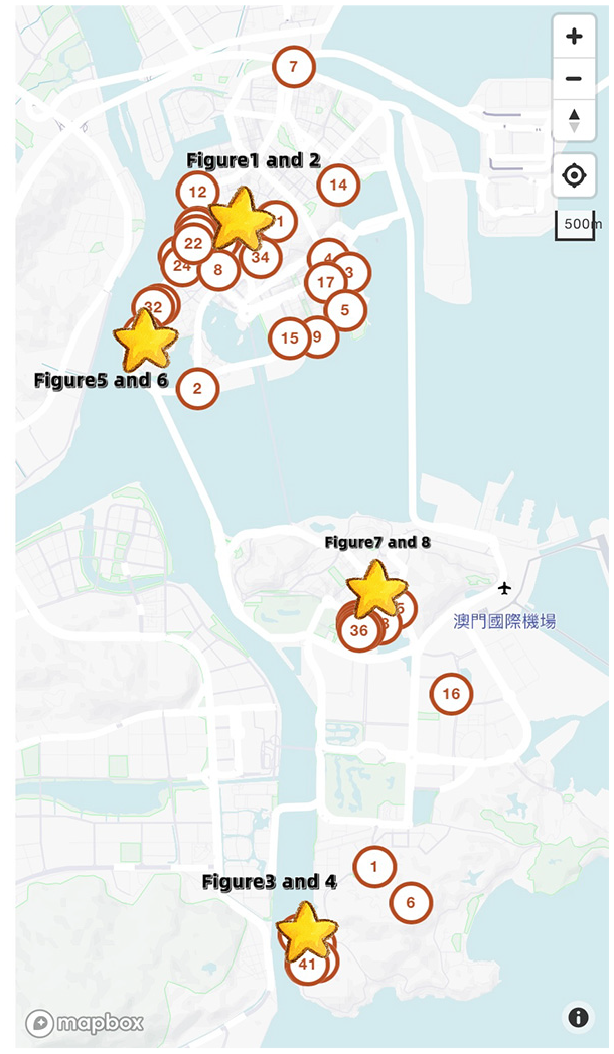
The map identified the positions of notable cultural promotion sites in Macau, as well as the specific graffiti pieces chosen for this article. Map: https://www.macaotourism.gov.mo/zh-hant/sightseeing/other-attractions
While graffiti is often seen as an expression of individual creativity and rebellion against mainstream norms, its distribution and presence within the city is heavily influenced by cultural policies and urban planning approaches. Local authorities in Macau have implemented certain strategies to regulate and control the distribution of graffiti, aligning it with their broader cultural policies. A prime example of this can be seen in the implementation of designated graffiti walls, such as at Graffiti Park 14 (Zhang, 2017; Zhang & Chan, 2022), which provide a controlled platform for artists to freely express their creative abilities and showcase their talent. This approach strikes a balance between artistic freedom and the need to maintain public order and protect historical sites. By strategically integrating graffiti into public spaces, the government of Macau demonstrates its efforts to preserve and promote the city’s historical legacy while also embracing contemporary forms of artistic expression.
According to our investigation, the presence of graffiti art in hotspots of Macau is not random but follows a deliberate approach. It aligns with city planning strategies and cultural policies aimed at enhancing the urban environment and promoting artistic and cultural vitality. In particular, the establishment of designated street art areas, such as Praça de Ponte e Horta, and the organization of workshops and events related to graffiti indicate a proactive effort by the government to support and nurture this form of artistic expression. These initiatives not only provide opportunities for artists to showcase their work and connect with the community, but also contribute to the revitalization of certain areas of the city. By integrating graffiti into public spaces and recognizing its value as a form of legitimate artistic expression, Macau is able to harness the creative potential of its urban environment and cultivate a vibrant and culturally rich atmosphere.
Through our research, we have found that the cultural policy approach toward graffiti in Macau is twofold: to regulate and control its distribution, while also embracing it as a legitimate form of artistic expression. This approach recognizes the importance of cultural diversity and artistic freedom, while also prioritizing the preservation of historical sites and public order.
The growing recognition and acceptance of graffiti art in Macau can be seen as a response to the evolving nature of the city itself. As Macau continues to develop and modernize, there is a growing appreciation for the need to embrace contemporary art forms that reflect the changing identity of the city and its inhabitants. This recognition of graffiti as a legitimate form of art goes beyond its aesthetic value, as it also encompasses notions of cultural identity, social engagement, and creative expression.
Conclusion
In conclusion, graffiti serves as a powerful medium for evoking nostalgia and preserving cultural identity in urban spaces. It allows graffiti artists to explore and express their connection to the history, values, and traditions of a place, such as Macau. Their artwork serves as a form of cultural preservation, capturing the disappearing aspects of Macau’s history and bringing them to the forefront of public consciousness.
The research emphasizes the various roles of graffiti, such as endorsing a unified and harmonious urban image while also perpetuating the lived experiences and collective memory of city inhabitants. In the bustling areas of Macau, graffiti becomes a visual representation of the complex and multifaceted nature of the city’s identity. Within the context of graffiti in local environments, nostalgia can be examined as a key theme or sentiment that is often evoked through the visuals and messages found in the graffiti art. By utilizing symbols, images, and text, graffiti practitioners in Macau can bring to life the memories and experiences of the past, invoking a sense of longing and sentimentality in individuals who view their work. For example, the use of historical photographs in Figure 5 demonstrates the artists’ intension to connect viewers with the history and cultural significance of Macau. This evocation of nostalgia serves to connect present-day urban dwellers to the city’s history and cultural identity, creating a sense of continuity and belonging.
Furthermore, the findings of this research have important implications for urban planning and cultural policy in Macau, as they highlight the significance of graffiti as a cultural medium in shaping the city’s identity and fostering a sense of community. The MSAR Government have taken initiatives to support and promote graffiti as a legitimate form of public art, acknowledging its ability to capture the spirit and essence of the city. These initiatives have included the establishment of designated graffiti walls and spaces where artists can freely express themselves, as well as the organization of graffiti festivals and events to celebrate and showcase the talents of local graffiti artists. Through these efforts, the Macau government aims to create an inclusive and diverse urban environment that values and preserves its cultural heritage while also embracing contemporary forms of artistic expression.
However, it is important to note that graffiti can also disrupt and challenge top-down production of urban identity by creating alternative narratives and engaging in stylistic expressions. By reclaiming spaces of visibility on city walls, some graffiti writers may contest the dominant cultural norms and power structures, offering a counter-narrative that amplifies the voices and experiences of marginalized communities. The presence of personalized signatures in graffiti within Macau reflects this subcultural identity, the grassroots activism, and self-expression that graffiti embodies.
Based on our research, it appears that there is a need for comprehensive cultural planning at the urban and regional level in Macau, despite attempts to control and regulate graffiti. To effectively evaluate and propose potential avenues for future advancements, it is imperative to recognize and examine the standards and goals of cultural planning in Macau. Further research could explore the ways in which government policies and initiatives can be aligned with the principles of graffiti as a medium for cultural expression.
Footnotes
Acknowledgements
None.
Ethic Statement
Not applicable.
Declaration of Conflicting Interests
The author(s) declared no potential conflicts of interest with respect to the research, authorship, and/or publication of this article.
Funding
The author(s) disclosed receipt of the following financial support for the research, authorship, and/or publication of this article: This work was funded by the project FRG-22-005-INT and granted by the Research Fund of Macau University of Science and Technology (FRG-MUST).
