




Abstract
This study aims to shed light on the determinants of organic food purchase intention in Vietnam. It provides novel insights by demonstrating that perceived value and perceived quality significantly influence purchase intention, while price does not. Moreover, the study unravels the critical mediating role of self-efficacy between price, perceived value, perceived quality, and purchase intention. These findings carry significant implications for marketers and advertising professionals as they offer insights into how promoting the perceived value and quality of organic food over price can drive purchase intention. Additionally, the research reveals how self-efficacy affects consumer behavior, highlighting the need to design effective interventions that improve self-efficacy to increase organic food consumption in Vietnam. Thus, this study has significant practical implications for marketers and policymakers who seek to reduce anti-consumption behavior toward organic food and promote its cultivation and marketing in Vietnam.
Introduction
Vietnam’s organic agriculture industry has experienced significant growth in recent years, primarily due to export demands, with approximately 90% of organic produce exported abroad to the EU and the USA (Simmons & Scott, 2008). However, despite this growth, the domestic market for organic products in Vietnam remains underdeveloped. Local consumers, particularly those living in large cities such as Hanoi and Ho Chi Minh, have serious concerns about food safety and quality but still prefer to purchase imported food items. Increasing consumer anxiety is observed due to concerns about the safety of synthetic food colorants (Özen et al., 2011). The lack of interest in organic produce can be attributed to high prices, limited knowledge, and unavailability of information about organic products (Presilla, 2018). Moreover, Thanh Nien News (2012) suggested that the majority of Vietnamese customers, who are not farmers or health and environment-conscious consumers, have little understanding or appreciation of the term “organic,” leading to a situation of mistrust. Compounding the issue is the unclear distinction between “safe vegetables” and “organic vegetables” (Simmons & Scott, 2008). Despite the favorability of production and distribution of organic food in many developed countries, domestic and local consumers in Vietnam still face uncertainties and challenges regarding organic food. Therefore, the aim of this study is to investigate the motives behind Vietnamese consumers’ resistance to consuming organic food and provide insights for local producers and policymakers.
In recent years, public attention in Vietnam has increasingly turned toward environmental concerns, with the Vietnamese government actively encouraging a green lifestyle. This has resulted in a growing awareness of green consumption, with more consumers favoring green products to contribute to protecting the environment, saving energy, and sustaining health (N. T. Nguyen et al., 2021; T. K. C. Nguyen et al., 2020). Although the proportion of young Vietnamese people desiring to “live green” is still in the minority, younger generations, particularly Gen Z, have shown remarkable enthusiasm and activism in environmental preservation efforts (H. Pham, 2019). Despite their interest in green products, green consumption behavior in Vietnam faces barriers and uncertainties. Many consumers are hesitant to pay a premium for organic products due to concerns about price and quality (Bei & Simpson, 1995). Self-efficacy has been identified as a key factor influencing green behavior, including the purchase of recyclable or reusable products (Sharma & Dayal, 2016; Tabernero & Hernández, 2011). Self-efficacy refers to an individual’s belief in their own ability to effectively perform tasks, overcome challenges, and achieve desired outcomes (Bandura, 1986). While considerable research has investigated the factors that influence organic food consumption, few studies have explored the reasons behind anti-consumption behavior toward organic products (Ashraf et al., 2018). Therefore, this study aims to investigate the determinant factors that influence the anti-consumption of organic products among Vietnamese consumers. Given the growing interest in sustainable and healthy food choices, understanding the determinants of consumer behavior in relation to organic food is of paramount importance for marketers, policymakers, and organic food providers.
The study examines the correlation between price, perceived quality, and perceived value toward the purchase intention of organic food, utilizing self-efficacy as a mediator variable. By investigating these factors, we aim to shed light on the key drivers that influence consumers’ decision-making processes when considering organic food options. We also seek to explore the mediating role of self-efficacy in the associations between price, perceived value, perceived quality, and purchase intention. Self-efficacy, defined as individuals’ belief in their ability to successfully perform a specific behavior, has been identified as a crucial psychological factor influencing consumer choices. Understanding how self-efficacy mediates the relationships between various factors can provide valuable insights into the underlying mechanisms that shape consumers’ purchase intentions. The findings of this study will contribute to an understanding of the determinants of anti-consumption behavior and may have implications for promoting sustainable consumption patterns and practices in Vietnam. Furthermore, the practical implications derived from this research can guide policymakers and marketers in developing strategies that promote sustainable and healthy food choices, ultimately benefiting both consumers and the organic food industry.
Literature Review
Price
Price is considered a crucial factor in consumers’ decision-making process, and it plays a significant role in determining the intention to purchase organic products. Previous studies have provided various definitions of price, highlighting its association with the perceived value and sacrifice made to acquire a product (Dekhili & Achabou, 2013; Zeithaml, 1988). In the context of green products, including organic food, consumers often consider both price and quality (Bei & Simpson, 1995). The term “organic” signifies production processes that prioritize human, livestock, plant, and soil health, prohibiting the use of synthetic fertilizers and pesticides (Renner & Long, 2010). The complexity and stringent standards involved in organic production contribute to higher production costs, resulting in higher prices for organic products (Davies et al., 1995).
Previous research has indicated a negative correlation between price and purchasing intention. Increases in price can reduce consumers’ purchasing power, particularly when the price is unreasonably high compared to alternative options (Özsomer & Altaras, 2008). Price consciousness, defined as the reluctance to purchase a product at a higher cost, may lead consumers to opt for more affordable alternatives (Lichtenstein et al., 1993). Studies focusing on organic food have consistently identified price premiums as a significant barrier to green purchasing (Davies et al., 1995; Padel & Foster, 2005; Pearson et al., 2011). Affordability plays a crucial role, as only affluent individuals with high disposable incomes are often able to afford organic products (Davies et al., 1995). Price premiums associated with organic products can directly influence consumers’ purchasing decisions, with lower-income consumers being more likely to opt for cheaper non-organic alternatives (Padel & Foster, 2005). In the Vietnamese context, consumers tend to prefer cheaper imitation products due to cultural and economic factors, and they may lack knowledge and understanding of organic product standards and benefits (Hoang & Nguyen, 2013; Zagata & Lostak, 2012) Consequently, Vietnamese consumers may exhibit skepticism toward the term “organic” and prefer cheaper non-organic options, even though they are willing to pay for expensive imported products. Thus, this study proposes the following hypothesis:
Customers’ perception of higher prices associated with green products is a well-documented phenomenon. Green products, including organic food, are generally perceived to be priced higher compared to their non-green counterparts (Bonini & Oppenheim, 2008). This perception often makes consumers more sensitive to the prices of green purchases, leading them to conduct research on brand names, product origins, ingredients, and compare prices with other brands to identify the best products at a fair price. Research by B. Zhang et al. (2018) suggests that well-informed consumers are more likely to choose high-quality vegetables at reasonable prices rather than engaging in inappropriate purchasing behavior. Informed consumers who possess a better understanding of prices and relevant product information are able to make more informed decisions when purchasing organic food. Their willingness to pay a premium price for organic products is influenced more by cognitive factors, such as knowledge and awareness, rather than simply the intention to purchase. Therefore, it is crucial for consumers to have access to information about organic products, including pricing information, in order to make informed decisions. By understanding the prices and relevant details about organic food, consumers can evaluate the value and benefits associated with these products, leading to more informed and conscious purchasing choices. Based on these arguments, this study proposes the following hypothesis:
Perceived Value
Purchasing intention is strongly influenced by consumers’ perception of value, which refers to their evaluation of the benefits they expect to receive from a product or service (Bolton & Drew, 1991; Patterson et al., 1997; Shafiq et al., 2011). Previous studies have consistently shown that perceived value significantly affects consumers’ preference for organic products (Fornell et al., 1996; Shaharudin et al., 2010). When consumers evaluate organic products, they consider their knowledge and specific evaluation criteria to determine whether these products offer them the desired value. Furthermore, research has indicated a direct and strong influence of perceived value on green purchasing intention (Watanabe et al., 2020). Studies conducted by Chang and Wildt (1994) and Rizwan et al. (2013) have demonstrated a positive correlation between green perceived value and green purchase intention. In the context of Vietnam, consumers prioritize domestic goods that are branded, high-quality, and nutritious (Moc, 2022). Vietnamese consumers exhibit a high level of ethnocentrism and tend to favor domestic products over goods from culturally similar countries like China, Thailand, and Laos (N. V. Kim, 2018). They trust and support affordable, high-quality domestic products that contribute to the country’s economic growth and create job opportunities for locals. For example, Phu Quoc fish sauce is a well-known domestic brand that has played a significant role in promoting Vietnamese culture globally over the course of its 200-year establishment and growth (Le, 2015). Vietnamese consumers are more inclined to purchase Phu Quoc fish sauce due to its superior quality compared to cheaper substitutes from China. This example illustrates that consumers are motivated to buy products that offer them perceived value, which includes factors such as quality, cultural relevance, and contribution to the local economy. Thus, this study proposes the following hypothesis:
Zhu et al. (2017) highlight the importance of self-efficacy and perceived value as cognitive factors that influence individuals’ behavior in their environment. Perceived value, which reflects the evaluation of benefits received from a product or service, can impact consumers’ attitudes, intentions, and behaviors based on the value they perceive. Additionally, self-efficacy and perceived value are influenced by the outcomes of consumers’ behaviors. Y. S. Wang et al. (2013) found that the effect of perceived value on consumers’ intentions to purchase online content was moderated by their moral beliefs and self-efficacy levels. Ethical self-efficacy was found to influence purchasing intentions and strengthen the effect of perceived value on online content purchasing intentions. Similarly, Chen et al. (2008) observed that the perceived value of downloading music for free had a greater impact on the intention to download illegally among individuals with low morality compared to those with high morality. These studies suggest that self-efficacy, particularly ethical self-efficacy, plays a mediating role in the relationship between perceived value and purchase intention.
Perceived Quality
Perceived quality refers to the customer’s judgment of a product’s superiority or excellence compared to its intended use and alternatives. It encompasses both subjective evaluations of the product’s superiority and the information received by the customer during the purchasing and usage process. Previous studies have consistently shown a positive relationship between perceived quality and purchase intention (Ophuis & Van Trijp, 1995; Wang, Pham & Dang, 2020; Washburn & Plank, 2002). In the context of Vietnam, the country has prioritized the development of environmentally friendly agricultural supply chains to enhance the international competitiveness of its agricultural exports. With the application of advanced technology and adherence to international standards, Vietnamese products, including rice, fruits, vegetables, seafood, and coffee, have gained recognition and are exported to various countries. This emphasis on high-quality goods with minimal environmental impact has created a positive perception of Vietnamese products, and consumers may associate organic food with assured quality (T. M. Y. Pham & Pham, 2017; Van Huy et al., 2019).
Perceived quality refers to the customer’s judgment of a product’s superiority or excellence compared to its intended use and alternatives. It has been found to have a strong positive impact on customers’ purchase intentions (Wang, Pham & Dang, 2020). In addition, perceived quality interacts with other psychological variables, such as behavioral attitude, subjective norms, and perceived behavioral control (PBC), which is a measure of a person’s confidence in their ability to carry out a behavior effectively (Chiou, 1998; Wang, Tao, & Chu, 2020). Customers who possess greater subjective knowledge and information about organic food are likely to have higher confidence (self-efficacy) in their ability to continue consuming organic products. This subjective knowledge and information may include awareness of the benefits of organic food, understanding of organic certification standards, and knowledge about the environmental and health impacts of organic farming practices. Previous studies have shown a correlation between PBC and self-efficacy in various contexts, including beliefs, attitudes, intentions, and behavior (Ajzen, 2002; Rachbini, 2018; Shin & Hancer, 2016). Specifically, Shin and Hancer (2016) found that PBC is a critical factor in the decision-making process for sustainable food choices. People are more likely to spend money on local food when they feel capable of controlling their behavior or have a high level of self-efficacy. These findings suggest that there is a correlation between perceived quality and self-efficacy, as perceived quality not only influences purchase intentions but also affects the role of self-efficacy in consumer decision-making. Based on these arguments, this study proposes the following hypothesis:
Self-Efficacy
Self-efficacy refers to a person’s belief in their ability to accomplish a desired performance goal by setting up and executing the necessary steps (Bandura, 1986, p. 391). When confronted with an ethical consumption situation, consumers with strong ethical self-efficacy are more likely to act in a disciplined manner and uphold moral standards despite the intensity of the circumstances (Y. S. Wang et al., 2013). Additionally, Liu et al. (2010) and Yi and Gong (2008) found that customers with high self-efficacy are more confident and willing to expend significant effort to complete a transaction successfully. It can be inferred that customers who are more confident in the product’s information, origin, value, and quality are more inclined to make a purchase. Furthermore, self-efficacy decreases uncertainty. Y. H. Kim and Kim’s (2005) research indicated that self-efficacy can be included in the customer trust-building process to reduce uncertainty and increase purchase intention. Prior studies have shown a positive correlation between self-efficacy and purchase intention (Khalifa & Limayem, 2003; Li et al., 2018; Limayem et al., 2000; Peña-García et al., 2020; Vabø & Hansen, 2016). Moreover, Ko and Jin (2017) found that a higher level of environmental understanding increases self-efficacy and confidence to engage in specific green behaviors. These findings suggest that customers who possess greater environmental awareness and knowledge tend to be more self-assured and, as a result, more willing to acquire and purchase organic products. In light of these findings, this study proposes the following hypothesis:
The Mediating Role of Self-Efficacy
Previous research has extensively discussed the role of self-efficacy in various forms of sustainability-related behavior, including green behavior (Hong et al., 2013), green consumption (Al Mamun et al., 2018), and environmental behavior (Doran et al., 2015). For instance, Hong et al. (2013) demonstrated that self-efficacy positively affects the use of the iPad 2, promoting a paperless meeting environment and encouraging green behavior in the workplace. Al Mamun et al. (2018) identified a correlation between self-efficacy and a greater inclination to engage in behaviors that promote long-term sustainability. Additionally, consumers’ attitude toward green consumption, which determines their intention to purchase green products, is heavily influenced by self-efficacy (Doran et al., 2016). Other studies have also shown a positive correlation between self-efficacy and pro-environmental behavior (Clayton et al., 2013; Tabernero & Hernández, 2011). People who possess a strong sense of self-efficacy in their ability to perform environmentally sustainable behaviors are more motivated to engage in pro-environmental actions (Schutte & Bhullar, 2017). Thus, it can be inferred that motivation for sustainability-related behavior is enhanced by self-efficacy, which promotes such behavior. Based on these findings, we can deduce that self-efficacy plays a significant role as a mediating variable that affects the decision to purchase organic food in Vietnam. In the context of purchasing organic food, consumers tend to be price-sensitive due to the typically higher prices associated with green products (Bonini & Oppenheim, 2008). Previous research has established a negative relationship between high prices and purchase intention (Davies et al., 1995; Lichtenstein et al., 1993; Özsomer & Altaras, 2008). Therefore, customers may engage in extensive purchase considerations, including evaluating the product’s information, origin, and ingredients, before making a purchase decision (L. Zhang et al., 2018). Self-efficacy plays a pivotal role in enhancing customers’ confidence in the product’s information, including its price. Customers with higher levels of self-efficacy are more likely to have confidence in their ability to assess the value and benefits of organic food despite the higher price. This confidence may lead to a positive attitude and intention to purchase organic food (Khalifa & Limayem, 2003; Li et al., 2018; Limayem et al., 2000; Peña-García et al., 2020; Vabø & Hansen, 2016). Based on these premises, it can be inferred that self-efficacy mediates the relationship between price and purchase intention toward organic food. Higher levels of self-efficacy may mitigate the negative impact of price on purchase intention by increasing customers’ confidence in their ability to evaluate the value and benefits of organic food. Consequently, this study hypothesizes:
Studies indicate that perceived value refers to consumers’ evaluation of a product or service's overall benefits based on their perception and desire for those advantages (Bolton & Drew, 1991; Patterson et al., 1997). Customers rely on their knowledge and perception of the product to determine its value (Shafiq et al., 2011). In this context, the role of self-efficacy is vital, as customers who possess knowledge of a product’s values and benefits are typically more confident in their purchase decisions than those who lack such information. However, Zagata and Lostak’s (2012) research found that some consumers expressed disapproval of the biological values associated with organic food, which can be perceived through their senses. These concerns and uncertainties surrounding the value of organic food may deter a small proportion of customers from choosing to purchase it. Furthermore, previous studies have explored the correlation between perceived value and self-efficacy. For instance, when consumers choose products based on their perceived value, the results of that behavior may influence both their perceived self-efficacy and their value assessments (Zhu et al., 2017). Similarly, Y. S. Wang et al.’s (2013) research suggests that levels of self-efficacy may moderate the impact of perceived value on buyers’ intent to select products. As a result, this study proposes the following hypothesis:
Perceived quality refers to customers’ assessment of a product or service’s overall quality and its superiority in comparison to alternatives concerning its intended use (Aaker, 1991). Previous research has established the crucial role of quality in directly influencing purchase intention toward organic food (Kahl et al., 2012; Lairon, 2010; Zagata & Lostak, 2012). For example, Zagata and Lostak (2012) explain that when customers decide to purchase organic food, they give special consideration to information regarding its quality and guarantees. However, despite this, many people remain uninformed about organic standards and certification processes, leading to limited knowledge about organic food and its quality and benefits (Zagata & Lostak, 2012). In this context, the role of self-efficacy is of significant importance because customers who possess clear knowledge of the quality and benefits of organic food are generally more confident in making purchase decisions than those with limited knowledge of the products. Therefore, this study proposes the following hypothesis:

The conceptual framework.
Methodology
The primary data collection technique employed in this research is quantitative, and multi-item scales were used to determine the significance levels of the constructs. To construct the questionnaire for this research, we followed the guidelines proposed by Tsang et al. (2017). First, we identified the dimensions of each construct to ensure comprehensive assessment. These scales were adapted from previous studies and modified to suit the requirements of this paper. A 5-point Likert scale was used to assess all items, with a score of 1 representing “strongly disagree” and 5 indicating “strongly agree.” Specifically, the price construct (consisting of 5 items) was adopted from Jaafar et al. (2012), the perceived value construct (consisting of 13 items) was borrowed from Curvelo et al. (2019), the perceived quality construct (consisting of 5 items) was operationalized from Vo and Nguyen (2015), the self-efficacy construct (consisting of 4 items) was modified from Ashraf (2021), and the purchase intention toward organic food construct used the scales from Pang et al. (2021). Table 1 lists the questionnaire questions and their original sources. To ensure the questionnaire’s accuracy and suitability for the target language, we followed a translation and back-translation process (Tsang et al., 2017). The initial translation from the original language to the target language was performed independently by two bilingual translators. Ideally, the translators were native speakers of the target language to better reflect the nuances and cultural context. One of the translators was familiar with the concepts that the questionnaire intended to measure, allowing for a translation that closely resembled the original instrument. The second translation was done by a naïve translator who was unaware of the questionnaire’s objective. This approach aimed to identify any subtle differences or discrepancies between the translations. Any discrepancies between the translators’ versions were discussed and resolved by the original translators or with the involvement of an unbiased, bilingual translator who was not part of the initial translation process. This step ensured the accuracy and clarity of the translated questionnaire. To validate the translation, the back-translation process was conducted. The questionnaire was independently translated back from the target language into the original language by at least two translators, preferably native speakers of the original language. This step aimed to reveal any misunderstandings or unclear wordings in the initial translations. To avoid bias, the back-translators were preferably unaware of the intended concepts the questionnaire measured. Any discrepancies between the back-translations and the original questionnaire were carefully reviewed and addressed. For data collection, a structured questionnaire similar to the one outlined above was distributed to 405 participants using convenience sampling. The participants for this study were recruited through social groups on Facebook. All participants were asked about their food purchasing behavior in stores over the past few weeks, and the responses indicated that every participant had made food purchases during that period. In the survey description, potential participants were informed that the survey would take approximately 5 minutes to complete. The sample consisted 41.5% male, 57.5% female, and 1% identifying as others. Out of the total sample, 353 respondents (87.2%) fell within the age range of 20 to 25 years old. In terms of income, the majority of participants (65.9%) reported an average monthly income of less than 5 million VND. Approximately 22.7% of respondents had an income between 5 and 10 million VND, while the remaining 11.3% earned more than 10 million VND per month. To incentivize participation, participants were entered into a lucky draw for a voucher upon completing the survey. The voucher had a value of 500,000 VND and could be used to purchase products at a retail store in Vietnam. The participants rated their agreement with each statement in the questionnaire using a Likert scale, where 1 indicated “strongly disagree,” 2 represented “disagree,” 3 indicated “neutral,” 4 meant “agree,” and 5 represented “strongly agree.” The measurement statements of three independent variables, one mediator, and one dependent variable according to the proposed model were coded as follows:
Independent and Dependent Variables and Their Measurement Items.

Data Analysis
Following the data collection, 405 valid samples were analyzed using a software package called SmartPLS version 4.0, which is a well-known piece of software for PLS-SEM data processing. PLS-SEM offers a number of advantages over other statistical methods, such as its usability in exploratory studies, making predictions on specific outcomes as well as its flexibility in dealing with non-normal data and small-scale samples (Munerah et al., 2021). Hence, a modeling SEM was used to verify the hypotheses associated with the proposed model’s structure. This paper applies a two-step analytical procedure method in which measurement and structural models are evaluated (Anderson & Gerbing, 1988).
Results
Measurement Model
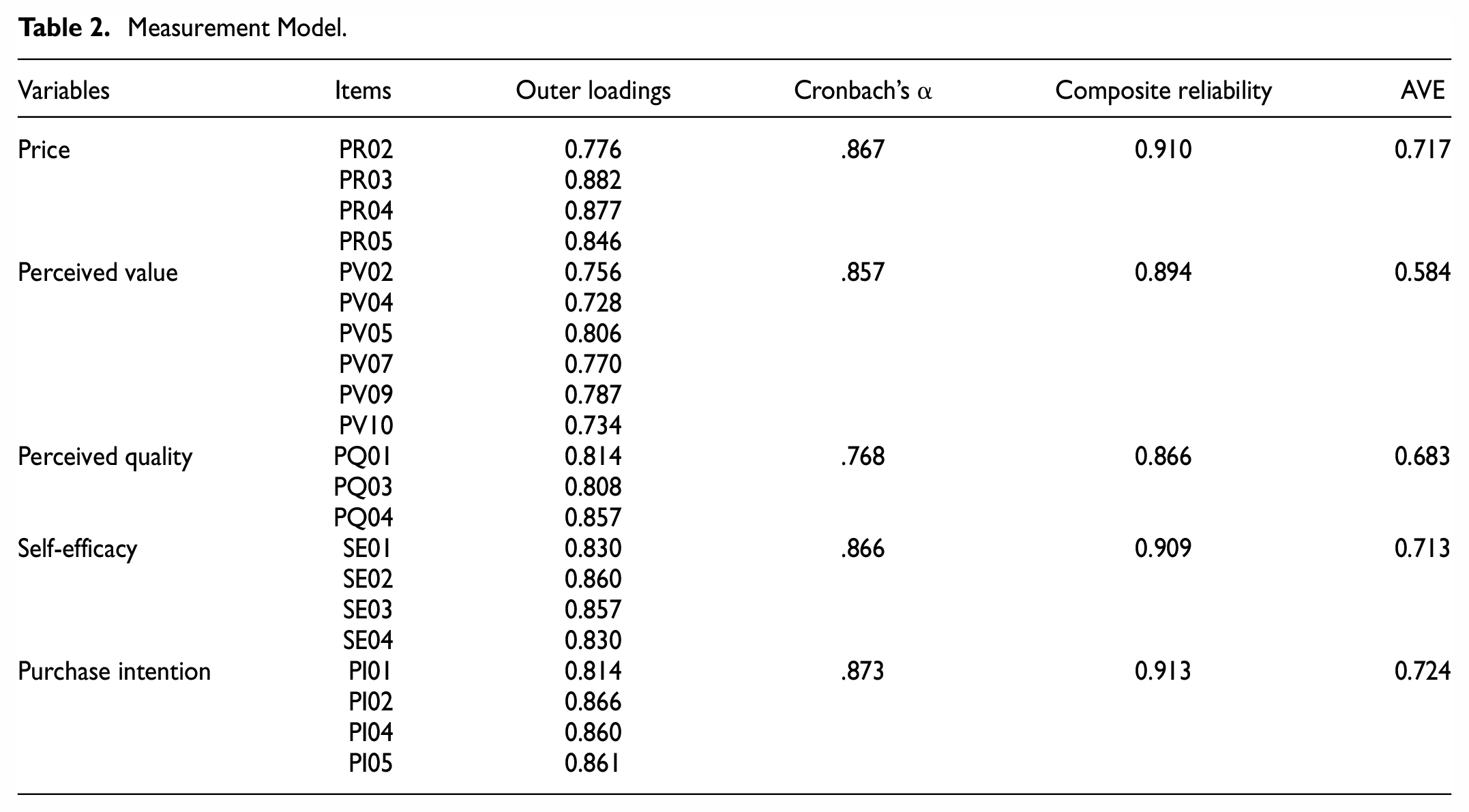
To test reliability in PLS-SEM, internal consistency was calculated using CA and CR, which represented Cronbach’s alpha and composite reliability, respectively. There are more significant correlations between the variables when internal consistency reliability is high (Munerah et al., 2021). The internal consistency reliability is shown by the CA and CR values in Table 2, which are all greater than the criterion of 0.7 proposed by Ghozali (2011). The average variance extracted (AVE) value should be higher than 0.5 and outer loadings should be more than 0.708 to achieve convergent validity (Hair et al., 2017). As seen in Table 2, all items’ outer loadings were found to exceed 0.708, the minimum standard. Those that did not meet the standard were taken out of the construct. Additionally, the AVEs of all variables were in the range from 0.584 to 0.724. All outer loadings and AVEs were within the range of acceptability established by Hair et al. (2017). As a consequence, we conclude that all factors have shown strong convergent validity and reliability.
Measurement Model.
The Fornell-Larcker criterion and Heterotrait-Monotrait ratio of correlations (HTMT) were considered to evaluate the discriminant validity. Fornell and Larcker (1981) suggest that the square root of the AVE for every single construct must be higher than the linkages between those variables when assessing the Fornell-Larcker criterion. In addition, Henseler et al. (2015) recommend that the HTMT value between any two variables ought to be less than 0.85. As shown in Table 3, this paper does not need to concern discriminant validity because the values of AVE’s square root for all the variables were higher than their linkages. The HTMT value between PV and PQ was found to be 0.901 which is above the 0.85 criteria in the proposal by Henseler et al. (2015) as seen in Table 4. Hence, it can be said that the two variables lack discriminant validity.
The Fornell-Larcker Criterion.
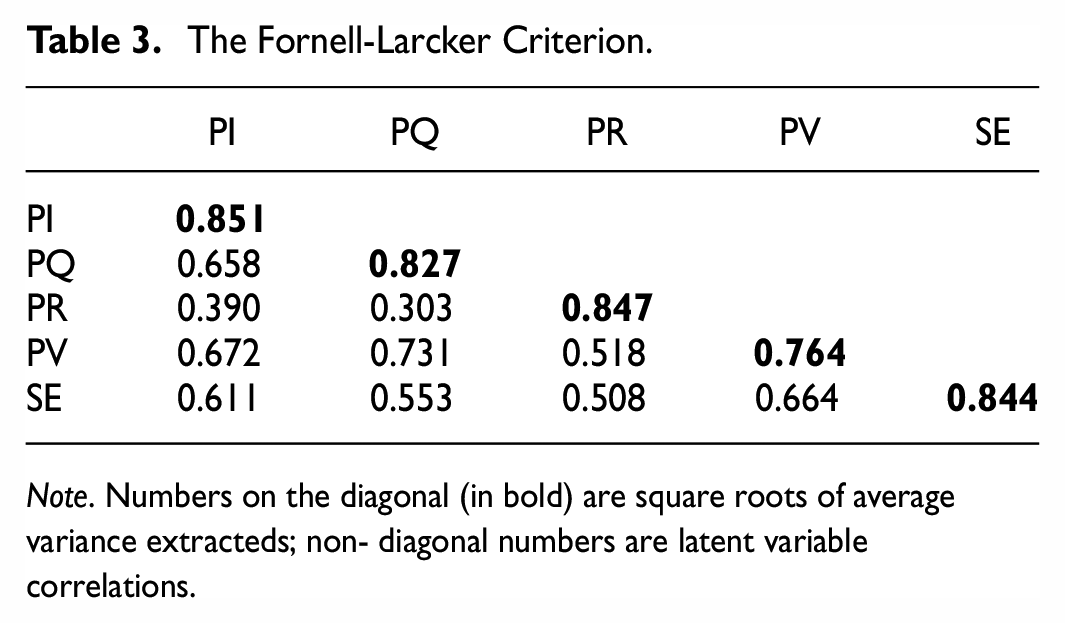
Note. Numbers on the diagonal (in bold) are square roots of average variance extracteds; non- diagonal numbers are latent variable correlations.
Heterotrait-Monotrait Ratio (HTMT).

Structural Model
SRMR, which stands for standardized root mean square residual, was considered to evaluate the model fit according to Henseler et al. (2016). Based on the results, the SRMR value for this study’s model was 0.062, and not beyond the standard value of 0.08 (Henseler et al., 2016); it was thus determined that the proposed conceptual framework was a good fit for the dataset. Furthermore, by using a bootstrapping method with 5,000 re-samples, we could evaluate the significance of the coefficient for each path presented in the study model (Hair et al., 2017).
The R2 is used to measure how good the structural model is, and is recommended by Ramayah et al. (2016). Hair et al. (2011) also claim that the R2 can be used to determine the coefficient of determination, as well as how significant the path coefficients are (β values). The results reveal that 49.3 and 54.8% of the respective variances of self-efficacy and purchase intention can be clarified by the proposed research model. In addition, the bootstrap analysis and path coefficients (β values) of the structural model are computed in this study to analyze the statistical significance further.
As shown in Table 5, there are positive and direct correlations between perceived value, perceived quality, self-efficacy, and the intention to pick up organic food (β = .250, p < .001; β = .329, p < .001; β = .244, p < .001, respectively). Thus H3, H5, and H7 are supported. Unpredictably, the association between price and purchase intention is found to be not statistically significant (β = .036, p = .491 which nearly approaches .05). Hence, H1 is rejected. Furthermore, price, perceived value, and perceived quality are proven to affect self-efficacy directly and positively (β = .243, p < .001; β = .403, p < .001; β = .185, p < .001, respectively). Thus, H2, H4, and H6 are supported.
The Outcomes of the Structural Model.
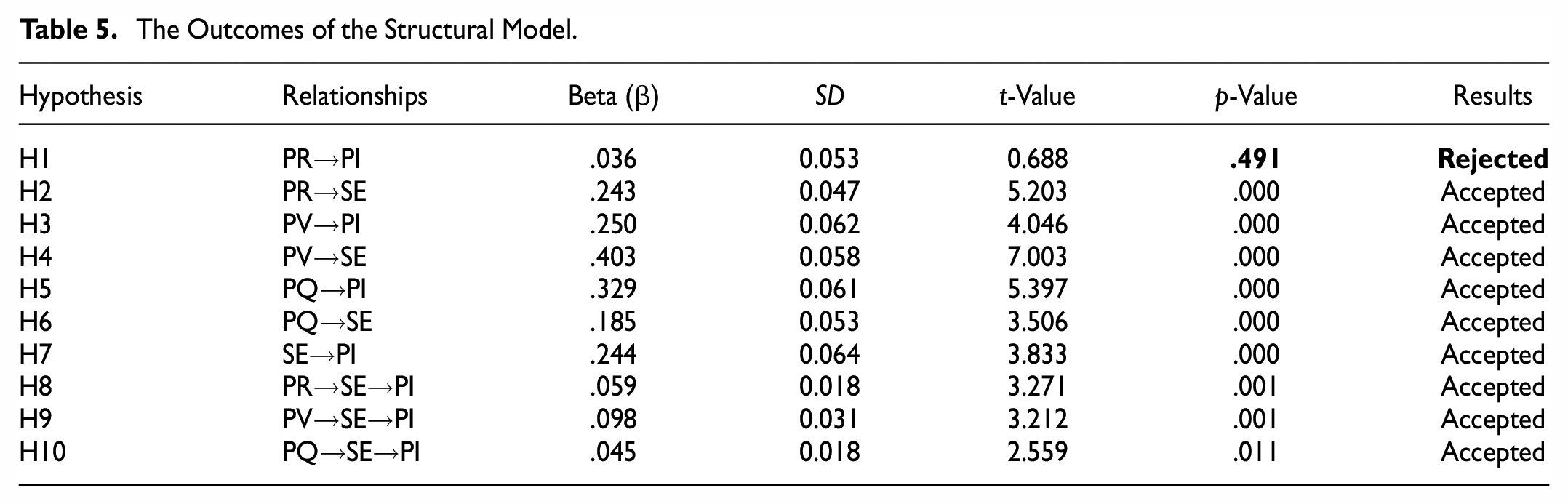
In addition, the results of bootstrapping confirm the role of self-efficacy as the mediator. Specifically, self-efficacy is found to have significant and indirect mediating impacts on the relationships between price, perceived value, perceived quality, and purchase intention of organic food (β = .059, p < .01; β = .098, p < .01; β = .045, p < .05). As a consequence, H8, H9, and H10 are supported (Figure 2).

SEM model.
Discussions
The study confirms that perceived value and perceived quality have positive relationships with the purchase intention of organic food. This finding aligns with previous studies conducted in different countries, indicating the universal importance of these factors in influencing consumers’ organic food choices. The study further emphasizes the significance of perceived value as a crucial determinant of purchase intent, highlighting the need for marketers to focus on promoting the perceived benefits and value of organic food. Contrary to expectations, the study reveals that price is not a statistically significant factor in explaining the intention to purchase organic food among Vietnamese consumers. The increasing awareness of Vietnamese consumers regarding organic food's perceived benefits might justify their willingness to pay higher prices, even though the production, distribution, and storage processes of organic food are complex and costly. This finding implies that marketers should prioritize communicating the value and quality of organic food rather than solely relying on price-based strategies. The study establishes the positive relationship between self-efficacy and the purchase intention of organic food, indicating that consumers’ confidence in their decision-making plays a crucial role in driving their intent to purchase organic products. Additionally, the research reveals the mediating role of self-efficacy in the relationships between price, perceived value, perceived quality, and purchase intention. This underscores the importance of enhancing consumers’ self-efficacy levels through education and information dissemination to promote confident and informed purchasing decisions.
Theoretical Contribution
The findings of this study indicate that the purchase intention of organic food among Vietnamese consumers is positively correlated with perceived value and perceived quality, which is consistent with earlier studies (De Toni et al., 2018; Shaharudin et al., 2010; Teixeira et al., 2021; Wang, Tao & Chu, 2020). Specifically, perceived value was found to be the most significant factor influencing purchase intent among Malaysian organic food purchasers (Shaharudin et al., 2010). Similarly, our research reveals that perceived value significantly influences the intention of Vietnamese consumers to purchase organic food. This suggests that perceived value is a crucial factor in explaining organic food purchases. Furthermore, the research conducted by Wang, Pham and Dang (2020) found that perceived quality has a positive influence on the purchase intention of organic food in China. Our study confirms this finding and suggests that quality plays a crucial role in the intention to purchase organic food in Vietnam, consistent with the research by Teixeira et al. (2021). However, it should be noted that Singh and Alok (2022) found no significant correlation between perceived quality and purchase intention of organic food in India. Interestingly, our research found that price was not statistically significant in explaining the intention to purchase organic food among Vietnamese consumers. This is consistent with the findings of previous studies (Chu, 2018; Curvelo et al., 2019; Tarkiainen & Sundqvist, 2005), which suggest that price is not the most critical factor influencing organic food purchases. This could be attributed to the increasing awareness of Vietnamese consumers regarding organic food’s perceived prices, which is justified by the higher perceived benefits of organic food compared to non-organic food even though the production, distribution, and storage processes of organic food are complex and costly. In addition, our study has developed a new relationship by examining the mediating role of self-efficacy in the associations between price, perceived value, perceived quality, and purchase intention.
The findings show that self-efficacy mediates the relationships between these variables, which is consistent with previous investigations. Specifically, our research indicates that when customers are well-informed about organic products, they tend to make more confident decisions, mediated by self-efficacy. Therefore, educating consumers about organic products could increase their self-efficacy levels, leading to better-informed purchasing decisions. Moreover, according to the theory of self-efficacy, customers’ decisions, effort, and responses to challenges and unpleasant experiences are influenced by self-efficacy. The anxiety and uncertainty resulting from negative experiences and fear could lead to avoidance behavior toward a brand, which is sometimes triggered by uncertainties regarding price, perceived value, and perceived quality of organic food in Vietnam. However, the current findings suggest that increasing self-efficacy levels among consumers could lead to more confidence in purchasing organic food and overcoming such avoidance behavior. Therefore, it is crucial to educate consumers and increase their self-efficacy levels to promote the purchase intention of organic food in Vietnam.
Practical Contribution
The current study’s findings provide practical implications for marketers and advertisers of organic food. Customers favor perceived value and perceived quality when selecting organic food, and their intention to purchase is also influenced by self-efficacy. Therefore, marketers should consider these constructs in their campaigns, and they can make customers feel more confident in their choices by recognizing their needs. Marketers and advertisers of organic food should focus on promoting perceived value, perceived quality, and self-efficacy to attract Vietnamese consumers. Emphasizing the health benefits and superior quality of organic food compared to non-organic alternatives can be effective strategies. Utilizing various marketing channels, such as online websites, social media platforms, and collaborations with influencers, can help raise awareness and educate consumers about organic products. Marketers can educate customers about the product’s attributes and benefits, and organic providers can create workshops or public speaking events to introduce their products. Collaborating with influencers, KOLs, and KOCs to promote organic food is also an effective way to attract potential organic buyers. As a result, consumers can gain more confidence in their ability to purchase and develop frequent shopping habits toward organic food.
The study has shown that consumers’ purchase intentions of organic food are significantly impacted by their perception of its value. According to Lim et al. (2014) and Shaharudin et al. (2010), consumers consider health advantages as the primary perceived value of organic food. Thus, marketers and providers of organic food should focus on promoting perceived health benefits as one of their main arguments. Additionally, customers’ perceived value toward organic food could be either positive or negative, and those with a favorable perception toward such products are more likely to make a purchase. Marketers should focus on cultivating perceived values and widespread acknowledgment of customers to enhance customer experience and motivate them to make purchases. The study recommends developing company profiles and online websites as well as conducting an ambush marketing strategy on social media to transmit information about organic products effectively. Perceived quality is also an essential factor that marketers should consider when promoting organic food. Chi et al. (2009) confirmed that quality-driven customers can become loyal to a brand and tend to repurchase its products, resulting from high product quality. Konuk (2018) suggested that providers could increase consumers’ quality perception by selecting a suitable branding strategy, such as working with health magazines or providing funds to health-related institutions to build a positive identity in customers’ minds and improve their trust. The study recommends focusing on creating promotional campaigns based on health concerns after the Covid-19 pandemic to motivate consumers to purchase. Marketers should promote the superior quality of organic food compared to non-organic food through mass media such as internet-based radio, billboards, and social networking sites to attract health-focused customers.
The lack of fundamental understanding of organic products among Vietnamese customers leads to doubts and uncertainties, resulting in anti-consumption behavior. To address the lack of understanding and doubts among Vietnamese consumers regarding organic food, policymakers and marketers should provide comprehensive information through media channels and product packaging. Visual aids like photographs and videos can effectively communicate the production, storage, and distribution processes of organic food, as well as its associated health benefits. Transparent and informative labeling can also contribute to building consumer knowledge and perceptions of organic food. Potential customers can learn about the production, storage, and distribution of organic food and how it benefits them through photographs, videos, and information associated with health advantages, origins, ingredients, and production processes provided by food advertisers. This will enhance customers’ knowledge and perceptions of organic food, thereby increasing their purchase intent. In addition, organic food providers can implement loyalty programs, such as member cards, to encourage repeat purchases and foster customer loyalty. Increasing the availability of organic food in various retail outlets, supermarkets, and shopping malls can also enhance accessibility and visibility, contributing to increased purchase intention among Vietnamese consumers.
Limitations and Future Research
While this study contributes substantially to the understanding of customer behavior and intention toward organic food in Vietnam, there are several limitations that need to be addressed in future research. Krystallis and Chryssohoidis (2005) have identified 16 categories of organic food divided into three main groups. However, this study only focuses on organic food in general, which limits the implications of the findings. Future research should investigate customer behavior and intention toward a specific category of organic food to obtain better implications. Additionally, this study reveals that self-efficacy can be used to gauge consumer intent and behavior when buying organic food in Vietnam. This finding might encourage other researchers to seek additional factors that could influence customers’ decisions to buy organic food based on the theory used in this paper. Furthermore, reducing consumer anxiety when purchasing organic food is necessary to boost purchase intent. Previous research has identified some factors that reduce purchasing anxiety, such as delivery time, shopping experience, and customer experience. Therefore, future research should consider these factors when investigating consumer anti-consumption and avoidance behaviors toward organic food to understand consumer attitudes and psychology when making purchases.
Footnotes
Declaration of Conflicting Interests
The author(s) declared no potential conflicts of interest with respect to the research, authorship, and/or publication of this article.
Funding
The author(s) received no financial support for the research, authorship, and/or publication of this article.
Ethic statement
Not applicable
