




Abstract
The economic and social transformation of rural areas, coupled with the decline of family-based elderly care and increasing health risks, necessitates in-depth research on the effectiveness of informal care for rural elderly adults. Utilizing 10-year, four-period follow-up data from the Chinese Longitudinal Healthy Longevity Survey (CLHLS) between 2008 and 2018, this study empirically examines the changing trends and heterogeneity of informal care. In addition, this paper identifies factors impacting on the satisfaction of rural informal care services, providing a comprehensive understanding of the effectiveness of these services for different segments of the rural elderly adults. The results indicate that the changing trends of informal care for rural elderly adults follows a differential pattern, with over 60% relying on their children, and 7.79% to 13.27% on their spouses. Only a small fraction of elderly individuals relies on institutional care and market-oriented care, with percentages below 2% and 3%, respectively. While over 95% of rural elderly adults express satisfaction with their informal care services, less than 50% are fully satisfied, and the proportion of dissatisfied elderly adults is increasing annually. Key variables impacting on the effectiveness of informal care services include marital status, health status, living arrangement, care intensity, care expenditures, pension insurance, and daily community care support. Policy options such as financial support for informal care, enhancement of the old-age security system, and the establishment socialized formal care can help alleviate the burden of informal care for rural elderly adults.
Keywords
Introduction
In the 21st century, China has undergone significant economic and social transformations, leading to a rapidly aging population. This demographic shift has become a critical national issue for China’s future economic and social development. Based on data from China’s seven population censuses spanning from 1953 to 2020, the number of individuals aged 60 years or older has risen from 42.65 million in 1953 to 267 million in 2020, representing an increase from 7.32% to 18.7% of the overall population. According to the prediction by L. Wang et al. (2021), the number of elderly adults over 60 years in China is expected to surpass 400 million by 2050, making up more than 30% of the total population. Moreover, there is an increasingly evident urban-rural divide trend in the distribution of elderly adults in China. As rural-urban migration accelerates, the aging population in rural areas is deepening at a faster rate than in urban areas. Despite China’s rural population decreased by 164 million from 2010 to 2020, as reported by the National Development Bulletin, the proportion of elderly adults over 60 and 65 years in rural areas is 7.99% and 6.61% higher than that in urban areas, respectively. It is projected that by 2035, the number of elderly adults in rural China will exceed 154 million, accounting for more than 50% of the total elderly population (B. Lin, 2015). The urban-rural divide in the proportions of elderly populations, coupled with the inadequate medical and healthcare services, and the weakening household care functions has contributed to the elderly care issues facing the rural population. These critical issues need to be addressed within the context of “rural revitalization.”
The persistent and significant progression of the aging population has engendered an escalating demand for caregiving services targeting elderly adults in rural areas. Examining this phenomenon from economic, medical, and resource allocation perspectives reveals that rural-dwelling elderly individuals experience heightened susceptibility to disability and chronic illnesses in comparison to their urban counterparts. This vulnerability stems from their restricted access to resource benefits throughout their lifespan, thereby inhibiting the accumulation of health disparity. As reported by the fourth sampling survey on the living conditions of elderly adults in China in 2015, the nation harbored 40.63 million disabled and semi-disabled elderly individuals, with 64.5% of this population residing in rural area. In the context of care resource distribution, elderly adults in rural China predominantly adhere to a hierarchical compensation pattern encompassing spouses, offspring, extended family members, and acquaintances, followed by societal support. However, due to financial constraints, entrenched elderly care ideologies, and the dearth of socialized elderly care services, informal care provided by family, relatives, and friends remain the primary source of daily care for rural elderly adults.
With the increase in the number of aging rural population and their life expectancy, the caregiving requirements for elderly adults, particularly those who are disabled and of advanced age, impose substantial care and opportunity costs. Moreover, the burgeoning demand for care for elderly adults in rural regions frequently leads to a suboptimal caregiving process, as the caregivers may be overburdened and unable to provide adequate care. Consequently, this raises the following inquiries: what constitutes informal care resources for rural elderly adults lacking support from formal caregiving services? What is the changing trends of informal care over time? Additionally, which factors impact on the effectiveness of informal care services for these rural elderly adults? The present study endeavors to address these queries through several approaches: Firstly, we use data from the CLHLS 10-year, four-period follow-up survey, which encompasses the majority of the rural areas in China, thereby enabling us to procure a comprehensive depiction of informal care for elderly adults in these areas. Secondly, we examined the effectiveness of informal care in rural areas to furnish a benchmark for augmenting care models within these rural communities. Finally, in view of the insufficient resources allocated to caregiving in rural regions, our study aspires to prompt the government to confront this urgent challenge.
Literature Review and Analytical Framework
The growing elderly population in rural areas has a significant impact on various aspects of society, such as economic and social development, family production and lifestyle, and intergenerational relationships. Providing care for rural elderly adults, particularly those with disabilities, exemplifies the intergenerational distribution of resources within the family and is closely related to national strategies and public policies (Zeng et al., 2007). Since the onset of the 21st century, the Chinese government has undertaken substantial efforts to address these issues by establishing a rural pension insurance system and improving medical and social assistance systems in rural areas. However, the overall old-age security system for elderly adults remains in its nascent stages of development, with informal care constituting the primary mode of daily care for rural elderly adults.
Globally, not only in China, over 80% of elderly adults prefer the family care model, enabling them to receive specialized services in familiar settings and derive emotional comfort from family members (E. Liu & Zhang, 2018). The intergenerational reciprocity perspective suggests that access to informal care is dependent on the elderly adults’ capacity to control family resources. In other words, elderly adults can shape the care provision behavior of family members by allocating economic resources (Bernheim et al., 1985). In accordance with group cooperation theory, driven by the principle of maximizing family benefits, children are often inclined to augment the financial support of rural elderly adults. Diminishing care supply ensures heightened financial income for the children in the labor market. Research has shown that in larger families, certain children’s financial support for elderly adults can significantly alleviate the burden of informal care for other children, thereby optimizing the allocation of family resources (Van Houtven et al., 2013).
Influential Factors of Informal Care
In terms of the demand, there is an escalating need for long-term care for rural elderly adults, with the vast majority desiring informal care services (Abrahamson, 2017). With respect to service content, daily care constitutes the fundamental service in the life category, accompanying medical care is the most preferred service in the rehabilitation category, and chatting and alleviating boredom is the most favored service in the spiritual comfort category (Broese van Groenou & De Boer, 2016). At the same time, providing informal care for elderly adults in rural areas is also a complex and variable decision-making process under the constraint of maximizing family interests, which is impacted by multiple factors (Becker, 1988). Specifically, according to Beach and Schulz (2017), family is the preferred option for daily care among most rural elderly adults. The receipt of informal care is impacted by several individual characteristics, including age, marital status, number of children, health insurance, and self-rated health. Among family resources, economic level, number of children, family structure, and living arrangements serve as the primary influencing variables (Hu & Ma, 2018). Health statuses such as chronic diseases, mental health, essential self-care ability, and social support factors, including economic and social development, medical level, and social interaction, constitute other crucial impacting variables (Van Houtven & Norton, 2004) In addition, scholars have devoted substantial attention to the relationship between formal and informal care due to the increasing care needs of rural elderly adults and the declining ability of families to provide care. Some experts contend that informal care has a substantial substitution effect on formal care, primarily through the exchange of resources and services for in-home support. This effect varies depending on factors such as marital status and the severity of disabilities (Bolin et al., 2008; Van Houtven & Norton, 2004). Family members and friends who furnish informal care supplant the necessity for formal community care and remunerated home care services (Bonsang,2009; Greene, 1983), In fact, empirical studies have shown that informal care can significantly diminish the utilization of nursing homes among older adults (Lo Sasso & Johnson, 2002). The balance theory of coordination posits that informal and formal care correspond to informal and formal organizations, respectively. Notwithstanding there are considerable disparities between the two in terms of service providers, delivery methods, and quality feedback, it is feasible to devise mechanisms that yield complementary effects and satisfy the care requirements of rural elderly individuals. Moreover, this complementary effect becomes increasingly salient as the care demands of older adults escalate (Spillman & Pezzin, 2002). For instance, within the United States long-term care system, the government promotes the engagement of informal care by providing financial incentives, such as care subsidies, to foster the sharing, complementarity, and coordination of formal and informal care (Langa et al., 2001).
Costs and Suggestions for Informal Care
Oliva-Moreno et al. (2019) contends that informal care, while often perceived as costless or inexpensive, can come with substantial costs, particularly when considering the heightened expenses associated with caregiving. The care-related expenditures, financial strain on caregivers, and the opportunity cost arising from leaving employment to deliver informal care may exceed the monetary expenses of formal care. Therefore, studying and assessing the economic value of informal care can prove beneficial in formulating sustainable long-term care policies (Yuan & Chen, 2020). The quality of care is also a pivotal subject for scholars, considering the crucial role informal care plays in rural settings. Many researchers have observed that the majority of informal caregivers lack formal training and, consequently are deficient in pertinent professional expertise. In addition, protracted care duration and intricate care content may contribute to a decline in the health status of elderly care providers (Abtan et al., 2018).
Denewet et al. (2016) concurs that there is a necessity to augment the health education among informal care providers and implement tailored interventions to assist them in identify the physical, psychological, and social conditions of elderly individuals, which are vital for enhancing their health. Furthermore, to address the scarcity of informal care, scholars advocate for the establishment of a long-term care insurance system and the construction of a socialized care system as fundamental approaches to protect the living rights of rural elderly individuals and improve their quality of life. (Dai, 2016; Kim& Lim, 2015). With the advent of “Internet+” technology, the utilization of the internet to deliver consultation and training services for rural informal caregivers will facilitate meeting the varied care needs of elderly individuals more effectively (Schaller et. al., 2016; Lin, 2019). It is crucial to acknowledge that rural informal care providers encounter imbalances concerning time allocation, social roles, economic resources, and other aspects. These disparities can precipitate a range of negative physiological and psychological responses, culminating in a “ripple effect” that results in a “vicious cycle” of deteriorating health for both caregivers and care recipients. This research area warrants further exploration in the future (Mosquera & Vergara, 2016).
Analytical Framework and Contributions to the Literature
Following rigorous theoretical analyzes and an extensive literature review, it is evident that the aging of the rural population is intensifying and the availability of socialized care services is limited, resulting in a deterioration of elderly individuals’ health status. In this context, scholars have predominantly acknowledged the positive role of informal care and have conducted systematic investigations from the perspectives of economic costs, service quality, and support policies. However, a limited number of studies have explored the evolving trends of informal care for rural elderly population amidst economic and social transformations. This paper proposes an analytical framework to examine informal care for the elderly in rural areas, as illustrated in Figure 1.

Analysis framework of informal care for rural elderly adults.
Firstly, internal and external risks factors can aggravate the health conditions of elderly individuals in rural areas, consequently leading to an increased demand for daily care. Internal risks encompass factors intrinsic to the elderly adults themselves, such as the decline in physiological function, degradation of cognitive ability, and heightened risk of illness. External risks involve factors beyond the control of elderly individuals, including alterations in family and social structure, disparities in urban and rural welfare, and migration patterns of rural and urban populations. Secondly, due to the scarcity of socialized care in rural areas, informal care is the primary mode of care for the elderly population. However, as the function of family care provision weakens, it becomes essential to systematically analyze the vertical and horizontal dimensions of time and heterogeneity. Finally, the present paper scrutinizes the factors impacting on the informal care of rural elderly individuals across four dimensions: personal characteristics, family resources, intergenerational support, and socialized support. This paper endeavors to offer a comprehensive overview of informal care for the rural elderly adults and establish a foundation for addressing their escalating care needs.
In summary, our research contributes to the extant literature in the following significant ways: First and foremost, while previous literature provides a theoretical analysis of rural informal care, it lacks empirical validation based on research findings or data. This study examines the changing trends of informal care for rural elderly adults by employing a 10-year comprehensive longitudinal survey data from the Chinese Longitudinal Healthy Longevity Survey (CLHLS), thereby testing relevant theories and addressing the gaps in the current literature. Second, although prior research has investigated the demand for informal care among rural elderly adults, it has not delved into the care contributions of distinct providers. This study examines the roles played by various care providers, providing a more nuanced understanding of the overall care situation for elderly adults in rural regions. Finally, the effectiveness of informal care has not been thoroughly analyzed in the existing literature. This paper evaluates the factors impacting on satisfaction with informal care among rural elderly adults, thereby providing valuable insights for formulating policies related to the care of this population.
Data, Variables and Methods
Data
The data used in this paper were obtained from the follow-up surveys of the CLHLS conducted in 2008, 2011, 2014, and 2018. The Center for Healthy Ageing and Development of Peking University, in collaboration with the National Development Research Institute carried out the CLHLS surveys. The project’s primary objective is to comprehensively investigate the factors impacting on the health and longevity of elderly adults in China, encompassing biological characteristics, lifestyle behaviors, social structures, living environments, and other relevant factors. The project’s baseline data have been collected and followed up on seven occasions since 1998, spanning 23 provinces, municipalities, and autonomous regions throughout China. The sample utilized in this study represents over 85% of China’s total population. This project stands as one of the pioneering social science surveys with the longest duration in China, examining the elements impacting on the health and well-being of the elderly population. This paper uses data from the CLHLS surveys to analyze the evolving trends of informal care for the elderly population in rural China. It empirically examines the factors impacting on the effectiveness of informal care services for elderly individuals in rural areas. The ultimate goal of this study is to mitigate the care crisis faced by rural elderly adults amid economic and social transformation and to provide a reference for the development of a long-term care system tailored to this demographic.
Variables
Informal care: an essential aspect of long-term care, as it often involves the assistance and support provided by family members, relatives, friends, and neighbors. These informal caregivers play a significant role in ensuring that elderly individuals maintain their quality of life, independence, and dignity. Unlike formal care, which involves professional services, informal care is characterized by its non-marketization and flexibility (Jia, 2021). To analyze informal care, this study will utilize data from the CLHLS surveys and focus on the question: “Who is the primary caregiver assisting you with your daily activities when you require help from others?” This will allow us to identify and categorize informal caregivers, such as spouses, children (sons-in-law and daughters-in-law), grandchildren, relatives, and neighbors (as in the questionnaire). In the analysis, socialized care and unattended care will be included as comparative items to provide a broader understanding of the care landscape for elderly individuals.
Effectiveness of Informal Care Services: Owing to the non-professional nature of informal care and the impact of geography and familial relationships, assessing the effectiveness of informal care services constitutes a crucial aspect of this study. In order to measure the perception of informal care services’ effectiveness among rural elderly adults, the CLHLS dataset includes the question: “Do you think the care provided by informal caregivers can meet your needs?” The respond options are primarily divided into three categories: “fully satisfied,”“basically satisfied,” and “dissatisfied.”“Fully satisfied” implies that the care provided by informal caregivers fully meet the daily needs of the rural elderly adults, with an excellent care effect; “basically satisfied” indicates that the care furnished by informal caregivers can satisfy the daily needs of rural elderly adults, albeit with average or general care service effectiveness; and “dissatisfied” suggests that the care provided by informal caregivers fails to meet the daily needs of the rural elderly adults, resulting in poor care service effectiveness.
Factors Impacting on Informal Care Effectiveness: This paper identifies four key dimensions that are crucial in determining the effectiveness of informal care for elderly adults in rural regions, namely individual characteristics, family resources, intergenerational support, and formal social support. By examining these factors, the diverse factors impacting on the effectiveness of informal care services and the needs of the elderly adults in rural areas can be comprehensively understood. Individual characteristics encompass factors such as marital status, disability, chronic diseases, regional classification, and other relevant attributes. These characteristics can directly impact on the type and level of care needed by the elderly and the availability of informal care resources in their lives. The family resources dimension variable includes annual household income, living arrangements, family status, the number of children, and whether the living expenses are sufficient. These factors can determine the capacity of the family to provide adequate care and support to their elderly members. The intergenerational support consists of parents’ financial support to their children, children’s financial support to their parents, the intensity of care, and associated care expenditures. Intergenerational support can reflect the strength and sustainability of informal care networks within the family. The formal social support incorporates aspects such as pension insurance, health insurance, community living services, community healthcare services, and community mental well-being services. These formal supports can supplement or even replace informal care when necessary, ensuring that the elderly receive adequate care and support. Table 1 shows the definitions and statistical descriptions of these variables.
Definitions and Statistical Descriptions of the Main Variables.

Note. The variable “Disability” is defined according to the six internationally recognized Activities of Daily Living (ADL) indicators (getting up, dressing, eating, bathing, going to the toilet, and indoor activities). Individuals not require assistance with any of these activities are categorized as having “nondisability,” whereas those require assistance with one or more activities are classified as having “disability” (Katz et al., 1963). The statistical data for “chronic diseases” refers to the prevalent of non-infectious chronic diseases (NCDs), primarily hypertension, diabetes, heart disease, stroke, cerebrovascular diseases, cancer, Parkinson’s disease, arthritis, and eight other types of diseases.
Methods
Analysis of the changing trends of informal care for elderly adults in the rural areas: based on the data from CLHLS surveys, spanning from 2008 to 2018, this paper utilizes descriptive statistics to examine the changing trends of informal care for rural elderly adults from both vertical and horizontal perspectives. The objective is to accurately observe changes in informal care for rural elderly adults accurately. The vertical perspective in this study pertains to analyzing the changing trends of informal care resources within the same sample of rural elderly individuals over a 10-year follow-up survey period, aiming to identify the shifts in informal care resources available to the rural elderly population during this period and how various factors might have contributed to these changes. The horizontal analysis in this study involves a comparative analysis of all the informal care resources available to rural elderly adults in the previous survey data, with the goal of identifying the distribution landscape of informal care among rural elderly adults in China.
Analysis of the impacting factors on the effectiveness of informal care: In order to investigate the impact of selected variables on the effectiveness of informal care services for elderly adults in rural areas, this paper constructs an empirical model. Stepwise regression analysis is utilized to analyze the panel data from 2008 to 2018. The explanatory variable, “informal care service effectiveness,” is a discrete variable with three categories: fully satisfied = 1, basically satisfied = 2, and dissatisfied = 3. We opt to establish a discrete panel model for our analysis. The panel probit model and the panel logit model constitute the two types of discrete panel models. The probit model necessitates the random error term of the data to adhere to a normal distribution. However, the data employed in this paper do not exhibit this trait. Consequently, to analyze the factors that impact on the informal care effectiveness of rural elderly adults, this paper constructs a panel sequential logit model comprising individual characteristics, family characteristics, intergenerational support, and formal social support, as illustrated in Formula (1):

The dependent variable in this model, denoted as
Results
Basic Characteristics of Rural Elderly Adults
Table 2 displays the Basic characteristics of elderly adults residing in rural areas of China, using data from the CLHLS surveys conducted in 2008, 2011, 2014, and 2018. Overall, substantial variation exists among elderly adults living in rural areas with respect to gender, age, marital status, disability status, and the prevalence of chronic diseases. A noticeable gender disparity is evident among rural elderly adults, with a significantly higher proportion of females than males within the aged group. Specifically, the annual data reveals that rural females constitute over 55% of the elderly population. This disparity may be attributed to the generally higher average survival rate of women compared to men. According to the 2019 Development Report on the Quality of Life for Elderly Adults in China, the average life expectancy for women exceeds 80 years, approximately 5 years longer than that of men. In terms of age distribution, elderly adults aged 80 years and above comprise over 65% of the population and represent the predominant demographic in the rural elderly group. As the age of elderly adults increases, their physical functions gradually deteriorate, leading to growing demand for long-term care. With regard to marital status, approximately 60% of rural elderly adults are married, exhibiting an upward trend. This observation suggests that the family, particularly the spouse, continues to be the primary source of daily care for elderly adults. Finally, in terms of disability and chronic diseases, the health condition of rural elderly adults is worrisome. The disability rate among elderly adults surpasses 23%, and the proportion of rural elderly adults with chronic diseases has risen annually, reaching 54.09% in 2018. The deteriorating health status of elderly adults in rural areas underscore their increasing dependence on daily care, posing a significant challenge for traditional informal care systems.
Basic Characteristics of Rural Elderly Adults.

Note. The values outside the parentheses represent the sample size for each category, whereas the percentages of the total sample are indicated inside the parentheses.
Changing Trends of Informal Care Provision
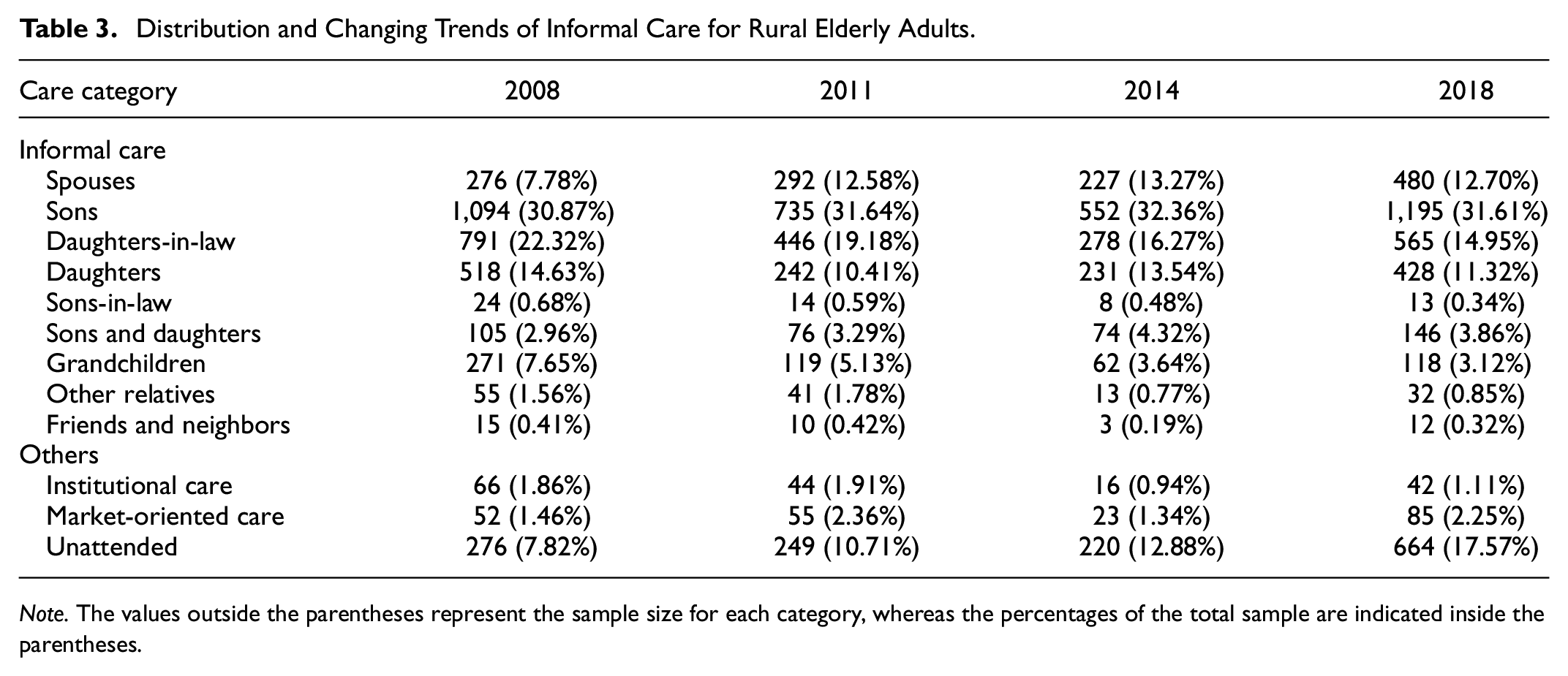
Table 3 displays the distribution and composition of informal care for elderly adults in rural areas by year, including institutional care, market-oriented care, and the unattended for comparative analysis. Overall, despite minor fluctuations in the distribution of informal care for rural elderly adults over time, the primary caregivers have predominantly been spouses, offspring (including sons, daughters-in-law, daughters, and sons-in-law), grandchildren, and other relatives. The distribution of informal care for elderly adults in rural areas follows a hierarchical pattern of “offspring-spouse-relatives and friends-neighbors,” which is consistent with the traditional hierarchy of “close relatives-distant relatives-neighbors-society.” The data results suggest that offspring serve as the main providers of informal care for rural elderly adults, with an average of over 60% of rural elderly adults receiving care from their offspring across all examined years. Among the offspring caregivers, the highest proportion of rural elderly adults who depend on daily care from their sons and daughters-in-law ranges from 46.56% to 53.17%, considerably higher than the proportion of rural elderly adults relying on their daughters and sons-in-law for care (11%–15. 31%). While spouses play a vital role in providing daily care and emotional support, it is important to note that the average age of the rural elderly adults in the sample is as high as 86 years old. Due to the high rate of widowhood, spouses have limited involvement in the daily care of rural elderly adults. The proportion of care provided by spouses annually ranges from only 7.78% to 13.27%, significantly lower than that offered by offspring. Changes in family structure and the shift towards more decentralized living arrangements have impacted on the participation of grandchildren, other relatives, friends, and neighbors in the daily care of rural elderly adults, resulting in a relatively low proportion of care provided by these individuals. Additionally, it is worth noting that the proportion of the population relying on institutional care and market-oriented care services in each examined year is less than 2% and 3%, respectively. This finding objectively demonstrates that socialized and market-oriented care has a minimal impact in rural regions. Furthermore, it is crucial to recognize that a substantial proportion of rural elderly adults still lack adequate care, and this issue has been escalating year by year, reaching 17.57% in 2018. Both the government and society must continue to address this pressing issue with urgency.
Distribution and Changing Trends of Informal Care for Rural Elderly Adults.
Note. The values outside the parentheses represent the sample size for each category, whereas the percentages of the total sample are indicated inside the parentheses.
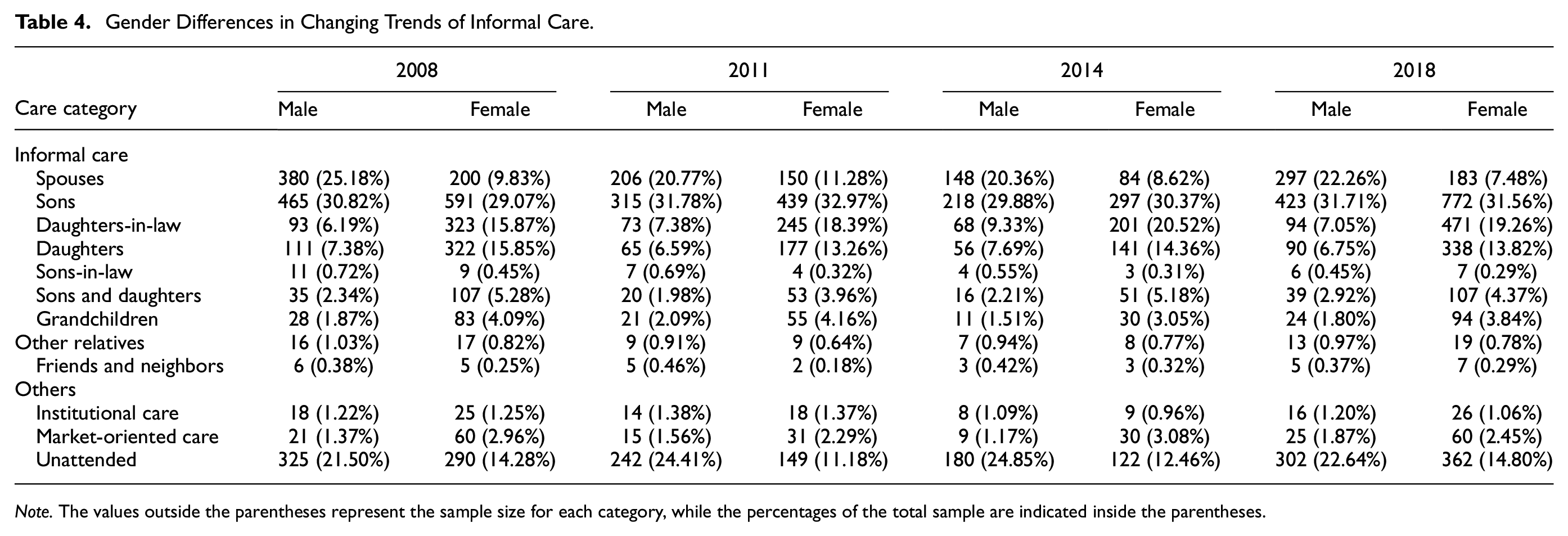
As is widely acknowledged, substantial disparities exist between rural male and female residents concerning physical attributes, family division of labor, and workforce participation. These discrepancies may lead to considerable variations in informal care resources upon entering old age. This paper investigates gender-based disparities in the evolving trends of informal care for elderly adults in rural areas, as depicted Table 4. Based on the statistical results, spouses play a markedly more significant role in providing daily care for rural elderly males compared to rural elderly females. This disparity may be ascribed to Chinese females having a considerably higher life expectancy, survival rate, and widowhood rate than males, allowing them to provide more daily care for their male spouses in old age. Concerning care provided by offspring, the proportion of daughters-in-law who care for elderly females is notably higher than those who care for elderly males. This difference has increased from 9.68% to 12.21% over the past decade.
Gender Differences in Changing Trends of Informal Care.
Note. The values outside the parentheses represent the sample size for each category, while the percentages of the total sample are indicated inside the parentheses.
Rural females often serve as the primary caregivers responsible for household duties, taking on the responsibility for household tasks. Elderly females can help alleviate the workload for their daughters-in-law by assisting with domestic chores and looking after their grandchildren, which can lead to increased family recognition. Furthermore, daughters in rural areas demonstrate a greater willingness to care for elderly women than elderly men, possibly due to the challenges in managing their fathers’ daily routines. It is worrisome that a high percentage of elderly adults in rural areas lack care, with the proportion of elderly men without care being significantly higher than that of women reaching up to 13.23%. Despite women generally have a longer life expectancy, the number of women with disabilities increases as they age. Alternatively, elderly rural women have been experiencing an extended period of unhealthy conditions. In contrast, elderly men tend to accumulate health resources over time through their economic status, education, and access to medical treatment, resulting in the gradual development of health advantages as they age. Consequently, elderly men in rural areas necessitate less informal care than their female counterparts.
The Effectiveness of Informal Care Services
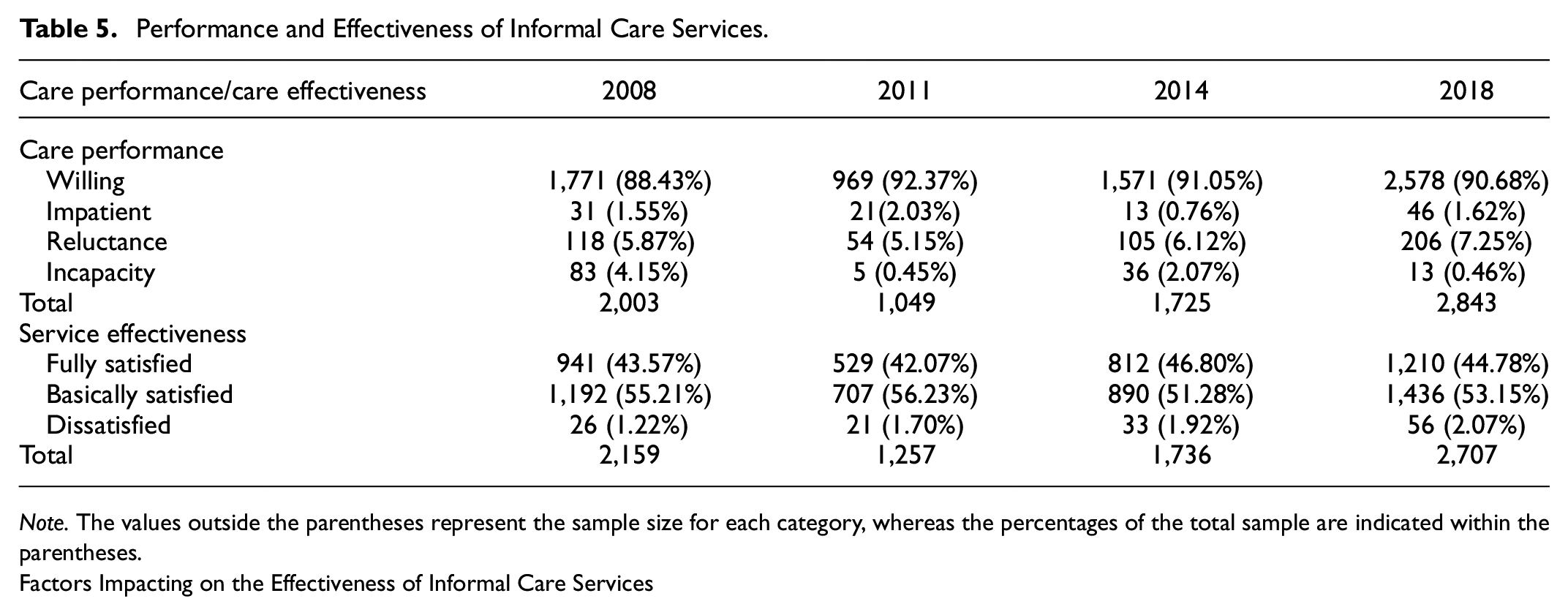
To obtain a comprehensive understanding of the performance of informal care providers and the effectiveness of care services in the caregiving process, Table 5 provides an in-depth analysis from both horizontal and vertical perspectives. In terms of care performance, rural elderly adults perceive that informal care providers demonstrate a willingness to provide care, with an average of approximately 90% (except for in 2008). The proportion of those perceived as “impatient and unwilling” ranges from 6.88% to 8.87%. Owing to objective factors, the ratio of those deemed “incapacity” decreased from 4.15% to 0.46%. This finding represents the subjective assessment of informal care providers by elderly adults, indicating that rural elderly adults have positively acknowledged 90% of them for their caregiving process. The informal care provided by children, spouses, and grandchildren can effectively address the daily care requirements of rural elderly adults. As a result, the effectiveness of the care service is acknowledged. It is important to highlight that although the percentage of rural elderly adults who express “dissatisfied” with their care service is low, this proportion exhibits a gradual upward trend annually, aligning with the rural-urban migration. In fact, as rural elderly adults age, their physical capabilities progressively deteriorate, and their demand for professional care escalates, thereby augmenting the care burden on informal care providers. Therefore, by capitalizing on informal care and fully utilizing the positive role of formal care, the effectiveness of long-term care for elderly adults in rural areas can be enhanced.
Performance and Effectiveness of Informal Care Services.
Note. The values outside the parentheses represent the sample size for each category, whereas the percentages of the total sample are indicated within the parentheses.
Factors Impacting on the Effectiveness of Informal Care Services
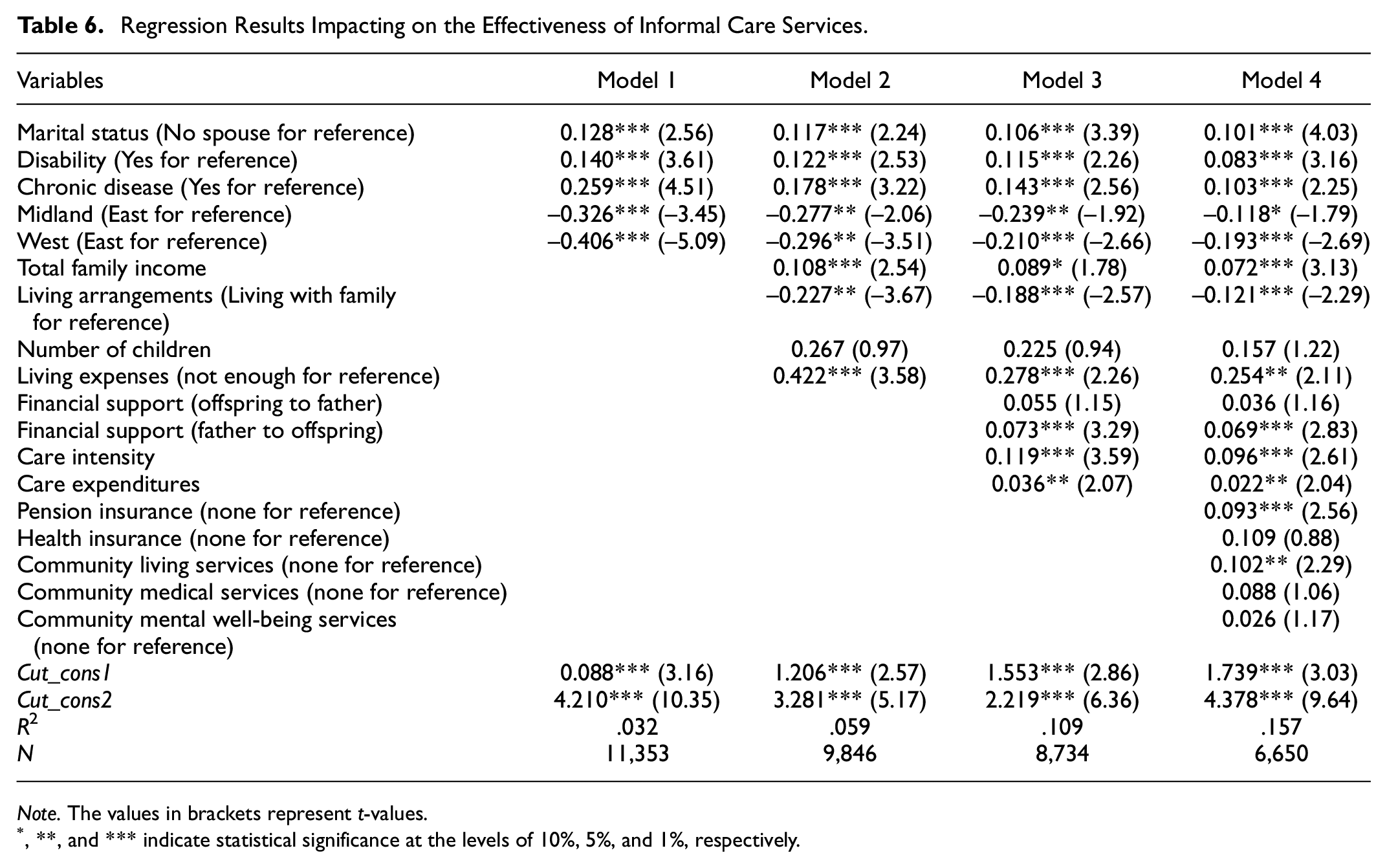
In order to ascertain the manner and magnitude to which various factors impact on the satisfaction levels associated with informal care for elderly adults in rural areas, this study employs a stepwise regression approach. The analysis incorporates individual characteristics, family resources, intergenerational support, and formal social support-related variables into Models 1 to 4, as in the Table 6, with the aim to examine the direction and extent of the impacts exerted by different dimensional variables.
Regression Results Impacting on the Effectiveness of Informal Care Services.
Note. The values in brackets represent t-values.
, **, and *** indicate statistical significance at the levels of 10%, 5%, and 1%, respectively.
Model 1 indicates that marital status is a critical factor impacting on the satisfaction of rural elderly adults with their informal care, with respect to individual characteristics. Rural elderly adults who have a spouse exhibit higher satisfaction levels with their informal care compared to those without a spouse. Care provided by spouses and children significantly contributes to the satisfaction of rural elderly adults. Subsequently, we investigate whether the presence of a disability signifies a need for daily care among elderly adults in rural areas. The regression results reveal that rural elderly adults without disabilities are more satisfied with their informal care than their disabled counterparts. This observation may be attributed to the increased demand for resources in terms of informal and professional medical care when caring for disabled elderly adults, which are often insufficiently met. Similarly, rural elderly adults with chronic diseases report lower satisfaction levels with their informal care. Physical deterioration resulting from chronic diseases intensifies the necessity for daily care. There is a substantial regional variation in the satisfaction levels of informal care among elderly adults in rural areas. Elderly adults residing in the central and western rural regions are less satisfied with their informal care than those living in the eastern regions. It is widely acknowledged that significant disparities in economic and social development exist between the eastern region and the central and western regions. Year after year, numerous young rural laborers migrate to the east, creating a demand for more informal care workers and resources in the central and western regions. Consequently, the daily care needs of a considerable number of “empty-nests,”“elderly adults living alone,” and “left-behind elderly adults” in rural areas remain unfulfilled.
Model 2 examines the impact of family resources on the effectiveness of informal care services for elderly adults residing in rural areas. Family income serves as a crucial parameter in assessing the family resources of elderly adults. Higher family income is associated with a greater likelihood of satisfaction with informal care among elderly adults in rural areas. As family income increases, informal care providers, primarily children and spouses, are more likely to have access to additional care resources to better meet the care requirements of elderly adults. The living arrangement variable indicates the availability of informal care resources for elderly adults in rural areas. Elderly adults living with their families tend to have higher satisfaction levels with informal care than those living alone or in nursing homes. Therefore, cohabitation or proximity to rural elderly individuals is an essential strategy to enhance the effectiveness of care services. Elderly adults with abundant life resources generally exhibit greater self-sufficiency and lesser reliance on external care than those with limited life resources. They are inclined to express higher satisfaction levels with their informal care. Nevertheless, the regression results for the number of children variable revealed that having a larger number of children did not significantly improve the informal care satisfaction of rural elderly adults. An increased number of children does not necessarily equate to augmented care resources or caregiving time. Having more children can give rise to phenomena such as “mutual prevarication” and “mutual comparison” during caregiving.
Model 3 illustrates the impact of intergenerational support on the effectiveness of informal care services for elderly adults residing in rural areas. Providing financial assistance to children can significantly enhance the satisfaction level of informal care for elderly adults in these areas. On the one hand, financial support from parents to their children can bolster their children’s attentiveness and enthusiasm in providing daily care to elderly adults in rural areas, thus improving the satisfaction level of care for rural elderly adults. On the other hand, financial assistance provided by elderly adults in rural areas to their children compensates for the economic costs incurred by children in providing informal care, which, in turn, reduce the cost of care for children and increases their willingness to provide care. The intensity and the number of care expenditures directly reflect the amount of care resources invested in the informal care process. The model’s findings indicate that a higher level of satisfaction with informal care for elderly adults in rural areas corresponds directly to the caregivers’ weekly care duration and the number of care expenses incurred. Therefore, providing longer, more attentive care and investing in additional care resources are crucial measures to enhance the effectiveness of informal care services for elderly adults living in rural areas.
Model 4 presents the impact of formal social support on informal care outcomes for elderly adults residing in rural areas. Pension insurance constitutes a vital source of livelihood for elderly adults, and those with pension insurance in rural areas exhibit higher satisfaction with informal caregiving. Possessing pension insurance can improve the quality of life of elderly adults by facilitating the “income effect,”“work-leisure substitution effect,” and “happiness effect,” which, in turn, contribute to the improvement of care resources. The social pension insurance established by the state plays a pivotal role in the daily lives of elderly adults (Z. Wang & Liu, 2021). Community-based daily care support is a critical element of social support. Such assistance can significantly enhance the satisfaction level rural elderly adults with their informal care. On the one hand, the community offers primary daily care, which can expand care options for rural elderly adults and effectively address their care needs in instances of insufficient informal care supply. On the other hand, delivering daily care in the community can alleviate the mental and economic stress on informal care providers, boost their motivation to provide informal care, and provide elderly adults with higher quality and more comprehensive care services.
Discussion
Rural economic and social development remains insufficient, and a lack of formal care provision has made informal care the primary means of support for elderly adults in rural areas. Therefore, the increasing demand for care among rural elderly adults has placed a greater burden on families. It is essential to evaluate whether informal care is effectively addressing the needs of rural elderly adults. We analyzed the development trajectory of informal care for rural elderly adults from 2008 to 2018. Results showed that over 60% of rural elderly adults relied on their children for informal care during the study period from 2008 to 2018. Between 46.56% and 53.17% rural elderly adults depended on their sons and daughters-in-law for care, while between 11% and 15.31% relied on their daughters and sons-in-law was. Those relying on their spouses ranged from 7.79% to 13.27%. The proportion of elderly adults relying on socialization and caregivers was less than 2% and 3%, respectively. However, a significant proportion of elderly adults, with the highest being 17.57%, lacked care. Past relevant studies, such as K. Liu et al. (2000), also highlighted that home care is the primary method of care in rural China, with adult children, eldest sons, and spouses serving as the main caregivers. Huls et al. (2015) pointed out that only 1% of elderly adults over 65 years old live in elderly care institutions in China and that 2% for those over 80 years old. Connelly (1992) and Carmichael and Charles (2003) concluded that, women are generally more likely to be family caregivers and are more favored by family members to provide care than men. Their studies and this paper’s findings are consistent. However, this paper further uses data to provide a clear and systematic description of these results.
In addition, we analyzed the effectiveness of informal care and the factors that impact on it. The results show that more than 95% of rural elderly adults are satisfied with informal care. However, the proportion of fully satisfied elderly adults is only 43.07% to 46.80%, and the proportion of dissatisfied elderly adults also increases yearly. Marital status, chronic diseases, economic assistance to offspring, and caregiving intensity impact the effectiveness of informal care. X. Liu et al. (2017) suggest that rural elderly individuals often express satisfaction with informal care because they lack alternative options. Pezzin et al. (2007) found that elderly adults with higher economic status and greater wealth have a higher position in household decision-making and thus receive more and higher-quality care from their children. This may be because elderly adults possess more resources and abilities to support and motivate their children to provide better care. Zhu(2015) also argue that rural elderly adults with chronic illnesses have higher care needs, which can place a heavy burden on their families. Therefore, while informal care can meet the daily needs of rural elderly adults, older, sicker elderly adults face increased internal and external risks and require more diverse forms of care.
This research builds on existing literature and provides an in-depth analysis of the informal care of elderly adults in rural areas. In terms of the analytical framework, internal risks, such as the gradual decline in physical functioning and the increasing incidence of diseases among elderly adults in rural areas, are the main reasons for the rising demand for care. Our study found that the highest percentage of elderly adults with disabilities in rural areas was 28.64%, and the highest percentage of elderly adults with more than one chronic disease was 54.09%. These elderly adults have a growing need for daily care. From the perspective of external risks, the rural-urban migration for work and the trend towards smaller family structures have led to an insufficiency in informal care for elderly adults in rural areas. Consequently, there is a pressing need to enhance the effectiveness of informal care. The study reveals that the satisfaction of rural elderly adults with informal care has been progressively declining, and such care will be unable to meet the demands of this demographic. These findings suggest that, although informal care remains predominant choice for rural elderly adults, its effectiveness is diminishing due to the economic and social transformation in rural regions, resulting in a care crisis and health challenges for this population. Our research aims to draw extensive attention from the government and society to establish a socialized care system to address these concerns.
Conclusions and Implications
In rural areas of China, a socialized, standardized, and specialized long-term care system has not been established, leaving informal care as the primary source of daily support for elderly adults. However, the transformation of agricultural social structures, the erosion of family pension functions, and the increased risk of disabilities significantly impact on the supply structure and effectiveness of informal care for rural elderly adults. As such, these issues necessitate urgent attention from the government and society. This paper utilizes tracking data from CLHLS surveys, spanning from 2008 to 2018 to empirically investigate the shifting patterns of informal care for elderly adults in rural areas and analyzes the factors impacting on the care effectiveness.
The allocation of informal care for elderly adults in rural areas adheres to the differential distribution pattern of “offspring, spouse, grandchildren, relatives, and friends.” Notably, over 60% of rural elderly adults rely on their children (sons, daughters-in-law, grandchildren, and sons-in-law) for long-term daily care. The proportion dependent on their spouse for maintenance ranges from 7.78% to 13.27%. The impact of socialized and market-oriented care is minimal, leaving a substantial proportion of rural elderly adults receiving “no care.” Significant gender disparities exist in the allocation of informal care for elderly adults in rural areas. The core findings indicate that women have considerably greater involvement in the daily care than rural elderly men. Additionally, daughters-in-law and daughters are more inclined to provide daily care for female elderly adults than their male counterparts. Furthermore, the percentage of male elderly adults receiving “no care” is higher than that of female elderly adults. Approximately 90% of informal caregivers express their willingness to provide daily care for rural elderly adults, and over 95% of the latter are content with their informal care. Nevertheless, less than 50% of them are “fully satisfied,” and the number of “dissatisfied” individuals is increasing annually.
Numerous factors impact on the effectiveness of informal care services for rural elderly adults, such as marital status, health condition, living arrangement, care intensity and expenditures, pension insurance, and community-based care services support. Based on research conclusions, this paper contends that with the rising life expectancy of the rural population, the weakening ability of families to provide pensions, and escalating care costs, informal care providers, who are primarily children and spouses, are fated to bear an ever-increasing level of care burden. Integrating government, market, society, and family care resources and establishing a professional and scientific daily care support system are imperative measures to address the care requirements of the rural elderly population. Specific policy recommendations are as follows:
Firstly, promote traditional support systems for the elderly in rural regions and increasing economic aid for family caregivers, thus sustain and leverage the constructive impact of children and spouses in providing informal care. Secondly, address the care deficit prevalent among the rural elderly by establishing a mutual assistance framework, which involves volunteer organizations and socialized care, thus mitigate risks associated with daily care provision for the elderly population in these areas. Thirdly, strengthen the integration between formal socialized care and informal care for the rural elderly. with an emphasis on expanding social care services to rural areas, which have predominantly been concentrated in urban regions in recent years. Lastly, establish a formalized old-age security system that encompasses pension insurance, long-term care insurance, and grassroots support networks for both urban and rural elderly populations. thus ensure and improve the quality of life for the elderly population.
Future research should focus on examining the relationship between health and informal care provision, investigating disparities in care resources between urban and rural areas, and exploring the development of a care system that effectively integrates formal and informal care elements to better address the needs of rural elderly adults. By implementing these strategies and conducting further research, we can work towards enhancing equity and quality of life for elderly individuals across different settings.
Footnotes
Data Availability Statement

Declaration of Conflicting Interests
The author(s) declared no potential conflicts of interest with respect to the research, authorship, and/or publication of this article.
Funding
The author(s) disclosed receipt of the following financial support for the research, authorship, and/or publication of this article: This research is supported by the National Social Science Fund Project(19CSH071).
Institutional Review Board Statement
Ethical review and approval were waived for this study, due to the data used in this article coming from the public database, with which all subjects involved are anonymous.