




Abstract
There are many studies on variables related to burnout among preschool teachers, but the results of these studies are inconsistent. This study explored the variables most associated with preschool teachers’ burnout through meta-analysis. The researchers conducted an extensive search of the China Knowledge Network (CNKI), Vip journal, and Wanfang databases. A total of 59 papers were included through strict inclusion criteria, and a total of 14 variables were analyzed. The results indicate that the variables that have large effect sizes with burnout are turnover intention (r = 0.7124), job stress (r = 0.4744), teacher efficacy (r = −0.4331), and job satisfaction (r = −0.4229). This study provides a data reference for the prevention and improvement of burnout among preschool teachers in China, and will also provide directions for further research to follow.
Introduction
Burnout is a response to chronic stress at work and is a psychological syndrome. This response includes three key dimensions, which are emotional exhaustion, dehumanization, and decreased personal fulfillment (Hariharan & Griffin, 2019; Maslach & Leiter, 2016). Emotional exhaustion is a process in which an individual feels exhausted and unable to continue because he or she is overburdened with responsibilities and emotional resources are consumed by others. Dehumanization refers to the individual’s negative, cynical attitude and cold, indifferent, and aggressive behavior toward service recipients such as patients and students. Decreased personal fulfillment is the tendency of individuals to feel less competent and satisfied with the work they do, to perceive their profession as worthless, their contribution as mediocre, and their role as unimportant, and to make negative evaluations (Maslach & Jackson, 1981; Öztürk et al., 2021). Teaching has been considered a high-risk profession because of the many risk factors that can affect the health of teachers since the 1980s (Zheng, 2022). Currently, teacher burnout has received widespread attention (Fernet et al., 2012; García-Arroyo et al., 2019; Zang & Chen, 2022). Kindergarten teachers serve the dual tasks of care and education, and early childhood teachers are prone to burnout due to their high responsibilities and work stress Ji & Yue, 2020; (Liang & Feng, 2004; Zang & Chen, 2022). Kindergarten teachers in China generally face the contradiction between high work stress and low salary, and they are more prone to burnout and have a higher turnover rate than other teachers (Gong et al., 2019; Zang & Chen, 2022). Chinese preschool teachers had a burnout rate of 53.2%, 56.5% showed moderate or high levels of emotional exhaustion, 35.6% showed moderate or high levels of depersonalization, and 21.8% showed low levels of professional fulfillment (S. Li et al., 2020; Ramos et al., 2023).
Many scholars have researched the negative effects of burnout. Burnout hurts individual teachers, young children, and the organizations in which teachers work. Burnout lowers personal self-esteem, reduces concentration, and causes not only psychological symptoms, including decreased self-control, anger, alienation, atrophy, anxiety, and depression, but also physical symptoms such as headaches, stomach problems, high blood pressure, and insomnia (Schonfeld, 2001). Burnout can also lead to the deterioration of family relationships, low quality of service, loss of interest in work, indifference to young children or administration, inefficiency, and separation, which can also hurt the organization (Yong & Yue, 2007). Children also exhibit higher internalizing and externalizing behaviors in classrooms with burned-out teachers (Friedman-Krauss et al., 2014; Jeon et al., 2014; Schaack et al., 2020). Researchers have tried to investigate the factors associated with burnout (De Brito Mota et al., 2018). Some studied demographic variables such as the age of teachers (M. H. Kim & Kim, 2019), others studied psychological personality variables such as depression and anxiety (Koutsimani et al., 2019), resilience (Hao, 2023), teaching efficacy (Ding & He, 2022 ), Stress coping styles (Smetackova, 2017), well-being (Gossmann et al., 2023), and others have studied job variables such as job stress (W. Zhao, Liao, et al., 2022), turnover intention (X. Li et al., 2022), Professional Identity (Sun et al., 2022), and job satisfaction (Marti-Gonzalez et al., 2023). Organizational variables such as social support (Smetackova et al., 2019), interpersonal relationships (Tian et al., 2022), and leadership (Tsang et al., 2022) have also been studied.
As can be seen, there is a wealth of research on variables related to burnout, and 14 major variables were included in this study. Whereas previous studies have explored the relationship between one or two variables and burnout. For example, Koutsimani only explored the relationship between burnout and depression and anxiety (Koutsimani et al., 2019). It is also impossible in reality to propose solutions for every variable, but rather prevention and solutions should be proposed for the most relevant variables to achieve maximum results. So, which variables are most relevant to early childhood teacher burnout? Which variables should be focused on to achieve the best results in preventing and alleviating burnout? Previous studies have been unable to provide a basis for these, and the present study can provide a scientific and comprehensive database in this regard through Meta-analysis. When the results of multiple studies are inconsistent, a meta-analysis can be used to obtain a comprehensive analysis that is closer to the real situation and to improve the reliability of the analysis results (Higgins & Green, 2011; Yi et al., 2022). Preschool teachers are teachers who are responsible for educating children from about 0 to 6 years old before elementary school. They are generally teachers in nurseries (children aged 0–3 years) and kindergartens (children aged 3–6 years) (Huang, 2018). This study explored the variables and correlations related to burnout among preschool teachers in China through meta-analysis, to explore the variables most associated with burnout among preschool teachers in China. Teacher burnout is a socially and culturally contextualized phenomenon that has different causes and manifestations in different societies (Guo, 2021). Studying the variables most closely associated with kindergarten teachers’ burnout in the Chinese social context can provide a data reference for developing programs to reduce and prevent burnout, as well as enrich the study of kindergarten teachers’ burnout in China and provide possibilities for cross-cultural comparative research.
Literature Review
Classification of Variables
Maslach classified the variables associated with burnout into demographic variables, personality trait variables, job attitude variables, job characteristic variables, occupational trait variables, and organizational trait variables (Maslach et al., 2001). D. Kim (2019) categorized the variables related to preschool teachers’ burnout into demographic sociological variables, psychological personality variables, organizational variables, and job variables (D. Kim, 2019). This study mainly referred to the classification criteria of D. Kim (2019) to classify the variables related to preschool teachers’ burnout into demographic variables, psychological personality variables, organizational variables, and job variables. Demographic sociological variables generally include age, education, salary, work experience, and so on. The psychological personality variables mainly include teaching efficacy, resilience, and well-being. Organizational variables are those that are not related to the preschool teacher’s own will and are related to the internal and external environment of the kindergarten or childcare facility. Job variables are those related to the tasks undertaken by the preschool teacher’s position or profession.
What is important in the Meta-analysis is to indicate the degree of impact—the overall effect size—of the variables that have an impact on preschool teacher burnout. When no distinction is made between risk and protective variables, the entire effect sizes cancel out and are difficult to interpret. Therefore, in addition to classifying the variables studied, it is important to classify the protective and risk variables. This study distinguishes between protective and risk variables.
Demographic Variables
The main demographic variables of interest in China to date include age and years of work. Hakanen found that younger teachers were more likely to experience burnout in terms of age (Hakanen et al., 2006; Wu et al., 2021). Teachers’ age was negatively correlated with burnout, the older the teacher, the lower the burnout, and years of work were positively correlated with burnout, the longer the years of work, the higher the burnout (M. H. Kim & Kim, 2019). Others believe that teachers with more years in the profession show more signs of burnout than those with less experience (Landeche, 2009).
Psychological Personality Variables
Psychological personality variables include resilience, well-being, stress-positive coping, stress-negative coping, teaching efficacy, and negative mental health. Park (2020) considers resilience as the ability to cope with stressful and dangerous environmental changes and to maintain a healthy adaptive state or the ability to recover quickly from adversity with self-control regulation (Park, 2020). The results of the study by Lai-Kuen and Richards et al. demonstrated that resilience was significantly associated with burnout (Brenda, 2014; Richards, 2016), and was negatively associated with burnout (Héctor et al., 2020). That is, the higher the resilience, the lower the burnout, and resilience is the protective variable for burnout. Park (2020) considered early childhood teachers’ teaching efficacy as a belief that teachers have the confidence or positive attitudes about their abilities in performing care and education that they believe have a positive impact on young children (Park, 2020). Teachers with high teaching efficacy appear to be less likely to feel burned out (Ding & He, 2022), and teachers with lower burnout have higher teaching efficacy (Smetackova, 2017). Well-being is a subjective experience implying a cognitive state accompanied by the positive emotions one feels when one gets something important that one wants (Lazarus & Folkman, 1984). Hok (2022) concluded that well-being is negatively related to burnout, and is the most powerful predictor of burnout (Hok, 2022). Stress coping is the process of assessing and selecting the various resources available to the individual to solve the problem at hand (Lazarus & Folkman, 1984). Griffith and Steptoe classified stress coping styles into positive and negative coping (Griffith & Steptoe, 1999). Several cross-sectional and longitudinal studies have found that teachers’ positive coping styles are negatively related to burnout, while negative coping styles are positively related to burnout (Carmona et al., 2006). Teachers with low burnout use positive coping strategies more frequently and avoid negative coping strategies (Smetackova, 2017). Mental health status is strongly associated with teacher burnout, and the level of psychological well-being predicted burnout (Chen et al., 2022; Zhang et al., 2014).
Job Variables
The main job variables are professional identity, job stress, job satisfaction, and turnover intention. Many studies now point to occupational identity as a protective variable for burnout. Teachers’ professional identity refers to their desire and love for the ongoing work of the profession (Sun et al., 2022; Vahid et al., 2016). Professional identity can negatively predict burnout (Sun et al., 2022). Teachers’ professional identity is a psychological resource that can compensate for the loss of resources from work and thus reduce job burnout. Job satisfaction is a pleasant or positive emotional state that results from an individual’s own expectations and needs being fulfilled at work (Kader et al., 2021; Puhanić & Erić, 2022). Job stress is positively related to burnout, which means that the higher the stress, the higher the burnout. Therefore, job stress is a risk variable for burnout (Chen et al., 2022; X. Li et al., 2021; Sang et al., 2022). Job stress is an unpleasant negative emotional experience for teachers that can lead to excessive physical and mental fatigue, distress, nervousness, or frustration (Roeser et al., 2013; W. Zhao, Liao, et al., 2022). Job stress has a significant positive predictive effect on burnout and job stress is a risk variable for burnout, and the higher the stress, the higher the burnout (W. Zhao, Liao, et al., 2022). Price and Mueller define turnover intention as the determination, thoughts, and intentions of an organizational member to leave the occupation or organization in which they work (Price & Mueller, 1981). Burnout is significantly and positively related to turnover intention, and those teachers who consistently intend to leave have more significant symptoms of burnout than other teachers (X. Zhao, Wu, et al., 2022). Other studies also point to a significant positive relationship between turnover intention and burnout (Amponsah-Tawiah et al., 2016; Katariina et al., 2022).
Organizational Variables
The main organizational variables are social support and interpersonal relationships. Dimond (1979) defined social support as support and interactions in interpersonal relationships that include approval of others’ actions and perceptions, and material, financial, and emotional help to others (Dimond, 1979). Social support was significantly associated with burnout among early childhood teachers, and increasing social support for early childhood teachers could be effective in preventing burnout (Lee & Cha, 2022). The more teachers perceive social support, the less burnout they experience. When teachers show high satisfaction with the support available to them, their risk of burnout is reduced (Fiorilli et al., 2016). The lower the burnout the higher the social support teachers receive at work (Smetackova, 2017 ). Many studies have demonstrated the importance of interpersonal relationships with students, colleagues and leaders in burnout. Rodríguez-Mantilla and Fernández-Díaz (2017) found a significant effect of teacher-student relationships on burnout and a moderate effect of teacher-colleague and teacher-leader relationships on burnout (Rodríguez-Mantilla & Fernández-Díaz, 2017).
The current research on variables related to preschool teacher burnout is numerous and heterogeneous. So what exactly are the effect sizes of the variables associated with preschool teacher burnout? Which variables are the main relevant variables? What variables are most effective in improving and preventing burnout among preschool teachers? Therefore, this study further evidenced the effect sizes and correlations of the variables related to burnout among Chinese preschool teachers through Meta-analysis. No article has yet conducted a meta-analysis of burnout among Chinese preschool teachers.
Method
Meta-Analysis Procedures
Meta-analysis is a method that systematically evaluates the results of data analysis. It is a method for quantitative statistical analysis of data from multiple studies with the same purpose and similar nature, which realizes the mutual combination of literature evaluation and statistical methods, making the literature evaluation more rigorous and scientific, and the results of systematic evaluation more authoritative and reliable (Higgins & Green, 2011). Jackson proposed six steps for meta-analysis: first, setting hypotheses for the study; second, selecting research arguments; third, coding or characterizing the information of the study; fourth, statistically analyzing and integrating the results of the study, fifth, interpreting the data from the statistical analysis, and sixth, compiling the results obtained from the Meta-analysis (Jackson, 1980). According to Jackson’s research procedure, the Meta study procedure for this study was set up as follows.
Literature Search
The literature was searched in VIP Journal Network, Wanfang Database (WD), and China Knowledge Network (CNKI), using “burnout” as the topic, title, keywords, and abstract. The search period was from 2006 (the earliest study) to December 2021, with a total of 10,789 papers retrieved.
Inclusion Criteria
This study set the following inclusion criteria: 1. The type of study was cross-sectional. 2. The study was a study of the correlation between preschool teachers' burnout and related variables. 3. Pearson correlation coefficient can be extracted. 4. The instrument for measuring burnout is the MBI-ES. Maslach and Jackson classified burnout into three dimensions: emotional exhaustion, depersonalization, and low accomplishment, and developed the Maslach Burnout Inventory (MBI) based on these three dimensions (Yin et al., 2022). It contains the MBI-Educator Survey (MBI-ES), the MBI-Human Services Survey (MBI-SS), and the MBI-General Survey (MBI-GS). The MBI-ES has good reliability and validity and is primarily used to investigate teacher burnout (Maslach et al., 2001; Zang et al., 2022). 5. The studies were written in Chinese. 6. The publication time of the studies is limited to December 31, 2021. The exclusion criteria are set as follows: 1. Conference abstracts and review articles. 2. Studies that repeatedly published the same data. 3. Poor quality studies. 4. Studies conducted on a sample of special education teachers. 5. Literature with fewer than two studies on a single variable.
Literature screening was conducted based on the above inclusion and exclusion criteria. The total number of articles with preschool teachers as research subjects was 275. First, the literature whose research subjects were special preschool teachers was excluded, and a total of 8 articles were excluded, leaving 267 articles. Second, by reading the title and research method sections, those articles whose research type was documentary and experimental were excluded, and a total of 158 articles were excluded; by reading the data section of the papers, those articles without Pearson r values were excluded, and a total of 38 articles were excluded, leaving 71 articles. Third, five duplicate publications were excluded; four papers in which the measurement instrument was not MBI were excluded, leaving 62 articles. In the fourth step, variables and literature with fewer than two papers were excluded, and a total of three papers were excluded. Finally, 59 articles were included. Screening process is shown in Figures 1 and 2.
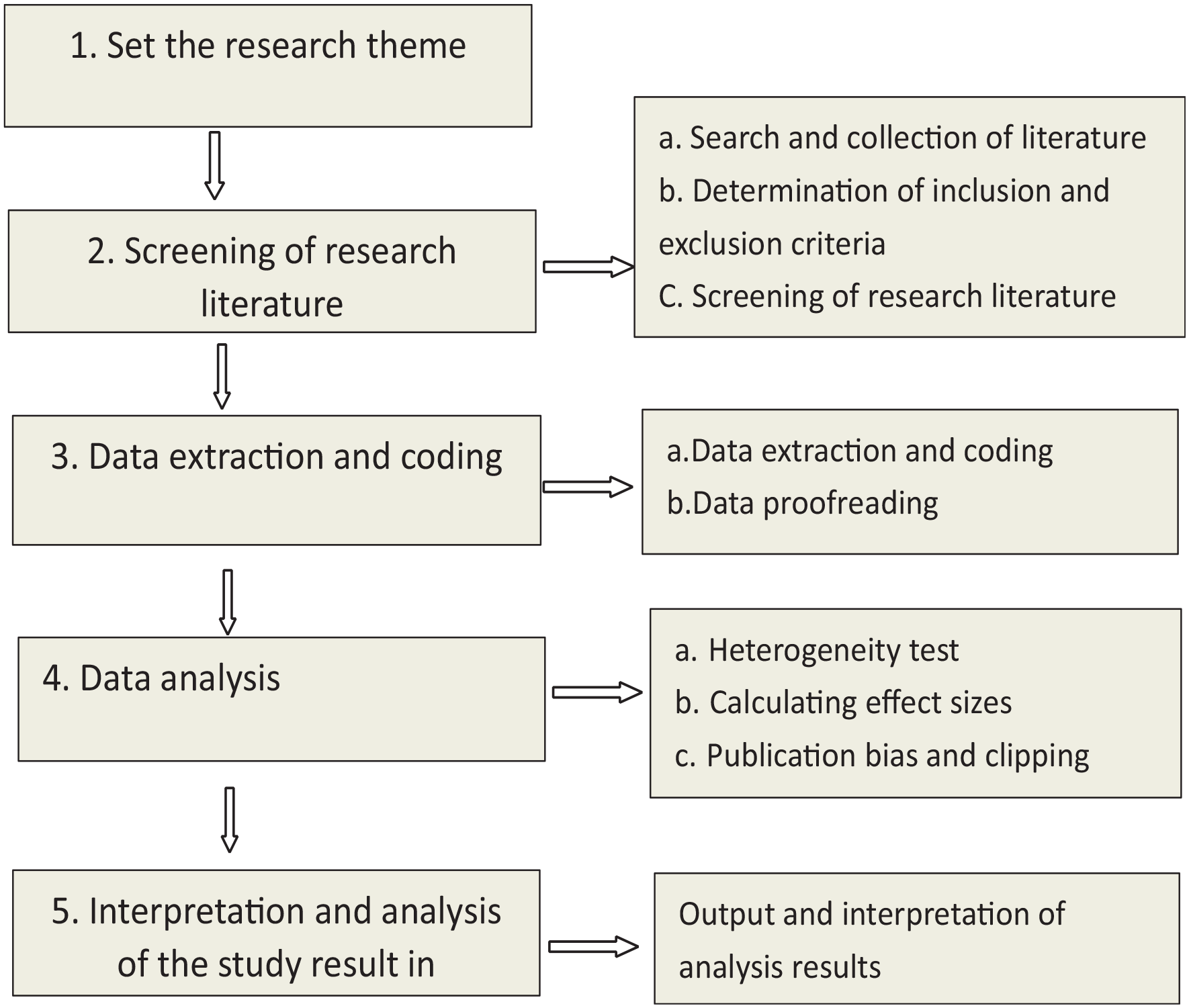
Study procedure diagram.
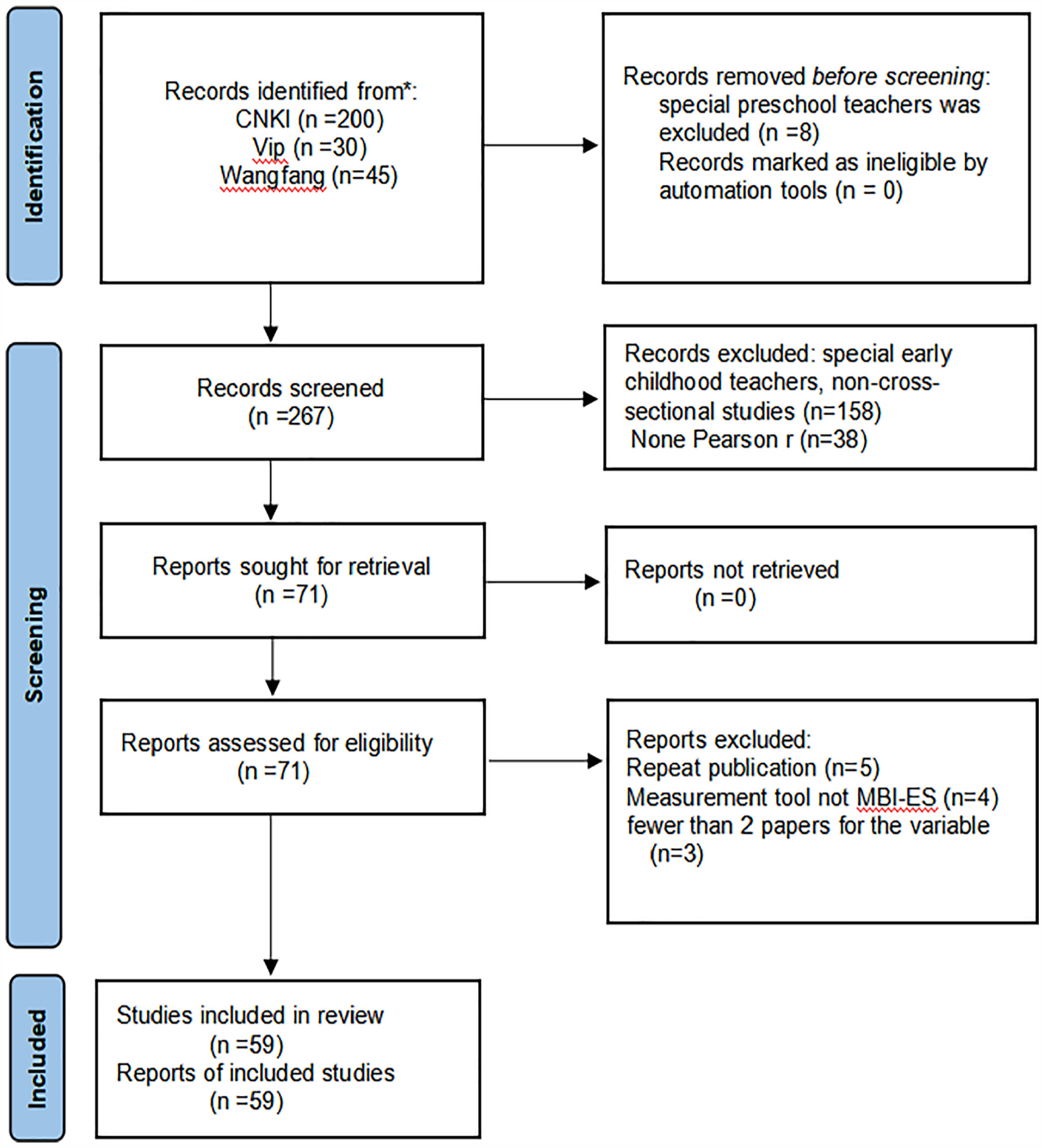
The flow chart of the study selection process.
Data Extraction and Coding
In this study, data extraction tables were designed and extracted using Microsoft Excel software. To ensure the accuracy of the data extraction, two people independently performed the data extraction and coding in this study. After two people finished extracting the data, the data were compared. If there were inconsistent data, the two people checked the errors and re-extracted the data until the two people extracted the same results. In the case of disagreement, the first two people will negotiate to solve the problem, and when the two people cannot negotiate to solve the problem, a third researcher will be invited to assist in helping to solve the problem. Coding was performed once for each independent variable. If the literature contained multiple variables and effect values at the same time, multiple coding was performed accordingly. Coding included author information, year of publication, country, type of paper, type of teacher, age of teacher, education, years of experience, age of children in charge, type of organization, sample size, and Pearson r value.
Data Analysis
The data analysis software used in this study is R software. r is a complete data processing, computing, and plotting software system. The meta-analysis module in R software is mainly implemented by installing the metafor package, meta package, and rmeta package. Whether it is a classical meta-analysis method or an advanced one, almost all of them can be implemented in R (Yang, 2018). This study used Pearson r as an index of effect size to test the correlation between preschool teachers’ burnout and the variables of interest. For the literature where the outcome variable is a correlation coefficient r value, the correlation coefficient needs to be converted to Fisher’s Z value because the variance and correlation coefficient are closely related. This study was analyzed using the transformed Fisher’s Z values. Fisher’s Z is derived from equation (1), the formula for variance is equation (2), the formula for standard error is equation (3), and finally, the summary r value is converted from equation (4), and the correlation strength between the variables is judged by the range of the absolute value of summary r (Higgins & Green, 2011).




Meta-analysis was performed using the R procedure, and heterogeneity was tested by Q and I2. If p > .10 and I2 was less than 50%, no heterogeneity between studies was considered to exist and the data were combined using the fixed effects model M-H method. If p < .10 and I2 was greater than 50%, heterogeneity between studies was considered to exist and the random effects model D-L method was applied for merging (Higgins & Green, 2012). Regarding publication bias analysis was first observed using funnel plots and then further validated using Egger’s linear regression method. If p < 0.05 indicates publication bias, the reliability of the data was further verified after correction by the cut-and-patch method.
Results
Characteristics of Included Studies
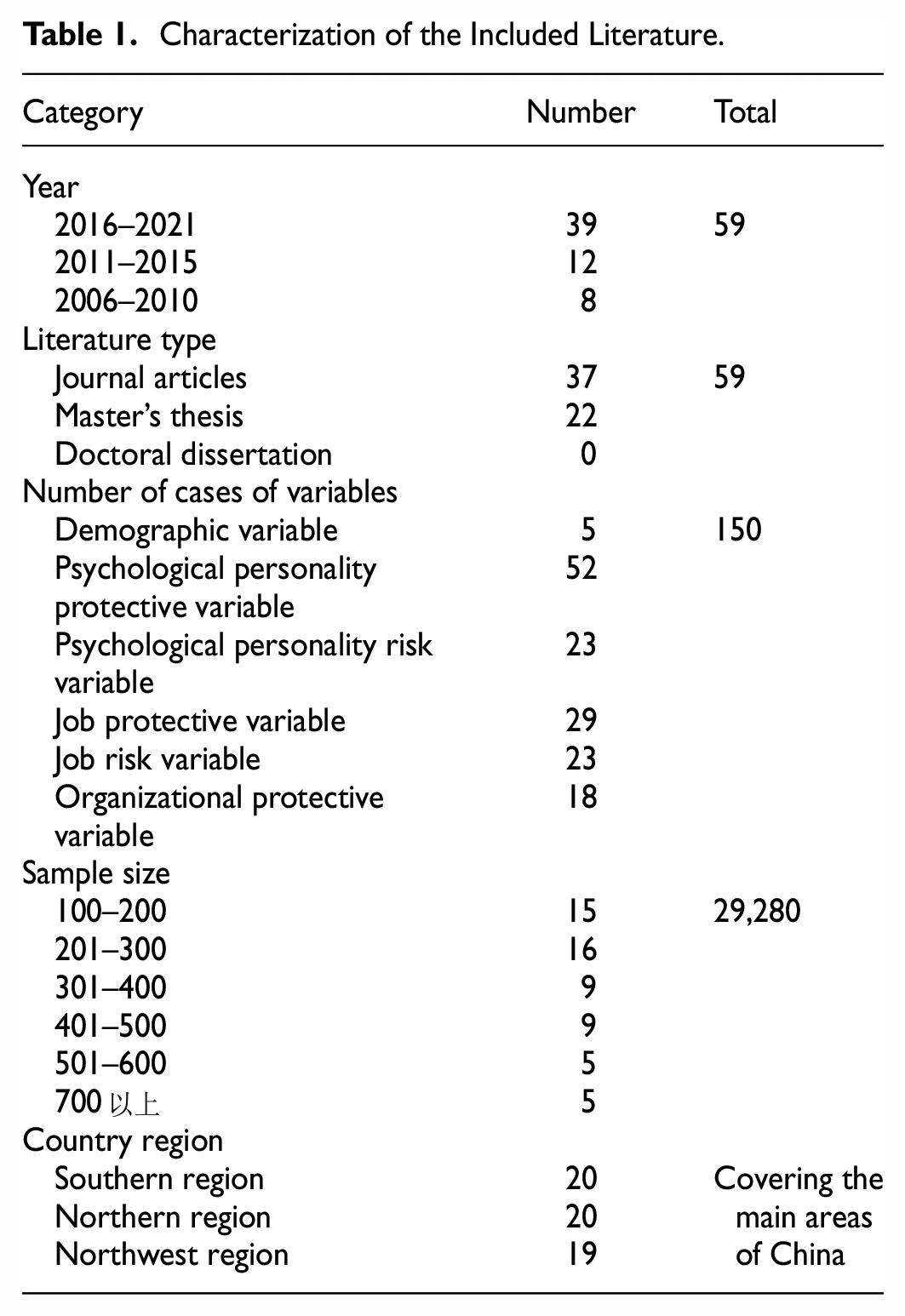
A sample suitable for meta-analysis was obtained through strict criteria of inclusion and exclusion criteria. There were 150 independent data obtained for 509 different documents in the study sample (Table 1). A statistical analysis of the study population reveals 39 articles from 2016 to 2021, 12 articles from 2011 to 2015, and 8 articles from 2006 to 2010. There are 37 journal papers and 22 master’s degree papers. The largest number of cases was 52 for the psychological personality protective variable and the smallest was 5 for the demographic variable, with a total number of cases reaching 150. The sample size ranges from 100 to 700 or more, with the largest number of samples in the 200 to 300 range and a total sample size of 29,280. The samples originated from the main areas of China, with wide coverage.
Characterization of the Included Literature.
Publication Bias
Meta-analysis Funnel Plot is shown in Figure 3, and the overall observation of scattered distribution on both sides is symmetrical. Further using quantitative tests, it was found that Egger’s test for all variables except psychological personality risk variables, as shown in Table 2, showed good Funnel Plot symmetry with no suggestion of publication bias (Egger’s test: p ≥ .05).

Funnel plot of burnout.
Burnout Publication Bias Egger’s Table.
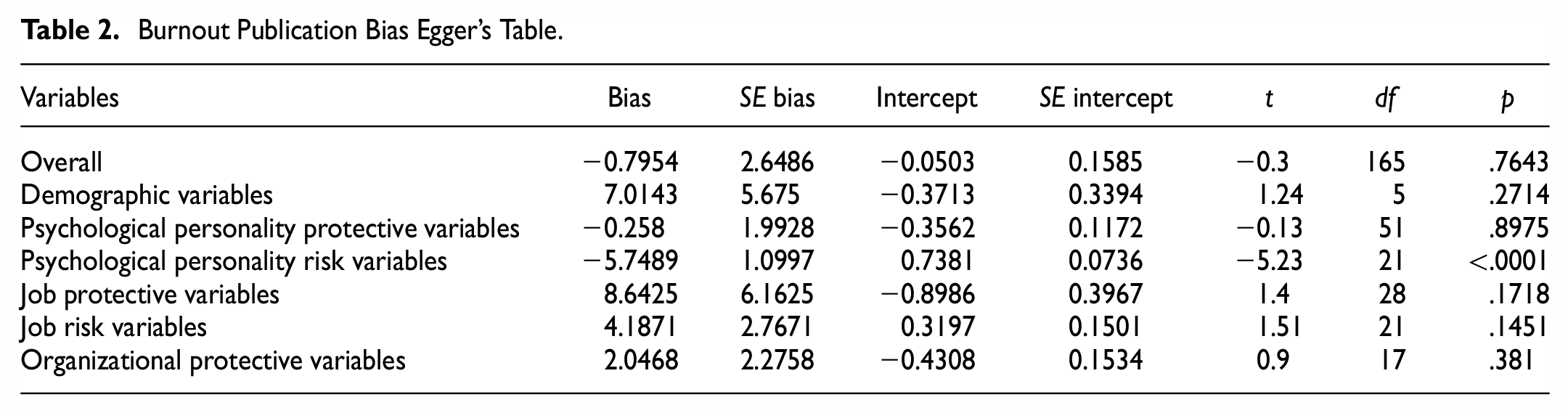
Psychological personality risk variables (Egger’s test: t = −5.23, p < .0001), suggesting publication bias in the relationship between psychological personality risk variables and burnout, were corrected using the cut-and-mend method to obtain Figure 4, which is symmetrical after the cut-and-mend, and the combined effect value r (95% CI) is 0.3741 [0.3459, 0.4016], and the results corrected by the clipping method did not change significantly from the original results, indicating that the data were reliable.

Funnel plot of psychological personality risk variables and burnout after clipping and patching.
Effects Size of Variable Groups
As seen in Table 3, the 95% CI for the psychological personality protection variable, psychological personality risk variable, job protection variable, job risk variable, and organizational protection variable were all statistically significant without 0. Psychological personality protective variables, job protective variables, job risk variables, and organizational protective variables (I2 > 50%), using a random effects model. The psychological personality risk variable I2 < 50%, using a fixed effects model. And the demographic variable 95% CI contained 0, which was not statistically significant. The results showed that all five variable groups were associated with burnout, except for the demographic variable group. The variable group that was most strongly associated with burnout was the job risk variable (r = 0.5128, 95% CI = [0.4506, 0.57]).
Meta-Analysis of Variable Groups.
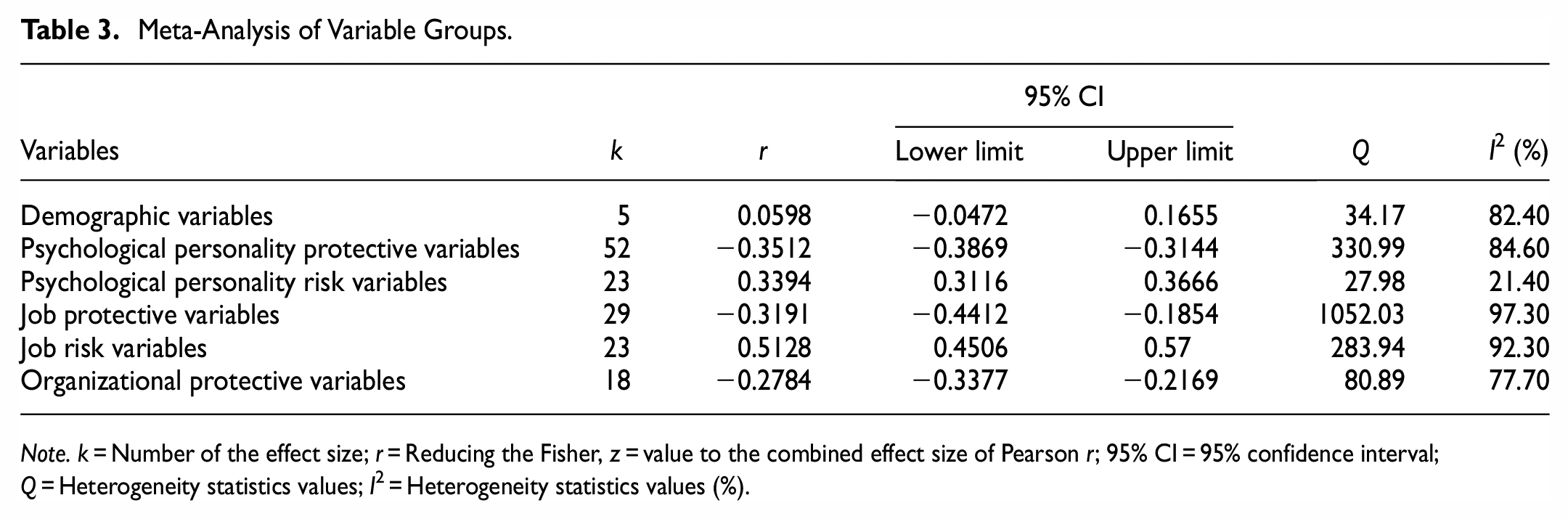
Note. k = Number of the effect size; r = Reducing the Fisher, z = value to the combined effect size of Pearson r; 95% CI = 95% confidence interval; Q = Heterogeneity statistics values; I2 = Heterogeneity statistics values (%).
Effect Sizes of Demographic Variables
The study results showed that only years of work was statistically significant. Years of work (r = 0.161, 95% CI = [0.0387, 0.2787]) was positively associated with burnout (I2 = 58.10%), using a random effects model. Age was not associated with burnout (Table 4).
Meta-Analysis of Demographic Variables.

Effect Sizes of Psychological Personality Protective Variables
Meta-analysis results showed that the 95% CI for stress-positive coping, teaching efficacy, resilience, and well-being were all statistically significant without 0 (I2 > 50%), using a random effects model. According to the r-values shown in Table 5, stress-positive coping, teaching efficacy, self-resilience, and well-being were negatively correlated with burnout and were all protective variables for burnout, with the strongest correlation variable being teaching efficacy (r = −0.4331, 95% CI = [−0.5165, −0.4331]).
Meta-Analysis of Psychological Personality Protective Variables.

Effect Sizes of Psychological Personality Risk Variables
Meta-analysis results showed that 95% CI for negative mental health and stress-negative coping did not contain 0, and both were statistically significant. The I2 value for negative mental health was 0, using a fixed effects model; the I2 value for stress-negative coping was 70.6%, using a random effects model. According to the r-values shown in Table 6, negative mental health, stress negative coping, and burnout were positively correlated, and all were risk variables for burnout. The variable with the strongest correlation was stress-negative coping (r = 0.4021, 95% CI = [0.2778, 0.5131]).
Meta-Analysis of Psychological Personality Risk Variables.

The Effect Size of Job Protective Variables
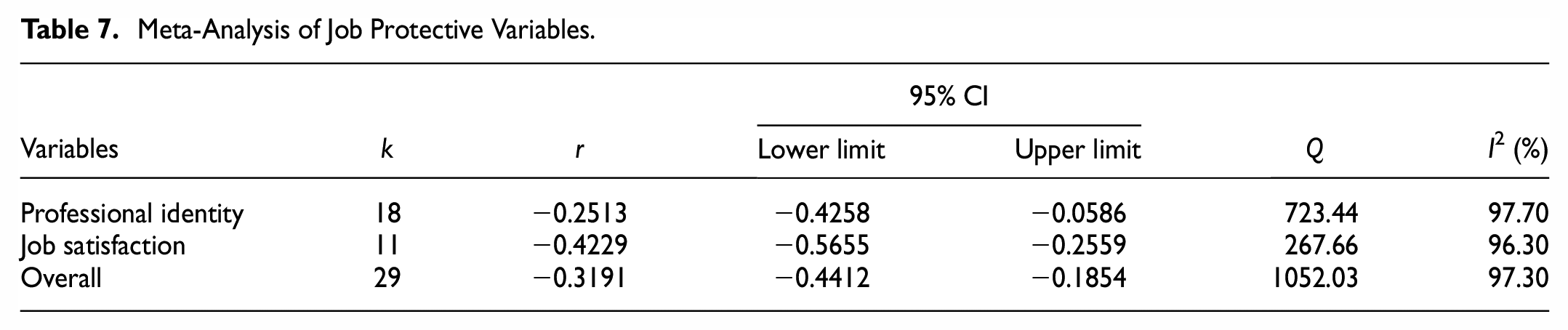
According to the results of the Meta-analysis shown, the 95% CI of job satisfaction and professional identity was non-zero (I2 > 50%) and statistically significant, using a random effects model. According to the r values shown in Table 7, job satisfaction and professional identity are all protective variables for burnout, with the strongest correlation being job satisfaction (r = −0.4229, 95% CI = [−0.5655, −0.2559]).
Meta-Analysis of Job Protective Variables.
Effect Sizes of Job Risk Variables
According to the results of the Meta-analysis, the 95% CI for job stress and turnover intention was non-zero (I2 > 50), both were statistically significant, and both used the random effects model. According to the r values shown in Table 8, turnover intention and job stress are all risk variables for burnout, with the strongest correlation variable being turnover intention (r = 0.7124, 95%CI = [0.412, 0.8731]).
Meta-Analysis of Job Risk Variables.

Organizational Protective Variables
According to the results of the Meta-analysis shown, the 95% CI for interpersonal relationships and social support was all statistically significant without 0. I2 values for interpersonal relationships were above 50%, using a random effects model. Values of I2 for social support were below 50%, using a fixed-effects model. According to Table 9, interpersonal relationships and social support were all protective variables for burnout, with the strongest correlation being interpersonal relationships (r = −0.3319, 95% CI = [−0.469, −0.3157]).
Meta-Analysis of Organizational Protective Variables.

Discussion
This study conducted an evidence-based study on the variables associated with burnout in preschool teachers through Meta-analysis. The group of variables most associated with burnout was found to be the job risk variable cluster, with an effect size of 0.5128. The variables most associated with burnout in each variable cluster were turnover intention (0.7124), job stress (0.4774), teaching efficacy (−0.4331), job satisfaction (−0.4229), stress-negative coping (0.4021), interpersonal relationships (−0.3319), and Working age (0.161). According to Cohen’s (1977) theory, the effect size is interpreted as follows: |ESr| ≦ 0.1 means there is a small effect between the two variables; 0.1 < ESr| ≦ 0.4 means there is a medium effect between the two variables; |ESr| > 0.4 means there is a large effect between the two variables, where ESr < 0 is a negative effect and ESr > 0 is a positive effect (Cohen, 1977). This shows that in the correlation with burnout, there were large effects for the job risk variable group, as well as large effects for turnover intention, job stress, teaching efficacy, job satisfaction, and stress-negative coping, and moderate effects for interpersonal relationships and working age. The main purpose is to explore the variables most related to job burnout, so the variables with large effects will be discussed. The number of cases of stress-negative coping was only 3. The study sample was not rich enough, so this variable was not focused on in this study.
Turnover Intention and Burnout
The group of variables most associated with preschool teacher burnout was the job risk variable group. The most strongly correlated variable in the job risk variable cluster was turnover intention (0.7124) which was positively correlated with burnout and was a risk variable for burnout. Many studies have examined the relationship between job burnout and turnover intentions (Høigaard et al., 2012; Jourdain & Chenevert, 2010; Madigan & Kim, 2021). There is a significant positive relationship between burnout and turnover intention (Høigaard et al., 2012; Madigan & Kim, 2021). Not only does replacing teachers have a huge financial impact (OECD, 2020), but it also harms students' academic progress (Sorensen & Ladd, 2020). Given the tremendous impact of preschool-teacher separation, it has gradually become a hot topic of concern in both theoretical and practical circles. It is easy to understand that turnover intention becomes the variable most closely related to burnout. Therefore, to effectively alleviate and prevent burnout among preschool teachers, solutions can be sought by focusing on the variable of turnover intention. A meta-analysis of 33 studies by Moon (2012) found that organizational benefits, promotion systems, and staff recognition were important protective factors for early childhood teachers’ intention to leave (Moon, 2012). Organizational support refers to an employee’s view of how the organization views their contributions and cares about his or her interests (Eisenberger & Stinglhamber, 1986). Therefore, caring for teachers’ interests, recognizing their value, supporting them in their work, and making them feel important to the organization can help reduce burnout, intention to leave, and actual turnover behavior.
Job Stress and Burnout
Job stress is another risk variable among job risk variables. Job stress is highly correlated with burnout, with an effect size of (0.4774), job stress is positively correlated with burnout and is a risk variable for burnout. Long-term work stress may lead to chronic fatigue, which is closely related to burnout syndrome (Jennett et al., 2003; Smetackova, 2017). Teaching is although a very honorable profession but is highly stressful and demanding. Globally, high work stress in teachers has been demonstrated (Bottiani et al., 2019; Carroll et al., 2022; Herman et al., 2018). However constant work stress is highly detrimental and can lead to decreased job satisfaction, trigger mental health problems, and may even lead to burnout and cause resignation (Brackett et al., 2010; Carroll et al., 2022; Wang et al., 2014). For early childhood teachers, work stress caused by external circumstances such as working conditions, hours, salary, workload, and social recognition can negatively affect internal aspects of teachers such as teaching efficacy, self-esteem and energy depletion, especially as early childhood teachers feel great deal of stress not only in business-related areas but also in terms of not being properly compensated compared to higher levels of stress (Chae, 2016). Therefore, educational administrations and kindergartens can legislate that class sizes must be strictly controlled to ensure that teachers are not overburdened while increasing support programs for their workers' compensation. In addition, kindergartens should help teachers recognize stressors within themselves and outside of the school environment, and provide professional support and positive coping programs for preschool teachers.
Teaching Efficacy and Burnout
The effect value between teaching efficacy and preschool teachers’ burnout was (−0.4331), teaching efficacy was negatively related to burnout and was the most correlated variable with burnout among the psychological personality protective variables. With the rise of positive psychology, attention has been focused on human well-being, and teaching efficacy has received widespread attention as a positive variable. Guskey and Passaro emphasize that teachers with a high sense of teaching efficacy believe they will have an impact on the educational process (Guskey & Passaro, 1994 ). Early research has found a link between burnout syndrome and teaching effectiveness that has been demonstrated by data (Brouwers & Tomic, 2000; Skaalvik & Skaalvik, 2007; Smetackova et al., 2019). Teachers with high teaching efficacy appear to be less likely to feel burned out (Ding & He, 2022), and teachers with lower burnout have higher teaching efficacy (Smetackova, 2017). These findings are generally consistent with the results of this study. For this reason, education departments, early childhood education institutions, and preschool teachers themselves must discuss how to improve the teaching efficacy of preschool teachers. Teaching efficacy is influenced by preschool teachers’ successful experiences. Therefore, we should strive to create a platform for teachers to showcase themselves, help them capture the wisdom of their practice, and guide them to use certain strategies to refine and sublimate it. At the same time, director and educational management should create a variety of learning opportunities, such as through training, retraining, observation, seminars, and other ways to promote teachers’ personal growth and thus enhance their sense of teaching efficacy.
Job Satisfaction and Burnout
The effect size between burnout and job satisfaction was (−0.4229), which was the largest effect size among the job protection variables. This indicates that job satisfaction is negatively related to burnout and is the most closely related to burnout among the job protection variables. Job satisfaction is the emotional state that a person develops in the course of his or her work (Lu et al., 2022; McAllister et al., 2017). Teachers’ job satisfaction refers to teachers’ perceptions and emotional feelings about the teaching profession (Lu et al., 2022; Troesch & Bauer, 2017). Job satisfaction is generally associated with positive job attitudes, which are important to teachers, and therefore job satisfaction has a powerful and profound impact on teachers (Lu et al., 2022; Zhai et al., 2013). Many early researchers have studied job satisfaction and burnout in relation to each other (Visser et al., 2003; Zedeck et al., 1988). Job burnout was significantly and negatively related to job satisfaction, meaning that teachers with higher levels of burnout had lower job satisfaction and burnout was a strong predictor of job satisfaction (Chen et al., 2022). Several studies have also found a protective effect of job satisfaction on burnout overview and looked for evidence of this (Harris et al., 2007; Smetackova et al., 2019). It is evident that job satisfaction is one of the important variables of burnout and it is necessary to pay attention to preschool teachers’ job satisfaction. Job satisfaction is closely related to interpersonal relationships and work environment (Chae, 2016; Smetackova et al., 2019). Therefore, to improve preschool teachers’ job satisfaction, unblocking interpersonal relationships with directors and colleagues and improving the work environment are considered to be important.
Conclusion
The group of variables most associated with preschool teachers’ burnout was the job risk variable (r = 0.5128). In terms of demographic variables, only working age had a statistically significant positive association with burnout. The largest effect size among the psychological personality protective variables was teaching efficacy (r = −0.4331), which was negatively associated with burnout. The psychological personality risk variable with the largest effect size was stress-negative coping (r = 0.4021), positively associated with burnout. But the number of cases of stress-negative coping was only 3, which requires attention to interpretation. The variable with the largest effect size among job protective variables was job satisfaction (r = −0.4229), which was negatively associated with burnout. The largest effect size among the job risk variables was the turnover intention (r = 0.7124), followed by job stress (r = 0.4744). They were positively associated with burnout. The organizational protection variable with the largest effect size was interpersonal relationships (r = −0.3319), which was negatively associated with burnout. Based on Cohen’s (1977) effect size distinction theory and the number of cases for each variable, this study concluded that the variables with large effect values related to preschool teachers’ burnout were turnover intention, job satisfaction, job stress, and teaching efficacy. Therefore, educational programs related to the prevention and improvement of preschool teachers’ burnout should be developed around these variables.
Limitations
The following shortcomings exist in this study. First, due to objective conditions, the unpublished literature of this study was not included in the scope of the study, and the findings may have some errors. Second, the number of literature for some variables is low and some results still need to be confirmed by further research, which also provides a feasibility basis for subsequent research directions. Third, the true relationship between preschool teachers’ burnout and related variables may be more complex, and it may be difficult to fully describe and measure the relationship by examining the correlation alone, pending further research to confirm.
Footnotes
Data Availability Statement
The original contributions presented in the study are included in the article/supplementary material, further inquiries can be directed to the corresponding authors.
Author’s Note
All authors contributed to the final manuscript. All authors read and approved the final manuscript.
Declaration of Conflicting Interests
The author(s) declared no potential conflicts of interest with respect to the research, authorship, and/or publication of this article.
Funding
The author(s) received no financial support for the research, authorship, and/or publication of this article.
