




Abstract
Developing design concepts is crucial in architectural engineering education, yet helping students to develop these concepts is a challenging task. Despite previous research exploring design concepts, statistical analysis is scarce to evaluate their effectiveness. This study used the body movement methods from existing literature, combined with photography to transform the 3D body movements into 2D drawings, serving as the basis for developing designs (sources of design concept). A total of 51 students participated in the course. In the end, the hands-on process and learning outcomes were investigated objectively through statistical analysis. The operational model of the course can act as the reference for future hands-on education and design concept development. The specific results are: (1) body movements and material (board) limitation can bring about inspiration for the initial development of the design; (2) the images produced from the adopted photography technique can effectively assist students in developing design concepts; (3) the material chosen for model making should be similar to that used in the subsequent hands-on work as much as possible to better realize the concept; and (4) a variety of unexpected functional usability and esthetic shapes can be created through post-production reflection. Both body dimensions and photography techniques were extremely successful in this operation, thus providing a concrete way to learn how to manipulate a design concept.
Introduction
Design concept is crucial in the process of design development, whether it is architectural design or hands-on design. From the early and middle stages of developing a design, all the way to the completion of a design, design concepts play a pivotal role in affecting the design direction throughout the process (van Dooren et al., 2018). For the learning process of students, all steps, including understanding what a design concept is, learning how to manipulate a design concept, completing the work, and reflecting on the design concept, are of significant importance. For beginners, learning how to develop or manipulate a design concept has always been hard. Hence, the teaching methods for design that a teacher employs to lead students into the field of design concepts, in order to manipulate the development of design concepts to enhance the quality of design, is an extremely important topic.
In general, introductory courses in architectural design often incorporate hands-on education to help students understand the importance of ergonomics through body movement. Through hands-on work, students can understand the basic knowledge of materials, construction, and structures (Chapman et al., 2019). This is extremely important for subsequent advanced architectural design education (van Dooren et al., 2018). For an introductory hands-on course, it is also important to provide a method that can guide students in developing their ideas. Therefore, developing concepts based on the topic, transforming them into designs, and finally practicing architecture are all core issues in architectural engineering education. Studies related to design concepts, architectural design, and hands-on education are summarized and described as follows.
Study of Design Concept
Design concept development has always been a core issue in architectural design. In regards to the nature of architecture, people use it for different purposes. To meet their needs, different spaces and furniture within the spaces are designed. Therefore, how the design concept can be presented throughout the architecture, space, or piece of furniture obviously has to relate back to people, enabling the body to fully feel the existence of space. Bresler (2004) argued that it is important to understand the location of the body by perceiving the surroundings, and that it is necessary to include training on such relationships in teaching. Many programs are beginning to include the method of understanding the environment, to feel one’s own presence through embodied cognition in teaching (Grumet, 1991; Van Manen, 1990). This point of view clearly shows that body rhythms are not limited to the scope of dance and drama, but must be further extended to visual arts and even architectural education. In recent years, design education has no longer been limited to asking questions in the studio, but to cultivating more diverse ways for students to experience spaces through multi-sensory engagement. Aside from training students’ sensory awareness, this method also allows them to experience spaces in a more detailed way through actual physical involvement, offering the possibility of developing design concepts. Ersoy (2011) also explores how students experience spaces and architecture through body rhythms, changing the way students understand spaces and helping to develop design through the possibility of connecting the human body with the space.
In terms of helping students develop design concepts, there are usually different methods at different stages of the design process. Hadian (2020) believed that there are many challenges and assessments involved in the architectural design process. He also believed that design concept generation, design process, and design education are closely related; it is, therefore, crucial to construct comprehensive design knowledge and collaborative design skills. Therefore, in the site investigation stage, Aburas (2020) suggested that detailed site surveys and case studies can provide students with inspiration for design concepts, and ultimately enable them to come up with design solutions. In the functionality development stage, Yoder and Weko (2018) took the classic houses in the mid-1990s as an example and explored the kind of comprehensive design concepts that the architects must have to ensure livability and the architectural integrity, so as to retain the original architectural forms of the classical houses, since the internal functionality of a house requires changes or adjustments over time. Furthermore, in terms of architectural implication, Kim and Yeo (2019) investigated the architectural and cultural implications of contemporary museums in Japan, where architects focus on design concepts while paying attention to the correlation between public spaces and social needs, making buildings better suited for local environment and culture. Finally, user assessments on existing architectural spaces can also help designers generate design concepts. Through a post-use evaluation of children’s participation, Manahasa et al. (2021) identified six design concepts for children’s school buildings (flexibility, horizontality, campus-like environment, transparency, accessibility, and ecological concept) that can be used for future reference in similar architectural designs.
Based on the above, it can be seen that design concepts can be incorporated at any stage of design process, drawing from different aspects such as the site environment, functionality, and style. This study focuses on introductory courses in design education and hands-on education. Therefore, students are encouraged to develop their designs within the limitations of materials, construction, and structure. The design concept at this stage is defined as a method to assist students in generating designs. It emphasizes on the perspective of the human body, allowing students to fully appreciate the importance of ergonomics and produce a functional structure.
Importance of Hands-on Education
Hands-on education is also the focus of this study. Through the touching of real materials, hands-on education allows students to understand the limitations of materials and structural problems. For this reason, many countries have placed greater emphasis on hands-on education in recent years. Nicholas and Oak (2020) believed that hands-on education has three key aspects. (a) Traditional and digital hands-on work can be carried out together, in which construction details can be realistically presented to allow students to understand the importance of being professional. (b) To ensure that a project can be implemented, students must fully grasp the relationships between detailed design and actual materials, and must also discuss all the details of tools, materials, and design with teachers and architects. (c) Hands-on work helps students understand the uncertainties between each structural element, and allows teachers and industry experts to help students find the best solutions, thereby facilitating in-depth learning. The instructional method suggested by Kowaltowski et al. (2006b, 2010) emphasized the importance of hands-on work that enables students to understand theories better; and that an appropriate workplace (workshop) is necessary to meet the needs of both discussion and hands-on practice during the process. Creativity can only be enhanced if there is an integration of form, function, and technology, and hands-on work plays a key role in this integration process. Kraus (2017) agreed that the inclusion of hands-on work in design class helps students understand reality, and such teaching approach continued to become more popular in North America and other areas.
As for the importance of detail design, Burry (2014) and Baudoin (2016) emphasized that the feasibility of a construction, as well as its structure, can only be determined through detail design. In actual construction, architects get to create more esthetic and meaningful buildings through detail design of materials. Nicholas and Oak (2020) argued that students’ hands-on works may not be as finely detailed, but they are able to trigger students’ attention to detail, which gives architectural education an opportunity to achieve the goals of inspirational teaching and design practice, thereby resulting in more effective learning. Lin (2014) also found that although using computer system in design speeds up its process and can produce fine artworks, it in turn causes students to neglect materials, construction, and structure. Therefore, only through hands-on work can students appreciate the importance of reality and enhance their problem-solving skills. Nicholas and Oak (2018) found that students are able to explain the advantages of a design more clearly with the use of a “design-build” system, in which they get to communicate with actual users, and this further helps them gain social and interaction skills that are not taught in class. Farias and Wilkie (2016) also stated that the “design-build” system provides a unique learning method for architectural education and allows for a better connection with the public, creating excellent public benefit. Dealing with actual sites, environments, and the public, and engaging in discussion are all goals of the “design-build” curriculum; and it is also a way for students to learn to deal with society at large (Rockhill & Kraus, 2017; Verderber et al., 2019). The above demonstrates the importance of hands-on education in architectural education. In addition to exploring design concepts, this study also aims to connect students better with all professional courses through hands-on work.
Body Rhythm and Design Concept
With regard to dance or body rhythms in facilitating the development of a design, incorporating the thinking and behavior in dance into architectural practices by connecting body with space is also an approach that has been implemented in many schools in recent years (Spurr, 2007). The purpose of this approach is to expand students’ horizons and help them feel spaces in a more refined way, developing design concepts in a more diverse way. It can be seen from the past teaching experiences that the abstract spatial concepts, such as architectural experience, spatial experience, the connection between function and space, etc. are not easy to convey through words or languages. Language is usually polysemous (especially in Chinese), which may lead to misconception for students. Under such circumstances, with the use of specific body postures to respond to functional needs, and the incorporation of spatial elements (walls, floors, etc.), students can better understand the relationship between the body, scale, and space. The above statements suggest that incorporating physical activities into design issues corresponds to two symbolic meanings in semiotics: (a) Iconic: a clear image-based similarity and (b) Symbolic: a high degree of constraint, convention, or rule (Fiske, 1990). Firstly, specific physical activities are inevitably directly analogous (image similarity) to the relevant mock objects or reactive activities, at the early stage of developing a design concept. Secondly, symbolic body language is inevitable when students’ imagination cannot be satisfied, due to the limited body postures. As a result, the theoretical basis of design concepts is implicitly incorporated into the design of such an activity, which is useful for the subsequent explanation of the semiotics used in design description, and helps to clarify the design concepts.
Teaching Method of Multiple Design Concepts
Incorporating photography to facilitate the development of design concepts is another important topic for this study. Through photography, body movements can be converted into various time-dependent freeze frames, which is also a way to transform 3D to 2D. The output photos can be used as the basis to develop design concepts for students, reducing the difficulties of the process. Transforming concepts from 3D to 2D and progressively improving them is also essential for design learning. Sketching is a quick way to generate concepts, which helps to present concepts and ideas, and is the most important tool at the early stage of a design. Soygenis et al. (2010) mentioned that the purpose of developing architecture students’ sketching skills is to enable them to sketch quickly, and help them visualize their design concepts. Based on this approach, the ergonomic dimensions generated by body movements are captured through photography and converted from 3D to 2D images, serving as subjects for sketching. At this point, students can utilize their sketching skills to begin creating design concepts.
Concept mapping transformed through photographs is the first step in concretizing a concept. The lines drawn by students carry a conceptual meaning. By finding hints within these lines, students are able to construct a draft model, and then gradually modify it into a more concrete concept after several discussions. Group discussions and free association can lead to unexpected results or even new ideas at the time when there is a priming effect due to the involvement of body movement (Blom & Chaplin, 1988). In addition, it leads to a new relationship between self, others, and the environment, which is precisely the concretization of design concepts (Hurst, 2010). Brydon-Miller et al. (2003) also suggested the importance of movement research, which is based on the social construction resulted from the values of researchers and participants through human solidarity, leading to the collaborative creation of knowledge. This approach reflects the fact that a researcher is not a single observer, but an active participant in the creation process. This is also consistent with the way teachers try to help students develop their design concepts through the use of active movement and photography, rather than teaching with only verbal and written instructions as in the past.
Hands-on Education and Design Concept
According to the literature described previously, the perception of ergonomics and spatial dimensions (3D) can be achieved through body movements, and photography technique can be adopted to assist students in generating 2D drawings. This can effectively help students develop design concepts. In addition, combining hands-on education with material limitations, construction methods, and structural support enables effective integration of subsequent professional courses with design. The important topics discussed in this study include the design of body movements, the development of design concepts, the making of models, and post-production reflection. It is hoped that the results of this study can serve as a reference for future teaching.
In view of the above, this study took a hands-on course as an example and explore (Construction Technology Practice and Innovation Course) and explore its potential in helping students develop design concepts. The course runs for a total of 18 weeks (3 hr per week) per semester, including 6 weeks of hands-on work, with five teachers involved. The research structure is summarized in Figure 1 and the specific objectives of this study are as follows. (a) Since experience is an important part of architectural design education, through body movements, students can understand the importance of ergonomics; (b) analyze the effect of incorporating multiple teaching method (body movement and photography) on the development of design concepts; (c) discuss the role of model making in hands-on education, in which the results can serve as reference for future teaching; and (d) provide assistance in presenting the results of hands-on education after the development of design concepts, and propose substantive suggestions for improving subsequent hands-on education and architectural design.

Research structure.
Methodology
According to the research structure shown above (Figure 1), the methodology of this study is divided into three parts: (1) content of the hands-on course, (2) ways to assist in the development of design concepts and strategies, and (3) questionnaire design. In the end, the results were provided as reference for future courses through statistical analysis to strengthen the development of design concept and its implementation in the design, allowing the concept and the work to be better connected, which in turn improves the quality of the work.
Prerequisites
This study was conducted to assist students in developing design concepts through the hands-on course, and to explore issues such as force transmission, human body dimensions, board limitations, and structural support with the involvement of body movements and photography. Due to a wide variety of operations in design education among schools (departments), the prerequisites of this study are stated as follows:
As construction is the supplementary condition of architecture, the architectural design course (esthetics, modeling) takes only 1 year, while non-architectural departments have architectural design courses for 5 years.
There are only 1 year of hands-on courses arranged in the 4-year undergraduate education, one course in each semester.
All students participating in the hands-on course have completed the architectural and engineering design course.
Brief Description of the Hands-on Course
Course Objectives
The name of the course is “Construction Technology Practice and Innovation Course.” It is a hands-on-oriented course with a total of 18 weeks per semester, consisting of three practical topics (with a total of 6 weeks of hands-on work) and is taught by five teachers. As students come from different backgrounds and not all of them have hands-on experience, the course is designed as an introductory hands-on course. Additionally, as mentioned in the prerequisites, students are required to have completed a course in building engineering design. Since the course emphasizes innovation, to differentiate it from regular hands-on courses, the topics are designed to integrate applications of materials, construction, and structures, which not only reflect real-world situations but also serve as experimental tests, hoping that the outcome can respond to section 1.2 Importance of Hands-on Education.
This course is an entry-level hands-on course. Based on ergonomics, this course aims to explore how to create a carrier that can fit a body movement or certain static postures in life. In addition, students will think about and imagine the most appropriate posture for their body under certain circumstances, and design a carrier, an object for them to lean against that enables them to maintain their posture.
Hands-on Work Rules
Since this is an entry-level course, the materials and construction methods used are relatively simple. Students were limited to use one piece of plywood measuring 900 mm (width) × 1800 mm (length) × 9 mm (depth) for segmentation design, cutting and assembly, making a piece (set) of structure that can carry the weight of the body and maintain a certain posture by using a plywood in the most efficient way. The final design must effectively use more than 80% of the plywood; the assembly of the structure can be done by using glue, mortise and tenon joint, hardware, screws, bolts, nails, etc., and must be consistent with the required structural strength, composition concept, and design concept. To focus on the scope and material limitations of the design concepts developed by all students, the involvement of human body is necessary. For this reason, two constraints were proposed, one was the way to carry the body (fulcrum), and the other was the way to guide human body posture through the use of different types of lamps.
Posture Developing
The development of postures is mainly based on the studies related to body movements (Spurr, 2007). According to the aforementioned rules, the students participated in the course must make two selections by drawing lots, one for the spatial elements and the other for the lamps. The students will pick one of the three spatial elements (wall, floor, chair) and choose one of the three lamps (chandelier, wall lamp, floor lamp), which can create nine kinds of combinations, developing the corresponding postures based on the results of the draw (Figure 2). In addition, there are three students in a group. The first student has at most one fulcrum (black dashed arrow) to respond to the type of lamp, with the other two students acting as the load-supporting points to carry the first student (red arrow). The purpose of limiting the types of lamps and spatial elements is to encourage students to use their imagination and be creative. Moreover, when development is conducted under limited conditions, it is of great help for mutual observation and learning in teaching. In the body movement design stage, factors such as force transmission, human body dimensions, boards (plywood), and structure must be considered to complete the design that meets the requirements. This part is also investigated by the “1. Body Movement Design” in the questionnaire (the impact of body involvement on the design).
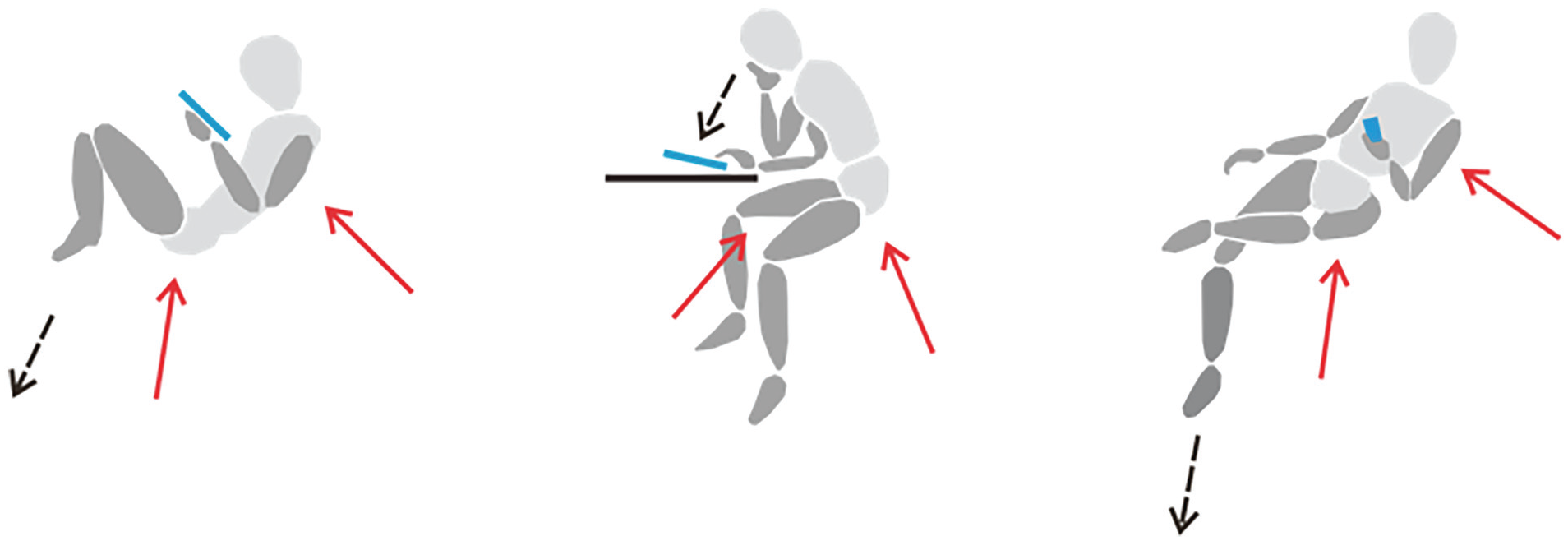
Examples of body movement.
Assistance of Photography
With the help of photography, in addition to understanding the directions of the force-bearing and force-applying points, the students can also feel the fatigue when applying force to maintain a posture for a short period of time. The study hopes that the feelings experienced by the students will be fed back into subsequent device design as shown in Figure 3. This part provides the basis for the development of design concepts. The 3D human movements are converted into 2D images, and the reflective stickers on the body can help students generate important clues (clear line structure). The questionnaire also continues the discussion of the (1) Body Movement Design, to analyze the difference between the assistance of photography. (2) Design Concept Development and the design stage.
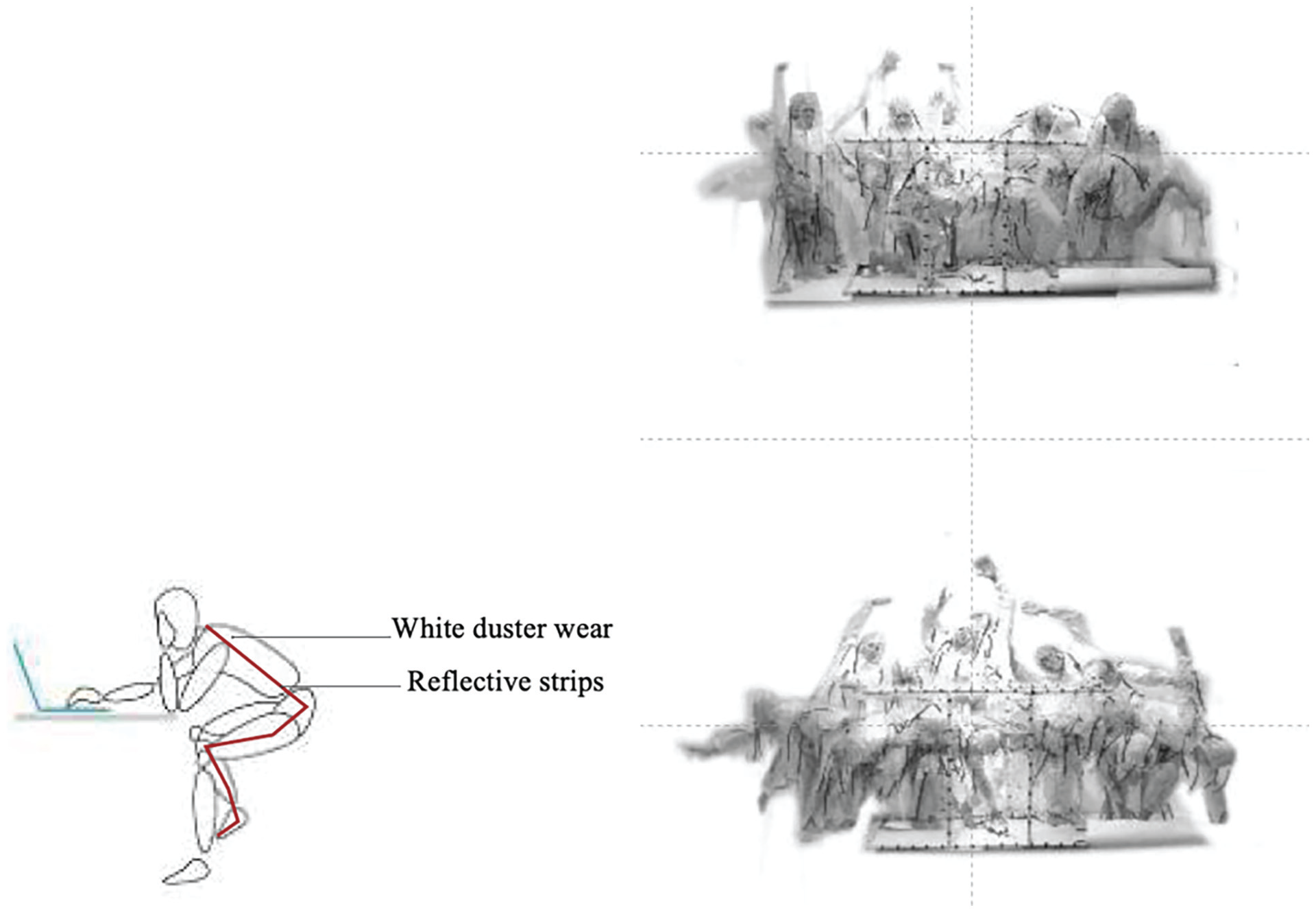
Illustration of the assistance of photography.
Model Making
To ensure the correctness, feasibility and completeness of the design concept of subsequent hands-on work, model making has always been a necessary means of design. Furthermore, through the presentation of the modeling results, students can discuss their design with each other to achieve the objective of experience exchange. During the presentation, teacher can provide specific suggestions for correction, helping students to continuously improve their design. The (3) Model Making in the questionnaire is based on the understanding of a series of related topics from students’ body movements, to concept development and finally model making.
Questionnaire Design
To understand the students’ learning effectiveness after the course, post-production questionnaire was implemented and the responses were analyzed objectively, serving as a reference for the design of subsequent courses. Such approach has not been seen in previous studies. The architectural engineering students from the Department of Civil and Construction Engineering at National Taiwan University of Science and Technology were selected as the subject of this study. This study explores the relationship between design concepts and hands-on work in the Construction Technology Practice and Innovation Course. Questionnaire design responds to the curriculum framework (2.2.3–2.2.5) to assist students in generating design concepts, with “post-production reflection” included. This part is extremely important, in addition to providing students with the opportunity to review the design concept and think about the changes that have been implemented, it also provides teacher a reference for teaching. Contents of the questionnaire include: (1) Body Movement Design (2.2.3 Posture Developing); (2) Design Concept Development (2.2.4 Assistance of Photography); (3) Model Making (2.2.5); and (4) Post-production Reflection.
In addition, each of the main items mentioned above includes force transmission, human body dimension, board limitation, structural support, and subsequent development, responding to the essence of hands-on courses (2.2.2 Hands-on Work Rules). The Likert Scale was used to measure the results (5-strongly agree; 4-agree; 3-neutral; 2-disagree; 1-strongly disagree); questionnaire questions are shown in Table 1.
Structure of the Questionnaire.

Statistical Methods
This course puts emphasis on two important topics, hands-on work and design concepts. According to the course design, the statistical methods used in each stage are the same. First, preliminary analysis was conducted using descriptive statistics, and then t-tests were used to confirm whether there are differences in various variables among the samples, including analyzing (testing) whether there are differences between the samples (gender and pre-enrollment group). The analysis of learning outcomes by gender is very important, especially for hands-on course since related studies are rare. The results can provide clear suggestions for teachers. If the object of analysis is two or more variables, the statistical method used is the one-way analysis of variance. Finally, the general linear model analysis (regression analysis) is used to explore the relationship between the independent variable and the dependent variable, and the setting of variables are described in each chapter.
Results and Discussion
There were 51 copies of questionnaire collected in total, of which three copies were invalid and 48 copies were validly completed, with a male:female respondent ratio of 71:29. The pre-enrollment undergraduates were mainly composed of civil and construction group students (civil engineering, architecture) 66.7%, design group students 16.7%, and mechanical group students 12.5%. The statistical methods are briefly described as follows: (a) t-test for the analysis of differences in cognition between genders; (b) paired sample t-test for the analysis of differences in the development of design concepts when body movement or photography technique is involved; (c) one-way ANOVA (Analysis of Variance) for the investigation of differences between two or more variables; and (d) regression analysis for the analysis of the effect between variables of cross-referenced learning objectives. The reliability (Cronbach’α) analysis of the questionnaire results is explained as follows: (a) body movement design: α = .77; (b) design concept development: α = .71; (c) model making: α = .76; (d) post-production reflection: α = .81.
Body Movement Design
The results of body movement design showed agreement on the correlation between body movement and course connection as in the following order: force transmission (4.44, SD = .68) (SD: Standard Deviation), human body dimensions (4.33, SD = .56) and board limitations (4.33, SD = .63), structural support (4.29, SD = .58), and subsequent development (4.19, SD = .57). At this stage, the students conducted actual body movement design in a group of three; therefore, they could clearly feel the force transmission. Limited by the body movement design, some of them were in a relatively decorative positions; as a result, they experienced less force transmission as shown in Figure 4. In addition, it was easier to experience human body dimensions, board limitations and structural support at this stage. Therefore, these four items were rated higher, with a lower standard deviation. Since it was the first time that the students develop design concepts with this method, it is normal that they rated the issue of subsequent development the lowest.

Body movement design.
Additionally, for the test between genders, only the opinion of body movement facilitates the subsequent development of design showed significant difference (p = .022), while the other four opinions did not differ significantly. The results of the original questionnaire also showed that women were more conservative in their responses to this question. This result is consistent with the study that women are less sensitive to 3D spatial transformation. Consequently, it is necessary to appropriately strengthen 3D spatial transformation in subsequent teaching. The results of the pre-enrollment undergraduates showed no significant differences (p > .05), indicating that there was no significant difference shown in the perceptions of the pre-enrollment undergraduates from different backgrounds at the body movement design stage, and that no difference was identified in the relevant departments based on the pre-enrollment undergraduates, which is probably related to the gradual reduction of hands-on courses in higher vocational education in recent years. Regression analysis was conducted to investigate the correlation between the four hands-on work issues (X) and their assistance in the subsequent development of designs (Y). Among which, human body dimensions and board limitations (p < .05) were relatively correlated to the assistance in the subsequent development of designs as shown in Table 2, indicating that involving body movements in the development of designs can surely influence the subsequent design (i.e., the development of design concept). The limitations of the length of limbs and body structure also remind students of the limited space they can use to develop their designs due to board limitations.
Regression Analysis on Body Movement Design.

Note. Dependent variable y = body movement facilitates the subsequent development of design.
p < .05.
Design Concept Development
This study assisted the students to develop design concepts, first through body movements, and then freeze frames of the movements were produced by using photography technique (Figure 5). Finally, they were output as images. Students were wearing white clothes (cleanroom suit) with reflective strips on them to enable the limbs-generated lines to be clearly captured by the photograph, and these lines were used as the basic lines of the concept. Since the focus of this stage was the process from photograph shooting to image output (Figure 6), it was very important find out whether the photography method can help students develop their design concepts. The results showed agreement on the correlation between the photography results and course connection as in the following order: subsequent development (4.31, SD = .51), structural support (4.15, SD = .80), human body dimensions (4.10, SD = .78), board limitations (4.06, SD = .86), and force transmission (3.90, SD = .95). At this stage, the students used the photography results as the base map with a piece of tracing paper placed above, and started to develop the design concept through the line structures presented by the reflective strips. As a result, students considered it to be very helpful for the subsequent development and found that they could proceed to the design stage faster owing to the lined structure provided, resulting in the lowest standard deviation (SD = 0.51) and indicating that their perceptions were quite similar. Although the mean values of the three items of structural support, human body dimensions and board limitations were quite close, their standard deviations (0.78–0.86) were much higher than that of subsequent development (0.51), indicating that the difference in students’ perceptions in these items is widening. Force transmission was the lowest rated item, showing that it was difficult to truly reflect the feeling of force in 3D reality by using 2D image. Its standard deviation (0.95) was also the highest, indicating that the difference in students’ perception of this item was the greatest. It is inferred that the impression of the weight going down gradually disappeared when there were multiple people working together and viewing the picture from different angles.

Photography scene.

Photography results.
For the test between genders, only the opinion of “structural support facilitates subsequent development of design” showed a significant difference (p = .027), which was due to the larger difference in women’s perception in this issue (SD = 1.11). The results of the original questionnaire showed that there was a significant difference between the students of design group and other groups (higher agreement in the design group). A more extensive research is required to examine whether it was due to the higher sensitivity of the design group to lines, while the other four opinions did not differ significantly. There was a difference in the opinion of “photography technique facilitates subsequent development of design” (p = .031) among the students with different backgrounds before enrollment. The results of the original questionnaire showed that the design group students still rated it the highest in general, while the other groups rated it relatively low. It is inferred that photography is related to design. Photography stresses on using “focus” for key point expression, frame selection and depth of field settings, and these basic concepts are all correlated to design skills, thus design students rated it high.
Since the aforementioned standard deviations are all relatively higher, it is not easy to obtain a better regression equation (all four coefficients failed to reach the level of significance). Despite the fact that the involvement of photography technique could help students develop design understanding more quickly, it was the first time for the students to experience this method in their learning process. Through follow-up interviews, it was clear that students generally found the process from body movement and photography approach to development of concepts interesting, but it was not easy for them to understand the correlation. Thus, more tests should be conducted afterward to achieve better results.
The correlations between the involvement of body movement and photography in developing the concepts were analyzed, in which the significant p-values of the correlation coefficients were all less than .05 as shown in Table 3. It showed that the students had moderate (force transmission, human body dimensions) and low (board limitations, structural support) correlation for developing the design concepts assisted by body movement and photography technique. Therefore, it was preliminarily confirmed that this teaching strategy was effective, and the results should be acceptable for students who are exposed to this teaching method for the first time. The t-test, on the other hand, showed that the students’ opinions were more consistent toward the structural support issue, and the other three issues had a certain degree of correlation despite differences among them. By analyzing the original questionnaire, it can be seen from the results that there were different levels of variation among gender and pre-enrollment undergraduate groups. In view of the limited number of students participating in the hands-on course, the method must be implemented for several years before the results can be compared, in order to identify key issues and correct them accordingly.
Analysis on the Assistance of Body Movement and Photography.

p < .05.
Model Making
The results of model making showed agreement on the correlation between model making and course connection as in the following order: human body dimensions (4.33, SD = .66), structural support (4.29, SD = .58), board limitations (4.27, SD = .74), force transmission (4.23, SD = .52), and response to photography results (4.23, SD = .59). The models were made to scale (1:6) using foamcore (literally, “pearl board”), which was easy to cut and control. Therefore, it was found that the ratings on each item were very similar and had low standard deviations. The board limitations were the only item that had slightly different opinion in students’ perception. It is also indirectly confirmed that the operation from body movement design (3D) to the involvement of photography in concept development (2D) and further to model making (3D) is indeed feasible and can meet the requirements set at the beginning of the study as shown in Figure 7. However, the significant difference in the standard deviation of board limitations probably results from the foamcore used in the models, which is unable to reflect the real plywood material’s properties (Figure 8). Since hands-on works will be implemented subsequently, using similar board materials as an alternative in model making can reduce such a problem. In order to have a better continuity of the process, careful selection of model materials should be taken into consideration in hands-on courses.
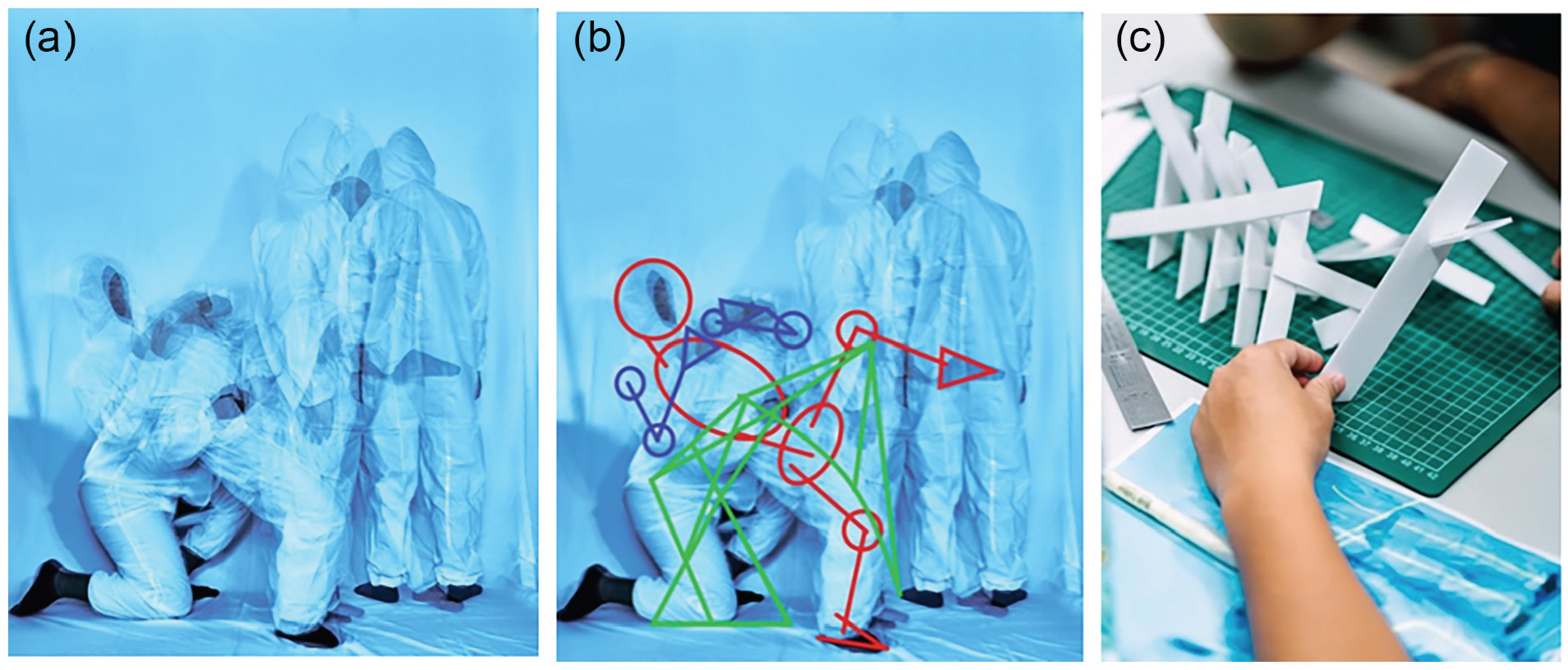
The process of design operation: (a) image concept, (b) concept generation, and (c) concept implementation.

Results from the model-making stage.
For the test between genders, only the opinion of “model making reflects the main results of photography” showed significant difference (p = .022), while the other four opinions did not make a significant difference. The results of the original questionnaire showed that there was a greater variation in the responses of women (strongly agree, agree, and neutral), while men only had two types of responses, which were strongly agree and agree. The follow-up interview with the women also revealed that a few women were indeed more meticulous and were concerned about the differences between the material used in the models and the plywood used in the future work, worrying that its inability to reflect accordingly might cause the models failing to achieve similar results nor to present the characteristics of the concept. As for the test result of the pre-enrollment undergraduate, it showed only a significant difference (p = .049) in the opinion of “model making reflects structural problems.” The original questionnaire results showed that the civil and construction group students had a larger difference in ratings on this issue, with the rest of the group students showing relatively small differences. This result is probably due to the fact that the civil and construction group students have structure related skills.
In order to understand whether the involvement of photography in model making can facilitate the development of design concepts as well as the operation coherently. Among them, force transmission, human body dimensions, and structural support (p < .05) were all correlated with the photography results as shown in Table 4, indicating that these three issues appear to be feasible in this operation from body movement to the involvement of photography and then to model making, except for the problems of working in reduced scale and material characteristics in model making, which led to less satisfactory results.
Regression Analysis on Model Making and Photography Results.
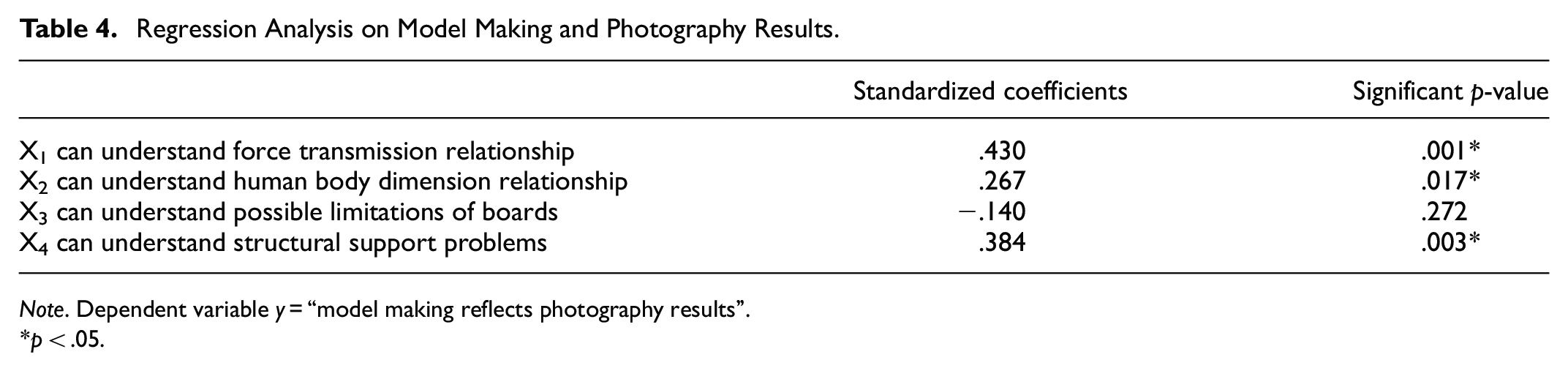
Note. Dependent variable y = “model making reflects photography results”.
p < .05.
In addition, the correlation between the involvement of photography in developing the concept and model making help realizing concepts were analyzed. From the results, the significant p-values of the three correlation coefficients were all less than .05 as shown in Table 5. This indicates that the students’ rating from the involvement of photography to model making is moderately correlated, which means that this operation is feasible. Among which, board limitations are not correlated and this result is consistent with that mentioned previously. If the boards used during model making do not reflect the characteristics of the actual boards to be used, they will not receive a better rating. As a result, the original teaching strategy of expecting better continuity in each stage will be invalidated. In addition, the t-test showed a significant difference for force transmission and human body dimensions (p < .05), indicating that although these two items are moderately correlated, there are still differences in students’ opinions. Consequently, it is important to pay attention to how to identify key issues through post-questioning, to continuously improve learning effectiveness and reduce this discrepancy in subsequent teaching.
Analysis on Photography Assistance and Model Making.

p < .05.
Post-Production Reflection
The post-production questionnaire was divided into two categories, the first one being the same as the aforementioned questionnaire, and the second one being an extension of the hands-on course topics. The results showed agreement on the correlation between the actual participation in production and the course connection as in the following order: structural support (4.48, SD = .724), board limitations (4.35, SD = .601), force transmission (4.27, SD = .574), and human body dimensions (4.21, SD = .651). Through involving themselves in hands-on course, the students rated both mechanics (structural support) and structure (board limitations) high with actual participation. This also represents the focus of technical and vocational education in Taiwan; thus, it is indeed important to continue to strengthen hands-on education. As for force transmission and human body dimensions, although they were slightly lower rated than the aforementioned items, they still showed a good level of satisfaction. Overall, actual participation in production did achieve the four objectives originally set.
In the extension of the hands-on course topics, three new important questions were added: (1) actual participation in production can develop unexpected ways of use (function) as shown in Figures 9 to 11; (2) actual participation in production can develop unexpected esthetics (shape) as shown in Figures 12 and 13; and (3) the involvement of photography is very useful in developing design concepts (development of design concepts). The rating results are as follows: unexpected ways of use 4.33 (SD = 0.724), unexpected shapes 4.29 (SD = 0.742), and photography facilitates concept development 4.17 (SD = 0.60). Other than experiencing the characteristics of actual materials through actual participation in hands-on work, another important result is that through the making of full-scale works, more possibilities can be found compared with the original design stage, both in terms of function and shape. Therefore, the results of the questionnaire also confirmed that the students in this study did have the same opinion about this, and the students also agreed with the approach of incorporating the relatively difficult photography technique in the development of design concepts. Figure 14 shows the hands-on course results.

Hands-on course result 1 (Function).

Hands-on course result 2 (function).

Hands-on course result 3 (function).

Hands-on course result 4 (shape).

Hands-on course result 5 (shape).

Hands-on course results.
For the test between genders, only the opinion of “actual participation in production reflects human body dimension” showed significant difference (p = .015), while there was no significant different for the other six opinions. The results of the original questionnaire showed that there was a greater variation in the responses of women to this opinion (strongly agree, agree, and neutral), while men only had two types of responses (strongly agree and agree). The follow-up interview with the women also revealed that due to their smaller body sizes in general compared with men, they were arranged in less centered positions, making it harder for them to experience the human body dimension relationship. This explains why they gave a lower rating to the opinion of whether the finished product reflects human body dimensions. Most of the men, on the other hand, tried a variety of human body dimensions, indicating a higher level of participation; therefore, they rated it higher. The results of the pre-enrollment undergraduates were the same as the test results between genders, which only showed a significant difference (p = .036) in the opinion of “actual participation in production reflects human body dimension.” This is due to the same reason mentioned above. The female students of the design group had the same problem mentioned above: therefore, it is clear that more samples are needed in the future before the above concerns can be eliminated. However, due to the nature of the hands-on course and the limitations of the site, it was not easy to accommodate multiple students at a time. A total of five teachers were involved in completing this hands-on course. In order to understand the three extended topics of the aforementioned hands-on course, a regression analysis was conducted to examine the results. The results are explained as follows.
Unexpected Functions
Whether the actual participation in production can develop unexpected ways of use (function) is also what the study aims for students to learn after attending this course. According to the analysis results of this study, among them, only the significance of the human body dimensions was less than 0.05 (p = .031). Both Figures 9 to 11 show that after the students finished the hands-on works, the involvement of body in the production of works did allow them to freely develop more possibilities of use. This is also based on the fact that the works were designed using the human body; therefore, after the hands-on work was completed, a variety of possibilities for use can be developed naturally. This was a prearranged issue when the study was designed. By involving students’ bodies to complete the design, they are allowed to discover the mystery within by themselves, enabling them to understand that the diversity of designs can be developed through function.
Unexpected Shapes
The regression equation of whether the actual participation in production can develop unexpected esthetics (Y = unexpected shapes) was obtained by the same method as described above. The results were the same as those of the unexpected functions as mentioned above; only the significance of human body dimensions was less than 0.05 (p = .001), indicating that human body dimensions is the only item that has the highest correlation with shape among the four items. The two works shown in Figures 12 and 13 also show that the inclined plane + rope and curved surface + curve are corresponding solutions to human body dimensions or the characteristics of ergonomics. The results are not only the creation of unique esthetic shapes, but also functions that can be used freely. Works created based on functionality eventually maintained their esthetic shapes through the involvement of photography, with visual performances much better than their functions. In these two works, function and shape compete with each other, thus achieving another objective set for this study. Therefore, it is very important to emphasize both function and esthetics, showing favor toward either side should be avoided.
Photography Assists the Development of Design Concepts
Assisting students in developing design concepts has always been the most difficult part of design teaching. Hence, the main focus of this teaching is to help students develop their subsequent design through the use of freeze frames created by photography. Although it was not easy to understand the connection between the photography results and the subsequent development of designs as found in Chapter 3.2, different results emerged in post-production reflection, suggesting that the development of design concepts can never be completed within a short period of time. Giving feedback from finished work to design concepts may be a way to accumulate the ability to develop design concept. This approach should be an easier way for students to cultivate their design concept developing skills, particularly for those who have only 1 year of design learning experience (Y = the assistance of photography in developing concepts). The significance of human body dimensions (p = .014) and structural support (p = .006) were less than 0.05, indicating that these two are the most helpful items in terms of concept development with the involvement of photography. The involvement of human body dimensions was obviously successful in this operation, and was a necessary condition before taking a photograph. The students spent a lot of time in this stage for pose simulation and kept adjusting their collaborations with each other, hoping to create interesting and special poses as the basis for the subsequent concept development. Moreover, this result also confirmed the success of involving the human body and photography in this operation. Furthermore, the structural support issue also showed a significant effect. In the past, due to the lack of human body involvement in similar topics, the final results have often been esthetically oriented, resulting in structural support that is mostly unsatisfactory for use. This time, the structural support problem was improved immediately with the involvement of human body; it was also a successful example because it corresponded to the photography results. The force transmission and board limitations results were the same as mentioned above; the force transmission via human-to-human approach was not easily fed back into the design, while the boards used in the design stage were not plywood but foamcore, making it difficult to reflect the characteristics of the boards in the results. Hence, both should be adjusted and improved in the subsequent teaching.
Conclusion
In the previous operations (architectural design and hands-on courses) of design concept in Taiwan, it has been rare to find the involvement of body movement and photography in facilitating the development of design concepts. This study uses the hands-on course of architectural design as an example to review the key issues in teaching design concepts through the aforementioned methods and post-production statistical analysis, and to understand the role of design concepts in each design stage performed by the students through a questionnaire. In addition to exploring the learning effectiveness of students, it also serves as a reference for future teaching adjustment and provides suggestions for similar courses in the future. Specific results in response to the four study objectives are described as follows.
The Involvement of Body Movement
When body movements were involved in the development of design, all four issues of investigation were developed well. However, when one’s body was placed in a more marginal decorative position, the feeling of force transmission was reduced and the original purpose of teaching was also affected. Women were less sensitive to the 3D spatial transitions in developing the subsequent design; therefore, it is necessary to strengthen the content in this part of teaching. With the involvement of body movement, both human body dimensions and board limitations play a crucial role in the subsequent development of the design.
The Involvement of Photography Techniques
The images produced through the involvement of photography were indeed able to effectively assist students in developing design concepts. Nevertheless, the difference in students’ perceptions at this stage tends to widen, as it is relatively difficult to truly reflect the feeling of 3D reality through the 2D image operations used at this stage. Design group students rated photography technique the most helpful in their subsequent development of design, inferring that it is related to their good graphic interpretation skills acquired in the past. It was the first time that the students were exposed to this type of teaching, and they found the process from the involvement of body movement and photography to concept development interesting; however, they could not easily understand the connection between the stages. Better results may be achieved if more tests can be conducted in the future. As to whether the involvement of body movement and photography can help the development of design concepts, the results of this preliminary study show it to be effective.
Model Making Results
From body movement design (3D) to the involvement of photography in developing concepts (2D) and to model making (3D), it was confirmed that the requirements set at the beginning of the study could be met. However, the use of foamcore in the model-making stage did not reflect the characteristics of the real plywood material. Therefore, it is recommended to use materials with the same characteristics for similar courses in the future. Women were more meticulous; therefore, they were more concerned that the materials used in the models were too different from the plywood used in the future hands-on courses, resulting in the inability to reflect the characteristics of plywood and causing models to fail achieving their purpose and demonstrating the expected concept characteristics. The civil and construction group students also had concerns that the model materials did not reflect the structural issues. Overall, force transmission, human body dimensions, and structural support can reflect this operation without any problem, from the involvement of body movement to photography and to model making.
Hands-on Education Results and Recommendations
Through involving themselves in hands-on course, the students rated both mechanics (structural support) and structure (board limitations) high with actual participation. Although force transmission and human body dimensions were slightly lower rated than the aforementioned item, they showed a good level of satisfaction. For technical and vocational education, it is indeed important to continue to strengthen hands-on education, and actual participation in production can indeed achieve the teaching objectives initially set.
The three important questions are: (1) Can actual participation in production develop unexpected ways of use (function); (2) Can actual participation in production develop unexpected esthetics shape; and (3) Is the involvement of photography actually useful in developing design concepts (development of design concepts). The results are summarized as follows:
Unexpected functions: Erroneous use or misuse can often develop into other methods of use; therefore, when the body is involved in the work, it does in fact allow students to develop more possibilities of use. Additionally, through actual use, students can realize that good design can also be developed from functional operation.
Unexpected shapes: When the work is completed at full scale, it enters a deeper level of discussion. With the assistance of photography, a full-size work that is originally created based on functions can fully demonstrate its esthetics without the user’s intervention. At this time, the function and shape of the work compete with each other; either one will dominate sometimes. These circumstances achieve another requirement of this teaching—that is, it is very important to emphasize both function and esthetics.
Photography assists the development of design concepts: It is not easy for beginners to manipulate design concepts; however, it becomes relatively easy through the post-production reflection. The results of reflecting the assistance of photography through hands-on work showed that human body dimensions and structural support were extremely successful in this operation. Therefore, it is important to provide concrete ways to manipulate design concepts in teaching.
Footnotes
Declaration of Conflicting Interests
The author(s) declared no potential conflicts of interest with respect to the research, authorship, and/or publication of this article.
Funding
The author(s) received no financial support for the research, authorship, and/or publication of this article.
