




Abstract
The cycling activity features green, low-carbon, energy-saving, and zero-emission characteristics, it is becoming a popular leisure activity in people’s daily lives. Compared with the riding lanes within the city, coastal roads are more attractive to cyclists. However, there is less research regarding the coastal riding environment, and it was important to investigate the attitudes of cyclists toward the existing coastal lanes. This study evaluated and optimized coastal cycling environment in Qingdao city, China. Firstly, a questionnaire survey was carried out, 22 elements related to evaluation of cycling environment were selected, focusing on the basic information of cyclists, and their attitudes to the importance and satisfaction of evaluation elements. Secondly, we applied the Importance Performance Analysis (IPA) to obtain the coastal road environmental elements that needed to be prioritized for improving cycling conditions. Results found that there existed great differences in the lighting conditions of the road section, most of the factors that fell within the interval of high importance-low satisfaction, which was highly related to security, the importance of parking facilities was relatively high. To promote the popularity of bicycle ride along the coastal roads, it is essential to pay attention to improving cycling safety at the design stage.
Introduction
Cycling ride has become an increasingly important activity in recent years due to its green, low-carbon, energy-saving and zero-emission characteristics. It could confirm that cycling transportation contributes to addressing air pollution concerns, climate change and public health in the urban area, and there has been extensive research regarding its benefits. Cycling provides a positive chance of reducing greenhouse gas emissions and getting a physical health benefit (Braun et al., 2016). Woodcock et al. (2018) found that increasing the cycling population might reduce approximately 2% passenger transport greenhouse gas emissions. Gatersleben and Appleton (2007) pointed that as people progress from pre-contemplation to action, the public’s attitudes toward cycling become more positive, individual perception may vary with environmental change.
Although there is growing attention in advocating cycling and improving cycling infrastructure, Heinen et al. (2010) indicated there were still many challenges because people still chose other forms of transport. There was extensive research regarding the utilization modes of cycling, ranging from macroscopic network systems to microscopic influencing factors. To improve the cycle environment, Heinen et al. (2010) investigated the main influences for work transportation by analyzing bicycling-sharing data in 10 cities. Schultheiss et al. (2018) and Sarkar et al. (2015) demonstrated the impact of cycling use, cycling patterns in the cities based on the AASHTO Bicycle Guides Report. Recent works showed it was necessary to improve cycling networks for users’ safety to stimulate the bicycle transportation. Many cities worldwide have accepted Bike Sharing Systems (BSS) in the urban transport scheme to provide a convenient transportation way for people moving. Many cities have established a cycling network for a green and flexible transportation scheme in urban areas following this concept. For example, McBain and Caulfield (2018) conducted a research about the public bike system in the cork public bike system, to analyze the factors influencing journey time variation of all trips. To make use of the bike utilization, Yahya (2017) proposed a scientific design approach to form an Overall Bike Effectiveness (OBE) framework.
In this paper, the first section presented the origin and development of cycling activities, the characteristics of the bicycle environment. The second section summarized relevant literature. The third section introduced the selected research areas’ characteristics, the methods used in the research, and the influencing elements. The fourth part was the data analysis based on the questionnaire survey, which mainly included the basic information of cyclists, cycling behavior, distribution of influencing factors based on IPA analysis and design optimization measures. Finally, some conclusions were drawn, and the limitations of the research were discussed.
Literature Review
The factors affecting bicycle activity can be generally summarized into three categories: social environment, physical environment and individual characteristics. Several studies have focused on social environment factors. Mertens et al. (2016) analyzed the main influencing factors of urban cycling and selected seven variables to represent the indexes of city cycling. Providing streets with a cycle path separated from motorized traffic seems to be the best strategy to increase the street’s appeal for adults’ bicycle transport. Zayed (2016) found the population intensity the most influential variable, the main factors by using the method of statistical analysis. Physical environment factors also catch wide attention in consideration of their significance. Among them, the optimal infrastructure design is expected to promote cycling in cities. Zahran et al. (2008) analyzed the spatial distribution of cycling at the county level for healthy transportation by using geographic information systems. The results indicated that local natural environmental characteristics influence the spatial distribution of healthy vehicle. Marqués et al. (2015) gave an example of Seville, which promoted bicycle mobility in a city. The Seville cycling network selected cycling infrastructure to aim for connectivity, continuity, visibility, uniformity, bi-directionality, and comfort. All these objectives have tried to make the cycling environment safe, and easily accessible and comfortable, which helps the infrastructure design encourage the development of utilitarian cycling. Zahabi et al. (2016) investigated Montreal cycling share modal and found a close relationship between bicycle infrastructure accessibility and bike mode, which would reduce automobile use and benefit from GHG emissions. Lu et al. (2019) combined Big Data and spatial models to find the interactions between stakeholders, to propose a cycling sharing design system, including some main parameters such as the bicycle parking locations and capacities, the connection between parking lots, and found it is essential to implement bicycle facilities for sustainability planning. Handy and Xing (2011) had a review study for six small cities in the US to evaluate the bicycle facilities based on users’ experience. Boettge et al. (2017) assessed the bicycle network in St. Louis through active cyclists (89 people) surveys and found roadway classification and the number of lanes were the critical factors. Ferenchak and Marshall (2019) found that the cycling marking system was important to establish healthy cities. Useche, Alonso et al. (2019) found that poor infrastructures was the leading cause of the road risks. As for the individual factors, Gatersleben and Appleton (2007) investigated individual attitude toward bicycling and found that interest was an important factor in deciding the whether people use bicycles. Xing et al. (2018) examined why people use bicycles and also found that interest was the most important factor in using bicycles. Handy et al. (2010) evaluated the priority of actors in improving physical bicycling activity and found the strong effect of individual attitudes on bicycle use. Etminani-Ghasrodashti et al. (2018) conducted a survey about recreational cycling in a coastal city and found a higher tendency toward recreational cycling for people with an active and beach-oriented lifestyle. Winters et al. (2016) used regression analysis to simulate the relation between the physical environment and a trip to cycling-share work for more than5,700 censuses in the US and Canadian cities. They found the increase in Bike Score would increase cycling population. Paul et al. (2016) did a data analysis that focused on the cycling spatial distribution around the Munich area, which showed user mainly to go to work or paly. Marije de Boer and Caprotti (2017) proposed a new method to analyze the cost and environmental potential of replacing individual ICEVs with BEVs based on the cyclist’s purpose of traveling or working. Useche, Montoro et al. (2019) and Useche et al. (2018) explored the encouraging and discouraging reasons behind the use of bikes, and found cycling was good for health was the main reason for cycling, and demographic characteristics (such as gender and age) had a relationship with road safety.
The IPA analysis method is suitable for the perceptual evaluation of tourist destinations (Yuan et al., 2018). It has recently emerged in the satisfaction evaluation related to urban planning and design. For example, Judy (2002) found out the vital factors of urban streets and puts forward development strategies and suggestions for the street revival in the city center based on the survey of urban residents and IPA analysis, Shim et al. (2011) summed up the ideal urban waterfront design elements through the study and IPA analysis, and guide the future waterfront urban design. Chen and Ko (2016) used IPA analysis to explore the main attractions of Taiwan’s East China Sea Art Street and suggested improvements to local activities, public facilities, streetscapes and shops. In general, IPA analysis is less used in evaluating the riding environment. Representatively, Weber et al. (2017) used IPA analysis when investigating residents’ views near the greenway in the Atlanta Loop toward the greenway to tailor the greenway planning strategy for this community. This work will explore the cycling environment in a real world coastal city, employed IPA approach to evaluate the cycling environment concerning cyclists’ satisfactions. Results are expected to help city designers to achieve a better cycling environment design.
Methods
The questionnaire method had been widely used in studies on urban greenways (Ferenchak & Marshall, 2019). In this study, the relevant information was collected through the questionnaire with the riders in the coastal cycling environment of Qingdao. And we analyzed the data based on IPA and obtained the priority level of influence factors requiring improvement of coastal cycling environment.
Studied Area
In this study, the data were gotten in Qingdao, Shandong, about 36°5′North and 120°20′East (Figure 1). Qingdao is the representative of the coastal city and hilly city. The yellow sea borders the southeast, and hills, depressions and plains account for 40.6%, 21.7%, and 37.7% respectively. The city has a typical warm temperate Marine seasonal climate. The annual average temperature is 12.6°C, with the highest temperature being 37.5°C, and the lowest temperature being −15°C. The varied terrain and weather are suitable for recreational cycling activities.
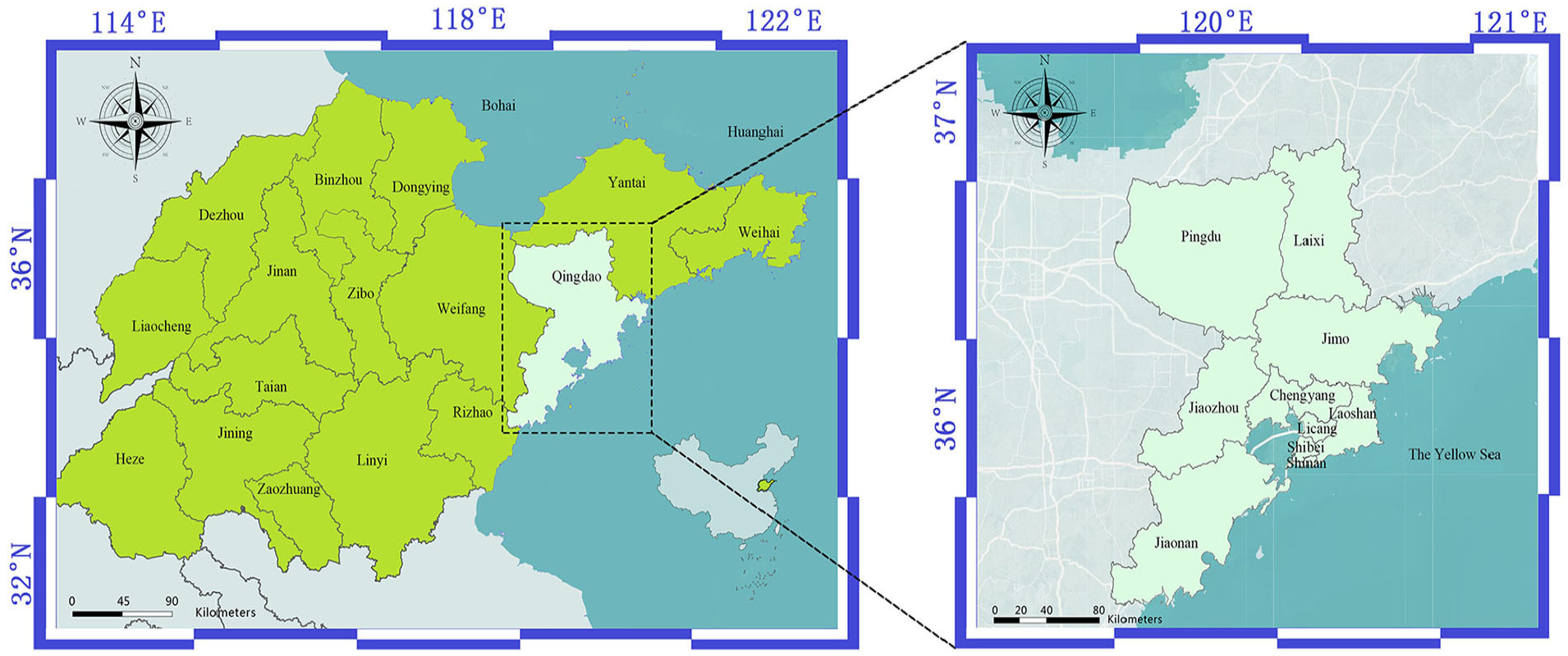
Case study area: (a) Shandong Province and (b) Qingdao city.
Based on the movement information published by Qingdao citizens through the “Blackbird Bike” App, 743 pieces of data were randomly selected between March to April 2017. By superimposing their riding road trajectories on the map, we found that Qingdao coastal roads were popular riding places. The riding frequency was much higher than other roads in the city (Figure 2). And the riding range of the cyclists coincided with the open space with coastal natural human landscape resources (Figure 3). Therefore, based on the riding frequency of the cyclists, the Macao Road near the May Fourth Square—Donghai Middle Road—Donghai East Road—Haikou Road—Laoshan Road were selected, the total length of the road is 19.5 km. In addition to Laoshan Road, which belongs to the city’s main road and has set up a special bicycle lane of 7.6 km. Macao Road, Donghai Middle Road, Donghai East Road and Haikou Road belong to urban secondary trunk roads without special bicycle lanes.

Road riding heat map.

Coastal natural human landscape resources.
The Questionnaire Surveys
The questionnaire’s sections were inspired by the previous studies on related cycling behaviors, cycling environmental planning guidelines and elements (Winters et al., 2011). We found that cycling activities were mainly affected by personal factors, objective environmental factors, and subjective feelings. So the questionnaire was mainly classified into the three parts. Such as the first part was about the demographic characteristics of respondents, including the age, gender, distance from home, occupation, and education level; the second part was about the behavioral preference of the riders, including the riding years, frequency of ride, duration of the ride, whether owning personal riding equipment, and whether participating in cycling groups; the third part was to research cyclists’ evaluation of importance-satisfaction of relevant riding environmental elements. It was fundamental to determine the factors that could be used in the evaluation of this. A total of 22 factors involved in safety, continuity, convenience, comfort and interest was identified from relevant studies that have been completed (Figure 4).

Evaluation elements of importance-satisfaction.
Security
One of the significant obstacles to cycling is traffic safety (Buehler & Pucher, 2017). Improving cyclists’ traffic safety will not only reduce unnecessary injuries and deaths, but also increase health benefits by attracting more people to participate in cycling (Johansson et al., 2017). For example, setting sharrows (Marshall & Ferenchak, 2019) and road lighting can effectively improve safety of riding lanes.
Continuity
To furtherly realize the security and comfort of cycling, the cycling road should be continuous (Marqués & Hernández-Herrador, 2017). The highly connected bicycle network will arouse people’s keen interest in cycling (Lowry & Loh, 2017). It should focus on the design of intersections to avoid breakpoints.
Convenience
The cycling route should provide more places for the riders to stay on the road, for example, parking sites, bicycle maintenance, transport and transfer systems (Lu et al., 2019). On the other side, appropriate service facilities should be established to increase the cycling activities’ convenience (Marqués et al., 2015).
Comfort
Riders could feel relaxed and happy if the riding environment is comfortable (Gatersleben & Appleton, 2007). The design should consider comfortable and landscape-rich riding space. The visual aspects of the environment such as plants, paving color, lighting, and signs, should be considered with the construction of a sound green shade, lighting drainage (Mertens et al., 2016).
Interesting
The fun and attraction of the cycling road itself and the surrounding environment are essential for those who consider cycling as a recreation (Ferenchak & Marshall, 2019). The abundance of landscapes near the bicycle lanes and the fun of the road itself are also incentives for increased cycling (Etminani-Ghasrodashti et al., 2018).
For 22 elements, the study used the Likert five-level scale for evaluation, the respondent ranked their evaluation for importance and satisfaction five-point scale, 0 to 1 for extreme bad, 1 to 2 for bad, 2 to 3 is divided into general, 3 to 4 is divided into good, and 4 to 5 is classified as excellent.
Data Collection
This research was conducted between 1st April to 1st June in 2017, owing to the weather conditions in Qingdao would be more suitable for people to ride outside during this period. To guarantee surveying a broad range of respondents to capture different demographics, including different sociocultural spectrum, education background and so on, two different survey methods were used. On the one hand, in early April, we issued network questionnaires through China’s online questionnaire, “Questionnaire Stars.” Only the cyclists who had riding activities in the past 2 months were allowed to answer the questionnaire. By the end of May, total, there were 192 responses to the survey, of which 189 were valid, and the invalid responses mainly included the sections that were either incomplete or skipped by the respondent. On the other hand, to obtain a more intuitive experience through communicating with the riders, in the period of 1st April to 1st June, we issued on-site questionnaires to the riders in the research range during the peak periods of greenway use of 9:00 a.m. to 9:30 p.m. on weekends every weekend, 173 responses were collected, of which 167 were valid. Finally, 365 questionnaires were collected of which 356 (97.5%) were valid.
Then the reliability analysis of collected data was carried out by measuring the stability and consistency. For multiple selection or Likert scale, the scale’s reliability must be calculated by Cronbach’s α reliability coefficient.
Importance-Performance Analysis (IPA)
In practical application, the IPA quadrant takes the importance and satisfaction as two axes and is generally divided by the average score of each element. And each element is placed in a different part of the quadrant according to its importance and satisfaction score. The critical point is that elements are different in various positions of different quadrants (Martilla & James, 1977) (Figure 5). By studying each element’s arrangement characteristics in the four-quadrant, we concluded that which elements need to be improved first.

IPA quadrants diagram.
This method was first used to analyze the properties of locomotive products (Gatersleben & Appleton, 2007). Because it can reflect the user’s experience of service and environment fully and intuitively, it has been applied in various research fields, especially for the perceptual evaluation of tourist destinations (Yuan et al., 2018).
Result Analysis
Survey Analysis
As shown in Table 1, the age category of 18 to 24 years has the largest percentage of response (27.7%), and the lowest was over the age of 55 (4.9%). It showed that the current riders on coastal roads were younger overall. About 78.2% of the respondents were male and 21.8% were female, indicating that the coastal cycling road cyclists were mainly male. Regarding the distance from home, most of the riders (40.1%) lived within 5 km, and 91.3% were distributed within 15 km, indicating that the current coastal cycling roads were most attractive to residents who lived within 15 km. And among the cyclists, the majority were students (31.2%) and freelancers (24.4%), which indicated that students and freelancers were the main force of cyclists. The highest degree of education achieved by cyclists was bachelor and master (65.3%). The lowest degree of education was under the high school (7.9%), which indicated that the broad educational background of cyclists was relatively high.
The Surveyed People’s Characteristics (N = 356).

Analysis of Cycling Background and Cycling Habits
Cycling Background
As shown in Figure 6, few of them (18.7%) did not have their bicycles, more than half of them (51.7%) participated in the cycling club, and more than three-quarters of them (76.1%) were equipped with appropriate cycling equipment, which indicated that the overall professional level of cyclists was relatively high.
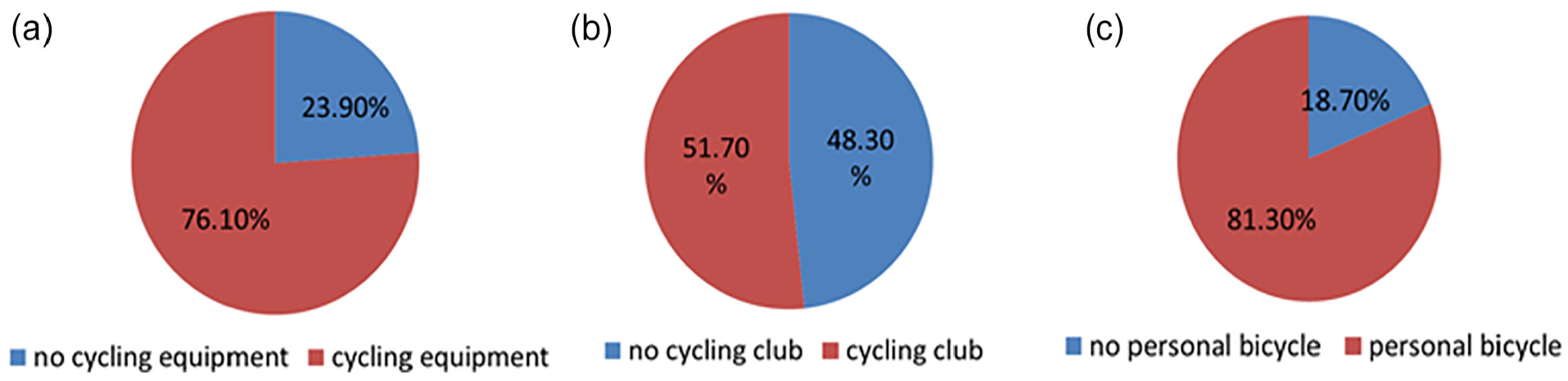
Cycling background: (a) cycling equipment, (b) cycling club and (c) personal bicycle.
Cycling Habits
As shown in Figure 7, most respondents (63.7%) cycled more than 3 times a week, and a few (13.2%) cycled 1 to 2 times a week. It indicated that cyclists’ cycling frequency was high on Qingdao coastal roads. Most cyclists’ single cycling time could be 0.5 to 1 hr (36.8%), and nearly half of them (44.6%) cycled for more than an hour. It indicated that cycling distance generally was long. The proportion of cycling time ranging from 15:00 to 19:00 and 19:00 to 22: 00 was the largest, were 43.2% and 41.5%, respectively. It indicated that cycling intensity was the highest in the afternoon and evening. Therefore, the design of the night cycling environment needed to be attached to great importance.

Cycling habits: (a) cycling days, (b) single cycling time and (c) cycling time range.
IPA Evaluation of Cycling Environment
The Reliability
To make sure the reliability, we had an analysis on the scale of the importance and satisfaction, as shown in Table 2, the Cronbach’s α of the importance scale was .907, and the Cronbach’s α of the satisfaction scale was .969, both larger than .9, indicating that the data were reliable.
Importance Satisfaction Reliability Scale.

Analysis of Cycling Environment Importance
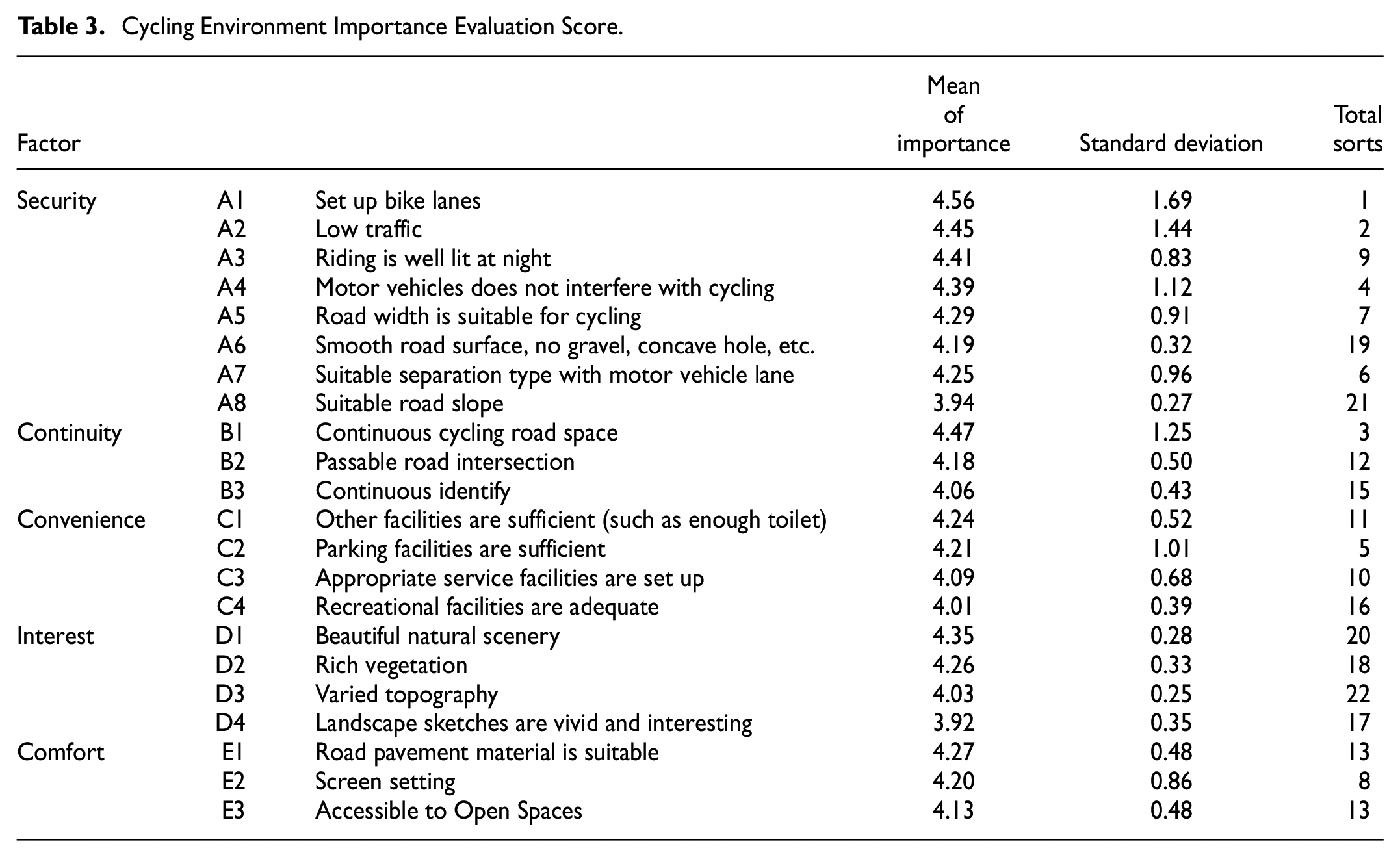
As shown in Table 3, ranked elements by the importance scores were security (4.32), continuity (4.23), comfort (4.20), interest (4.15) and convenience (4.14), respectively. And A1—set up bike lanes, B1—continuous cycling road space, C1—other facilities(such as enough toilet), D1— beautiful natural scenery, E1—road pavement material is suitable, were the most important influence factors of security, continuity, convenience, interest, and comfort respectively for respondents ( as shown in Table 3).
Cycling Environment Importance Evaluation Score.
Analysis of Cycling Environment Satisfaction
As shown in Table 4, ranked elements by the satisfaction scores were interest (3.70), comfort (3.45), continuity (3.37), convenience (3.35), and security (3.22). It indicated that the coastal cycling environment’s security, convenience, and continuity needed to improve. Among all the elements, the satisfaction scores of A1—set up bike lanes (2.87), A2—low traffic (3.01), C2—Parking facilities were sufficient (3.20), B1—Continuous cycling road space (3.22). Among all the influencing elements, the satisfaction score of elements related to security was the lowest, and the average score was lower than 3, which should pay special attention to improving.
Cycling Environment Satisfaction Evaluation Score.

Difference Analysis of Importance and Satisfaction Evaluation of Cycling Environment
As shown in Figure 8, by subtracting the importance of each element from the satisfaction score, we got the difference between the expected and actual experience. The higher the difference, the more improvement was needed. A1—set up bike lanes (1.69) was the highest, followed by A2—motor vehicle flow was less (1.44), A5—road width is suitable for cycling (1.12) was higher, too, which showed that for the cycling road, these elements needed improvement.

The score of the difference of importance and satisfaction.
IPA Quadrants of Cycling Environment
The mean of importance and satisfaction scores of 22 elements were 4.22 and 3.53, respectively. We chose the mean as the intersection point of coordinates, constituting the importance—satisfaction evaluation quadrants (Figure 9). According to different placement of elements in the quadrant, we made instructions as follows:

IPA quadrants of the cycling environment.
Concentration
This quadrant is the area with high importance and low satisfaction, and elements played a decisive role in the improvement. There were six elements in this quadrant in the importance-satisfaction evaluation of the coastal cycling environment in Qingdao. The six elements were A1, B1, A2, A4, A5, A7, respectively. It could be seen that most of the elements in this quadrant were related to security, which should be an improved priority.
Low Priority
The importance and satisfaction are both low in this quadrant, and in the importance—satisfaction evaluation of coastal cycling environment in Qingdao, three factors were falling in the quadrant. The three factors were C2, E3, C3, respectively. The score of important elements of those placed between 4.0 and 4,2. Those aspects should also be improved.
Keeping up the good work
The first quadrant was the area with high value both importance and satisfaction in the importance for coastal cycling environment in Qingdao. There were five elements in the quadrant. The five elements were A3, D1, E1, D2, C1 respectively. The satisfaction of elements in this region was relatively high, but still need to be constantly improved to improve the rider’s satisfaction.
Potential Overkill
This quadrant is the area with low importance but high satisfaction, and in the importance-satisfaction evaluation of the coastal cycling environment in Qingdao, there were eight elements in this quadrant. The eight elements were E2, A6, B2, B3, D3, C4, A8, D4, respectively. Those aspects need to be improved for the overall coastal riding environment.
Design Optimization
Through the above analysis, combined with field research, we thought that the main problems of coastal cycling environment in Qingdao were concentrated on the following aspects: 1. There were no dedicated bike lanes to meet the rider’s continuous cycling needs; 2. The service facilities related to parking, rental, and maintenance were insufficient; 3. The night lighting of some roads was insufficient (Figure 10). Therefore, the optimization strategies will be proposed from the design perspective based on the actual situation of the road in the following parts.

The situation of investigated coastal cycling environment (Photo by authors): (a) night lighting, (b) bike lanes and (c) parking place.
Expand Space
In addition to Laoshan Road owned dedicated bike lanes, the Macao Road, Donghai Middle Road, Donghai East Road, and Haikou Road were only divided into motorways and sidewalks, and there were no bicycle lanes. Most cyclists chose to ride on the side of the motorway, and some cyclists rode on the sidewalk. The cycling activities were greatly disturbed by motor vehicles and pedestrians.
Therefore, it was necessary to design differently according to the different road conditions when setting up the bicycle lane. For example, the sidewalk was wide in Macao Road. The bicycle lane could be designed in combination with the sidewalks. And in Donghai Middle and Donghai East Road, the width of the sidewalk was not enough. The bicycle lane could be designed in combination with the motorway. And the roads could be separated by setting scribing, common roadblocks, isolation fences or green belts according to the actual needs of the rider (Figure 11). And in the coastal road with a significant difference, we could make full use of the terrain to adopt multiple sections to set bicycle lanes of different height levels (Figure 12). In a word, dedicated bike lanes should be set according to the actual road conditions. The width of bike lanes should be increased appropriately to ensure the safety and continuity of cycling.
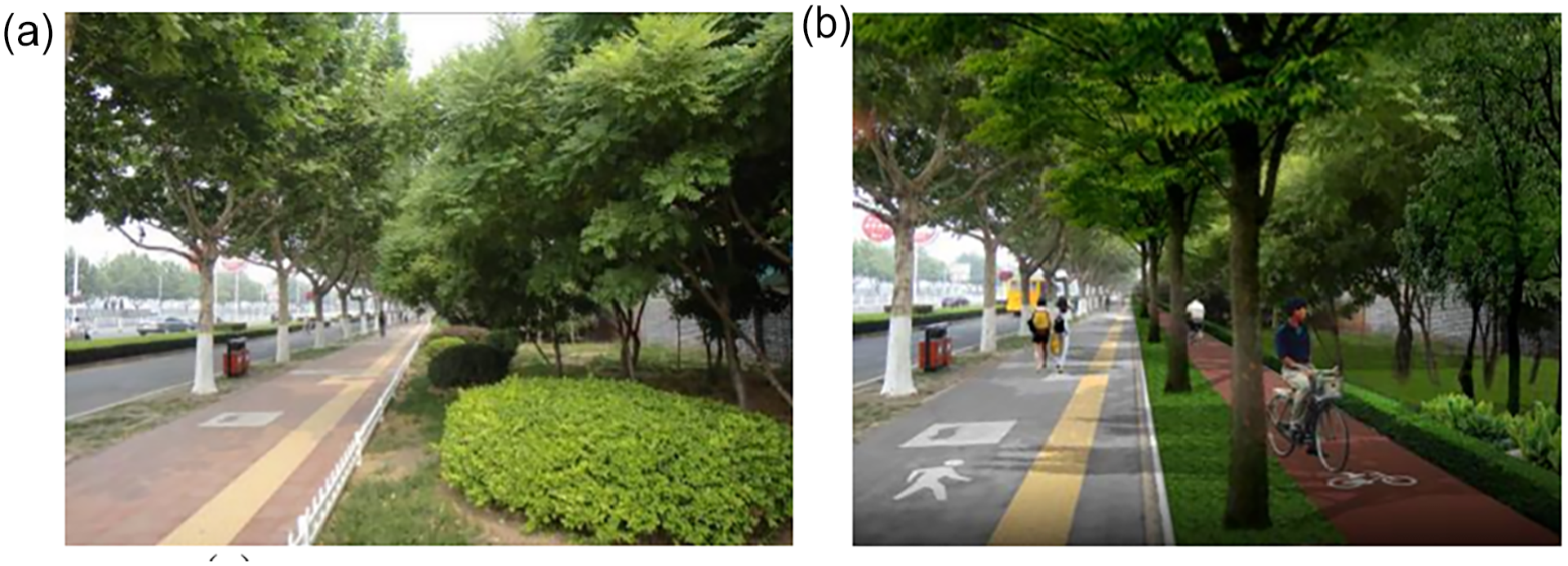
Transformation diagram (Photo by authors): (a) and (b) green belts.
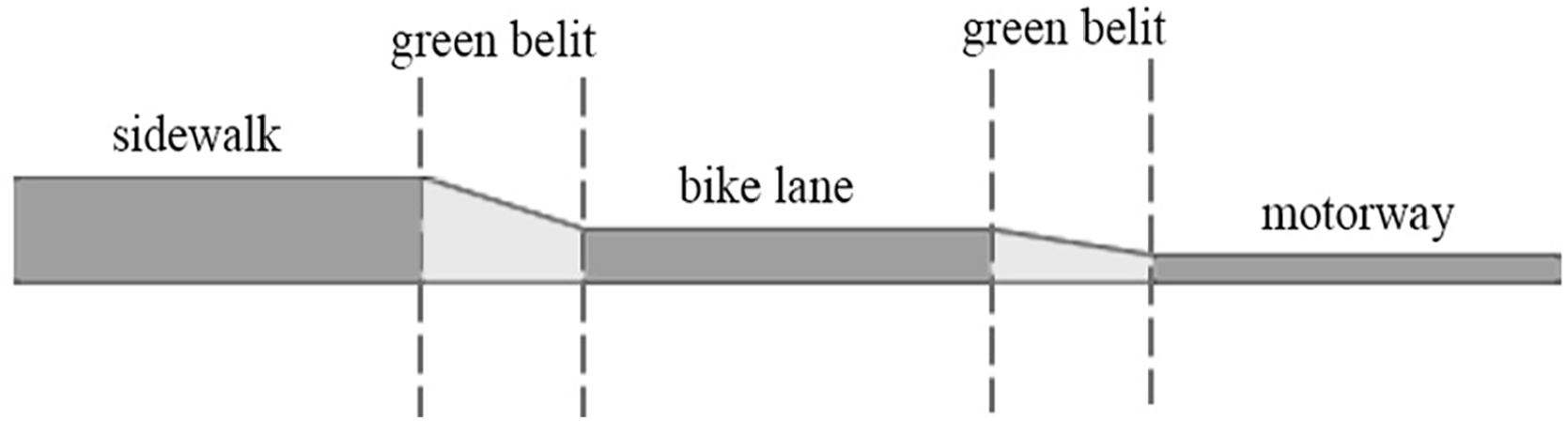
Road layout design.
Set Parking Facilities and Maintenance Sites
On the coastal roads, due to the lack of corresponding bicycle parking facilities, the riders had to park the bicycles at will while resting and doing other non-riding activities, which caused inconvenience to the riders themselves, and affected other citizens to relax.
Therefore, on the basis of the overall consideration of the number and scale of open spaces around the cycling environment, we could set parking space nearby with the principle of convenience. In addition, parking facilities could also be considered to combine with the surrounding motor vehicle parking, through a transformation of motor vehicle parking, making it also suitable for bicycle parking. According to the number of bicycle parking sites by cyclists, the combination of fixed parking facilities and temporary parking facilities could be suggested. The temporary parking facilities could choose the flexible and splicing unit form and determine the scale of parking facilities according to the actual number of bikes parked.
Improve the Quality of Night Lighting
Plenty of light allows riders to see the obstacles on the road, reducing unnecessary collision damage. Based on the classification of survey data and field research, we knew the situation of night lighting varied in different roads. Macao road had the lowest satisfaction score on the project, while the satisfaction score was high on the rest of the roads. The lighting light only provided Macao road with low brightness. And in this road, the sign lighting was also scarce and could not play an excellent guiding role. Insufficient lighting on the road reduced the safety of cycling activities.
First of all, according to the cycling habits of cyclists, high-level lighting should be set up, and in consideration of energy-saving, cycling lighting could be designed in combination with the surrounding open places to reduce resource waste and improve lighting efficiency. In addition, we should pay special attention to the lighting setup in the place with a large difference and road intersections to avoid the phenomenon that obstacles could not be identified. We could also set signs lighting which could guide the cycling activities well. And in the signs lighting, comprehensive stimulation of the color of the light to the eyes should be given consideration, avoiding dazzle light and discomfort. Besides, signs lighting could directly paint luminous materials on the cycling road as auxiliary lighting, at the same time to increase the fun and attraction of cycling.
Discussion
This study focused on analyzing the coastal cycling environment and investigated the characteristics and habits of the cycling riders in the coastal sections of Qingdao, China. And the IPA method was applied to analyze the elements influencing the cycling environment in detail. Then suggestions for designing a good cycling environment were presented.
Results of the questionnaire indicated that the cycling riders were mainly young men. Which was similar to the study of Garrard et al. (2008). It also found the female cycling rate was relativity low. However, a study showed that bicycle use was slightly higher among women than men (Garrard, 2003), and the reason for that was natural elements was more important to women than for men. We think the reason for this difference was that our research object was coastal greenway, different from the inland greenway, the open and shocking nature of the ocean were more attracted to young men.
We also studied the education level of respondents, and found that education level mattered with cycling, and the higher the education level, the more preference for cycling. This added an important insight as education background was rarely considered in evaluation on cycling. And there were only a few similar studies. For example Fischer et al. (2018), thought higher levels of education translate to better environmental knowledge. And Bjerke et al. (2006) had also revealed that the preference of cycling increased with increasing educational levels.
We also found that the cycling riders mostly lived within 15 km of the coastal cycling road, which demonstrated that distance to greenway was one of the most important factors related to its use. This finding was consistent with Schipperijn et al. (2010). It was found that 84.7% of Danish residents lived within 1 km of green spaces. And Cohen et al. (2007) also found that 64% of park users live within less than 1 km of UGS in the USA.
It was worth noting that the riders always own a relatively high level of cycling, which was different from the conclusion of Fischer et al. (2018), which found that the riders tended to ride at a low level, and their main goal was to relieve physical and psychological stress and achieve happiness. We thought the reason for this difference was that in contrast to free cycling, some professional cycling activities would be host on coastal trails, and participants tend to ride at a higher level.
A comprehensive evaluation model of the coastal cycling environment was established and applied to analyze the coastal cycling environment. The IPA method screened out the road environmental elements that needed to be improved priority. There were five elements related to security among the six elements, which indicated that the security of the coastal cycling environment needed to be improved firstly and guarantee of basic security in the riding environment would greatly promote the development of people’s cycling activities. This was consistent with previous research results stressing that safety-related issues affected the frequency of riding (Marqués et al., 2015). And Asakawa et al. (2004) also found in developed countries, safety were the most important perceived problems by users in Japan. Based on this, we proposed targeted improvements based on the listed security-related elements, including setting dedicated bike lanes, expanding the width of roads, etc.
In addition, we also found that the parking facilities and the night lighting in some roads was not enough. And similar findings were mentioned in the study of Fischer et al. (2018). Therefore, the more attention should be paid to improve the number of parking sites and the quality of night lighting.
These strategies mentioned above could be used as references to improve the urban coastal cycling environment, support cycling as a sustainable vehicle within the city, and promote residents’ fitness.
Conclusion
This study evaluated the basic information of cyclists, and their attitudes to the importance and satisfaction of evaluation elements. Based on this, we found that the cycling riders were mainly young men, and had a higher educational level, lived near the green way, and most of them had a higher cycling level.
Secondly, the Importance Performance Analysis (IPA) was applied to obtain the coastal road environmental elements that needed to be prioritized for improving cycling conditions. Results found that most of the factors fell within the interval of high importance-low satisfaction was highly related to security and the parking facilities. To promote the popularity of bicycle ride along the coastal roads, it was essential to pay attention to improving cycling safety at the design stage.
The survey period could be a potential limitation to the study. Since the surveys were only given out on weekends, there was under-representation of the cycling population. Future studies may consider the costs and benefits of spreading data collection across the entire week and over a longer period of time in order to get a better representative sample of the population.
Footnotes
Declaration of Conflicting Interests
The author(s) declared no potential conflicts of interest with respect to the research, authorship, and/or publication of this article.
Funding
The author(s) disclosed receipt of the following financial support for the research, authorship, and/or publication of this article: The authors gratefully acknowledge the financial support from the National Natural Science Foundation of China under Grant No. 52278019 and Natural Science Foundation of Shandong Province under Grant NO. ZR2020ME212.
