




Abstract
This study adopts an intergenerational perspective, categorizing users of community public spaces into three distinct age groups—children, young and middle-aged adults, and the elderly—to construct a needs-oriented evaluation framework. Utilizing the IPA-Kano model, we conducted a comparative analysis, integrating satisfaction levels to identify and rank factors requiring enhancement as perceived by each age group within various communities. Key findings highlight common priorities across age groups, including systematic trash bin placement, enhancement of barrier-free facilities, improvement of night lighting, and the installation of security monitoring facilities. Infrastructure and amenities analysis revealed needs for improved water feature landscapes and recreation facilities, with a particular interest from children, and the provision of more fitness facilities to cater to a broad range of users. Recommendations include systematic waste management, inclusive design for accessibility, enhanced lighting and surveillance, maintenance of water features, increased seating, and prioritization of adult fitness facilities. Emphasis is also placed on community cultural activities for the elderly to foster a sense of community and support sustainable development. The study’s findings and recommendations aim to address the diverse needs of different age groups within communities, promoting a more inclusive, safe, and enjoyable living environment for all residents.
Introduction
With the global average life expectancy increasing, there is an urgent need for cities to create inclusive living environments for the growing population and aging society (Nelischer & Loukaitou-Sideris, 2022). Communities serve as the grassroots of urban spatial planning and social governance and are the fundamental unit of residents’ daily life, encompassing various functions, such as residential living, life services, and social support. The term “community” in urban studies emphasizes the essential role of communities in addressing urban issues and meeting residents’ needs (Liang et al., 2020; Ta & Lin, 2022).
Public spaces, as significant venues for residents’ daily interactions and activities, play a crucial role in community life. They serve as the “third place,” after the “home” and “workplace,” and act as a “generator” and “interpersonal mechanism” for social relationships (Y. Wang et al., 2018). Community public spaces are shared spaces for residents, and they provide diverse needs for different age groups and serve as the core and vitality of the community (Francis et al., 2012; Hou, 2019). Prior research on community public spaces has focused on age-friendly and child-friendly approaches, which have been widely adopted by governments globally (Biggs & Carr, 2015; Manchester & Facer, 2017). However, inevitable conflicts and disharmony arise due to the distinct characteristics and needs of different age groups within one community’s public spaces. This issue is particularly pronounced in communities in countries like China, where people of all ages collectively reside (Ma et al., 2020; J. Wu et al., 2023). The emergence of “age-group conflicts” in community public spaces results in the applications of studies or practices that focus solely on a single age group, such as age-friendly cities or child-friendly cities, becoming increasingly limited (Y. Li et al., 2019; Nelischer & Loukaitou-Sideris, 2022). Thus, there is a need for community planning and construction that take into account the diverse demands of different age groups, which arise from changes in age structure (Lee et al., 2010; Y. Li et al., 2019).
While there have been studies on creating dedicated public spaces for different age groups, the rationality and implementation difficulty of such approaches remain uncertain (Fabian et al., 2019; Pitsikali & Parnell, 2019). Recently, the concept of constructing an “age-inclusive community” has been proposed by many experts and scholars. An increasing number of countries and cities have adopted intergenerational and all-age community models, which emphasize multigenerational co-building and community mutual assistance to enhance the inclusivity of community public spaces (Fang et al., 2023; Liu et al., 2016; Ta & Lin, 2022). However, these proposals have mainly focused on strategic aspects and have only suggested some construction models (Cushing & van Vliet, 2016; Ta & Lin, 2022; J. Wu et al., 2023), and they lacked quantitative research. Moreover, current research on spatial preferences for different age groups has focused on the assessment of a single group, such as the elderly or children, with limited studies having explored common preferences across age groups. Therefore, achieving the harmonious coexistence of different age groups in one community public space requires the identification of the needs of different age groups and the exploration of a balanced point of common preference to achieve a harmonious community (Lee et al., 2010; Z. Zhang et al., 2023).
Hence, this study adopted an intergenerational perspective, categorizing users of community public spaces into three age groups: children (0–18 years), young and middle-aged adults (19–59 years), and the elderly (60 years and above; Ma et al., 2020; Z. Zhang et al., 2023). The study aimed to explore the common needs and preferences of these three generations in public spaces, intending to create an inclusive environment that harmonizes different age groups and provides effective guidance for the harmonious development of community public spaces. In terms of evaluation methods, conventional approaches for assessing community public spaces include principal component analysis and analytic hierarchy process fuzzy evaluation. The Importance-Performance Analysis (IPA)-Kano method was adopted in this study because it quantitatively analyzes key factors through the combination of satisfaction and importance (Jia et al., 2023; Kuo et al., 2012; Matzler & Sauerwein, 2002; Tseng, 2020).
Methods
Study Area Overview
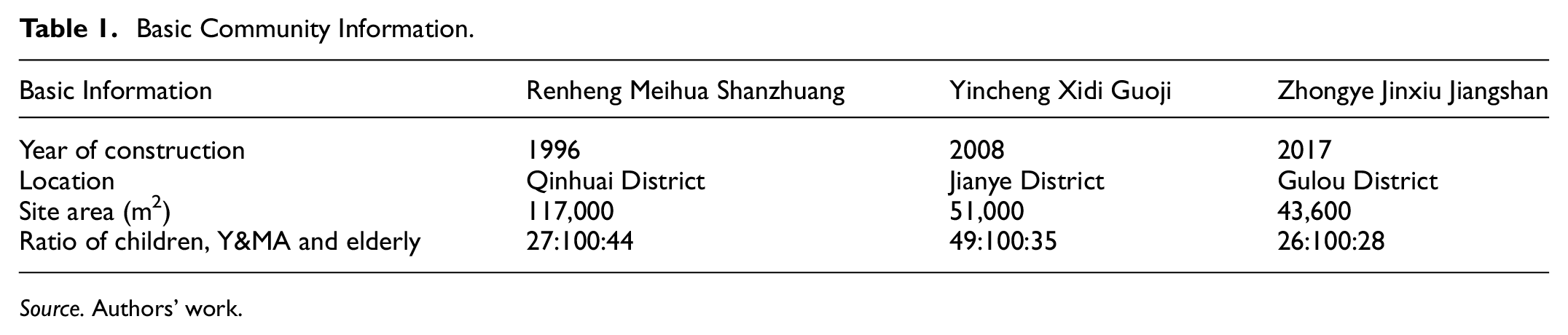
Nanjing is one of the important central cities in eastern China, and it has a permanent population of 9.4911 million, an urban population of 8.258 million, and an urbanization rate of 87.01%. It is a representative mega-city of China (Huang et al., 2022; Zhou et al., 2022). This study selected three study areas in the main urban area of Nanjing based on different geographical locations, construction years, types, and composition ratios of children, young and middle-aged adults, and the elderly. The chosen study areas were Renheng Meihua Shanzhuang, Yincheng Xidi International, and Zhongye Jinxiu Jiangshan. The basic information for the communities is detailed in Figure 1 and Table 1. Among them, Renheng Meihua Shanzhuang is a high-end community that was completed in the 1990s with a large area, rich internal greenery, and relatively complete facilities. Yincheng Xidi International was built in 2008, and it covers only half of the area of Meihua Shanzhuang but it has mostly complete facilities. Zhongye Jinxiu Jiangshan is a mid-range community that was completed in 2017, and it has a predominantly young and middle-aged population and new infrastructure.

Overview of three community locations.
Basic Community Information.
Source. Authors’ work.
IPA-Kano Model
Exploring user needs and preferences and prioritizing them can be effectively achieved through the use of the IPA method and the Kano Model of the hierarchy of needs (Jia et al., 2023). The IPA method, which was proposed by Martilla and James, is a structural approach that prioritizes attributes for improvement based on user-perceived satisfaction and importance (Kuo et al., 2012). This method involves creating a matrix with importance on the horizontal axis and satisfaction on the vertical axis. After ranking the importance and satisfaction of each element, their rankings are paired and placed in four quadrants, each having different implications (see Figure 2a). For example, Quadrant II signifies “Concentrate Here” (high importance and low performance), indicating that resources should be focused on improving attributes in this area. However, this method does not account for the non-linear relationship between attributes and satisfaction, and this could potentially affect improvement decisions and hinder the introduction of innovation (Tontini & Silveira, 2007).

(a) Importance-performance analysis (IPA) model, (b) Kano model, and (c) IPA-Kano model.
Inspired by Herzberg’s Two-Factor Theory, Japanese scholar Kano Noriaki introduced the Kano Model in 1984 (see Figure 2b). This model categorizes the product quality attributes into five types based on the relationship between objective product performance and subjective customer perception: must-be quality, one-dimensional quality, attractive quality, indifferent quality, and reverse quality (Kuo et al., 2012). While the Kano method determines the non-linear relationship between performance and satisfaction, it does not consider the current performance level of the attributes in the analysis (Tontini & Silveira, 2007).
Subsequently, Kurt Matzler and others proposed the IPA-Kano Model, which has become a popular evaluation technique for urban management and product services, urban planning, and architectural design (Jia et al., 2023). It combines the advantages of IPA, in determining the priority of relevant factors, and Kano, in evaluating the user demand attributes. The horizontal axis represents explicit importance, while the vertical axis represents implicit significance (see Figure 2c). Elements in Quadrant A have the highest explicit and implicit importance. Quadrant B contains attractive elements with low explicit and high implicit importance. Quadrant C consists of elements with the lowest explicit and implicit importance. Quadrant D contains basic elements with high explicit and low implicit importance. This model provides predictions of user needs and causal path analysis, offering guidance for measuring the design elements and proposing improvement strategies.
Evaluation Index Selection of IPA-Kano
This study considered the common needs of the different age groups and practical situations and established a comprehensive evaluation system based on four dimensions: fun, safety, comfort, and sociability.
For the dimension of fun, the studies highlighted that children predominantly preferred playing games in various environments, with older children showing a greater preference for activity spaces with diverse recreational facilities (Holloway & Pimlott-Wilson, 2018; Lyons, 1983; Zeng & Li, 2018; Zhao et al., 2023). Notably, colorful surfaces and facilities are particularly attention-grabbing for children (Severcan, 2018), and there is a high likelihood that they enjoy areas with water features (Malinowski & Thurber, 1996; Müderrisoğlu & Gültekin, 2015). For young and middle-aged adults, a variety of fitness facilities and ground pavements influence community livability (Liang et al., 2020; Song et al., 2023; Wei et al., 2020). For the elderly, well-equipped recreational and fitness facilities can enrich their lives (X.Wang et al., 2022; S.-J. Li et al., 2021), and the presence of water features, such as fountain pools, enhances the spatial appeal while adjusting the humidity (Baquero-Larriva & Higueras-García, 2019).
For the safety dimension, Li et al. proposed factors, such as pavement safety, nighttime lighting facilities, security monitoring facilities, readable guidance, and danger indicators (S.-J. Li et al., 2021; S. Wu et al., 2022). Additionally, factors like road smoothness, non-slip surfaces, and accessible facilities were emphasized as crucial for the community population (Ge & Sun, 2021; Meng & Wang, 2022; Wen et al., 2018; S. Wu et al., 2022).
For the comfort dimension, greenery and flowers were found to enhance the attractiveness of public spaces for children, positively impacting their psychological well-being (Allahyar & Kazemi, 2021; Severcan, 2018). Elements such as seating, recliners, and hammocks are also appealing to children (Kalnina & Stokmane, 2022). Young and middle-aged adults tend to seek relaxation and comfort in natural environments (Kalnina & Stokmane, 2022), and their satisfaction within community public spaces is influenced by factors like landscape greening, comfortable seating, sanitation facilities, artificial noise, and the scale and material of pedestrian pathways (Lian et al., 2022; Liang et al., 2020; Xu, 2006; Zhu et al., 2021). For the elderly, the presence of high-quality plants contributes to maintaining physical health (S.-J. Li et al., 2021), and trash bin placement, an adequate number of resting seats, and the width of pedestrian pathways influence their satisfaction with public spaces (Chen et al., 2022; X. Wang et al., 2022; S. Wu et al., 2022).
For the dimension of sociability, Chibane et al. proposed that community interaction and shareable spaces play a crucial role in children’s activities (Chibane & Hamouda, 2022; L. Zhang et al., 2023). For young and middle-aged adults, organizing community activities and providing sufficient public activity spaces can enhance resident satisfaction (Lian et al., 2022; Song et al., 2023; Zamanifard et al., 2019). Moreover, Li et al. emphasized the importance of specific open spaces and community activities for the physiological and mental well-being of the elderly (Levy-Storms et al., 2018; K. Li et al., 2023; F. Wang et al., 2020).
When constructing an evaluation system, certain conditions should be met. (1) The selected indicators should be universally relevant to the three age groups, (2) the chosen indicators should be easily understood and perceived by the surveyed population, (3) and the selected indicators should be aspects of community construction or post-development improvements that can be optimized through measures, rather than factors that cannot be changed. This study distilled 15 factors for the dimensions of fun, safety, comfort, and sociability to establish a community public space evaluation system, as presented in Table 2. The subsequent satisfaction and importance questionnaires were developed based on these 15 factors.
Community Public Space Evaluation System.

Source. Authors’ work.
Questionnaire Design
The questionnaire was designed with three parts. The first part focused on the intergenerational characteristics, including age groups and sex. The second part comprised a satisfaction survey designed to assess the “performance” of the evaluated factors in community public spaces. To enhance the differentiation between the items, a nine-point Likert scale was employed. The respondents were required to rate each factor on a scale from 1 to 9 based on their perception. A score of 1 indicated an inability to perceive the factor, while scores from 2 to 5 represented “extremely dissatisfied” to “slightly dissatisfied,” and scores from 6 to 9 represented “slightly satisfied” to “extremely satisfied.” The third part involved an importance questionnaire, where the respondents rated the perceived importance on a scale from 1 to 9. Ratings from 1 to 4 indicated “extremely unimportant” to “slightly unimportant,” 5 denoted “moderately important,” and scores from 6 to 9 represented “slightly important” to “extremely important.”
The target population of this study comprised residents of different age groups in the various communities. The survey was conducted by distributing electronic questionnaires among the residents with the assistance of community management. The young and middle-aged adults primarily responded through online questionnaires, and some of the elderly and child participants were supplemented with offline one-on-one inquiries and interviews to capture their evaluations. The survey was conducted from October 16, 2023 to November 12, 2023, and a total of 1,496 questionnaires were collected. To ensure a balanced age distribution, a quota sampling method was employed for the age structure of the questionnaires, with each generation constituting approximately one-third of the total participants. In total, 1,428 valid questionnaires were collected, including 518 from Renheng Meihua Shanzhuang, 437 from Yincheng Xidi Guoji, and 473 from Zhongye Jinxiu Jiangshan. The specific sex and age distribution is detailed in Table 3. The Cronbach values for the 15 elements in the questionnaire were analyzed using SPSS 27.0 software, and all the values exceeded 0.8, indicating good reliability. The significance values were all .00, indicating good validity.
Distribution of the Participants’ Sex and Age.

Source. Authors’ work.
Experimental Procedure
The experimental procedure consisted of the following steps (see Figure 3):
① Firstly, through questionnaire surveys and one-on-one interviews, the satisfaction and importance data were collected.
② Subsequently, the average importance and satisfaction scores were calculated separately for each of the three age groups in the three case studies.
③ Then, SPSS 27.0 statistical analysis software was used to conduct a bivariate correlation analysis to examine the association between the importance and satisfaction of each evaluation factor. The implicit importance of the community public spaces was determined using the following formula:

where the coefficient ranges between −1.0 and 1.0, with variables close to 0 indicating no correlation and variables near 1 or −1 indicating a strong correlation.
④ The IPA-Kano analysis grids were then employed to present the comparative results of the explicit and implicit importance of the 15 elements across the three cases. The horizontal axis represented explicit importance based on the importance data, and the vertical axis described implicit importance using the bivariate correlation analysis data of the importance and satisfaction. Each element corresponded to a quadrant chart, and the average values of the explicit and implicit importance were the central coordinates.
⑤ Based on the quadrants in which each factor resided and the satisfaction rankings (see Table 4), the priorities for transformation were determined (Yin et al., 2016).
⑥ The common preferences and needs of the different age groups were extracted.
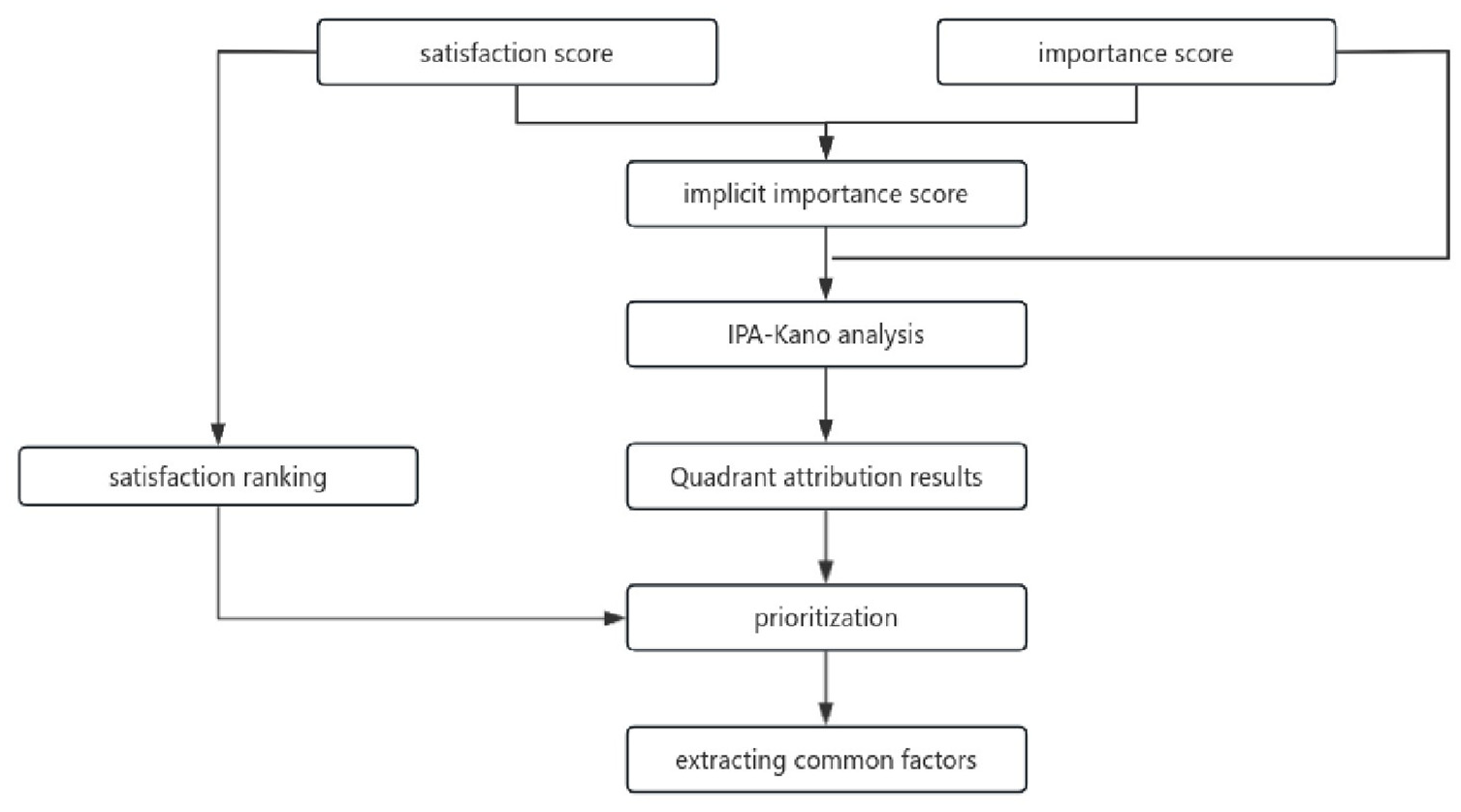
Experimental technique process.
Improvement Priority.

Source. Authors’ work.
Results
Basic Description
Regarding the satisfaction evaluation, there were some differences among the various age groups (see Table 5). Overall, higher scores were observed for C5 and C9. Conversely, lower overall scores were associated with C2 and C8. Among the three communities, children expressed relatively higher satisfaction with C10, C13, and C15. However, their satisfaction was generally lower for C7, C11, and C14. Young and middle-aged adults showed satisfaction with C12 but expressed lower satisfaction with C4, C6, and C11. Additionally, elderly residents in the three communities generally expressed satisfaction with C3 but displayed lower satisfaction with C4, C14, and C15.
Average Satisfaction Scores.

Source. Authors’ work.
Note. R = Renheng Meihua Shanzhuang; Y = Yincheng Xidi Guoji; Z = Zhongye Jinxiu Jiangshan.
Abbreviations: Y&MA, Young and Middle-aged.
For the assessment of importance (see Table 6), the three demographic groups generally considered C5, C6, and C7 to be highly important and regarded C14 as less important. Additionally, C3, C4, and C15 were relatively important for children, whereas these factors were considered less important for young and middle-aged adults and the elderly. Young and middle-aged adults thought that C11 and C10 were highly important and that C2, C11, and C8 were relatively important.
Average Importance Scores.

Source. Authors’ work.
The provided data and analysis from Table 7 offer insights into the implicit importance of various factors in community public space assessment, as perceived by different demographic groups. The analysis, conducted using SPSS 27.0, employs a bivariate correlation analysis to determine the relationship between the importance and satisfaction of each evaluation factor. This approach allows for the identification of factors that are implicitly important, based on users’ evaluations of other aspects, complementing explicit evaluations.
Implicit Importance.

Source. Authors’ work.
At the .05 significance level (two-tailed), the correlation is significant.
At the .01 significance level (two-tailed), the correlation is significant.
The results are considered statistically significant at two levels: a p-value less than .01 (denoted by **) and less than .05 (denoted by *). This indicates that the correlation between the importance and satisfaction of each factor is not due to chance. Three demographic groups are considered: Children, Young & Middle-aged Adults (Y&MA), and Older Adults (Old). Each group exhibits different patterns of correlation, suggesting that what is implicitly important varies across age groups. Factors C1 through C15 show varying levels of implicit importance across the three demographic groups. For instance, Factor C15 (with correlations ranging from .228 to .639) is highly correlated with satisfaction for all groups, especially for children, indicating its high implicit importance. Comparing the correlations across groups reveals that some factors are more implicitly important for children (e.g., C12 and C15) than for older adults, and vice versa (e.g., C8 and C9). This suggests that community public space design should consider the specific needs and preferences of different age groups.
Quadrant Assignment of IPA-Kano Model
Based on the scores of the implicit and explicit importance, the IPA-Kano quadrant diagrams were individually constructed for the three demographic groups in each of the three communities. The different factors were assigned to the different quadrants (see Figure 4).

Importance-performance analysis (IPA)-Kano quadrant diagrams for the three age groups in the three communities.
Priority Ranking
Our study focused on fundamental elements, important elements, and attractive elements. The most crucial was the linear impacts of the important elements on the overall performance since they can enhance or degrade the ranking. If the fundamental elements are satisfied, they do not affect the overall performance; however, if the participants are dissatisfied with the elements, the ranking will be lower. This is the same case for the attractive elements, and the remaining less critical performance elements, whether satisfied or not, do not influence the overall performance. Based on the six priorities that were constructed by the satisfaction ranking, we ranked the optimization factors for the three age groups in the three communities, as shown in Table 8.
Priority Ranking.

Source. Authors’ work.
The findings revealed that the four factors that were generally the most emphasized by the three age groups were: Trash Bin Placement, Accessibility Facilities, Nighttime Lighting Facilities, and Security Monitoring Facilities. The next most valued factors were: Water Feature Landscapes, Resting Facilities, and Fitness Facilities. Other factors exhibited strong preferences among the specific age groups (see Table 9).
Factor Occurrence Frequency.

Source. Authors’ work.
Discussion
Analysis and Evaluation
The different age groups had distinct needs and concerns. However, considering harmonious coexistence within the community, it is crucial to prioritize their common preferences. The common aspects that should be addressed first were Trash Bin Placement, Accessibility Facilities, Nighttime Lighting Facilities, and Security Monitoring Facilities. Firstly, in community public spaces, residents inevitably generate waste during activities but a lack of trash bins and improper management were concerns that were shared among the different groups (see Figure 5). Thus, designers and managers should strategically place bins, not only in areas frequented by children and the elderly but also in spots popular among the youth, such as sports fields, parks, and social gathering points. This ensures that waste disposal is convenient for all age groups, promoting a cleaner community. Secondly, children and the elderly often engage in activities in community public spaces but their physical ability (Ma et al., 2020; J. Zhang et al., 2021) poses a challenge, especially for the elderly as they have difficulty walking due to the absence of amenities, such as handrails and ramps (see Figure 6). Therefore, high attention should be given to the design process, and any deficiencies should be promptly addressed to enhance the overall inclusiveness of the public spaces and promote their sustainable development. Thirdly, poor visibility at night, with some areas having extremely dim lighting or lacking illumination in certain places, can lead to residents feeling psychologically unsettled (see Figure 7). Nighttime Lighting Facilities must be improved to ensure that the community is safe and welcoming for everyone, especially for young adults who might use public spaces during late hours for work, study, or social activities. Adequate lighting not only reduces the risk of accidents but also deters potential criminal activities. By conducting surveys and assessments, community managers can identify and illuminate areas that are frequently used by young adults, ensuring that these spaces are well-lit and secure. Lastly, surveillance cameras can more effectively prevent and respond to potential security issues, which provides the residents with a more secure living environment. Thus, managers should install cameras in key areas and strengthen publicity to inform the residents, which could greatly improve their satisfaction and sense of security.
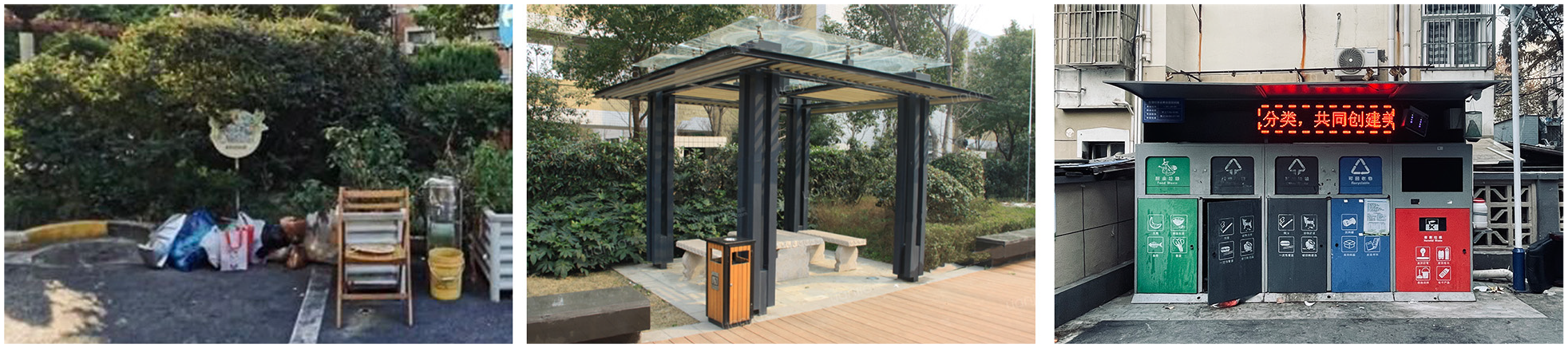
Improper placement of some trash bins.

Lack of accessibility.
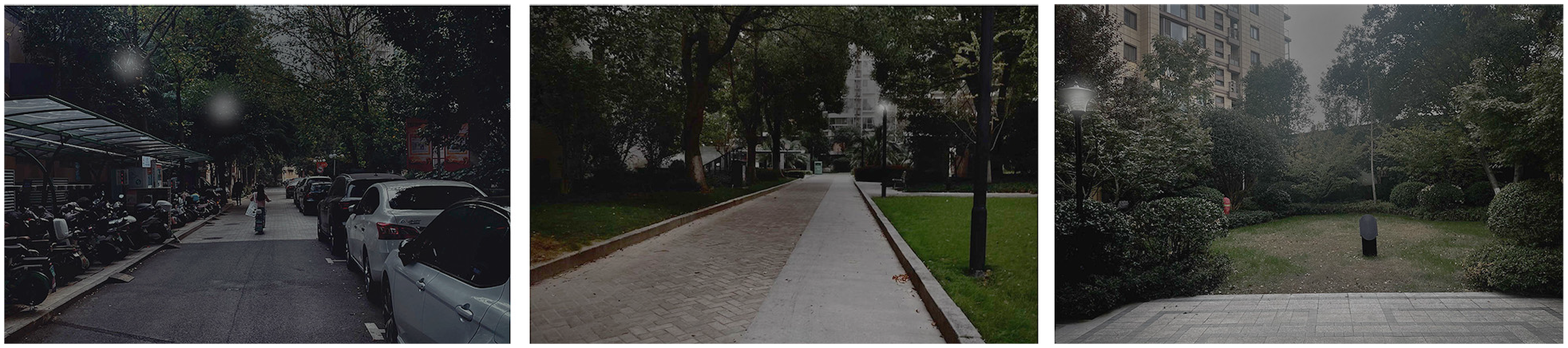
Poor nighttime lighting.
The above four factors are related to infrastructure construction, which conforms to the hierarchy of needs theory (Xu et al., 2020). In addition, we found that both children and the elderly expressed higher demands for the improvement of water feature landscapes and resting facilities. Water feature landscapes, while visually impactful, were generally unsatisfactory due to maintenance difficulties, leading to people’s dissatisfaction (see Figure 8). Our research also revealed that children, when compared with the other two age groups, exhibited a higher interest in water feature landscapes, corroborating the findings of previous studies (Malinowski & Thurber, 1996; Müderrisoğlu & Gültekin, 201537). Based on comprehensive consideration of the water landscapes’ form, area, location, and maintenance methods, a future research direction could be designing and updating the water landscapes of the community public spaces. Given that community public spaces accommodate the daily activities of both the elderly and children in the community (Y. Wu, 2023), especially the elderly who wish to rest while watching the children, the number of seats was slightly insufficient. Therefore, adding some seats in the crowded areas could improve the satisfaction of the residents. Fitness facilities, catering to a broader user range when compared with children’s recreational facilities, were preferred by slightly older children, young and middle-aged adults, and the elderly for physical exercise. However, the quantity of the fitness facilities in the community was deemed insufficient (see Figure 9). Therefore, in the construction of community public spaces, if the budget is limited, priority should be given to providing adult fitness facilities, followed by children’s entertainment facilities.

Poor maintenance of water feature landscapes.

Insufficient quantity of fitness facilities.
The findings show that children, youth and the elderly differ significantly in their preferences for community infrastructure needs, which are often related to their life stage, health status and social activities. Children’s preferences for community usually focus on safe play Spaces, educational resources, and facilities for parent-child activities. Research has shown that children have a high preference for activity venues, and the feeling of community public space is also very important. In addition, the demand for and frequency of visits to services such as education and health care among child-rearing groups are higher than those of other groups, and there are gender differences. The demand preference of the youth group is more toward social activities, sports facilities, and services related to career development. They may focus more on cultural activities and recreational facilities within the community, as well as providing opportunities for vocational training and educational advancement. The preference of the elderly for community needs is more focused on health care, convenient daily services and leisure activities suitable for the elderly. Research shows that older people have lower landscape preference, showing a return to “childhood” phenomenon, and may prefer colorful, easy to walk and safe environments. Older people may also need more integrated health care services, as well as the availability of community health services and care resources. Communities should take into account the needs and preferences of these diverse age groups when planning and building infrastructure to create an inclusive and supportive environment that meets the diverse needs of residents.
Limitations of the Study
This study has several limitations. Firstly, the case data that were selected were relatively limited, and there was a lack of comparison between different types of cities. While Nanjing is representative of typical Chinese cities, regional differences may exist. Thus, conducting experiments in more cities and communities could lead to more accurate results. Secondly, the methods employed in this study had inherent limitations. Similar to the traditional IPA importance analysis, the quadrant to which an element belongs depends on the positions of the X and Y axes, and the choice of the thresholds can affect the categorization of the elements (Azzopardi & Nash, 2013). Therefore, elements that are closer to the axis may have less accurate categorization. Lastly, due to the wide age range of the surveyed population, there may be biases in the understanding of certain factors. For instance, during the study, we learned that although the security monitoring facilities varied in coverage and quantity in the different communities, many residents were unaware of their presence, leading to lower ratings. This lack of awareness could potentially influence the experimental results. In future experiments, informing participants about the facilities should be considered.
Conclusion
This study adopted an intergenerational perspective and categorized the users of community public spaces into three distinct age groups: children, young and middle-aged adults, and the elderly. From a needs-oriented standpoint, an evaluation framework was constructed for community public spaces. The IPA-Kano model was used for the comparative analysis and integrating satisfaction levels, and the factors requiring enhancement were identified and ranked as perceived by each age group within every community. The needs and concerns of different age groups in the community environment were identified as follows: With regard to common priorities, a number of common concerns emerged among different age groups, highlighting the need to live in harmony and address community needs. These priorities include: (1) Bin placement: Inadequate and poorly managed waste disposal facilities are a common concern, and a systematic approach to bin placement and management is required. (2) Barrier-free facilities: The lack of facilities such as handrails and ramps, especially for children and the elderly, requires attention to inclusive design. (3) Night lighting facilities: Some areas are poorly lit or lack of lighting, causing residents to feel uncomfortable and unsafe, emphasizing the need for adequate lighting. (4) Security monitoring facilities: In the hope of enhancing security monitoring, it is recommended that cameras be installed at strategic locations.
Regarding infrastructure and facilities: (1) Water features and recreation facilities: Both children and the elderly want to improve water features and recreation facilities, and children are more interested in water features. (2) Fitness facilities: Although there is a wider range of users who enjoy fitness, these facilities are considered insufficient, indicating the need to prioritize in community Spaces.
Based on the above conclusions, the following improvements are proposed: (1) Systematically place trash cans: Strengthen waste management, strategically place trash cans, and consider where to place garbage sorting and fruit bins. (2) Accessible Inclusive design: Address physical challenges by improving accessibility features such as handrails and ramps. (3) Strengthen lighting and surveillance: Improve night lighting to ensure safety, and install surveillance cameras to enhance security. (4) Water feature maintenance and design: Solve the problem of water feature maintenance and consider its design and location in the community space. (5) Increase seats and fitness facilities: Increase seats in crowded areas and give priority to adult fitness facilities. (6) Community activities for the Elderly: After addressing infrastructure needs, focus on strengthening community cultural activities, especially for the elderly, to foster a sense of community and support sustainable development.
These findings and recommendations are based on an understanding of the different needs of different age groups within the community and aim to create a more inclusive, safe and enjoyable living environment for all residents.
Footnotes
Acknowledgements
The author would like to acknowledge that the study was carried out independently, and no specific financial assistance was received for this project. However, the author extends heartfelt appreciation to the faculty and students of the School of Architecture and Urban Planning at Nanjing University for their invaluable assistance, which greatly contributed to the successful completion of this research. Their support and insights were instrumental in enhancing the quality and depth of this work.

Ethics Considerations
This study does not involve animal experiments. Human participants involved in the study have been informed of the research purposes and methods. We strictly adhere to the guidelines for human research established by the International Ethics Committee, including but not limited to protecting participants’ privacy and confidentiality of data, ensuring respect, fairness, and impartiality throughout the research process, and minimizing any inconvenience and risks that participants may encounter. Participants have the right to voluntarily withdraw from the study at any time, and they will not suffer any negative consequences.
Consent Details
All participants provided informed consent prior to their participation in the study.
Author Contributions
Yuming Lu is the sole author of this paper. She has undertaken all aspects of the research, including the design of the study, collection and analysis of data, execution of experiments, as well as the writing and editing of the manuscript. Throughout the research journey, Yuming Lu has benefited significantly from the invaluable support and guidance provided by her classmates, friends, and teachers. Their insightful suggestions, encouragement, and constructive feedback have greatly contributed to the refinement and improvement of this work. While their contributions are not reflected in the authorship of this paper, Yuming Lu would like to express her deepest gratitude to all those who have supported her along the way.
Funding
The author received no financial support for the research, authorship, and/or publication of this article.
Declaration of Conflicting Interests
The author declared no potential conflicts of interest with respect to the research, authorship, and/or publication of this article.
Data Availability Statement
Data is contained within the article.