




Abstract
The purpose of this study is to contribute to a better understanding of the multiple cultural and institutional antecedents which can positively (or negatively) impact the incorporation of more women on corporate boards (WoCB). Many contemporary discourses about quotas versus voluntary actions by corporations as drivers of greater gender diversity on boards are largely based on cross-country mimicking. These discourses often fail to integrate country-level configurations and conditions, as drivers or barriers to change. We advance this research by seeking to understand the complexity of such multiple antecedents to getting WoCB. Results show multiple macro factors involved in getting WoCB in Europe. We test the complex inter-relations of factors such as legislation, cultural, societal, economic, political, and institutional variables, and their effects. Findings highlight important drivers of more women on boards such as gender equality in political empowerment and institutional settings; government-regulated maternity and paternity leave; specific legislative or soft quota policies; and societal cultural variables, such as (low) power distance and (high) assertiveness, as drivers of getting WoCB. These results prove the need to consider and complement legislative policies to specific cultural and institutional conditions in each country. To help policymakers, we provide insights into which multiple macro factors act as drivers or barriers in their organizations or societies for getting more WoCB. This will help decision makers in organizations or policymaking bodies to match gender diversity goals to the multiple country-level conditions they need to navigate, hence making a better world together.
Keywords
Introduction
Considerable efforts are being made globally to alter the gender gap in top management teams, including women’s positions on corporate boards. This is a key issue within human resource management at both macro, meso and meso levels.Hartmann (2017) defines the macro level perspectives as the societal level, the meso levels as those within organizations and groups, and the micro level at the individual level and these are the frameworks we apply in this study.
Hall and Soskice (2001) emphasize the importance that institutions, organizations, and culture have in supporting the relationships firms develop to resolve coordination problems. Building on this logic, the lack of WoCB could be considered a coordination problem of organizations to be solved through institutional and cultural strategies. Many countries have heeded the call to increase the number of women on corporate boards (WoCB). During the last decade alone, several European countries have implemented a range of different national public WoCB policies, both voluntary and compulsory (Mensi-Klarbach et al., 2017). The international discourses concerning quotas versus voluntary actions to increase the number of WoCB are largely based on cross-country mimicking. That is, the idea that countries copy institutions and actions that seem to work nationally, from each other. And even after the mimicking on these actions, while some countries have been successful in increasing the proportion of women on corporate boards, others have failed. This is a quandary we investigate in this study.
Women remain under-represented in top leadership positions in organizations in and beyond Europe, a reality that may reflect a variety of barriers that create a glass ceiling effect (Cook & Glass, 2014). International academic and political debates highlight the critical need to increase the number of WoCB (Machold & Farquhar, 2013). Findings from Deloitte’s recent study of 72,000 board seats, in7,000 companies in 44 countries, show that women still only hold an average of 12% of boardroom seats worldwide and only 4% of chair positions (Deloitte Corporate Governance Centre, 2017). Empowering women may lead to a more efficient use of a nation’s human capital endowment and reducing inequality may enhance productivity and economic growth (Amin et al., 2022; Mohsni et al., 2021; World Economic Forum [WEF], 2016). Research in the last decade alone has shown that organizations are slow to harness the human capital of women in management positions such as on boards (Labelle et al., 2015; McLaughlin et al., 2018). Equally important, the issue of getting WoCB is part of the ethics debate regarding equal treatment of men and women in society and the potential benefits to society that go far beyond profitability (Ferreira, 2015).
Indeed, such research has identified considerable benefits of having WoCB, with a business case argument, demonstrating that women clearly contribute on boards to increase firm innovation (Torchia et al., 2011) and board effectiveness (S. Nielsen & Huse, 2010), hence positive impacts on an organization’s growth and potential for profit (Ain et al., 2021). Some aspects of this argument go further, to claim that women have a special contribution to make, for example through their supposed emotional labor and capacities for connectivity (see Teigen, 2003 for an overview). Also, that corporate social disclosures are positively impacted by gender diversity on boards (X. Peng et al., 2022). Tatli et al. (2013) argue that gender inequality is a significant barrier to effective talent management and draw on utility arguments to challenge talent shortage and the untapped female potential. Thus, the recent pandemic and financial crisis, for example, have proved arguments that women possess the qualities and characteristics necessary for organizational success during times of crises or uncertainty in the 21st century. Hence the organizational advantage gained by including women in both a stable economy and in challenging times is clear. What is more, human capital arguments claim that since the total potential of a population is roughly evenly distributed between men and women, the low level of women in high status positions means that this talent potential is not fully exploited (Hernes, 1987). In addition, the social justice viewpoint, in line with United Nations sustainability goals, based on the underlying principle of equality in society for both genders, underpins the business case arguments for clear benefits of having women on boards for equal talent management and organizational advantages (Seierstad, 2016). In this paper, we combine these different theoretical frames on institutions, cultural, and legislative antecedents to shed light on the phenomena around the incorporation—and the increase—of women on boards.
From the corporate governance perspective, there has indeed been a boom during the last years in studies focusing on the use of national policies as the solution to increase the number of WoCB to harness such benefits (Gabaldon et al., 2016; Klettner et al., 2016; Mensi-Klarbach et al., 2017; Schiehll & Martins, 2016; Terjesen & Sealy, 2016; Terjesen et al., 2009). The aim of our paper is to extend this work to understand the multiple macro factors beyond just legislative initiatives that have a significant impact on getting WoCB. Some interesting recent WoCB research has highlighted the importance of focusing on isolated institutional variables, such as elements of institutionalism (Iannotta et al., 2016), welfare provisions (Terjesen et al., 2015) and national public policies (Seierstad & Opsahl, 2011; Smith & Parrotta, 2018), in order to understand the variation of successful national WoCB strategy implementations (Teigen, 2012; Terjesen et al., 2015). Still others (e.g., Chizema et al., 2015; Du, 2016) highlight alternative variables, such as social role theory, women in politics and cultural backgrounds, as alternative explanatory factors for getting WoCB, often applying heterogeneous country samples. Conversely, Iannotta et al. (2016) apply a novel configurational approach—identifying institutional complementarities to explain gender diversity on boards—whereas Gregorič et al. (2017) use an alternative institutional logic to understand discrimination in the director selection process.
Despite the significant contributions of the literature cited, these studies present some limitations. The “bundles” of antecedents in each study are somewhat fragmented and the results appear somewhat mixed. One of the reasons that findings in these studies may vary is that they tend to apply varying selections of antecedents to WoCB; that is, some include data on “family-friendly” factors or “traditional versus secular values” (see Adams & Kirchmaier, 2013), while others apply archival data on political empowerment, universal suffrage, and institution-based welfare policies. (Iannotta et al., 2016; Terjesen et al., 2009, 2015). Our study fills this gap by capturing a wider span of multiple institutional, cultural, and legislative antecedents and their inter-factor relationships that impact getting WoCB. As the institution-based logic suggests (Adams et al., 2015; Aguilera & Jackson, 2003; Aguilera et al., 2006; M. W. Peng et al., 2009), if specific country-level institutions influence corporate governance practices, then we must expect countries to have different antecedents, and hence solutions, to getting WoCB. Thus, we heed the alert to be aware of the perils of “one size fits all” (García-Castro et al., 2013) in our study.
To this end, we use multiple archival datasets collected from the World Economic Forum database (WEF, 2016), the Organization for Economic Co-operation and Development database (Organization for Economic Cooperation and Development [OECD], 2016), Project GLOBE (House et al., 2004), the Gender Statistics Database (EIGE, 2017) and various additional archive data on national public policies to test inter-factor relationships. The European country cluster has been chosen for this country comparison study as a more homogeneous and complete empirical case to statistically investigate “what matters” in getting WoCB in a specific geographical and cultural county cluster of 24 countries.
With only 12 EU/EEA countries having just over a quarter of the seats on corporate boards of listed companies held by women (Iceland, France, Sweden, Italy, Finland, Norway, the Netherlands, Latvia, Germany, UK, Denmark, Belgium), we utilize multiple datasets within a European context, to investigate what have been the significant antecedents to higher proportions of women being on corporate boards in 24 countries. These 24 European countries have introduced various policy approaches, ranging from no initiatives to soft initiatives as well as hard legislation with penalties for non-compliance, in the efforts to increase the proportion of WoCB. Moreover, as these various policy initiatives operate in different institutional, cultural, and country settings, we can gain a deeper understanding of why they have had varying degrees of success both in the short and long term in getting more WoCB. By utilizing a single cluster complete archival country data set, we avoid weaknesses that may be attributed to small samples of respondents.
We offer four novel extensions to corporate governance and WoCB research. First, we draw upon an institutional complementarities’ logic (Haggard, 2001; Iannotta et al., 2016). Firstly, we theorize on the influence of a wider “bundling” of institutional antecedents. Secondly, as our study is multi-disciplinary, we bring together strands of the existing cultural, contextual, equality and institutional literature and the interface between these fields. Thirdly, the main theoretical contribution of the study is the development of a conceptual model of macro factors explaining the possible antecedents to getting more (or less) WoCB, such as paternity leave, gender equality and the importance of government involvement with affirmative action regulations. We fill an important gap in WoCB studies as we look beyond isolated stand-alone explanatory factors. As a final, more general contribution, while this study considers a somewhat different country level outcome than Chizema et al. (2015) and Iannotta et al. (2016), it nevertheless affords the opportunity to test the theoretical premise of regression analyses and models of earlier studies within a specifically homogenous cluster, namely European countries. By statistically aggregating samples from the complete European dataset, we detect robust effects between certain antecedents.
Previous Research on Getting More Women on Corporate Boards
Previous research on getting WoCB has highlighted the critical importance of investigating institutional antecedents of WoCB policy implementations (Iannotta et al., 2016; Mensi-Klarbach et al., 2017; Teigen, 2012; Terjesen et al., 2015), and women’s presence on boards in a broader context (Grosvold & Brammer, 2011). It is argued in institutional theory that institutions influence economic activity, organizational structure, and human behavior (North, 1991). Scott (1987), p. 499) defines institutions as work, politics, laws, or regulations that are relatively resilient “systems of social beliefs and socially organized practices associated with varying functional arenas within social systems.” In this vein, any institution “fits into a system of institutions” (Neale & Stephens, 1988, p. 245), in the sense that they co-exist and co-evolve within a given structure by showing mutually reinforcing characteristics (Ahlering & Deakin, 2007; Deeg, 2007; Jackson & Deeg, 2008). Hall and Soskice (2001) include not only institutions as a set of rules, formal or informal, but also the traditions actors generally follow, whether for normative, cognitive, or material reasons, and organizations as durable entities with formally recognized members. Rules of organizations also contribute to the institutions of the political economy.
Hall and Soskice (2001) emphasize the importance that institutions, organizations, and culture have in supporting the relationships firms develop to resolve coordination problems. Building on this logic, the lack of WoCB could be considered a coordination problem of organizations to be solved through institutional and cultural strategies. Grosvold et al. (2007), focus on the different institutional pressures to increase the number of WoCB and highlight social, cultural, and demographic contrasts between Norway and the United Kingdom. Their analysis demonstrates that the threat of quotas in Norway accelerated the growth in female board representation relative to the United Kingdom (prior to the introduction of the Lord Davies Report in 2011). Hence, Grosvold et al. (2007) show that affirmative action programs, such as quotas, may have the potential to generate a radical growth in female representation in the boardroom. A more widespread adoption of such programs would cement the position of women in the boardroom and within wider society and, without the appearance of evidence of harmful effects (such as appointment of inexperienced women just to fill a quota or rapid growth of an elite WoCB director group), such programs could enhance good governance practice.
According to Terjesen and Sealy (2016), in their meta-analysis of 67 countries worldwide, 10 European countries had established quotas for WoCB, 15 others had introduced voluntary quotas and many others were still waiting to rule on the quota debate. Following Grosvold et al. (2007), and Singh and Vinnicombe (2004), we posit that legislative quota strategies may contribute to a higher percentage of WoCB. Nevertheless, such legislative strategies operate in different national and cultural contexts and have had varying degrees of implementation success. We posit that our investigation of multiple macro factors influencing WoCB will reveal that quota legislations or voluntary initiatives serve as significant antecedents to getting WoCB, but not in isolation. For example, we expect countries with quota legislations that include penalties for non-compliance to have a higher percentage of WoCB in the short term than those without penalties. We expect other countries with less regulated quota legislations in the short run to have a lower percentage of WoCB. However, these countries may have alternative compensatory strategies, or have institutional or cultural climates that are “welcoming” to gender diversity on boards. This could lead to more WoCB in the longer term. Hence, we hypothesize that:
As discussed earlier in this article, institutional factors, such as gendered welfare state provisions, may contribute to better work–life balance (Seierstad & Kirton, 2015). Terjesen et al. (2015) argue that they found a correlation between women in the labor market and gendered welfare state provisions, and they argue specifically that the greater the country’s family policy welfare provision for females in the labor market are, the more likely the country is to get WoCB. In another study by Allen (2014), the link between national paid maternity leave and paid paternity leave was tested, and a significant correlation was found. Maternity leave is implemented and well-integrated into most countries in Europe. However, paid paternity leave is not implemented in all countries (Iannotta et al., 2016). The objective of government-regulated paternity leave is to promote gender equality in the labor market by giving both parents similar or fair possibilities to climb or to step down from the career ladder. Paternity leaves hence may support women returning to work after pregnancy and childbirth and reduce potential discrimination biases in promotions and selections. This will be the case even in country settings where childcare is not freely available. Hence, we hypothesize that paternity leave may likely be a significant variable in getting WoCB as such welfare state provisions have been seen to promote greater gender equality, which in turn can promote gender balance on boards (Iannotta et al., 2016). Hence, we test the following hypothesis:
Another important antecedent to explore in understanding WoCB, is economic empowerment. According to OECD, Economic empowerment is the capacity of women and men to participate in, contribute to and benefit from growth processes in ways that recognize the value of their contributions. Economic empowerment increases a group’s access to economic resources and opportunities including jobs, financial services, property and other productive assets, skills development, and market information. Economic empowerment is measured in this study using the sub-index of the GGI (WEF, 2016).
A further dimension which impacts WoCB is gender equality in in politics and gender equality in business. Pande and Ford (2011) argue that gender equity and equality in society positively impact gender quotas for political positions and corporate board membership. According to Seierstad et al. (2017), women’s engagement in political roles and public policy strategies has received increased attention internationally as a driver of change. Indeed, more and more countries have now introduced initiatives, such as legislated political candidate quotas, reserved seats for gender equality and voluntary political party quotas for both genders, and these have had a powerful effect (Krook, 2007). Proponents argue that more women in politics have a positive impact on the number of women in leadership positions outside of politics as change is shaped from politics to civil society. Hence, we have developed the following hypotheses:
Women’s rights initiatives for female representation in democratic practices may be seen as an antecedent to female leadership in specific country settings (Terjesen et al., 2015). As an example, the timeline for universal suffrage indicates to what degree a country has had a long tradition for both men and women to have the right to vote in national and local government elections. Although universal suffrage has not always been viewed as critical to developing equality, in the early 21st century many regarded such universal voting rights as an essential component of democracy (Paxton et al., 2006). In fact, universal suffrage may be viewed as a minimum standard for fair and ethical governance, as the right of individuals to vote is presupposed as a requirement of transparent and fair election processes. Intuitively, universal suffrage as a nation’s mindset is a pre-requisite for good governance. A country that does not expect nor demand a vote for every adult will have minimal opportunities for progressive gender roles and will not set expectations or demands for female inclusion in business. Considering this, we infer that countries with longer universal suffrage traditions in Europe will have a higher percentage of WoCB. Our hypothesis is thus that:
Research such as that of Nguyen et al. (2017) and Carrasco et al. (2015) and Pucheta-Martínez et al. (2021), has focused on cultural variables, such as power distance, time orientation, and gender equality, which affect a country’s gender diversity on corporate boards. Moreover, a valuable study applying GLOBE data (House et al., 2004) and World Values Survey data by Parboteeah et al. (2005) show that managers’ traditional gender role attitudes relate positively to national-level uncertainty avoidance and high-power distance. Parboteeah et al. (2008) also found that gender egalitarian normative institutions and the degree of regulation are negatively related to managers’ traditional gender role attitudes. Bullough et al. (2012) found that high collectivism, high uncertainty avoidance and low assertiveness are negatively related to the percentages of women in political leadership. Hence, we will explore these findings in a WoCB setting. Consequently, we hypothesize that:
In summary, after mapping earlier WoCB research, we suggest the following conceptual model (Figure 1) that summarizes our hypotheses, which we test in this study.

Conceptual model and hypotheses: Multiple macro factors as predictors of WoCB in Europe.
Methods
To test the hypotheses, we applied a similar statistical method as was employed by Nekhili and Gatfaoui (2013) and Nguyen et al. (2017) who also studied the antecedents and drivers of WoCB. We used stepwise regression analyses by applying SPSS 27 statistical software analytics (Bertsch & Warner-Søderholm, 2013) on a cluster of 24 European countries to eliminate independent variables that had weak explanatory power. Stepwise regression is, by its most common definition, a set of iterative search and model comparison procedures that identify which independent variables, previously thought to be of some importance, have the strongest association with the dependent variable (Draper & Smith, 1981). The main objective in this study is therefore to pick out the relevant regressors to estimate the structure of dependencies among the variables involved. Only regressors with impact of their own on the dependent variable are regarded as significant while regressors who’s impact vanishes given other regressors, are grouped together with the latter, resulting in an estimated structure of dependencies (Johnsson, 1992). The method followed previous efforts which relied on existing variables to test meaningful relationships that explain the drivers and antecedents of WoCB. In our study, we tested relationships between the variables presented in our hypotheses and conceptual model in Figure 1. To deal with causality issues and timing effects, we chose a lag structure so that data for all independent variables was sourced and coded from a timeframe earlier than that of the dependent variable (B. B. Nielsen & Nielsen, 2013).
Sample and Data
Using the results in previous publications, we selected the institutional, cultural, and legislative aspects to include in the model and in a process of iteration, the authors chose the variable that best reflected the cultural, institutional, or legislative characteristic. For the sake of transparency, in this research only data already published by official national or supranational statistical agencies was used.
Dependent Variable
Our dependent variable (WoCB2017) represents the percentage of WoCB in each country studied. Data was collected from the Gender Statistics Database (GSD) of the European Institute for Gender Equality (EIGE, 2017), which in 2017 took over the European Commission’s database on women and men in decision-making. The WoCB2017 dataset lists the percentage of women on the boards of the largest listed companies in Europe. The percentage of women on corporate boards is calculated based on 3-year averages, and the ratio of each sex in the population (18+). Population statistics used in this calculation by EIGE are based on a Eurostat database. We verified the WOCB2017 dependent variable by triangulating the entries against the Eurostat 2017 data to ensure external validity of the results.
The country samples consist of board members of the largest publicly listed companies in each country, defined as the highest ranked nationally registered organizations in the primary blue-chip index of the national stock exchange within each country. These indices cover the companies with the largest market capitalization or most traded stocks. Non-national companies registered in another country according to the ISIN code are excluded so that the data for each country cover only companies registered in that country. The autumn 2017 WoCB dataset applied in this present study is collected from a total of 730 companies, ranging from 10 to 50 companies per European country.
Independent Variables
Parental Leave (m_leave2016) and (p_leave2016)
We used OECD (2016) data to measure each country’s parental leave as two different institutional settings; Paid Maternity Leave (m_leave2016) and Paid Paternity Leave (p_leave2016). Paid maternity leave measures days of paid leave of absence with 100% salary for employed women around the time of childbirth. Paid paternity leave measures days of paid leave of absence with 100% salary for employed fathers at or in the first few months after childbirth.
Gender Equality (GGI2016)
We applied data from the World Economic Forum (WEF) and the Global Gap Index (GGI) to measure gender equality. The GGI-score is an aggregate of four sub-indices: (1) Health and Survival, (2) Educational Attainment, (3) Economic Participation and Opportunity, and (4) Political Empowerment. It provides country rankings in addition to aggregate GGI scores for 144 countries. The country GGI scores range from 1 (parity) to 0 (imparity). On average, the 144 countries covered in the report have closed 96% of the gap in health outcomes between women and men and more than 95% of the gap in educational attainment. Nevertheless, the data show, that only 58% of the economic participation gender gap has been closed globally, and, most concerning, only about 23% of the gender gap in political equality has been closed. The political dimension thus holds the widest gender gap (WEF, 2016).
Gender Equality in Economic Empowerment (Ec_EMP 2016)
Economic empowerment is measured in this study using the sub-index of the GGI (WEF, 2016), Economic Participation and Opportunity measures the gap between the economic advancement of men and women through the ratio of women to men in labor force participation, earned income, wage equality for similar work among legislators, senior officials, and managers, and in technical and professional workers.
Gender Equality in Educational Empowerment (Ed_EMP2016)
Educational empowerment is measured in this study using the Educational Attainment sub-index of the GGI (WEF, 2016). Educational Attainment measures the gap between women’s and men’s access to education through the ratio of women to men in primary, secondary and tertiary level education, and the female to male literacy rate. Now that more than 95% of the gap in educational attainment has been closed in a global context, we do not expect this antecedent to have a strong “push-pull” effect in this present study.
Gender Equality in Health Empowerment (H_EMP2016)
Health empowerment is measured using the Health and Survival sub-index of the GGI (WEF, 2016). Health and Survival measures the gap between women’s and men’s healthy life expectancy and the sex ratio at birth. According to the WEF (2016), 96% of the gap in health outcomes between women and men has now been closed globally. Hence with this “level playing field,” we do not see gender equality in health empowerment to be a mitigating factor in our study.
Gender Equality in Political Empowerment (P_EMP2016)
Political empowerment is measured in the present study using the Political Empowerment sub-index of the GGI (WEF, 2016). Political Empowerment measures the gap between men and women at the highest level of political decision-making through the ratio of women to men in ministerial positions, parliamentary positions, and in terms of years in executive office for the last 50 years.
Universal Suffrage (uni_suffrage)
Data collected for the EU Justice and Gender Equality Factsheets (WEF, 2016) are used as a measure for the number of years a country has enjoyed universal suffrage.
Quota Legislation (Quota2016)
Data was collected from national country databases and EU corporate board databases (2016). To code country quota legislation levels, we applied a fuzzy set logic (Zadeh, 1965; Klir & Yuan, 1995). A fuzzy set can be defined mathematically by assigning to each possible individual in the universe of discourse a value representing its grade of membership in the fuzzy set (Klir & Yuan, 1995),. Thus, we coded the European country cluster’s level of quota legislation by degree of their sanctions in four levels as follows: Level 1 represents no legislation or self-regulation code or no immediate national focus. Level 2 represents self-regulation/voluntary/soft measures. Level 3 includes mandatory but non-sanctioned quota legislations, whereas level 4 represents compulsory sanctioned quota legislation with non-compliance consequences. Please see the summary of national databases figures and legislative data.
National Cultural Values
The variable “national cultural values” is measured using societal cultural values dimensions from Project GLOBE (House et al., 2004; Warner-Søderholm, 2012). The variables used to measure national cultural values are performance orientation (C_PO), future orientation (C_FO), power distance (C_PD), in-group collectivism (C_Coll1), institutional collectivism (C_Coll2), uncertainty avoidance (C_UAI), assertiveness (C_Ass), gender egalitarianism (C_GE) and humane orientation (C_HO).
Analyses and Results
Data analyses include descriptive statistics, Pearson correlations, stepwise regression analyses, and R2 analyses, applying SPSS 27 software analytics. The first steps in our analysis are initial descriptive statistics and Pearson correlation coefficients for all variables. These descriptives are shown in Table 1.
Means, Standard Deviations, and Pearson’s Product-Moment Correlations.
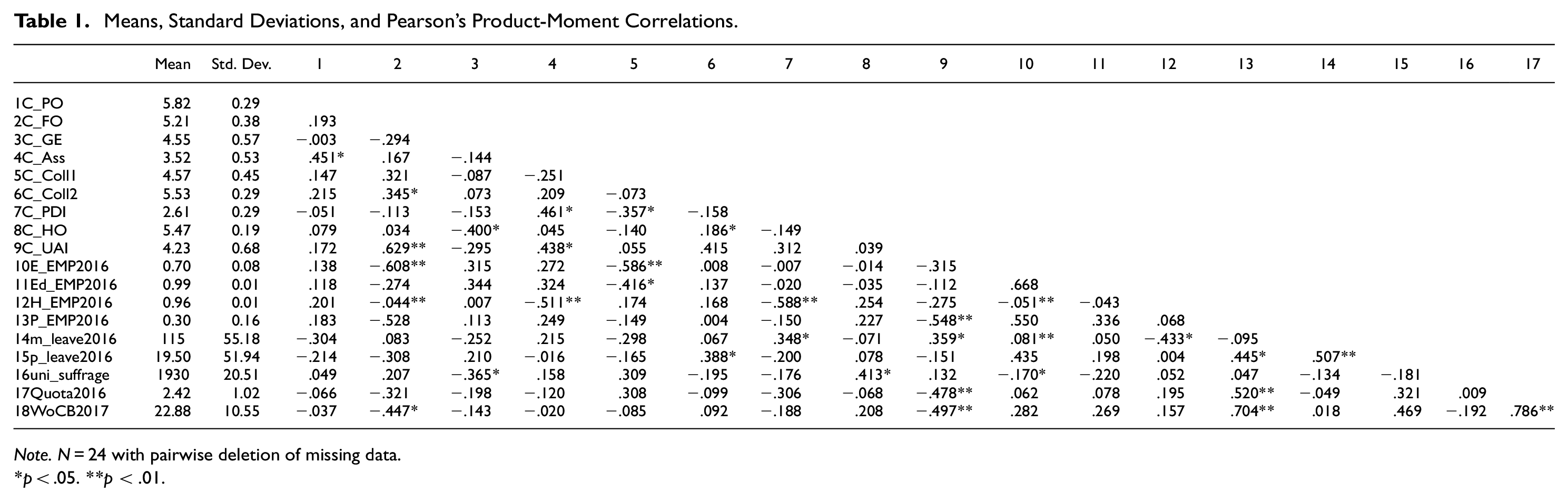
Note. N = 24 with pairwise deletion of missing data.
p < .05. **p < .01.
The correlation analysis gives an early indication into the relationships between constructs and indicates relationships that are to a high degree consistent with the hypotheses. Thus, the second step in our analysis was to progressively build our hypothesized model with stepwise linear regression analysis to eliminate independent variables that had weak power to explain and predict the percentage of WoCB. In selecting the stepwise method, the factors that do not contribute uniquely to predicting the percentage of WoCB will not enter the regression equation. Stepwise selection combines certain aspects of forward and backward selection. Like forward selection, it begins with a null model, adds the single independent variable that makes the greatest contribution toward explaining the dependent variable, then iterates the process. The steps in this regression therefore exhaustively test which predictors significantly contribute to the outcome variable WoCB2017 (percentage of women on boards). The process is repeated until (1) all significant predictors are in the final model and (2) no non-significant predictors are in the final model. We tested the strength of the hypothesized relationships between Quota2016 (legislation), P_EMP2016 (political empowerment), E_EMP2016 (economic empowerment), H_EMP2016 (health empowerment), Ed_EMP2016 (educational empowerment), GLOBE cultural values: performance orientation (C_PO), future orientation (C_FO), power distance (C_PD), in-group collectivism (C_Coll1), institutional collectivism (C_Coll2), uncertainty avoidance (C_UAI), assertiveness (C_Ass), gender egalitarianism (C_GE) and humane orientation (C_HO), government-regulated paternity (p_leave2016) and maternity leave (m_leave2016), and universal suffrage (uni_suffrage) as the independent variables, and the WoCB2017 (percentage of WoCB) as the dependent variable.
On the first level (M1), the variables that statistically made the greatest contribution to explaining the percentage of WoCB were legislation, gender equality in political empowerment and institutional collectivism. On the second level of the modeling (M2), paid paternity leave, assertiveness and uncertainty avoidance survived the regression analyses as strongest predictors of WoCB, moderated through gender equality in political empowerment in the model. In the final model (M3), paid maternity leave, power distance, future orientation and in-group collectivism were significant predictors of paid paternity leave as a gender equality measure for more WoCB. No other independent variables survived the stepwise regression analyses as statistically significant factors predicting WoCB. These relationships are also summarized in Table 2.
Stepwise Linear Regression Analyses.
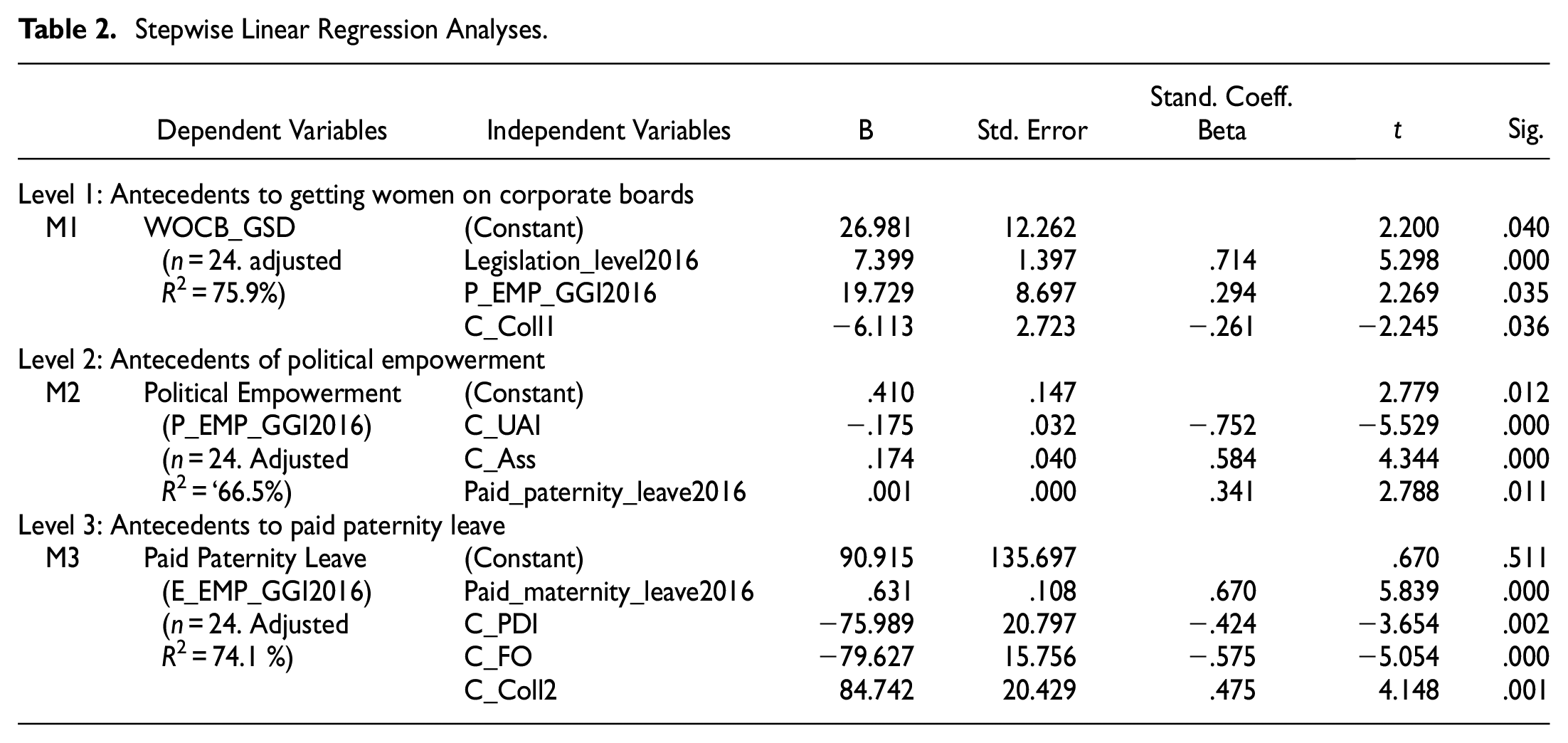
Table 3 below offers a summary of hypotheses in the study and significance results:
Summary of Hypotheses and Results.

Supplementary Data Analysis Section
We re-ran the analyses using the GLOBE practices data, and no differences were found in the results. We re-ran the analyses to test for direct relationships between cultural variables and legislation and cultural variables and WOCB2017; no significant relationships were found without gender equality in political empowerment (P_EMP2016) as a mediator. We also re-ran the analyses with dummy variables in the data to test for effects, coding “no legislative initiatives” 0 and “other non-legislative initiatives” 1. The results supported earlier findings of significance. We also re-ran the whole analysis to test for religiosity and social role antecedents using World Values Scores data (Inglehart et al., 2014), and using a similar logic to Chizema et al. (2015). No significant results were found. An explanatory factor could be our more homogeneous empirical setting of Europe, rather than a setting of countries representing many religions on many continents. Regression analyses between multiple legislative, cultural, societal, political, and institutional WoCB factors show that in a European empirical context, many variables may be needed to explain the percentage of WoCB. This is visualized in Figure 2.
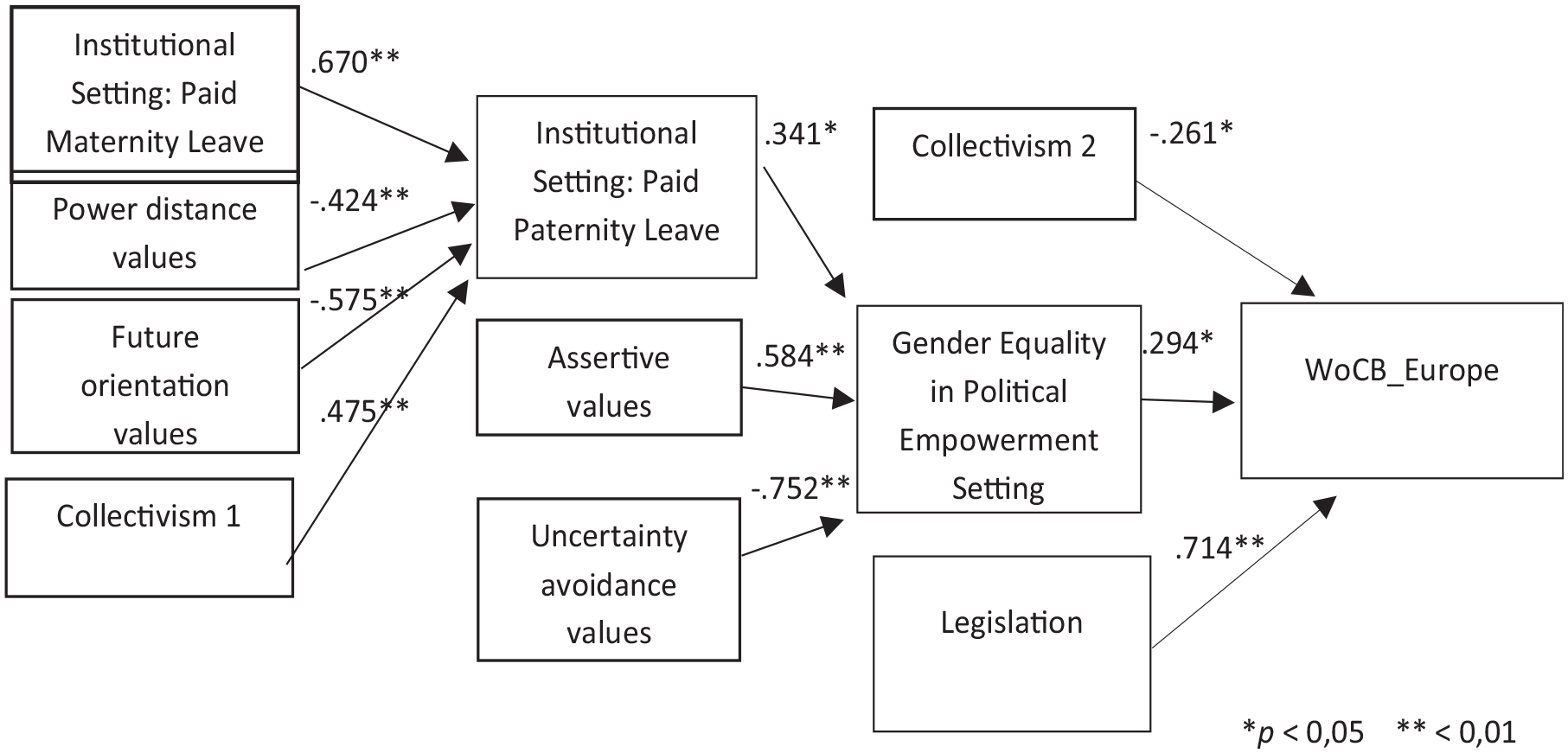
Multiple macro factors as predictors of percentage of WoCB.
As the legislation level has a high predicting value in our model (β = .704; p < .001), this suggests that those countries with higher WoCB legislation will also have a higher number of WoCB. As the rate of gender equality in political empowerment has a significant predicting value in our model (β = .294; p < .001), this suggests that those countries with a higher ratio of women in politics also have a higher percentage of WoCB (i.e., successful implementation of WoCB strategies, whether soft or quota-based). As the level of institutional collectivism has a significant negative predicting value in our model (β = .−261; p < .001), this suggests that countries with lower levels of collectivism at the societal level will have a higher number of WoCB. The first modeling (adjusted R2 of 75.9%) indicates, therefore, that almost 76% of the percentage of WoCB in a European context can be explained by legislation, gender equality in political empowerment and levels of societal collectivism. Calculating the effect size according to Cohen (2013) we find a large effect size for our regression (f2 = 3.149), thus suggesting that our findings here have practical significance.
In the second step of the modeling, the predictors of gender equality in political empowerment that survived the regression analyses (high paid paternity leave, low uncertainty avoidance and assertiveness) have an explanatory factor of almost 66% in the model (adjusted R2 = 66.5%). This suggests that countries with institutionalized paternity leave, with high assertiveness values and lower uncertainty avoidance will have a higher level of gender equality in political empowerment. The effect size for the regression is also large (f2 = 1.985) in this case. The findings of the regression therefore have practical significance. Finally, paid maternity leave, low power distance, low future orientation and in-group collectivism have an explanatory power of almost 75% in predicting high levels of paternity leave in the model (adjusted R2 = 74.1%). This suggests that countries with maternity leave supported by the government, with low power distance values, low future orientation values and higher in-group collectivism will likely have paid paternity leave at an institutional level. The practical significance of these findings is strong, which is supported by the large effect size of the regression (f2 = 2.861).
Our empirical analysis shows that cultural variables are important in predicting and understanding successfully getting WoCB mediated through gender equality in political empowerment. Hence, WoCB legislation, high gender equality in political empowerment with low gender gap, together with government regulated maternity and paternity leave predicts most strongly the percentage of WoCB (hence successful implementation of WoCB strategies). The strong correlation between gender equality and political female empowerment shows the exemplary role of the political scenario on gender equality. It could be stated that political empowerment could be a nuanced proxy of the level of gender equality in the country.
The cultural variables in this study that have been found to be significant are power distance, uncertainty avoidance, future orientation, in-group and institutional collectivism and assertiveness. High uncertainty avoidance, institutional collectivism and high future orientation predict lower gender equality. High assertiveness on the other hand, is a predictor of higher gender equality.
Discussion
To address the gap in the literature on a comprehensive view of the antecedents to increasing the presence of WoCB, this study developed and tested a conceptual model to investigate whether certain institutional, legislative, cultural, and national environments configured together, are statistically inter-related and act as antecedents to getting WoCB. Empirical evidence provides support for most hypotheses. Therefore, in this research, we consider that the lack or the reduce presence of WoCB could be considered a coordination problem of organizations. We follow Hall and Soskice (2001) call to understand the importance that institutions, organizations, and culture have in supporting the relationships firms develop to resolve coordination problems.
National differences in both WoCB initiatives and the percentage of WoCB reflect path dependent variations in gender equality policy traditions, combined with country-level conditions and multiple macro factors. Our study offers empirical support for the ideas presented by Terjesen et al. (2015) regarding the importance of understanding institutional factors together with historical and political “push factors” when designing WoCB initiatives. We also answer the call for a stronger cross-cultural perspective in WoCB research (Gabaldon et al., 2016).
We have looked beyond isolated explanatory factors from earlier research—such as social role theory, institutional complementary factors, cultural norms, and legislature—to understand the multiple factors that may support a high percentage of women in leadership and board positions, or not. When it comes to the situation of WoCB within a European setting, we found that quota legislation, gender equality in political empowerment, paid parental leave, and culture matter, but it is clear that “one size doesn’t fit all.” There must be a fit between the political climate, the welfare conditions, and the history of political empowerment, cultural expectations and the legislative approach chosen by the governments. In some countries, such as Norway, the cultural, institutional, and contextual factors can be seen as “in line” with the policy approach, with strong penalties for noncompliance and a high percentage of WoCB. However, in other countries with “weaker initiatives,” such as Sweden, we see similar results as in Norway, despite a weak(er) policy. This may be explained by other factors, such as culture, context, business logic and, with those, institutional factors are stronger and “in line” with ideas of equality and empowerment. Other countries have not successfully increased the percentage of WoCB in the shorter term, in part as contextual and cultural factors might not be strong enough and change would need stronger legislation to create change in a longer-term perspective.
In more detail, we have found that paternity leave, as part of a country’s family welfare policy, is more of a push factor than is maternity leave. Our findings regarding the importance of government-regulated paternity leave support earlier findings by Iannotta et al. (2016). Indeed, government-regulated paternity leave’s impact on WoCB indicates the importance of shared childcare between men and women. Shared childcare responsibilities may be a powerful “pusher” to getting more women on corporate boards, and the need for strong childcare enhancing instruments should be emphasized. This in turn might build a national culture of shared family roles, which supports a culture of shared career ambitions.
Furthermore, our findings indicate that maternity leave impacts paternity leave, and thus WoCB indirectly. This makes intuitive sense, as it is highly unlikely that a nation would implement paid paternity leave before implementing paid maternity leave. In this paper we have been leaning on existing data sources. Such sources may not always be ideal for measuring core variables and concepts. One of the challenges we experienced was the operationalization of gender equality as a construct with the four sub-datasets in the gender equality (GGI) database. This is an important indicator of significant relations between these gender equalities in political and economic empowerment and WoCB. Gender equality in political settings is clearly a main factor in explaining the empowerment of women. The political setting is usually one of the first sectors to include gender equality among country representatives and sets an example for both public and private industries.
Our results also suggest that individualistic cultural characteristics create an environment whereby individuals are encouraged to strive for and be rewarded and recognized for individual accomplishments, such as board membership, no matter what their gender is. We also see that low power distance can be a powerful driver for upward mobility and equal treatment in societies with lower hierarchical norms, and this is positive for getting more WoCB.
Contributions, Practical Implications, and Limitations
In this study we make several contributions for theory and practice. Our focus has been on the inter-relationships between country-level conditions and multiple institutional macro factors that may promote getting WoCB. Taking a multidisciplinary approach, we have identified several macro factors, cultural and institutional antecedents, that can act as drivers or barriers for WoCB. We have developed a conceptual model of macro factors that explain the possible antecedents for getting more (or less) WoCB. This is an important contribution that can motivate additional studies beyond the European setting, which has been the focus of our study.
Our findings acknowledging the multifaceted nature of antecedents getting WoCB may also help policymakers at national and supra-national level in designing strategies for increasing the number of WoCB. As the use of quotas and other forms of strategies is on the agenda for countries and organizations (e.g., EU), in-depth knowledge is pertinent. Throughout our analysis, we observed that countries with a democratic legacy of legal and institutional initiatives to achieve gender equality—such as gender equality in political empowerment and parental leave policies—are more likely to have more WoCB. These different antecedents showcase how countries may have differing clusters of these factors and achieve similar results in terms of WoCB. Some countries can potentially increase the presence of WoCB by promoting gender equality via politics, welfare state and cultural values, while others might require more drastic regulatory approaches as these contextual factors might not be aligned. However, we argue that such factors alone are not sufficient if we ignore the country-level conditions and cultural traditions in the actual society. Some countries have been successful in increasing the percentage of WoCB through the implementation of various national public policy antecedents. Nevertheless, others with similar approaches have failed. In response, our study suggests that such antecedents can be successful when the cultural, institutional and welfare settings in a society are optimal for quota legislation implementation. As found for the case of Norway, the quota legislation is a successful antecedent due to the effective combination of a mandatory quota with penalties for non-compliance combined with “welcoming contextual factors” (Borchorst & Teigen, 2009; Mensi-Klarbach & Seierstad, 2020). Sweden and Spain represent examples of alternative antecedents and policy approaches. Sweden is a country where a high number of WoCB is a reality even without quotas. This could be explained by the antecedent of country-level “welcoming contextual, cultural, and institutional factors.” Spain, however, shows “weak quotas” and a “weak cultural setting.” This, combined with challenges to growth in a stable economy and its political landscape, since its quota law was implemented, may explain the relatively low percentage of WoCB. Quotas in line with EU initiatives may, for Spain, be the next push needed to get women on corporate boards. Hence, developments and push factors from institutions, like EU, will be important to follow. In Europe, this will particularly be relevant with the new regulation (2022) from EU about quotas on boards.
In societies with strong traditions of women in politics and institutionalized parental leave, equality policies can initiate a change. However, specific strategies to increase the percentage of WoCB are often needed. Statistically, we see in our study that gender equality in political empowerment impacts getting women on corporate boards significantly. Gender equality in health and education and economic empowerment on the other hand were not significant antecedents to getting women on boards in our study. Yet, as the WEF (2016) reports that 96% of the gap in health outcomes between women and men, and more than 95% of the gap in educational attainment has now been closed, our non-significant results with these “push-pull factors” are not surprising. Nevertheless, as the WEF data (2016) show that only 58% of the economic participation gender gap has been closed globally, our non-significant results were counter-intuitive to our hypothesis that economic equality “matters” and should be explored further. WEF data show that only about 23% of the political gap in gender equality has been closed. So, not surprisingly, our study confirms that gender inequality in political empowerment has a significant negative impact on getting WoCB.
Quota legislation without sanctions for non-compliance by itself might not be enough to increase the number of WoCB without additional factors, such as the appropriate institutional and cultural settings or key players pushing for change (Mensi-Klarbach et al., 2017). Other elements, such as institutional isomorphism or social legitimacy, positively affect achieving a significant increase in WoCB. However, not all countries face the same situation when they decide to promote more women to leadership positions, such as on boards. Thus, a deeper understanding of the rationale of each country is needed to be able to understand the differential elements and motivations in each country’s case.
In this study we have explored combinations of macro factors that may be important for understanding the percentage of WoCB. We are, however, as mentioned above, aware of the importance of micro factors such as champions for change, key players and their motivation and interaction (Seierstad et al., 2017). Such factors may be important within different spheres of a society, as well as across spheres and across nations. Some of our findings may be influenced by such micro-level factors. These factors may be important for understanding the international discourses as well the political implementations of quotas. We have in this paper tested complexity and inter-relationships from an institutional complementarity perspective, and we have left out the micro-level factors to avoid additional complexity in our analyses. Further studies might include this dimension.
Our objective has been to explore multiple macro factors involved in increasing the percentage of WoCB, and we have used European countries as our case. However, we aim at making inferences beyond the targeted European countries. We have tested our hypotheses by using significance levels. However, our study uses a full population and significance levels should not be used directly. We have, therefore, been careful in our arguments regarding significance and have primarily referred to correlations. Significance levels can still be of value when referring to super populations; for example, when making inferences concerning the future or about countries not included in a study. There are ongoing discussions around the globe about instruments for increasing the number of WoCB. Quotas, for example, are established in India, introduced in California, and discussed in Qatar. Hence, our study may be a source of input for discussions outside Europe and could also inspire future research in other contexts.
In this study we found multiple “surprising” factors which could be explored further in other studies. On example can be related to our finding about the non-significant correlation between gender egalitarian cultural values and legislation was counterintuitive as the literature supposes a correlation. The correlation in this context is interpreted as a society where gender egalitarian values in the workplace are clearly established with institutional support and welfare initiatives. Sweden is a good example of this. Post-World War II generations, in a micro and macro setting, pushed for equality, so the playing field was more level. Intuitively, this could explain how, in some cases, gender egalitarian cultural values are not specific push factors for quota legislation when the institutional and country setting has already shaped great changes without legislation. Larger studies could explore this factor further.
Moreover, our counter-intuitive findings of a positive relationship between in-group collectivism and percentage of WoCB (mediated through gender equality in political empowerment) should be explored further. One explanation could be that, in a European setting, if one’s family and in-group push for educational, economic, health and career opportunities for women, they will have the in-group support needed to be “board ready.”
In relation to the non-significant role of “years since universal suffrage,” earlier studies have shown a strong link in women’s positions in politics and universal suffrage. Hence, we hypothesized a link between this factor and women’s positions on boards (WoCB). Universal suffrage can be considered as the first wave of demand for feminism. However, in today’s European context, it might seem that all countries have “caught up” with voting rights for all and so “the playing field is level” for all European cluster countries in democratic traditions. This situation may go some way in explaining why we did not find a significant link between “years since universal suffrage” and the proportion of women on corporate boards in Europe. This might however be different in other parts of the world.
Taken together, we propose that our conceptual model which sets out to understand the complexity of getting WoCB focusing on drivers beyond country mimicking and separate antecedents, such as institutional or cultural factors, provides a contribution to the fields of corporate governance and WoCB. Moreover, our study points to multiple important avenues for further research and implications for policymakers at different levels.
Conclusion
In this study we have addressed one of the most prevailing topics in business and society—the problem of female (under) representation on corporate boards, in the context of gender-related institutional, cultural, social, political, and legislative country-level conditions. Accordingly, by testing the complex inter-relations of multiple antecedents that matter to getting WoCB, we provide insights to help organizations and policymakers navigate country-level configurations and conditions. This study therefore builds upon the findings of Hall and Soskice (2001) who emphasize the importance that institutions, organizations, and culture have in supporting the relationships firms develop to resolve coordination problems. Building on this logic, the lack of WoCB could is considered a coordination problem of organizations to be solved through institutional and cultural strategies. In our stepwise multi-macro factor approach, we found that country-level antecedents to getting more WoCB were characterized by both short-term public policies as well as long-term country-level conditions. Hence, we fill a gap in knowledge about getting WoCB as we look beyond isolated stand-alone explanatory factors. No study is without limitations, as is the case with ours. Most of our hypotheses have been supported, yet with explanatory powers of 66% − 75% at each level of the model, we cannot identify all the predictors of getting WoCB. Future studies should try to uncover to what degree individual motivation matters and to what degree global conflict, corruption and unstable economies may have predictive value. We provide insights for policymakers, for whom multiple macro factors act as drivers or barriers for their organization or society in the pursuit of getting more WoCB. Among the strongest findings are the importance of antecedents such as gender equality in economic and political empowerment, national institutional settings, such as government-regulated maternity and paternity leave, specific legislative or soft quota policies and promoting cultural values, such as low power distance and individualism. There are many factors that can act as triggers or barriers to increasing WoCB. Clearly, when taking the quota strategy in a country or organization, quota policies must be embedded in the specific cultural and institutional conditions in each country.
Footnotes
Appendix
Summary Data for Women on Corporate Boards in Europe (EIGE, 2017; GLOBE.2014; WEF,2016).

| Country | % WoCB (EIGE. 2017) | E_EMP_GGI (WEF. 2016) | Ed_EMP_GGI (WEF. 2016) | H_EMP_GGI (WEF. 2016) | P_EMP_GGI (WEF. 2016) | Universal suffrage | Maternity Leave (2016) | Paternity Leave (2016) | Legislation (2016) | PO (GLOBE. 2004) | FO (GLOBE 2004) | GE (GLOBE 2004) | Ass (GLOBE 2004) | Colle1 (GLOBE 2004) | Coll2 (GLOBE 2004) | PD (GLOBE 2004) | H_Or (GLOBE 2004) | UAI (GLOBE 2004) |
|---|---|---|---|---|---|---|---|---|---|---|---|---|---|---|---|---|---|---|
| Albania | 12 | 0.67 | 0.99 | 0.95 | 0.214 | 1920 | 237 | 0 | 1 | 5.63 | 5.42 | 4.19 | 4.41 | 4.44 | 5.22 | 3.52 | 5.34 | 5.37 |
| Austria | 19.2 | 0.65 | 0.99 | 0.98 | 0.246 | 1918 | 112 | 0 | 2 | 6.10 | 5.11 | 4.83 | 2.81 | 4.73 | 5.27 | 2.44 | 5.76 | 3.66 |
| Belgium a | 30.7 | 0.73 | 1.00 | 0.97 | 0.275 | 1948 | 90.3 | 8 | 4 | 5.49 | 5.07 | 4.99 | 3.02 | 4.55 | 5.17 | 2.45 | 5.20 | 3.24 |
| Denmark | 30.3 | 0.74 | 1.00 | 0.97 | 0.309 | 1915 | 63 | 7 | 3 | 5.61 | 4.33 | 5.08 | 3.39 | 4.19 | 5.50 | 2.76 | 5.45 | 3.82 |
| Finland | 32.8 | 0.79 | 1.00 | 0.98 | 0.607 | 1906 | 85 | 13 | 2 | 6.11 | 5.07 | 4.24 | 3.68 | 4.11 | 5.42 | 2.19 | 5.81 | 3.85 |
| France | 43.4 | 0.68 | 1.00 | 0.98 | 0.356 | 1944 | 105 | 12 | 4 | 5.65 | 4.96 | 3.38 | 3.38 | 4.86 | 5.42 | 2.76 | 5.67 | 4.26 |
| Georgia | 11 | 0.68 | 0.99 | 0.97 | 0.089 | 1921 | 183 | 0 | 1 | 5.69 | 5.55 | 3.73 | 4.35 | 3.83 | 5.66 | 2.84 | 5.60 | 5.24 |
| Germany | 31.9 | 0.69 | 0.97 | 0.98 | 0.428 | 1919 | 98 | 0 | 4 | 6.01 | 4.83 | 3.23 | 3.23 | 4.82 | 5.18 | 2.69 | 5.46 | 3.32 |
| Greece | 11.3 | 0.65 | 0.99 | 0.98 | 0.104 | 1952 | 119 | 1 | 2 | 5.81 | 5.19 | 4.89 | 2.96 | 5.40 | 5.46 | 2.39 | 5.23 | 5.09 |
| Hungary | 14.5 | 0.67 | 0.99 | 0.98 | 0.035 | 1918 | 117 | 5 | 1 | 5.96 | 5.70 | 4.63 | 3.35 | 4.50 | 5.54 | 2.49 | 5.48 | 4.66 |
| Ireland | 17.6 | 0.71 | 1.00 | 0.98 | 0.502 | 1923 | 63.7 | 0 | 2 | 5.98 | 5.22 | 5.14 | 3.99 | 4.59 | 5.74 | 2.71 | 5.47 | 4.02 |
| Italy | 34 | 0.57 | 1.00 | 0.97 | 0.331 | 1945 | 120 | 2 | 4 | 6.07 | 5.91 | 3.82 | 3.82 | 5.13 | 5.72 | 2.47 | 5.58 | 4.47 |
| Luxembourg a | 12 | 0.75 | 1.00 | 0.97 | 0.212 | 1919 | 112 | 2 | 2 | 5.49 | 5.07 | 4.99 | 3.02 | 4.55 | 5.17 | 2.45 | 5.20 | 3.24 |
| Netherlands | 29.5 | 0.66 | 0.99 | 0.97 | 0.401 | 1919 | 112 | 2 | 3 | 5.49 | 5.07 | 4.99 | 3.02 | 4.55 | 5.17 | 2.45 | 5.20 | 3.24 |
| Norway | 42.1 | 0.82 | 1.00 | 0.97 | 0.576 | 1913 | 273 | 252 | 4 | 5.41 | 4.70 | 4.95 | 3.37 | 4.30 | 5.85 | 2.36 | 5.51 | 3.84 |
| Poland | 20.1 | 0.69 | 1.00 | 0.98 | 0.238 | 1918 | 182 | 14 | 2 | 6.12 | 5.20 | 4.52 | 3.90 | 4.22 | 5.74 | 3.12 | 5.30 | 4.71 |
| Portugal | 16.2 | 0.71 | 0.99 | 0.97 | 0.268 | 1931 | 42 | 35 | 2 | 6.40 | 5.43 | 5.13 | 3.58 | 5.30 | 5.94 | 2.38 | 5.31 | 4.43 |
| Russia | 8.1 | 0.72 | 1.00 | 0.98 | 0.066 | 1917 | 140 | 0 | 1 | 5.54 | 5.48 | 4.18 | 2.83 | 3.89 | 5.79 | 2.62 | 5.59 | 5.07 |
| Slovenia | 22.6 | 0.78 | 1.00 | 0.97 | 0.385 | 1945 | 105 | 18 | 3 | 6.41 | 5.42 | 4.83 | 4.59 | 4.38 | 5.71 | 2.55 | 5.25 | 4.99 |
| Spain | 22 | 0.67 | 1.00 | 0.97 | 0.316 | 1977 | 112 | 13 | 3 | 5.80 | 5.63 | 4.00 | 4.00 | 5.20 | 5.79 | 2.26 | 5.69 | 4.76 |
| Sweden | 35.9 | 0.80 | 1.00 | 0.97 | 0.486 | 1919 | 72 | 72 | 2 | 5.80 | 4.89 | 5.15 | 3.61 | 3.94 | 6.04 | 2.70 | 5.65 | 3.60 |
| Switzerland | 11.3 | 0.75 | 0.99 | 0.97 | 0.391 | 1990 | 57 | 0 | 2 | 5.82 | 4.80 | 4.92 | 3.78 | 4.69 | 4.94 | 2.80 | 5.62 | 3.83 |
| Turkey | 13.4 | 0.46 | 0.96 | 0.98 | 0.09 | 1934 | 75 | 7 | 2 | 5.39 | 5.83 | 4.50 | 2.66 | 5.26 | 5.77 | 2.41 | 5.52 | 4.67 |
| UK | 27.2 | 0.70 | 1.00 | 0.97 | 0.335 | 1928 | 84 | 3 | 2 | 5.90 | 5.06 | 5.17 | 3.70 | 4.31 | 5.55 | 2.80 | 5.43 | 4.11 |
Luxemburg and Belgium were not in the original GLOBE data. These estimates are based on Netherland’s data.
Declaration of Conflicting Interests
The author(s) declared no potential conflicts of interest with respect to the research, authorship, and/or publication of this article.
Funding
The author(s) received no financial support for the research, authorship, and/or publication of this article.
