




Abstract
The purpose of this study is to examine the role of Generative leadership (GL) in fostering employees toward green creativity (GrCRT) in tourism and hospitality industry. The present study theorized a model with the help of the theory of componential creativity to investigate GL, PGC, and GC as precursors of GrCRT. In addition to positing the direct associations, the model anticipates the mediation effect of PGC and GC on the association between GL and GrCRT. The data collected from a sample of 380 frontline workers in the hospitality industry of Pakistan assessed by their respective 112 supervisors is analyzed using Process macro. Empirical results confirm that GL significantly fosters employees toward GrCRT. Furthermore, results confirm that psychological green climate (PGC) and green commitment (GC) partially mediate the link between GL-GrCRT. Moreover, the results show that serial mediation is positive and significant. This is maidan study to empirically examine a new construct, such as Generative leadership on green creativity in tourism and hospitality. Further, this study is the first one to study the mediating role of psychological green climate and green commitment on the said relationship and validating the theory of componential creativity. Furthermore, this study would be among the few ones that has examined the serial mediation of psychological green climate and green commitment between GL-GrCRT. This study also make valuable contributions to policy makers in the tourism and hospitality industry to understand how they can reduce the environmental footprints through generative leaders who can encourage employees toward green creativity.
Keywords
Introduction
Globally, tourism is one of the most valuable commercial activities because it contributes to economic growth. However, it does have a dark side in that it affects the environment adversely, which is becoming an increasing concern. Chan (2021) indicates that tourism and hospitality sector have one of the highest carbon footprints worldwide. It is likely that this sector will significantly contribute to greenhouse gases and carbon dioxide emissions in the long run (Afridi, Shahjehan, Haider, Gul, & Khan, 2021; Xu et al., 2022). However, due to the significance of tourism as a commercial activity, it cannot be curtailed in the light of such concerns. Considering this, researchers have been investigating ways in which tourism and hospitality can continue to grow while also being environmentally friendly and sustainable. Consequently, scholars have argued that to reduce their carbon footprint and reduce environmental hazards, firms need to develop and apply green innovations (Awan et al., 2019; Mittal & Dhar, 2016). However, previous research has highlighted the importance of green creativity (GrCRT) when it comes to green innovation and it can be accomplished when leaders develop and transmit green policies and procedures to their employees that promote innovative behavior that is friendly to the environment (Afridi, Khan, Haider, Shahjehan, & Afsar, 2021; Jia et al., 2018; Mittal & Dhar, 2016).
GrCRT has been widely recognized as a valuable concept since it achieves sustainable development (Awan et al., 2019), supports green innovation (Li et al., 2020; Song & Yu, 2018), and aids companies in improving their corporate image (Chen & Chang, 2013). Since GCRT encapsulates employees’ potential to suggest new ways to operate in an environmentally friendly manner (Mittal & Dhar, 2016), we expect it to lead to service innovations, promotes ecofriendly behavior, defends cultural identities, provides memorable experiences for tourists, and increases value for tourism and hospitality organizations and customers alike. Moreover, in the present-day competitive market, service-oriented businesses, for instance, hotels, succeed based on their creative services. Services that satiate customers’ demands continue to demand “something different and extra” (Mittal & Dhar, 2016). Therefore, an effective tool in the market competition is GrCRT because the customers are now more apprehensive about their environment (Fraj et al., 2015). Moreover, the green creative service of employees would encourage green behavior among tourists and enhance green destinations (Luu, 2021).
Although GrCRT is essential to the sustainable development of tourism companies, literature on tourism and hotel management usually focuses on the general environmental behavior (Amel et al., 2009; Line et al., 2018; Oetzel & Oh, 2019). For instance, the fine-grained green behavior, GrCRT, is largely ignored in the mainstream research (Mittal & Dhar, 2016). Some environmental behavior studies have taken ecological initiatives as part of the overall measurement scale to examine the environmental citizenship behavior (Zientara & Zamojska, 2018). Still, they have not individually or discretely studied green creative behavior. Given the growing concerns about the industry’s ecological and environmental sustainability, this gap in the literature must be filled to provide more robust insights on GrCRT. This study, therefore, addresses this significant lacuna by looking into the processes that drive GrCRT among tourism employees.
While discussing employee creativity, most academics draw leadership to the table (Hughes et al., 2018). Although leadership styles are well established to have an impact on various aspects of employees and organizational performance, there is a scarcity of empirical studies looking at how leadership styles affect GcCRT in an uncertain, ambiguous, and volatile situation. However, there are few exceptions, for example, Chen and Chang (2013) and Jia et al. (2018) in general business and Mittal and Dhar (2016), and Tuan (2020) in tourism and hospitality, scholarly advancement on the association between GrCRT and leadership has been relatively silent. Most empirical studies on green behaviors and leadership focus on the “green transformational leadership” (Mittal & Dhar, 2016; Peng et al., 2020; Ying et al., 2020), “environmental specific servant leadership” (Tuan, 2020) and “Green Inclusive Leadership” (Bhutto et al., 2021). Given the fact that tourism and hotel industry is highly uncertain and volatile (Darvishmotevali et al., 2020; Uzuner & Ghosh, 2021), these leadership styles may not be the best fit in such conditions (Bushe, 2019; Nagaishi, 2020).
Consequently, Bushe (2019) proposes Generative Leadership as a best fit for such an ambiguous, uncertain, and volatile environment. Because organizational environmental performance is highly dependent on employees’ mindsets and work behaviors, generative leadership is sensitive to the ways in which organizations are streams of conversations and that resolving complex problems necessitates changing the conversations that normally take place and the narratives that people hold. GL is defined as “the aspects of leadership that promote innovation, organizational harmony and high performance over time” (Klimek et al., 2008, pp. 6–7). Our model of generative leadership employs a complexity science perspective to provide new insights into the evolving processes underlying creativity. It differs from previous research in that it suggests that it is not simply the composition of the team or the ability to increase interactions that leads to creativity, but how interactions are managed and regulated. Unlike, transformational leader who can motivate followers with green goals, while prone to prioritize organizational goals over followers (Eva et al., 2019) and servant leaders who take a bottom-up approach, putting the needs of workers first foremost (Eva et al., 2019; Rabiul et al., 2022), the GL focuses on both; individuals and the environment and can make a culture that perpetuates the employee’s development and innovation (Surie & Hazy, 2006). Besides, one of the main attributes of GL is concern for the future generation (Bushe, 2019) and they believe that one thing that the current generation will leave to the future generation is the state of the environment (Çetin & Demirbilek, 2019). Thus, such a concern makes GL different from other leadership style particularly in the domain of greener environment. Furthermore, GL is focusing on controlling relationships across the entire organizational ecology by instituting collaboration practices (Klimek et al., 2008). Since, motivational and cognitive resources are the two building blocks for creativity and individuals may produce green creative outcomes if they have both affective and cognitive resources (Gong et al., 2012). We believe that GL may provide both; the cognitive resource by providing green knowledge and the importance of the preservation of the environment for future generation, and the social work environment that encourages employees toward GrCRT. The theory of Componential Creativity (TCC) also suggests a stronger connection between leadership and creativity (Amabile, 1988). It is the most commonly used model for empirical studies on creativity and innovation which suggests that creativity is more than a function of internal neural processes, job motivation, and related skills (e.g., Bhutto et al., 2021; Mack & Landau, 2020) and is widely influenced by intrinsic and extrinsic motivations (Amabile & Pratt, 2016). In this study, we work on GL as a new approach to GrCRT, in addition to the mechanism generated by environmental specific servant leadership and green transformational leadership. While focusing on GL, this study differentiates it-self from previous studies in the domain of GrCRT not only because of their focus on green transformational leadership and environmental specific servant leadership, but also because of the underlying mechanism that leads GL to GrCRT.
Due to the limited research in the domain of GrCRT and GL, we know little about the underlying process of how and when GL fosters’ employees toward GrCRT. Thus, this study contributes to this “how” and “when” of the GL, by suggesting the intervening variables that link GL-GrCRT. Since we use the theory of componential creativity to better understand the link of GL-GrCRT. Which states that a person’s creative powers are more than just the product of their cognitive capabilities, motivation, and domain expertise. The social (work) environment also has a large impact on it. Leadership, climate, internal and external resources, and other elements such as human and non-human capital are all part of this (Amabile & Pratt, 2016). In this sense, psychological climate, which represents corporate objectives, policies, practices, and leadership support, may have a significant impact on employees’ motivation to capture creative idea (Amabile & Pratt, 2016). For example, a clearer understanding of green practices, regulations, and procedures may lead to increased focus on green packaging, trash recycling, and energy efficiency (Zhou et al., 2018). An ecofriendly psychological climate not only motivates and enhances individual commitment toward creative tasks set by leadership, but it also promotes green creative behavior (Bhutto et al., 2021). Such commitment in green-related work guarantees that employees are completely devoted, eager to discover innovative solutions, and resilient while looking for new green ideas (Awan et al., 2019; Begum et al., 2022; Zhang et al., 2020). Having said that, we believe that psychological green climate and green commitment might be the potential mediating mechanism between GL-GrCRT.
This study may contribute in some ways to the corresponding literature. First, our research promotes the literature about general and GrCRT by expanding the broadening horizon of GrCRT research into tourism and bringing GL into the subtle body of predictors for GrCRT. Second, it elucidates how GL can shape employees’ GrCRT. The present study examines the mediating roles of PGC and GC. This study differentiates itself from previous GrCRT research by bringing GL as a novel predictor of GrCRT and through these two original mediators and their serial mediation analysis. Moreover, this study’s assumptions are consistent with the theory of componential creativity and coherent with cognitive and motivational perspectives in the creativity literature (Gong et al., 2012). With the help of the theory of componential creativity, this study proposed a conceptual model by examining modern variables that are consistent with the nature and structure with hotel and tourism industry, which is quite different than manufacturing industry with relatively different challenges.
Hypotheses Development
Generative Leadership
In recent years, an increasing number of people have expressed concern that traditional ideas about leadership are inadequate for dealing with today’s complex organizational challenges (Bushe, 2019; Castillo & Trinh, 2019; Klimek et al., 2008; Macaux, 2012; Nagaishi, 2020; Surie & Hazy, 2006). In complex situations, the notion that good leadership astutely analyses a problematic situation and provides a vision that shows the way to success does not work. A new vision of leadership that has proven effective in dealing with uncertainty, ambiguity, and volatility: “generative leadership”(Bushe, 2019). GL is defined as the aspects of leadership that promote innovation, organizational harmony and high performance over time (Klimek et al., 2008).
Research related to generativity and leadership is relatively new, with most of the studies reported in the last 10 years (Goldstein et al., 2010; Hazy & Prottas, 2018; Surie & Hazy, 2006). The theory of generativity was first proposed by Erikson (1950). It was first linked with leadership by Jaworski (1996). Jaworski expressed GL as “creating a domain in which human beings become more capable of participating in the unfolding of the future” (p. 2). Furthering the concept of Jaworski, Welch (1998) examined how affective leaders create a generative culture in organizations with intra-personal and interpersonal skills. The earliest connections between generativity and leadership were primarily relational, which followed (Erikson, 1950) original emphasis on generativity as an expression of nurture.
Scholars further investigated generativity with organizational structure, systems, and networks, which were complex and stagnant (Cooperrider & Srivastava, 1987; Surie & Hazy, 2006). GL has been a tool to address the complexity and build new pathways forwards during this growth stage. According to Surie and Hazy (2006), “The critical issue of how leadership can be exercised to nurture innovation, adaptation, and high performance over time is insufficiently emphasized” (p. 13). GLs are committed to exposing new action and growth opportunities. They create a powerful combination of energy, knowledge, creative thinking, personal mastery, and readiness to act. Together with the ability to capture the intelligence and creativity of everyone around them, these individual qualities combine to inspire generative leaders to take environmental-friendly actions (Klimek et al., 2008). GL encompasses a vital shift in the mental models by which leaders and their followers perceive the world around them, respond to it, and interact with it. Equally, the world outside the organization and inside their organization.
A generational leader views their organization as a dynamic system that is constantly evolving (Surie & Hazy, 2006). Generative leadership is a leadership approach that focuses on creating new possibilities, fostering innovation, and promoting growth and development for both individuals and organizations. It is characterized by a mindset of curiosity, experimentation, and an openness to new ideas (Macaux, 2012). Generative leaders are often described as being visionary, creative, and open-minded. They can inspire and motivate others to think differently and take risks. They foster an environment that encourages experimentation, learning, and continuous improvement. They ensure organizational change and innovation and makes the best use of everyone’s potential within the organization, thus constituting an important form of leadership. GL is characterized by creativity and innovation, and they foster a culture in which all employees are dedicated to shaping the system’s future by using creative and innovative processes and contributing to generational change (Castillo & Trinh, 2019). In today’s organizations, the ability to generate new ideas and adapt to changing conditions is crucial for success. Generative leadership is a key approach to support creativity, innovation, growth, and long-term sustainability, not only for the organization but also for the society.
While GL has recently been acknowledged for promoting innovation (Castillo & Trinh, 2019) and pro-environmental behavior (Wells et al., 2016), research is relatively quiet in exploring the role of GL in fine-grained green behavior; GrCRT. This research intends to fill this significant gap by investigating the impact of GL on employees’ GrCRT. Moreover, this study also looks at the process behind the said association to uncover the secret of how GL leads to employee GrCRT.
Generative Leadership and Employees’ Green Creativity
Creativity means the development of new ideas or practical solutions (Amabile, 1988). Whereas the concept of GrCRT was introduced by Chen and Chang (2013). It is expressed as the generation of valuable and original ideas for green services, practices, and products or extending their creativity to the environment. GrCRT serves as the basis for green innovation generally (Song & Yu, 2018) or green product development specifically (Chen & Chang, 2013). As discussed earlier, to be creative, individuals need to have two prominent resources—motivational and cognitive resources—as building blocks for creativity (Gong et al., 2012).
GL seeks out, promotes, and sustains generative relationships that lead to new learning relevant to GrCRT (Castillo & Trinh, 2019). Likewise, as a leadership virtue, generativity inspires the transmission of crucial business practices and relevant knowledge. Also, it places emerging leaders in states that challenge them to acquire and refine their judgment and thus rejuvenates the capacities of organizations to remain competitive by innovating. As a result, GL leaders are inclined to offer employees green-related knowledge through mentoring. They assist employees in approaching other sources of green-related expertise and skills, for instance, green training or “green champions” within and outside the workgroup. Different oriented values from GLs may also stimulate employees to accept change (Slater, 2003). Thereby enabling divergent thinking (McCrae, 1987), which is a vital resource for creativity (Kruyen & van Genugten, 2017).
Furthermore, the theory of componential creativity (Amabile, 1988) sheds light on the association between GL and GrCRT. The theory states that the environment at work is one of the factors that can serve as an obstacle or stimuli for employees’ creativity. The work environment that encourages initiatives, freedom to carry out work, and the development of new ideas can serve as a stimulus for employees’ creativity (Amabile, 1988). GLs are committed to drawing new likelihoods for growth and action. They tend to bring to their work a strong blend of creative thinking, personal mastery, knowledge (green-related knowledge), willingness to act, and high energy.
Furthermore, GrCRT is a social process, not just a technical problem, it emerges in the context of interaction to solve environmental problems (Surie & Hazy, 2006). As a result, we contend that generative leadership can catalyze GrCRT by shaping the overall context in which agents operate in order to sustain positive and powerful interactions while managing complexity because, they have the skill of tapping the creativity and intelligence present in everyone around them (Klimek et al., 2008). With such attributes, GLs may serve as a stimulus for individual creativity. Based on the above empirical and theoretical grounds, we believe that GLs would positively influence individuals toward GrCRT. Thus, the first assumption of the study is formulated.
H1: Generative Leaders significantly enhances employee’s green creativity
Mediating Role of Psychological Green Climate
PGC refers to employees’ common perception that environmental practices and policies of the organization promote green values and environmental sustainability (Dumont et al., 2017; Norton et al., 2014; Ramus & Steger, 2000; Zhou et al., 2018). It is believed that the social-cognitive processes form the common perception of employees about the policies, procedures, and practices of organizations (Zientara & Zamojska, 2018). Social interactions allow employees to create a shared view of the practice and policies of the organization (Afridi et al., 2023; Dumont et al., 2017; Norton et al., 2017; Zhou et al., 2018). Thus, it can be said that employees’ interaction with the social environment of their organization and discussion about its policies and practices shape the psychological climate.
Considering that organizational behavior is largely driven by leaders (Bass, 1960), thus it is possible for them to foster a climate that encourages pro-environmental thinking (Ones & Dilchert, 2012). By presenting the related policies in a specific way, they can also influence how people perceive the climate (Mayer et al., 2010). As formulated by the leadership team, and in the context of green climate, the corporate environmental strategy positively impacts PGC (Norton et al., 2017). Additionally, literature on leadership also asserts that various leadership styles influence psychological climate. For instance, transformational leadership (Gyensare et al., 2017), supportive leadership (Schyns et al., 2009), and ethical leadership (Khan et al., 2019) are documented as significant predictors of psychological climate. In the context of green, it has quite an influential role in shaping PGC (Zhou et al., 2018). For example, a recent study by Saleem et al. (2020) shows a positive role of ethical leadership in the green psychological environment in universities and hospitals. Likewise, Bhutto et al. (2021) investigated the mediating effect of PGC, in the relationship between green inclusive leadership and employees’ green creativity. However, their results did not provide empirical support for such an assumption. This contradictory result calls for further research in the domain of PGC and GrCRT. Besides empirical findings, the theory of componential creativity also supports the argument that organizational leadership can influence followers’ emotional and cognitive processes and their perceptions of the climate through its distinctive characteristics.
Though no prior finding exists for this, the previous discussion gives us an appropriate foundation. As a result, it is logical to suppose that GL with its attributes of artlessness and emptiness will significantly shape employees’ perception of PGC. This is plausible because leaders often shape how employees perceive and interpret corporate policies and practices within an organization (Rabiul et al., 2022). Leaders, in turn, translate strategies into guidelines and train employees on expected green and creative outcomes. Leadership, in turn, translates strategies into guidelines and instructs employees on what is expected of them. The GL will, therefore, be expected to develop positive perceptions of the organization’s green climate through the formulation of green policies and practices and by providing the freedom and autonomy to achieve green objectives. Moreover, the organization’s sustainable environmental agenda encourages environmental sustainability policies, processes, and practices and indicates the importance of green values for the organization (Rangarajan & Rahm, 2011). A PGC encourages green behaviors and inspires individuals to establish pro-social, discretionary behaviors (Bhutto et al., 2021). Previous scholarly work indicates that the psychological climate inspires employees to adopt pro-environmental behaviors (Gyensare et al., 2017; Khan et al., 2019). Since pro-environmental behaviors are voluntary (Robertson & Barling, 2017), like GrCRT, this study envisages that a green psychological climate will also enhance GrCRT. Thus, the following hypothesis has been formulated:
H2: Psychological green climate significantly mediates the link between GL-GrCRT
Mediating Role of Green Commitment
Employees’ commitment is considered as the psychological state of belonging of employees to their organization. Previous literature accepted that individual behavior is motivated by commitment (Afsar et al., 2020). Individuals’ commitment to the organization’s objectives, aims, and interests are transcended to meet and accomplish organizational goals. Commitment to a cause like a green environment is contingent on the person’s psychological connection, the integration of organizational objectives and principles, and the sense of obligation to the cause (Kim et al., 2019). Scholars attributed such a type of commitment to green commitment and define it as “the internal and obligation-based motivation to preserve the natural environment” (Montabon et al., 2016). Therefore, green commitment is argued to be employees’ psychological affection, identification, engagement, and consciousness of the environment at the workplace. Employees in their everyday jobs and working lives would most likely be less concerned about the environmental problem until they feel deep environmental commitment and enthusiasm. It is argued that such a green commitment of employees would better explain the association of GL and employees’ GrCRT.
Leader behaviors, such as “ethical leadership,”“paternalistic leadership,”“transformational leadership,” and “leader-member exchange,” strongly predict organizational commitment (Ahmad & Cheng, 2018; Banji & Fombad, 2019; Yang & Yeh, 2018). Leaders play an essential role in creating and cultivating an atmosphere where the individual’s interests, contentment, and inputs are recognized and cared about (Doh & Quigley, 2014). In the same way, employees also consider such treatments a valuable and necessary (Voegtlin, 2011). The leader role had been endorsed previously in enhancing employees’ commitment (Clark et al., 2009; Kumar & Krishnaraj, 2018; Ribeiro et al., 2018). Since, GLs are more concerned toward the preservation of environment for future generation (Castillo & Trinh, 2019) we believe they make employees more conscious about protecting and preserving their environment. GLs are considered more responsible (Macaux, 2012), upright, reliable, trustworthy, and dependable. This satisfies their need to reduce uncertainty and predicts the employees’ future (Doh & Quigley, 2014). We believe that GLs may enhance employees’ commitment toward the environment (green commitment) with these attributes.
Employees with a higher level of GC exhibit actions at the workplace that are environmentally friendly such as; recycling, energy conservation, and switching off extra lights (Afsar & Umrani, 2020). When there is a more significant GC, there would be a greater possibility that employees would exhibit pro-environmental behavior such as GrCRT. A higher level of commitment toward the environment would engage employees in bringing up new concepts to address environmental-related problems. For instance, Vallaster (2017) emphasizes that commitment of employees to the environment enhances their self-efficacy and capabilities. This leads to eco-friendly ideas and solutions regarding waste disposal and recycling, in short, showing concern for the natural environment (Vallaster, 2017).
Although empirical literature regarding the mediating role of GC between GL and GrCRT is equal to naught. There are few studies available that have verified the mediating role of GC. For example, GC has been found to mediate the relationship between employees’ pro-environmental behavior and GHRM (Ansari et al., 2021; Saleem et al., 2020) and CSR-PEB (Afsar & Umrani, 2020). Based on this evidence from the past literature and social identity theory, the present study’s authors assume that employees’ strong GC will lead to a high level of pro-environmental behavior such as GrCRT. Consequently, the following hypothesis has been formulated:
H3: Employees’ green commitment significantly mediates the relationship of GL-GrCRT
Green Psychological Climate Versus Green Commitment
As discussed earlier, employees’ GC refers to the employees’ intrinsic obligation-based motivation toward preserving the environment. It is the identification, involvement, emotional attachment, and concern and consciousness for the workplace environment. On the other hand, PGC is the shared perception of the employees concerning organizational procedures and policies that enhance environmentally friendly attitudes. It is argued that eco-oriented organizations provide an atmosphere that encourages employees to modify their norms, values, and mindsets to conform to the green goals and culture of the organization (Pinzone et al., 2016). Furthermore, employees’ active and regular environmental activities reinforce their understanding of the environment. Their steady and active participation in ecological activities strengthens their knowledge of corporate environmental targets and policies. Consequently, their responsibility, commitment, and attachment to environmental issues are enhanced (Jabbour et al., 2008). For example, interaction with their organization’s social environment and discussion about its practices and policies will shape and enhance their commitment to the environment.
Similarly, psychological climate perceptions are positively linked with employees’ behavior, attitudes, and actual organizational events (O’Neill & Arendt, 2008). Besides, under the norm of exchange relationships, employees with strong perceptions of organizational climate would be obliged to repay the organization in the form of commitment (Loi et al., 2006). Moreover, the positive role of psychological climate on employees’ organizational commitment has previously been endorsed empirically by Geisler et al. (2019) and Kawiana et al. (2021).
The discussion of PGC earlier provides sufficient evidence for assuming that it would enhance individual commitment to the environment An organization’s pro-environmental agenda promotes environmental sustainability through its policies, procedures, and practices, as well as showing employees that green values are core values of the company (Zhou et al., 2018). A PGC encourages green behaviors and inspires individuals to demonstrate discretionary and pro-social behaviors (Norton et al., 2017). Past researches suggest that the psychological climate significantly enhances individual commitment (Geisler et al., 2019; Kawiana et al., 2021; Langkamer & Ervin, 2008). In the light of the above empirical and theoretical discussion, we postulate that psychological climate has a significant role in employees’ GC. Thus the following hypothesis is formulated.
H4: Psychological green climate has a positive and significant influence on employees’ green commitment
Generative Leadership, Psychological Green Climate, Green Climate, and Green Creativity
In the above discussion, we reported some of the empirical (Kranabetter & Niessen, 2017; Nohe & Hertel, 2017) and theoretical (Amabile, 1988) literature in proposing the role of Gl in GrCRT, PGC, and GC. Furthermore, the positive impact of PGC on GC was hypothesized with the help of past literature (Geisler et al., 2019; Kawiana et al., 2021; Langkamer & Ervin, 2008).
Further, taking into account the complexity of human behavior in both the personal and professional spheres makes us contemplate the connection between these two variables through the indirect effects flowing between them. Therefore, our goal is to study the mediating effect of PGC and GC on the relationship between GL and GrCRT. It is plausible because the leadership role has previously been endorsed in enhancing employees’ creativity. For instance, in the context of a greener environment, the role of green transformational leadership (Peng et al., 2020), environmental-specific servant leadership (Tuan, 2020), and green, inclusive leadership (Bhutto et al., 2021) have previously been linked with GrCRT. With the same notion, we also argue that GL would positively impact employees’ GrCRT. Besides, the theory of Componential creativity also supports this argument by suggesting the role of leadership in employees’ creativity.
Furthermore, leaders are considered essential drivers behind organizational behavior (Bass, 1960). They can create an atmosphere that motivates pro-environmental behavior (Ones & Dilchert, 2012) and shape individuals’ perceptions concerning the PGC. This can be done by presenting green environmental policies in a specific manner (Bhutto et al., 2021). Given this, we also posit that GL will play a constructive role in shaping individual perceptions regarding the PGC.
Consequently, psychological climate perception was positively linked with actual organizational events and employee behaviors and attitudes (Parker et al., 2003). The positive role of psychological climate on employees’ organizational commitment has also previously been endorsed empirically by Geisler et al. (2019) and Kawiana et al. (2021). Based on that and under the norms of reciprocity, we also assume that PGC would positively enhance employees’ GC. Likewise, individuals with a higher level of GC are more indulgent in the pro-environmental behavior (Afsar & Umrani, 2020).
In the light of theoretical and empirical grounds established above, we posit that GL would create a PGC that will enhance employees’ GC level. This, in turn, will lead to employees’ GrCRT. Thus the fifth hypothesis of the study is formulated.
H5: Psychological green climate and employees’ green commitment have a significant serial mediation between GL-GrCRT
Method
Participants and Setting
This study aimed to collect data from frontline employees working in diverse sub-sectors of the hospitality industry. An organization that registers nationwide hotel and hospitality organizations in the region was contacted which provided the research team with the contact information of the targeted organizations. The research team then communicated with the hotel and hospitality organizations and requested the contact information of their employees. Thirty-seven organizations agreed to provide the relevant information of 787 employees which included information about the supervisor and their respective frontline subordinated. The frontline employees and their respective supervisors of the organizations were contacted for data collection, among which 388 frontline employees responded along with matching evaluations of 112 supervisors. The questionnaire of the electronic survey in English was shared with the potential respondents through email and available WhatsApp numbers. Several reminders for participation in the survey were sent to improve the response rate. The research team was available to address any queries about the survey instrument. Eight responses were removed due to incomplete responses. Thus, this study employed a sample of 380 frontline workers in the hospitality industry of Pakistan.
Measures
The sample completed an English survey instrument on Generative Leader, Psychological Green Climate, Green commitment, and Green creativity. The measures have established reliability and validity in multiple samples. The respondents assessed their management’s Generative Leadership and self-assessed their Psychological Green Climate, and Green commitment. While the leaders assessed the Green creativity of the employees. A 7-point Likert scale was used to measure the responses that ranges from “1-Strongly dis-agree to 7-strongly agree.”
By employing procedures presented by King and Bruner (2000) the likely existence of social desirability biases (SDB) was evaluated. In the first step, literature was evaluated to find any reported SDB for the measures used in the study. A comprehensive literature search was conducted by the research team and no study was identified that reported SDB regarding the measures used in this study. Subsequent to no evidence found of SDB in the literature the measures were reevaluated and minor changes were incorporated into the survey instrument. In the third step, the anonymity of the respondents was ensured. Lastly, the Mahalanobis distance statistic was employed to identify multivariate outliers. The test identified two subjects whose responses were thoroughly examined and were removed from the final data analysis as the responses were inconsistent. The description of the measures used for this study are as follows:
Generative Leadership
This study employs a twenty-seven items generative leadership scale developed by Çetin and Demirbilek (2019) and used by Demirbilek (2022). Through this scale, the respondents assessed the ability of their organizational leader to express a higher level of resilience in the face of unexpected future events. Sample items includes “My manager pays attention to recognizing the individual ability of the employees” and “my manager has a curiosity about discovering new things.” The Cronbach alpha value reported for this scale is .81.
Psychological Green Climate
A four-item scale developed by Norton et al. (2014) for the hospitality industry was used to assess the respondent’s standing on psychological green climate. The scale has been used by Khan et al. (2019), Norton et al. (2017), and Zhou et al. (2018). This scale includes 4 statements for instance: “My company believes that it is important to protect the environment.” The Cronbach alpha reported for this study was .701.
Green Commitment
Based on the definition of Angle and Perry (1983) and Meyer and Allen (1991), to measure green commitment, a 7 item questionnaire developed for the hospitality industry by Raineri and Paillé (2016) was employed. The sample items include “I really care about the environmental concern of my company” and “The environmental concern of my company means a lot to me” The Cronbach alpha reported for this study was .951.
Green Creativity
A six-item scale developed by Chen and Chang (2013) and modified by Mittal and Dhar (2016) for hospitality sector was used by the leader to assess subordinate green creativity. A sample item of the scale is “The members suggest new ways to achieve environmental goals” and “The members of the organization would find out creative solutions to environmental problems.” The Cronbach alpha reported for this study was .83
Descriptive Statistics
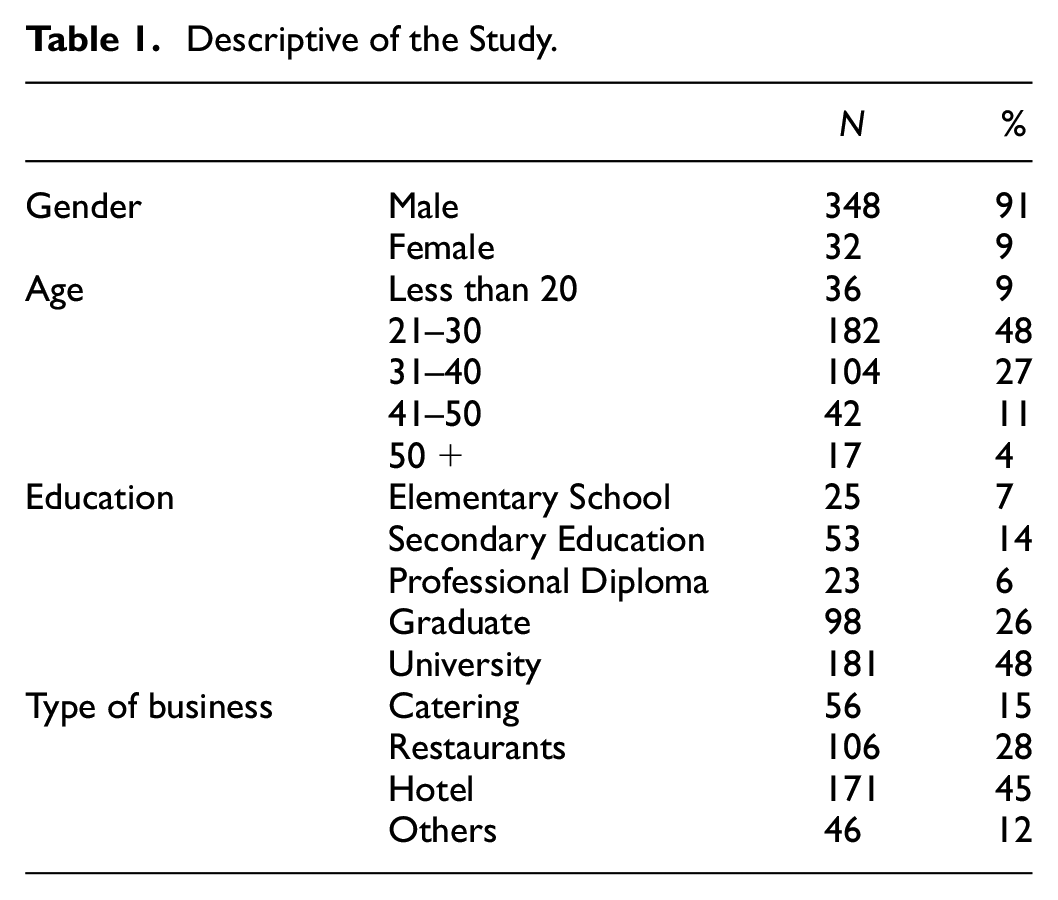
Table 1 presents the descriptive statistics of the study. Only 9% were females among the sample, as Pakistan’s hospitability industry is considered a male-dominated industry (Arshad et al., 2018). Almost half of the respondents (218) were between the age of 21 and 30. The majority of the employee (74%) were either graduated or had university degrees. Forty-five percent of respondents worked at hotels, 28% in restaurants, 15% were related to providing catering services, and 12% stated that they are related to other hospitality areas. Detail description of the sample is provided in Table 1.
Descriptive of the Study.
Measurement Model
Before the mediation analysis, Confirmatory factor analysis (CFA) was conducted through SPSS Amos V23 to evaluate the factor structure, convergent, and discriminate validity of the study measure. The model fit indices are presented for various models in Table 2:
Model Fit Indices.

This study proposed a four-factor model and Table 2 shows the four-factor model also presented the best fit to the data (χ2 = 1,084.78, df = 377, χ2/df = 2.877, CFI = 0.967, TLI = 0.932 and RMSEA = 0.038) as compared to the alternate models. Furthermore, loadings and cross-loading of the items were also assessed. It was observed that all items loaded significantly on their respective factor and no cross-loading was greater than 0.2. the correlations between the latent variables were also on the lower end. Lastly, the four-factor model was compared to alternative models, and it was confirmed that it is the best fit for the data, while the one-factor model had the weakest fit (χ2 = 5,789.889, df = 41, χ2/df = 141.21, CFI = 0.277, TLI = 0.331, and RMSEA = 0.261).
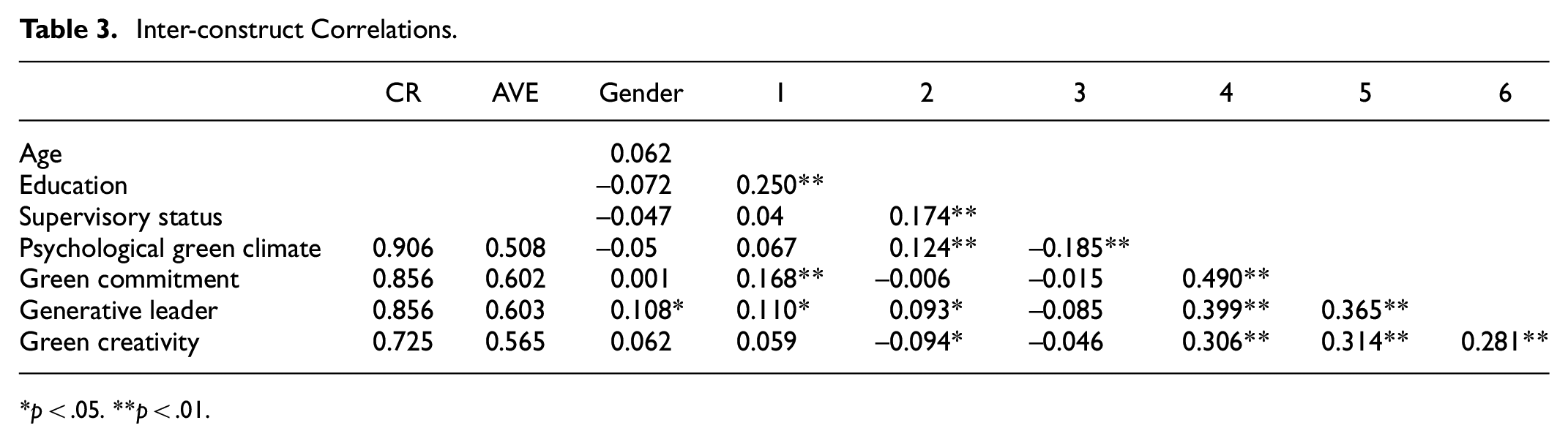
Furthermore to establish convergent validity average factor loadings for PGC = 0.713, GC = 0.776, GrCRT = 0.752, and GL = 0.777 which according to Hair et al. (2014) are greater than 0.5 suggesting convergent validity for all the constructs. For discriminate validity the variance extracted the correlation squared between the variables was compared. It Was observed that the variance extracted between the constructs is greater than the correlation square hence discriminate validity is established. The Composite Reliability (CR) and Average Variance Extracted (AVE) for each variable are displayed in Table 2.
Data Analyses
We performed a serially mediated analysis using regression analysis with the Statistical Package for the Social Sciences (IBM SPSS, version 24). In doing so, we computed all path analyses based on10,000 bootstrap samples at 95% CI using SPSS PROCESS (model 6) macros (Hayes et al., 2017). Gender, Age, Education and Supervisory Status was employed as control variables as literature suggests that they may have significant effects on the relationships under investigation (see e.g., Abraham, 2016; Koseoglu et al., 2017).
Results
The results present the Inter-construct correlations between the study variables. It could be observed from Table 3 that the variables of the study are significantly and positively correlated with each other (R ranging from .490 to .281).
Inter-construct Correlations.
p < .05. **p < .01.
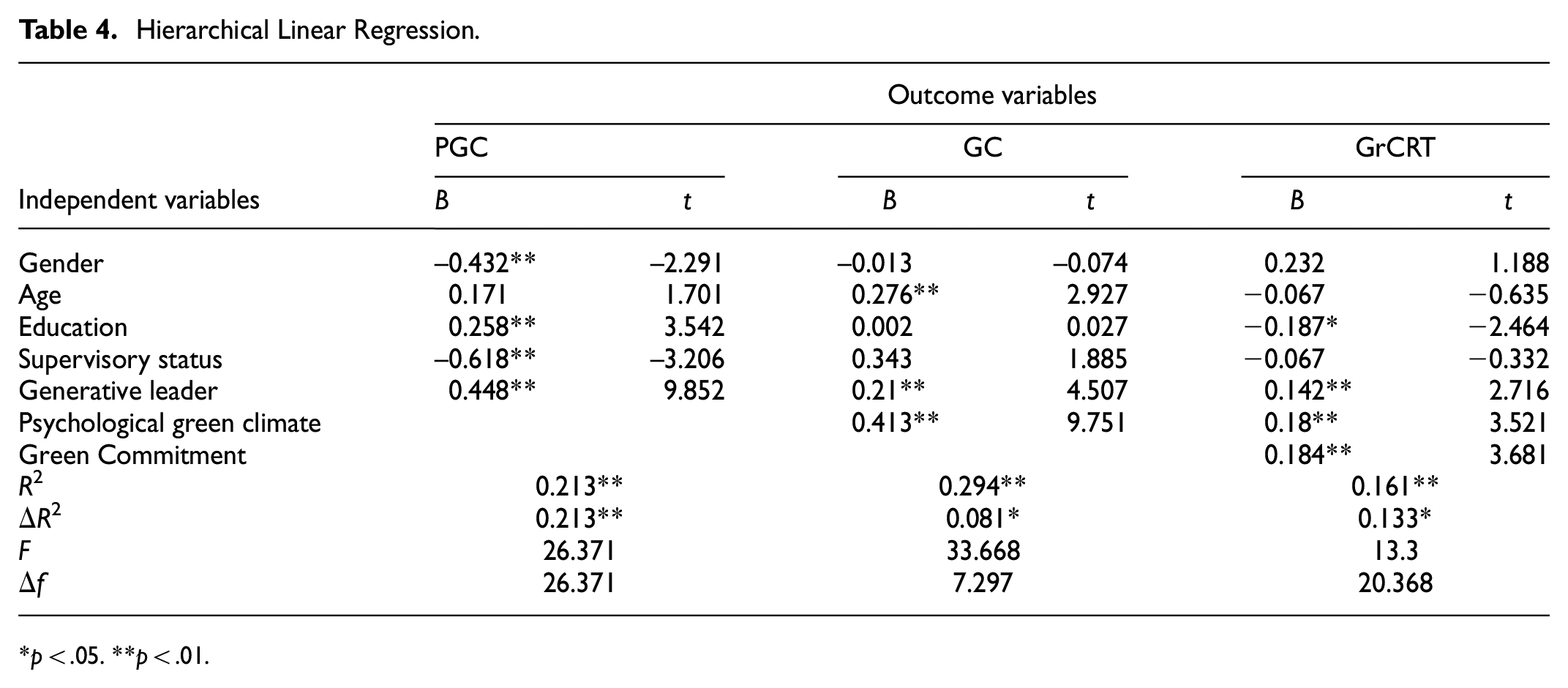
To test the study hypothesis, SPSS PROCESS (model 6) macros were used. The results are tabulated in Table 4.
Hierarchical Linear Regression.
p < .05. **p < .01.
Based on the above table, the direct-indirect and mediating effects are calculated and presented in Table 5.
Direct-Indirect Effects.

p < .01.
Table 5 presents results about all the relationships needed to calculate the serial mediation between the study variables. First, the results report a significant positive effect of GL on GC (β = .142, LLCI = 0.039 & ULCI = 0.245), confirming the study hypothesis 1 (Generative Leaders significantly enhances employees’ green creativity). The next two results confirm the mediation effects of the PGC and GC between the relationship between GL and GrCRT. It is reported that PGC positively and significantly mediates the relationship between GL and GrCRT (β = .081, LLCI = 0.029 & ULCI = 0.146), providing ample proof for the acceptance of Hypothesis H2 (Psychological green climate significantly mediates the link between GL-GrCRT). Next, we assessed the mediating effect of GC between GL and GrCRT. Like previous results, GC significantly and positively mediates the relationship between GL and GrCRT (β = .039, LLCI = 0.015 & ULCI = 0.074). This proves the acceptance of hypothesis H3 (Employees’ green commitment significantly mediates the relationship of GL-GrCRT). Further, the effect of PGC on GC was reported, which is also positive and significant (β = .413, p < .01), providing proof for hypothesis 4 (Psychological green climate has a positive and significant influence on employees’ green commitment). Finally, the overall model presented in Figure 1 was tested for the serial mediation effect of PGC and GC between GL and GrCRT such that PGC precedes GC. The results show that it was partial serial mediation is positive and significant (β = .034, LLCI = 0.012 & ULCI = 0.067). This confirms hypothesis H5 (Psychological green climate and employees’ green commitment have a significant partial mediation between GL-GrCRT).

Serial mediation.
Test of Firm-Level Effects
The data used in this study was partially nested based on organization and type of business. Based on the organization we received a disproportionate number of responses from each organization which resulted in multiple respondents nested in the same organization. Similarly, the data was also nested based on the type of business as 45% of data was collected from hotels, 28% from restaurants,15% from catering, and 12% from other forms of the hospitality industry. Each organization and business type were given an identification number to match the respondent with their respective organization and business type. These identification numbers were added to hierarchical linear regression the models were recalculated adjusting for firm-level effects. The results show that the inclusion of firm-level random effects did not affect the coefficient reported in Table 3. Thus, it can be concluded that the firm-level effects of neither organization nor business type are significant and no variance in the dependent variable is being explained by clustering cases by an organization and business type.
Discussion
An in-depth review of the literature revealed that tourism and hospitality need to pursue an environmentally sustainable approach. Therefore, in this vein, this study endeavored to propose a conceptual model to explain the relationship of GL, PGC, GC, and GrCRT.
H1 proposed a positive association between GL and GrCRT. The statistical analysis backed up this claim. Although GL is a new construct that we have presented in the domain of employees’ green behavior. Various leadership styles have been shown previously to have positive effects on creativity and innovation (Amabile & Pratt, 2016; Cai et al., 2019; Chaudhary & Panda, 2018; Javed et al., 2019). Thus, our result is consistent with previous findings. In addition to the previous empirical findings, our result is consistent with the theory of componential creativity (Amabile, 1988) that states that along with cognitive ability, leadership role is also imperative for individual creativity. Our result suggests that by encouraging employees to discuss and develop green goals and strategies, organizations can help boost their environmental performance. Also, by being available for consultation on various environmental problems, the leadership can help employees find creative solutions to environmental issues.
H2 proposed the mediating effect of PGC between the link of GL and GrCRT. It was supported by empirical analysis. Results confirm the mediating role of PGC in the association of GL-GrCRT. Though PGC as a mediator between Leadership-GrCRT has been previously examined by Bhutto et al. (2021), our results differ from their findings. As they revealed no statistical support for their assumption, our data has confirmed that PGC significantly mediates the link of GL-GrCRT. Moreover, the support of significant mediation is also aligned with the theory of the componential creativity (Amabile, 1988). This suggests that organizational leadership can influence followers’ emotional and cognitive processes and perceptions of the climate through its distinctive characteristics that lead to individual creativity.
Likewise, H3 proposed the mediating effect of GC between the link of GL-GrCRT. Empirical data confirm the mediating effect of GC. The finding of this hypothesis is consistent with the results of previous studies (see e.g., Afsar & Umrani, 2020; Ansari et al., 2021; Saeed et al., 2019), particularly in a greener environmental context. GL can make employees more committed to the environment and encourage them to exhibit environment-friendly behaviors such as GrCRT. This can be done by creating an atmosphere where not only organizational environmental policies are cared about, but individual interests, values, and contributions toward a greener environment are recognized and encouraged.
Similarly, the result of this hypothesis is also aligned with the theory of social identity. This theory states that employees interested in preserving the environment are likely to associate with their organization’s environmental management initiatives implementation.
H4 proposed the direct effect of PGC on employees’ GC. The empirical data approves the positive role of PGC in increasing employees’ GC. Though psychological climate and employee commitment in the context of a greener environment have seldom been examined previously. However, in a general context, the results of our study are consistent with Kawiana et al. (2021), who found a positive role of psychological climate in organizational commitment. A strong PGC reflects strong green values and culture that enhance positive perception concerning green organizational values, leading to employees’ commitment toward a green environment. This significant and positive impact of PGC on GC is also aligned with the theory of reciprocity (Gouldner, 1960). This theory states that employees with strong perceptions of organizational climate will feel obliged to reciprocate the organization in terms of commitment (Loi et al., 2006).
Furthermore, H5 proposed serial mediation analysis of PGC and GC between the link of GL-GrCRT. The said proposition was found statistically significant however, PGC and GC partially mediates the link between GL-GrCRT. Our results statistically confirm that GL creates a PGC that augments employees’ GC, leading to GrCRT. The finding of this hypothesis is novel and has not previously been tested in greener environmental literature. Past researchers have mainly examined single mediators such as PGC (Das et al., 2019) and GC (Liu et al., 2020). Our results confirm that PGC and GC partially mediate the impact of GL on GrCRT.
Theoretical Contribution
The present study has some valuable contributions. First, a new construct, such as GL, was proposed to better describe GrCRT predictors in tourism and hospitality. Research on generative leadership, in general, is minimal. In the context of pro-environmental behavior, in particular, it is equal to naught. Consequently, this research contributes to the limited literature focused on leadership style in employees’ environmentally friendly behavior. Previously, only a few leadership styles were tested with fine-grained green behavior, such as GrCRT. For instance, green transformational leadership, environmental-specific servant leadership, and green, inclusive leadership.
Secondly, this study proposed two new mediators (PGC and GC) to better explain the association of GL-GrCRT in the hospitality and tourism industry. PGC has previously been tested with green, inclusive leadership and GrCRT (Bhutto et al., 2021). However, they found no statistical support for their assumption. This research verifies the positive and significant mediating effect of PGC between GL-GrCRT. It opposes the findings of Bhutto et al. (2021).
Moreover, GC was previously examined with pro-environmental behavior. However, we found no study that has tested GC with fine-grained green behavior such as GrCRT. Hence, this study differentiates itself from other research in the domain by introducing these two new mediators in the context of a greener environment.
Thirdly, this study contributed theoretically by shedding light on individual attributes such as employees’ green-related behavior in the hospitality and tourism industry. This is contrary to the previous studies that have primarily focused on organizational levels environmental features, like environmental strategy, GHRM practices, and sustainable hotel practices (Afridi, Khan, Haider, Shahjehan, & Afsar, 2021; Das et al., 2019; Gupta et al., 2019; Jia et al., 2018). Even though the success of environmental initiatives in businesses is largely dependent on employee behavior (Paillé et al., 2013), the predictors of employees’ environmental behavior in tourism and hospitality were still not fully explored (Sourvinou & Filimonau, 2018).
Finally, this research added methodologically by proposing and verifying the serial mediation model of PGC and GC between the link of GL-GrCRT. Previously, a serial mediation analysis of PGC and employee work engagement has examined the connection between green creativity and a green, inclusive leadership (Bhutto et al., 2021). By proposing and verifying serial mediation, this study differentiates itself from prior studies by exploring the combined effect of the social work environment (PGC) and task motivation (GC) of the theory of componential creativity.
Practical Implications
Tourism is one of the most valuable commercial activities because it contributes to economic growth. However, it does have a dark side in that it affects the environment adversely, which is becoming an increasing concern. In such a case, the findings of this study would have some valuable insights for the tourism and hospitality industry for it offers ways to remain environmentally friendly along with economic benefits. The findings of the study in hand revealed that by encouraging employees toward green creativity, the role of generative leadership is crucial. Generative leadership style is different from other leadership styles, as other leadership styles may not be effective in such a complex, volatile, and ambiguous environment. Tourism companies should encourage the generative attributes of the leadership because it significantly enhances the employee’s green creativity. Since the hospitality sector is service based, where employees play a crucial role in service delivery. Thus, through the power of employees, organizations can create unique experiences that will enhance their customers’ green behavior. In such a case, shedding light on the role of GL in improving employees’ green behavior such as green creativity is of great importance for the organization and community. Accordingly, this study showed that while many organizations are aware of the industry’s environmental challenges, they should also develop a more contemporary leadership style. For instance, generative leadership will encourage their employees to perform their jobs creatively and sustainably.
Furthermore, to effectively communicate to the employees about the significance of their thoughts and ideas on improving the environment, tourism establishments can introduce an initiative like a green voice of employees. This will encourage the creativity of their employees and help boost the organization’s environmental performance.
Since green creativity is linked to positive perceptions of PGC and GC, we suggest that tourism establishments formulate green policies and procedures that can be easily disseminated to their employees. This would increase their employees’ positive perception about PGC and enhance their GC which will lead to GrCRT.
Limitation and Future Research Recommendations
Just like other studies, this study has some limitations that need to be addressed in future research. Firstly, GL and GrCRT were measured through self-report data. However, participant observations can provide a more objective assessment of GL and GrCRT. Common method variance (CMV) bias can potentially affect self-report data (Podsakoff et al., 2012). Our study, on the other hand, mitigated this risk using a two-wave survey process and multiple sources of data (from frontline employees and managers). Secondly, this study was conducted in the tourism industry which limits its generalizability, future research may extend the same model to other service and manufacturing industries. Thirdly, this study has examined the role of GL in fostering employees’ GrCRT, through the mediation path of PGC and GC. However, in future research, other individual and organizational level constructs may be explored in the context of GrCRT. For instance, green mindfulness, green self-efficacy, and green shared vision.
Footnotes
Declaration of Conflicting Interests
The author(s) declared no potential conflicts of interest with respect to the research, authorship, and/or publication of this article.
Funding
The author(s) received no financial support for the research, authorship, and/or publication of this article.
