




Abstract
This study aims to determine to which extent perceived information quality and emotional attachment with digital influencers can shape the purchase intention of consumers while considering the mediating effects of perceived influence and the moderating effects of influencer reputation. A hypothetical model is tested based on social learning and media dependency theories. The response of 298 online users was analyzed by using Smart PLS-SEM. Results show that followers-influencers emotional attachment and perceived information quality promote the mediating role of followers’ perceived influence to increase the follower purchase intention. Contrary, influencer reputation does not moderate the effect of perceived influence on purchase intention. This study provides valuable input to companies that can help them design their influencers’ marketing strategies.
Keywords
Introduction
Over the past decade, many users have gained popularity on social media sites, as reflected in their vast number of followers (Eze et al., 2021; Hudders et al., 2021; Weismueller et al., 2020). These users have built a clear online presence by sharing their opinions in personal blogs and then rapidly switching to social media after introducing social networking platforms, such as Facebook, Instagram, YouTube, and TikTok (Hudders et al., 2021). These famous social media users are often referred to as social media influencers (after this, referred to as digital influencers), digital stars, or micro-celebrities (Gaenssle & Budzinski, 2021). The importance of these digital influencers has attracted the attention of advertisers from an influencer marketing perspective (Ki et al., 2020). Accordingly, advertisers often contact these influencers on their social media accounts to promote their brands, organizations, or ideas in a marketing strategy called influencer marketing (De Veirman et al., 2017; Hudders et al., 2021). This strategy has grown popular in recent years, leading analysts to estimate that the size of the influencer market will hit $15 billion by 2022 (Hudders et al., 2021; Ki et al., 2020).
Over the past 4 years, research on influencer marketing has flourished (Hudders et al., 2021). In 2019, the first study that specifically focused on reviewing the influencer marketing literature was published (Hudders et al., 2021). Nonetheless, organizations have recognized influencer marketing as a novel promotional strategy for attracting, engaging, and retaining customers (De Veirman & Hudders, 2020; Ki et al., 2020). Previously, brands have focused on celebrity endorsement to increase the sales of their products and engage their target customers (Lundmark et al., 2020; Silva et al., 2020). However, business organizations are now required to formulate a robust influencer marketing strategy to position a clear, crisp, and crystal image in the minds of consumers and to gain other competitive advantages in the market through various platforms (Boerman, 2020; Campbell & Farrell, 2020; Hudders et al., 2021; Kay et al., 2020; Ki et al., 2020).
Digital influencers act by shaping their followers’ perceptions of a particular brand and emotionally attaching them to the organization behind such a brand. These activities, in turn, can inspire perceived quality of information, follower emotional attachment (Ki et al., 2020), and perceived influence (Jiménez-Castillo & Sánchez-Fernández, 2019) and hence affect the purchase intentions of followers (Chen & Chang, 2018; Jiménez-Castillo & Sánchez-Fernández, 2019; Sokolova & Kefi, 2020). As digitalization gears up globalization, research on digital brand promotion and influencer marketing will become critical for upcoming international marketing campaigns (Boerman, 2020; De Veirman, De Jans, & Van Den Abeele et al., 2019). Advertisers are rapidly switching from “conventional advertising” to innovative influencer advertising (Campbell & Farrell, 2020; Ki et al., 2020; Weismueller et al., 2020) to increase follower purchase intention (Balaji & Maheswari, 2021).
Purchase intention refers to “the willingness of a customer to buy a certain product or a certain service” (T.-Z. Chang & Wildt, 1994; K.-C. Chang et al., 2019; Latif et al., 2020; Martins et al., 2019; Zhu et al., 2019). Previous studies have underscored the vital role of developing purchase intention through influencer marketing in increasing product purchases (Baber et al., 2016; Chen & Chang, 2018; Dehghani & Tumer, 2015; Ilicic & Webster, 2011; Martins et al., 2019; Ponte et al., 2015). Phua and Kim (2018) added that the positive purchase intention of consumers is shaped by the positive perceived influence of digital influencers. The perceived influence subject tends to perceive individual information and the caused intention (Jiménez-Castillo & Sánchez-Fernández, 2019). Such perceived influence has many consequences on personal intention (Magno & Cassia, 2018; Silva et al., 2020). Therefore, the importance of perceived influence as shaped by digital influencers has received much attention in influencer marketing research (Singh et al., 2020; Sokolova & Kefi, 2020). Moreover, another factor, the quality of information or content shared by digital influencers on Instagram, plays a significant role in building the purchase intention of their followers (Chen & Chang, 2018). Perceived information quality positively affects the perceived influence of followers, hence increasing their purchase intention (Chen & Chang, 2018; Wang & Chuan-Chuan Lin, 2011). Another predictor of purchase intention is an emotional attachment, or the emotional bond between digital influencers and their followers (Izquierdo et al., 2018; Lowe-Calverley et al., 2019). The significant contributions of these antecedents, perceived information quality (Mingolla et al., 2019; Sokolova & Kefi, 2020), and emotional attachment (Ladhari et al., 2020), should not be overlooked in influencer marketing research (Hudders et al., 2021).
Previous studies on influencer marketing have focused on using influencers for strategic communication (Sundermann & Raabe, 2019). Meanwhile, later studies on influencer marketing have examined children below 12 years (De Veirman, Hudders, & Nelson, 2019). These studies all offer in-depth insights into the value, use, and effectiveness of influencer marketing. How digital influencers on Instagram build emotional bonds with their followers (Ki et al., 2020), influence their purchase intentions, and enhance their perceptions toward the endorsed brands has also been examined in recent studies (Duffy, 2016; Duffy & Schwartz, 2018; Ponte et al., 2015). However, the extent to which communication factors can increase the purchase intention of followers (e.g., perceived information quality) (Chen & Chang, 2018) and followers–influencers bonding elements (e.g., emotional attachment) (Moussa & Touzani, 2017) call for further research. Xiao et al. (2018) argued that message characteristics (e.g., information quality) might play an essential part in determining the marketing effectiveness of influencers. Future research should then examine which message strategies are most efficient (Hudders et al., 2021). Many studies also reveal that influencer marketing awareness does not generally negatively impact the influencer and whether or not disclosure is endorsed (Campbell & Farrell, 2020; Chetioui et al., 2020; Hudders et al., 2021). The underlying processes related to the source (e.g., reputation) (Özcan & Elçi, 2020) and the relationship that influencers build with their followers (e.g., parasocial interaction) can also discourage negative disclosure effects(Sokolova & Kefi, 2020). However, the extent to which digital influencers’ communications strategies can shape their followers’ purchase intentions remains unknown (Hudders et al., 2021; Weismueller et al., 2020).
To date, only a few studies have shown how the power of influencers highlights the growth of human attitudes and actions (Chetioui et al., 2020; Jiménez-Castillo & Sánchez-Fernández, 2019; Martins et al., 2019; Sokolova & Kefi, 2020). This study aims to fill such a gap and respond to different researchers’ call for an in-depth exploration of how the perceived influence of these digital influencers and follower-influencer parasocial relationships affect specific perceptual and behavioral outcomes of their followers (Hudders et al., 2021; Jiménez-Castillo & Sánchez-Fernández, 2019; Tran et al., 2020). In a theoretical context, Silva et al. (2020) urged future researchers to adopt the media dependency theory proposed by Ball-Rokeach and DeFleur (1976) to examine such influence. This research offers valuable insights that have not yet been shared in the influencer marketing literature by answering such calls.
This study offers several notable contributions to the literature. First, this research highlights the insignificant direct impact of digital follower–influencer emotional attachment on purchase intention. Second, this study tests the moderating role of influencer reputation in the relationship between perceived influence and purchase intention and finds that such reputation has an insignificant effect on purchase intention. Third, to the best of the authors’ knowledge, the mediating effect of perceived influence on the relationship between follower–influencer emotional attachment and purchase intention has never been investigated. Our findings reveal a significant mediating path between these two. Lastly, by integrating social learning theory, this study extends the explanatory power of media dependency theory. It provides a highly nuanced picture of the constructing mechanisms that transmit influencer message and follower–enc influencer emotional attachment on purchase intention. This study also has implications for both theory and practice.
Theoretical Background and Hypotheses Development
Media Dependency Theory and Social Learning Theory: A Joint Perspective on Purchase Intention
The social learning theory proposed by Bandura and Walters (1977) and the media dependency theory proposed by Ball-Rokeach (1985) both are the most dominant theories for empirically testing purchase intention (De Jans et al., 2019; Hung & Li, 2007; Jiménez-Castillo & Sánchez-Fernández, 2019; Lundmark et al., 2020). Media dependency theory posits that the connection to followers’ attitudes and behavior is not the only aspect that describes the effect of the dependency mechanism. The relationship between influencers and followers may also create or perpetuate the fundamental pattern of need interpretation that a follower encounters with an influencer. This interaction can be described as a dependence relationship (Ball-Rokeach & DeFleur, 1976). The reliance of followers on influencers is derived from the desire of the former to identify online outlets that provide them with valuable and accurate evidence that informs their decision-making and directs their behavior (K.-C. Chang et al., 2019; Hsu et al., 2013).
While media dependency theory provides a comprehensive understanding influencer–follower dependency, social learning theory illustrates how the learning behavior of individuals can increase the perceiving power of followers. In their role as observers, this theory posits that people use their learned information to simplify their decision-making processes (Bandura & Walters, 1977). However, apart from achieving their information targets, their relationship with digital influencers also allows these followers to fulfill their other needs and ambitions, such as entertainment needs (Hsu et al., 2013). According to Ball-Rokeach (1985), in the relationship between the media and their followers, the information sent by the former can influence the attitudes and actions of the latter. In the current era, influencers have a strong need to fulfill their social and personal objectives and interests (e.g., to guide their followers toward a brand, to encourage their purchase decisions, to gain social orientation, to develop a sense of belonging in a community, or to have fun) (Sokolova & Kefi, 2020). They have a stronghold over the impressions and actions of their audience related to specific brands, thereby fortifying their roles as spreaders of e-WOM (Ladhari et al., 2020).
The relationship between digital influencer message quality, emotional attachment, and purchase intention through perceived influence is often neglected. Jiménez-Castillo and Sánchez-Fernández (2019) highlight the need to investigate the mediating process through which digital influencer message quality can increase the purchase intention of followers. This research addresses two gaps in the literature and broadens the power of social learning theory by adding to the output power of perceived influence as a mediator on the relationship between perceived information quality, perceived emotional attachment, and purchase intention (see Figure 1).

Conceptual model.
Role of Influencers as Digital Opinion Leaders
Social media are strategic resources for promoting brands and building strong relationships among people (Appel et al., 2020; Eze et al., 2021; Hudders et al., 2021; Ki et al., 2020; Salem, 2021; Sundermann & Raabe, 2019). This strategic role has attracted researchers, community members, and practitioners (Jiménez-Castillo & Sánchez-Fernández, 2019). With the emergence of digital influencers, companies have begun to use different social media technologies (SMTs) to reach their target audience (Bove et al., 2020; Duffy & Pruchniewska, 2017; Guryanova et al., 2020; Izquierdo et al., 2018; Kapitan & Silvera, 2016; Lundmark et al., 2020; Silva et al., 2020). Given that digital influencers generate positive e-WOM on SMTs based on their knowledge in relevant fields, Childers et al. (2019) described them as digital opinion leaders. However, the role of digital influencers as opinion leaders has been rarely examined in the literature (Izquierdo et al., 2018; Jiménez-Castillo & Sánchez-Fernández, 2019; Lundmark et al., 2020).
Perceived Quality of Information and Purchase Intention
Perceived quality of information is defined as the fitness for using the information provided. As digital opinion leaders, digital influencers can enhance the impact of the messages they obtain and transfer to their followers (Freberg et al., 2011). In social media platforms, the quality of message information, including posts, shares, comments, and reviews (De Veirman & Hudders, 2020), is reflective of the general attitudes and perceptions of digital influencers toward the commutative quality of the information related to their endorsed products (Chen & Chang, 2018; Grover et al., 2019; Jiménez-Castillo & Sánchez-Fernández, 2019; Kamboj et al., 2018). The quality of information can also shape the intention of followers to purchase brands (De Veirman & Hudders, 2020). Ultimately, followers can perceive their favorite influencers’ influence, increasing their dependency on influencers (Sokolova & Kefi, 2020).
Prior research examined the relationship between perceived quality of information and blogger user intention (Wang & Chuan-Chuan Lin, 2011) and discovered a significant relationship. This relationship, however, is rarely discussed in the context of influencer marketing. We responded to Jiménez-Castillo and Sánchez-Fernández (2019) future call (2021), implying that the quality of information plays a significant role in shaping followers’ intentions and should be discussed in the future. Previous scholars used media dependency theory (Ball-Rokeach, 1985) and social learning theory (Bandura & Walters, 1977) to explain better how digital influencers foster the behavior of their followers, particularly their perceived influence and purchase intention (Sokolova & Kefi, 2020; Song et al., 2020). These theories suggest that followers initially become dependent on influencers after acknowledging their influence and subsequently observing and emulating these influencers’ attitudes toward their endorsed brands (Latif et al., 2019). Therefore, the quality of information significantly affects followers’ perceived influence and purchase intention (Jiménez-Castillo & Sánchez-Fernández, 2019). The following hypotheses are then proposed:
Followers-Influencers’ Emotional Attachment and Purchase Intention
Emotion is a mental state of readiness that emerges from cognitive appraisals of events or self-thoughts (Bagozzi et al., 1999). This definition is supported by attachment theory, which focuses on emotional bonding and regulation (Shaver & Mikulincer, 2005). Extreme emotions arise along with the formation, maintenance, disruption, and renewal of attachment relationships (Schreuder et al., 2016). Research on attachment to celebrities shows that unlike chances of attachment growth, it happens when extreme negative feelings categorize the starting point of a relationship. Similarly, in their study of brand accessories, Orth et al. (2010) found that in positively effective environments, the attachment remains constant strongly. The importance of emotional attachment for follower-influencer engagement cannot be overstated in social media marketing. Few scholars, however, highlight the limited literature on emotional attachment in relation to other behavioral constructs (i.e., purchase intention and perceived influence). Ladhari et al. (2020) investigated emotional attachment with blogger popularity and discovered a significant relationship, implying that the effect of emotional attachment on purchase intention should be considered in future research.
Prior service research shows that consumers become emotionally connected to specific providers as the service providers enable consumers to feel in a particular manner (Coulter & Ligas, 2004). Some studies show that consumers feel attached to specific service premises from receiving emotional support (Pascuzzo et al., 2015; Rosenbaum et al., 2007). Relationships serve as the basis of social media sites, as influencers have a powerful platform on Instagram to carve their advantages when connecting to their followers (Eze et al., 2021). Such people who have attracted and satisfied, that is, most likely the followers remain in a relationship; ultimately, digital influencers can gain the advantage of retaining their audience (Pascuzzo et al., 2015). One key feature of maintaining an influencer–follower relationship is communication (Ladhari et al., 2020).
A behavioral outcome of emotional attachment to celebrities is purchase intention (Ki et al., 2020). Followers feel attached to the perceived influence of information shared by digital influencers (Rosenbaum et al., 2007). Therefore, personal relationships are established between followers and influencers because the new followers assume that the old followers’ opinions are credible (Abidin, 2016). These positive feelings and strong follower–influencer emotional attachments contribute significantly to perceived influence and have limited understanding influencer marketing literature. Therefore, we hypothesize the following:
Perceived Influence and Purchase Intention
Perceived influence refers to how individuals change their behavior after being influenced by an entity acting as a reference that instructs and informs the perceptions and actions of their audience (Hsu et al., 2013).
Our study focuses on the relationship between message characteristics of influencers (perceived quality of information) (Jiménez-Castillo & Sánchez-Fernández, 2019) and parasocial interactions (influencer-followers emotional attachment) (Ki et al., 2020) as input factors for follower stimuli if they perceive the influence of these factors from their favorite influencers that will ultimately shape their buying attention(Phua & Kim, 2018).
Digital influencers are famous social media stars who earn their living through various social media platforms (Hudders et al., 2021) and influence their followers by sharing information regarding brands (Jiménez-Castillo & Sánchez-Fernández, 2019) and emotionally attaching them by posting followers favorite content (Hudders et al., 2021) which lead to increase the attention about endorsed brands (Sokolova & Kefi, 2020). This emphasizes the critical role of perceived influence in fostering followers’ intentions, which has received less attention in the literature. Jiménez-Castillo and Sánchez-Fernández (2019) proposed using social learning theory to investigate perceived influence (Bandura & Walters, 1977). This theory suggests that followers considered their influencers’ role models, watched their activities and subsequently inspired them. Because of these assumptions, we hypothesize the following:
Moderating Role of Influencer Reputation
The reputation of influencers depends on their knowledge and expertise in a specific field (Hung & Li, 2007). It defines the extent of their following and their effects on their followers’ behavioral intention and engagement. In other words, influencer reputation is an antecedent of behavioral intention that shapes consumers’ purchase decisions (Grover et al., 2019; Hsu et al., 2013). In this case, influencers affect their followers’ perceptions differently depending on their popularity and reputation (Ladhari et al., 2020) and their influences perceived by their followers (Jiménez-Castillo & Sánchez-Fernández, 2019). Previous studies highlight the significant relationships between influencers’ reputations with perceived power and behavior intention. However, in the influencer marketing literature, to which extent influencer reputation strengthens or weakens the impact of perceived influence on the purchase intention of followers remains unknown (Grover et al., 2019; Hsu et al., 2013).
However, a few scholars argue that perceived influence derived from media (in our case, followers) is dependent on the celebrity’s reputation (Grover et al., 2019). Influence reputation is a new concept in influencer marketing that has a big impact on followers’ behavioral intentions. Few studies have looked into the relationship between perceived influence and purchase intention. Nevertheless, an influencer with a positive reputation tends to become an influencing leader who can convince others to shop online because of their normative effect. Based on these arguments, we hypothesize:
Research Methodology
Sample and Procedures
A quantitative research design with a cross-sectional approach was adopted in this study. A five-point Likert scale where 1 indicates “strongly disagree” and 5 means “strongly agree” was used to test the hypotheses via Smart PLS. We focus on the fashion industry because brands increasingly use influencers to promote fashion-related products (i.e., apparel) (BrandManic, 2018). We chose Instagram followers as a sample because consumers frequently use it to shop for fashion brands (Abidin, 2016). We collected data from a single source (in this case, followers) for two reasons: First, it allows for quick access to data for easy and timely decision making, and second, it significantly reduces the time spent determining which recorded data is reliable (Avolio et al., 1991). According to a survey, 78% of brands that have hired digital influencers are more satisfied with their interaction with followers (IAB, 2018). According to the survey, 6 out of 10 users empathize with digital influencers, and most users positively value digital influencers’ relationships with brands/products.
The selection of sample size for SEM is one of the critical areas where researchers distinguish. For example, Bagozzi and Yi (2012) argue that a sample size of less than 200 is insufficient for analysis unless the sample’s population is small in size. Kline (2015), on the other hand, believes that 10 to 20 respondents per item are adequate sample size. Despite the differences of opinion, we followed the approach of Bagozzi and Yi (2012), they believe that a sample of more than 200 respondents is appropriate for SEM analysis, emphasizing that an exclusive focus on sample size may miss the point because other issues are frequently more critical in these types of situations (p. 29). Our study’s sample size was 298 people, based on 384 questionnaires.
For data collection, we used Phillips and Stawarski (2008) method. This approach comprises three steps: First, we reviewed the existing literature and developed research hypotheses, then developed a structured questionnaire. We enlisted expert advice from two practitioners from social media marketing firms and two Ph.D. professors from academia. The second step was to conduct a pilot study on 40 responses to assess the reliability and validity of the research items. We used the convenience sampling technique to survey 384 questionnaires in the third step. The sampling technique’s rationale is the ease of access to Instagram users and their willingness to participate in the survey. The availability of respondents and the ease with which they can be tracked and viewed are the main advantages of this sampling technique (Dörnyei, 2007).
From January 2021 to March 2021, we collected data. Three hundred twenty-one respondents recorded their responses; 23 questionnaires with missing information or that did not meet data collection inclusion criteria were dropped. Finally, we obtained a final sample of 298 respondents, representing a response rate of 77.6% higher than recorded in other digital opinion leadership studies (Bove et al., 2020; Jiménez-Castillo & Sánchez-Fernández, 2019; Silva et al., 2020). Two hundred ninety-eight responses were analyzed using SEM on SmartPLS 3.2.9 software, as suggested by Hair et al. (2014). This study’s inclusion/exclusion criteria were pre-defined to identify the study population in a reliable, consistent, and uniform manner. First, respondents could not respond to the research questions because they did not use a social media platform. Second, respondents who follow digital fashion influencers are included in the survey. Finally, respondents must be willing to take part in the survey.
Measurements
Purchase intention was treated as the outcome variable in this study. The purchase intention of followers was measured because attracting consumers toward products and gaining their attention are considered the main goals of sellers (Zhu et al., 2019). Therefore, intention to purchase is considered the most frequently used variable in social media marketing literature (Dehghani & Tumer, 2015; Ilicic & Webster, 2011; Jiménez-Castillo & Sánchez-Fernández, 2019; Ponte et al., 2015).
We chose suitable multi-item scales from previous studies to quantify the structures defined in the proposed model and made some adjustments to match the background of the current study. Specifically, we adopted four items of perceived quality of information from Wang and Chuan-Chuan Lin (2011), four items of follower–influencer emotional attachment from Moussa and Touzani (2017), three items of perceived influence and purchase intention from Jiménez-Castillo and Sánchez-Fernández (2019), and three items of influencer reputation from (Hsu et al., 2013).
Data Analysis
We used Smart PLS 3.3.2 (Ringle et al., 2015), a second-generation structural equation modeling software that simultaneously tests the measurement and structural models (Ramayah et al., 2018). Hair et al. (2020) mentioned that this software is suitable for testing complex structural equation models. A total of four first-order constructs were analyzed in this study.
Common Method Variance (CMV)
Our research data consists of a single source. Prior scholars emphasize that single-bias occurs during data collection. That bias was avoided by using a variety of scales, reordering questions, removing double-barreled questions, and avoiding ambiguous language in the questionnaire (Tehseen et al., 2017). Thus, we used Harman’s single factor and exploratory factor analysis to test for common method bias (CMB) (Podsakoff et al., 2012). As a result of statistically testing all research items, the variance of loading all items was discovered to be 34.57% of the single component, which is less than the recommended threshold of 50% minimum (Podsakoff et al., 2003).
Results
Demographic Profile
Table 1 outlines the respondents’ demographic profile. Our survey targeted customers who follow influencers and buy their recommended brands. Out of 298 respondents, 234 (78.5%) were experiencing social media for 3 years, especially men 184 (61.7%) and younger age groups (19–30 years of age 86.9%), and 152 (51%) were graduates from universities.
Demographic Profile.

Measurement Model Evaluation
Hair et al. (2020) provide the guidelines we used to assess the measurement model by assessing first model fitness and in our case, fitness of model found satisfactory as values indicates (SRMR = 0.088, d_ULS = 1.179, d_G = 0.765; Chi-Square = 1,276.275; NFI = 0.688). Upon model fitness, reliability of data was assessed, the loadings (≥0.708), average variance extracted (≥0.500), and composite reliability (≥0.700) (see Table 2) was found up to the mark. Thus, based on the values presented in Table 3, we can conclude we have sufficient convergent validity and reliability.
Reliability and Validity Analysis.

Discriminant Validity (Farnell and Larcker Criterion).

Notes: Square root of AVE is shown in bold on the table’s diagonal. Legends PQI = perceived quality of information, PINF = perceived influence, FIEA = Follower-influencer emotional attachment, PI = purchase intention, IR = influencer reputation.
Table 3 represents the discriminate validity. To evaluate the discriminate validity, Fornell and Larcker criterion has been followed. The AVE of each latent variable exceeded its shared variance (squared correlation) with other constructs (Fornell & Larcker, 1981). Besides, we looked at the heterotrait–monotrait ratio (HTMT) values and found that all constructs had HTMT values less than 0.90. (Henseler et al., 2015). The conceptual distinctions between the constructs are shown in Table 4. As a result of the two tests, discriminant validity was confirmed, indicating that the measurement model had strong discriminant validity.
HTMT Ratio Analysis.

Note. Significant <0.90.
Structural Model Evaluation
Table 5 represents the path estimates of the structural model. Figure 2 gives the hypotheses test results, path estimates, t value, p-value, and R2. Hence, Hypothesis 1 was accepted. The results indicated that perceived quality of information directly affects purchase intention (β = .323, t = 4.776, p = .000) and directly impacts perceived influence and supported hypothesis 3 with value (β = .413, t = 10.375, p = .000). Hypothesis 2 suggested that followers influencers’ emotional attachment was negatively related to purchase intention as a value (β = .009, t = 0.106, p = .916); however, follower influencers’ emotional attachment has positively associated with perceived influence as a value shown for hypothesis 4 (β = .443, t = 9.133, p = .000). Hypothesis five empirically validated the positive relationship between perceived influence and purchase intention (β = .578, t = 8.258, p = .000). However, results revealed that influencer reputation negatively moderates perceived influence on purchase intention as indicated in value (β = −.075, t = 1.695, p = .091).
Path Estimates.
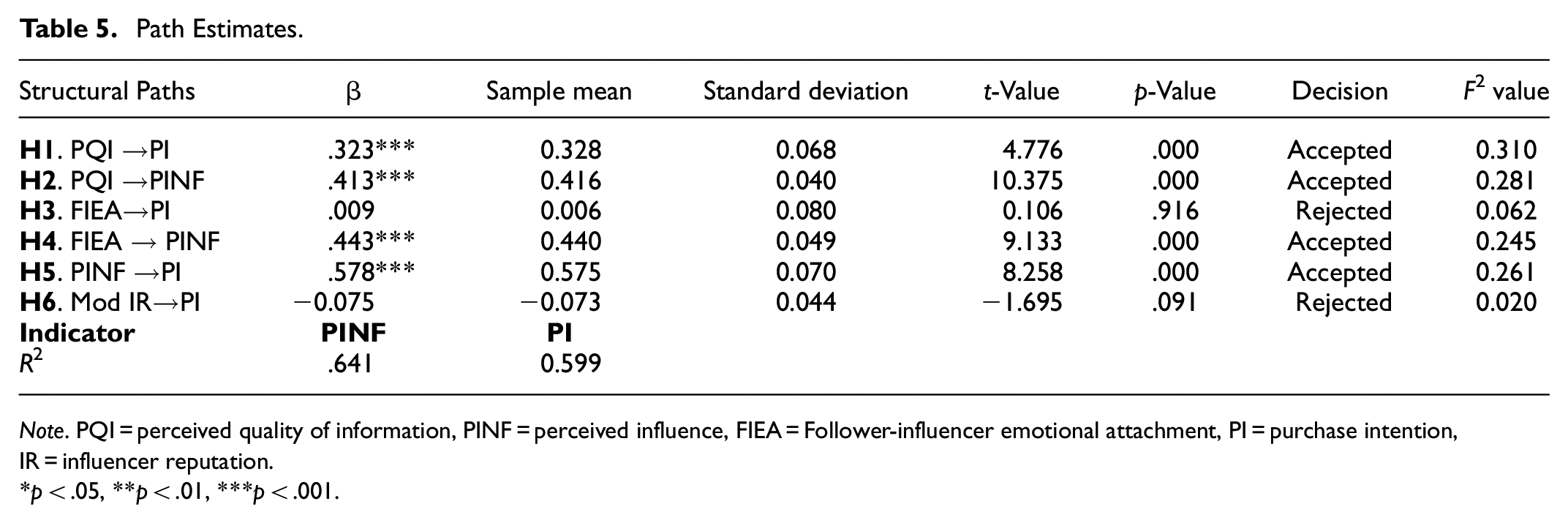
Note. PQI = perceived quality of information, PINF = perceived influence, FIEA = Follower-influencer emotional attachment, PI = purchase intention, IR = influencer reputation.
p < .05, **p < .01, ***p < .001.
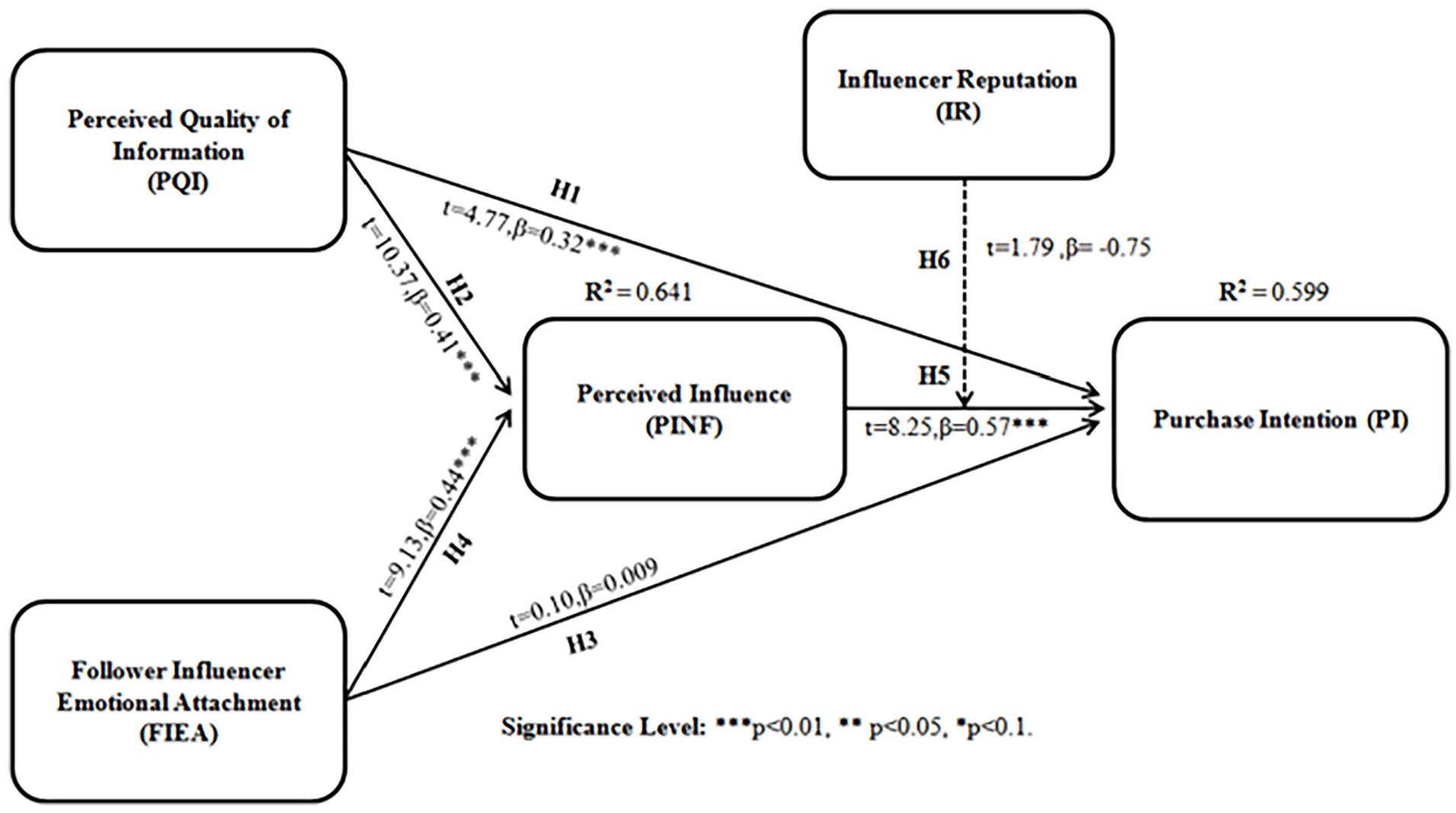
Structural model.
Overall, our results indicate a slight divergence between the three path estimates found as the digital influencers positively influence their intentions, as shown by the beta values (β = .44vs. β = .41vs. β = .57). However, the influencer’s reputation negatively moderates the purchase intention in this study.
Mode Quality Evaluation
We looked at f2 values ranging from 0.019 to 0.312, which showed that the effect sizes were small but close to large (Cohen, 1977). All endogenous latent variables explained 66 and 59% of the PINF and PI variance. According to Shmueli et al. (2019), the high value of R2 for the significant target construct demonstrates the model’s explanatory power.
PLS Predict Analysis
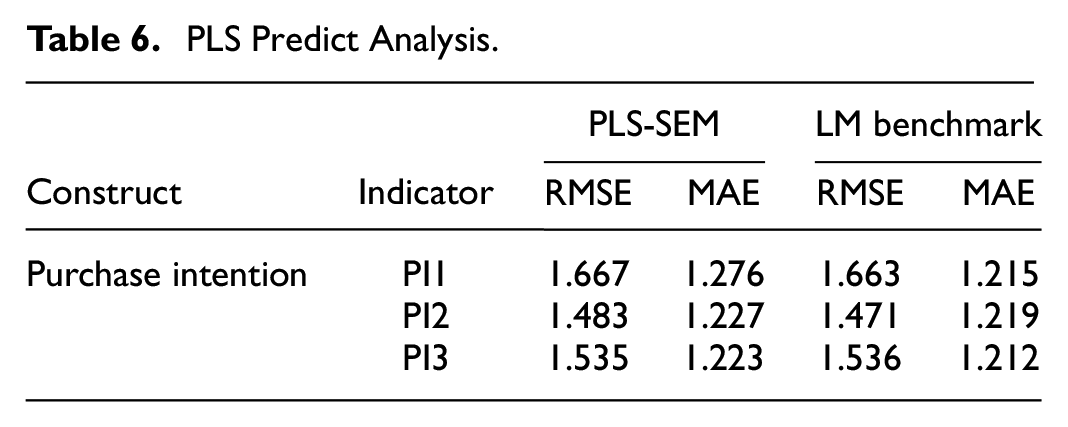
Using PLS-SEM software, we assessed the predictive power of the purchase intention final stage variable. A training sample was used to estimate the model, and its prediction performance was then evaluated using a holdout sample. Table 6 shows that most purchase intentions had higher prediction values (PLS RMSE estimations) than the LM threshold values, indicating a strong predictive power (Shmueli et al., 2019). In the research context, statistical computations were performed to meet research objectives, answer research questions, evaluate hypotheses, and test proposed causal links.
PLS Predict Analysis.
Discussion
This research aim was to empirically investigate the role of drivers, such as emotional attachment, perceived quality of information, and perceived influence on follower purchase intention in the influencer marketing context. Overall, our results provide moderate support to our research hypotheses.
This study fills several persistent research gaps:
How perceived information quality and follower–influencer emotional attachment can shape the information perceived by followers (Jiménez-Castillo & Sánchez-Fernández, 2019),
How do digital influencers form emotional bonds with their followers via social media platforms, influencing their purchase intentions? (Hudders et al., 2021),
How does an influencer’s reputation affect the effect of perceived influence on purchase intention (Jiménez-Castillo & Sánchez-Fernández, 2019; Ryu & Han, 2021)?
H1 is accepted, indicating that perceived information quality has a medium effect size (β = .32) on purchase intention. Our findings are consistent with previous research (Wang & Chuan-Chuan Lin, 2011). Wang and Chuan-Chuan Lin (2011) investigated the impact of information quality, blog function quality, and system quality on blogger user intention; their findings show that information quality significantly impacts blogger intention. Similarly, our findings show that the quality of the information provided by digital influencers has a positive effect on followers’ purchase intentions. Scholars argue that digital influencers act as brokers, receiving information from marketers or the media and disseminating it to their followers to gain their intention (Hudders et al., 2021; Ki et al., 2020), which is dependent on the quality of the information. If the information is high quality, followers will be more inclined to follow. We address the future call of Jiménez-Castillo and Sánchez-Fernández (2019) that quality of information is a predictor of purchase intent, which may be investigated in the future. The relationship has received less attention in the literature (Wang & Chuan-Chuan Lin, 2011), and our findings would contribute significantly to the existing literature.
We proposed in the context of H2 that perceived information quality has a significant effect on perceived influence. With a medium effect size (β = .41), the hypothesis is accepted. Our findings are consistent with the media dependency theory (Ball-Rokeach, 1985; Ball-Rokeach & DeFleur, 1976), which states that when the source of information provides resources related to the individual’s satisfaction, the follower is more likely to become dependent. Our findings show that the quality of information can increase individuals’ acceptance of information, increasing their reliance on the quality of information. Prior research examined the relationship between information quality and social influence. Still, it did not examine the relationship between perceived influence (Wang & Chuan-Chuan Lin, 2011), which Jiménez-Castillo and Sánchez-Fernández (2019) suggest. Our study is a significant contribution to the literature because it is the first attempt to investigate this relationship in the context of influencer marketing.
H3 and H4 are related to follower-influencer emotional attachment. In H3, we proposed that follower-influencer emotional attachment is positively related to follower purchase intention. Results do not support the hypothesis and are rejected with no effect size. Our results oppose the findings of previous scholars (Ladhari et al., 2020; Moussa & Touzani, 2017). Ladhari et al. (2020) investigate YouTuber popularity and their influence on brand purchasing; they investigate the effect of emotional attachment on vlogger popularity and follower purchase intention; their findings show that emotional attachment has a significant impact on popularity. For H4, we proposed that emotional attachment between followers and influencers significantly impacts perceived influence. The findings revealed a significant relationship between them, with a medium effect size (β = .44). Our findings show that emotional attachment to a follower-influencer is significantly related to perceived influence. This leads us to believe that when followers form a strong bond with an influencer, this bonding increases the perceiving power that influencers extract from them. Prior research shows that social media increases social interaction with influencers, vloggers, and bloggers, and makes consumers feel closer to celebrities (Boerman, 2020; Ki et al., 2020; Weismueller et al., 2020). Our findings support the growing recognition of the role of emotions in social media consumer behavior, and as a result, this emotional factor plays a significant role in purchase decisions. Recent research on social media influencers noted that emotions (affective) are related to purchase intention (Ladhari et al., 2020; Lowe-Calverley et al., 2019; Pascuzzo et al., 2015). The systematic literature conducted by Vrontis et al. (2021) demonstrates a strong correlation between emotional attachment and purchasing intention. However, while research on the role of social media influencers is expanding, there has been little focus on the relationship between emotional attachment and perceived influence. We responded to Jiménez-Castillo and Sánchez-Fernández (2019) future call to investigate the relationship between emotional attachment and perceived influence.
In H5, we proposed that perceived influence is related to purchase intention. This hypothesis is accepted with a large effect size (β = .57), indicating that the finding has practical significance. Consistent with previous research (Jiménez-Castillo & Sánchez-Fernández, 2019; Sokolova & Kefi, 2020). Jiménez-Castillo and Sánchez-Fernández (2019) investigated the role of digital influencers in the brand recommendation and the effect of perceived influence on engagement, expected value, and purchase intention; their findings show that perceived influence is positively related to purchase intention with a large effect size (β = .53). Our findings improve on the findings of Jiménez-Castillo and Sánchez-Fernández (2019) because we discovered a better beta coefficient (β = .57) and show that if digital influencers perceived more influence from content shared on media or provided by marketers, it will increase the followers’ purchase intention. Our research supports previous studies on social media influencers (Ponte et al., 2015; Sokolova & Kefi, 2020).
H6 is rejected, implying that influencer reputation reduces the effect of perceived influence on purchase intent with no effect size (β = −.07). The findings contradict previous studies on social media marketing (Bratu, 2019; Hollowell et al., 2019; Hsu et al., 2013). for example, Hsu et al. (2013) investigated the moderating role of bloggers’ reputation in the relationship between perceived usefulness and online shopping intention; their findings show that bloggers’ reputation significantly moderates the effect of perceived usefulness on purchase intention. However, our findings show that digital influencers with a better reputation do not always have a significant impact on the intention of their followers. We considered reputation as a proxy for the relationship between perceived influence and purchase intention, and future research may investigate the direct impact of influencer reputation on purchase intention.
Conclusion
To summarize, perceived information quality, follower-influencer emotional attachment, and perceived influence are all considered antecedents of purchase intention. And the quality of information has a significant impact on perceived influence and purchase intent. When influencers share high-quality content on social media platforms, their followers are more likely to interact with them. Similarly, perceived influence is another factor that influences followers’ purchase intent. On the other hand, emotional attachment does not affect purchase intention. The influencer reputation moderating effects on the relationship between perceived influence and purchase intention were also insignificant.
The strategic nature of influencer marketing adds new dimensions to the role of digital influencers in gaining their followers’ purchasing intentions. Our
Our findings have several practical implications.
Given the limited time allotted for this study, a cross-sectional approach and a survey-based questionnaire were used to collect and analyze data regarding how social media influencers affect consumers’ purchase behavior. Future studies may adopt an experimental design or a longitudinal approach to understand better the relationships proposed in this work, precisely the moderating effect of influencer reputation. While such moderating effect has been given a theoretical basis in the literature, the findings of this work reveal that such linkage is not significant. Future studies may explain why such a relationship does not hold in influencer marketing. The design and models adopted in this work can also be replicated and tested in different situational contexts.
This study only focuses on Instagram users; future research may investigate the influencer marketing phenomenon in TikTok. This social media platform has a young user base that is highly vulnerable to influencer marketing (Hudders et al., 2021). These studies may also opt for a qualitative approach, such as interviews, or adopt triangulation techniques to observe the behavioral intentions of these users.
Future studies may also consider other variables as antecedents that can form or positively affect perceived influence, such as online flow elements (Jiménez-Castillo & Sánchez-Fernández, 2019). Other outcome variables may also be considered concerning the direct effect of perceived influence on consumers’ purchase intention, such as followers’ attitudes toward business brands (Phua & Kim, 2018). Potential moderating factors should also be explored, such as the trustworthiness of influencers (Magno & Cassia, 2018) or the involvement of consumers in the recommended brand category (Kapitan & Silvera, 2016). The research sample is also limited to social media users in Pakistan, where digital influencing and online purchasing concepts are relatively new. Therefore, future studies should investigate other populations, such as those in western countries where people are well used to social media, to obtain a universal view of the proposed concepts.
Footnotes
Declaration of Conflicting Interests
The author(s) declared no potential conflicts of interest with respect to the research, authorship, and/or publication of this article.
Funding
The author(s) received no financial support for the research, authorship, and/or publication of this article.
