



Abstract
The recent growth in snack food types has led to increasing demand for attractive snack food packaging. To attract consumers’ attention successfully, it is essential to influence their decisions by meeting their packaging needs. This study examines the interrelationship between different packaging design characteristics and their influence on consumers’ purchase decisions. Twenty-five design professionals and 121 students participated in the study. A survey developed for applying the Decision-Making Trial and Evaluation Laboratory (DEMATEL) method was used to evaluate the importance of design characteristics. The results showed that color, shape, image, line, and typography were the five most essential design characteristics influencing consumer purchase behavior, and that image is the most significant impact factor on consumer purchase decisions. Surprisingly, materials and technology have little influence on consumers’ decisions. Therefore, enhancing these packaging design characteristics can improve the interaction between snack food packaging and consumers and increase food sales.
Introduction
With economic development, social progress, and cultural prosperity, people’s living standards have gradually improved. The number of snack food packaging categories has increased dramatically; therefore, people must distinguish them by packaging. However, there is more to packaging than the mere distinguishing of food products. Food packaging is also as a medium for brand communication (Yangang, 2021). They can reflect food attributes (Bublitz et al., 2010) and brand values (Orth & Malkewitz, 2008), and invoke consumer resonance. It is different from other market communications, such as advertisement. While advertising can indeed arouse strong emotions, exceptional packaging has a more direct and personal connection with customers (Labrecque et al., 2013). Packaging can reinforce a brand’s marketing communication in a personalized way, even though advertisement may have brought your target customers to the store or website (Ambrose & Harris, 2017). Furthermore, when choosing a snack, consumers start to touch the packaging until purchase. They cannot see authentic food; they only know food information through packaging (Chandon, 2013; Rettie & Brewer, 2000). Therefore, proper design characteristics can better convey brand information and contribute to brand success (Chrysochou, 2010). Packaging is a powerful marketing tool in retail. Design characteristics can promote consumers’ purchase behavior and transmit sensory information (e.g., flavor) while buying, but it also impacts their sensory experiences (e.g., flavor) after buying. In addition, packaging characteristics affect food sales, such as shape, image, size, and materials (Togawa et al., 2019). In general, consumers have limited time to read the textual information provided to them. However, visual elements (e.g., color, image, and shape) might directly affect consumers’ decisions and initially attract their attention, creating the primary impression for the content of food (Silayoi & Speece, 2007). As a result, packaging design characteristics are expected to significantly impact food-related decisions and behaviors (e.g., Chrysochou & Grunert, 2014; Machiels & Karnal, 2016; Koo & Suk, 2016). Past studies have shown that establishing an association between brand and consumer through packaging is increasingly necessary. Some qualitative research (e.g., focus group discussions, interviews etc.) can help brands to revamp their packaging, thereby enabling consumers to make prompt decisions when they buy food. Some quantitative research (e.g., regression analysis, reliability analysis and conjoint analysis) can provide helpful information based on packaging characteristics and help marketers improve the influence of packaging (Silayoi & Speece, 2007). However, these methods are limited and do not determine the relationship between packaging design characteristics.
In addition, current studies have revealed that packaging material and appearance are significant snack food packaging characteristics, although consumers’ perceptions about packaging go beyond its primary function of packaging (Prakash et al., 2019). Previous studies have demonstrated that eco-friendly packaging can promote consumers’ purchase intentions (Prakash & Pathak, 2017). Moreover, design characteristics can stimulate consumers’ senses and affect their purchase decisions. However, due to increasing consumers’ demand year by year, the market cannot satisfy their requirements, and novelty and diversity have been urgently sought. The degree of the impact of design characteristics on consumers’ decisions is not clear. Therefore, researchers endeavored to examine this aspect in this study. This study aimed to determine whether consumers’ purchase decisions are positively affected by snack food packaging characteristics (shape, color, line, typography, image, materials, and technology) and the relationship between them. This research addresses this objective by analyzing data from 25 design experts and 121 students via the Decision-Making Trial and Evaluation Laboratory (DEMATEL) method and exploring the causal relationship between the seven design characteristics to understand consumers’ decisions more effectively.
Literature Review
Snack food packaging has become a critical component of the sales process, significantly impacting consumers’ buying decisions (Spruit & Almenar, 2021). As the market provides an increasing number of options for consumers when buying snacks in the supermarket. Meanwhile, competition among numerous snack food packaging has increased in recent years. Previous research has indicated that consumers regard packaging as “the silent salesman on the shelf” (Rettie & Brewer, 2000).
Furthermore, packaging is one of the most crucial means of communication for a brand (Schifferstein et al., 2021). Testa et al. (2021) suggested that packaging had an impact on consumer purchasing decisions, according to past studies. It has been claimed that snack food packaging may evoke a positive response from potential consumers (Chitturi et al., 2022). Packaging materials and packaging technology also impact consumer purchase decisions (Deliya & Parmar, 2012). Furthermore, a strong connection has been discovered among typography, image, and packaging design lines (Vila-Lopez & Küster-Boluda, 2021). Sousa et al. (2020) discovered a link between packaging color and packaging design. As a result, the impact of packaging material, packaging technology, packaging color, shape, image, line, and typography on consumer purchasing decisions are investigated in this study.
Color
Color is one of the essential merchandising factors in snack food packaging design and one of factors that can attract consumers’ attention. First, color can create the illusion of time; For instance, red creates the impression of a longer psychological time than blue. Therefore, most food packaging chooses orange, yellow and red. These colors are not only to make people excited, but also to make people feel that time is long. That is to say, color can prolong the time that it interacts with consumer (Wang & Gani, 2022).
Moreover, color creates the illusion of having weight. Although there is no difference in the physical properties of white and black, in the psychological sense, it can produce an illusion of nearly twice the weight difference in identical packages differing only in color. For example, even though milk is much heavier than puffed foods, most consumers choose white packaging, which looks lighter (He & Zhang, 2021).
Finally, color can influence consumer’s taste judgment. Different taste sensations are also found to be associated with different colors. Japanese colorist Kojiro Naito has experimentally concluded that sweet taste is associated with yellow, sour with green, bitter with black and salty with cyan (Spence & Levitan, 2022). According to research, children prefer sweet foods. Additionally, taste expression has been found to be either firm, smooth, soft or crunchy. Lighter colors represent smooth and soft foods, while darker colors represent rich and complex foods. Together, these findings suggest that color has a stimulating and suggestive effect on children’s psychology and physiology (Mead & Richerson, 2018).
Shape
Packaging shape is a significant factor in the current fiercely competitive food industry. Some research on packaging shape has revealed a practical approach for identifying and distinguishing snacks. This approach suggests a perception-based classification, and also offers deductions related to other snack characteristics (Schifferstein et al., 2022). Shape is considered an essential factor in consumer decision-making, and it can help manufacturers gain an edge over competitors in the same field. Emotions, attitudes, and purchase behaviors can be influenced by packaging shape (Pantin-Sohier, 2009). According to Sung (2021), packaging with a shape that is significantly different from the standard is more accessible, and thereby invites greater attention from consumers. More complex geometric shapes appear larger than simple geometric shapes of the same size and height, which can be advantageous (Garber et al., 2009). Furthermore, rectangular shapes are larger than circular shapes (Demirkıran & Cetkin, 2021).
In addition, previous studies have shown a connection between shape and flavor. They discovered a relationship between sweet flavors and circular shapes. Moreover, sour and bitter tastes are more closely associated with angular and pointed geometries (Pich et al., 2020). Spence and Ngo (2012) revealed a relationship between strict shapes and higher bitterness and an association between dairy and mint flavors and circular shapes.
Image
Image plays a crucial role in snack food packaging design, and is used by both designers and marketers. It takes center-stage in the composition of most snack food packaging (Simmonds & Spence, 2017). The image on snack food packaging is a visually exciting and significant element (Ampuero & Vila, 2006; Liao et al., 2015; Rebollar et al., 2015). Consumers’ opinions of the brand are also impacted by the image portrayed on snack food packaging (Schifferstein et al., 2021) and conduce greatly to attract consumers’ attention (Zhou et al., 2021). Previous research has shown that consumers would generate different emotional responses for all kinds of images (Liao et al., 2015). Furthermore, it is an element with much potential for designers. The study has revealed little snack food packaging without images was identified (Simmonds & Spence, 2017). Images are used by designers and marketing teams to a great extent depending on food styles and standards. As a result, a packaging might include a picture of the food inside and images of things that are only indirectly related to the food (such as humans, plants, or animals), or a combination of the two. It is imperative to display the food contained in the packaging because it allows consumers to see the appearance of the food. The exterior design of food is a visual indicator used by consumers to infer whether it has specific quality attributes (Simmonds & Spence, 2017).
Line
Rudolf Arnheim stated that representing things with contour lines has become the most straightforward and most customary technique for human mental states (Longhai, 2002). As an essential component of packaging design, lines play the most critical role in creative and linguistic expression. Its varied forms and visual esthetics bring different feelings to the audience and enhance the artistic effect of the overall packaging design (Kemp, 2021). Modern packaging design comprises various design styles and intrinsic concepts; however, the design elements are inseparable from the line. Based on the practicality of the packaging design, they are combined with the overall design style and design concept of the packaging, based on the laws of the formal beauty of the line, to seek the most suitable form of expression and to use the different forms of the line effectively in the design (F. Zhang, 2021).
Additionally, whether it is the use of independent forms of the line or a combination of different forms, in practice, the thickness, straightness, length, and shape of the line need to be considered in the creation of an effective design. combinations of form produce different artistic effects of the packaging design, and different ways of arrangement and layout of the display form also affect the overall visual quality of the packaging design (Hening, 2021).
Finally, the expressions and creative rendering of the line are continuously explored to express people’s pursuit of beauty and emotion to the greatest extent possible. Hence, lines play a significant role in visual packaging esthetics in impacting a consumer purchase decision.
Typography
Typography is a significant factor in packaging design. Color can grasp consumers’ attention; the image can stimulate interest. However, typography in packaging design is key to helping consumers comprehensively understand the brand name and food information. Typography legibility is an essential criterion in packaging design, which determines the read speed and accuracy of obtaining information for consumers. Providing consumers with a quick and accurate overview of the food requires typography with logical, orderly, prioritized, holistic, lively, and good visual flow (Li & Chen, 2017).
For efficient communication, the text on the food package is crucial. Only the correct content combined with correct typography will make this communication effective (Munyaradzi Mutsikiwa, 2013). Typography has several design characteristics. According to research in information design, design qualities of typography can have implications (e.g., appearing graceful, fresh, or modern) above and beyond the denotative content present in the writing (Sarmento & Quelhas-Brito, 2022). Thus, typography can combine the potential information conveyed by layout, font, etc., with the information of the text content and communicate with consumers about food features. When the two correspond (e.g., a “softness font” is used to symbolize “soft” goods such as women’s products), the perception about the message is strengthened (Sarmento & Quelhas-Brito, 2022). When typography is aligned with food features, consumers are more likely to respond rapidly (Xu, 2021). As a result, the visibility of the food is improved by appropriate typography.
Packaging Material
Previous research has shown that consumers believe that if the snack food packaging material looks so poor, the food quality would be inferior (Weligama Thuppahige & Karim, 2022). Thus, consumers prefer to buy food packaging with superior quality material. Moreover, the material is characteristically used to reflect the nature of the food it contains. For instance, when the packaging texture is smoother, consumers believe the food within it to be soft and silky (Spence & Ngo, 2012).
Consumers also believe that the packaging material has a significant environmental influence (Escursell et al., 2021). They can determine whether the food is safe from the environment-related impact on the packaging material. As such, consumers usually consider snack food packaging to be comprised of sustainable material, which would be more-or-less natural and of higher quality, thereby attracting their attention (Magnier et al., 2016; Steenis et al., 2017).
Packaging Technology
Consumer preferences have resulted in the innovation and development of new packaging technologies (Dobrucka et al., 2015). Demand for convenience foods continues to be driven by the aging of our population (Risch, 2009), diminished cooking skills of the average consumer, and limited time available for home meal preparation (Bender et al., 2022). The rise in earnings of traditional economically less developed countries has led to improved living standards, including a significant increase in the consumption of snack food packaging (Mahalik, 2014). Food processing and packaging technologies have improved because of this advancement.
Packaging has allowed us to have a wide variety of foods year-round that would not be possible without the protection of the package. Foods have a longer shelf life, resulting in less loss owing to spoilage (Dobrucka & Cierpiszewski, 2014). In recent years, packaging has progressed beyond its initial function as a means of food preservation. It now serves as a critical marketing tool for creating shelf appeal, delivering food information, and establishing brand image and awareness (Kour et al., 2013). An extended shelf life can be achieved using a modified, controlled atmosphere, and intelligent packaging that transmits content quality indicators (Yan et al., 2022). This development responds to an increase in consumer demand for mildly preserved, fresh, tasty, and convenient food products with prolonged shelf-life and controlled quality (Dobrucka et al., 2015). Future packaging may be more than just a physical container to save food from the surrounding environment (Cushen et al., 2012).
Conceptual Framework
In recent years, researchers have increasingly focused on snack food packaging design and the ways in which it can impact consumer purchase decisions (Kapoor & Kumar, 2019). A number of studies have found that snack food packaging design elements (color, shape, etc.) have positive effects on consumer purchase decisions (Figure 1). As Becker et al. (2011) show, visually attractive packaging color is crucial for motivating consumer purchase decisions. Color is an important component in sensory marketing strategies and affects consumer behavior and perceptions (Rathee & Rajain, 2019). Moreover, previous research has shown that the judgment of consumers is significantly influenced by packaging shape for food information and stimulated consumer purchase decisions (Poslon et al., 2021). In addition, the appearance of food is a visual indicator used by consumers to infer whether it has specific quality attributes (Simmonds & Spence, 2017). Thus, the image of snack food packaging can directly stimulate consumers’ senses and promote their purchase decisions. Furthermore, according to previous research, line, typography, and material in packaging design directly impact consumers’ purchase decisions (Halabi, 2021; Lockshin & Corsi, 2012; Paramita & Sanjaya, 2020). Thus, the following hypotheses were proposed:
H1: Color has a positive effect on consumer purchase decisions in packaging design.
H2: Shape has a positive effect on consumer purchase decisions in packaging design.
H3: Image has a positive effect on consumer purchase decisions in packaging design.
H4: Line has a positive effect on consumer purchase decisions in packaging design.
H5: Typography has a positive effect on consumer purchase decisions in packaging design.
H6: Material has a positive effect on consumer purchase decisions in packaging design.
H7: Technology has a positive effect on consumer purchase decisions in packaging design.

Conceptual framework.
Methodology
A mixed method, comprising both quantitative and qualitative approaches was used in this study which was based on the Decision-Making Trial and Evaluation Laboratory (DEMATEL) method and in-depth interviews. This study was divided into three stages. In the first stage, seven snack food packaging factors were identified through a literature review and expert survey. In the second stage, the impact interrelationship among these design factors was determined through the DEMATEL method. In the third stage, the findings of this study were verified through in-depth interviews.
Data Collection
A total of 25 experts (18 women and seven men, aged 25–38) were recruited to validate the identified variables of snack food packaging. Criteria such as practitioners who had at least 5 years of practical experience in the packaging design industry or academicians who had at least a master’s degree in the relevant research field were determined for selecting the experts (Appendix A1). The experts received an e-mail with a set of questions (Google forms) with a guide on which design characteristics are the most important in food packaging (Appendix A2). Although they had the opportunity to add other packaging design factors, they did not agree on new factors. They finally reached a consensus that these elements (color, shape, image, line, typography, material, and technology) were the most significant factors in packaging design, which were then used in the next stage.
A total of 121 students (83 female and 38 male students, aged 18–32) from a graphic design major at a Chinese public university were participated in this survey (Table 1). All of these students took courses in packaging design. The respondents received the questionnaire via the class email group and filled it out online (Appendix A3). For this purpose, researchers provided them with some information about the aim of this research, and they were guaranteed ethical principles. Out of the 200 approached students, 121 students agreed with participate and complete the questionnaire. Next, the collected data were analyzed using the DEMATEL method to determine the most important and influential snack food packaging elements.
Respondents’ Information.

Data Analysis
The DEMATEL is a method proposed by the Bastille National Laboratory in 1971 to analyze the structural relationships of elements in complex systems based on graph theory and matrix theory. This method analyzes the logical relationship between the factors of a system. The direct influence matrix is constructed to quantify the degree of influence of each factor on other factors, to obtain the degree of cause and centrality of each factor, and to provide a basis for the next step of system evaluation model construction. With the help of this approach, it is easier to comprehend practical solutions to a specific problem or a set of related issues. This approach outperforms conventional methods by stressing the relative importance of one element to another and highlighting the connection between numerous elements (Maqbool et al., 2020). For example, Alzahrani et al. (2022) used the DEMATEL approach to examine the connection between service quality and users’ intentions to keep using mHealth (the use of mobile phone applications for healthcare). Moreover, the DEMATEL approach was used to assess the interaction among corporate communication, consumer perception, consumer behavior, and product packaging, which can promote sustainable consumption (Tseng et al., 2021). Therefore, the DEMATEL method was adopted in our study to explore consumer purchase decisions and study the relationships among variables.
This research is categorized as belonging to the positivist paradigm in terms of its philosophical foundations. It is applied in terms of the research orientation. A literature review and expert surveys were utilized to identify the factors in accordance with the goals of this study. As a result, seven major criteria were determined (Figure 2).

Packaging design characteristics.
Step 1. Defining the Measurement Scale and Packaging Design Attributes
Respondents were asked to fill out questionnaires about the impact level between two factors in packaging design. The researchers used the Likert scale to define the relationships between packaging design characteristics (PDCs), such as the influence of color in food packaging design on consumers’ purchase decisions. Scores ranging from 0 (no influence) to 4 (high influence) (Table 2) were computed. Furthermore, to facilitate data computation, researchers coded every packaging design characteristic (Table 3).
Comparison Scale of the DEMATEL Method.

Coding of Packaging Design Characteristics.

Step 2. Calculate the Average Direct Relation Matrix
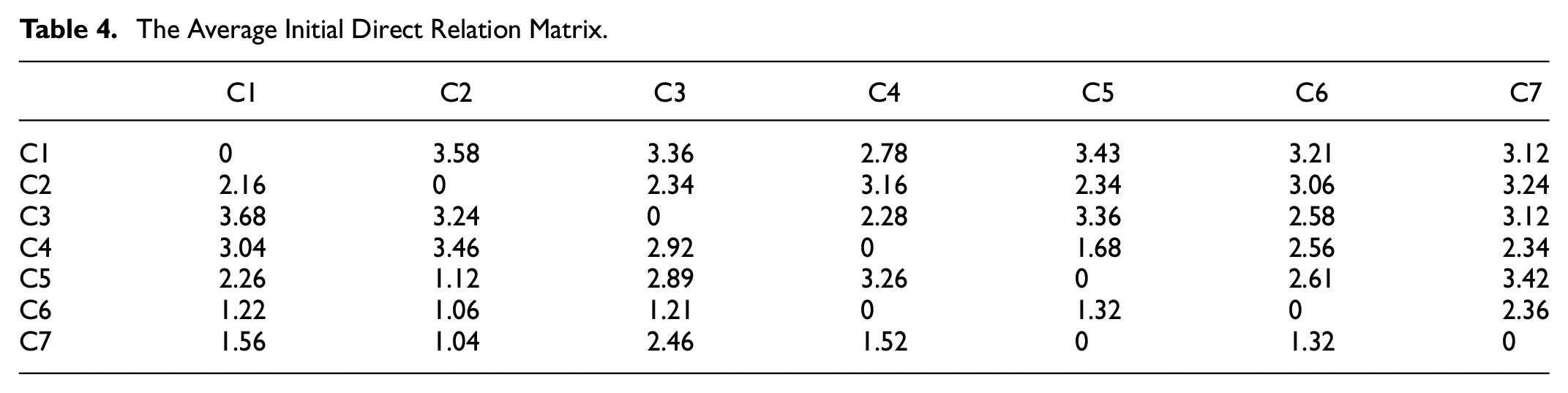
Researchers computed the average value of participants’ evaluation to define a direct-relation matrix. A was represented the degree of factor i affect factor j. This study did not consider the direct influence of the factors themselves, thereby the diagonal of the factor direct influence matrix A was set to be 0 (i ≠ j, i, j = 1, 2, …, n). For each participant, an n × n non-negative matrix can be established as


The finalized the average initial direct relation matrix was established (Table 4). Based on this information, researchers proceeded to the next step of the calculation.
The Average Initial Direct Relation Matrix.
Step 3. Calculating the Normalized Direct Relation Matrix
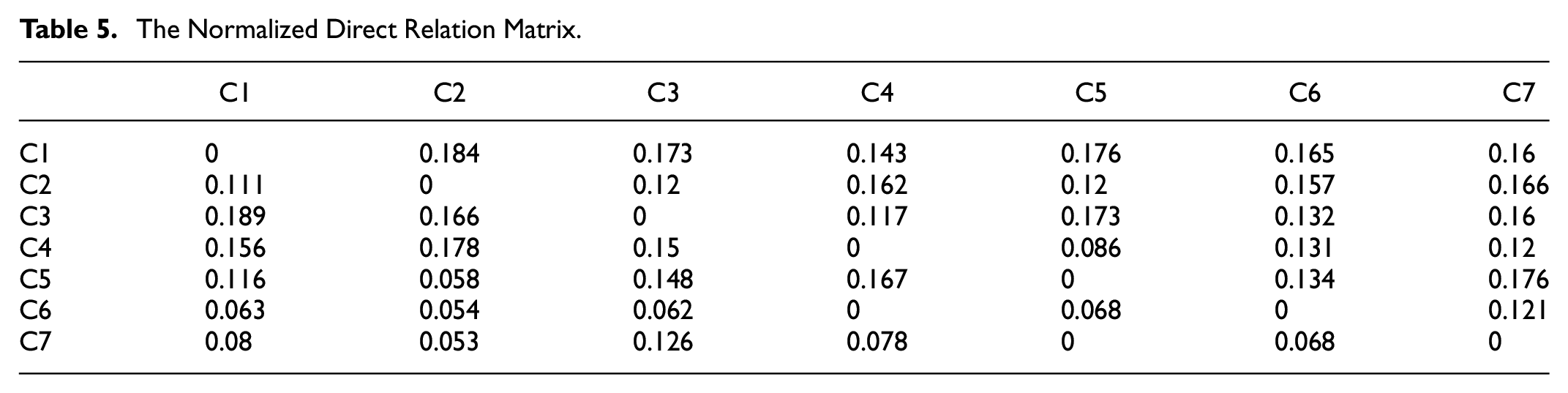
After obtaining the initial direct relation matrix, the following formula was used to calculate the normalized direct relation matrix (see Table 5 above). Each element in matrix N falls between zero and one.


The Normalized Direct Relation Matrix.
Step 4. Calculating the Total-Relation Matrix
After the normalized direct relation matrix N was derived, the identity matrix could be used to obtain the direct indirect matrix T or the total relation matrix (Table 6).

The Total Relation Matrix T.

Step 5. Producing a Causal Diagram
To define the influence index of each attribute, calculating the sum of rows (


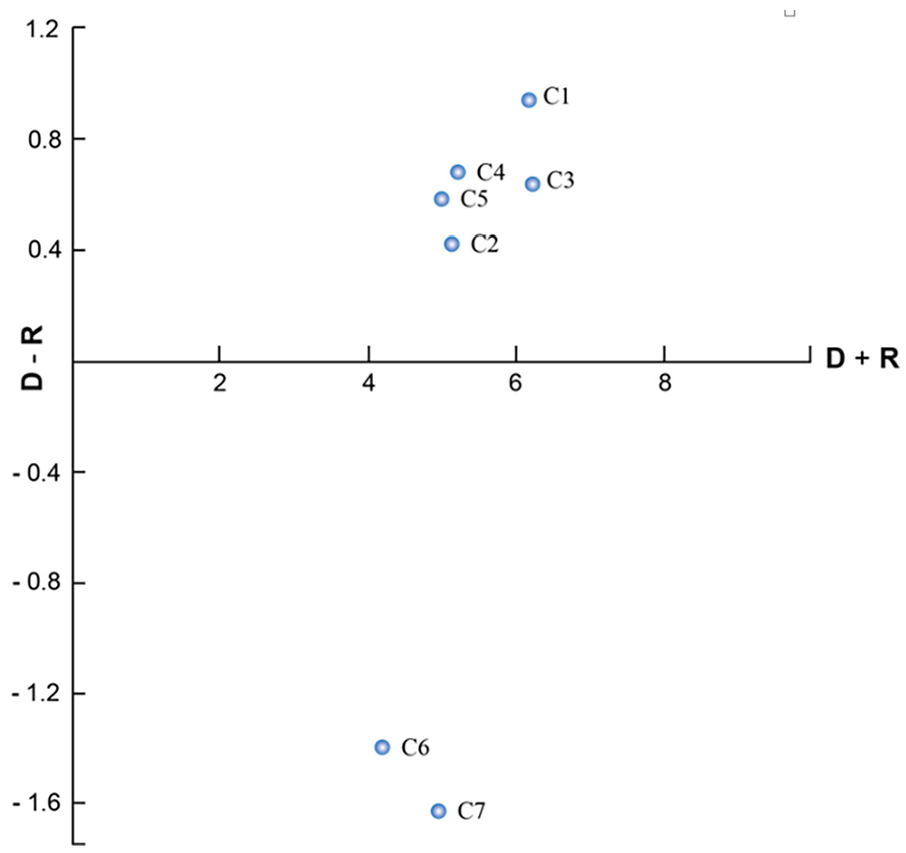
Using Equations 6 and 7, the sum of the rows and that of the columns were separately formed as vectors D and R to draw the causal relation diagram. The diagram was obtained using the horizontal axis, presented by (D + R), called “prominence,” which represents the importance of the criterion. Similarly, the vertical axes (D-R), which was the degree of relation, divided the criteria into two groups: cause and effect. If the value of (D-R) was positive, the factor was placed in the causal group, and if it was negative, the factor was placed in the effect group. Based on this, the causal relation diagram is depicted in Figure 3.
Causal relation diagram of the study.
Results
Results Analysis
According to the responses from 25 design experts and 121 students, researchers could identify the relationship between seven types of packaging design characteristics and their respective degrees of effect and causal association. Researchers obtained the initial direct relation matrix by calculating an average value based on opinions of the participants (Table 4). There was no direct impact of the characteristics on themselves, and the diagonal values were removed; the remaining values were the degrees of impact from the different design characteristics.
Furthermore, the initial direct relation was normalized, the maximal value of the sum of the row as the reciprocal of k, according to Equations 3 and 4. Next, to obtain the total relation matrix, and calculated the value of T based on Equation 5 using MATLAB software. Finally, the values of D and R were obtained using Equations 6 and 7, respectively, and subsequently, D+R was calculated by adding them, and likewise, D-R by subtracting them.
As shown in the diagram (Figure 3), the causal relationship of the seven design characteristics was clearly established. The (D-R) value of five factors which were in the cause group: C1-color, C2-shape, C3-image, C4-line, and C5-typography, was positive. The results show that consumers’ decisions were affected by these five factors, and the effect of these factors on other factors was more remarkable than the impact that others exerted on themselves. In contrast, the (D-R) values of material and technology were negative, whereas they were in the effect group. The results revealed that these design factors impact themselves more than they influence other factors; that is, they were affected by other factors, necessitating their potential in packaging design.
Based on Table 7, the importance of the seven factors could be prioritized as C3>C1>C2>C4>C5>C7>C6 based on (D+R) values. Moreover, we can see that C3-image was the most crucial factor with a value of 6.1747 and ranked the highest. It could affect other factors, but it would be not affected by other factors. The packaging material was the least essential factor, with a value of 4.1625. With regard to importance, C1-color, C2-shape, C3-image, C4-line, and C5-typography were active influencers based on the D-R values. Significantly, C1-color and C3-image were found to affect all other factors. Moreover, C2-shape and C4-line did not affect C5-typography. In addition, C2-shape and C5-typography were mutually not influenced by each other. Finally, C6-packaging materials and C7-packaging technology did not affect the others, but were affected.
Impact Relationship.

In summary, based on Figures 3 and 4, the study found some potential impacts in snack food packaging design. The results showed that color, shape, image, line, and typography were the most important impact factors. Therefore, researchers should emphasize on these five causes. Color and image were two key factors in the design characteristics because they were caused and not affected by the other factors. Shape, line, typography, material, and technology are all involved in color and image. Therefore, in packaging design, designers must consider color and image when designing other characteristics. Meanwhile, consumers first pay attention to the two factors of color and image, which provide them with intuitive information about the food. Furthermore, shape was not related to typography; it was revealed that researchers did not need to consider packaging shape while designing typography and shape. Generally, the designer would not focus on material, and technology when designing the other five factors. However, to perfectly present these five characteristics to consumers, producers need to carefully select packaging materials and packaging technology. Therefore, color, shape, image, line, and typography would affect consumers’ decisions. When these five packaging characteristics are improved, sales increase.

The relationship among the packaging characteristics.
Verification of the Findings
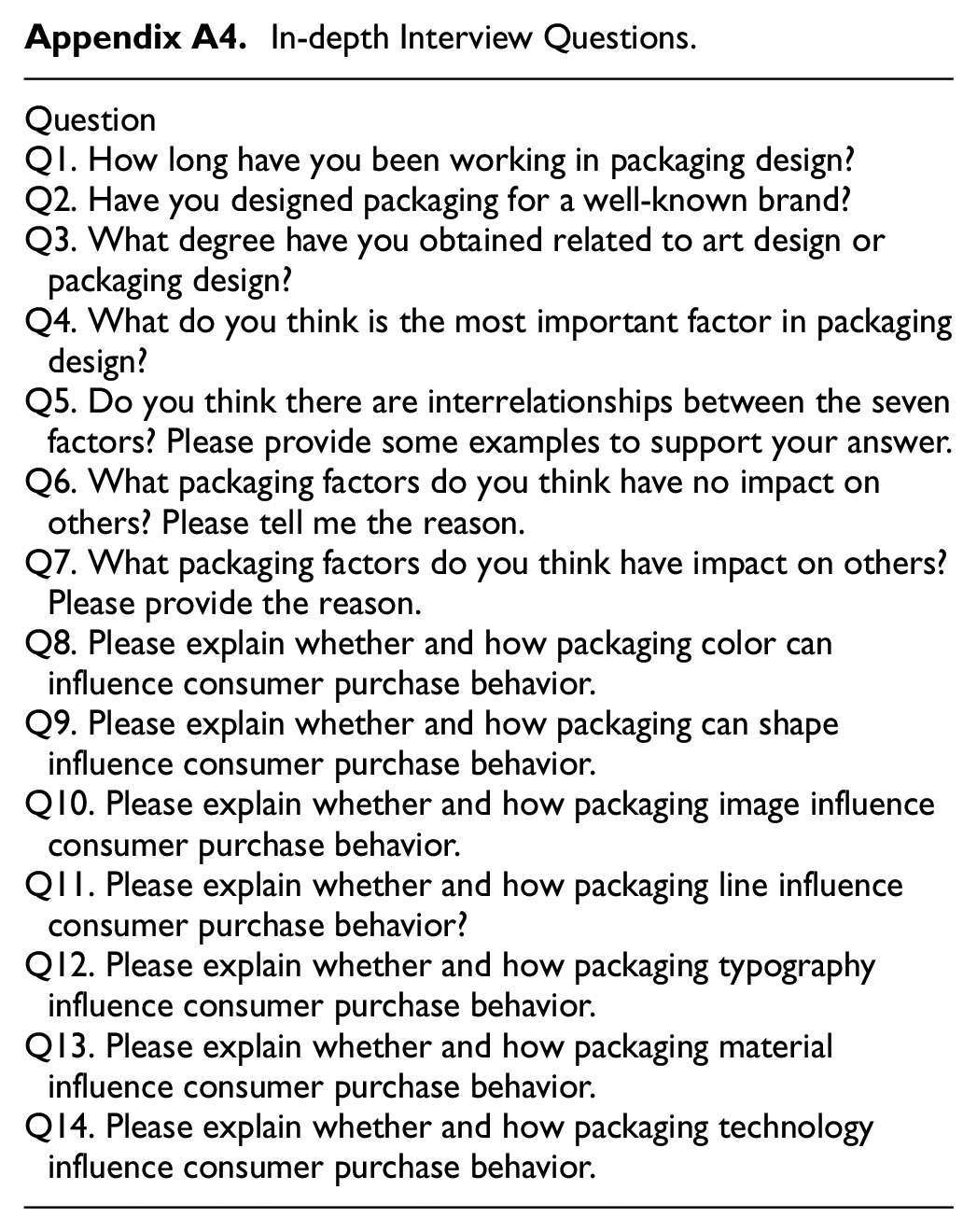
To verify this study’s findings, the researchers selected 7 of the 25 experts who were interviewed in-depth to explore the interrelationships among snack food packaging variables. All of them had at least 10 years of experience researching relevant art design and packaging design domains. They all had PhD. degrees from reputable universities. The researchers designed an interview instrument including 14 questions (Appendix A4) that were formulated based on the findings. With the consent of the interviewees, researchers conducted face-to-face interviews, which lasted 30 to 40 min for each expert. Finally, all seven experts considered that image was the most significant factor in packaging design. Five experts considered that material and technology were not important factors and could not influence others. In addition, they agreed that color was important and could influence others. As can be seen from Table 8, the interview results were consistent with those calculated using the DEMATEL method (based on aggregation of results of the seven experts, the score ranging from 1-low influence to 5-very high influence).
The Degree of Influence of Packaging Factors on Each-Other.

Discussion
Key Findings
First, this research identified the significant packaging characteristics that affect consumers’ buying intention, the causal relationship in these factors, and the ranking that affects the degree of packaging factors, using establishing the DEMATEL model. The findings from this study suggest that consumers purchase snacks following their preferences, especially for color, shape, image, line, and typography; these design characteristics may influence their purchase decisions.
More specifically, image has the most significant influence on consumers’ purchase decisions. This research demonstrated a causal relationship between color and image: color harmony depends on its distribution in an image (Lu et al., 2021). Chiang and Yu (2010) claimed that using appropriate colors in images is an essential factor that affects consumers’ perception. Different colors and images are likely to develop different moods and deepen brand image. For instance, children are more likely to be attracted to cartoon images and bright colors. In addition, image and shape influence each other. Different packaging shapes attract different consumers. One study showed that a unique shape made it easier to capture consumers’ curiosity. However, people are inclined to obtain food information through images in packaging. Therefore, it is essential to place the image in a conspicuous position suitable for the shape of the packaging (Folkes & Matta, 2004). Furthermore, line and typography are significantly impacted by image. For example, different styles of images should be matched with the corresponding typography, and the lines need to change with the edge lines of the images (Wang & Gani, 2022). Additionally, typography has a positive impact on consumers’ purchase behavior. In most cases, straightforward typography can help buyers understand the food information quickly, which helps the producer convince them to purchase (Hussain et al., 2015). In addition, the relationship between typography and material affects consumers’ purchase behavior. It is possible to match typography with a material focus on the same group. For example, straightforward typography and good material are usually used for high-end food, whose consumers are from a high social class (Sung, 2021). Moreover, material and shape are closely linked. Packaging material leads to some environmental issues such as waste disposal of packaging materials. The rational use of packaging structure can reduce the use of materials and thereby reduce the influence on the environment (Wikström et al., 2014).
Finally, one unanticipated finding was that material had the lowest influence on packaging design. A previous research has shown that consumers’ perceptions are potentially affected by packaging materials (Spence & Ngo, 2012). If a drink container appears flimsy, consumers would negatively assess the food inside (Becker et al., 2011; Biggs et al., 2016). However, this finding was unexpected, and suggests that packaging materials are not the main factor in packaging design, because they will not significantly impact consumers’ choices.
Theoretical Implications
First, previous research has revealed that packaging characteristics have significant impact on consumers’ decisions, such as color, image (Al-Samarraie et al., 2019). But the packaging factors that influence consumers’ decisions are far more than these. Therefore, this study proposed a new framework for packaging characteristics, which are categorized into seven types: color, shape, image, line, typography, material and technology. It demonstrated that the importance of these packaging characteristics in the marketing communication. By applying this framework, it will constantly stimulate consumers’ purchase desire.
Second, in the past studies, lack of research shows the relationships among design characteristics in the packaging design field. The present study found four relationships in packaging design characteristics: (a) color and image affect other factors, (b) image and line will not affect typography, (c) image will not affect typography each other, (d) material and technology will not affect other factors. The above results are statistically significant through matrix values.
Third, this study shown that the ranking of the importance for design characteristics. Through the results of DEMATEL method, it is found that image has the greatest influence on consumer purchase decision, but material and technology have little influence on consumer purchase decision. In this study, interview was used to further confirm research results. Compared with the single DEMATEL method or alone interview method, this approach of combining DEMATEL and interview performs better to provide more accurate and objective results.
Finally, previous researchers used the DEMATEL method to explore consumer behavior in various contexts (e.g., online shopping), rather than in the context of retail (e.g., store and supermarket). However, this study focuses on the retail context. Therefore, this theoretical contribution is adopting DEMATEL approach that strengthen the existing literature, especially in the retail context.
Practical Implications
First, this study found that color significantly influences consumer purchase decisions in snack food packaging design (Hypothesis 1). For example, packaging color can invoke associations of the food color and taste in consumers. Moreover, harmonious colors can stimulate consumers’ positive emotions. Therefore, it can help consumers make more informed choices. Second, the data analysis results revealed that shape was one of the key factors among snack food packaging characteristics (Hypothesis 2). For instance, regular-shape packaging is easy for consumers to store, while special-shaped packaging is more likely to attract consumers’ attention. Thus, shape can increase consumers’ purchase intentions. Third, the results of the data analysis indicated that image plays an important role in snack food packaging design (Hypothesis 3). A better packaging image can improve brand image. As a result, marketers can impress consumers with the brand by vigorously promoting its image. For instance, the amiable image of Grandpa KFC gives people a warm and reliable impression. Fourth, line is an important characteristic in snack packaging design (Hypothesis 4). For example, fine lines not only play a decorative role but also define the graphic area and provide a clearer understanding of food information. Finally, this study demonstrated that typography is an important factor affecting consumers’ decisions (Hypothesis 5). It can help consumers notice brand names and important food information at first glance, thus influencing consumers’ purchase decisions.
Furthermore, snack food packaging characteristics can enhance brand image in consumers’ hearts. For example, at present, some snack food packaging has visual confusion, and similar foods cannot be distinguished by brand in a short time. Therefore, snack food packaging should be studied in China to enhance brand recognition. In addition, this study showed that it can strengthen communication with consumers via proper food packaging characteristics, which are more likely to establish interaction and brand loyalty among consumers. For example, most snack food packaging in the current market cannot directly stimulate consumers’ five senses. When consumers are affected by visual elements, they are more likely to establish an emotional connection between the five senses of food and their purchase decisions. Moreover, research on the impact of snack food packaging characteristics on consumers’ decisions may also reveal consumers’ demands and preferences. This study suggests that packaging material and technology have little impact on consumers’ behavior. Therefore, packaging producers should decrease the cost of material and technology and increase the cost of packaging appearance design. This can help marketers reduce the environmental impact of packaging materials, assisting them to retain consumers as consequence.
Limitations and Further Research
Aside from the implications, this study also has some limitations. First, the respondents of this research were young, but different age groups had different perceptions and preferences; these findings may not necessarily generalize to others. Thus, future research could use the same method across other groups (e.g., older adults, middle-aged group, children group, etc.), to expand on these findings. Second, there were seven packaging characteristics that are discussed in this study, leaving out a few others, such as label information, brand name, etc. These factors may be studied in the future.
Third, this research was conducted in the Chinese context, but the Chinese market is significantly different from that of other countries. China is a developing and a multi-ethnic country, whose consumers’ conceptions and preferences are different. Therefore, future studies could be conducted in other regions and across fields (e.g., cosmetics, cigarettes, and electric products). Finally, this study did not relate to the consumer satisfaction survey and other needs investigation, such as function and structure. Future research may survey the use experience of consumers and consumer expectations.
Conclusion
This study used the DEMATEL method to identify the feasibility of critical packaging design characteristics. This study aimed to determine which packaging design characteristics affect consumers’ purchase decisions and the causal relationship between them. The most prominent finding from this study was that color, shape, image, line, and typography were significant impact factors for consumers’ purchase decisions. The second significant finding was that image had the highest prominence factor, and color can affect the other factors (shape, line, typography, packaging material, and packaging technology). However, they were not affected by other factors.
A particular contrary finding was that packaging materials and packaging technology were affected by, but could not affect the others. These findings have significant implications for understanding how to design snack food packaging that satisfies consumer demands. Moreover, this research would be a good reference to a wide range of areas including marketing and graphic design. Some design characteristics in snack food packaging were critically discussed in these findings, which would increase consumers’ purchase desire.
In addition, this study provides necessary insights into snack food packaging design by targeting aspects related to the appearance of food characteristics. The association between the different packaging design characteristics obtained in this study could increase consumers’ interactions with snack food packaging. Further studies could assess the long-term effects of food packaging design and consumer satisfaction analysis.
Footnotes
Appendix
In-depth Interview Questions.
| Question |
| Q1. How long have you been working in packaging design? |
| Q2. Have you designed packaging for a well-known brand? |
| Q3. What degree have you obtained related to art design or packaging design? |
| Q4. What do you think is the most important factor in packaging design? |
| Q5. Do you think there are interrelationships between the seven factors? Please provide some examples to support your answer. |
| Q6. What packaging factors do you think have no impact on others? Please tell me the reason. |
| Q7. What packaging factors do you think have impact on others? Please provide the reason. |
| Q8. Please explain whether and how packaging color can influence consumer purchase behavior. |
| Q9. Please explain whether and how packaging can shape influence consumer purchase behavior. |
| Q10. Please explain whether and how packaging image influence consumer purchase behavior. |
| Q11. Please explain whether and how packaging line influence consumer purchase behavior? |
| Q12. Please explain whether and how packaging typography influence consumer purchase behavior. |
| Q13. Please explain whether and how packaging material influence consumer purchase behavior. |
| Q14. Please explain whether and how packaging technology influence consumer purchase behavior. |
Declaration of Conflicting Interests
The author(s) declared no potential conflicts of interest with respect to the research, authorship, and/or publication of this article.
Funding
The author(s) received no financial support for the research, authorship, and/or publication of this article.
