



Abstract
The current study aims to determine the moderating effect of customer relationship on supply chain risk management and organizational performance, specifically for Pakistan’s logistics sector. The logistics sector is selected for the study as it has considerable significance in the country’s economy and also having substantial growth due to the China-Pakistan Economic Corridor (CPEC). This study is quantitative in nature and data collection is performed through a questionnaire based on several instruments (operation risk management, strategic risk management, perceived performance, customer relationship) from officials (administrative and management) of various public and private logistics companies involved in supply chain and customer relationships. A total of 227 responses are received out of 300, with 11 incomplete responses being eliminated. The hypotheses are formulated based on the literature and research theme. The hypotheses testing are performed using the Partial Least Squares Structural Equation Modeling (PLS-SEM) methodology. The findings suggest that strategic risk management and supply chain performance have a favorable relationship. The study also showed that there exists a negative association between customer relationship and performance. Conversely, the relationship between operational risk management and performance was not established in this study. The findings of this study offer inspiration for future research that can apply these findings on large sample of companies.
Keywords
Introduction
An organization’s supply chain constitutes a set of complex collaborations and coordination, a large number of stakeholders (producers, suppliers, carriers, distributors, retailers) highly interconnected to optimize the flow of goods, information, and financial throughout the chain (Coyle et al., 2015; Min et al., 2019). These activities are always subjected to multidimensional risks that make supply chains more or less vulnerable. Their delicate nature and the concern for the efficient deployment of activities are always prone to complicated impediments. Numerous activities are carried out within an organization, and each organization is inherently involved somehow in a supply chain relationship with other organizations. When two entities establish an association, some of the in-house activities are connected and start to work between the two legally separate units. As they have in-house activities associated with other participants of their respective supply chains, a relationship between two organizations is, therefore, a type of link that can be assumed as a supply chain network. For instance, the in-house activities of a company are interrelated and may affect the in-house activities of a supplier, which may affect the in-house activities of a retailer.
Recent developments in management sciences show the desire to understand business issues, not for a single unit but for a sum of interactions between entities sharing common interests. The risk management issue within companies has attracted many researchers, and the concept has been dealt with from different aspects. Thus, in general, the supply chain risk would be the sum of uncertainties affecting supply activities (upstream) and distribution activities (downstream). Wagner and Bode (2009) deal with risks in terms of the complexity of markets. Risk combines the shortage of materials, the pace of expertise and/or material exchange, entry obstructions, the budget or logistics complication, and monopoly or competitive situations (Zsidisin, 2003). In another opinion, the mitigation of supply chain risks is assumed a basis of value creation as it involves particular in reducing the disparaging effects on performance (Soni et al., 2014).
Performance can be viewed as the expected potential of implementing future actions to achieve goals and targets (Soni et al., 2014). Performance has been examined from several angles by supply chain researchers (Chow et al., 1994; Gani, 2017; Maas, 2000). Defining and measuring performance remain challenges for researchers because of the multitude of conflicting objectives frequently observed within organizations (Chow et al., 1995; Daugherty et al., 1996). As a result, the definition of performance ultimately rests with the individual responsible for evaluation. (Hammes et al., 2020; Shang & Marlow, 2007). Performance can also be evaluated at various levels. Wildman et al. (2010) have proposed three levels of performance for this purpose:
The performance of the organization which achieves its goals (the organization is considered mainly as a mechanism): the rational model;
The performance of the organization as an adaptive capacity: a natural model;
The performance of the organization as control of surrounding resources, especially other organizations: the ecological model.
In this work, the logistics and transportation sector of Pakistan is selected for the study. Further comparison between public and private sectors companies is studied. The reason for selection is twofold. First, the logistics sector has considerable significance in the country’s economy, and it contributes to 10% of GDP and around 18% of the gross capital. Secondly, the existing transportation and logistics sector has inadequate infrastructure for the China-Pakistan Economic Corridor (CPEC), and the sector is expected to have substantial growth in the coming years. So the logistics and transportation sector will be the backbone of the China trade to the external world through Pakistan (Wildman et al., 2010). Currently, several public and private companies are operating for the trade, and their business is expected to be two, three times in the next 5 years.
The logistics sector has a prominent place in global economies. It is one of the most thriving and lucrative sectors due to its variety and specialization. The sector has its own economy, a precise description of which highlights three links: the upstream link, the central link and the downstream link. The upstream link includes manufacturers and producers. The central link is related to the company. The downstream link concerns industries that market products. As a result, management strategies for the creation of stable and long-term relationships with distributors, the primary stakeholders of the company’s consumers-customers, are sought. Thus, knowing the risks that hinder this relationship and affect Company’s performance is an approach aimed to provide a management tool to managers and theorists. These risks, their occurrence, and the strategies to mitigate or eliminate them would depend on the environment in which they are apprehended. The search to apprehend them constitutes the core subject of this study.
In view of the theoretical developments on a new dimension of understanding logistics companies’ activities, this research aims to develop a management model that links risk management practices and performance through the moderating role of customer relations. Customers play critical role in sustainability of any business especially for logistics companies where the business is customer oriented. The organization sustainability may significantly effect by neglecting this important factor. The research is based on a comparative study among Pakistan’s public and private sectors logistics and transportation companies. The study examined the effect that operational and strategic risk management approaches might have on supply chain management performance. In other words, we have determined:
(i) What is the influence of the management of operational and strategic risks of the downstream supply chain on the performance of the logistics and transportations companies? What effect does the management of operational and strategic risks in the downstream supply chain have on the success of logistics and transportation companies?
(ii) Do customer relationships play moderating role between risk management and performance or not?
The rest of the paper is structured as follows: The background information is presented in Section 2. SCM performance measurement and hypotheses are presented in Section 3. Research method is explained in Section 4. Results are shown in Section 5. Discussions about the study are presented in Section 6. Finally, conclusion of work is stated in Section 7.
Theoretical Background
Supply Chain Management (SCM)
Ellram (1991) defines SCM as “a group of companies networking to provide a product or service to the client and involving a set of activities from raw materials to end product.”Christopher (2016), in turn, defines supply chain management as an interconnection of organizations that are interactively engaged in various practices and events that produce value in the shape of products and services for the end consumer. Bechtel and Jayaram (1997) have counted more than 50 definitions of the SCM, classified into five categories. Cooper et al. (1997) listed 13 main ones, and Tracey and Smith-Doerflein (2001) over a hundred. Burgess et al. (2006) have also described 22 possible definitions of SCM. Recently, Angela and Angelina (2021) have also strengthen Ellram’s definition and defined SCM as an approach to manage the flow of supplies from a vendor to the final recipient in a supply chain.
The diverse evolution of SCM is one of the reasons for the lack of a universal definition. Among this multitude of definitions, Cooper et al. (1997) argued that “the SCM is a philosophy which tends toward an integrated management of all the flows of the distribution channel,” while Tan and Kannan (1998) define it as a managerial philosophy that reorients the traditional intra-organizational activities of business partners toward a common goal of optimization and efficiency. Therefore, supply chain management is understood in a context of global management, which tends to highlight the whole entity rather than individual economic units: it is a systemic process with a predominantly network (Burgess et al., 2006).
Several researchers have worked on Literature Review (LR) regarding SCM. Croom et al. (2000) claimed to provide first comprehensive LR on SCM along with linkage of critical theory to the SCM. Power (2005) also provided an LR study for integration and implementation of SCM. More recently, Sánchez-Flores et al. (2020) investigated sustainable SCM practices in emerging economies. Some recent studies have also explored new aspects regarding SCM. Pandemics, animosity, and technological advancements have all had an impact on SCM, and scholars have studied the repercussions. Sodhi and Tang (2021) investigated the SCM in order to cope with severe situations, such as pandemics, conflict, climate change, or biodiversity collapse. They discussed the prevalent problems, as well as some of the solutions, and outlined research prospects for SCM in harsh circumstances. Cheung et al. (2021) looked at studies on the influence of cyber security on logistics and supply chain. The study discovered that prior studies seldom make use of genuine cyber security data. Furthermore, despite the fact that logistics plays an important role in supply chains, research on cyber security in logistics has been minimal. Zekhnini et al. (2021) published a study of Supply Chain Management 4.0 (SCM 4.0), identifying and assessing the interaction between digital technologies and SCM. The research examined the influence of new technology on several supply chain activities. In addition, the study created a foundation for future research and practice.
Supply Chain Risks (SCR)
The concept of risk is a multidimensional construct and is confusing (Zsidisin, 2003). The supply chain risks are a bundle of impediments to the efforts conducted to transport items from their point of manufacture to the ultimate user. Therefore, they can be considered internal, external, and environmental uncertainty variables that lessen the likelihood of successful operation (Jüttner et al., 2003). According to Yates and Stone (1992), a risk is defined by three factors: the size of the loss (parts of loss), the significance of the loss (impact of loss), and the likelihood of recurrence (uncertainty associated with loss). According to Ageron et al. (2013) and Srivastava and Rogers (2022), the risk is perceived as the possibility of a loss and the implication of that loss to the business or individual.
Zsidisin (2003) addressed risk via the viewpoint of the uncertainty that drives the interactions of supply-chain partners, and proposed three dimensions: uncertainty, expectancy, and prospective for results. From the perspective of transaction cost theories (Kleindorfer & Saad, 2005; Rindfleisch, 2020), experts have defined the risk as the ambiguity of the results, which is linked with the inconsistency of the results, with the lack of distribution information, potential of the outcomes and the uncertainty of the achievement of outcomes.
As a comprehensive way, according to Davis (1993), supply chains are affected by three primary sources of uncertainty: (i) supplier uncertainty, stemming from the performance of lead times, average delay and the degree of inconsistency; (ii) producer uncertainty, stemming from the performance of procedures, machine failures, supply chain performance, etc.; and (iii) uncertainty of customer and demand, stemming from forecasting errors, irregular orders, etc. This approach does not differentiate between the risks impacting the upstream relationship and those influencing the downstream relationship of the supply chain. He also creates a list of twelve characteristics that can influence the buyer’s risk perception when it comes to the connection between the production firm and its suppliers. Buyer populations, job position, decision-making unit, buyer personal traits, type of purchase, product attributes, the extent of customer interaction/suppliers, customer/supplier competitive dynamics, organization size, organization effectiveness, and buyer’s home country are all factors to consider. These elements are linked to the person as well as the central company’s internal organization and do not integrate aspects of the environment in which the supply chains operate.
The supply chain risks, from the network approach, are associated with turbulence and interruptions in the flow network between commodities, information, and capital. These are also related to public and official networks, which may adversely affect the accomplishment of the individual company objectives in addition to the supply chain as a whole, while affecting the consumer in terms of expenses, time and quality (Pfohl et al., 2010). From this point of view, the supply chain risk is frequently described as an occurrence that affects multiple elements of the chain. It is the result of networked interactions between multiple units.
A handful of studies are available on supply chain risks sources (Islam, 2021; Minner, 2011; Nawaz et al., 2021). Rao and Goldsby (2009) provided a detailed review on supply chain risks and topology. Shahbaz et al. (2019) have examined the literature for supply chain risks. Recently Ul Amin et al. (2022) identified and prioritized supply chain concerns for Pakistan’s logistics sector. Risks are classified into four categories, according to their research: supply and procurement risks, distribution risks, organizational risks, and environmental risk. Supply and procurement risks are also classified as supply failure and uncertainty, restricted supplies, insufficient capacity, and supply delays, among other things. Road conditions, worldwide oil price variations, and regulatory discrepancies, among other things, are important distribution hazards. Natural disasters, accidents, and terrorism were identified as important organizational risks, whereas bankruptcy, relationship troubles, and KPI failures were identified as big environmental risks.
Supply Chain Risk Management (SCRM)
SCRM can be described as the strategic and operational management of supply-chain risks. These risks can disrupt or even block the effective and efficient flow of information, raw materials, and products from the supplier to the company’s client in whole or in part (Srivastava & Rogers, 2022). According to Jüttner (2005), SCRM is the process of identifying and managing supply chain risks through a collaborative network among its stakeholders in order to lower the supply chain’s overall susceptibility. According to Kouvelis and Kouvelis (2006), supply chain risk management is defined as the management of demand, supply, and cost uncertainty. H. Rogers et al. (2016) define SCRM as “the company’ ability to recognize and govern its supply chain’s financial, environmental, and social risks, which can be minimized through the adoption of interdependent planning and management.” Managing risks would thus include establishing a robust framework within which managers might build abilities that allow them to anticipate unanticipated events.
Lee and Rha (2016) describe supply chain resilience as an organization’s ability “to respond to an unplanned disturbance and maintain its operations following the event.” Within businesses, this resilience can be accomplished by utilizing strong flexibility and enough redundancy. Christopher and Peck (2004) have defined it as “The capacity of the system to return to its original state or to move toward a new, more desirable one after having been disturbed.” More specifically, SCRM is then described as the risk management of the company’s own internal logistics chain, excluding external players (particularly upstream and downstream partners) and external risks (Ageron et al., 2013). According to Tang (2006), SCRM is perceived as “the management of supply chain risks through cooperation or interaction between chain partners in order to ensure profitability and the SC continuity,” which is also close to the theme of this study. This definition highlights two perspectives of the SCRM, which can be considered for the analysis of the proposed study: first is limited to a single organization (considered standalone), the other is to consider the relations between industrial partners (Ageron et al., 2013). The SCRM is therefore considered here from the perspective of risk management related to the global supply chain.
SCRM is an active research topic with numerous academics working on literature reviews and other factors. Tang (2006) provided first detail literature study regarding SCRM. Later on, Ho et al. (2015) investigated SCRM studies conducted between 2003 and 2013. Recently, Gurtu and Johny (2021) have investigated recent studies on global SCRM and also highlighted various risk factors that affect organizations.
Customer Relationship Management (CRM)
Customer relationship management (CRM) is a critical organizational tool that helps to increase customer loyalty and satisfaction in order to manage successful relationships between firms and customers. It is used to manage a company’s interactions with its present and prospective consumers. The CRM methodology’s objective is to analyze data about a customer’s history with a firm. It focuses on retaining clients, which aids in the increase of revenue. This improves the company’s commercial connection with its customers. CRM has received a lot of attention in several industries in recent years; interacting with customers is seen as profitable trading for firms, and customers are regarded as valuable possessions in the eyes of enterprises (Guerola-Navarro, Oltra-Badenes, et al., 2021).
CRM, in combination with other research topics, has piqued the interest of several scholars. Several LR studies are also available in this regard (e.g., Arora & Sharma, 2018; Guerola-Navarro, Gil-Gomez, et al., 2021; Ngai et al., 2009; Petrović, 2020). Recently, Meena and Sahu (2021) evaluated CRM literature over the previous two decades and identified under studied and popular research fields. Recently, several scholars have also investigated additional CRM aspects. Ahani et al. (2017) evaluated the impact of social CRM adoption on company performance in the setting of small and medium-sized organizations (SMEs). At the organizational level, they created a novel performance model for social CRM strategy. This study demonstrated the existence of a substantial association between social CRM usage and the performance of SMEs. Foltean et al. (2019) investigated the function of CRM capabilities as a moderator in the link between Social Media Technology (SMT) usage and company performance. CRM skills were discovered to merely moderate the association between SMT use and business performance in an indirect manner. Das and Hassan (2021) investigated the impact of SSCM, competitive advantage, and CRM on organizational performance (OP). According to the findings, SSCM and CRM are substantially associated to OP. Recently, Hanaysha and Mehmood (2022) investigated the relationship between CRM practices and organizational performance in the Palestinian banking industry. The findings indicated that CRM technology and knowledge management had a significant impact on organizational performance.
SCM Performance
Some researchers consider the supply chain performance purely on financial aspects (Chen & Paulraj, 2004), whereas others take it based on multiple factors (Balfaqih et al., 2016; Jamehshooran et al., 2015; Kurien et al., 2020; Tuan, 2016; Zhang et al., 2016). Formally, the performance can be considered as the numerical result obtained during a competition. This simplistic definition assumes that we compete, as with downstream supply chains where companies challenge each other within the network or between networks. The concept of performance calls for effectiveness and efficiency. Ménard (2004) has suggested three families of efficiency models:
The goal-oriented model;
Models which give precedence to (systemic) criteria of (internal) coherence of organizations. In this model, the allocation of resources, hierarchical relationships and the management information system participate in determining efficiency;
Models where a minimum level of satisfaction predominate for stakeholders, actors and institutions inside and outside the organization, which involves formalizing the cooperative play of different points of interest implementing particular behaviors.
Performance is viewed in a logical system as a judgment on creating value for the customer. Thus, it can be analyzed from several perspectives:
The Economic Perspective
An effective supply chain is desirable in times of economic scarcity. The Resource-Based View theory (Gerhart & Feng, 2021) emphasized that all assets never have equal importance. The innovation strategy through reduced costs, knowledge and action in the supply chain are key factors of business performance (Pereira et al., 2014). While considering a plethora of ambiguities that organizations must handle, organizational culture often enriches a set of norms, values, rituals and beliefs (Martin, 1995). Likewise, research has provided a basic foundation for the assumptions that entrepreneurship and innovation are indicators of the cultural competence of the supply chain (Egwu et al., 2019; Golicic & Sebastiao, 2011; Kloep, 2020; Thorisdottir & Johannsdottir, 2019). Without the factors mentioned above, supply chains would suffer from a lack of professionals in operations management.
Recent studies on supply chain management in China have revealed a severe lack of qualified logistics professionals in the country (Bolton et al., 2003; Kam et al., 2010; Kerr & Slocum, 2005; J. J. Li et al., 2008). Hong et al. (2004) also demonstrated that the lack of expertise in logistics management and the inefficiency of information system supports are major obstacles to developing the supply chain. The shortage of skilled logistics experts is likely to expand due to the fast development of the logistics services industry (J. J. Li et al., 2008).
The Managerial Perspective
Several companies have incorporated supply chain management to increase their efficiency and achieve specific organizational goals such as improving customer value, making good use of resources and increasing profitability (Ellinger et al., 2012; Navneet Joshi, & Sanjive Saxena, 2020; Rahman et al., 2015). Thus, to optimize the resources at their disposal, managers direct their efforts toward the company’s internal organization or construct a solid reputation based on customer satisfaction outside the company. These all are continuous efforts in terms of improvement and innovation. Mentzer and Konard (1991) thus define performance measurement as the effectiveness and efficiency in achieving a given task about the perception of goals. In addition, Lai et al. (2002a) have also developed measurement criteria based on two supply chain processes: customer orientation and internal orientation.
SCM Performance Measurements
The literature study has provided only a handful of SCM performance measurements. One of the primary issues in process management (Davenport et al., 1996) and supply chain management (Lai et al., 2002a) has been identified as a lack of meaningful performance measures. Following performance measures have been incorporated so far:
Income Measurement Approaches
Performance measures can be classified according to whether they are based on income (the final income from the set of behaviors) or on behaviors (the set of activities that lead to the final income) (Carini et al., 2017; Shokravi & Kurnia, 2014). In distribution chains, income-based performance measures focus on the results of chain members, that is, financial indicators of chain members’ performance or satisfaction. As a comparison, behavior-based performance emphasizes the particular activities of chain members such as stocking, warehousing, delivery and promotion of products (Maltz & Maltz, 1998; E. W. Rogers & Wright, 1998).
In empirical investigations, income-based measures are widely used, but they have been shown to assess only previous success and failure and cannot explain why either occurs or what can be done in the future (Schultze & Weiler, 2010; Sloof & van Praag, 2015). However, behavior-based measures can provide additional information (Roger, 2005; T. Stank & Lackey, 1997). Thus, in measuring the performance of chain members, Oliver recommends multiple indicator approaches that simultaneously include revenue-based and behavior-based performance (Oliver & Anderson, 1994).
Objective and Subjective Approaches
In supply chains, indicators of performance include two senses: hard performance (objective) and flexible performance (perceptual or quick reaction) (Chow et al., 1994; Dalton et al., 1980; Maltz & Maltz, 1998). In addition, performance can also be categorized as being financial, that is, reflecting “the achievement of the economic objectives of the company; and operational, which reflects the critical success elements for operations that may be linked to financial performance (Shang & Marlow, 2007; Venkatraman & Ramanujam, 1986). The supplier’s performance construct would thus be measured in terms of quality, cost, flexibility, delivery time and responsiveness (Chen & Paulraj, 2004).
Logistics Skills Approaches
Compared to the total quantity of orders received, the number of accomplished orders (delivered on time and without any litigation involved) makes it possible to assess a company’s logistics performance or even its level of service (Beysenbaev & Dus, 2020).
Logistics performance has been studied in two ways: as a single factor and as part of a group of operational factors (Joong-Kun Cho et al., 2008). A thorough examination of logistical capabilities was conducted by Mitchell (1995). It was subsequently expanded by Maas (2000). Mitchell identified 17 capacities included in 4 logistics competences. Maas (2000) then extended the 17 logistics capacities to 25 supply chain capacities linked in turn to 6 supply chain competences and emphasized that these capacities are critical for the success of companies. Similarly, T. Stank and Lackey (1997) examined competency-related capacities and argued that integration and agility are of paramount importance for logistics performance.
Operational Indicators Approaches
Van Hoek (1998) and Beamon (1999) proposed that operational indicators such as customer service and the ability to adjust to a changing environment be included in measuring supply chain success. Cost, time, quality, delivery, and flexibility are essential criteria of operational performance, according to Gunasekaran et al. (2004). Lai et al. (2002b) have come up with two criteria for measuring customer orientation: supply chain reliability and responsiveness/flexibility. The first criterion is measured using indicators of delivery performance, the performance of the execution order, and the perfect execution of the order. The second criterion is based on the response time of the supply chain and the flexibility of production.
According to the Supply Chains Operations Reference (SCOR) model, efficiency (customer service, reliability, responsiveness/flexibility) and effectiveness (costs and assets) explain performance (Lai et al., 2002b). In e-commerce, for example, customer loyalty and logistics capacities are the main drivers of performance (Ramanathan, 2010). From the perspectives of the SCOR, customer orientation, internal affairs, innovation, learning and financial perspective are among the major objectives of the SCM whereas, waste reduction, compression time, the flexibility of response, and reduction in unit cost are significant factors (Brewer & Speh, 2000; Kaplan, 1996; Kleijnen & Smits, 2003). The innovation strategy through costs, knowledge, and action are the key antecedents of business performance (Christopher, 1999). On the contrary, dysfunctions are negatively associated with operational performance. Companies that experience these dysfunctions find it difficult to detach themselves from poor performance (Hendricks & Singhal, 2005).
The impact of service capacity analysis can be performed based on the types of companies in the supply chain. For companies providing logistics services, there are several levels of service that affect the performance of the company, that is, (i) Traditional freight (with a low capacity to provide value-added logistics services and technological capabilities of logistics services), (ii) processors (medium level of capacity to perform added value of logistics services and freight service), and (iii) service providers comprehensive (possess a high level of capacity in all three factors of logistics services, that is, value-added logistics service, high-tech logistics services and freight forwarding services).
The logistics sector of Pakistan is a crucial support for all business units within the country. It is also considered the key to the success of the delivery of goods to the customer. Several parameters work for its success (or failure in the event of a fault). These include, among other things, the logistics of handling, transporting, warehousing and conservation of products. For this sector, the logistical capacities differ from one company to another and, depending on the case, confer a position on the market (Idrees et al., 2019).
We can also measure the performance of the supply chain through the learning process in a company. Thus, the process of learning alliances and the function of the alliance are positively and significantly correlated with the business’s overall success. The function of the alliance is significantly and positively correlated with the process of learning alliances. The alliance experience does not directly affect the success of the alliance (Kale & Singh, 2009).
Among various performance analysis approaches, we have adopted a hybrid model based on the following assumptions:
i. The traditional tools for measuring the performance of companies, mainly financial, are insufficient. Performance should be analyzed and managed in four areas: finances, customer relationship, processes, learning and organizational development.
ii. In each area, or dimension of performance, the company must define indicators to monitor its results, set objectives and steer action plans. The indicators of the model are as follows: In the financial field: gross operating margin, return on invested capital, evolution of turnover, market value, evolution of costs, etc. In the field of customer relations: market share, customer satisfaction indices and customer loyalty, various commercial indicators, etc. In the area of internal processes: percentage of non-quality, deadlines, productivity, importance of administrative costs, etc. In the field of organizational learning and development: turnover, staff satisfaction indices, indicators relating to skills and training, importance of research, percentage of new products, etc.
A company’s performance is a complex topic that can be studied from many different angles. It can be interpreted in various ways because of how it is defined and measured, as well as what causes it. The fact that there are so many ways to do it shows how important it will be to learn how to do it well in a competitive environment. Considering the progress of CPEC, the logistics and transportation industry appears to be the most appropriate setting for a downstream examination of this concept. However, in this regard some important questions arise. How can risk management influence the performance of the downstream supply chain? In other words, how does the management of operational and strategic risks influence the company’s performance? Can the performance levels obtained be set up as standards for future operations in the distribution chain? In the light of the questions mentioned above, the hypotheses model is formulated to provide answers in this research and is shown in Figure 1.

Hypotheses model for the relationship between SCRM and performance.
SCRM and SC Performance
Performance is generated by more than one factor within supply chains. It can thus be the consequence of a partnership (Aviv, 2001; Rezaei et al., 2018), of the combination of organizational effectiveness and efficiency (Lai et al., 2002b), of customer loyalty (Ramakrishnan, 2010), and other variables. Understanding this level of performance in the supply chain dynamics assumes that the performers combine both their accumulated know-how and all the logistical, financial and technical means at their disposal. However, within companies where supply chains are becoming more and more globalized and complex, the risk factor is also taken into account related to the optimization of physical and information resources between stakeholders.
After the emergence of risks, managers must initiate and develop specific behaviors to deal with possible consequences. These consequences can impact the operation of the business in the long, medium and/or short term. High-performance chains would therefore be resilient in the face of the occurrence of the risk (Zhao et al., 2013). Therefore, the main postulate of this research is: Risk management influences the performance of the supply chain.
Customer Relationship Management and Supply Chain Companies Performance
The recent developments in customer relationship management models indicate the importance of customer satisfaction within organizational processes. Customer satisfaction results from utilizing internal and external resources (physical and intellectual) to offer a superior quality service, which is also the source of the financial and relational performance of the company. The vision gained in the development of strong customer relationships can also be used to increase operational effectiveness and cost-efficiency. When companies reach this level of intimacy with their customers, it gradually becomes difficult for competitors to intervene (T. P. Stank et al., 2001; Vickery et al., 2003).
Stanley and Wisner (2001) have identified a positive and successive relationship involving upstream integration and quality of service. Their result shows that the implementation of cooperative buyer/supplier relationships increases the quality of service to internal customers, affecting the ability to provide quality service to external customers. It can therefore be established that:
Moderating Role of Customer Relationship between Risk Management and Performance
Considering the preceding development, examining the moderating role of customers in the relationship between operational risks and company performance would be an intriguing approach. It is also necessary to define the roles of (i) external integration in the relationship between external risks and the relational performance of the supply chain, (ii) internal integration, the procedural risk and the operational performance of the supply chain, and (iii) internal integration on procedural risk and operational performance of the supply chain. Zhao et al. (2013) have claimed that trust, commitment, and fairness directly impact the success of the partnership and hence the performance of the Supply Chain.
Faced with budgetary, logistical and skills constraints, supply chain members are increasingly obliged to combine their know-how to take over markets. One of the major difficulties lies in the uncertain nature of the forecasts that companies must make to avoid disruption in the chain. Some authors claimed that local forecasting results in comparatively lower benefits than those obtained within collaborative forecasts or jointly within the chain (Aviv, 2001).
The constant development of customer relationship approaches and the growing popularity of the concept of Efficient Consumer Response (ECR) require supply chains to understand the relationship between common forecasting and customer response. In this regard, collaboration among various departments’ performers is critical. Therefore, it seems evident that the link between the occurrence of risks and performance can pass through the customer relations management within the supply chain. The quality of customer service promotes knowledge of customer needs, helps control orders and increases business performance, which leads to conjecture:
Research Methodology
Data Collection and Sampling
The data was collected via a questionnaire based on various instruments. The questionnaire was distributed among 300 employees of six transportation and logistics companies operating in Pakistan. Three selected companies were public sector, while the other three were being operated in private sector ownership. The questionnaires were distributed among management officials related to supply chain, customer care and human resource. A total of 227 responses were obtained, out of which 11 were rejected as they were not completed.
Measurements of Variables
The following instruments have been used in this work. All the variables were measured using 5-point Likert scales ranging from 1 (Strongly Disagree) to 5 (Strongly Agree).
Measurement of Operation Risk Management
Operational risk management was measured based on risks of order processing (six items), risks of demand uncertainty (six items) and credit risks (three items). The measurements were performed using the scales proposed by Nienhaus et al. (2006), Peidro et al. (2009), and Silva et al. (2013).
Measurement of Strategic Risk Management
Strategic risk management was measured based on risks linked with the information management within the distribution chain (five items) and the company’s scope to strategic risk management plan (seven items). The measurements were performed using the scales proposed by El Ouardighi (2008) and Bezzina et al. (2014).
Measurement of Perceived Performance
Perceived organizational performance was measured based on qualitative performance perceived on the activities of the distribution chain, on transport logistics concerning customers (5 items), quantitative performance (5 items) the performance of transport logistics (5 items). The measurements were performed using the scales proposed by Van der Vorst et al. (1998), Lai et al. (2002a), Aviv (2001), and Bhatnagar and Sohal (2005).
Measurement of Customer Relationship
Customer relationship was measured based on the distribution chain management through the customer relationship (12 items). The measurements were performed using the scales proposed by Brewer and Speh (2000) and Bhatnagar and Sohal (2005).
Methodology
This study is based on the risks of the supply chain and the performance of logistics and transportation companies through the moderating role of the customer relationship. Therefore, we have four variables: operational risks, strategic risks, perceived qualitative performance and perceived quantitative performance, and customer relationship management. The analysis requires taking all parameters into account. Hence, we have adopted the Partial Least Squares Structural Equation Modeling (PLS-SEM) approach to understand these constructs’ relationships. In this work, SmartPLS3 software has been used for PLS-SEM analysis.
PLS-SEM is predicated on the premise that the observed variables are inaccurate measures of the concepts under consideration. Typically, observed variables are referred to as manifest variables or indicators, whereas unobserved variables are referred to as latent variables or constructs. The PLS-SEM model consists of two components. The first one, labeled the measurement model, addresses the links between manifest and latent variables. The other, referred to as the inner structural model, depicts the connections between the latent variables.
The choice of the PLS-SEM algorithm is justified as under (Tohari et al., 2021):
This method requires few statistical conditions on the model variables.
This method is well suited for exploratory type analyses or testing partial models.
This method is compatible with small sample size and complex relational models (up to several hundred variables).
In this method, the measurement and structural models values are estimated simultaneously.
The partial least square is an advanced method and sequence of single and multiple regressions
The PLS-SEM method is divided into three steps. For each case in the sample, latent variable scores are iteratively estimated in the first step. In the second stage, measurement model parameters are calculated using these scores. In the same way, structural parameters are eventually evaluated in the third stage.
Results
Measurement Model
The measurement scale refining process was performed by examining the data through Principal Component Analysis (PCA). The analysis was performed without any a priori hypothesis on the structure of the initial data or the significance of the factors that emerge from this analysis. Then, factor analysis and the Cronbach’s alpha values were used to determine the dimensions of the observed variables. The main objective was to discover the constructs’ dimensions. Thus, only the axes whose eigenvalue are greater than 1 and explained a minimum variance of 60% were retained.
In the end, a five-factor structure is obtained. Questions with little contributions were eliminated, allowing for the refinement of questionnaire items that detract from the quality of the underlying structure. Table 1 shows PCA. It is clear from the table that 74% of the variance of the indicators is explained by the constructs, which again shows the good convergent validity of these constructs.
Principal Component Analysis.

The accuracy of the measurement model was checked by reliability tests. The reliability maximization iterations were performed only on the aforementioned items, contributing to satisfactory internal consistency reliability (with a minimum threshold of alpha at .50). The construct reliability is also determined to find the internal consistency in the instrument items using the following expression (Martínez & Cervantes, 2021):
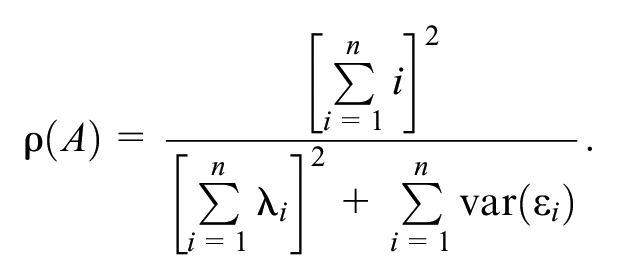
Where

The model validity using the aforementioned measures is shown in Table 2. Analysis of Table 2 illustrates that all the conditions are satisfied to confirm the validity of constructs. Overall, homogeneity is ensured because Cronbach’s alpha values of constructs are greater than 0.5. This limit is in accordance with the recommendations of Nunnally (1978) for these values between 0.5 and 0.9 to be acceptable. It is clear from the table that the reliability of the constructs of all factors is greater than 0.70, which is considered satisfactory and allows us to conclude that the scale is reliable because scale items have internal consistency.
Model Validity and Reliability.

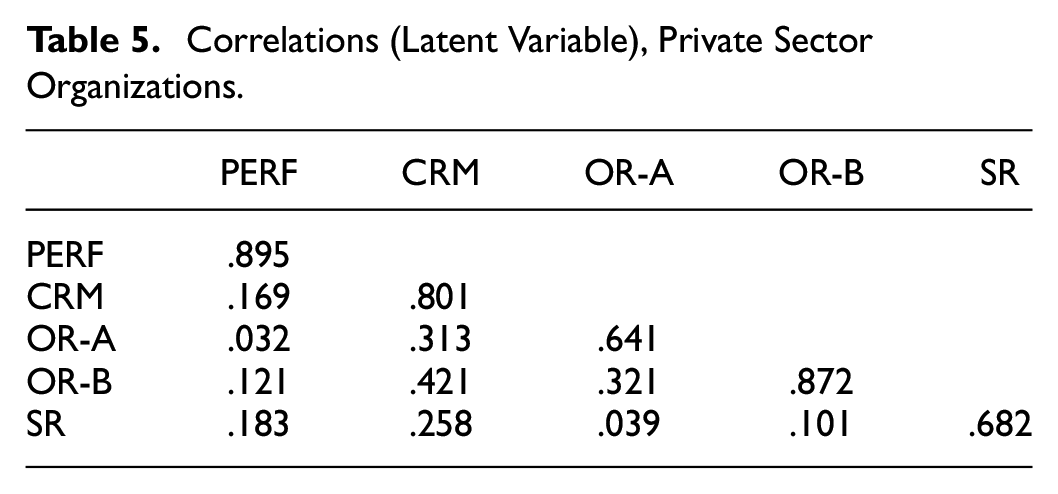
The discriminant validity is determined by investigating the correlations between constructs and found satisfactory. For this reason, all the items contribute to their constructs more than their neighboring constructs. Following the advice of. Sosik et al. (2009), it is also found that the variance shared between the constructs (measured by the correlations between constructs) is lower than the variance shared by a construct with its indicators (measured by the root square of the AVE) which can be seen in Tables 3 to 5. The values of the diagonal are the square root of the AVE on the variable.
Correlations (Latent Variable), Combined.

Correlations (Latent Variable), Public Sector Organizations.

Correlations (Latent Variable), Private Sector Organizations.
Three criteria condition the validation of the PLS model according to Gye-Soo (2016): (i) the quality of the external model, (ii) the quality of the internal model, and (iii) the quality of each structural equation. The model explains on average 64.3% of the variance. Moreover, the concordance of 0.87 on average indicates a good fit between internal and external models. Finally, the coefficient of determination, with 0.215 on average, suggests the existence of other factors that may influence the relationship between supply chain risk management and company performance.
The procedure recommended by Kline (2016) was followed to perform the multi-collinearity analysis of the constructs. It allows the examination of the inverse of the correlation matrix. The diagonal of this matrix contains ratios called “Variance Inflator Factor (VIF).” These ratios specify the part of the variance of a variable explained by the other variables. It is commonly assumed that a value of VIF greater than 10 would indicate the presence of collinearity for the variable examined, which is also adopted in this study. Table 6 shows that the multi-collinearity problem does not exist in this model.
Multi-collinearity Analysis.

Structural Model
The structural model is evaluated by finding the relationships between the latent variables to determine the existing relationships between constructs. Two non-parametric model testing approaches are generally used in the context of the PLS: (i) the jackknife technique and (ii) the bootstrap technique (Santosa et al., 2005). The bootstrap technique was preferred here because it is considered more efficient than the other (Chin, 1998). Its offers two significant attributes of the structural model: t value (like t-test) and R2. Thus, model prediction ability can be assessed from the R2, which results from the bootstrap. The R2 values for each of the dependent variables indicate the good fit of the model, as shown in Table 7.
Model Evaluation.

Note. All significant R2 values meet the minimum of 0.10 overall, except for private sector organizations’ performance R2 (0.05). However, we can see that Customer Relation records the highest R2 overall and for public and private sectors. This high value is due to the contribution of sales promotions which are only significantly correlated with this construct.
Hypothesis Testing
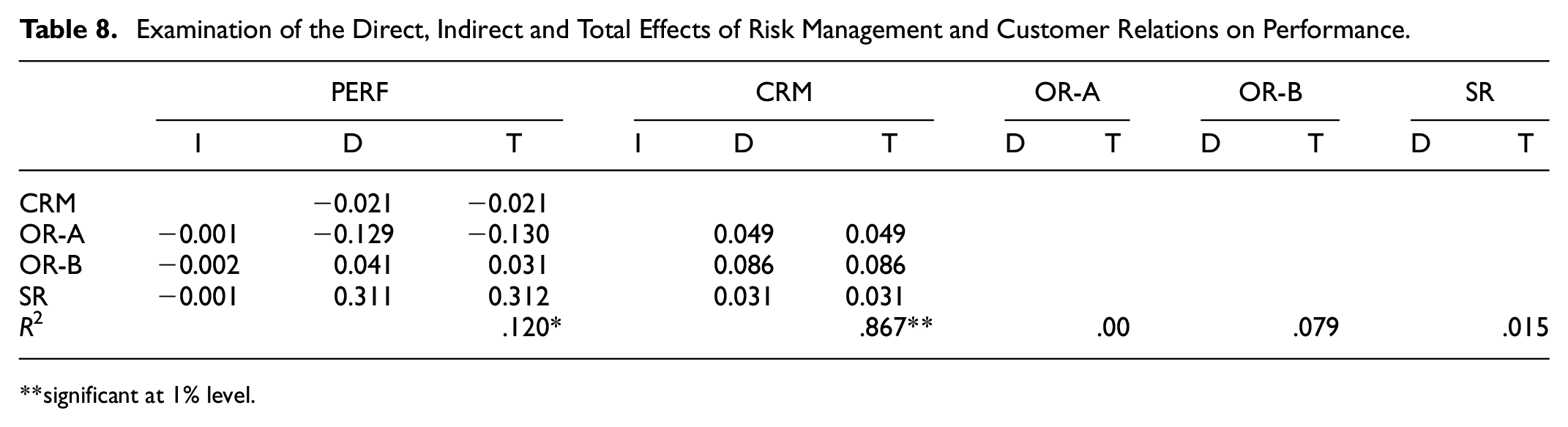
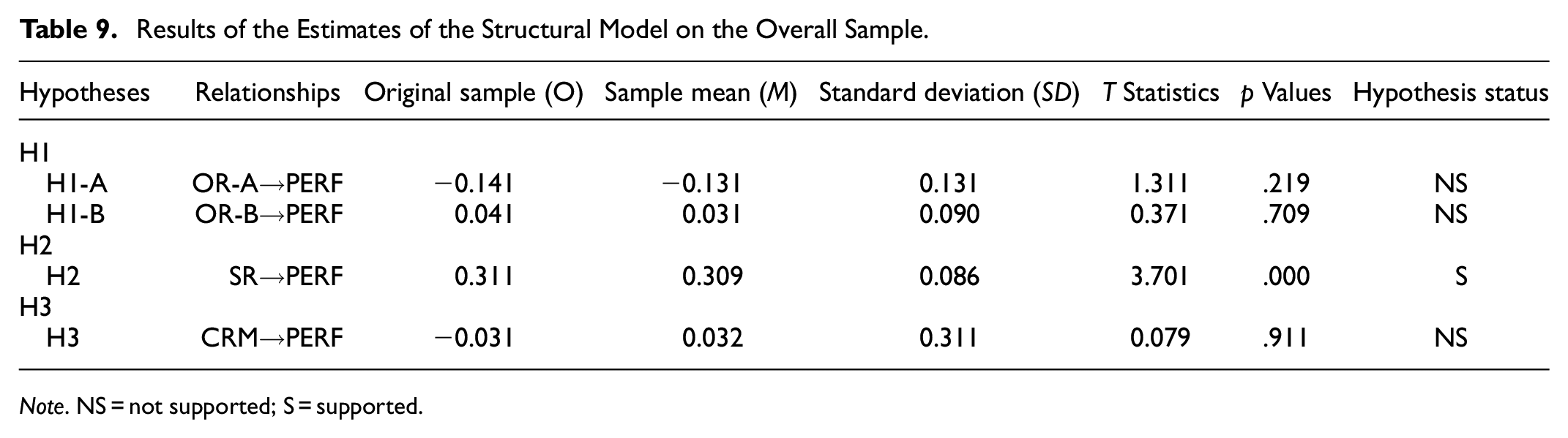
The Chin (1998) criterion was used to support or reject a hypothesis for this research. A bootstrapping analysis was carried out, and the value and significance of Student’s t determine whether a hypothesis is supported or rejected. As a result, the hypotheses are statistically significant at the p < .01 threshold; p < .05; p < .1 if and only if their Student’s t is greater than or equal to the absolute value of 2.58, 1.96, and 1.645, respectively. After testing the interactions between the different dimensions of the model, the following effects were established (Tables 8–11).
Examination of the Direct, Indirect and Total Effects of Risk Management and Customer Relations on Performance.
significant at 1% level.
Results of the Estimates of the Structural Model on the Overall Sample.
Note. NS = not supported; S = supported.
Results of the Estimates of the Structural Model on the Sample of Public Sector.

Results of the Estimates of the Structural Model on the Sample of Private Sector.

Overall, operational risk management does not influence the performance of the downstream supply chain, so H1 is not supported. This result supports hypothesis 2. The customer relationship negatively influences the performance of the supply chain, a sign contrary to that expected, which leads to the rejection of hypothesis H3.
Public Sector Organizations
As for the overall sample, operational risk management has no significant influence on performance, so H1 is not supported. On the other hand, strategic risk management significantly influences performance, so H2 is supported. H3 is rejected because the expected (positive) influence is rather negative.
Private Sector Organizations
The customer relationship has a positive but not significant influence on the performance of the downstream supply chain in this sub-sample, which leads to the rejection of H3.
Hypothesis Testing for Moderating effect of Customer Relationship
Hypotheses testing for moderating role of customer relationship is shown in Tables 12 to 14.
Moderating Effect of Customer Relationship.

, * significant at 1% and 5% level.
Moderating Effect on the Public Sector Organizations.

, * Significant at 1% and 5% level.
Moderating Effect on the Private Sector Organizations.

Significant at 5% level.
From the above tables, it can be deduced that there is a moderating role of the customer relationship between strategic risk management and the performance of the downstream supply chain on the total sample. There is a non-moderating only direct effect in the Public Sector Organizations sample because the direct path is significant. On the Private sector sample, neither the direct path nor the indirect path is significant in this relationship. Overall, the customer relationship does not significantly moderate the relationship between operational risk management (OR-A and OR-B) and performance. Finally, we may infer that there is no moderating link between operational risk management and supply chain performance, therefore H4 is rejected. On the other hand, there is a moderating effect of the customer relationship between strategic risk management and performance, so H5 is supported (Table 15).
Summary of the Results of the Hypothesis Test.

, * significant at 1% and 5% level.
The following summary can be carried out at the end of the analysis to test the postulates. Among the five hypotheses of this research, only two (H2 and H5) were supported on the data set. Two hypotheses (H2 and H5) are supported in the Public Sector sub-sample, whereas none was valeted in the private sector.
Discussion
This research was aimed to determine supply chain risk management and customer relationships influence on the performance of the logistics sector of Pakistan. Some research findings and research implications are discussed in this section.
The analysis revealed that operational risk management has little effect on supply chain performance The result did not support Abbas et al. (2019) assumption that operational activities within and among companies promote supply chain performance
The research has shown that the non-significant positive relationship between forecast risk management and performance has denied the theory that collaborative forecasting guarantees better performance (Aviv, 2001; El Ouardighi, 2008). Therefore, we can conclude that operational risk management contributes more to the consolidation of a customer orientation than to the perceived performance of the supply chain. The research showed that strategic risk management influences performance, which is in accordance with theory. This result thus joins those found by Aviv (2001), who argue that the performance of the upstream supply chain is based on the management of partnerships (downstream, the management of subcontractor transport partners).
The study also confirmed the association between customer relationship management and performance. The findings indicate that customer relationships impact supply chain performance, but not in the predicted favorable way. It is different from that of Huo et al. (2018), who find that customer relationship orientation has a favorable impact on the upstream supply chain (company-supplier) performance. The rejection of this hypothesis would perhaps be due to the sole consideration of the customer relationship dimension as the antecedent of performance. The research has found a positive link to this construct on performance integrated it into a package of SCM practices such as the strategic partnership with suppliers and production postponements (for specific products). These practices can give the organization a competitive advantage over cost, quality, reliability, flexibility and on-time delivery. Even S. Li et al. (2006) could not find any linkage between these attributes and performance because they provide a competitive advantage that guarantees the supply chain’s performance. This result raises questions in a context where companies are developing loyalty programs for their distributors to gain market share.
The results reveal a correlation between strategic risk management and supply chain performance. The results also revealed negative association between customer relationship and performance which indicates that no matter how separate the nodes of a SC network may appear, they are all actually linked. Indeed, SCs emerge through a network of activities (buying, manufacturing, and sale) and practices (management of supplier/carrier relationships, management of production processes, and customer/carrier relationships), the inextricable link between them can’t be ignored.
This study has several theoretical, methodological, and managerial consequences. The major theoretical implication is the fact that this is the first study to examine the many elements of SCRM in relation to Pakistan’s logistics sector. The results indicated that operational risk management had no effect on the supply chain’s performance. The study established that the non-significant positive correlation between forecast risk management and performance refutes the idea that collaborative forecasting ensures superior performance. Additionally, the study demonstrated that strategic risk management influences performance, which is consistent with theory. Additionally, the study established a correlation between customer relationship management and performance. The findings indicate that the customer connection influences the supply chain’s performance, but not in the predicted positive direction.
The methodological implication is the usage of PLS-SEM to investigate the correlations between SCRM and organizational performance. PLS-SEM has not often employed in SCRM research, which was mostly conducted via qualitative investigations. PLS-SEM is advantageous when certain impact predictions are needed in a study model, such as the effects of business contingencies and settings on risk management tactics. This study may serve as a guide for future research that applies this method to risk management.
This research also has managerial consequences. This study emphasized the critical role of organizational performance and customer interactions in logistics businesses’ effectiveness in SCRM. Particular emphasis is placed on methods to ensure the logistical dependability of partners and to foster cooperation as fundamental risk management tactics. Firms may examine their relationship definitions in light of the risk management strategies described in this research, resulting in improved organizational performance and customer relationship.
In short, this research has made it possible to conclude the existence of a direct and indirect link (through customer relations) in the management of strategic risks and the performance of the logistics sector of Pakistan. However, the relationship between operational risk management and performance has not been established.
Conclusion
In this paper a comparative study among Pakistan’s public and private sectors logistics and transportation companies was provided. The data was collected from officials working in logistics sector of Pakistan, both public and private sector organizations. Hypotheses are formulated to study that what impact both operational and strategic risk management practices can have on supply chain management performance with and without moderating role of customer relationship. In other words, we have determined: (i) what is the influence of the management of operational and strategic risks of the downstream supply chain on the performance of the logistics and transportations companies and (ii) do customer relationships play moderating role between risk management and performance or not? The background material has been covered, in great length. PLS-SEM methodology is used to find the linkage among proposed research variables. The findings indicate a positive association between strategic risk management and supply chain performance, both directly and indirectly. The study also discovered a negative association between customer relationship and performance. However, no link has been demonstrated between operational risk management and performance. Conversely, unsubstantiated ideas have revealed a new dynamic in terms of customer relationship. The results of this study give impetus for more studies that can confirm these results on a wide range of companies involved in CPEC. This study has a restriction in that only public and private logistics companies engaged in CPEC were included.
Footnotes
Acknowledgements
The research team is grateful to Hainan University.
Declaration of Conflicting Interests
The author(s) declared no potential conflicts of interest with respect to the research, authorship, and/or publication of this article.
Funding
The author(s) disclosed receipt of the following financial support for the research, authorship, and/or publication of this article: This research was funded by National Natural Science Foundation of China (72061009), Planning project of philosophy and social science in Hainan Province (HNSK (QN) 22-26) and Natural Science Foundation of Hainan Province(723MS028)
Clarification
I was not confirmed about exact funding number at time of submission and revision
