




Abstract
Error correction has been one of the central themes in accounting for potential gains in second language (L2) writing. While a wide range of empirical studies focused on the effects of written corrective feedback (WCF) on learners’ writing outcomes, few of them have specifically examined the feedback process, or its potential role as a shaping force in learner development. Underpinned by a sociocultural framework of L2 acquisition, the present study examines learner development as mutually mediated by teacher feedback and learner response during dyadic sessions of error correction. The socioculturally informed approach, dynamic corrective feedback (DCF), operates via dialogic, collaborative negotiation over errors between an expert and a novice, in which feedback is scaffolded and tailored toward learner competence. Data collected from three Chinese EFL learners’ written texts and writing tutorial sessions show that learner idiosyncrasies are evident in development trajectory, and that development is not always linear but recursive. It is suggested that teachers attend to individual needs and abilities when providing feedback so as to facilitate sustainable development.
Keywords
Introduction
Written corrective feedback (WCF) has been particularly polemical in second language (L2) writing since Truscott (1996) proposed its futility as a learning instrument (Mohebbi, 2021). The results of empirical studies on the role of WCF in L2 attainment are mixed. A considerable number of studies have approached this issue by comparing effectiveness of multiple WCF strategies (Kang & Han, 2015; Karim & Nassaji, 2019; Li & Vuono, 2019), some of which extended the discussion in relation to error types (Satake, 2020), feedback scope (Mao & Lee, 2020), or types of target structure (Suzuki et al., 2019). An assumption underlying this strand of research is that the extent to which error correction can be beneficial depends on whether effective methods have been used. However, it is simply unreliable to assume an exclusive modulating effect of feedback strategies on learning outcome.
Some recent research in WCF has turned their attention to learner engagement in error correction as a mediator between feedback and language learning. Learner traits and beliefs are taken into consideration when interpreting distinct engagement manners among multiple cases of individual learners (e.g., Han & Hyland, 2015; Liu, 2021; Storch & Wigglesworth, 2010; Zheng & Yu, 2018). The complex attributes of learners themselves, such as personality and motivation, are reported to exert an influence on their abilities and willingness to act upon potential learning opportunities from feedback (Jackson & Park, 2020). Having approached WCF from both the provider and the recipient perspectives, however, it is still not sufficient to portray the interactivity between feedback provision and reception. Little is known about whether and to what extent learner development is jointly afforded by teacher feedback and learner engagement. There is a scarcity of research into the process of WCF that unfolds how learners incrementally develop their L2 knowledge and how learner development is shaped by teacher feedback. In particular, a systematic, descriptive approach is necessary to draw out the dynamics of the development process.
By taking a sociocultural stance, this study addresses learner development by focusing on the interactive nature of feedback, conceptualizing L2 acquisition as concurrent with feedback. In this study, development is evidenced in the specific stages involved in developing learners’ L2 writing knowledge, rather than in their acquired end-product, and WCF is viewed as a learning process mediated by interactions between an expert and a novice. Reported in the article is an exploratory multi-case study of WCF conducted with three Chinese EFL learners, who were provided oral feedback on their written works in a tutorial session on a one-to-one basis. Data were collected from teacher-learner interaction and analyzed with the technique of conversation analysis. This study offers insights into the sociocultural understanding of corrective feedback, and more specifically, contributes to current knowledge of how learner development is incrementally mediated by both the recipient and provider of feedback.
Literature Review
Feedback and Engagement in L2 Writing
Language production is multi-dimensional in nature, which can be adequately captured by the constructs of complexity, accuracy, and fluency (Skehan, 1998). Accuracy describes error-free and native-like use of language. In L2 writing, teachers are often obliged to review students’ written texts and give feedback on aspects such as the way the text is structured, the ideas that are conveyed, and the accuracy and appropriateness of language (Bitchener & Ferris, 2012). While some aspects are related to “learning-to-write,” feedback on accuracy is concerned with “writing-to-learn” a language (Van Beuningen, 2010, p. 2). With the sole goal of improving L2 accuracy, the kind of issues being addressed in WCF are mostly linguistic errors, that is, lexical and grammatical errors, rather than those on content or organization (Bitchener & Storch, 2016).
A considerable number of studies examining WCF have found that learners who received feedback demonstrated higher level of linguistic accuracy, on revised texts or on new pieces of writing, than those who do not (Bitchener, 2008; Bitchener & Knoch, 2010a, 2010b; Ellis et al., 2008; Frear, 2012; Karim & Nassaji, 2020; López et al., 2018; Shintani et al., 2014). But the degrees of effectiveness vary in terms of how feedback is operationalized. Feedback can seek to correct what is inaccurate (direct corrective feedback), to inform the location or type of the error (indirect corrective feedback), or to suggest the cause of the error and how to correct it (metalinguistic feedback). Thus, the kind of feedback strategy to adopt, ranging from the most explicit to most implicit, depends on the intention that to what extent the learner is to be informed (Mao & Lee, 2020). By examining the effectiveness of different types of feedback, a consensus among the scholars seems to be that the various feedback strategies contribute to L2 acquisition differently, particularly regarding specific linguistic structures (Bitchener, 2008; Bitchener & Knoch, 2010a; Erlam et al., 2013; Sheen, 2007; Shintani & Ellis, 2013; Shintani et al., 2014; Suzuki et al., 2019).
That being reported, any feedback strategies do not immediately lead to improved learning outcome. Lee (2008) found that when a teacher-centered approach of feedback provision was adopted without receiving learner response, learners were prone to relying on teachers to indicate errors and provide corrections. Moreover, using only one or a restricted number of feedback strategies or targeting some certain structures does not simulate what occurs in real-world L2 classrooms. It is more likely that a language teacher provides comprehensive feedback on all errors with different strategies of provision (Storch, 2018). It is therefore crucial to consider the suitability of WCF in relation to the pedagogical context and learner traits and characteristics (Han, 2019). Several studies have sought to investigate how learners react to, engage with, and retain feedback, and their motivation thereof. Hyland (2003) highlighted two individual cases with distinctive personalities, as well as the ways they treat feedback. One student with cautious, error-avoiding strategy of L2 writing confined herself in simple language use, who articulated dissatisfaction about teacher feedback for not commenting on more complex problems, while the other, who made efforts to try out novel structures, treated feedback as an opportunity to improve writing. In another case study investigating peer discussion of feedback, Storch and Wigglesworth (2010) further confirmed in-depth engagement with feedback as key to high-level learner uptake. In both studies, learner beliefs and attitudes, as well as their orientation toward L2 writing, played a mediating role in how their received and processed feedback.
A more systematic approach to learner engagement was proposed by Ellis (2010). There are three dimensions of engagement in this proposal: (1) cognitive engagement (i.e., attention and cognitive strategies employed to engage in feedback), (2) behavioral engagement (i.e., interaction with feedback through oral negotiation or written revisions), and (3) affective engagement (emotion- or attitude-oriented reactions to feedback). Adopting this framework, Han and Hyland’s (2015) case study described four Chinese EFL learners who demonstrated the ability to retrieve prior knowledge and seek for metalinguistic clues in correcting errors. The learners also used external resources to generate revisions and showed both negative and positive emotional responses. It is found that engagement patterns at the three dimensions in this study were subject to learner beliefs and attitudes. This is further supported by the study by Han (2017) in which reciprocal relationship between learner beliefs and engagement is interpreted from the subcomponents of person-related, task-related, and strategy-related beliefs. However, it is underexplored whether there are any changes or development in learner engagement with feedback. In other words, learner beliefs and attitudes may also be shaped to varying extent when receiving feedback of different focus. For example, a match between feedback and learner perceptions may potentially lead to better engagement (Zheng & Yu, 2018). A key step in engaging learners therefore lies in the identification of the kind of feedback that is mostly tailored to learner needs.
The Sociocultural Perspective: Feedback and Microgenetic Development
The present study adopts a sociocultural understanding of language learning, which happens in rather than as a result of feedback. In sociocultural theory (SCT), critical learning takes place when there is potential for current understanding to be extended by social interaction. Learner development occurs when new knowledge is acquired through local, contextualized moments of interaction (Vygotsky, 1978). As a learner is completely new to the knowledge or skill to be acquired, external scaffolding is needed, but it progressively lessens as the learner shows the ability to perform the task independently. The potential for development to occur is evaluated against the learner’s ability to make use of that scaffolding, which is called Zone of Proximal Development (ZPD) (Wilson & Devereux, 2014). Thus, instead of improved learning outcome, learner development is evidenced in changes of the kind of feedback the learner needs, or in his/her responses to feedback. Such development is at microgenetic level; it takes place over a short time span and is manifested in subtle changes of learner knowledge, which the learner may only notice in post-hoc reflection (Mitchell & Myles, 2004). Through a sociocultural lens, WCF can therefore be viewed as a process of knowledge co-construction through error correction, in which the learner is scaffolded by the teacher (Storch, 2018).
Dynamic corrective feedback (DCF) is a socioculturally informed feedback approach that loosens the boundaries of traditional feedback strategies (Rassaei, 2014, 2019). It is initially in the most implicit prompts, then becoming more explicit until the learner has received sufficient help to correct the error. In DCF, the directness of feedback is not bounded but distributed across a spectrum from explicit to implicit moves, with the amount of scaffolding in an incrementally reducing status. The directness, specificity, and degree of support are carefully considered to accommodate learner needs and abilities. The provision of DCF needs to be graduated, contingent, and dialogic (Aljaafreh & Lantolf, 1994). Graduated provision enables the discovery of learners’ ZPD, where they are able to acquire knowledge with external assistance, and have the potential to acquire independently in the future. ZPD is indicated by the minimum level of scaffolding required by the learner to perform the task (e.g., the minimal feedback needed for the individual to notice or self-correct the error). This means the teacher needs to be sensitive about the kind of assistance appropriate to the novice; provision that is too explicit or too implicit may not facilitate learning if it is not suited to the particular learner. In other words, feedback should be provided in an incremental manner until the assistance is tailored for learner ZPD. Contingent feedback means the teacher needs to cope flexibly with the novice’s response. Help is offered where necessary and withdrawn where the learner is capable of performing independently. Also, feedback is a dialogic process; it is a collaborative activity with a problem-solving aim. The learner’s over-reliance on the teacher, or insensitivity to assistance, is to be avoided. Both the learner and the teacher have equal roles to play in the language-mediated interaction.
Studies on DCF in L2 Writing
A number of studies have empirically verified the advantage of DCF over other WCF strategies (e.g., Hartshorn & Evans, 2015; Hartshorn et al., 2010; Kurzer, 2018). For example, DCF was found to be more effective than traditional writing instructions in facilitating linguistic accuracy (Evans et al., 2011; Hartshorn & Evans, 2015; Hartshorn et al., 2010). However, it should be noted that these studies are of exploratory nature and are limited to a small sample size, some of which are flawed in quasi-experimental design such as lack of control group. Only Kurzer (2018) included a large number of participants in a longitudinal study, lending support to the positive effect of DCF in improving linguistic accuracy. That being said, to examine the effectiveness of DCF against other feedback strategies has downplayed the sociocultural orientation in the approach. Afterall, DCF stands as an umbrella concept to merge and make better use of all existing feedback strategies. These studies are similar to previous discussions in that language learning is assessed by gaging improvement in learning outcome rather than socioculturally defined evidence of learner development.
Another strand of research, though not applying the name of DCF, is hugely socioculturally oriented and views such feedback strategy as alternative to the traditional clear-cut taxonomy of WCF, shedding light on how its value can be more comprehensively revealed in analysis of process-oriented data than in comparisons of learning outcomes. Among the most representative case studies is research by Aljaafreh and Lantolf (1994), who manifested microgenetic development during teacher-learner feedback sessions, but the conversations were selectively presented without delineating individual development trajectories. Erlam et al. (2013) employed a more meticulous data mapping method to record learner response with feedback. However, they found that “full development” had not taken place because the teacher had to constantly correct the same error (p. 266). This leads to the inference that moments manifesting microgenetic development need to be captured by more in-depth data that reflect spontaneous dynamics. The present study builds upon this case-based descriptive approach and taps into more specific clues of microgenetic development afforded by feedback and engagement so that WCF can be better grounded in and explained by the sociocultural notion of scaffolding. Two research questions are devised as follows.
RQ1 How do teacher feedback and learner response interact with each other?
RQ2 How is microgenetic development manifested in learners’ engagement with feedback?
Methods
Participants and Sampling
Since the aim of the study is at capturing “idiosyncratic experience,” selection of participant cases is not concerned with “how representative the respondent sample is or how the experience is distributed” but finding “individuals who can provide rich and varied insights into the phenomenon under investigation” (Dörnyei, 2007, p. 126). Therefore, purposive sampling is employed. The sampling process involves an ongoing iteration throughout data collection until reaching saturation when additional data do not generate new insights. A total of five participants were recruited after an initial round of convenience sampling. Among the five, three were selected to be the cases on the ground that the data generated from them thoroughly demonstrated the dialogic nature of DCF, which simply covered the experience of the other two. The decision of case selection was made after data collection when the study was “empirically confident” that the point of saturation was reached (Dörnyei, 2007, p. 127).
The three participants in the present study were Chinese intermediate EFL learners, whose ages ranged from 23 to 24. All of them have received form-focused L2 instruction in secondary and tertiary education, in which English was viewed more as an academic subject than as a language in use, and their opportunities to use English in a native-like communicative context were limited. They had a good knowledge of English grammar but limited ability to apply it in meaning-based use such as writing. As they were not from the same classroom, their experience of L2 learning and exposure to the language might vary. Nonetheless, they all had plans of studying abroad in the future and had received training on the IELTS academic test for at least 3 months at the moment of the study being undertaken. Particularly, they shared a common goal of enhancing their writing skills in English. Written informed consent was obtained, and the participants’ right of anonymity is respected by applying pseudonym in data reporting.
The Writing Task
The task involves writing a summary of at least 150 words in response to a graph. This task is adopted from authentic examination papers of IELTS academic writing (see Appendix 1 for the task). The graph shows changes in the quantity of gas emissions in four countries during a certain historical period. Candidates are required to describe quantities and trends, draw comparisons and contrasts where necessary, and write about the past, requiring the use of English past tense. Compared to free journal writing or writing for assigned topics, this task leaves little flexibility in terms of key messages to be delivered and linguistic structures to use. The task nature of restricted discretion is to ensure that the linguistic structures and content expressions generated by the participants do not vary much between them. The choice of this task is also based on the motivation of the participants to complete the writing task as a diagnosis that can be brought to discussion rather than as a one-off test to reveal language proficiency. Additionally, since the participants have familiarized themselves with all aspects of expectations for the writing task (i.e., content, structure, language complexity, and style of writing), this constitutes a good condition to focus primarily on correction of linguistic errors, which means feedback negotiations would be less deviated by aspects other than linguistic forms.
Participants were required to complete their writing independently within 30 min. They were allowed to consult dictionaries for unknown words, but not allowed to seek assistance from others or any translation software during writing. They were advised to mark or leave a note where they were uncertain about their writing, which would be brought into discussion at tutorial. They handed in their works immediately after completion. They were also provided with written comments on other aspects of writing after the tutorials as compensation for their time spent taking part in the study.
The Tutorial Session
Following the writing task, each participant was invited to a tutorial session that lasted around an hour. In the session, participants received DCF on their writing pieces from a teacher on a one-to-one basis. DCF methods initially offer prompts or hints in the most indirect form to suggest existing errors; if the learner is not responsive as expected, the teacher then moves to more direct feedback. Before the start of the tutorial, participants were informed of the dialogic, collaborative nature of the activity. The teacher firstly read each sentence aloud and asked whether it contained any errors. If the participant responded with negation or showed no response, the teacher would indicate the nature of the error. If this still elicited the same reaction from the participant, then the teacher would point to the specific location of the error in the sentence. This DCF protocol is shown in Figure 1.

DCF protocol (adapted from Aljaafreh & Lantolf, 1994).
The central aim of this method is to find a tailored process of feedback provision that engages the learner in error correction. Changes in the degree of directness of DCF strategies also reflect changes of one’s ZPD. For instance, when the feedback elicits a learner’s self-initiated error correction, on the same error which has resisted correction in previous attempts with the same quality and amount of scaffolding, this shows the learner needs less external support to attain the desired development level. The key to DCF on the part of the teacher, therefore, is to offer just sufficient support on the verge of the learner’s ZPD and encourage the learner to contribute to the collaborative activity of error correction.
Data Collection and Analysis
A data-driven method was employed to schematize learner response. A pilot study was conducted with two participants with the same EFL learning background to those in the present study. Figure 2 shows a taxonomy of learner response schematized after multiple reading and coding of the pilot data. The primary distinction of learner response is decided by whether the error is noticed. If noticing is observed, then the focus moves to whether there is self-initiated correction and whether the correction is acceptable. The taxonomy is then integrated with DCF strategies, together constituting the prototypical sequence of error correction shown in Figure 3. The prototype illustrates learner response in relation to feedback strategies given. Each error episode starts with indication of error and ends with confirmation of correction despite different routes taken in the process. Both grammatical errors (e.g., morphological and syntactic errors) and nongrammatical errors (e.g., spelling, punctuation) are considered in the present study.

A taxonomy of learner response.
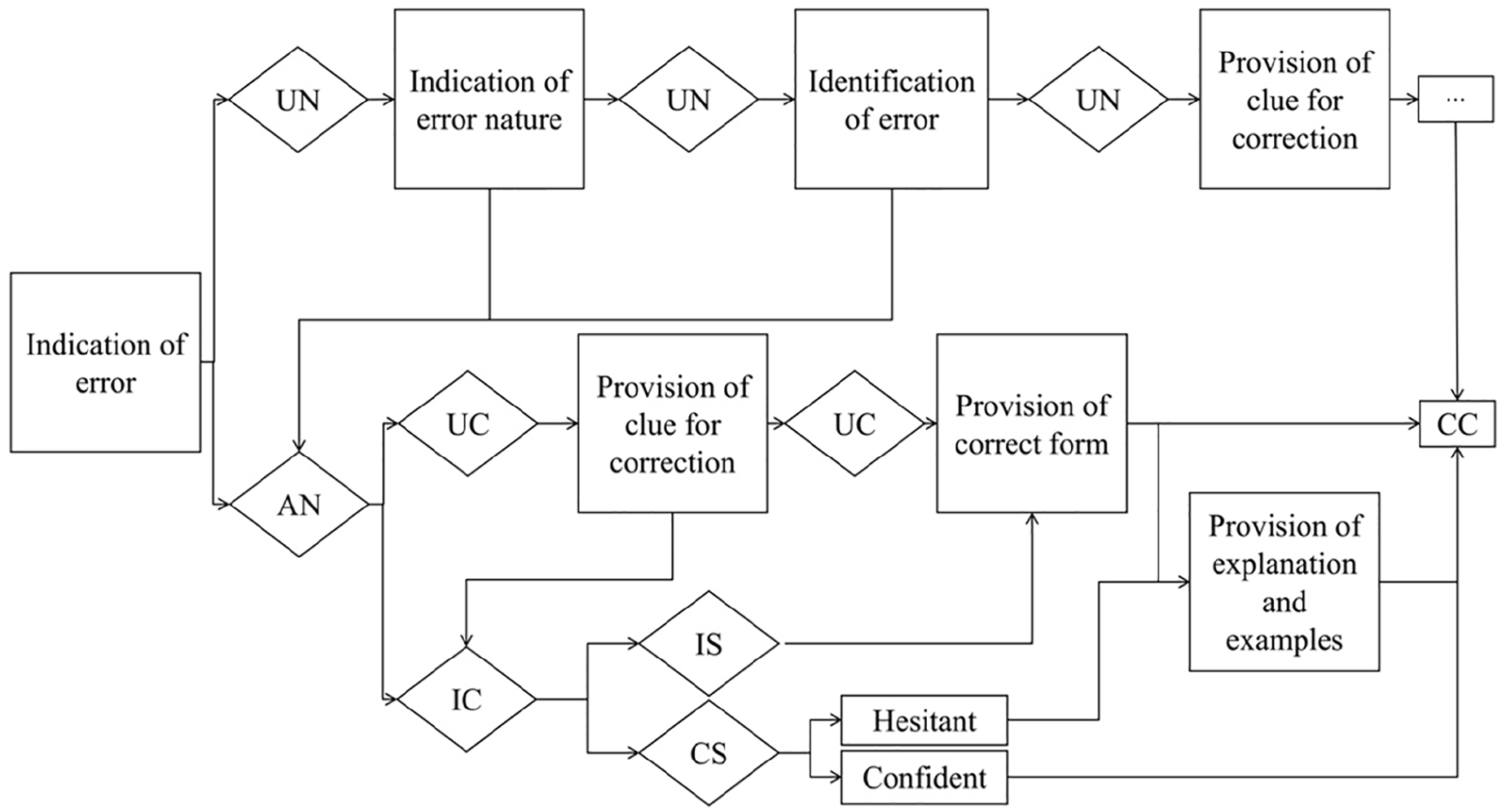
Prototypical sequence of error correction.
Participatory observation was used to collect data. In order to capture the dynamics of the activity, the context, participants’ personalities and dispositions, the researcher adopted the teacher’s role participating in the feedback process (Cohen et al., 2000). Tutorial conversations were audio-recorded and transcribed. Event sampling was used to mark the pair of feedback and response against each error observed. Conversation analysis was used to present the nuances of interaction occurred in the tutorials, as the strength of qualitative research lies in that “it can use naturally-occurring data to locate the interactional sequences in which participants’ meanings are deployed” (Silverman, 2013, p. 84). If close attention is to be paid to the “local embeddedness of interaction,” the level of structure or sequence should be prioritized over instance (p. 84). For each individual case, themes were inductively constructed from conversation episodes. The locations of selected episodes were tracked in the event sampling data, so that illustrations were situated rather than randomly or representatively selected. Transcription conventions of conversation analysis were adapted from Jefferson (2004) (See Appendix 2).
Results
The study intends to examine the interplay between teacher feedback and learner response, as well as how it contributes to learner development. Section 4.1 manifests the interaction by highlighting different engagement patterns and development trajectories of the three cases. Critical moments of learner development are then located and unfolded in Section 4.2 with the aid of conversation analysis. Transcripts of tutorial conversation are divided into error episodes for analytic expediency.
Feedback and Response
All of the three learners became more primed to self-correcting rather than relying on the teacher in the activity, though to different extent and at individualistic pace. Table 1 summarizes individual characteristics of engagement with feedback of the three cases.
Individual characteristics in feedback and response.

Abby managed to self-correct with scaffolding on most occasions except for two episodes, that is, E6 and E9, in which all six DCF moves were needed but she was unable to correct (See Figure 4). Nearly half of the errors were self-corrected at the second feedback move, despite some needing further confirmation from the teacher after self-correction. These episodes were pertinent to three types of errors, that is, adjective, tense, and spelling, while other errors involved more complex linguistic structures and elicited multiple rounds of feedback. Particularly, the errors in E1 and E2 were as manageable as in E3 and E4, but it took more efforts for her to notice and correct. It seems that a more substantiated manifest of the learner’s ability of self-regulation is revealed since after E3.

Mapping of feedback-response interaction (Abby).
Becky was able to notice the errors in all episodes except E12, and most were corrected under the initial two DCF moves (See Figure 5). While most errors were easily noticed, E3 and E18 seemed particularly challenging for her to identify, as well as E12, which featured a less complex but not very salient structure. With a hint given by the teacher, Becky was conscious of her role to correct most of the existing errors. As long as errors were noticed, she spontaneously took the lead to correct them and, in most cases, came up with correct solutions. Even in the case of E3 and E18 where several DCF moves were needed, she still relied on herself to work out solutions drawing on clues provided by the teacher. The only exception was E19, which she was able to notice at the first DCF move but did not initiate to self-correct until the end of the episode. Errors relating to article, tense, and numbers were most recurring but easy to resolve, while the semantic error seemed to be a major obstacle for her. Even if it was encountered in five episodes, she still needed multiple DCF moves to correct.

Mapping of feedback-response interaction (Becky).
Unlike Becky, Cici was slow to notice errors, but she proposed correct solutions as long as they were noticed (see Figure 6). An overall decreasing trend in feedback moves can be seen throughout the tutorial session. There were four occurrences of self-correction at the second DCF move before E13, but none after the move. Likewise, self-correction requiring only the initial move became more frequent after E19. The four errors pertinent to voice were either uncorrected or provided with incorrect solutions (E12, E13, E15, E17), which was the same with the cases of verb phrase and noun (E24, E25). Indirect prompts were adequate on most occasions, while several complex linguistic structures demanded greater amounts of scaffolding, voice being the most effortful one.

Mapping of feedback-response interaction (Cici).
Evidence of Microgenetic Development
Following a global view of feedback provision and learner response, this section addresses specific locations in the error episodes to unfold the occurrences of microgenetic development. Evidence of development is examined against a dichotomy between the learner’s other-regulated and self-regulated performance. Any change in the amount or quality of assistance needed, or the learner assuming greater responsibility for self-correction, is potentially indicative of development (Lantolf & Thorne, 2006).
Abby: Competent But Tentative
Abby experienced a transitory stage in the first two episodes before she showed a conscious effort on her part as mediator. She later started to assume greater responsibility to identify errors and explain proposed solutions. In E1, she was reluctant to identify the errors hinted by the teacher, who repeated the teacher’s reading-aloud of the error-containing sentence. Likewise, she responded in E2 by translating the phrase. After that, she took some time to think and reflect, and later confirmed no error identified. A change was noticed in E3 that she tentatively proposed a solution. However, she was not confident about it even after being echoed by the teacher. E3 witnessed a shift in Abby’s attitude from being disengaged with the teacher’s scaffolding efforts to becoming actively responsive, despite her tentative and unconfident attitude.

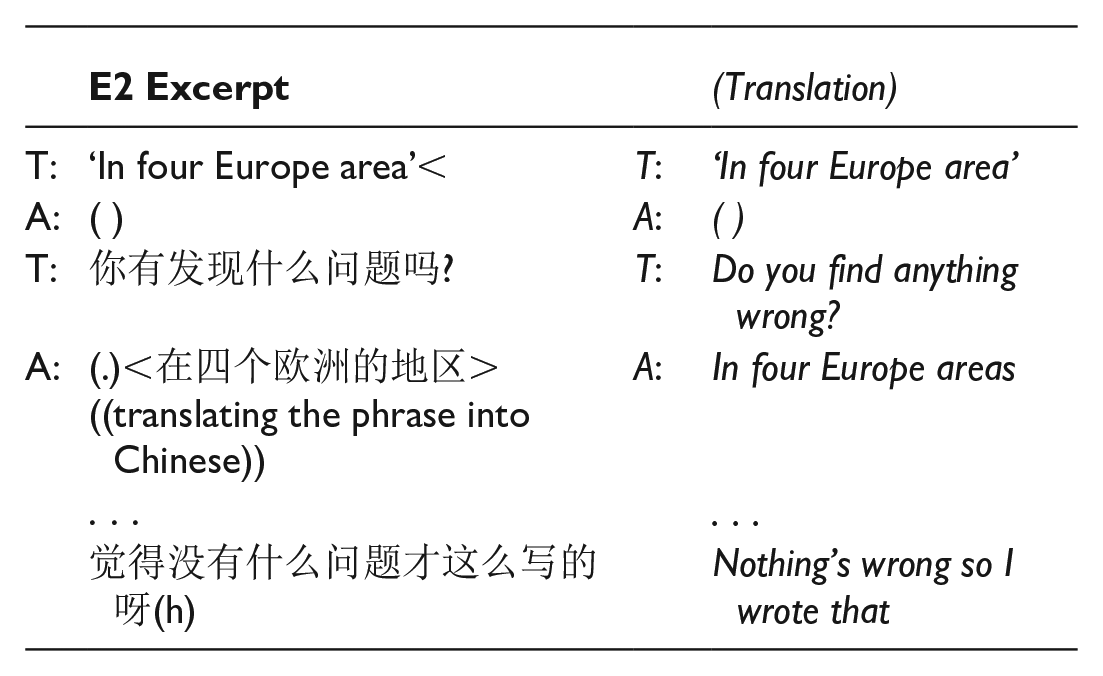

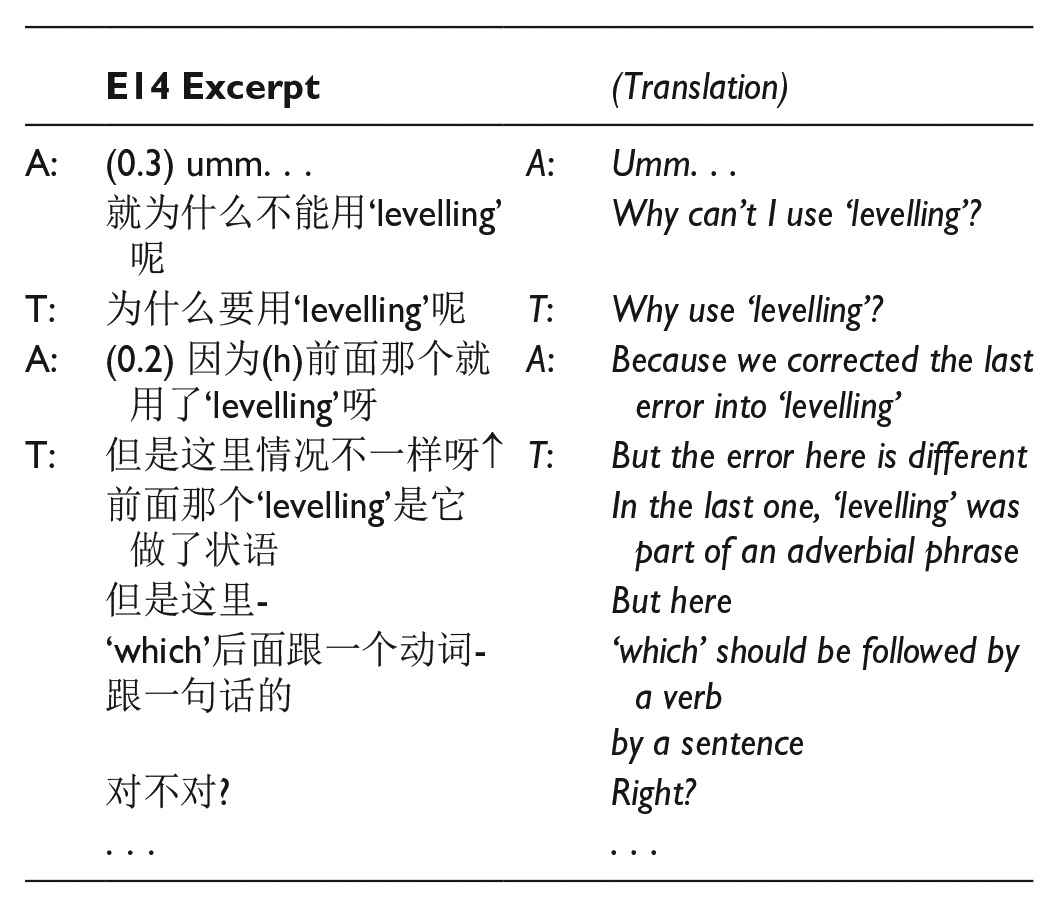
Moving on to E12, Abby indicated not knowing how to use the target word in the first place. But she responded when the teacher invited for attention to the nature of the word, who tried to join the shared perspective on the error. She later hesitantly formulated an option and reached agreement with the teacher. Interestingly, her sudden offer of solution immediately succeeded the teacher’s utterance of next cue for correction. This means the activation of Abby’s ZPD for this error even exceeded the teacher’s planned intervention.

Errors related to tense frequently occurred in Abby’s writing, but often a simple indication of the error location sufficed to lead to self-correction. However, in E14, it took several rounds of feedback for her to understand the nature of the error. She was drawn into defending and justifying her proposal, which was suggested incorrect by the teacher. The two individuals engaged more bluntly as they were negotiating differences in their respective established understandings of the target structure. In this episode, Abby gained more ownership in the dyadic negotiation, which contrasted with her previous unconfident disposition, but she drew on the rationale for dealing with the same word in last episode without realizing that the nature of this error was different from the previous one. It seems that her mastery of the target structure in E13 was not concrete enough to transfer to new contexts.
Becky: Responsive and Reliant
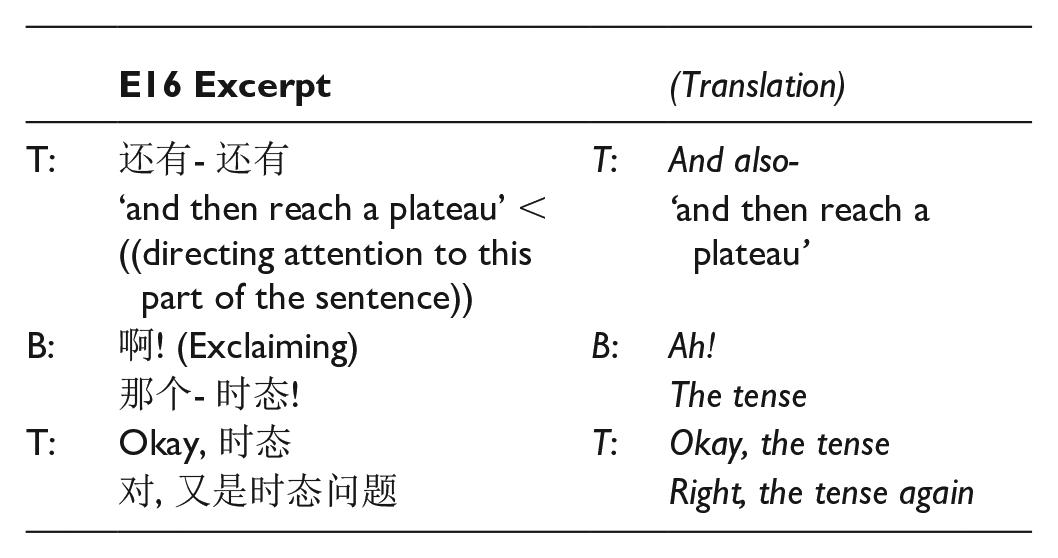
For Becky, development was evident in reduced feedback needed in the subsequent episodes that involved the same type of errors previously encountered. In E12, Becky was invited to focus attention on the nature of the error. When self-correction was suggested, she was unclear of expected action from her side. She gained the awareness of her performance through several rounds of confirmation both with herself and the teacher. Her laughter aloud at last seemed to indicate that she was surprised by the long time that she had taken to grasp the teacher’s intention.

E16 and E17 featured errors pertaining to the same structure as in E12. However, in these two episodes, only the first DCF move was needed to enable self-correction. Notably, she uttered the nature of the error immediately after the teacher read aloud the sentence. An inference is that the first encounter of the structure, in which the agreed perspective on error correction was attained through identifying the nature of error, consolidated her strategy of showing renewed understanding of the same structure by indicating the nature of error.

In E6, Becky was invited to identify the error and explained the cause of the error. However, she did not take the lead to self-correct until the teacher asked her to do so. In line with previous observations, it seems that Becky was swift in defining and explaining errors with scaffolding, but she would not take the ownership to engage in formulating alternative forms without cues from the teacher. It is more evident in E19, which features the same error, that Becky noticed the error quite easily, yet needed support to formulate correction. One reason may be that a much more complex syntactic structure was involved in the sentence, which deviated her attention from the error in focus.


Cici: Hesitant But Reflective
Cici took self-reflection aloud as a tool of thought. In E12, when being cued the nature of error, she attempted to situate herself in the teacher’s point of view by questioning back. She then requested more time for regulating inner thoughts as the teacher tried to recruit her attention on solution formulation. The learner constantly articulated her inner struggle and hesitation during the session. For example, moving on to E13, she uttered her interpretation of the nature of the word but then denied herself several times. Cici’s request for private reflection seems to imply an inherent rejection of external scaffolding. In both episodes, she failed to work out the correction on her own.


A change was that, in E15, she became more tentative and cautious by confirming her proposals with the teacher. This time, she arrived at the correct form in collaboration, who constantly sought for the teacher’s approval before going further. The episode manifests that Cici explored the ways of working toward an option satisfactory to both, consciously controlling frustrations that would have otherwise arisen in gaps of negotiation with the teacher. Though she often swung between options in decision-making, Cici gradually became more patient and careful in organizing thoughts before proposing solutions.

Discussion
The multi-case study is guided by two research questions: (1) how the three learners interact with teacher feedback, and (2) how microgenetic development is manifested. The above results highlighted idiosyncratic characteristics in ways of receiving scaffolding and maintaining negotiation. Consequently, the three learners have manifested different patterns and features in microgenetic development.
Toward Intersubjectivity
Coming to a shared perspective is a prerequisite for learning to take place in the dialogic error correction activity. Lantolf (2000) explained intersubjectivity as the beginning of mediated learning “when interlocutors undertake not only to share a perspective with regard to the reference of their talk but it also allows for the taking of the other person’s perspective and the suspending of one’s own” (p. 85). In the present case, this involves the learners to undertake the role as a responsive mediator that can well adapt to the flow of DCF strategies, and to have in storage linguistic competent adequate to interpret and engage with feedback.
The three learners demonstrated individual-specific adaptation paths in this activity. The tactical attitude of Abby changed in the third episode when she started to take over the initiative to tentatively propose options. She then showed an engaging orientation toward the session, and an agreement was made between her and the teacher that she would wield her existing metalinguistic knowledge and strategies to formulate options without relying on teacher’s support as much as possible. Becky had adapted to DCF at the very beginning of the session, but she was accustomed to being passively cued even if she was in confident competence to resolve the errors. Differently, Cici confined herself from receiving scaffolding in the first place, who changed the strategy of negotiation when she found that her repertoire of L2 knowledge failed to bring her to adequate attainment without external assistance. Nonetheless, all of them deployed inner speech as a tool of self-mediation (Mitchell & Myles, 2004). Abby either repeated or translated the teacher’s utterances when she needed to disentangle novel and existing information, while Becky frequently repeated the teacher. In the case of Cici, she simply asked for private reflection, free from external interference. The observations are in line with Lantolf’s (2000) account of repetition and other ways of inner speech to be both a scaffolding strategy and a means of achieving intersubjectivity in peer interaction.
In these activities, learners are shaped into conscious players in response to error feedback, and the extent to which they engage with feedback is reflected in they own construction of self-identity as mediator in this negotiation. As shown in E15, Cici deliberately confirmed with the teacher every proposal that she made toward the final goal of correction. In doing so, she explicitly invited the teacher to engage with her reference of talk in order to avoid failures of self-correction as what happened in her previous attempts of keeping uninvolved in the dyadic mediation. From the other side of the issue, it is the teacher who made efforts to change tactics of negotiation. The teacher suspended her invitation for a joint search of alternative understandings to allow Cici to wrangle with the intended meaning on her own first.
On the other hand, the capacity of learners’ metalinguistic and linguistic knowledge in affording error correction has also influenced the engagement and uptake of feedback. Ellis (2009) explained that learners are unlikely to self-correct errors relating to linguistic knowledge that exceeds their current L2 repertoire. A case in point is that Abby’s ability to self-regulate was hugely stimulated when she preceded the teacher’s scaffolding in arriving at a correct solution. Another supporting evidence from the literature is that the low-proficiency L2 learners’ engagement with feedback is featured with superficial tackling strategies and little request for extra assistance (Zheng & Yu, 2018). In this sense, DCF shows a pedagogical strength that allows for leeway on the feedback side to accommodate learner competence.
Microgenetic Development
Individual learners can hold different ZPDs for the same structure, and the same learner can hold different ZPDs for different linguistic structures (Aljaafreh & Lantolf, 1994). The kind of microgenetic development under discussion in this section pertains to multiple encounters with the same linguistic structure by the same individual. Structures that are at the edge of learner ZPD are most likely to demonstrate the change in support needed. For instance, Cici exhibited a swift command of self-regulation for uncomplex, but easily overlooked errors with implicit hints. This means that her potential to reach independent use of the structures was small. When it came to more challenging errors, she needed much more scaffolding in multiple encounters to attain the expected level of acquisition. This implies that, by estimating the minimum level of intervention needed to stimulate development, learner ZPD can be accurately targeted, avoiding overload or underload of potential competence in independent correction. It is also in line with Aljaafreh and Lantolf’s (1994) finding that feedback should be graduated and contingent.
Both Abby and Becky met the same structure in a new sentence, in which the structure was used differently or as a different component of the sentence. Development was expected to arise but did not materialize. For example, Abby needed several rounds of scaffolding in the last encounter of the error pertaining to tense, even though she had demonstrated self-regulated behaviors in previous encounters of the same structure. It is not guaranteed that uptake was solid enough to be flexibly applied to new contexts of L2 acquisition, even if considerable assistance was involved. This finding is consistent with Han and Hyland (2015) that acknowledging and processing an error does not immediately lead to a firm grasp of the metalinguistic knowledge or spontaneous use. It is thus inferred that microgenetic development does not always occur in an ascending, progressive manner, but sometimes involves reverses. Meanwhile, a difference is noted in that Becky discerned the new use of the structure, while Abby was passively guided to notice that the cause of the error was different from the previous encounters. Here, it can be inferred that learner attention is influenced by the feedback environment, as it is limited. Abby is likely to have taken for granted that the previous solutions were to be applied in the new sentence. By contrast, Becky was less influenced by previous feedback, as her attention was adequately distributed to noticing the change of the sentential context. In a quantitative analysis, Shintani et al. (2014) examined two types of errors, varying in saliency and complexity; it was found that learners were more likely to distribute attention to the salient and complex error that held solid meaning within the sentence context. A further conclusion in combination of the findings is that some errors, even within learner ZPD to independently deal with, can disguise themselves as a result of low saliency or limited learner attention.
In addition, although Becky adequately adapted to the operation of DCF, she waited for cues from the teacher and abided by one-by-one feedback instructions, even in cases where she was quite competent to arrive at the final solution by herself. By contrast, Abby and Cici sought to wield as little external help as possible, whose ZDPs were validly identified and made use of. Individual perceptions of DCF are therefore a potential factor that modulates the untapping of learner ZPD. The potential for development sometimes is hidden as in the case of Becky, which could have been tapped in more depth if the expectation on the learner’s role as mediator was explicitly articulated by the feedback provider.
Conclusion
Most previous studies examining WCF were based on outcome-oriented measurements of L2 acquisition. Despite knowing which feedback strategy stands out for the optimal solution, we are little informed about how feedback is operationalized in real-life classrooms, or how it impacts the development of individual learners. This study investigates WCF from a sociocultural perspective; it showcases how individuals differ from each other in the ways they correct errors, interact with the teacher, and develop their self-regulating abilities. The notion of development is revealed by progressive changes rather than the final measurement of learning outcome. It is found that different learners exhibited different levels of attainment with different linguistic structures. An implication for pedagogical practice is that feedback should be tailored to individual needs and abilities, targeting the scope of ZPD for encouraging improved independence in language learning. It is also found that development often took place in subsequent encounters of the same error. Some episodes witnessed less scaffolding being required for correcting the same error, others revealed a random moment in which the learner assumed greater responsibility in the collaborative activity. Microgenetic development occurs recursively rather than in a steadily progressive manner. In each case, the analysis was individual-specific, context-specific, and ZPD-specific.
This study informs that learner idiosyncrasies need to be attended to in error correction. While one-to-one tutorials are obviously appropriate to tailored feedback, classroom attendance is the most common form of L2 learning. It is important that teachers keep control over the frequency and amount of feedback. Too many one-to-one tutorials can be time-consuming, while purely collective writing instructions do not address individual-specific errors. Teachers need to make careful decisions in terms of the extent to which their feedback is individual-tailored. The key to DCF operation is that errors are collaboratively negotiated, and its use in authentic tutorials can be simplified and flexible where necessary. Teachers are encouraged to keep an eye on the crucial moments when students show signs of self-regulation in learning.
Some limitations inherent to the study must be acknowledged. Admitting the small-scale, exploratory nature of the study, future research will need to be devoted to longitudinal investigations of DCF that involve multiple rounds of tutorials. Observations of multiple tutorial sessions might generate more holistic manifestations of development patterns in individual learners. Since the study only recruited adult participants, all of them adapted to DCF quickly and became more self-regulated. A point of departure for future research may involve investigating how child language learners respond when they receive DCF. An inference is that adult learners holding clear motivation and aims of learning a second language may exhibit strength in self-regulation over child learners. With child learners, some insights might be generated in terms of the inherent ability to self-regulate during L2 acquisition. Also, this study addresses upper intermediate level learners in the Chinese EFL context. Learners of other language pairs and proficiency levels are to be investigated.
Footnotes
Appendix
Transcription Conventions (Adapted From Jefferson, 2004).

| [ | A left bracket indicates the point of overlap onset |
| ] | A right bracket indicates the point at which two overlapping utterances end, if they end simultaneously, or the point at which one of them ends in the course of the other. |
| = | No break or gap (a pair of equal signs, one at the end of one line and one at the beginning of a next, indicate no break between the two lines) Also used as a transcript convenience when a single speaker’s talk is broken up in the transcript, but is actually through-produced by its speaker A single equal sign indicates no break in an ongoing piece of talk, where one might otherwise expect it, e.g., after a completed sentence |
| (0.0) | Numbers in parentheses indicate elapsed time by tenths of seconds |
| — | Double dashes indicate a short, untimed interval without talk |
| (.) | A dot in parentheses indicates a brief interval (+_ a 10th of a second) within or between utterances |
| — | Underscoring indicates some form of stress, via pitch and/or amplitude |
| :: | Colons indicate prolongation of the immediately prior sound. The longer the colon row, the longer the prolongation |
| ↑↓ | Arrows indicate shifts into especially high or low pitch |
| .,? | Punctuation markers are used to indicate “the usual” intonation |
| * | Asterisk indicates percussive non-speech sounds |
| <word | A pre-positioned left carat is a “left push” indicating a hurried start |
| >word | A post-positioned left carat indicates that while a word is fully completed, it seems to stop suddenly |
| - | A dash indicates a cut-off |
| >< | Right/left carats bracketing an utterance or utterance-part indicate that the bracketed material is speeded up, compared to the surrounding talk |
| <> | Left/right carats bracketing an utterance or utterance-part indicate that the bracketed material is slowed down, compared to the surrounding talk |
| .hhh | A dot-prefixed row of “h” within a word indicates breathiness. Without the dot, the ‘h’s indicate an outbreath |
| (h) | Parenthesized “h” indicates plosiveness. This can be associated with laughter, crying, breathlessness, etc. |
| ( ) | Empty parentheses indicate that the transcriber was unable to get what was said |
| (( )) | Doubled parentheses contain transcriber’s descriptions |
Acknowledgements
The authors would like to thank Dr Denise Chappell for her support and comments for the study.
Author Note
This research was conducted while Xueni Zhang was at the University of Cambridge. She is now at Durham University and may be contacted at
Declaration of Conflicting Interests
The author(s) declared no potential conflicts of interest with respect to the research, authorship, and/or publication of this article.
Funding
The author(s) received no financial support for the research, authorship, and/or publication of this article.
Ethics Statement
The research is approved by the Ethics Committee of Faculty of Education in the University of Cambridge.
