



Abstract
This study investigates the effect of firm performance on corporate social responsibility (CSR) in a specific spatial context. The results for a sample of 1,557 listed companies in China suggest that a firm’s CSR performance level is influenced by that of nearby firms. This study also confirms the indirect link between financial and CSR performance through the mediating role of institutional and executive shareholding rates. In addition, the empirical evidence in this study not only supports the spatial context-sensitive thesis but, more importantly, proposes a spatiotemporal context-sensitive thesis. It provides strong empirical support for the true relative value of the spatiotemporal context affecting CSR performance, which yields important theoretical, methodological, and policy implications.
Keywords
Introduction
There is a partially bidirectional relationship between corporate performance and corporate social responsibility (CSR; Ratajczak, 2021). Generally, this relationship is positive (Lee & Yang, 2022); however, it may occasionally be negative (H. Wang & Choi, 2013) and under certain circumstances, it is not significant (Kreander et al., 2015). Despite their mixed conclusions, past studies have one basic point in common: they ignore the effect of the spatial context on CSR. Thus, the above-mentioned viewpoint can be called the “spatial context-neutral” thesis. In reality, the situation is clearly more complex than these mixed results suggest.
In recent years, the spatial context-neutral thesis has been questioned and challenged by several scholars. An alternative viewpoint asserts that spatial context is significantly associated with CSR. This viewpoint is known as the “spatial context-sensitive” thesis (Gu, 2021a, 2022d). B.-J. Chang and Han (2015) found that the spatial context plays an important role in CSR. More recently, research conducted based on data from the United States (K. Chang et al., 2021), Canada (Firoozi & Keddie, 2022), China (Gu, 2021b), and other emerging markets (Zamir & Saeed, 2020) has supported the spatial context-sensitive thesis. However, how spatial context conditions the prospects for firm performance and CSR—with the spatial context defined in terms of neighboring companies as local spatial structural conditions—remains controversial. Although many researchers have attempted to address this question over the past two decades, the answer remains unclear.
Financial performance affects CSR (K. Huang et al., 2020). Companies with good financial performance have more resources and investment more in enhancing CSR and can therefore create better CSR performance (Khan et al., 2019; Torugsa et al., 2012). Some studies have pointed out that mediating variables often exist between firm performance and CSR (Ali et al., 2020; H. Wang & Choi, 2013). These studies belong to the category of spatial context neutral theses. Nonetheless, the relevance of the spatial and time dimensions of the external context and how they combine has rarely been addressed at the micro level of the enterprise. Accordingly, research on the effect mechanism of firm performance on CSR within the spatial context framework is rare. It is important to present and assess a model that verifies the effect mechanisms of spatial context and firm performance on CSR. Therefore, it is necessary to investigate the influence of spatiotemporal context on CSR.
The legitimacy theory of CSR assumes that an organization with an implicit social contract with society encourages companies to conduct CSR reporting (Islam, 2016; Michelon et al., 2015). In 2006, only 32 Chinese listed companies published CSR reports (Y. Gao, 2011). Subsequently, the number of Chinese listed companies publishing CSR reports has grown rapidly, presenting certain spatial characteristics. Listed firms located in economically advanced regions in China are more likely to engage in CSR (Pan et al., 2018). The CSR reporting of listed companies in China varies by region (Z. Chen, 2017). Although China has a unique culture and system, its experience of the CSR of listed companies is often similar to that of other developing countries (S. L. Yang et al., 2015) and of developed countries (Wu et al., 2020). As the largest emerging market and second largest economy worldwide, research on the CSR of Chinese listed companies will not only help promote CSR investment and development in emerging economies but also benefit Western developed countries. However, in-depth studies on the effect and mechanism of the spatiotemporal context of Chinese companies’ CSR practices are rare. Nevertheless, the integration of the spatial and time dimensions of the external context may be positively linked to CSR performance, as we will explore later in this work.
This study contributes to the literature on CSR by empirically evaluating the spatial context-neutral thesis versus the spatial context-sensitive thesis, and by studying the increasingly prevalent issue of the effect of firm performance on CSR. More importantly, it attempts to integrate the spatial and temporal dimensions of the external environment to form a spatiotemporal context and to explore the mechanism of its influence on CSR performance. Although this study was implemented in the Chinese context, the findings can be generalized to other countries.
The remainder of the paper is organized as follows: Section 2 presents the analytical framework and hypotheses. Section 3 describes the data collection and methods. Section 4 provides quantitative research results. Section 5 discusses the results, and Section 6 concludes.
Literature Review and Hypothesis Development
The assumption of a spatial context-neutral thesis is that CSR should not vary depending on a firm’s precise spatial circumstances. However, there is a peculiar inconsistency regarding how companies engage in CSR activities in different spatial contexts. For example, Husted et al. (2016) showed that US firms located in large cities engage in more CSR activities. Moreover, CSR differs among countries, such as Denmark, the United Kingdom, the United States, South Africa, and China. Major differences in CSR can be observed between Anglo-American countries and Central European and Scandinavian countries (Matten & Moon, 2008). Griesse (2007) pointed out that, in addition to the political and economic context, there is another important reason for this difference in CSR: the geographic context. However, when scholars explain the differences in CSR between different regions or countries based on a spatial context-neutral thesis, they often emphasize political, economic, and social contexts and ignore the spatial background. Consequently, it is easy to draw partial conclusions.
In the spatial context-neutral thesis literature, most empirical models of firm performance and CSR have examined links from a single firm’s attributes to its CSR behavior, largely ignoring spatial independence among neighboring firms (Endrikat et al., 2014; Lu et al., 2014; Rodriguez-Fernandez, 2016). However, an increasing number of studies have discovered the effect of the spatial context on CSR and concluded that a company’s CSR is highly dependent on the CSR of other firms in the same region (K. Chang et al., 2021; Firoozi & Keddie, 2022; Zamir & Saeed, 2020). Park et al. (2017) found that the spatial context affected the relationship between risk and CSR significantly. In addition, the spatial context in which the regional headquarters is located has an effect on CSR (Gruber & Schlegelmilch, 2015). This view is common in the literature on CSR spillover effects (Y. H. Chen et al., 2016; W. Wang & Korschun, 2015; H. Zhang et al., 2016), which often have spatial characteristics (Gond et al., 2018; Lantos, 2001). However, in these studies, the spatial context refers mainly to geographical and regional factors, and the influence of the spatial context formed by neighboring companies on CSR has rarely been explored.
According to Tobler’s first law of geography, everything is related to everything else, but nearby things are more related than distant things (Miller, 2004). As a result, significant strategic interactions exist between neighboring firms when engaging in CSR. The spillover effect tends to be characterized by spatial proximity, that is, the spatial spillover mechanism (Franta et al., 2011; Gu, 2022c). However, from a spatial context-sensitive perspective, scholars have attached importance to spatial contexts such as regions and countries, while ignoring the local spatial context formed between neighboring firms. To investigate the effect of the local spatial context—defined as local spatial structural conditions in terms of neighboring companies—on CSR, it is necessary to test the spatial lag effect of CSR (Gu, 2021b). The spatial lag variable represents the average CSR of other companies adjacent to the target company and constitutes the local spatial context of the target company in terms of CSR (Anselin, 1988; Gu, 2022a). CSR often has a positive spillover effect on neighboring companies (H. Zhang et al., 2016). For a large sample of US firms over 1998 to 2009, Husted et al. (2016) found robust evidence that firms located in areas characterized by high local CSR density scored higher in CSR engagement. Therefore, the emerging CSR research on spatial lag is aligned with the broader academic spatial context-sensitive thesis literature on CSR in predicting the following:
Hypothesis 1: The spatial lag will have a positive effect on CSR.
In research on the effect mechanism of corporate performance on CSR, the role of mediating variables is relevant. Equity structure, that is, the institutional and executive shareholding ratios, may mediate the relationship between firm performance and CSR. Institutional investors are not only pursuing profits but also pay attention to CSR and improving business and social relations (Y. Zhang et al., 2020). Institutional investors have stronger risk aversion and are therefore more inclined to hold corporate stocks with good social responsibility performance (Riedl & Smeets, 2017). Top executives play a pivotal role in all aspects of CSR decision making and implementation (Ma et al., 2020). Therefore, examining the mediating effects of these two variables is necessary.
It is generally considered that the relationship between corporate performance and CSR is mutually reinforcing (W. Wang & Korschun, 2015); CSR investment is restricted by corporate performance (Mikołajek-Gocejna, 2016; Rodriguez-Fernandez, 2016). The fulfillment of CSR requires the investment of additional resources, an important source of which is the redundant resources of the company (Tista et al., 2021). According to slack resource theory, slack resources increase CSR expenditure by increasing the free cash flow of enterprises (Islam et al., 2021). Slack resources can enable enterprises to make timely adjustments to their policies and strategies and help further stabilize their earnings, which may provide more policy and financial support for the fulfillment of CSR (Wasiuzzaman et al., 2022). Higher financial slack tends to diversify across multiple CSR dimensions (Bouslah et al., 2022). High-discretion slack resources allow R&D-intensive firms to be more balanced in their CSR (Fu et al., 2020).
To some extent, slack resources are conducive to the improvement of financial performance (C. Chen et al., 2022). The better a company’s financial performance, the more willing it is to spend on CSR (Nguyen et al., 2020). Companies with good performance often have more slack resources (Y. Yang et al., 2021). Therefore, such enterprises are more willing to engage in CSR (Oware & Mallikarjunappa, 2022). Companies with good performance continue to implement CSR strategies to consolidate their market position (Brammer et al., 2007; Meier et al., 2021). Under certain conditions, the effects of slack resources on firm performance are significantly positive (Y. Zhang et al., 2020). Therefore, there is a positive relationship between firm performance and CSR under slack resource theory. Based on these studies, the following hypothesis was proposed:
Hypothesis 2: Firm performance will have a positive effect on CSR.
Stakeholder theory is typically used to explain CSR behaviors (Kumar & Singh, 2022). The Chinese stock market expanded from approximately RMB 4.83 trillion in 2003 to over RMB 39.09 trillion in 2018, accounting for more than 10% of the global market (Carpenter et al., 2021). More importantly, the holding proportion of institutional investors grew rapidly, increasing from approximately 0.95% of the total Chinese market capitalization in 2003 to more than 50% in 2019 (Fwa et al., 2020). Institutional investors have become important stakeholders in the CSR activities of Chinese listed companies and directly affect CSR. At the same time, many Chinese listed companies have implemented executive shareholding to incentivize company executives and improve company performance (Ding et al., 2012). As two important stakeholders in a company’s internal control system, institutional investors and stockholding executives have become increasingly important to the relationship between company performance and CSR. However, there are still relatively few studies on possible mediating effects.
Institutional investors urge enterprises to fulfill their social responsibilities (Frias-Aceituno et al., 2013; Y. Zhang et al., 2020), can improve labor relations (Nofsinger et al., 2019), and formulate reasonable executive compensation policies to promote CSR activities (Waring & Lewer, 2004). These examples show a positive relationship between institutional shareholding and CSR. Institutional investors must take appropriate action to ensure the rate of return (Sethi, 2005; Sparkes & Cowton, 2004). There is a positive relationship between institutional investor attention and CSR engagement (Y. Zhang et al., 2020). Institutional investors’ site visits are positively associated with CSR (X. Chen et al., 2021); therefore, the better a company’s performance, the more likely it is to be favored by institutional investors, and the higher the institutional shareholding ratio will be (Koh, 2007). In other words, a positive relationship exists between corporate performance and the institutional shareholding ratio.
According to the research above, the following hypothesis is proposed:
Hypothesis 3: The institutional shareholding ratio mediates the relationship between firm performance and CSR.
This hypothesis includes the following two sub-hypotheses:
Hypothesis 3a: The institutional shareholding ratio will have a positive effect on CSR.
Hypothesis 3b: Firm performance affects the institutional shareholding ratio positively.
Stockholding executives actively respond to stakeholders’ expectations, make charitable donations, and conduct other CSR activities (Al-Shammari et al., 2022; Waldman & Siegel, 2008). In Indonesia, executive shareholding affects CSR activities positively (Jia & Zhang, 2013). Senior executives’ shareholding in listed companies can help them take more social responsibility (Dewi & Mukhtaruddin, 2014; D. Gao et al., 2022). In other words, there is a positive correlation between the executive shareholding ratio and CSR. To better motivate executives, companies with good performance often provide them with opportunities to hold stocks and subsequently achieve long-term sustained improvement in performance (Filatotchev et al., 2005; Guo & Shen, 2019). This aligns the interests of executives and the company and ensures company performance (Hanson & Song, 2003; W. Huang & Boateng, 2017); therefore, under normal circumstances, there is a positive correlation between company performance and executive shareholding.
Thus, the following hypothesis is proposed:
Hypothesis 4: The executive shareholding ratio mediates the relationship between firm performance and CSR.
This hypothesis includes the following two sub-hypotheses:
Hypothesis 4a: The executive shareholding ratio will have a positive effect on CSR.
Hypothesis 4b: Firm performance affects the executive shareholding ratio positively.
Figure 1 is a graphical representation of the proposed theoretical model and the hypotheses.

Theoretical model. The relationship between firm performance, corporate social responsibility (CSR), and all the hypotheses.
The influences of spatial contextual-level determinants versus enterprise-level determinants on CSR are properly simulated in this theoretical model. Therefore, it can be used to empirically evaluate the spatial context-neutral thesis versus spatial context-sensitive thesis in CSR research. At the same time, the model can also be used to examine the effect mechanism of company performance on CSR in a specific spatial context. Thus, it can be used to identify the most relevant external mechanism (spatial context) and internal mechanisms (firm performance, equity structure, and other control variables) from local and neighborhood levels to explain CSR performance.
Method
Data
We selected companies listed on the Shenzhen Stock Exchange (SZSE) of China as the research sample, including ordinary A-share companies and small- and medium-sized enterprises. The SZSE was founded in the 1990s and has witnessed the development of the capital market in China.
In China, the Shanghai Stock Exchange (SSE) is positioned as the main board market, serving large enterprises. The companies listed on the SSE are typically large companies with dominant positions in key industries. The SZSE is positioned as a small- and medium-sized board market, serving mainly small- and medium-sized enterprises. Companies listed on the SZSE are relatively small in scale, but more numerous. With the transition of the Chinese economy, more attention has been given to motivating small- and medium-sized enterprises to engage in CSR (Yu et al., 2020). In addition, there are certain differences in CSR practices between companies listed on the SZSE and SSE (Li et al., 2013). To control the effect of the listing location and focus on the CSR of small- and medium-sized enterprises, we only selected companies listed on the SZSE as sample companies for our study. Because B-share companies listed on the SZSE have a different accounting currency from other types of companies, and their situations are more complicated, these companies do not fall within the scope of this study. After sorting, summarizing, and cleaning the data and eliminating missing values and outliers, 1,557 companies were selected for the sample. Data were obtained from the China Stock Market and Accounting Research Database.
CSR data were obtained from the Social Responsibility Evaluation System of Hexun Company, located in Beijing since 1996. This system, released by Hexun.com, examines the social responsibility performance based on five aspects: listed company shareholder responsibility: employee responsibility, supplier, customer, and consumer rights responsibility, environmental responsibility, and social responsibility. Each aspect establishes 13 secondary and 37 tertiary indicators for conducting a comprehensive social responsibility evaluation. Hexun’s CSR reporting evaluation system is crucial to mainstream evaluation methods, and has been widely used in academic studies (Li et al., 2013; Zhong et al., 2019).
Variables Measurement
Dependent Variables
CSR practices are generally measured based on two aspects: process and performance (Stainer, 2006). The academic community and industry have always focused on CSR performance (Battisti et al., 2022). Therefore, this study considers CSR performance as the core dependent variable. In terms of an operational definition, CSR performance is measured by the 2018 overall CSR score of listed companies in China released by the Hexun.com Social Responsibility Evaluation System (Li et al., 2013; M. Yang et al., 2019; Zhong et al., 2019). Moreover, the institutional and executive shareholding ratios, two variables measuring equity structure, are the dependent variables in formulas (2) and (5) during the mediating effect testing.
Independent variables
To test the effect of the spatial context on CSR, a spatially lagged effect of the dependent variable as an explanatory variable was incorporated into the model. In terms of operational definitions, the spatial lag value is generally obtained by multiplying the spatial weight matrix by the dependent variable (Anselin, 1988; Miller, 2004). Graph theory shows how relations among neighboring units can be represented in a matrix format (Anselin, 1988; Harary et al., 1965). By introducing the spatial lag variable of CSR performance as an independent variable, the effect of the spatial context, defined as local spatial structural conditions in terms of neighboring companies, on CSR can be effectively tested and evaluated.
Another core independent variable is firm performance. Return on assets (ROA) is a commonly used indicator of financial performance (Godos-Díez et al., 2014). Previous studies have shown that the effect of antecedents on CSR often has a time lag effect (Cheng & Ding, 2020). Therefore, in addition to the current ROA (ROA in 2018), because of possible endogenous issues, we also use the 1-year lag of ROA (ROAFL), 2-year lag of ROA (ROASL), and 3-year lag of ROA (ROATL) as independent variables, separately.
Mediating Variables
Institutional investors and executive shareholders are important stakeholders in the corporate governance of listed companies and play an important role in the relationship between corporate performance and CSR (Hartzell & Starks, 2003; Nofsinger et al., 2019). In this study, the institutional and executive shareholding ratios mediate the relationship between CSR and ROA (Sadeghi et al., 2016).
Control Variables
Size (SIZE), assets-liabilities ratio (ASSL), and CEO salary ratio (SALP) were the three control variables. All three have been commonly used as control variables in previous CSR studies (Nofsinger et al., 2019; Riedl & Smeets, 2017; Waldman & Siegel, 2008). The use of these control variables helps to compare the results of this study with those of previous studies.
Tables 1 and 2 provide summary statistics and a correlation matrix for all the variables in our sample.
Descriptive Statistics of Variables.

Note. This table shows the summary statistics for the variables. It contains the number of observations, the mean values, standard deviations, and min/max values of each variable in our sample. All variables are defined in Appendix A.
Correlations Between Variables.

Note. This table shows correlations and significance levels for the variables. All variables are defined in Appendix A.
Method of Analysis
Before performing a spatial econometric analysis, it is necessary to measure the spatial interdependence of variables (Anselin, 1988; Waldhör, 1996). The global Moran’s I index was used to explain spatial correlation:
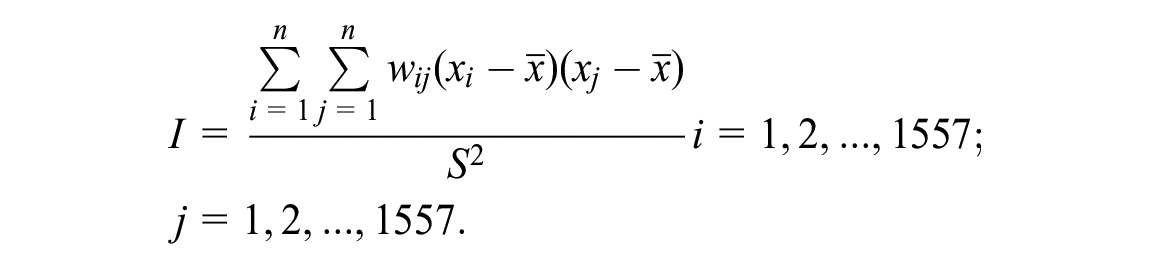
where
To test the hypotheses, we used a hierarchical regression following the steps established by Baron and Kenny in 1986 (Godos-Díez et al., 2014; Hong et al., 2016; Uwuigbe, 2011). According to this methodology, first, a regression is performed to examine the effect of the independent variable on the dependent variable; second, the effect of the independent variable on the mediating variable is tested; and third, the effects of the independent and mediating variables on the dependent variable are tested in a single model. Moreover, because the dependent variable may have spatial autocorrelation, the spatially lagged value of the dependent variable is introduced into the model as an independent variable (Gu, 2022b). Correspondingly, the models in our study proposed to test the hypotheses when the institutional shareholding ratio is the mediating variable following Baron and Kenny’s (1986) three steps as follows (Test A):



When the executive shareholding ratio is the mediating variable, the models are as follows (Test B).


where
Results
Spatial Correlation Test
Table 3 provides the Moran’s I index for these variables.
Moran’s I Index of Variables.

Note. This table shows Moran’s I index and significance levels for the variables. Spatial inverse distance weights are used to calculate Moran’s I index. All variables are defined in Appendix A.
p < .1. **p < .05. ***p < .01.
According to Table 3, the Moran’s I value of CSR is 0.033 and significant, which indicates that companies’ CSR activities have a positive spatial autocorrelation. This shows that when neighboring companies engage in CSR activities, they are often interrelated and not independent of each other (Baron & Kenny, 1986). Neighboring companies often engage in strategic interactions when engaging in CSR activities. This strategic activity is the basis for the positive spatial spillover effect of CSR (Sekhar Bhattacharyya et al., 2008). In addition, Table 3 shows that some explanatory variables have spatial autocorrelation. To fully understand this relationship, we performed a multivariate analysis.
Multivariate Analysis
We ran six rounds of mediating effect testing to properly investigate and understand the relationship between firm performance and CSR. Each round includes two groups of testing: the institutional shareholding ratio (Test A) and executive shareholding ratio (Test B) as the mediating variables. Round 1 in Table 4, composed of Equations 1 to 6, is the basic and major testing conducted in this study. Round 2 is similar to Round 1, except that the ROA variable is replaced by ROAFL. In Round 3 it is replaced by ROASL, Round 4 by ROATL, and Round 5 was similar to Round 1, except that the research sample is concentrated on manufacturing companies. The Round 6 research sample is concentrated in the eastern area of China.
Six Rounds of Mediating Effect Testing.

Note. This table compares the various models to test the mediating effect between performance and CSR. Test A uses the institutional shareholding ratio as the mediating variable, while Test B uses the executive shareholding ratio. Further details of each model are contained in Appendix B. All variables are defined in Appendix A
p < .05. ***p < .01.
According to Table 4, the
The purpose of implementing Rounds 2 to 4 of the mediation effect testing is not only to see whether there is a time lag effect on ROA and CSR but also to deal with the issue of endogeneity. Using the lag period of explanatory variables to deal with endogenous problems is a common method in empirical research (Y. H. Chen et al., 2016; W. Wang & Korschun, 2015; H. Zhang et al., 2016). The results in Table 4 show that, even when the ROA lags are introduced, the relationship between ROA and CSR does not change. This indicates that this study’s main conclusions are reliable and robust.
The values of
According to the results of Test A in Table 4, all λ values are positive and significant. This result shows that the institutional shareholding ratio has a positive effect on CSR. Therefore, Hypothesis 3a is confirmed. All the β values are positive and statistically significant. This shows that firm performance has a positive effect on the institutional shareholding ratio. Therefore, Hypothesis 3b is confirmed. Our findings are in line with those of previous studies (Chih et al., 2010; Mamun et al., 2013; Rodriguez-Fernandez, 2016). Because these two hypotheses are true simultaneously, the following result can be obtained: the institutional shareholding ratio mediates the relationship between firm performance and CSR. Therefore, Hypothesis 3 was confirmed.
According to the results of Test B in Table 4, all λ values are positive and significant. This result shows that the executive shareholding ratio has a positive effect on CSR. Therefore, Hypothesis 4a is confirmed. All the β values are positive and statistically significant. This shows that firm performance has a positive effect on the executive shareholding ratio. Therefore, Hypothesis 4b is confirmed. Our results are consistent with those of previous studies (Battisti et al., 2022; Frias-Aceituno et al., 2013; Koh, 2007). As these two assumptions are true simultaneously, the following result can be obtained: the executive shareholding ratio mediates the relationship between firm performance and CSR. Therefore, Hypothesis 4 is confirmed.
Discussion
Theoretical Implications
This study contributes to the literature in three ways. First, the empirical findings are consistent with our expectations that the spatial context affects CSR significantly (0.109, p < .01). Therefore, this study’s results support the spatial context-sensitive thesis, in line with previous studies that emphasized the importance of geographic proximity (B.-JChang & Han, 2015; K. Chang et al., 2021; Firoozi & Keddie, 2022; Zamir & Saeed, 2020). However, in contrast to the previous view of the spatial context-sensitive thesis, this study adds a time lag factor and shows that the spatial and time lag effects are interchangeable. First, CSR tends to be influenced by the previous period’s CSR and may exhibit significant temporal dependence. Second, influenced by geographic proximity, CSR tends to exhibit significant spatial dependence in terms of geographic space. Finally, the temporal and spatial dependence of CSR often interact to form spatiotemporal dependence. That is to say, the empirical evidence in this study not only supports the spatial context-sensitive thesis but, more importantly, proposes a spatiotemporal context-sensitive thesis. Although there is evidence in the field of innovation that the spatiotemporal context affects enterprise behavior (Gu, 2021c, 2022e), it is still an emerging field that is currently overlooked by the vast majority of CSR researchers. Thus, this study not only supports the spatial context-sensitive thesis but also enriches its content and expands its scope.
Second, this study addresses the limitations of legislative theory. Legitimacy theory is one of the most cited theories in the CSR field, and it also emphasizes a context-sensitive thesis. However, legitimacy theory emphasizes the institutional context while ignoring the spatial one (Islam, 2016; Michelon et al., 2015). This study shows that spatial and institutional factors explain a company’s CSR behavior. Therefore, both the institutional and spatial contexts will have an effect on a company’s CSR behavior and performance. Griesse (2007) proposed this argument in the CSR research on Brazilian firms; however, it has not held the attention of legitimacy theory scholars for any length of time. This study shows that it is imperative to incorporate spatial dependence and seriously consider the spatial context in addition to the institutional context when explaining corporate CSR behavior and performance. It also illustrates some techniques to take advantage of in future work.
Third, this study expands the understanding of corporate governance factors such as institutional investors and stockholding executives in relation to CSR. According to stakeholder theory, institutional investors and stockholding executives are the main stakeholders that influence corporate CSR (Fwa et al., 2020; Hong et al., 2016; Nofsinger et al., 2019). However, in past analyses of CSR stakeholders, institutional investors and stockholding executives were generally used only as antecedents of CSR (Al-Shammari et al., 2022; X. Chen et al., 2021; Hartzell & Starks, 2003). The mediating effects of these factors on corporate and CSR performance were ignored. By introducing the spatial lag model, this study shows that institutional and executive shareholding ratios strengthen the relationship between ROA and CSR performance. Thus, through a quantitative study, we develop a framework that includes an internal mechanism (mediation mechanism) and an external mechanism (spatial spillover) to explain CSR performance. This is a useful supplement to the stakeholder theory of CSR.
Although China is a relatively young country in establishing capital markets and injecting CSR, it is rapidly becoming a key player in the global market (Carpenter et al., 2021). In the realm of CSR, China affects many companies worldwide through the global supply chain (Zhu & Lai, 2019). Although China has a relatively unique culture and system, capital is borderless as are the concept and practices of CSR. In addition to China, some CSR spatial patterns exist in the United States (K. Chang et al., 2021), Canada (Firoozi & Keddie, 2022), and other emerging markets, including Brazil, India, Indonesia, Korea, Malaysia, Pakistan, Russia, and Turkey (Zamir & Saeed, 2020). Understanding the relevant internal and external mechanisms of CSR determination in China will help to explain the geographic unevenness of CSR in terms of diffusion processes in countries around the world. More country-specific comparative studies are needed in this regard.
Practical Implications
The policy implications of our findings are that the improvement in financial performance remains the objective basis for companies to adhere to social responsibility. However, when financial performance changes, listed companies with higher levels of institutional and executive shareholding have a stronger tendency to adhere to their social responsibility. Therefore, to improve the social responsibility awareness of listed companies, it is still necessary to improve their corporate governance. In addition, this study can help companies recognize and value the objective existence of CSR spatial spillover effects. Our research can also provide operational suggestions for companies to prevent and respond to negative CSR spillover effects, and help guide companies to invest more in social responsibility.
Limitations and Future Research
This study has certain limitations. First, it uses data from companies listed on the SZSE. The average scale of the sample companies is relatively small compared with those listed on the SSE. Future studies should use companies listed on the SSE to test this study’s main conclusions and conduct comparative studies. In addition, this study used cross-sectional data and could not test for causality. In the future, panel data can be used to test causality. Such applications could effectively expand the scope of CSR research.
Conclusions
Based on a sample of 1,557 listed Chinese companies and controlling for certain organizational characteristics, we analyzed whether firm performance influences CSR practices and whether this relationship is mediated by equity structure. The spatial context-sensitive thesis is supported, and the mediation effects of equity structure, such as institutional and executive shareholding ratios, on the relationship between firm performance and CSR performance are confirmed. These results compensate for deficiencies in existing research and further broaden the field of CSR research.
When advocates of spatial context-sensitive and spatial context-neutral theories argue, they miss an important point. External context has both spatial and temporal dimensions. Because the temporal dimension of the external context is ignored, both context-neutral and context-sensitive theorists are static context theorists. Only by revealing the temporal and spatial dimensions of the external context can we dynamically understand the effect of the external context on the micro-subject’s behavior. This is the spatiotemporal context. This study has made a very useful exploration of this issue. Undoubtedly, it generates important theoretical, methodological, and policy implications for companies to develop CSR policies, promotional measures, and related business strategies.
Footnotes
Appendix B
Appendix A.
Variable Symbols and Definitions.

| Variable symbol | Variable | Explanation of indicator |
|---|---|---|
| CSR | Overall Ratings of CSR | Overall Ratings of CSR from Hexun.com Social Responsibility Evaluation System in 2018 |
| ROA | Total Assets Ratio | Net profit after tax/total assets in 2018 |
| ROAFL | A 1-year Lag of ROA | ROA in 2017 |
| ROASL | A 2-year Lag of ROA | ROA in 2016 |
| ROATL | A 3-year Lag of ROA | ROA in 2015 |
| INS | Institutional Ownership | Ratio of institutional ownership in 2018 |
| MAN | Executive Shareholding Ratio | Executive shareholding ratio in 2018 |
| SIZE | Total Assets | Total book assets (hundred million yuan) in 2018 |
| ASSL | Asset–liability Ratio | Total liabilities/total assets in 2018 |
| SALP | Executive Compensation | CEO compensation/total compensation of management in 2018 |
Acknowledgements
Declaration of Conflicting Interests
The author declared no potential conflicts of interest with respect to the research, authorship, and/or publication of this article.
Funding
The author disclosed receipt of the following financial support for the research, authorship, and/or publication of this article: This research is funded by the National Social Science Foundation of China (17BSH122).
Ethical Statement
This research is funded by the National Social Science Foundation of China (17BSH122). The authors declare that they have no conflict of interest. Because the data in this research is not collected from human subjects and is not involving Human Participants and/or Animals, EA is no needed in this research.

Data Availability Statement
The datasets generated and/or analyzed during the current study are available from the corresponding author on reasonable request.