




Abstract
The severity of the 2007–2008 global financial crisis and the spatial heterogeneity of its impact have accelerated the study of regional economic resilience. However, few have investigated whether pre-crisis determinants impact regional economic resilience. This study explores the factors influencing regional economic resilience across 284 Chinese cities from 2003 to 2019. We use data from the National Bureau of Statistics in China and apply a multilevel logistic regression model. The results indicate the magnitude of the province effects on regional performance during the financial crisis. The results show that regional economic resilience is significantly shaped by provincial trajectories and region size. Furthermore, economic agglomeration, manufacturing, education, infrastructure, and financial development make regions less susceptible to external shocks and more resilient to financial crises. The results provide supportive evidence for governments to adopt region-based policies and thereby improve their performance.
Keywords
Introduction
The world faces various natural or man-made crises, such as extreme weather events, resource shortages, financial crises, terrorist attacks, and public health emergencies (Monstadt & Schmidt, 2019; Tan et al., 2020; Zhu et al., 2020), which seriously threaten human survival and development. Recently, the COVID-19 outbreak has greatly affected global health and economy and reminded people of the importance of resilience planning. Resilience planning can be a way to maintain development vitality and realize sustainable development (Roberts et al., 2020).
The global financial crisis broke out in the United States in 2008 and subsequently affected many countries worldwide (NBER, 2010). This unprecedented crisis was mainly caused by asset price bubbles in the real estate industry and the credit bubble, which led to overleveraging. Summers (2014) found that since 2008, the per capita gross domestic product (GDP) growth rate has been significantly lower than the historical level before the recession. Although the financial crisis affected most countries worldwide, its impacts were significantly asymmetric across different countries. Even within the same country, the impact at the national level was very different from the impacts at the regional level within the country (Capello et al., 2015; Groot et al., 2011). Notably, each region’s ability to resist the crisis differed (Fratesi & Rodríguez-Pose, 2016; Giannakis & Bruggeman, 2017). For example, in terms of GDP, Xinjiang witnessed a decline (−6.35%) between 2008 and 2009, while the GDP of other provinces had already increased. Importantly, the severity of the economic crisis and spatial heterogeneity of its impact have accelerated the study of regional economic resilience (Crescenzi et al., 2016; Lagravinese, 2015). Notably, this geographical heterogeneity can also allow us to test whether a region is economically resilient (Han & Goetz, 2015).
As Martin (2012) noted, an economic recession may permanently damage local production capacity and employment opportunities. Some workers may migrate from the region, whereas others may permanently withdraw from the labor market. For example, after the Great Depression, regional development and regional policies refocused on labor and work, with the aim of creating employment opportunities and improving the quality of employment (Martin, 2012).
Resilience is defined as the ability of a system to absorb interference, and reorganize and maintain its basic functions, structures, and characteristics (Folke et al., 2010). This concept has been applied to understand how regional economies respond to and recover from the impact of a recession. The positive trajectories of regions and their resilience must undergo adaptive changes in economic structures and institutional arrangements to return to the previous path, or find a new path by fully utilizing physical, human, and environmental resources (Martin & Sunley, 2015). Martin (2012) divided regional economic resilience into four elements: (a) resistance, (b) recovery, (c) re-orientation, and (d) renewal.
Regarding the determinants of regional economic resilience, researchers have found that a region’s capability to resist and recover from a recession is determined by both soft (social capital) and hard determinants (human capital and infrastructure), network exploitation, and economic agglomeration (Fratesi & Rodríguez-Pose, 2016).
Moreover, endowing and enhancing resilience is complex. For example, in China, the process of building resilient cities has been complex and involved various influencing factors (Mera & Balijepalli, 2020; Moore et al., 2020).
This study seeks to develop a comprehensive understanding of the determinants of regional economic resilience across 284 Chinese cities, particularly their influencing mechanisms. There have been other studies on determinants of economic resilience (Fratesi & Rodríguez-Pose, 2016; Holl, 2018; Martin & Gardiner, 2019; Zhao & Wang, 2021). However, to the best of our knowledge, there is scarce empirical evidence across regions on how pre-crisis determinants impact reaction and recovery when facing external shocks. This study aims to fill this research gap.
Compared with those in developed countries, research on regional economic resilience in China is relatively recent. Moreover, few studies have focused on the asymmetric impact of financial crises at the regional level (especially using a dataset covering 284 cities in China). Several researchers studying European countries suggest asymmetric impacts of the recession between countries (Crescenzi et al., 2016; Giannakis & Bruggeman, 2017; Sensier & Artis, 2016). Here, we provide evidence in China’s context—a developing country—and show that regional heterogeneity exists within a large economy.
This study contributes to several strands of literature. First, this study not only examines the factors shaping economic resilience across regions but also considers the latest financial crisis and the resulting changes in economic development. Second, this study analyzes the relationship between pre-crisis determinants and post-crisis performance across city sizes (relatively small and large economies) and along the administrative hierarchy (national and provincial levels), using a multilevel logistic regression model. Our results provide supporting evidence on the importance of the size and administrative hierarchy of regional economies. Third, this study focuses on the first two sub-periods of resilience (as defined by Martin (2012)): resistance (2008–2009) and recovery (2010–2019). This provides us with more evidence about the changes between the two periods. Finally, we contribute to regional economic resilience research and Chinese regional policy debates. We provide supporting evidence for governments to adopt measures suited to local conditions and improve their performance.
Literature Review
Resilience has become an important interdisciplinary research concept (Rodin, 2014; Wink, 2014). On the one hand, resilience research is a response to the current global ecological destruction. This reflects the unpredictable impacts of climate change, globalization, and urbanization in specific places and times. On the other hand, the interest in resilience is inspired by the success of this concept in the field of ecological science (Holling, 1973; Walker et al., 2006). Resilience measures the ability of a system to recover from and adapt to disturbances without fundamentally changing its structure and function (Folke et al., 2010; Holling, 1973). It was first proposed by Holling (1973) and has been applied in the context of ecosystems. Resilience has been also applied to psychology, economics, disaster research, geography, politics, and archeology.
Martin (2012) suggested that regional economic resilience is a process involving several relevant phases: (a) resistance (indicating the sensitivity of a regional economy to economic disturbance), (b) recovery (the speed and comprehensiveness of a region’s rebound from negative impacts), (c) repositioning (indicating the degree and impact of the reorientation of output and employment structure in the region), and (d) renewal (the degree to which a regional economy “updates” its growth path). This study focused on the first two phases: resistance and recovery.
Moreover, the concept of regional resilience is being increasingly applied in regional and urban research, with a focus on how regional, urban, and community economies respond to and recover from major shocks or disturbances. While several researchers have analyzed resilience at the national level (Brakman et al., 2015; Crescenzi et al., 2016; Fratesi & Perucca, 2018), there is increasing attention on the regional economic resilience of sub-national units, such as communities, cities, or other administrative or statistical units (Faggian et al., 2018; Holl, 2018; Palaskas et al., 2015). The ability to withstand economic shocks may vary depending on the scale of the economy. Further, the economic resilience of a country may not necessarily represent the ability of different subnational regions, with different characteristics and development paths, to withstand the same shocks (Martin, 2012). To the best of our knowledge, there is limited literature focusing on regional disparities in resilience within the largest developing economy, China. Therefore, we examine the disparity in regional resilience in 284 Chinese cities.
The literature suggests various determinants of regional economic resilience. Martin and Gardiner (2019) used a novel dataset for 85 cities from 1971 to 2015 and found several determinants of resilience, such as manufacturing, labor productivity, innovation, and population density. Cainelli et al. (2018) suggested technological and vertical relatedness as determinants of resilience by testing 209 NUTS-2 regions from 2008 to 2012. Giannakis and Bruggeman (2020) suggested that the NUTS-3 regions are strongly affected by migration and the agriculture industry. Di Caro and Fratesi (2018) analyzed Italian regions from 1992 to 2012, and noted economic diversity, export performance, financial constraints, and human and social capital as determinants of economic resilience.
Several studies have also focused on regional resilience in China. Du et al. (2019) examined cities in the Pearl River Delta of China over the period 2008 to 2016 and found that innovation, financial development, manufacturing, and the service industry influenced regional resilience. Tan et al. (2020) investigated resource-based cities in China and found that economic development, labor conditions, and industrial structure have statistically significant negative effects on economic resilience. However, these studies lack consensus on the direction and strength of the determinants of regional economic resilience. Furthermore, to the best of our knowledge, no study has focused on the pre-crisis determinants of regional economic resilience in the 284 Chinese cities using a nested dataset. This study attempts to fill this gap.
Methods
Data
This study selects 284 prefecture-level and above prefecture-level cities (nested in 30 provincial administrative regions) in China from 2003 to 2019. We use annual data from the “China City Statistical Yearbook.” Prefecture-level cities in China are relatively independent and complete regional units of administrative divisions. These are large- and medium-sized cities, in addition to municipalities directly under the central government and sub-provincial cities. Generally, the standard for prefecture-level cities is as follows: the population engaged in non-agricultural production in urban areas is more than 250,000; the total industrial output value is more than 2 billion yuan; the tertiary industry is developed, and its output value exceeds that of the primary industry, accounting for more than 35% of GDP; and the fiscal revenue within the local budget is more than 200 million yuan, and has become a central city within the scope of several cities and counties. According to the National Bureau of Statistics of China, the government has set 293 prefecture-level cities and four municipalities directly under the central government (Beijing, Tianjin, Shanghai, and Chongqing) (NBS, 2020). To maintain the continuity of the data analyzed here, we exclude the cities lacking relevant data or that were not established as prefecture-level cities until 2010 (such as Lhasa, Shigatse, Changdu, Nyingchi, Shannan, Naqu, Sansha, Danzhou, Haidong, Tulufan, Hami, Tongren, and Bijie). We divide the 284 cities into two groups according to the city size division standard published by the State Council of China: large cities (population size ≥ 5 million) and small cities (population size < 5 million).
Resilience Indicator
Previous studies have used various methods and indicators to measure regional economic resilience (Doran & Fingleton, 2016). Moreover, there is no unified methodology for measuring regional economic resilience. In fact, most measures in economic geography and regional economics depend on traditional economic indicators, such as the employment rate and gross domestic product (Cellini & Torrisi, 2014; Fingleton et al., 2012; Lagravinese, 2015; Martin, 2012). This study focuses on the impact of the economic crisis on employment (rather than on output) because the lag for the employment rate to return to the normal level is longer than the lag for the output. Reinhart and Rogoff (2009) found that the average period of unemployment from the peak to the bottom is 4.8 years, while the average period of output is only 1.9 years. Thus, employment reflects the social impact of the crisis better. During the shrinkage in an economic recession, the labor force in a region bears the brunt. When the demand for products and services in a region begins recovering, the workers laid off during the economic recession may or may not be reemployed. Some of those who are still unemployed may have to move to other regions to find a job. Those who cannot move are likely to eventually become long-term unemployed and even withdraw from the labor force. In general, cyclical changes in employment tend to be more pronounced than changes in output (Fingleton et al., 2015). Thus, this study discusses China’s regional economic resilience from the perspective of employment growth rate, in line with previous literature (Faggian et al., 2018; Giannakis & Bruggeman, 2020; Lagravinese, 2015).
Following Faggian et al. (2018) and Giannakis and Bruggeman (2020), we identified national-based regional economic resilience as follows:
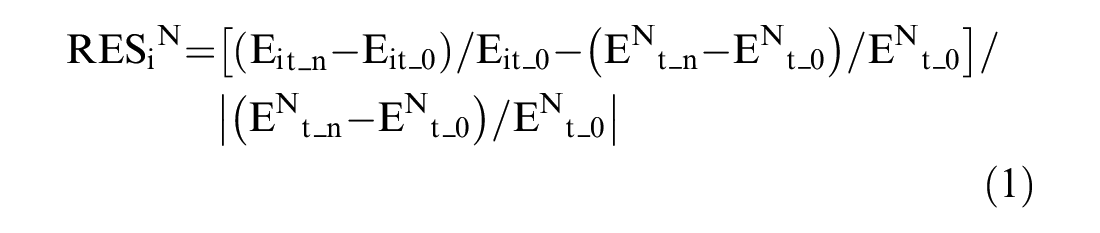
where RESiN represents the national-based regional economic resilience of region i, Ei t_n represents the employment of city i at time t_n (the end year of the economic recovery period, i.e., 2019), Ei t_0 represents the employment of city i at time t_0 (the beginning year of the economic crisis, i.e., 2008), and EN represents employment at the national level.
A positive RESiN represents smaller relative employment loss of city i (higher relative employment gain) and/or faster recovery speed than the average employment change of the whole country; that is, the economic resilience of city i is higher than the national average. A negative RESiN means that the regional economic resilience of city i is lower than the national average.
Province-based regional economic resilience is identified as follows:

where RESiP represents the employment at provincial level of city i. Similar to RESiN, positive RESiP represents smaller employment loss of the region (or higher employment gain) and/or faster recover speed than provincial average, that is, the province-based regional economic resilience is higher than the provincial average. Negative RESiP means that economic resilience of city i is lower than the provincial level.
Resistance and Recovery Phases of Resilience
According to Martin and Sunley (2015), resilience can be regarded as a process consisting of four consecutive steps: vulnerability (the sensitivity of companies and workers in a region to different types of shocks), resistance (the initial impact of shocks on an economy), robustness (how companies, workers, and institutions in a region adjust and adapt to shocks, including the role of external mechanisms, public intervention, and support structures), and recoverability (the extent and nature of the economy recover from the impact, and the recovery path of the region).
This study mainly discussed the resistance and recovery phases; therefore, the research period is divided first. Researchers have used different standards to divide the period of the Chinese economy. Xu and Deng (2020) divided the entire period into two sub-periods according to macroeconomic fluctuations: the resistance period (2008–2010), and the recovery and adjustment period (2010–2016). Du et al. (2019) considered urban expansion and shrinkage as the standard, and divided 2008–2016 into two different sub-periods: the resistance period (2008–2010) and the recovery period (2011–2016). Feng et al. (2020) followed the standards of Du et al. (2019) and set two sub-periods: the resistance period (2008–2010) and recovery period (2010–2017). In addition, the authors divided the time period for other economies. Martin and Gardiner (2019) divided the sample period according to fluctuations in employment in the UK. Lagravinese (2015) and Faggian et al. (2018) used employment fluctuations in Italy to classify 2007–2010 into two phases: the recessionary period (2009–2010) and the pre-recessionary period (2007–2008). Giannakis and Bruggeman (2020) used employment and GDP trends as standards to divide the time period for European countries into two: resistance phase, 2008–2013; recovery phase, 2014–2015. Following previous literature, this study divides the time period (2008–2019) into two phases, the resistance (2008–2009) and recovery phases (2010–19), using GDP and unemployment rate fluctuation.
According to Martin and Sunley (2015), there are four possible scenarios, as shown in Figure 1. We use formula (1) to calculate the resistance (Rress) and recovery indicators (Rrec) relative to the national level. Then, the cities are divided into four groups using these indicators:
Group I: High resistance and high recovery (Rress > and Rrec >0), which refers to cities with strong resistance and recoverability thus could actively respond to economic shocks.
Group II: High resistance and low recovery (Rress >0 and Rrec <0), which refers to cities with strong resistance and weak recoverability thus could overcome the disadvantageous impacts of recession.
Group III: low resistance and high recovery (Rress <0 and Rrec >0), which refers to cities with weak resistance and strong recoverability thus susceptible to economic shocks.
Group IV: low resistance and low recovery (Rress <0 and Rrec <0), which refers to cities with weak resistance and recoverability thus vulnerable to external shocks.

scenarios categorized by recovery and resistance.
Determinants of Regional Economic Resilience
In line with previous literature on regional economic resilience, we explore the determinants of regional economic resilience in 284 cities in China. The ability of a region to withstand and recover from economic shocks is influenced by its inherent characteristics, which may support its original development tendencies (Martin & Sunley, 2015). Di Caro and Fratesi (2018) suggested that exploring the pre-crisis determinants of regional economic resilience is helpful in recognizing the disparities in the response of different economies during and after the crisis. Thus, we use the average value of all determinants from 2003 to 2007.
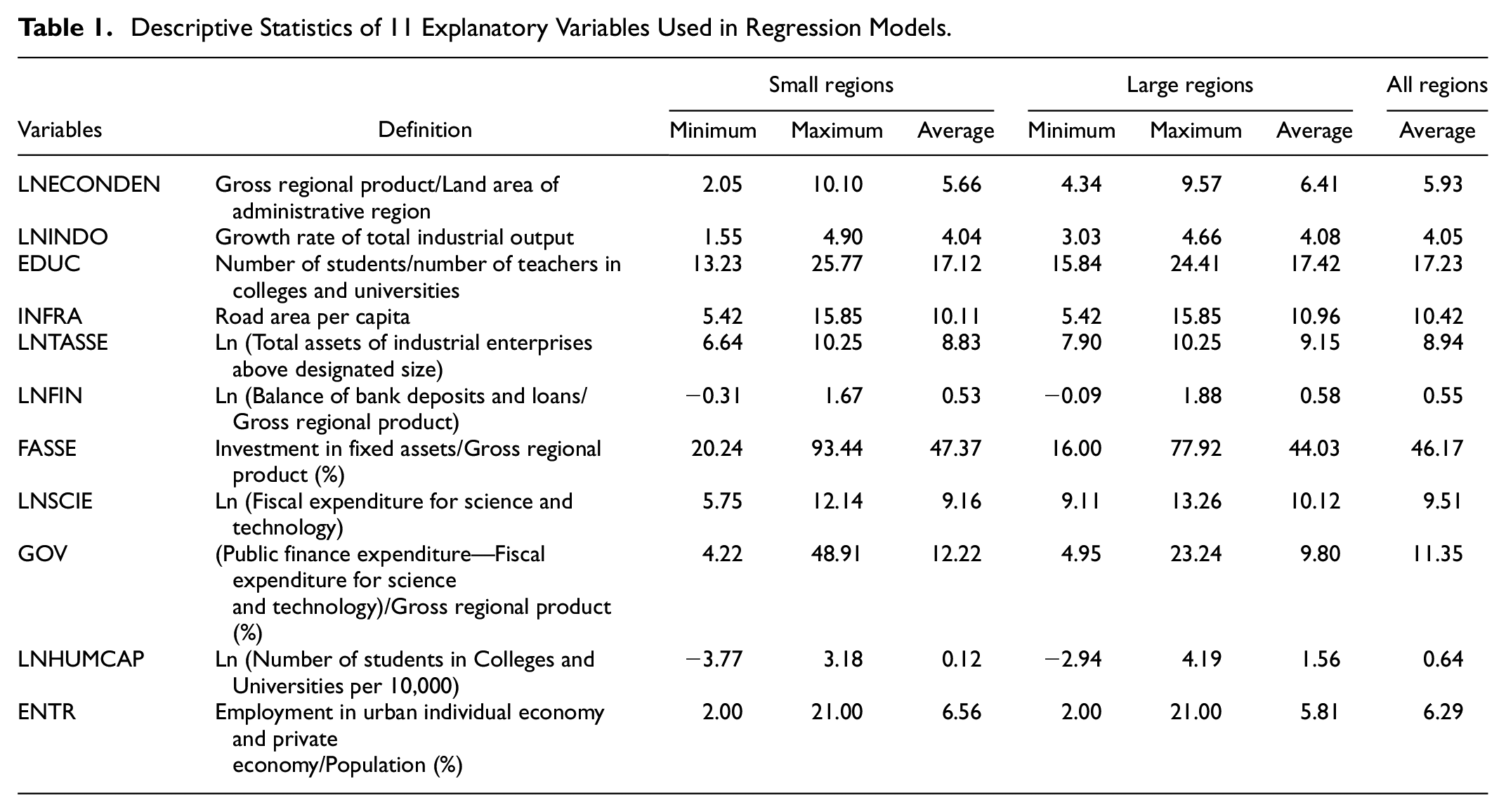
Referring to the previous literature, this study includes 11 explanatory variables. According to our hypothesis, agglomeration economies have a positive effect on resilience. We use gross regional product per land area to measure agglomeration economies. Agglomeration economies promote technology spillover and more diversified intermediate goods and services due to the advantages of a larger local market. This is not only of great significance to resist external shocks but also the key to adaptive structural adjustment after the crisis (Cainelli et al., 2018).
We use the growth rate of the total industrial output to measure the development of the manufacturing industry. Manufacturing may simulate higher investment and capital accumulation, and help build a competitive environment; therefore, regions specializing in manufacturing are more resilient than others (Brown & Greenbaum, 2016).
Education is a key factor shaping the resilience of regional labor markets. Education helps generate new knowledge and adapt to external shocks (Giannakis & Bruggeman, 2017; Rodríguez-Pose, 2013). We select the number of students/teachers in colleges and universities as the measurement of education.
Next, we use the road area per capita to measure infrastructure. A higher transportation convenience can increase communication and improve the ability to survive. The social functions in the spatial economic system are highly dependent on the infrastructure network. As an important aspect of resilience, infrastructure may improve the economic efficiency of the system. We use the total assets of industrial enterprises above a designated size to measure the industrial development level. These industrial enterprises are those whose economic indicators have reached a certain level.
Another factor that may affect resilience is the financial development level, which is measured by the balance of bank deposits and loans/gross regional product. On one hand, financial development may lead to excessive credit in the financial sector during the economic boom cycle, cause high leverage, amplify the transmission of financial shocks to the real economy, promote the rapid spread of the crisis into systemic risks, and increase economic instability. On the other hand, after entering the adjustment period, the reallocation of production resources and the transformation and upgrading of industrial structures are inseparable from the support of the financial sector (Martin et al., 2016).
Next, fixed asset investment plays a role in guiding other kinds of investment and may increase economic resilience (Tan et al., 2020). We use investment in fixed assets/gross regional product to measure the investment intensity of national capital construction.
Innovation can also help regions to resist and recover from recession by promoting industrial transformation, upgrading, and enhancing competitiveness (Crescenzi et al., 2016). Here, fiscal expenditure for science and technology is used to measure innovation, and “public finance expenditure (excluding fiscal expenditure for science and technology)/gross regional product” is used to measure government intervention. However, financial assistance provided by the government may lead to dependence on fiscal expenditure, and perhaps reduce the ability to survive from external shocks (Guo & Xu, 2019).
Human capital can be another important factor for economic resilience. Abundant human capital helps cities to carry out innovative activities and develop new industries in the post crisis adjustment period (Martin et al., 2016). We use the number of students in colleges and universities per 10,000 persons in the population to measure human capital.
Finally, we consider entrepreneurial vitality of a city as a source of economic resilience. We use employment in the urban individual economy and private economy/population to measure entrepreneurial vitality. The higher the entrepreneurial vitality of a city, the higher its tolerance to new ideas (Bishop, 2012). The descriptive statistics of determinants are shown in Table 1.
Descriptive Statistics of 11 Explanatory Variables Used in Regression Models.
Analytical Methods
Regional economic resilience is affected by national-level effects (Cosci & Sabato, 2007; Ezcurra & Rapún, 2006), therefore, this study used multilevel logistic regression to explore influencing factors of economic resilience and resilience variance caused by disparities between provinces. The empirical framework of this study uses the nested structure of data set, that is, 284 cities (level 1) are nested within 30 provinces (level 2).
The dependent variable of this model is regional economic resilience which is assumed as a dichotomous-dependent variable Yij:

All calculations are performed using the STATA 16 and HLM 6.08.
This study conduct a two level logistic regression model:
(a) Null model:

(b) Full model:

Where pij represents the probability of Yij= 1, Xqij represents the explanatory variable q for city i in province j, as discussed above, there are 11 explanatory variables included in this model; u0j is the level-1 random effect and here we assume that the random term u0j∼N (0, σ2).
This study consider the between-group variation which could be measured by intra-class correlation coefficient (ICC) (Hox, 2010). Equation (6) states that the intra-class correlation is the proportion of group-level variance compared to the total variance

Where σ2 represents within-group variance; σb2 represents between-group variance. For logistic regression model, σ2 is π2/3. According to Cohen (1988), the standard of within-group correlation is as follow: low correlation: ICC< 0.059; moderate correlation: 0.059 < ICC< 0.138; high correlation: ICC > 0.138. if ICC > 0.138, it is necessary to conduct multilevel regression (Cohen, 1988).
Secondly, this study applies a logistic model for province-based regional economic resilience. We use 279 cities (Beijing, Shanghai, Chongqing, Tianjin and Qinghai are excluded as each consists of only one city), nested in 25 provinces in the logistic model.
Thirdly, taking into account the impacts of the size of regions, we separate sample into to sub-samples: large and small cities. 284 cities could be divided into 102 large economies and 182 small economies. This study conducts two multilevel logistic regressions by using national-based resilience.
Finally, a multinomial regression is conducted to measure the interaction between resistance and recovery phases. Group IV (low resistance and low recovery) is used as reference category.
Besides, this study uses the variance inflation factor (VIF) to examine multicollinearity of the predictor variables. If the value of VIF < 5, the model has no multicollinearity problem and is well constructed and vice versa (Montgomery et al., 2012). The independent variables are assumed to be statistical significant at 10% level. Figures used in this study are portrayed using ArcGIS 10.5.
Results
Trend in Regional Economic Resilience
Figures 2 and 3 show the geographical distributions of national- and province-based resilience. The average resistance resilience of 284 cities was 0.227, while the average recovery resilience was −0.016. Compared with the resistance period, economic resilience in the recovery period declined significantly. For small cities, the average resistance resilience was higher than the average recovery resilience, whereas the resistance resilience of large cities was higher than the recovery resilience. During the resistance period (2008–2009), the average resilience of small regions was 0.371, compared with 0.040 in large regions. Large regions had higher average resilience (0.277) during the recovery phase (2010–2019) compared with small regions (−0.169). After the financial crisis, the large regions performed well during the recovery phase.
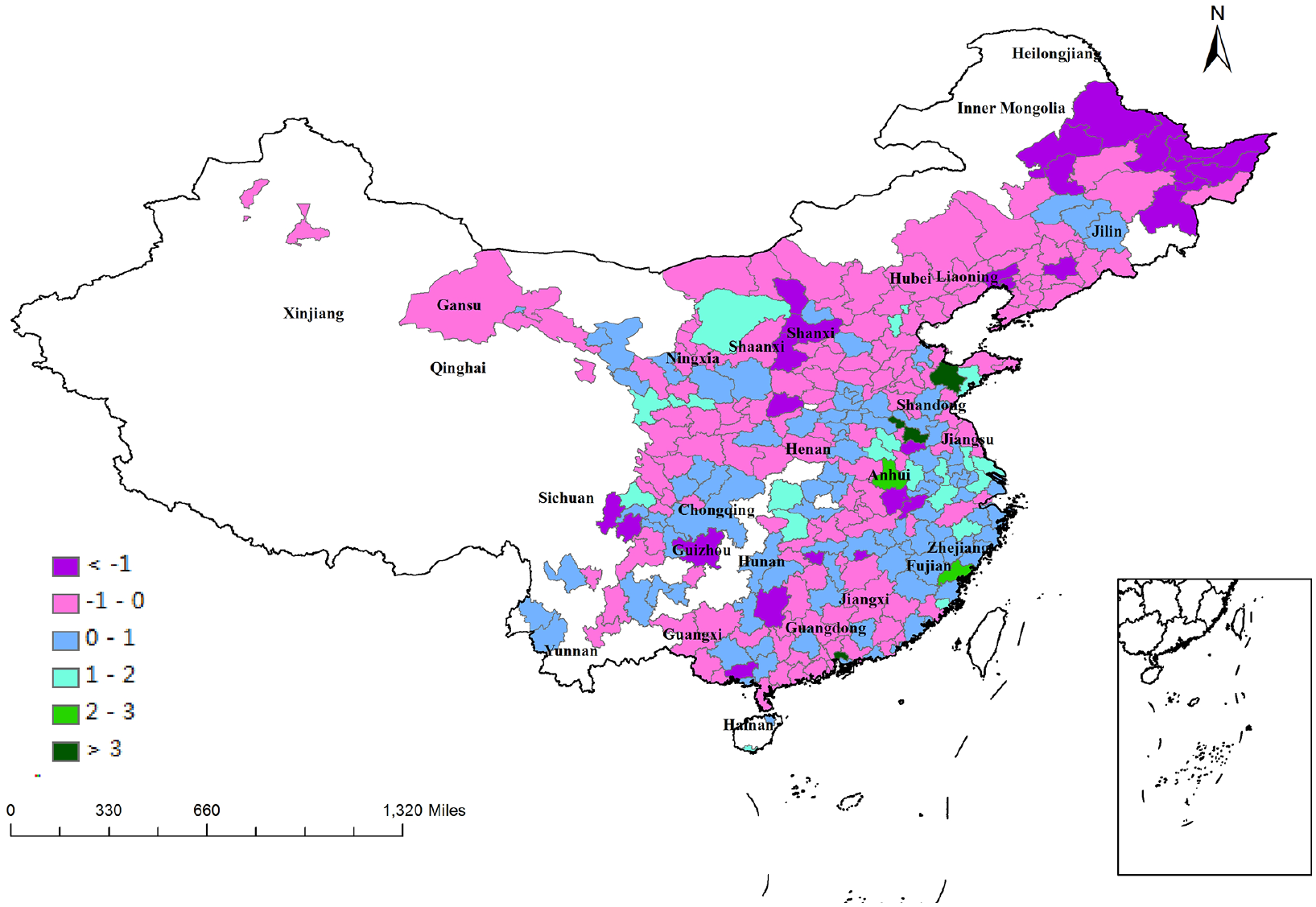
National-based resilience across 284 cities.

Province-based resilience across 279 cities.
Figure 4 shows all 284 cities across the resistance and recovery phases. Note the uneven distribution of cities across phases. As portrayed in the first quadrant, 46 out of the 284 cities (16%) showed high resistance and high recovery. This share for small regions is 14% and that for large regions is 20%. Most cities fall into group IV (low resistance and low recovery), which means their resilience is lower than the national average.

Scatterplot of regional resistance and recovery.
Table 2 shows the shares of resilient and non-resilient cities, and their populations in regions of different sizes. Table 3 presents the province-level population data. According to Table 2, based on the national-based resilience indicator, 40% of cities are considered resilient, and 44% of the population lives in these resilient cities. For the province-based resilience indicator, 41.5% of the cities are resilient, where 45% of the population lives.
Share of 284 Regions and Population Living in Resilient/Non-resilient Regions for National-Based Resilience.
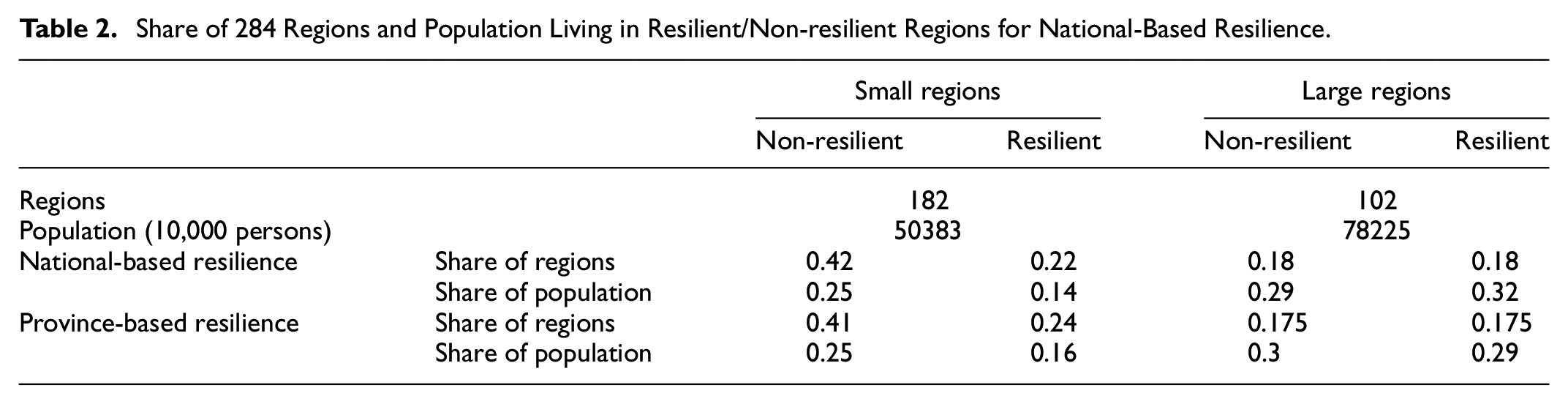
Share of Population Living in Resilient/Non-resilient Regions at Province Level for National-Based Resilience.

Determinants of Regional Economic Resilience
We first account for the multicollinearity problem and analyze the relationship between variables while considering whether the assumptions of the regression are satisfied (Table 4). To test the determinants of regional economic resilience, we estimate five models. Table 4 presents the results of two-level logistic regression model and logistic regression models. By conducting a null model, this study uses equation (6) to compute the ICC. ICC for all regions (284 cities) is 0.22, 0.23 for small regions, and 0.06 for large regions; thus, ICC is higher than 0.059 for all. Hence, we should conduct multilevel regression.
Odds Ratios of Pre-crisis (2003–2007) Determinants of National-Based Resilience Using a Multilevel Logistic Regression Model and a Logistic Model for Province-Based Resilience.

Significant at the .01 level (2-tailed). ** significant at the .05 level (2-tailed). * significant at the .1 level (2-tailed).
To capture the effects of economic agglomeration, we use economic density (LNECONDEN) as a measure. The results in Table 4 show that for the four models, the coefficients of LNECONDEN are significant and positive at least at the 5% level (models 1 and 2 at 1%). The largest influence of economic agglomeration is in large regions: a 1% increase in LNECONDEN increases the likelihood of large regions attaining resilience by 5.2 times. Large cities take advantage of agglomeration, which may improve entrepreneurs’ innovation and productivity. In addition, diversity in large cities should make them more resilient to crises (Martin & Gardiner, 2019). The highest LNECONDEN is in the coastal and eastern regions, such as Beijing, Tianjin, Shaoguan, Qingyuan, Zhongshan, and Shantou (Figure 5).
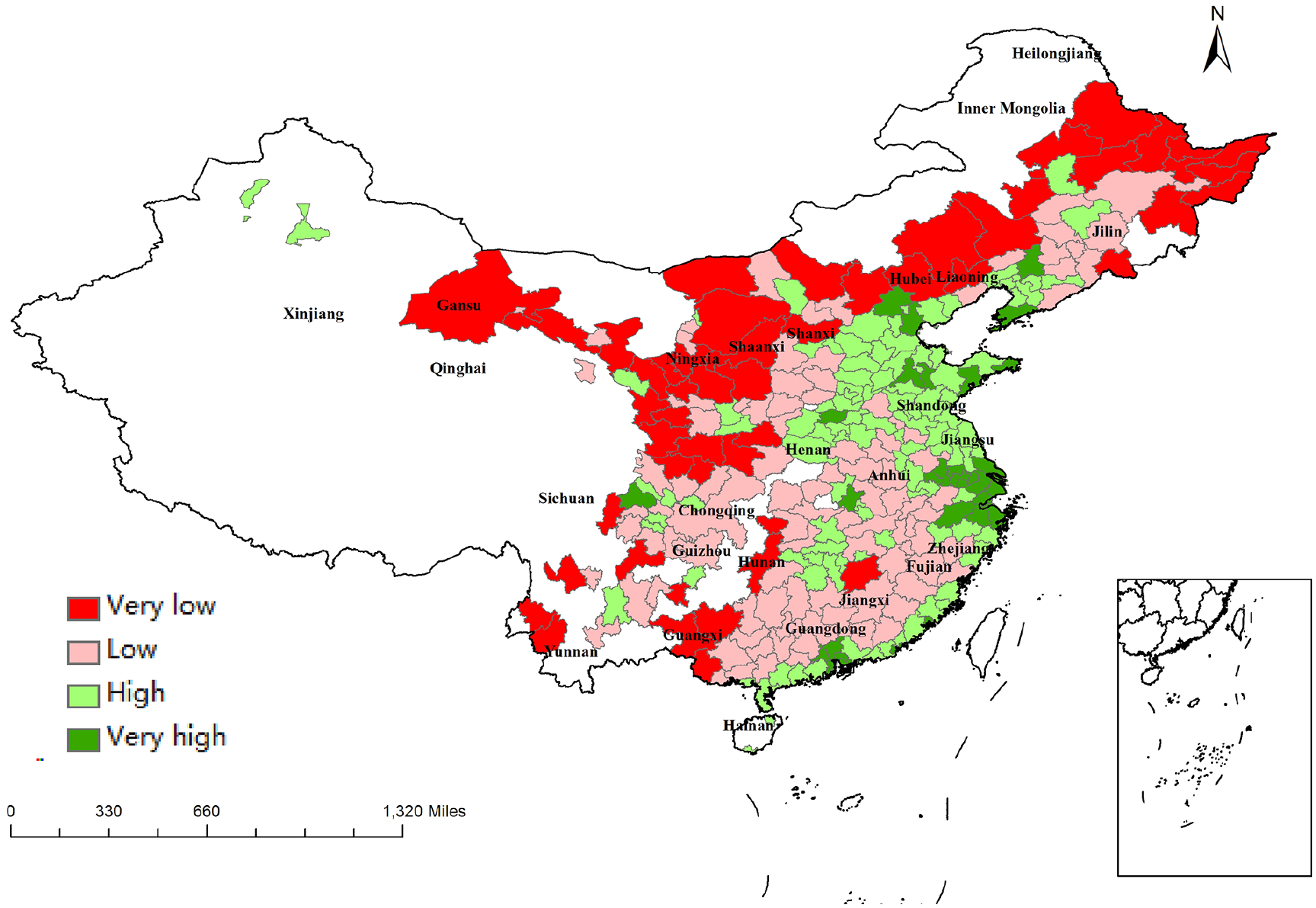
Regional values of LNECONDEN, classified into four quartiles (very low to very high).
For all cities, the relationship between development of manufacturing industry (LNINDO) and resilience is positive. A 1% increase in LNINDO can lead to 2.9 times increase in regional resilience. According to Brown and Greenbaum (2016), regions that depend on manufacturing may benefit from diversity and reduce their unemployment. The geographical distribution of LNINDO is shown in Figure 6.

Regional values of LNINDO, classified into four quartiles (very low to very high).
As one of the most important determinants of regional economic resilience, education (EDUC) has a positive effect in the four regression models and is statistically significant across 284 regions, and for small and large regions at the 1% level. This supports the findings of Crescenzi et al. (2016) and Giannakis and Bruggeman (2017). Thus, the odds for regions with a high level of education to resist and recover from a recession are greater than those for regions with poor education. Most western provinces have the lowest level of education; for example, Xinjiang, Ningxia, Qinghai, and Inner Mongolia have a lower education level than the national average (Figure 7).

Regional values of EDUC, classified into four quartiles (very low to very high).
Infrastructure (INFRA) and resilience are significantly and positively related at the 5% level for all regions and at the 10% level for small regions. This implies that the larger the road area per capita of a region, the more resilient it is. Regions with a low level of infrastructure are mainly located in the west of China, while those with a high level of infrastructure are found in the coastal regions (Figure 8).

Regional values of INFRA, classified into four quartiles (very low to very high).
The financial development level (LNFIN) and regional resilience are significantly and positively related. Especially for logistic model, the value of LNFIN is significant at the 1% level, with a 1% increase in LNFIN increasing resilience by 4.4 times. A positive financial development level is mainly observed in the western and northeastern regions (e.g., Neihua, Shanghai, Hezhou, and Kunming) (Figure 9). Thus, financial development has largely increased the ability of regions to withstand crises.
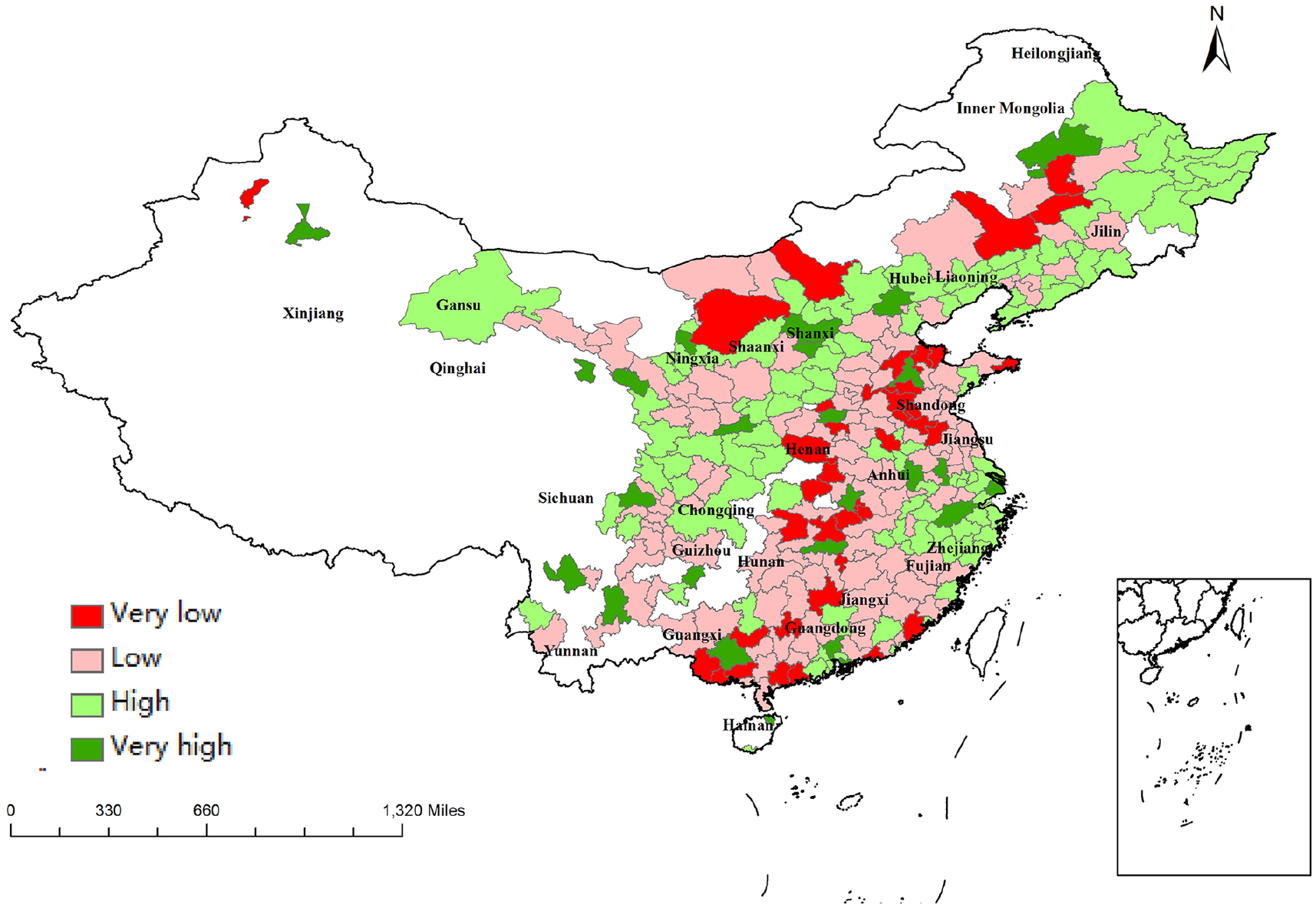
Regional values of LNFIN, classified into four quartiles (very low to very high).
Table 4 also shows positive effects of investment in fixed assets (FASSE) and fiscal expenditure for science and technology (LNSCIE) on resilience. Although the increase in FASSE and LNSCIE may not lead to a considerable increase in resilience, they also influence regional performance. Especially for small regions, the positive relationship between FASSE and resilience is significant at the 5% level. Similarly, a positive association between human capital (LNHUMCAP) and the ability of regions to resist and recover from the crisis appears across all regions, and separately considering small and large regions, as well as the logistic model.
Next, Table 5 presents the results of the multinomial logistic regression model for the resistance and recovery phases of resilience. Similar to the results of the multilevel logistic regression model for all regions, LNECONDEN, LNINDO, INFRA, LNFIN, FASSE, and LNHUMCAP are statistically significant determinants for attaining high resistance and high recovery compared to low resistance and low recovery, while LNSCIE was marginally significant. For small regions, LNFIN and LNHUMCAP are determinants of high resistance and high recovery. For large regions, LNINDO, EDUC, GOV, and LNHUMCAP are statistically significant determinants (LNFIN and FASSE are marginally significant) for attaining high resistance and high recovery compared with low resistance and low recovery regions.
Odds Ratios of Pre-crisis (2003–2007) Determinants of National-Based Resilience Using a Multinomial Logistic Regression Model. Base Category: Low Resistance and Low Recovery (Group IV).

Significant at the .01 level (2-tailed). **significant at the .05 level (2-tailed). *significant at the .1 level (2-tailed).
Discussions
This study finds that the impacts of the crisis on regional economic resilience are asymmetric in different regions of China. There are significant differences in intensity and time between provinces and regions. We find the following to be important determinants of regional economic resilience: economic agglomeration, manufacturing, education, infrastructure, financial development level, investment in fixed assets, fiscal expenditure on science and technology, and human capital. After the 2008 financial crisis, the government paid more attention to building resilient cities to manage vulnerability and adaptation during development.
Thus, in Chinese cities, regional economic resilience and economic agglomeration are positively related. This is consistent with Xu and Deng (2020), who also found a positive relationship between resilience and economic agglomeration after examining 230 cities in China from 1994 to 2008. Similarly, Zhao and Wang (2021) examined data on 285 Chinese cities of different sizes from 2004 to 2018, and found a positive relationship between economic agglomeration and economic resilience. Both sets of authors examined cities in China; moreover, the period they examined is similar to that of this study. Cainelli et al. (2018) also showed the same: the authors used employment density to measure economic agglomeration for 209 NUTS-2 regions from 2008 to 2012. Some recent studies believe that a region’s economic agglomeration and specialization model plays a positive and decisive role in regional growth (Duranton & Puga, 2020; Glaeser & Saiz, 2004). Economic agglomeration promotes technology spillover, and more diversified intermediate goods and services with the advantage of a larger local market. This is not only of great significance to resist external shocks but also the key to adaptive structural adjustment after a crisis (Cainelli et al., 2018). Although there are several differences between previous studies and this study, the results are the same. We find a positive relationship between economic agglomeration and regional resilience. Agglomeration is conducive to knowledge spillover, innovation, and economic growth, which helps the regions show strong economic resilience when facing external shocks.
Table 4 shows a positive relationship between manufacturing and resilience for cities in China, consistent with the findings of Su and Zhao (2020), Di Caro and Fratesi (2018), Cuadrado-Roura and Maroto (2016). Su and Zhao (2020) examined economic resilience via the employment growth rate in 283 prefecture-level cities in China over the period 2004–2016, while classifying the sample by city size. Di Caro (2017) used a segmented sample period (1977–2013; five sub-periods) for Italian regions, and found that manufacturing plays a significant positive role in economic resilience. By testing the determinants of regional resilience in Spain, Cuadrado-Roura and Maroto (2016) found that regions which specialized in manufacturing are the most resilient regions. In the context of economic development, manufacturing can stimulate higher investment and capital accumulation, produce tradable goods, and build a more competitive environment (Porter, 2003; Rodrik, 2013).
Furthermore, Table 4 also shows a positive relationship between education and regional economic resilience. Education improves human capital and increases productivity, which may indicate differences between regions with differing education levels that are facing crises (Rodríguez-Pose, 2013). Our findings are in line with other studies. Giannakis and Bruggeman (2017) studied 268 NUTSII regions of European countries from 2002 to 2013, and found a positive relationship between education and the economic resilience of cities. Di Caro (2017) also reported a positive relationship between education and resilience by using data on Italian regions between 1992 and 2002. Crescenzi et al. (2016) also found that education contributed to building regional resilience, after investigating European Union (EU) regions from 2004 to 2010. Finally, Östh et al. (2015) reported a positive relationship between educational attainment and spatial economic resilience.
Our model results suggest the positive effect of infrastructure in shaping resilience, in line with Zeng (2018). Infrastructure can improve the convenience of production activities and living conditions. Consequently, the regional economy can flexibly respond to and recover from the crisis. We used transportation infrastructure as a measure of infrastructure. When a region faces external shocks, greater transportation convenience can increase the chance of contact with other regions and the ability to survive.
Next, the relationship between the financial development level (LNFIN) and regional economic resilience is positive. This is consistent with the findings of Eraydin (2016) who reported a positive relationship by investigating Turkish regions. Du et al. (2019) also found a similar relationship after examining cities in the Pearl River Delta of China over the period 2008–2016, which was subdivided into three sub-periods: stable fluctuation (2000–2007), significant shrinkage (2008–2010), and recovery (2011–2016). Thus, these authors also considered the influence of partial shrinkage. The authors suggested that cities with more bank deposits and loans may have a better ability to resist and cope with the financial crisis. While the period considered by Du et al. (2019) was different, they also include the period after the crisis. Therefore, their results may supports the results of this study. After entering the adjustment period, the reallocation of production resources, and the transformation and upgrading of industrial structures are inseparable from the financial sector’s support (Martin & Sunley, 2015).
Finally, this study finds positive effects of investment in fixed assets, fiscal expenditure on science and technology, and human capital on regional economic resilience, in line with Tan et al. (2020 and 2017). Tan et al. (2020) found a positive relationship between investment in fixed assets and regional resilience after examining resource-based cities in China. Investment in fixed assets reflects the investment intensity of national capital construction, especially that of state-owned enterprises; this can boost other types of investments (Tan et al., 2020).
Overall, these findings indicate the necessity of conducting multilevel logistic regression for a nested dataset. Ignoring the nested structure may lead to biased standard errors and affect results (Chen et al., 2010). We find significant province-level effects and size of economies’ impacts of determinants. The crisis effects in large cities are higher than those in small cities, highlighting the dependence of resilience on market size, population characteristics, technology, and productivity. Thus, differences between different regions require place-based policies.
Conclusion
This study focuses on regional economic resilience to external shocks, which may be seriously affected by a region’s long-term trajectory and specific characteristics before the crisis. The results show that economic agglomeration, manufacturing, education, infrastructure, financial development level, investment in fixed assets, fiscal expenditure on science and technology, and human capital have significant effects on regional economic resilience. We found statistically significant differences for resilience at both national- and province levels. Regions in the eastern and coastal regions (such as Fujian and Zhejiang) are more resilient when facing external shocks, which may be related to their higher economic agglomeration, infrastructure, or education level.
This study also examines the resistance and recovery phases of the labor market to economic crisis; that is, the short- and long-term responses of various regions in China to the impact of recession. If an economy would like to recover from the external shocks, it may take a few years. Nevertheless, improving the understanding of each region’s response to the impact of a recession is the first important step in analyzing that region’s long-term resistance and recovery (Giannakis & Bruggeman, 2017). The provincial effect and relative scale of the regional economy may affect the importance and size of the influencing factors of regional economic resilience. This study highlights the importance of developing unified and coordinated policize which consider the variety of China’s cities and helps the government draw region-based policies. We argue that the government should determine and build high-quality governance and system arrangements and reduce the inefficiency of regional response patterns. These help form resilient structures to deal with external shocks and achieve sustained development of the regional economy. Regional policies can target areas that are more liable to recession and apply policies to alleviate labor market friction in these regions (Sensier & Artis, 2016). Although a crisis is a global phenomenon, its cost is characterized by high spatial heterogeneity. The ultimate goal is to develop more targeted regional growth policies.
This study argues that regional economies are influenced by previous path, which may affect the regions’ ability to resist and recover from external shocks(Martin & Sunley, 2015). Although we highlight the importance of past trajectories, it must be acknowledged that previous path may not predict the future pattern. Therefore, understanding the key characteristics of previous path and other interventions is important. The trajectories of regional growth are dynamic, thus future research must provide evidence to emphasize policy and other external shocks or advances. Nevertheless, the pre-crisis determinants suggested here can provide evidence for policymakers to determine which regions may face greater risks and may not withstand the next economic shock. The government should improve the supporting policies and measures for industrial development and infrastructure (such as transportation in cities), increase investment in research and development, and promote agglomeration economies. This can further improve regional economic resilience and the sustainable and high-quality development of the economy. Future research can also investigate how pre-crisis determinants affect regional economic resilience across national borders, determine whether and which regions can cooperate to collectively improve their group paths, and determine whether and which specific country path depend on the path of the other country.
Footnotes
Appendix
We also use another method to measure regional economic resilience as a robust test. We followed (Martin & Gardiner, 2019) and use counterfactual indicator to measure economic resilience:
Where
Acknowledgements
The authors thank the anonymous reviewers.
Declaration of Conflicting Interests
The author(s) declared no potential conflicts of interest with respect to the research, authorship, and/or publication of this article.
Funding
The author(s) received no financial support for the research, authorship, and/or publication of this article.
Ethics Statement
The submission does not require an ethics statement.
