



Abstract
A wearable device integrates portable computers and electronics into gadgets and other accessories that are worn on the human body. It presents challenges for designers and developers to create products that will be functional, attractive, and socially acceptable on bodies. In this paper, we identify factors that influence the purchase intention of wearable devices drawing from a variety of disciplines. Also, we conduct an empirical investigation of the moderating role of consumers’ personal innovativeness (CPI) on purchase intention. We use structural equation modeling techniques to test our hypothesis using data gathered from 512 consumers. Results show that social image, novelty, esthetics, and relative advantage increase purchase intention of consumers of high personal innovativeness; however, purchase intention of consumers of low personal innovativeness is only affected by social image, esthetics, and relative advantage. Novelty shows a significant impact only with consumers of high personal innovativeness. Interestingly, wearability shows no significant effect on purchase intention in both cases. The managerial implications of the study are discussed.
Keywords
Introduction
Wearable technology has grown into one of the major sectors of growth. The rise in remote work, growing popularity of smart wearable devices, and increasing interest in health monitoring are fueling the demand for wearable technology over the next several years (Grand View Research, 2022). The number of users is rapidly growing in the areas of healthcare, medical, and infotainment (Tehrani & Michael, 2014). Wearable devices were a top technology trend worldwide in the area of health and fitness in 2016 and 2017 (Thompson, 2015, 2016). The global wearable market is projected to grow at a compound annual growth rate (CAGR) of 13.8% for the next several years until 2028, with the global wearable market valued at USD 40.65 billion in 2020.
Wearable devices are often equipped with sensors connected to the internet for data exchange and provide users with entertainment, information, or other services such as monitoring (Buenaflor & Kim, 2013; Cancela et al., 2014). Examples of wearable devices include smartwatches, fitness trackers, smart clothing, Bluetooth headsets, and other wearable devices designed for various purposes. Wearable devices proved to be an effective and efficient method to gather biometric information on physical activity, energy expenditure, and heart rate (Bunn et al., 2018). In particular, under the influence of the global pandemic of COVID-19, the development and use of wearable devices related to healthcare such as smartwatches and health-monitoring wristbands are accelerating (Ates et al., 2021; Channa et al., 2021; Marr, 2021; Weizman et al., 2020). The COVID-19 outbreak could limit consumers’ product choices and change their acceptance. To overcome the COVID-19 crisis, customers recognize that wearable devices are valuable for keeping track of business and health, and new acceptance demands are emerging accordingly (Rydell & Kucera, 2021; Watson & Popescu, 2021). The wearable devices market is rapidly growing; however, the growth has not been even across the entire wearable devices market (Wade, 2017).
While it appears that users have become increasingly comfortable wearing smart wearable devices, they are also selective. For example, considering its close proximity to the body, users of wearable devices must be able to carry out tasks in an unobtrusive way (Casson et al., 2010). Wearable devices must be functional, attractive, and socially acceptable on bodies. As much as wearable devices should be “wearable,” it can be also fashion items. Prior research has largely ignored social and personality factors that may be contributing to consumer adoption behavior of wearable devices,
The study of the adoption of new products is an essential issue for researchers and market analysts (Huh & Kim, 2008). Much studies on adoption of new technology have utilized technology acceptance model (TAM) (Davis, 1989, 1993; Venkatesh & Davis, 2000) and its extensions (Gao et al., 2015; Nasir & Yurder, 2015; Sagnier et al., 2019). The original TAM model helped explain users’ intention to use smartwatches (Chuah et al., 2016). It focused on understanding the relationships between the characteristics of wearable devices and users’ perception and its impact on attitudes and behaviors toward the adoption of wearable devices. Sagnier et al. (2019) showed that perceived usefulness, perceived ease of use, perceived enjoyment, and emotions are essential factors in accepting virtual reality technologies. Tamilmani et al. (2021) performed meta-analytic evaluation on about 60 technology acceptance studies on the Unified Theory of Acceptance and Use of Technology (Venkatesh et al., 2012) to suggest that behavioral intention and performance expectancy are the most influential factors on use behavior and performance expectancy.
Prior research also utilized theory of innovation diffusion to explain the characteristics of innovation and their impact on the adoption of wearable devices (Gao et al., 2015; Nasir & Yurder, 2015; Yang et al., 2016). An innovation is communicated over time among the members of a social system through both mass and interpersonal communication channels (Rogers et al., 2019). Interpersonal communication networks are emphasized in the diffusion of innovations. Rogers (2003) classified adopters into five categories: innovators, early adopters, early majority, late majority, and laggards according to individual innovativeness.
The importance of personal innovativeness has been stressed in the literature of new product adoption (Goldsmith & Hofacker, 1991; Hauser et al., 2006; Hirschman, 1980; Jeong et al., 2017; Midgley & Dowling, 1978). Consumers’ personal innovativeness (CPI) is a special type of individual innovativeness that is defined as the individual’s tendency to learn about and adopt product innovations within a specific domain of interest (Goldsmith & Hofacker, 1991). It is regarded as an important personal trait that influences a person’s intention to adopt a new product. Prior research argues that the two key factors that drive consumers’ adoption of innovative products are perceived product attributes and consumer traits (Ho & Wu, 2011). Therefore, the purpose of this study is two-fold. First, we seek to identify the factors that are critical for the acceptance and adoption of wearable devices and examine their impact on consumer purchase intention. Secondly, we validate the moderating effects of personal innovativeness on the relationship between the determinants of wearable devices adoption and the consumer purchase intention. We compare the differences between users of high personal innovativeness and low personal innovativeness. To test the proposed research model, we gathered data from 512 survey respondents and conducted structural equation modeling to test the hypotheses in the model.
Results show that social image, novelty, esthetics, and relative advantage increase purchase intention of consumers of high personal innovativeness; however, purchase intention of consumers of low personal innovativeness is only affected by social image, esthetics, and relative advantage. The novelty was not a significant impact on consumers of low personal innovativeness. Interestingly, wearability showed no significant impact on purchase intention in both cases. The rest of this paper is organized as follows. The next section provides the background of the study, followed by the development of our proposed research model and hypotheses. Then we describe a research methodology followed by the results of the study. We discuss implications for research and practice and finally conclude the study.
Background
Wearable Devices Adoption
Wearable technology is regarded as an innovation that integrates information and communications technology into gadgets and other accessories so that users can enhance their functionality, allowing for monitoring and access to data and information. In their efforts to understand factors to influence consumers’ intention to adopt wearable technology in healthcare, Gao et al. (2015) showed that consumers’ decision to adopt healthcare wearable technology is affected by technology features, along with health concern and privacy perspectives. Nasir and Yurder (2015) extended the TAM to measure consumers’ and physicians’ perceptions and adoption intentions about wearable health products by examining the effect of perceived risk and compatibility in their research model. Yang et al. (2016) examined perceived values of wearable technology and its effect on users’ intention to use wearable devices by focusing on both perceived benefits (e.g., perceived usefulness, enjoyment, and social image) and perceived risks (e.g., performance risk and financial risk). Lee and Lee (2018) and Ferreira et al. (2021) emphasized the importance of understanding the factors influencing customer acceptance to improve the acceptance of wearable devices. The customer value co-creation behavior and consumer perceptions also need to be considered to accept wearable devices (Graessley et al., 2019; Meilhan, 2019). Neuroscientific methods have the advantage of identifying and exploring consumer behavior over traditional marketing analysis. Neuroscience evaluates dissimilarities in sensitivity or structural discrepancies in the brain in order to assess incongruity in consumer behavior. The improved insights can inspire the functional improvement of innovative products such as wearable devices, leading to increase in satisfaction and improving consumer acceptance (Drugău-Constantin, 2019; Mirică (Dumitrescu), 2019).
Unlike typical technological innovations, however, wearable devices should help people in enhancing their work, communication, and life (Hwang et al., 2016). Wearable devices offer a new way of interacting with electronic devices, as they tend to have the characteristics of clothing (Gepperth, 2012). Accurate measurement is required for wearable devices in order to be attached to the human body, which might lead to users’ discomfort. Moreover, wearable devices closely relate to an individual’s mind and sense of self. Wearable devices should be not only comfortable and usable but also visually esthetically pleasing (Wu et al., 2017). That is, those consumers who use advanced wearable technology hope to have a sense of fashion sense as well. As such, users are selective and make choices based on both functional features and esthetic values (Chattaraman & Rudd, 2006). Sucharitha et al. (2022) suggested that wearable devices need to properly harmonize the functionality of IT and the pleasure of fashion. Serrano et al. (2022) also claimed that wearable products are emerging as a core business in the fashion industry.
The functional, expressive, and esthetic (FEA) consumer needs model suggests that wearable devices must satisfy user needs and wants in all of the functional, expressive, and esthetic dimensions (Hwang et al., 2016). The functional dimension relates to the utility of clothing such as comfort, fit, and mobility. The expressive dimension relates to symbolic communicative characteristics, such as the consumer’s status and self-image. The esthetic dimension relates to the design characteristics of wearable devices, such as style, to create a pleasing appearance of a product. The degrees of influence of those factors will be dependent on the product category. This model was originally developed to aid the apparel design by incorporating the concept of engineering design process theory to apparel design (Regan et al., 1998). The FEA consumer needs model helps identify the needs of consumers within the context of their cultural surroundings (Lamb & Kallal, 1992).
Consumers’ Personal Innovativeness (CPI)
Consumers’ personal innovativeness, which represents the degree to which the consumer is earlier to adopt new innovation than other consumers (Goldsmith & Hofacker, 1991), is regarded as an important personal trait that influences a person’s intention to adopt innovations (Hirschman, 1980). Prior research has shown that personal innovativeness is likely to manifest itself in some particular domain in the form of an individual’s domain-specific innovativeness (Hirschman, 1980; Midgley & Dowling, 1978), which is defined as the tendency to learn about and adopt new products within a specific domain of interest (Goldsmith & Hofacker, 1991).
Individuals perceive innovations differently (Wells et al., 2010; Yang et al., 2016). For instance, innovative consumers who show signs of innovativeness have a tendency to adopt and use innovation earlier than others. Involved consumers are more likely to exhibit feelings of interest, pleasure, and enthusiasm toward relevant product categories. Moreover, consumers of high personal innovativeness are more likely involved with product development and offer advice or information on a relevant product, therefore influencing other consumer’s purchase behavior (Flynn et al., 1996; Roehrich, 2004). Drawing upon Rogers’ theory of the diffusion of innovations, Agarwal and Prasad (1998a) defined personal innovativeness in the domain of information technology as the “willingness of an individual to try out any new IT” . They first proposed personal innovativeness as a moderating variable on the antecedents of innovation adoption, as end-user perceptions may be captured before adoption. That is, personal innovativeness in IT exerts a pervasive influence on IT situation-specific individual differences such as computer self-efficacy and computer anxiety that would lead to innovation adoption (Thatcher & Perrewe, 2002). In their study of Apple’s iPad adoption, Ho and Wu (2011) showed that consumer innovativeness is found moderately to affect the relationships between perceived new production attributes and consumers’ adoption intentions. Fu and Elliott (2013) revealed that perceived product innovativeness and product knowledge have direct influences on consumers’ purchase intention while moderating the effects of attitude and subjective norm on purchase intention. For those consumers who perceive a product as more innovative, the relationship between attitude and purchase intention was stronger. Aldahdouh et al. (2020) showed that the personal innovativeness contributed positively to predicting the adoption of technological devices. Alkawsi et al. (2021) indicated that consumers with high personal innovation had a higher acceptance intention in accepting the smart meter technology. Prior studies have also shown that personal innovativeness influences perceived ease of use and perceived usefulness (Agarwal & Karahanna, 2000; Lu et al., 2005; Yi et al., 2006) and consumer behavior (Aldás-Manzano et al., 2009; Chao et al., 2012; Lian & Lin, 2008; Lu et al., 2005).
Research Model and Hypotheses
In this section, we develop our research model (Figure 1). First, we draw from a variety of disciplines and identify key factors that are important for wearable devices adoption—wearability, social image, novelty, esthetics, and relative advantage. These factors have a direct impact on purchase intention. Second, we examine personal innovativeness as a moderating variable that influences the relationship between the determinants of wearable devices adoption and purchase intention. This paper focuses on examining the moderator role of personal innovativeness in the context of voluntary use of wearable devices.

Research model.
Consumer Purchase Intention
Purchase intention is an effective tool to predict consumers’ buying behavior (Fishbein & Ajzen, 1975). It is defined as “an individual’s conscious plan to make an effort to purchase a brand in the future” (Spears & Singh, 2004). It represents the willingness to buy a product or service, indicating the higher the purchase intention is, the more likely a consumer is inclined to take an action of purchasing a product or services. Purchase intention comes from consumers’ perception of the values; it may change under the influence of the perceived quality of a product or services. In this study, we examine the effect of the determinant factors below on consumer purchase intention.
Wearability
Wearability is concerned about the physical shape of objects and their relationship with the human body. Wearable devices should allow users to enjoy expanded functionality without precluding “wearability.” Adding the features of technological components to wearable devices increases pressure on a human body; therefore, it is important to accomplish this in ways that do not interfere with natural body movements (Frith & Gleeson, 2004). From the viewpoint of the FEA consumers’ needs model, the wearability is the functional aspect of wearable devices that relates to the utility of wearable devices. If wearable devices are uncomfortable, consumers will not wear them. For example, wearable devices should maintain the comfort and usability of ordinary clothes (Suh et al., 2010). Users must feel comfortable with shape, size, weight, and tightness on the body (Tharion et al., 2007). Sontag (1985) found that physical comfort was highly correlated with overall evaluation before users wear the garment. Users of high personal innovativeness often become the first to try innovations and adopt wearable devices before others because they are willing to embrace change (Rogers, 2003). Those users who are interested in innovations in wearable technology are expected to spend resources for wearable devices when the devices are highly wearable and comfortable when using. Therefore, we hypothesize that:
Hypothesis 1a: Wearability has a positive effect on the purchase intention of wearable devices.
Hypothesis 1b: Consumers’ personal innovativeness (CPI) moderates the positive relationship between wearability and purchase intention of wearable devices.
Social Image
It is important to consider the socio-cultural aspects when it comes to wearable devices (Lazaroiu, 2012). Social image is defined as “the degree to which use of an innovation is perceived to enhance one’s status in one’s social system” (Moore & Benbasat, 1991). Rogers (2003) argued that “undoubtedly one of the most important motivations for almost any individual to adopt an innovation is the desire to gain social status.” From the viewpoint of the FEA consumers’ needs model, social image is the expressive aspect of wearable devices. Expressed values should be compatible with the user’s status and image. Clearly, social image have a substantial part for affecting technology acceptance and usage (Lin & Bhattacherjee, 2010). When users viewed wearable devices as a way to improve their social identity, the more they would be interested in the innovation. In their study of social apps adoption behavior, Sharma et al. (2015) showed that the social image is an important determinant of purchase intention. Users with high personal innovativeness showed higher consciousness for individual’s social image and try to impress others by adopting innovations that help shape identities and provide desired characteristics (Grewal et al., 2000; Tian et al., 2001). Moreover, they are more likely to exhibit feelings of interest and enthusiasm toward the product of their interest and have higher opinion leadership (Roehrich, 2004). Thus, we hypothesize that:
Hypothesis 2a: Social image has a positive effect on the purchase intention of wearable devices.
Hypothesis 2b: Consumers’ personal innovativeness (CPI) moderates the positive relationship between social image and purchase intention of wearable devices.
Novelty
Prior research showed that novelty is a fundamental characteristic for any type of innovation. Novelty is a user’s positive initial belief about new products and plays a significant role in the adoption of IT innovations (Rogers, 2003). Moreover, novelty is a belief that will ultimately influence adoption intention, and it should be investigated as a potential predictor of innovation adoption (Wells et al., 2010). Users of high personal innovativeness are likely to have positive attitudes toward new functions and features and even have a greater tendency toward adopting them as compared to users of low personal innovativeness. Users of high personal innovativeness are likely to adopt new products even if they are unfamiliar with the technology (Rogers, 2003). Therefore, we hypothesize that:
Hypothesis 3a: Novelty has a positive effect on the purchase intention of wearable devices.
Hypothesis 3b: Consumers’ personal innovativeness (CPI) moderates the positive relationship between novelty and purchase intention of wearable devices.
Esthetics
Well-designed wearable devices definitely makes users satisfied and happy. The esthetics attribute was known to account for the hedonic aspect of adopting new products as well. From the viewpoint of the FEA consumers’ needs model, the esthetics of wearable devices is the esthetic aspect of wearable devices, and it is the most critical criteria for purchasing clothing (Fiore & Damhorst, 1992; Malmivaara, 2009). Esthetic distinctiveness of visual design influences consumers’ adoption and purchase decisions (Bloch et al., 2003). Workman and Caldwell (2007) showed that the level of sensitivity to visual product esthetics of a product varies in consumer groups. Bloch et al. (2003) found that consumers with higher level of sensitivity to visual esthetics would have higher concerns for visual esthetics. That is, compared to users of low personal innovativeness, users of high personal innovativeness are likely to be related with high levels of perceived visual esthetics. Therefore, we hypothesize that:
Hypothesis 4a: Esthetics has a positive effect on the purchase intention of wearable devices.
Hypothesis 4b: Consumers’ personal innovativeness (CPI) moderates the positive relationship between esthetics and purchase intention of wearable devices.
Relative Advantage
Rogers (2003) argued that innovation diffusion is affected by attributes of innovations such as relative advantage, compatibility, complexity, trialability, and observability. Earlier work showed that among those attributes of innovations, the relative advantage is one of the best predictors of an innovation being adopted. Relative advantage refers to the degree to which an innovation is perceived as better than the existing innovation. Ko et al. (2009) showed the significance of relative advantage as a predictor for purchase intentions for smart clothing. Relative advantage was a significant predictor for the adoption of smartwatch (Kim & Shin, 2015). The greater the degree to which users perceive the advantages of using wearable devices, the more rapid its rate of adoption will occur. Innovative users act as a pioneer in recognizing the advantages of innovation and use products in earlier stage than others do to enjoy the benefits. Compared to late adopters, early adopters perceive online banking to be more convenient, less complex, and more compatible with their lifestyle (Mansumitrchai & Chiu, 2012). Users of high personal innovativeness are likely to be more sensitive to the advantages of wearable devices as compared to users of low personal innovativeness. Therefore, we hypothesize that:
Hypothesis 5a: Relative advantage has a positive effect on the purchase intention of wearable devices.
Hypothesis 5b: Consumers’ personal innovativeness (CPI) moderates the positive relationship between relative advantage and purchase intention of wearable devices.
Materials and Methods
Measurement
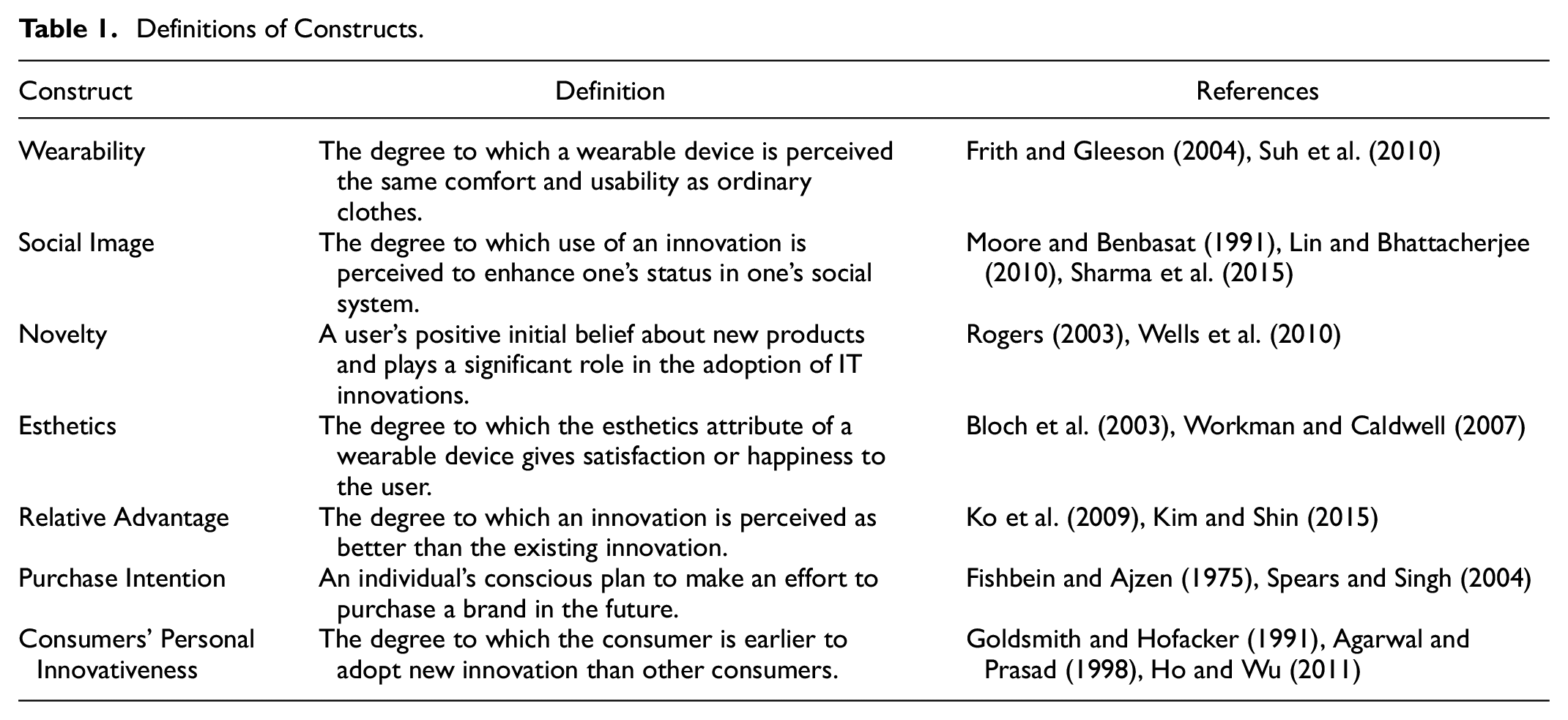
The definition of constructs and the questionnaire to measure each construct are shown in Table 1 and Appendix A, respectively. Survey respondents were asked to give their level of understanding about wearable devices. Likert scaling 1–7 with 1 to indicate “strongly disagree” and 7 to indicate “strongly agree” was used in the measurement of the questions.
Definitions of Constructs.
The proposed research model was tested by structural equation modeling (SEM) using AMOS. SEM is an appropriate tool for this study because it not only enables us to deal with theoretical constructs but also allows us to examine the complex interrelationships between constructs. We performed the confirmatory factor analysis, reliability, and validity analyses to assess the adequacy of the measurement model. We then tested structural models to assess the significance of the relationships proposed in the model.
Data
The data was collected through a survey from a large private university student in Korea. The participants of this survey were all aware and had enough knowledge about wearable technology and have experienced in using such devices in at least one method. This research is focused on investigating the purchase intention factors of wearable devices with consumers targeted to innovators. In order for the business to strongly penetrate into the market in early stage, creating an effective communication with the consumers, the innovators, is crucial. Considering this fact, communicating with undergraduate and graduate students seemed to take an advantage, looking at the tendency of adopting new electronic devices in earlier stages compared to other demographic groups, which is substantially standing out in the case of Korea (Peterson & Merunka, 2014). From a theoretical perspective, student sample would be appropriate when it comes to draw conclusions about theory as its homogeneity helps increase the internal validity (Fornell & Larcker, 1981; Hu & Bentler, 1999; Midgley & Dowling, 1978).
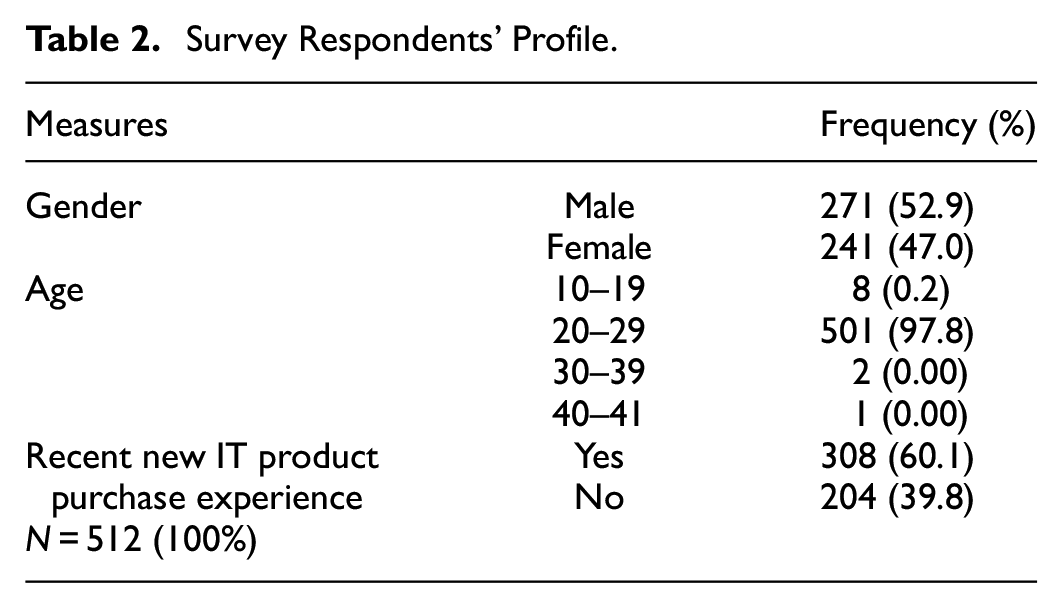
A total of 512 responses were collected and considered valid for analysis. The group of respondents consisted of 30-50 units and the respondents were fully informed about the wearable deceives related variable. The main demographic features of the respondents are described in Table 2. To examine the moderating role of consumers’ personal innovativeness, we divided the sample into two groups based on consumers’ personal innovativeness scores and tested the model using SEM.
Survey Respondents’ Profile.
Rogers (2003) defines an adopter category as a classification of individuals on the basis of their innovativeness. The categories of adopters are: innovators, early adopters, early majority, late majority and laggards. Based on Rogers’ categories of adopters, the High CPI Group (the top 50%) were consisted of innovator (2.5%), early adopters (13.5%), early majority (34%) of the whole group, and the Low CPI Group (the bottom 50%) were consisted of late majority (34%), laggards (16%) of the whole group. Divided groups were used in analyzing the moderating effect of CPI at the adoption and purchase intention of wearable device.
Results
Construct Reliability and Validity
The construct reliability and validity of the measures are examined in this Section. The results of construct reliability and validity are shown in Table 3. Construct reliability refers to the degree to which a set of indicators consistently reflect the given constructs. As indicated, the Cronbach’s alpha for all constructs exceeds .80, thus satisfying the general recommended level of .70 (Cronbach, 1951). Thus the construct reliability is acquired.
Construct Reliability and Validity.

The convergent validity is verified by examining the exploratory factor analysis, which used principal component analysis and orthogonal factor rotation. The eigenvalues and loading factors of all the items are above 1.0 and 0.5, respectively, and the seven constructs explain 74.989% of the total variance, thus acquiring the construct validity.
The confirmatory factor analysis was conducted to verify the convergent validity and discriminant validity of the constructs. The values of Composite Reliability (CR) and Average Variance Extracted (AVE) of all the constructs are above 0.7 and 0.5, respectively, and the t-value of all items is above 2, thus acquiring the convergent validity.
Discriminant validity is tested by comparing the construct’s square root of AVE with its square correlation with other constructs (Fornell & Larcker, 1981). The square root AVE values of each construct in the diagonal of Table 4 are greater than its square correlation with other constructs, which support the discriminant validity of the constructs.
Inter-construct Correlations and AVEs.
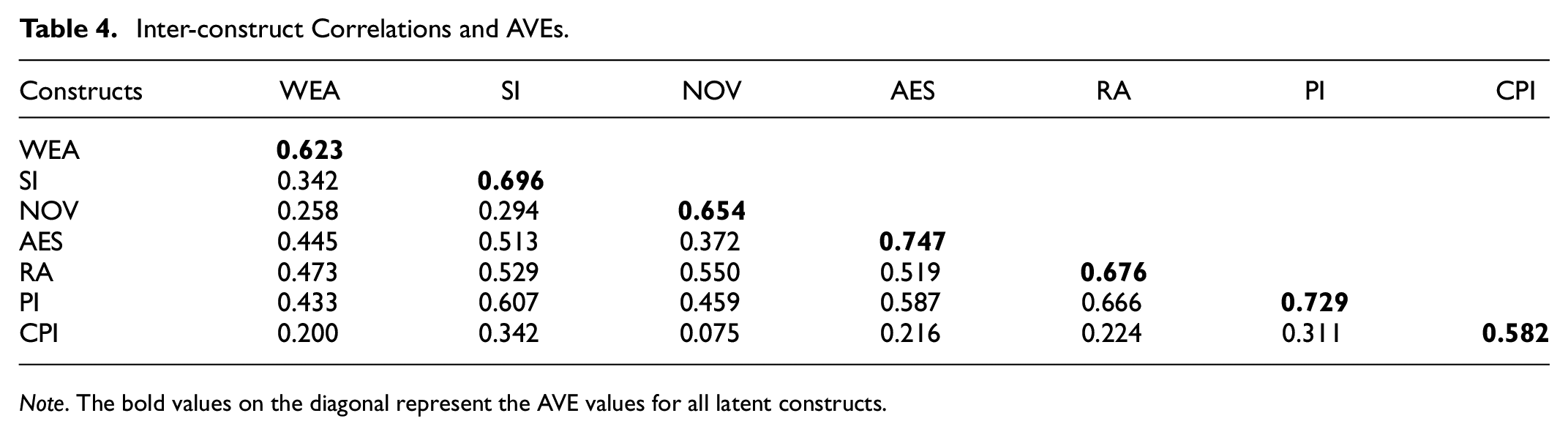
Note. The bold values on the diagonal represent the AVE values for all latent constructs.
Measurement Model
The confirmatory factor analysis was performed to assess how the proposed model fits with the data. As suggested in the literature, more than one goodness-of-fit index was examined to evaluate the model fit of the proposed model. The results for Absolute Fit measures were as follows: χ2/df = 3.35, root mean square error of approximation (RMSEA) = 0.056, Goodness of Fit Index (GFI) = 0.88, and Adjusted Goodness of Fit Index (AGFI) = 0.82. A value of χ2/df less than three is considered a good fit, and less than five is considered a permissible fit (Kline, 2005). An RMSEA value of less than 0.08 indicates a good fit (Hu & Bentler, 1999). A GFI value exceeding 0.8 indicates an acceptable fit (Doll et al., 1994). An AGFI value exceeding 0.8 indicates an acceptable fit (MacCallum & Hong, 1997). Moreover, the normed fit index (NFI) and the comparative fit index (CFI), which are Incremental Fit measures, were 0.87 and 0.90, respectively. NFI and CFI values greater than the 0.90 cutoff value are considered a good fit (Hu & Bentler, 1999). Overall, the fit statistics indicated that the proposed research model shows a good representation of the structures underlying the observed data.
Structural Model
Table 5 presents the results of path analysis for the full model. There are 5 hypotheses supported, namely H2a (path coefficient = 0.28, p < .001), H3a (path coefficient = 0.11, p < .001), H4a (path coefficient = 0.21, p < .01), and H5a (path coefficient = 0.32, p < .001).
Results for Full Model.

Note. ns = not significant; PI = purchase intention.
p < .01. ***p < .001.
Comparing the measurement model with the unconstrained one to test for invariance proves the group equivalence (Pappas et al., 2017). Specifically, as Table 6 demonstrates, the p-value is non-significant with Δχ2(24) = 30.73 (Byrne, 2016). Hence, the examination of the equivalence among the structural weights follows. Unlike the measurement model, the structural model has a significant p-value with Δχ2(19): 76.95. Consequently, testing for path differences in the model was possible.
Invariance Testing.

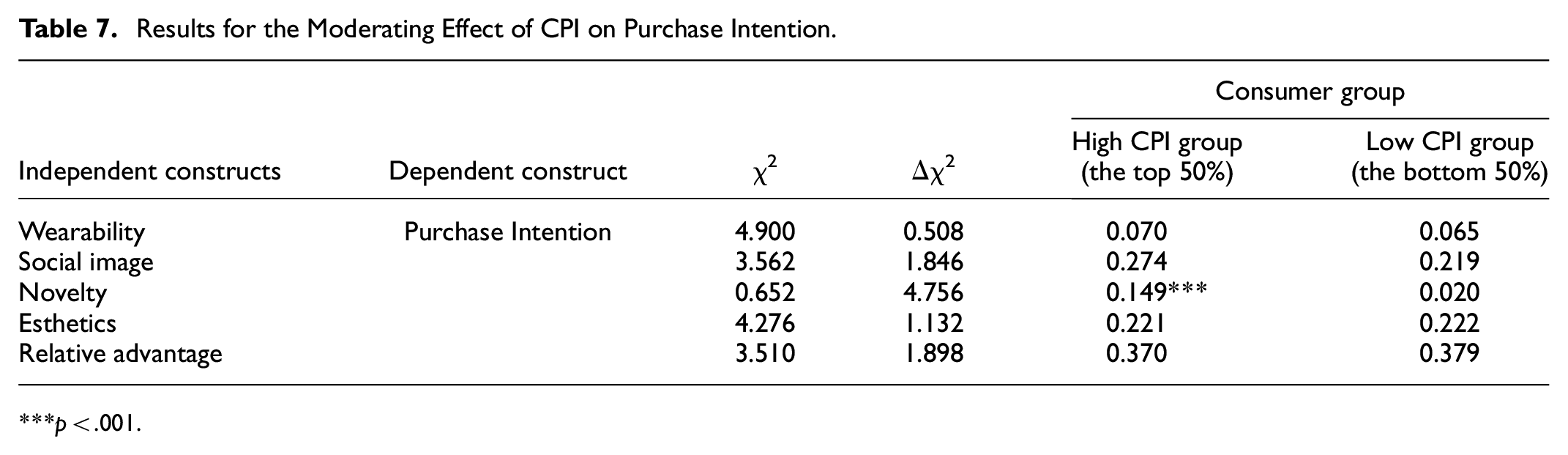
To verify the moderating effect of CPI between wearable devices factors and purchase intention, the multi-group analysis was conducted. The results of the moderating effect of CPI are shown in Table 7. As a result, only the moderating effect of CPI was significant between novelty and purchase intention, H3b was supported. A value of χ2 = 4.756(△df = 1, p < .05) means that the effect of CPI is different between novelty and purchase intention differs between the two consumer groups. Comparing the path coefficient values of the two groups, the effect of novelty on purchase intention has a significant effect on the high CPI group (0.149) than on the low CPI group (0.020).
Results for the Moderating Effect of CPI on Purchase Intention.
p < .001.
Discussion
One of the primary objectives of this study is to identify and examine the effects of the determinants of wearable devices adoption on purchase intention. The results of the analysis show that all of the hypotheses were supported except for Hypothesis H1a, in which we investigated the influence of wearability on purchase intention (Table 5). That is, regardless of the level of CPI, wearability showed no significant impact on purchase intention. Other determinants such as social image, esthetics, novelty, and relative advantage were positively related to purchase intention.
In previous studies, wearability was suggested as a critical factor in the purchase intention of wearable devices(Gepperth, 2012; Hwang et al., 2016; Sucharitha et al., 2022; Wu et al., 2017), so the improvement of wearability such as ease of wearing, convenience of wearing, and harmony with fashion was mainly performed in the design and development of wearable devices. Therefore, the wearability of the current wearable devices has been significantly improved, and consumers naturally accept and use wearable devices. The finding that the wearability has no significant impact on purchase intention means that consumers perceive wearability as a requisite factor for the acceptance of wearable devices.
Wearability is a key consideration in a typical design process for a wearable device, particularly as it relates to the work performed and its environment. Moreover, before purchasing products, consumers may try out wearable devices in the store or in a real-life environment to ensure it is wearable. It means that wearability is an essential requirement for a wearable device, so it is necessary to consider it from the design stage. It may imply that if wearable devices are not “wearable,” there will be no buyers.
This article also examined the moderating effects of CPI on the relationship between the determinants of wearable devices adoption and consumer purchase intention by comparing the differences between users of high CPI and those of low CPI. Table 6 shows that when tested with users of high CPI, novelty showed a significant impact on purchase intention. Relative advantage, social image, and esthetics were positively related to purchase intention. The finding of this study that the degree of CPI has a different effect on the adoption of wearable devices is consistent with the results of previous studies (Jeong et al., 2017; Wells et al., 2010; Yang et al., 2016). Interestingly, when tested with users of low CPI, however, novelty showed no significant impact on purchase intention. Just relative advantage, social image, and esthetics were positively related to purchase intention. Prior research also indicated that relative advantage, social image, and esthetics are key predictors of purchase intention of wearable devices regardless of the degree of CPI (Hwang et al., 2016; Workman & Caldwell, 2007). This result shows that there is a difference between innovative users and less innovative users when it comes to purchasing behavior of wearable devices.
The findings from this study contribute to the current literature. First, the results reveal that in general, consumers’ purchase decisions of wearable devices are influenced by relative advantage, esthetics, and social image. These factors are closely related to the aspects highlighted in the FEA consumers’ needs model. This multidisciplinary, integrated design approach provides useful guidelines for improving wearable devices and attracting new buyers. This study incorporated the diverse perspectives the FEA consumers’ needs model bring to better illustrate the consumers’ purchase decision making in the context of wearable devices. Second, the results show that consumers of high CPI are influenced by the novelty of wearable devices. It stresses the fact that businesses must design and market wearable devices in ways to appeal to innovative users, especially in the early stage of product development. Prior research also indicates that innovative users tend to have a higher propensity to seek novelty and accept risk than the average consumer (Roehrich, 2004). The importance of building a critical mass of consumer base early for successful market adoption of new products is well understood (Carter, 1998). Therefore, the results provide insights for businesses regarding planning and development strategies to attract and acquire users. Results suggests with wearable devices targeting high CPI consumers, the devices should be developed and emphasized with focusing on the new and innovative function, whereas targeting low CPI consumers should aim for the practical functions. Furthermore, when a wearable device is launched as a new product, it is good to emphasize novelty so that innovators and early adopters, consumers with high CPI, are satisfied.
Third, this study investigates the moderating role of CPI in the context of wearable devices and shows that it influences the relationship between the determinants of wearable devices adoption and purchase intention. That is, in addition to the examination of direct determinants that affect the intention of wearable devices, this study has also validated the role of CPI as a moderator in the consumers’ purchasing behavior of wearable devices.
Conclusions
The purpose of this study is to identify important determinants of wearable devices adoption from the multidisciplinary perspectives relevant to the characteristics of wearable devices, and to examine their influence on consumer purchase intention. Moreover, we aim at investigating the moderating effects of CPI on the relationship between the determinants of wearable devices adoption and consumer purchase intention. The findings from this study provide insights into how consumers of a varying degree of CPI make purchase decisions about wearable devices.
The current study has a few limitations. First, it employed the convenience sampling method to gather survey respondents. Convenience samples can have biases and misrepresent the overall population. While the context of this study has a limit to draw generalized conclusions of all generations since this study only validated use of college student samples, it might limit the generalizability of the findings of the study. Second, this study focuses on personal innovativeness as the moderating variable. In reality, there is also much difference among consumers related to their decision process about purchase intention. Further analysis of the interactive effects of other important demographic factors, social influence, and culture, would provide more insights into individual differences in purchase decision processes. Finally, since this study deals with technology acceptance and purchase intentions, it can be extended by employing Fuzzy-Set Qualitative Comparative Analysis (fsQCA) (Ragin, 2009), which allows us to get a deeper insight into the data as it enables us to identify the necessary and sufficient conditions for an outcome to occur (Pappas & Woodside, 2021; Woodside, 2017). For example, future studies can examine which attributes of wearable devices or combinations are necessary or sufficient to explain purchase intentions or how CPI can be combined to explain the same outcome. Previous work in the area has successfully employed fsQCA in technology adoption studies to explain behavioral intentions and demonstrate how fsQCA allows us to go back to the cases to understand better the data (Pappas, 2018; Pappas & Woodside, 2021; Park et al., 2020). Similarly, the proposed model of this study can be examined via fsQCA to identify patterns in the data that will allow understanding better adoption of wearable devices that can lead to increased purchase intentions and overall sales.
Footnotes
Appendix
Survey Questions.

| Survey questions |
| Wearability 1-1: I feel comfortable when I put on wearable devices. 1-2: I do not feel wearable devices obstruct my movements. 1-3: I do not feel more bulky or tense when I put on wearable devices. 1-4: I do not have difficulty in putting on wearing devices. |
| Social image 2-1: I would impress people favorably when I put on wearable devices. 2-2: I expect positivity from others when wearing wearable devices. 2-3: Wearable device will have positive effect on my social image. 2-4: I feel more important when I put on wearable devices. 4-5: My peers would be positive of my usage of wearable devices. |
| Novelty 3-1: I feel that wearable devices are new. 3-2: I feel that wearable devices are novel. 3-3: I feel that wearable devices are unique. 3-4: I feel using wearable devices will provide an unusual experience. 3-5: I feel using wearable devices will provide unique experience. 3-6: I feel using wearable devices will provide a novel experience. |
| Aesthetics 4-1: I feel that wearable devices is attractive. 4-2: The appearance of wearable devices is appealing to me. 4-3: I feel that the design of wearable devices is cool. 4-4: I feel that the design of wearable devices looks brilliant. |
| Relative advantage 5-1: Wearable devices are convenient for use. 5-2: Wearable devices allow me to do multitask. 5-3: Wearable devices allow me to do multitask easily. 5-4: Wearable devices allow me to do multitask in a convenient manner. 5-5: Overall, wearable devices are convenient for use anytime and anywhere. |
| Purchase intention 6-1: I have tendency of purchasing wearable devices. 6-2: I am willing to purchase wearable devices if affordable. 6-3: I am willing to use wearable devices. 6-4: I have positive opinion on purchasing wearable devices. |
| Customers’ personal innovativeness 7-1: I tend to have variety of wearable devices compared to my peers. 7-2: I tend to have a more number of wearable devices compared to my peers. 7-3: I would purchase a new wearable device despite of limited information. 7-4: I tend to purchase new wearable devices in earlier stage compared to my peers. 7-5: I tend to purchase latest wearable devices. |
Declaration of Conflicting Interests
The author(s) declared no potential conflicts of interest with respect to the research, authorship, and/or publication of this article.
Funding
The author(s) received no financial support for the research, authorship, and/or publication of this article.
