




Abstract
This study examined the extent of optimal materials handling equipment impact on defective product reduction skills to enhance overall production efficiency, taking steel and iron factories as a case study. To achieve this end, the study was performed by using qualitative and quantitative methods of data collection was employed which represented in the questionnaire survey and semi-structured interviews. Questionnaire instrument already has been tested. Findings of the study revealed that optimal materials handling equipment, particularly storage and handling equipment and engineered systems assist significantly in improving defective product reduction skills by facilitating a shorter operating cycle, reduces handling costs, eliminates unproductive handling of materials, reduces idle machine capacity, and eliminates factory hazards. All this, in turn, enabling optimum usage of space and maintains the quality of materials toward enhancing overall production efficiency in terms of facilitating better customer care and ensuring the production of quality products and in a timely. Based on findings, the study recommended manufacturing organizations management in order to succeed in enhancing operational and production efficiency as a whole, it should give a keen interest in optimal materials handling equipment and give them prioritize as a very vital cost center to defective products reduction.
Keywords
Introduction
Meeting what customers need and expect while setting objectives is of significant importance. To that end, having a continuous production schedule plays a greater role. This largely gets done by optimal materials handling which is considered the business activity that works with having a plan for buying, receiving, handling, storing, and delivering of materials for consumption in production with an effective control measure (Ibegbulem & Okorie, 2015). It is clear that the material, which are industrial goods, is considered as a source of another physical product (Ashby & Johnson, 2013); the managing of these materials is referred to as materials handling. Gopalakrishnan (2001) has provided a definition of materials handling; materials handling is referred to all tasks, assignments, and routines that are connected with transferring outer materials and services into the organization. This is carried out until they are utilized and consumed through production and operation or sales. Ibegbulem and Okorie (2015) point out that materials handling has been broadened to include all activities which have connection with gaining, handling and control, and movement/process of materials and supplies consumed in the production for a company’s final product.
The prime aim of materials handling, as explained by Chioma and Etifit (2018) and Jacobs et al. (2009), is to make sure that the necessary products are available at the right place and at the right time with the possibility of the cheapest price. They (Chioma & Etifit, 2018) were of the opinion that inadequate planning for material resources will damage the overall performance of organizations. Ibegbulem and Okorie (2015) and Barker (1989) identified several factors through which an organization can reap benefits from material handling. These include improvement in continuity of supplies with shortened lead times, decrease in inventories with reduced uselessness and surplus. They also emphasized the improvement in communications and cooperation with reduced repetition of effort, reduction in materials costs, improvement in quality control, improvement in status control. Most importantly, having a proper way to identify issues on time is vital for originations in order to maximize their benefits from materials handling (Barker, 1989; Ibegbulem & Okorie, 2015).
Thus, the optimal materials handling is a tool to optimize the efficiency of organization performance in terms of improving defective product reduction skills by facilitating a shorter operating cycle, reducing handling costs, eliminating unproductive handling of materials, reducing idle machine capacity, and eliminating factory hazards (JerutoKeitany & Richu, 2014). All this, in turn, enables optimum usage of space and maintains the quality of materials toward enhancing overall production efficiency in terms of better production of quality products in a timely manner, while at the same time facilitating meeting customer service requirements, adding to enhance the profitability by reducing costs and finding the best way to use available resources (Pemberton, 2016).
Given the relevance of the foregoing, the current study’s main question came to gain a better grasp of the true role that the optimal materials handling equipment can play in improving the defective product reduction skills toward enhancing overall production efficiency in industrial organizations. Accordingly, the study showed through its results that there are a relationship and a satisfactory effect for optimal materials handling equipment, particularly storage and handling equipment and engineered systems on improving defective product reduction skills, which in turn, can assist to optimum usage of space and maintain the quality of materials toward enhancing overall production efficiency in terms of the production of quality products and in a timely. Thus, the originality of this paper enables in introducing a new contribution in terms of providing sponsoring data and information to a large extent in addressing a knowledge gap in the literature about the critical role that can be performed by the set of the optimal materials handling equipment in improving the defective product reduction skills and enhancing the production efficiency as a whole at the business organizations. Therefore, the focus of the current study was on factories working in the Kurdistan region in the iron and steel manufacturing field. The following part of the current paper will focus on the literature review including the detailed explanation for all categories of optimal material handling equipment along with the proposed hypotheses.
Literature Review
In the past, material handling was considered the cost center, because the purchasing department was spending money on materials, while stock kept a large inventory of materials, wasting both money and space. This situation, however, did not last long, as there has been a dramatic change in the business environment especially with or after the opening of the market system and the global economy (Stephens, 2019). Consequently, almost every firm strived in order to stay in business. In addition, the majority of competition has shifted from the market to the production floor, as it is possible for companies to reduce production costs; hence, profitability improved enabling companies to remain competitive. Thus, according to Khetriwal et al. (2009) that one of the most important issues in facility planning are the design and layout of the optimum material handling system, which should be correct in the first attempt. As well as, the detective product reduction skills, the ability to cut costs, and sale price are some of the important concerns of manufacturing firms in order to improve overall production efficiency and, ultimately, raise profitability in order to stay competitive (Dağdeviren, 2008).
Further, as indicated by Zubair et al. (2019) that one of the primary goals of manufacturing companies is to select ideal material handling equipment that, when used properly by the workforce, may reduce fuel costs, production time, and prices while also enhancing the plant’s overall productivity and profitability. Material handling activities and equipment can consume up to 55% of all plant area, 25% of the labour, 87% of total production time, and 15% to 70% of overall manufacturing cost (Azizi et al., 2018). However, according to Kamble and Patil (2019), selection of adequate material handling equipment is influenced by some significant factors (e.g., the presence of system flexibility, labour efficiency, improved production, and reduced lead times and costs). Both Massey (2017) and Meng et al. (2013) indicated that it is better to control cost and decrease time in material handling, especially within the current competitive atmosphere in global markets.
Asaolu et al. (2012) were of the opinion that with the help of advanced technology, companies are able to closely monitor their costs and embark on efficient handling of materials. As well, Unam (2012) and Asaolu et al. (2012) pointed out that, because materials functions have numerous shared databases, the introduction of computers has played a key influence in the adoption of materials management. As a result, effective materials handling is essential to the long term survival of business, manufacturing, and economy. This clearly demonstrates that priority should be given to materials handling, which should no longer be regarded as a drain-pipe, but as a serious stabilizing and economic development potential factor. In their studies, Kay (2012), Kovács and Kot (2017) showed that effective material handling leads to; (1) the design of an adequate facility layout; (2) finding proper ways to improve and ease the work process; (3) enhanced overall production activity; and (4) reduction in the total cost of production. The use of efficient material handling equipment can significantly cut a plant’s operating costs by 15% to 30% (Sule, 2008). The control and protection of raw materials, products, and completed items during the cleaning, preparation, production, distribution, consumption, and disposal associated to their packaging are all part of the efficient material handling process (Massey, 2017). Various studies have focused on the techniques, machine-driven equipment, systems, and related controls utilized to perform these tasks (Zubair et al., 2019).
Thus, a few defective items may persist within a batch of perfectly functioning products due to various factors that occur in most industrial organizations in developing nations, such as the incorrect selection and improper usage of handling materials equipment in production lines. When the number of defective products supplied to customers is excessive, it can have a significant negative influence on the brand’s image and reputation, thereby reducing future sales (Björkman & Wisén, 2020). According to Piyachat and Chanongkorn (2015), a defective product is one that has flaws that could put its user in danger. Furthermore, a defective part or product is deemed to be defective when it deviates from its normal distribution and is incompatible with the quality requirements and the specification (Neuwirth, 2019). Hill (2018) defined defects as any production-related scrap and things in need of rework. The discrepancy between a product or service’s actual output and its desired output may also be referred to as a defect (Dhafr et al., 2006).
Whatever the underlying cause or causes, trashing defective components and products wastes materials, as well the costs of time, labour, energy, and wear and tear on equipment. Neuwirth (2019) pointed out that the costs of producing new components or goods to replace defective ones are also a waste. Therefore, it is in the best interests of manufacturing companies to seek to reduce the number of defective products, which will improve overall production efficiency; this can be accomplished by taking a strong interest in the best materials handling equipment and prioritizing it as a critical cost center, this because of the great role that can these equipment be played in improving defective product reduction skills by facilitating a shorter operating cycle, reducing handling costs, eliminating unproductive handling of materials, reducing idle machine capacity, and eliminating factory hazards. All this, in turn, enabling optimum usage of space and maintaining the quality of materials toward enhancing overall production efficiency in terms of facilitating better customer care and ensuring the production of quality products and in a timely.
Moreover, a wide and diverse range of material handling equipment is available nowadays, for example, vehicles storage unit, tools, appliances, and accessories in relation to achieve the different functions involved in material handling system represented by shipping, storing, monitoring, counting, and protecting products at all stages of manufacturing, distribution, consumption, or disposal (Ferrari & Corinna, 2018; Heragu & Ekren, 2014). Thus, once you follow the above discussion, it can observe that the main theory of the current study states that there are set of optimal material handling equipment, which were referred to in the current paper can play a positive role in improving defective product reduction skills toward enhancing overall production efficiency. Consequently, this leads to the desired outcome of enhancing their competitiveness and financial condition for the business organizations in Iraq, especially those who are working within the field of iron and steel industry in the Kurdistan region of Iraq. These sets of categories of optimal material handling equipment included storage and handling equipment, engineered systems, industrial material handling trucks, and bulk material handling equipment. These categories were explained in detail along with their assumptions in the following paragraph.
Categories of Optimal Material Handling Equipment and Hypothesis Development
Storage and handling equipment
It’s utilized to keep or buffer materials during “downtimes,” or periods when they aren’t being transported. These periods are known as brief suspensions during long-term shipping or long-term storage, and they are designed to allow the stock to accumulate (Disha Experts, 2020). The design of each type of storage equipment, in tandem with its use in warehouse design, denotes a trade-off between diminishing handling expenses, by making material easily accessible, and taking full advantage of the utilization of space (Dayıoğlu, 2020). By investigating enhanced efficiency possibilities in storage equipment, most of the firms have designed proprietary packaging in a way that allows products and materials of a certain type to conserve space while in inventory (Disha Experts, 2020). Also, the equipment used for storage is frequently limited to non-automated objects. Automated storage and handling equipment are frequently referred to as “engineered systems” (Douglas Equipment, 2020). Storage equipment is used to keep materials and products safe while they are not consumed, or while they are waiting to enter or exit the manufacturing process. These stages could be long-term or short-term in order to allow for proper stock or completed item build-up (Jones, 2010).
Pallets, racks, and shelves are the most common types of storage and handling equipment, as they allow products to be piled in a well-ordered manner to await transit or, if necessary, admittance to the manufacturing process (Baudin, 2005). According to Kay (2012), storage and handling equipment comes in a variety of shapes and sizes. Drive-in racks or drive-through, shelving, pallet racks, push-back racks, sliding racks, and stacking frames are examples. Furthermore, storage and handling equipment examples come in a variety of shapes and sizes. First, racks, such as pallet racks, drive-through or drive-in racks, push-back racks, and sliding racks are all common types of racks that save floor space while keeping their contents accessible (Makhmudov, 2012). Second, as their name implies, stacking frames can be stacked like blocks. They allow crushable inventory pallets, like liquid containers, to be stacked to conserve space without causing harm or damage (Kay, 2012). Third, shelves, bins, and drawers. Shelves are a type of basic storage that is smaller and less exposed than racks. When combined with bins and drawers, they offer the ability to store and organize smaller, more difficult-to-manage commodities and products. Cantilever, boltless, revolving, and tie-down shelving are examples of different types of shelving (Thomas, 2020). Fourth, mezzanines, a type of internal platform, help to create greater floor space for workers in a warehouse or other storage building. Movable, building-supported modular rack supported, and free-standing versions are all common types of mezzanines (Allen & Iano, 2017). Fifth, work assist tooling allows improving the efficiency of assembly and manufacturing processes by allowing safe and effective product handling across diverse industries in applications that need products movement (Thomas, 2020).
Thus, all of this means that having suitable storage equipment can be of significant assistance in enhancing overall production efficiency and increasing the profitability of the manufacturing organizations. This is done by greatly reducing excess operating costs and improving the defective product reduction skills in terms of improving work flow and shortening production times; reducing employee injuries with better ergonomics (Abu Jadayil et al., 2017; Ibrahim et al., 2008). Moreover, Douglas Equipment (2020) confirmed that having the right storage equipment can increase the possibility of improvement of defective product reduction skills and enhancing the efficiency on the production floor by maximizing utilization of using space in the production environment. Based on the above explanations, the following hypothesis can be formulated.
H1: There is a positive role for storage and handling equipment in defective product reduction skills to enhance overall production efficiency.
Engineered systems
Disha Experts (2020) highlighted that the engineered systems consist of several units that work together to allow storage and movement, and they are frequently automated. They referred that there are many types of engineered systems that have several components including;
Conveyor systems: automated conveyor systems involve the movement of heavyweight tools to specified destinations with aid of flexible chain, belts, or live rollers. It is an extremely effective tool to transfer large sizes of material rapidly (Kay, 2012).
Robotic delivery systems: these automated systems are regarded as an ideal way to move products and goods on one assembly line or conveying goods all the way through a plant or warehouse (Viswanadham & Narahari, 2015).
Automatic guided vehicles: these comprise several robotic vehicles that move according to the markers or wires in the floor. This is to change or transfer considerable materials around or within a manufacturing facility or warehouse. Other ways such as magnets, vision, and lasers are possible to be used as methods for AGV navigation (Ohzeki et al., 2018).
Automated storage (AS) and retrieval system (RS) are two examples of engineered systems with extensive automated organizational structures covering aisles, racks, and shelves that can be reached by a retrieval “shuttle” system (ED ROMAINE, 2020). The shuttle system is sometimes known as a mechanized cherry picker since it can be controlled by a worker or completely automated operations can be used to quickly locate a storage item and retrieve it for other purposes (Guo & Liu, 2010; Vasili et al., 2012). Lättilä et al. (2013), Chan and Chan (2011), Murty et al. (2006) referred that by automating the low-value and simply reiterated duty of inventory storage and retrieval, the AS/RS can greatly help improve the defective product reduction skills by (1) More effective usage of floor space. (2) Better inventory storage density. (3) Enhanced ergonomics and safety and security, leading to reducing accidents. (4) Decreased labor costs. (5) Frequently modular design for extra flexibility. (6) Enlarged order picking accuracy. (7) Better product safekeeping for premium inventory. All this, in turn, lead to increased throughput, thereby enhancing the efficiency of the productive performance of the institution as a whole toward strengthening competitive position and financial position, which are very important for organizations operating in the highly competitive and volatile markets. Based on the above explanations, the following hypothesis can be formulated.
H2: There is a positive role for engineered systems in defective product reduction skills to enhance overall production efficiency.
Industrial material handling trucks
It represents the third type of equipment of material handling and the important in improving the defective product reduction skills successfully toward enhancing overall production efficiency. These trucks are made up of numerous types of transportation items and vehicles that are used in materials handling to move materials and products. Small hand-operated trucks, pallet jacks, and various types of forklifts are among these transportation devices (Thomas, 2020). They have a variety of qualities that make them suitable for a variety of jobs and functions. Some trucks have forklifts or a flat surface on which to lift objects, but others require a separate piece of equipment for charging and loading (Kamali, 2019). Trucks (either manual or motorized lift) require workers must manually push them or ride along on the truck. Both stack trucks and non-stack tracks are used but they have different roles to play. The former can be used to stack items, whereas the latter is usually used for transportation and not for loading (Disha Experts, 2020).
Several authors (e.g., Anstrom, 2016; Ramtin & Pazour, 2014; Ryan & Ryan, 2006; Stone, 2018; Thomas, 2020) mentioned that there are many species of industrial trucks are including:
(1) Hand trucks: these are a common piece of material handling equipment with a tiny platform to set the verge of a heavy object on, and a long handle to use for leverage. Whatever is being moved must be tipped so that it rests on the handle, and is carried at a tilt to its destination (Thomas, 2020).
(2) Pallet trucks, also known as pallet jacks, are trucks that are used to transport pallets. To transfer it, they slide into a pallet and lift it up. They come in two varieties: manual and electrical (Stone, 2018).
(3) Walkie Stacker vehicles and lift pallets like forklifts, though they do not have a spot for the worker to ride in. They are available in both manual and powered versions (Ryan & Ryan, 2006).
(4) Platform trucks are low-to-the-ground hand trucks with a large platform for transporting items and cargo (Thomas, 2020).
(5) Order pickers use a platform to hoist workers a few inches above the ground so they may grab or store items on high shelves (Ramtin & Pazour, 2014).
(6) Side loaders, also called Very Narrow Aisle (VNA) trucks, are designed to fit into narrow warehouse aisles due to their ability to load things from many directions. They’re also useful for transporting long, difficult-to-move items (Anstrom, 2016).
There are many advantages of industrial material handling trucks, which can assist to improve defective product reduction skills to enhance overall production efficiency in industrial organizations. These advantages include (Schulze et al., 2008): (1) Improve the efficiency of a production system, this is by ensuring the right quantity of materials delivered at the right place at the right time in the most economical manner by cutting down indirect labor cost, reducing the damage of materials during storage and movement (Chandra, 2015). (2) Save money, which is accomplished by getting the work done faster and with less people; therefore, industrial material handling trucks are an economical investment (Stephens, 2019). (3) Increase workers competence, workers will gain more power and capacity to perform their jobs by using this equipment. This means workers can perfume their duties in an efficient manner. Furthermore, jobs are done as quickly as possible with less time and effort. As a result, an employee is able to achieve more (Carolina Material Handling, 2019). (4) Reduce accidents; industrial material handling trucks have great benefits as they lead to lessen the occurrence of accidents. This is because such equipment is able to reduce the risks of lifting heavy materials and decrease the chances of employees tripping or falling, and create ergonomic work stations to avoid injury (Stromme, 2020). (5) Desired customer service, this is by making the customers happy in relation to doing orders faster, decreasing or removing mistakes, and improving shipping. Consequently, it can accommodate more new customers because improved productivity permits more orders to be fulfilled (Carolina Material Handling, 2019). Thus, the following hypothesis can be made based on the aforementioned explanations.
H3: There is a positive role for industrial material handling trucks in defective product reduction skills to enhance overall production efficiency.
Bulk material handling equipment
It is the last type of material handling equipment that can also have an impact on defective product reduction skills to enhance overall production efficiency. They are talking about the storage, transportation, and control of loose bulk items like food, liquids, and minerals, among other things (Disha Experts, 2020). There are many examples of bulk material handling equipment including (Kay, 2012; Thomas, 2020): (1) Conveyors, which come in a variety of designs for different types of bulk materials (McGuire, 2009). (2) Stackers, which pile bulk material onto stockpiles; moving between points along rails in a yard, they are usually automated (Thomas, 2020). (3) Reclaimers are different from stackers, and work in opposite way than stackers. Reclaimers are used to retrieve products from stockpiles; some carry material using buckets whereas others are scraper or portal style (Thomas, 2020). (4) Bucket elevators, also known as grain legs, transport material vertically using buckets attached to a spinning chain or belt (Patel et al., 2013). (5) Grain elevators are tall structures built specifically to store grain. They are made of instruments that transport grain to the top of the elevator, where it is processed. (6) Hoppers are funnel-shaped bowls that can distribute the material or pour from one bowl to another. Unlike funnels, hoppers can hold material until it is needed, then release it (John & Oren, 2016). (7) Silos are large storage structures for bulk materials that may not always include instruments to transport the material to the top of the structure, such as grain elevators. They come in a variety of shapes and sizes, including towers, bunkers, and bag silos (Thomas, 2020).
Generally, there is an assortment of bulk material handling equipment products that aid to streamline shipping and storage of materials and increase the capacity of the workflow in manufacturing. In addition, they can help streamline customer service, control overall handling costs in manufacturing, are used for spreading and transportation, streamlining in appropriate time, better monitoring, and management (Thomas, 2020). Moreover, they can assist in improving safety by reducing injuries, as well as increase worker satisfaction and their efficiency. Thus, the best use of material handling solutions can lead to increased employee satisfaction and their competence in any manufacturing industry (Douglas Equipment, 2020). Based on the above explanations, the following hypothesis can be formulated.
H4: There is a positive role for bulk material handling equipment in defective product reduction skills to enhance overall production efficiency.
Methodology of Study
The main question of the current study was the extent of improvement the defective product reduction skills by providing and using the necessary material handling equipment ideally toward enhancing overall production efficiency in industrial organizations. Thus, this study is an exploratory study within the framework of the case study. It is considered an exploratory study because of little previous researches has been done on the study topic in Iraq particularly and in the Middle East generally; as well as, this paper used descriptive data to investigate the background of a study problem and get the required information needed to carry out further research in the current study. According to Gaus (2017), the researchers can use a variety of study approaches to better understand, characterize, and explain behavior and the cognitive processes that underpin it. Some procedures, such as questionnaire instrument adoption, comprehensive and in-depth interviews, and well-controlled experiments, rely on interactions between the researcher and the individuals or situations being investigated.
In all cases, this study focused on the contemporary phenomenon in real-life settings, which is represented in the main objective of the present study focused on knowledge the real roles that can be played by the set of the optimal materials handling equipment in improving the defective product reduction skills and enhancing production efficiency in the plants under study. To achieve this objective, a mixed methodology was followed; where, there is a growing consensus that both qualitative and quantitative methodologies are valuable for solving research questions and comprehending the world. Mixed methods research, in which the researcher intentionally mixes the quantitative and qualitative parts of the subject, is becoming more common (Creswell & Clark, 2017; Johnson & Onwuegbuzie, 2004). This means both quantitative and qualitative methods (concurrently) to collect data within the case study framework were used in this investigation. This has certainly led to collecting robust data and then having valid and reliable findings. Where a survey methodology was adopted and a survey questionnaire was designed to capture the perceptions of the respondents regarding the real role of the set of the optimal materials handling equipment in improving the defective product reduction skills. Respondents were selected who work full time in both factories, the exception of department heads who were selected to be interviewed.
In tandem with the questionnaire, the semi-structured interviews were also carried out in order to have more in-depth information about the effect that optimal materials handling equipment can have on overall production efficiency by improving defective product reduction skills in the factories under study. For this purpose, the middle management was the most suitable for interview purposes, and the interview type was semi-structured. Accordingly, this section more details will be given in relation to the study model, gathering data and tools, procedures that are used to collect data along with details about data processing and the analysis techniques in the following subsections.
Conceptual Model
The research was carried out as a cross-sectional survey, with data collected through semi-structured interviews with relevant people (officials) and full-time workers at the Kurdish steel and iron industries. The goal was to gain a better grasp of the genuine effect that optimal materials handling equipment can have on defect product reduction skills, with the goal of improving overall production efficiency. The current study’s conceptual model is constructed in accordance with the preceding as shown in the following (Figure 1):
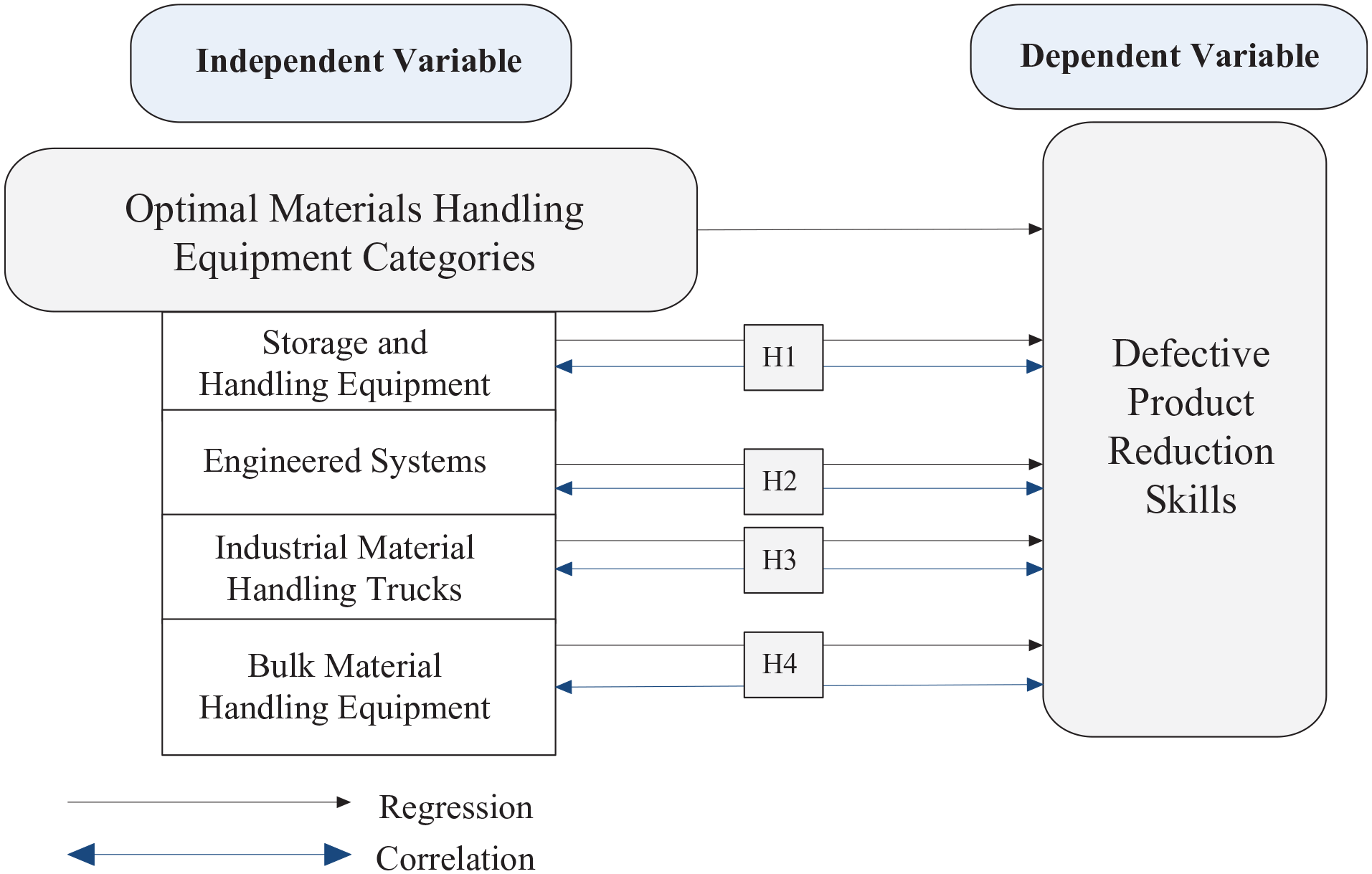
Conceptual model.
In relation to sampling, this study relies on the sampling table provided by Krejcie and Morgan (1970); the sample size is 260 respondents out of a total population of 783. This represents two steel and iron firms under study in the Kurdistan region/Iraq. The sample for each steel and iron plant was 143 and 117, respectively. The stratum and proportional representation condition of stratified sampling were chosen to verify the study’s goal. It should be emphasized that the firms’ trademarks are not mentioned, as per the HR department’s recommendation. Participants were divided into groups based on their educational backgrounds.
The research approach aids in the organization of operation variables, the collection of relevant data, and the analysis of the data. As a result, a solution to the research’s primary problem areas can be established (Sekaran & Bougie, 2016). As indicated above, the current paper aimed to examine the extent of the impact of optimal materials handling equipment on defective product reduction skills to enhance overall production efficiency in the Kurdish steel and iron factories. To that end, as mentioned, the methodological approach taken in this study is a mixed methodology. This means both quantitative and qualitative methods (concurrently) were used in this investigation. A more detailed explanation of the methods is given in the following sections.
Quantitative Data Collection Methods and Procedure
According to Sekaran and Bougie (2016), a proper study design will aid the researcher in operationalizing variables and collecting accurate data, resulting in reliable answers that provide appropriate solutions to the challenges raised by the research. As a result, a three-section self-administered questionnaire was created for the study. The first section was prepared to find out information in relation to four types of optimal materials handling equipment which comprised of storage and handling equipment, engineered systems, industrial material handling trucks, and bulk material handling equipment. The items measuring the four dimensions have been taken from the studies of Disha Experts (2020), Thomas (2020), Douglas Equipment (2020), Kovács and Kot (2017), and Kay (2012). These four categories were measured using 16 items (4 items for each category).
Second, in this section, questions were designed to find out information in relation to the defective product reduction skills toward enhancing overall production efficiency in terms of the optimal utilization of available resources, facilitating a shorter operating cycle, reducing handling costs, eliminating unproductive handling of materials, reducing idle machine capacity and eliminating factory hazards, and the other specifications which can overtly show the insights of the employees concerning how to improve the defective product reduction skills toward enhancing overall production efficiency in terms of facilitating better customer care and better quality products and ensures timely production in their factories. Ten items were used to measure these dimensions which were found in the studies of Kay (2012), Ibegbulem and Okorie (2015), Kovács and Kot (2017), Hill (2018), Neuwirth (2019). Participants were asked to respond using a 5-point Likert scale ranging from agreement to disagreement. Third, in this section, questions were designed to indicate demographic information such as age, gender, and field work experience and education background. To ensure that the aim of this study is accurately achieved and to obtain robust data and reliable results, the several procedures were performed to test the questionnaire. This was done to ensure the questionnaire covers all aspects of the phenomena investigated (e.g., organizational, educational, technical, environmental aspects). A detailed explanation of the questionnaire survey procedures is given in the following paragraph.
Procedures of questionnaire survey
Several characteristics must be met when a questionnaire is designed. For instance, questions must be short, relevant and easy to understand by respondents. This is to ensure that participants interpret the questions properly. Furthermore, it is important to extract questions from pre-test sources that were previously checked by academics and practitioners. The question’s content must be understandable and based on suitable theory and literature. Given open-ended inquiries have a crucial role in avoiding restricting responses. This is to ensure that responders evaluate the questions objectively and efficiently in order to arrive at a precise interpretation of the offered questions. To ensure that the process can be duplicated and that high reliability is achieved, the techniques used to collect data must be described in detail. The following is a brief overview of the questionnaire methodologies used in this research.
First, the information required carefully considered the target respondents, and then decisions on the content of the questionnaire were made. Subsequently, the questionnaire wording and its format were developed and, most importantly, the length of the questionnaire was checked. The survey was completed in English. The questionnaire was pre-tested by designers before being presented in a seminar at the Chamber of Commerce in Sulaymaniyah, Iraq’s Kurdistan region, as part of an annual meeting with the industrial competitiveness center. Finally, the questionnaire was disclosed to other relevant checkers (e.g., PhD students at the University of Sulaymani’s faculty of management and faculty of engineering). Based on the recommendation of abovementioned people, necessary adjustments were made. Before sending to the target respondents, the questionnaire was translated into Arabic, which is the primary language spoken in the research area, as a precaution against the language barrier. To avoid any anomalies and to assure credibility and authenticity, the back-translations were carefully compared to the original transcripts. Furthermore, a pilot study was conducted on the Arabic version of the questionnaire, by sending 30 copies with a cover letter to one target manufacturer to ensure their reliability through the Cronbach Alpha reliability test; based on this, the questions of the questionnaire was reviewed and re-checked.
Subsequently, a final version of the questionnaire was created and given to the responders via the factory’s senior managers. It should be emphasized that having and maintaining a positive relationship with factory top management made the data gathering process faster, smoother, and more efficient. There were 260 respondents that took part in the survey. The proportionate sampling approach was employed as part of the stratified sampling method. These sample strategies were chosen because they are appropriate for the study’s objectives. The total number of questionnaires gathered was 204, with 13 being removed because they were not entirely and properly completed. Hence, the final numbers of questionnaires were 191 valid for analysis. Accordingly, the response rate is 73.46%. Thus, data processing of these questionnaires were done using SPSS (Version 24). As for the techniques that were used in analyzing the data, they are description analysis of the demographic characteristics of the participants and Pearson correlation to show the significant association between study variables; as well as, a linear and multiple regression analysis were adopted in order to investigate the extent of the influence of the independent variables on the dependent variable in the current study These techniques were explained in-depth details in the following paragraphs.
Qualitative Data Collection Method and Procedure
Qualitative research, also called field research, is a type of scientific research that includes many distinct methodologies and covers several disciplines, fields, and subject matter (Creswell & Poth, 2016). Rather than a surface depiction of a huge sample of the population, qualitative research aims to get a thorough insight into a specific organization or event (Qu & Dumay, 2011). It also aims to depict the structure, order, and broad patterns seen among a group of individuals in an explicit manner (Locke et al., 2009). Qualitative research methods can be used to better comprehend complicated social processes and capture key characteristics of a phenomenon from the viewpoint of study participants (Malterud, 2001). For this study, one most common methods of qualitative data collection that was used in the current study is interviews; this was in order to have more information about the effect that optimal materials handling equipment can have on defective product reduction skills toward enhancing overall production efficiency. Interviews are a method to gather data through the exchange of information and ideas between two persons about a particular topic (Janesick, 2004; Meissner & Sprenger, 2011). Therefore, the interviews are considered one of the main techniques of this study due to their particular linkage with the mixed-method approach.
Procedure for interviews
As we mentioned earlier that the semi-structured interviews were carried coinciding with the questionnaire, this was in order to have more information about the role that can be played by the set of the optimal materials handling equipment on improving defective product reduction skills toward enhancing the overall production efficiency as much as possible in the factories under study. The representative sample was focused on HR departments at selected factories in addition to middle managers represented in Production, Maintenance section. Where, a total of six respondents from the two factories were chosen to be part of the interview process. These respondents were the middle managers with decision-making powers in the factory. In relation to the interviews, a purposive sampling method was adopted. The interviewees were selected on the following criteria:
The operational level is the head of the company’s department,
Members of staff having essential information and skills about material handling systems,
That staff that have authority were purposely selected,
Staff members, especially those who have the power to make the decision at the departmental level, were chosen as well as those who are directly responsible and involved in the proper selection and use of materials handling systems.
As for the mechanism of conducting the interviews, it took place while the researchers were in the factories under study to collect survey data, they visited the offices of prospective respondents and took the appointment of them personally for the interviews. During the meetings, the researchers explained the objectives of the study and also why they needed an appointment from the respondents. In these personal visits to the three departments (Maintenance, Production, and Human Resources) of the selected two steel and iron factories, the researchers were able to get an appointment for the interviews although its times are different. These interviews were held in the respective offices of the respondents and took 40 minutes to 1 hour. The interviews were held in a very friendly atmosphere and the respondents were quite open about the possibility of using material handling equipment optimally and the material and moral difficulties they face in providing and using this equipment toward improving the skills of reducing defective products. The interviewees’ voice was recorded and then written in a word document. Then interviewees had the chance to review what they had said. This is to give them more chance to either add or delete and review what they had said. This procedure would definitely validate the responses and hence would boost the obtained results.
Reliability and Validity of Data Collection Methods
Determination of the reliability and validity of data and research tools is an important step in any research process to ensure the consistency and accuracy of results. In order to promote the reliability of the data, the researcher worked on data collection by using a variety of instruments within the framework of the case study methodology including: questionnaire and interviews. Thus, using two or more of data collection sources in one study would increase the validity of the data and findings (Yeasmin & Rahman, 2012). Moreover, as we mentioned earlier, it was necessary that the instrument (questionnaire) should be reliable so that it could be used by other researchers in different contexts and settings. For this purpose, Taber (2018), Souza et al. (2017), Hama Kareem et al. (2017) highlighted that instrument reliability could be checked through Cronbach’s Alpha reliability test. Thus, to ascertain the reliability of the survey questionnaire of this study, Cronbach’s Alpha was calculated depending on a pilot study data that was carried out on a sample of 30 respondents. The Cronbach’s Alpha for the instrument was found to be above .60, confirming the reliability of the instrument (Taber, 2018).
In order to increase the validity of data and research findings, the experienced and knowledgeable persons have been involved in order to verify the validity of the content of the questions of the survey instrument (questionnaire) and make it more suitable for final data collection. Furthermore, to validate the survey questionnaire, the researcher used factor analysis as a principal component analysis approach to validate the items and the factors related to the variables of the study. In addition, interviewees have been given an opportunity to add, delete, and review what they said for the purpose of validating their responses, which in turn, will enhance the validity of the current study results. Finally, this study was very focused on the problem formulation and all statements presented in the study were supported by a theoretical foundation and retrieved through a literature review. This rigorous reviewing of literature enhances the reliability and validity of the findings (Sekaran & Bougie, 2016).
Results and Discussion
In this section, the results of the data that were collected via a survey questionnaire and interviews are revealed. It should be noted here that several statistical tools were used to analyze the data collected through questionnaire whereas semi-structured interviews were analyzed using the content analysis method. No doubt, this approach plays a significant role in obtaining a deeper understanding and acquiring more knowledge about the phenomenon, which is about the effect that optimal materials handling equipment can have on defective product reduction skills to enhance overall production efficiency in two selected steel and iron factory in Kurdistan region / Iraq.
Demographic Information
This section contains a brief description of the participants’ demographic information. Participants were classified using simple frequency counts based on personal characteristics such as age, gender, employment experience, and educational background (see Table 1).
Respondents Information (N = 191).

The gender distribution of employees was 78.01% male and 21.98% female. A possible explanation for this distribution is attributed to the reality that many industrial and service sectors in the Kurdistan region are male-dominated. As for age, 36.64% of the employees were between 25 and 34 years old; 30.36% were under 25; 24.1% were between the ages of 35 and 45; and only 8.90% were over 45 years of age. This data proves that most of the participants were young and energetic people who would be able to improve the defective product reduction skills by using the optimal materials handling equipment to enhance overall production efficiency in their factories. Fieldwork experience distribution among the employees was as follows: the majority of the participants were appointed in their current organizations for less than 5 years (29.31%); for more than 5 years but less than 10 years (37.17%); between 11 and 15 years (20.94%); and more than 15 years’ experience (12.57%). These statistics indicate that most of the participants were well-experienced in the field and thereby have the aptitude to use the optimal systems and equipment of materials handling toward the achievement of the required defective product reduction skills to enhance overall production efficiency. The distribution of the employees’ educational backgrounds indicated that the majority (57.07%) had received a bachelor’s degree; 24.60% held a diploma degree; 16.23% held a high school graduate degree; and 2.1% held an advanced degree of the education level. These results demonstrates that majority of the employees have a good level of education toward the ability to use the materials handling equipment problem-free to improve the defective product reduction skills and enhance overall production efficiency in their plants.
Pearson Correlation Analysis for Variables
Pearson Correlation was conducted to construct the link between the set of optimal materials handling equipment and defective product reduction skills toward enhancing overall production efficiency. Pearson correlation shows the significant association between variables (Sekaran & Bougie, 2016). The correlation findings were pointed out in Table 2.
Correlation Matrix for Variables of Study.
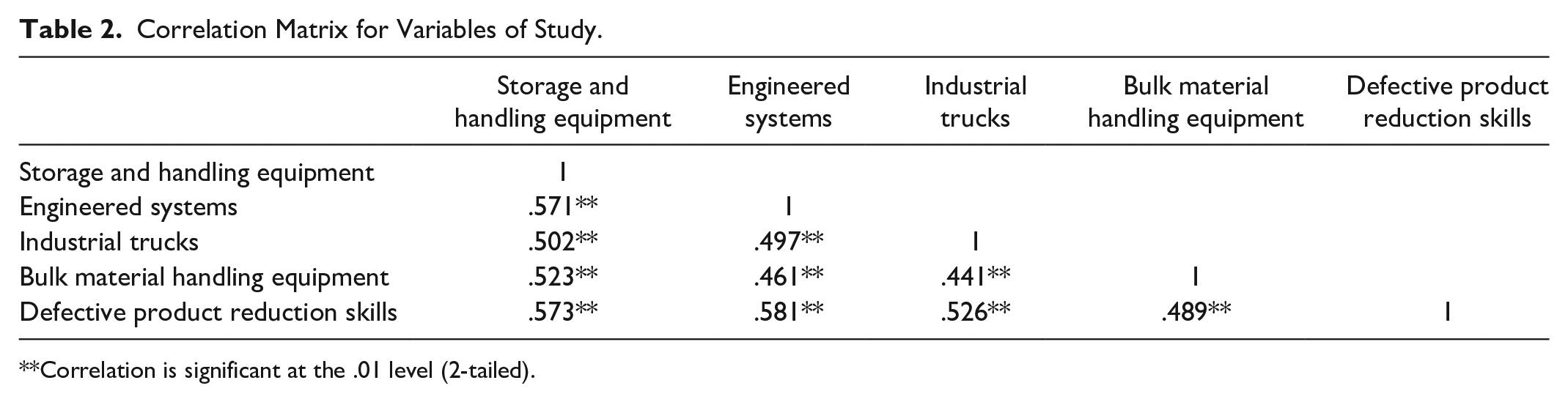
Correlation is significant at the .01 level (2-tailed).
The Pearson correlation coefficient results in Table 2 show a moderately strong and positive relationship between the optimal materials handling equipment categories (storage and handling equipment, engineered systems, industrial trucks, and bulk material handling equipment) and defective product reduction skills. A regression analysis using a linear and multiple regression technique was undertaken once the association between variables was established, as well as after certain assumptions that needed to be met before doing regression analysis, respectively, in order to gain a better understanding of the impact of the categories of optimal materials handling equipment on defective product reduction skills, as well to ensure which category of optimal materials handling equipment is the most persuasive on defective product reduction skills within designated plants under study. The analysis’ findings are reported in the paragraph below.
Regression Analysis for Optimal Materials Handling Equipment and Defective Product Reduction Skills
A linear and multiple regression analysis was used to look at the impact of the different categories of the optimal materials handling equipment on defective product reduction skills to enhance overall production efficiency, as well as to ensure which category of optimal materials handling equipment is the most persuasive on defective product reduction skills within designated factories under study. Tables 3 and 4 illustrate the results of linear and multiple regression analyses, respectively.
Linear Regression Analysis for OMHE With DPRS Model.

Note. Predictors: (Constant), Optimal Materials Handling Equipment (OMHE); Dependent Variable: Defective Product Reduction Skills (DPRS).
Multiple Simultaneous Regression Analysis for Optimal Materials Handling Equipment Categories With Defective Product Reduction Skills Model.

Note. Predictors: (Constant) Storage and Handling Equipment, Engineered Systems, Industrial Trucks, Bulk Material Handling Equipment; Dependent Variable: Defective Product Reduction Skills.
As indicated in Table 3, simple linear regression was used to examine the impact of the composite variable of optimal materials handling equipment types on defective product reduction skills. According to the findings of this study, optimal materials handling equipment categories play a critical influence in defective product reduction capabilities. The results indicated that the optimal materials handling equipment categories as an independent variable have a strong relationship (R = .639) with the dependent variable of defective product reduction skills. The results also revealed that the R-Square value, in this case, was .401. This means that optimal materials handling equipment categories are causing 40.1% variation in defective product reduction skills. Likewise, the results indicated that the optimal materials handling equipment categories have a significant influence (β = .321, p < .05) on defective product reduction skills. This result indicates that the optimal materials handling equipment categories alone will have an influence of 32.1% on defective product reduction skills.
The multiple regression results indicate that the storage and handling equipment and engineered systems are most influential categories, respectively, on defective product reduction skills toward enhancing overall production efficiency. Likewise, the category of industrial trucks came the second place in terms of influencing defective product reduction skills. However, the findings indicated that the category of bulk material handling equipment has a somewhat minimal impact on defective product reduction skills.
With regard to the category of storage and handling equipment, the regression results indicated that this category has significant influence (β = .589, p < .05) on the defective product reduction skills toward positively enhancing overall production efficiency. The result suggests that the optimal using of storage and handling equipment has a positive impact not only on defective product reduction skills, but also makes the material easily accessible, maximizing the utilization of space, and eliminates factory hazards (Dayıoğlu, 2020). On the other hand, Abu Jadayil et al. (2017), Ibrahim et al. (2008) confirmed that having suitable storage equipment can help significantly on enhancing overall production efficiency and increasing profitability for the manufacturing organizations. This is accomplished by greatly reducing excess operating costs and improving the defective product reduction skills in terms of improving workflow and shortening production times; reducing employee injuries with better ergonomics. Furthermore, Douglas Equipment (2020) confirmed that having the right storage equipment can increase the possibility of improvement defective product reduction skills and enhance the efficiency on the production floor by maximizing utilization of using space in the production environment. As a consequence, the regression analysis for the model of optimal materials handling equipment-defect product reduction skills shows that the data support the first hypothesis below, which has been accepted.
As for the engineered systems category, the regression findings referred that this category also has a significant influence (β = .547, p < .05) on the defective product reduction skills toward the enhancing overall production efficiency positively. Moreover, the researchers such as (Lättilä et al., 2013; Murty et al., 2006) have highlighted that the engineered systems, especially the equipment of AS/RS, dramatically assist in improving the defective product reduction skills through more efficient use of floor space, increased inventory storage density, improved ergonomics and safety, eliminating unproductive handling of materials, reducing the idle machine capacity, and other advantages that can lead to increased throughput. These factors lead to enhancing the efficiency of the productive performance of the institution as a whole toward strengthening competitive position and financial position, which is most important for organizations. Thus, the above discussion leads us to accept the following hypothesis.
As well, the results showed that the category of industrial trucks has an effect (β = .439, p < .05) on the issue of improving defective product reduction skills. Many researchers have confirmed that the industrial material handling trucks can lead to improve defective product reduction skills to enhance overall production efficiency in industrial organizations by improving the efficiency of a production system, improving workers efficiency, reducing the work accidents, thereby assist to fulfill customer requirements faster (Carolina Material Handling, 2019; Chandra, 2015; Schulze et al., 2008; Stephens, 2019). Thus, based on the discussion above, the following hypothesis is accepted.
The findings indicate that bulk material handling equipment has a smaller impact (β = .284, p < .05) on the issue of improving defective product reduction skills, which are considered necessary to lead the factories under study toward enhancing overall production efficiency, by streamlining transportation and storage of materials and boosting the efficiency of the workflow in manufacturing, curbing overall handling costs in manufacturing, distribution and transportation (Thomas, 2020), as well as by assisting in improving work environment safety by the reduction in injuries, thereby increasing workers satisfaction and their efficiency through the best use of material handling solution (Douglas Equipment, 2020). Based on the above explanations, the following hypothesis is accepted.
Semi-structured interviews with the directors of the three primary departments (maintenance, production, and human resources) were done as part of the current study’s qualitative method. The interviews were transcribed to aid in the analysis and the identification of main themes. The themes discovered in the interviews were coded using predefined coding before analysis. This preset coding related to the study’s research questions. Interviews were evaluated using a content analytic approach after coding was done; this was based on the questions asked of the participants. The results of a qualitative study were triangulated with the results of a quantitative analysis using content analysis.
When the findings regarding the optimal materials handling equipment categories were triangulated with the interview findings, the important findings from the qualitative method of this study revealed subtleties and intricacies about study topics that were often missed by more positive inquiries, where all respondents stated that the materials handling categories represented by storage and handling equipment, engineered systems, industrial trucks and bulk material handling equipment have a clear role in the improvement of the defective product reduction skills. For example, one of the respondents stated that “These categories have a positive and direct impact on the defective product reduction skills which is considered one of the important issues which have a direct role on enhancing overall production efficiency in the factory.”
However, another respondent mentioned that “the intensity of the impact of these categories varies with the degree of their use for material handling; for example, the storage and handling equipment often has a greater impact on improving the defective product reduction skills, where they assist in the safe and smooth access for the materials to production centers, which lead to improving workflow and shorten production times; moreover, they help to make better use of the plant space, thereby maximizing utilization of using space in the production environment, and also reducing work injuries with better ergonomics.” In addition, he referred that “the engineered systems and industrial trucks also have a good impact on improving the defective product reduction skills and enhancing the efficiency of a production system as a whole, this by ensuring the right quantity of materials delivered at the right place at the right time most economically, improving product security for premium inventory, and improving ergonomics and reducing accidents, where these equipment can eliminate the need for heavy lifting, reduce the chances of workers tripping or falling, and make work stations ergonomic to prevent injury.”
Nevertheless, most of the respondents pointed out that the bulk material handling equipment has somewhat little effect on improving the skills of limiting defective products. This is because this equipment are not highly relied upon in the material handling process to and from production sections in their factories (steel and iron plants); however, they lead to help streamline customer service, and improve safety in the work environment.
Thus, the phenomenon which has been observed reliably in the results of the quantitative and qualitative analysis of the current study that there is a satisfactory relationship between optimal materials handling equipment particularly storage and handling equipment and improving defective product reduction skills, which in turn, assist significantly in facilitating a shorter operating cycle, reducing handling costs, eliminating unproductive handling of materials, reducing idle machine capacity, and eliminates factory hazards. All this, in turn, enabling for factories under study optimum usage of space and maintaining the quality of materials toward enhancing overall production efficiency in terms of ensuring the production of quality products and in a timely along with facilitating better customer care.
Differences Between the Current and Past Studies
The overall purpose of the current study is to gain a deeper understanding and obtain knowledge and reliable information in relation to the effect which the categories of optimal materials handling equipment can have on defective product reduction skills to enhance overall production efficiency in the selected steel and iron factories in Kurdistan region/Iraq. Through this target, it should be emphasized that the current study focuses on investigating the active function of various dimensions in materials handling to enhance overall production efficiency through the issue of improving defective product reduction skills. The results of the study showed, in turn, that whenever the necessary materials handling equipment is provided and used in proportion to the size of the factory and the nature of the materials and products that are required to be transported and handled ideally inside the factory, whenever this leads to improving the skills of reducing the percentage of defective products and thereby enhancing production efficiency in a way that leads to the production of products in the quantity and quality required to meet the wishes and needs of customers and in a timely.
This is opposite to what was conducted in many previous studies such as Karande and Chakraborty (2013), JerutoKeitany and Richu (2014), Azizi et al. (2018), Chioma and Etifit (2018), Kamble and Patil (2019), Zubair et al. (2019), Stromme (2020) in the area of materials handling. These studies are concentrating on examining other aspects such as the extent of the ability to handle materials and their management generally to improve organizational performance and profitability, how to optimize material handling system, and also identifying the hazards that material handling equipment can pose in the industrial organizations. The results of most of these studies showed that dealing with the equipment designated for handling materials inside the factory, would reduce the likelihood of injuries within employees and thereby reduce work risks, which in turn, leading to improves productivity in the organization as a whole and then improves its profitability. This is despite the fact that it is also vital to investigate the magnitude of the influence of the different categories of optimal materials handling equipment that were addressed in the current study in defective product reduction skills toward enhancing overall production efficiency, which would facilitate better customer care by producing better quality products and ensuring timely production.
Conclusion and Practical Implications
The current paper tried to introduce a new theoretical contribution by filling the gap in the literature regarding the real role that can be played by the set of the optimal materials handling equipment in improving the defective product reduction skills toward enhancing overall production efficiency at the business organizations. Thus, taken together, the practical results of quantitative and qualitative analysis of this study suggested that there was a positive relationship between optimal materials handling equipment with defective product reduction skills. The results were in line with previous studies which confirm that improving defective product reduction skills by optimal use of the materials handling equipment can lead to dramatically enhance overall production efficiency. It is essential to prove here that from the regression analysis and semi-structured interviews findings, the optimal material handling equipment is one of the major components in improving the skills of reducing defective products, which in turn lead to enhance the efficiency of the productive performance of the industrial organizations and maintain their business, productivity and profitability and thereby their survival in the present global economic environment.
Although the study’s findings provide useful information and intriguing outcomes, the most significant disadvantage is the tiny sample size. As a result, the generalizability of these findings is limited, as just two organizations from the Sulaimani city’s Kurdistan region were chosen. As a result, it is thought that larger sample size and the inclusion of more industrial groups might provide different results. Other limitations during the implementation included: (1) the difficulty in obtaining the necessary permission and approval from authorities in order to conduct the study due to the serious security and health concerns (COVID-19) conditions that Iraq is going through generally and the Kurdistan region particularly; where that these difficulties and routine procedures that many researchers face in the factories under study during the distribution of the questionnaires are often hinder them in taking the greatest freedom for increasing the size of the study sample and thus distributing a greater number of questionnaires and collecting more data; this is the case of many business organizations in the Kurdistan region of Iraq. (2) The time allocated and the costliness of travelling to organizations under study. (3) There aren’t enough academic publications in this region, particularly in Iraq and the Middle East in general.
However, the practical implications of the current paper are represented in providing a systematic framework for plant management that greatly helps them to manage the materials handling equipment optimally and used by them to improve the defective product reduction skills in view of continuously improving the productive efficiency. In addition to, the factory management ability to define any of the materials handling equipment categories whose effect is considered a weakness toward improving the skills of reducing defective products percentage, as well as diagnosing the obstacles that made the impact of this category weak and then working to develop appropriate strategies to reduce these obstacles. Furthermore, the other managerial practical implications in the current study represented about providing the necessary knowledge to the factory’s senior management about any one of the materials handling equipment categories will have a strong influence and perfectly in reducing handling costs, eliminating unproductive handling of materials, reducing idle machine capacity, and eliminating factory hazards, which in turn, will assist safe and optimum usage of plant space and maximizing utilization of it in the production environment, as well maintains the quality of the safe and smooth access for the materials to production centers, and improving workflow and shortens production times. All this, in turn, will assist the factory management on gain competitive advantage by improving defective product reduction skills and enhancing production efficiency toward facilitating better customer care in terms of producing better quality products and ensuring timely production.
Footnotes
Declaration of Conflicting Interests
The author(s) declared no potential conflicts of interest with respect to the research, authorship, and/or publication of this article.
Funding
The author(s) received no financial support for the research, authorship, and/or publication of this article.
