




Abstract
Digital technologies have radically changed the tourism industry and gaining a lot of attention from the stakeholders. At present, there is voluminous but fragmented research to cover the various aspects of digital tourism, but a consolidated “big picture” of the extant research is missing. By performing a bibliometric analysis of 827 papers on digital tourism, an attempt has been made to fill this void. The investigation revealed that the management of smart destinations, the internet as a communication and marketing channel, technology and sustainability, and consumer behavior are emerging research directions in digital tourism. Observations regarding little scientific interest and collaborations in regions like Russia and Africa present an opportunity for researchers and businesses to set directions and strategies for the future.
Introduction
Digital technologies have radically changed the way people work, do business, live, and travel. Through the internet, individuals can search for information, choose a destination or create and post content that can influence the destination image; leading to a whole new digital tourism ecosystem that is sustainable and responsible (Almeida-Santana et al., 2020; Camilleri, 2018). In digitalization, analog processes and data are converted into machine-readable formats (OECD, 2020). Today, digitalization is prevailing in every segment of the travel ecosystem (e.g., fully digitized business processes, digital travel sales, service provision, information seeking, online reservations and requests for proposals, post-travel consumer behavior, etc.). It is catalyzing the sharing economy explosion, breaking boundaries, creating hyper-personalization, redefining destination marketing strategies, and establishing new connections (BBC, 2020). World Economic Forum has predicted that digitalization in aviation, travel, and tourism will increase the industry value up to 305 billion USD (United States Dollar) through increased profitability. From 1,408 million in 2018 to 1,458 million in 2019, Worldwide International Tourist Arrivals have witnessed a 3.5% growth (Unwto, 2020). Despite the pandemic in 2020, the online travel booking platform market is expected to grow by almost 205 billion USD (Technavio, 2020).
Digital tourism involves the application of digital technologies for blending digital content into the real world to improve the tourist experience (Adeola & Evans, 2019; Benyon et al., 2014). Few authors defined it as Digital Tourism Business (DTB), where the internet is used as a sales and marketing medium (Saura et al., 2020).
Most of the research is focusing on e-commerce and digital marketing for branding, market search, and customer engagement. However, due to high mobile phone use and internet penetration, the tourism industry is witnessing a huge transformation. Now, the customer can directly interact with the supply chain (Tan et al., 2017; Wang, Correia et al., 2018). There is a greater societal impact in the form of “digital amnesia,” that is, consumers are living digital lives immersed within their digital devices. They need continuous connectivity to book their travel, remember their reservations, or share their pictures with friends. This situation presents a huge untapped potential for future tourism suppliers to invest, integrate, and leverage digital technologies to create better customer experiences (Greenwood & Quinn, 2017; OECD, 2020).
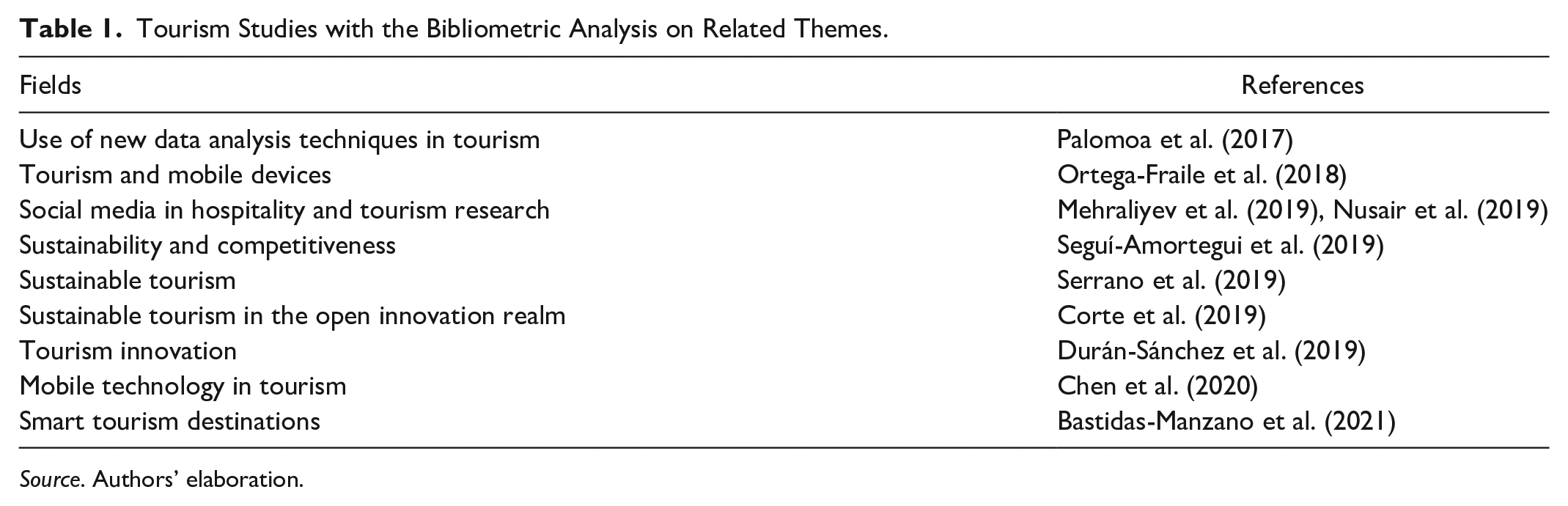
We recognized a limited number of fragmented reviews on various subtopics within the digital tourism domain (Table 1). Yet, we could not find any attempt that has examined, analyzed, and mapped scientific production in the growing domain of digital tourism from a holistic perspective. This is important as the bibliometric reviews provide an executive summary of the state of the art in the observed field. Moreover, embracing massive bibliographic analysis is a necessity for reaching scientific fields (e.g., digital tourism), as such mapping can produce a more accurate reflection of the current situation in the field as a whole. Against this backdrop, we tried to canvass the digital tourism field from a holistic perspective over 30 years and chart the promising research areas. One of the goals of this bibliometric analysis is to support scholars, practitioners, and other stakeholders in their future domain-relevant research activities.
Tourism Studies with the Bibliometric Analysis on Related Themes.
Source. Authors’ elaboration.
Bibliometrics is an important, reliable, objective, and cost-effective technique to measure, monitor, and study scientific outputs (Campbell et al., 2010). Many scientific articles related to digitalization in tourism have been published and disseminated over time. They are focusing on new data analysis techniques (Palomoa et al., 2017), mobile devices (Ortega-Fraile et al., 2018) social media (Mehraliyev et al., 2019), mobile technology (Chen et al., 2020), and innovation (Durán-Sánchez et al., 2019) in tourism.
Therefore, the bibliometric analysis presents a huge opportunity to understand the scientific production, citations, sources, authors, their affiliations and country, co-occurrence, collaborations, new trends, and directions in the context of digital tourism (Gläser & Laudel, 2015; Oliveira et al., 2019). We used “R” which is an open-source statistical software along with “biblioshiny,” which provided a web interface for conducting complex analyses to achieve the following objectives (Aria & Cuccurullo, 2017; Secinaro et al., 2020).
RQ1: Who is leading the digital tourism research?
RQ2: What are the global trends in digital tourism research?
RQ3: What are the emerging research directions in digital tourism?
The article is organized into different parts. The first section presents a summary of previous studies related to current research to identify the research opportunity. The second section details the research methodology adopted to achieve specific research objectives. In the third section, findings based on data analysis are presented. Prominent themes have been discussed in the fourth section, followed by the conclusion and limitations.
Related Work
The rapid pace of academic publications has led to fragmented and voluminous research. In this situation, literature reviews are getting popular due to their ability to synthesize and synchronize past research with present or advanced lines of research. Various qualitative and quantitative literature review techniques for interpreting and arranging past studies are available. However bibliometric analysis emerges as the most objective, reliable, transparent, reproducible, and systematic technique. It can “juice” a large body of information to present the “big picture” of the extant research (Aria & Cuccurullo, 2017).
Table 1 presents various tourism studies that have applied bibliometric analysis on a theme related to the current paper. Palomoa et al. (2017), presented how tourism research is making use of new data techniques like structural equation modeling, big data, and data mining over two decades. On the other hand, few studies determined the evolution of mobile technologies in the tourism industry over the years (Chen et al., 2020; Ortega-Fraile et al., 2018). We found studies related to social media in tourism and hospitality where researchers presented the social structure of collaborative networks (Mehraliyev et al., 2019) or systematic literature review (Nusair et al., 2019). Durán-Sánchez et al. (2019) presented trends and performance in the field of tourism innovation. We observed “sustainability” as one of the most popular themes for bibliometric analysis-based articles on tourism (Corte et al., 2019; Seguí-Amortegui et al., 2019; Serrano et al., 2019). We also included a recent publication related to smart tourism by (Bastidas-Manzano et al., 2021) in which authors used keywords like “smart tourism” OR “smart tourism destination.”
Based on the scrutiny of the bibliometric articles listed above, to the best of our knowledge, this is the first study to perform a bibliometric analysis of literature related to digital tourism.
Research Methodology
Our research methodology is based on the mapping recommended by Aria and Cuccurullo (2017) and further adopted by Secinaro et al. (2020). This process includes five stages, that is, study design, data collection, data analysis, data visualization, and interpretation of this study is adapted from Zupic and Čater (2015). Figures 1 and 2 indicates the methodology and phases of the current research. To validate our research topic on “digital tourism,” we screened databases to check the exclusivity of this topic. We found bibliometric studies related to the use of new data analysis techniques (Palomoa et al., 2017), mobile devices (Ortega-Fraile et al., 2018), mobile technology (Chen et al., 2020), social media (Mehraliyev et al., 2019; Nusair et al., 2019), and innovation (Corte et al., 2019; Durán-Sánchez et al., 2019) in tourism. We also observed articles related to sustainability (Serrano et al., 2019) and smart tourism (Bastidas-Manzano et al., 2021). However, we noticed no bibliographic study focusing on “digital tourism,” hence we moved on to the next phase of defining the research questions. The next step was deciding on keywords, past researchers have recommended a “converging” approach to finalize the keywords (Donthu et al., 2021), that is, defining the search term based on the scope of the study. Therefore, we considered “tourism” as the primary keyword and coupled it with different variants of the essential keyword “digital” such as, “e-tourism, etourism, electronic tourism, digital tourism, online tourism, internet tourism, smart tourism, tourism e-commerce, tourism technology, tourism information system, tourism website, tourism destination website, and information technology and tourism” to search the Scopus database with the help of Boolean operator “OR” in the “title, abstract, keywords” tab. We preferred the Scopus database because of its wide coverage and ease of use (Garousi, 2015). The database offers 75 million records from over 24,600 titles and 5,000 publishers in diverse disciplines (Scopus, 2022), therefore it includes articles ranked and indexed both in the Web of Science (WOS) and Scopus (Firdaus et al., 2019).

Research methodology stages, adapted from Aria and Cuccurullo (2017), Secinaro et al. (2020), and Zupic and Čater (2015).

Annual scientific production (Annual growth rate 1.64%) versus internet users.
The next phase was data collection, and the first step was data retrieval. On initial screening of the database, we were able to retrieve 1931 documents focusing on the microdomain. Further, we retained 895 peer-reviewed articles published in scientific journals in the English language only to ensure that considered references are valid, significant, original, and high-quality (Durán-Sánchez et al., 2019). During the data loading and converting phase we downloaded a CSV file containing all the data fields from the Scopus database. We used MS-Excel software to manually scan any inconsistencies and filtered false positive or irrelevant documents. This led to a total of 827 final documents to be processed further for analysis. We did not limit the research duration, therefore in the final list of documents we had articles published between 1987 to December 2020. However, we considered a few early access articles of 2021 for recency. We purposely included early access articles to keep the study and analysis most updated.
For the third stage, that is, data analysis, we used “R” which is an open-source statistical software along with “biblioshiny,” which provided a web interface for conducting complex analyses like data reduction (PCA, MCA, MDS, and Clustering), network matrix (Co-occurrence and collaboration) and mapping (Network map and dendrogram) (Aria & Cuccurullo, 2017; Secinaro et al., 2020).
Bibliometric Analysis
Systematic reviews can be approached in myriad ways (Paul & Criado, 2020), theory-based reviews (Gilal et al., 2019), theme-based reviews (Paul et al., 2017), framework-based reviews (Paul & Rosado-Serrano, 2019), theory development reviews (Paul & Mas, 2020), hybrid reviews (Dabić et al., 2020), bibliometric analysis (Donthu et al., 2022), and meta-analysis (Rana & Paul, 2020). We decided to perform a bibliometric analysis as it can analyze a huge amount of published research to identify trends. As per Niu et al. (2016), bibliometrics can rely on quantitative, visual techniques, and even statistics to charter patterns in scientific production (for instance to map the dynamics and research fronts, consolidate and charter ideas, guide future studies). Essentially, a bibliometric method is applicable in a wide array of research contexts (Merigó & Yang, 2017). Bibliometric analysis can charter the scholar’s collaboration networks and eventually depict the knowledge and expertise flows and convergence (Van Eck & Waltman, 2014). Next to that, bibliometric analysis is used to predict and map research trajectory, citation, co-citation, and co-authors’ productive networks (Krishen et al., 2021). Bibliometric analysis is very useful as compared to meta-analysis and systematic literature reviews when the research scope is broad and the dataset is too large for manual review (Donthu et al., 2021). We used “Biblioshiny” because of its various advantages. First, it’s an open-source package; second, it produces an online framework for data analysis; third, through an interactive web interface it allows visual analysis (Mougenot & Doussoulin, 2022) and fourth, it’s non-coder friendly (Hao et al., 2021). However, one of its major weaknesses is that data cleaning is not possible through its interface.
Data description
Table 2 presents the major information on 827 articles in the domain of digital tourism which are extracted from the Scopus database. The observed research period spans from 1987 until December 2020, in which we identified over 800 peer-reviewed articles while the total number of authors involved was 1815. Although the analyzed period covers scientific production of over 30 years, most contributions came up in the last decade (Figure 2). This fact is a consequence of the ever-growing implications of digital platforms in all stages of consumer decision-making. The total number of keywords is more than three times higher than the number of identified articles, while the simultaneously total number of phrases that often appear in the title of the articles was twice as much. If we consider the average number of authors per article, each article has been written by two authors (2.86), which potentially indicates high collaboration potential and multidisciplinary nature of the field (collaboration index being 2.42).
Main Information About Data.

Source. Authors’ elaboration.
As Figure 2 indicates, the very first contributions in the domain of digital tourism date back to 1987. This finding is somewhat surprising, considering that at the time neither industry nor scholars had an overview of the potential digital tourism has. However, initial works advocated the periodic assessment of new technologies outside the realm of tourism research for their long-term effects (Shafer, 1987), increased use of computer-based systems in the travel trade, and development of managers with IT skills (Bruce, 1987). Researchers also highlighted rapid technological changes in the travel industry due to the introduction of videotex in the 1980s and the electronic travel agencies, cable, and satellite communications in the 1990s (Gamble, 1988). In the early 1990s researchers realized that IT can fuel the growth of small enterprises by enhancing their leadership position and posing significant barriers to competition (Mutch, 1993). On the contrary, recent articles talk about the integration of advanced technologies such as augmented reality (Huang, 2021), personalized recommendation systems (Chen et al., 2021), artificial intelligence, and robotics (Nam et al., 2021). Generally, the greatest quantity and quality of scientific contributions appear only after 2000. The most productive period is the very last decade where the investigations on the topic reached their peak in 2018/2019, with more than 140 published articles per annum. It is assumed that academia and scholars are gradually catching up with the industry in understanding the main features of digital tourism. To illustrate further the steep rise in scientific production in the field of digital tourism, we identified worldwide internet users as a strong contextual motivating factor. We ran a correlation analysis between scientific production and the number of internet users over the last two decades and found a very strong correlation (r = .937). This indicates how the digital revolution fueled the need for research in this area.
Similarly, Figure 3 reflects that the average number of citations significantly increased with the beginning of the 21st century. The nominal numbers per annum advocate that the subject area is rather in its infancy as the average citations per year per article is only 3.36. The volatile trendline indicates major differences on a year-on-year basis (2008 and 2015 stand out in this context). This could have been the result of fragmented and non-systematic long-term scholars’ efforts to investigate the domain of digital tourism.

Average citations per year.
Who is leading the digital tourism research?
In total, we have identified 827 contributions that are published over the last three decades. As Table 3 suggests scientific production and respective publications are dispersed among many topic-related journals. Among all, journals that are intersecting topics of tourism, sustainable tourism and development, information technology, and destination marketing reportedly are the most appealing venues for publications of studies in the context of digital tourism.
Most Relevant Sources and Their Impact.

Source. Authors’ elaboration.
To capture a more detailed picture of the quality of publications, we observed sources’ impact as well (Table 3). This indicator reflects the real-life scientific credibility of the journals in question. It is rather evident that Tourism Management stands sovereignly, followed by the Journal of Travel Research and Journal of Destination Marketing and Management. First ranked according to the number of articles (Sustainability–Switzerland) is rather a mid-range journal in terms of its impact. Essentially, contributions are dispersed across plenty of journals that have a colorful scientific impact. Considering that the overall interest in the research topic is growing, as confirmed by the growing number of publications, Figure 4 indicates major publishing venues that are dealing with digital tourism and related sub-topics over the observed period. The figure is based on the Loess regression (Secinaro et al., 2020), and it essentially enhances the visual presentation of the major period of publications, as well as the most frequent publishers. It includes a nominal number of contributions and a timestamp of the respective publications.
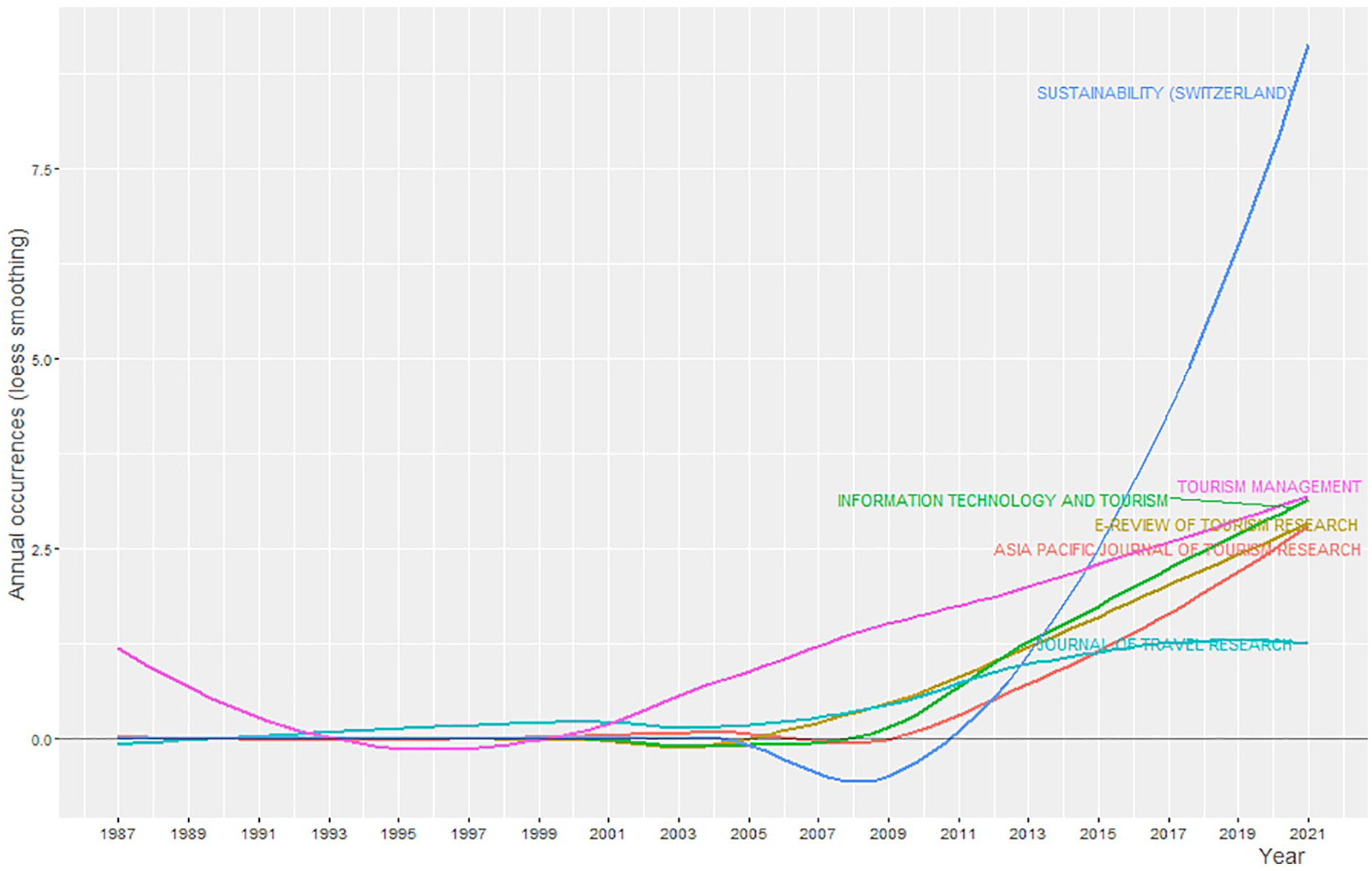
Source dynamics (growth).
Essentially, with the beginning of the new millennium, the steady upslope publishing trend is evident for the batch of publishers (Tourism Management, E-review of Tourism Research, Information Technology and Tourism, Asia Pacific Journal of Tourism Research, and Journal of Travel Research). Yet, Sustainability (Switzerland) stands out as it significantly increased its presence with a great number of contributions lately (since 2011).
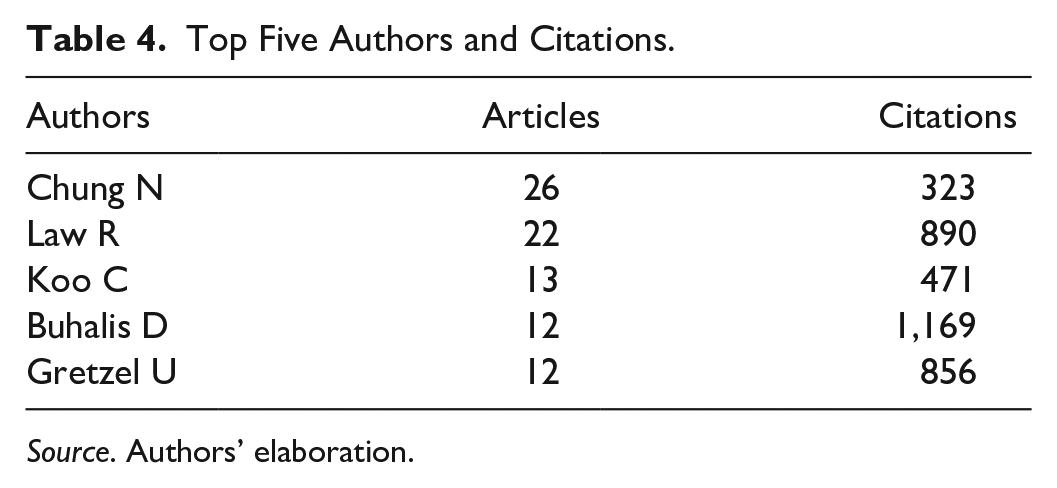
Table 4 indicates the most prominent authors that are active in the digital tourism domain. The author’s list is rather long, yet we extricated the top 20 contributing individuals in terms of the number of published articles. According to the presented table following authors dominate the research field with a massive number of contributions over time: Namho Chung, Rob Law, Chulmo Koo, Dimitrios Buhalis, Ulrike Gretzel, Rodolfo Baggio, Lorenzo Cantoni, and Jing Wang. The rest of the authors published 8 7 6 5, and fewer articles up to date. These authors are involved in the publication in various capacities (either as primary authors or co-author). To quantify the contribution of each author, we have calculated the dominance ranking factor.
Top Five Authors and Citations.
Source. Authors’ elaboration.
Kumar and Kumar (2008) defined the dominance factor (DF) as a mathematical ratio that quantifies the proportion of multi-authored articles in which the respective author is a first author. Namely, DF measures the author’s dominance in scientific production over time. Mathematically, we calculate DF when the number of multi-authored articles of a respective author as a first author (Nmf) is divided by the total number of multi-authored articles (Nmt). So far, several bibliometric-based investigations utilized DF in their respective analyses (Firdaus et al., 2019; Secinaro et al., 2020).
Table 5 presents the top 10 authors according to DF. Further, it depicts several other pieces of information about single-authored, multi-authored, and rank by the total number of articles. All in all, Buhalis and Gretzel stand out on the list with their DFs of 0.55 and 0.5, respectively.
Author’s Dominance.

Source. Authors’ elaboration.
Professor Dimitrios Buhalis (with a total of 12 articles, out of which 6 as a first author and 1 as sole author) is a managing director of eTourismLab at Bournemouth University, UK. His long-standing research interests are strategic marketing, smart environments, interactive marketing, and etourism. Dr. Ulrike Gretzel is a well-established scholar and practitioner who was affiliated with an array of influential institutions in her career (UQ Business School, University of Queensland, University of Wollongong, Texas A&M University, and others). Her major research fields are very much overlapping with those of Buhalis: smart technologies, etourism, interactive marketing, information search, and processing for which she received multiple research grants from the US National Science Foundation, the Australian Research Council, the Hong Kong Research Council, and others. Essentially, Buhalis and Gretzel positioned themselves as a major authority in the field of digital tourism, and they are referred to as the most cited and influential authors in the domains of digital tourism. They are followed by Zheng Xiang and Heejeong Han who have the same DF (0.43) and others whose DF greatly varies (from 0.33 to 0.05). Interestingly, the authors that have the greatest number of articles, Namho Chung (26) and Rob Law (22) are not in the top five according to DF, as they do not have single-authored articles and/or have a relatively low number of first-authored articles (six and one, respectively). All authors are interested in topics that indicate strong relations between interactive technologies and tourism.
To reflect on the authors’ influence, we have summarized the total number of citations each author received over the observed time window (Table 4). It is worth mentioning that authors that do frequently publish, logically receive the greatest portion of citations (e.g., Dimitrios Buhalis, Rob Law, Ulrike Gretzel). Yet some authors with only a few contributions (e.g., Zheng Xiang) received a massive number of citations from others—which we assume can be related to the breakthrough nature of their respective works.
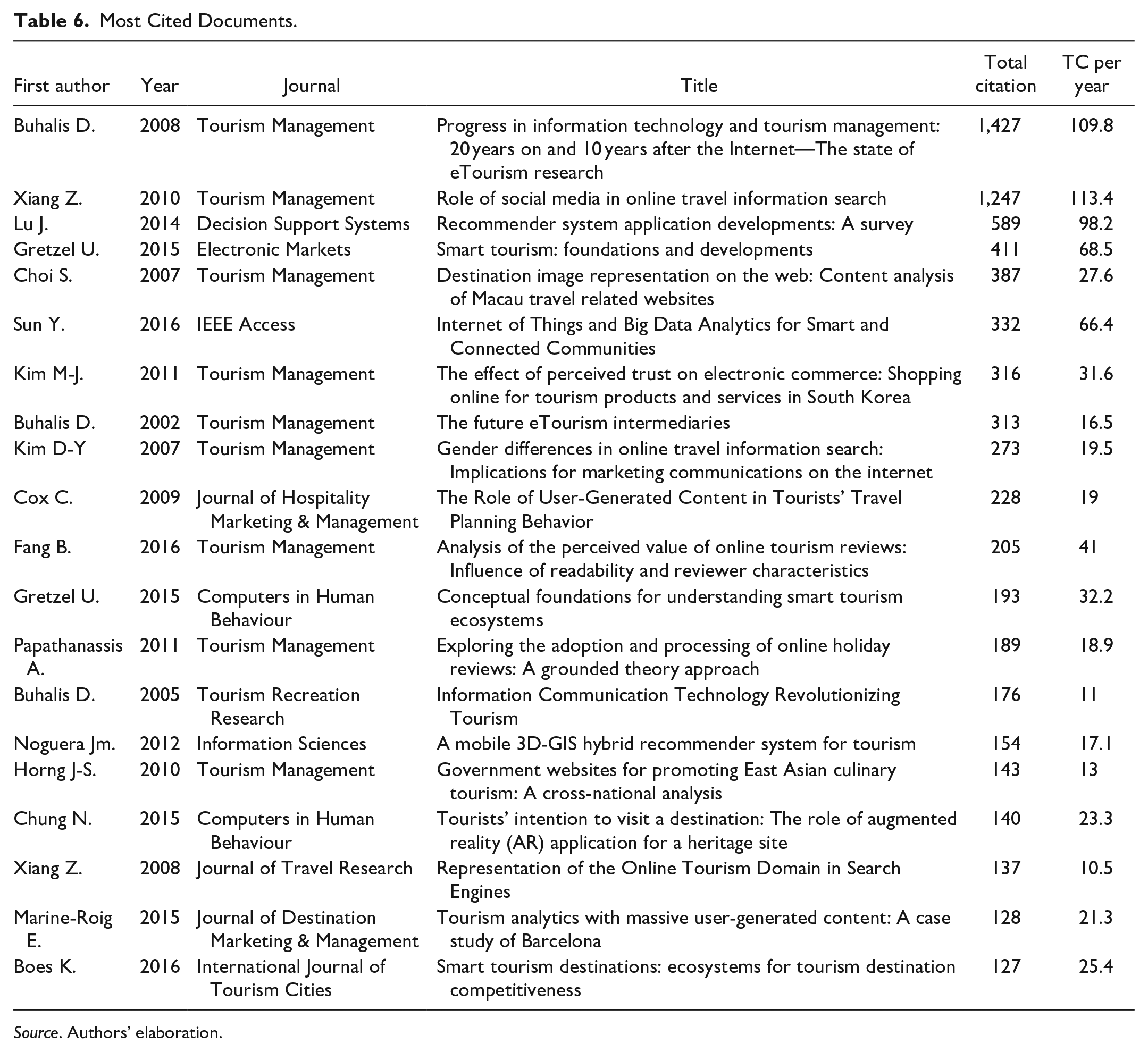
Table 6 represents a systematic overview of the top 20 most influential articles in terms of the number of citations and total citations (TC) per annum. Multiple authors combine the topic of digital tourism with other disciplines which leads to a higher number of citations per se. Additionally, some articles are particularly trending in specific periods. In general, the highest number of citations are reportedly received by an article published in Tourism Management in 2008 by Buhalis (1,427). Yet only one additional article managed to have more than 1,000 citations (Xiang with his study from 2010 that received 1,247 citations). Additionally, another article from Buhalis (Buhalis & Licata, 2002), one article from 2007 (Choi et al., 2007), one from 2011 (Kim et al., 2011), two articles from 2015 (Gretzel, Sigala et al., 2015; Lu et al., 2015), and one from 2016 (Sun et al., 2016) are significant in terms of the number of citations received over the observed period. It can be assumed that these articles provide exceptional quality information and insights on the topic of digital tourism. According to the present results, Tourism Management is the most cited journal in this respect with a total of eight articles in the top 20 most cited in the domain of digital tourism. Other journals are Decision Support System (1), Electronic Markets (1), Journal of Hospitality Marketing & Management (1), Computers in Human Behaviour (2), and Journal of Destination Marketing & Management (1).
Most Cited Documents.
Source. Authors’ elaboration.
The most active and relevant institutions in terms of the number of contributions are listed in Table 7. Kyung Hee University in South Korea is leading the list, followed by the Hong Kong Polytechnic University. These two institutions account for more than 15% of all reported and published articles on the topic of digital tourism. The concentration on the topic is rather evident and it can result in a biased and one-sided understanding of the major concepts of the observed topic. However, the table indicates further institutions based in the UK, Switzerland, China, Spain, and UAE, which contributions and impact are on a similar level.
Most Relevant Affiliations.

Source. Authors’ elaboration.
Table 8 further indicates the emergence of four countries that do lead the way when it comes to scientific production in the domain of digital tourism (Korea, China, Spain, USA). If we observe the countries where the topic of digital tourism has been investigated, China is dominating the list with 410 articles. This can be a logical consequence of the high internet penetration in China, population size, and the ever-growing middle class that can afford a regular vacation. It is followed by Spain (282), the USA (206), Korea (189), and Italy (117). Out of the top twenty, China together with the other four dominates the field in terms of the number of contributions that investigate various concepts of digital tourism over time. Additionally, it is rather evident that the topics’ investigations are widely dispersed in various regions and continents—which implies its universal nature. Normally, the investigations are related to the regions that do exhibit above-average rates of digitization and living standards.
Country Scientific Production and Citations.

Source. Authors’ elaboration.
Table 8 indicates the frequencies of articles on the topic of digital tourism in terms of single or multiple publications in each country. If we observe the total number of citations per country as referred by the origin of authors, the USA (2,826), Korea (1931), UK (1916), and Spain (1,149) are the only ones with more than one thousand citations. This indicator reflects the overall quality and scientific overreach of investigations carried out by scholars that reside/are related to the given countries. On average, articles published by the UK (112) and Singapore (115) based authors stand out and receive over 100 citations, which makes them leaders in terms of the average number of citations per article. Further, the USA (67), Australia (48), and Finland (42) are following with significantly lower average scores than those of the UK and Singapore. The remainder of the countries score differently, and reportedly the impact of respective articles is rather limited.
Figure 5 depicts the most productive and influential clusters of scholars that have been dealing with various topics within the digital tourism domain. Based on the analyses only two clusters (1 and 2) with more than four scholars emerged, which we consider the most dynamic ones in terms of quality and quantity of the scientific contributions. Cluster 1 included all the researchers from South Korea only, however, cluster 2 had researchers from different countries such as China, the United Kingdom, Australia, Italy, the USA, and Austria, indicating inter-continent collaborations. Additionally, we managed to identify nine smaller clusters that consist of various scholars. These clusters had authors from the same country, that is, clusters 3, 6, 7, and 10 with authors from the USA, Switzerland, Malaysia, and Austria. Both China (clusters 4 and 9) and Spain (clusters 5 and 8) had two clusters of authors within the same country (Please see Appendix I). By observing the collaboration network, we were able to identify where most of the scientific production originates and where it will eventually expand (based on the interest and expertise of involved scholars). We assume that the quality of scientific contribution and its impact have a linear relation with the size and multiangle qualifications of the collaborative team members. Based on these, there is an evident need for more diverse scientific clusters which will consist of experts with different backgrounds, interests, and expertise.
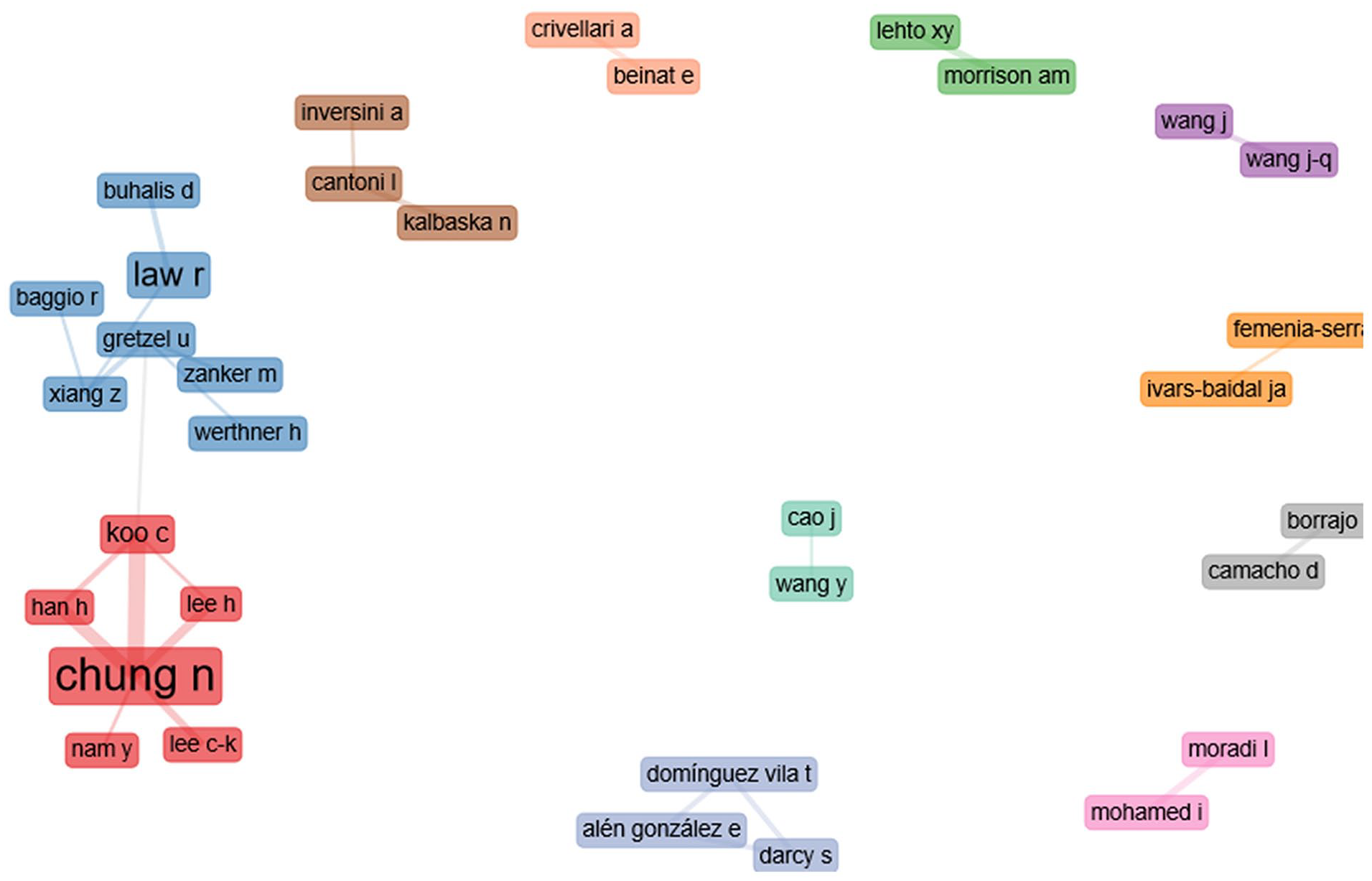
Collaboration network.
Figure 6 indicates the major collaboration blocks observed. The distinct shades of blue depict the various degree of scientific cooperation among nations, whilst the pink color indicates the extent of collaboration between different authors. It is interesting to see how very geographically distant countries (yet the most digitized) cooperate the most (e.g., USA, China, Australia, Italy, Spain, New Zealand), while there is no or little scientific interest in some regions of the World (most notably Africa and Russia). Scientific collaboration on an international level is rather important as they reflect cultural specifics and consumer behavior. As a result, they can lead to the sharing of successful policies and practices and further enhancement of market cooperation.
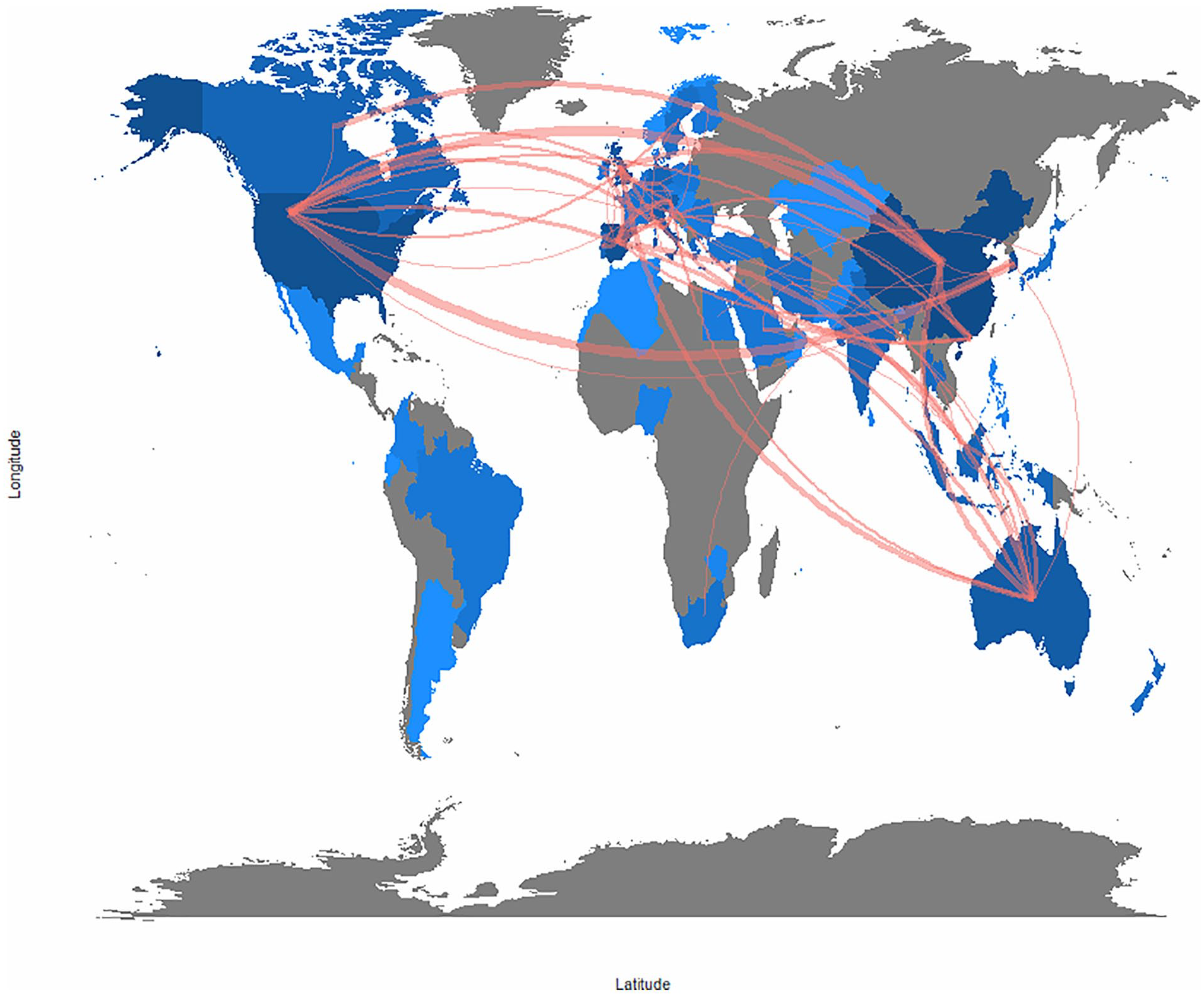
Country collaboration map.
What are the trends in digital tourism research?
Scholars tend to use multiple keywords related to digital tourism in their scientific outputs (Table 9). This overview is important to analyze trends, and research gaps, and navigate scholars for prospects. Table 9 highlights the top 20 keywords that appear most frequently in the observed pool of articles. Smart tourism (140) and e-tourism (105) are the most utilized keywords with massive appearance, followed by more generic tourism (65), internet (31), and social media (30). Besides these, there are other less frequently used keywords: etourism, ICT, big data, sustainable tourism, digital tourism, and destination marketing. Generally, the keyword pool indicates several major study streams implicating the domain of digital tourism: sustainable and long-term development, ICT and Social Media influence, smart decision making, and e-commerce. If we merge e-tourism, etourism, and smart tourism destinations (due to topics overlapping to a certain degree) we get to 148 appearances which almost levels the most frequent keyword (smart tourism).
Most frequent words.

Source. Authors’ elaboration.
The word cloud (Figure 7) graphically highlights major aspects that are related to the topic of digital tourism. The most influential were e-tourism, smart tourism, etourism, internet, big data, smart tourism destination, and destination marketing. The word cloud indicates how various topics and study areas are linked with the domain of digital tourism. For instance, the importance of social media, big data, and ICT on digital tourism; destination management marketing and digital tourism; consumer behavior and digital tourism; website and digital tourism.

Word cloud.
Figure 8 depicts the trends related to a specific batch of keywords over the observed period. Steady scientific production and utilization of more generic keywords are rather evident (e.g., tourism, ICT, destination marketing) as those were present and actual from the beginning of the examined period. Yet, we can see that in the last 10 years academia witnessed the emergence of plenty of new keywords which are strongly related to the digitized nature of decision making, information search behavior, wider trends in performing business activities in tourism (e.g., e-tourism, big data, social media, etourism). In general, the most impressive upslope trend is related to smart tourism as its utilization sharply increased from the point of non-existence in 2010, to reaching its peak in 2020.
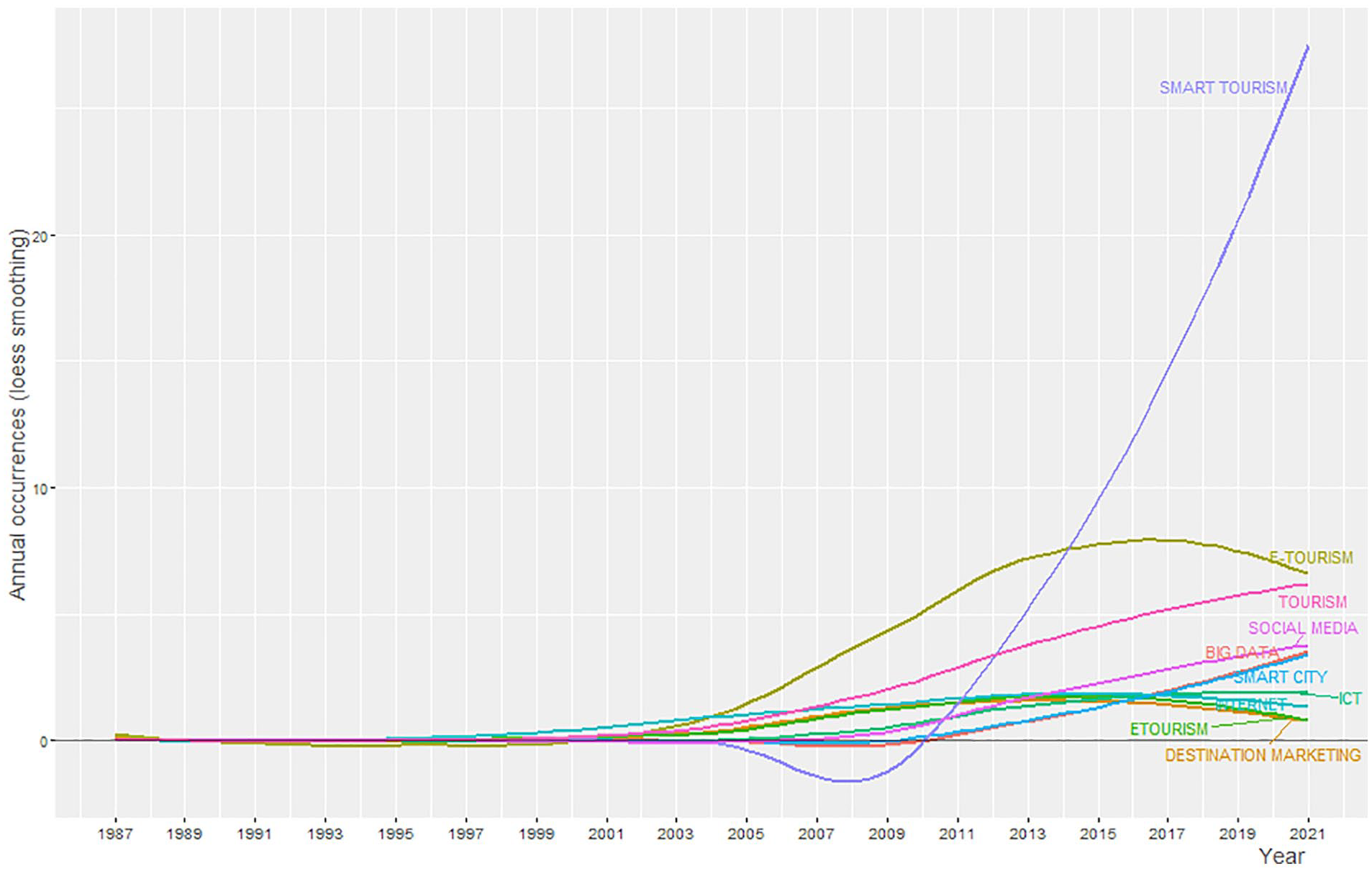
Word growth.
A similar situation can be observed if we observe trending search topics over time (Figure 9). Namely, at the beginning of the last decade – dominant topics were very general (e.g., investigating internet marketing, websites, e-commerce, tourism information systems, search engines) that aimed at setting a wider theoretical frame of reference. In 2014, the more profound inception of digitized technologies with the topic of tourism is evident (user-generated content, destination image, etourism). 2016 marked the turning point whereby there is an evident boost in studies investigating China, consumer satisfaction, sustainable tourism, and development website evaluations, while the period of last 4 years (2017–2021) reflect scholars’ intentions to profoundly investigate data-driven and smart principles of digital tourism. We can say that gradually more profound investigation of digital tourism has taken place. Over time, as the knowledge matured, and more scholars involved themselves with the topic of digital tourism—topics became more profound (e.g., ICTS, recommender systems, neural networks, smart tourism), reflect more subtle methodological approaches (e.g., big data, information sources, content analysis), and intersected with other disciplines (e.g., innovations, tourism websites, social media, smart city). As a result, new previously scholarly unattended topics emerged which significantly increased the depth and width of the topic of digital tourism (e.g., augmented reality, tourism websites, smart destinations). It can be assumed that as the knowledge base consolidates, scholars will continue with even more complex subtopics investigations that will reflect the overall trend of multi-disciplinarity.

Trend topics.
Figure 10 reflects the relations and thematical distance between the major topics in the context of digital tourism. There are strong bonds with most sub-topics with smart tourism and e-tourism (etourism). However, several secluded subtopics are relevant for the currently available body of knowledge (e.g., innovation, technology, trust, Facebook, semantic web, tourism technology, Web 2.0). On the same note, the presented figure depicts both direct and indirect relations between the observed concepts and thematic areas and can navigate scholars into future research. Besides, the thematic map which is depicted in Figure 11 indicates the major overlap between respective topics (smart tourism, e-tourism, and tourism). It can be assumed that the pivotal role of major known concepts from tourism significantly helps to extend the body of knowledge in terms of smart, e-tourism, and digital tourism. On the other hand, more thematically distanced (yet related) are scientific areas around ICT, Social Media, sustainability, and tourism websites. It can be concluded that the most significant contributions in the domain of digital tourism, are the result of scientific production that relies heavily on findings from these foreminded disciplines and study areas. Yet, there is plenty of research potential to involve other scientific disciplines as the scope of the current body of knowledge is rather limited and to a certain extent shallow.

Co-occurrence network.
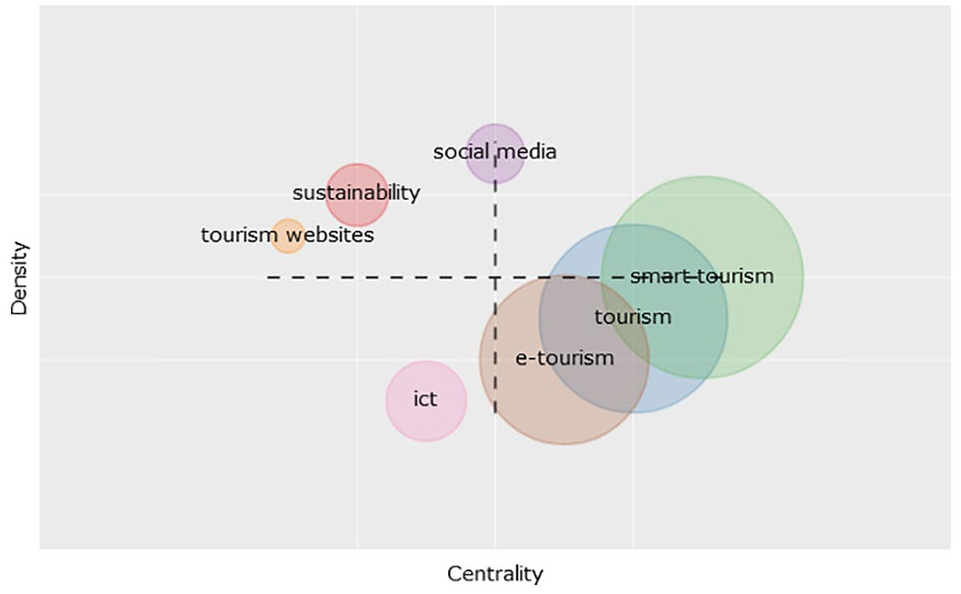
Thematic map.
To visualize the hierarchical relations and clusters between different keywords in a more profound manner, we have created a dendrogram (Figure 12). A dendrogram is a tool that is primarily utilized to dislocate certain items (keywords) into respective clusters by measuring the height of different objects that are joined together into research branches. It has been used on several occasions in the context of bibliometric analyses (e.g., Firdaus et al., 2019; Jun & Park, 2017; Secinaro et al., 2020). The purpose of a dendrogram is not to identify the perfect level of association between identified keywords, yet to predict the total number of clusters existing.

Topic dendrogram.
In total, we identified four major research strands that emerged out of the current body of knowledge. Firstly, we singled out a group of topics related to the management of smart destinations and cities (Management of smart destinations). It implies an intersection of a variety of topics on smart destinations and those related to service-dominant logic among which value co-creation stands.
If we consider the second cluster of topics (the internet as a communication and marketing channel in the digital age), it generally consists of significantly more subtopics with the variations of keywords and scientific contributions that rely on them (e.g., website, internet, internet marketing, content analysis, destination image). This set of topics addresses more in-depth the internet as a communication medium in the digital age. So far, scholars mostly related topics of website management and internet marketing to tourism and destination branding in digital circumstances. Consequently, a variety of topics remain unattended like the impact of various internet marketing techniques (e.g., Search Engine Optimization, content marketing, copywriting) on destinations’ image and reputation.
The next topical block (Technology and Sustainability) relies to a certain degree on the internet as a dominant ecosystem for carrying out activities in terms of digital tourism. Besides the internet, various technologies have been the subject of investigations (e.g., artificial intelligence, data analytics, the internet of things). Yet a fraction of scholars incorporated topics of sustainable tourism and sharing economy into this research stream. It is to expect further consolidation in this area, as interest and acute problems remain unsolved.
The fourth cluster (Digital tourism and consumer behavior) is by far the greatest and most diverse research cluster which further has several sub-clusters. It is possible to distinguish several thematic areas that primarily investigate digital tourism from tourism’s, consumer behavior’s, innovation management’s perspectives. Consequently, the greatest saturation of topics and subtopics is evident whereby scholars particularly investigated an array of topics on tourism management (e.g., tourism technology, platforms and online venues that enhance digital presence, etourism, social media, social network analysis), online recommendation systems (e.g., TripAdvisor, recommendation systems, sentiment analysis, satisfaction, trust), and innovation. Based on the broad interpretation of the topics, it is possible to conclude that majority of the accumulated studies are nested in this massive scientific constellation which should pinpoint scholars toward more profound and constructive investigations that would be nested in the other three clusters (particularly, technology and sustainability and management of smart destinations).
Emerging Research Directions in Digital Tourism
Essentially, the body of knowledge considering digital tourism is extensive and includes 827 peer-reviewed articles to date. Therefore, it is needed to evaluate the major research streams and the value they bring to the academic community and industry. Based on the topical dendrogram, we identified four major research clusters. The upcoming sub-sections main goal is to elaborate more closer on the current state in the respective field and to pinpoint feature research prospects for the future.
Research cluster #1: Management of smart destination
Some of the most current topics around the digital tourism domain are smart destinations and how those are managed in a long run. The core idea is to administer and enhance the value (co)creation process to occupy the most beneficial market position and deliver outstanding value.
According to Gretzel and Collier de Mendonça (2019), this perspective primarily implies a thorough understanding of tourists’ continuous engagement and experiences in the context of smart destinations. On a similar note, Buonincontri and Micera (2016) argue that these interactions are based on a very complex series of two-way value co-creation processes between tourists and companies, service providers, and local authorities. In the context of a digitized environment, this implies technology-driven management of smart destinations to fulfill the refined expectations of tourists and to influence their decision-making process effectively (Buhalis & Deimezi, 2004; Michopoulou & Buhalis, 2013).
Judging by the number of scientific contributions, cluster 1 is the smallest in size – yet with, probably, the greatest potential for the future. Numerous fields that lie on intersections of service-dominant logic, smart destination management, and advanced technological solutions (e.g., artificial intelligence, machine learning) are still pending to be attended to (e.g., the role of machine learning and AI in value co-creation, platform economy, and value generation). Additionally, the moderating effects of different demographic and cultural variables are critical to comprehend the perception of value. Besides the value co-creation, particular attention should be directed toward the concept of value destruction in the context of over-tourism and digital tourism (e.g., fake online reviews, anti-competitors’ actions online), as this phenomenon is gaining momentum in recent years.
Research cluster #2: Internet as a communication and marketing channel in the digital age
The world of marketing communication is changing dramatically at an unprecedented pace. More and more individuals are exposed to marketing communication messages, through channels like e-commerce platforms, various web-based platforms, social media, emails, and smartphones. (Bogicevic et al., 2019; Ho & Gebsombut, 2019). The omnichannel approach is in rather full swing in terms of digital tourism as well. What is yet critical is that the pleiad of communication platforms make significant amendments in consumers’ behavior, their decision making, and information sharing (Del Vecchio et al., 2018). On the other side, various stakeholders (e.g., agencies, governmental bodies, local service providers) must recognize the strategic potential and capabilities of digital communication channels (Kalbaska et al., 2017) and embrace the most suitable ones to timely deliver a relevant message to the respective target audience (Múgica & Berné, 2020). Research-wise, there is plenty of potential for investigations, as the field is very dynamic and new communication platforms emerge almost weekly (Mehraliyev et al., 2020). For most digital communication platforms, real-world, empirical, and experimental pieces of evidence are missing (Yeh et al., 2017) which prevents decision-makers on the strategic management level to formalize the role they play for customers/tourists (Ying et al., 2016). Yet, this presents a major research prospect for the future. The literature mainly focuses its attention on consumers (tourists), greatly neglecting the side of service providers and the implications of digital communication channels on their economic wellbeing. We recognized several topical sub-clusters, whereby scholars are cordially invited to attend the topics of the effectiveness of marketing communication through websites, the potential of the internet as a media vehicle, destination branding through the internet, using data to support decision making (both on individual and institutional levels), the role of mobile devices in brand building and destination online appearance. Generally, although fairly massive in scale, this research cluster suffers from fragmented scientific inputs that greatly leg behind the actual developments in the industry.
Research cluster #3: Technology and sustainability
According to Morales-Urrutia et al. (2020), the overall scope of technological inputs and the number of relevant determinants in digital tourism are escalating progressively. Similar to the previous subsection (Internet as a communication and marketing channel in the digital age), stakeholders must properly understand the strategic significance of each technology in the long term (Alford & Jones, 2020) and incept it on a tactical level accordingly. This remains to be determined and formalized, as the scientific production in the domain lags significantly in comparison to the industry and their respective insights (Buhalis, 2020). Some of the main goals of heavy inception of technological solutions (e.g., big data, internet of things, artificial intelligence, cloud computing), in the digital tourism context, are to ensure sustainable and responsible development (Del Vecchio et al., 2018; González-Reverté et al., 2018; Mura & Pahlevan Sharif, 2015) and to promote concepts of sharing customer (and company’s) behavior (Almeida-Santana et al., 2020; Battino & Lampreu, 2019).
As such a constellation, it presents a significant research venue that received the least scientific attention (compared to other research clusters) at the moment. Essentially, there is a rather huge gap between the most advanced technological solutions (e.g., blockchains, big data analyses) and the scientific production on the given topics and digital tourism. Now, there is plenty of room to empirically verify the interplay technologies (e.g., blockchain, cloud computing, internet of things) have with various aspects of digital tourism (e.g., value creation, sustainability, long-term branding and positioning, cost-effectiveness). A particularly vocal topic of sustainability emerges on the research frontier. Namely, areas that would intersect novel technologies and sustainability of smart destinations or consumption habits of digital tourists can potentially be worth exploring as those largely are unattended at the moment. In closing, scholars are invited to explore more robust methods, including but not limited to novel statistical approaches. This would potentially bring an array of insights that would be relevant for both policymakers and involved service providers.
Research cluster #4: Digital tourism and consumer behavior
The most numerous and variegated are scholars’ contributions that investigate various domains in terms of consumer behavior, and its affiliation with digital tourism (e.g., innovation, business models, online recommendation systems, internet marketing). To date, this cluster received by far the greatest saturation in terms of width and depth of thematic areas that have been investigated. In their recent study, Adeola and Evans (2019) investigated how innovative technologies that rely on the internet and smartphones relate to the rise of digital tourism and concluded that there is a significant relationship between them. Some contributions indicate that tourists’ behavior and consumption patterns will evolve to accommodate the ever-growing inception of novelties in terms of information seeking, expectations, and perception of service quality (Alford & Jones, 2020; Buhalis, 2020)—making it more challenging to strategically follow up promptly.
The consolidated stand is that changes in tourists’ behavior are rather immense (Mehraliyev et al., 2020), with a significant impact on ever-more competitive markets, and that this combined present a major challenge for the tourism sector (Pencarelli, 2020). The intense competition to attract tourists and their attention forces service providers, local authorities, and supporting industries to continuously develop new approaches and engagement initiatives (Kalbaska et al., 2017; Oliveira, 2013; Ruiz-Gómez et al., 2018).
To leverage and portray the benefits of a digitized environment, the tourism sector must follow up on major behavioristic changes that are taking place. Although heavily investigated, there are still an array of gaps that can be addressed on both topical and methodological notes. In terms of topics, more consistent scientific attention is needed to portray how online reviews affect decision making, what informational and heuristical cues are playing major rules in assessing the helpfulness and credibility of online reviews, how the so-called platform-economy interplays with digital tourism, and what are the long-term effects of that relation, novel business models in digital tourism that lay the foundation on innovative technologies, the process of decision making in digital tourism and the ever-growing interfering role of algorithms in that process. Generally, there are a plethora of research streams that are currently not attended. On a methodological note, again, the studies with experimental designs are lacking. Although experiments tend to have issues with external validity, they depict casual relationships which can be very helpful in understanding the current state of affairs between observed variables. Given the fast development of technologies, more explorative and qualitative studies (e.g., interviews, semi-structured interviews) are needed as a starting point for new theoretical developments.
Theory, context, characteristics, and methodology (TCCM) analysis
In line with the TCCM methodology proposed by Paul and Rosado-Serrano (2019), we analyzed the top 20 most influential and cited articles (Table 6) to portray the recognized research gaps and promising research prospects.
Essentially, most of the influential scientific outputs do not indicate a specific theoretical framework they rely upon or try to empirically verify. Only a fraction of domain-relevant articles reports a solid theoretical anchoring (e.g., existing theories, models, and concepts). Among the used theories are the following: the economics of information theory (Kim et al., 2007), prospect theory (Fang et al., 2016), grounded theory (Papathanassis & Knolle, 2011), theory of consumption values perspective (Chung et al., 2015), technology acceptance model (TAM) (Chung et al., 2015) and service-dominant logic (Boes et al., 2016).
After an in-depth analysis of the pool of chosen articles, we can conclude that in majority of them the contextual focus is on smart business ecosystems and destinations (e.g., Boes et al., 2016; Buhalis & O’Connor, 2005; Gretzel, Sigala et al., 2015; Gretzel, Werthner et al., 2015). Some attempts are evident to capture the development on an individual customer level (Cox et al., 2009; Kim et al., 2007, 2011), while reoccurring investigations are taking place in the domain of electronic tourism intermediaries (eIntermediaries) (e.g., Buhalis & Licata, 2002; Xiang et al., 2008). Among an array of contexts that have been covered in a fragmented manner are the following: online reviews (Fang et al., 2016), sharing economy (Gretzel, Werthner et al., 2015; Papathanassis & Knolle, 2011), recommendation system (Noguera et al., 2012), augmented reality (Chung et al., 2015), smart and connected communities/destinations and big data (Sun et al., 2016). Overall, a spectrum of colorful attempts to portray various subdomains within the digital tourism sector.
The scope of the observed studies is distributed among various characteristics, variables, concepts, and platforms. We can say that some of the most recent scientific attempts are focused on innovation in digital tourism (Gretzel, Werthner et al., 2015; Noguera et al., 2012), online review helpfulness (Fang et al., 2016), smart technologies adoption readiness, source and content related-heuristic assessment (e.g., Chung et al., 2015; Papathanassis & Knolle, 2011; Sun et al., 2016), and big data analytics (Sun et al., 2016). Yet, an array of topics and subtopics are related to online recommender systems (Lu et al., 2015; Noguera et al., 2012), websites as a communication vehicle (e.g., Choi et al., 2007; Cox et al., 2009; Horng & (Simon) Tsai, 2010; Kim et al., 2007; Xiang et al., 2008), information seeking online and search engines (Cox et al., 2009; Kim et al., 2007; Xiang et al., 2008). On the other hand, there is a long line of individual contributions trying to depict more profoundly some of the following aspects of digital tourism: security, customer satisfaction, loyalty (Kim et al., 2011), gender differences (Kim et al., 2007), disintermediation processes in digital tourism (Buhalis & Licata, 2002), and competitiveness of stakeholders in digital tourism (Boes et al., 2016). In general, digital tourism is seen as a catalyst for value creation (Cox et al., 2009; Gretzel, Werthner et al., 2015; Horng & (Simon) Tsai, 2010) to increase behavioral intention to visit smart/digital destinations (see Boes et al., 2016; Chung et al., 2015).
From the methodological standpoint, the observed articles are mostly conceptual and review contributions (Buhalis & O’Connor, 2005; Gretzel, Sigala et al., 2015; Gretzel, Werthner et al., 2015; Lu et al., 2015; Mariani, 2020; Noguera et al., 2012; Sun et al., 2016). This is expected given the weak theoretical foundations in the context of digital tourism. Although conceptual and review articles are dominant, a significant amount of qualitative (Boes et al., 2016; Buhalis & Licata, 2002; Choi et al., 2007; Papathanassis & Knolle, 2011) and quantitative papers are reported (e.g., Choi et al., 2007; Chung et al., 2015; Cox et al., 2009; Kim et al., 2011; Xiang et al., 2008). We found evidence that a fraction of studies is employing content analyses to explore the various aspects of the digital tourism domain (mostly online reviews and recommendation systems) (for instance, Choi et al., 2007; Horng & (Simon) Tsai, 2010.
Conclusions
The purpose of this article was to unleash the trends and future research directions in the field of digital tourism through bibliometric analysis using the science mapping workflow method.
We observed that the highest number of articles related to digital tourism are published in Sustainability (40), followed by Tourism Management (39), and Information Technology and Tourism (23). Studies published in Sustainability are primarily focused on sustainability, smart, and eco-tourism. On the other hand, contributions in Tourism Management are concentrated on tourism with the help of the Internet and the World wide web. Similarly, articles published in Information Technology and Tourism center around the promotion of e-tourism through ICT.
We observed Namho Chung, Rob Law, Chulmo Koo, and Dimitrios Buhalis as authors with the highest number of publications. They have shared their views concerning digital tourism. Namho Chung has focused more on tourist information systems like mobile tour information, tourist movement patterns, near field communication, augmented reality, and online tourism shopping. Whereas Rob Law discussed more mobile technology in tourism, tourism websites (search, evaluation, satisfaction), perceived value, service quality, and recovery in e-tourism. The work of Chulmo Koo and Dimitrios Buhalis centers around smart tourism and information communication technologies in tourism, respectively.
On examining the dominance ranking we observed two main authors, that is, Professor Dimitrios Buhalis, who is a managing director of eTourismLab at Bournemouth University, UK, and Dr. Ulrike Gretzel is a well-established scholar and practitioner who was associated with an array of influential institutions in her career.
Citation analysis revealed that Buhalis and Law (2008) have the highest number of citations as they have comprehensively covered the progress of tourism research after and before the advent of the IT revolution.
On examining the country-wise scientific production, we observed that China is dominating the list with 410 articles. This can be a logical consequence of the high internet penetration in China, population size, and the ever-growing middle class that can afford a regular vacation. It is followed by Spain (282), the USA (206), Korea (189), and Italy (117). In different countries, we observed different research focuses concerning digital tourism, for example, electronic commerce in China, marketing in the USA, ICT in Spain, and tourist behavior and perception in Korea.
On checking the collaboration between different countries, we found that geographically distant countries like the USA, China, Australia, Italy, Spain, and New Zealand are cooperating to research digital tourism. However, little scientific interest and collaborations were observed in regions like Russia and Africa.
Through word cloud and word growth maps, we noticed elements of ICT like the internet, social media, and big data. stemming from the concept of digital tourism and a steep rise in the research related to smart tourism. Based on the topic dendrogram we identified four major research strands that emerge out of the current body of knowledge which are related to the management of smart destinations, the internet as a communication and marketing channel in the digital age, technology and sustainability, and consumer behavior and experience in digital tourism (Figure 13).
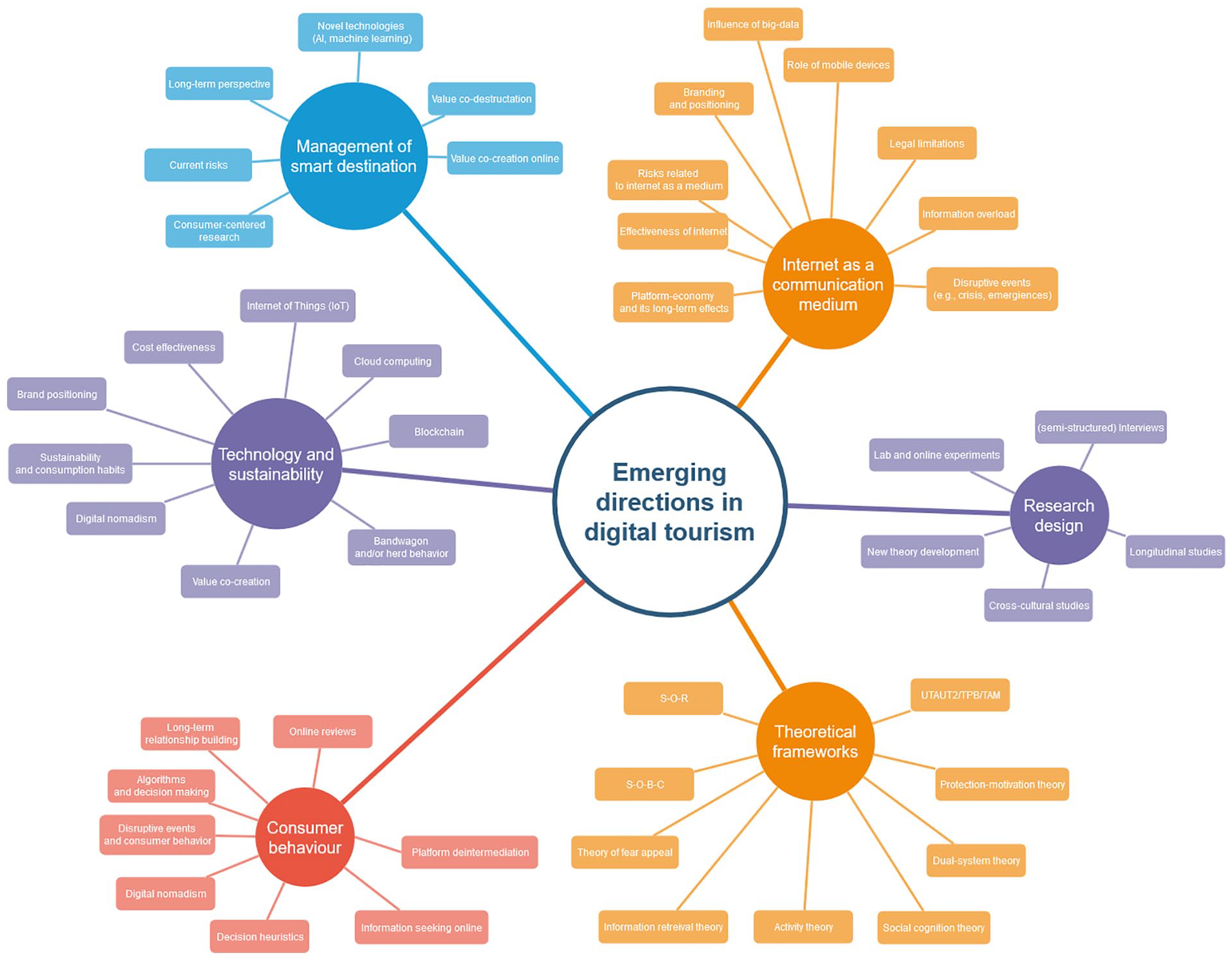
Emerging research directions in digital tourism.
Limitations
This research lays the foundation for some future research directions and naturally has some limitations. Firstly, we have extracted the bibliography data exclusively from the Scopus database, future studies can use multiple databases to cover this limitation. Secondly, the bibliometric analysis normally does not focus on theories and theoretical frameworks as such (Paul & Criado, 2020). The remedy can be a systematic literature review or meta-analysis in the future that will depict substantial relationships. Thirdly, we analyzed a great number of articles whereby a great number of topics, subtopics, and concepts may lead to knowledge overload (Krishen et al., 2021). Therefore, future studies may focus on more specific subtopics. Fourthly, we intended to include a broad list of keywords in the article search, it may well happen that we missed some of the keywords that could have been relevant to our study goal. Therefore, we suggest revising and extending the list of keywords in the future. Lastly, the chance is high that a few papers that do not directly include some of the keywords got excluded from the analyses. As suggested by Donthu et al. (2021) one of the remedies would be to include synonyms and nethnographic data in future studies.
Footnotes
Appendix
Authors, Countries, and Affiliations.
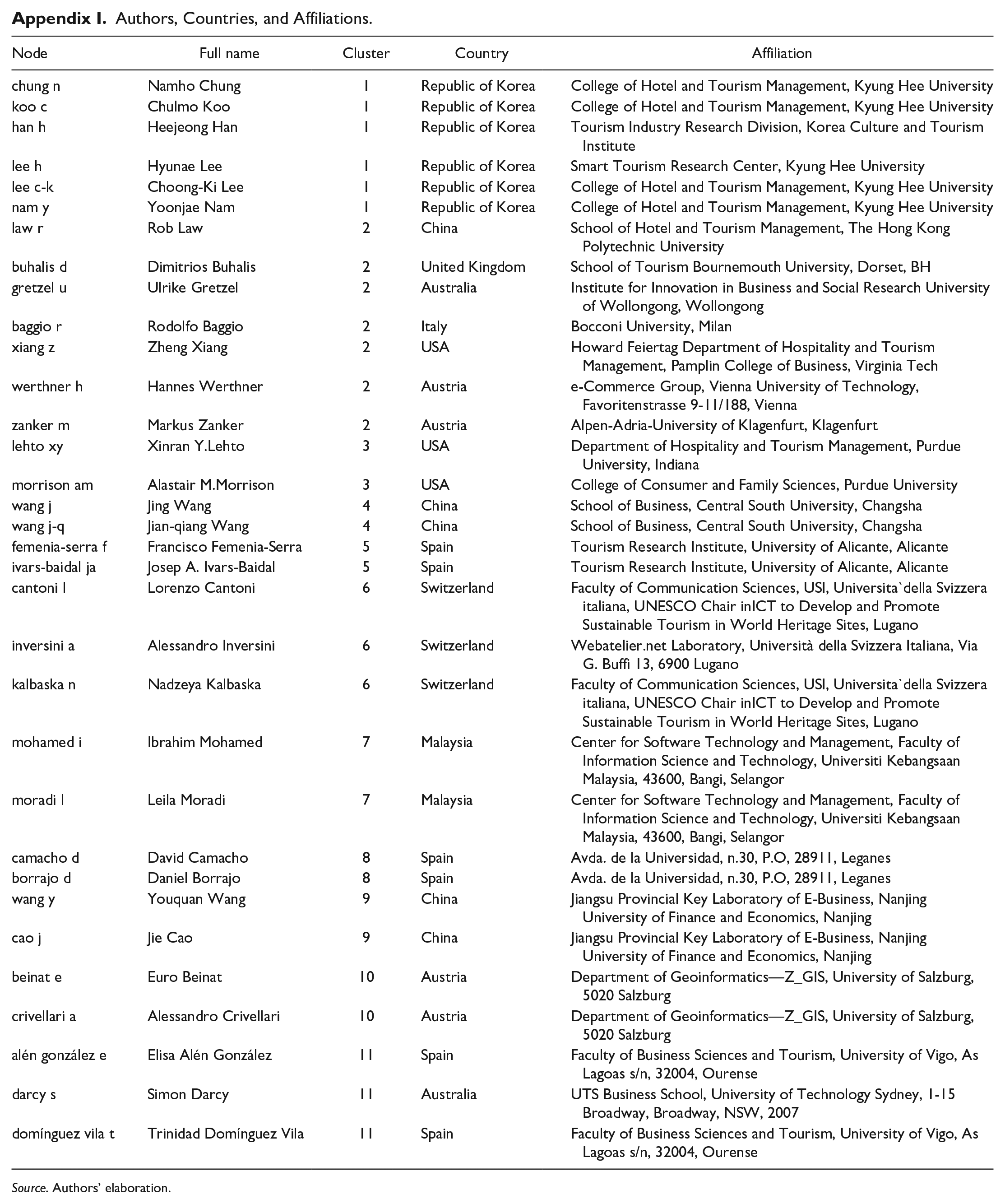
| Node | Full name | Cluster | Country | Affiliation |
|---|---|---|---|---|
| chung n | Namho Chung | 1 | Republic of Korea | College of Hotel and Tourism Management, Kyung Hee University |
| koo c | Chulmo Koo | 1 | Republic of Korea | College of Hotel and Tourism Management, Kyung Hee University |
| han h | Heejeong Han | 1 | Republic of Korea | Tourism Industry Research Division, Korea Culture and Tourism Institute |
| lee h | Hyunae Lee | 1 | Republic of Korea | Smart Tourism Research Center, Kyung Hee University |
| lee c-k | Choong-Ki Lee | 1 | Republic of Korea | College of Hotel and Tourism Management, Kyung Hee University |
| nam y | Yoonjae Nam | 1 | Republic of Korea | College of Hotel and Tourism Management, Kyung Hee University |
| law r | Rob Law | 2 | China | School of Hotel and Tourism Management, The Hong Kong Polytechnic University |
| buhalis d | Dimitrios Buhalis | 2 | United Kingdom | School of Tourism Bournemouth University, Dorset, BH |
| gretzel u | Ulrike Gretzel | 2 | Australia | Institute for Innovation in Business and Social Research University of Wollongong, Wollongong |
| baggio r | Rodolfo Baggio | 2 | Italy | Bocconi University, Milan |
| xiang z | Zheng Xiang | 2 | USA | Howard Feiertag Department of Hospitality and Tourism Management, Pamplin College of Business, Virginia Tech |
| werthner h | Hannes Werthner | 2 | Austria | e-Commerce Group, Vienna University of Technology, Favoritenstrasse 9-11/188, Vienna |
| zanker m | Markus Zanker | 2 | Austria | Alpen-Adria-University of Klagenfurt, Klagenfurt |
| lehto xy | Xinran Y.Lehto | 3 | USA | Department of Hospitality and Tourism Management, Purdue University, Indiana |
| morrison am | Alastair M.Morrison | 3 | USA | College of Consumer and Family Sciences, Purdue University |
| wang j | Jing Wang | 4 | China | School of Business, Central South University, Changsha |
| wang j-q | Jian-qiang Wang | 4 | China | School of Business, Central South University, Changsha |
| femenia-serra f | Francisco Femenia-Serra | 5 | Spain | Tourism Research Institute, University of Alicante, Alicante |
| ivars-baidal ja | Josep A. Ivars-Baidal | 5 | Spain | Tourism Research Institute, University of Alicante, Alicante |
| cantoni l | Lorenzo Cantoni | 6 | Switzerland | Faculty of Communication Sciences, USI, Universitàdella Svizzera italiana, UNESCO Chair inICT to Develop and Promote Sustainable Tourism in World Heritage Sites, Lugano |
| inversini a | Alessandro Inversini | 6 | Switzerland | Webatelier.net Laboratory, Università della Svizzera Italiana, Via G. Buffi 13, 6900 Lugano |
| kalbaska n | Nadzeya Kalbaska | 6 | Switzerland | Faculty of Communication Sciences, USI, Universitàdella Svizzera italiana, UNESCO Chair inICT to Develop and Promote Sustainable Tourism in World Heritage Sites, Lugano |
| mohamed i | Ibrahim Mohamed | 7 | Malaysia | Center for Software Technology and Management, Faculty of Information Science and Technology, Universiti Kebangsaan Malaysia, 43600, Bangi, Selangor |
| moradi l | Leila Moradi | 7 | Malaysia | Center for Software Technology and Management, Faculty of Information Science and Technology, Universiti Kebangsaan Malaysia, 43600, Bangi, Selangor |
| camacho d | David Camacho | 8 | Spain | Avda. de la Universidad, n.30, P.O, 28911, Leganes |
| borrajo d | Daniel Borrajo | 8 | Spain | Avda. de la Universidad, n.30, P.O, 28911, Leganes |
| wang y | Youquan Wang | 9 | China | Jiangsu Provincial Key Laboratory of E-Business, Nanjing University of Finance and Economics, Nanjing |
| cao j | Jie Cao | 9 | China | Jiangsu Provincial Key Laboratory of E-Business, Nanjing University of Finance and Economics, Nanjing |
| beinat e | Euro Beinat | 10 | Austria | Department of Geoinformatics—Z_GIS, University of Salzburg, 5020 Salzburg |
| crivellari a | Alessandro Crivellari | 10 | Austria | Department of Geoinformatics—Z_GIS, University of Salzburg, 5020 Salzburg |
| alén gonzález e | Elisa Alén González | 11 | Spain | Faculty of Business Sciences and Tourism, University of Vigo, As Lagoas s/n, 32004, Ourense |
| darcy s | Simon Darcy | 11 | Australia | UTS Business School, University of Technology Sydney, 1-15 Broadway, Broadway, NSW, 2007 |
| domínguez vila t | Trinidad Domínguez Vila | 11 | Spain | Faculty of Business Sciences and Tourism, University of Vigo, As Lagoas s/n, 32004, Ourense |
Source. Authors’ elaboration.
Declaration of Conflicting Interests
The author(s) declared no potential conflicts of interest with respect to the research, authorship, and/or publication of this article.
Funding
The author(s) received no financial support for the research, authorship, and/or publication of this article.
