




Abstract
In EFL classes, teachers utilize a variety of word instruction techniques to help their students discover as well as retain new target words. A questionnaire on word instruction techniques was administered online to 87 Saudi EFL teachers representing the three school levels in Saudi Arabia (i.e., primary, intermediate, and high) with the purpose of probing into their use of the various techniques and how useful they viewed those techniques. The results indicate that whereas the techniques of providing an L1 Arabic translation of the word, repeating the word out loud and then having students repeat it afterward, and writing the word on the board were the three most favorable to our participant teachers, having students draw word maps related to the target word, using non-textbook supplemental materials, and explaining the origin of the word (i.e., etymology) were the least used ones. Moreover, teachers reported employing more discovery techniques than consolidation ones. In terms of school level, no significant differences existed in teachers’ use of the various word instruction techniques across the three different school levels. Finally, although the teachers’ reported use of the techniques generally matched the usefulness ratings they provided for those techniques, some exceptions emerged. Implications for the study findings on L2 pedagogy were ultimately provided.
Introduction
Within the realm of second language vocabulary research, three core issues have always been at stake for researchers in the field (namely vocabulary learning, vocabulary instruction, as well as vocabulary testing). Amongst these, vocabulary instruction has received attention from many scholars and researchers (e.g., Baumann, Kame’enui et al., 2003; Greenwood, 2004; Stahl, 1999; Takač, 2008). In general terms, vocabulary instruction research evolves around the idea of achieving effective word instruction in EFL classrooms. However, a good bulk of research on this topic took the form and is still oriented toward non-empirical suggestions and recommendations by researchers (e.g., Awaludin, 2013; Basurto, 2004; Beck et al., 2002; Blachowicz & Fisher, 2000; Blachowicz et al., 2006; Borg, 2003; Folse, 2010; Graves, 2006; McCarthy, 1990; Michel & Patin, 1972; Nam, 2010; Nation, 1990; Neuman & Wright, 2014; Pinter, 2006; Sedita, 2005; Slattery & Willis, 2001; Stahl & Shiel, 1992). As such, less attention has been given to the empirical investigation of the actual use of techniques used to facilitate vocabulary instruction either in terms of finding out the techniques EFL teachers currently use in their classrooms (i.e., the empirical descriptive lane of inquiry) or assessing the effectiveness of using certain individual techniques (i.e., the empirical prescriptive lane of inquiry).
A closer look at the empirical research investigating the use of word instruction techniques in EFL classrooms reveals that it is almost entirely oriented toward the effectiveness aspect of their use; for example, teaching words in context versus isolation (Peitz & Vena, 1996), visual-aided versus written-only vocabulary instruction (Alamri & Rogers, 2018), online games (Utku & Dolgunsöz, 2018), picture words (Zhao & Lornklang, 2019), semantic maps (Udaya, 2022). We only found three studies that partly attempted to describe how word instruction techniques were actually used by EFL teachers (see earlier studies section). In Saudi Arabia, where the current study is carried out, an even more lacking situation exists. As such, the few studies that we found were all directed toward the empirical prescriptive lane of inquiry as each attempted to assess the effectiveness of using certain individual word instruction techniques including word games (Bakhsh, 2016), role-play strategy (Alabsi, 2016), synonyms, body language and pictures (Altalhab, 2019), mobile applications (Al-Johali, 2019), Wiki online application (Al-Johali, 2019b), electronic flashcards (Alghamdi & Elyas, 2020), mobile-assisted language learning (Al-Ahdal & Alharbi, 2021). To our knowledge, there was no study in the Saudi context of an empirical descriptive nature on the use of word instruction techniques. Hence, the current study comes in answer to this research gap which is the exploratory need for delineating the status quo of vocabulary instruction techniques in Saudi EFL classrooms by investigating the various techniques Saudi EFL teachers employ to help facilitate their language instruction tasks. Indeed, we believe that along with the prescriptive line of research on the use of word instruction techniques by EFL teachers that looks at techniques’ effectiveness in EFL classrooms, descriptive research on the use of such techniques is highly needed and should be carried out at different parts of the world and in different contexts in parallel with the research looking into the effectiveness of word instruction techniques.
The current study then has four main objectives. First, it looks at the frequency with which Saudi EFL teachers use the different word instruction techniques. In doing so, it also seeks to identify the category of techniques (i.e., discovery or consolidation) to which the teachers put more use. A third objective is to verify whether teachers across the three school levels (i.e., primary, intermediate, and high) use the techniques in varying or similar degrees. Finally, the study also looks at the value that each technique represents for Saudi EFL teachers by looking into the usefulness ratings they provide for the various techniques.
Literature Review
Importance of Word Knowledge for L2 Learning
For many language researchers, word knowledge is at the core of L2 learning and teaching. McCarthy (1990) asserts that L2 learners cannot achieve successful communication in the target language with merely possessing good command of its grammar or sounds but, rather, sufficient knowledge of its lexis is indispensable. Schmitt et al. (2001) similarly agree that words are the key component for learning a second language and they even go further by stressing that assessment of word knowledge is key to the evaluation of an L2 learner’s overall language competence. Indeed, word knowledge is vital to the development and support of the four language skills: listening, speaking, reading, and writing (Nam, 2010; Nation & Waring, 1997). For instance, as to the reading skill, word knowledge is seen as a predictor of an L2 learner’s overall reading capacity (Nation, 1990). Haynes and Baker (1993) went even further in asserting this pivotal role for word knowledge in L2 learning when they concluded that lack of reading strategies was not the main obstacle L2 readers face but, rather, lack of vocabulary knowledge. In this regard, research carried out by Schmitt et al. (2011) suggests that native speakers, as well as L2 speakers, require a minimum acquaintance with 95% of the words in an English written text for them to fully understand the text without resorting to dictionary.
Word learning, as such, is quite a daunting task for L2 learners but one which they must put up with anyways. In terms of the word threshold needed by L2 learners, some scholars stress that learners should put on 2,000–3,000 more words per year so as to reinforce their word repertoires for efficient reading (Beck et al., 2002). In comparison, as to L1 word acquisition, Nation (2001) stresses that average educated native speakers of English get to know about 20,000 word families with an annual acquisition rate of about 1,000 word families for the initial two decades of their lives. In terms of the exact word number, Folse (2011) suggests that these 20,000 word families constitute a total of 70,000 words. In reality, however, research on EFL learners’ vocabulary size shows quite unpromising numbers. For instance, Webb and Chang (2012) found that upon completion of a whole year of EFL instruction, their Taiwanese learners’ vocabulary size grew only by a marginal number of 18 to 430 words. Moreover, in a summary of studies on tertiary level EFL learners’ vocabulary size, Schmitt (2008) found out that it was in the range of 1,200–2,000 word families after finishing 800–1,500 hours of EFL instruction. These findings suggest that EFL learners suffer a considerable lack of word knowledge which needs to be addressed by coursebook designers alongside teachers in EFL classrooms.
Role of Word Instruction in L2 Learning
The research we reviewed so far clearly shows that EFL learners are lacking when it comes to word knowledge. Although learners should partly rely on themselves for learning new words independently of their teachers via the use of word learning strategies, EFL teachers have an indispensable role to facilitate their students’ word learning tasks by providing them with effective word instruction while in class. Indeed, as Bakhsh (2016) stresses, word instruction is a major part of language teaching. In this regard, Neuman and Wright (2014) assert that the type of word instruction that young learners really require is one that is planned and sequenced systematically. This is because whenever word instruction is planned thoroughly, learners’ motivation toward word learning rises (Stahl & Shiel, 1992). However, as Blachowicz et al. (2006, p. 524) note, “the current burgeoning interest in vocabulary, coupled with documentation of less-than-robust classroom practice, has left conscientious teachers with many questions about how to design and implement effective instruction.” Similarly, Folse (2010) draws attention to this notion of EFL teachers’ uncertainty with regards to how to implement effective word instruction by noting that teachers are generally good at identifying their learners’ lexical shortcomings but are often imprecise when it comes to dealing with them while in class. To the researcher, the main problem with regards to word instruction in EFL classrooms being often ineffective is that, as Greenwood (2004, p. 28) succinctly puts it, “there is a great divide between what we know about vocabulary instruction and what we often still do.” As such, EFL word instruction, we believe, is most effective when it is regularly informed by sound vocabulary research on word knowledge, word learning as well as word instruction itself.
Word Instruction Techniques: Definition and Targets
Many researchers (e.g., Baumann, Edwards et al., 2003; Blachowicz & Fisher, 2000) acknowledge the role of explicit word instruction provided by EFL teachers in facilitating word acquisition for their students. In this regard, Beck et al. (2002) note that L2 learners can be provided instruction of such an explicit nature with an estimate of about 400 words a year. Stahl (1999), in an attempt to describe word instruction, stresses that it is a process that is continuous and one that requires teachers to use various approaches. According to the University of Texas Center for Reading and Language Arts in Austin in collaboration with the Texas Education Agency (2002), teachers should stick to the following techniques to achieve effective word instruction: “a. use both definitional and contextual information about word meanings, b. involve students actively in word learning, and c. use discussion to teach the meanings of new words and to provide meaningful information about the words” (p. 16). However, as Basurto (2004) notes, the traditional classroom word instruction carried out by many EFL teachers is characterized by involving students in dictionary use, writing word definitions as well as using the new words in example sentences.
All in all, there are some factors that govern teachers’ choice of word instruction techniques in the EFL classroom including the lesson content, time limit as well as the value of the lesson content itself for the students (Takač, 2008). As an endeavor to equip EFL teachers with a framework that can be used as a guide for achieving effective word instruction, the University of Texas Center for Reading and Language Arts in Austin in collaboration with the Texas Education Agency (2002) developed some professional development materials which were disseminated around the country for the purpose of improving word instruction at schools. These materials were informed by vocabulary research and were based on the following five elements for effective word instruction:
“1. encouraging wide reading;
2. Exposing students to high-quality oral language;
3. Promoting word consciousness;
4. Providing explicit instruction of specific words; and
5. Providing modeling and instruction in independent word-learning strategies” (p. 11).
Similarly, Graves (2006, p. 5) encourages a word instruction program that comprises four components, namely: “(1) providing rich and varied language experiences; (2) teaching individual words; (3) teaching word-learning strategies; and (4) fostering word consciousness.” The above frameworks for word instruction clearly call for varied rather than monotonous word teaching. This has led many vocabulary researchers to advocate for the merging of multiple word instruction techniques in EFL classes rather than the use of one particular technique. In this regard, Pinter (2006) advocates for the varied presentation of new words and believes that using a combination of word instruction techniques is more useful for vocabulary teaching than the use of a single technique. One apparent advantage of having word instruction varied in this way is keeping the learners’ attention throughout the class period (Slattery & Willis, 2001).
As to the word knowledge aspects (i.e., form, meaning, or use) targeted by the various word instruction techniques, a closer look at each individual technique shows that it more or less targets one or more of the three word knowledge aspects indicated above. For instance, whereas the word instruction technique of providing students with a definition of the new word targets the word knowledge aspect of “meaning,” writing the new word on the board is a technique that alternatively targets the aspect of word “form.” By way of comparison, providing students with collocations or idioms related to the new word as well as providing them with example sentences are two word instruction techniques that target the aspect of word use.
Types of Word Instruction Techniques: Discovery Versus Consolidation
In terms of classifying word instruction techniques, we believe that Schmitt’s (1997) popular classification of vocabulary learning strategies in relevance to how L2 learners learn vocabulary is quite valuable and one that can extendedly be used to classify the word instruction techniques that teachers use in L2 classes. In an attempt to create a solid ground for an inventory of the word learning strategies L2 learners use when dealing with L2 vocabulary, Schmitt (1997) classified such strategies into two main categories: discovery strategies and consolidation strategies. According to this classification, Schmitt (1997) asserts that L2 learners’ efforts in terms of learning the lexis of a second language cannot be but to either find out some knowledge about new words (i.e., a discovery word learning strategy) or to strengthen and elaborate their previous knowledge on existing ones (i.e., a consolidation word learning strategy). Whereas examples of discovery word learning strategies include analyzing part of speech, guessing from context, and using a dictionary, word learning strategies of the consolidation type include strategies such as verbal or written repetition, relating the word to its synonyms and antonyms as well as studying word over time (Schmitt, 1997).
Following from this popular distinction of “discovery” and “consolidation” vocabulary learning strategies suggested by Schmitt (1997), we believe that it is useful to categorize the whole array of word instruction techniques that EFL teachers may use in their EFL classrooms accordingly (i.e., discovery and consolidation word instruction techniques). Such a distinction we believe would help teachers focus on the category of word instruction (i.e., discovery or consolidation) their learners need more help at rather than on both categories at once. As such, if learners are having a hard time finding out word information about a certain vocabulary item, teachers’ attention can immediately be directed only toward discovery techniques. By the same token, if learners are experiencing problems with consolidating and retaining the word knowledge they have just learned about the newly-encountered words, teachers’ attention should then be alternatively directed only toward consolidation techniques. Based on this distinction, word instruction discovery techniques are those that aid EFL learners in finding out the meaning of the new target words presented in class. Examples for discovery techniques include providing L1 translations, acting out the target word using gestures, miming, as well as showing real objects (i.e., realia) in front of the class. On the other hand, word instruction consolidation techniques are those that do not aid learners in identifying word meanings per se but rather help them in retaining and consolidating their knowledge of existing words. Giving example sentences for the target word once introduced, providing examples of word collocations or idioms as well as engaging learners in word games are all examples for consolidation techniques (see Appendix for more examples of techniques from both categories). Since finding out the meaning of new words by EFL learners necessarily precedes any attempts for consolidating and retaining them, discovery techniques should justifiably be given more attention and priority by teachers while providing word instruction to their learners in the EFL classroom.
Earlier Studies on the Use of Word Instruction Techniques
As we noted earlier, within the literature on word instruction techniques, we only found three studies that partly explored their use by EFL/ESL teachers (namely Awaludin, 2013; Elyas & Alfaki, 2014; Rossiter et al., 2016). Awaludin (2013) examined the techniques used by one female English teacher in teaching a beginner’s English course in Indonesia in terms of the presentation of both word form and word meaning. The teacher’s reasons behind the use of such techniques were also investigated. The data collection was undertaken via class observations as well as an interview. Elyas and Alfaki (2014) looked at both the techniques used by EFL teachers in Sudan for teaching target vocabulary as well as the strategies Sudanese EFL learners use for learning vocabulary. Although the major aim was to examine if there was any relationship between EFL teachers’ use of vocabulary teaching techniques and the learners’ use of vocabulary learning strategies, the study partly examined the type of techniques EFL teachers used for their word instruction tasks. Two questionnaires (i.e., one for the teachers and the other for the students) were used to collect data for the study. Rossiter et al.’s (2016) study had a broader scope than the previous two studies as it examined not only the vocabulary instruction techniques used by ESL teachers but several other instructional beliefs and practices relevant to vocabulary instruction including the teachers’ vocabulary knowledge and beliefs; their vocabulary assessment approaches; their practices as to vocabulary repetition, vocabulary retention, and extensive reading; their use of dictionaries, corpora, technology, formulaic sequences, and frequency lists; as well as their professional development interests. An online survey that covered each of the aforementioned aspects of vocabulary instruction was filled in by 30 ESL instructors working in an ESL institute in Canada. Examining teachers’ use of vocabulary instruction techniques, as such, was only part of this study; hence the section that covered these techniques in the survey had only 15 techniques compared to our questionnaire which included 30 techniques.
The popular word instruction techniques
Awaludin (2013) concluded that her participant teacher mainly used translation along with the real objects technique (i.e., realia, pictures as well as demonstrations) for the presentation of word meaning. As for the presentation of word form, graphic form presentation (i.e., presenting the written word form either via the board, highlighting or underlining the word in the textbook, or using a word flashcard) was the main technique used for this purpose. There were two reasons behind the teacher’s frequent use of the real objects technique for presenting word meaning. First, it suited the type of words her beginning learners would encounter at this early level of EFL learning (i.e., mostly concrete words). Also, using real objects in class would allow the learners to achieve long-term retention of the presented words. As for the use of graphic form presentation for presenting word form to the learners, the teacher believed that using this technique made the target words more organized and practical to her learners. Elyas and Alfaki’s (2014) Sudanese teachers preferred having their learners infer word meaning, using realia, explaining words relationships (i.e., synonyms and antonyms), using morphological clues, as well as giving examples whenever presenting new words to their students. As per the Canadian ESL instructors in Rossiter et al.’s (2016) study, they mostly preferred to pronounce the new word aloud, present an example sentence using the word, provide a definition, write the word, as well as give example related words (e.g., synonyms) when providing word instruction to their learners.
The unpopular word instruction techniques
For Awaludin (2013), her teacher displayed no use of phonetic transcription when presenting new words to learners. Elyas and Alfaki (2014) found that using visual aids, giving the Arabic translation, using stress and intonation, as well as presenting words in context were the techniques least commonly used by their teachers. As for Rossiter et al. (2016), it was found that visual representations (i.e., displaying important words and phrases in the classroom) as well as having learners look up target words in the dictionary were the two techniques least resorted to by their participant instructors.
Research Questions
Based on the reviewed literature, four research questions have emerged:
RQ1: What are the most and least used word instruction techniques by Saudi EFL teachers across all discovery and consolidation techniques?
RQ2: Which of the two categories of techniques (i.e., discovery and consolidation) receives more attention by the teachers?
RQ3: Are there any significant differences in Saudi EFL teachers’ use of the various word instruction techniques relevant to their school level (i.e., primary, intermediate, or high)?
RQ4: How do Saudi EFL teachers perceive the various word instruction techniques in terms of usefulness?
Method
Participants
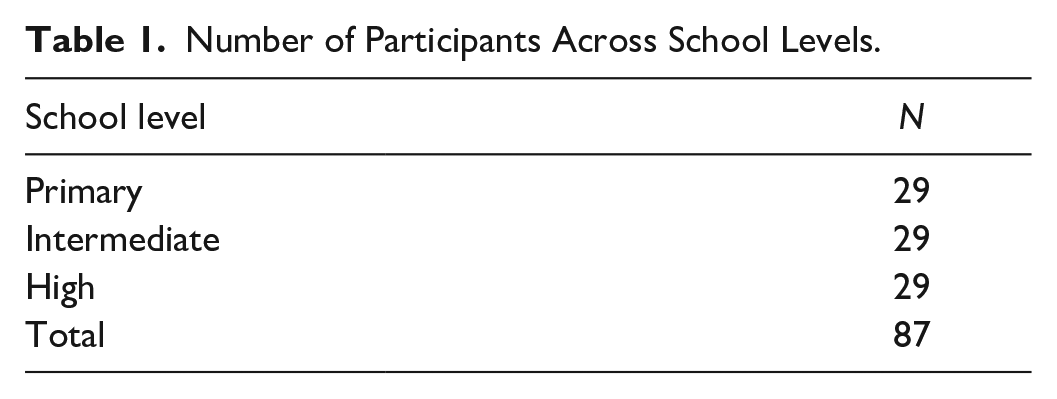
Eighty-seven (87) Saudi EFL teachers who were teaching English at the three different school levels in Saudi Arabia (i.e., primary, intermediate, and high) took part in the study. The participants were sampled from different parts of the country. The researcher contacted a fellow English teacher who was a member of the English Teachers Congregation in Saudi Arabia for help with disseminating an online questionnaire to the English teachers’ community across the country. A plea was made to our fellow teacher to encourage teachers from all three school levels to fill in the questionnaire since the current study had one main objective of comparing EFL teachers’ use of word instruction techniques across different school levels. A total of 103 teachers from the three school levels responded to the voluntary call and filled in the questionnaire. However, the questionnaires filled out by 16 teachers were excluded either due to considerably incomplete responses to the questionnaire items or to make the number of participants equal across the three groups. Table 1 shows the distribution of our participant teachers across the three school levels.
Number of Participants Across School Levels.
All the participants were male teachers aged from 22 to 56 years of age. They held a bachelor’s degree in English or English language teaching from different universities and colleges across Saudi Arabia which is the minimum required qualification for an English teacher in the country. As such, our participant teachers had a good background with regards to English teaching methodology as this is one of the core courses offered in English major programs in Saudi universities and colleges. It should be noted here that only a few English teachers in the country hold a master’s degree in English, but none took part in the study. Finally, it is also worth mentioning that all our participant teachers were sampled from public government schools and none were drawn from private schools.
Instrument
An online questionnaire on word instruction techniques was devised by the researcher to collect data for this study (see Appendix). The questionnaire was prepared based on the literature and it comprised 60 items divided over two main sections (frequency of use section and usefulness rating section) with the two sections dealing in essence with the same 30 word instruction techniques. In preparing the list of word instruction techniques on our questionnaire, we looked at a number of articles (e.g., Michel & Patin, 1972; Sedita, 2005) and research studies (namely Awaludin, 2013; Elyas & Alfaki, 2014; Rossiter et al., 2016) which all included some lists of techniques and strategies for word instruction that EFL teachers may use in their classes. Our goal was to come up with a comprehensive but concise inventory of word instruction techniques. To do this, we looked carefully at the wording of all the techniques and strategies that we came across within the above literature, and to avoid repetition, any two techniques with similar wording were not repeated in our list. So, if one technique was mentioned in different wordings in another study, it was not included again in our questionnaire (e.g., “realia” and “real objects” are listed under one technique). To the researcher, this is a very vital criterion to go by in the quest of devising comprehensive and sound inventories of strategies/techniques such as those relevant to vocabulary instruction and/or learning. In the literature, unfortunately, this criterion is often not carefully considered. For instance, in Elyas and Alfaki (2014, p. 54), “Translation” and “Giving the Arabic equivalent” are listed as two separate and different word teaching techniques. All in all, our final list included 30 various but distinct word instruction techniques and was thus far more comprehensive than those existing in the literature (Awaludin (2013) had nine techniques; Elyas and Alfaki (2014) had 12 techniques; Rossiter et al. (2016) had 15 techniques). Whereas 17 of the word instruction techniques that featured in our questionnaire were of the discovery type, the remaining 13 techniques were consolidation ones (see Table 3 for a breakdown of these techniques based on their category).
In the first section (i.e., frequency of use), the respondents were asked to report their frequency of using each individual technique on a five-point Likert scale. The frequency scale included (1) Never, (2) Rarely, (3) Sometimes, (4) Often, and (5) Always. In the second section (i.e., usefulness rating), the participants were asked to rate each of the various 30 techniques in terms of their usefulness for word instruction regardless of whether they actually used the technique or not. The reliability of the questionnaire was prechecked through a mini-pilot study in which 37 local English teachers filled in a hard copy of the questionnaire. Using the Statistical Package for the Social Sciences (SPSS), the instrument was analyzed for internal item consistency and it showed an acceptably good level on the Cronbach’s Alpha test (reliability coefficient = .832). The questionnaire was then uploaded to the online SurveyMonkey service for later use in the main study.
Procedure
Once the questionnaire was uploaded to the online SurveyMonkey platform, we contacted our fellow English teacher and provided him with a brief overview of the study and asked for his assistance in distributing the online questionnaire to English teachers across the country as he had a membership in the English Teachers Congregation in Saudi Arabia. He was provided with the questionnaire link for easy sharing with interested participant teachers. As noted earlier, 103 teachers from the three different school levels filled in the online questionnaire but the questionnaires of 16 teachers were excluded due to incomplete responses. As such, a total of 87 teachers represented the participants for this study. No time limit was set for completing the questionnaire, but teachers were guided that the filling of the questionnaire should not take more than 30 minutes.
After our participant teachers finished filling in the online questionnaire, we immediately entered their responses numerically into SPSS. Means, as well as standard deviations, were calculated to identify the most and least used word instruction techniques by our subjects (RQ1). To simplify our discussion of the results relevant to the first research question (i.e., frequency of using the various word instruction techniques), we transformed our five-point Likert scale into three levels of use: high use (for techniques reported with means <4.00 and >5.00), moderate use (for techniques reported with means <3.00 and >3.99) and low use (for techniques reported with means <1.00 and >2.99). The paired samples t-test was used to test the difference in teachers’ use of the two categories (i.e., discovery and consolidation) of word instruction techniques (RQ2). Analysis of variance (ANOVA) test was used to analyze the difference in teachers’ use of the techniques across the three school levels (RQ3). Finally, percentages were used to account for our subject teachers’ rating of the usefulness of the various word instruction techniques (RQ4).
Results
RQ1: What Are the Most and Least Used Word Instruction Techniques by Saudi EFL Teachers Across All Discovery and Consolidation Techniques?
Our first research question queried both the most and least favored word instruction techniques for our subject teachers. Table 2 shows the subjects’ use of the various techniques ranked according to mean frequency order. As the table shows, a good number of the techniques (techniques 1–11) were on the high use benchmark we specified earlier in the procedure section (Mean = 4.00–5.00). Providing an Arabic translation of the target word was by far the most used word instruction technique (M = 4.94). Other techniques that were similarly highly used included word repetition by teachers and their students afterward (M = 4.90), writing the word on the board (M = 4.85), showing word pronunciation (M = 4.82), giving example sentences (M = 4.79), asking for word meaning guesses (M = 4.75), checking learners’ knowledge of similar words (M = 4.55), showing realia in the classroom (M = 4.39), using pictures (M = 4.22), giving examples of related words (M = 4.08) as well as giving an English explanation of the word (M = 4.01).
Teachers’ Use of the Word Instruction Techniques in Mean Rank Order.

Note. 1–11 = high use; 12–16 = moderate use; 17–30 = low use.
Toward the middle of the table was stacked another group of word instruction techniques that were moderately used by our subject teachers (Mean = 3.00–3.99). These included asking students to notice spelling and/or pronunciation of the target word (M = 3.73), referring to the textbook relevant content after the word has been introduced (M = 3.44), having students look up the word in the dictionary during class (M = 3.22), asking students to provide their own example sentences of the word (M = 3.16) as well as showing flashcards of the word (M = 3.06).
As to the low-ranking techniques, almost half of the word instruction techniques on our questionnaire (techniques 17–30) were used with rather low frequencies (Mean = 2.77–1.38). Some of these techniques, based on our five-point Likert scale, were reported to be rarely used. These included explaining the origin of the word (M = 1.38), using non-textbook supplemental materials not included in the textbook (M = 1.49), having students draw word maps related to the target word (M = 1.54), providing collocations/idioms of the word (M = 1.61), playing songs in class that has target vocabulary (M = 1.73), as well as having students draw pictures of the word after it has been introduced (M = 1.78).
RQ2: Which of the Two Categories of Techniques (i.e., Discovery and Consolidation) Receives More Attention by the Teachers?
This research question aimed to identify the category of techniques to which our subject teachers give more attention when providing word instruction to their students. Drawing from Schmitt’s (1997) distinction of discovery versus consolidation vocabulary learning strategies noted earlier in the study, we sorted and matched each of the 30 word instruction techniques that appeared on our questionnaire as either a discovery or a consolidation technique. The purpose for categorizing the techniques in this way was to help us detect whether a possible significant difference in our subject teachers’ use of the two categories of techniques (i.e., discovery vs. consolidation) existed. Table 3 shows that whereas 17 word instruction techniques were categorized as being essentially discovery techniques, the remaining 13 techniques were consolidation ones. Using the Compute Variable function in SPSS, we then calculated our teachers’ mean frequency of using each category of techniques. As shown in Table 4, discovery techniques (M = 3.79) were more often used by teachers than consolidation techniques (M = 2.52) with a mean difference of 1.27. To examine whether this mean difference in our teachers’ use of the two categories of techniques was significantly different from zero, we ran the paired samples t-test. The results indicate that it was indeed significantly different from zero (t (86) = 60.71, p < .001) suggesting that the word instruction techniques intended for facilitating the learners’ task in discovering information about new words (i.e., discovery techniques) were more favored to our participant teachers compared to those intended for consolidating word knowledge (i.e., consolidation techniques). Table 5 and Figure 1 show the results we obtained from the paired samples t-test analysis.
Types of Word Instruction Techniques and Corresponding Techniques.

Descriptive Statistics for the Teachers’ Use of the Two Categories of Word Instruction Techniques (N = 87).

Paired Samples t-Test for the Mean Difference in Teachers’ Use of Discovery and Consolidation Techniques.


Teachers’ mean use of discovery and consolidation techniques.
RQ3: Are There Any Significant Differences in Saudi EFL Teachers’ Use of the Various Word Instruction Techniques Relevant to Their School Level (i.e., Primary, Intermediate, or High)?
To determine whether there was any significant difference in our subject teachers’ use of the various word instruction techniques across the three school levels (i.e., primary, intermediate, and high), we first calculated the teachers’ mean use of these techniques for each school level. Table 6 shows the descriptive statistics for the teachers’ use of the techniques across the three levels. All in all, primary school teachers used word instruction techniques with a slightly higher frequency (M = 3.17) than intermediate and high school teachers (M = 3.15 and 3.14 respectively). To look for any significant differences among the three school-level teacher groups in their use of the techniques, we conducted the one-way analysis of variance (ANOVA) test. As shown in Table 7 and Figure 2, the results of the ANOVA test indicate that there was no significant difference among the teachers across the three school levels in their use of the word instruction techniques (F (2) = .816, p = .446). In other words, our teachers used word instruction techniques similarly across the three school levels.
Descriptive Statistics for Teachers’ Use of Word Instruction Techniques Across School Levels.

ANOVA Test for Teachers’ Use of Word Instruction Techniques Across School Levels.

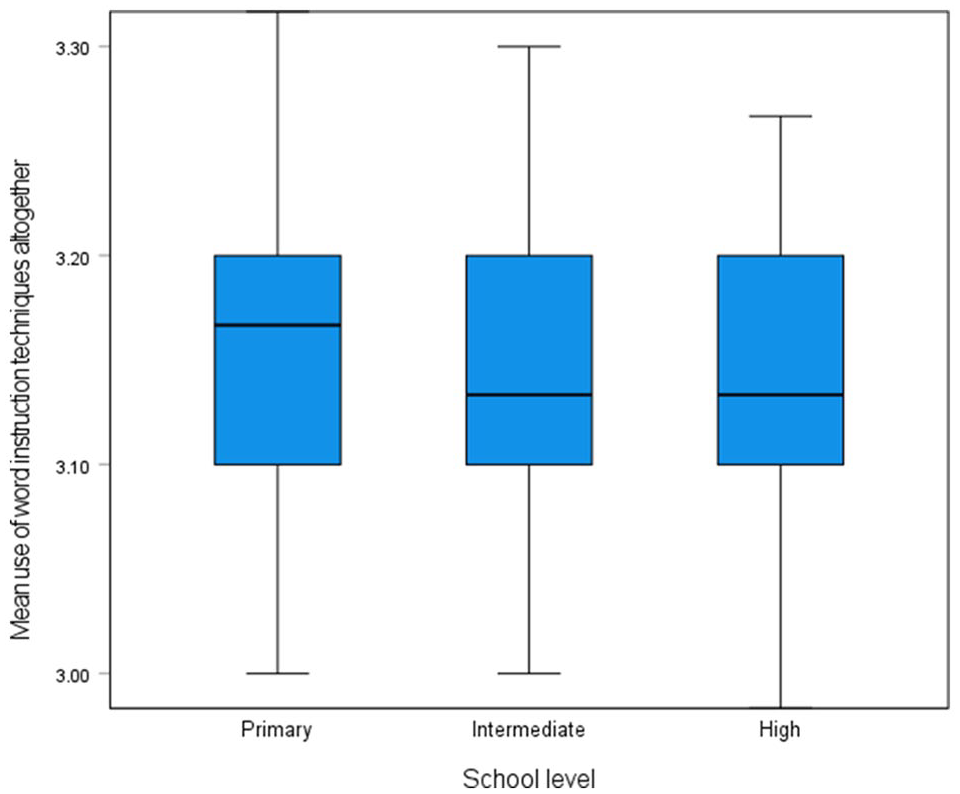
Teachers’ use of word instruction techniques across the three school levels.
Although running multiple comparisons (post-hoc tests) was not necessary in our case since no overall significant difference among the three school-level teacher groups was observed, we ran the Tukey post-hoc test so as to verify the overall result we obtained from the ANOVA test itself. Table 8 shows that indeed no significant results were evident among any pairs of groups within the three school-level teacher groups (p > .05).
Multiple Comparisons Between the Pairs of Groups Within the Three School Levels.

RQ4: How Do Saudi EFL Teachers Perceive the Various Word Instruction Techniques in Terms of Usefulness?
An obvious reason for our interest in investigating our subject teachers’ usefulness ratings for the various word instruction techniques involved in this study is that, apart from knowing how much they valued each technique, we wanted to know how much discrepant they were in terms of providing usefulness rating for the techniques as opposed to their reported actual use in the EFL classroom. Generally speaking, as shown in Table 9, there was an overall match between the teachers’ frequency of using the techniques and the usefulness ratings they reported for those techniques. That is, all the techniques that were reported to be highly used received a high usefulness rating by the teachers. By the same token, all the techniques that were moderately or least used received a low usefulness rating by them. However, with regards to the moderately and least used techniques, a few discrepancies did occur with our subject teachers nevertheless rating some of these as highly useful techniques. “Having students look up the target word in the dictionary while in class” had a very high usefulness rating by our teachers with 81% of them rating it a useful technique. However, in terms of actual use, as we saw earlier in our answer to the first research question, this technique was quite moderately used by our teachers (M = 3.22). Another technique that was also rated highly useful by our teachers but reported to be moderately used was “showing flashcards of the target word.” This technique received a high usefulness rating by our teachers (72%) but had a moderate mean frequency use (M = 3.06).
Teachers’ Usefulness Ratings of the Word Instruction Techniques in Percentage (N = 87).

Discussion
Teachers’ Preferences for Word Instruction Techniques: Discovery Versus Consolidation
To the researcher, it is no wonder that using L1 translation of target words featured as the most used word instruction technique by our teachers since L1 use in EFL classrooms has often proved itself quite useful for teachers in facilitating the various L2 instruction tasks they encounter (e.g., grammar explanations, reading comprehension). Indeed, L1 use is seen by most teachers as a shortcut to L2 learners’ minds. This finding is in line with Awaludin (2013) whose Indonesian EFL teacher whom she observed was found predominantly preferring to provide her learners with Indonesian equivalents when presenting new words to them. Similarly, Elyas and Alfaki’s (2014) Sudanese teachers reported having high preference for providing Arabic equivalents to their students with 73% of them reporting to have used the technique.
By the same token, whereas word verbal repetition (i.e., repeating words in front of the class and having learners repeat them afterward) seems to help learners get acquainted with the spoken form of the words, writing the words on the board helps learners learn and master their written form. In this relevance, similarly to our study, verbal repetition of target words featured as one of the highest-ranking word instruction techniques used by the Canadian ESL instructors in Rossiter et al.’s (2016) study. Moreover, in line with our findings, writing target words on the board was also a highly favorable technique to the Indonesian teacher observed by Awaludin (2013) as well as to the Canadian teachers who took part in Rossiter et al.’s (2016) study.
As to contextual word instruction (i.e., providing example sentences using target words), another highly favorable technique to our Saudi teachers, this technique again similarly featured as one of the highest-ranking techniques used by the Canadian teachers in Rossiter et al. (2016). On the contrary, the Sudanese teachers in Elyas and Alfaki (2014) reported a far lower interest in providing such contextual word instruction to their learners as only 53% of them have reported using the technique. Also, in line with our study, word meaning inferencing (i.e., asking students to guess the word meaning using context clues) was one of the most frequently used techniques by Elyas and Alfaki’s (2014) Sudanese teachers. In fact, this technique ranked first in their study and this perhaps explains the Sudanese teachers’ lesser interest in providing Arabic equivalents of target words to their learners, as we noted earlier, as they seemingly seek to allow more room for their learners to make inferences relevant to the meanings of the target words. In addition, in line with our study, the use of realia (i.e., real objects) to show word meaning was also a highly favorable technique to Awaludin’s (2013) Indonesian teacher as well as to Elyas and Alfaki’s (2014) Sudanese teachers. However, Rossiter et al.’s (2016) Canadian instructors had an extremely low preference for using realia in their classes.
A closer look at Table 2 shows that only two of the highest-ranking word instruction techniques as per our study (namely repeating the word out loud and having students repeat it afterward as well as writing the word on the board) essentially targeted one particular aspect of word knowledge, that is, word form. However, all the remaining highest-ranking techniques (namely techniques 1 as well as 5–11) all targeted and sought to reinforce another key word knowledge aspect, that is, word meaning. This finding indicates the prevalent interest in the aspect of word meaning over that of word form which seems to occupy the minds of Saudi EFL teachers when providing word instruction to their learners.
As to the group of moderately used techniques, what is peculiar about these techniques is that they are student-centered in the sense that students are asked to do the work involved in the techniques rather than the teacher himself. This is unlike the group of highly used techniques we discussed earlier which were predominantly teacher-centered. This finding unsurprisingly indicates that word instruction in Saudi EFL classrooms is mostly teacher-centered which is seemingly also the case with EFL instruction as a whole. Two obvious instances of this teacher-centeredness are evident in the techniques relevant to dictionary use and example sentences. In terms of dictionary use, “having students look up the target words in the dictionary while in class,” which is essentially a student-centered technique, was quite moderately used (M = 3.22). On the contrary, almost all the highly used techniques (nine out of 11) were clearly teacher-centered since the work involved with these techniques was exclusively carried out by the teachers themselves (Mean = 4.01–4.94). These included providing an L1 Arabic translation of the word, writing the word on the board, showing how the word is pronounced, giving example sentences using the word after it has been introduced, checking students’ knowledge of similar words, showing real objects that represent the word meaning (i.e., realia), drawing or showing pictures representing the word, giving examples of related words to show word relationships, giving an English explanation/definition of the word. In relevance to example sentences, “asking students to provide example sentences of the word,” which is another student-centered technique, was also moderately used by our subject teachers (M = 3.16). In parallel, two of the highly used teacher-centered techniques which put the burden of providing examples related to the target word on the teacher rather than the student were “giving example sentences using the word after it has been introduced” as well as “giving examples of related words to show word relationships” (M = 4.79 and 4.08 respectively). Again, the above comparisons clearly illustrate the teacher-centered nature of word instruction in Saudi EFL classes.
Two possible reasons for our teachers’ disinterest in providing etymological explanations of the target words to their students are the time-consuming nature of this technique as well as the little addition it may have as to knowledge about word meaning. Indeed, providing such etymological explanations would certainly take more class time as well as provide less word meaning knowledge contribution than, say, providing an L1 Arabic translation of the word or showing real objects (i.e., realia) representing the word meaning which both featured among the highly used and favored word instruction techniques for our subject teachers. As to the use of non-textbook supplemental materials for word instruction, EFL teachers’ avoidance of this technique may be attributed to three reasons. First, teachers know that it is hard to get students interested in such materials since students know these cannot be included in their exams as per school regulations. Another reason is that the teachers fear that the material used may not match their learners’ levels. As such, a third setback for using non-textbook materials in word instruction is the extra effort that may be required from teachers in choosing content appropriate to their learners’ proficiency levels as well as interests.
As to the comparable use of discovery and consolidation techniques, one plausible explanation for our teachers’ evident higher interest in word instruction discovery techniques over those of consolidation techniques is that whenever new words are encountered, discovering word knowledge about them necessarily precedes any attempts for consolidating it. As such, due to the often-limited class time in EFL classes, an issue also noted by Takač (2008), most of the teachers’ attention, perhaps unconsciously, is directed toward word knowledge discovery rather than consolidation, and hence word instruction discovery techniques are more in use than consolidation ones. Therefore, had it been for the limited class time characterizing EFL instruction in Saudi Arabia, we might have seen an equal balance of use by our subject teachers for the two categories of techniques.
Also, another possible reason for the teachers’ higher use of discovery techniques over consolidation ones is that it may well be an attempt by teachers to compensate learners for their inability to uncover word knowledge on their own consequently involving teachers to use discovery techniques rather than consolidation ones. As such, teachers may feel rather obliged to provide learners with direct word instruction themselves and this certainly calls for the use of discovery rather than consolidation techniques. Indeed, techniques that help learners discover word knowledge are more in line with direct word instruction than those intended for consolidating word knowledge and are thus more appropriate for use by teachers. The teachers’ focus is consequently directed more toward helping learners find out word knowledge about the new target words they encounter, hence leaving more of the consolidation work burden to the learners themselves to deal with when studying on their own using whatever word learning consolidation strategies they find suitable (e.g., keeping a vocabulary notebook, using the new words in example sentences, studying words at home, and using word tests to test themselves; see Schmitt (1997) for a list of such consolidation word learning strategies).
This significant interest of our teachers in discovery over consolidation techniques when providing word instruction to their learners, albeit justifiable, calls for caution from the teachers’ part. Indeed, it is the researcher’s belief, if a balance between the two categories of word instruction techniques cannot be at all struck in the EFL classroom, teachers should make sure they can never do without three consolidation techniques that are highly recommended in the vocabulary learning literature. These include giving example sentences using the word after it has been introduced, asking students to provide example sentences of the word as well as providing collocations/idioms of the word if it has any. In this regard, our subject teachers can be commended for their very high use for one of these valued consolidation techniques, namely giving example sentences using the word (M = 4.79). However, they can still be called on to put the other two into more use in class since “asking students to provide example sentences of the word” was moderately used (M = 3.16), and “providing collocations/idioms of the word” was rarely used (M = 1.61).
Teachers’ Use of the Techniques Across the Three School Levels
Apparently, our teachers across the three school levels used word instruction techniques with a strikingly similar intensity. As far as the researcher is concerned, it was expected that primary school teachers would most likely display more use of the techniques in their word instruction. Indeed, EFL teachers at beginners’ level should put more use of word instruction techniques, especially those of the discovery type, to help their beginning learners adequately face the various L2 learning tasks which at times are above their level at such an early stage of L2 learning. Needless to say, this recommendation does not in any way entail that intermediate and high school teachers should use the techniques sparingly but rather, for the benefit of beginner EFL learners, primary school teachers should always be the ones to use the various techniques to their fullest. At any rate, although primary school teachers in our case did use the techniques slightly more than their intermediate and high school counterparts, this higher use failed to achieve any statistical significance as we noted earlier.
It is not clear why our teachers across the three school levels had such a strikingly similar pattern in terms of the frequency of using word instruction techniques. However, one possible reason may be attributed to certain common beliefs pertaining to the use of word instruction techniques all Saudi EFL teachers may have regardless of their school teaching level. Borg (2003, p. 81) draws our attention to teacher cognition and how it affects classroom practices noting that it represents “what teachers think, know, and believe and the relationships of these mental constructs to what teachers do in the language teaching classroom.” In our subject teachers’ case, these common beliefs, we suspect, have emerged from the EFL teacher education they have received from their different respective English major tertiary institutions in Saudi Arabia which more or less follow the same courses, course descriptions, textbooks as well as content materials. Unfortunately, though, investigating such beliefs was beyond the scope of this study.
Teachers’ Rating of the Usefulness of the Various Techniques
Our subject teachers rated the technique of “having students look up the target word in the dictionary while in class” as a highly useful technique (81%) but nevertheless reported a moderate use of it (M = 3.22). To the researcher, this discrepancy is not a contradiction on the part of the teachers but, rather, merely a “wish” not coming true. In other words, as the usefulness rating for this technique suggests, our teachers quite much favored the technique wishing to use it more often but in reality, they could not. The limited class time characteristic of EFL instruction in Saudi schools we noted earlier is most likely one reason for this noted discrepancy in this particular technique since allowing learners to regularly use their dictionaries while in class could take up much of the class time. As such, limited class time seems to have made dictionary use by learners a less popular technique for teachers due to its inviability for regular actual use in the classroom. Also, albeit acknowledging the high usefulness of dictionary use by learners while in class and apart from limited class time, our teachers seem to be merely loyal to the teacher-centered nature of EFL and/or word instruction in Saudi Arabia which we noted earlier in our discussion of the first research question. After all, teachers may think, students can still make full use of their dictionaries outside regular classes (e.g., in their free time while at home).
Our teachers also highly rated the usefulness of “showing flashcards of the target word” as 72% of them considered it a useful word instruction technique. However, in terms of actual use, they reported putting this technique to only moderate use (M = 3.06). The regular effort and time required to prepare such target words flashcards (whether in paper or electronic format) for each lesson is most likely the “scarecrow” that held our teachers from putting this technique into more frequent use when providing word instruction.
Finally, it is noticeable that two of the least used techniques, which also received quite low usefulness ratings by our teachers, were so against the wisdom and recommendations found in the vocabulary learning literature. These were “providing students with instruction on suitable word learning strategies” and “providing collocations/idioms of the word if it has any.” As for word learning strategy instruction, Hulstijn (1993) advises that word instruction should not only be limited to the teaching of target words but should also include instruction on the proper use of word learning strategies. In particular, many researchers encourage teachers to teach their students strategies for the analysis of word parts such as prefixes and suffixes as well as strategies for analyzing clues found in a written context to help them learn new words effectively (Baumann et al., 2002; Baumann, Edwards, et al., 2003). Also, Graves (2006) calls for teachers to instruct their learners on how to make proper use of their dictionaries so as to help them become more independent learners. As to the importance of collocations in L2 learning, Nation (2001, p. 56) stresses that “knowing a word involves knowing what words it typically occurs with.” Similarly, González-Fernández and Schmitt (2015, p. 96) value the role of collocations in L2 learning noting that “it is widely accepted that if L2 learners want to use language accurately and fluently, they need to know and use collocations.” Also, limited knowledge of collocations is responsible for many problems faced by L2 learners (González-Fernández & Schmitt, 2015). Moreover, Boers et al. (2006) consider the use of formulaic sequences such as collocations as an indication for L2 learners’ proficiency in the second language. As such, the value of both word learning strategy instruction as well as collocational knowledge is quite evident in the research on L2 vocabulary learning.
Conclusion
This study investigated Saudi EFL teachers’ use of word instruction techniques when providing word instruction to their learners. An online questionnaire was used to gather the data from 87 participant teachers. The aims were to identify how teachers use the various techniques in terms of frequency of use, the category of techniques more attended to, the effect of school level in teachers’ choice of techniques, and how useful the techniques were seen by the teachers. A number of key findings emerged from the study. In terms of frequency of using the techniques, providing an Arabic translation of the target word was by far the most used word instruction technique followed by verbal word repetition by teachers and learners afterward as well as writing the new word on the board. On the contrary, explaining the origin of the word was the least used technique followed by using non-textbook supplemental materials not included in the textbook, having students draw word maps related to the target word as well as providing collocations/idioms of the word. A noticeable finding relevant to the group of highly used techniques was that they were predominantly teacher-centered. This finding unsurprisingly indicates that word instruction in Saudi EFL classrooms is mostly teacher-centered which seems to be in tandem with the overall nature of EFL instruction in Saudi Arabia. Looking at the highly used techniques, it was also noticeable that there was a reported prevalent focus from Saudi EFL teachers when providing word instruction to their learners on using techniques that target and reinforce the aspect of word meaning knowledge over that of word form. As to which category of techniques (i.e., discovery or consolidation) Saudi EFL teachers favored more, since teachers were found to be interested in techniques that reinforced and targeted word meaning over word form, this was bound to be paralleled with an inclination toward the use of discovery techniques over consolidation ones. In terms of the teachers’ school level effect on their use of the techniques, our teachers used word instruction techniques similarly across the three school levels. As such school level did not have any significant effect on their frequency of using the various techniques. Finally, as for the usefulness of the techniques, there was an overall match between the teachers’ frequency of using word instruction techniques and the usefulness ratings they reported for those techniques. That is, whereas techniques that received high usefulness ratings by our teachers were reported to be highly used by them, those which had low usefulness ratings were reported to be less used by them.
Implications for L2 Vocabulary Learning and Teaching
Based on the above findings, a number of implications for EFL learners/teachers can be drawn. First, to the researcher, the ideal EFL word instruction setting is one in which a balance is struck by teachers between the use of teacher-centered and student-centered word instruction techniques. This ensures that while EFL learners are getting the help and assistance needed from their teachers when undertaking vocabulary learning tasks, they can still be independent and autonomous learners themselves. Consequently, to help strike this balance, Saudi EFL teachers should put more use to word instruction techniques that are student-centered (i.e., ones in which the actual work involved in the technique is carried out by students themselves rather than their teachers). Also, when providing word instruction to their learners, teachers should try their best to allocate more class time for using consolidation techniques so as to consolidate the newly learned word knowledge they provide to their learners. If this is not possible, an alternative option would be to provide them with one-off instruction on using proper word learning consolidation strategies (e.g., keeping a vocabulary notebook, using new words in sentences of their own, using word tests to test their progress) to help them put up with the word consolidation burden on their own. In terms of teachers’ use of the techniques across the different school levels, it makes quite a sense to believe that from all three school levels (i.e., primary, intermediate, and high), primary school EFL teachers should always put word instruction techniques to maximum use possible. This is because EFL learners at this early school level are complete beginners and are thus expected to be less independent than their intermediate and high school counterparts. Although it was the case in our study that primary school teachers used word instruction techniques more than intermediate and high school teachers, the difference was unfortunately not one to celebrate as it was statistically not significant. For more effective use of the techniques, teachers are advised to make use of combinations of word instruction techniques for teaching new words instead of relying only on a single technique per word. Using the techniques in this way facilitates learners’ immediate comprehension of the new target words as well as long-term retention of the words (Awaludin, 2013). Indeed, as Slattery and Willis (2001) note, the more various the word teaching activities in the EFL classroom are, the more attentive and alert the students can be kept. Finally, the markedly low interest of teachers in providing and explaining word collocations to their learners should be warned against since recent research links collocational knowledge with proficiency in the second language (González-Fernández & Schmitt, 2015).
Limitations and Suggestions for Further Research
As we noted earlier, this is the first study, to our knowledge, that examines the use of word instruction techniques in Saudi Arabia. As such, a few limitations were hard to avoid. First, although we aimed at having the largest number possible of EFL teachers in Saud Arabia to take part in our study, only 87 valid questionnaires were received. This number of participants is relatively small compared to the size and population of Saudi Arabia. Government aid represented by the Ministry of Education should have been sought in disseminating our online questionnaire on word instruction techniques as this would have ensured a larger response rate by the EFL teachers’ community within the country. Also, with regards to rating the usefulness of the various word instruction techniques on our questionnaire, a Likert scale would have been more appropriate than the binary “useful vs. unuseful” scale we used. In this regard, a neutral response option (e.g., “I don’t know,” “Not applicable to me”) should also have been included. Moreover, since our study sought to collect data from the largest number possible of EFL teachers in the country, it appropriately took a survey format and thus used a questionnaire that included a pre-listed inventory of word instruction techniques which EFL teachers may use in their classrooms. However, future replications of this study with a far smaller number of participant teachers (e.g., 5–15) may well opt for direct classroom observations and/or think-aloud protocols in which either the researcher himself observes and ascertain the types of word instruction techniques being used by the teachers or else the teachers themselves are called on to verbally describe such techniques. In addition, future research on the topic should also examine the effects of certain variables including gender (male vs. female), school environment (public vs. private), type of course (general English vs. ESP), course or school level (beginner, intermediate, advanced), as well as years of teaching experience on EFL teachers’ choices of word instruction techniques when presenting new vocabulary items to their learners. Finally, for researchers interested in examining techniques’ effectiveness, we highly recommend future research to investigate the effectiveness of classroom use of the five most popular word instruction techniques featuring in our study (namely providing L1 translations of target words, word verbal repetition, writing words on the board, showing word pronunciation, as well as giving example sentences using target words) as these particularly had the highest scores in terms of frequency of use by our participant teachers. Research into the effectiveness of such popular word instruction techniques would hopefully provide answers as to their suitability for classroom use in EFL environments. Finally, the finding that our teachers across the three school levels used word instruction techniques with a strikingly similar pattern in terms of frequency of use calls for further research. As we noted earlier, it seems that certain common beliefs pertaining to the use of word instruction techniques all Saudi EFL teachers may have regardless of their school teaching level have led to this similar pattern of use. Hence, future research into such beliefs would certainly help uncover them. All in all, it is hoped that the findings of this study will help lay a solid ground for assessing and eventually improving word instruction practices in Saudi EFL classrooms, something which will eventually be in the interest of EFL learners in the country.
Supplemental Material
sj-docx-1-sgo-10.1177_21582440221126627 – Supplemental material for Word Instruction Techniques in Saudi EFL Classrooms: Their Use and Perceived Usefulness by Teachers
Supplemental material, sj-docx-1-sgo-10.1177_21582440221126627 for Word Instruction Techniques in Saudi EFL Classrooms: Their Use and Perceived Usefulness by Teachers by Sultan Alhatmi in SAGE Open
Footnotes
Acknowledgements
I would like to express my gratitude to all the teachers who participated in this study.
Declaration of Conflicting Interests
The author declared no potential conflicts of interest with respect to the research, authorship, and/or publication of this article.
Funding
The author received no financial support for the research, authorship, and/or publication of this article.
Ethics Statement
No ethical approval was required for conducting the research herein.

Supplemental Material
Supplemental material for this article is available online.
References
Supplementary Material
Please find the following supplemental material available below.
For Open Access articles published under a Creative Commons License, all supplemental material carries the same license as the article it is associated with.
For non-Open Access articles published, all supplemental material carries a non-exclusive license, and permission requests for re-use of supplemental material or any part of supplemental material shall be sent directly to the copyright owner as specified in the copyright notice associated with the article.
