




Abstract
This study addresses the questions of “How” and “When” CEO duality affects firm performance from a developing country’s perspective. To address the research question, CEO duality serves as an explanatory variable, board effectiveness as a mediator, CEO personal characteristics as moderator, firm-specific characteristics as control, and performance indicators as a dependent variable. Our dataset comprises 163 Pakistani firms listed on the Pakistan Stock Exchange for 2009 to 2018. Results demonstrate that CEO’s duality negatively affects a firm’s financial performance; however, board effectiveness mediates the link between CEO duality and firm performance. The results support the agency theory framework. Furthermore, findings proposed that the CEO’s attributes (age, gender, and financial education) significantly moderate the link between a CEO’s duality and firm performance. The findings may be generalized among the developing countries and net 11 (N-11) specifically. The current study claims to be the first one that explores the mediating role of the board effectiveness and moderating role of the CEO personal attributes together on a duality-performance link employing Pakistan’s corporate data. The findings suggest that policymakers and regulators ensure separation of power between Chairman and CEO to assure transparency through induction of more independence in the board room.
Introduction
The enduring crunch has eminently emphasized corporate governance concerns to the corporate world and societies worldwide. Starting from the classic Enron and WorldCom scandals, recently Volkswagen (VW), British Petroleum (BP), Wells Fargo, Parmalat, China Medical Technologies (CMED), and Luckin Coffee accounting irregularities, businesses have grown momentous attention towards effective corporate governance mechanism within the firms. Corporate governance provides a comprehensive framework for the conception of the rights and responsibilities of the corporate board and top management and ensures the accountability mechanism for the firm’s stakeholders (Solomon, 2020). The corporate governance mechanism should have a dynamic role in managing the firm’s routine business. Effective corporate governance systems are the key indicators of better strategic orientation of a firm to attract different stakeholders with distinct objectives (McKinsey & Company, 2002). Firms around the globe must follow the basic corporate codes to ensure transparency and achieve good corporate governance for the firm in general, irrespective of their legal and institutional factors. Chief Executive Officer (CEO) duality leading to managerial opportunism subject to corporate governance has been widely an important topic of debate for academia and the business world.
In the corporate world, a CEO is held liable for the firm’s financial performance and for safeguarding the stakeholders’ interests. The CEO is considered the firm’s image and must retain effective marketing and communal image. In contrast, the chairman’s role in corporate firms is to ensure the corporate board’s effectiveness and the implementation of the firm’s strategies. Both offer equally important top-level leadership required to maintain firm competitiveness and sustainability. Both are ultimately responsible for the firms’ strategies to increase market share and profitability. In reality, the similarities in roles have directed many firms to engage one person in both roles. According to scholars, it is not unusual to observe one individual holding both titles as Chairman and CEO to get merits of duality, whereas duality might fade the control (Brickley et al., 1997).
Contrasting theories exist in the corporate governance literature concerning CEO duality. On the one hand, agency theory contends that partitioning the dual roles of CEOs and board Chairman aids in decreasing the agency cost, enhances the firm’s effective monitoring, and performs better than those firms where CEO duality exists (Rechner & Dalton, 1991). On the contrary, Donaldson and Davis (1991) argued in favor of the stewardship perspective. CEO duality generates stronger, explicit leadership and is more likely to make effective and timely decisions in this fast-paced corporate world. The current study employs a combination of these contrasting theories to support our hypothesis of interest.
There is a strand of literature available on the relationship between CEO duality and firm performance (Boyd, 1995; Lam & Lee, 2008; Ramdani & Witteloostuijn, 2010), and results remained inconclusive. A bulk of studies belong to developed countries, and most of them explored the direct impact of CEO duality on firm performance (Aktas et al., 2019; Boyd, 1995; Brickley et al., 1997). Numerous researchers emphasized observing the impact of CEO personal characteristics on firm performance, for example, Barker and Mueller (2002), Cheng et al. (2010), and Peni (2014) explored the impact of the age of the CEO on various firm performance indicators, in contrast, Malik et al. (2020) studied personal and professional attributes on corporate social responsibility disclosure, while W. A. Khan and Vieito (2013), Sapienza et al. (2009), and Zhang and Qu (2016) emphasized on the impact of CEO gender on firms financial performance and the impact of CEO education on firm performance is explored by Buyl et al. (2011), Cheng et al. (2010), and Wang and Yin (2018). However, these studies ignored the factors and determinants that affect this relationship to what extent and how they do it.
The motivation for this study derives from Yu (2022) recent systematic literature review on CEO duality and Firm performance. The author stresses the need to explore the mediating and moderators’ factors of this relationship as insufficient work has been done in this context. Although, there are several studies tested the relation by taking capital structure and market competition, working capital management as mediating (A. Khan et al., 2021), while others took CEO informal power, board involvement, firm size, and corporate social responsibility, ownership type, country governance as moderating variables to test this relationship (A. Khan et al., 2021; Mubeen et al., 2020; Wijethilake & Ekanayake, 2020).
This study is unique in its settings in multiple ways. First, this is the first study answering the “How and when” CEO duality influence the firm performance. Secondly, the study took board effectiveness as mediating variable, which is missing in the literature. Thirdly, the study tests the indirect role of the CEO’s attributes (age and gender) on the firm performance. These characteristics are well explored in direct relationships (Jadiyappa et al., 2019; Sun & Zou, 2021), but less work has been done by taking them in an indirect relationships. Lastly, the study focused on one of the following 11 (N-11) countries, Pakistan. The current study aims to capture this void by addressing the question as to whether effective boards have an indirect impact on CEO duality and performance link while the existence of specific personal characteristics in CEO contributes towards moderating this link.
The convergence of the findings of an association between CEO duality and firm performance is not met yet because of the mixed results reported by the various researchers (Bai et al., 2004; Duru et al., 2016; Peng et al., 2007). Bai et al. (2004) and Peng et al. (2007) reported a positive effect of the CEO duality on firm performance, whereas, in contrast, Baliga et al. (1996) and Dalton et al. (1998) asserted that CEO duality and firm performance has no significant association. The lack of consensus and mixed results evoke the need to advance our understanding of CEO duality and firm performance link by considering some mediators and moderators, which have not been considered in earlier studies. Therefore, this study aims to examine the mediating role of the board’s effectiveness and the moderating role of the personal attributes of the CEO towards the CEO duality and firm performance link. Thus, the current study aims to further understand the vital role of the board’s independence and gender diversity in the corporate governance mechanism and to discover if the indicators of the board’s effectiveness mediate the link between CEO duality and firm performance.
This study contributes to corporate finance and management accounting literature in several ways. First, as per the authors’ observations, the current study fills the gap in the literature by addressing the questions related to “How” and “When” the link between CEO duality and firm performance is associated, particularly in the context of an emerging country like Pakistan. Mainly, the empirical findings offer valuable insights regarding the importance of the effectiveness of corporate governance. Furthermore, the study contributes to the literature by addressing the question of moderation of the CEO’s attributes towards the link between CEO duality and firm financial performance. Earlier studies are almost silent in addressing the question of How and When on the link between CEO duality and firm performance specific to the emerging economies like Pakistan.
Secondly, the results contribute a theoretical perspective that the Agency notion is more vital in Pakistan. Board effectiveness can be assured through independent directors, audit committee independence, the presence of female independent directors on the board, and the strict monitoring role of the regulator. All of these parameters to gauge board effectiveness could provide a comprehensive understanding of the emerging economy governance practices and how effective boards aid the organization’s CEO, enhancing the firm’s financial performance.
Finally, the current study adds to the wide strand of literature encompassing studies from developing economies with a unique perspective as Pakistan has a unique institutional background and an exciting setting as an emerging economy. Previously, most of the literature in this regard consisted of studies from developed economies at large. Moreover, the current study contributes to the stream of literature encompassing corporate governance and CEO characteristics in particular by providing unique insights from an emerging economy like Pakistan. The findings of this study coincide with the agency perspective, thus, confirming the seminal agency approach.
We structure our paper as follows. The following section represents a brief overview of the corporate governance system in Pakistan. In the subsequent section, we present a brief outline of the theoretical perspective and literature review to establish our hypotheses. The following section encompasses methodology and sample description. The final section consists of the empirical results, and their analysis, and the discussion of the results and conclusion.
Corporate Governance Mechanism in Pakistan
The concern of corporate governance is vital for developing economies as it is vital to the growth of the firms and the development of a country. The Asian financial crunch appeals to extreme attention to the significance of corporate governance in developing countries. The OECD formed a set of corporate governance codes in 1999 that has become the core model for assessing a country’s corporate governance engagements. Pakistan has established corporate governance codes but with poor execution of these rules and political volatility that harmfully affects corporate governance. Securities Exchange Commission of Pakistan (SECP), the regulator of Pakistan’s corporate sector, issued governance codes in March 2002. Executing the Corporate Governance Codes has enriched the overall performance of the corporate structure. The quality of disclosure has enhanced over the last few years due to better monitoring of the SECP. In Pakistan, Ownership is very concerted in limited families. Pyramids and tunneling owned these families’ devices.
Business groups have lesser transparency and a weaker corporate governance structure. In Pyramid ownership structures, firms are expected to regulate with a deficient proportion of shares of their total capital. In Pakistan, the primary rights of shareholders are safeguarded by SECP, at least under bylaws in the book. The Central Depository Committee (CDC) protects and dematerializes the registration. Shareholders can acquire the information directly from the firm and have the right to join Annual General Meetings (AGM). Directors to form the board are picked by using the voting mechanism. The variations in the firm’s articles, increasing authorized capital, and the sale of main corporate assets entailed shareholders’ endorsement.
Theoretical Perspective
Over the last three decades, literature on CEO duality and firm performance has been widely explored, but findings are not yet converged (Davis et al., 1997; Rechner & Dalton, 1991). The mixed results advocate the need to gain more insights into the phenomenon. The following section explains agency and stewardship theory, followed by a brief literature review to propose the hypotheses. In line with Abels and Martelli (2013), existing literature provides mixed outcomes on which framework is better to analyze corporate governance. Considering the importance of both frameworks, the study used both frameworks to ground our hypothesis (Abels & Martelli, 2013; Farooq et al., 2021; Schillemans & Bjurstrøm, 2020). These theories shed light on the essential role of CEO duality on firm performance.
Agency theory versus stewardship theory
According to Jensen and Meckling (1976), agency theory discourses the association between the principal (owner or stockholder) and agent and the bond that bores them. It is conferred that agency issues arise out of the clashes between the principal and the agent, which talk from the diverse interests of all types of shareholders (La Porta et al., 1999; Shleifer & Vishny, 1997). From the outlook of agency notion, CEO duality points out “the absence of separation of decision management and decision control” (Fama & Jensen, 1983). In CEO duality, the corporate board will not regulate and evaluate the CEO’s effectiveness in the firm. It may become the source of agency concerns leading to low firm performance (Rechner & Dalton, 1991). Therefore, from the perspective of CEO duality, the stewardship notion suggests that CEO duality produces a unity of command at the executive level of the firm and, consequently, supports evading misperception among managers and enriches real decision-making (Finkelstein & D’Aveni, 1994).
Literature Review and Hypothesis Development
It is recognized that no unique notion explicates the common outline of different aspects of board diversity and firms performance. The nexus between CEO-Duality, the board’s effectiveness, and firms performance is a “varied and complex” link that cannot be enclosed by any unique governance theory (Nicholson & Kiel, 2007). Probing through the relevant literature and developing hypotheses for this study, two competing concepts of corporate governance are hired. Based on the stewardship theory, a different perspective of agency theory suggests that managers act as liable stewards to control the firm assets if the principal is left at its discretion and control. It indicates that the managers are reliable and worthy stewards of the assets assigned to them, making monitoring surplus (Davis et al., 1997). This theory proposed that independence should be given to managers and that freedom should be based on trust, which minimizes the agency cost. Existing literature on whether CEOs impact the firm performance is diverse, debating whether their role is as a figurehead or actual leaders that conclude the firm’s strategy.
CEO Duality-Board Effectiveness-Firm Performance
CEO-duality, one person with two hats, serving as Chairman of the board of directors and CEO of the firm, gets tremendous attention from academicians, researchers, and policymakers over the previous two decades (Dalton et al., 1998; Peng et al., 2007). CEO-duality has its pros and cons; from the agency perspective, Fama and Jensen (1983) affirm that the dual status of CEOs creates an imbalance among the power of the top executives and weakens the governance to safeguard the shareholders’ prosperity. However, Davis et al. (1997) holding a contrary version, argued that CEO duality provides structural and psychological empowerment, which helps achieve the firm’s goals. The strategic policy for CEO-duality varies from country to country, based on adopting the corporate governance model. In UK’s corporate sector, the separation of Chairman-CEO Jobs is relatively common compared to the USA (Kakabadse & Kakabadse, 2007).
Apart from the above competing theoretical perspectives, the link between CEO duality and firm performance is mainly indecisive (MacKinnon et al., 2007), and Malik et al. (2020) studied the impact of various CEO attributes on CSR related to Pakistan, Voinea et al. (2022) studied the impact of CEO duality on CSR disclosure in the context of China. The enduring dominance of leadership structure based on CEO duality, coined with its lack of consistent performance implications, refers to the urge for further investigation and thorough comprehension of the corporate consequences of this corporate leadership structure. Thus far, various studies of management have examined the impact of CEO duality on numerous organizational outcome factors (Dalton et al., 1998), Boyd (1995) focused on managerial compensation, and Polman et al. (2006) researched by taking earnings management as the outcome variable. Hsu et al. (2021) studied the impact of CEO duality on firm performance by taking corporate data from Taiwan’s listed firms and reported that CEO’s duality has a negative effect on a firm’s performance, whereas A. Khan et al. (2021) reported a positive impact of CEO duality on firm’s financial performance related to Chinese corporate firms. Yu (2022) reviewed 314 empirical studies on the link between CEO duality and firm performance and reported mixed results; various performance measure indicators, improper selection of research designs, sampling procedures, inadequate data, analysis technique, and endogeneity are few factors of mixed results on the link of CEO duality and firm performance.
The literature related to corporate boards is generally classified into two distinct categories, observable (board size, board independence, females presence on board, and board meetings) and unobservable characteristics (board members’ religion, personality, and their interlocking; Boeker, 1997; Kilduff et al., 2000; Milliken & Martins, 1996). Many research studies focused on observable diversity (Ahmad et al., 2018; Ahmadi et al., 2018; Sawyer & Thoroughgood, 2020) because data collection of unobservable attributes is quite a challenging task. In this study, the board’s size, board independence (proportion of independent directors), number of meetings in a year, and gender diversity (proportion of female directors) in the board are employed as parameters to compute the governance index, which is used as a proxy of board’s effectiveness. The diverse management literature described that diversity inclines to produce a higher level of innovation, creativity, and effective decision-making at the individual and group levels. Earlier studies, for example, Cannella et al. (2008) established that board diversity affects firm performance from two aspects. Firstly, boards are responsible for strategy formation, and diversity among board members plays a vital role in effective decision-making. Secondly, diversity among board members helps a lot in an effective monitoring role which ultimately helps achieve the firm’s goals.
Considering the gender diversity perspective, the presence of females on the board of directors helps accomplish the board’s strategic functions (Cannella et al., 2008). In comparison to the board based on only males with some females on boards, Milberg et al. (2000) findings favor boards having females. Boards having females are considered an effective board as their presence improves the overall environment of board meetings and improves board members’ attendance and effective discussion, which leads to improving the firm’s reputation among stakeholders and enhancing the firm’s financial performance (Selby, 2000). Furthermore, Mattis (2000) supported the above findings and argued that gender-diverse boards have a competitive advantage because females are considered more innovative in managing their responsibilities. Therefore, considering the diverse literature and the above arguments for this study, we hypothesize as follows:
H1: CEO Duality has a negative impact on firm performance.
H2: Board effectiveness mediates the link between CEO duality and financial performance.
CEO Duality-Demographics-Firm Performance
To address the second research question of this study, brief literature on the nexus of CEO-duality, CEOs’ demographics, and firm performance is discussed.
From the agency perspective, Ehikioya (2009) argued that CEO duality creates a conflict of interest and agency cost; they proposed that the CEO and Chairman should be different individuals to avoid the conflict of interest and agency cost. The advocates of the contrary argued that if the CEO leads the board of directors as chairman of the board, decision-making becomes too fast to avoid unnecessary bureaucratic hurdles. The literature on the link between CEO duality and firm performance has not been converged, and reports mixed findings with varied arguments. In earlier studies, Boyd (1995) and Dalton et al. (1998) supported the stewardship perspective. They reported that the dual status of the CEO affects firm performance positively because duality enhances the discretionary powers of the CEO, which help monitor and control the activities in the supreme interest of the organization, and firms having duality perform better than those with no duality.
Besides CEO duality, demographic characteristics, like gender, age, and CEO education, also affect firm performance. Peni (2014) and Mackey (2008) concluded the arguments and examined the variation in a firm financial performance based on the CEO’s diversity. Mackey (2008) determines that the CEO’s impact on corporate performance is significant. However, studies reported on the effects of CEO on firm value have mixed results. Bertrand and Schoar (2003) examined the impact of the CEO age and education on firm performance, whereas A. D. Martin et al. (2009) added the gender of the CEO to enhance the exploration. They concluded in favor of the CEO attributes that possess their significance. Kaplan (2008) discussed that the private sector CEO’s role in a firm’s progress is more profound than public sector listed firms.
One of the utmost examined CEO characteristics is gender. The earlier studies specify that gender-related differences might influence a person’s corporate accomplishments. Studies that examine the impact of CEO gender on firm performance (W. A. Khan & Vieito, 2013; Peni, 2014). They described that firms having female CEO outperform as compared to the firms governed by male CEO as female CEOs have superior understanding related to customer’s needs, consumer behavior, etc., which might give them a competitive advantage as compared to their male CEO (Ullah et al., 2019; Zhang & Qu, 2016). Therefore, we hypothesize that
H3: CEO gender moderates the link between duality and firm performance.
The likely influence of executive age on firm performance has gained considerable attention from researchers, and it’s expected that older CEOs have a reasonable edge as matched to their younger counterparts, who possess less experience in the corporate sector. In earlier research, Davis et al. (1997) studied the relation between CEO age and firm performance and reported no association. Whereas A. Khan et al. (2021) examined the positive impact of age on firm performance in the context of Chinese listed firms. Though, Bertrand and Schoar (2003) reported that older executives tend to have a more conventional approach, which likely influences firm performance.
CEO age is anticipated to have a significant effect on firm financial performance. Among various demographic characteristics, the CEO age significantly positively impacts the firm’s financial performance. Bertrand and Schoar (2003) argued that young CEOs become more fortified and zealous to attain specific individual and firm developments.
H4: CEO age moderates the link between CEO duality and firm financial performance.
CEO education theoretically impacts the capabilities possessed by a CEO in three interrelated categories. First, education creates knowledge, vision, and the ability to understand diverse views of management and business. Secondly, higher education signals the CEO’s intelligence and ability to persist in challenging tasks. Finally, the social networks attained in student life can support solving problems. CEO financial literacy affects firm performance positively. Irrespective of any arena of life, specific education greatly impacts advancement. Accordingly, CEO financial education helps them understand financial glitches and make the best decisions for the firm. Bertrand and Schoar (2003) stated that firms with CEOs possessing financial education perform better than non-financial educational backgrounds. Nawaz (2021) compared the firms based on their master’s degrees and concluded that firms where CEOs have MBAs are better in strategic decision-making than those firms having CEO with non-MBA educational backgrounds. Therefore, for this study, we hypothesized as;
H5: CEO education moderates the link between CEO duality and firm financial performance.
Methodology
According to Burrell and Morgan (2017), an appropriate research model for any study is vital, especially in social sciences; the philosophical supposition is essential for the research area. In this study, the hypothesis positivist prototype is employed and then empirically tested. Conferring to Burrell and Morgan (2017), positivists “seek to explain and predict what happens in the social world by searching for regularities and causal relationships between its constituent elements.” The reasoning approach is linked to positivism and assists in forming the underlying phenomenon among variables of interest to draw a comprehensive inference (Saunders et al., 2011). Therefore, this research prefers to opt for the deductive approach as compared to the inductive method. So, a quantitative research design is used to investigate the link between CEO duality and firm performance by taking statistical data from the Pakistan Stock Exchange (PSX) listed companies. Econometric equations to address the question of mediation are as under;


ROA and Tobin’Q (TQ) are employed as an indicator of a firm’s performance and ϵ is considered as a residual term independently identically distributed. Normally, with mean 0 and standard deviation 1, ϵ ~ N(0,1) and assumed to satisfy all classical linear regression assumptions
Econometric equations to address the question of moderation


In all the above equations, ϵij represents the residual term which follows certain assumptions of a classical linear regression model, β matrix represents the coefficients of Board characteristics employed in this study. In contrast, γ matrix represents the coefficients of CEO characteristics and δ matrix represents the coefficients of control variables. Similarly, θ1, θ2, and θ3 are the coefficients of interactions in terms of CEO duality with CEO gender, CEO financial education, and CEO age, respectively.
Sample
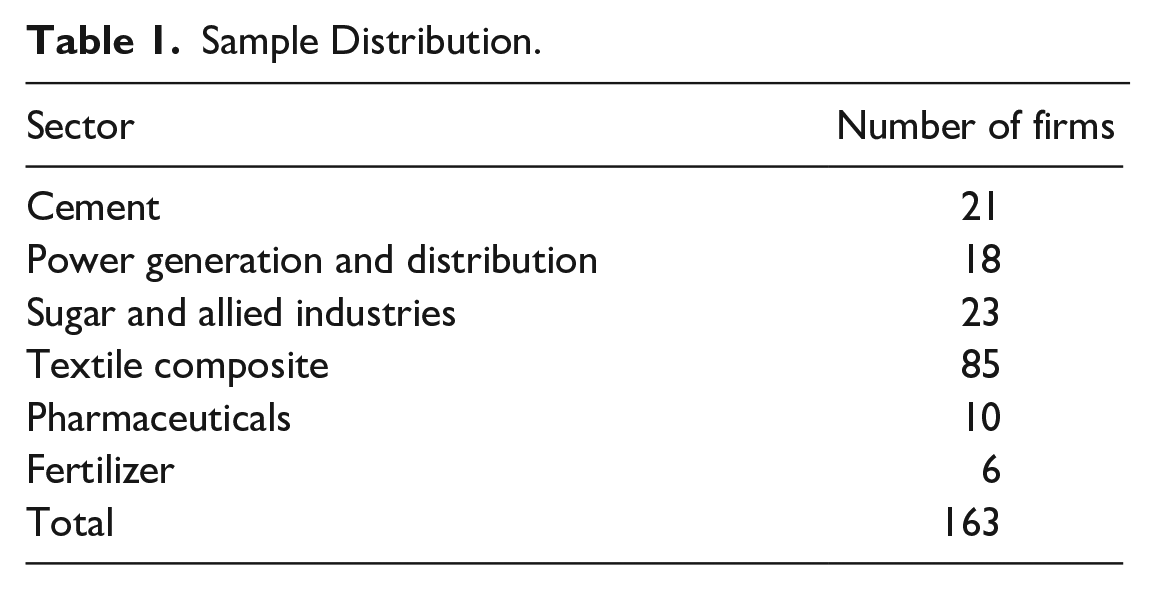
To avoid standard method bias and to assure a more representative sample, a sample is selected in stages. In the first stage, six leading sectors of the economy, contribute toward the maximum country’s growth, and then in the second stage, firms are selected based on their market capitalization as well as their maintenance of balance sheets and annual reports. Finally, 163 firms from the economies’ manufacturing sectors are selected, which maintain the archives of their balance sheets and annual reports. The period chosen for the empirical analysis is 2009 to 2018. The reason for limiting our sample size till 2018 was the COVID-19. We ignored 2019 to onward by considering these years as special years. Finally, firm-year observations are 1,630, considered sufficient to test the hypothesis. The selected period has its uniqueness, the selected decade experiences the continuation of democracy and stability in macroeconomic indicators. In 2019 the Business world suffered a lot due to COVID-19; Pakistan’s corporate sector was not exceptional in this context. Therefore, preference is given to the time period before COVID-19. Pakistan’s political and corporate culture is unique as compared to neighboring and other emerging economies; thus to avoid misleading conclusions, data is not collected from other countries.
Table 1 presents the number and proportion of firms selected from different sectors.
Sample Distribution.
Variables Description
The dependent variable in the current study is the firm’s performance. Return on assets (ROA) and Tobin Q (TQ) ratio are the two most common indicators of a firm financial performance employed in this research. ROA refers to an accounting-based measure obtained by dividing the net profit by total assets, while the TQ ratio is considered a key indicator of market measure of performance. TQ ratio is also represented as an indicator of profitable investment. TQ ratio is obtained by taking the ratio of the firm market value to its assets. The literature has given various reasons for the TQ ratio to use as an indicator of firm financial performance. For instance, the TQ ratio covers the long-term perspective, takes care of risk and return dimensions, and highlights the firm capacity to expand over a while (Caton et al., 2001). TQ ratio is considered better as compared to the single-period measures of profitability. These performance measures’ characteristics, ROA and TQ ratios are complements rather than alternatives (P. Martin & Bateson, 1993).
The primary explanatory variable employed in this study is CEO duality. A binary variable is coded as “1” if the CEO and Chairman of the firm are the same people; otherwise, coded “0” (Aktas et al., 2019; Boyd, 1995). Board’s effectiveness is measured through an index computed based on various board attributes employed as the mediator in this study. The board effectiveness index is calculated by following (Mathew et al., 2017; Wattanatorn & Padungsaksawasdi, 2021). CEO demographic characteristics such as gender, age, and education are employed as moderators on the CEO duality and performance association (Jalbert et al., 2002). In addition to the independent moderators and mediator, we use various firm characteristics (total number of shares, total assets, age of the firm and total number of employees, and status of the firm in the form of public or private) as control variables, along with control variables the dummies of time and industries are employed for the analysis purpose. The variables used in this study, their type, and description are given in Table 2.
Variables Measurement.

Discussion of Results
The current study outcomes are divided into the following sections consisting of descriptive statistics and regression results.
Descriptive Statistics
Table 3 comprises the CEO/Board and firm characteristics descriptive statistics. Descriptive statistics divide into two groups according to the category of the employed variables. Panel A of Table 3 presents the descriptive statistics of binary variables in the form of a percentage of specific categories. CEO duality exists in 18% of the sample firms, which can be considered a low proportion compared to advanced countries like the USA. However, CEO duality is also declining in the USA as the awareness of separate heads for CEO and Chairperson has increased in recent decades (Duru et al., 2016). About 24% of the sample firms have female CEOs, which is also on the lower side compared to advanced economies; according to Phandeirot (2017), in the UK, 41% of the listed firms are governed by female CEOs. In general, considering the traditional background of Pakistan’s culture, female opportunities are meager and very scarce at executive levels. Financial education is vital for the the CEO; in 84% of the sample firms, the CEO has a financial education background.
Panel B of table 3 presents the summary statistics of the quantitative variables employed in this study. The board’s effectiveness is an index computed based on various board’s characteristics, the range of board’s effectiveness of the sampled firms is observed to be 42% to 85%. In comparison, average and SD are 71% and 5%, respectively. Among various board features, the average board size is observed to be 8, with a range from 4 to 15 members, the variation from average board size is found to be 1.4. Pakistan’s average corporate board size can be compared with Singapore and Malaysia, as Bradbury et al. (2006) reported. Board Independence, which is measured as the ratio of independent directors to board size, average board independence is observed to be 13% with SD 4%; the proportion of female directors as an indicator of gender diversity in the board is found to be less than 45% with average 23%. Average Audit committee independence, an indicator of transparency, is found to be 15%, with a SD of 5%. The average number of board members’ annual meetings does not exceed 2, with an average and SD of 1.35 and 0.23, respectively. The average age of the CEO is found to be 46 years with the spread from the average is 7 years, respectively, the range of CEO age is found to be between 32 and 69 years. Total shares and total assets from the firm’s characteristics are employed as proxies of the size of the firms; their average and standard deviation are 489 million and 2202 mil of total shares and rupees 18 billion average of total assets with a standard deviation of 42 billion rupees. From the firm’s performance indicators, the return of assets (ROA) is employed as an accounting measure of performance indicators with an average of 2% and a SD of 32%. In contrast, Tobin Q, as a market measure of performance, possesses an average of 5 with a standard deviation of 32.25.
Descriptive Statistics.

Correlation Analysis
Table 4 presents the bivariate Pearson’s product-moment correlation coefficient of the variables employed in this study. Pairwise correlations describe the strength as well as directions of the relationship. The pairwise correlation of CEO duality and outcome variables of this study is negative and statistically significant, as we expect under hypothesis-1. Proxies of size are positively and significantly correlated with performance indicators. The significance of the correlations is denoted by ***, **, and * at 1%, 5%, and 10% levels, respectively.
Pair-Wise Pearson Correlation.

, **, and * significance level at 1%, 5%, and 10% level, respectively.
Mediation Analysis
H1 tests the direct effect of CEO duality and firm performance. To test hypothesis 2 which is related to mediation effects of the board’s effectiveness on the link between CEO duality and firm performance, mediation analysis is employed according to the steps proposed by Baron and Kenny (1986). The purpose of steps 1 and 2 is to assure the existence of a zero-order correlation between the variables. Mediation occurs if at least one step results is significant; however, as per MacKinnon et al. (2007), this is not a strict principle. Moreover, the Sobel test is applied to examine how significant the extent of the mediation is.
Table 5 presents the results of the mediation analysis as proposed by Baron and Kenny (1986). In model-1, step 1, CEO duality is employed as an explanatory variable and ROA as an outcome variable. The results of step 1 are significant (F-stat = 11.21, p < .01), with explanatory power is 17.50%. The negative sign of the co-efficient of CEO duality (b = −0.68, p < .00) confirms hypothesis-1, which is in line with the conclusion of Hsu et al. (2021).
Mediation Analysis.

, **, and * significance level at 1%, 5%, and 10% level, respectively.
In step 2, board effectiveness is taken as the dependent variable and CEO duality as an explanatory variable; the results are significant (F-stat = 15.19, p < .01) with an explanatory power of 18.25%. CEO duality has a negative and significant (b = −0.13, p < .05) impact on the board’s effectiveness. The significance of the first two steps of model-1 reveals the existence of mediation. Step 3 is performed by taking ROA as a dependent variable and CEO duality as explanatory, and the board’s effectiveness as a mediator. The result (F-stat = 17.15 and p < .01) showed that step 3 is also significant with explanatory power. In step-1 and step 3, the co-efficient of CEO duality was reduced by .08 (see Figure 1). Moreover, the Sobel test (Z-stat = 5.08, p < .01) explains the significance of partial mediation of the board’s effectiveness towards the link between CEO duality and firm performance. The proxies of a firm’s size (total assets and total shares) are observed to be positively statistically significant with ROA and TQ as explanatory variables, which indicate that firm’s size has a positive impact on its firm performance as well as the board’s effectiveness.

Mediating role of board effectiveness
Furthermore, for robustness, the outcome variable is employed as Tobin Q to confirm the mediating role of the board effectiveness on the CEO duality-firm performance link. Table 4, model-2, steps 1 to 3 offer the outcomes of the triangulation of CEO Duality, board effectiveness, and firm performance. The results of step 1 are significant (F-stat = 9.13, p < .01), with explanatory power is 15.25%. The negative sign of the co-efficient CEO duality (b = −0.57, p < .00) confirms hypothesis-1. In step 2, board effectiveness is taken as the dependent variable and CEO duality as an explanatory variable; the results are significant (F-stat = 13.94, p < .01) with an explanatory power of 17.89%. CEO duality has a significantly negative (b = −0.11, p < .05) impact on the board’s effectiveness. The significance of the first two steps of model-2 reveals the existence of mediation. Step 3 is performed by taking Tobin Q as a dependent variable along with CEO duality as explanatory and the board’s effectiveness as a mediator. The result (F-stat = 13.99 and p < .01) showed that step 3 is also significant with explanatory power. In step-1 and step 3, the co-efficient of CEO duality was reduced by .10 (see Figure 2). Moreover, the Sobel test (Z-stat = 4.83, p < .05) endorses that board effectiveness has a significant partial mediating effect on the CEO duality-performance link. Furthermore, to ensure the findings’ robustness and offset the likely endogeneity effect, GMM regression analysis is employed with TQ as the dependent variable and CEO duality along with board effectiveness as an explanatory variable. The results are observed to be consistent, and the Test of Over identifying confirms that there is no severity of endogeneity.

Mediating role of board effectiveness
Moderation Analysis
A series of regression analyses were performed to test our proposition related to moderation of CEO gender, CEO’s financial education, and CEO age. Table 6 provides the findings of moderation regression analysis. In model-1, we employed Tobin Q as the dependent variable, Board Characteristics, and CEO attributes as explanatory variables, and the firm’s characteristics as control variables; Model-1 is observed to be significant (F-stat, sig: 5.52,0.00) with the explanatory power of 9%. Board characteristics, the board size, number of meetings, and audit committee independence have a positive and statistically significant impacts on firm performance, while board independence and gender diversity have a negative and statistically significant effects on the firm’s performance. From CEO’s characteristics, CEO duality has a negative, and significant impact on the firm’s performance, while CEO gender, financial education, and age positively impact the firm’s performance. The findings related to CEO’s education are in line with the earlier results presented by Bertrand and Schoar (2003) and Nawaz (2021). The findings related to age support the claim A. Khan et al. (2021) that age positively impacts firm performance. The size (total shares and total assets) positively and statistically significant impact on a a firm’s performance.
Moderation Analysis.

, **, and * significance level at 1%, 5%, and 10% level, respectively.
In models (1-2, 1-3, and 1-4), interaction terms of CEO gender, financial education, and age with CEO duality are employed respectively to examine the moderation effect. The significance of the interaction (CEO gender × CEO duality) term in model 1-2 depicts that CEO gender moderates the CEO duality-performance link (see Figure 3), the slopes of the lines varies for male and female CEOs, which confirms the hypothesis that the gender of CEO moderates the link between CEO duality and firm performance. Irrespective of the presence/absence of duality, firms having male CEO outperform those firms where females are CEO. Similarly, in model 1-3 the significance of interaction (CEO duality × CEO’s Financial Education) reveals the moderated effect of CEO’s financial education on the link between CEOs duality and firms performance (see Figure 4); apart from CEO’s duality, a firm’s having a CEO’s with financial, educational background outperform than those firms where CEO’s having no financial, educational background. On the same ground, in model 1-4, the statistical significance of the interaction term (CEO Duality × CEO Age) disclose that the CEO’s age moderate the link between CEO duality and firm performance (see Figure 5), firms having CEOs with age more than 46 (average age) having a negatively sloped line of CEO duality and firm performance, while firm’s having CEO’s less than average age, considered young CEO’s. Young CEOs perform better than the old CEO.

Moderating role of CEO gender

Moderating role of CEO financial education

Moderating role of CEO age
Discussion and Conclusion
In conclusion, the analysis endorses that board effectiveness partially mediates the link between CEO duality and firm performance, and personal attributes (gender, financial education, and age) moderate the said link. The higher degree of board effectiveness prevents the negative aspects of CEO duality and helps to make better decisions, ultimately enhancing the firm’s financial performance and market reputation. Board effectiveness can be assured through independent directors, audit committee independence, female independent directors on the board, and the strict monitoring role of the regulator. The study’s findings endorse the results concerning the emerging economies that CEO duality affects a firm financial performance where boards are considered weak (Hartnell et al., 2016). The findings related to CEO duality in favor of the agency theory perspective that the dual position of CEO makes them more powerful, making them more opportunistic and taking care of personal interests rather than that of the firm.
CEO personal attributes moderate the relationship between CEO duality and financial performance. Regarding the age of the CEO, the older CEOs are considered more traditional and avoid taking unnecessary risks in financial decisions. Referring to the well-known Chinese philosopher and educationist Qichao Liang, “The elder often think about the past while the young think about the future. The former tends to be conservative due to the experience, but the latter are inclined to be radical because of the expectation of the future.” Hambrick and Mason (1984) and Serfling (2014) supported the moderating effect of age on the link between CEO duality and firm performance.
In the corporate finance literature, gender is employed mainly as the proxy for risk aversion and confidence. Decision dynamics vary between males and females (Faccio et al., 2016; Huang & Kisgen, 2013). Opportunities for females at executive levels are very scarce in Pakistan’s specific environment. CEO gender moderates the link between CEO duality and firm performance because of the distinction between female and male CEOs. This study supports the same idea. According to Sapienza et al. (2009), the difference between risk-taking between males and females may likely be due to their biological and societal differences. Moreover, the risk-taking ability is generally linked to male traits, and there is a low tendency in females to adopt a stressful and uncertain career in finance.
Another demographic aspect, that is, CEO education, employed in this study signifies the importance of qualified CEO. According to Hambrick and Mason (1984), three expectations can be made related to the education of top executives. Firstly, top executives with more formal education tend to be more innovative in strategy formulation. Secondly, profitability may not be affected by the proper management degree nevertheless, variability in profit-making may enhance, particularly for the firms where management does not possess a formal management degree. Finally, firms administered by executives having more traditional business and management degrees set greater standards of organization administration. Therefore, we may confer that CEO financial education moderates CEO duality and firm performance link.
Corporate governance has gained much importance from researchers for the last few decades due to its diversity and practical implications for practitioners. It emphasizes various arrangements employed within governance to control firms for the maximization of stockholders’ wealth. Jensen and Meckling (1976) highlight its importance and mention problems with conflict of interest between management and shareholders. Effective Boards guarantee the best decision-making and well-organized management, leading to the likelihood of superior firm performance. Most research on the link between CEO duality and firm financial performance has been conducted in developed countries’ perspectives, mainly the UK and the US. However, less attention has been paid to the board’s effectiveness in developing countries like Pakistan, where diverse cultural and economic concerns exist. This study is the first to examine the influence of the board’s effectiveness on the link between CEO duality and firm performance. Further, to determine the moderating role of various demographic attributes of CEO towards the link between CEO duality and firm financial performance of listed firms in the PSX.
The current study has a few shortcomings. First, the key limitation of the current study is that the data on board effectiveness attributes is collected through the firm annual reports available on websites. Conditions to any difficulties related to data disclosures or accounting practices might restrict the validity of the results. Second, the data is limited to only those firms that maintain the archives of financial reports on websites. However, the sample size is confined to the number of firms listed on the PSX, which questions the external validity of this study, as the data covers only Pakistani companies. Third, there is a possibility for the observed firms that government principles and regulations could mainly impact their performance instead of corporate governance characteristics.
Future research might discuss the shortcomings of this study. Various plausible extensions to the current research might be considered as follows. First, this research focuses solely on the particular board attributes and CEO characteristics and their effect on the duality and firm performance relationship. Though the attributes covered have their unique significance, there are several other diversity variables, for instance, age, educational background, religion, and ethnic background of directors, which can also be considered. Second, female participation on boards and female CEOs are observed to be very low in this study. Future research may explore the reasons behind low female participation in corporate boards. The influence of females in strategic decision-making may be studied through a qualitative approach. The current study is focused on only those characteristics of CEOs published in the firms’ annual reports. Through qualitative and mixed methodology approaches, some valuable insights can be explored, like the impact of CEOs’ personalities on financing decisions and a firm’s social and financial performance. The current study focuses on one of the N-11 countries, and future studies may extend the same research by comparing the N-11 countries and may get better results.
Despite the limitations, this study’s findings might provide useful policy implications drawing on the stewardship and agency theory, as the the CEO is a vital factor in shaping the firm’s progress. To guarantee transparency and separation of power between the CEO and Chairman, Pakistani regulators of the corporate sector should encourage listed firms to promote more independence to enhance the board’s effectiveness.
Footnotes
Declaration of Conflicting Interests
The author(s) declared no potential conflicts of interest with respect to the research, authorship, and/or publication of this article.
Funding
This research is funded by the National Natural Science Foundation of China (71972153).
