




Abstract
It is desirable that children engage in reading and writing beyond school. What is known about various individual and environmental variables that may be related to children’s leisure reading and writing? And how strong is existing evidence? Our scoping review aims at mapping research on leisure reading and writing in first- to fourth-graders. Using content analysis, we extracted 135 research findings, among them only 6 on leisure writing. In most findings, leisure reading and writing were considered as consequences of variables like reading competence, motivation, and attitudes. Considerably fewer findings included leisure reading and writing as antecedents. We discuss the need for more longitudinal and experimental studies and a stronger focus on the connection between leisure reading and writing.
Introduction
Reading and writing are socially, economically, and individually relevant activities (Reinwand, 2012). On the one hand, they provide a basis for lifelong learning, since they are related to each other and a determinant for many consequent skills (Mol & Bus, 2011; Shanahan, 2006). On the other hand, reading and writing have shaped our culture for thousands of years and are essential for gaining access to culture, and for the future of cultural production (UNESCO Education Sector, 2004). Thus, for children, acquiring beliefs fostering leisure reading and writing is not merely relevant for their school achievement, it is important for all areas of both their life and the future of society.
During elementary school, basic literacy skills are acquired, thus laying the foundations for their identity as a reader and writer (Carter, 1986; Slavin et al., 2009). To become a good reader or writer, but also to be able to experience reading and writing as a culture and thereby participate, it is not enough to learn reading and writing in school. Rather, it requires the development of a reading and writing habit that emerge in childhood and tends to carry over into adolescence (Cunningham & Stanovich, 1997; McKenna et al., 1995). Engaging with reading and writing outside the compulsory school setting opens up new worlds for children and at the same time promotes the development of literacy skills and motivation. Thus, elementary school age is crucial for starting leisure reading and writing. Leisure reading and writing can be defined as all kinds of reading and writing activities in which children deliberately engage outside school and not as part of their homework (Merga, 2015).
Along the same lines as stage models of reading, emergent literacy theory states that children typically read at a so-called conventional level in grade 4 (Tracey & Morrow, 2012, p. 99). This means that after “learning to read” in the first years of elementary school, a change to “reading to learn” takes place, starting at grade 4. For instance, this is illustrated in the stage model of reading of Chall (1996): in the first grades of elementary school, children learn to read. At the end of these first stages, children automatically recognize words and progress to fluent and fast reading.
There are similarities between the acquisition of writing and reading: in grades 1 to 4, children learn to write, which draws heavily on their working memory. From grade 5 on, children write more fluently without overloading their capability, and start to plan their texts (Lin et al., 2007). Thus, grades 1 to 4 are crucial for the development of reading and writing skills. However, for children to acquire habits of leisure reading and writing, many variables are relevant. One of them is motivation. It is a well-established finding that reading and writing motivation drops over the school years (De Smedt et al., 2020; Stutz et al., 2017). Beyond motivation, as known from other leisure activities, there is a plethora of other person- and environment-related variables relevant for leisure reading and writing (e.g., Ajzen & Driver, 1991; Schüller et al., 2017). These may be used as starting points for the development of interventions that go beyond mere skill acquisition, in promoting leisure reading and writing activities in children. To optimize future interventions, it is necessary to consider the body of evidence that is available to all those potential antecedents. While many reviews of skill acquisition and specific determinants of reading and writing exist (e.g., Davis et al., 2018; Godde et al., 2020), we could not find a review that gives a broad overview over research on variables of interest in research on leisure reading and writing. Such a review could generate knowledge about the range of variables that are important to foster children’s leisure reading and writing. Thus, the present scoping review aims at providing such an overview, based on an extensive theoretical framework that integrates a broad range of individual and environmental variables from various strands of research on leisure reading and writing. In doing so, it draws from the wide field of leisure activities previously applied with such a broad framework (Kröner, 2013). Furthermore, we determine the level of evidence collected in existing empirical findings, because few studies have strong investigative designs, leaving analysis gaps that we aim to identify for further investigation.
Antecedents and Consequences of Leisure Reading and Writing
This scoping review covers research on both leisure reading and writing. Although the underlying processes of reading and writing differ, there are some connections (for an overview see: Graham, 2020a, 2020b), for instance, writers read information about what they write. Readers take notes and thus integrate writing in their reading. During reading or writing, we draw on the same knowledge. That is, reading supports writing and writing improves reading (Graham et al., 2018; Hebert et al., 2013). Likewise, the determinants of children’s leisure activity may be similar for reading and writing.
The various antecedents and consequences of leisure reading and writing may be integrated into a framework by categorizing them as being either specific to the domain of reading and writing (e.g., reading motivation) or being domain-general. The latter variables are related to leisure reading and writing, but from outside this domain, for example, gender or socioeconomic status. Domain-specific variables, on the other hand, can be further subdivided into a personal and an environmental side: building on motivation and socio-cognitive theories, motivational and cognitive processes are elementary for reading and writing (Guthrie & Wigfield, 2000; Hayes, 2012). These aspects can be assigned to the personal side. At the same time, sociocultural theories suggest that readers’ and writers’ identities are constructed in interaction with others and the environment (Vygotsky, 1978). These aspects can be assigned to the environmental side. Likewise, domain-general variables can be related either to the person (e.g., gender) or to the environment (e.g., socioeconomic status).
To sum up, cross-classifying variables as being either domain-general or domain-specific, and as being person- versus environment-related, results in four categories depicted in Table 1 (Kröner, 2013). These four categories of variables may be used to derive starting points for interventions aimed at promoting children’s recreational reading and writing. To integrate all these influencing variables of leisure reading and writing, they can be assimilated into a broad framework building on the idea of person-environment transaction. The main idea of this framework is that leisure reading and writing is affected by domain-general variables like gender or socioeconomic status and that there are reciprocal effects of children’s characteristic adaptations like their literacy-related beliefs and leisure reading and writing activities (Caspi & Roberts, 2001). Examples for each of the categories are provided below. These are based on previous reviews on reading and writing, which, however, for the most part did not focus on leisure reading and writing, but mostly on specific determinants or outcomes, instead of giving the bigger picture. Nonetheless, an overview over these reviews may provide clues as to which variables are of interest to literacy research in general.
Main Constructs of the Person-Environment Transaction Framework for Leisure Reading and Writing Including Examples of Variables.

Previous Research Syntheses on Antecedents and Consequences of Leisure Reading and Writing
Person-related domain-specific variables
Domain-specific variables that are intrinsic to the reader or writer may be assigned to one of three categories: they may be cognitive, behavioral, or motivational. Regarding cognitive variables of the first category, several reviews on reading and writing provide ample evidence on reading and writing performance (e.g., Godde et al., 2020; Jouhar & Rupley, 2021). For instance, Mol and Bus (2011) concluded that leisure reading can foster reading achievement, the only work known to the authors that explicitly focuses on children’s leisure reading. On the topic of writing at school, Graham et al. (2015) found that interventions with strategy instruction foster students’ writing development. The role of cognitive variables in leisure writing has not yet been reviewed.
The second, behavioral, category of variables, covers issues like engagement in leisure reading and writing (e.g., reading from print or screen, keyboarding vs. handwriting; Clinton, 2019; Feng et al., 2019). While these reviews provide important insights about literacy activities, they do not give a detailed picture of the determinants of literacy activities.
The third category of variables is motivational. Reviews on reading and writing motivation inspected the dimensions of motivation and the relation between motivation and achievement. While the key role of willingness to read and write during leisure time is indisputable (Camacho & Alves, 2017; Schiefele et al., 2012), there are still uncertainties about the causality of motivational, cognitive, and behavioral aspects of reading and writing (Troia et al., 2013).
Person-related domain-general variables
Person-related domain-general variables encompass person characteristics or behavior unrelated to reading or writing. For instance, reviews identify the inverse correlation of the behavioral variables of watching television and reading (e.g., Kostyrka-Allchorne et al., 2017). Moreover, age and gender as domain-general variables are often investigated. There is evidence for gender differences in favor of girls for reading motivation (Davis et al., 2018). Regarding age or grade level, results are equivocal (Camacho & Alves, 2017; Mol & Bus, 2011). Reading and writing for pleasure are not included in these reviews, as they focus on selected constructs such as motivation.
Environment-related domain-specific variables
The literacy setting as an environment-related domain-specific variable is significant for both leisure reading and writing. In particular, literacy-promoting programs are suitable to foster literacy-related activities in parents and children, which in turn lead to the children becoming better readers (Compton-Lilly et al., 2012; de la Rie et al., 2017). For example, evidence of the positive effects of extended child-parent programs on reading skills is available (Reynolds et al., 2010). The authors summarized the results of literacy programs on reading skills; however, a review of the impact of such literacy programs on leisure reading and writing is still pending.
Environment-related domain-general variables
The socioeconomic status or family migration background are considered as environmental variables related to reading and writing. A positive relationship between family socioeconomic status and reading skills has been shown by Liu et al. (2020) and Mascheretti et al. (2018). It may be expected that the same applies to leisure writing.
Scoping Review
Previous reviews of student reading and writing analyzed specific research questions, often centered on a selected determinant or outcome (e.g., motivation). Moreover, most of these publications do not give a comprehensive picture of variables related to leisure reading and writing or do not focus on the leisure context. The work of Mol and Bus (2011), focusing on leisure reading, is an exception: they investigated the connection between leisure reading and comprehension. However, the present scoping review goes beyond inspecting the relation between leisure reading and comprehension. We analyze what has been published on the link between individual and environmental variables and leisure reading, including leisure writing. Systematic reviews are often used as an approach to answer specific research questions, and to reflect common practice using systematic and explicit methods (Moher et al., 2009). Among various other types of research syntheses summarizing the current knowledge, scoping reviews integrate research findings from primary publications that address different research questions (for an overview of different review types see Grant & Booth, 2009). They “present a comprehensive analysis of the evidence to clarify key concepts and to identify gaps” (Tricco et al., 2016). On the one hand, scoping reviews provide an overview of studies where a meta-analysis is not feasible due to the heterogeneity of research questions and data material of the original studies. On the other hand, their scope is, in some respect, limited by not including every single publication, but rather relying on a search in a single database that may be considered as pivotal and reasonably sufficient to provide an overview over a field (Gough et al., 2017; Grant & Booth, 2009). The underlying idea of scoping reviews is to identify both main strands and gaps of current knowledge that are sufficiently prominent to show up in quality research from a reasonably complete database. Beyond that, they also provide first indications on the level of evidence provided by the primary studies (Petticrew & Roberts, 2012; Tricco et al., 2016). To sum up, scoping reviews aim at giving an overview over major trends in emerging research fields or broadly defined research questions. Since we are addressing a wide-ranging research topic, the format of a scoping review is useful.
Review Questions
Most available reviews focus on reading and writing at school and do not explicitly treat leisure reading and writing. Thus, this work aims to provide an overview over antecedents and consequences of leisure reading and writing in elementary school children from grades 1 to 4. This includes an investigation of the evidence level provided by the empirical findings, as well as of the proportion of studies on leisure reading and writing. To better understand the conceptualization of leisure reading and writing, we investigated the operationalizations of leisure reading and writing:
What quantitative measures have been used in the literature to assess leisure reading and writing? For successful research, it is important to establish paradigms for measurement that agree on the operational definition of the constructs under scrutiny. The operationalizations used provide an indication of the maturity of a research field.
Are there more publications related to leisure reading than to leisure writing?
What do we know about relations between (a) person-related domain-specific variables, (b) person-related domain-general variables, (c) environment-related domain-specific variables, and (d) environment-related domain-general variables and leisure reading and writing behavior?
What is the distribution of the level of evidence for the findings?
Moreover, to characterize the corpus of relevant publications, we categorize them regarding bibliographic characteristics.
Method
Search Procedure
In October 2019, we conducted a literature search in the research database Scopus (Elsevier, 2019) to identify publications involving quantitative-empirical data on leisure reading and writing of elementary school children from grades 1 to 4. Scopus was chosen as it is one of the largest, international, citation databases, with peer-reviewed literature. In this way, we wanted to take into account that as many qualitative high-quality studies on our topic as possible were screened and included. The addition of further databases may yield additional hits, but would probably not change the overall result (e.g., identified research gaps). That only one database is used is typical of scoping reviews and is already named in the literature review (Gough et al., 2017; Grant & Booth, 2009). In this search, we covered all publications from the last 50 years (1969–2019). To avoid missing relevant findings pivotal to our research topic but peripheral to the existing literature, and to be in line with the nature of scoping reviews, we aimed at including a wide range of studies by using an appropriate search term.
Development of the search term and identification of the corpus
We developed our search term iteratively. For the first round of search, we derived words such as reading behavior, writing behavior, leisure, and children. To expand our search term, we screened titles and abstracts of the n = 477 articles identified in a search with the initial search term for further, potentially relevant, keywords. With the expanded search term, we conducted a second search and again screened titles and abstracts of the expanded results (n = 600). This did not result in any further potentially relevant keywords. Afterwards, we screened the references of the n = 47 publications chosen to be included at this point for further potentially relevant studies. Each time we identified one, we analyzed why it had not been retrieved by our expanded search term, for further refinement of the final search term. A third search with the final search term (Supplemental Appendix) yielded n = 989 articles, resulting in n = 982 unique publications after excluding duplicates.
Screening the corpus
Both titles and abstracts of the resulting n = 982 publications were tested for the inclusion criteria of (1) elementary school students from grade 1 to 4, (2) quantitative measures for leisure reading or writing, and (3) relations of leisure reading or writing with other variables. On the first criterion, we only included publications in which at least part of the sample were elementary school students from grade 1 to 4. This included studies with samples in which first- to fourth-graders were analyzed together with students from higher grades, to maximize the dataset. In contrast, we excluded studies with samples only consisting of elementary school students from grade 5 and beyond, as this fell outside the age group relevant to this scoping review.
Regarding the second inclusion criterion, we only selected empirical studies that featured at least one quantitative measure for active leisure reading or writing behavior of children, independent of the study design, as we are interested in the statistical relations between leisure reading or writing and other variables. For example, while including interview studies (if quantitative measures on leisure reading or writing were derived from the interviews), we excluded studies detailing how often parents read to their children, to focus on the children’s active leisure reading and writing activities. As we are interested in relations between these activities and related variables, only quantitative measures were included; this enables us to assess the evidence level based on the research design and appropriate data analysis. Regarding the third inclusion criterion, we chose only publications that related leisure reading or writing to other variables, thus providing useful information on determinants and outcomes of leisure reading and writing behavior. Consequently, we excluded publications that solely reported frequencies of leisure reading and writing.
Taken together, after screening titles and abstracts, we excluded n = 834 publications that did not meet the inclusion criteria from our search results. We screened full-texts of the remaining n = 148 publications, leading to exclusion of a further n = 86 publications that did not fulfill the inclusion criteria. Thus, we finally included n = 62 publications (Figure 1).
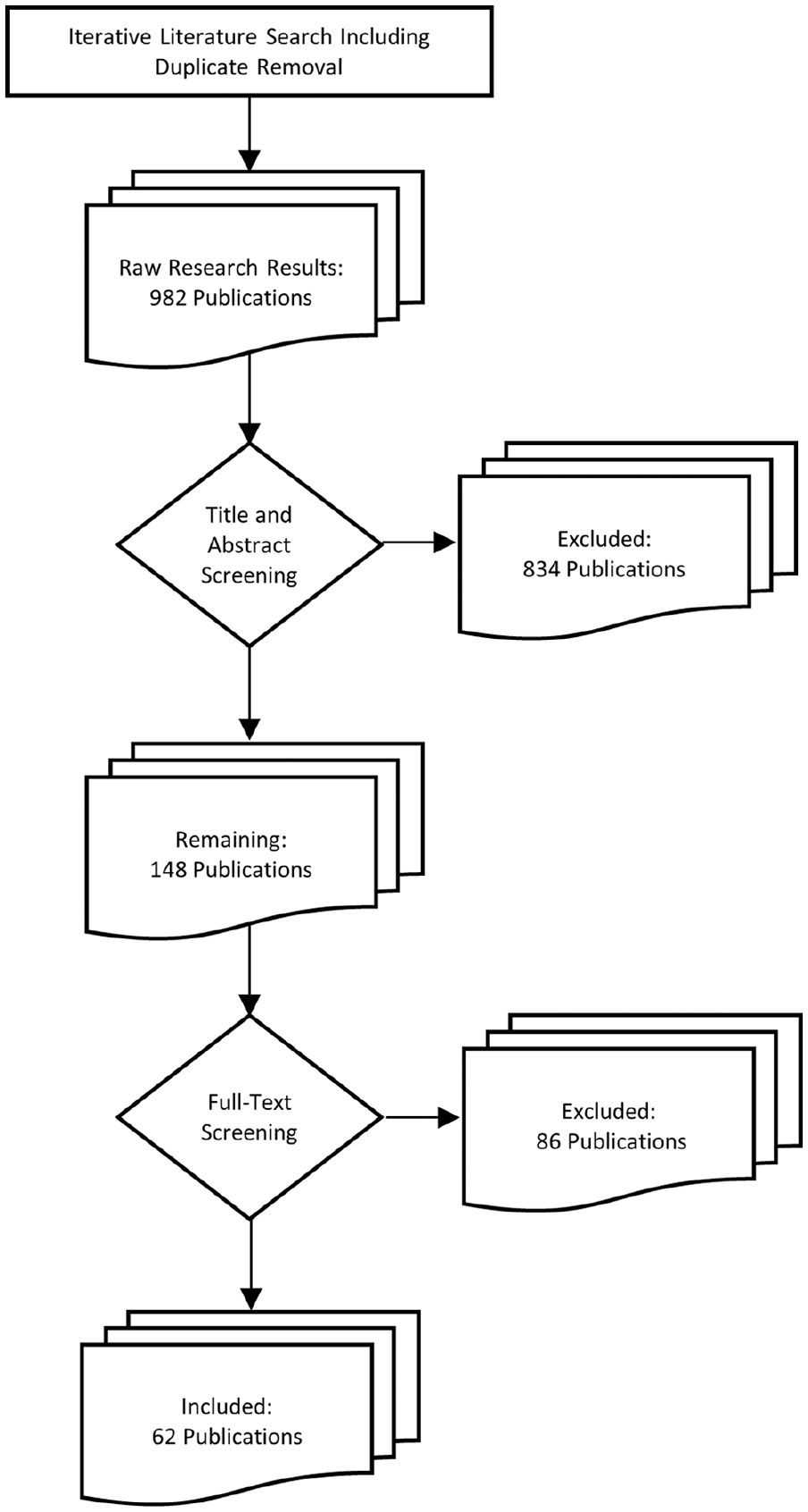
Flowchart of publication screening process with resulting numbers of excluded and included publications.
Data Analysis
The included publications were content-analyzed. First, the n = 62 included publications were charted according to publication year and the affiliation countries of the first authors. Second, we identified the respective measure used to assess leisure reading and writing. Third, we determined whether the publication referred to reading, writing, or both.
Fourth, we distilled the data relevant to our study, since many published studies do not have leisure reading and writing as their main focus. Instead, in studies that concentrate on competency development, leisure reading and writing were considered only peripherally as background variables. Thus, for each study, we coded all relevant pairwise relationships between leisure reading or writing on the one hand, and their determinants or outcomes on the other hand. In the remainder of this article, we refer to these pairwise relations as “findings.” A publication may provide several findings, thus providing more than one piece of evidence on relations between leisure reading and writing on one hand and various other variables on the other hand. Consequently, these were collected as separate findings.
Fifth, each finding was rated according to its content, the direction of the relationship, and evidence level: to assess findings on their content, we applied a fourfold, deductive classification based on the theoretical framework with the following categories: (1) person-related domain-specific variables, (2) person-related domain-general variables, (3) environment-related domain-specific variables, and (4) environment-related domain-general variables (see Table 1). If necessary, these categories were inductively subdivided during the coding process, according to the method of Mayring (2014).
Sixth, regarding the direction of the findings, we established whether leisure reading and writing were assumed as determinants or outcomes by the authors in the original studies. Note that we refer to those variables as determinants to be applied as predictors in statistical analyses, regardless of the actual evidence level provided by the research design of the study. If no assumption on this issue was made in the original study, the result was described as a correlational finding, that is, with unspecified direction.
Seventh, we rated the evidence level based on findings, rather than on study level. Usually, reviews base their categorization on the level of studies. Quantitative research is often divided into experimental and non-experimental designs, with the non-experimental works being further differentiated into descriptive, observational, and longitudinal (APA Publications and Communications Board Working Group on Journal Article Reporting Standards, 2008; Rosenshine & Furst, 1973). However, when re-examining the studies for research synthesis purposes, evidence grading on the study level would neglect that different research designs are associated with varying maximum levels of evidence, dependent on the focus of the study. For example, a longitudinal study on the development of reading competency may provide predictive evidence regarding its pivotal research question, that is, changes in reading competence. At the same time, it may only provide correlative evidence on a variable like reading behavior, included solely as a control variable at the first measurement point. In this example, we would rate all findings from this study that are related to reading behavior as merely correlative. Thus, as the overall evidence level in a study may differ from the evidence level of single findings that could be extracted from a study, we decided to rate the level of evidence on that of single findings. This avoids overestimating the evidence level of the behavior variables under scrutiny.
Evidence of the findings was rated as follows, based on Jeong et al. (2014) and Rosenshine and Furst (1973):
Causal evidence: Findings in this category are based on research designs that involve the manipulation of at least one independent variable, the observation of pre/post changes in a behavioral variable, and its comparison with a control group. Note that, given the obvious scarcity of high-quality evidence, we also assigned results from intervention designs such as quasi-experimental designs to this category, although they do not meet the strictest criteria for causal evidence.
Predictive evidence: Findings in this category are based on study designs with repeated measurement within the same sample, for leisure reading or writing, including a baseline control for one of our behavioral criteria.
Correlative evidence: Based on correlational analysis, regression analysis, or analysis of variance of at least two variables. This also includes analyses on more than one point of measurement, as long as they do not involve baseline controls for the behavioral variable.
Descriptive evidence: Based on counting and descriptives.
This classification of evidence was used since the recommendations by Jeong et al. (2014) and Rosenshine and Furst (1973) explicitly refer to quantitative research. Other classifications that are usually applied to rate evidence, such as GRADE, are not specific to a special kind of research design. Since our present scoping review focuses on quantitative research, the approach of Jeong et al. (2014) and Rosenshine and Furst (1973) seemed more suitable to us for describing quantitative empirical results in sufficient detail.
For all categorizations, we used MAXQDA Plus 2018 (VERBI Software, 2018). The classification was conducted by two raters, with the inter-rater reliability of the content-related categories being acceptable (Cohen’s Κ = 0.86; Kuckartz & Rädiker, 2019). The second rating on the direction of the findings resulted in an agreement of Cohen’s Κ = 0.93. Inter-rater reliability of evidence level resulted in an agreement of Cohen’s Κ = 0.89. In cases of doubt, the two raters discussed the issues and decided collaboratively.
In the results section, we first report the bibliographic characteristics of all included studies. Next, the respective number of studies on leisure reading and writing as well as the types of operationalizations are described. Subsequently, we give an overview of all findings with respect to the four content-related categories, the direction of the effect studied, and the evidence level, respectively. Finally, results on each category are illustrated by key findings.
Results
Bibliographic Characteristics of the Included Studies
Although we did not restrict our literature search with regard to source type, all n = 62 publications finally included were journal articles. For most, the affiliation country of the first authors was the United States (n = 15 each), followed by Germany (n = 9), the Netherlands (n = 7), Australia (n = 6), and the United Kingdom (n = 5). Three publications were first-authored by researchers from Finland. China, Italy, Malaysia, Norway, Spain, and Turkey were represented with n = 2 each. Moreover, there was one publication each that was first-authored by researchers from Brazil, Canada, Japan, Singapore, and South Korea.
The included articles were drawn from 43 different journals. The most frequent, with n = 6 featured publications, was the Journal of Research in Reading, followed by Reading Research Quarterly with n = 5 publications. The Journal of Educational Psychology and Procedia—Social and Behavioral Sciences contributed n = 3 papers each.
The first article that is relevant to this scoping review was published in 1985. Before 2000, there have been only sporadic articles that met our inclusion criteria. In the 2000s, there were up to two publications per year and since 2010 there is an uptrend in the number of publications, with about half of the included studies being published since then. This fits with the general uptrend in publications in the social sciences and psychology during the same period.
Number of Studies on Leisure Reading Versus Writing and Types of Measures
Most of the identified studies focused on leisure reading only (n = 58), n = 2 studies exclusively investigated leisure writing, and n = 2 featured both leisure reading and writing.
The following measures for leisure reading and writing could be identified: in most cases, questionnaire items were used. Most of the questions asked were about how often children read or wrote in their leisure time. In some cases, they were also asked how much time they spend reading and how many books or pages they read. Since usually only one or two aspects were surveyed, the validity of these items can only be assessed to a limited extent. Only a few studies used data types other than Q-data in the sense of Carttell and Warburton (1967). These studies featured the title recognition test by Cunningham and Stanovich (1990), used by Inohara et al. (2017), and the clock-sheet accounting for daily out-of-school leisure activities, used by Shapiro and Whitney (1997).
Research Findings Regarding Leisure Reading and Writing
Direction of relations and evidence level
In the 62 studies, 135 findings relevant to our research question were reported (for an overview over all studies and findings, see Table 2). In most cases, leisure reading and writing were treated as outcomes by the authors of the primary studies (n = 96). Only n = 16 findings featured analyses of leisure reading and writing as determinants. There were also n = 23 findings of correlations, of which n = 10 were based on repeated measures of leisure reading. Results in which leisure reading and writing were treated as outcomes and correlational findings were predominantly found in the category person-related domain-specific variables (Table 3).
Overview Over the Evidence Level (1 Descriptive, 2 Correlative, 3 Predictive, and 4 Causal) of the n = 135 Findings Derived From n = 62 Included Publications Categorized by Research Domain, Study Design, and Type of Variable Involved Beyond Leisure Reading and Writing.

Note. Evidence level categorized for specific findings of leisure reading and writing behavior may differ from the study design as a whole. A publication may provide several findings, thus providing more than one piece of evidence on relations between leisure reading and writing on one hand and various other variables on the other hand. Each relation was counted as a separate finding. This results in 135 findings in the 62 publications.
Number of Research Findings and Proportion of Those Providing Predictive Evidence (in Brackets) on Leisure Reading and Writing Across the Content-Related Categories.

Note. The total number of findings in this table is n = 135, which exceeds the number of included studies (n = 62). This is due to some publications comprising more than one relevant relationship between the variables under scrutiny. Findings are assigned to determinants, outcomes, and correlations with unspecified direction as stated by the study authors. Evidence level was correlative or descriptive with the following exceptions: ain category 2.1.1 all three results provided causal evidence and 27 findings provided predictive evidence. The proportion of findings providing predictive evidence is given in brackets.
The evidence level related to the findings was causal in n = 3, predictive in n = 27, correlative in n = 89, and descriptive in n = 16. There seems to be a relation between evidence level and the respective content-related category: causal evidence was only provided in the category environment-related domain-specific variables. Predictive evidence was available for person-related variables, especially for those that are domain-specific. In all four categories, correlative evidence could be identified most frequently. There was a small number of findings with descriptive evidence in all categories except for environment-related domain-general variables.
Key findings in examples
In the following paragraphs, key findings for each sub-category are illustrated. They have been selected based on the following criteria: the variables of in the findings are prototypical for the relations that were investigated. Besides, we selected findings that show strong effects at the highest possible evidence level with large samples. We have also taken care to list each study only once as an example to maximize insight into the diversity of studies. If, within a subcategory, leisure reading or writing has been treated as a determinant in some findings and as an outcome in others, an example is reported for each (assumed) direction. As findings on leisure writing are scarce, available examples have been reported whenever available.
Relationship of leisure reading and writing behavior with person-related domain-specific variables
The first category comprised findings on the relations between person-related domain-specific variables on the one hand and leisure reading and writing on the other hand. This category was inductively subdivided according to the facets of domain-specific variables into competencies, behavior, and motivation.
Some studies focused on reading competencies. Most findings indicated either effects of leisure reading on reading competencies or vice versa. Reciprocal effects, however, were seldom modeled. An exception is a study in which leisure reading was predicted by reading comprehension and reading fluency in the preceding grade and vice versa (Torppa et al., 2020). The results revealed effects of up to β = .21 (for grade 1 reading fluency predicting grade 2 leisure reading). The other way round, the strongest effect of leisure reading on reading comprehension was β = .34 (for grade 3 leisure reading predicting grade 4 reading comprehension).
Regarding behavior, an increase in leisure reading behavior was found based on information about two or more measurement points. For example, in the study by Schiefele and Löweke (2017), leisure reading increased from grade 3 to 4 (η² = .05). Additionally, avid readers were also found more likely to write in their leisure time (Shapiro & Whitney, 1997).
With respect to motivation, positive effects of high intrinsic motivation on leisure reading (β = .85) were larger than the negative effects of extrinsic motivation on leisure reading (β = −.44; Wang & Guthrie, 2004). Regarding leisure writing, Akkaya and Kırmızı (2010) reported that, on average, children who wrote more in their leisure time also demonstrated more positive attitudes toward writing (β = .55).
Relationship of leisure reading and writing behavior with person-related domain-general variables
Findings featuring person characteristics like gender, age, and general characteristics and behavior were assigned to the category findings on the relations of person-related domain-general variables and leisure reading and writing.
The majority of findings designated to this category involve gender and its relation to leisure reading or writing. For leisure reading, the strongest gender effect amounted to β = .24 in favor of girls compared to boys (El-Khechen et al., 2016). In contrast, for leisure writing, there was no substantial effect of gender, as found by Jensen, Martins et al. (2016); this may be due to the to the fact that further variables such as parent reading or watching television were controlled for and the small sample of n = 120 students.
Beyond gender, correlations of leisure reading with age, sensation seeking, and general academic achievement were investigated: effects of up to r = .36 indicated that elementary school children read more in their leisure time with increasing age (Duursma, 2014). Moreover, Jensen et al. (2011) found that high sensation seekers tend to read less than low sensation seekers (β = −.26). In addition, on average, leisure reading explained a small amount of variance in academic achievement (β = .09; Shin, 2004).
Nine additional findings illustrated relations between leisure reading and writing and other behavioral variables including television viewing. According to Koolstra et al. (1996), television viewing negatively predicted book reading in grades 2 and 3 (effects were up to β = −.16). However, no effects of television viewing on leisure writing were found (Jensen, Martins, et al., 2016). Conversely, children who read a lot tended to show a small decrease in their television consumption 1 year later (up to β = −.09 from grade 1 to grade 2; Koolstra & van der Voort, 1996).
Relationship of leisure reading and writing behavior with environment-related domain-specific variables
The findings comprised in the category environment-related domain-specific variables on leisure reading and writing mainly involved the literacy environment. In three intervention studies, students were offered either reading activities in different places such as classrooms and libraries (Kleijnen et al., 2017; Wigfield et al., 2004; Yi et al., 2019). These three findings were the only ones from which causal evidence could be derived.
Yi et al. (2019) reported findings on the effect of a classroom library program on reading outcomes. In this intervention, students at all treatment schools were given access to classroom libraries set up specifically for this purpose. The students at control schools did not receive treatment. Books for the classroom libraries were selected for appropriate age, reading levels, and interests of the students involved in the study. Eight months after the introduction of the classroom libraries, there was a small effect in favor of leisure reading in students from the treatment schools compared to the control group (β = .12).
A similar intervention study was conducted by Kleijnen et al. (2017): when comparing the experimental and control group, there was no effect of using the school library, but a positive effect on the reading climate at home on children’s leisure reading (η² = .30; Note. as no effect size was given in the publication, this was calculated by the authors based on F-value and degrees of freedom).
Wigfield et al. (2004) used a different approach and examined effects of two reading instructional programs. While this intervention was primarily aimed at fostering reading comprehension and reading motivation, they also performed analyses on reading frequency. The latter indicated no group differences, but higher reading frequency immediately after the intervention for both groups (effect of time: η² = .02).
Moreover, positive effects of a functional home literacy environment could be derived: Jensen, Martins et al. (2016) showed that sibling reading explained leisure reading and writing, respectively (βreading/writing = .35/.23). Additionally, Penthin et al. (2017) reported positive effects of controllability (β = .16) and subjective norm (β = .07) on leisure reading.
Relationship of leisure reading and writing behavior with environment-related domain-general variables
This category produced few findings, which belonged to the category of the relationship of environment-related domain-general variables and leisure reading and writing. Apart from one finding reporting inter-country differences in reading frequency (η² = .05 in favor of American and Bulgarian children as opposed to Taiwanese children; Newman et al., 2007), only the socioeconomic status was examined as domain-general variable on the environmental side, with a higher status correlated with more frequent leisure reading (β = .20, S.-J. Lee et al., 2009).
Discussion
The findings included in the present scoping review provide a broad empirical basis for the relations between individual and environmental variables on the one hand, and leisure reading and writing in children on the other. We categorized them along with the four building blocks of the person-environment transaction framework: person-related domain-specific, person-related domain-general, environment-related domain-specific, and environment-related domain-general variables. In the following paragraphs, we discuss the conceptual and methodological starting points for future research that emerged from inspecting the level of evidence related to the identified findings.
Implications for Further Research on Leisure Reading Writing
Person-related domain-specific variables
The impact of leisure reading on comprehension has already been underpinned by the review of Mol and Bus (2011). Our work is more expansive in scope, considering a wide range of variables related to leisure reading and writing. This led to the difficult but necessary analysis of the level of the findings of the included publications. However, this highlighted that predictive evidence of leisure reading was not always available in longitudinal studies. One reason may be due to more focus on reading competence than on leisure reading in some studies. As a corollary, causal evidence regarding the determinants of leisure reading and writing is still scarce because there have been very few experimental studies to date. Thus, we conclude that the question of causality in the relation between leisure reading and reading comprehension still awaits an answer that is based on high-quality evidence. The field of reading research can be advanced by further studies involving both longitudinal and experimental designs (a few good examples have already been included in the present review, e.g., Torppa et al., 2020; Yi et al., 2019).
With respect to reading and writing motivation, the stronger correlations of leisure reading with intrinsic than with extrinsic motivation can be explained by the fact that leisure activities are primarily pursued when fun is experienced in the activity. Most findings in the original literature comprise motivation as a predictor and reading behavior as a criterion. Along the same lines, other reviews assume that this is the proper direction of causality (Schiefele et al., 2012; Troia et al., 2013). As the extant findings may be interpreted in both directions, it remains an open question if motivational variables may explain changes in leisure reading or vice versa.
Person-related domain-general variables
The listed findings suggest that children with higher scores in general cognitive abilities are reading more in their leisure time. This may be due to that reading behavior is easier to perform when reading literacy and related cognitive skills are stronger. Results also showed that girls and older children are reading more than boys and younger children. In childhood, reading skills increase with age, which also facilitates reading as an activity. The gender differences may refer to different interests and investment in reading. Before drawing any general conclusions from this scoping review, studies that are easier to compare and providing better evidence could be helpful, which could then be used for meta-analysis. In particular, it is hardly possible to differentiate with respect to grades or age, since the available information in the original studies is very heterogeneous (e.g., not all reported both grades and ages of the children, thus in some cases we know only one variable). However, it is conceivable that grades or age act as a determinant for leisure reading and writing: developmental stages in reading and writing can be categorized along with grade levels (Chall, 1996). This is an important consideration, especially for novice readers and writers like elementary school children. With increasing skills and age, readers and writers also have more opportunity to choose the texts they want to read and write.
Environment-related domain-specific variables
As a part of their environment, parents are significant others for children’s leisure reading and writing (Penthin et al., 2017). Various family literacy programs proved that parents engage more often in literacy activities after an intervention (de la Rie et al., 2017). This is desirable in light of the causal evidence on effects of a reading-supportive environment on leisure reading and writing behavior (e.g., Kleijnen et al., 2017; Wigfield et al., 2004). Positive effects of sibling reading on leisure writing were also included, providing correlative evidence. This was evident because siblings, along with parents, serve as role models in the home literacy environment. Note that this was the only category giving causal evidence, although with n = 3 findings only. These interventions shed light on the question of how to design environments that encourage children to read. However, further research is needed on how to design environments fostering leisure writing in children.
Environment-related domain-general variables
In this scoping review, the environment-related domain-general variable that had primarily been investigated in relation to leisure reading was socioeconomic status. Unsurprisingly, some studies have shown differences in children’s leisure reading behavior depending on their socioeconomic status. This also applies to their parents, which act as important role models when it comes to children’s leisure activities. Thus, the effects of socioeconomic status may be mediated by environment-related domain-specific beliefs of the children. This assumption should be investigated in future original research on leisure reading and writing. Up to now, most evidence regarding environmental determinants of reading and writing is related to the micro- and mesosystem level as defined by Bronfenbrenner (1981). On the macrosystem level, b beyond known effects of socioeconomic status, there is scarce evidence on how cultural elements affect children’s reading and writing behavior, and the beliefs related to these behaviors. This is unfortunate, as the role of reading leisure reading and writing may differ across cultures, alongside with cross-cultural differences in beliefs about leisure time (Hudson et al., 2013). Merely, one publication in the present review found cross-country differences in leisure reading (Newman et al., 2007). Even the body of existing evidence across studies as a whole is skewed, as most of the included publications are from the United States and Western European countries. Thus, while interpreting the findings included in the present review, it should be kept in mind that the cultural value of leisure reading and writing, and consequently, reading and writing-related beliefs may be specific to contexts and differ across countries (Marôco, 2021). This should be scrutinized in future studies.
Overall Completeness and Applicability of Evidence
This scoping review illustrated that while current research on leisure reading and writing in children is focused on reading, it neglects writing, even though writing itself is a major topic in literacy research (Parsons et al., 2020). Hence, it was important to include the studies covering leisure writing, exactly to point out this research imbalance: both reading and writing are elementary cultural techniques that are indispensable for the function of society (Shanahan, 2006) and therefore important domains of empirical educational studies. Thus, further research on leisure reading and writing is warranted. Furthermore, we could detect hardly any studies that included both leisure reading and writing. It is challenging to collect high-quality data on reading and writing simultaneously without compromising the quality of the data collected nor the economics of data collection. Thus, while it is true that it is still necessary to advance research on leisure reading and writing in each case, we want to encourage researchers to link reading and writing research more often because it is also important to investigate their connection (Graham, 2020a).
While most findings were related to leisure reading, the relationship between the examined variable categories was unbalanced: there is still a lack of studies investigating environment-related domain-specific variables compared to person-related domain-specific variables. Further research needs to examine how teachers, educators, and parents may foster children’s leisure reading through adequate interventions. Planned interventions hold great potential for providing children with an environment that invites them to leisure reading.
Reading and writing habits do not develop in a vacuum. Rather they are embedded in the involvement with a mother tongue or second language. It might make huge difference if a children’s first language is English or Mandarin and whether a child is monolingual or bilingual. Regarding the embedding of children’s literacy-related leisure activities in the languages they speak, there is a huge research gap. Nearly all publications included in our review investigated children’s leisure reading and writing activities in their first language. There were no hints on bilingual children or literacy activities in foreign languages. Overall, the level of evidence of the included studies was rather low. There are still uncertainties of the mechanisms that determine leisure reading and writing in elementary school children. Hence, more theory-based studies with high evidence levels are warranted, as already noted by Toste et al. (2020). For example, within the person-environment transaction framework, recent work could be expanded by varying both person- and environment-related domain-specific variables, and observing effects on students with a wide range of values in domain-general determinants. Detailed studies with large sample sizes could reveal how person- and environment-related variables interact with each other, and how leisure reading and writing in children may be promoted. It can be assumed that effects of domain-general variables on leisure reading and writing are mediated by domain-specific variables (Birnbaum et al., 2019, 2020). Thus, domain-specific variables are the key starting points to promote leisure reading and writing activities in children.
With regard to the measures used for leisure reading and writing, questionnaires have been used most often. To increase validity, future studies should more frequently feature multiple data sources, including standardized tests and external assessments (Campbell & Fiske, 1959). For example, the student self-reports may be triangulated by a parent questionnaire and log-file data from e-book readers. Additionally, future research needs to investigate whether leisure reading and writing can be evaluated as one-dimensional constructs, or whether they should potentially be differentiated into sub-facets such as individual versus collaborative activities, or different text types (Shadish et al., 2002). Additionally, the question arises if a distinction should be made between analog and digital leisure reading and writing, as differences in analog and digital reading processes are to be assumed (Latini et al., 2020). So far, researchers studied the frequency and duration of reading and writing in children in general terms. How reading and writing in print and online are related in elementary school children has rarely been studied. This may be partly due to the age group our study set is limited to. However, there were some single findings on the relation between leisure reading and watching television. One might have expected evidence on the relation between leisure reading and gaming, too. This was not the case in the included publications of this review. While digital media are also associated with effects that inhibit reading and writing (e.g., gaming and watching videos), they also hold opportunities to connect reading and writing more closely. Thus, further research should take into account the fact that digital media are also part of children’s everyday life and call for considering in research digital reading and writing activities as well as their relation with concurring digital activities such as time spent for television and games. We expect more work to be done here in the next years.
It needs to be considered that all included publications referred to leisure reading and writing of children in their first language. Aspects of bilinguality or literacy activities in foreign languages were not found.
Limitations of This Scoping Review and Implications for Further Reviews
There are several limitations to note. First, although we relied on careful manual screening of titles, abstracts, and full-texts, this came with the necessity to limit the focus of this work. Thus, we only used a single database, unpublished studies like dissertations and reports were not included. While this is common for most scoping reviews (Gough et al., 2017), applying big data methods in iterative designs for a more economic screening would open up the possibility for future systematic reviews, while keeping the workload manageable (Christ et al., 2021).
Second, one inclusion criterion was the quantitative measurement of leisure reading and writing. Excluding qualitative studies precluded gaining deeper insight into children’s individual experiences of leisure reading and writing. We also did not capture how the children perceived the significance of the variables related to leisure reading and writing. Such questions were not the aim of the present scoping review and are to be investigated in future research. Schiefele et al. (2012) stated in their review on reading motivation, that a clear distinction between leisure and school-related reading is rarely implemented yet necessary, as reading motivation depends on both the context of reading, and reading material. The results presented in this review are on reading and writing during leisure time and cannot be transferred to reading and writing at school.
Third, this scoping review is limited to grades 1 to 4, because these years are decisive for learning to read and write, as explained in the introduction, and also of becoming a lifelong reader and writer (Cunningham & Stanovich, 1997; Pfost et al., 2014). Nevertheless, there are good reasons to extend the present review to both younger and older children. In future research syntheses, the age range can be extended, and moderating effects of age on the relationship between the domain-specific variables and leisure reading and writing may be scrutinized.
Conclusion
Our scoping review aimed to give an extensive overview over empirical evidence regarding person and environment variables and their significance for leisure reading and writing in children. While focusing on the recreational context, the present work goes beyond previous reviews by taking a broad range of antecedents and consequences of both reading and writing, derived from the theoretical framework of person-environment transaction, into account. While the sheer number of studies providing evidence on leisure reading and its relation to domain-specific variables is quite impressive, studies on leisure writing are scarce. Even for leisure reading, further longitudinal and experimental studies are required to better understand what makes some children read while others do not. Thus, the level of evidence for both leisure reading and writing will need to be increased in future studies. In particular, it emerged that while some of the individual and environmental variables related to leisure reading and writing have already been investigated with strong research designs, for other of these variables there is still only scant evidence. Moreover, there is a lack of original studies that draw a broad picture of behavioral, cognitive, and motivational variables—as well as including environmental variables related to leisure reading and writing. These studies may provide further insight in the process of person-environment transaction in the field of leisure reading and writing through the application of strong longitudinal and experimental designs. Additionally, research on the connection between reading and writing as leisure activities can contribute to further theory development.
Supplemental Material
sj-docx-1-sgo-10.1177_21582440221113823 – Supplemental material for A Review on Antecedents and Consequences of Leisure Reading and Writing in Children
Supplemental material, sj-docx-1-sgo-10.1177_21582440221113823 for A Review on Antecedents and Consequences of Leisure Reading and Writing in Children by Lisa Birnbaum and Stephan Kröner in SAGE Open
Footnotes
Author Contributions (According to CrediT)
Conceptualization: LB, SK; Data curation: LB; Investigation: LB; Methodology: LB, SK; Writing—Original Draft: LB; Writing—Review & Editing: LB, SK.
Data Availability

Declaration of Conflicting Interests
The author(s) declared no potential conflicts of interest with respect to the research, authorship, and/or publication of this article.
Funding
The author(s) disclosed receipt of the following financial support for the research, authorship, and/or publication of this article: We acknowledge financial support by Deutsche Forschungsgemeinschaft and Friedrich-Alexander-Universität Erlangen-Nürnberg within the funding programme “Open Acces Publication Funding”.
Supplemental Material
Supplemental material for this article is available online.
References
Supplementary Material
Please find the following supplemental material available below.
For Open Access articles published under a Creative Commons License, all supplemental material carries the same license as the article it is associated with.
For non-Open Access articles published, all supplemental material carries a non-exclusive license, and permission requests for re-use of supplemental material or any part of supplemental material shall be sent directly to the copyright owner as specified in the copyright notice associated with the article.
