




Abstract
The present study investigates the impact of economic growth, hydropower generation, and urbanization on Malaysia’s CO2 emissions. This study applies Quantile Autoregressive Lagged (QARDL) technique for the period of 1965Q1 to 2018Q4. The Granger-causality in quantiles is applied to confirm the causal nexus among the modeled variables. The outcomes demonstrate that hydropower generation decreases the detrimental effects of CO2 emissions at the range of high quantile levels. Furthermore, urbanization, except for higher quantiles, exhibits negative impacts on CO2 emissions. Also, the QARDL coefficients confirm the presence of the Environmental Kuznets Curve hypothesis from median to higher quantiles. Besides, the Granger-causality test confirms the two-way causality among CO2 emissions and hydropower generation in Malaysia’s economy and the same for the other series. The policymakers should enhance the market attractiveness of hydropower generation projects through incentives for the investors.
Introduction
In 2020, humanity was crippled by the serious consequences of COVID-19 (coronavirus disease 2019) and amid this, another threat that is climate change, further worsened the impact of the pandemic. This situation called for a serious, and collective response from the global community to tackle the exigencies regarding the global environment (UNCC, 2021). The modern world is embroiling with environmental change issues as a threat to future generations (Awan, Bilgili, & Rahut, 2022; Jahanger et al., 2022). Environmental change is among the significant negative externalities of economic development and industrialization. From an environmental point of view, the environmental change has been caused by deforestation, consuming fossil fuels, and rapid urbanization (El Ouahrani et al., 2011; Usman, Jahanger, Makhdum, et al., 2022). In a recent report by the International Energy Agency, the rise in CO2 during 1980 to 2015 was documented to increase from 17.78 to 32.1 billion tons (IEA, 2016). In addition, due to economic growth around the world since 2011, the rise in CO2 emissions was 1.4% (Pérez-Suárez & López-Menéndez, 2015).
In addition, CO2 emissions is the major contributor to total (greenhouse gases) GHG emissions and is significantly responsible for the rise in global temperature and environmental degradation (Adebayo et al., 2021; Ahmed et al., 2021; Change, 2007; Jahanger et al., 2022). While the main contributor to global CO2 emissions is the production and consumption of energy which is vital for economic growth (Jahanger et al., 2021; Lotfalipour et al., 2010). Given the importance of environmental degradation, global organizations are emphasizing the member countries to initiate measures for reducing GHG emissions proclaimed in the United Nations Framework Convention on Climate Change (UNFCCC) and Kyoto protocols (Höhne et al., 2003; Zhang et al., 2022). In the same vein, the scientific community is continuously warning about the future threats involved in rising CO2 emissions. Besides, if GHG emissions are not controlled, they will reach the preindustrial level by 2035 (Stern, 2007). Against this backdrop, global organizations such as the United Nations call for cutting down global carbon emissions by 45% by 2030 to achieve the target of net zero by 2050 (UNCC, 2021).
On the other hand, reducing GHG emissions which are mainly the result of energy consumption and production is a challenge to governments worldwide. Given its importance in production, industry, and transportation, energy is regarded as vital for economic growth (Apergis & Payne, 2015; Chishti et al., 2020; Jiang, Chishti, et al. 2022; Usman, Jahanger, Radulescu et al., 2022). Furthermore, the consequences of climate change are found negative on economic growth up to 2% to 4% in developing countries till 2040 (Zoundi, 2017). This dilemma of economic growth has been gaining popularity in researchers’ communities. A great deal of literature has been contributed regarding the economic growth and environmental nexus (Awan, Abbasi, et al., 2022). Among the many, the (environmental Kuznets curve) EKC hypothesis is popular in the community of environmental economists to understand the dynamics of economic growth and pollution. Moreover, recent literature on the EKC hypothesis is controlling for energy consumption to suggest environmental protection policies (Bilgili et al., 2016). These studies are using both aggregated and disaggregated energy consumption proxies. Moreover, the literature on disaggregated energy consumption is inserting renewable and nonrenewable energy separately in their models (Hanif et al., 2019; Jiang, Yu, et al., 2022). However, renewable energy is attracting environmental economists due to its environmentally friendly nature (Shahbaz et al., 2015).
Against this backdrop, the extant literature on the environment-energy-growth nexus has put forward many policy-level suggestions to accelerate the transition to lower carbon emissions via renewable energy, nuclear energy, and particularly hydropower. Perhaps, hydropower is the most critical low carbon energy however, it also involves a debate about being environmentally friendly or not. Nevertheless, proponents of hydropower argue that it is eco-friendly being a renewable source of energy (Xiaosan et al., 2021). While the critics think that it should not be perceived as renewable as it put a lot of pressure on nature (Solarin et al., 2017; Usman, Balsalobre-Lorente, Jahanger, et al., 2022). Therefore, it is worthwhile to test the impact of hydropower on environmental degradation. In addition, urbanization is a key factor that affects environmental degradation in the modern world (Pata, 2018). Furthermore, due to urbanization, a rapid energy demand rise in the transport, construction, and manufacturing sectors is observed (Kocoglu et al., 2021). Similarly, with the transformation of society from agro-based economies to modern manufacturing and services-based economies, rural to urban migration is increasing pressure on nature (Shahbaz et al., 2014). This pressure is mainly due to deforestation that results due to new residential areas in the urban area, roads, shopping malls, and park construction (Liu et al., 2018). Therefore, the EKC literature—analyzing the environmental-energy-growth nexus often controls for the effect of urbanization. Furthermore, recent literature analyzing the role of hydropower on the EKC also used urbanization as a control variable (Adebayo et al., 2021).
Nowadays, success in economic development for a country means progress that ensures environmental sustainability integrated into its development policies. Malaysia has been observed as a fast-developing economy since 1957 and is heavily dependent on fossil fuel-based energy (Bekhet & Othman, 2018). The Malaysian economy is expected to progress further, however, the projected demand for energy to meet its future economic progress is a serious challenge to the environment. Malaysia’s commitment to Paris agreement is to reduce GHG by 45% before 2030 however, this would not be an easy target as the country is the second-largest consumer of per capita electricity in the Association of Southeast Asian Nations (ASEAN; Gill et al., 2018). The role of hydropower in Malaysia could help in meeting future energy demand to meet environmental challenges without compromising on economic growth. Malaysia is endowed with palm oil reside, forests, and hydropower to shift on renewable energy production.
With an average growth rate of 4.09 % during 1999 to 2018, CO2 emissions in Malaysia are significantly increasing over time (Aslam et al., 2021). In addition, Malaysia is one of the fast-developing economies in Asia (Azlina et al., 2014) which transformed from agriculture to a manufacturing-based economy in two to three decades. Moreover, Malaysia is now turning toward a more advanced and services-based economy (Bekhet & Othman, 2018). Besides, Malaysia is targeting an above 4.6% average growth rate till 2030 which requires a huge amount of energy from various sources. Following the tenth 5-year plan (2011–2015), Malaysia has reduced energy intensity by 33%, however, to achieve its environmental goals curbing CO2 to a higher level is required. In addition, according to recent commitments to a sustainable environment, Malaysia is targeting to reduce GHG emissions intensity by 45% by 2030 as compared to the level in 2005 (UNFCCC, 2015). The graphical trend overall of hydropower generation and CO2 emissions from 1965 to 2019 are given in Figures 1 and 2, respectively.

Trend in hydropower generation in Malaysia economy from 1965 to 2019.
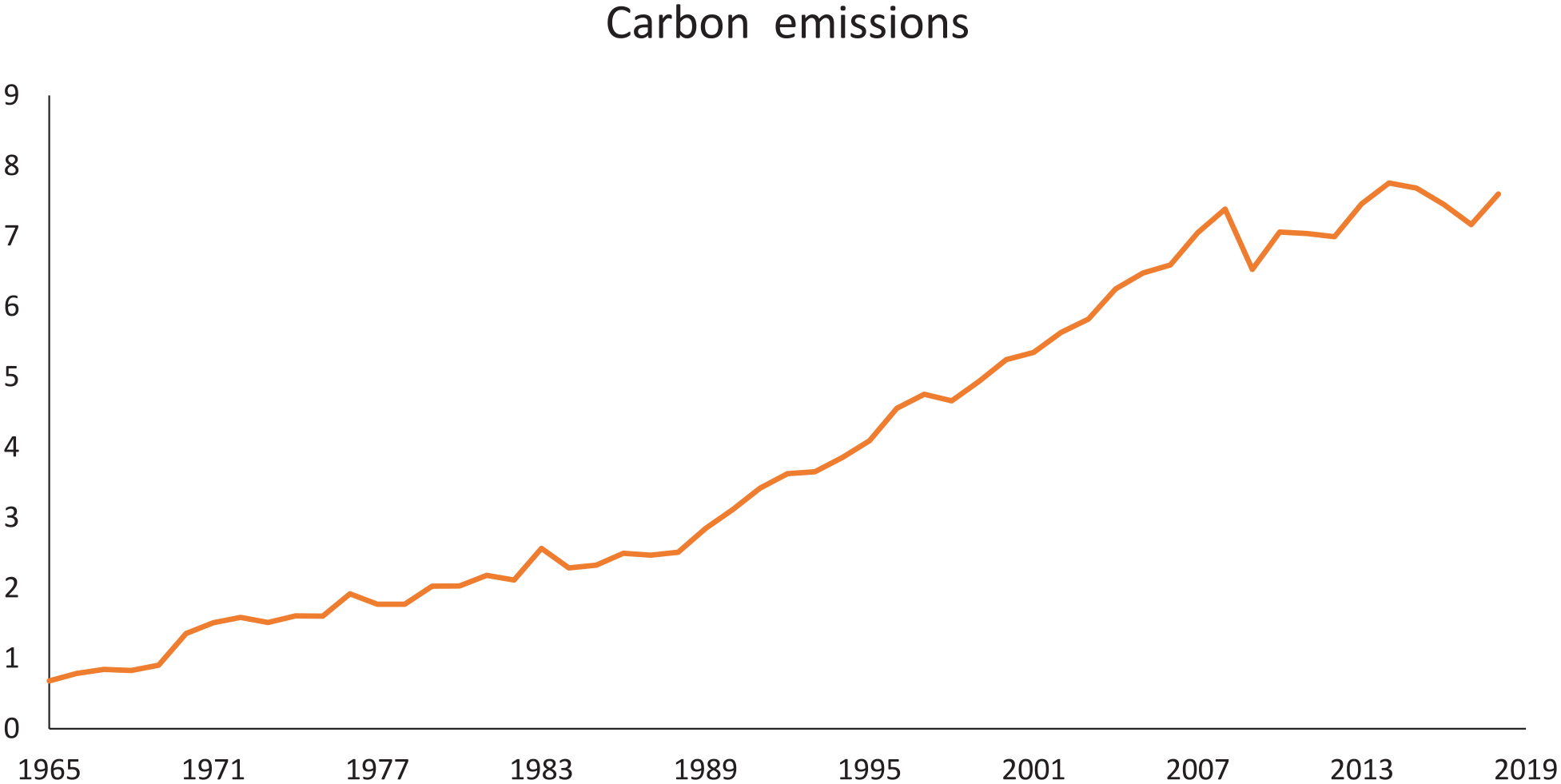
Trend in CO2 emissions in Malaysia economy from 1965 to 2019.
Based on the above discussion, the recent paper contributes to the extent literature as follows. Firstly, this is the first study, to the best of our knowledge, on the economy of Malaysia to analyze the role of hydropower and urbanization on CO2 emissions. Secondly, we prefer to use hydropower generation instead of its consumption considering a new practice in the literature to find more interesting findings, specifically in the case of Malaysia. Thirdly, the recent article deploys the QARDL method since it possesses the ability to estimate the detailed results to capture the impacts of various independent variables on the dependent side in different quantiles, unlike the previous literature that relies on the conventional techniques that report only an average coefficient of each series. Also, QARDL methods can tackle the issue of potential non-linearity in the series (Godil et al., 2020; Ozturk et al., 2016; Razzaq et al., 2021; Shahbaz et al., 2013) Finally, quantile unit root test and Quantile based Granger causality tests are also applied to divulge detailed and more robust findings.
The remaining part of the paper is organized as follows, the subsequent section discusses the relevant literature about the EKC, hydropower, and urbanization. Section 3 covers the discussion on the data and methodology. Section 4 presents the result and discussion based on empirical analysis. Finally, Section 5 presents the conclusion and policy implications based on the results.
Literature Review
Though the literature in the context of hydropower, urbanization, economic growth, and environment nexus is enormous, scholars are still of different thoughts about the concrete outcome. Hydroelectricity is also a source of power that either produces less or no pollution. Bildirici and Gökmenoğlu (2017) studied the impact of economic growth, hydropower energy utilization and environmental pollution based on the Markov Switching-Vector Autoregressive (MS-VAR) techniques by employing the panel data of G7 countries from 1961 to 2013. The empirical outcomes show that hydropower energy utilization is a Granger cause of environmental pollution. In another study, Bello et al. (2018) inspected the nexus between hydroelectricity consumption and the environment based on the VECM Granger causality technique. The outcomes revealed unidirectional causality running from hydroelectricity to environmental pollution. Furthermore, Ummalla and Samal (2018) results indicate a bidirectional causality among economic growth, CO2 emissions and hydropower energy utilization, and a unidirectional causality running from hydropower energy utilization to economic growth. Moreover, Ope Olabiwonnu et al. (2022) outcomes display that impact of Coronavirus (COVID-19) on energy and hydropower with environmental degradation decreased during the pandemic. Additionally, Murshed et al. (2021) empirically found that utilization of coal and oils upsurges environmental degradation while higher utilization of natural gas and hydropower energy utilization is seen to decrease environmental pollution. In a recent study on the top six hydropower energy-consuming countries, Pata and Aydin (2020) results indicate that no evidence was found for a causal relationship between hydropower energy utilization and environmental pollution. Besides, Pata (2018) empirical evidence demonstrated the insignificant effect of renewable energy utilization and hydro energy utilization on environmental degradation. In a recent study, Lau et al. (2016) revealed a one-way causal flow running from hydroelectricity utilization to environmental pollution in the short term, In the long run, the study found causality running from economic growth and hydroelectricity to environmental degradation. Moreover, Xiaosan et al. (2021) outcomes indicate a one-way causal flow from hydroelectric and renewable electricity to economic growth supporting the energy-led growth hypothesis. Moreover, Solarin et al. (2017) outcome shows that hydroelectricity utilization exerts a long-run adverse influence on environmental degradation. Furthermore, Adebayo et al. (2021) results indicate that hydroelectricity improves the quality of the environment. Therefore, one can observe a conflated role of hydropower in environmental change.
Urbanization is a global phenomenon that is also considered a major cause of economic growth. Half of the world’s population exists in urban zones (Al-Mulali et al., 2019; Chien et al., 2022; Rafindadi & Ozturk, 2015; Solarin & Ozturk, 2015). Typically, unemployed people move from rural to urban areas for employment opportunities; this movement interrupts the environment in urban areas. Rahman and Alam (2021) revealed that urbanization triggers environmental pollution while hydroelectricity energy utilization improves the quality of the environment. Yasin et al. (2021) have scrutinized the nexus between financial development, urbanization, energy utilization, and the environment. The study finds that financial development, urbanization, and energy utilization deteriorate environmental pollution. Nathaniel et al. (2021) findings reveal that a feedback causality exists between economic growth, globalization, urbanization, and environmental degradation. Interestingly, the majority of the existing literature focused on the impact of urbanization has reported positive evidence in various contextual settings. For example, Mignamissi and Djeufack (2021), Anwar et al. (2021), Nathaniel (2021), Wang et al. (2022), Nathaniel et al. (2020), Ahmed et al. (2020), Ali et al. (2019), and Anwar et al. (2020) studied the impact of urbanization on the environment and reported a positive influence of urbanization on the environment. Whereas, Ulucak and Khan (2020) reported a negative impact of urbanization on environmental quality. Since the seminal study of Grossman and Krueger (1991), many empirical investigations have been conducted to analyze the association between economic growth and environmental pollution. For example, Jebli et al. (2016), Al-Mulali et al. (2015), Alam et al. (2016), Apergis and Ozturk (2015), Gao et al. (2021); Bibi and Jamil (2021), Katircioğlu (2014), Al-Mulali et al. (2016), Yang et al. (2021), Usman and Jahanger (2021), Dogan and Inglesi-Lotz (2020), Leal and Marques (2020), Saint Akadırı et al. (2021), Adeel-Farooq et al. (2020), Bekun et al. (2021), Tenaw and Beyene (2021), Balsalobre-Lorente et al. (2021), Jahanger (2021), and Genç et al. (2022) have all validated the EKC hypothesis. However, others such as Pata and Caglar (2021), Solarin and Lean (2016), Ozturk and Al-Mulali (2015), Tan et al. (2014), Chandran and Tang (2013), Yilanci and Pata (2020), and Koc and Bulus (2020) have failed to validate the EKC hypothesis. To document a review of those studies related to Malaysia and other developing countries, Table 1 summarizes studies related to hydroelectricity and other factors in combating environmental pollution.
Summary of Literature Review (Malaysia and Other Developing Countries).

Based on the aforementioned literature review, it is apparent wherein the nexus between CO2 emissions, GDP per capita, hydropower generation, and urbanization had been studied, the results are yet inconclusive. Additionally, the majority of the prior studies consider the linearity of the modeled series, while ignoring the asymmetries. Hence, this literature gap endorses investigating the asymmetric nexus of hydropower generation, urbanization, and CO2 emission while applying the QARDL method.
Theoretical Framework, Data, and Methodology Framework
Theoretical Framework
The Environmental Kuznets Curve (EKC) hypothesis reflects the disclosure of an income inflection point in environmental quality changes, that is, the trend of environmental quality deterioration first after improvement with the income rise. The model assumes that there are three main structures: linear, quadratic, and cubic functions.



In equation (3) all parameters (i.e., β1, β2, and β3) of economic growth (Y) demonstrate the functional form of the EKC hypothesis. Where, β0 represents the constant term and the term
Different Shapes of the EKC Curve.

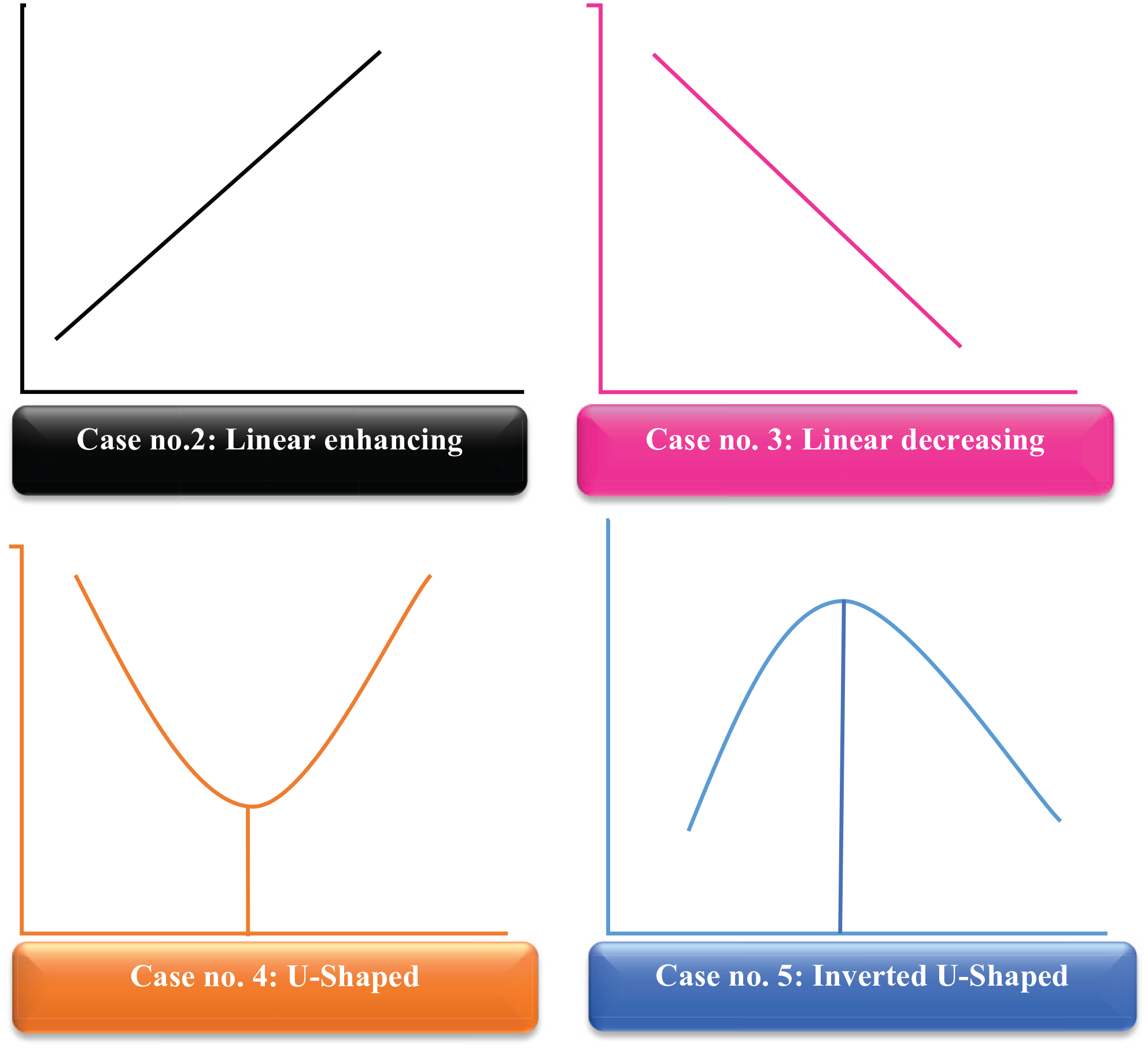
Different shapes of EKC curve.
Methodology Framework
The recent study follows the following strategy to perform econometric analysis. Firstly, we deploy the quantile unit root test to confirm the data properties of the series involved in the study. Subsequently, the QARDL method is applied to obtain the long-run and short-run coefficients. In addition, the present study used the Wald test to check the parameters’ constancy. Lastly, we deploy the quantile-based Granger causality test to affirm the quantile-wise causality to recommend the policies. Figure 4 explains the econometric framework adopted by the present study.

The framework of econometric modeling strategy.
Quantile autoregressive unit root test
Firstly, we checked the stationarity properties of the data series by employing the Quantile Autoregressive (QAR) unit root test. The QAR unit root test proposed by Koenker and Xiao (2004) and later extended by Galvao (2009) is used to test the stationarity of time series data on all quantiles of conditional mean and conditional distribution. The QAR unit root test is based on the following conditional quantile autoregression model:

where,

where

where,
Quantile autoregressive distributed lagged approach
To study the quantile dynamics between carbon emissions, economic growth, hydro generation, and urbanization of Malaysia, we applied the novel Quantile Autoregressive Distributive Lagged (QARDL) model intended by Cho et al. (2015). The QARDL model is more detailed and advantageous than the linear model. Firstly, this model investigates the nonlinear association beween all the study variables compared to the traditional method of focusing on the linear association through mean regressed outcomes. This model can be used to test the long-term quantile equilibrium effects of j economic growth, hydropower generation and urbanization on carbon emissions. Secondly, the QARDL model is an advanced form of the “ARDL model,” through which expected asymmetries between economic growth, hydropower, urbanization, and carbon emissions can be analyzed. Based on this, the QARDL model becomes most suitable for the nonlinear and asymmetric relationship of economic growth, hydropower, and urbanization with carbon emissions in Malaysia. The basic form of linear ARDL is as follows:
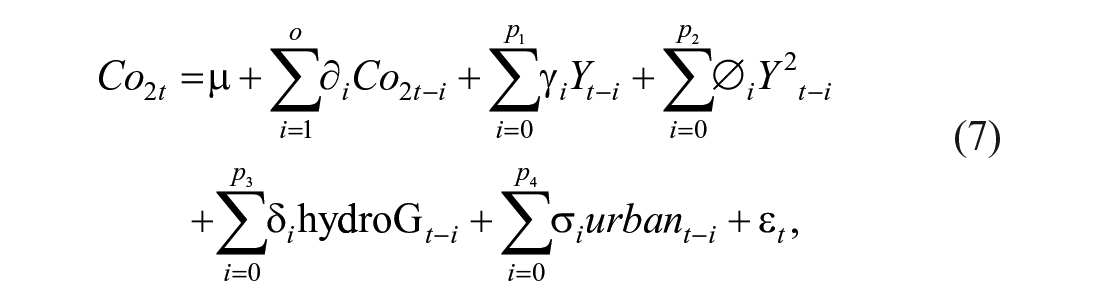
where in above equation (7),
The model shown in equation (7) was further extended by Cho et al. (2015) which provide a good concept of QARDL (o, p) form as under:
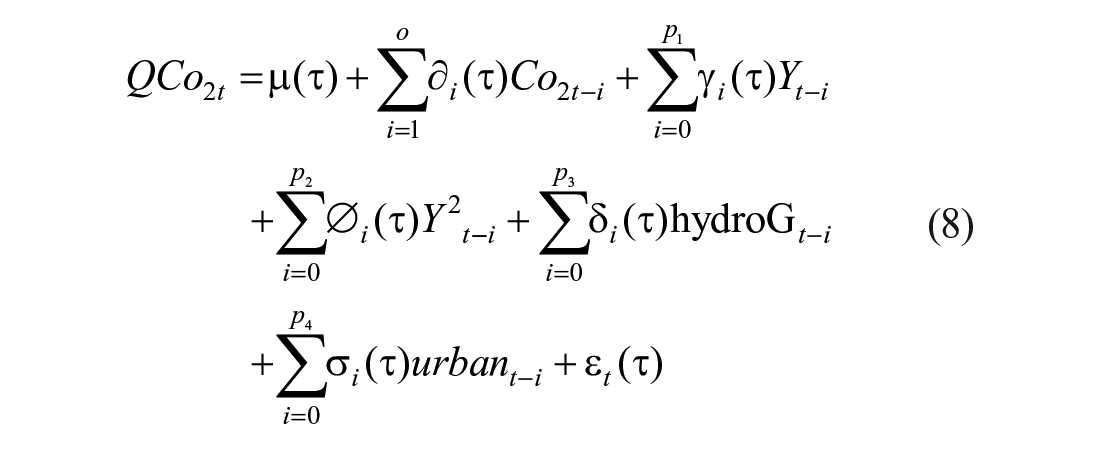
In above equation (8), the term
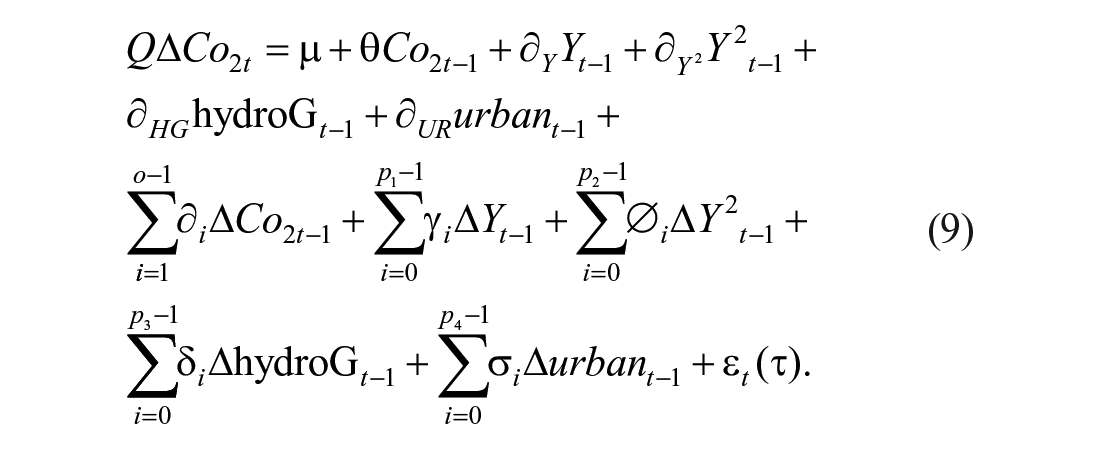
In addition, the above equation (9) can be reformulated (Cho et al., 2015) to give the QARDL-ECM model:
By using the ∆ method, the cumulative short-term influence of foregoing carbon emissions has been computed through
Quantile Granger-causality test
In addition, the Quantile Granger-causality test is observed, which was developed by Troster (2018) to analyze the causality of quantiles among carbon emissions, economic growth, hydro generation and urbanization in Malaysia. Meanwhile, Granger (1969) assumes a specific variable
For this purpose, it is assumed under the present study that there is an explained vector 
Under the null hypothesis from equation (8),

where, the coefficient

Data and Empirical Results
Data and Descriptive Statistics
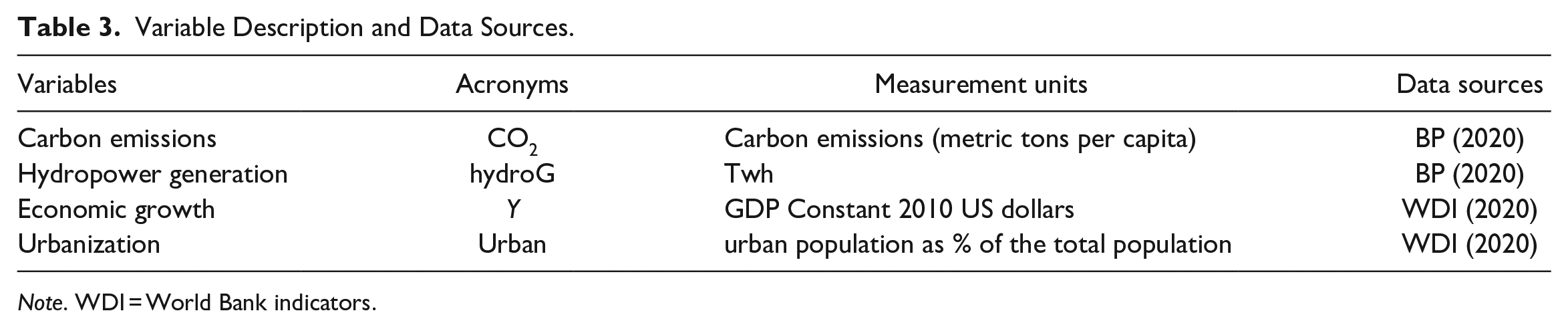
In this present study, we empirically inspect the role of hydro generation, economic growth, and urbanization on CO2 emissions in the EKC hypothesis background from 1965 to 2018 for Malaysia’s economy. To this end, we use carbon emissions (CO2), Hydropower generation (hydroG), economic growth (Y), and Urbanization (urban). The CO2, hydroG data are taken from British Petroleum (BP, 2020). On the other hand, the data for GDP and urbanization are attained from the World Development Indicators (WDI, 2020). Annual data is converted into quarterly data using the quadratic match sum method following Godil et al. (2020) and finally, converted into a natural log form. A detailed description of the variables is presented in Table 3.
Variable Description and Data Sources.
Note. WDI = World Bank indicators.
Table 4 represents the outcomes of the descriptive statistics of CO2 emissions with other concerned variables (hydroG, Y, and urban). The Jarque-Bera test rejects the null hypothesis of normal distribution for all series. Hence we can proceed toward the quantile techniques (Sharif et al., 2020; Van Song et al., 2022) and the summary statistics of our concerned variables from 1965 to 2018 through box plots (see Figure 5).
Descriptive Statistics.

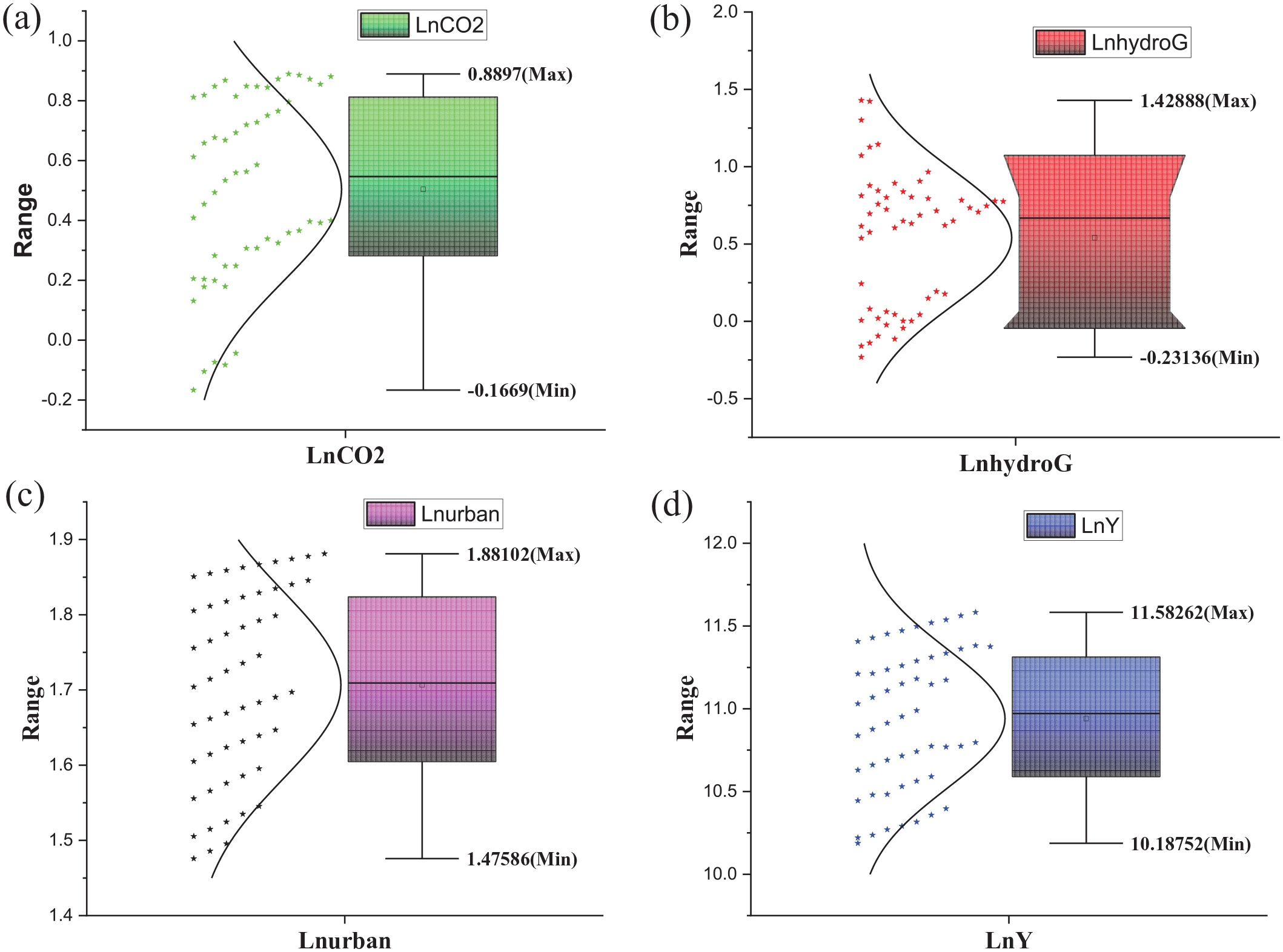
Box plot summary statistics of our key variables: (a) LnCO2, (b) LnhydroG, (c) Lnurban, and (d) LnY.
Empirical Results and Interpretation
In this study, at different quantiles, Table 5 indicates the findings of the unit root test for which the quantile unit root test was used. The findings indicate that data is non-stationary at the level but not at all quantile levels. Consequently, the mixed results of unit root properties validate the use of the QARDL model (Godil et al., 2020). The QARDL model can be used to series regardless of whether they are I(0), I(1) (Sharif et al., 2020). It is evident from the outcomes that the test qualifies the data for the application of QARDL.
Results of Quantile Unit Root Test.
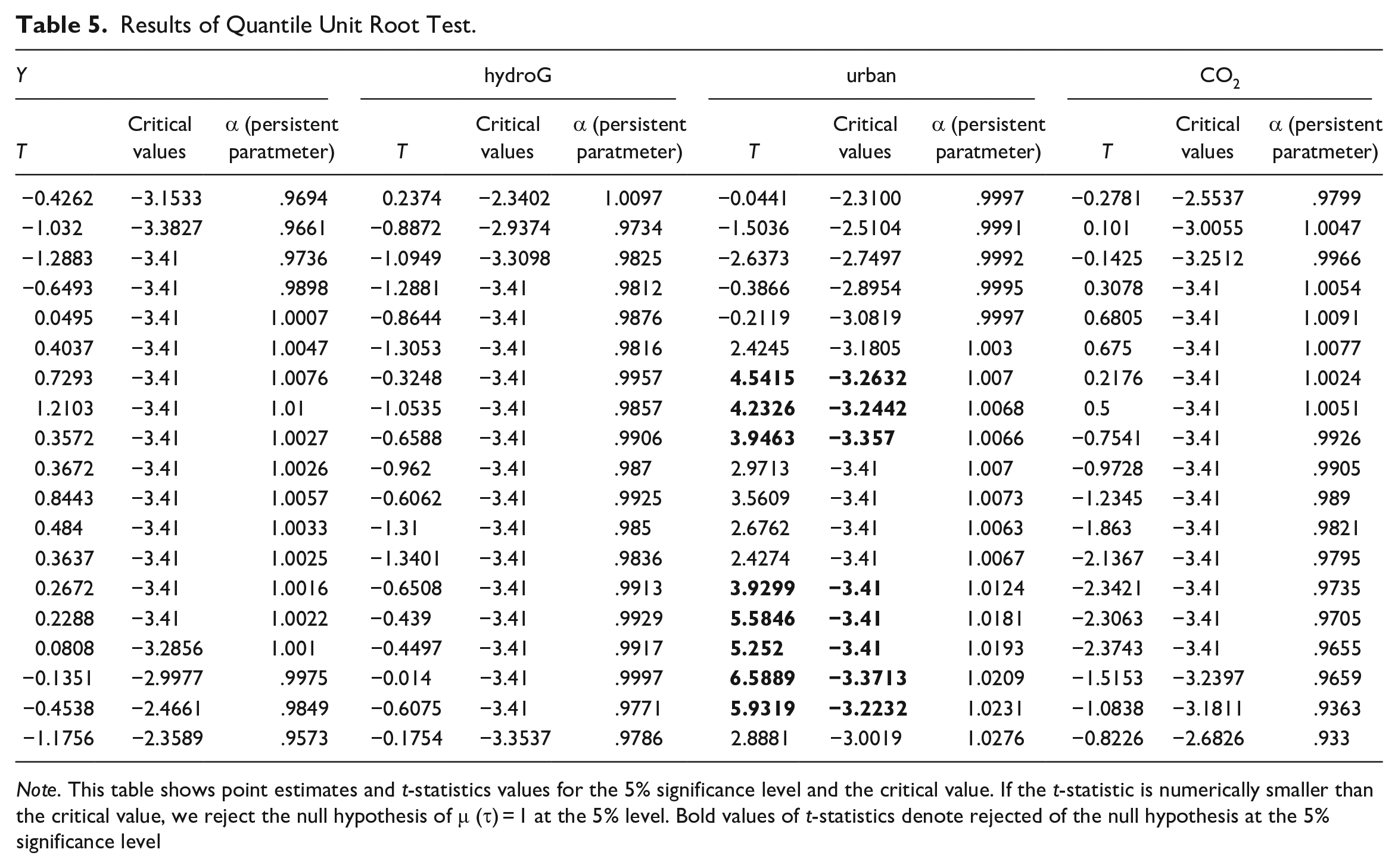
Note. This table shows point estimates and t-statistics values for the 5% significance level and the critical value. If the t-statistic is numerically smaller than the critical value, we reject the null hypothesis of µ (τ) = 1 at the 5% level. Bold values of t-statistics denote rejected of the null hypothesis at the 5% significance level
Table 6 shows the outcomes for the Quantile autoregressive distributive lag. The findings for the QARDL model estimation are provided in Table 6 for Malaysia’s carbon dioxide emissions. It is expressed that the estimated parameter
Results of Quantile ARDL for Malaysia.

Note. This table reports the quantile estimation results. The standard errors are between brackets.
, **, and * indicate significance at the 1%, 5%, and 10% levels, respectively.
Hydropower generation
Urbanization,

Parameters estimate of QARDL at quantile 0.05 to 0.95, with red dotted lines showing significance level at 95% CI.
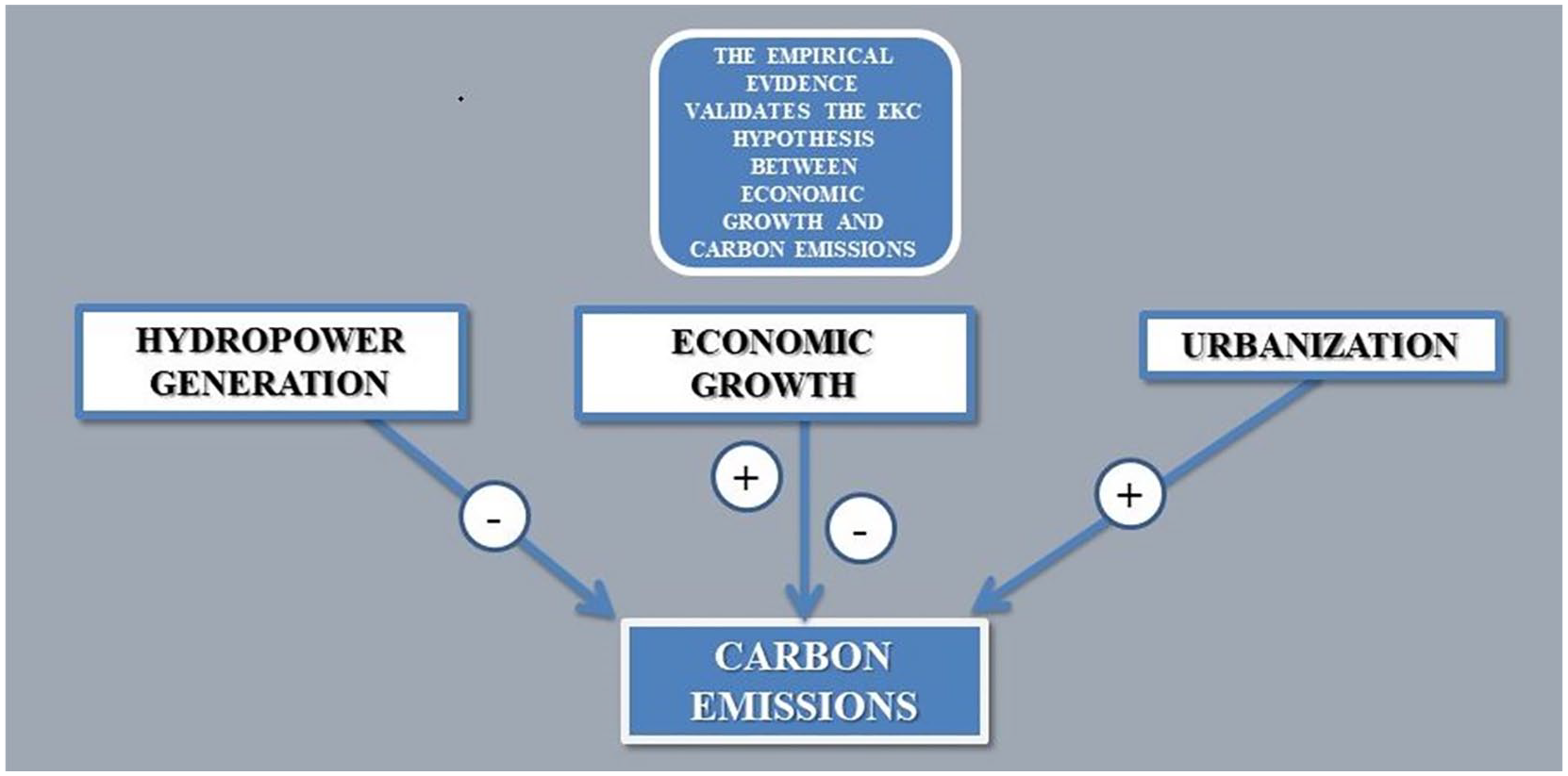
Graphical presentation of empirical findings.
Along with the presentation of the results, it is necessary to evaluate the dynamic stability of the empirical model. The results of the Wald test in Table 7 show that the null hypothesis of linearity (i.e., parameter constancy) for the speed adjustment parameter is rejected in Malaysia. In addition, for hydropower generation, the null hypothesis of linearity across different tails of every quantile for long-term parameters among variables that are under consideration is rejected. Lastly, the cumulative short-term influence of urbanization is asymmetric (non-linear) at a 5% significance level individually across quantiles.
Results of the Wald Test.

and ** indicate significance at the 1% and 5% levels, respectively.
Table 8 reveals the empirical findings of the quantile causality test. The main findings describe that there exists a two-way causality running among CO2 emissions and hydroG because all critical values are rejected at 1% significance level, (except at quantile 0.5). These results are supported by the previous findings of Bildirici and Gökmenoğlu (2017). Moreover, the CO2 emissions and Y also have a two-way causality with urban as indicated by the results of the quantile causality test. These results are in line with the findings of Ummalla and Samal (2018). The other two variables (hydroG and Y) also have mutual causality which is in line with our long-term results (except at the median quantile level of 0.5).
Quantile Causality Analysis Results.

and ** indicate significance at the 1% and 5% levels, respectively.
Conclusion and Policy Implications
The present study investigates the impact of economic growth, hydrogenation, and urbanization on CO2 emissions along with testing the EKC hypothesis in Malaysia by taking quarterly data from the period 1965 to 2018. This study applies Quantile Autoregressive Lagged (QARDL) technique by Cho et al. (2015). Further, we also have examined causality in quantiles following Troster (2018) to identify the causal path among the economic growth, hydro generation, and urbanization and CO2 emissions. The outcomes demonstrate that hydropower generation decreases the detrimental effects of CO2 emissions only at higher quantiles. Furthermore, urbanization, in lower to higher quantiles, exhibits negative impacts on CO2 emissions. Likewise, the QARDL coefficients confirm the presence of the Environmental Kuznets Curve hypothesis from median to higher quantiles. Besides, the Granger-causality test confirms the two-way causality between CO2 emissions and hydropower generation in Malaysia’s economy.
Based on the above empirical results, the present study recommends expansionary hydropower energy policies as they will be beneficial to substituting fossil fuel energy and alleviating environmental degradation (Solarin & Ozturk, 2015). Hydropower project costs are very high and unbearable for developing countries. Therefore, international financial institutions in collaboration with developing countries should incentivize the private sector to attract financing for hydropower projects. Results from quantile regression showed an increasing coefficient for hydropower generation, which means the negative impact of hydropower gets stronger while we move from low to higher quantile levels of hydropower. This justifies the importance of hydropower at higher quantile levels. Therefore, the finding calls for more financial allocation from the public sector budget and through the private sector. Since Malaysia is a developing economy, therefore, it is not easy to bear a direct financial burden to boost the hydropower projects. Therefore, we suggest the phase-wise development of power projects without affecting the budget balance of a developing economy like Malaysia. Similarly, the impact of urbanization at higher quantile levels is shown as insignificant, which implies that the Malaysian urbanization level has reached the level of less harmfulness. Therefore, encouraging urbanization to a further level is recommended.
This study has some limitations which can be overcome in future research. The findings of the present study do not apply to other countries or regions. Therefore, researchers can apply the same model to other developing and developed economies to make the comparison. Future studies can testify to the same model by applying other non-linear models to explore the plausible asymmetries among the series. To this end, Quantile-on-quantile and Wavelet methods could be a good choice. Also, the scholars can extend this study by examining the interaction role of hydropower generation and globalization in the framework of the pollution haven or environmental halo hypothesis. Finally, the recent model can be enriched by including/replacing some other control variables such as exchange rate, oil prices, terrorism, and financial development to obtain more interesting findings.
Footnotes
Nomenclature
CO2 Carbon emission
HEC Hydropower energy consumption
RENE Renewable electricity
EFP Ecological footprint
HYDEC Hydroelectric consumption
CWT Continuous Wavelet transformation
ENG Energy consumption
GHG Greenhouse gas
hydroG Hydropower generation
ARDL Autoregressive Distributed Lag Model
FMOLS Fully Modified Ordinary Least Squares
WDI World Development Indicators
Y Economic growth
Y2 Economic growth square
GENI Green innovation
REN Renewable energy consumption
MSVAGC Markov Switching-Vector Autoregressive Granger causality
NGS Natural gas subsidy
COVID-19 Coronavirus
EKC Environmental Kuznets Curve
Urban Urbanization
VECM Vector Error Correction Model
QARDL Quantile Autoregressive Lagged
ASEAN Association of Southeast Asian Nations
Declaration of Conflicting Interests
The author(s) declared the following potential conflicts of interest with respect to the research, authorship, and/or publication of this article: The authors declare that the research was conducted in the absence of any commercial or financial relationships that could be construed as a potential conflict of interest.
Funding
The author(s) disclosed receipt of the following financial support for the research, authorship, and/or publication of this article: This work is supported by the fundamental research funds for the Project supported by the Education Department of Hainan Province, project number: Hnky2022-11; Hainan Provincial Philosophy and Social Science 2021 Planning Project, project number: HNSK(JD)21-16; the Research Startup Fund of Hainan University, project number: kyqd(sk) 2022008; and Research Startup Fund of Hainan University, project number: kyqd(sk) 2022011.
