




Abstract
The authors examined cocoa farmers’ participation in Farmer Business Schools (FBS) in Ghana, impacts of livelihood outcomes (human, physical, financial, and social capitals) on participation, and implications of participation on productivity and per capita expenditure. We used cross-sectional data from 150 cocoa farmers. Data was analyzed with descriptive statistics, heteroskedastic probit, and doubly robust augmented inverse probability weighted regression adjustment model (AIPW). More than half of cocoa farmers participated in FBS. Financial capital (income and loan accessibility) and social capital (farmer group membership) positively influenced participation in FBS. Nevertheless, human capital (ability to pay medical bills) and physical capital (number of sleeping rooms) negatively influenced participation in FBS. Knowledge and skills cocoa farmers obtained from FBS are new farming methods, creativity in solving farming problems, record keeping, and managerial skills. Participation in FBS had a positive impact and a heterogeneous effect on cocoa farmers’ productivity and per capita expenditure. Given that the impact of FBS was heterogeneous, the FBS curriculum and approach should be segmented for different types of farmers to the generic FBS approaches currently practiced.
Keywords
Introduction
Cocoa is the backbone of Ghana’s economy; it contributes 2.2% of the agricultural sector’s share to Gross Domestic Product (GDP) and supports the livelihood of over 800,000 farmers directly (Institute of Statistical, Social and Economic Research, 2014). It employs people in other sectors such as commerce, service, and industry (Asamoah & Baah, 2003). Cocoa production is carried out by smallholder farmers who cultivate an average of 3 ha of land, with cocoa accounting for over 67% of the household income (Asamoah et al., 2013; Kolavalli & Vigneri, 2011). This, therefore, makes cocoa an essential crop at both the household and national levels. Nonetheless, the yield is low compared to international standards (Adomako, 2007). Moreover, the mean per capita daily income from cocoa farmers in Ghana is below the poverty level, with a poverty incidence of 42% (Asamoah et al., 2013; Barreintos et al., 2008). This implies a higher incidence of poverty (low per capita expenditure) among cocoa farmers than the national rate (19.3%).
Attributable reasons for low yield and low per capita expenditure or poverty among farmers include low technology adoption. It is noted that only 10% of cocoa farmers adopted the full/complete package of Cocoa Research Institute of Ghana’s (CRIG’s, 2010) recommended production technologies that can guarantee a yield of about 1,400 kg/ha. Vigneri (2007) observed that an increase in cocoa production was mainly driven by expansion in land size, not technology, and this instead makes the increase or growth unsustainable. In light of this and other factors, innovative technology adoption approaches—such as the Farmer Field School (FFS)—were triggered to supplement and contribute to technology dissemination. However, despite the increase in production resulting from the FFS, there is still low farm household income due to an inadequate market-oriented mindset. As such, the Farmer Business School (FBS) was proposed as an ideal model to enhance farmers’ entrepreneurial and market orientation in Ghana (Food and Agriculture Organisation [FAO], 2011; German Cooperation Deutsche Zusammenarbeit [GIZ], 2015). Thus, the FBS was introduced to induce the uFptake of agricultural technologies by farmers to increase yield and reduce poverty. The FBS uses the adult-learning approach, allowing farmers to use their own experiences to learn and find solutions to their challenges in farm activities. The expected results from farmers’ participation in FBS are a boost in productivity and enhanced livelihood in general.
Nonetheless, there is an empirical gap because few researches on the different components of FBS in Ghana and assessment of their effect have been conducted. For instance, a recent study by Tham-Agyekum et al. (2021) revealed that participants of FBS have greater knowledge, positive attitude and better skills in cocoa production than nonparticipants. Also, a project progress report by Deutsche Gesellschaft für Internationale Zusammenarbeit (GIZ, 2015) indicated that the adoption of good agricultural practices (GAP) by cocoa farmers in Ghana increased mainly by 60% to 85%, whiles business tools were adopted at a rate of 30% to 75%. Interestingly, the report also revealed that farmers witnessed an increase of 40% to 100% in yield. Furthermore, cocoa farmers witnessed increased farm income and better household nutrition. On the contrary, Norton et al. (2014) found no empirical relationship between FBS and yield by the ordinary least square (OLS) model. In Malawi, Chilemba and Ragasa (2020) used the difference-in-difference approach and the propensity score matching (PSM) technique to determine the impact of FBS on smallholder farmers in Malawi. In Cameroon, Kamdem (2016) employed the PSM coupled with the Rosenbaum Bounds Sensitivity Analysis approach to estimate the impact of FBS on cocoa yield in Cameroon.
In evaluating an impact of a program, many of the methods used in these studies have their own limitations. The use of the profitability method as a measure of impact, for example, can underestimate the effect of FBS. This is because, given instances (e.g., where the intervention prevents farmers from operating), an estimation of the forgone profit is not a good measure of the effect of the intervention as farmers continue to carry the unavoidable fixed cost (Just et al., 2005; Mishan et al., 2007). Again, the yield differential method’s adaptation awakes the problem of heterogeneity among farmers concerning farm sizes, endowment with production factors and specific land qualities. This heterogeneity has implications on their agronomic practices and, subsequently, output levels. Thus, adopting this approach does not yield good estimates. Similarly, the PSM is susceptible to biases and cannot reduce selection bias in observational data (Andrillon et al., 2020; Guo et al., 2020).
Against this backdrop, this study employed the doubly robust augmented inverse probability weighted regression adjustment model (AIPW) to estimate the impact of FBS on productivity and per capita expenditure (used as a proxy for poverty by following Bannor et al., 2020) of cocoa-farming households in Ghana. The advantage of the model is getting efficient and consistent results even if any of the outcomes of inverse-probability-weighted (IPW) and the regression adjustment estimators (augmentation) are not specified correctly (Farrell, 2015). Thus, the AIPW approach allows for modeling both the treatment and the outcome. Additionally, this method helps control selection bias at both the treatment and outcome levels (Lu et al., 2021).
This study, therefore, contributes to the little literature on the impact assessment of FBS among cocoa farmers in West Africa. Also, it contributes to the literature on the effect of livelihood outcomes (human, physical, financial, and social capitals) on participation in cocoa FBS which is not currently available in the literature. Again, using a doubly robust estimator and its advantages are currently not explored in the impact assessment of FBS among cocoa farmers. The objectives of the study are threefold as follows: to investigate cocoa farmers’ involvement in Ghanaian FBS, as well as the determinants that affect it; to assess the knowledge and skills cocoa farmers obtain from FBS; and to determine the impacts of FBS on cocoa farmers’ productivity and per capita expenditure.
Concept of FBS
Historically, the FBS emerged from the Farmer Field School (FFS), which began as a paradigm for disseminating knowledge-intensive pest-management approaches to Asian rice farmers (Godtland et al., 2004). In Africa, specifically Ghana, extension to farmer ratio was very low (Mcnamara et al., 2012). Consequently, there was the need for FFS to supplement extension service delivery in the country. Nevertheless, after successfully implementing the FFS, it was later realized to be more production and pest management centered (Kamdem, 2016). As such, farmers’ marketing and business skills were deficient, thereby making farmers unable to realize the full benefits of the initiative.
To support the FFS, the FBS was proposed as a more business-oriented version of the FFS to help inculcate farm business skills in farmers. The FBS was a GIZ initiative geared toward improving the entrepreneurial skills of smallholder farmers in Africa. The intervention was first implemented in collaboration with the Bill and Melinda Gate Foundation and the World Cocoa Foundation in the year 2010 to enhance the entrepreneurial skills of cocoa farmers (GIZ, 2016). Following the success of this initiative, other GIZ programs as well as public and private entities have subsequently adopted the FBS to handle interventions in other food and export commodities in Africa, where about 900,000 smallholder farmers have been trained in 16 African countries (Matthess et al., 2017).
In Ghana, the FBS initiative started in 2012, spearheaded by the Ghana Cocoa Board (COCOBOD) in collaboration with the GIZ to improve the cocoa market orientation of cocoa farmers (Tham-Agyekum et al., 2021). Accordingly, the FBS aimed to develop smallholder cocoa farmers’ businesses and entrepreneurship skills, and their market orientation (FAO, 2011; GIZ, 2015). Thus, since financial and marketing-related issues are critical for raising their incomes, the FBS seeks out and adopts new technologies to help farmers improve their livelihoods (GIZ, 2015). Nevertheless, it is evident in the available literature that FBS has received little recognition in terms of research across the globe (and in Ghana specifically), compared to FFS.
Figure 1 summarizes the conceptual framework underpinning this study. The authors conceptualized that participation in the FBS or otherwise would have an impact on farmers’ livelihood indicators such as human capital (food security and cost of living), physical capital (accommodation and assets), social capital (FBO participation and social contributions) and financial capital (access to loan and improve farm income). Given this improvement, it will be very prudent to factor FBS in rural and agricultural developmental policies from the local to the national level to ensure sustainability while also considering strategies for getting nonparticipants as partakers.

Conceptual framework.
Materials and Methods
Study Area
The Western North Region of Ghana (formerly part of the Western Region) is acknowledged to be contributing about 54% of Ghana’s cocoa (Abbey et al., 2016; Bannor et al., 2019). The region has fertile lands and rainfall of approximately 1,500 to 2,200 mm per annum, beneficial to cocoa production (Asante-Poku & Angelucci, 2013; Nair, 2010). The districts experience rainfall between May and June, and September and October. The districts are located within the moist semi-deciduous forest zone and, as a result, experience long rainy season—both of which support cocoa production, one of the main cash crops grown in the study areas. Within the Western North Region, Juaboso and the Bodi Districts are among the leading cocoa-producing districts in Ghana (Ghana Statistical Service, 2014a, 2014b; Juaboso District Assembly, 2015). For instance, in the 2013/2014 production year, the district contributed about 30,009.14 t of cocoa beans (Juaboso District Assembly, 2015). The details of the study area can be found in Figure 2.
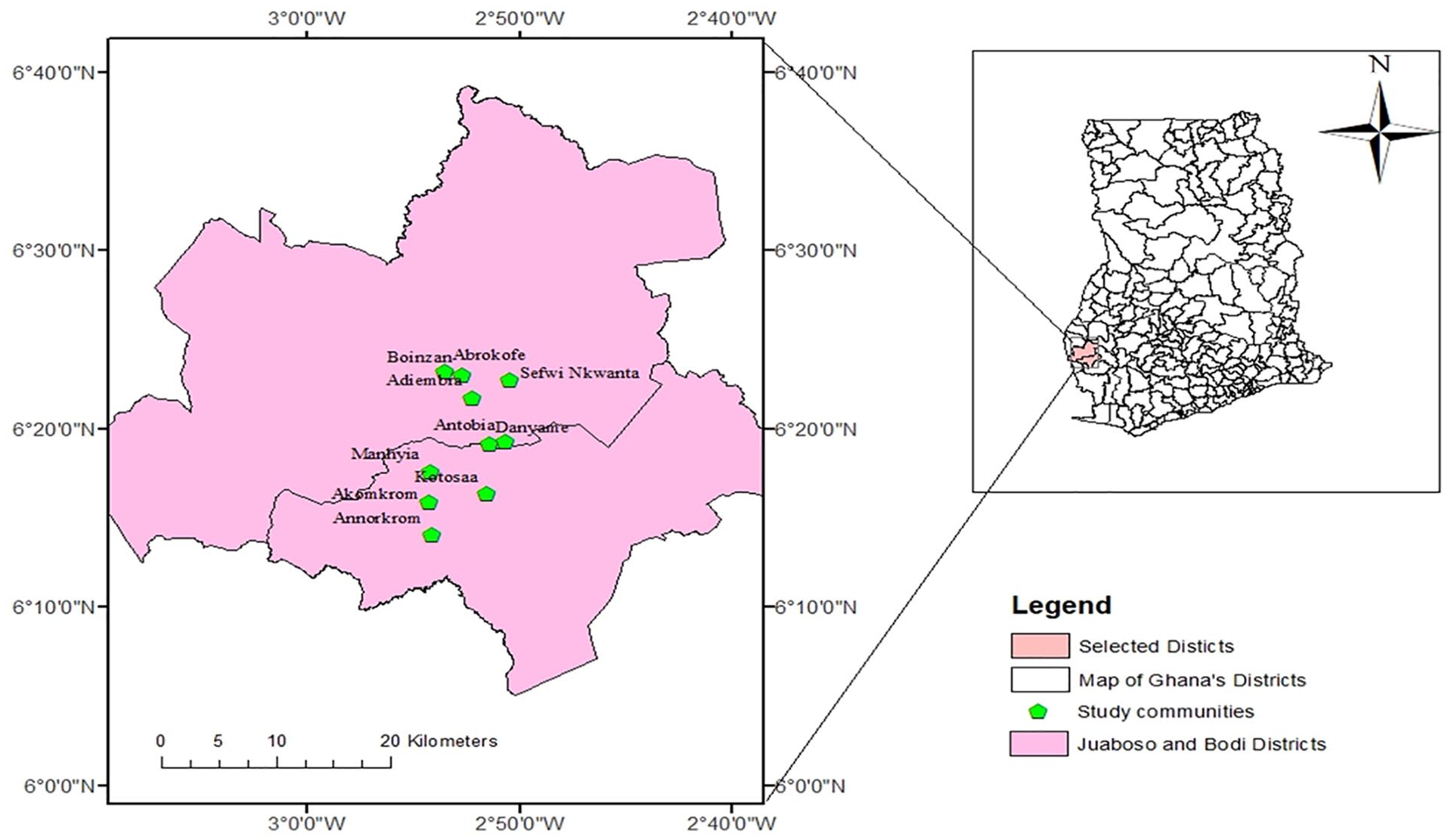
Map of the study area.
Sampling
Cocoa farmers interviewed for this study were selected via a multistage sampling technique. First, Western North Region was purposively selected (refer to 3.1 for information on the purpose). Similarly, Juaboso and Bodi Districts are acknowledged to be among the leading producing districts of cocoa in Ghana (Ghana Statistical Service, 2014b; Juaboso District Assembly, 2015). Thus, they were also purposively selected. Ten communities (details of the selected communities are in Figure 1) were purposively selected from the districts because of the existence of cocoa FBS. Lastly, the farmers were divided into participants and nonparticipants based on the number of cocoa farmers within each community from the COCOBOD extension officers and Information Management Systems officers of some Licensed Buying Companies in the districts. Ten apiece were randomly selected for participants and nonparticipants from each community for the interviews. A total of 200 farmers were interviewed. However, only 150 (representing 75% of the sample) were useful in the analysis due to missing data.
Data Analysis
Data was analyzed using descriptive statistics, test statistics, heteroskedastic probit model, and doubly robust augmented inverse probability weighted regression adjustment model (AIPW). Cocoa farmers’ participation in FBS was assessed descriptively using percentages and means. Knowledge and skills cocoa farmers obtained from FBS were analyzed using a 5-point Likert scale—very high, high, neutral, low, and very low—to test cocoa farmers’ level of agreement with statements about knowledge and skills obtained from FBS. Moreover, the heteroskedastic probit model was used to investigate the impacts of livelihood outcomes (human, physical, financial, and social capitals) on participation in FBS. Finally, AIPW was used to determine FBS impacts on cocoa farmers’ productivity and per capita expenditure (poverty). Test statistics were used to test for statistical differences in demographic characteristics, productivity, consumption expenditure, and living standards between participants and nonparticipants of FBS.
Heteroskedastic probit model
Cocoa farmers faced two alternatives: to partake or to not partake in FBS. The two choices were mutually exclusive (Greene & Hensher, 2010). Therefore, probit regression model was appropriate for the data. However, it was realized that heteroskedasticity existed in data. Heteroskedasticity occurs when error variances are inconsistent for observations (Cribari-Neto & da Silva, 2011; Long & Ervin, 2000). It makes results inefficient (Long & Ervin, 2000). Therefore, the heteroskedastic probit model was used to investigate the impacts of livelihood outcomes (human, physical, financial, and social capitals) on participation in FBS. The reasonable satisfaction of joining FBS was influenced by livelihood outcomes like human, physical, financial, and social capitals. It was likely that a cocoa farmer, having the option to participate in FBS or not, could choose the maximum utility option (Greene & Hensher, 2010).
Heteroskedastic probit model generalized the probit model (StataCorp, 2015). It was assumed that

where

The likelihood that y=1 as a function of the independent variables was

Assume that the binary outcomes

It yielded the probit model:

It was assumed that the unobserved
Doubly robust augmented inverse probability weighted regression adjustment model (AIPW)
We employed doubly robust augmented inverse probability weighted regression adjustment model (AIPW) to estimate the impact of FBS on productivity and per capita expenditure of cocoa farming households in Ghana. For efficient results of AIPW, we employed Inverse Probability Weights (IPW) to compute Average Treatment Effect (ATE). The AIPW model allowed for modeling both the treatment and the outcome such that if one was wrongly specified, the results would still be robust. Additionally, this method helped control selection bias at both the treatment and outcome levels (Lu et al., 2021). Regardless of these advantages over most impact assessment models, AIPW was less used among social scientists (Glynn & Quinn, 2010) and in particular, FBS impact studies. Therefore, this study’s use of the model adds to the little literature on using the model to assess interventions’ impacts.
In the AIPW, the inverse probability of treatment weighting (IPTW) and the “augmentation” sections were the two portions of the doubly robust estimation. For example, in this study, S represented productivity and per capita expenditure as the outcome, Z represented farmers’ participation in FBS,

Assuming misspecification of the propensity score was present, then the AIPW still provided a robust result. Thus, there was still a prediction of the outcomes of farmers’ participation in FBS in the regression model; though the propensity score was inaccurate, the regression model still predicted the outcomes of farmers who participated in contract farming (

To estimate the outcomes for farmers who did not participate in FBS, an analogous approach could be used. Having estimated impact of FBS by the use of AIPW, heterogeneity impact analysis of FBS participation on per capita expenditure and productivity was undertaken by apportioning the data into two quartiles of age, land size. and farming experience.
Results and Discussion
Characteristics of Cocoa Farmers
Table 1 encapsulates demographic and farm-level characteristics of farming households. The test statistics showed statistically significant differences in these characteristics between participants and nonparticipants of FBS. Male cocoa farmers were the dominants for both participants and nonparticipants of FBS. Similarly, Avane et al. (2022) revealed that, males traditionally dominated cocoa production in Ghana whilst the women usually produced food crops and vegetables. The average age of cocoa farmers was 40 years. More participants of FBS (19%) had no formal education than nonparticipants (3%). However, more participants (26%) had tertiary education than nonparticipants (10%). Average years of formal education was almost the same for participants (11) and nonparticipants (12). More than 63% of participants and 66% of nonparticipants were married. More nonparticipants of FBS (76%) were household heads than participants (61%). The average household size for both participants and nonparticipants was five. More than half of participants (65%) and nonparticipants (56%) were indigenes/natives. Participants (20) had more years of experience in cocoa production than nonparticipants (14). The average farm sizes of participants (9 acres) and nonparticipants (10 acres) were almost identical. The aggregate result showed that 63% of farmers produced cocoa on their farmlands, 51% produced on rented/leased farmlands, and 35% produced on communal farmlands. More participants of FBS (79%) belonged to farmer associations than nonparticipants (41%).
Characteristics of Cocoa Farmers.

Note. Percentages for land tenure do not sum up to 100% due to multiple responses.
and *** denote statistical significance at 10% and 1%, respectively.
Cocoa Farmers’ Participation in FBS in Ghana
Table 2 summarizes cocoa farmers’ participation in FBS in Ghana. Slightly more than half (53%) of the cocoa farmers sampled for the study participated in FBS. Cocoa farmers (80%) who do not participate in FBS attributed it to time constraint. Production activities kept the cocoa farmers busy throughout the farming season. The majority of them engaged in the production of other crops, while others had off-farm occupations. Thus, extra activities such as participation in FBS might be have been time-consuming for them. One-fifth of nonparticipants indicated that they learn from participants. This suggests high level of information/knowledge sharing among cocoa farmers. Others (15%) did not participate in FBS because they had enough knowledge of cocoa production. These could be farmers who had been in cocoa production for many years and had, therefore, amassed a lot of experience and knowledge in the industry. It could also be those who had amassed knowledge through participation in farm-management trainings and workshops organized by the Government and private agencies. However, it would be beneficial for such farmers to attend FBS to learn about new and improved cocoa production techniques and farm business management. Also, 10% of nonparticipants indicated that they were unaware of FBS. Less than half (37%) of nonparticipants indicated that they were willing to participate in FBS. This could have essentially constituted those who were not aware of FBS.
Cocoa Farmers’ Participation in FBS.

Do not add up to 100% due to multiple responses.
On the other hand, participants indicated the reason for joining FBS (Table 2). The main reasons were to increase yield/productivity (95%) and learn new farming practices (90%). Farmers learn about modern and advanced cocoa production methods in FBSs. These productivity-enhancing techniques are relevant in improving cocoa farmers’ income and welfare levels. Few (2.5%) cocoa farmers joined FBS to have access to loans. The thought could be because most farmers in Ghana had limited access to credit, though credit enables farmers to adopt new production technologies to increase productivity and income (Akuriba & Tangonyire, 2020). Thus, some farmers in the study area considered FBS as a form of association to facilitate access to credit from financial institutions. A quarter of the farmers joined FBS for other reasons such as socialization and to obtain material benefits. Some indicated that they joined because they were convinced by extension officers and other farmers to join, while others generally considered farmer meetings/gatherings as beneficial.
On average, cocoa farmers had participated in FBS for 2 years (Table 2). Cocoa farmers became aware of FBS from extension officers (70%), colleague farmers (50%), information centers (50%), and the media (25%). Extension officers provide agricultural information to farmers. These include appropriate production techniques, marketing outlets, Government and NGO supports for farmers, and training programs like FBS. Farmers, on the other hand, shared information among themselves. Thus, participants were likely to inform other farmers about the benefits of joining FBS. There are information centers (public address systems) in almost all towns and villages in Ghana. These are used for providing agricultural and non-agricultural information to the general public. The results reveal that a quarter of the sampled respondents heard about FBS through the media. Likewise, Avane et al. (2022) revealed that cocoa farmers in Ghana obtained information through mass media (radio and television), among other information outlets.
Impacts of Livelihood Outcomes on Participation in FBS
Table 3 presents heteroskedastic probit estimates for the impacts of livelihood outcomes (human, physical, financial, and social capitals) on participation in FBS. From the model diagnostics, zero outcomes denoted nonparticipants in FBS while nonzero outcomes denoted participants. The two explanatory variables—farm size and income—used to model the variance and used as possible offset variables in the estimation, were statistically significant. Also, the likelihood ratio test of heteroskedasticity, which tests the full model with heteroskedasticity against the full model without, was statistically significant with the chi-squared of 9.18. This suggests the existence of heteroskedasticity in the data; in consequence, heteroskedastic probit model was appropriate.
Heteroskedastic Probit Estimates for the Impacts of Livelihood Outcomes on Participation in FBS.

, **, and *** denote statistical significance at 10%, 5%, and 1%, respectively.
Education was significant (at 5%) and positive (Table 3). This means that years of formal education enhanced cocoa farmers’ participation in FBS. The marginal effect showed that a year increase in formal education enhanced the likelihood of participating in FBS by 10.6%, other factors held constant. Educated cocoa farmers could better access information through different sources than less educated or uneducated ones (Avane et al., 2022). This makes the former more knowledgeable with agricultural information such as training programs like FBS. Besides, educated farmers had higher influence on entrepreneurial scores (Bannor et al., 2021) and were, ergo, more likely to take up such opportunities to enhance their entrepreneurial acumen to remain competitive and relevant.
Experience in cocoa production was significant (at 5%) and positive. This suggests that the experience in cocoa production improves the probability of participating in FBS. The marginal effect revealed that an increase in production experience by a year boosted the probability of participating in FBS by 9.5%, other factors held constant. The plausible reason could be that, for many years, farmers who produced cocoa might have attended several other farm management training programs and workshops and—knowing the relevance of such training programs—were more likely to join FBS. Their extended stay in the cocoa industry also improved their relationship with agricultural extension agents who play critical roles in advising farmers to participate in training programs such as FBS.
Farm size was significant (at 10%) and negative (Table 3). This implies that the probability of participating in FBS reduces with farm size. Farmers with smaller cocoa farms had a higher probability of participating in FBS than those with larger cocoa farms. It is suggestive that increment in cocoa yield was the main reason for joining FBS. Thus, the farmers with smaller farm size may have had a very high zeal to improve productivity, hence, the results.
The main objective for estimating the heteroskedastic probit was to assess the impacts of livelihood outcomes on participation in FBS. The estimates under human capital revealed that ability to pay medical bills was significant (at 5%) and negative (Table 3). This means that cocoa farmers with the ability to pay their household medical bills were less likely to participate in FBS. Similarly, the number of sleeping rooms was significant (at 10%) and negative. This means that, as the number of sleeping rooms for a cocoa farmer’s household increased, the likelihood of participating in FBS decreased. The plausible explanation from the physical capital results is that such cocoa farmers might have had other off-farm jobs that kept them busy and, as such, they were less likely to join the FBS, given the income they generated from other sources and income from cocoa only.
Financial capital income from cocoa production and access to loans were significant and positive (Table 3). This implies that farmers who obtained higher income from cocoa production and had access to loans were more likely to join FBS. High-income farmers could be more business-minded. These farmers were interested in learning and acquiring knowledge that enhanced productivity. Participation in FBS could involve traveling and other extra costs, which high-income farmers and those with access to loans could better afford. For social capital, farmer group membership was significant (at 5%) and positive. This implies that cocoa farmers who belonged to farmer groups were likely to join FBS. Government and NGOs primarily target farmer groups to execute specific interventions since it is easier to contact farmers in groups than individuals. Also, extension agents prefer to disseminate agricultural information to farmers in groups. Farmers in groups were more likely to share ideas and learn from each other. Therefore, farmers in groups had higher access to capacity-building programs, extension services and success stories from colleague farmers (Amfo & Ali, 2020). These were likely to enhance group members’ participation in FBS.
Knowledge and Skills Cocoa Farmers Obtain From FBS
Figure 3 captures knowledge and skills cocoa farmers obtained from FBS. Only 5% of the cocoa farmers agreed that participation in FBS enabled them to bargain with value-chain actors (especially buyers of their produce). The farm-gate price of cocoa was fixed by the Producer Price Review Committee (PPRC) with the farmers’ representatives on board (Bannor et al., 2019). As a result, though FBS could educate cocoa farmers on good bargaining skills, they would not be able to bargain with cocoa buyers for their products successfully. However, they could collectively bargain via their representatives during the Producer Price Review Committee (PPRC) meetings to increase cocoa prices. Participation in FBS could also provide them with the knowledge and skills to bargain with other value-chain actors such as input dealers.
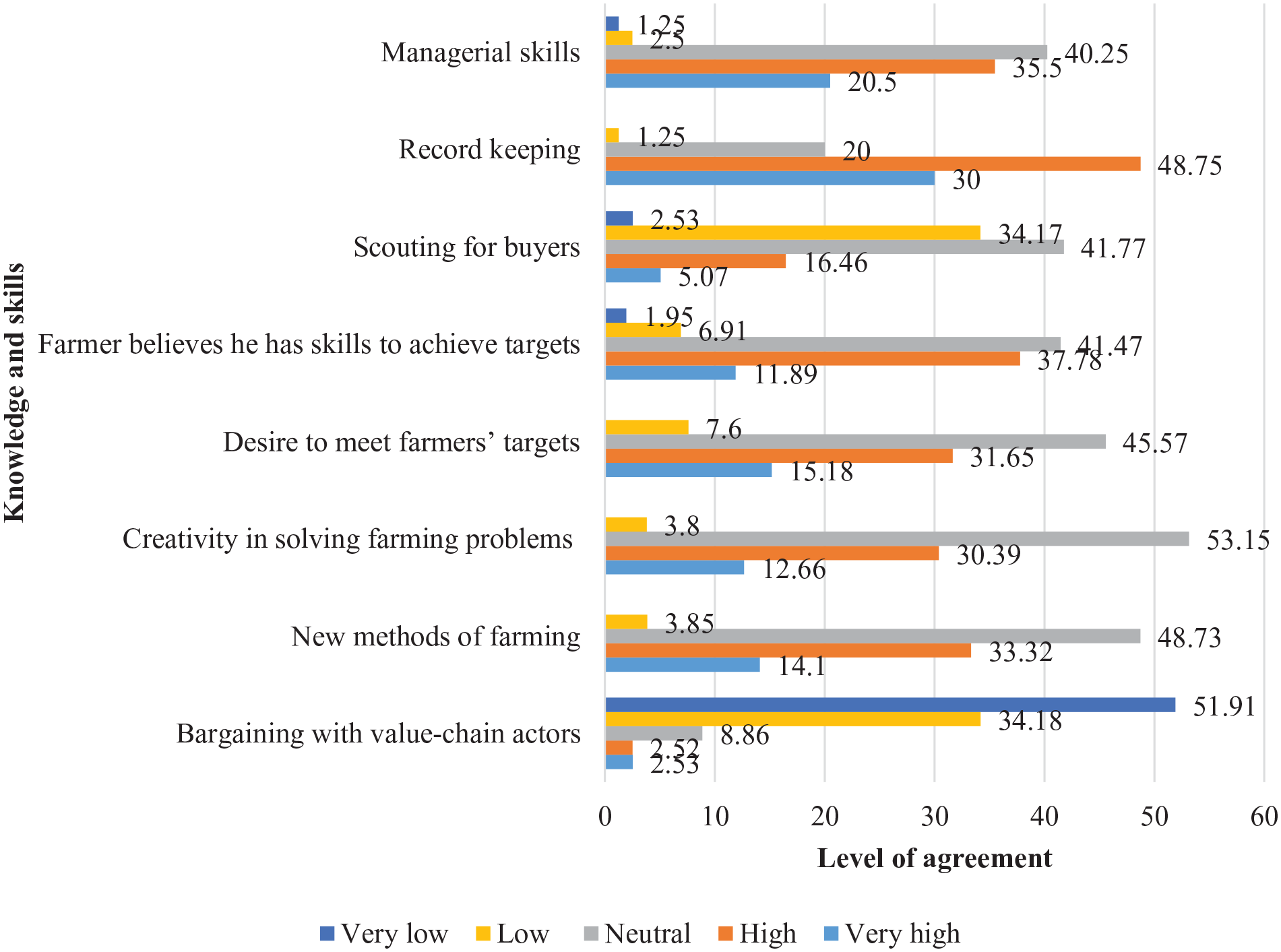
Knowledge and skills cocoa farmers obtain from FBS.
Close to half (47%) of the participants agreed that FBS enabled them to obtain new methods of farming and 49% were neutral (Figure 2). The main aim of FBS is to educate farmers on new and modern crop production, processing, and marketing methods. These enable farmers to produce crops efficiently to increase productivity and income levels. About 43% agreed that participation in FBS made them creative in solving farming problems. Cocoa production in Ghana is hindered by several challenges such as pests and diseases infestation, declining soil fertility (Djokoto et al., 2016), high input prices—especially fertiliser (Ali et al., 2018; Fearon et al., 2015)—and climate change (Afriyie-Kraft et al., 2020; Ameyaw et al., 2018). Therefore, FBSs educate and build the capacity of farmers to handle better/manage these challenges.
Also, 47% agreed that FBS gave them the knowledge and skills required to meet their targets as farmers. Farmers’ main targets could be enhanced productivity, income, and welfare. Self-confidence was key in achieving personal targets. Therefore, FBS built farmers’ confidence to believe they have the skills to achieve their targets (50%). One-fifth of the participants agreed that FBS gave them the required knowledge and skills to scout buyers. Due to cocoa internal marketing liberalization, several Licensed Buying Companies (LBCs) buy cocoa from farmers even though the producer price is fixed by the Producer Price Review Committee (PPRC). Given this, the choice of an LBC is grounded on other non-price incentives (Bannor et al., 2019); thus, the knowledge gained from the FBS will influence the bargaining for other non-price incentives (timely payment, supply of inputs, provision of credit and scholarship, etc.) from LBC and the choice of the same thereof. Almost 80% agreed that participation in FBS equipped them with the knowledge and skills of record keeping. Record keeping enables farmers to track their performance/progress (profitability) and identify persistent problems. Thus, most training programs educate farmers on record keeping. More than half (56%) agreed that participation in FBS equipped them with managerial skills. It holds true because, like any other business venture, cocoa production requires good management of scarce resources such as capital, land, and labor. This makes managerial skills important in making efficient use of resources and attaining high productivity. Similarly, Tukundane et al. (2015) reported that farm schools aimed to train and equip farmers with knowledge and skills in production, and gave the youth hands-on practical skills in agriculture.
Impacts of FBS on Cocoa Farmers’ Productivity and Consumption Expenditure
Consumption expenditure and living standards of cocoa farmers
Table 4 shows the monthly household expenditure of cocoa farmers. The test statistics show statistically significant differences in the monthly household expenditure of participants and nonparticipants of FBS. Cocoa farmers who participated in FBS recorded higher household expenditures in most items—electricity, water, education, rent/housing, transportation, communication, clothing, donations, funeral contributions and religious activities—than their counterparts who did not participate. Cocoa farmers who did not participate in FBS recorded higher household expenditures in only four items—food, medical care, marriage/outdooring, and cosmetics—than those who participated.
Monthly Household Expenditure of Cocoa Farmers.
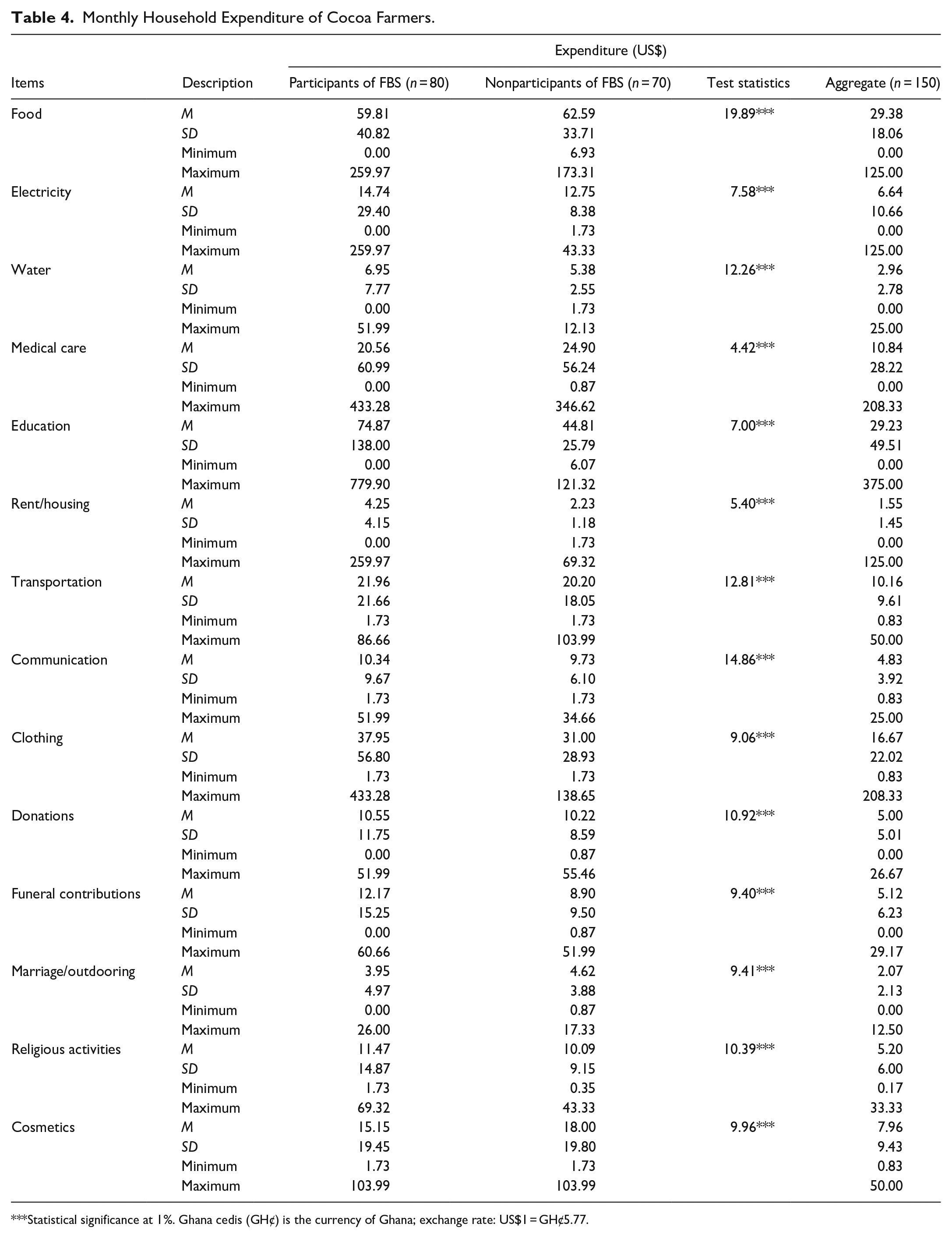
Statistical significance at 1%. Ghana cedis (GH¢) is the currency of Ghana; exchange rate: US$1 = GH¢5.77.
Table 5 shows the living standards (housing, household diet, health care, and access to funds) of cocoa farmers. The test statistics show statistically significant differences in the living standards of participants and nonparticipants of FBS. This implies that differences in living standards play critical roles in participating in FBS. There were more nonparticipants (39%) who owned houses than participants (21%). All the cocoa farmers interviewed for the study had their houses roofed with iron/metallic sheets. The majority of participants (98%) and nonparticipants (93%) had cement as the flooring material for their sleeping rooms, though few had tiles. Both participants and nonparticipants had an average of three sleeping rooms in their respective households. The usual number of meals per day for cocoa farmers was twice or thrice for household diet. Equal proportions (77%) of participants and nonparticipants of FBS indicated that their usual meals per day were twice. Also, equal proportions (23%) indicated that their usual meals per day were thrice. These suggested that majority of cocoa farmers ate twice a day. On average, both participants and nonparticipants consumed meat and fish 4 days a week each.
Living Standards of Cocoa Farmers.

Note. Percentages for source of loans do not sum to 100% due to multiple responses. Ghana cedis (GH¢) is the currency of Ghana; exchange rate: US$1 = GH¢5.77.
, **, and *** denote statistical significance at 10%, 5%, and 1%, respectively.
For health care, most participants (83%) and nonparticipants (70%) indicated that they sometimes experienced problems accessing medical services (Table 5). More nonparticipants (24%) never experienced problems accessing medical services than participants (14%). Less than 5% of the cocoa farmers always experienced problems with accessing medical services. Also, more nonparticipants (97%) could pay medical bills than participants (93%). About 91% of both participants and nonparticipants had registered with the National Health Insurance Scheme. Table 7 shows that more nonparticipants (30%) had access to credit than participants (9%). The primary source of credit for the majority (80%) of nonparticipants was banks, though few obtained credits from money lenders, friends, and family, savings associations (5% each), and purchasing clerks (10%). For participants, a substantial proportion obtained credit from money lenders, friends, and family, purchasing clerks (38% each), and banks (25%). The average amount of credit obtained by nonparticipants (US$915) was higher than that of participants (US$617).
Impact of FBS on productivity and per capita expenditure
From Table 7, results for ATE by use of IPW analysis showed that FBS causes farmers’ productivity to increase by an average of 53.9 kg/acre from the average of 180 kg/acre for farmers who did not partake in FBS. Participation in FBS resulted in increased productivity by 235 kg/acre from the average 181 kg/acre that would have occurred if these farmers had not participated. Participation in FBS increased the average productivity by 30%. Among the FBS participants, participation caused an increase in per capita expenditure by 435 from the average 361 that would have occurred if these farmers had not participated. The results on percentage increase and ATE were not significant.
Table 6 further shows results for ATE using AIPW. From the results, if all farmers were not to participate in the FBS, the average productivity would be 190 kg/acre less than the average of 232 kg/acre that would occur if none of the farmers had participated in the FBS. Comparably, Owusu (2018) reported an average cocoa yield of 294 kg per acre. Be that as it may, the productivity levels were lower than both the potential yield (1,000 kg/ha) and actual yield (400 kg/ha) of cocoa in Ghana projected by COCOBOD (Opoku-Ameyaw et al., 2010). Low cocoa productivity in Ghana could be attributed to poor agronomic practices (Aneani & Padi, 2016). It could also be caused by challenges such as pests and diseases infestation, declining soil fertility, high input prices (especially fertilizer), and climate change (Afriyie-Kraft et al., 2020; Ali et al., 2018; Djokoto et al., 2016).
Impacts of FBS on Productivity and Consumption Expenditure Using ATE by IPW and AIPW.
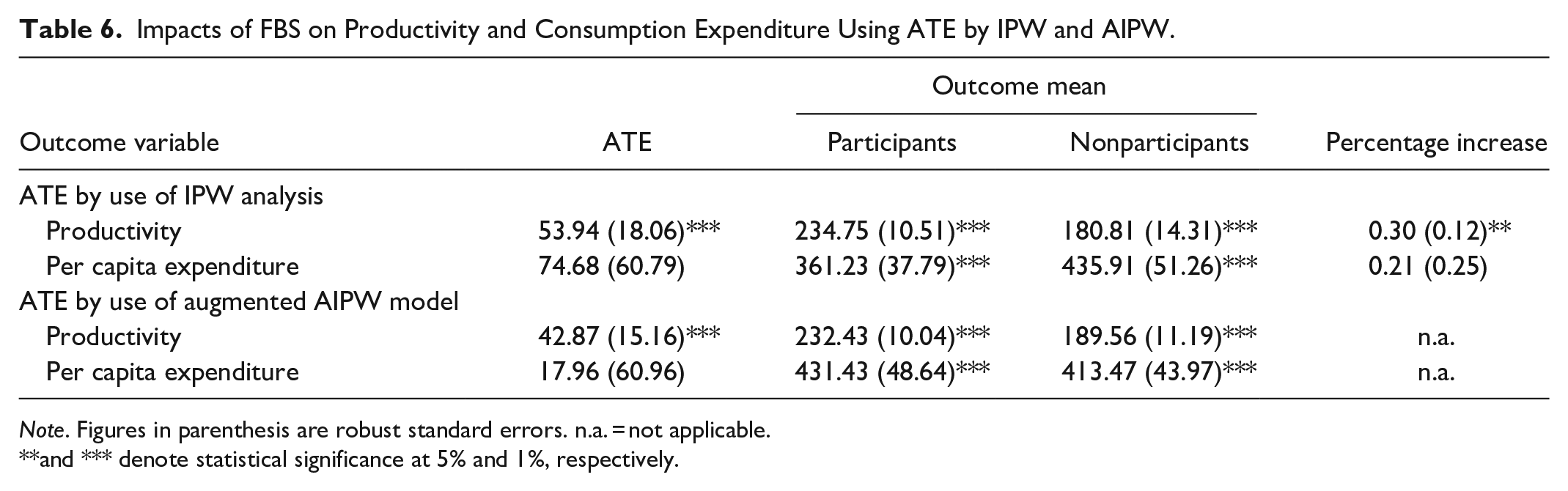
Note. Figures in parenthesis are robust standard errors. n.a. = not applicable.
and *** denote statistical significance at 5% and 1%, respectively.
The results revealed that farmers who participated in the FBS had a productivity level of approximately 43 kg/acre more than those who did not participate in the FBS. The results contrasted with Norton et al. (2014) who found no significant relationship between yield and FBS. The differences could be attributed to the deficiency in the ordinary least square (OLS) regression used to model that impact, hence, giving less robust results.
From Table 7, the results revealed the heterogenous impact analysis of FBS participation on per capita expenditure and productivity by apportioning the data into two quartiles of age, land size and farming experience. From the table, the results revealed that the impact of FBS on per capita expenditure was heterogeneous. Thus, the differences in the positive impact of FBS were seen in the first quartile, primarily the young (average of 33). Compared to those in the second quartile (average age of 50), per capita expenditure was less for FBS participants than nonparticipants. However, the impact on productivity was more (54.48) in the second quartile relative to the first quartile (21.12). From the table, it can be gathered that, FBS’ impact on land productivity increased with increase in land size; however, it was inversely proportional relative to per capita expenditure.
Heterogeneous Impact of FBS.

Note. Figures in parenthesis are robust standard errors.
Statistical significance at 1%.
Similarly, FBS impact on productivity was higher (56.79) in the second quartile compared to the first quartile (47.12) but inversely proportional relative to per capita expenditure. The results suggest that different objectives in the context of productivity and per capita expenditure (poverty) of FBS should be tailored to a particular segment of cocoa farmers to generic approaches. For this reason, if a FBS is to increase productivity, then it should target farmers with larger farm sizes and a high number of years of experience. Even so, if the objective is to decrease poverty, the farmers with less land size and experience should be considered. The results validate Bannor et al. (2021) who revealed that entrepreneurial training of farmers in Ghana should be segmented to achieve the necessary impact. The findings also agree with Palmer (2007) and Oketch (2007) who reported that skills training leads to poverty reduction (increase in per capita expenditure) and economic growth.
Conclusions and Recommendations
More than half of cocoa farmers participate in FBS. Participation was motivated by acquiring new knowledge to boost productivity. Financial capital (income and loan accessibility) and social capital (farmer group membership) positively influence participation in FBS. Nevertheless, human capital (ability to pay medical bills) and physical capital (number of sleeping rooms) negatively influence cocoa farmers’ participation in FBS. Knowledge and skills cocoa farmers obtain from FBS are new methods of farming, creativity in solving farming problems, ability to meet set targets, record keeping, and managerial skills. Participation in FBS has positive implications on cocoa farmers’ productivity and per capita expenditure (poverty reduction). Impacts of FBS on per capita expenditure and productivity are heterogeneous.
To enhance cocoa farmers’ participation in FBS, COCOBOD, agricultural extension officers, and private organizations should improve awareness programs on FBS. They should educate cocoa farmers on the relevance of joining FBS, especially its effect on productivity, income, and welfare. Given that the impact of FBS is heterogeneous based on socioeconomic characteristics (age, land size, and farming experience), FBS curriculum and approach should be segmented for different types of farmers to generic FBS approaches currently practiced. Accordingly, FBSs should not be advanced with a generic objective but with tailored objectives toward a particular segment of farmers to arrive at the impact desired. It is also suggested that FBS curriculum should be considered as part of extension services delivery. It could also be considered as part of comprehensive programs to reduce poverty in cocoa-growing areas by government and private agencies. Future studies should include success and/or failure stories of FBS and similar agricultural extension methods, especially literature from other countries, for wider readership and applicability of findings.
Footnotes
Acknowledgements
We express our deepest gratitude to Ms Wilhemina Kwabeng Owusu for her proofreading of the draft manuscript.
Author Contributions
All authors participated in the conceptualization, design, analysis, writing, and proofreading of the manuscript.
Data Availability Statement
Data will be made available upon request from the corresponding author.
Declaration of Conflicting Interests
The author(s) declared no potential conflicts of interest with respect to the research, authorship, and/or publication of this article.
Funding
The author(s) received no financial support for the research, authorship, and/or publication of this article.
