




Abstract
This study investigated how culture-specific items (CSIs) are translated in the Chinese-English food menu corpus. This overarching aim was divided into two specific objectives: identifying which procedures prevail in translating cultural items and determining what factors impinge on the selection of specific procedures. The analysis of the corpus was done descriptively and by utilizing “Sketch Engine.” The theoretical issues addressed in the study included the scope and definition of CSI, the categorization of procedures presented in the data for CSI translation, and the place of food items within the category of CSI. Results of the study indicated that neutralizing strategy is employed more than foreignizing and domesticating strategies, with the latter being last in descending order. The major factors identified were metonymical/metaphorical use of the CSI, brand, polysemous nature of source CSI, degree of cultural markedness, and false relationship of the ST item with the TT item. Correlations between some factors and procedures were moderately strong as their values were above 50 out of the ideal value (100). However, other correlations were weak and therefore requires further investigation.
Keywords
Introduction
Chinese food has an extensive and illustrious culture and history. Due to the diversity of the food preparation methods employed, coupled with the variety of natural ingredients used, Chinese gastronomy is almost unmatched in the world (Mu, 2010). It has been stipulated that numerous historical events and notable characters are associated with the dish names throughout the evolution of Chinese food. The Chinese food “东坡肉 (Dongpo Rou), for instance, is named after a famous poet of the Song Dynasty known as Su Dongpo (1037–1101), who enjoyed eating this type of specially prepared meat (Mu, 2010). Another example given by Kang (2013) is “腊八粥” (Laba zhou)—a porridge that derived its name from the Laba Festival because it is specially eaten during this festival and also because eight ingredients are used in preparing this porridge (p. 122). Additionally, some plants with profound cultural significance designate certain foodstuffs in traditional Chinese culture. Li Jiayu exemplified this fact with “芙蓉” (fu rong), a metaphor representing the foodstuff “egg white” (Li 2011, p. 174, my translation). Therefore, these culture-loaded words with far-reaching implications are often untranslatable. One would therefore ask how these cultural peculiarities are handled in translation and what strategies translators adopt in the treatment of such culturespecific items? Thus, the aim of this study is to investigate how CSIs fare in the English translations of Chinese food menus, with emphasis on the procedures applied and their association with factors influencing translators’ decisions. The specific research questions to be explored are as follows:
(a) What micro-level procedures prevail in the translation of CSI in Chinese menus translated into English?
(b) Which factors may be considered to influence the translator’s choice of particular procedures?
(c) What macro-level translation strategy prevails in translating Chinese-English food menu CSIs?
As the literature review (see Section 2) will indicate, numerous studies on CSIs translation, including those pertaining to food and dish names, are already available. However, “most of the previous studies only focused on the strategies employed in rendering CSIs without finding out what reasons necessitate the choice of such translation solutions. Therefore, this present study offers insights into what factors correlate better with what strategies choice in translating CSIs, which hopefully will serve as a stepping stone for future theoretical and methodological developments in this context and TS. The result of this study helps provide more empirical evidence, which is of great pedagogical significance in translator training and for addressing CSI translation problems associated with food menus.” Also, concerning factors, they are seen as explanatory viewpoints that enable the analysts to move beyond simple description.
Methodologically, the present study also utilizes parallel corpus analysis tools and techniques to extract over 4,000 names of Chinese specialties and their translations found on Chinese restaurant menus and examine the relevant information quantitively and qualitatively. This approach is a significant breakthrough since most studies, especially in China, only focus on a few examples of CSIs manually extracted from books and menus or obtained from photos taken from suitable venues, which are only examined qualitatively. Extremely valuable as such studies are, their results are limited in terms of a quantitative assessment of the data and validity-wise, since they cannot be considered representative of a more general conclusion for such a particular translation field or context. Likewise, the formula designed to calculate the correlation between factors and strategies in this study is the first of its kind and may thus, provide methodological insights. It is hoped that many researchers will apply this formula to investigate relevant translation phenomena.
Translation of Culture-Specific Items
The Concept of CSIs
Culture plays a significant role in people’s lives and influences human language. An illustration of this impact is the many customs, beliefs, situations, ideas, values, and traditions of diverse cultures, about which culture-specific concepts, expressions, and words are developed and utilized (Marco, 2019, p. 21; Zare-Behtash & Firoozkoohi, 2010, p. 1). Different scholars have termed and defined items that are culturally loaded differently. That is to say, scholars have not come to a consensus on a term to refer to any entity that is specific and familiar to one culture but unfamiliar to another, be it a concept, a word, an expression, institution, or an object. Such entities are referred to as “culture specific, culture bound reference/element/terms/items/expressions, realia, [. . .] or cultural references” (Marco, 2019, p. 21; Ranzato, 2013, p. 47). Other scholarships refer to them as Culture-Loaded Words (Li, 2019; Liu & Meng, 2018; Zhuan, 2020).
According to Persson (2015), CSIs are considered as “concepts that are specific to a specific culture. These concepts can refer to domains such as flora, fauna, food, clothes, housing, work, leisure, politics, law, and religion, among others” (p. 1). Taking into consideration the difficulties imposed by CSIs while translating them, Franco Aixelá (1996) defines CSIs as “those textually actualized items whose function and connotations in a source text (ST) involve a translation problem in their transference to a target text (TT)” (p. 58). Nevertheless, this definition for CSI may be limited in scope as Braçaj (2015) argues that “cultural elements do not involve just the items” (p. 476). In order to expand the scope for CSIs, Baker offers a broad definition, explaining CSIs as “abstract or concrete source language concept” which is unfamiliar in the TC and relate to “religious belief, a social custom, or even a type of food” (Baker, 1992, p. 21). CSIs, according to Baker, are concepts in a language that relates to any cultural entity that is often unknown to people of other cultures. Leppihalme (2011, p. 126) notes that “culture specific expressions refer to the concepts of a specific source culture which do not have exact equivalent expressions in a specific target culture. Although these terms and definitions provided for CSIs vary, the underlining idea reflecting is the emphasis that CSIs are specific to the culture of SL relative to another specific culture. In this article, the term CSI proposed by Aixelá (1996) is adopted, and it refers to those words, phrases, concepts, and expressions that are peculiar to the source culture, and therefore lack their counterpart or possess a different semantic and cultural connotation in the target culture. Even if near-equivalents exist for such items, they may rarely represent the exact same message.
It is worth noting that all the different terms provided of CSIs are intended to refer to a concept that may be recognized by translators or translation scholars at least. However, Marco (2019) argues that the concept of CSI itself is bedeviled by two challenges: The first challenge is a definitional one which bothers on whether the concept must comprise an element of variation or not? Most scholars (Aixelá, 1996, p. 57; Davies, 2003, p. 69; Olk, 2013, p. 346) consider this a necessary component (p. 21). In this current study, the component of variation in CSI definition will be considered a prerequisite. Therefore, only those components of menu items in the data that allude to realities that are not present in the target culture or indicate major cultural incompatibilities will be considered culture-specific. The second challenge, according to Marco, bothers on the scope of the concept of CSIs. He notes that given the expansive definitions of culture advanced by different disciplines (sociologist, anthropologists, ethnographers, etc.), it must be challenging to provide a comprehensive classification of cultural domains because the summation of all the classification must equal everything necessary for individuals to live in a particular society (p. 21). Nonetheless, numerous efforts have been made to categorize CSIs types, although the classifications vary considerably amongst scholars. These classifications were developed using a variety of factors, including CSI’s semantic meaning and their culture of origin. Newmark (1988, pp. 94–102) proposes a classification in which CSIs are categorized according to their meanings: “ecology; material culture; social culture; organization, customs, activities, procedures, concepts, gestures, and habits.” In 2010 however, Newmark (2010) reclassified and renamed some of the categories to include “ecology; public life; social life; personal life; customs and pursuits; and private passions” (pp. 173–177), with food being classified under material culture and personal life in his 1988 and 2010 classification, respectively.
A similar classification of CSIs is proposed by Espindola (2005): “toponyms; oponyms; forms of entertainment; means of transportation; fictional character; local institution; measuring system; food and drink; scholastic reference; religious celebration” (pp. 49, 50). The “food and drink” category encompasses any liquid or solid material consumed to nourish oneself, such as water, coffee, etc. (Espindola, 2005). Ranzato (2013) notes that “other authors provide even more general lists divided into various categories” (p. 74), the detailed discussion of which will transcend the scope of this study.
Translation Strategies for CSIs
Due to the complexity of CSIs, different scholars have put forward a different typology of strategies specifically for their translations and to account for the relationship between cultural elements of ST and their equivalent TT segments. In most typologies, the parameters upon which they are founded are rarely specified. For instance, Newmark (1988, p. 103) put forward a comprehensive taxonomy whose key flaws might be its repetitive nature and the fact that classifications are discrete and not ordered according to any criterion (Marco, 2019). Nevertheless, most of such categorizations follow a similar pattern of retaining the ST’s characteristics or adapting them to the target languages, that is, the translation falls along the foreignization and domestication continuum (Ramière, 2006, p. 156). Davies (2003), for instance, states that “procedures identified can be ranked on a scale according to their degree of adaptation” (p. 70). In other words, strategies for translating CSIs are evaluated on a scale, starting from the strategy with the greatest preservation of source culture to the one with the most adaptation to the target culture. In a thorough study, Franco Aixelá (1996) structures his categorization in a somewhat different way, “based on the degree of intercultural manipulation” (p. 60), where some incline toward conservation of the ST cultural reference, while others tend toward substitution of the source text (ST) CSIs. Harvey and Higgins also employ different terms to refer to the two opposites of the continuum. At one end of the spectrum, exoticism (foreignization) occurs when cultural elements are introduced into the target culture with minimal adaptation, whiles at the other end, cultural transplantation (domestication/naturalizing) occurs when CSIs from the source language (SL) is substituted for CSIs from the target language (TL; Hervey & Higgins, 1992, p. 84).
Similarly, Olk (2013), based on the exoticizing/naturalizing scale, presented a seven-category classification: “transference, transference + explicitation, transference + explanation, target language expression,” alluding to source language culture (SLC). In contrast, “neutral explanation, omission, and substitution” by an equivalent cultural equivalent allude to a target language culture (TLC). It is, however, important to note that none of the extremities are desirable in translation, and more moderate solutions are preferred (De Pedro, 2000, p. 321).
In analyzing CSIs translation in food menu from Chinese to English, this article is guided by the foreignization/domestication (Venuti, 1995) criteria and by the intervention of the translator. The classification of procedures is based on the translation solutions employed in our corpus and follows a long tradition of translation procedure typologies that span from general-purpose taxonomies (Leppihalme, 2001; Molina & Hurtado Albir, 2002; Newmark, 1988; Vinay & Darbelnet, 1995) to classifications of procedures for cultural referent translation problems (Leppihalme, 2001; Marco, 2019; Newmark, 1988; Pedersen, 2011). As a result, translation procedures are matched on a cline, with minimum distance from the target readers on the one end and the maximum distance on the other end. Following Pedersen (2011) and Leppihalme (2001), I have chosen the term Retention to refer to the most foreignizing procedures in the translation of CSIs. The following are the procedures that have been identified:
(a) Retention: That is, retaining the phonetic/graphic form of the source language (SL) CSIs, or adapting it to the phonetic structure, spelling, and morphology of the TL. Other scholars refer to this strategy as transliteration (Jiang, 2014; Stoyanova, 2013), transference (Newmark, 1988), and borrowing (Al-Rushaidi & Ali, 2017; Marco, 2019).
(b) Literal translation (LT): A word-for-word translation that involves borrowing the lexical item’s structure rather than the phonetic form, as seen in retention. Newmark (1988, p. 84) uses the term “through-translation” to describe such syntactic alterations, whereas Chesterman (1997, p. 94) utilizes the terms “calque” and “loan translation” to describe LT of words/phrase and complete sentences, respectively. However, the term “direct translation,” which describes “both their levels of literalness,” is preferred by Pedersen (2011, p. 83).
(c) Neutralization: When a CSI is neutralized in the TT, it ceases to be a cultural referent. In other words, neutralization is substituting the ST element with a less or more extensive explanation of its meaning, which may assume a form of:
i. Description: The use of the cultural free word to describe or explain an SL cultural word, phrase, and rhetorical expressions. According to Dickins (2012, p. 55), this procedure is a response to the query, “What is this?” It is also similar to Newmark’s (1981, p. 89) procedure for translating metaphors, which he calls “converting metaphor to sense.” ii. Particularization: The use of a generic or more general ST element (hypernym) in place of a more specific one in the TT. iii. Generalization: That is, substituting a specific ST element (hyponym) with a more general item in the TT.
Neutralization, in any case, requires the removal of the culture-related item in its entirety (Olk, 2013).
(d) Amplification/condensation: Amplification is the expansion of the ST CSI in TT, spelling out their implicit meaning to remove obscurity. That is deliberately adding certain words in the translation, making it longer than the original. In condensation, on the other hand, a certain amount of information is removed from the TT when compared to the ST (even though condensation is unlikely). In the translation of the Chinese alcoholic drink; “绍兴花雕10年 → “Shaoxing Huadiao(10 years) Medium Sweet” for instance, the deliberate addition of the phrase “Medium Sweet” which was not in the original, is a clear instance of amplification. Likewise, in “米酒汤圆” → “Tangyuan (Glutinous Rice Balls) in Rice Wine,” the bracketed portion explaining “Tangyuan” is also an instance of amplification.
Considering the paratactic and hypotactic nature of Chinese and English, respectively, the addition of copula and preposition in the translation is necessary to make up for the syntactic or structural differences between Chinese and English. Therefore, these were not considered as instances of amplification in the translation.
(e) Intracultural adaptation (IA): The source text CSI is replaced with another source-language term that is more familiar and acceptable in the TC. This procedure corresponds largely to Aixelá’s (1996) “limited universalization” procedure in which translators seek another source culture referent closer to their target readers’ (p. 63).
(f) Substitution: Utilizing a TLC word/phrase/concept that is familiar and approximately equivalent to the SLC word/phrase/concept.
(g) Omission: this involves eliminating ST CSI from the target text or removing items that are considered unimportant and redundant from the translation (Marco, 2019; Oster & Molés-Cases, 2016, p. 60). While omission is very often linked to the admission of defeat by the translator in rendering a word that may be untranslatable, Baker (1992) correctly asserts that in some cases, omission can be a viable translation decision when “the meaning conveyed by a particular item or expression is not vital enough to the development of the text to justify distracting the reader with lengthy explanations” (p. 40).
Translation procedures a and b can be said to be closer to the ST and does not bridge the cultural gap between the target readers and the text; procedures c and d, to an extent, bridge the cultural gap while maintaining a reasonable distance from the domestication pole; whereas procedures e, f, and g, close the distances between the text and the target readers. These procedures will be employed in the analysis of the data generated by the corpus.
Translation of CSIs in Food Menu
Despite their prevalence in literature, investigation of CSIs in food menus translations is still under-researched in translation studies, even though some notable contributions have been made in food-related studies (Fuentes-Luque, 2017). De Marco (2015), in the collection published in “The Translator,” identified the following translation strategies in examining how New Zealand dish names in guidebooks are translated into Italian: neutralization and toning down; chunking and generalization; clarification and supplementing. Additionally, she discovered that New Zealand’s linguistic and cultural peculiarity related to food is sometimes mistranslated (p. 324). Similarly, Demir (2019) examined strategies for translating 57 food items from English to Turkish in Dav Pilkey’s Captain Underpants series in light of Davies’ (2003) classification of translation strategies and examining the possible explanations for the choices. The translators’ translational decisions are analyzed using Gideon Toury’s target-oriented approach and the acceptability and adequacy norms as a theoretical framework. The research findings indicate that a target-oriented approach was applied when rendering food-related items. Hence, their translations are closer to the acceptability pole. However, the investigators discovered that some of the food items’ intended functions in the original were lost in translation.
Applying Davies’s (2003) taxonomy of translation strategies, Petronienė et al. (2019) investigated how 184 CSIs of Lithuanian cuisines and 352 CSIs of foreign cuisines from 15 menus collected from Lithuanian restaurants are rendered in the English translations. The findings show that strategies that preserve the ST CSI’s content or explain (addition) the cultural references were frequently utilized in rendering Lithuanian CSIs, whereas those that retain the ST form or substitute one cultural item with another were frequently used in translating the foreign CSIs. Similarly, Stoyanova (2013) investigated how dish names are translated from English to Romanian and Russian and summarized the most frequently applied strategies: transliteration, loan translation (calque), and descriptive translation. Setyaningsih (2020) also evaluated the translation practice of 21 traditional cuisine names in Indonesian hotel restaurant menus at Surabaya and found that exoticizing strategies accounted for only 9.5% of all procedures, while explicatory procedures account for 61.9%. Thus, the most frequently used method of translating Indonesian traditional food names into English is more leaned toward domestication strategy where the appearance of the food is described to assist target readers in recognizing it. Likewise, Al-Rushaidi and Ali (2017) examined food menus translation strategies from English to Arabic in 10 restaurants and coffee shops in Muscat, Sultanate of Oman, and the problems that arose as a result of their use. The study results indicated that frequently employed translation strategies in rendering food menus in the corpus include “borrowing, literal translation, using a superordinate word, amplification, reduction, and using a loan word plus an explanation” in that order, respectively.” The authors also note that the utilization of these procedures resulted in problems including lack of clarity and linguistic ambiguity, leading to misunderstanding of TT.
Attention should be given to Marco’s (2019) study, which through a corpus base methodology, investigated the techniques used in translating food-related CSIs in English-Catalan COVALT corpus (2,545,388 ST-TT words), and the factors that influence the choice of the specific techniques. The study results indicate that neutralization techniques were mainly applied when the target culture lacked equivalent CSIs of the original, as neutralization procedure ranked first in descending order from foreignization and domestication strategies. It identified the factors that influenced the choice of strategies to include varying degrees of institutionalization, different levels of granularity, and the ST item that has been transferred into the TC, with the correlation between the translator’s choice of strategy and the factors influencing them as being weak in most cases. Similarly, Oster and Molés-Cases (2016) examined three categories of food and beverage-related elements in the German COVALT corpus (282,739 words) and their translations in Spanish and Catalan. The three groups include drinks and foodstuffs items, eating and drinking behaviors (e.g., sipping), cultural items peculiar to Germany or Austria, and figurative expressions in which food serves as the source domain (e.g., sweet). The authors discovered that the most prevalent techniques for the first set (CSIs of food and drinks) were description and generalization, which are neutralizing procedures. Intercultural adaptation is also prevalent in the data. From the viewpoint of the foreignization/domestication scale, this indicates that translators attempt to reduce source-culture specificity in order to bring the text closer to the intended readers.
A look at China’s largest academic digital data repository (CNKI) reveals that studies that examined translation errors, principles, and strategies of Chinese dish names and menus translated into English from different theoretical perspectives are enormous. One can observe from CNKI that over 147 articles are menu-related translation studies constituting less than 1% of the total number of published works in translation studies in China (Xiong, 2013). A review of studies on translation problem analysis in menus indicates that the strategies of transliteration, literal translation, mixed translation, and free translation are widely utilized in translating Chinese menus. Huang’s (2007) study exemplifies this, in addition to discovering that most menu translations are characterized by common word-for-word translation errors, which may result from restaurant owners’ dependence on improvised translations and by utilizing the services of amateurs instead of professional translators. In his doctoral dissertation, Xiong (2013) notes that translating restaurant menus is a form of cross-cultural communication and an advertisement with economic implications. Therefore, the literal translations of metaphorical dish names on Chinese menus do not help TL readers comprehend the menu and thus, do not serve its communicative function. Contrary to Xiong’s argument, Peng (2015) conducted a comparative study on the translation strategies of dish names in two English versions of Hong Lou Meng and advocated in the concluding part of his article for the use of headwords to identify the primary components of the dish, modifiers to emphasize cooking techniques, and annotations to demonstrate dietary functions in order to introduce Chinese traditional culture to TL readers, implying the use of source-oriented strategies for rendering Chinese menu or dish names into English.
As the scholarships above demonstrate, no investigation has mainly been carried out on the translation strategies of CSIs in Chinese-English (C-E) menus translations coupled with the factors impinging on such decisions. Therefore, this study is conducted to fill in the gaps in translation literature, providing an overall conceptual framework to improve menu translation studies.
Methodology
As mentioned in the introduction section, the present study investigates how CSIs are rendered in Chinese-English food menu parallel corpora of over 4,000 Chinese dish and drink names. In carrying out this research, data were collected for menu translation parallel corpora over the past 9 years. Parallel corpora can be utilized in translation studies for various comparative reasons and can help gain in-depth knowledge and understanding about language-specific, cultural, and typological distinctions, as well as universal features (McEnery & Xiao, 2007, p. 1). The usage of corpora is particularly well suited in identifying the various strategies applied and factors influencing the translator’s decisions in translating Chinese food menus into English. The data comprises of the official Chinese state-approved restaurant menu translations parallel corpus—“Enjoy Culinary Delights: A Chinese Menu in English (美食译苑-中文菜单英文译法—hereafter C1) 1 which was published when China hosted the 2008 Olympics games in Beijing. This corpus contains 2,862 typical Chinese dishes and drinks names with their translated versions in English and represents the first attempt by the Chinese government to standardize restaurant menu translation. The second corpus: Henan Province Chinese Menu in English (河南省饮食服务业服务信息-hereafter C2), 2 contains 4,618 Chinese and western dish and drink names. However, considering the focus of the study, only 3,298 dish and drink names of Chinese origin were included in the data. It must be mentioned that the Henan collection is not published as an official document, but it contains some dish names which are not represented in the official one, which is useful as it represents the reality of translated menu situation in the province and also for increasing the size of the data. It is essential to add that the translation direction is from Chinese to English.
Another important point that deserves highlighting is that the unit of analysis in this study is the word, phrase, and sometimes whole dish names. One would argue that dish or drink names could be considered a single unit, and as such, analyzing the composition of such units may be illogical. As reasonable as this argument may be, Toury (2012) argues that in translation studies, irrespective of how much one tries to consider the text as the ultimate unit for analyzing translations, it is not feasible until both ST-TT segments are broken down into smaller lower-level units (p. 115). Focusing on smaller components is also supported by our knowledge of the translation process: a sequence of actions that imply text decomposition (Toury, 2012, p. 115). Toury (2012) also points out that the boundaries set for a unit selected for comparative analysis in particular research are primarily determined by how we, the scholars (researcher), reconstruct the individual translation act. If we have cause to believe that a transfer operation occurred at the word or phrase level, then an SL word, or phrase and its TT word, or phrase counterparts becomes the unit of analysis. When one considers the Chinese dish name “宫保鸡丁” (gong bao ji ding) for example, which has been translated in many ways: (1) Diced Chicken with Peanuts; (2) Diced Chicken with Chili and Peanuts; (3) Fried Diced Chicken, Sichuan Style 3 ; (4) Kung Pao Chicken (Spicy Diced Chicken with Peanuts) (found in C1 and C2), it becomes evident that the unit of rendering the English version is at the rank of the word. As much as the varying English renderings of the dish name could be explained from different theoretical perspectives of translations strategies, nevertheless, translations 1 and 2 omitted the cultural item (“宫保”-gong bao). Translation 4, on the contrary, preserved the CSI in the form of transliterating, and translation 3, adapted the cultural item to become “Sichuan style,” another source culture item, that is, familiar to TT readers since it is found in English dictionaries and also provides information about the origin of the dish. These examples support the argument for the units of analysis in the Chinese food menus as being the word, phrase, and sometimes the full dish name if it is believed that cultural specificity is associated with these different ranks of transfer.
The method used in this study is composed of the following seven steps:
(1) The two corpora, C1and C2, were combined and converted into an Excel spreadsheet to create aligned, side-by-side segments. It was found that the C2 contained some of the dish names found in the C1 corpus. Therefore, duplicates of the dish and drink names were removed from the data and uploaded unto Sketch Engine—an online corpora analysis system chosen because it allows the upload of self-constructed corpus supports parallel corpora in both Chinese and English and visualizes language data.
(2) A single-keyword form and multi-word form lists with their frequencies were first extracted from the ST component of the corpora using Sketch Engine. 4 The authors also carried out a manual search to fish out some frequently appearing words and phrases.
(3) Figure 1 below is an example of some of the single-keyword terms that were obtained electronically. The search words were delimited to potential CSIs, and query items to be entered later were also restricted to foodstuffs, flavors, ingredients, historical persons, inventors, and expressions (aphorisms, idioms, etc.). Toponyms such as Beijing, Shanghai, Sichuan, and Fengcheng were exempted from the analysis because such items are well known in the international community and are often retained in the translation.
(4) Bilingual concordances for the selected search words, phrases, and word strings in step 3 were extracted using the Sketch Engine.
(5) The Parallel concordances were examined to identify words, phrases, or word strings, considered CSIs since they consist of the components of difference necessary in the definition of the CSI notion adopted in this article. Also, the authors consulted language resources for the meaning and history of ST components in case of doubt—New Century Chinese-English dictionary (2004), Oxford Advanced Learners’ Online Dictionary, 5 Chinese dictionary of idioms, Merriam Webster dictionary, 6 Baidu, etc.
(6) The results-ST CSIs with their corresponding English segments were copied onto Excel to categorize the segments pairs by translation procedures and compute the relevant counts. Because there is bound to be some degree of subjectivity in categorizing translation procedures and adopting a specific set of procedures, this process was divided into many steps. First, both researchers independently categorized all the CSIs. Disparities in the categorization were subsequently discussed, resulting in the development of specific guidelines for resolving problematic instances, which were then applied consistently across the entire data set.
(7) Segment pairs were also categorized by factors depending on the list of criteria influencing the choice of translation procedures found in the data, with the relevant counts computed by utilizing the same instrument as in step 6.

Screenshot of keywords of single-word forms.
Results and Discussion
The list of words yielded electronically via step 2 comprised 1,004-word types, each for both single-word and multi-word types (see Figure 1 for an example of the single-keyword forms) of the ST component of the corpora. These were not lemmas but word forms. A careful examination of the list suggests that obtaining a 100% recall is unachievable. In addition, because a keyword list presents lexical elements in isolation, the researchers are compelled to instinctively judge whether the items are CSIs without the aid of context. However, it is reasonable to suppose that using this strategy allows the researchers to recover most of the word forms and strings of words that appear together in the corpus that the researcher might otherwise not know. After a first manual scan of the keyword list, a second list was generated, including all possible culture-specific lexical items. This second list comprising 189 items was entered as a “simple/phrase” query in the query field. The fact that searches were done by word forms made the concordancing process a little easier, as a given query (say, “三鲜” may yield hits for all the 34 instances (as in my example, for “三鲜”; see Figure 2).

Screenshot of query matches for “三鲜” simple query field of the parallel concordance.
The researchers, however, observed that some of the words, phrases, or names that were anticipated to be seen did not appear on the list, perhaps because they occurred only once (hapax legomena). Therefore, upon thorough discussion and consideration, the authors decided to manually search for corpus components they deem fit to be culture-specific to supplement the items obtained via the Sketch Engine. This exercise was done independently by the two authors, with those items appearing on the separate list of the two author, considered as additional items to the ones already extracted via the sketch engine. A total of 24 dish names, for example, “龙凤会” (“Stewed Snake and Chicken”), “四宝汤” (“Four-Treasure Soup”), etc., were added to the list, with their bilingual concordances retrieved for further analysis.
The final step in identifying CSIs in the corpus was step 5. The four preceding steps might be thought of as stepping stones to extract relevant material from the corpus systematically. The parallel concordances which were retrieved at this stage again revealed repetition of some dish names. Thus, repeated dish names were again deleted. For example, “三鲜”(“san xian”) occurred 34 times in the result of the search obtained via Sketch Engine, but a careful observation of the parallel concordance copied to Excel spreadsheet for analysis indicated 21 dish names in which “三鲜” (“san xian”) appeared, with the extra 11 being a repetition. Also, some of the word forms occurred many times, with others appearing only once Therefore, as long as the word, phrases, strings of words, expressions, or full dish names prove to be typical CSIs as defined in this study, they were included irrespective of their frequencies. Hence, a total of 213 items were relevant for the study (See Table 1, for an example of the retrieved CSI, “三鲜”(“san xian”), with their matching TT segments and categorization by translation procedure, which is the end-point of the entire sifting process.
List of Menu CSIs Retrieved for the Search Word “三鲜” (“san xian”).
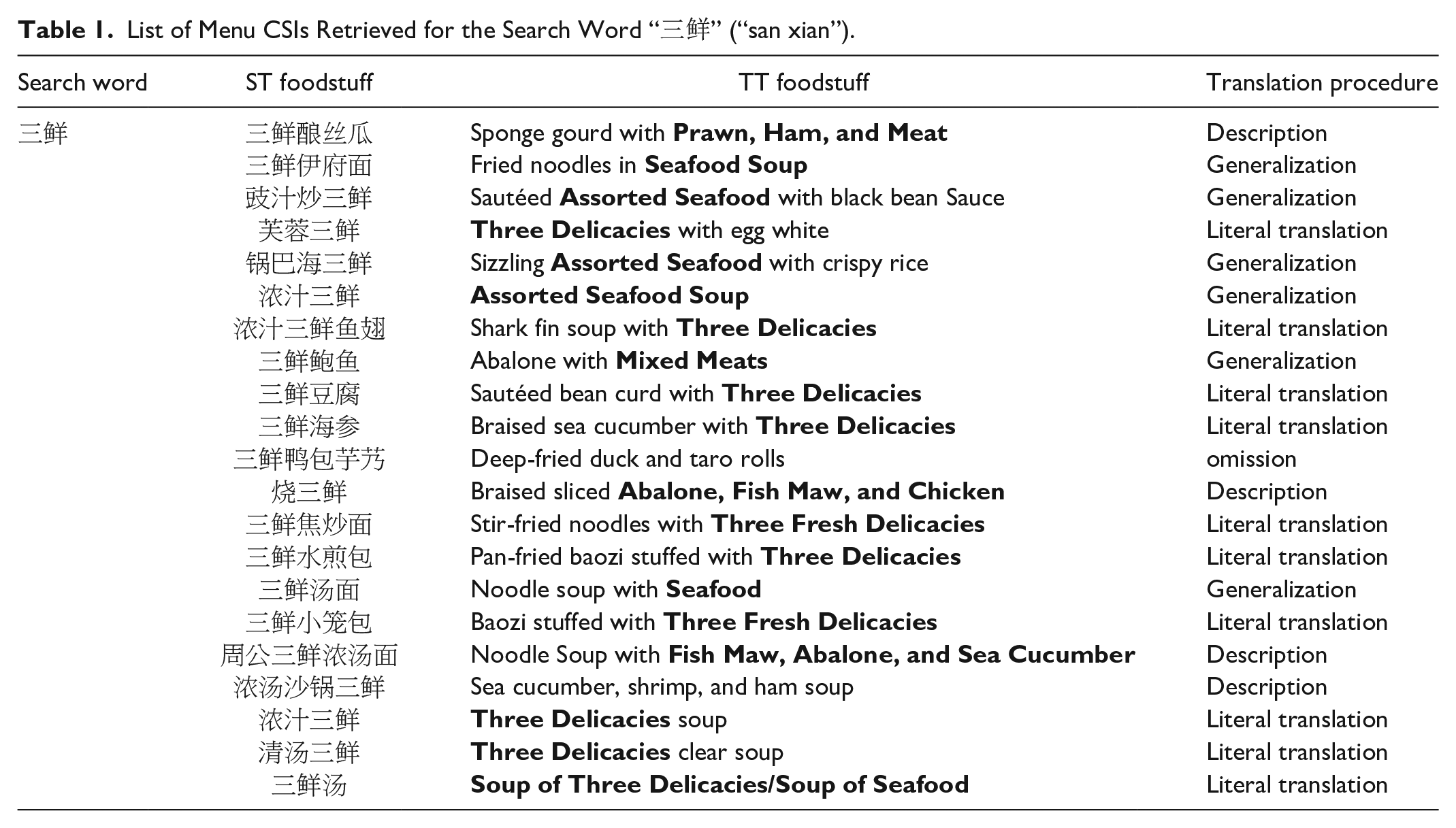
Table 2 and Figure 3 show the results of step 6, which categorizes segment pairs by their translation procedures and computes the relevant counts. if individual micro-level translation procedures are considered, the most frequent is description (39.9%), followed by retention (18.8%), literal translation (14.6%), substitution (10.8%), generalization (4.7%), and retention + amplification (3.8 %).
Distribution of ST-TT Segment Pairs Across Translation Procedures.

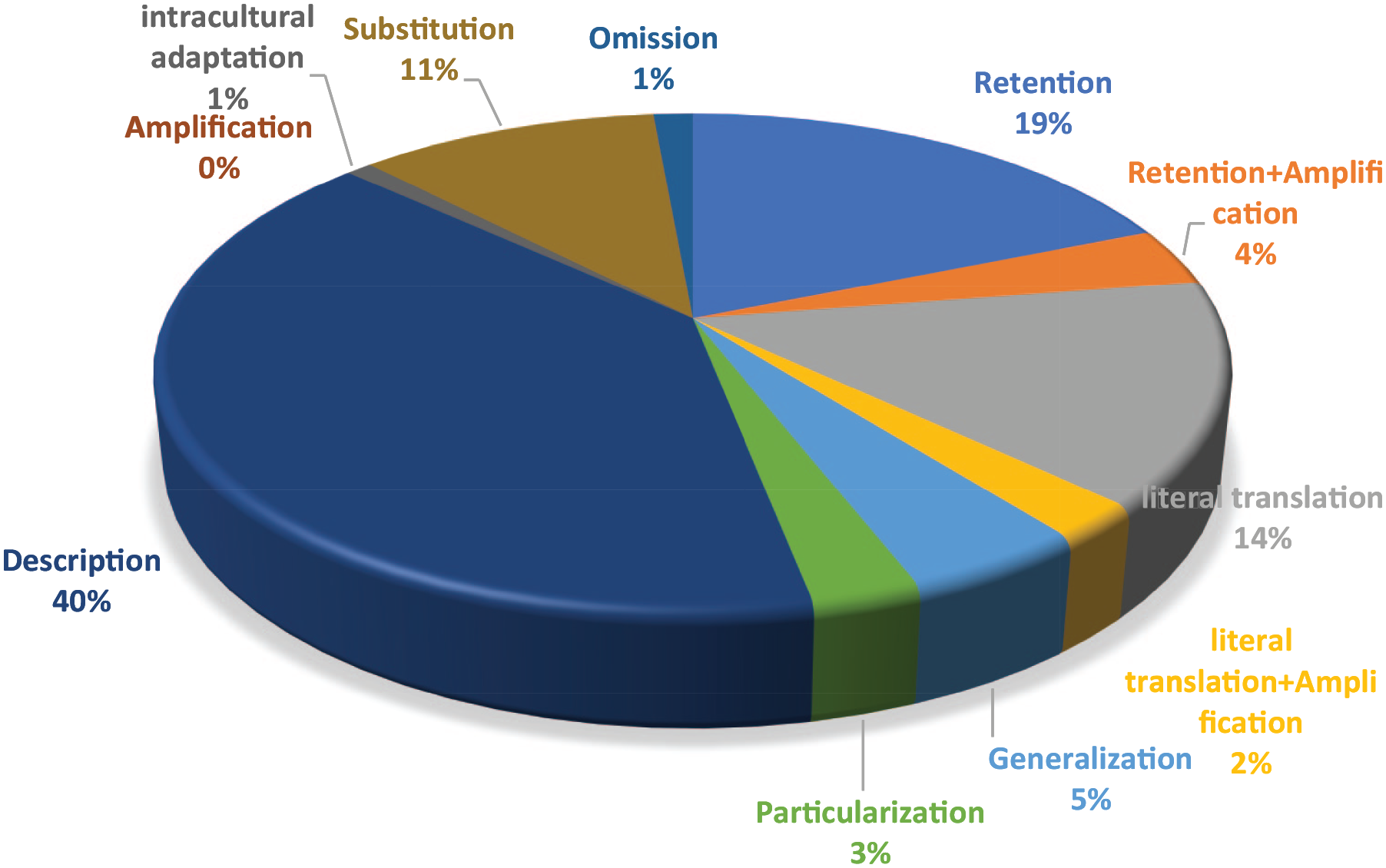
A diagrammatic representation of ST-TT segments pairs distribution across translation procedures.
The remaining procedures are only utilized marginally or never at all (amplification).
The picture becomes apparent if procedures are grouped according to their positions on the foreignization/domestication scale + the degree of translator intervention, as mentioned in Section 2.2. Foreignizing procedures (retention and literal translation) account for 33.4% of the items examined; neutralizing procedures (description, generalization, and particularization) account for 47.4%; and domesticating procedures (intracultural adaptation, omission, and substitution) account for 13.14%. Taking note of the fact that neutralization strategy entails dissolving the “culturality” of the source text CSI’s, the translator in over 45% of the cases have chosen a middle path, in which CSIs are clarified in such a manner that it belongs to neither the target nor source cultural milieus. However, the difference between steering a middle path and leaning toward the source culture is only slightly significant. In addition, when the translators have to choose between the two ends of the foreignization/domestication (source and target) poles, they more often lean toward the source culture than toward the target culture (33.4% vs. 13.14 %). Figure 4 below provides a pictorial view of the percentage distribution of the three types of macro-level strategies along the foreignization/domestication scale.

Percentage distribution of translation strategies along the foreignization/domestication scale.
In step 7, a quantitative and qualitative analysis was undertaken in order to establish relationships between the translation procedures employed and possible factors impacting the selection of procedures. The qualitative portion of this study focused on finding relevant factors, and the following were discovered 7 :
(a) Metonymical/metaphorical use: The item or dish name utilized actually refers to or are associated with other things (e.g., “翡翠” [“jade”] and “芙蓉” [hibiscus/lotus] actually refers to “vegetables” and “egg white,” respectively, in Chinese menus).
(b) Degree of cultural markedness: The TLC has a corresponding item of the ST CSIs, but the extent of institutionalization of the CSI is significantly higher in the SLC than in the TLC. (e.g., “怪味鸡” → Chicken in Piquant Sauce, “臭豆腐 → Special flavored Bean curd).
(c) Brand: This has to do with maintaining the name of an inventor or a historical personality who, because of their fame, are utilized as product labels, including those products(dishes) that were/not directly created by such characters. A trade name, an identifying mark, or a brand name is specified (e.g., “Mapo” in “麻婆豆腐” → “Mapo Bean curd,” “Shaolin” in “少林酥” → “Shaolin su”).
(d) Non-existence: The ST CSI is lacking or is absent in the TLC. (e.g., “抄手” → Wonton Soup).
(e) Polysemous CSI: A single word referring to a variety of foodstuffs, flavors, etc., and thus, leading to meaning inconsistencies and confusions (“三鲜”-san xian,—see Table 1 above).
(f) Imaginary CSI: the item is non-existent in reality and was created for cultural and fictional purposes. For example, “龙凤会” translated as “Stewed Snake and Chicken” and not as “Stewed Dragon and Phoenix because the latter animals are cultural symbols that do not exist in reality.”
(g) False relationship: The sociocultural systems have functional counterparts for a specific concept or item, but these equivalents seem to be either merely apparent (e.g., Chinese “汤圆”—Tangyuan and English “Glutinous Rice Balls have the same meaning,” but the foods they reference are not precisely the same).
(h) Insignificance: The CSI word or item may not affect the comprehension of the translation when removed or omitted.
The quantitative aspect of step 7 involves determining the correlation 8 between translation procedures and factors conditioning them. The outcomes of such analysis will be discussed in the following sections, beginning with the foreignization end.
Retention
The first foreignizing procedure is retention, which features 40 times in the data (18.8%). Unsurprisingly, it occurs 24 times as brand names (“东坡”→ “Dongpo”), and 16 times in cases where a false relationship is involved (“烧麦”→ “Shaomai”). These factors appear to be compatible with preserving the source CSI. A possible explanation on the translator’s part for “retention” correlating with the “false relationship” factor is that the translator is aware that a similar item exists in the target culture. Therefore, applying a “retention” translation solution is tended to emphasize the point of variance between the items of the source and target cultures, hence achieving the goal of preserving the source culture. When one considers the foods “饺子” (Jiaozi)→ dumpling, “烧卖”(Shaomai) → Steamed dumpling[. . .], “水饺”(Shuijiao)→ dumpling, one would observe that these varying foods were translated as “dumpling” in English, which probably may give readers the impression, that these are same items, when in fact they differ in some respect of the fillings, flavors, the occasions during which they are eaten, etc. Therefore, considering only the surface linguistic meaning at the expense of its cultural image may lead to cultural loss and, therefore, “retention” is the only solution to maintain that notion of cultural variance, as mentioned earlier.
Literal Translation (LT)
The last foreignizing procedure is LT. It occurs 31 times (14.6% of the cases), and correlates with three factors—29 cases with “polysemous CSI”: for example, the foodstuff “四宝” (Four Delicacies) in the dishes, “扒四宝” → “Sautéed Four Delicacies,” “烩鸭四宝” → “Braised Four Delicacies of Duck,” “清汤四宝” → “Four Delicacies Clear Soup,” “羊四宝” → “Four Delicacies from Lamb,” etc. designates different types of foodstuffs in these varying dishes(www.baidu.com) and therefore, it is best classified under “polysemous CSIs. Furthermore, literal translation occurred once in a situation of the non-existence of the CSI in the target culture (“茶叶蛋”→ “Tea Eggs”). In this case, literalness does impede communication as the translation solution may leave the readers wondering if the “Tea eggs” are “eggs” served along with “tea” as is normally the case for breakfast in some western cultures when they are, in fact, eggs boiled in tea. LT also correlates once with the degree of cultural markedness (“五味豆腐” →Five-Flavored bean curd), where the item is more institutionalized in the source than in the target culture.
There were some cases of literal translation + amplification, correlating 13 times with metonymical/metaphorical use factor. An example is (“三熏” in “安阳三熏” → “[Anyang]Three Smoked Delicacies (Chicken, Egg, and Pig Offal),” once in polysemous CSI [“套四宝→ Nested Four Delicacies (Duck, Chicken, Pigeon, and Quail)], and once in the degree of cultural markedness, for example, “三白” in “糟溜三白” → “[. . .] Three White Slices (Chicken, Fish, and Bamboo Shoots) with Rice Wine Sauce.” However, this translation procedure is not considered a foreignization strategy because of its combinative nature.
Neutralization: Description
Description is one of the mainly applied and the major neutralizing procedures in the corpus of the study, featuring in 85 cases (39.9%). It tends to correlate with five out of nine factors without being evenly distributed across. Description correlates with non-existence (6 times), with metonymical/metaphorical use (56 times), with polysemous CSIs (16 times), imaginary CSIs (5 times), and with false relationship (2 times), but no instances were found at the intersection of description and other factors such as brand, insignificance, and different degree of cultural markedness. An illustrative instance of description correlating with non-existence would be “臭豆腐” in “臭豆腐干”→ “[Fried] Bean Curd of Strong Odor.” Here, most of the target readers are familiar with “bean curd” but not with its “strong odor.” The non-existence of this food in the target culture is clearer when the item is translated literally as “smelly bean curd,” which may be misunderstood as rotten food, and therefore, lead to misconceptions and cultural conflict—the translation solution of description in instances of non-existence aids in eradicating such cultural confusions and conflicts. The factor co-occurring at a higher degree with description is metonymical/ metaphorical use of ST CSI (e.g., “蚂蚁上树” →Sautéed Vermicelli with Spicy Minced Pork, “老虎菜” →Assorted Vegetable Salad, “金丝绣球,” “花好月圆” →Prawn Balls with Vegetables in Flower Shape, “夫妻肺片” →Sliced Beef and Ox Tongue in Chili Sauce, etc.), where the foodstuffs cannot be figured out from the linguistic components of the dishes. Therefore, to answer the question of “what is this, the translator has no choice but to describe what foodstuffs make up these foods. It can also be observed from the data that when ST CSI means or represent a variety of foodstuffs (polysemy) in English, the translator tends to utilize description as a solution in transferring the item to the target readers to demystify the cultural word. Typical polysemous CSI foodstuff that has been described include “三鲜.” (see Table 1) and “双脆” as found in (“爆双脆” →[Crispy] Pork Tripe and Chicken Gizzard, “爆炒双脆” → [Sautéed] Duck Gizzard and Pork Tripe, etc.). In cases where the ST CSI is imagery, description procedure was also utilized (e.g., “龙凤” in, “龙凤羹” →Minced Chicken and Fish [Thick Soup], “龙凤汤” →Chicken and Crucian Carp [Soup).
Neutralization: Particularization/Generalization
Other neutralizing procedures in the data are generalization and particularization. Generalization is employed 10 times (4.7%), and it tends to co-occur with two factors: degree of cultural markedness (3) and polysemous CSI (7). The most prominent examples of generalization being utilized as a solution to polysemous CSI across linguistic and cultural systems can be found in “八宝” → Various” Delicacies, found in “八宝冬瓜盅” → “Steamed Whole White Gourd Stuffed with Various” Delicacies, “四宝” → Seafood, in “浓汤四宝” →Seafood Soup, etc. Generalization also correlates with the degree of cultural markedness in such cases as “狮子头” → Meat Ball found in “蛋黄狮子头” → Stewed Meat Ball with Egg Yolk, “砂锅狮子头” → Meatballs in Casserole, and “煎扒狮子头” →Braised Meat Ball. There are no cases of correlation between other factors and generalization.
Particularization, the reverse of generalization, is utilized six times in the corpus. Once in the case of metonymical/metaphorical use—“翡翠”(feicui) →jade, which represents “vegetables” in Chinese but translated as “Broccoli” in the example of “翡翠虾仁” →Sautéed Shrimp with Broccoli, and five times with degree of cultural markedness (e.g., “狮子头” rendered as “pork balls” in “狮子头饭” →Rice with Braised Pork Balls,”红烧狮子头→Braised Pork Ball in Brown Sauce,” etc.). This is unsurprising, given that cultural specificity-related translation issues are rarely solved by adding even more specificity to the mix.
Amplification
Amplification is the last of the neutralizing procedures. Somewhat surprisingly, amplification is never used alone in the corpus but occurs 14 times with other procedures, as seen above. The distinguishing line between amplification and description is undeniably very thin; some of the instances classified under “description” in this study do involve amplification of some sort when the TT segment is compared to that of the ST segment. The amplification procedure occurs with the CSIs that have either been retained (eight times) or translated literally (five times). Nevertheless, when the cultural specificity is lost in translation (i.e., the TT section can no longer be considered a CSI), they are treated as instances of “description,” rather than amplification.
Intracultural Adaptation
The last group of procedures is the domesticating procedures. Intracultural adaptation, which features only twice in this study and accounts for 0.94% of the cases, is one of the marginally used domesticating translation procedures in this study. It correlated weakly with the non-existence factor; for example, “抄手” (Chaoshou) → “Wonton” found in “四川龙抄手” → “Wonton Soup, Sichuan Style,” “酸菜龙抄手” → “Wonton Soup with Preserved Vegetable.” Rather than retaining the ST cultural item above (Chaoshou), or substituting it with an equivalent TL item (dumpling), the translator might have believed that “Wonton,” another source cultural element, may be familiar in the TC since it can be found in both manual and online English dictionaries than “Chaoshou,” hence adopting this translation solution.
Substitution
Substitution is the fourth highest procedure used in 23 (10.8%) cases of the data. Furthermore, 15 out of those 23 concerns the same expression, “五香” → Multi-Spiced as found in (“五香鹌鹑” →Multi-Spiced Quail, “五香鸡” →Multi-Spiced Chicken, “五香鹿肉” →Multi-Spiced Venison, etc.). A dictionary search of the expression (“五香”—“wu xiang”) reveals that the expression means: “five spices” (star aniseed, cinnamon, prickly ash, clove bud, and fennel), or “spices” (A New Century Chinese-English Dictionary, 2004, p. 1711). Since the expression “五香” is ambiguous, the translator must have considered it fitting to steer clear of LT, which may propound the issue of ambiguity by supplying a target referent (“multi spiced”), that to some extent, cover the two meanings of the source CSI, even though the degree of “culturality” is profound in the SC than the TC. Therefore, it is not surprising for substitution to correlate with the degree of cultural markedness as is evident in this study (17 times), though this may be a biased representation of the fact because of the reoccurrence of a single ST CSI (“五香”). Substitution also correlates with other factors, such as false relationships (six times).
Omission
Omission procedure is used very sparingly in the corpus of the study (three times, 1.4% of the cases), and correlates with the insignificant factor, that is, the removal of the ST CSI from the translation does not affect the meaning description of the food, concept, or item. For instance, “八宝” in “八宝菊花梨→ Sweet Stuffed Pear” is a metonymy referring to the “pear” that it is co-occurring within the Chinese and as a result cannot be repeated in the TT. Likewise, the eponym “伊府” in “三鲜伊府面” →Fried Noodles in Seafood Soup, is omitted in TT perhaps because it plays no significant role in the naming of the food.
The Correlational Strength Between Procedures and Factors
Table 3 and Figure 5 are the tabular and diagrammatic representations of the correlations between procedures and factors. Figure 5 would be a landscape of valleys and peaks alternating along the factor and procedure axes if it could be visualized in three dimensions. In this two-dimensional illustration below, that image is a little blurry. The low and medium height of peaks reflects the fact that correlations between specific procedures and specific factors are not very strong, even though some combinations can be unquestionably seen to correlate better than others. As previously stated, “brand” (24) and false relationship (16) appear to be a prerequisite for retention to occur. LT is likely to occur when the source CSIs are polysemous (29) in nature; and “description” is most likely to occur when ST CSI is used metonymically/metaphorically (56), even though this number may be biased by the frequency of reoccurrence of some single CSI (“裙边”[19 times]; “罗汉”[6 times]; “八珍”[4 times]; and “翡翠”[3 times]). The rest occurred only once or twice. It must also be mentioned that the ST CSIs were metonymically utilized 45 times and metaphorically in the data. However, because sometimes there is only a thin line between these two rhetorical devices in Chinese, the researchers classified them under one factor. Description is most likely associated with ST polysemous CSIs (16), and substitution is utilized frequently (17 occurrences) when ST CSI have a high degree of cultural markedness in the source than the target culture. The procedures correlating with two factors account for the double-figure boxes in Table 3. the peaks, however moderate they may be, indicate some type of causation. That is, some factors tend to favor certain procedures but not others, as is evident in Table 3; nonetheless, causality is not very strong, except in the case of description and metonymical/metaphorical use, as some of the procedures, even though they did not span across many factors did not correlate well with any of the factors. However, most of the factors have helped to account for several procedures, although to varying degrees.
Correlations Matrix of Translation Procedures and Factors Influencing Translators’ Decisions.


A diagrammatic representation of correlations between translation procedures and factors influencing translators’ choices.
In terms of raw frequency, Table 3 and Figure 5 reveal the correlation between procedures and factors. Thus, a relatively high number at a given point could be due to the correlational strength in relative terms, the factors under consideration, or the mere frequencies of the procedures. In order to neutralize the variables of the factors, the figures in the table could be represented in percentages. However, we will require two different percentages because each figure appears in a column and a row.
At the intersection of “description” and “Metonymical/metaphorical use,” for example, the value 56 stands in relation to both the total frequency of “description” procedure (85) and the “Metonymical/metaphorical use” factor (61), and so, each of these factor and procedure axes would be given a different percentage. As a result, a procedure for determining the correlational strength regarding the two different percentages that can be ascribed to each value in the table has been designed. To maintain results within a realistic range, we developed equation (3) (
Correlation Matrix of Translation Procedures and Factors Influencing Translators’ Decisions Represented in Relative Terms.

let “M” be the translation correlation matrix (Table 4);
For row, let
For column, let
The relative correlation (RC) of selecting a specific translation procedure in “M” is given by:

Where ΣXI is the row total for a specific translation procedure;
The RC of selecting a specific factor in “M” is given by:

Where ΣYI is the column total for a specific factor;
Therefore, the relative correlation (RC) between a translation procedure and a factor can be calculated by multiplying equations (1) and (2). We denoted this as (

Application of proposed formula
Considering the correlation between retention and false relationship in Table 4 as an example;


Table 4 and Figure 6 below show the results for the correlational strength as represented in relative terms.

A diagrammatic representation of correlations between translation procedures and factors influencing translators’ decisions in relative.
The landscape in Figure 6 is relatively defined than in Figure 5. What this means is that the relative correlation values computed by using percentages instead of raw frequencies indicate more peaks, which show out more clearly. The strongest correlation is between omission and insignificance factor: this is not surprising because it would seem reasonable to remove any CSI that does not contribute to the comprehension of the linguistic components in the translation. Also, because their highest correlation value is 100 (optimum attainable value), causality is proven between omission and the “insignificance” factor. The second strongest correlation is between retention and brand (63.10), followed by description and metonymical/metaphorical (58.82), literal translation and polysemous CSIs (51.16); and substitution and degree of cultural markedness (46.54), all of which could be classified as representing medium causality because their correlation values are above or near 50 out of the ideal value (100). Other correlations worth noting are retention and false relationship, which yields a score of 20.60; particularization and degree of cultural markedness, which yields a score of 15.43; intracultural adaptation and non-existence (14.29); and literal translation and non-existence, which yields a score of 11.43. Compared to the highest correlation value of 100, these numbers are admittedly low, with causality being weak, although less weak than other correlations in this study.
Conclusions
To summarize, two major conclusions will be presented, both of which address the study’s three questions, as stated in Section 2. 2. The findings of the quantitative analysis of the data in terms of the relative frequency of micro-level translation procedures indicate striking similarities, but also some differences, with earlier studies. As discussed in Section 4, neutralizing strategy accounts for 47.6% of the cases scrutinized; foreignizing strategy account for 33.4%, and domesticating strategy account for 13.14% (excluding the very few combinations of procedures). This pattern of results is comparable to Marco’s (2019) study, in which neutralizing strategy accounts for 40.24 % of the instances, foreignizing strategy occupies 35.46%, and domesticating strategy accounts for 23.11%. In any case, neutralizing procedures are used more frequently than the other groups of the procedure. This result is consistent with the findings of most of the research discussed in Section 2.3. (e.g., De Marco, 2015; Oster & Molés, 2016; Setyaningsih, 2020), even if they did not all strive for quantification). These studies, in particular, focused on menus and food-related items, which allows for some comparison. The findings also contradict those of previous studies that came up with different results. Demir (2019) findings, for instance, indicate that a target-oriented strategy was applied when rendering food-related items from English to Turkish; however, a comparison between the translation of food-related items in literary texts and food menus text may be slightly out of focus, as norms guiding different activities may vary markedly. As far as Chinese-English food menu translation is concerned, translators often neutralize and very often avoid domestication. While maintaining a middle stance or neutralizing CSI is a good strategy to bridge the cultural gap and improve cross-cultural communication across the two language pairs in this study, information loss was inevitable in the translations, confirming the finding of other scholars (Jiang, 2014, p. 61).
The second point of conclusion regards the correlation between procedures and factors. The main findings in this area are summarized in Section 4 and do not have to be reiterated here. Most procedures span many factors, and most factors cover several procedures. Most of the correlations appear to suggest a moderate causality, with one perfect correlation, suggesting further investigation of the peaks in Figure 5 and especially Figure 6. It might be interesting to investigate if these correlations occur in other corpora involving other language pairs to achieve accretive results in this dimension of research since no individual investigator can provide an exhaustive explanation for the innumerable variables that constitute the complex translation world.
Footnotes
Declaration of Conflicting Interests
The author(s) declared no potential conflicts of interest with respect to the research, authorship, and/or publication of this article.
Funding
The author(s) received no financial support for the research, authorship, and/or publication of this article.
