




Abstract
This study explores employees’ working habits regarding knowledge sharing using new malleable technologies within virtual teams in a Taiwanese society. The exploratory, qualitative data, gained from observations and extracted from 26 interviews, were analyzed using thematic analysis. It was found that employees used internal IS less but made more use of external IT in their everyday activities. It was also found that the structuration of internal IS inhibited their habits and IT practices on account of the problem of “over-embeddedness.” Group members, by contrast, more habitually used external IT to share information and experiences with others because of their strong relational and structural embeddedness in the external IT. In the structuration of knowledge-sharing practices, the appropriation of external IT may explain why users are engaged in such habitual behavior. To foster employees’ working behavioral habits regarding knowledge sharing in virtual teams, an institution can introduce job stability and organizational norms to reinforce structural embeddedness, while integrity-based trust and affective commitment, which underlie cultural homophily, are encouraged in group relationships to reinforce relational embeddedness (relative to Guanxi). This paper thus provides new pathways for group members to develop and sustain their habits in the use of external IT rather than internal IS.
Introduction
Knowledge sharing among employees through knowledge management systems (KMSs) or information technology (IT) has become a pivotal strategy for those organizations looking to deal with their intelligent capital effectively in order to improve organizational performance and competitive advantage (Cakir & Adiguzel, 2020; Son et al., 2020; Su et al., 2021). This is mainly because the evolution of ideas and innovation depends on effective knowledge sharing among employees in organizations, which contributes to the profitable development of innovative products, services, and processes (Singh et al., 2021). Even though organizations encourage employees’ knowledge-sharing behaviors, there is still a challenge to encode, store, disseminate, and reuse knowledge through KMSs (He & Wei, 2009). Prior research studies have endeavored largely to explore how individuals use behaviors of diverse information and communication technologies (ICTs) in their knowledge-sharing behavior in organizations (Chatterjee et al., 2020; Davison et al., 2013). Moreover, from a strategic alignment perspective, firms should invest in resources and create regulations and norms to foster employees’ knowledge-sharing behavior through IT in routine tasks (Kearns & Lederer, 2003). As a result, organizations have focused largely on improving information systems, instead of organizational employees’ beliefs, cognitions, and even their behavioral habits, in terms of knowledge sharing (He & Wei, 2009). For an individual, consciously or unconsciously, utilizing IT for social communication has become part of ongoing behavioral patterns of social interaction (Limayem et al., 2007). Nonetheless, a deeper understanding of how to change employees’ behavioral habits regarding knowledge sharing through KMS or ICTs is limited.
Moreover, the continuous behavior or habits, in terms of knowledge sharing among employees, are significantly different from other information system (IS) continuous behavior in organizations (He & Wei, 2009). This is mainly because a successful KMS continuance needs users to engage steadily in sharing their knowledge in such KMSs. Then, the use of a KMS may give rise to positive feedback, increase the recognition of contributors, and ultimately lead to more contributions. However, there are potential negative results, such as information overload and the opportunity cost to contributors; these may decrease employees’ willingness to share knowledge in KMSs (Pereira & Mohiya, 2021). Moreover, from a strategic alignment perspective, firms invest in resources and create regulations and norms to foster employees’ knowledge-sharing behavior through IT in routine tasks and, as a result, the effective knowledge management mechanism is always embedded with large, frequently-conducted, and higher-level routine tasks (Kearns & Lederer, 2003). However, we have observed that employees, in terms of IT use in knowledge management, may pay more attention to the mobility of information, rather than the sharing of knowledge across team boundaries. Most aspects of knowledge are rooted in informal and undocumented practices, experiences, and artifacts that reside in communities, or that circulate through problem-solving processes (Ou et al., 2016). Social media platforms, for example, Facebook and Line, have become an alternative choice of external IT to support knowledge sharing or social interactions in communities (Pi et al., 2013). Consequently, the phenomenon that organizational employees use the internal IS to a lesser degree but use external IT more for the sharing of best practices motivates this research. Such a phenomenon, as observed in our case study, indicates that most employees have formed habitual ways of using particular external IT for knowledge sharing (e.g., Facebook) rather than the internal IS for knowledge sharing practices. In sum, we consider the choice of external IT for knowledge sharing to be constrained by the interactions of individuals with work practices, group members, organizational rules and resources, and institutional properties.
This unexpected habitual behavior motivates and forms the main objectives of this study in order to offer a deeper understanding of habitual behavior in terms of sharing knowledge in organizations. Drawing on structuration theory and the relevant literature of cognitive habits, this study considers that the formation of individuals’ habitual behaviors could be context-dependent and multifaceted. Finally, this study focuses on the further decomposition of users’ cognitive habits: (Q1) what drives employees to continually share their knowledge in virtual teams? (Q2) what situations and why do employees prefer using external IT for knowledge sharing with other employees rather than utilizing the internal IT? and, (Q3) how do such habits of external IT use emerge and then become sustained in employees’ everyday activities, even after on-the-job training on the internal IS? Prior IS literature has widely addressed two key questions concerning IT-enabled human behaviors: what factors affect habits and whether or not personal habits directly or moderately affect IT usage (Bhattacherjee & Lin, 2015; Chiu & Huang, 2015). However, few research studies have addressed the formation of IT habits given that best practices are often embedded in IT-enabled communities. In this study, the “what and why” questions are addressed with regard to fostering or inhibiting the habits of repeated use of specific IT for sharing knowledge in virtual teams, as well as “how” these habitual behaviors are sustained.
Literature Review
Based on the above-mentioned research questions, this research combined and integrated related theories and references to investigate the working habits of virtual team members concerning their knowledge-sharing behavior within the context of Taiwanese society. The virtual team, as defined in this research, can be regarded as members who come from different organizations or units to cooperate with each other and coordinate their efforts. This is achieved by pooling their facilities and infrastructure and sharing their skills, knowledge, and resources by using related information and communication technologies (ICTs; Chumg, 2015). In this study, the literature review is divided into four areas and is organized as follows. In the first section, the concept and development of virtual teams is discussed, which subsequently provides the definition of virtual teams. Second, we discuss how employees generally develop working behavioral habits concerning knowledge sharing that are formed through accumulated goal-oriented automatic behaviors under the condition of obtaining satisfactory results. Third, the research not only introduces both theories of structuration and embeddedness, it also explores how these may affect employees’ knowledge-sharing behavioral habits. The final section examines the important role of members’ knowledge-sharing behavior in affecting virtual teams’ performance.
Virtual Teams
Virtual teams play a role as the meta-management activities that explore and track abstract requirements in order to realize certain objectives while simultaneously (but independently) investigating and specifying the concrete means by which these abstract requirements can be satisfied (Mowshowitz, 1994). Actually, virtual teams are the “aggregations of autonomous agents communicating and collaborating to achieve common goals” (Gallivan, 2001, p. 278). It has been widely recognized that virtual organizations can foster knowledge-sharing behavior among members by leveraging resources and capabilities effectively to connect different organizational boundaries (Chumg et al., 2016). A virtual team, one example of a virtual organization, allows managers to allocate flexibly teams of employees to complete work cost-effectively (Mowshowitz,1997). This is because a virtual team can be deemed to be a virtually organized team that contributes to knowledge-intensive activities; it is shaped by dynamic interactions between external environments and internal motives (Markus & Robey, 1988).
Specifically, teams are social aggregations associated with mutual awareness and potential mutual interactions (McGrath, 1984) while virtual teams constitute a variety of team interaction processes, such as communication and coordination, for the purpose of fulfilling common goals. Thus, they are surrounded by team structures, tasks, and environmental settings (Schminke et al., 2002). The macro-level of a virtual team, in terms of participating structures, can reflect the structural constraints on the micro-level of communicative actions; these include the rules and resources available for performing tasks or transforming social interactions (Sarker & Sahay, 2003). A shared social context is a pre-condition for a virtual team to render communicative actions, given that team members perceive different information cues, assumptions, preferences, and constraints in their work practices (Cramton & Hinds, 2005; Jarvenpaa & Leidner, 1999). In this study, a cooperative context is assumed. This acts as a shared social context so that team members have the motivation to share knowledge within the virtual team.
The Role of Habitual Behavior
“In descending gradually from the clearest regions of consciousness, habit carries with it light from those regions into the depth and dark night of nature. Habit is acquired nature, a second nature, that has its ultimate ground in primitive nature, but which alone can explain the latter to the understanding.” – Ravaisson Félix (2008)
Habit, referred to as hexis in traditional Aristotelian thought, mediates between potentiality and action (Carlisle, 2010). Ravaisson (2008) defines habits as “being a degree of instinct, a modifiable, pliable, learned impulse to act. It functions mid-way between reflective and decision-making with its time and effort, and instinct with its unerring but changeable responsiveness” while Triandis (1980) describes habits as “situation-behavior sequences that are or have become automatic, so that they occur without self-instruction” (p. 204). An individual, as an animated life form, needs to be able to act; it has the ability to develop normative responses to stimuli that require a minimum level of consciousness (Ravaisson, 2008). Hence, reduced receptivity of an individual is replaced by a semi-automatic ability to respond to these environmental stimuli, and afterwards, habit emerges from spontaneity (Ravaisson, 2008). Such habitual patterns can reinforce the prediction of specific future behavior.
Dickinson (1985) explains the formation of habits from two contrasting perspectives. The first perspective is the mechanistically stimulus-response model that considers habits as specific behavioral patterns triggered by suitable stimuli and formed in mental processes. Ravaisson (2008) emphasizes that habits reveal particular forms of “consciousness” or “intelligence.” The other perspective is the goal-directed actions model which considers human behaviors as more flexible forms of control over the instrumental relations between the actions and their consequences, causing the formation of habits in repeated actions. Verplanken and Aarts (1999) describe habits as “learned sequences of acts that have become automatic responses to specific cues, and are functional in obtaining certain goals or end states.” Habits act as behavioral tendencies to repeat responses that are non-volitional and consistent via the investment of minimal attention in a stable context (Ouellette & Wood, 1998). Grounded in the approach of learning theory, habits reflect a mode of goal-directed automatic behavior to activate habitual actions without deliberation and thought (Aarts & Dijksterhuis, 2000). Such habitual actions become automatic behaviors which are repeated as the experiences conducted in one’s perceptions (Swartz, 2002). Hence, repeated behaviors are often determined by habits rather than by reasoned actions.
Individuals often behave according to their past learning activities or experiences. These have accumulated to shape their habitual actions underlying the dynamic reenactment of an organizational culture (Swartz, 2002). Thus, individuals’ automatic or subconscious responses to specific stimulus in stable contexts (Danner et al., 2008) imply the mental processes of goal-directed behavior behind habit formation (Aarts & Dijksterhuis, 2000). Personal habits with regard to IT use are shaped by the frequency of prior behavior, satisfactory experiences, context stability, and the comprehensiveness of the usage (Limayem et al., 2007). The cognitive process of habit formation stems from the stimulation of automatic responses for individuals and their repeated intentional behaviors in the interaction (Dickinson, 1985). It is considered here that the contextualization of automatic behavioral tendencies would facilitate the repetition of past behavior, and thus the study focuses on the formation of IT habits in knowledge-sharing processes. In this study, IT habits have been further extended as working habits concerning the sharing of knowledge through IT. This has been done in an attempt to understand comprehensively the ingrained antecedents of good working habits in knowledge sharing with regard to connecting team structures, human actions, and working practices, to consider the theories of structuration and the practice lens.
Linking Structuration Theory and the Structure of the Embeddedness of Knowledge
The debate about whether humans create their social worlds via actions and enactments, or whether the regulations of social systems enable human actions and social relationships, is interesting but divergent. Giddens (1979) thus advocates an integrative approach by proposing “structuration theory” which asserts that social systems are composed mainly of subjective human actions and objective social structures. The structural properties of social systems are not only the medium but also the result of the practices that consist of these social systems (Giddens, 1979). That is, resources and rules are constituted as structural properties of social systems, and the relations between actors and collectives are enacted as regular social practices. Research conducted by Giddens (1984) employs the “duality of structure” to explain that human actions create the structures and institutions of social systems which, in turn, shape future human actions. According to structuration theory, social practices are composed of the structures of signification, domination, and legitimation related to human actions, actions which are constrained by the communication of meaning, power, and sanction. Three modalities of structuration (interpretive schemes, facilities, and norms) explain the linkage between social structures and human actions, namely, “the process of structuration” (Giddens, 1984). Interpretive schemes refer to the standardized and shared stocks of knowledge of structural constraints and significations that humans draw on to produce and reproduce meaningful practices. Facilities refer to the structural elements of social systems that are used for exercizing power to produce and reproduce social interactions. Norms are rules and values employed to elicit the appropriate moral and legitimate behavior in recurrent social interactions. Such different overlapping social structures of human activities may consequently lead to individuals’ knowledge-sharing behavior (Razzaque, 2020).
An organization itself can be regarded as a social system, and this social system contains many small social systems. Such organizational or corporate culture may become a barrier to employees within a firm sharing their knowledge (Cabrera et al., 2006; Jolink & Dankbaar, 2010; McDermott & O’Dell, 2001; Pillania, 2006). Basically, organizational culture refers to those invisible core values, shared beliefs, and assumptions, and those visible structures, stories, and artifacts (e.g., common symbolic languages, employees’ clothing, office environments, websites, etc.) that guide members either consciously or unconsciously to behave in visible ways (McDermott & O’Dell, 2001). Hence, the notions of the visible and invisible elements embedded in an organizational culture can be regarded as potential approaches to exploit employees’ conscious or unconscious habitual behaviors when communicating through IT and work practices. The behavioral intention to repeat the same course of action with regard to IT use for knowledge sharing is dependent on how actors consciously or unconsciously activate their automatic cognitive processes (Aarts & Dijksterhuis, 2000).
Furthermore, embeddedness has been widely applied in explaining a variety of social activities: for instance, economic behavior (Granovetter, 1985), the competitive advantage of firms’ networks (Uzzi, 1997), knowledge transfer (Kogut & Zander, 1996), social mobility (Lazzarini et al., 2008), and disruption and acceptance of IS (Polites & Karahanna, 2013). The “embeddedness” concept is used here to explain how social relations are embedded in organizational processes, routines, and structures to shape the institutionalization of knowledge sharing (Walker et al., 1997) and how such goal-directed experiences automatically foster the formation of IT habits (Aarts & Dijksterhuis, 2000). “Social embeddedness” refers to the degree to which human actions occur in social networks, which can exchange or share private information as well as tacit knowledge (Schultze & Orlikowski, 2004). Overall, team embeddedness in this study indicates a similar concept of social embeddedness to post constraints on human actions but differs slightly by excluding commercial exchange. With reference to the case of Toyota (Dyer & Nobeoka, 2000), network embeddedness at an association-level meeting is better in fostering the sharing of explicit knowledge, whereas team embeddedness in joint problem-solving at a team-level is more efficient for the sharing of tacit knowledge. In sum, the embedded social interactions among work-related members to create team embeddedness can foster shared practices and interpersonal relationships which aid engagement in communicative actions (Schultze & Orlikowski, 2004).
The “embeddedness” concept has two key components: personal relations and structures (i.e., networks). Gulati (1998) defines that “network embeddedness” consists of relational embeddedness and structural embeddedness. Relational embeddedness is about social cohesion, especially the extent to which strong/weak ties exist in a network for either fine-grained information exchange or novel information exchange between members. Structural embeddedness, on the other hand, refers to the structural position (dense versus sparse) which members occupy in a network (Uzzi, 1997). Strong ties foster information exchange with low environmental uncertainty; they enhance trust, shared interest, and long-term relationships, as well as fostering the exchange of fine-grained knowledge among network participants (Uzzi, 1997). In contrast, weak ties are better for exploring the context of new innovations (Rowley et al., 2000). Dense networks promote shared behavioral norms and cooperation (Walker et al., 1997) but often obtain redundant information (Rowley et al., 2000). In contrast, sparse networks foster participants’ ability to obtain information efficiently; they cannot, however, impede opportunism (Rowley et al., 2000). To summarize, it is inferred here that the effects of relational embeddedness on knowledge sharing are contingent on structural embeddedness and the associated environmental context.
We consider structural embeddedness to be the social expectations and norms that are embedded in a web of social attachments that place constraints on human actions (Colemn, 1988). In addition, we consider relational embeddedness, as enacted in the guanxi which defines the dynamics in the personalized social network of power and is an important system of belief in Chinese culture, to foster mutual trust, goodwill, obligation, and reciprocity in reinforcing social interactions. In this study, team embeddedness is defined as the networked members in a virtual team and consists of relational and structural embeddedness (Rowley et al., 2000). Thus, this research links structuration theory and the embeddedness of local knowledge structures to explain certain aspects concerning why and how team embeddedness can foster habits in terms of knowledge sharing in virtual teams.
The perspective of considering knowledge to be embedded in team members or work practices does not completely coincide with the practice lens theory (Orlikowski, 2000). Knowledge is considered to be embedded in “recursive interactions” among the structure, agency, practices, and IT (Schultze & Orlikowski, 2004). Hence, structuration theory is drawn upon in this study to address how team members use IT to share knowledge with others in their work practices. A practice lens refers to emergent technological structures which are enacted in practice to meet the institutional, interpretive, and technological conditions for shaping the ongoing constitution of the structures (Orlikowski, 2000). From a “philosophical” perspective, a practice lens, in terms of everyday activities, can constitute the social practices and building cornerstones of social reality (Feldman & Orlikowski, 2011). Thus, a practice lens is considered here to be both appropriate and useful in addressing IT use in recurrent social activities, such as employees recurrently sharing knowledge with colleagues in work practices. A practice lens can help in observing how IT users are able to define and modify technological properties, thereby appropriating the recurrent use of such technologies for specific activities (Schultze & Orlikowski, 2004). Here, therefore, the structuration of IT and the structuration of best practices have been combined to shape the structuration of “technologies-in-practice” (i.e., the enacted and reenacted structures of technology use) in knowledge-sharing practices. The term “technologies-in-practice” refers to the routine enactment of specific structures (e.g., rules and resources) in which people use a specific IT in recurrent social practices (Orlikowski, 2000). In terms of the practice lens, virtual teams, team members, IT, and work practices are considered to be the four main entities that are constituted and reconstituted in recurrent social practices.
Knowledge-Sharing Behavior in Virtual Teams
Virtual teams are designed typically for organizations to gather members who have critical and necessary knowledge or expertise so that they may collaborate online in order to address complicated or non-routine work tasks (Alsharo et al., 2017). Members of virtual teams may work together from dispersed areas and time zones, and be built from several organizations (Davidavičienė et al., 2020). Virtual teams seem to engage more in knowledge-intensive tasks which involve knowledge sharing and exchange. Hence, the successes and effectiveness of virtual teams rely on the degree to which members increase their beliefs in terms of sharing knowledge, communicating, and collaborating with each other (Alsharo et al., 2017).
Even though virtual teams can offer a great many benefits for organizations, they still face unique challenges. For some instances, members of virtual teams are dispersed in various geographical locations; they may cooperate temporarily and coordinate with others through ICTs (Alsharo et al., 2017). Prior research studies have demonstrated that the trustworthiness of members plays an important role in affecting the knowledge sharing behavior of virtual teams (Alsharo et al., 2017; Pangil & Chan, 2014). Leung and Wang (2015) also found that the factors of cultural diversity and identity can threaten the knowledge-sharing behavior and creativity of virtual team members because of the characteristics of intercultural difficulties and conflicts.
Hence, in light of the importance of the continuance of KMSs in virtual teams, we investigate here how members’ habitual behavior in terms of knowledge sharing can be formed in such teams. Utilizing the concepts of the knowledge-based theory of firms and structuration theory, this study proposes a novel conceptual model by employing a thematic approach. This unexpected habitual behavior motivates and forms the main objectives of this study in order to offer a deeper understanding of habitual behavior in terms of sharing knowledge in virtual teams.
Methodology
Selection of the Sampling and the Interview Procedure
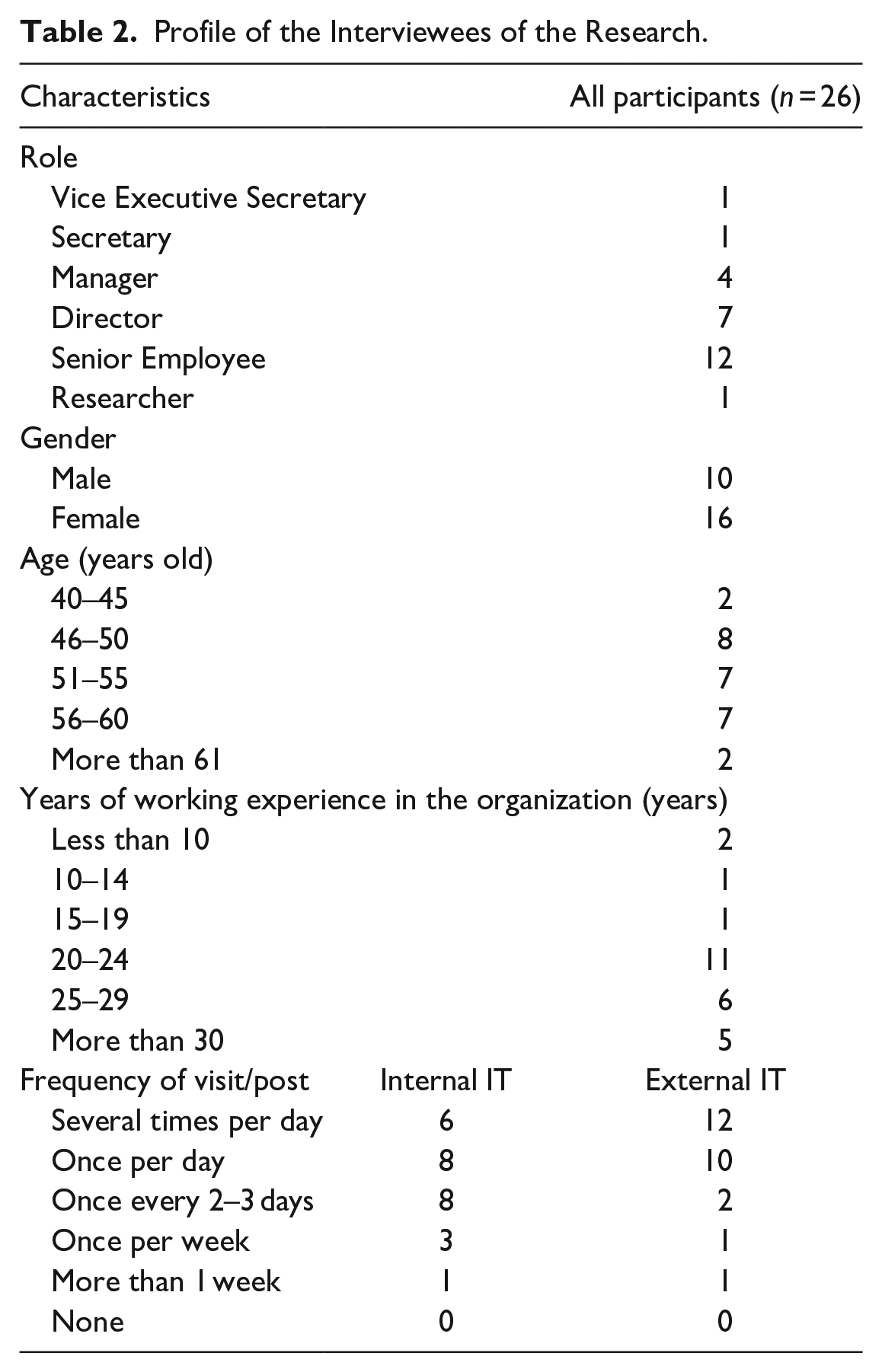
The aim of this research is to explore the factors affecting the behavioral habits concerning employees’ knowledge sharing in the entire system of the Taiwanese Farmers’ Associations (FAs). FAs is an especially legal person organization of farmers’ associations in Taiwan. FAs is also a comprehensive business entity which is multi-functional and multi-purpose, with both interlinked and complementary operations. Its nature is both educational, economic, financial, and social. The whole system of FAs is regarded as a virtual organization of non-governmental organizations (NGOs) in this study, which is composed of FAs of counties and cities in Taiwan and the National Training Institute for Farmers’ Organizations (NTIFO; Chumg et al., 2016; Huang, 1992; Huang & Li, 1994). At the same time, the virtual team, as defined in this study, is composed of various dynamic and temporary organizations. Its employees cooperate and coordinate their efforts to pool their facilities and infrastructure, as well as share skills and abilities, through the use of ICTs, knowledge and resources, such as e-mail, knowledge management systems (KMSs), and video conferencing, to pursue specific goals or market opportunities. At present, there are around 11,000 employees working for FAs while only around 7,900 employees have had the experience of working within the virtual environment. This study took a practice lens to interview employees from the same geographic area of FAs and NTIFO by exploring meaningful and valuable activities regarding continual knowledge-sharing behavior. This study adopted purposive sampling, including both intensity and snowball sampling (Teddlie & Yu, 2007). Consequently, a total of 26 semi-structured interviews were conducted over the period of May 2017 to March 2018. The sample profiles and IT/IS usages, shown in Tables 1–3, reveal that most employees working within the selected virtual teams had more than 20 years of working experience and their average age was over 45 years. Only two employees had been working within the virtual team for less than 10 years. After completing all the interviews, the audio recording was transcribed carefully into Microsoft Word 2010.
Profiles of Semi-Structured Interviewees.

Profile of the Interviewees of the Research.
IT/IS Usage and Profile of the Participants of Virtual Teams of the Research Case.

Case Study Design and Research Method
Having considered the inductive nature of the research, this study carried out an exploratory case study and a qualitative approach to address the research questions. Thematic analysis was employed to examine the case in question which exhibits the complex and dynamic phenomena involved in the social interactions of a virtual team (Braun & Clarke, 2006). Clarke et al. (2008) defined six phases of thematic analysis: (1) gaining familiarity with the data; (2) generating initial codes; (3) searching for themes; (4) reviewing themes; (5) defining and naming themes; (6) producing the report. Thematic analysis is useful for interpreting and exploring the story behind problems in real-life contexts and takes into account both semantic and latent themes (Braun & Clarke, 2006; Mojtaba & Zohreh, 2010). Meanwhile, NVivo 8.0 software was utilized to analyze the qualitative data on account of its usefulness for coding texts, sound, and images, as well as its effectiveness in integrating and analyzing qualitative data.
Reliability and Validity
The interview questions were developed and pilot interviews were carried out by the study to evaluate the content in terms of the validity and reliability of the interview questions. Afterwards, several sub-questions were modified on account of some rather repetitive responses from interviewees. Consequently, the reliability of the analytic results of the study was enhanced by carefully comparing and analyzing through peer review, as well as, ultimately, by sharing the analytic results with the interviewees. Concerning the validity of the analytic process, this study established a coherent justification for the resulting themes which included providing a detailed description; carrying out semi-structured, in-depth interviews; and performing mutual checking.
Results
Knowledge Sharing Behavior Embedded in Organizational Routines, Processes, and Structures
According to Rowley et al. (2000), the external ties formed with specialists via invited speeches are regarded as weak relational embeddedness (i.e., weak ties) that can foster the exploration of new knowledge. In contrast, the internal ties among members via team discussions or meetings are considered to be strong relational embeddedness (i.e., strong ties) that can foster the exploitation of specific know-how. An organization with strong structural embeddedness (i.e., dense networks) can foster the exploitation of specific information (Rowley et al., 2000). Regarding the reading teams organized for exchanging information and personal experiences, a virtual team can be considered as a dense network associated with strong structural embeddedness. Moreover, small teams of employees who have habitual contacts, regular formal or informal meetings, and work together, can be deemed to be the ideal vehicles to embed best practices in the networks for sharing knowledge (McDermott & O’Dell, 2001). From our case study, it was found that the sharing of working documents, experience, and expertise among team members is embedded in their organizational routines, processes and structures (Table 4).
Qualitative Analysis of the Interviews.

Job Stability Embedded in a Team Structure
Employees who have a long-term or permanent job will build a dense and stable network of relations, shared understandings, and political coalitions (Granovetter, 1985) Such leading behaviors can be enacted in the social structures. Social structures are acted out in recurrent human actions via the use of interpretive schemes, facilities, and norms which produce and reproduce the actions (Schultze & Orlikowski, 2004). The embeddedness of work practices in social interactions indicates the construction of customs, habits, and norms mechanically and automatically (Granovetter, 1985). Hence, we claim that the structural embeddedness, which can be regarded as a social mechanism for enacting assumptions, expectations, and rules, can encourage humans to produce and reproduce the matched structure to shape their social actions in practice.
As can be seen from the qualitative analysis, virtual teams develop a dense network to sustain positions for each member; this promotes job stability to reinforce the structural embeddedness in the network (De Cuyper et al., 2009). Such an institutional enactment is a recurrent process to develop structural embeddedness which, in turn, is constantly enacted in the current social structure. A strong structural embeddedness can foster team members’ ability to help each other for the support of cooperation rather than for the competition for self-interested behavior. We found that long-standing organizational norms are better for encouraging team members to involve themselves in cooperative work, such as the sharing of personal experiences, by embeding practices, and role connections within socially constructed communities.
Trust, Commitment, and Cultural Homophily Embedded in Member Relations
Integrity-based trust leading to affection improving knowledge-sharing behavior
The concept of a “relational team” indicates a trust relationship between employees and the employer; this creates the most efficient employment mechanism in firms (Le & Lei, 2018; Williamson, 1979). Relational embeddedness, through either strong or weak ties, can foster more personal and collaborative involvement in the sharing of private or situated information, and tacit knowledge across organizational subunits (Hansen, 1999). Team members develop the relational embeddedness associated with trust and commitment which can further foster their intimacy and reciprocity (Rowley et al., 2000). Vertical relations between employees and management, and horizontal relations between specialist teams, constitute the relational embeddedness of practices; these can foster commitment to the sharing of new knowledge (Adler, 2001). Our findings from the qualitative data showed that mutual trust may be driven by a reaction to integrity, rather than capacity; this, in turn, affects their knowledge-sharing behavioral habits. When asked, Respondent 23 responded: I will share my knowledge and experience with colleagues with great integrity in private, rather than considering their capability. In other words, the degree of my willingness to share knowledge with others depends mainly on how worthy I trust them to be. Hence, I will share my knowledge more with my colleagues if we have a long-standing ganging and trusting relationship. Hence, from the narratives of the interviews, it was found that team members with long-term formal and informal relationships had developed strong relational embeddedness in the institutionalization of work routines by building integrity-based trusting relationships which fostered the sharing of personal experiences and know-how with colleagues. In sum, these virtual teams have developed a long-standing guanxi network for connecting with employees who care more about “decades of friendship” than the economic benefits of a taker-giver dyad.
Organizational affective commitment increasing employees’ passion for improving knowledge-sharing behavior
Organizational commitment, composed of affective, continuance, and normative commitment, has been widely recognized to play an important role in affecting employees’ willingness to consider staying in or leaving the organization (Chumg, 2015; Meyer & Allen, 1997). In this study, we found that employees paid more attention to the extent of affective commitment in the organization; such willingness arouses a good deal of their passion for sharing their knowledge. The findings from the interview data revealed that a total of 10 respondents described a significant interplay of affective commitment, passion, and knowledge sharing in the organization. When asked if she had any issue regarding knowledge sharing, Respondent 22 responded: Out of my affection for the organization, I always enthusiastically help colleagues and share my knowledge with them so as to enhance the performance of the organization. As mentioned above, the affective commitment of employees might be helpful in enhancing their passion in the organization, which in turn, may improve the willingness of employees to share knowledge in the virtual teams (Chumg, 2015).
Cultural homophily among colleagues makes compact social networks
Homophily can be linked to the structures and similarity of the interpersonal networks of humans, in which they share many common aspects, such as personal characteristics, social population, and behavior (Chen, 2020; Chumg, 2015; McPherson et al., 2001). Such characteristics are formed and constituted through families, geographic propinquity, and organizations in social systems. Our findings from the interview data showed that a total of 16 respondents described how cultural homophily influenced their ability to get along with each other within the virtual team. When we asked Respondent 18 about the workplace network, she responded: Respondent 17 and I have known for 25 years because we have studied in the same elementary, junior high and senior high schools and have lived in the same area since childhood. Because of this, we are so happy to cooperate and coordinate with each other and share numerous life stories privately and working experience anytime. According to the comment of the respondent, close contact between colleagues with similar domestic backgrounds, education backgrounds, and geographical locations creates a friendly workplace network and a depth of ganqing. This makes employees happy to work together and share a lot of their own ideas and views.
The structuration of IT of the virtual team in forming IT working habits concerning information and knowledge sharing has been explored as well as organized by interviews and observations of monthly meetings and electronic log files in this study (Table 5).
The Structuration of “Technologies-in-Practice” in Knowledge Sharing Organized by This Case Study Research.

Consequently, the production of the themes of our study were analyzed and formed by being revised four times. Meanwhile, we conducted the approach of member checking with the interviewees to comprehend and reconfirm the relationships of each theme of the qualitative method. Figure 1 presents the final thematic map of our study’s qualitative method.

The thematic map of the qualitative approach of this article.
Conclusion
This research is based on the entire system of the Taiwanese Farmers’ Associations (FAs). This system can be considered the virtual teams of non-governmental organizations (NGOs), which are composed of various dynamic and temporary FAs. Our first research question was solved by analyzing qualitative results to gain insights into the factors that influence knowledge-sharing behavior among employees in the FA virtual teams. This is clearly an interesting and unique background because the industry is characterized by stable, necessary, and increasingly rapid changes. Our results show that the majority of FAs’ practitioners are highly enthusiastic with a sense of mission to improve the agricultural quality and development of Taiwan; they treat this mission as their ultimate goal. They are very aware of the necessity of lifelong learning and continuous personal development for improving the Taiwanese agricultural industry overall.
The analytic processes of this study were divided into two categories by the initial coding process: virtual team members who were accustomed to using internal IS for knowledge sharing and virtual team members who were accustomed to using external IS for knowledge sharing. Our analytic results found that the structuration of IT utilization in knowledge sharing was a recurrent process of structural embeddedness and relational embeddedness in the everyday activities of the virtual teams. The incorporation of structural and relational embeddedness into team embeddedness can help in understanding how the virtual team members develop habitual behavior in terms of IT use in their recurrent work practices. The study also confirmed that KS is common practice for the virtual teams in this study. This resulted in a clear theoretical understanding that the continuous changes faced by the virtual teams have, in turn, led to a cyclical process of personal structural embedding and relationship embedding in daily activities. This has ultimately resulted in knowledge-sharing behavioral habits and the acquisition of cultural and personal knowledge. In turn, the necessity of personal continuous professional development is recognized as a foundation for the creation of habits related to KS and continuous learning. This makes FAs different from other competitive sectors that are characterized by secrecy and the isolation of knowledge.
The second question was to understand under what circumstances and why employees prefer to use external rather than internal IT to share knowledge with other employees. The study found that job stability and organizational norms in a virtual team could reinforce its structural embeddedness, thereby helping team members to develop their IT habits in knowledge sharing. However, best practices are enacted more through recurrent human actions in team interactions rather than in team structures. This is because of the stickiness of boundary-spanning interactions that create a barrier to building mutual trust and contextual stability. It is considered that relational embeddedness, enacted in virtual teams in terms of passion, norms, and affective commitment, can foster IT habits in knowledge sharing. Structural embeddedness is associated with the use of resources and the regulation of sanctions so structural embeddedness better explains the use of internal IS in sharing explicit practices in virtual teams. In contrast, relational embeddedness is more related to the “guanxi” network and the long-term relationships in a virtual team. We thus consider relational embeddedness better explains the use of external IT for sharing tacit knowledge in virtual teams. Reduced use of internal IT implies there are barriers to reinforcing structural embeddedness in virtual teams. A possible explanation for this is that the design of the internal IS ignores “technologies-in-practice” in the structuration. Moreover, we consider that the choice of either an internal IS or external IT should depend on the appropriation or use of modalities in the structuration. For example, storytelling is better enacted and reenacted in interpretive schemes to allow team members to interpret specific knowledge-sharing activities that are conducted in external IT rather than the internal IS.
The third question concerns how such habits of external IT use emerge and are sustained in employees’ everyday activities, even after on-the-job training for the internal IS. The research found that uses of either internal IS or external IT on the part among virtual team members cause change in social interactions and change in knowledge-sharing practices. Moreover, the results showed that a few members mentioned the difficulty in taking the first step to share knowledge with others through the internal IS because they are concerned that others will not support their ideas or thoughts. Hence, it is evident that if the virtual teams cannot effectively convey and shape the culture of knowledge sharing and lifelong learning, the benefits and advantages of the internal IS advocated by the organization do not result real feelings for employees. Compared with the external information systems utilized by members of the virtual teams (based on homogeneity, ganqing based on guanxi, and integrity-based trust), internal information systems do not have any substantial benefits for them. Conversely, there are many hidden worries (e.g., knowledge property) that need to be considered. Many factors have reduced the desire to use the internal IS within the context of virtual teams. Finally, this work sheds light on three key implications concerning the formation of habitual behaviors in knowledge sharing. First, the enactment of interpretive schemes in the structuration of IT and best practices can foster the habitual use of an internal IS or external IT to create shared meanings. Second, the enactment of resources in the structuration can reinforce the use of an internal IS to create communities of practice with the use of external IT reinforcing or changing team members’ capabilities. Third, the enactment of norms in the structuration can constrain team routines and team interactions in the internal IS, as well as constrain cooperation and communication in work practices in the external IT.
Limitation and Implications
Before discussing the implications of this research, it is necessary to realize some of its intrinsic restrictions. First, the data were collected in the same geographic area of FAs and NTIFO in Taiwan. This was conducted to eliminate unnecessary differences caused by employees because of different geographical and social-environmental profiles of the virtual team. Hence, to guarantee the external validity of the results, future research could replicate this research using different areas, organizational backgrounds, and different KMSs to summarize the results. Moreover, due to the scale of the interviewees, the sample size of the final analysis for this study was limited. Although the sample size is acceptable for the analysis of this research, future study might extend this research and test a larger and more heterogeneous sample size which would offer stronger statistical power and allow more rigorous model testing. Finally, the findings of this study are expected to provide academics and managers with a framework for ingraining their employees’ good habits in terms of sharing knowledge for improving organizational performance. To achieve this aim, we provide the following theoretical and practical implications of this study.
Implications for Theory
First, we utilized structuration theory to understand comprehensively how employees have a willingness to share their knowledge through internal or external ISs. Based on structuration theory, with the concept of embeddedness as the theoretical platform, this article explores the different meanings of these factors in the formation of habitual behaviors in terms of knowledge sharing in a clear way; this therefore enriches the understanding of what drives people continually to contribute knowledge. In this case study, the analytic results revealed that most employees tended to use the internal IS less for sharing tacit knowledge within the virtual teams. According to the theory of embeddedness, both structural and relational embeddedness are driving forces in reinforcing habits in terms of knowledge-sharing practices. The findings from the interviews indicated that the structuration of an internal IS inhibits the working habits concerning knowledge sharing in practice because many relevant and irrelevant routines embedded in the IS cause a problem of “over-embeddedness.” In contrast, it was found that team members more frequently used external IT to share information and experiences with others because the symbolic languages, shared jokes, and common stories were easily embedded in the structuration of external IT. The findings showed that employees were reluctant to modify their behavioral habits with regard to the internal IS because they were more concerned about the potential conflicts of divergent needs. In contrast, users could define the technological properties of an external IT to meet their needs in terms of “appropriation use” in order to adapt to changing working habits. We believe that, in future research, it would be interesting and insightful to further study the statistical comparison of knowledge contribution from the perspectives of internal and external ISs.
In addition, we revealed that the influence of motivation on the use of KMS for knowledge sharing may be different in NGOs. We provided preliminary evidence and a theoretical explanation of why employees have different levels of engagement with internal and external ISs to share their knowledge. Human actors in an organization perform work by drawing on existing stocks of knowledge, norms, and resources; these constitute the meaning, domination, and structure of the legitimacy of the organization (Orlikowski & Robey, 1991; Orlikowski & Scott, 2021). The qualitative analysis showed that the norms, in terms of the rules and values which shape institutional properties, can act as moral regulations and sanctions. These create a system of legitimation that governs employees’ actions and thoughts. They eventually become working habits in terms of making proper responses, sharing values, and carrying out shared interaction protocols in the stability of the organizational context. Moreover, the findings of this research show that the different extents of employees’ affective ties to an organization and colleagues are interwoven; they are a pivotal antecedent in affecting working habits concerning knowledge sharing through both internal and external ISs.
Third, by reviewing the literature on employees’ knowledge sharing through IS, our study supports and further improves the research on cognitive habitual behaviors through internal and external ISs. In this study, we summarized the notable factors that have been demonstrated in the existing and continuing IS research, and proposed a more comprehensive KMS model. The empirical findings support our proposed model and therefore provide a generalization of KMSs that are ubiquitous in business organizations. This study also utillized thematic analysis to verify the strong regulatory effect of habitual behavior on the continuation of KMS, thus emphasizing the important role of employees’ habits in future IS research.
Finally, the fact that this appeared as a research result confirms that the inductive method adopted in this research was successful. Emerging theories seem to be based on case studies rather than biased by general literature reviews. In this sense, the results of this study are very different from those obtained by deductive methods (such as surveys based on questionnaires), which either prove or refute the a priori theories inferred from the existing literature in the field. The theory proposed in this article has a strong foundation and discusses the significance in the Taiwanese context. However, it can be reasonably expected that although employees from virtual teams composed of different organizations or units have obvious differences in terms of organizational cultures, the processes, procedures, and standards of the industry have strong similarities in their common missions. Therefore, it is hoped that the findings and theoretical propositions of this study are transferable and can be used to explain experiences in the context of other countries. Therefore, future work should focus on testing the transferability and promotion of the propositions of this article among the wider Taiwanese NGO industries.
Implications for Practice
For practitioners, understanding the continuity of employee knowledge sharing is critical to motivate the effective use of KMSs, as well as of multiple intellectual resources within any organization. The findings of this study provide deep insights into the complexity of employees’ cognitive habitual behavior about the continuation of KMSs.
First, the findings showed that employees were reluctant to modify their behavioral habits with regard to the internal IS because they were more concerned about the potential conflicts of divergent needs. In contrast, users could define the technological properties of external IT to meet their needs in terms of “appropriation of use” in order to adapt to changing working habits. Appropriation of an external IT can explain why users are engaging in the current use of social media platforms and are even sustaining their habits regarding technology use. Taking a practice lens, the structuration of IT and best practices can shape the structuration of “technologies-in-practice”; this can show how people develop and sustain their habits in the use of external IT rather than an internal IS.
Second, it was found that working habits cannot be separated from consciousness and intelligence but are, in contrast, what enables the individual to behave freely in a situation characterized by complexities and change. For example, employees who can instill good working habits regarding knowledge sharing with colleagues are able, by judging who has integrity, homophily, and is trustworthy, to become good partners and then generate ganqing (one of the elements of guanxi related to affection), rather than being merely colleagues. The results of this article may address one of the most contentiously unresolved issues regarding the definition of working habits via internal and external IT systems. Therefore, compared with human instinct, employees’ working habits with regard to knowledge sharing can be regarded as an accumulative instinct judged by the individual’s consciousness and intelligence.
Third, IT users who draw on structures to engage in similar work practices will enact similar “technologies-in-practice”; these, in turn, foster those structures which are reenacted either through reinforcement or transformation (Orlikowski & Scott, 2021). Reinforcement causes a stable, continued, or habitual use of IT, whereas transformation causes a substantial change in the enactments. Change in “technologies-in-practice” indicates changes associated with interpretive schemes, resources, and norms in the use of a technology (Orlikowski, 2000). Hence, people will most likely develop habitual use of IT by reinforcing “technologies-in-practice.” Taking “technologies-in-practice” as an outcome of a practice lens, this study considers whether the recurrent interactions among team structures, team members, work practices, and technological artifacts can enable or inhibit IT habits with regard to knowledge sharing in virtual teams.
Finally, the analytic results from the virtual teams indicated that most members did not frequently use the internal IS (e.g., the official website, mobile app, or web-based TV) developed by the FAs when they shared knowledge with others in everyday activities. This unexpected phenomenon can be explained from the structuration perspective. The incorporation of organizational routines into the design of an internal IS, which is intended to encourage employees’ habitual use in knowledge-sharing activities, includes two unreal assumptions. The first assumption concerns technological stability while the other is technological completeness. This study considers that both assumptions are far from changing technological properties or adapting the configuration and reconfiguration of work practices. The embeddedness of routine tasks in the internal IS cannot encourage team members to develop habits of IT use in knowledge sharing because the “over-embeddedness” inhibits any change in the “technologies-in-practice.” In contrast, the interviews with team members indicated that they more frequently used social media platforms (e.g., Facebook) to share information and experiences with others. Symbolic languages, shared jokes, and common stories are often used in communicative actions and are better enacted in the structuration of an external IT rather than an internal IS. The boundary-spanning interactions among team members, technological artifacts, and work practices are more likely to be produced and reproduced in stable and trust-committed contexts which are better at fostering structural and relational embeddedness in the structuration of best practices; these lead to IT habits being reinforced.
Footnotes
Declaration of Conflicting Interests
The author(s) declared no potential conflicts of interest with respect to the research, authorship, and/or publication of this article.
Funding
The author(s) received no financial support for the research, authorship, and/or publication of this article.
