




Abstract
The advent of the 2014 FIFA World Cup and 2016 Olympic Games witnessed a widespread upsurge in bending and ignoring the law in Brazil. Consequently, there was a torrent of exasperated public voices questioning the results of these events for ordinary Brazilians. This paper aims to examine how the Brazilian people’s experiences of these mega-events impacted the traditional Brazilian ideology of racial democracy. Using archival data, in-depth interviews with experts, and unstructured and spontaneous interviews with 143 ordinary citizens in five Brazilian state capitals conducted during field research, I explore how constructive opposition spurred the emergence of civic nationalism, based on shared norms and values of justice, democracy, equality, and the rights to become full-fledged citizens. The emergence of such shared “civic” principles among many groups, as a counter-narrative of traditional Brazilian national identity, destabilized the long-standing narrative of “racial democracy” as a Brazilian ethnic national identity.
Introduction
“It doesn’t make sense to be the soccer country if there’s no health and education!”
Media reports of millions of Brazilians taking to the streets to oppose the two consecutive mega-sporting events, the 2014 FIFA World Cup and the 2016 Olympics, shocked people worldwide. Nobody could have predicted that citizens would protest against the World Cup in Brazil, the “country of football.” The strikingly satirical message that this article opens with conveys the overwhelming antipathy of many Brazilians to the events. Considering that mega-sporting events have long been regarded as powerful instruments for social unity, “these vibrant protests might signal the end of their taken-for-granted role as promoters of nation-building” (Jung, 2020, p. 1).
Sport, particularly football, as a phenomenon of Brazilian popular culture, has always been associated with politics and possible political abuse (DaMatta, 1991). Preparations for the two events saw laws increasingly being bent or even broken, and growing numbers of Brazilians began to question the authorities’ intentions and the consequences of these “neoliberal” games for ordinary residents (Jung, 2020). A series of small and large protests erupted nationwide between June 2013 and 2016 in various host cities. The government’s top-down, autocratic methods and actions in the event-preparation stages, including human rights violations, forced evictions, and increased expenditure at the expense of public services, provoked an outpouring of criticism.
The use of mega-sporting events as a powerful tool for nation-building and consolidating a host country’s existing national identity has been empirically demonstrated by scholars (Andrews & Ritzer, 2007; Bairner, 2001; Edensor, 2002). However, the Brazilian context shows that rather than acting as a unifying force, mega-events can elicit a fierce public backlash. As Professor Carlos Vainer (interviewed July 23, 2018, Federal University of Rio de Janeiro), contended: “Look at not only the past World Cups or Olympic Games but also recent ones held in China, South Africa, and Russia. There were no such cases like Brazil, where they eventually failed to achieve nation-building.” Rather, the two events and ensuing massive anti-mega-events demonstrations increased national dissension and disrupted the long-held national identity—racial democracy as an ethnic identity that actually misguided Brazilian reality.
This study attempts to answer the following research questions: How did the hosting of these two mega-events, Brazilian people’s experiences, and related protests impact the Brazilian traditional ideology of racial democracy? How did the erosion of the notion of racial democracy influence the dynamics of Brazilian (alternative) national imaginaries? This study suggests that a series of urban experiences, including exploitative policies in the planning stages of mega-sporting events, partially influenced the powerful emergence of civic nationalism. I show how the emergence of this new national imaginary, and civic nationalism based on increasingly shared ideals and norms of justice, democracy, equality, and the rights to become full-fledged citizens, contributed to the rejection of the mythological notion of a racial democracy. This concept of racial democracy was an idea “imposed by the Brazilian political elites throughout the twentieth century as a means of nation-building” (Jung, 2020, p. 4). Ultimately, this article maintains that the emergence of such shared “civic” values among various groups, as a counter-narrative to traditional Brazilian national identity, destabilized nation-building centered around the long-standing narrative of miscegenation and racial democracy as the Brazilian national identity in the historically deep-rooted ethno-cultural sense of what it means to be a Brazilian.
Theoretical Framework: Ethnic and Civic Model of Nations in the Context of Brazil
This article primarily aims to identify how the hosting of the two mega-sporting events led to the robust rise and dissemination of a civic sense of national identity instead of the country’s traditional ethno-cultural identity. Therefore, it is appropriate to examine both concepts: the racial democracy that has long shaped “ethnic” Brazilian-ness and civic nationalism. The following section discusses the theoretical differences between ethnic and civic types of national identity, to situate Brazil’s racial democracy within the framework of ethnic nationalism.
Types of National Identity: Ethnic Versus Civic
Although national identity is considered a unitary, single form of collective identity, scholars have pointed out that nations with different types and elements exist (Ignatieff et al., 1993, Ignatieff, 1996; Roshwald, 2015; Smith, 1991). Among these aspects, ethnic versus civic nationhood is the most representative form of division (Smith, 1991). Simply put, ethnic nationalism is based on “claims of kinship as manifested in shared culture,” and civic nationalism is “rooted in shared citizenship and political values” (Roshwald, 2015, p. 1). This dichotomy that differentiates ethnic and civic nationhood was introduced by Smith (1991) as a non-Western and Western conception of the nation. By suggesting that national identity is intrinsically complex and not reducible to a single aspect, Smith highlights the following: Historic territory, legal-political community, legal-political equality of members, and common civic culture and ideology; these are the components of the standard, Western model of the nation. . .At the same time a rather different model of the nation sprang up outside the West, notably in Eastern Europe and Asia. . .We can term this non-Western model and ‘ethnic’ conception of the nation. . .Whereas the Western concept laid down that an individual had to belong to some nation but could choose to which he or she belonged, the non-Western or ethnic concept allowed no such latitude. (1991, p. 11)
In other words, according to Smith, while national unity in a Western or civic nation stems not just from a historic territory, but also from laws, institutions, and the legal-political equality of members holding a shared civic ideology and culture expressed in a set of duties and rights, in a non-Western or ethnic model, national unity arises from a “fictive super-family” based on descent, language, vernacular culture, and customs.
Similarly, Billing et al. (2006) characterize the civic nation as founded on shared political ideals and values, not the common ethnicity that ethnic nationalism depicts. Michael Ignatieff et al. (1993), Ignatieff, (1996), a particularly influential writer on nationalism, also compared two types of nation and nationalism according to the nature of belonging. Ethnic nationalism, he claims, emphasizes common “blood” and fraternity; the sense of belonging to a nation is based on emotional attachment. Thus, in this model, it is widely believed that the nation creates individuals. In contrast, Ignatieff et al. (1993) characterizes the civic nation as a “community of equal, rights-bearing citizens, united in a patriotic attachment to a shared set of political practices and values.” Ignatieff considers this nationalism as necessarily democratic, because “it vests sovereignty in all of the people.” Civic nationalism emphasizes law rather than roots, and people’s feelings of belonging are based on rational attachment and choice, not inheritance. Thus, in this form of nationalism, the individual creates the nation.
The civic type of collective identification is described as being “inclusive for every citizen notwithstanding their ethno-cultural origins” (Caron, 2013, p. 221). According to Auer (2004), membership in the community of the civic nation can thus be defined primarily in political terms, civic virtues being more significant in this model than ethnicity, common culture, and language. Ignatieff (1996) argues that civic nationalism defines the nation in terms of willingness to adhere to its civic values such as democracy, equality, human rights, and justice, not in terms of shared ethnicity. Therefore, he believes that through the framework of law and political participation, this type of nationalism can help reconcile social divisions. However, while ethnic nationalism can promote substantial cohesion among “them” against ethnic others, it cannot help overcome other divisions based on gender and class.
The Making of Brasilidade: Racial Democracy as the Central Axis of the Ethnic Brazilian National Identity
According to Domingues (2005, p. 1), racial democracy is a “racial system devoid of any legal or institutional barrier to racial equality, and to some extent a racial system devoid of any manifestation of prejudice or discrimination.” The notion of racial democracy has been widely used to describe Brazil’s racial harmony as one free of racial discrimination and hierarchical race relations. This idea, first proposed in the 1930s by renowned Brazilian sociologist Gilberto Freyre, has long typified how Brazilians view themselves. In Casa-Grande e Senzala (The Masters and the Slaves), Freyre ([1933] 1956) highlighted the promising role of miscegenation, thereby asserting that racial mixing would eventually lead to social development and harmonious race relations in Brazil. Thus, he simultaneously attempted to create a new ethnic category, the “racially mixed Brazilian.” During the first term of the Getulio Vargas administration (1930–1945), this notion was widely spread through popular culture, notably through popular music and sports. These cultural activities epitomized the creative power of racial mixing as a nation-building strategy. This ethnic and cultural nationalism, based on what Pravas (2003) calls “hibridação estratégica (strategic hybridization)”, was enormously influential in shaping the Brazilian national identity. Among other iconic activities, football undoubtedly played a dominant role in determining what it meant to be Brazilian. The sport became “the paramount arena through which the sense of Brazilian nationhood was formulated, expressed, and promulgated throughout the twentieth century under the banner of racial miscegenation and racial democracy” (Jung, 2020, p. 16).
However, scholars have revealed that racial democracy in Brazil is nothing but a myth that actually disguises the reality. McLucas (2005) suggests that a widespread sense of “racial hierarchy” still persists within Brazilian culture, and has unconsciously trapped Afro-Brazilians. Bailey (2004) maintains that his analysis of racial attitudes in Rio de Janeiro contradicts the long-held idea of racial democracy, which shows that most Brazilians continue to recognize that racism plays a defining role in Brazilian society. In her book Race and the Brazilian Body: Blackness, Whiteness, and Everyday Language in Rio de Janeiro, anthropologist Jennifer Roth-Gordon (2016) explores how embedded racism, what the author calls “comfortable racial contradiction,” is pervasive in people’s everyday cultural, linguistic, and bodily practices. Based on ethnographic research in Rio de Janeiro, she suggests that while racial differences are cordially unspoken of, whiteness is still tacitly regarded as a privileged, superior quality, and a source of pride. This perspective posits racial democracy as a smokescreen fabricated and manipulated by political elites to conceal the deep-seated socioeconomic inequality and structural racism in Brazilian society. This idea of racial democracy was particularly widely used during the authoritarian regime (1964–1985) to obstruct public discussions regarding racial inequality and justify the suppression of race-based organizing (Eakin, 2017).
However, racial democracy evidently still constitutes a dominant element of Brazilian national identity. Twentieth-century Brazilians may be characterized as people with ethnocultural ties in the absence of a civic national identity. Brazilians could create a sense of belonging to a nation within themselves on the basis of their strong cultural citizenship, mainly through futebol and samba, but without the rights they would possess through political or civic citizenship. From the 1930s to the late twentieth century, Freyre’s vision of a coherent and prominent narrative of ethnocultural identity took shape in Brazil, but struggled to bloom into a civic identity because of the lack of representative politics under authoritarian regimes (Eakin, 2017, pp. 220–221). This popular ideology of racial democracy formed the central axis of Brazilian national identity, even into the 21st century.
This section examines the differences between ethnic and civic nationalism to build a theoretical framework for this study. Based on this framework, I argue that a series of negative urban experiences, such as exploitative policies related to preparations for the mega-sporting events contributed to the rise and dissemination of civic nationalism in the country by deconstructing Brazil’s conventional ethnic nationalism.
Methods
This study employed qualitative methods to explore how Brazil’s hosting of the World Cup and the Olympics affected Brazilian national imaginaries. In particular, I focused on how the consecutive hosting of mega-sporting events sparked and consolidated a potent civic nationalism in a country whose citizens’ sense of national belonging was traditionally and fundamentally tethered to ethno-cultural components primarily grounded in the concept of racial democracy throughout the 20th century.
This study used both archival research and secondary data, including newspapers, magazines, polls, publications by civil society, and previous research on Brazil’s mega-sporting events. I also conducted 4 months of field research in Brazil in 2018, visiting five state capitals that held either the World Cup or the Olympic Games: Curitiba, Manaus, Salvador, São Paulo, and Rio de Janeiro. These cities were chosen for their ability to symbolize the physically separated, and politically and culturally diverse Brazilian regions: the North (Manaus), Northeast (Salvador), South (Curitiba), and Southeast (São Paulo and Rio de Janeiro), to ensure balanced interview data and to eliminate territorial bias in the data because fieldwork in only one or two representative Brazilian cities could impede holistic thinking and make a proper synthesis of data related to Brazil and its people difficult.
In the course of my field research, I conducted in-depth interviews with social movement activists, academics, public lawyers, and representatives of various regional and national associations to ascertain the impact of mega-sporting events. Expert interviewees were carefully chosen by pre-contact through the researcher’s literature review and online search prior to field research. The pre-contact method was conducted through Facebook messages and e-mail correspondence, and experts who accepted the interview with the researcher were provided with consent forms and preliminary questions in advance. Expert and stakeholder interviews allowed me to better understand the actual impact of the two events on various sectors of Brazilian society, chiefly on the lower class and the country’s socio-political arena. These interviews were also significant for obtaining detailed information on the exploitative attributes of mega-sporting events and their destructive legacies in Brazil.
Apart from in-depth expert interviews, the data collected primarily consisted of unstructured interviews with 143 “ordinary” Brazilian citizens in five cities, whose personal accounts enable us to “narratively” understand the reformation and negotiation of Brazilian identity in relation to ordinary citizens’ experiences with mega-sporting events. I suggested that narrative inquiry be employed in this study as a mode of gathering information through interview participants’ storytelling and as a mode of understanding their experiences through constructing meaning. As Clandinin and Huber (2010, p. 436) succinctly put it, narrative inquiry, a relatively novel qualitative methodology, is the “study of experience understood narratively.” I chose narrative inquiry, which is especially useful to questions of identity, as this study follows the idea that identity is narratively constructed. Hinchman and Hinchman (2001, p. xviii) suggest that “identity is that which emerges in and through narratives.” Rosenwald and Ochberg (1992, p. 1) also pointed out that “personal stories are not merely a way of telling someone about one’s life; they are the means by which identities may be fashioned.” Thus, interpreting stories told by the interviewees helped me to encapsulate their experiences of and ideas about the mega-sporting events, and to understand the rise of the competing narratives of Brazilian identity in relation to these events. In other words, this study combines a social constructivist perspective and a qualitative methodology to capture “intersubjective meaning” (Finnemore & Sikkink, 2001) and reconstruct ordinary people’s voices and narratives. As the study aims at a deep “interpretation” of the changing dynamics of national imaginaries in Brazil as a result of hosting mega-sporting events, it does not attempt to analyze and test causal associations (Table 1).
Number of Interviews with Ordinary Citizens and Expert Interviews by City.

These interviews were mostly spontaneous, conducted on street benches and in parks, squares, cafés, hotel lobbies, or in the interviewees’ living rooms. There was no formal recruiting process, and no predetermined and structured set of interview questions. The conversations lasted between 20 and 90 minutes. Respondents differed greatly in terms of occupation; I was even able to interview impoverished and homeless urban individuals and a favela (slum) dweller. I could not ask interviewees to provide sensitive personal information such as class, age, and race, given that the interviews were spontaneous.
Fallacy of Legacy: Mega-Sporting Events, Ongoing Controversies, and Enduring Bad Memories in Brazil
“We Hated the Games!”: Pessimistic Voices From the Streets
As in any other country, the announcements made by FIFA (Fédération Internationale de Football Association, the world governing body for football) and the IOC (International Olympic Committee) that Brazil would be the host nation for the World Cup and the Olympics spurred a “national” celebration and festive mood throughout the country. It coincided with Brazil’s historical economic boom and its subsequent elevation as a significant international presence during the Lula administration. Both Brazilian elites and ordinary citizens firmly believed that Brazil could successfully prepare for and host the World Cup and the Games with full support from all parts of the country.
However, this dream did not last long. The federal and local governments carried out neoliberal urban reorganization, implementing several mega-event policies in preparation for the World Cup and the Olympics, based on the so-called “state of exception.” In this context, Mier (2014) pointed out that Brazil’s local governments took advantage of the mega-events as an excuse for and a shortcut to neoliberal restructuring. Thus, many favelas in Brazil, particularly in Rio de Janeiro, experienced novel versions of neoliberal development as a result of the events, including failed social programs, new private security, and gentrification. The Brazilian case nicely fits within the economic and political rubrics of neoliberalism in the context of mega-sporting events in particular, which basically (with variations) claims to advocate eliminating obstacles to the free market system, promoting the virtues of privatization and commodification, celebrating economic self-sufficiency, attenuating social programs, and criminalizing the urban poor and homeless (Giroux, 2005).
During these processes, the privileged—including private parties, construction companies, and politicians—gained exclusive benefits, while the marginalized were disenfranchised (Whitson & Horne, 2006, p. 84). These series of procedures, in effect, made “right differences” become more evident and noticeable in Brazilian society. Castells (2015) sheds light on Brazilian public opinion with the statement that before the events, the media and politicians were amazed by the popularity and intensity of nationwide demonstrations in Brazil, with the support of 89% of the Brazilian people. In the case of the World Cup in Rio, 63% of Rio residents in 2011 believed that mega-sporting events would benefit the city, while by 2015 only 27% responded that the events would be beneficial, thus marking a significant decrease (Global Nonviolent Action Database, Aug. 2, 2017). According to the Pew Research Center’s report (2014), the majority of Brazilians in 2014 (61%) felt that hosting the World Cup would have a negative impact on the country, with only 34% giving positive responses (see Figure 1).
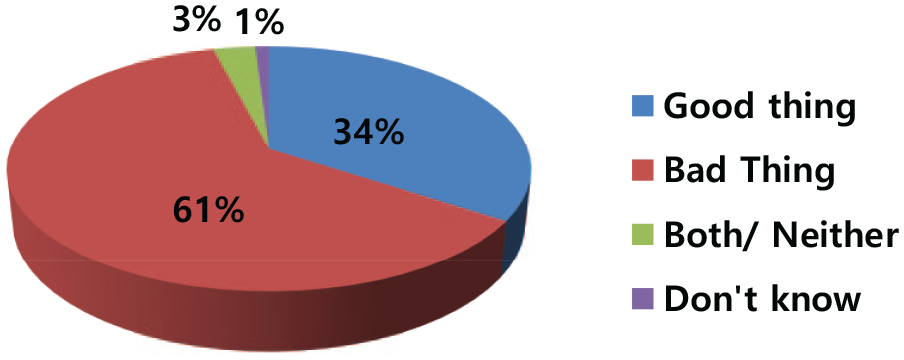
Most say hosting World Cup is bad for Brazil, 2014.
The data gathered during my 2018 fieldwork in Brazil is consistent with these figures. Those who were in favor of Brazil’s hosting the World Cup and Olympic Games pointed to the profits generated from foreign tourists as a primary reason for their positive answers. Luciedry, a college student in Manaus and an informant, commented: “From my point of view, it was good and it was positive in terms of economy. Many tourists came here and they stimulated economic profits. Also, society and people in Manaus could also interact with foreign cultures, which is rare in our city.” A São Paulo resident remarked: “I really liked the World Cup in Brazil. I live near Arena Corinthians, and at that time, many tourists came to the stadium and every day was a fiesta! The World Cup was a unique source for Brazilian alegria (joy). Also, the event generated huge numbers of related jobs, although they were temporary. It helped a lot and offered an opportunity for unemployed Brazilian people.”
An anonymous hotel worker in Salvador suggested a positive side of the World Cup from a newer perspective of politics of attraction and soft power: “Although the World Cup has produced intense controversies among Brazilian people, I personally think it was great. Particularly, I think the World Cup made people across the world more familiar with Brazil. In other words, the event enhanced Brazil’s international visibility.”
Although there were some favorable attitudes toward the mega-events, my interview results clearly revealed that a majority of Brazilian citizens expressed a strong antagonism. Their responses were associated with questioning the legitimacy of hosting such mega-events in terms of their timing, given Brazil’s economic and political turmoil, and the issue of investment priorities. “Constructions for whom?” Lucas, a university student in Manaus, said: “It was a total failure. The government invested heavily in the construction of stadiums and infrastructure, neglecting true necessities for Brazilians’ quality of life, such as education, health and housing, and many others.”
Joselito, a street vendor I met in Salvador, was more open in his dissent: “I really disliked the World Cup. Lower-class people, like me, who sell something on the street, suffered from city-wide construction such as stadiums and apartments, which disturbed people’s transit and emptied the streets where I sell. Praça da Sé was also closed, where a huge number of street vendors are gathered. I personally think it triggered a type of unemployment for street vendors. This consequently made prostitution more rampant throughout the city.”
Rodrigo, an interviewee in Curitiba, pointed out that Brazil’s hosting the mega-events was no longer justified: “Do you remember Brazil’s corruption scandal, lava jato during the preparation period for the World Cup? This is the reality of Brazil. Like this, politicians benefited a lot from the Cup, but the debt is ours. There is a huge debt due to the hosting of the Games. Also, what was ridiculous is that the completion of the construction of the avenue that links the airport to the city center was delayed, completed the very day before the World Cup. Where did all that, our money go?”
Interviewees in São Paulo and Rio de Janeiro were no different. “It was the worst ever,” said São Paulo resident Marcos. He further commented: “I love football as other Brazilians do. However, I disliked the World Cup here in Brazil. I think the World Cup in Brazil was a typical means of concealing the corruption in our country. Brazilian politicians are all thieves. The more we concentrate on the World Cup games, the more people’s concern about political corruption is distracted. Politicians here in Brazil exploited the World Cup to steal our money. This is because, in Brazil, football is one of the most effective ways to cover up political corruption!”
As illustrated by the number of street voices heard above, the majority of my interviewees registered a highly negative collective memory of the World Cup, and partly, the Olympic Games in the case of Rio residents. Their main reasons for disliking the events were: (1) Brazil’s socio-economic-political crises that caused the loss of legitimacy for hosting the games during a critical situation; (2) investment priorities, meaning heavy governmental investment in sports-related preparations at the expense of public services such as education, health, security, and housing; and (3) revelations of political corruption, which is deep-rooted in Brazilian society, in the process of construction and development associated with the World Cup and the Olympics.
Brazilians’ antagonism toward the so-called mega-events exploded as a form of social mobilization prior to the events; the antagonism never ceased even in the post-event periods. These cynical and pessimistic memories collectively held by a majority of Brazilians produced a negative discourse on the World Cup and Olympic legacies, which remain a topic of heated debate.
The Fallacy of Legacy: Mega-Sporting Events as White Elephants
The recent experiences of the World Cup and the Olympic Games in Brazil have shown that they left a negative legacy. The voices of ordinary Brazilian citizens on the streets expressed cynicism about those legacies. Jorge, a taxi driver, whom I met in Manaus, said: “I don’t know exactly how people in the other cities feel, but for Manaus, there is no such legacy. This is because, in our city, there is no “cultura de futebol (football culture).” We don’t have a football club in the first division, but the government invested hugely in the construction of the stadium. Now, it has become a headache.” In this context, Mier (2014) similarly pointed out that the best team in Manaus is in the fourth division, where arenas costing USD 300 million appeared just for the World Cup.
I met hotel owner Roberto, who was also the president of the Associação Brasileira da Indústria de Hotéis de Amazonas (Brazilian Association of the Amazonas Hotel Industry). Many would assume that professions associated with hospitality would have positive views on the mega-event legacies, particularly because it could attract a large number of tourists to host cities. During the interview, however, Roberto pointed out that the expected legacy because of the World Cup was just a rosy illusion, particularly if the city is not well-known, compared to the more popular and more famous tourist destinations of São Paulo and Rio: “The government positively estimated the sustainable impact of the World Cup on tourism industries. However, this was totally false. There were very short-term and temporary effects. I expected that tourists would walk around the city, visit restaurants and shops, but that was not the case. Rather, they disappeared to another city right after they watched a match. The governmental expectation was false and this expectation related to tourism was not achieved.” His remarks clearly suggest that the mega-event generated a very short-term, temporary effect on tourism in Manaus.
Other cities registered similar experiences. An anonymous tour guide I met in Salvador said: “As a tour guide, I was really waiting for the World Cup in our city because I thought a huge number of tourists would bring us profits. However, far fewer people came to the city than expected, and they just moved on right after watching a game.” In Curitiba, my interviewee Rodrigo agreed: “Brazil has two major cities that many people around the world might know and want to travel to. . . In the case of our city, people visited only to watch a game and departed right after the matches, doubtless to São Paulo and Rio.”
Others suggested that the World Cup and the Olympics further divided people and society, rather than promoting social cohesion, as many other host countries have done through such events. Regional asymmetry within the cities was also noticeable in the process of constructions carried out in preparation for the Olympics, particularly in the case of Rio. Specifically, Rio’s Zona Sul (South Zone), where wealth is traditionally concentrated, benefited, while other regions were relatively marginalized. Luiz Roberto, whom I met in Rio, commented during the interview: “There was no such legacy for me. Basically, it should be pointed out that the constructions were overpriced because of chronic corruption in our country. . .Even after the games, we have no access to the stadiums. . .The Olympics separated people. This means that some urban renovations only favored the south zone of Rio.” Similar comments could be found in the interview with Anderson, who said: “The Olympic games are nothing to me and have not positively impacted my life. I live in Zona Oeste (West Zone) in the city, and we had nothing, nothing, and nothing.”
Mega-events in Brazil were seen not as being for athletes but for elites. An anonymous taxi driver’s comment during an interview in Rio is worth noting. “For the World Cup and the Olympics, the money did not go to us, but went to the elites. Transport improved? No, it didn’t. Health and security? Deteriorated. The only beneficiaries were conglomerates and politicians who were engaged in them. Our quality of life has never ever improved.”
Brazilian people questioned “superfaturamento” (overpricing) of the stadiums and a variety of constructions, which attracted a huge amount of money under the name of “investments,” and their “utility” in the post-events era. In other words, these facilities that were constructed for the events at an astronomical cost were considered “white elephants” by many Brazilians. Although only four interviewees actually mentioned the term elefante branco (white elephant), far more than one-third of participants (59 out of 143) criticized the uselessness of facilities, or the tremendous follow-up management costs of various stadiums. Access to them in the post-event period was severely restricted and the heavy investment was at the cost of other significant areas, such as economic growth and public services. The only actual legacy was the heavy debt generated by the preparations for the mega-events. An anonymous hotel owner in São Paulo summed up the situation thus: “The World Cup put Brazil in a financial predicament. First and foremost, it was not productive, but gave us huge debts. Look at the stadiums in other regions. Like cities in North or Northeast Brazil, the football teams are in the second or third division. Do you think that it is reasonable to pour a lot of money into the construction of stadiums for second- or third-division teams? Again, it only left debt and was truly a white elephant.”
The media also criticized the skyrocketing debt in Brazil caused by mega-events. O Globo (Aug. 19, 2018) pointed out that the Olympic Games left “a legacy of debt and broken promises,” which reached around R$ 52 million. Valor (Jan. 6, 2017) suggested that mega-events held in Brazil accelerated the rhythm of indebtedness in Rio. ESPN Brasil (Aug. 10, 2017) was also sarcastic in their news title about the legacy of the 2016 Rio Olympics: “Um ano depois, o que a Rio 16 deixou para o Brasil? Uma cidade e um país envoltos por corrupção, dívidas e promessas perdidas (One year after, what did the Rio Olympics leave for Brazil? The city and the country wrapped with corruption, debts, and lost promises).” Eduardo Coutinho, an economist at Ibmec (a private university in Rio de Janeiro), sees the legacy of mega-sporting events in Brazil as a residual, according to an interview with Hoje em Dia (May 2, 2016): “The economy and the level of happiness of the population only improved while the games were taking place. Most infrastructure problems still exist. There is, in fact, no legacy.”
Finally, Alexandre, a citizen of São Paulo, summed up the ugly side of the mega-events’ legacy that has been explored throughout this section: “I love football, and I liked all the World Cups, but I didn’t like our World Cup. We needed to develop all the areas of our society, but failed. In terms of the World Cup legacy, every single host country has produced a very positive legacy. However, Brazil has achieved nothing at all. We had no qualifications and were not well prepared as a host country because we had financial and political problems at that time. Think about the United States or Europe. They are economically developed and possess a stable domestic market. For these reasons, they have fundamental capacities to generate and inherit the World Cup legacy while Brazil failed. We also expected a huge inflow of foreign tourists from all over the world but the reality was that the tourists were mostly from poor countries of Latin America, so we had no such big influx of capital and tourist expenditure. It counted for nothing, and the World Cup legacy could be expressed in one word, ‘failure.’”
Toward a “Civic” Narrative: The Destruction of Racial Democracy as a Legacy of Mega-Sporting Events
Since the late-1990s, social controversies have grown around the idea that racial democracy is a myth or reality; modern Brazilian society witnessed the decline of the notion and its reality (Eakin, 2017). Although the controversies and debates intensified throughout the first decade of the 21st century, no one could deny that a racial democracy based on miscegenation and popular culture has remained a central axis that represents what it means to be Brazilian. The notion of a racial democracy in Brazil has played a pivotal role both in (1) maintaining an ethnic and cultural sense of national identity based on racial miscegenation, and (2) concealing inequality within Brazilian society based on the manipulation of and emphasis on the “democratic” character of racial relations.
As in the case of the Diretas Já (Direct Elections Now) movement in 1984 and the Caras Pintadas (Painted Faces) campaign that demanded the impeachment of then-president Fernando Collor de Mello in 1992, anti-mega-event movements sparked the rise of a powerful civic nationalism. Although these two historical protests share common points in that they contributed to the emergence of civic nationalism, this study argues that they differ in some ways, notably in terms of the forms of civic nationalism generated by each and how each relates to the existing discourse on racial democracy. Anti-mega-event demonstrations have shown that people called for social and civic rights based primarily on increasingly shared norms of democracy, human rights, equality, and justice, directly contradicting “the legitimacy” of racial democracy prevalent in Brazilian society. Thus, the movements against the 2014 FIFA World Cup and the 2016 Olympics in Brazil contributed significantly to delegitimizing the notion of racial democracy, which has increasingly lost its standing in Brazilian society.
This situation does not necessarily mean that Brazilian anti-mega-event demonstrations alone fueled the powerful emergence of civic nationalism. As Tatagiba (2014) pointed out, the 1984, 1992, and 2013 protests promoted the ideal of participatory democracy and democratic institution building, which consolidated the base of civic nationalism. What is particular and ironic in anti-mega-event movements was that Brazilian-ness, of which sport, and, football in particular, was a major component, was deconstructed by football and sporting events themselves. Abers and Oliveira (2013) also held that organized groups and people involved in the 2013 protests were less optimistic than their predecessors in terms of the possibility of constructing a racial democracy from within the existing political system. Overall, the presence of large- and small-scale opposition to the World Cup and the Olympic Games in Brazil during 2013 to 2016 clearly indicates that the prominence of democratic civil rights values contributed to the further rejection of the idea of racial democracy as a fundamental ethnocentric Brazilian-ness that had been imposed by the government, political elites, and academics throughout the 20th century.
This section investigates personal narratives based on unstructured interviews with 143 ordinary Brazilian citizens during my field research. As discussed in the Methods section, narrative inquiry is particularly useful to the questions of identity in this study because this article presumes and follows the widely acknowledged statement that “identity” is constructed through “narrative.” Understanding and interpreting narratives related by ordinary citizens was particularly useful in encapsulating popular ideas on mega-sporting events and for determining the emergence of the competing narrative of Brazilian identity in relation to ordinary citizens’ experiences with mega-sporting events.
A number of narrative threads emerged from interviewees’ personal stories. These points of view indicate that a Brazilian imagined community with strong ties among its members could be formed based on the sharing of the civic sense that (1) Brazil is no longer a country of racial democracy, (2) Brazil is an unjust and corrupt country, (3) Brazilian democracy is a total failure and needs to be improved, and finally (4) Brazilians deserve to demand their rights to education, healthcare, and security as right-bearing citizens. The negative and unjust experiences triggered by the hosting of mega-sporting events acted as a catalyst for the rise of a competing and new national imaginary—a civic national identity—based particularly on shared civic norms of human rights, democracy, equality, and justice (Jung, 2020). I suggest that these four principal narratives, closely connected to each other, emblemize the emergence of civic identity in Brazil. The following are the research outcomes that have been informed by interviews with ordinary citizens during field research in Brazil.
“Brazil Is Not a Country of Racial Democracy Anymore!”
It has been widely recognized that the notion of racial democracy constitutes a fundamental and central pivot of what it means to be Brazilian. From a critical perspective, however, some parts of sophisticated social science literature conducted by Brazilianists and Brazilian scholars have revealed that racial democracy in Brazil is a myth. For example, Burdick (2016, p. 40) claims that in Brazil, “people on the lighter end of the color-race continuum hold strong prejudices against those toward the darker end.” The cases of the World Cup and the Olympics in Brazil highlight a series of blatant racial and class disparities. The question that Brazilians crucially raised was the problem associated with high ticket prices for the games that only the rich could afford. This uncomfortable reality represented an implicit and explicit social exclusion of the poor, largely composed of darker-skinned people in Brazil. “How many Brazilians could buy a ticket to watch the games?” responded a personal interviewee Leonardo, a graduate student at Centro Universitário do Norte (UniNorte) in Manaus. “A majority of Brazilian people actually have no such purchasing power.” In his words, buying an entrance ticket for the World Cup or the Olympics seemed to be limited to members of upper-class families, which consist mainly of “whiter-skinned people.”
Some news media outside Brazil also highlighted the race and class divisions in attendance at these events. News articles pointed out how the stadiums were bulging with “uncolored” people, while “people of color” were excluded. The lack of racial minorities in crowds nationwide, and the underrepresentation of Afro-Brazilians in particular, even in the city of Salvador where multiracial and black ethnicities account for approximately 80% of the population (IBGE, 2010), demonstrated that “Brazil is no true rainbow nation” (The Guardian, July 1, 2014). In other words, as the Independent (Sep. 29, 2013) pointed out, “the beautiful game seems to belong to the white middle class.”
The continuing validity of the long-standing national narrative of racial democracy in Brazilian society has been at stake as counter-narratives emerge and proliferate, a process that significantly accelerated during the event preparation period. Even without mentioning the issues of racial and class divisions among event attendees, it was not difficult for Brazilians to see that the ideal of promoting more integrated, inclusive, and egalitarian policies and practices in the process of staging mega-sporting events in their country was lacking. The numerous cases of forced evictions and loss of livelihood that generated injustice and human rights infringements were overwhelmingly experienced by non-white Brazilians; hosting mega-sporting events had delineated the clear divisions between the racialized classes.
Many interviews bore out these assertions. Twenty-three interviewees furnished detailed stories where implicit exclusion was evident in the events and they perceived how the celebratory atmosphere and joyous experiences associated with the World Cup and the Olympics were largely enjoyed by upper-class Brazilians. For example, based on his work experience, a former World Cup volunteer I met in São Paulo attested that “the stadiums at each game were full of upper-class people, while the poor had to watch the games on television.” A racial contradiction was embedded in the mega-sporting events that led to civil rights abuses and the consolidation of structural racism. When I enquired about the Brazilian popular idea of “racial democracy” in the context of mega-sporting events during the interviews, the vast majority of respondents indicated opposition to the concept, pointing out how Brazil’s two mega-events were disastrous in terms of racial divisions. A doctoral student, an Afro-Brazilian, whom I spoke with in Rio de Janeiro, claimed that hosting mega-sporting events and related activities instead “validated” the assertion that the idea of racial democracy, which has guided what it means to be Brazilian, was simply a rosy illusion, a myth.
One homeless interviewee in Rio de Janeiro mentioned that “os jogos” were exclusively for the people with “white skin and blue eyes.” The privileged tended to benefit from the events, while the marginalized were disenfranchised within a variety of processes involved in mega-sporting events. “Racism is hidden in every corner of our society,” asserted a travel guide in São Paulo: “I don’t believe in the idea of racial democracy in Brazil. The World Cup and the Olympics in our country were totally racist games. . .A huge number of the poor’s lives were destroyed in the name of showing off Brazilian modernity. The underlying problem here is that most of the targeted people were blacks or darker-skinned people. For whom were these events intended?”
People’s experiences in relation to the World Cup and the Olympic Games revealed the ugly reality of racism in Brazil. The image of a tolerant and racially harmonious society that the Brazilian government had been trying to portray was tarnished by the rise of civic discourses and narratives that directly disproved the idea of racial democracy. For the majority of black and brown (pardo) Brazilians, mega-sporting events in their country were merely exclusion games, nothing more, nothing less.
“We are Brazilians Because We Are Living in an Unjust and Corrupt Society.”
The inequality, injustice, and corruption that have become deep-rooted in every corner of Brazilian society, as in many other countries, apply along racial and socioeconomic class lines. These social problems have persisted since the Portuguese colonial period and have become central features of Brazilian society. Clientelism driven by traditional patronage-bearing politicians has prevailed within Brazil’s political culture, and the word “corruption” has become a primary keyword of Brazilian politics. Nonetheless, as Alberto (2011, p. 245) observes, a shared popular idea that Brazil is the country of racial democracy has played a huge role in preventing and shutting down public discussion about the injustice and inequality prevalent in Brazil. As Roth-Gordon (2016) reveals, a “comfortable racial contradiction” in which structural racism is comfortably embedded might be the best description of the past and contemporary Brazilian society that is inherently unjust.
The two mega-sporting events in Brazil confirmed and consolidated the idea that Brazil is a highly unequal, corrupt society, in which systems of differentiated citizenship are prevalent. The protests against the mega-sporting events in Brazil can be best characterized as a movement intended to subvert the right to special treatment and privileges and the differentiated citizenship that supports this notion. Neoliberal urban governance around the preparations of the events also reflected that the urban poor (that constituted a majority of darker-skinned people) were to be removed.
In my fieldwork interviews, 67 out of 143 informants specifically attested that they became fully aware that Brazil is a society where social injustice and corruption are normalized. Jefferson Nonato, whom I met in Manaus, derisively commented thus: “the World Cup definitely enabled me to keep up with the fact that we are living in the country of corruption.” They particularly mentioned a specific word, “corrupção,” when it came to relating their feelings about and memories of the World Cup and the Olympics. They expressed a strong antipathy toward politicians and conglomerates who exploited these events for profit. A taxi driver in Rio de Janeiro explicitly stated that the cancer of Brazil is corruption: “Construction was delayed a lot. The budget for the World Cup and the Olympics skyrocketed beyond the money already earmarked. We don’t know where our money went but I believe our money got into politicians’ pockets.”
The two mega-events and their exploitative characters provided Brazilian people with a sense of themselves as rights-bearing citizens. Luis, one of my interviewees who participated in the anti-World Cup protests with his family, mentioned: “Brazil is a rich country in terms of natural resources, but Brazilian people have had a very poor mentality because Brazilians had not exactly known their rights as citizens before. However, after the World Cup, I believe that many of them became more aware of their rights, including me.” Brazilian people, the lower classes in particular, expressed a huge resentment when they realized the special treatment accorded to businesses and politicians, convincing many that it was a clear case of discrimination and human rights violation. Favela residents were evicted in the name of urban beautification, and many workers died constructing facilities. Some companies forced their workers to work and live in slave-like conditions.
One interviewee, homeless in Rio de Janeiro, shared his experience of how his life was completely devastated by the Olympic Games: “I had lived in the favela for my entire life before I was evicted. I was expelled and moved to other places, but I could not afford the monthly rent. I am now living in the street as you see. . . It is definitely a case of human rights violation.” “The real problem is our politicians,” said Djalma da Silva, an informant in São Paulo, who strongly criticized the “invisible connection” between the construction firms and politicians during the mega-sporting events period. “We were extremely disturbed to see the continuing corruption stories even during the events that I thought were for Brazilian people. We knew that the events were not for us, but for them.”
Overall, Brazilians involuntarily witnessed how the World Cup and the Olympics, exposed the country’s deep-rooted social injustice. The direct feedback from ordinary residents showed that while the privileged class benefited from the events, the ordinary Brazilian’s basic rights were threatened. The claim that “Brazilians have corruption in their DNA,” that I heard several times during the interviews, might indicate that their DNA was “showcased” through the hosting of mega-sporting events. Public anger at corruption might be the lasting sense that Brazilians share. By sharing such feelings, either via social movements or hashtags online, Brazilians came to realize that they are members of a community riddled with corruption, injustice, and inequality.
“We Are Brazilian Because We Fight for a Better Democracy!”
The narrative above, associated with perceived corruption, injustice, and inequality in Brazilian society, further brought about new interrelated narratives, urging a remodeling of Brazil’s flawed democracy. Brazil has been acknowledged as one of the largest and most dynamic democracies in the world since the end of the military regime in 1985 which opened a new era of democracy. In this regard, Timothy Power (2010, p. 219) judged that Brazilian democracy had come to be seen relatively favorably in a regional perspective, avoiding many of the more “spectacular ills” that conventionally afflicted neighboring countries (including the collapse of the party system, financial default, secessionism, and populism). He also highlighted crucial policy achievements, including in social welfare, macroeconomic performance, and global activism.
However, Brazil has revealed the vulnerabilities of its democracy in the midst of growing polarization, deep economic uncertainty, inadequate social provision, and corruption investigations (Burns et al., 2019). These fragilities particularly resurfaced, as Zirin (2016) explains in his book Brazil’s Dance with the Devil, through a series of incidents surrounding mega-sporting events, with ordinary Brazilian citizens taking to the street and online spaces to reclaim and clamor for better democracy in the country, particularly protesting against governmental unidirectional policies, profiteering, and corporate interest and greed at the expense of the poor.
Interviewees suggested that many aspects associated with mega-sporting events fully exposed the ugly side of Brazilian democracy. There was a deep sense of grievance with political institutions, which were seen as inefficient and unresponsive. In addition to forced evictions, loss of livelihood, and human rights violations, people were outraged by the fact that the construction cost of the new sports facilities and related infrastructure escalated phenomenally from the original bid estimates, largely in the absence of public oversight. A majority were destined to be white elephants (Maharaj, 2015, p. 983). “We are a democratic country but it is totally out of control,” said a private security guard I interviewed in Rio de Janeiro, “there was no democratic consensus around policies implemented by the authorities.” He further criticized the preposterous procedures around the forced eviction of favela residents, thereby suggesting that it clearly showed the quintessence of Brazil’s poor democracy.
Voices from the streets criticized the lack of democratic consensus in the policy implementation process for mega-sporting events. In particular, many interviewees expressed their deep anger over the opacity of resource distribution.
The popular perception that governing bodies did not abide by democratic principles led to huge public outrage and social backlash. Paradoxically, the World Cup and the Olympics protests might signal democratic progress in Brazil. These protests reflected a deep frustration, that the enormous efforts to build a democracy from the previous military regime had not garnered the solid momentum needed to overcome profound inequality. As Zirin (2016) said, the protests might be best described as the “fight for democracy.”
Football is a democratic sport. However, the World Cup itself appeared oligarchic to many Brazilian people. Many increasingly realized that mega-sporting events in Brazil were not for themselves, but a small domestic/transnational economic and political elite.
“For me, becoming Brazilian is fighting for justice, rights to work, rights to health, rights to housing, and our basic human rights,” said Vasconcelos Filhos, an informant and ex-member of the popular World Cup Committee in Manaus, who affirmed that the preparations for the World Cup in Manaus demonstrated that Brazilian civil rights were severely infringed. He claimed that the numerous incidents of alleged human rights breaches during that time period accentuated concealed Brazilian rights, resulting in both online symbolic opposition and street rallies as forms of social activism. In fact, out of the 143 interviewees, 65 acknowledged and expressed in their narratives that such undemocratic mega-events made Brazilians fully grasp how they had been indifferent to and unconcerned with the fact that as citizens they are rights holders entitled to make legitimate claims.
A new Brazilian imaginary was thus formed, amid the perceived injustice and ensuing resistance, around the claim that “We are Brazilian because We Fight for Better Democracy!” Small and large demonstrations that continued for a number of years against mega-events and past efforts to build a democracy in the 1980s were seen as parallels. In particular, police brutality and oppression during the protests harkened back to the military regime in the past. A homeless interviewee in Rio de Janeiro, a three-time protest participant, testified that “police violence has become a social problem in Brazil, particularly their violence toward dark-skinned people in our city. It continued and intensified during our protests against the World Cup and the Olympics. I do not believe that our country is a democracy.” Nevertheless, Brazilians were able to unite around a civic narrative that called for better democracy for their country.
“It Does Not Make Sense to be the Soccer Country if There is no Health, Security, and Education!”
This satirical message became increasingly popular during the waves of nationwide demonstrations and conveyed the common antipathy of Brazilian people to these events. Ordinary Brazilian citizens and protesters, in particular, juxtaposed the conspicuous stadiums and fancy facilities built to meet FIFA and IOC quality standards with their poorly maintained public services, particularly in the realms of education, healthcare, and security.
Brazil faces significant challenges in the public services mentioned above. In public health, there are deficits in universal access to quality primary healthcare, marked by the lack of primary care doctors and facilities. Brazil has become the country with the most expensive healthcare in Latin America, as private hospitals have raised prices by 20% to 30% since 2009. In education, Brazil’s public education system significantly lacks the necessary funding and facilities, which results in high levels of illiteracy and a low ranking in students’ knowledge and ability in math and science compared to the average students in the Organization for Economic Cooperation and Development (OECD) countries (Mitra, 2015, pp. 5–6). Additionally, violent crime and the inability to guarantee public security have been a serious social problem. According to the Ministry of Health, Brazil’s murder rate has been increasing since 2005, placing Brazil among the top 20 countries in terms of international homicide rates. In 2016, Brazil had an average of 168 homicides per day (Cerqueira, 2017).
The fury of Brazilians had been triggered by colossal spending for the new stadiums and facilities at the expense of Brazil’s immediate priorities. Out of 143 interviewees, 51 expressed anger toward governmental disregard of urgent demands on poorly maintained public services and how the private sector benefits at the cost of ordinary Brazilians. Gomes, an interviewee and a Rio resident, explicitly affirmed that Brazil totally ignored the improvement of its healthcare service, one of the people’s top priorities. He said, “The government should have spent money not on the World Cup or the Olympic Games, but for our miserable healthcare. I have chronic leg pain, but I am not able to go to the health center because there are no doctors available near my town.”
Brazilians’ strong desire for better quality healthcare, education, and security was far greater than anticipated from the outside. The absence of capacity or the lack of will to improve them, entangled with the “glorious” festivities of the World Cup and the Olympics, worsened Brazilian popular sentiment. Danilson, a resident in Curitiba, made sarcastic remarks: “We could get double-digit state of the art, world-class stadiums which are built with our money even in some areas that do not even have a futebol club, while our access to healthcare and rights to education and security plummeted.”
An imagined Brazilian community had been formed through a series of public demands, and the dissension associated with mega-sporting events erupted around the strong consensus that Brazil utterly neglected key areas of education, health, and security. Although this bond of sympathy had admittedly existed prior to the hosting of mega-sporting events, Brazil’s experiences with regard to those events facilitated this outpouring of sentiment. It surprised me to hear so many voices from the street say that what it means to be a Brazilian is to fully understand that they are living in a country devoid of sensitivities to serve the needs and demands of people’s “basic” rights. It makes no sense for the Brazilian people to spend money to visualize modernity at the expense of education, health, and security, which are still pre-modern.
It is clear that the Brazilian government decided to bid for and host the 2014 FIFA World Cup and the 2016 Olympics despite the country’s lack of infrastructural capacity. This move reflected the government’s ongoing neglect for healthcare, education, and public security, which had been the pressing concerns of Brazilian society. Rather, mega-sporting events had served to benefit private businesses, corrupt politicians, and FIFA at the cost of the Brazilian population (Mitra, 2015, p. 13).
In summary, this study suggests that the country’s hosting of the World Cup and the Olympic Games and the politics around them transformed the identity landscape in Brazil. The World Cup and the Olympics, as well as Brazil’s preparations for these events were closely related to a series of actions associated with the reorganization of a “spectacular urban space” (Harvey, 2001, p. 92) under the economic and political rationalities of neoliberalism. The remarkable growth of a civic narrative of national identity in Brazil was nourished by a series of experiences surrounding mega-sporting events and concomitant civil resistance. An analysis of interview data suggests that the emergence of the Brazilian imagined community nourished civic characteristics. As the belief that “Brazil is no longer a country of racial democracy” implies, this article also argues that the emergence of this sharing of “civic” identity as Brazil’s collective imaginary among various groups influenced the destabilization of the long-standing narrative of racial democracy qua Brazilian national identity, which has been rooted fundamentally in “ethnicity” and “culture.” Given the inherent antithesis between ethnic civic identity in the Brazilian context, it should be highlighted that the emergence of civic nationalism brought about the delegitimization of the ethnic national narrative.
Conclusion
This study aimed to determine how a series of neoliberal urban experiences, in this case exploitative policies related to the preparatory stages of mega-sporting events, had an impact on Brazilian national imaginaries. To synthesize the research outcomes presented above, a Brazilian imagined community and strong ties among its members could be built through a set of experiences around the practices and policies of mega-sporting events. The events were largely funded and organized by the government in collaboration with the private sector, with little or no accountability to its citizens. Such decisions had “major implications in terms of the diversion of public spending priorities from more urgent social needs such as housing, healthcare, and education” (Maharaj, 2015, p. 983).
The major narrative threads that had arisen based on shared civic values can be summarized as follows: (1) Brazil is no longer a country of racial democracy; (2) Brazil is an unjust and corrupt country; (3) Brazilian democracy is a total failure and needs to be improved; and (4) Brazilians deserve to demand their rights to education, healthcare, and security as rights-bearing citizens. This study suggests that these narratives and discourses represent the dramatic emergence of a civic identity, especially because the idea is consistent with accounts provided by scholars in the field of national identity and nationalism. As Anthony Smith (1991) articulated, a civic nation is formed not only by a historical territory, but also by laws, institutions, and legal-political equality among members who hold a shared civic worldview and express themselves through a set of rights. Brazilians’ narratives and discourses, which were explosively constructed, disseminated, and reproduced in response to mega-sporting events’ irrationalities, were tightly linked to shared political membership and civic values such as equality, democracy, justice, and human rights.
Footnotes
Declaration of Conflicting Interests
The author(s) declared no potential conflicts of interest with respect to the research, authorship, and/or publication of this article.
Funding
The author(s) disclosed receipt of the following financial support for the research, authorship, and/or publication of this article: This work was supported by the Ministry of Education of the Republic of Korea and the National Research Foundation of Korea (NRF-2020S1A5C2A02093112).
