




Abstract
Jordan and Lebanon are among the predominantly affected countries by the Syrian civil war that began after the outbreak of the Arab Spring in 2011. Hundreds of thousands of displaced Syrians, including women and children, moved to these two countries. As media plays an integral role in shaping societies and framing the world around us, this study explores the representation of Syrian female refugees in Jordan News Agency (Petra) and Lebanon National News Agency (NNA). It uses a 13-million-word corpus of Arabic news articles from 2012 to 2016. These 5 years represent the peak of the Syrian refugee crisis, and the media coverage of it was extensive and thorough. Adopting a corpus-assisted discourse approach to analyze the data yielded eight main categories that were recurrent in the news of the two agencies, namely, suffering, sexual exploitation, impact on the local female community, awareness-raising, making a living, support, vulnerability, and burden. The findings revealed that the focus in Petra news was mainly on empowering the Syrian female refugees, while NNA highlighted Syrian women’s suffering and efforts of alleviation. The study recommends that the governments of Jordan and Lebanon as well as international organizations provide more support and protection for vulnerable and disadvantaged refugee women. It also stresses the need for psychosocial support, counter-trafficking, protection, and women empowerment programs.
Introduction
Language in general and the language of media in particular can produce, maintain, and change power relations in societies, and influence people’s actions. The elites and authorities usually use the different forms of media to shape public opinion and influence people’s attitudes and ideologies (van Dijk, 1996). The present study combines critical discourse analysis (CDA) with the techniques of corpus linguistics (CL) to examine how Syrian female refugees are represented in Jordan News Agency (Petra) and Lebanon National News Agency (NNA) in the period from 2012 to 2016. In the process, a corpus of 13-million-word corpus of Arabic-language news articles was compiled. Jordan and Lebanon, being neighboring countries to Syria, received hundreds of thousands of Syrian refugees. According to the United Nations High Commissioner for Refugees (UNHCR), the number of registered Syrian refugees in Jordan and Lebanon has varied from 2011 through 2020, with the peak between 2012 and 2016. Currently, there are 658,756 Syrian refugees in Jordan (UNHCR, 2020a) and 884,266 in Lebanon (UNHCR, 2020b).
At the time of conflicts and crises, the power of media turns out to be so clear; and people in power tend to represent themselves positively and justify the actions they take (Haider & Hussein, 2020). Similarly, governments are aware that language, in general, and language of media, in particular, do not act passively, and this is why they tighten their censorship on media outlets, and use them to promote specific ideologies (Ghadbian, 2012). It can be argued that autonomy is significant for media and that media outlets should be free and independent from the interference of other economic and political institutions (Örnebring, 2013). However, the level of autonomy varies from one country to another and is affected by the politics of the country where the media outlets operate and are mainly published (Haider, 2019a).
There is a strong relationship between politics and language, where politics has an impact on media, especially in the Arab region. National media outlets in the Arab world tend to impose a policy of exclusion on those who oppose their policies. In the Arab world, several media outlets are state-monitored (Bebawi, 2015). In the current research, the researchers hypothesize that Petra and NNA, being national news agencies, represent the voice of the governments of Jordan and Lebanon, respectively. They, therefore, report their policies and propagate their achievements.
Due to the conflicts and civil unrest in some of the Arab countries, mainly, Syria, Libya, Yemen, Palestine, Iraq, and Sudan, women can be considered the most vulnerable. They migrate seeking a secure place which gives them the refugee status; still, they may receive different treatments in those places. Women’s needs are different from those of males’, which makes them more vulnerable. Because of the hard-living conditions, several women find themselves forced to work and accept poor work conditions for the sake of having a source of income. Furthermore, they may find themselves exposed to the types of exploitation (Culcasi, 2019). Several scholars have carried out different research studies about the status of females in general and female refugees in particular. Some of the studies discussed the representation of women in media (Abid, 2020; Ghazal Aswad, 2019; Haider & Olimy, 2019; Mustafa-Awad et al., 2019; Mustafa-Awad & Kirner-Ludwig, 2017; Narlı et al., 2020; Narlı & Özaşçılar, 2019). However, most of these studies did not pay considerable attention to how female refugees are stereotyped in national news agencies that publish mainly in Arabic. Accordingly, one of the gaps that this research fills is working on a large corpus of Arabic news articles published in two countries that are primarily affected by the mass influx of displaced people.
The study contributes to uncovering discourses about the representation of female refugees in media. It also reveals how international organizations support women in general and refugee women in particular. This piece of research attempts to answer the following questions:
Literature Review
This section is divided into three main parts: The first part discusses the status of women in the Arab communities, the second introduces CDA and CL, whereas the third part presents some of the previous empirical studies on the topic under investigation.
Status of Women in the Arab Countries
In several countries of the world, especially the Arab region, women have been marginalized. They do not get the same education and job opportunities as men and they never enjoy equal political or civil rights (Ottaway, 2004). This may be due to the fact that women’s place is traditionally believed to be at home because their role is mainly limited to doing the housework and raising the children (Hauser & Featherman, 2013; Reagan & Blaxall, 1976; Stangor, 2000). Women are also subject to domestic violence as shown in surveys conducted in Egypt, Palestine, and Tunisia, where at least one out of three women is beaten by her husband (Douki et al., 2003). Moreover, several Arab women experience sexual harassment verbally and physically. Women are usually treated as being inferior to men and are stereotyped negatively as having limited mental capabilities (Al-Abbas et al., 2020).
However, in recent years, there was an improvement in the view toward women. According to Fakih and Ghazalian (2015), “the Middle East and North Africa (MENA) region has realized significant advances toward improving women’s well-being and social status over the last few decades” (p. 37). An example of this is the leadership positions women are assigned in some Arab countries like Jordan, Lebanon, and Tunisia. In Saudi Arabia, women live with restrictions by law and traditions, but recently, a change has been witnessed regarding their rights, allowing them, for example, to drive after a decades-old ban was lifted (Wheeler, 2020).
Jordan and Lebanon have made strides to protect women’s rights, and laws are legislated for the interest of women in society. They are also given good opportunities at work. According to the United Nations Entity for Gender Equality and the Empowerment of Women (UN Women), Several acting organizations in Jordan implement programs to empower women, providing technical assistance to the government on legislation, policies, and strategies for women’s improved access to income security and decent work (UN Women, 2018f). This has led to improving women’s status in the country, socially and economically. In Lebanon, the voting right for women was recognized in 1952, and since then, Lebanese women made huge efforts to advance the women’s empowerment agenda. In 2016, the Office of the Minister of State for Women’s Affairs (OMSWA) was established in an attempt to achieve gender equality and empower women in Lebanon (UN Women, 2018a). What affirms the Jordanian government concern for women is the availability of some commissions dedicated for them like National Woman’s Health Care Centre. In line with this, a National Commission for Lebanese Women was established.
CDA and CL
CDA investigates the relationship between language, power, ideology, and society (van Dijk, 1998). CDA analysts qualitatively analyze the texts and consider the political, social, cultural, and historical contexts (Wodak, 2001). CDA helps expose and uncover the forms of bias, inequality, dominance, and how they are produced and maintained (van Dijk, 1998). Discourse analysis is socially constitutive and is constituted by society (Chouliaraki & Fairclough, 1999). In this article, CDA is viewed as a way of examining the relationship between the language of the two media outlets, the policies of Jordanian and Lebanese governments concerning refugees, and the Syrian female refugees. It is a way to reveal how this minority group (Syrian female refugees) is represented in media over a time span of 5 years, and why they were represented in a particular way taking the contextual backgrounds into consideration to interpret and explain the findings.
Corpus is defined as “a collection of naturally occurring examples of language, consisting of anything from a few sentences to a set of written texts or tape recordings, which have been collected for linguistic study” (Hunston, 2002, p. 2). CL is “the study of language based on examples of ‘real life’ language use” (McEnery & Wilson, 2001, p. 1). The most commonly used CL techniques are frequency, keywords, collocation, and concordance. Frequency analysis enables researchers to generate a list of all words in the corpus along with their frequencies. A keyword analysis is similar to frequency and is defined as the high frequency of words in the corpus under investigation when compared with a reference corpus. Collocation, according to Stubbs (2001), is “frequent co-occurrence” (p. 29). Concordance (KWIC: key word in context) investigates a node word/phrase by considering the surrounding words (McEnery & Wilson, 2001). In the present study, the concordance technique will be mainly used as it “allows researchers to carry out a qualitative analysis by enabling them to study the item in its co-text” (Haider, 2019c, p. 102). Conducting concordance analysis is essential in corpus-assisted discourse studies as it enables researchers to uncover some discourse traces (Sunderland, 2004) about the behaviors and attitudes of the members of a society (Baker, 2006) especially if the social, political, and cultural contexts of the topic under study are considered. Concordance analysis is also helpful for discourse analysts as it may uncover evidence of some negative, positive, or neutral discourse prosodies (Stubbs, 2001).
The combination of the two approaches, that is, CDA and CL, has been described as “methodological synergy” (Baker et al., 2008). It is a combination of the CL’s quantitative and CDA’s qualitative approaches, where large quantities of texts are analyzed taking contexts into account. Although the combination has been there for more than two decades, applying it on Arabic texts is not as common and frequent as it is on its English counterpart (see Al-Abbas & Haider, 2020; Haider, 2016a, 2016b, 2019b), and this is another research gap that this study fills.
Empirical Studies
This study contributes to the growing body of studies about the representation of refugees in general and female refugees in particular in media. Different studies have investigated the representation of minority groups, including refugees from different points of view: linguistically, discursively, politically, and socially (Abid, 2020; Ghazal Aswad, 2019; Haider & Olimy, 2019; Mustafa-Awad et al., 2019; Mustafa-Awad & Kirner-Ludwig, 2017; Narlı et al., 2020; Narlı & Özaşçılar, 2019). For example, Narlı et al. (2020) examined the Turkish media coverage of Syrian women refugees from 2013 to 2015, and “identified 13 types of gender-based problems, and explored six main frames outlining these gender-based problems with specific perspectives of victim, criminal, threat, state of war and displacement, human, and remedy” (p. 15). In the present study, the researchers investigate the same minority group in a relatively broader time span and check whether the media outlets yield similar/different thematic categories.
Abid (2020) investigated the representation of Yemeni refugees in five online media outlets in South Korea using Van Leeuwen’s sociological categories of discourse. The study found that this minority group is negatively and undesirably portrayed in media. This may influence how they are treated by the public, and consequently “endangers their existence in their host countries” (Abid, 2020, p. 104). In this study, the researchers examine whether such negativity is associated with Syrian refugees in the reporting of Jordan and Lebanon news agencies.
Narlı and Özaşçılar (2019) explored the construction of the health of Syrian women and children who fled to Turkey in Turkish local and national media outlets between 2013 and 2015. The study revealed that the Turkish media reported different health problems related to refugee conditions from a humanitarian perspective with a focus on remedies. Similarly, Ghazal Aswad (2019) examined the representation of Syrian refugees in the New York Times during the U.S. presidential election in 2016 using content analysis and CDA. The researcher found that although media coverage of Syrian refugees was generally neutral, there were some incidents of implicit bias toward them, where they were depicted as political bargaining tools and terrorists. This entails that Syrian refugees represent a threat to the host communities, and this may lead, in the end, to their exclusion and impede their integration into society. Mustafa-Awad et al. (2019) investigated the representation of Arab women in Western media during the Arab Spring period, and whether their construction in media influences how university students in Germany view them. The researchers’ corpus-assisted CDA showed that along with the salient and recurrent stereotypes of Arab women as oppressed victims, a new type of discourse—namely, rebellion and activism—has started to evolve in the Western media. These results were confirmed by the German university students’ views and attitudes toward Arab women, and this, according to the researchers, shows the effect of the news on public opinion. In the current study, the researchers follow a corpus-assisted CDA approach to investigate the stereotypes associated with Syrian female refugees in two media outlets based in countries that are predominantly affected by the presence of refugees due to their limited resources.
Haider and Olimy (2019) investigated the representation of refugees and migrants in the headlines of Petra from 2012 to 2016, and examined the attitudes and approaches of the host countries or governments toward the vulnerable people who refuged therein. Haider and Olimy (2019) found that the representation of Syrian refugees in Petra differs according to the year of movement. They are represented positively with a strong humanitarian tone at the beginning of the crisis, then negatively at later stages due to the increasing number of refugees causing burdens and forming pressure on the scarce resources in Jordan. The present study investigates the construction of female refugees in the same time span and news agencies to see whether this group is represented in a less, similar, and more vulnerable way than refugees in general.
Ussher et al. (2017) utilized a combination of individual interviews and focus groups to qualitatively examine the constructions of sexual embodiment among 169 migrant and refugee women, and a discourse of shame associated with silence and secrecy was prevalent. Deacon and Sullivan (2009) highlighted that the needs of refugee women are different from those of men, pointing out that the experiences of women have been overlooked in favor of a male-centered paradigm. The researchers found that there must be a focus on providing refugee women with different employments, language-learning opportunities, transportation services, social support, and other needs. The current study explores whether these special needs are reflected in the coverage of Petra and NNA.
Method
This part discusses the selection of Petra and NNA news agencies as the source of data: the reason for their selection, the investigated period, the sample compilation and size, and the corpus analysis software used in analyzing the data.
Investigated News Agencies
This study used a 13-million-word corpus of news articles published by the news agencies of Jordan (2.5 million words) and Lebanon (10.5 million words) from 2012 to 2016. Jordan and Lebanon were selected because they are two of the countries that are mostly affected by the Syrian Civil War that began after the outbreak of the Arab Spring in 2011 and is still ongoing.
Petra was established in 1969 and is the largest and oldest in Jordan. It has become an independent agency in 2004. It is a member of the Federation of the Arab News Agencies. Petra has correspondents in different countries and provides news services in Arabic and English—a service that several local newspapers benefit from.
The Lebanese News Agency, called the National News Agency, was established in 1961. It provides news services in four languages and is considered the first source of news in Lebanon that has offices around the world.
Time Span (2012–2016)
Since the Arab Spring first raised alarms in 2011, Syrian refugees left their country because of the escalating situation between the Syrian government and rebel groups and moved to Jordan through the official borders and unofficial crossing points. Different refugee camps were established in Jordan and Lebanon. The investigated span (2012–2016) represents a critical period in the timeline of the Arab Spring in general, and the Syrian uprisings and civil war in particular. For example, these 5 years represent the peak of the Syrian refugee crisis, and the media coverage of it was extensive and thorough. In Jordan and Lebanon, the peak of the influx was during the years 2013–2016. In 2016 through 2019, the influx registered few numbers compared with the preceding years. The number has decreased in 2020 due to the voluntary return of the Syrian refugees to their homeland as Figure 1 shows.

Number of Syrian refugees in Jordan and Lebanon.
As Figure 1 shows that the period under investigations depicts the peak of influx, Jordan and Lebanon received a large number of Syrian refugees during this period, mainly for humanitarian reasons, in addition to the pressure of the international community. Moreover, the focus in this period was on the humanitarian aspects and how to deal with the crisis. However, this attitude has disappeared since 2016, where the focus turned out to be on the political aspects; the Islamic State of Iraq and Syria (ISIS), military actions inside Syria, among others.
Data Compilation and Analytical Software
The corpus of this study was compiled from scratch using the Factiva news database. Factiva is an international news database that provides users with a wide range of information from newspapers, newswires, trade journals, newsletters, magazines, and transcripts. Factiva contains news articles that are published in different news outlets all over the world in 28 languages. It has options that allow users to search for articles that contain particular words in a specific time span. For the articles to be included in the corpus of this study, it should be published by Petra or NNA in the specified time span (2012–2016), and include some query terms related to the investigated topic. The notions of precision and recall were considered in selecting the query terms for the present study (Chowdhury, 2004). To have a reasonable degree of specificity in the process of compiling the corpus, the researchers did not extend the query terms to include general words related to the topic under study as this may distract the direction of the research objectives. The query terms, used to compile the corpus, included the different Arabic forms of the following English words/phrases: Refugee/s OR Immigrant/s OR Internally Displaced person/s (IDPs) OR forcibly displaced person/s
The search resulted in 6,904 articles and 2,416,189 words in Petra, and 14,924 articles and 10,417,865 words in NNA, as shown in Table 1.
Description of the Compiled Corpus According to Country, Year, and Number of Words.

To examine how female refugees are represented in Petra and NNA, the researchers used the concordance tool in WordSmith 7 (WS7; Scott, 2016). WS7 is a paid software package developed by Mike Scott. WordSmith is used in this study to ease and facilitate the process of extracting all examples that contain the investigated terms instantly. The researchers examined the co-texts of all incidences of female refugees and grouped similar occurrences that have similar topoi into semantic/thematic sets. These categories might be suggestive of several ideologically motivated materials.
The next section examines the representation of female refugees in the News Agencies of Jordan and Lebanon. As discussed above, this study has two research questions. Research Question 1 investigates how female refugees are represented in media. This is mainly achieved by examining whether there are any frequent discourses with this minority group (2012–2016). Research Question 2 is primarily related to the similarities/differences between the investigated News Agencies.
Analysis and Discussion
Carrying out a concordance analysis for the Syrian female refugee(s), we got 305 occurrences in Petra and 220 in NNA. As the number of incidents is limited, the researchers examined them all one by one. Baker (2010) suggests that researchers should consider all concordance lines if they have enough time because reducing their number may not reveal new results.
Examining the examples in Petra and NNA, the researchers observed that they could be divided into eight different thematic categories, namely, suffering, sexual exploitation, impact on the local female community, awareness-raising, making a living, support, vulnerability, and burden.
Suffering
In Petra, female refugees are depicted to be suffering as a result of the continuous conflict and violence in their homeland (Concordance 1).

“Suffering” of female refugees in Petra.
The war in Syria and the resulting armed conflict and violence left the country in chaos. The absence of security and safety leads to social violence with risks on innocent civilians (Concordance 1). This forces people to flee to a safe place to protect their family against any harm. Text 1 states that female refugees fled from Syria to protect their daughters. This shows that females are more vulnerable than males. Jordan has received hundreds of thousands of Syrian refugees. There are few camps built for hosting them. However, living in poverty and hard conditions inside the camps negatively affected the social life of the refugees. The most crucial issue here is the treatment of refugee women. According to Obradovic (2015), staying in refuge in the country of origin or looking for protection elsewhere may threaten female refugees’ security, freedom, and health. In Text 2, there is a call to put an end to all types of discrimination against women and girls. In Petra, there is a call to end this problem through enacting laws and legislations against sexual, financial, trafficking, and violence exploitation for the female refugees. By raising these issues, Petra, being the mouthpiece of the government, attracts the attention of the readers to the efforts exerted by the government of Jordan to end the suffering of refugees in general and women refugees in particular.
In NNA, the suffering of Syrian female refugees was also discussed (Concordance 2).

“Suffering” of female refugees in NNA.
In Text 3, it is mentioned that Syrian refugee women are exposed to the worst types of exploitation and abuse socially, economically, and sexually. Gender-based violence is spread, and women are suffering due to lack of assistance, especially with what is called in Text 4, the legal violence, which makes them a commodity. It is worth noting that the article from which Text 4 is extracted discusses the problems of female refugees in Lebanon; however, Egypt has been mentioned as an example of sexual harassment.
Sexual and gender-based violence adds to the hardships of female refugees, which include rape, sexual harassment, intimate partner violence, child marriage, adolescent pregnancy, health problems during pregnancy, and prostitution. These problems are mainly encountered by the refugee women in both the conflict zone of the country of origin and the place to where they escape (Samari, 2015). It is worth mentioning that the United Nations Convention on the Elimination of All Forms of Discrimination Against Women (CEDAW) indicates that the member states should undertake necessary actions toward eradicating prostitution and trafficking of women whether in the refugee or internally displaced persons camps (Obradovic, 2015).
Sexual Exploitation
It appears that sexual exploitation has been prevalent in refugee communities, including Jordan (Concordance 3).
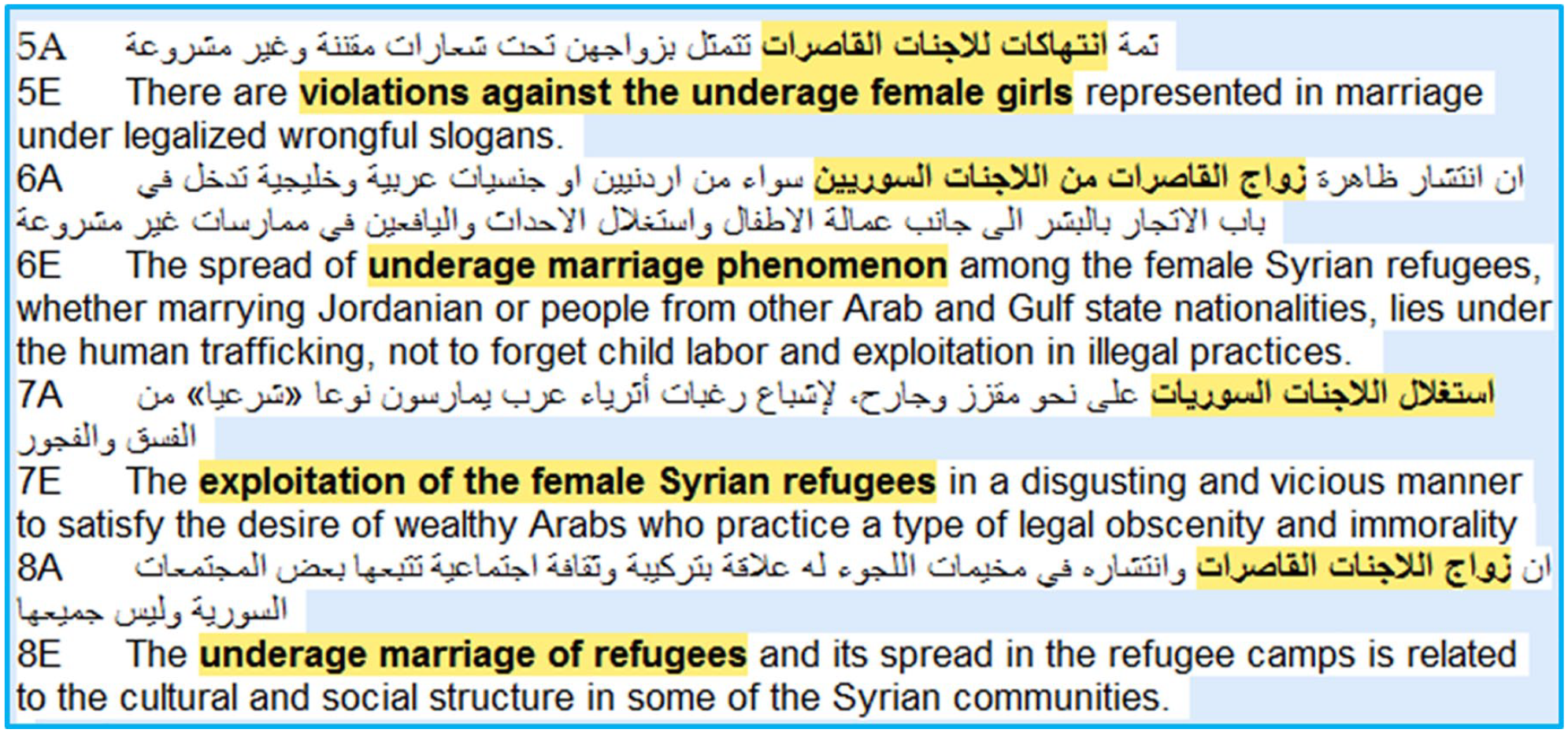
“Marriage” of underage female refugees in Petra.
Text 5 highlights the violations against the underage female refugees represented in marriage. This may be considered as human trafficking (Text 6). Not only people in charge are invited to put an end to this problem but also the public. Underage marriage is described by Petra as “legal” immorality practiced by rich men to satisfy their desires. The same notion is also indicated in Text 7, stressing the exploitation of refugee women for this purpose. However, it is argued in Text 8 that this phenomenon is pertinent to social values and traditions followed in some Syrian communities which encourage having children to help in the agricultural works, especially in the rural Syrian areas. In Headlines 5 to 8, Petra criticized and condemned underage female marriage and highlighted that Syrian female refugees in Jordan are sometimes exploited sexually by wealthy Arabs. Not only the host communities are to be blamed for the spread of this phenomenon but also the Syrian rural areas’ traditions and customs that strongly promote it.
In NNA, the underage marriage of Syrian female refugees is also discussed (Concordance 4).

“Marriage” of female refugees in NNA.
Text 9 shows that underage marriage has become a profitable trade for social and economic reasons. In addition, it may be spreading because some girls consider marriage a haven. Based on this, the researchers do recommend that the Lebanese government should undertake actions against this problem and provide protection for vulnerable women. Text 10 states a gap in the Lebanese civil status law as the minimum marriage age is not specified. Keeping it unspecified leaves underage females subject to exploitation, abuse, and forced marriage. Text 11 provides the percentage of married girls under 18 which reaches 23%. Based on this, the researchers call for enacting and enhancing laws and policies that forbid underage marriage. According to UNHCR, 22% of girls aged 15 to 19 are married, with 18% having spouses 10 or more years older than them (Inter-Agency Coordination Unit—UNHCR, 2018). Therefore, reforms are required in Lebanon in regard to human rights, mainly women rights.
Forced marriage, women trafficking, and prostitution are discussed in Text 12. These acts show the lack of protection, abuse, and exploitation. Text 13 considers Cyprus a safe place for the marriage of Lebanese people, while Lebanon is viewed as a place of underage marriage. Text 14 mentions that Lebanon is taking actions to enact laws to protect the refugee women, female workers, and migrants, and prevent human trafficking and sexual exploitation. By doing so, NNA represents Lebanon positively by highlighting the role the country plays in protecting this underprivileged group of people.
There are different causes for the spread of underage marriage, which can be summarized by temporary sexual desire, poverty, and hard-living conditions. However, countries need to cope with this issue as the effect might be severe on both the host and the refugee communities. Such effects include sexual abuse, sexual harassment, sexual exploitation, violence, social worry and discomfort, dissociation, and psychosocial problems.
Impact on Local Female Community
In Petra, there were a good number of examples on the negative/positive impact of female refugees on the Jordanian women (Concordance 5).
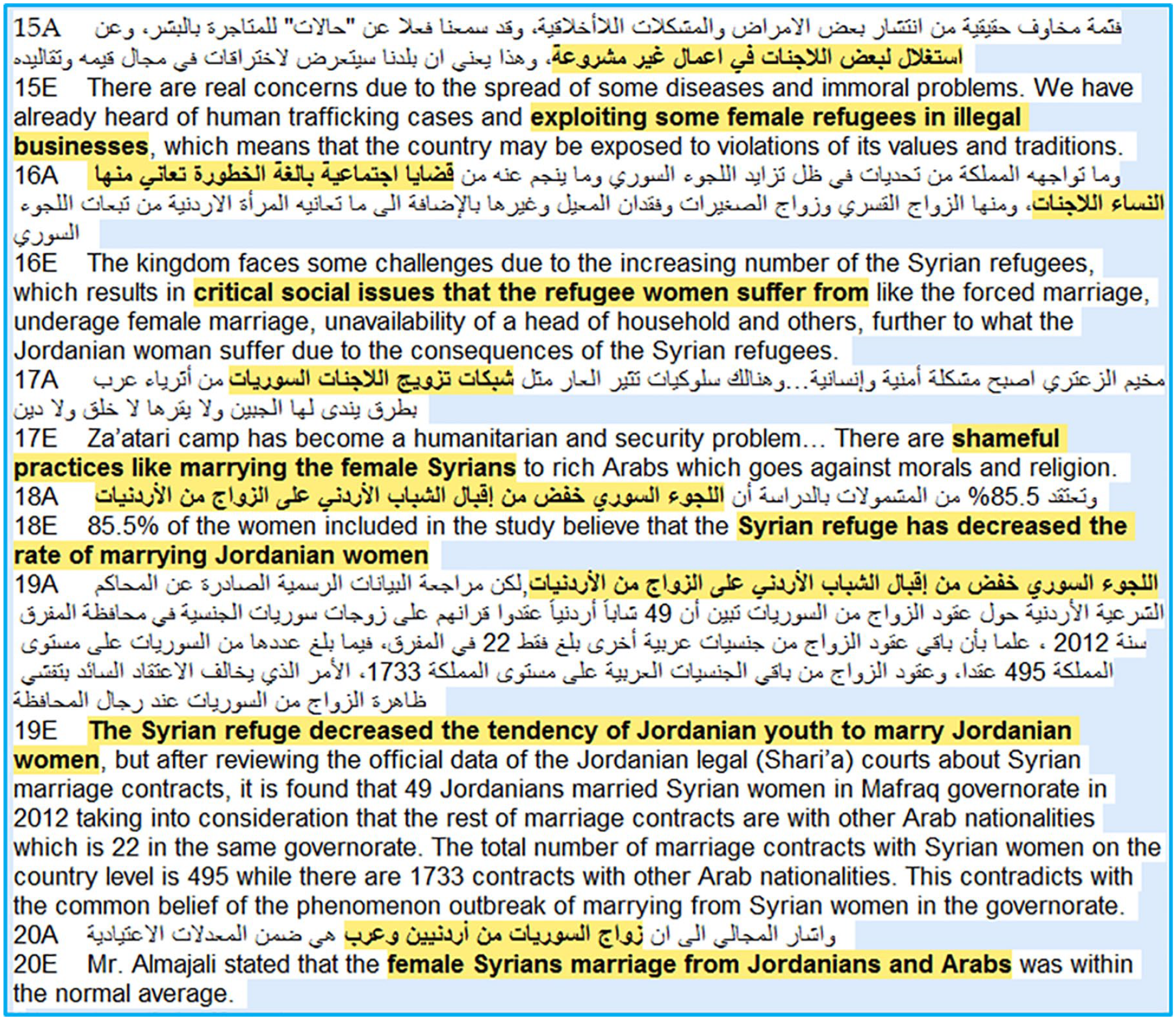
Impact on the local female community in Petra.
Text 15 shows that there are concerns due to the spread of immoral issues and diseases, which include human trafficking and exploitation of female refugees to perform illegal and immoral activities. This may, according to Petra, negatively affect Jordan’s traditions and values. Text 16 refers to some social challenges that are extremely critical to refugee women, including the forced marriage, the underage female marriage, and the absence of a breadwinner. Besides, Jordanian women are also affected by the increasing number of refugees. Za’atari, the largest camp for Syrian refugees in the north of Jordan, is expanding to hold the continuous flow of refugees. As stated in Text 17, there are security and humane problems in the camp. The size of the camp and the diverse backgrounds of the refugees may trigger conflicts among them. Furthermore, the need to provide assistance to the refugees in the camp is continuously growing while Jordan experiences a lack of fund. This matter may lead to a humanitarian problem due to shortage of assistance. However, the significant number of refugees with the availability of single Syrian females in the camp is a chance for some pervert people to exploit them sexually for money.
On the contrary, some Jordanian men opt to marry Syrian women due to the low cost of marriage. This issue increased spinsterhood among Jordanian women. Text 18 states that there is a study showing that 85.5% of the women included in the survey believe that the Syrian refuge has decreased the rate of marrying Jordanian women. This argument is not in line with the marriage contract figures issued by the concerned legal courts, as can be seen in Text 19. Only 495 marriage contracts to Syrian women are issued in Jordan in 2012, while there are 1,733 contracts for men of other nationalities. In Text 20, Petra quoted a Jordanian official saying that Jordanians’ marriage to Syrian women is within the normal rates. In light of this, it seems that Syrian female refugees are unwelcomed by some Jordanian women who view them as a threat. This belief can be due to cultural, educational, social, and financial factors in some rural areas in Jordan.
Petra also focused on the efforts exerted by the government of Jordan and some acting non-governmental organizations (NGOs) in spreading knowledge of this particular problem among Syrian female refugees (Concordance 6).

Implementing programs to help female refugees in Petra.
In Text 21, an NGO funded a project to assist and empower the Syrian female refugees. There were also attempts to change the negative concepts and bad habits against women and end violence and discrimination, as Text 22 shows. Jordan wanted to draw the attention of communities to this problem; therefore, there were various activities pertinent to marriage to Syrian women, as mentioned in Text 23. This was highlighted by a play about child labor and another about Jordanian men marrying Syrian female refugees. Similarly, Text 24 refers to a play that portrayed how some families prevent their girls from continuing their education and force them to temporarily marry rich Arab men for money. In this context, it is noteworthy that the United Nations Population Fund (UNFPA) in Jordan implements programs on gender-based violence prevention, focusing on the refugees in the camps and host communities. Moreover, it provides training on sexual abuse and exploitation to the service providers working with Syrian female refugees (UNFPA, 2018).
The presence of female refugees also has a positive impact on the females in the host communities. In the case of Jordan, the assistance has not been only provided to the refugee women but also Jordanian women (Concordance 7).

Providing assistance to women in the host communities in Petra.
Texts 25, 26, and 27 mention that training courses were provided to the Syrian and Jordanian women to empower them financially through helping them open small businesses to make a living for their families. It is evident that the economic factor for the families plays a prominent role in aggravating female refugees’ suffering. Therefore, it is prudent for Jordan to have projects and training courses aimed at raising the Jordanian and refugee women’s awareness, empowering them, and giving them the chance to gain knowledge and skills. In Texts 28 to 32, it was mentioned that a number of Jordanian and Syrian women received training on hairdressing, computer skills, and first aid, while others on reading and writing in addition to the skills that qualify them to work and improve their living conditions.
In Lebanon (Concordance 8), marriage to Syrian women records a high rate as mentioned in Text 33 which states that the Lebanese men’s marriage to Syrian refugee females reached a considerable number due to the low cost of marriage compared with marrying Lebanese women.

Impact on the local female community in NNA.
As can be observed, this problem has been more thoroughly highlighted and discussed in Petra when compared with NNA. This can be taken as evidence that the Syrian female refugees are somehow more integrated into the Jordanian society than its Lebanese counterpart.
Awareness-Raising
Knowledge is protection and prevention. There are various activities on raising the awareness of Syrian refugee women in Jordan. Conducting such training courses or workshops means that some problems exist and are common in some host communities. The matter requires attention and preventive measures, lest it may lead to social complications, including the vulnerability of the affected women. Because of this issue, it is noticed that there are several activities for women rights, protection, and psychosocial support (Concordance 9).
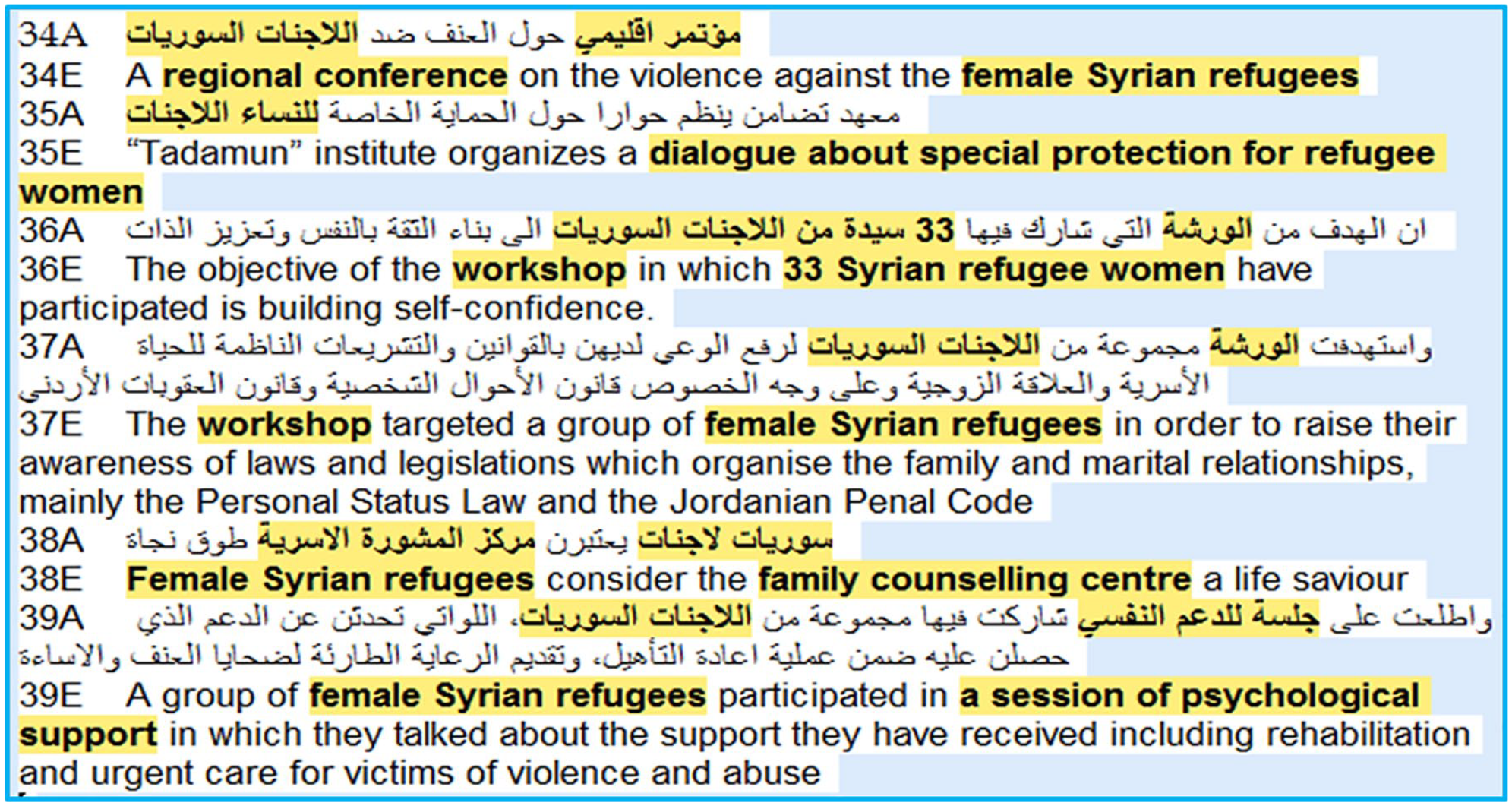
Raising the awareness of the refugee women in Jordan in Petra.
In Text 34, it is stated that a regional conference on gender-based violence practiced against the Syrian refugee women was conducted. Also, in Text 35, a debate on the protection of refugee women was held, while Text 36 shows that a workshop was organized on self-confidence and problem-solving. In Text 37, a workshop was held aiming at raising the awareness of laws and legislations of the family, especially the civil status law and the Jordanian penal code. Text 38 shows that the assistance of refugee women was translated in establishing family counseling center. Text 39 refers to providing psychosocial support to the victims of violence and mistreatment. By densely covering such training courses or workshops, Petra shows that Jordan is a safe place for refugees and encourages international bodies to support the country financially. It is worth noting that in 2012, UN Women opened different centers called “Oasis” for women and girls in Za’atari and Azraq camps to help Syrian female refugees in Jordan receive emergency aid and gender-based violence services (UN Women, 2018b). This contributes to building resilience and achieving empowerment.
According to UN Inter-Agency coordination statistics of Syrian refugees, Lebanese female breadwinners were consistently less well educated than their male counterparts (Inter-Agency Coordination Unit—UNHCR, 2018). The Syrian refugee women received proper care in terms of building capacity to acquire skills or a profession to enable them to work and generate income (Concordance 10).

Raising the awareness of the refugee women in Lebanon in NNA.
Text 40 states that there were programs for both Syrian and Lebanese women. In Text 41, it is mentioned that a good number of Lebanese and Syrian women were trained vocationally to help female breadwinners in Lebanon. In addition, Text 42 refers to a good project implemented to raise the awareness of the Lebanese and Syrian females on women issues.
Based on what has been discussed above, it appears that the treatment and assistance to the Syrian female refugees in Lebanon are accompanied by helping the Lebanese women in the host communities increase their awareness of their rights, responsibilities, and how to make a living after acquiring the necessary skills. Although the texts of NNA refer mostly to work-related activities to help the Syrian female refugees generate income, there should be protection and awareness programs pertinent to gender-based violence and psychosocial activities to protect them from sexual exploitation and abuse. In Petra, the attention is paid to awareness and qualification of Syrian female refugees. This is why UN Women, in partnership wih UNHCR and International Labour Organization (ILO), has started awareness sessions and job fairs dedicated to women (UN Women, 2018b).
Making a Living
Work is essential for female refugees who suffer from poverty and hard-living conditions, and are obliged to work (Concordance 11).
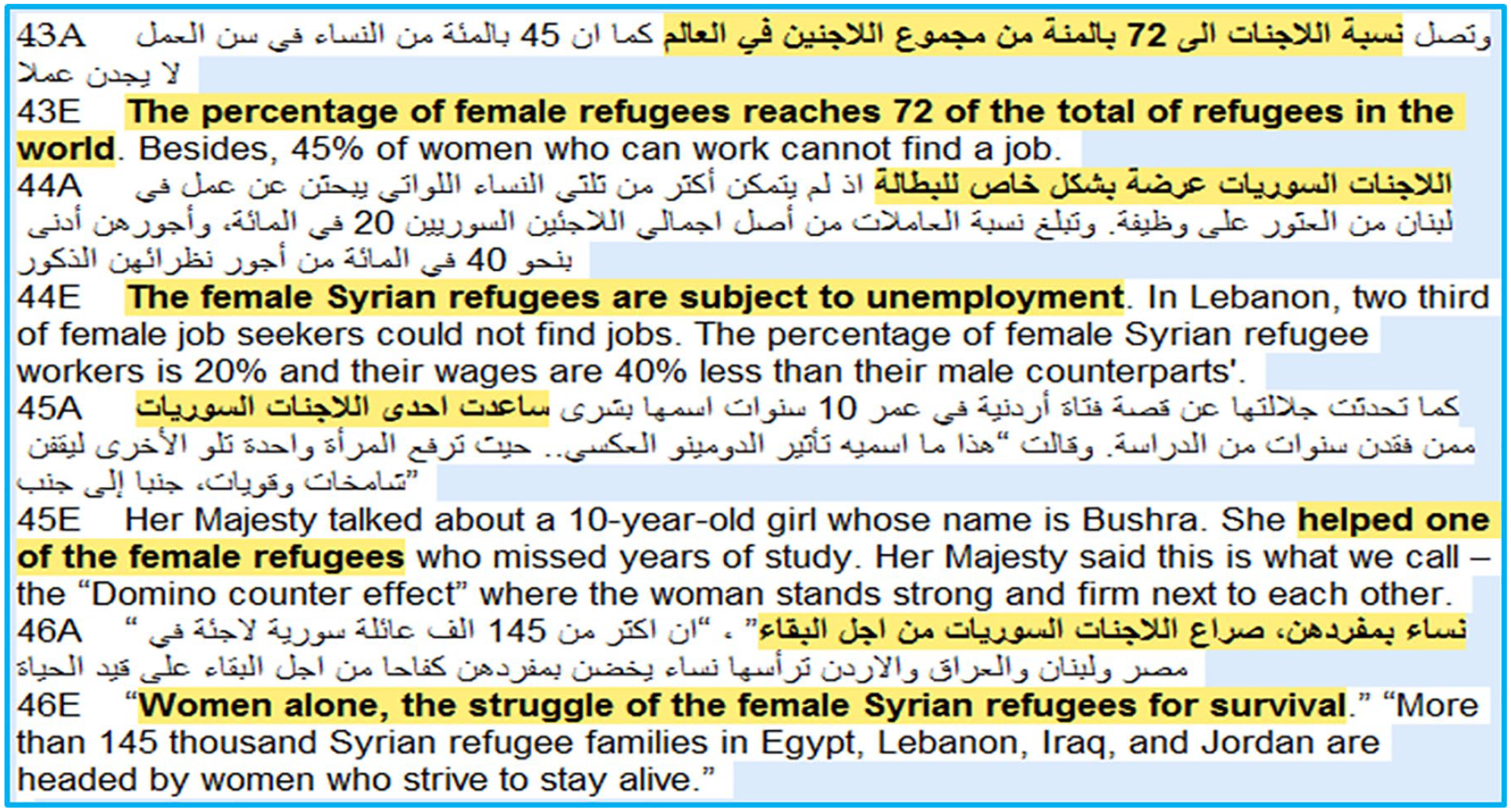
Helping female refugees make a living in Petra.
People with bad intentions have deviated ways to exploit the Syrian refugee women by recruiting them in jobs with conditions that were not previously clarified to them. The ambiguity of the work contract’s conditions represents a cornerstone of employing female refugee workers. Text 43 states that the female refugees represent 72% of the total refugees in the world, while 45% of the female refugees who are able to work are jobless. Text 44 states that in Lebanon, the percentage of Syrian female refugee workers is 20%, but the wages are 40% less than the male refugees. In a statement for Queen Rania of Jordan in Text 45, a Jordanian 10-year-old girl helped a Syrian female refugee who could not pursue her study. The Queen calls this the Domino counter effect, where every woman helps the other to stand firm and strong. This indicates that attention and care are still major issues in Jordan.
Text 46 clarifies that there are 145,000 Syrian refugee female-headed households in Jordan, Lebanon, Iraq, and Egypt. Further to Queen Rania’s statement mentioned in Text 45, UN Secretary-General launched a report in Amman titled “Women Alone: The Syrian Female Refugees’ Struggle to Survive” as indicated in Text 46. The need to generate income and make a living is essential not only for male but also female refugees. The significant number of 145,000 female-headed households indicates the necessity of finding solutions to help those families. Providing them with money is not a constant solution; therefore, assisting them to work, providing them with in-kind grants to open an income-generation business if qualified, and offering them vocational training to gain skills and knowledge on how to open and run a business are recommended. This will ease the suffering of the female-headed households and reduce the financial burden of any government or humanitarian organizations that provide the vulnerable with living essentials like money, food, and in-kind aid.
Work- and employment-related issues were discussed in Petra from a humanitarian perspective rather than a burden on the country’s resources and job opportunities. It is worth noting that the UN Women and World Food Programme (WFP) implemented a program called “Cash for Work” targeting the Syrian refugee women in Za’atari and Azraq Syrian refugee camps in Jordan (UN Women, 2018d). Participants in this program can be employed or run a business to earn money and get a work permit in Jordan (UN Women, 2018b).
NNA also discussed work and employment issues (Concordance 12).
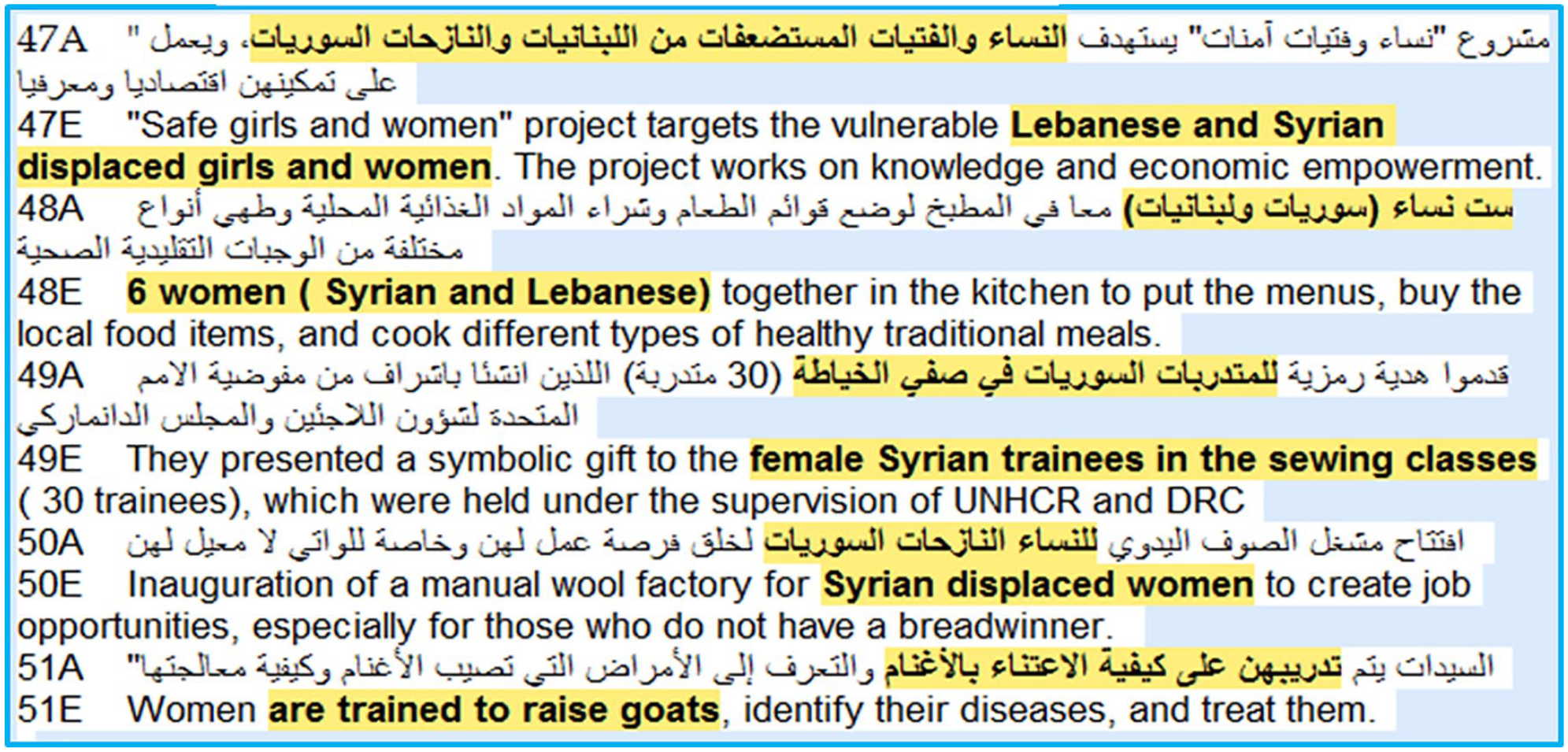
Helping female refugees make a living in NNA.
Text 47 states that a 10-month program is arranged to the Syrian and Lebanese women and girls to gain more knowledge and get empowered economically. What highlights the integration in the host community is a project of kitchens for cooking healthy and traditional food that was implemented in partnership between Syrian and Lebanese women, as mentioned in Text 48. Text 49 also focuses on the vocational training provided to the Syrian female refugees, where the UNHCR and Danish Refugee Council (DRC) implemented a training course in sewing. A wool factory was established for a group of Syrian women to provide them with job opportunities to make a living as per Text 50, while Text 51 mentioned another job area which was the livestock breeding.
The UN Inter-Agency Coordination’s vulnerability assessment of the Syrian refugees in Lebanon stated that 56% of the female-headed households do not have any working members and it is worth mentioning that 57% of the working women are considered the breadwinner for the family (Inter-Agency Coordination Unit—UNHCR, 2018). In Jordan, some women in the refugee camps are unaware of how to obtain a work permit while only 3% of the permits issued in 2017 were for women. After conducting the awareness sessions and job fairs for women, the rate of issued work permits for Syrian refugee women increased to 11% as of January 2018 (UN Women, 2018b). In light of the above, there is an indication of the Syrian female refugees’ need to work, especially those who are head of families. Securing them with jobs to make a living can be well achieved through providing them with the required knowledge and skills.
Support
Efforts exerted by Jordan toward the Syrian female refugees are recognized and appreciated in coverage of Petra (Texts 52, 53, and 54 in Concordance 13).

Host communities “efforts” to help female refugees in Petra.
There were several activities held in support of Syrian female refugees in Jordan. There was a product exhibition to support the Syrian female refugees in Za’atari refugee camp (Text 55). Text 56 refers to the fact that those product exhibitions were organized after providing the Syrian refugee women with vocational training courses to enhance and develop their vocational skills. Accordingly, it seems that product exhibitions are usually preceded by sessions aimed at qualifying refugee women to work and generate income. It is noteworthy that the United Nations organizes awareness sessions and job fairs to increase the female refugees’ opportunities to get a job.
Interest is shown as local and regional societies as well as the United Nations paid visits to the Syrian refugee camps to assess the women’s situation and needs (Texts 57, 58, and 59 in Concordance 14).

International organizations’ “efforts” to help female refugees in Petra.
These assessment visits usually lead to implementing required projects in attempts to make the circumstances better for female refugees. It is not only about work and making a living but also about the health of these women. There are sensitive health issues that require the attention of the concerned parties to alleviate the suffering or satisfy the women needs. The UNFPA is concerned with reproductive health. Text 60 mentions that there were efforts exerted by UNFPA and its partners to facilitate the lives of refugee women. UNFPA supports, through its partners, the Syrian refugee women in the camps in Jordan by providing reproductive health services and clinics. UNFPA Jordan has other programs related to women, mainly the refugees, like a humanitarian response, sexual and reproductive health, and youth and gender-based violence (UNFPA, 2018a, 2018b, 2018c, 2018d).
In NNA, there was a focus on the Lebanese efforts undertaken to protect female migrants and refugees who work in society (Concordance 15).

Host communities “efforts” to help female refugees in NNA.
In Text 61, there is a call for providing support to Syrian women to alleviate their hard circumstances. Other forms of support include gathering and lighting candles by some NGOs, as Text 62 shows. In Text 63, a safe house was opened, by the Swiss NGO, for the survivors of gender-based violence in Lebanon. Also, in Text 64, the United Nations International Children’s Emergency Fund (UNICEF) and Ab’ad society distributed 3,000 female hygiene kits in addition to providing psychosocial activities for 35 children and women.
Based on the discussion above, it is evident that the two news agencies foregrounded the efforts exerted by the governments of the two countries. The focus in NNA was on the victims of sexual violence and psychosocial assistance, while in Petra, the focus was on protecting the Syrian refugee women from such inhumane acts in addition to empowering them.
Vulnerability
Amid the political changes and conflicts in the region, Petra densely covered different issues related to female refugees as they are seen to be more vulnerable than their male counterparts (Concordance 16).

Female refugees “vulnerability” in Petra.
Text 66 states that the challenges faced by female refugees differ from those faced by their male counterparts. Text 67 mentions that women were used as war tools, and this adds to their suffering. In Text 68, it was mentioned that the ministry provided social services to the Syrian refugee children and females who suffered from violence. On the contrary, Text 69 stresses the role of media encouraging different media outlets to communicate with the Syrian refugee women to avoid human rights violation, rumors, and myths, which may hurt them. Text 70 emphasizes the role of the host communities in helping the female refugees adjust to the new circumstances and overcome the challenges caused by forced migration. In this context, it is worth mentioning that the female refugees are suffering from psychological and health problems because of war, violence, hardships, and severe circumstances, among others.
Due to this vulnerability, the United Nations urges the international communities and government to provide assistance to the refugees (Concordance 17).
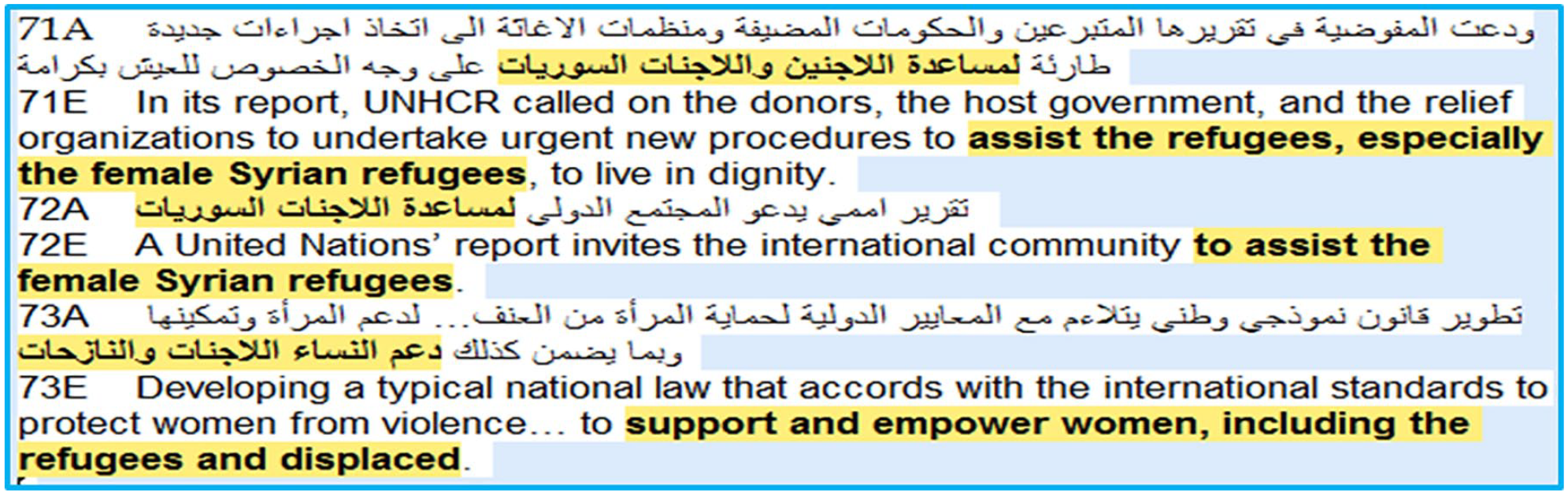
Role of the United Nations Organization in Petra.
Text 71 states that UNHCR called on the host governments, donors, and relief organizations to take new urgent procedures to help Syrian female refugees live in dignity. Besides, UNHCR invited donors to exert more efforts to help the female refugees and provide them with job opportunities to earn their living. A UN report called on the international community to help the Syrian female refugees, as Text 72 shows. As per Text 73, a national law that accords with the international standards was developed to protect women from violence and create a national strategy to empower women in general and refugee women in particular.
The vulnerability of female refugees has also been discussed in NNA (Concordance 18).
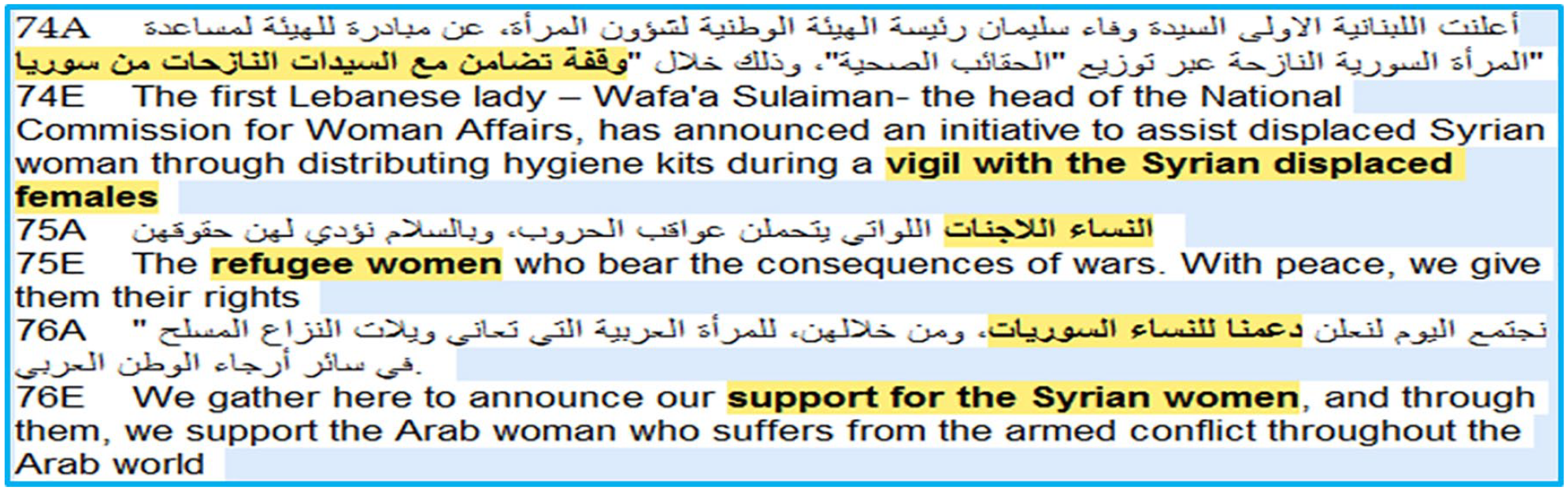
Female refugees “vulnerability” in NNA.
Part of the vulnerability issues is health needs. In Lebanon, the Ministry of Health arranged free vaccination campaigns for Syrian girls and women. In addition, in Text 74, the first lady in Lebanon announced an initiative to help the Syrian women in Lebanon through distributing hygiene kits. Therefore, health risks may exist and affect female refugees due to conflict and displacement, which limit the access to health services like family planning, safe maternity, sexual and gender-based violence, and disproportionate risk for sexually transmitted diseases (STDs) (Samari, 2015). Text 75 points out that female refugees are suffering from the consequences of wars, so they should be given their rights. Text 76 states that Arab women in the conflict zone were suffering and should have been supported. Texts 75 and 76 emphasize the vulnerability of women due to conflict and war, and urge the international community to provide them with the required assistance.
Women and girls represent 50% of the refugees in the world. Still, only 4% of projects in UN inter-agency appeals were targeted at women and girls in 2014, and 0.4% of all funding to fragile states went to women’s groups or women’s ministries from 2012 to 2013 (UN Women, 2018e). According to the statistics of the Inter-Agency Coordination in Lebanon, 50% of the Syrian refugees in Lebanon are females, while 19% of the families are headed by women. Out of these female-headed households, 77% of them were exposed to verbal harassment and 10% of them were exposed to physical abuse. In addition, 22% of girls aged 15 to 19 were married, with 18% of them having spouses who are about 10 years older than them (Inter-Agency Coordination Unit—UNHCR, 2018). The United Nations launched a 16-day campaign of activism against gender-based violence, which lasted from November 25, 2018, to December 10, 2018, and how the females who were exposed to this kind of violence could react to eliminate the violence against them and other women (UN Women, 2018c).
Burden
Pressure on the resources of the host communities was discussed by the two news agencies. Jordan received an enormous number of refugees and tried to assist them despite the scarce resources. According to the World Bank (2016), Jordan’s population was around 9.5 million in 2016; 1.3 million of them were Syrian refugees. This rise increased the pressure on energy, water, and jobs, which are already scarce in Jordan (Haider & Olimy, 2019). Concerning the refugee women, it was mentioned in Text 77 that there was a pressure on the health services (Concordance 19).

Female refugees being a “burden” on the host communities in Petra.
The Jordanian Minister of Health called for helping the Syrian refugees in Jordan despite the limited resources in comparison with the number of people in need of health care. Text 78 indicates that the number of Syrian pregnant women reached 15,000 in 2018. The number of those who underwent cesarean operations was 350, and vaccines were given to 176,000 children as per Text 79. Texts 80 to 85 highlight the health care provided to the pregnant Syrian refugees and children in the public hospitals, and this represents pressure on governmental health services. Therefore, to ensure the continuity of these services, the government of Jordan facilitated the efforts exerted by humanitarian organizations. For example, Text 85 demonstrates that the UNFPA established a maternal clinic in Za’atari camp. By offering such assistance and services by the NGO, the pressure and burden have been considerably reduced on public hospitals and health centers. As per UNFPA, there were around 19,000 reproductive health services provided to the Syrian refugees in the neighboring countries until January 2016 (UNFPA Regional Syria Response Hub, 2016). This is an indicator that the Syrian crisis affected different countries in the region.
In Lebanon, the pressure is not mentioned in the texts analyzed in this research. Still, NNA focused on the vulnerability and assistance that Syrian refugee women needed.
Concluding Remarks
In the present study, the researchers examined the construction of Syrian female refugees in the news agencies of Lebanon and Jordan. The analysis yielded eight main categories that were recurrent in the two agencies, namely, suffering, sexual exploitation, impact on the local female community, awareness-raising, making a living, support, vulnerability, and burden. In line with the findings of Narlı et al. (2020), this study found that Syrian refugee women were depicted as victims of sexual exploitations and violence in some of the host communities. Although Syrian female refugees were sometimes represented negatively due to the immense pressure on the resources of the host communities, the focus in the investigated news agencies was humanitarian in nature highlighting their suffering and urging the international community to empower them. This is inconsistent with Abid (2020) who found that refugees were negatively and undesirably portrayed in the media outlets of some host communities.
Based on the analysis and discussion above, it is revealed that exploiting needy, vulnerable female refugees for sexual desires, either by marriage or by illegal channels, may lead to severe cultural, religious, moral, and civic ordeals within a conservative community. It is important to voice the concerns and implement awareness and protection projects in the refugee camps. This will keep the humanitarian nature of crisis management within the host countries by preventing immoral practices.
Furthermore, woman empowerment plays a significant role, especially for the breadwinners. In common with Deacon and Sullivan (2009), providing training and developing skills to qualify women for job opportunities contribute to ensuring sources of income and consequently reducing poverty. It is worth noting that the economic factor affects people who are obliged to accept even low-wage jobs. Also, they will be subjected to exploitation by different parties with different intentions and goals. This may call for psychosocial support, counter-trafficking, protection, and women empowerment programs.
With regard to the differences between how Jordan and Lebanon treat female refugees as depicted by the coverage of Petra and NNA, the study shows that the government of Jordan pays considerable attention to the problems they face. This is in agreement with Haider and Olimy (2019) who found that Jordan, despite its scarce resources, welcomed refugees and provided them with the assistance it could afford. This is represented by the partnership between the government and the international organizations in camp management to alleviate the suffering, address the issues, find solutions, and protect the vulnerable. Jordan is praised globally for its positive response and the awareness of the Jordanian people who provide support for the refugees inside and outside the Syrian camps. Despite the financial, educational, health, water, and infrastructure burdens, Jordan makes tremendous humanitarian efforts to deal with the refugee crisis. The refugees are treated in governmental health centers and hospitals. Schools are built in the camps in coordination with the NGOs, and work permits are given to the Syrians living outside the camps.
The NNA coverage of female-refugees-related issues is less dense than its Jordanian’s counterpart. Most of the news addressed the issue unfavorably and negatively. Female refugees seem not to receive good support or proper care. This issue has led to the emergence of gangs and attempts for sexual exploitation and human trafficking. Lebanon is burdened and upset at the arrival of the refugees from either Palestine or Syria. The Lebanese Foreign Minister denounced the registration of new Syrian refugees by the UNHCR and pointed out that it is illegal. This indicates how firm the Lebanese government’s stance is toward refugees as they are seen to have a negative impact on the country.
In light of the above, it is concluded that the vulnerability of Syrian refugee women is a critical issue that needs to be addressed. Host communities should provide charitable assistance to the Syrian refugee women alongside the assistance provided by the national and international NGOs. Part of the assistance is women empowerment and capacity building, which help female refugees make a living and live in dignity away from desperate situations and tricky job offers by exploitative people. The coverage of the two news agencies indicates the suffering of Syrian refugee women but simultaneously shows the suffering of Jordan and Lebanon as host countries. The analyzed texts highlighted the vulnerability of such a category in the society being victims of the resulting war conditions. The language used in the texts is balanced between the suffering and efforts of alleviation.
Based on the above, the study has two main conclusions: First, the issue of female refugees should be given immense importance by the international organizations, and second, host communities with the help of humanitarian organizations should exert more efforts to protect refugee women from inhumane acts in addition to empowering them.
Taking into account the female refugees’ suffering and the social and economic obstacles they face, the researchers recommend the following:
Implementing some measures to alleviate the Syrian female refugees’ suffering is recommended. Among these measures is implementing psychosocial programs to help female refugees recover from the effects of violence. In line with this, the United Nations can provide services that include counter-trafficking, gender-based violence, and psychosocial support. These should be carried out in both the host communities and the origin of refuge as a twofold approach of dealing with the problem; the root cause, and the transferred one.
There are some problems pertinent to marriage in the refugee communities like the underage marriage as well as exploiting the female refugees to satisfy rich men’s desires. This study recommends raising the awareness regarding ramifications of the underage marriage and the sexual-desire-based marriage, which is immoral and temporary in nature. Awareness sessions may take place not only for the female refugees but also and mainly for the parents of females and males in the refugee communities and the host communities. In addition, governmental civil laws preventing underage marriage are strongly recommended.
Forced migration may affect the structure, values, and traditions of the host countries. It may lead to social challenges, which are very critical. Forced and underage marriage and unavailability of heads of families (economic and hard conditions) may cause sexual abuse, sexual harassment, sexual exploitation, violence, social unrest and discomfort, dissociation, and psychosocial problems. In addition, the diverse backgrounds and affiliations of the refugees can bring security concerns. Therefore, awareness sessions and laws regulating civil affairs can treat social challenges. Besides, security concerns need to be handled carefully and humanely keeping the living environment safe and secured and providing protection for the vulnerable.
Capacity building and women empowerment are of paramount importance in the context of refuge. Women can be empowered through awareness sessions as to their rights. Income generation and business development training sessions are also important. By doing this, female-headed households can be qualified to open a business and make a living. This may lead to achieving the sustainability and development objectives, as well as minimizing the co-related social burdens and problems of female refugees like exploitation, sexual abuse, and harassment.
Partnership between the governments of the host countries and the relief organizations should be strengthened because providing female refugees with the required services may require certain legislation or regulations.
Footnotes
Declaration of Conflicting Interests
The author(s) declared no potential conflicts of interest with respect to the research, authorship, and/or publication of this article.
Funding
The author(s) received no financial support for the research, authorship, and/or publication of this article.
