



Abstract
The goal of this research is to figure out the moderating act of ethical leadership on the effects of job satisfaction and psychological capital of employees. The Hotel industry in Northern Cyprus has been preferred with this respect. The study was conducted within the appropriate literature. Research-oriented data collection tools designed and used in accordance with the purposes of the research, research questions and hypotheses are surveyed. The findings of the study revealed the moderating role of ethical leadership (EL) on psychological capital (PsyCap) and job satisfaction (JS). It was also found that the participants were on the idea of working under equal conditions adopted via ethical leadership factors. The current study is a new era for the developmental issues of hospitality in terms of management and it is hoped that it will yield basic basements for further studies.
Keywords
Introduction
Background Information
Organizational leaders are faced with a lot of difficulties such as managing the various workforce, and especially in high-density migration environments. According to International Labor Office, global estimate figures on migrant workers in 2017 were estimated as 258 million international migrants worldwide, including about 19 million refugees. Hence, in 2017, international migrant workers made up 59.2% of all international migrants and 70.1% of all working-age immigrants. The share of migrants wirhin the global workforce is considered higher than the global population owing to the high labor force participation rate of migrants (i.e., 70%) compared to the entire rate of non-migrants in destination countries (61.6%) (International Labour Office, 2017). The number of immigrants was most widespread among US (48.2 million, Russia (11.6), Saudi Arabia (11 million), Canada (7.6 million), Germany (10 million), UK (84 million), UAE (8 million), and France (7.9 million) is the most known countries extracting immigrants from various countries (Desa, 2017).
The hospitality industry has a unique labor market, which makes it attractive to and receptive of migrant workers because it is characterized by strong demand inconsistencies (Lucas & Mansfield, 2010) and a weak internal labor market structure with relatively low entry barriers (Hollick & Braun, 2005; Hunter, 2011). These inconsistencies result in temporal fluctuations in demand across various departments within the hotel which causes a demand for workers with the willingness and ability to function flexibly (Markova et al., 2016). The quality of flexibility of workers is also an important criterion to be considered during seasonal work. This explains why most hotels hire more workers on temporary contract. Thus, paying immigrant workers low salaries since their positions do not demand high skills. Furthermore, Labor shortages affect many of the world’s high-income countries, and Cyprus is one of the countries most affected by these population trends (Lisaniler & Bhatti, 2005). Especially, in the tourism and hospitality industry; due to its labor intensive, the immigrant employees play an important role among others. For example, there are about 34, 382 employees out of 360,061 in the tourism sector in which includes immigrants working for hotels about 20% in the South of Cyprus (CTO, 2019) and 5,367 immigrant employees working at the hotels out of 20,000 tourism employees in total which is approximately 25% on the North part of the island (State Planning Organization [SPO], 2019).
When North Cyprus economy is examined, one may observe that it has two important income generating sectors, namely tourism and hospitality and education sector (Katircioğlu, 2010). Regarding the tourism and hospitality, the core to success is to keep and maintain the promising human capital in the existing organizations (Arasli & Arici, 2019). As aforementioned earlier, the human capital role and responsibilities are highly important for the success of the organizations. However, the sector is facing a high rate of turnover due to low job security (Staufenbiel & König, 2010), low salaries and wages (Arasli & Tumer, 2008), long working hours and heavy responsibilities which all causes in dissatisfaction among various types of employees in the sector (Arasli & Arici, 2019, Özduran & Tanova, 2017; Ozturk & Karatepe, 2019). As a result, low service quality and profit, occupancy rates, fluctuating service standards, low image, high customer complaints, and declining loyalty are among some of the problems declared by the researchers (Arasli & Tumer, 2008; Özduran & Tanova, 2017; Staufenbiel & König, 2010). The immigrant workers are distributed across all industrial sectors in different geographies specifically in the hotel sector in both regions in Cyprus. This is why this study focuses on immigrant employees in Northern Cyprus highlighting the importance role of immigrant employees. The study focused on the north part of the island since the number of immigrant employees working at hotels has identical or even a bit above the percentage of South part of the island. In total, 147 hotels operate in Northern Cyprus. Of these, 22 are 5-star hotels, 4 are 4-star hotels, and 15 are 3-star hotels.
From the literature, several studies investigate the effect of psychological capital on job satisfaction for immigrant workers working in the area of hospitality (Bouckenooghe et al., 2015; De Hoogh & Den Hartog, 2008; Jung & Yoon, 2015; Kaplan & Biçkes, 2013; Luthans et al., 2007b; Uslu, 2010). These studies all followed the same strategy where the authors tried to understand if the components of psychological capital would influence job satisfaction of employees as an outcome in the hotel industry. However, these researchers all neglected to explain to what extent psychological capital influence job satisfaction which consists of different sub ingredients particularly from the perspective of immigrant employees.
However, the hospitality literature is having sufficient evidence about the outcomes of job satisfaction such as job performance (Iaffaldano & Muchinsky, 1985), organizational commitment, absenteeism and turnover (Yang, 2010), in role performance and organizational citizenship behavior (Jung & Yoon, 2015), and work counter behaviors and so forth.
Based on the aforementioned challenges in the sector and the proven positive effects of job satisfaction, it may be possible that the management would bring solutions to immigrant employee problems beside other full-time employees by exhibiting a suitable leadership style and; therefore, this study will advance our knowledge on ethical leadership’s function in facilitating the relationship between psychological capital and job satisfaction of immigrant employees. Also, we may understand how job satisfaction sub dimensioned are influenced from the effects of psychological capital component. These are important issues which must be answered, but has, as yet, not received adequate interest in the hospitality literature. In other words, some of the studies show a consistent positive relationship between psychological capital and job satisfactions, all of these studies neglected to check when the question in examining the effect of both EL and PsyCap variables on JS which is supported by some of the mix findings. For example, contradictory assertions have been put forward by Uslu (2010) who opined that psychological capital has an unfavorable impact on job satisfaction, while Jung and Yoon (2015) suggests a positive correlation between the two dimensions. In addition, no studies have examined ethical leadership in the hotel industry in Cyprus. Holding the awareness for such gaps in the literature, some convenient studies have been called in order to examine the potential regulatory mechanisms underlying the relationship between psychological capital and satisfaction (Luthans, Avolio et al., 2007).
The general characteristic of an ethical leader revolves around honesty, security and fairness climate (Randel et al., 2016). They are also approachable and caring to make decisions in order to have an ethic atmosphere. This eventually turns the leaders into ethical role models for their followers and employees. In particular, having high levels of ethical leadership (EL) skills enable decision-making, offering ideas in order to have right and trustful relationships among followers (Brown & Treviño, 2006). Leader has the supremacy and ability to influence and direct immigrant workers in organizations. This competence and power can affect the performance, productivity, and morale-motivation as well as job satisfaction (JS) and psychological capital (PsyCap) of immigrant workers in organizations (De Hoogh & Den Hartog, 2008). Increased JS of immigrant workers positively influences the productivity and effectiveness of businesses. This increase enables them to realize their aims by influencing their PsyCap (Bouckenooghe et al., 2015). Sharpley and & Forster (2003) asserts that it may be more convenient to offer equal conditions to immigrant workers in terms of working hours, salary and behaviors in order to have positive feedbacks on JS and PsyCap for EL. Consequently, if the leaders of the organizations offer flexible working hours and fair salaries, the workers will love the status of being in a foreign country which may yield positive results in the terms of the moderating effect of EL on PsyCap and JS.
From the current literature, it has been observed that some studies have reported favorable impacts of EL on employees’ in-role job performance (De Hoogh & Den Hartog, 2008). However, some other studies suggest that the favorable impact of EL on employees’ is explained through the role of PsyCap and follower–leader aim adaptation, which approves that PsyCap and follower-leader aim adaptation are mediation effect on job satisfaction (Bouckenooghe et al., 2015).On the other hand, some studies show that EL had significant influence on positive PsyCap (Lee et al., 2016). Furthermore, recent studies suggest that the effect of EL on JS is both theoretically valuable to enhance the understanding of the continuum and practice of managing JS through EL (Ren & Chadee, 2017).
While there have been research investigations on the relationship between EL, PsyCap, and JS, correlations in terms of hotel businesses, one of the most important stakeholders of the tourism sector, have not been adequately examined. Thus, (1) the relationship between EL, PsyCap, and JS in hotel sectors and (2) the moderating role of EL between PsyCap and JS were explored in this research. To this effect, the research is considerable in terms of contributing to the literature and increasing the awareness of immigrant employees working in the tourism and hospitality sector. Consequently, it is pertinent for hotel businesses to ascertain whether the ethical leadership quality of manager may lead to high-level JS and PsyCap of an immigrant employee (Fairbrother & Warn, 2003). It is also suggested that the findings will inform immigrant employees and management about EL, PsyCap, and JS (Shafique et al., 2018). It further explores the relationship between these three variables and highlights the main objectives for the current research as well as the hypotheses are proposed. This is achieved by applying the structural equation modeling (SEM) analysis (see Figure 2).
The Purpose of Study
There is research evidence to show that employee who are led by ethical leaders have higher psychological capital and job satisfaction and these resources enhances creativity in employees (Bouckenooghe et al., 2015). The purposes of the study are to examine the moderating role of EL between the PsyCap and JS of the immigrant workers in the Northern Cyprus hotel sector underpinned by social exchange theory. In the context of immigrant and/or foreign workers, this research explores the link between EL and JS as well as the link between PsyCap and JS simultaneously. While different researches have looked at the effect of EL on JS and the effect of PsyCap on JS separately, examining the effects of EL and PsyCap on JS at the same time has been ignored by prior researches. Secondly, it is aimed to contribute to the present literature by determining the manner in which EL could boost employees’ PsyCap as prior studies have linked transformational and authentic leadership to PsyCap in various sectors and industries. For example, Amunkete and Rothmann (2015) examined the relationship between authentic leadership, PsyCap, JS in Namibia. Another study emphasis on the Frontline workers of the hotel and aims at recognizing the effective tool of transformational leadership on their service quality and the role of PsyCap on their satisfaction (He et al., 2016). Thus, this study explores the peculiarities of the findings in previous studies using immigrant workers in the North Cyprus hotel sector. While conducting the existing studies, the research questions of the study will be highlighted in accordance with data collection and analysis in the findings part;
➢ How can we integrate EL with PsyCsp and JS of immigrant workers in north Cyprus hotel industry?
How can we deal with employee’s perception in terms of PsyCap and job satisfaction of immigrant employees regarding the moderating role of EL?
Literature Review
Theoretical Background and Theory
There are many researches pinpointing the importance of EL and its effect on PsyCap and JS of immigrant worker in an organization separately. In order to have a clear understating for the fruitful results or side effects of EL, similar researches should be studied in detail, looking at the effects of EL and PsyCap on JS at the same time. The links of EL with PsyCap and JS are also regarded as important in many researches.
Social exchange theory (SET)
Studies have revealed that the theory of social exchange provides theoretical explanations for the relationship between ethical leadership (EL) and follower behaviors (Brown & Treviño, 2006; Walumbwa et al., 2011). For instance, some research evidence has indicated that followers of ethical leaders are likely to regard themselves in a social exchange relationship with their heads due to the ethical attitudes they receive and the trust they feel. (Brown et al., 2005). In order to identify the direct and intuitive outcomes of EL such as ethical conduct, role conflict, deviance behavior, and ethical reporting and pro-social behaviors, empirical researches on EL were conducted using the social exchange theory (SET) (Brown & Mitchell, 2010). The authors have considered some of the SET-based direct outcomes of EL that have been put forward by Brown and Treviño (2006) including; subordinate employee behaviors, satisfaction, and performance. One earlier study proposed that SET may provide insight to how ethical leaders influence organizational outcomes (Blau, 1964).
Leader-subordinate relationships as well as basic economic exchanges are identified by low trust and slightly stiff control on obligations which are available as a result of positive experiences resulting from mutual risk taking (Brower et al., 2000; Mayer et al., 1995). SET elucidates why ethical leaders might stimulate employees to respond to EL behaviors by engaging in employee job satisfaction and psychological capital. Research evidence suggests that employees do not always reciprocate their leader’s ethical behaviors (Kacmar et al., 2011). This is experienced in cases where employees are psychologically detached from their organizations. In considering the SET, it is pertinent to consider the degree of individual expectations about psychological dependence on future benefits or exchange relationships in order to anticipate that people exhibit discretionary behaviors for valuable treatments from an exchange party as a response (Blau, 1964; Cropanzano & Mitchell, 2005).
Ethical leadership (EL)
Empirical proof confirms the influence of ethical leadership on the performance of employees and behavior of individual staffs, thus emphasizing its relevance for both practitioners and academicians (Özbağ, 2016). It is “the demonstration of normatively appropriate (e.g., honest, trustworthy, fair, and caring) conduct through personal actions and interpersonal relationships, and the promotion of such conduct to followers through two-way communication, reinforcement through providing ethical standards, rewarding ethical conduct, and discipline the wrongdoers, and decision-making by understanding the importance of their decisions and making fair decision” Brown et al. (2005, p. 120).
EL is a significant issue in the tourism industry because a leader must be quite ethical for each employee in the workplace to be influential as the superiors’ ethical actions are sampled for subordinates to get some ideas on an organization’s acceptable ethical standard. In addition, as the issue of ethical leadership has yielded significant outcomes, the significance of EL has been pinpointed in many organizations (Barkhordari-Sharifabad et al., 2017). Some attributions of EL are to be fair, honest and trustworthy, which can bring about a greater JS and PsyCap because these leaders are capable of making impartial and balanced decisions, and being concerned about the well-being of the employees. As leadership behaviors directly have effects on the functioning and JS of employees, this may also affect their behaviors; therefore, the important leadership behavior is related to ethics (Elçi et al., 2012). Treviño et al. (2003) indicate that the ethical extent of leadership is significant owing to the leader’s effect for workers’ actions. Some problems such as anxiety, pressure and depression can be experienced among followers if they perceive that their leaders are unethical, as a result, they may yield decreased work outcomes during problem-solving tasks in the workplaces. The leadership behaviors of hotel managers (both relationship-oriented and task-oriented) positively correlate to the higher morality and JS of immigrant workers. Also, researches have shown that PsyCap is related to transformational leadership, which is one of the key ways that ethical leaders communicate and reinforce appropriate conduct (Brown et al., 2005). Although very few studies have associated a link between EL and leader PsyCap (Berlinguette, 2014). However, Xu et al. (2017) disclosed that leader PsyCap can expedite the improvement of employee PsyCap, which in turn influences work engagement of employees. Furthermore, leaders who hold greater levels of PsyCap may display a lot of resilience in their daily interactions, optimism, hope, and confidence with employees (Xu et al., 2017), which is a tenet of transformational leadership and will eventually increase PsyCap (Meneghel et al., 2016; Walumbwa et al., 2010). Furthermore, Walumbwa et al. (2012) asserts that self-efficacy has been found to explain the relationship between EL and performance, and there is a strong link between EL and follower optimism (De Hoogh & Den Hartog, 2008). Treviño et al. (2003) also showed ELs and their morality in a qualitative study. It is asserted that the moral person dimension pinpoints the personal traits of ELs as EL’s are reliable and impartial; therefore, they have positive impacts by their reliable and balanced judgments on employees (Chughtai, 2015).
Psychological capital (PsyCap)
Psychological capital refers to a person’s “positive psychological state of development” (Luthans et al., 2007b, p. 3). It is a collection of behavioral and motivational inclinations formed from four components: optimism, defined as the tendency to make stable, intrinsic qualities for positive actions, unstable, and external qualities for negative ones; hope, the motivation to succeed goals and the ability to discover the convenient way; self-efficacy, one’s belief in conducting task or domain successfully; and resilience, the positive adaptation for problematic cases (Caza et al., 2010).
It is stated that there is a link of PsyCap in order to support the developments and actions in the organizations (Caza et al., 2010). PsyCap is able to influence behavior and performance, but it needs some arrangements to involvement and change (Luthans et al., 2008). This intermediate durability is quite significant for PsyCap because the evidence shows that, self-efficacy, hope, resilience, optimism, of PsyCap are each partly resolute over time, but none of them is subject to focused intervention. It is also thought that PsyCap has emerged as an evidence for organizational behavioral structure and has been linked to positive behaviors such as content, subjective performance, feelings of empowerment, personal thoughts of ability and development, psychological well-being. Apart from this, it has ties with positive behaviors such as objective performance and citizenship behaviors. In some aspects, there were negative relations between PsyCap and work behaviors such as anxiety, stress, cynicism, counterproductive work behaviors, perverse behaviors and intentions to quit (Goertzen & Whitaker, 2015). On the other hand, employees being self-efficiency, optimistic, hopeful, and flexible, most sense energetic and are keen on the employee’s work. The findings of one of such studies reveal that PsyCap was related to JS positively. Also, a great deal of cases highlight that PsyCap is dramatically bonded with wishful individuals’ behaviors (and negatively to unwishful acts), deals (e.g., pleasure and faith), and performance (Luthans et al., 2007b). In addition, also a detailed study from Goertzen and Whitaker (2015) from the Fort Hays University creates a link between psychological capitals (positive and negative ones) in a leadership program. Thanks to data collected from students via three different sets of performers over time, it was concluded that PsyCap’s capacities include resiliency, hope, optimism, and self-efficacy.
Job satisfaction (JS)
Job satisfaction is an enjoyable or positive emotional circumstance arising from one’s self-evaluation of job, work situation, or work experience. (Aziri, 2011; Kaliski, 2007). Likewise, studies have defined JS as an internal state expressed through emotional or cognitive appraisals of whether a work experience has been validated to some extent. (Brief, 1998). Furthermore, JS mostly focuses on employees’ feelings, including pleasant and positive emotional conditions related to job experiences, therefore; it plays a critical role in terms of employees’ performances. PsyCap can also raise the JS of immigrant workers through some mechanisms. First of all, JS requires affirmative comprehensive appraisals known as satisfaction with the work labors enclosing the sense of conducting a task successfully (Judge et al., 2001). In addition, PsyCap can improve employees’ favorable appraisals of their conditions and enhance the likelihood of achievement based on their determination, motivation, struggle, and agency (Luthans et al., 2007a). PsyCap can contribute to the JS of immigrant workers quite a lot via a wide range of their appraisals of their jobs, accomplishment and responsibility. On the contrary, low PsyCap may come up with negative assessments and promises because of decreased intrinsic motivation, and as a result of stress on extrinsic provisions such as salary, security and working hours; it should be rearranged via the post-revolution transient economy. As it is significant to prevent job dissatisfaction, some hygiene factors may result job content and features with higher levels of pleasure (Badran & Youssef-Morgan, 2015). Significant evidence exists that there is a good relationship between JS and PsyCap (Youssef & Luthans, 2007). The results of a study sample of the manufacturing sector in Turkey and Bosnian Herzegovina revealed that the employees’ work had an affirmative relationship between JS and PsyCap; nevertheless, inverse relationship occurred in the sample of Bosnia Herzegovina (Topçu & Ocak, 2012).
Hypothesis
The relationship between ethical leadership (EL) and psychological capital (PsyCap)
Studies have suggested that ethical leadership may be a function that plays a serious channeling role in influencing the direction that individuals with different levels of psychological capital will gravitate to (Paterson et al., 2014). Similarly, study evidence documents that leaders with high levels of PsyCap are hopeful, self-efficient, resilient, and optimistic (McMurray et al., 2010). This affirms the fact that leaders affect the PsyCap has a positive effect on employees. This is consistent with findings which posit that PsyCap is pertinent for the success of organizations, because it enhances performance and satisfaction of employee at both individual and group levels (Paterson et al., 2014). Moreover, the concept of PsyCap capital leadership has been associated with employees’ perception of justice. and display of trust which enhances positive outcomes (Chen, Wen et al., 2017; Hongyi, 2017). Therefore, the EL view of truth can be described by psychological resources which include self-efficacy, hope, optimism, and resilience, which also stimulate and heighten the PsyCap of the employee. (Hongyi, 2017).
The relationship between ethical leadership (EL) and job satisfaction (JS)
Research evidence has associated ethical leadership to job satisfaction of staff’s, and have posited that subordinate employees have a penchant to portray a higher level of JS toward an ethical leader who displays reformatory authority and enforces a level of disciplinary measures while handling employees decently and thoughtfully (Attar et al., 2017; Kim & Brymer, 2011). Mustafa and Lines (2014) noted that leader attributes and practices play a vital role in employees improved JS and helps them build up a positive feeling about their work. This allows workers deliver positive results when leaders indicate individualized thought in a non-controlling way (Attar et al., 2017). A leader’s ability to impact employee attitudes and behaviors can be measured by various factors, including employee job involvement and JS (Yates, 2014). Hence, EL positively affects JS, and has an effective intermediary role among the relationship between apparent EL and JS (Yozgat & Meşekıran, 2016). Consequently, it is safe to say that EL may be linked with improved levels of employee JS (Den Hartog & De Hoogh, 2009).
The relationship between psychological capital (PsyCap) and job satisfaction (JS)
Typically, a fundamental attribute of psychological capital is its ability to influence various organizational outcomes (Fu et al., 2013; Pineau Stam et al., 2015). There are several components of PsyCap which includes, hope, self-efficiency, optimism and resilience. However, research evidence suggests that the role of each of these components can influence organization’s outcomes. For example, Mishra et al. (2016a) suggests that hope will likely engender positive expectations as well as responsibility which in turn is capable of creating job satisfaction. Also, hopeful individuals enjoy goal pursuit, as they take risks even when challenged with obstacles and possible failures, which ultimately improves their job satisfaction (Avey et al., 2011). Self-efficacious people believe in their capabilities to gather the inspiration, cognitive resources and paths of action essential to fruitfully perform a specific job within a given situation amidst organizational difficulties, thereby improving job satisfaction. (Hwang et al., 2016; Luthans et al., 2007a; Skaalvik & Skaalvik, 2017). In contrast to hopeful individuals, optimistic people associate more with constructive actions which toughens their self-esteem and morale (Lyubomirsky et al., 2006). They are more likely to give-in or give-up which suggests that they display positive tendencies in difficult situations, thus, increasing their level of job satisfaction (Mishra et al., 2016b). Furthermore, studies have shown that people who are resilient have the ability to overcome and attain new facts and skills, deeper links with others and significance in life which also improve their job satisfaction (Luthans et al., 2007b).
The moderated effects of ethical leadership (EL)
Ethical leadership can boost an employee’s psychological capital and job satisfaction dramatically with regard to the mentioned researches. Also, these two terms; PsyCap and JS cannot be separated from each other as an employee should always have these attributions for a good sense of mind and satisfaction in an organization. This study mainly explores the construct of organizational PsyCap on the EL and JS attitudes of employees and its components, including the psychological conditions of hope, resilience, optimism, and self-efficacy. Concretizing this hypothesis, this study frames its argument on several research evidences. For example, the positive relationship of production workers’ scores on general PsyCap and JS (Larson & Luthans, 2006), the level of hope, optimism and resilience displayed by employees (Youssef & Luthans, 2007), the satisfactory levels of employees’ on the general PsyCap (Luthans et al., 2008) as well as the positive effect of EL on employees’ JS levels (Attar et al., 2017). EL shows a positive and moderate relationship with JS and workers in the group of exceedingly ethical leaders displayed a higher JS when checked against to the members with less ethical leaders (Yates, 2014).
The following hypotheses are designed in order to have a clear and appropriate result throughout the study:
Conceptual model
The research model of the figure below is mostly based on the conceptual model and it indicates that perceived psychological capital in the organization positively influences immigrant employees’ job satisfaction. A Conceptual model is proposed in Figure 1. Otherwise, awareness of EL in the workplace may increase the effect of PsyCap on JS. Specially, based on the SET, the model asserts that EL as organizational resource can moderate the effect of PsyCap on JS among immigrant workers.
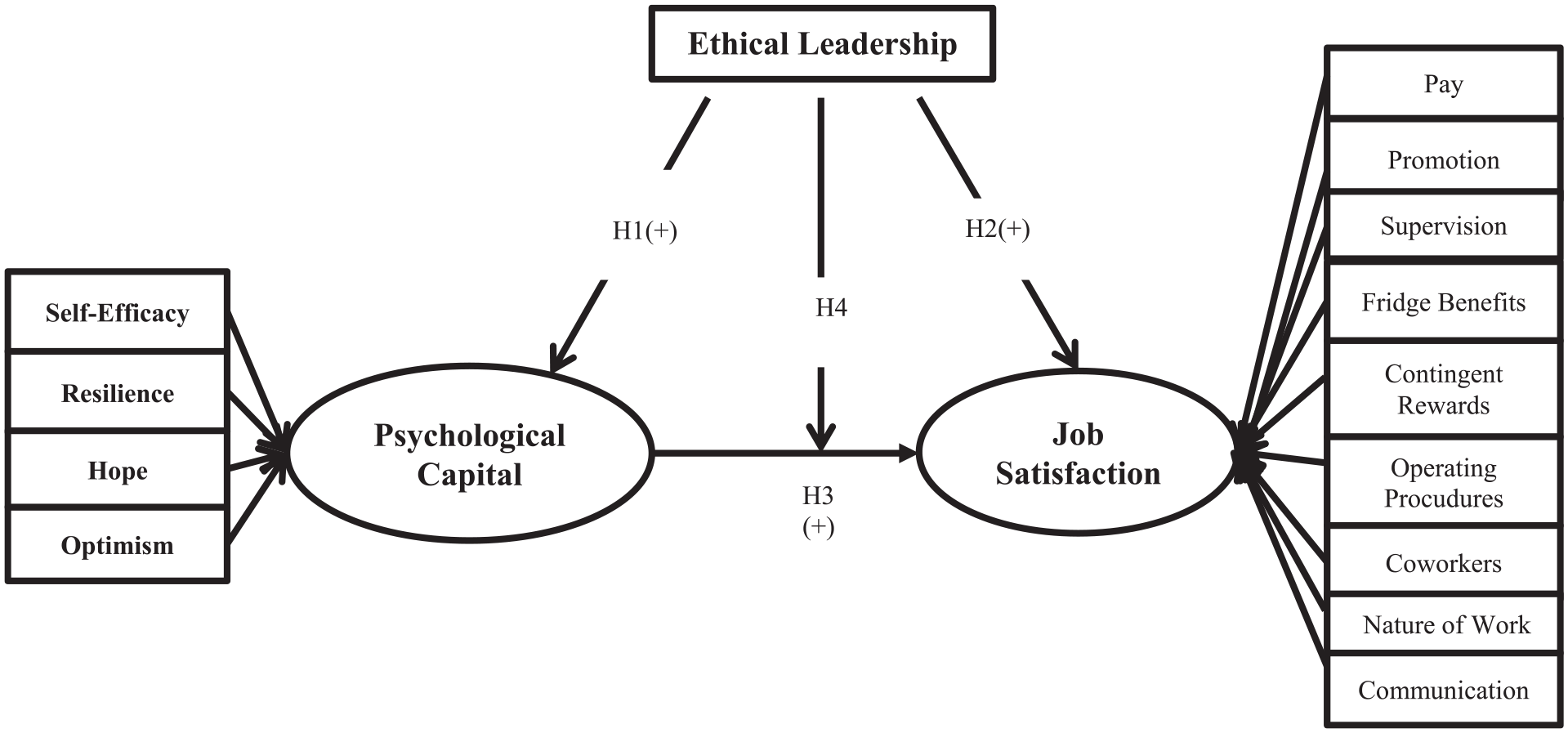
Conceptual model of the study.
Research Methodology
Research Design
From the literature review, it is found that there is a direct relationship between Psychological capital and job satisfaction for immigrant workers. The main purpose of the study is to determine if there is a moderating effect of Ethical Leadership in this relationship for immigrant workers in the Northern Cyprus. On the other hand, it is also tested whether ethical leadership is an independent variable or not when considering the outcome as psychological capital and job satisfaction separately. Therefore, the purpose of the study is a type of hypothesis testing study undertaken to explain the understanding of the relationship that exists among variables. Since the interest is delineating ethical leadership and psychological capital associated with job satisfaction, type of the study used is a correlational study. Extend of researcher interference with the study is minimal interference because the researcher has only distributed the questionnaire and collected back when the questionnaire is completed. During the data collection process, since the data is collected in the natural environment where work proceeds normally, the study is conducted in non-contrived settings. According to the purpose of the study, the data is collected on each individual immigrant worker and hence the unit of analysis is the individual. Data collection have been performed from immigrant workers in Northern Cyprus and one response is taken from each individual worker. The data is collected over the 3 months duration. Therefore, the time horizon of the study is represented as cross-sectional study where respondents were surveyed during the first half of 2019.
Research Sample
The study includes data from 18 hotels including 490 respondents. Considering the knowledge obtained from the North Cyprus Ministry of Culture and Tourism (2019), the five, four and/or three-stars international chain hotels are located in most substantial four cities which are Girne, Gazimağusa, İskele, and Lefkoşa representing the most significant domestic and international tourist attractions in the North of the country. Furthermore, Girne has five 4-star, fourteen 5-star and twelve 3-star hotels, Gazimağusa has one 5-stars and two 3-stars hotels, as well as two 5-stars hotels in İskele, two 5-stars and one 3-star hotel in Lefkoşa.
The questionnaire survey methods of data collection were adopted for this study. Both the independent and dependent variables may be measured via the data in these surveys (Jakobsen & Jensen, 2015). In this study, since all three variables namely; EL, PsyCap, and JS are measured using the same survey, measurement error can be assessed by common method variance which is tested by using the Harman’s single-factor test (Siponen et al., 2014). To this effect, 186 female and 304 male respondents participated in the study. The participants were from different foreign countries working in North Cyprus hotel industry. A participatory pilot survey was conducted with five immigrant employees, the result displays that the questions were completely understood by the immigrant employees.
In this study, quantitative research designs are used, and which is regarded as an exploratory research involving the researcher’s deep analysis in his/ her natural environment, trying to make sense of and interpret meanings (Denzin & Lincoln, 2005). The quantitative analysis is based on percentages. Also, convenience sampling method has been chosen to get the factors and relations about PsyCap, JS, and EL among immigrant employees at the hotels in North Cyprus. The convenience sampling method is effective in carrying out the study and getting reliable results within goals. It is also thought that convenience sampling method has given valid and conventional data because it relies on data collected from members taking part in the study via questions (Farrokhi & Mahmoudi-Hamidabad, 2012).
The models and hypotheses developed in this research with regard to the purposes of the present study were examined by structural equation model (SEM). In this SEM, a two-stage approach is preferred. In the first step, the relation between multiple models was investigated. In the second stage, the relationships between the indicators were strengthened in order to improve the values. In addition, analysis on various groups was applied to examine the effect of EL on the PsyCap and JS which is the main goal of the research. The differentiator can be defined as a factor affecting the power or direction of the bond between the discussion and the dependent factor. AMOS 20 software was used to implement the analyses in this study.
Data Collections Instruments
The scales were originally in English; hence, the back-translation method was employed to ensure the translation from English to Turkish to define that meanings were equivalent in the mentioned languages (Uyar & Kuzey, 2016). Turkish and foreign immigrant workers were identified from the managers of the hotels. Turkish questionnaire for Turkish immigrant workers and an English questionnaire for foreign immigrant workers were distributed.
A survey technique was utilized in the study and consisted of four different questionnaire groups:
First of all, we contacted via telephone with human managers of 30 hotels in order to get necessary permission to distribute over self-administered questionnaire to the immigrant employees in this research content. Judgmental sampling was used in choosing such employees in 3,4-, and 5-stars hotels in Cyprus. Seven hundred questionnaires were distributed with the help of senior employees from departments. The employees are informed about objective of the study and the desired anonymity would be provided. In total, 500 questionnaires out of 700 were returned to the reception desk. To get the maximum response, the human resource managers were two times reminded. Totally, 10 out of 500 were containing missing data and; therefore, eliminated from further statistical competitions. The remaining 490 questionnaires were taken into account with a response rate of 70%. The data was then imputed into the statistical program SPSS and AMOS Windows 20.0 for analysis and interpretations. Data for this study has been collected in 3 months from 490 respondents in 18 hotels in North Cyprus.
Analysis Method
The study used a quantitative methodology which involved a descriptive, exploratory and confirmatory factor analyses, as well as a regression. As a descriptive approach, it investigated the association between several variables rather than for causality. Due to the fact that the descriptive design was based on time and resource availability (Idris & Manganaro, 2017). It was most preferred for this study, even though an experimental research design is more rigorous than a descriptive design. The factor analysis test was performed using the SPSS program. Factor analysis often tries to measure latent variables that are not directly measured. Therefore, it is a complex statistical method used in many research fields (Říha et al., 2017). As suggested by Uyanık and Güler (2013), regression analysis is a statistical technique used to estimate the relationship between variables which have related reasons and results.
Analysis and Findings
Descriptive Analysis
Table 1 presents a demographic profile of participating in the survey. As can be seen from the table, male respondents constitute 62% of the total volume while female respondents are 38%. The highest age range is between 24 and 29 by 29.6%. It is important to note that the vast majority of respondents are high school and bachelor degree graduates respectively by 39% and 39.6%. Finally, the great majority of participants are Turkish (71.2%) as Turkish employees dominate tourism and hospitality in North Cyprus. The other profiles are also provided in Table 1.
Demographic Profile of Respondent.

Note. Number of participants = 490.
Exploratory Factor Analysis
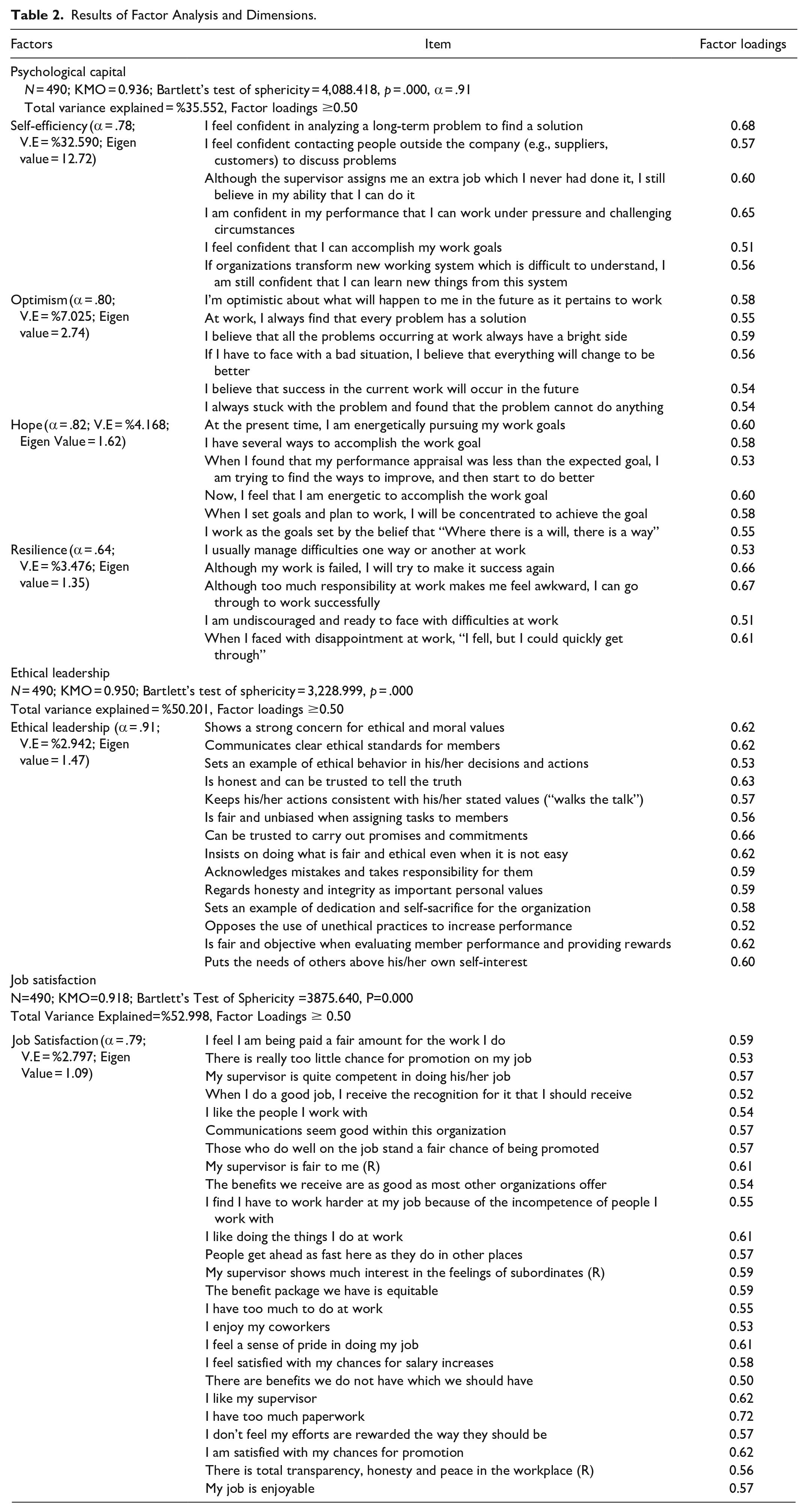
The study model was examined with the use of structural analysis, as well as studying the unidimensional of the variables within the model through EFA, and internal consistency, (Attar et al., 2017). Table 2 provides factor analysis and Cronbach alpha consequences for the dimensions adapted to the questionnaire survey of this research. As seen in Table 2, items in each dimension have successfully loaded, their loading factors are well above .50 and eigenvalues are greater than 1.000 (Arasli, Mehtap-Smadi et al., 2005; Arasli, Turan Katircioglu et al., 2005). On the other hand, Cronbach alpha values for each dimension in the questionnaire is well above .70, which is sufficient condition as far as reliability of each construct is concerned (Arasli, Mehtap-Smadi et al., 2005; Arasli, Turan Katircioglu et al., 2005).
Results of Factor Analysis and Dimensions.
Confirmatory Factor Analysis
CFA, allows researchers to cross validate the factor structure in an appropriate way. Additionally, it helps to define the factor structure of the dataset and is generally suggested to overcome certain limitations in the EFA (Jayaraman et al., 2018). The CFA was used to test the accuracy of the factor structure obtained as a result of the analysis of the principal components. The initially determined model is shown in Figure 2. The results of CFA displayed a reasonable fit of the dimensions of PsyCap, JS, and EL factors, the following fit statistics show the measurement model to the data: χ2 = 1,080.094, df = 347, χ2/df = 3.124, CFI = 0.87, IFI = 0.87, NCP = 737.094, RMSEA = 0.066. Modification signs are an extent of the JS variable values and the ethical leadership variable values, since the results of the pared questions show that they have changed at high values, they are bi-directionally connected to each other. This model results of CFA revealed a reasonable fit of the dimensions of PsyCap, JS and EL factors, the measurement model to the data in accordance with following fit statistics: χ2 = 793.754, df = 337, χ2/df = 2.355, CFI = 0.92, IFI = 0.92, NCP = 456.754, RMSEA = 0.053. The χ2 value for the three (3) variable models determined is both significant and χ2/s.d. value (2.35) is below 5. This is consistent with the initially determined model. When the indicators related to model conformity and the values obtained are examined; CFI = 0.92, IFI = 0.92, NCP = 456.754, and RMSEA = 0.053. The above results show that the compatibility scale values related to the structural model (RMSEA, NCP, IFI, and CFI) are within the acceptable compatibility limits. These outcomes reveal that the theoretical model conforms with the data and the recommended model is statistically valid and appropriate to evaluate the hypothesis (Attar et al., 2017).

Initial models.
Harman’s single factor test, including all the constructed items in the study based on a factor analysis which was used to determine whether the majority of the variance may be accounted for by one general factor as shown in Table 3. This implies that as the number of the items taken into consideration increases, the procedure become less conservative and the likelihood of obtaining more than one factor increases as well (Podsakoff et al., 2003).
Harman’s Single Factor Test of EL, PsyCap, and JS.

Note. IFI = incremental fit index; CFI = confirmatory fit index; NCP = non centrality parameter; RMSEA = root mean square error of approximation.
Convergent Validity
The focus of convergent validity is to analysis the measure to which certain items unite to measure a given construct. Thus, loadings, composite reliability (CR) and the Average Variance Extracted (AVE) are used to access valuating convergent validity. Factor loadings, AVE and CR should be at least 0.7, 0.5, and 0.7 respectively (Bagozzi & Yi, 1988). However, the 0.3 value of AVE is adequate on the condition that CR is higher than 0.6, the convergent validity of the construct is acceptable (Fornell & Larcker, 1981). Therefore, this study has excluded some items less than 0.5 to provide convergent validity. This implies that excluding the indicators with low loadings boosts the AVE which in turn enhances the convergent validity (Hair & Lukas, 2014; Sultana et al., 2018). SEM demonstrates the convergent validity in Figure 3 for PsyCap (AVE = 0.59, CR = 0,85), JS (AVE = 0.50, CR = 0.95), EL (AVE = 0.50, CR = 0.88).

Convergent validity model.
Regression Analysis
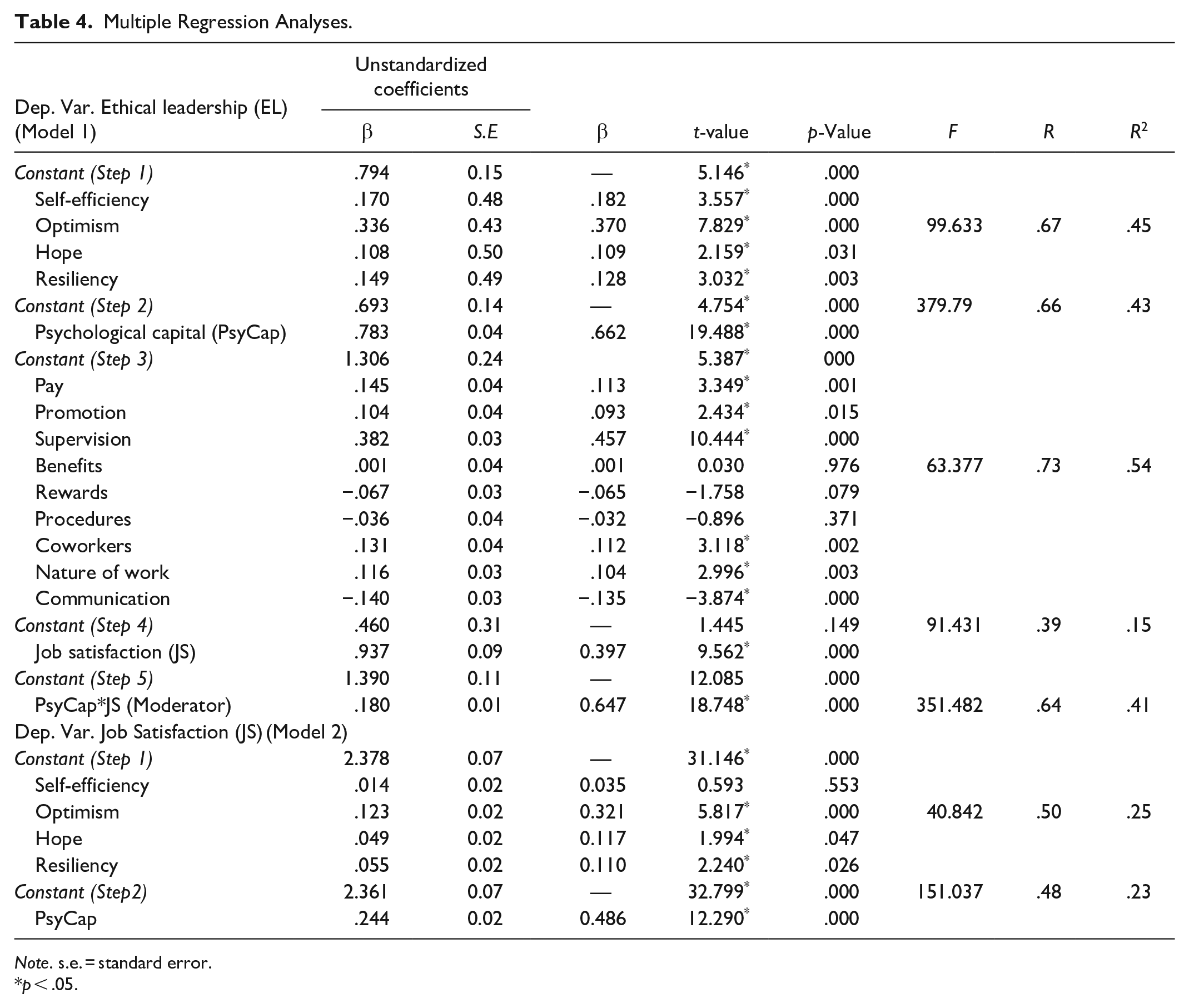
In this phase, having factor analysis results successfully loaded, regression analyses have been carried out in order to estimate coefficients in Figure 1 of this study. Regression results are presented in Table 4. As conceptualized in Figure 1, a total of fifteen different model options have been estimated and showed in Table 4. Based on research questions, results show that the dimensions of JS and components of PsyCap exert positively significant effects (only with a few exceptions of negatively significant coefficients) on the ethical leader of hotel employees. The coefficients of “Contingent rewards, fridge benefits, and operating procedures” have non- significant in the model options. Moreover, communication has negatively significant in the model options. This denotes that an improvement in the confidence level of employees leads to a decline in job satisfaction levels. Additionally, the fringe benefits signify an anticipated form of reward, but might result in declined remunerations and reduced job mobility (Artz, 2010). Moreover, the whole rules, regulations, principles and demands of the job that have to be implemented during the job are included in operating procedures (Van Saane et al., 2003).
Multiple Regression Analyses.
Note. s.e. = standard error.
p < .05.
Conversely, Table 4 displays that interaction variables of leadership with PsyCap dimensions exert positively significant effects on the level of JS of workers. This denotes that EL moderates the effects of PsyCap on JS positively. Ethical leadership is an indicator of honest, fair and trustworthy management through interpersonal relationships and behaviors. The ethical leader interacts strongly with ethical challenges by employee communications. The leader has a direct or indirect impact on the employee’s JS and PsyCap since it seeks to make better decisions about its workers (Brown et al., 2005). Leaders need to have the ability to reflect and convey the same characteristics of human beings such as focusing on people’s minds, adapting to change, thinking creatively and having an objective thinking. This feature can connect employees’ psychological capital and job satisfaction together (Bouckenooghe et al., 2015). The key point of ethical leadership approaches is that there is a significant link between the effective leader and the organization expected efficacy. In other words, the structural impact of the ethical leader of an organization will increase success by employees’ job satisfaction and psychological capital positively.
Approaching the model from another perspective; according to the results of AMOS, the regression weight estimate between the variables in the moderate model is indicated in Figure 4. The likelihood of getting a critical rate as high as 19.508 in absolute value is less than 0.001. The regression value is estimated as 0.66, and for EL in the prediction between PsyCap and JS is substantially different from zero at the 0.001 level (two-tailed). Also, the standardized direct effect of EL on PsyCap and JS is 0.65 (moderation). The reason for this, the direct effect of EL on JS and PsyCap, when EL rises by 1 standard deviation.

Estimate of moderate model.
Hypothesis Testing
With the help of SPSS and AMOS, the analysis was employed to ascertain the effect of EL on the dimensions of PsyCap and JS. Firstly, Hypothesis 1 recommends that EL has a favorable effect on the dimensions of PsyCap for immigrant employees in the hotel sector. On the other hand, the regression outcome revealed significant and positive effect with psychological capital (F = 379.79, t = 19.488, p = .00). This result is coherent with the earlier studies by Lee et al. (2016) determine that EL would be significantly associated with PsyCap of the individual. Consequently, this result suggests that more analysis is required to determine the possible moderating factors affecting the direct relationship between employees’ PsyCap and EL. Secondly, Hypothesis 2 advocates that EL has a positive effect on JS of the immigrant employees in the hotel sector (only with rewards and procedures exceptions of non-significant coefficients). This hypothesis result shows that EL has significant and positive effects on JS (F = 91.431, t = 9.562, p = .00). This result is compatible with prior studies by Attar et al. (2017) which posits that employee’s EL perceptions has positive effect on the JS level of immigrant workers. Thirdly, Hypothesis 3 shows that the dimensions of PsyCap can have an affirmative effect on the dimensions JS of workers (only with a self-efficiency exceptions of non-significant coefficients), the regression result has coherent and positive effects on employees’ JS (F = 151.037, t = 12.290, p = .00). This is congruent with earlier research by Badran and Youssef-Morgan (2015) specifying the dimensions of PsyCap affects the JS of Egyptian employees positively. Lastly, Hypothesis 4 suggests that EL has a significant moderating act in the relationship between the dimensions of PsyCap and JS with immigrant workers in the hotel sector. With regard to research questions, this regression result of EL have supported on immigrant employees JS and Psycap practices (F = 351.482, t = 18.748, p = .00). To confirm that the form of this interaction aligns with our prediction, the graphical depictions of the moderated effects is shown in Figure 5. As shown in Figure 5, the positive relationship between psychological capital and job satisfaction is moderated by ethical leadership, such that the relationship is stronger for immigrant employee’s high ethical leadership. Thus, H4 is supported.

The moderating effect of EL on the relationship between Psycap and JS.
Finally, it is seen from the results of Table 4 that four hypotheses of this study (H1, H2, H3, and H4) have been significantly confirmed based on the regression analyses. However, the effects of PsyCap on some dimensions of JS are mixed findings (either positive or negative). PsyCap has a positive effect on JS dimensions such as pay (t = 2.225, p < .05), supervision (t = 7.461, p < .05, co-workers (t = 5.410, p < .05), nature of work (t = 6.455, p < .05). Moreover, PsyCap has no significant effect on JS dimensions, including promotion (t = .300, p > .05), fringe benefits (t = .520, p > .05), and contingent rewards (t = 1.217, p > .05), operating procedures (t = −.234, p > .05). Additionally, PsyCap has a negative effect on the communication dimension of JS (t = −2.375, p < .05).
Discussion and Conclusion
Based on social exchange theory, this research examined the influence of PsyCap on JS directly through the moderating role of ethical leadership. A total of 490 immigrant employees from 18 different hotels have been surveyed, the results suggest that PsyCap affects JS dimension positively and significantly, which is in line with the results of Hao et al. (2018), Jung and Yoon (2015), Karatepe and Karadas (2015), Olaniyan and Hystad (2016).
This positive significant relationship can be explained by the factors of hope, optimism, resilience, and self-efficacy qualities of immigrant employees having a positive impact on the satisfaction feelings of immigrant employees, which may improve and provide better service quality, organizational citizenship behaviors, job engagement, organizational commitment, low turnover, and absenteeism and thus enhancing their organization’s performance, productivity, positive image as evidenced in the hospitality management literature. For instance, As the social exchange theory posits, when hotel employees perceive their psychological capital high, they fill high moral and satisfaction and would try to reciprocate by improving the quality of products and services, having extra mile to answer the changing needs and choices of their guests for the sake of supporting their management, or even may go extra mile to attract new guests, and react service failures and customers complain proactively. This was also supported by Arasli and Arici (2019) who stated that successful organizations and their leaders know how to touch and manage their follower’s hope, optimism, self-efficacy and resilience bottoms, understanding and being responsive to employee needs and expectations which in turn can provide effectiveness for such service organizations.
As mentioned previously, one of the strengths of this study is the examination of job satisfaction dimensions among immigrant employees and measuring how its components are influenced from the effects of psychological capital dimension. Interestingly, in this study, we could not find a relationship between psychological capital and some of job satisfaction ingredients such as promotion, fringe benefits and contingent rewards, as well as operating procedures. Most probably, two potential reasons are: First, the human resource practices of such hotels may not evaluate and reward performances of different employees equally in the research content. Since the immigrant employees are invited to work based on short- or long-term contracts, their statue is considered different than full time employees like as seasonal employees (Arasli & Arici, 2019). This may be also dealt with the image of the immigrant employees who are handled temporary and such employees are not valued to invest due to the lack of any binding paper agreement between the two parties for the future.
The other interesting result of this study was the negative relationship between PsyCap and communication dimension of job satisfaction. When we examine the ownership and structure of such hotels, it can be confirmed from several researches (i.e., ; Arasli et al., 2006; Arasli & Tumer, 2008) that the structures of the hotels on this part of the island are mostly hierarchical and paternalistic in nature. Thus, paternalism is very common in practice. As Aycan (2001) stated paternalism “described as a subordinate-superior relationship, whereby people in authority assume the role of a parent and consider it an obligation to provide support and protection to those under their care. Subordinates, in turn, reciprocate such care, support and protection of the paternal authority by showing loyalty, deference and compliance to him/her” As aforementioned above, the immigrant employee’s perception of hierarchical structure and strict decision making process may force them to focus only their job and for the sake of not to take any criticism, or experience abuse from their bosses or colleagues, they may prefer to keep silence or reduce his/her interactions with other as much as possible, and prefer to keep the feedback transaction at minimum with their peers or bosses. That is to say as these employees as they have more hope, optimism, resilience and particularly self-efficacy, they would prefer to minimize the communication with others for avoiding negative outcomes of their institution’s hierarchical systems (i.e., blaming, harassment) in such job settings.
Another unique contribution of this study is the positive and significant association between the psychological capital by the hotel employees’ ethical leadership practices to produce a positive influence on Job Satisfaction of immigrant employees. Our conclusions draw attention to the effects of ethical leadership practices on psychological capital. Notably, a greater ethical leadership behavior was linked to enhanced job satisfaction, but only when the ethical leadership practices were more in practice. In other words, better practical results can be achieved in relation to job satisfaction if an interaction is achieved between the ethical leadership and psychological capital of the employees. As we indicated, one of the notable gaps filled with this present study is to examine the moderating role of ethical leadership on the component of psychological which directly influence job satisfaction. As it has been stated theoretically via social exchange theory, the more ethical leadership practices put into action, the more should lead to higher feelings of job satisfaction among the immigrant employees in terms of pay nature of work, procedures, supervision and peers.
Regarding both the JS ingredients and moderating role of ethical leadership on immigrant employees, the findings presented more detail than past studies and determine which dimensions of the JS have been influenced significantly from PsyCap when the ethical leadership is high.
Implications of Study
Institutions or organization’s managers should be able to construct their work under ethical regulations. For example, ethical leaders’ credibility, faith and honor is hoping to boost a culture in which employees’ JS becomes a tradition. Especially, the results suggest that the normative character of EL inspires ethical manners among the employees and also it evokes positive effects on employees’ PsyCap by developing their job satisfaction and constructing the aims between leader and employee (Brown & Treviño, 2006; Brown et al., 2005; Shafique et al., 2018).
The current study asserts implications for employee and management, specifically in environments having cultural variance. Except for acting employees with esteem and indicating consideration, supervisors are required to develop PsyCap among their employees so as to augment JS of employees. They can manage their aim by constructing a do a portfolio of support activities covering the permanent indication and moral communication standards, and creating a psychologically safe environment. Performance evaluation in accordance with other support measures offered in the organizations should be included in this portfolio (Ren & Chadee, 2017). Actually, it is clear that both PsyCap and JS among employees are crucial manners contributing the prosperity of an organization. Lee et al. (2008) conducted a study on the effects of JS, and found that most of the participants had left their former company either for another offer or to look for a new job, mostly because of the dissatisfaction within their current jobs. This indicates that employees having low JS will obviously cause lower PsyCap in a workplace.
The results and discussions above indicate that EL is needed for PsyCap to develop the JS. It has been demonstrated that the JS can be improved thanks to EL. In the meantime, particularly the hospitality sectors of North Cyprus must take up such practices seriously. Consequently, the implementation of the study yields valid and reliable results; therefore, this study is quite effective and fruitful for further studies about immigrant workers in North Cyprus as it offers relevant literature accompanying with not only modeling techniques, but also secure results in this department. It is thought that the findings of this research are very stimulating and original for researchers and policy makers. In addition, the moderating role of EL on workers’ PsyCap and JS relationship is required to be searched for further studies. The effects of person-job fit, person, organization fit and stressful working conditions, communication and ethical behavior may be observed in this relationship. It should be taken into consideration for next studies.
Limitations and Future Research Recommendation
Through the course of this research, the following limitations were encountered. First of all, the study used a survey data at one given time in a point. The consequent implication of this method is that individual’s perception and evaluations may change through time. The second limitation of this research is the fact that the survey does not include responses from all staff of selected hotels due to accessibility constraints, and in most cases, the unwillingness to participate in the survey occurred due to personal reasons. This implies a partial evaluation of the real situation in this present study. Lastly, due to the research scope of this current study, the sub-dimension of ethical leadership was not taking into consideration. Thus, future studies in this domain are required to reveal the implications of the sub-dimensions of ethical leadership, including ethical guidance, fairness, leader integrity, and concern for the sustainability. This information would provide substantial benefits to leaders in the hotel industry.
In recent times, business organizations have paid more attention to ethical competence, accountability and organizational transparency. Thus, this study demands that future research should investigate the effect of ethical leadership on immigrant employees; the role of social culture on ethical leadership between societies with a focus on the dynamics of organizational culture, strategic decision-making, and organizational inertia in the hospitality industry. Although this study only focused on hotels, it recommends that the findings should be applied in other sectors, such as casinos, restaurants, and cruise lines to allow for the generalizability of the findings. Megeirhi et al. (2018) noted the need to measure the effect of other related leadership constructs. As such, this study followed their recommendations and explored the moderating effects of ethical leadership construct, the construct of psychological capital and the concept of job satisfaction of immigrant workers. To the best of the authors’ knowledge, the role of these three constructs has not been explored in a single model prior to this study, thus placing this study at the forefront of research investigations under this domain.
Footnotes
Declaration of Conflicting Interests
The author(s) declared no potential conflicts of interest with respect to the research, authorship, and/or publication of this article.
Funding
The author(s) received no financial support for the research, authorship, and/or publication of this article.
