



Abstract
This study aims at exploring the influence of product design on customer engagement through self-determined needs satisfaction. This study used the survey method in three ways: (1) mall intercept approach, (2) email survey, and (3) survey through Wechat. The sample was collected from 500 customers of electronic products living in Xi’an, China. The data analysis is done through structural equation modeling. Findings show that perceived product design in terms of functional, esthetic, and symbolic design is positively related to self-determined needs (autonomy, relatedness, competence) satisfaction. Furthermore, results reveal that self-determined needs satisfaction has a positive influence on customer engagement. The moderation results show that prevention focused customers moderate the relationship between functional design and self-determined needs satisfaction. Whereas, promotion focused customers moderate the relationship between esthetic design and self-determined needs satisfaction. This study adds value to the self-determination theory by examining the link between product design dimensions and customer engagement through self-determined needs satisfaction. Furthermore, this study adds value to the existing literature on regulatory focus theory.
Keywords
Introduction
Although considerable studies have analyzed the relationship between product design and several consumer behaviors such as customer pleasure (Desmet, 2012; Desmet & Hekkert, 2007), customer loyalty (Hsu et al., 2018), customer satisfaction, and purchase intention (Moon et al., 2015; Wang et al., 2018) and consumer preferences(Marques da Rosa et al., 2019), little focus has been given to the customer engagement in relation to product design. Generally, marketing researchers are looking forward to identifying the predictors and outcomes of customer engagement and understanding the mechanism through which predictors shape customer engagement (Abbasi et al., 2020; Barari et al., 2021; Harmeling et al., 2017; Joshi & Garg, 2021; Khan et al., 2019; Pansari & Kumar, 2017; Rasool et al., 2020; Sabir, 2020). In this regard, product design can initiate a useful point in understanding the product-customer relationship. Product design plays an important part in improving the customer experience (Luchs et al., 2016), and hence, it may effect customer engagement. Therefore, it is essential to analyze the process which clarifies the link between perceptions about product design dimensions and customer engagement. The theoretical framework which may help in bridging the gap between the marketing environment and consequent consumer behavior is referred to as self-determination theory (SDT) (Ryan & Deci, 2000a, 2000b). SDT states that “intrinsic motivations are shaped by the satisfaction of innate self-determined needs for relatedness, competence, and autonomy” (Loroz & Braig, 2015; Reis et al., 2018) and when these needs are satisfied, can become the reason for intense attachments (Ahn & Back, 2019; Malär et al., 2011). We argue that when a product provides intrinsic rewards and benefits, it may induce inherent happiness among the customers upon making a purchase. However, based on extrinsic rewards offered by the product, customers are only motivated to acquire a product rather than to get inner satisfaction. Consequently, the intrinsic motivation that is satisfaction of autonomy, competence, and relatedness needs, can offer a more precise way to link product design with customer engagement. Keeping these rationales in mind, this study aims to provide a comprehensive understanding of the product attributes-customer behavior link by embedding the principles of SDT in the association between product design dimensions that is functional, esthetic, and symbolic and customer engagement.
The product attributes-customer behavior link can be influenced by individual differences based on the regulatory focus (Liu et al., 2020). Therefore, drawing on the framework of regulatory focus theory (Higgins, 1998), we argue that promotion focused customers may have a different orientation toward product design as compared to prevention focused customers. The promotion-focused individuals orient themselves toward accomplishments, achievements, and development. However, prevention-focused individuals concern more about protection from the negative consequences and responsibilities. These contrasting forces may influence the consumers’ decision making, psychology, and information processing (Florack et al., 2005; Yin & Wang, 2013). In addition, product design carry hedonic and utilitarian benefits (Liu et al., 2020); hence, it may be expected that individual regulatory focus influences the relationship between product design dimensions and customer engagement. To understand the effect of these individual differences in the context of product attributes-customer relationship, we further aim at examining the moderating effect of regulatory focus on the product design-customer engagement nexus.
The contributions of the current study are three folds. First, despite the increasing importance of product design in the marketing literature, the limited focus has been given to the fundamentals of product design in developing psychological associations among the product and customers’ engagement. More specifically, researchers are struggling to examine how the dimensions of product design may impact consumer behaviors (Candi et al., 2017; Rana & Paul, 2017). Besides, previous studies have given much attention to the outcomes of customer engagement (Abbasi et al., 2020; Islam et al., 2019; Khan et al., 2019; Rasool et al., 2020). For instance, Islam et al. (2019) have reported that customer engagement drives customer information sharing and perceived customer interactional justice, which in turn improves online service recovery. However, little focus has been given to the predictors of customer engagement. To contribute to these ongoing efforts, this study adds value to the consumer behavior literature by clarifying the influence of product design dimensions on customer engagement by embedding the satisfaction of the self-determined needs. Second, this study extends the regulatory focus theory in explaining the effect of individual characteristics on the product design-customer engagement relationship. By doing so, we examine how promotion focused and prevention focused customers take product design to satisfy their self-determined needs. Third and finally, the majority of previous studies have examined the impact of product design on consumer behavior in the developed markets, limiting us to understand that impact in emerging and developing countries. As such, time is ripe to explore the link between product design and customer engagement in an emerging context. Our study also has practical contributions. First, practitioners have the opportunities to design their products in a way that can enhance customers’ competence, autonomy, and relatedness. The fulfillment of these needs may benefit practitioners in getting customer purchase, referrals, positive word of mouth, and feedbacks. More specifically, firms can encourage their customers to purchase their product, generate positive word of mouth over social media, refer their products to their friends and family, and may also influence them to provide feedback on the product/brand. Second, practitioners can categorize their customers according to regulatory focus in relation to product design which may help them to meet the diverse needs of the customers.
The structure of the paper is as follows. First, the background, research gaps, and brief contributions are given in the introduction section. Second, the literature on the main variables of the study and theoretical framework is elaborated. Third, the information about the study participants, measures, and data collection is given in the methodology section. That is followed by the data analysis in the fourth section. In the end, a discussion about the main findings along with contributions and future directions are provided.
Literature Review and Hypotheses Formulation
Theoretical Background
Self-Determination Theory (SDT) refers to the consumer behaviors which are linked with the satisfaction of innate self-determined needs (autonomy, relatedness, and competency needs) which may further improve the well-being of the individuals (Deci & Ryan, 2000). Autonomy refers to the decisional control that one has on its actions. Competence means the level of confidence that one feels after completing some challenging task. Relatedness needs are attached to social networking and acceptance within society. The SDT is established on the motivational paradigm and determines two types of motivation: intrinsic and extrinsic motivations (Ryan & Deci, 2000a). This theory indicates that human behaviors can be shaped because of both intrinsic and extrinsic motivations. Intrinsic motivation refers to the involvement of individuals in activities in order to fulfill their inner satisfaction or desire, like opting for activities which lead to sensory stimulation, fun, amusement, and fantasy. However, extrinsic motivations are attached to external rewards like money. Due to intrinsic motivation, behaviors are directed by themselves with an interest, appeal, and enjoyment. However, behaviors conducted by extrinsic motivations lead toward satisfaction as a result of goal achievement that is external to the behavior itself.
A strong association presents among the satisfaction of psychological needs and product attachment, through which customers are closely connected with the products which satisfy their most salient needs (Deci & Ryan, 2000; Gilal et al., 2018). For instance, the proponents of SDT refer to autonomy needs satisfaction as experiences of psychological freedom (Ryan & Deci, 2000b). This intrinsic motivation relates to something personally important and inherently interesting for an individual. Autonomy needs satisfaction is usually opposed to controlled motivation, through which individuals act according to internal and external pressures (Chen et al., 2015). The satisfaction of competence need reflects a desire to master skills and techniques required for accomplishing life goals (Ryan & Deci, 2000b). The competence needs satisfaction is typically contrasted with competence frustration whereby people go through feelings of doubts and failure, influencing their self-efficacy (Chen et al., 2015). Hence, we argue that when the product improves customers’ feelings of competence by helping them to achieve desired goals while avoiding undesired results, customers develop strong attachments with the products. The satisfaction of relatedness needs reflects individual desire to connect with others and to take care of others. It contrasts with relatedness frustration, through which individuals experience loneliness and social exclusion (Chen et al., 2015). Therefore, we expect that when product helps customers feel connected with others in the society, customers are more likely to be attached to a particular product. Overall, based on SDT framework, satisfaction of self-determined needs can bridge the gap between product design and customer engagement. Hence, we have proposed the following relationships among different types of product design and self-determined needs satisfaction, and among self-determined needs satisfaction and customer engagement.
Product Design and Self-Determined Needs Satisfaction
Product design refers to the set of product’s constitutive elements that customers perceive and organize (Gilal et al., 2020) The four P’s (product, price, place, and promotion) of the marketing mix are considered fundamental for the firm success. Among these four P’s, the product’s exterior design plays an important role in revitalizing the product (Bloch, 2011; Gómez et al., 2015). Product design has gained prominent recognition in marketing inquiry which emphases on esthetic, functional, and symbolic information (Luchs et al., 2016). Product design is a multidimensional construct that comprises three dimensions: esthetic, functional, and symbolic design (Homburg et al., 2015). The functional design is the basic component of product design that refers to the product’s functional usefulness or how it can facilitate the achievement of a task (Bloch, 2011; Lee & Johnson, 2017), the basic function of a clock is to provide information about the current time, whereas the basic function of a mobile is to send and receive phone calls. While, the esthetic design refers to the ability of product design to please customers’ senses and it is more related to the appearance of the product (Bloch, 1995; Desmet & Hekkert, 2007). The symbolic design has several communicative properties that focus on specific signs of a product design (Bloch, 2011; Homburg et al., 2015).
Studies have indicated that esthetic product design may help brands in breaking the marketing clatter by positively influencing the customers’ perception (Luchs et al., 2016). It can stimulate one’s sensory pleasure (Bloch, 2011), which can further improve several consumer-related outcomes such as product preference (Gilal et al., 2017), recommendation (Candi et al., 2017), willing to buy (Bradu et al., 2014), and repurchase intention (Homburg et al., 2015).
Esthetic design can shape customers’ perceptions in the following ways. First, the product’s exterior design such as an eye-catching appearance and color combinations impacts customers’ initial impressions and improves their self-expressions (Belk, 1985; Berkowitz, 1987). Second, the esthetic properties of the product design may provide sensory pleasure and psychological freedom to the customers (Bloch, 2011). Third, the product’s appearance strengthens the connection among the customers and brand, and also satisfies the customers’ desire to make social contacts (Luchs & Swan, 2011). When customers get the esthetic sense of the products, they are more likely to be involved in affection processing which may further induce feelings of relatedness (Vilches-Montero et al., 2018). In the end, authors determined that beautifully designed products may stimulate favorable emotions (Bloch et al., 2003) and also one or more sensory pleasures (Reber et al., 2004), that further spur deeper relational outcomes (Noble & Kumar, 2008).
It is reported that customers pay more attention to functional design while buying products (Bloch, 2011). Recently, several studies have supported this notion by showing that the motivation behind customers’ buying is to satisfy the functional need (Chitturi et al., 2008; Talke et al., 2017). Moreover, studies have indicated the positive association of functional design with purchase intention (Moon et al., 2015), and the firm’s functional growth factors like market share and sales growth (Homburg et al., 2015; Rubera, 2015). Similarly, design literature demonstrates that a product that allows customers to achieve functional and prevention goals may augment customers’ confidence (Luchs et al., 2016). Previously, authors determined that there are two main motives behind customer shopping that is utilitarian motives and esthetic gratification (Batra & Ahtola, 1991; Luchs & Swan, 2011). According to Higgins (1998), when a product helps customers achieve utilitarian goals, it may reduce their painful emotions and doubts about the quality of a product, hence, improving customers’ attachment with product (Kivetz & Simonson, 2002). Similarly, Chitturi et al. (2007) identified that utilitarian aspects of the product strengthen the customers’ confidence while influencing their sense of satisfaction and product choices. Therefore, we assume that functional design may enable customers to perform well (competency need satisfaction), allow them to get decisional control and to show their independence (autonomy need satisfaction), and makes them feel connected (relatedness need satisfaction). Hence, we have proposed the following hypothesis.
Studies have demonstrated that symbolic design allows customers to display their self-concept (Bloch, 1995), and helps them to develop their own identity (Aaker, 1999), and to initiate and maintain their affiliation with a particular social group (O’Cass & Frost, 2002). Similarly, authors have revealed that customers have an emotional attachment with the product’s symbolic design (Fillis et al., 2016) because it enables them to highlight their self-image and identity (Brunner et al., 2016). This notion was more supported by some studies which have reported that those products that play a critical role in protecting and maintaining the customers’ self-image and extended self can become the cause of self-determined needs satisfaction (Franzak et al., 2014; Gilal et al., 2018; Tan et al., 2003). Besides, the authors recommended that customers are emotionally attached with symbolic attributes of the product design (Atakan et al., 2014), because the symbolic value of the product not only enhances the sense of autonomy and connectedness but also enables customers to strengthen their self-expression. In light of the above theoretical support, we posit the following hypothesis,
Self-Determined Needs Satisfaction and Customer Engagement
van Doorn et al. (2010) have developed a comprehensive model of customer engagement. According to them, customer engagement is a multidimensional concept and can be defined as customer behaviors that are influenced by motivational drivers, and have a firm or brand focus, and go beyond purchases. This model highlights the predictors and outcomes of customer engagement behaviors from the perspective of customer, firm, and situation. In our context, the customer-based perspective of this model can be fitted well as it can help in examining the influence of product design on customer engagement. In line with the customer perspective, Pansari and Kumar (2017) proposed that customer engagement can be observed when customers involve in buying and recommending a product/brand, providing feedback to improve product/brand, and sharing their experience. They have conceptualized customer engagement in terms of customer referrals, customers purchase, customer influence, and customer knowledge. We have incorporated these dimensions of customer engagement (customer referrals, customer purchase, and consumer influence) in our study to conceptualize the concept. Customer purchase is directly linked with the firm value because it enables the firms to increase revenues and profits. Customer referrals are another form of customer engagement in which customers attract other customers by referring them to companies and these referrals may increase overall customer engagement (Pansari & Kumar, 2017). Customer influence refers to the activities in which customers share their experiences on different media like social media and discussion forums. It includes both online and offline word of mouth. Customer knowledge refers to the active involvement of the customer in the improvement of the company’s products and services by providing feedback and suggestions.
According to the comprehensive model of customer engagement behavior (van Doorn et al., 2010), the customer-based antecedents reveal that customer satisfaction is an essential predictor of customer engagement. This satisfaction can be either extrinsically driven or intrinsically driven. Bowden (2009) mentioned in his study that level of satisfaction may lead to several customer-related outcomes like customer loyalty, purchase intention, recommendations, and word of mouth. It can be inferred from Bowden’s information that satisfaction can be linked with customer engagement in terms of customer purchase, referrals, and influence. Similarly, it has been investigated that several customers’ behavioral outcomes are linked with self-determined needs satisfaction. For example, studies have examined the role of self-determined needs (autonomy and relatedness) in influencing the customers’ attachment with the celebrity and found that fulfillment of autonomy and relatedness needs predicts celebrity attachment (Ilicic et al., 2016; Thomson, 2006). Huang et al. (2016) demonstrated that tourists’ relatedness and autonomy needs satisfaction predicts joyful experiences which can influence their intention to a trip. Likewise, authors have explored the predictors of brand attachment and reported that competence needs satisfaction has a strong connection with brand attachment (Loroz & Braig, 2015; Proksch et al., 2015). Furthermore, authors have determined that when customers have a sense of belongingness and when they have the freedom to express their opinions they are more likely to engage in brand communities (Chan et al., 2014). Recently, authors have conducted a cross-cultural examination of the relationship between self-determined needs satisfaction, and willingness to buy a premium, and word of mouth. They reported that customers are more willing to buy a premium if their competence, relatedness, and autonomy needs are fulfilled by product design (Gilal et al., 2018). It means self-determined needs satisfaction can allow customers to create their influence by generating word of mouth on different mediums and may also influence their purchase intention. In line with the above theoretical support we expect that when customers are satisfied with their autonomy, competence, and relatedness needs they can engage in product purchase, referrals, influence, and knowledge. Hence, we posit that,
Moderating Role of Regulatory Foci (Prevention vs. Promotion Focus)
According to regulatory focus theory (Higgins, 1998), individuals follow two self-regulation systems. Which include promotion based regulatory focus and prevention based regulatory focus. Those individuals who have more orientation toward promotion focus strive for goals achievement and advancement. However, people having a prevention focus try to be more responsible and avoid negative consequences (Avnet & Higgins, 2006; Lanaj et al., 2012). Studies reveal that customer regulatory orientation can be linked with a state or trait (Semin et al., 2005). The two states of regulatory focus can coexist within every human but it may be observed on either a temporary basis or permanent basis. Furthermore, authors have determined that prevention-focused customers favor utilitarian products and promotion focused customers favor hedonic products (Chitturi et al., 2008; Das et al., 2018). The functional design is an important component of utilitarian products and esthetic design has a close relationship with the hedonic aspects of products (Chitturi et al., 2008). Moreover, authors have shown that prevention-focused customers prefer functional gains as compared to hedonic aspects (e.g., preferring a more functional laptop as compared to a more esthetically designed one) in order to get more confidence and competence. In contrast, promotion-oriented customers may be focused more on the esthetic attributes of products (e.g., choosing an attractive mobile or laptop) in order to boost self-image and self-concept (Das et al., 2018; Zhou et al., 2021). Therefore, we posit the following hypothesis
The proposed framework is presented in Figure 1.

Proposed model.
Research Methodology
Participants and Procedure
To achieve our study aim, this study focused on the consumer electronics industry of China. The data was collected from the Chinese electronic product users living in Xi’an. Consumer’ electronics include a smartphone, tablets, laptops, camera, and TV. In 2019, the consumer electronics market of China worth rupees 126 billion RMB, and the Apple brand is the most popular international brand in China (Daxue Consulting, 2020). Besides, according to Wong (2020), China has remained world’s largest market for the smartphones since 2012. In 2019, approximately 366 million units of smartphones were sold in China, accounting for 27% of the global sale of smartphones. During data collection, 550 questionnaires were distributed among the target sample. After the collection of responses, 470 questionnaires were qualified for further analysis from 500 returned questionnaires. The rest of the 30 responses were excluded because of incomplete answers. We approached our target sample in three ways. First, respondents were contacted with the help of “Wechat” and asked to fill the electronic version of the questionnaire, followed by the reward of 5 Yuan upon completion. Second, the mall intercept approach was used by intercepting and asking shoppers in shopping malls to fill the questionnaires. Afterward, respondents were awarded gifts. Finally, questionnaires were transformed into an online form and the link was emailed to respondents and indicated them to fill the form by clicking the link given in the email. We majorly relied on the Wechat survey, followed by the mall-intercept and email survey. Wechat survey is the most commonly used data collection method in China (Haider et al., 2019). Several previous authors have used this technique in their studies (Liang & Xu, 2018; Weil et al., 2020). We distributed 400 questionnaires via Wechat, 100 via mall-intercept, and rest 50 via email.
Given the general target audience, we employed a convenience sampling to collect the responses to save time and cost. Respondents were first asked to choose a recently purchased digital electronic product from the list given in the questionnaire. Three categories were given: (1) smartphones/tablets, (2) laptops, (3) TV/Smart TV, and others. The majority of the respondents revealed that the last electronic product purchased was a smartphone/tablet (60%), followed by the smart TV (24%), and laptops and others (16%). They were further asked to fill the proceeding questions on the study’s major constructs by considering the particular electronic product recently purchased. The detailed information about the sample is given in Table 1.
Sample Profile.

Measures
This study adapted key constructs from previous studies and made few adjustments before starting the survey. The adapted measures were translated into the Chinese language by two doctoral students and then these measures were translated back into original form separately by other two Chinese students at Xi’an Jiao Tong University. To examine the accuracy of the translation, an English-Chinese language instructor was recruited to check both versions of the questionnaire (original and back-translated) to determine the reliability of the constructs. Respondents were asked to fill the questionnaire by picking the option from the 5-point Likert scale.
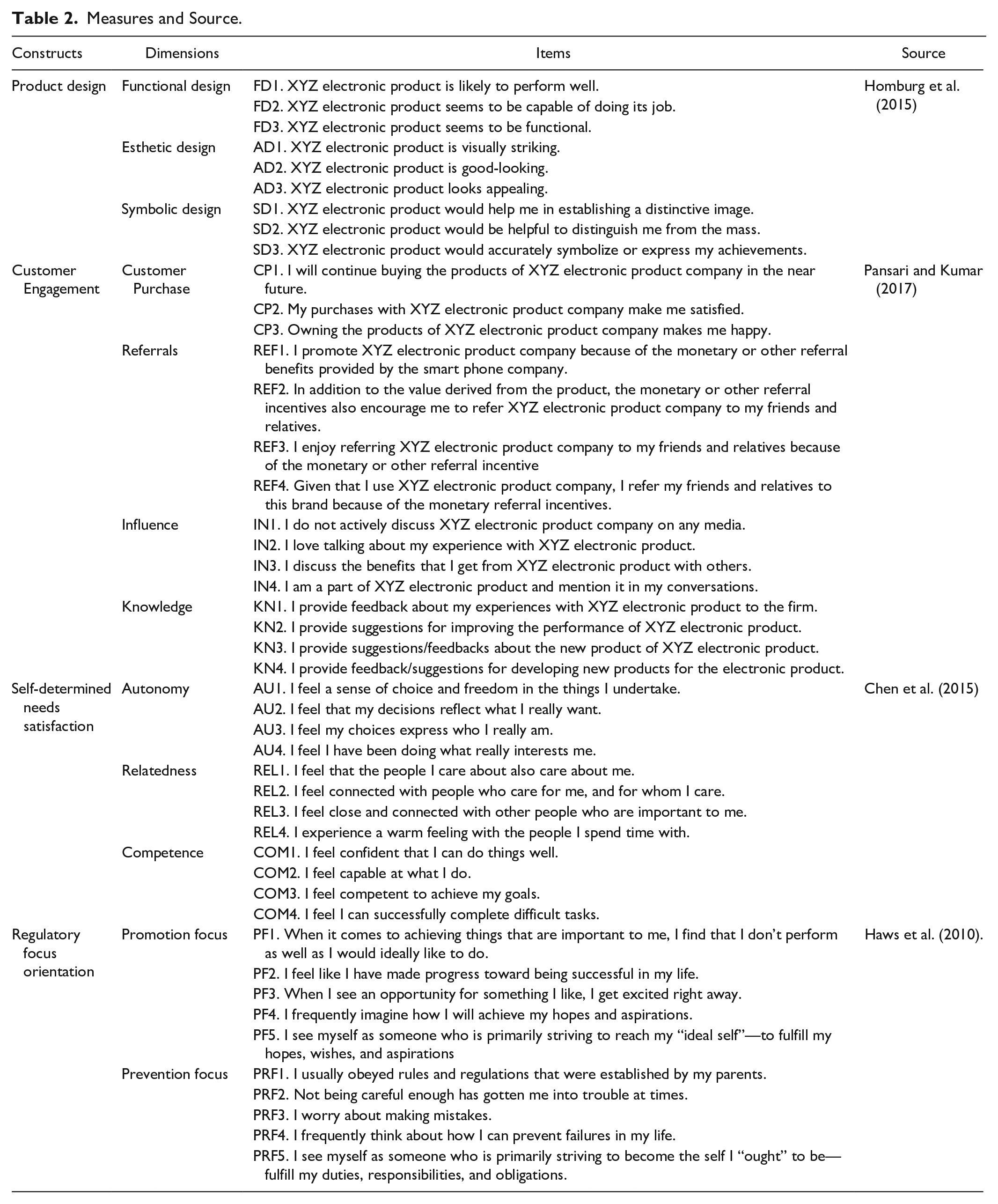
The measure of product design is taken from the study of Homburg et al. (2015). This measure comprises nine items related to three dimensions (esthetic, functional, and symbolic design) of product design. The measure of self-determined needs satisfaction was adapted from the study of Chen et al. (2015). It comprises 12 items. Moreover, this study incorporated the study of Pansari and Kumar (2017) to measure customer engagement. The scale of customer engagement includes 15 items. Finally, the construct of regulatory focus was measured by adapting the 10 items scale from Haws et al. (2010). The detail of all measures is given in Table 2. All measures are reliable as Cronbach’s Alpha in each case is greater than .7 (Nunnally, 1994).
Measures and Source.
Common Method Bias
To reduce common method bias (CMB), we ensured the simplicity and conciseness of all items in the questionnaire. Also, items measuring different dimensions of a variable were spread across the questionnaire, and reverse items corresponding to the positive items were used to establish consistency. We also used ex-post statistical methods to address CMB. In this regard, Harman’s single factor test and partial correlation method were employed (Podsakoff et al., 2003). According to Harman’s single factor test, all items of the study were loaded on a single factor which accounts for 19% of the total variance. Which is far less than 50% hence, there is no problem with CMB. The findings related to partial correlation show that the introduction of the marker variable in the model did not change the hypothesized paths and their significance. Moreover, there is no issue of multicollinearity as the variance inflation factor (VIF) is less than the threshold of 3 (Johnson & Lebreton, 2004).
Findings
Descriptive and Correlation Analysis
The descriptive statistics are given in Table 3 which shows that sample has a positive perception about the product design dimensions with a mean value greater than 3 in each case. Similarly, participants have shown positive orientation toward SDNS (Self-Determined Needs Satisfaction) and CENG (Customer Engagement) with a mean value greater than 3. The findings of the bivariate correlation analysis are presented in Table 3. The correlation analysis reveal that functional design (FD), esthetic design (AD), and symbolic design (SD) are positively correlated with SDNS (r = .479, p < .05; r = .296, p < .05; r = .185, p < .05). Furthermore, we have found a positive association between SDNS and CENG (r = .32, p < .05). However, there is no issue of multicollinearity as all correlations are less than .5 (Field, 2013).
Descriptive Statistics, Correlations.
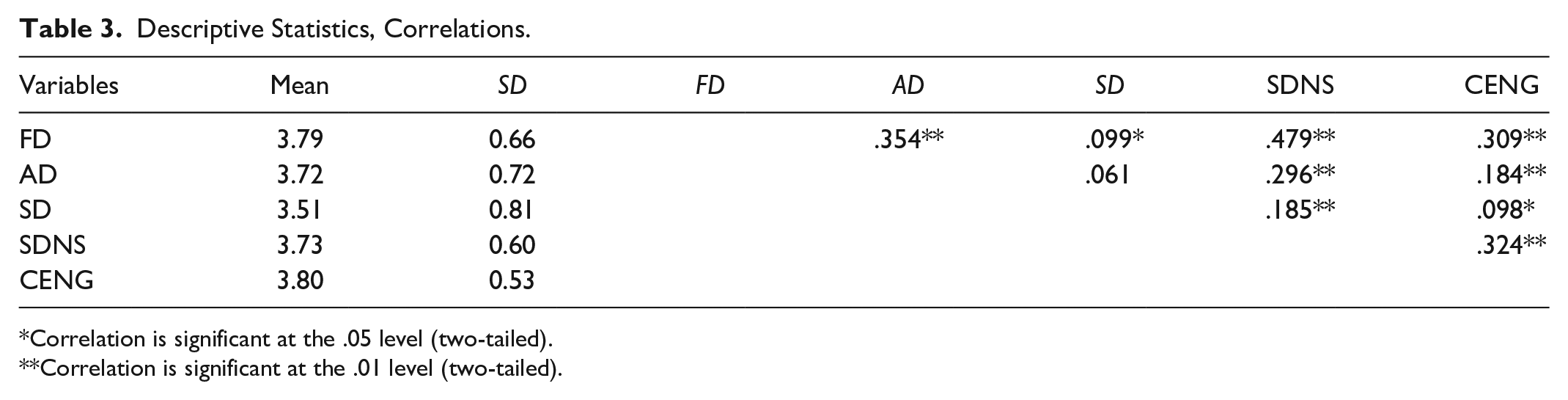
Correlation is significant at the .05 level (two-tailed).
Correlation is significant at the .01 level (two-tailed).
Structural Equation Modeling
Confirmatory factor analysis
Structural Equation Modeling (SEM) is done with the help of AMOS 22 to analyze the factor structure and to test the study hypotheses. Initially, the Confirmatory Factor Analysis (CFA) is employed to assess the convergent and discriminant validity of the measured constructs. Therefore, the measurement model is developed to assess the factor loadings and to calculate the Composite Reliability (CR) and the Average Variance Extracted (AVE). Product design is a first-order construct, we examined three dimensions of product design (esthetic, functional, and symbolic) separately with self-determined needs satisfaction. However, self-determined need satisfaction is a second-order construct, reflecting satisfaction of autonomy need, competence need, and related need. Similarly, customer engagement is a second-order construct, reflecting customer purchase, referrals, influence, and knowledge. The model assessment shows that model fitness is good with all fitness indicators are in a recommended range (χ2/df = 1.611 [χ2/df < 3], RMSEA = 0.036 [RMSEA < 0.08], CFI = 0.943 [CFI > 0.90], NNFI = 0.937 [NNFI > 0.90]) (Hu & Bentler, 1999). The findings of convergent and discriminant validity are compiled in Table 4. It shows that the CR of each construct is greater than 0.7 and the AVE of each construct is greater than 0.5. Moreover, the factor loadings of each construct are more than 0.5. Hence, the convergent validity of all measures is satisfied. Furthermore, Table 4 shows that the square root of AVE on the diagonal is greater than the previous correlation (Zaiţ & Bertea, 2011). Therefore, the discriminant validity of all constructs is also satisfied.
Convergent and Discriminant Validity Analysis.

Note. Square root of AVEs (in bold on the diagonal).
Correlation is significant at the .05 level (two-tailed).
Correlation is significant at the .01 level (two-tailed).
Structural model
The structural model is developed during SEM for testing study hypotheses. Findings reveal that structural model represents better fit (χ2/df = 1.61, RMSEA = 0.036, CFI = 0.942, NNFI = 0.937). The output of the structural model is given in Table 5 and Figure 2. It shows that a standardized beta coefficient from esthetic design to self-determined needs satisfaction is significant (β = .162, p < .05). Therefore, it confirms our H1. Similarly, the structural path shows that functional design has a positive and significant impact on self-determined needs satisfaction (β = .579, p < .05). Hence, this finding supports H2. Furthermore, H3 determines that symbolic design is positively linked with self-determined needs satisfaction. It is supported (β = .180, p > .05). Finally, H4 posits that self-determined needs satisfaction is positively linked with customer engagement in terms of customer purchase, referrals, influence, and knowledge and it is supported (β = .482, p < .05). Afterward, we used a holdout sample of 241 randomly drawn observations to assess the robustness of the estimated results. A structural model was estimated using a holdout sample. The results obtained from the holdout sample are similar to the findings from the full model; hence, ensuring the robustness.
Structural Model Results.
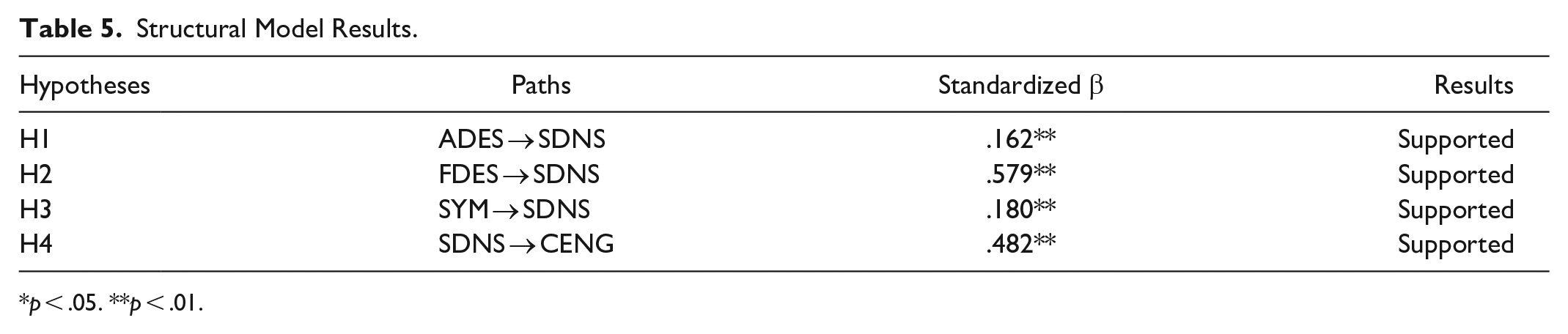
p < .05. **p < .01.

Structural model.
Moderation Analysis of Regulatory Focus
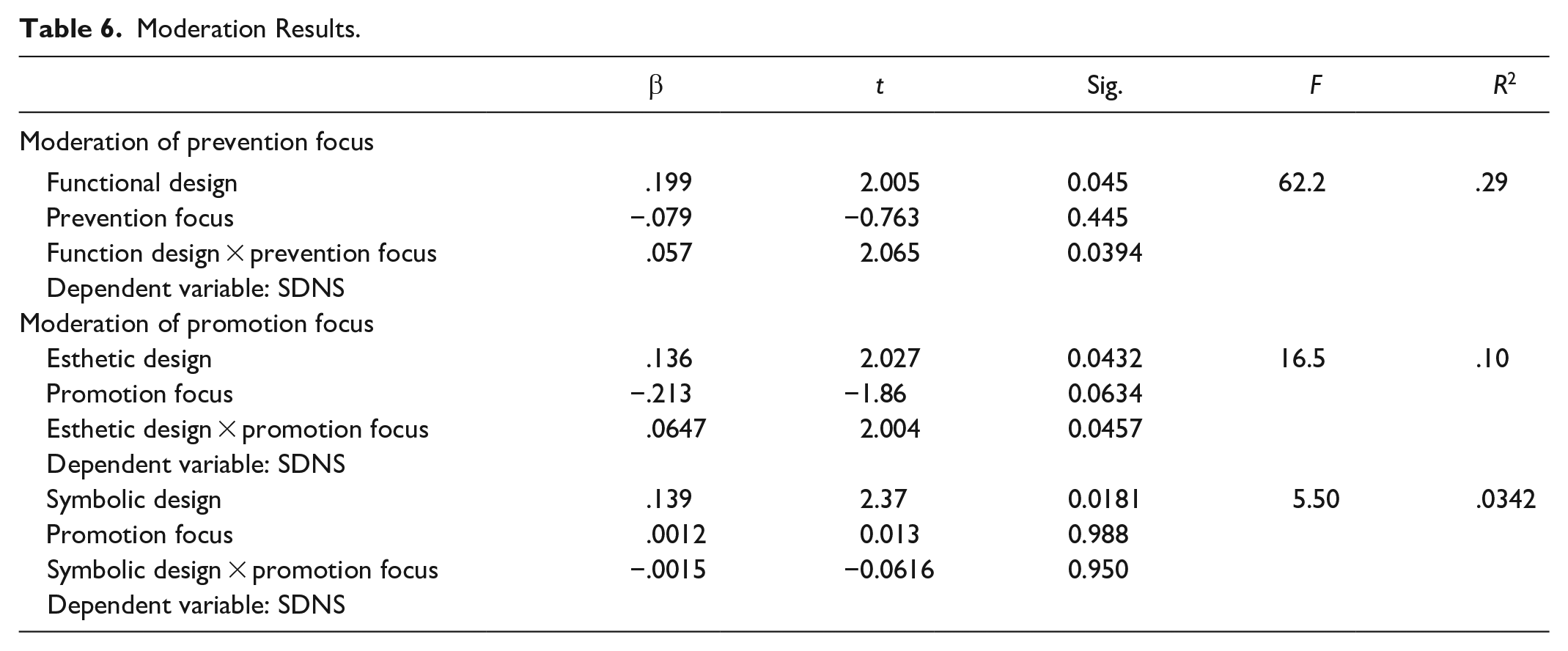
The moderating role of regulatory focus (prevention vs. promotion) is tested through interaction moderation as recommended by Preacher et al. (2007). The moderation findings related are presented in Table 6 and Figures 3 and 4. H5a posits that prevention focuses on customers moderates the positive relationship between perceived functional design and self-determined needs satisfaction and it is supported. As results reveal that interaction (functional design × prevention focus) is significantly associated with self-determined needs satisfaction (β = .057, p < .05). Furthermore, results reveal that interaction (esthetic design × promotion focus) is significantly related to self-determined needs satisfaction (β = .064, p < .05). Hence, this finding confirms H5b. However, findings do not support H5c because interaction (symbolic × promotion) is not significantly linked with self-determined needs satisfaction (β = −.0015, p > .05).
Moderation Results.

Moderation results of prevention focus.

Moderation results of promotion focus.
Discussion and Conclusion
This study aims at exploring the link between perceived product design (functional, esthetic, and symbolic) and customer engagement. In this regard, we embed self-determined needs satisfaction among the link between product design and customer engagement. Also, the current analyses the influence of customers’ regulatory focus on the relationship between product design and self-determined needs satisfaction. First, findings suggest that product design in terms of functional, perceived esthetic, and symbolic design are significantly associated with self-determined needs satisfaction. Some previous studies also support our findings (Gilal et al., 2018, 2020). However, we have elaborated that the functional design has a more significant relationship with self-determined needs satisfaction as compared to esthetic design. This means product esthetics in terms of good and striking look can enhance customers’ level of competence, autonomy, and relatedness. It identifies that Chinese customers can become more confident, have more social connections, and become more autonomous in decision making because of product esthetic features. This result can be considered important for Chinese marketers because it allows them to focus on making their product(s) appearance more appealing and striking to satisfy their customers’ self-determined needs. Second, we find that self-determined need satisfaction drives through product design help improving customer engagement. It indicates that the fulfillment of autonomy, relatedness, and competence needs drive customers to purchase the product/brand, refer to the product/brands in their network, provide feedback to the company, and generate positive word of mouth over the media. This finding can be important for marketers in China, where they need to focus more on product design in order to gain more customer engagement.
The moderating role of regulatory focus (prevention vs. promotion) is tested through the interaction moderation method. The findings show that prevention focus customers significantly moderate the relationship between perceived functional design and self-determined needs satisfaction. This finding is in line with the regulatory fit theory (Higgins, 1998) as customer prevention orientation is fitted well with the utilitarian motivations when it comes to choosing functional products. Therefore, they prefer the functional design in order to satisfy self-determined needs satisfaction. Furthermore, interaction moderation shows that promotion focus customers significantly moderates the relationship between perceived esthetic design and self-determined needs satisfaction. This shows that promotion focus customers tend to be more goal and achievement oriented. Hence, they may purchase and pursue esthetic products in order to satisfy the satisfaction of their self-determined needs. Recently, authors have shown that prevention-focused customers favor utilitarian products and promotion focused customers favor hedonic products (Chitturi et al., 2008; Das et al., 2018). These findings support the moderating role of prevention and promotion focus as utilitarian aspects can be linked to functional design and hedonic aspects may be associated with esthetic design.
Theoretical Significance
This study enhances existing knowledge on consumer behavior and product literature in the following ways. First, to clarify the psychological association among the product and customer relationship, this study has incorporated the role of self-determined needs satisfaction among the relationship between product design and customer engagement. In this regard, SDT posits that individual motivation is linked with the satisfaction of innate self-determined needs (Deci & Ryan, 2000) which can further become the source of several positive outcomes like well-being (Reis et al., 2018), employees’ creativity (Zhang et al., 2017) and performance (Dittmar et al., 1995). This study contributes to SDT by extending this theory from the domains of health, psychology, and education to business context especially consumer behavior. Second, considerable studies have examined the influence of product design on consumer behavior (Desmet, 2012; Desmet & Hekkert, 2007; Hsu et al., 2018; Moon et al., 2015; Wang et al., 2018). However, the link between product design and customer engagement is missing. As, several marketing researchers are looking forward to determine the predictors and outcomes of customer engagement (Barari et al., 2021). Moreover, previous studies have given much focus to outcomes of customer engagement such as purchase intent and word-of-mouth (Abbasi et al., 2020), brand trust, brand commitment, and brand loyalty (Khan et al., 2019), and online service recovery (Islam et al., 2019). However, little research has been done on the predictor side of customer engagement. Hence, this study makes a pioneer effort by exploring the impact of product design on customer engagement. Third, the current study adds value to the regulatory focus theory (Higgins, 1998) by assessing the moderation of customer regulatory focus on the association between product design and customer engagement. For that purpose, the current study determines how promotion focus customers and prevention focus customers moderate the influence of product design on self-determined needs satisfaction. In the end, previous studies have examined the influence of product design on consumer behavior in developed countries, limiting the understanding of this influence in emerging market. This study adds value to the emerging market literature by examining the proposed relationships in the context of China.
Practical Contributions
This study can be proved important for the practitioners in the electronic industry. First, practitioners have the opportunities to design the functional, esthetic, and symbolic features of their electronic products in a way that can enhance customers’ competence, autonomy, and relatedness. They may design their products by including functional aspects (e.g., usability features of electronic products) that could boost customers’ autonomy while doing their work. Moreover, they may include design features, like shape, color, and layout which may fulfill their competence and relatedness needs. The fulfillment of these needs may benefit practitioners in getting customer purchase, referrals, positive word of mouth, and feedbacks. Second, among all three dimensions of product design, the functional design proved to be significant in influencing self-determined needs satisfaction. Therefore, it is recommended that practitioners must work on improving the utilitarian aspects of electronic product design. Third, it has been explored that a customer can have one of two regulatory focuses (promotion vs. prevention) or both which influence their attention toward product design. Prevention focus customers prefer functional design while promotion focus customers prefer esthetic and symbolic design. Therefore, practitioners can categorize their customers according to regulatory focus with product design. They can define prevention focus customer segment and give more focus on functional design. Similarly, they may define promotion focus customer segment and provide the products which have striking look or which symbolize customer personality. That kind of segmentation can help them to enhance their customer engagement.
Limitations and Future Directions
Our study has some limitations which may be addressed in the future. First, we have collected a convenience sample. Therefore, researchers can further test our model by randomly select samples across countries. Besides, experimental design is suggested to better explain the cause and effect relationship. In this regard, researchers may provide customers with different products and then assess the impact of product design on their customer engagement in the following survey. Second, we have not specified a single product category in our study. Future research can be conducted on different product categories like examining proposed relationships on the smartphone design. Third, we have not examined the influence of product design dimensions on individual self-determined needs (i.e., competence, autonomy, and relatedness). Therefore, researchers can further explore this specific relationship in order to check the level of impact of each product design on different self-determined needs. Forth, the interaction of promotion and prevention focus with utilitarian and hedonic motivations are not checked in this study. Therefore, future study can be done by analyzing the influence of these interactions with product design and self-determined needs satisfaction. Finally, apart from regulatory focus, other moderators can be used in our model like impulsivity, image congruence, and need for uniqueness.
Footnotes
Author Note
Hammad Bin Azam Hashmi is now affiliated to Riphah School of Business & Management, Riphah International University, Lahore, Pakistan.
Declaration of Conflicting Interests
The author(s) declared no potential conflicts of interest with respect to the research, authorship, and/or publication of this article.
Funding
The author(s) received no financial support for the research, authorship, and/or publication of this article.
