



Abstract
The purpose of this article is to explain and solve the early stage of High-tech small and medium-sized enterprises (SMEs) development issue in Tianjin, specifically the so-called Valley of Death. The Valley of Death is used as a metaphor to describe the relative lack of resources and expertise in the area of development. In this article, the resources and expertise mainly refer to the financing and loans required by high-tech SMEs in the early stage. Through the analysis of the actual situation of developing high-tech SMEs in Tianjin, the article illustrates organizations can bridge the Valley of Death through coordination and institutional support. The literature review and normative analysis methodology used in this study gathered data from literature and second-hand materials with extensive experience to construct the framework model of early stage development of Tianjin high-tech SMEs. Results indicate that institutional support has been very effective in addressing the Valley of Death. Implications of these findings suggest local government must understand the challenges in the valley, must facilitate the development of skills for the SMEs, and must supply the resources to SMEs.
Keywords
Introduction
The importance and potential contribution of the high-tech small and medium enterprises (SMEs) as it is called, are supported by both theoretical arguments and empirical evidence. It has been recognized all over the world the high-tech SMEs are adept in distributing national economy. For instance, as statistics from the Singapore’s government exemplifies, Singapore accounted for 5.1% of world export of electronics components in 1990, although a share that has fell slightly to 4.6% in 2011 (Rasiah & Xiao Shan, 2016). A similar example can be found in Malaysia, for which the electronics industry accounted for 20% of Malaysia’s manufacturing employment and value added in 2010 (Rasiah & Xiao Shan, 2016). The development of high-tech SMEs plays a key role in the economic transformation of the two previously mentioned countries.
In addition, high-tech SMEs also provided employment opportunities to the burgeoning workforces of these economies. In China, high-tech SMEs have generated nearly 2 million jobs in 2017, according to Wan Gang, the minister of science and technology of China (Wang, 2018). Also, the development of high-tech SMEs benefits societies through reducing poverty (Mamun et al., 2016) and fostering entrepreneurship (Anton & Onofrei, 2016). As Lars H. Thunell, the IFC’s executive vice president and CEO, states SMEs are a key force for growth (IFC, 2011). Limited technological capabilities, a lack of financial resources, and insufficient access to market information are considered to be the greatest obstacles for development in high-tech SMEs. Therefore, the question arises of how do SMEs attempt to solve these major issues? To address this question, this article examines that the role of local government in providing institutional support to high-tech SMEs.
The city of Tianjin, China is highly suitable for such a case study for several reasons. First and foremost, despite the negative impact of the global financial crisis and the country’s tightening of monetary policy in 2013, Tianjin’s high-tech SMEs maintained performance and avoided bankruptcy. Second, Tianjin as a crucial node city of the Beijing-Tianjin-Hebei coordinated development of national strategy, which is positioned as a high-end manufacturing base. Third, by the end of September 2018, Tianjin had 99,500 high-tech SMEs (90% private enterprises), with more than 70% of organizations concentrated in strategic emerging industries such as renewable energy, biomedical engineering, environmental sciences, and technology manufacturing. Growth in these emerging industries provided momentum for Tianjin’s industrial transformation and rapid economic development.
The article is organized as follows. First, we review the literature on exogenous and endogenous growth theories. The literature on the factors affecting the growth of enterprises in the also reviewed. Next, we defined the Valley of Death in the research methodology, analyzed the importance of developing high-tech SMEs to the national economy of Tianjin, and analyzed the reasons that affected the Valley of Death encountered by high-tech SMEs in the early growth stage, and then examine the role of institutional support through coordination efforts with local government in helping alleviate the Valley of Death. Then, we outline research methodology used to develop and substantiate the coordination institutional support framework for bridging the Valley of Death in Tianjin. Finally, we discuss practical and conceptual implications of this framework for high-tech SMEs development and strategic growth.
Literature Review
The Existing Theories on SMEs : Exogenous Growth Theory
The theory of exogenous growth of the firm believes that the growth of the firm is exogenous and stresses the decisive role of external factors on the growth of the firm. The representative theories are firm growth theory of neoclassical economics, firm growth theory of new institutional economics and Firm competitive advantage theory of Poter. Neoclassical economic theory believes that the basic factors of firm growth are exogenous, and firm growth is carried out under the condition of all known constraints. It is a passive choice based on optimization rules, and there is no room for initiative (Nelson & Winter, 1977). Coase (1937) argued that enterprise growth was the expansion of enterprise functions. Williamson (1979) argued that enterprises would integrate certain stages of market transactions into the enterprise through forward or backward integration, and this kind of enterprise growth is manifested as the vertical expansion of the enterprise to the border. Competitive advantage theory as the core of the theory of firm growth based on the analysis frame of modern industrial organization theory “structure-behavior-performance” model, based on the representative is the Porter (2008), he thinks that the growth of the enterprise first from their industrial structure, industrial structure competition within the state depends on the “five forces,” are competitors, buyers, suppliers, replacement, potential competitors. In conclusion, the exogenous growth theory holds that the growth of enterprises is mainly influenced by external factors.
The Existing Theories on SMEs : Endogenous Growth Theory
Smith (2018) first proposed in the Wealth of Nations that division of labor promotes the growth of enterprises. Mill (2010) argued that the amount of capital a firm has determines its growth. Penrose (1959) argued that firm growth is the increase of productive resources and the enhancement of utilization capacity. Following Penrose, many scholars have discussed the endogenous growth of enterprises, and they believe that the internal resources, capabilities and knowledge of enterprises affect the direction and mode of enterprise growth (Demsetz, 1983; Hamel & Prahalad, 1990). In summary, the endogenous growth theory mainly includes separate Smith’s theory, Marshall’s (1961) organic growth theory of enterprise, the theory of Schumpeter’s (1942) “creative destruction,” Penrose’s theory of firm growth, Chandler’s (1993) modern industrial and commercial enterprise growth theory, Coase’s theory of modern enterprise, Nelson-Jones’s (1982) theory of evolution, etc.
Analysis of Factors Influencing the Growth of SMEs
Boubakri et al. (2015) pointed out that the importance, perfection, and implementation of government policies have a great impact on the growth of enterprises. The advantage of industrial cluster can promote SMEs to put forward targeted development and reform strategies according to their actual situation. Getahun et al. analyzed the impact of cluster policy and proved that industrial cluster was conducive to expanding business of enterprises and building knowledge network, enhancing trust between enterprises, reducing transaction costs, and activating market information. The conditions for the formation of an industrial cluster are firstly the separability and transportability of the production process, secondly the cooperation of several different participants, and finally the effective integration of the industrial chain. By optimizing the relationship between related enterprises, the industrial cluster can make them act cooperatively and optimize the operation efficiency of the industrial chain (Getahun & Villanger, 2019). Jutras and Mathieu (2016) argued that in the capital era of economic globalization, many SMEs cannot grasp the key points and lack the understanding of the important role of talents in the rapid development of enterprises, product upgrading or enterprise transformation. Bentzen et al. (2012) argued that firms’ growth rates are more likely to be positively related to firm size. The research of Krishnaswamy et al. (2014) shows that technological innovation ability plays a great role in promoting the growth of enterprises. Deschryvere (2014) takes Finnish SMEs as the research object and believes that there is a positive correlation between enterprise growth and R&D. Audretsch et al. (2014) believes that there was an interactive relationship between innovation activities and enterprise growth.
Research Methodology
The aim of this article is to examine how local authority coordination and institutional support help high-tech SMEs navigate the early stage of their development, in order to more fully understand the Valley of Death faced by SMEs and to identify an empirical basis for implementing policy and practice. Specifically, our objectives are to:
(1) Define of Valley of Death,
(2) Identify the barriers of the high-tech SMEs development,
(3) Consider the implications for policy and practice,
(4) Construct a framework of early stage high-tech SMEs development.
This article mainly adopts the literature review approach and normative analysis approach. Among them, the literature review approach mainly aimed at enterprise exogenous and endogenous growth theory and the influencing factors of firm growth, influence of Tianjin high-tech SMEs growth “the Valley of Death” are analyzed, at the same time, the normative analysis approach is mainly used in the proposed deal with Tianjin SMEs “the Valley of Death” measures are analyzed.
Bridging the Valley of Death FOF SMES in Tianjin
Importance of High-Tech SMEs to Tianjin’s National Economy
Global high-tech SMEs have been considered as engines of economic growth and key instruments for promoting innovation and development (*APEC Policy Support Unit, 2013; *International Trade Centre, 2017; Singh et al., 2009). At present, this article used Tianjin national economic development data to illustrate this issue. According to the 2017 statistical bulletin of Tianjin’s national economic and social development, the added value of strategic emerging industries above designated size grew by 3.9%, 1.6 percentage points faster than that of the entire city. The added value of high technology industry increases by 10.4%, 8.1% faster than other industries in the city. The contribution of SMEs industrial growth rate at 64.6% indicates that it is significant driver of economic activity for the region. For example, carbon fiber, reinforced polymer solar cells, lithium ion battery, integrated circuits, service robots, and urban rail vehicle production increased by 29.3%, 27.9%, 26.6%, 14.2%, 29.3%, and 29.3%, respectively. In addition, in terms to the number of high-tech SMEs in 2017, a total of 96,900 high-tech SMEs and 4,228 high-tech SMEs with a total size of more than 100 million China yuan were started, totaling 96,900 and 4,228 high-tech SMEs. A total of 1,611 high-tech SMEs were identified by Tianjin science and technology bureau (TSTB), up to 4,093 in total. As an example, Tianjin Binhai New Area is an important gathering place for China’s SMEs. In 2016, scientific and technological innovation has contributed more than 60% to the economic growth of Tianjin Binhai New Area. As changes to the value of high-tech exports of Tianjin in the past 5 years illustrates (see Figure 1), the region exports more than one-third of its high-tech products. Hence, the high-tech industry has remained a sustained driver of growth in Tianjin’s economy. Especially in recent years, as an important node city in the coordinated development strategy in Beijing-Tianjin-Hebei, the economic status of technology-based SMEs in the city will be further enhanced.

Share in exports, high-tech product value, Tianjin, 2013 to 2017.
Analysis of the Constraints Faced by the Early Stage of High-Tech SMEs in Tianjin
As already noted, the contribution of high-tech SMEs to the economic development is widely recognized. Obviously, the country needs to vigorously develop high-tech SMEs, however, a number of studies have highlighted the obstacles faced by high-tech SMEs. For instance, from research applying the resource-based view (RBV) research, a survey from the World Bank Enterprise show that developmental obstacles to high-tech SMEs include a range of factors, such as: infrastructure, trade, finance, regulations, taxes, business licensing, corruption, finance, innovation, labor (Afraz et al., 2013), lack of managerial skills, equipment, technology, poor access to capital markets (Aryeetey et al., 1994; Gockel & Akoena, 2002; Steel & Webster, 1991). Among them, the fundamental element for the development of SMEs is the capacity to access finance.
The availability of financing is regarded as one of the most important obstacles to high-tech SMEs (Eniola & Entebang, 2015; Moreira, 2016; *Organisation for Economic Cooperation and Development, 1997; Quartey et al., 2017; Wang, 2016). In China, according to the research of Zhu et al. (2012), the top five institution-based barriers to high-tech SMEs perceived by managers are competition fairness, access to financing, laws and regulations, tax burden, and public support system. Lack of access to financing has been the second most severe obstacle. In Tianjin, according to the research the top four obstacles to high-tech SMEs perceived by the managers are struggling management practices, financing difficulties, barriers to market entry, and the support system needs to be improved (Bai, 2016). Other scholars have also substantiated these results in other studies of high-tech SMEs (Cao & Song, 2017; Ni, 2012). In light of these findings, difficulty in accessing financing is one of the main issues encountered in the early stage of SMEs development. Importantly, financial success was the biggest obstacle to firm growth in China (*World Bank, 2012), which is why the Valley of Death occurs during early stages of the enterprise. In accordance with the illustrations above, the mortality rate of high-tech SMEs in the Valley of Death was very high due to lack of financing channels.
Analysis of Coordination and Institutional Support
Solutions to the Valley of Death have been suggested in previous literatures, with governmental coordination and institutional support regarded as effective means to alleviate growing pains in high-tech SMEs. Extant literature has discussed the importance of coordination and institutional support in transition of SMEs. For instance, Germany succeeded in the enabling smaller firms to grow faster than larger firms, the main reason for this was the establishment of the Neuer Markt, a financial institution established by the government to support in the development of SMEs (Audretsch & Elston, 2006). In order to remedy the undersupply of credit to SMEs, various government and donor initiatives have also emerged in Japan, such as the credit guarantee scheme (CGS), which is a project aimed at reducing the gap between supply and demand in SMEs finance (Yoshino & Taghizadeh-Hesary, 2017).
In the United States of America, some of the most dynamic firms received R&D support through federal government programs during the early stages, including Apple, Federal Express, and Intel. This program was orchestrated through the Small Business Innovation Research (SBIR), which initiated from the Small Business Innovation Development Act passed by Congress in the early 1980s. This program mandated that all federal agencies spending more than $100 million annually on fundamental research set aside 1.25% of these funds for awards to high-tech SMEs, with this proportion of funding increasing year over year. From an entrepreneur’s perspective, the SBIR program has solved three issues. First, the program awards to support for high technological innovation to high-tech SMEs. Second, the program utilizes three-phased awards from federal research funds to both address governmental needs and further its mission. Third, the program focused on high-tech SMEs in their early-stage of development resulted in access to funding for some of the best ideas. The SBIR program was reputed to have had a positive and significant effect on American economic growth. As a result, the SBIR program represents an effective model of public-private partnership that leverages private R&D through direct governmental support (Link & Scott, 2009).
Inspired by SBIR program, a similar program was created in Brazil in 1997 known as PIPE (the Portuguese-Language acronym for Technological Innovation in Small Business). The main aim of PIPE was to supply grants for the development of innovative research into important problems in science and technology by small enterprises with a significant potential for commercial or social returns, which is separated into three phases: idea generation, implementation of supporting research projects, and product commercialization (Salles-Filho et al., 2011). Similarly, policy makers in the United Kingdom initiated a loan guarantee scheme called the SFLGS (Small Firms Loan Guarantee Scheme) (Cowling & Mitchell, 2003). In addition, there was an individual credit guarantee scheme, Khula, which started operations in South Africa in early 1996 (Nigrini & Schoombee, 2002). Other African countries also followed suit, with a scheme to help banks be more receptive to the credit needs of SMEs in Ghana, the Financial Sector Adjustment Program (FINSAP) (Gockel & Akoena, 2002).
These are just a few examples of governmental coordination through institutional support in solving issues related to the Valley of Death in SMEs. Policy-makers (i.e., government agencies, public institutions, etc.) in these countries clearly played a key role in establishing such programs, which in turn promote economic transition through investing in innovation within high-tech SMEs and fund high-risk, pre-commercial ideas to help high-tech SMEs survive the “Valley of Death” to reach commercialization of their products and ideas.
The scope of the study extends to local authorities in Tianjin. This study has employed normative analysis method and literature analysis method which can be carried out using qualitative approach. Specifically, analysis is devoted to shedding light on the continuity before and after policies, particularly in regard to high-tech SMEs development. This approach is deployed analytically so as to provide inductive inferences regarding the influences of the policies decision-making of Tianjin. Moreover, coordination and institutional policy material were systematically gathered and synthesized. These consist of relevant official documents regarding the local authority’s policies and measures on early stage high-tech SMEs capacity development, and the documents which relate to favorable business environment. Also included were academic research and relevant reports of professional organizations, such as World Bank, World Labour Organization. Quantitative data, such as key economic indicators were also utilized to support the qualitative analysis. In the course of selection, these documents were distilled by means of the method of content analysis. Content analysis approach can improve the reliability and validity of the research relative to the questionnaire survey (Cowton, 1998). At the same time, the literature analysis method was used to briefly analyze the previous research results about the Valley of Death.
The Coordination Institutional Support Framework to Bridging the Valley of Death in Tianjin
A Brief Overview of Valley of Death
An old business adage states that if it is a good idea, the market will fund it. However, the Valley of Death refers to the growing pains experienced by enterprises. With respect to Valley of Death, existing literatures show that the phrase was first used in 1995 to refer to the challenges of transferring agricultural technologies to Third-World countries (Markham et al., 2010). The phrase was subsequently applied to describe the resource gap between the research economy and commercial economy, especially on the level of emerging economies like China (see Figure 1). As can be seen in Figure 2, the left curve refers to governments who concentrate their capital into R&D, the right curve refers to investors who invest large resources into new product development (NPD) and commercialization, which at this early stage of NPD calls for investment of substantial resources with high level of uncertainty.

Valley of death (Jucevicius et al., 2016).
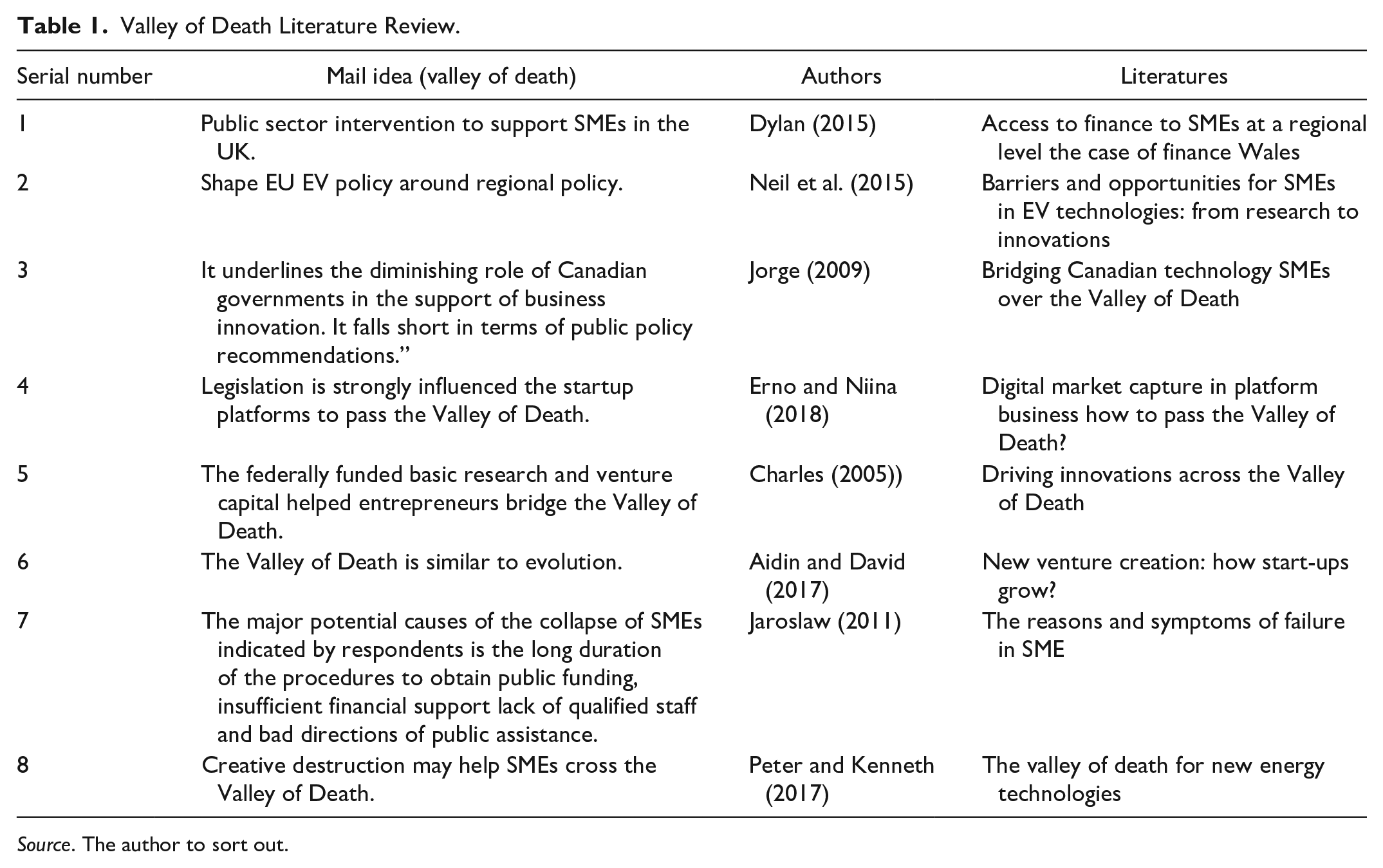
The Valley of Death characterizes the most risky stage in the transition process, which is probably the critical factor behind the emergence of the “valley” itself. This phenomenon arises because high-tech SMEs usually decide to invest in R&D by making a comparison of their likely benefits against the risks of their investment. Specific issues occur at the stage where decision is taken on whether to commercialize a new product as the risks are greater here than at other stages of transition. In view of this, through literature review and analysis, this article finds that measures to solve the Valley of Death faced by high-tech SMEs were shown in Table 1. This article argues that there are two main reasons. On the one hand, the move from a prototype to production of commercial volumes of a product requires massive investment. On the other hand, the risks associated with this stage in the transition process, absent of any governmental support, typically results in the creation of a risk profile that is known as the “Valley of Death”.
Valley of Death Literature Review.
Source. The author to sort out.
It is difficult for high-tech SMEs to share this risk, which has proved to be a major obstacle to the transition and commercialization of, for instance, advanced materials. Liuhong, a medium-sized high-tech manufacturer in Tianjin of new type of residential and commercial coating, had a product idea for new type exterior wall paint. However, product development was not initiated before the TSTB investigated the potential market demand for new environment-friendly paint and provided it sufficient angel investment. At present, the exterior wall paint produced by this company has been used in the walls of the Palace Museum in Beijing and Taipei. Moreover, these risks also lead to additional difficulties concerning late-stage expansion funding for the enterprise. Usually, there is a gap in the financing of high-tech SMEs in the pre-commercial stage, where they are no longer eligible for public support, but the product development process is still too risky to receive sufficient private investments. Thus, public support (institutional support) is extremely important to the high-tech SMEs in the developing countries like China. Meanwhile, this provides a way to solve financing issues of high-tech SMEs.
Improve the Business Environment of Tianjin
It has been recognized that an SME-friendly business environment is crucial for economic growth in the world. For instance, Göndör (2011) argued that the tax consolidation rules were the only solution to improving the business environment of SMEs in EU. The quality of business’s environment creates basic conditions for the growth of SMEs (Buno et al., 2015). According to Cepel et al. (2018), economic factors, political factors, technological factors, social factors, competitive environment, were the significant factors of the business environment in the SME segment. Virglerová et al. (2017) argue that four groups comprise the key determinants of competition in the business environment, which was studied among SMEs in the Czech Republic and include: state and public perception, banks and their approach to business, knowledge of rules and principles, and financial risks and their increase in post-crisis times. One study showed that the business environment includes institutional infrastructure, business services, innovative environment, and climate favorable to economic activity (Dominiak, 2013).
In terms of Tianjin, in order to improve the business environment of Tianjin effectively, the business environment office has been established. One of the main responsibilities of the office was to create a good environment for the development of high-tech SMEs in the city, so as to enable them to grow rapidly. After sorting out relevant materials, the following were the measures and policies on improving the business environment issued by Tianjin business environment office (See Table 2). The table shows a compilation of some major policies and programs of support for business environment in Tianjin. The policies in Table 3 were based on the World Bank’s assessment of the ease of doing business. How effective were these policies? According to report (People’s Daily, 2018), since the implementation of these policies, the time limit for starting an enterprise was reduced to 3 days, the time for registration and settlement of the transfer of real estate of enterprises was reduced to 5 days, the time required for the companies to pay taxes was reduced to 160 hours, and the time for general social investment projects to obtain construction permits was generally not more than 80 days.
Typology of Business Environment Policies and Initiatives of Support in Tianjin (Portion).

Source. Adapted from Tianjin Business Environment Office (TBEO).
One system refers to commitment system. Three systems refer to standardization system, intelligence system, and facilitation system. This is a common abbreviation in Chinese.
Typology of High-Tech SMEs Policies and Initiatives of Support in Tianjin (Portion).

Source. The author to sort out.
Bridging the Valley: Capital Supply Innovation Policy
The Valley of Death was usually described as the place “where good lab discoveries go to die because they lack the funding necessary to become a commercial product” (Heller & Peterson, 2005, p. 1). Yet, this means that those in the early stage of high-tech SMEs may face death due to further financial support. The reason is that information asymmetry between the investors (including venture capital, early government funding, banks, etc.) and uncertainty in markets. After all, only ideas reached product have economic value. Usually, in deciding whether to make an investment, rational investors would consider the prospects of the ideas, even if these ideas have not translated into real products. In other words, investors operate under conditions of less than perfect information-making many unwilling to fund risky an un-validated ideas (Wessner, 2005). To cross this Valley of Death, the most efficient measure is those which are able to reduce the market uncertainty.
Tianjin has developed a range of policies and programs (see Table 2) to help navigate the Valley of Death. The above support policies include three aspects, specifically angel investment, package loan, and special fund project loans. These policies are designed to relieve investors of their worries. After all, in the early stage of the high-tech SMEs have characteristics such as insufficient funds, low capitalization, high sensitiveness to market fluctuations. In Tianjin, TSTB would guarantee the effective connection of SMEs, financial institutions and commercial banks. For instance, Tianjin Landun oilfield service CO., LTD. was the only company specializing in the research and development of oilfield environmental protection technology and equipment in China. Although it seeks to leverage potentially valuable technologies, the enterprise is not guaranteed to escape the financing difficulties that all SMEs inevitably face. Because Landun company was still in the early stage, fixed assets were limited and therefore many financing channels were not reasonably accessible. Due to the implementation of the above policies, the company successfully obtained 350,000 China yuan project funds and 400,000 China yuan interest-free loans from TSTB, and subsequently Shanghai Pudong Development Bank provided unsecured loan 3 million China yuan. At present, the company’s output value has reached nearly 100 million China yuan. Through the above analysis, this article proposes a conceptual framework model of a high-tech SMEs growth program in Tianjin (see Figure 3). As Figure 3 suggests, the primary aim of the program was to supply grants for the development of innovative research into certain field in high and new technology by SMEs with a significant potential for economic. The program was divided into three phases, with the following scopes and characteristics:
Phase 1: The aim of Phase 1 is to research the feasibility of the ideas (concepts) proposed. Support normally was limited to 600,000 China yuan per project in 2013. The recovery rate of the investment fund upon maturity was more than 80%.
Phase 2: The aim of Phase 2 is to research toward prototype of the ideas. That is to say, the research project was developed in this phase. Support was limited to 5 million China yuan through the working capital loan and the packing loan. According to statistics, by the end of 2012, a total of 639 enterprises had solved 284 million China yuan of unsecured and unsecured packaged loans, and obtained 2.722 billion China yuan of additional loans from banks, with the loan return rate reaching 100%.
Phase 3: The aim of Phase 3 is to product, that is, development of commercialization based on Phase 1 and Phase 2 research. This program currently does not provide financial support for this phase.
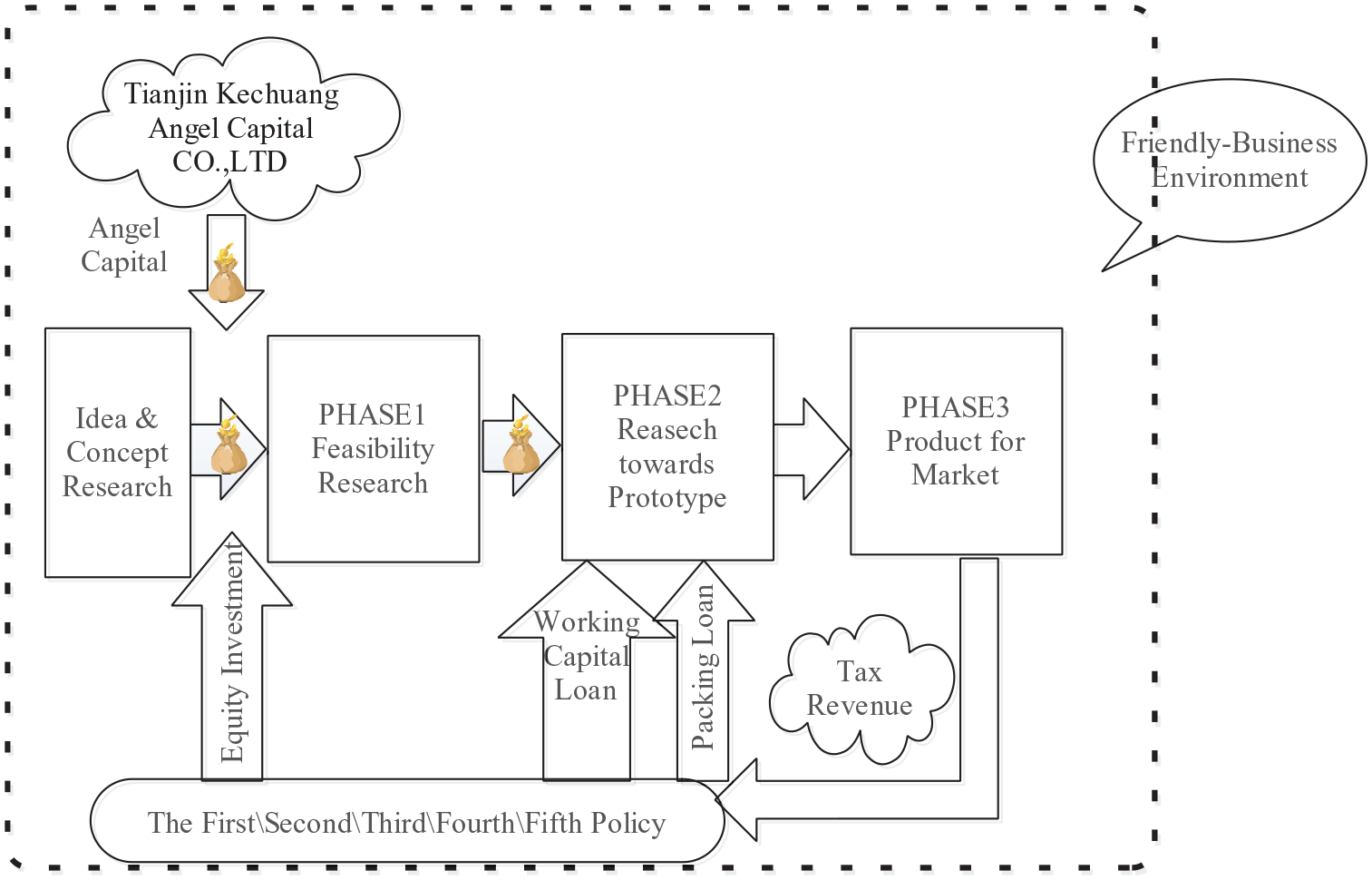
The early stage of Tianjin high-tech SMEs development framework model.
Since the implementation of the above program, it has invested in 23 SMEs with a total investment of 45 million China yuan. A total of seven SMEs had driven banks to invest 6.1 million China yuan in technology investment and investment, which has promoted the rapid development of high-tech SMEs.
Discussion and Conclusions
The research findings suggest that the business environment in Tianjin is well-developed. Furthermore, TSTB and TBEO have played an important role in policy making. In this regard, it is contrary to the results of some existing studies, which suggest that the role of enterprise environment institution in the development of SEMs is very small. This study further argues that creating a friendly business environment is one way to promote the rapid growth of high-tech SMEs at the macro level, while capital supply innovation policy is another mechanism to bridge the Valley of Death at the micro level.
This article is a useful tool for our understanding of Tianjin’s innovation system, as it highlights the increasing role of Tianjin municipal government in the support of business innovation. How to solve the Valley of Death faced by high-tech SMEs has always been a difficult problem. When confronted with the risk and information asymmetry represented by R&D and innovation, investors tends to reduce its investments. These uncertainties dissuade SMEs with innovation from the significant economic investments to commercialize those product. This increases the risk of Valley of Death. Enterprise innovation thus needs to be given incentives from government and public institution, in the form of tax credits for R&D, direct subsidies, unsecured, and unpledged loan provided by banks as well as subsidies after R&D investment and other fintech policies. These measures can make the valley flat, so that in the early stage of the SMEs more smoothly through the difficult period. More recently, governments have increased their investment in key business areas, such as a new generation of artificial intelligence, high-end equipment, and electrical engineering. Local government has responded by increasing investment, and a significant number of high-tech based SMEs have been successfully developed.
The implementation of these policies has helped many high-tech SMEs out of Valley of Death. Recently, The Evaluation Method of Tianjin Gazelle Enterprise (Trial) (Draft for soliciting opinions) has been issued. The so-called gazelle enterprise means the young, high growth companies that are referred to as gazelles, though there is no consensus in the literature on the definition of a gazelle. The prior literature has generally either defined a gazelle as a company growing either at a particular pace (Birch et al., 1995; Hopkins, 1997; Majstoroska, 2017; Tatum, 2007). Yet, one thing is for sure: “high growth” means getting past the Valley of Death. As for how fast the growth rate is, it belongs to the follow-up research content and has no nothing to do with this study.
Naturally, this research has several limitations. The first is the research method. For example, case studies can be used in research methods to conduct case studies on a few typical companies, which is conducive to constructing a theory for solving the Valley of Death. The second is that most of the data used in this study are second-hand data. Therefore, more primary data should be used in future studies.
Footnotes
Acknowledgements
I would like to express our profound gratitude to Tianjin University of Finance and Economic Pearl River College and Oklahoma City University for providing grant to support this study. Secondly, I would thankful for Tianjin Philosophy and Social Science Planning Project (TJGL18-014). Thirdly, I would like to thank professor Yinghua Zhang for improving this paper.
Author Contributions
Dr. Yilong AN is associate professor of Tianjin University of Finance and Economic Pearl River College. He was responsible for writing the article. He was a visiting scholar at Oklahoma city University. Professor Yinghua Zhang is professor of Tianjin University of Finance and Economic Pearl River College.
Declaration of Conflicting Interests
The author(s) declared no potential conflicts of interest with respect to the research, authorship, and/or publication of this article.
Funding
The author(s) disclosed receipt of the following financial support for the research, authorship, and/or publication of this article: This work was supported by the Tianjin Philosophy and Social Science Office under Grant TJGL18-014.
