



Abstract
This study analyzed the manufacturing implemented different modes of innovation at different regions, and established a model to predict the likelihood that the enterprise would follow the innovation mode dominated by the local government. Governmental regulation of innovation and spurring enterprises to innovate were important tools for development of the manufacturing in China, but regional differences in economic development required different coupling strategies of innovation. The results revealed that the developed region in China was biased to undertake disruptive innovation, while the developing region drived incremental innovation mainly, and made a theoretical model to explore the probability respectively. We assigned corresponding values based on theoretical analysis and relevant assumptions, and discovered that in the developing region was more likely to follow the innovation mode proposed by the local government than that in the developed region, but the data demonstrated that the probability were comparatively small for both the developed region and the developing region.
Introduction
Driven by the policy of “Encourage People to Start Their Own Businesses and to Make Innovations,” the government and the enterprise in China regarded the service industry and the manufacturing industry as two economic engines. For breaking Economic New Normal and accelerating the strategy of “Made in China 2025,” innovation in the manufacturing became the national policy for achieving efficient transformation and upgrading, and many countermeasures were proposed. The Central Economic Work Conference in 2019 pointed out that high-quality development of the manufacturing needed to touch continuous innovation, and the National Manufacturing Innovation Center Construction Project begun in 2017 demonstrated the importance of accelerating innovation in the manufacturing. However, there was obvious lack of coordination between the government’s push for innovation and the survival pressures the manufacturing faced in the real economy in China, which could be reflected by the fact that many enterprises sold real estate to achieve survival, especially under background of Covid-19 epidemic and anti-globalization.
Innovation was an important aspect for achieving steadily development of the manufacturing in China (Lewin et al., 2016; Li et al., 2020). It was considered that there were two modes of innovation generally, which were incremental innovation and disruptive innovation respectively, and incremental innovation might gradually lead to disruptive innovation (Colombo et al., 2015; Wan et al., 2015), but the high risks involved forced the government to play an important role to promote innovation (Pyke et al., 2000). In fact, incremental and disruptive innovation had different features (Laursen & Salter, 2006), which could be demonstrated from aspects of technology (Chan et al., 2020; Liao et al., 2018; Schmidt & Druehl, 2008), capacity and capital (Corso & Pellegrini, 2007; Engelman et al., 2017), organizational learning (Bessant, 2005; Limba et al., 2019; Yang et al., 2020), knowledge management (Hussein et al., 2019; Tiwana, 2002), intense market competition (Cao et al., 2020; Ghosh et al., 2017), the magnitude of innovation (Schuelke-Leech, 2018), and R&D activity (Veryzer, 1998). At the same time, many factors would influence the two modes of innovation, such as market characteristics (Grolleau et al., 2015), institutional development (Lyapina et al., 2019), consumption behavior (Iyer et al., 2006; Murad et al., 2019), R&D cooperation (Boh et al., 2020), absorption ability (Datta, 2011; Ritala & Hurmelinna-Laukkanen, 2013), market-oriented strategy (Ettlie et al., 1984), knowledge accumulation capabilities (Forés & Camisón, 2016; Rupietta & Backes-Gellner, 2019), and diversities of strategic alliances (Elia et al., 2019; Oerlemans et al., 2013). Meanwhile, the two modes of innovation could be changed to each other under certain conditions (Hacklin et al., 2004; Karlsson & Tavassoli, 2016). As for the impact of governmental intervention on innovation, many research had been made on the effect of the national innovation system (da Cunha Resende & Torres, 2016; Filippetti & Archibugi, 2011; Freeman, 2002; Kim & Lee, 2011; Qu et al., 2017; Tung, 2013).
Empirical results had demonstrated that the positive role of technological diversification would greatly increase regional innovation capability (Wan et al., 2015; Wang, Pan, et al., 2016), and accelerating innovation was common in building and leveraging dynamic capabilities in China (Williamson, 2016). However, the inappropriate relationship between China’s government and enterprise did not achieve a steady promotion for the manufacturing (Hanley et al., 2015; Tian et al., 2019). In order to speed up China’s innovation with dependent characteristics, it was necessary to resolve the relationship between governmental intervention and innovation, included both incremental and disruptive innovation. For studying the influence of incremental and disruptive innovation on China’s manufacturing development, scholars made analysis from many aspects, such as dynamic competition (Cao et al., 2020; Govindarajan et al., 2011), institutional benefit (Shu et al., 2016), and external knowledge searched by the enterprise (Wang et al., 2012; Wang, Wang, et al., 2016). As per the influence of the two modes of innovation on China’s manufacturing development under governmental intervention, some industries were proposed, for example, the electric bike (Ruan et al., 2014), the mobile phone handset (Tang et al., 2016), the electric vehicles industries (Wang & Kimble, 2012), the solar photovoltaic industry (Marigo et al., 2010; Zhang & White, 2016), the auto industry (Yang et al., 2017).
Many researchers had studied incremental and disruptive innovation’s influence on manufacturing development, and some had explored local government’s impact on innovation of the manufacturing. Meanwhile, economic development in China exhibited substantial regional differences, and innovation should be a feasible method for touching efficient transformation and upgrading of regional economies. Regional governments might promote different modes of innovation that were coincided to different stages of economic development, which might affect innovation decisions made by the manufacturing in those regions; however, the relevant literature did not demonstrate this, which was the research point of this article. This study made promotion of the manufacturing under governmental intervention be the target, proposed coupling development between the manufacturing and differentiated innovation policy dominated by the local government as the driver, it established a theoretical model to explain innovation decision brought by the manufacturing by assigning corresponding values to relevant indexes, so as to make an attempt to evaluate various possibilities for linking the manufacturing with innovation modes advocated by local governments.
Theoretical Background
For convenience of analysis, we assumed that local governments could choose incremental innovation or disruptive innovation, and that its chosen mode of innovation had a direct relationship with the region’s level of economic development. As to the manufacturing, incremental innovation and disruptive innovation might be the feature of using existed technology and exploring new technology or method respectively (March, 1991). For example, we could regard it as incremental innovation if one enterprise implemented Enterprise Resource Plan or explored some new items based on existing technology, consider it as disruptive innovation if it explored a new technology or patent. If we categorized China’s overall economic development by using transformation and upgrading as dimensions, the comparatively well-developed regions were clearly in the upgrading stage, while the comparatively less-developed regions were in the transformation stage obviously. For example, the Yangtze River Delta, the Beijing-Tianjin-Hebei area, and the Pearl River Delta had been important engines for breaking Economic New Normal because these were bridgeheads for innovative development in China, thus those areas should be innovated for achieving upgrading. Among the two modes of innovation, disruptive innovation might own a comparatively rapid and dominant effect on promotion of the manufacturing, while incremental innovation might show a comparatively slower impact. In fact, the well-developed regions in China had shown strong momentum for innovation-driven development, for example, large-scale machine replacement had advanced gradually. For example, Dongguan in Guangdong province had existed two enterprises operated solely by machines in 2017, and large-scale implementation and development of intelligent manufacturing had already appeared simultaneously in Guangdong, Zhejiang, and Jiangsu provinces. Being features of more investment, better industrial foundations, and better policy support, well-developed regions might drive the manufacturing to be upgraded. In addition, entrepreneurship-driven innovation and innovation-nurturing entrepreneurship had formed a virtuous circle in certain regions in China, for example, Hangzhou city in Zhejiang province had achieved certain interaction between innovation and entrepreneurship based on impetus drived from the new economy.
Significant industrial transfer occurred in developed regions in China, which demonstrated that they had moved comparatively backward or excess production capacities to peripheral areas, such as developing regions in China or ASEAN nations, for example, Vietnam, Malaysia, and Indonesia. As a result, developing regions achieved a great deal of industrial transfer from developed regions, which could be regarded as the hinterland of the developed region. Disruptive innovation might need comparatively high learning cost, and incremental innovation accelerated economic development by undertaking comparatively advanced productivity capacity, which could induce economic growth in developed regions to slow down and elevate the growth rate in developing regions. In fact, China’s economy had demonstrated significant regional variation since 2000. The western region achieved the fastest growth rate, followed by the middle, the eastern and northwest regions successively, with growth rates being 8.6%, 7.7%, 7.6%, and 3.5% in 2016, respectively. Due to the slow transformation of the Old Industrial Base creating weak endogenous and exogenous economic forces and a brain drain, the northwest region had difficulty in achieving sustainable and steady development quickly. In fact, loss of brain drain was the greatest problem that region faced.
Competitiveness of the traditional manufacturing in China decreased (Golub et al., 2018), which led to comparatively lower profits. This required the government to implement biased fiscal policy for supporting innovation development, because the manufacturing profit was insufficient to undertake incremental innovation. A report from the Boston Consulting Group in 2013 showed that the average manufacturing cost in the United States was 5% higher than that in China in 2013 and 2015, and would be 2% to 3% less in 2018. In addition, the King of Glass in China, Dewang Cao, prepared to invest US$ 1 billion in the United States after analyzed the cost differences between China and U.S.A, which caused a national discussion regarding the two nations’ manufacturing production costs in China. Comparatively advanced manufacturing, or strategic emerging industries with comparatively high added values, might promote incremental innovation through its own income or comparatively high earning. However, to obtain a higher degree of innovation such as disruptive innovation, the manufacturing enterprise might have no intention for implementing it to some extent, which required that local governments enhance input and support for touching this mode of innovation. From the viewpoint of the manufacturing, the developed region predominantly involved the advanced manufacturing or the strategic emerging industry, and the developing region might predominantly pay more attention to the traditional manufacturing.
From the analysis above, we could learn that governments in developed regions primarily supported disruptive innovation, while governments in developing regions primarily cared more about incremental innovation. The two modes of innovation, incremental and disruptive respectively, might exist simultaneously in developed or developing regions. However, local governments in developed regions cared more about disruptive innovation, while those in developing regions attached more importance to incremental innovation. For convenience of analysis, we assumed that local governments in developed and developing regions promoted disruptive innovation and incremental innovation, respectively, and discouraged the other mode correspondingly. The assumptions above indicated that local governments in developed regions would not pursue a strategy of incremental innovation, otherwise, they would not pursue a strategy of innovation, and local governments in developing regions followed the same strategy correspondingly.
We could detect the influence of local governments on promoting the manufacturing through many dimensions from perspective of the performance of innovation. The manufacturing in China faced serious pressure to transform and upgrade, and the rapidly increasing price of real estate presented a great challenge to its steady development. Meanwhile, under the backdrop of the radically increasing price of real estate begun since the second half of 2016, China’s central and local governments implemented many policies to control real estate prices and achieved comparatively good performance, but the prices increased steadily. Meanwhile, the Shandong Murder for Insulting Mother on March 3, 2017 prompted the local government to ponder developing the real economy. At the same time, one resident in Beijing owing wealth being RMB 5 million migrated to the United States on March 28, 2017 for reason of not affording a house, which caused the Beijing municipal government, and many departments in China, to control the price of real estate eagerly. Actually, when the Shandong Murder for Insulting Mother continued expanding, the People’s Bank of China, the China Banking Regulatory Commission, the Insurance Regulatory Commission, and the Securities Regulatory Commission issued a document named “Guidance of Financial Support on Manufacturing Power,” which concerned strengthening financial support to accelerate development of the manufacturing. In response, the central and local governments implemented many policies to support manufacturing development against the background of the real economy’s gradual hollowing-out the sustained price increases in the virtual economy, the impact of Covid-19 epidemic.
Research Objectives and Methodology
We took national per-capita GDP as the index to evaluate the developing level of regional economy (here, abbreviated as
According to basic principles of economics, identical uses of capital should achieve the same marginal efficiency. Otherwise, the fluid of the capital would not be stable until marginal earnings were equal. The analysis above revealed that incremental and disruptive innovation should have equal marginal efficiency. Meanwhile, innovation funds input by the manufacturing and the local government might experience different innovation efficiency due to different degrees of recognition and use, so there might own difference between the two. In other words, the marginal efficiency of manufacturing innovation in the developed region should be identical to that of the developing region’s manufacturing, and the marginal efficiency of the developed region’s government innovation should be equal to that of the developing region’s government.
Innovation could be considered as an important factor influencing the output of the manufacturing enterprise, therefore, we might use production function to detect its impact. Among production functions, Cobb-Douglas function was the common one to use. Suppose labor (here, abbreviated as

The impact of innovation on the manufacturing could be indicated by technology spillover effect (here, abbreviated as

Inserting formula (2) into formula (1), we get:

The manufacturing enterprise cared about the profit but not the total output in general, so it was necessary to create a profit function. Assume the prices of

For convenience of analysis, we assumed the manufacturing enterprise in the developed region only implement disruptive innovation, whereas that in the developing region only implement incremental innovation. Without considering governmental influence, the profit function of the manufacturing enterprise in the two regions could be:


Here,
For reason of local governments’ innovation trends altering the profit functions of the manufacturing enterprise to comparatively large degree, we only added the influence of local governments into the theoretical model later. Hence, we assumed that factor would flow freely between different regions.
As for local governments, whether the manufacturing enterprise undertook incremental or disruptive innovation or not, they would not take measures to counteract it. However, to achieve their development targets, local governments would have different attitudes toward different modes of innovation. The analysis above indicated that the developed region would encourage disruptive innovation and the developing region would care about incremental innovation, which implied that there was difference in selection of innovation mode. Assume the innovation input and extra earning in the developed region were
Results and Discussion
We assumed the local government and the manufacturing enterprise undertook the same treatment, which implied that the manufacturing enterprise would fully follow the innovation mode encouraged by the local government, otherwise, it would completely refuse to innovate. In addition, we assumed that the probability of promoting an innovation strategy made by the manufacturing enterprise in the developed and the developing regions were
The Manufacturing Enterprise
If the manufacturing enterprise did not implement an innovation strategy, the production function would be the following equation:
If the manufacturing enterprise in the developed region implemented disruptive innovation strategy, the profit function would be

Thus, the marginal efficiency of the manufacturing enterprise’s disruptive innovation in the developed region (assuming the production of the manufacturing was

If the manufacturing enterprise in the developing region implemented incremental innovation strategy, the profit function would be

Hence, the marginal efficiency of incremental innovation of the manufacturing enterprise in the developing region (assuming the output of the manufacturing was

From the analysis above, we could set

The Local Government
The local government typically cared more about social earning and cost, and did not pay much attention to the relevant profit or loss of the manufacturing enterprise. From these assumptions, we could determine that the local government in the developed region’s earning and cost were

Therefore, the marginal efficiency of the local government in the developed region was:

Taking this same method, we could achieve the profit function in the developing region when it implemented incremental innovation:

Thus, the marginal efficiency of the local government in the developing region was:

From the analysis above, we could set

Furthermore, the local government generally demonstrated positive attitude toward innovation, which implied that the developed region would encourage disruptive innovation while the developing region would promote incremental innovation. However, the local government might own much consideration whether it had a positive attitude toward innovation or not, especially when it needed a great deal of financial input for innovation. For example, the local government might make choice between promoting innovation and exploring new aspects of the manufacturing. Then, assumed that the value of

Here,
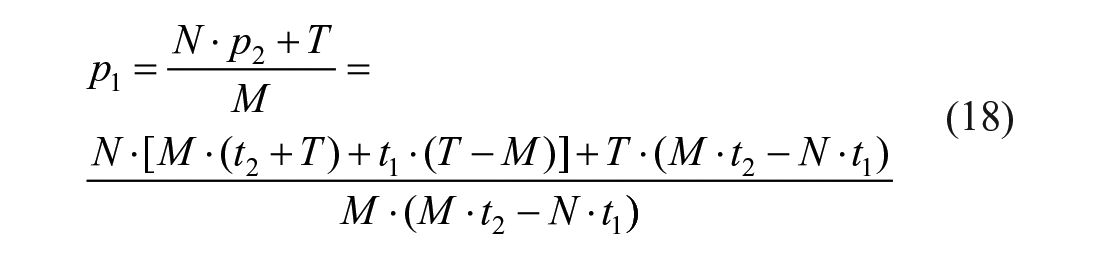

We discovered that
Assignment Inferences
Local governments guided the mode of innovation by utilizing various categories of tools (Deng et al., 2019; Shi et al., 2018), such as policy guidance and capital support, which implied that government-oriented innovation was comparatively obvious. However, a manufacturing enterprise might care not much about innovation, and chose the profit as its basic criterion for exploring relevant activity, which demonstrated that it might be bias to the motivation of the earning. In addition, there existed certain differences in the willingness to implement specific modes of innovation by manufacturing enterprises in various regions, which signified by the major differences in probabilities to some degree. Based on these assumptions, it was hard to make statistical and empirical analysis, and we only made attempt or guidance to solve this problem. For example, the social cost and the social earning mentioned were hard to measure. Hence, the following data brought only represented the influencing direction and degree.
For reason of economic level determining fiscal income in a certain region, the developed region owned more fiscal income and could encourage innovation to a larger extent, while the developing region could make less encouragement due to its comparative shortage of fiscal income. Meanwhile, the local government in the developing region might take comparatively more innovation input to achieve faster and better development, which implied that innovation input per unit output might be more, and therefore
Compared to that in the developing region, disruptive innovation might own larger impact on the manufacturing enterprise in the developed region (Li & Huang, 2019). The manufacturing enterprise in the developed region might achieve rapid promotion of the capability when implement disruptive innovation by comparison that in the developing region carrying incremental innovation, which would induce larger contribution to the value of the manufacturing, and this might demonstrate that the coefficient of elasticity of innovation in the developed region might be larger than that in the developing region, which implied that
Innovation would achieve positive spillover effect (Huang & Zhang, 2020), either for the enterprise or the nation. The developed region undertook a strategy of disruptive innovation, which would induce stronger economic and social influences than incremental innovation implemented in the developing region. However, the developing region required innovation urgently for bursting economic transformation and upgrading, incremental innovation implemented might produce a larger spillover effect for reason of demand elasticity being comparatively larger, which implied that would meet the following condition:
The developing region needed incremental innovation urgently, which would create a larger negative effect if it did not undertake strategy of incremental innovation as the reason mentioned. Therefore, it should meet the equation:
The central government should provide guidance primarily by supporting innovation made by the enterprise (Jia et al., 2020), and the developed region should spend more capital to promote regional economic upgrading. Meanwhile, the developing region was eagerly to accelerate economic development by implementing strategy of innovation, so as to promote the economic position in the whole nation. From the perspective of governmental regulation, the local government in the developing region might pay more attention to achieve greater operational performance got by innovation, and this would cause to be a larger penalty for not undertaking incremental innovation as per the enterprise, which might be reflected in the following equation:
A manufacturing enterprise in the developed region might spend comparatively less when it obtained innovation capital, for reason of the local government’s inputting much more for innovation. We let
Combining the above assumptions, we could get that


From the calculated result, we discovered that the probability of the manufacturing enterprise in the developing region undertaking the strategy of incremental innovation was 4.62%, while that of the manufacturing enterprise in the developed region undertaking the strategy of disruptive innovation was only 3.08%. Seen from the countermeasure made by the local government, either by the degree of innovation support or the penalty not driving the coincided innovation, the developing region was comparatively more involved than the developed region, and that might result in a larger possibility that the manufacturing enterprise in the developing region implemented incremental innovation.
In fact,
Discussions
Innovation was an important driver for economic development in China. This article advised different regions’ local governments on how to choose a mode of innovation firstly, then analyzed how the manufacturing enterprise would respond to corresponding innovation that was guided and regulated by intervention of local government. Finally, assumed theoretical data was presented to calculate the manufacturing enterprise’s possibility of implementing specific innovation mode guided by the local government based on theoretical analysis.
Different local governments would choose different innovation modes, which implied those in the developed region would predominantly choose disruptive innovation, while those in the developing region would primarily promote incremental innovation. To assess the probability of a manufacturing enterprise following the mode of innovation guided by its local government, we analyzed the marginal efficiency of innovation capital made by the manufacturing enterprise, as well as the marginal efficiency of innovation input made by local governments in different regions. Based on some assumptions, we calculated the probability that the manufacturing enterprise would undertake either disruptive innovation in the developed region, or incremental innovation in the developing region. Here, one thing should be brought as per the research base of this article. For reason of taking Solow model, it might not cause much debate that Cobb-Douglas function was used to detect the manufacturing output, and innovation, labor, capital were treated as the major influencing factors, but what could be Solow Residual was a problem. In fact, Solow Residual touched importance to the effect of technology, it might cause doubt for dividing that into incremental innovation and disruptive innovation mainly. In other words, technology and innovation were different aspects as per the manufacturing enterprise. If so, innovation could be detected by many perspectives, such as R&D, organizational structure change. Meanwhile, different local governments in different economic level would choose corresponding mode of innovation to elevate their economic positions, and incremental innovation and disruptive innovation might fit the need for research, therefore, we just made an attempt to deal with it from this aspect.
Based on the theoretical model mentioned, we analyzed the value difference of corresponding variables and calculated the corresponding inference on the manufacturing enterprise and the local government in different regions. The results demonstrated that the probability that the manufacturing enterprise in the developing region would undertake the strategy of incremental innovation was 4.62%. Likewise, the probability that the manufacturing enterprise in the developed region would undertake the strategy of disruptive innovation was 3.08%. These numbers revealed that the probability of a manufacturing enterprise in the developing region undertaking a strategy of incremental innovation was higher than the probability of a manufacturing enterprise in the developed region undertaking a strategy of disruptive innovation. As per assignment inferences, it might be no problem that theoretical analysis on different regions’ influence on various variables, but the corresponding value chosen might bring argument. Meanwhile, there was no certified value at all for some variable mentioned, for example, relevant social cost not following the innovation strategy guided by local governments could not measure or calculate, either for the developed region or for the developing region. Hence, assignment inferences made was only scheduled to give a hint for detecting the probability of the manufacturing enterprise’s following the innovation mode guided by the local government, and expected to touch comparatively new point for this field. In addition, the main problem of this article was short of empirical analysis by taking statistical data based on the above theoretical model, it was better to detect the difference from aspect of the region or the category of the manufacturing in China, and this was the further research direction we would touch.
Footnotes
Declaration of Conflicting Interests
The author(s) declared no potential conflicts of interest with respect to the research, authorship, and/or publication of this article.
Funding
The author(s) disclosed receipt of the following financial support for the research, authorship, and/or publication of this article: This work was supported by National Planning Office of Philosophy and Social Science [grant number 18AJY023].
