




Abstract
This study aimed to capture a clear picture of breast cancer research in Pakistan. It used bibliometric methods to investigate the status of breast cancer research in Pakistan. The data for this study were retrieved from the Web of Science database on 11-02-2021. Bibliometric parameters (publication and citation count, average citations per publication, h-index, impact factor, and journal quartile) for the purpose of evaluating authors/journals/organizations/countries were examined. It was found that till the filing of this bibliometric report, 1,605 research publications on breast cancer have been published by 7,774 authors, with averages of 0.206 documents per author, 4.84 authors per document, and 18.25 citations per documents. More than 72% of these publications were published between 2015 and 2020. Several local and international institutions were involved in funding these research publications. Furthermore, these publications have been cited 29,297 times, with an average of 18.25 citations per publication. On average, five authors have prepared a research study. International collaborations have been made with 88 countries around the world for this research. These results are encouraging but not in line with the rapid growth of breast cancer cases in Pakistan. There is a need for further attention and revisiting of the policy at the national level.
Introduction
Cancer causes about one in every six deaths globally. In the year 2018, it was the reason for more than 9 million deaths (Cancer, 2018), being the second leading cause of death worldwide. Statistics show that although the rate of breast cancer occurrence is higher among women from the developed world, its numbers are rising in other parts of the world as well (World Health Organization, 2018). Fan et al. (2015) reported that it was the most common type and the second largest cause of cancer-related deaths in women belonging to Asian countries.
There has been a sharp increase in cancer-related research during the past few years. More than 55,000 new cancer studies have been indexed in the Web of Science database between 2015 and 2019. The research output in breast cancer has witnessed a similar increase in recent years. The authors of this study performed a search query into the Web of Science database to investigate the global research output on breast cancer. The results indicated that about one-third of the total breast cancer research has been done in the last 5 years. Researchers in Pakistan have also been more active in this regard in recent years. Two-thirds of the breast cancer research in Pakistan has been conducted between 2015 and 2019. Given the rapid increase in the research output on the topic, a quantitative and qualitative analysis of the produced research is indicated. This study was intended to investigate the current status of breast cancer research in Pakistan. Another aim of this study was to identify the institutions actively engaged in breast cancer research in the country. The study would provide empirical evidence of breast cancer-related activities to the funding bodies and policymakers.
This study aimed to answer the following research questions:
What is the volume of research on breast cancer in Pakistan and how has it evolved?
What is the impact of this research?
What are the collaboration and authorship patterns of breast cancer research in Pakistan?
Which are the active institutions, authors, and journals in Pakistan that are producing breast cancer research?
What are the most frequently used keywords and themes of breast cancer research in Pakistan?
What is the subject dispersion of breast cancer research in Pakistan?
What kind of bibliographic coupling of countries, journals, and authors exist in breast cancer research in Pakistan?
What are the main funding bodies sponsoring breast cancer research in the country?
Literature Review
Breast cancer (BC) is the most common malignancy occurring in women worldwide. The need to record statistics regarding breast cancer has led to the establishment of breast cancer registries. The incidence of breast cancer is reported to be higher in the developed countries as compared to the rest of the world. However, the mortality rate because of breast cancer in developing countries has been progressively increasing. The life expectancy of women with breast cancer is limited in both developing and developed countries (Bray et al., 2018). The disease burden of breast cancer has been steadily increasing in developing countries due to an aging population, high population rate, growth deficit factors, and cancer-linked lifestyle adoption such as westernized dietary habits, smoking, and sedentary lifestyle (Jemal et al., 2011). In Pakistan, the risk of developing breast cancer has risen sharply and researchers report that one out of nine women in the country could be diagnosed with the disease (Sohail & Alam, 2007). The rate of age-related breast cancer is also quite high in Pakistan as compared to other Asian countries (Bhurgri et al., 2002). However, there is a general lack of reliable data as well as a lack of a scientific approach in documenting the available data in the country.
The abovementioned data and trends highlight the need to understand and appreciate the public health implications of breast cancer in Pakistan. Researchers have reported a trend of increasing incidence and disease burden of breast cancer in Pakistan in the future. Furthermore, the lack of availability of precise, credible, and well-organized data on breast cancer rates in the country has been a major concern regarding the management of the disease in Pakistan (Qureshi et al., 2015). Researchers have recommended that there is a dire need for the allocation of sufficient resources and facilities for the early diagnosis and management of breast cancer in the country (Maddams et al., 2012; Mariotto et al., 2011; Pakistan Bureau of Statistics, 2019). However, very little has been done to improve the state of affairs till now.
Research on breast cancer is emerging at a rapid pace from around the world covering various aspects of the disease (Ahmadalizadeh Khanehsar et al., 2020; Arshi et al., 2019; Babteen et al., 2020; Demark-Wahnefried et al., 2020; Ihraiz et al., 2020; Jain Singhai & Ramteke, 2020; Najjary et al., 2020; Rahimi et al., 2020; Rezaee et al., 2020; Sun et al., 2020; Vidhya & Batri, 2020; Ye et al., 2020; Zeng et al., 2020). Pakistani researchers have been active in this regard as well (Aamir et al., 2020; Baig et al., 2020; Khan, Masroor et al., 2020; Khan, Rehman et al., 2020; Raza et al., 2020; Sabir et al., 2020; Shamsi et al., 2020; Wazir et al., 2020).
While there have been several studies (Chu et al., 2019; Dalal et al., 2020; Haroon, 2020; Jin et al., 2020; Kaliszewski et al., 2020; Klingelhöfer et al., 2019; Liu et al., 2020; Pantziarka & Meheus, 2019; Ruiz-Coronel et al., 2020; Valderrama-Zurián et al., 2019; Yang et al., 2019) to evaluate cancer research using bibliometric methods, very little effort has been made to evaluate the research on breast cancer, the most common type of cancer in women globally.
Wang et al. (2016) conducted a study to investigate the trends in triple-negative breast cancer (TNBC). They identified the various hotspots of triple-negative breast cancer research and reported that the USA and China were leading in publishing TNBC research with their contribution being 43% and 15% of total research publications on this subtype of breast cancer.
Donovan et al. (2014) conducted a study to analyze the research impact of the National Breast Cancer Foundation. They used bibliometric methods to evaluate the research funded by the foundation between 2005 and 2010. The citation data from 2006 to 2011 used to identify highly cited research papers. Another large-scale bibliometric analysis of breast cancer research was made by Glynn et al. (2010). The study observed that 155 countries contributed to breast cancer research with the USA and UK leading the way. Out of the 155 contributing countries, 144 had collaborated for at least one study. The United States of America and Canada had the most mutually collaborative studies.
Teles et al. (2018) reported an upward trend in the research on the application of nanotechnology on triple-negative breast cancer, with overall growth in the volume of research in the field worldwide.
Sweileh et al. (2015) observed that there had not been much research on breast cancer in the Arab countries till the mid-1990s, however, it had increased considerably in recent years. Egypt has produced the highest number of research papers followed by Saudi Arabia with 35% and 22% of total output from the Arab world, respectively. The study also observed that the total breast cancer research output of all Arab countries combined was less than that of Israel.
A review of the relevant literature revealed that while numerous studies have been conducted on breast cancer in Pakistan, there is a lack of a study that maps out the current status of breast cancer research in Pakistan. This study is the first such attempt and intends to provide a comprehensive picture of the published research on breast cancer in Pakistan.
Materials and Methods
Methodology
Bibliometric methods were used to conduct this study. Bibliometrics involves the use of various methods to analyze scientific research publications such as research articles, books, conference papers, and journals. A bibliometric analysis encompasses the quantitative and statistical analysis of data to evaluate the research performance of publications and identify the trends in research publications related to institutions, countries, persons, and disciplines (Özen Çınar, 2020). It also helps highlight the active institutions, countries, researchers, and journals actively engaged in research. It further helps identify the research focus in a given field (Bornmann et al., 2015).
Source of Data
The data used for this study were retrieved from the Web of Science database which is one of the most comprehensive, authentic, and commonly used citations and abstract database of scientific literature. The Web of Science is known for its quality because of its strict documents’ inclusion criteria. The database provides subscription-based access to its contents. WOS is the oldest bibliographic/citations index database introduced in 1964 and has been the authority on citation data for over 56 years. Its coverage to STEM subject areas is comprehensive than any other bibliographic database.
Keywords and Data Retrieval
A comprehensive search strategy, as shown in Figure 1, was applied to retrieve and refine the results. The literature search was performed on February 11, 2021, to avoid changes in citation and publication numbers due to data updates in the database. Relevant keywords were prepared after consulting the relevant literature to run a search query in the database by the two medical science researchers involved in the study. The keywords then were combined with Boolean search operators to retrieve the maximum number of relevant results. Topic (TS) search option of the Web of Science Core Collection databases was used for data retrieval. It provides broader coverage by searching the data from the title, abstract, and keywords of the publications. The following search query was designed and run in the “Advanced” search option of the Web of Science Core Collection.
[TS = (“breast cancer” OR “cancer of breast” OR “cancer of the breast” OR “breast carcinoma” OR “carcinoma of breast” OR “carcinoma of the breast” OR “carcinoma breast” OR “breast neoplasm” OR “neoplasm of breast” OR “neoplasm of the breast” OR “neoplasm breast” OR “inflammatory breast cancer” OR “male breast cancer” OR “male breast neoplasm” OR “male breast carcinoma” OR “adenocarcinoma” OR “sarcoma of the breast” OR “secondary breast cancer” OR “metastatic breast cancer” OR “ductal carcinoma” OR “breast lesions” OR “mastectomy” OR “squamous cell carcinoma of the breast” OR “metaplastic breast carcinoma” OR “papillary carcinoma of breast” OR “breast cancer metastasis” OR “ductal carcinoma of breast” OR “malignant breast lesions” OR “secretory carcinoma of breast” OR “secretory breast carcinoma” OR “subtypes of breast cancer” OR “invasive breast carcinoma” OR “lobular breast cancer” OR “triple-positive breast cancer” OR “triple positive breast cancer” OR “triple-negative breast cancer” OR “triple negative breast cancer” OR “TNBC” OR “cystosarcoma phyllodes” OR “infiltrating duct carcinoma” OR “breast tumor” OR “human mammary carcinoma” OR “ER negative” OR “PR negative” OR “HER2 Negative” OR “BRCA1” OR “BRCA2”) AND CU=Pakistan]

Flow diagram of data retrieval and filtration of breast cancer research in Pakistan.
Inclusion and Exclusion Criteria
Strict inclusion and exclusion criteria were applied to ensure the precision and retrieval of maximum results. The Web of Science Core Collection searches the Science Citation Index Expanded (SCI-EXPANDED), Social Sciences Citation Index (SSCI), Arts & Humanities Citation Index (A&HCI), Conference Proceedings Citation Index-Science (CPCI-S), Emerging Sources Citation Index (ESCI) in indexes. In the CU field tag (country) the input of “Pakistan” was connected to the query to retrieve the publications records with Pakistani affiliation. The period was selected from all previous years till 2020. We limited this study to the document types that had undergone the peer review process. The initial search yielded 1,880 documents, after applying document type filter to restrict the results to peer-reviewed manuscripts only, 275 irrelevant records were removed from analysis. Conclusively, 1,605 records consisting on journal articles (n = 1,344), reviews (n = 215), proceeding papers (n = 41), book chapters (n = 5) were selected to perform the analysis. “Pakistan” was combined in the search query as a country key to limit the search results to documents with at least one author affiliated with Pakistan. Data files were exported to plain text, BibTeX, and MS Excel formats for further working and analysis.
Tools Used
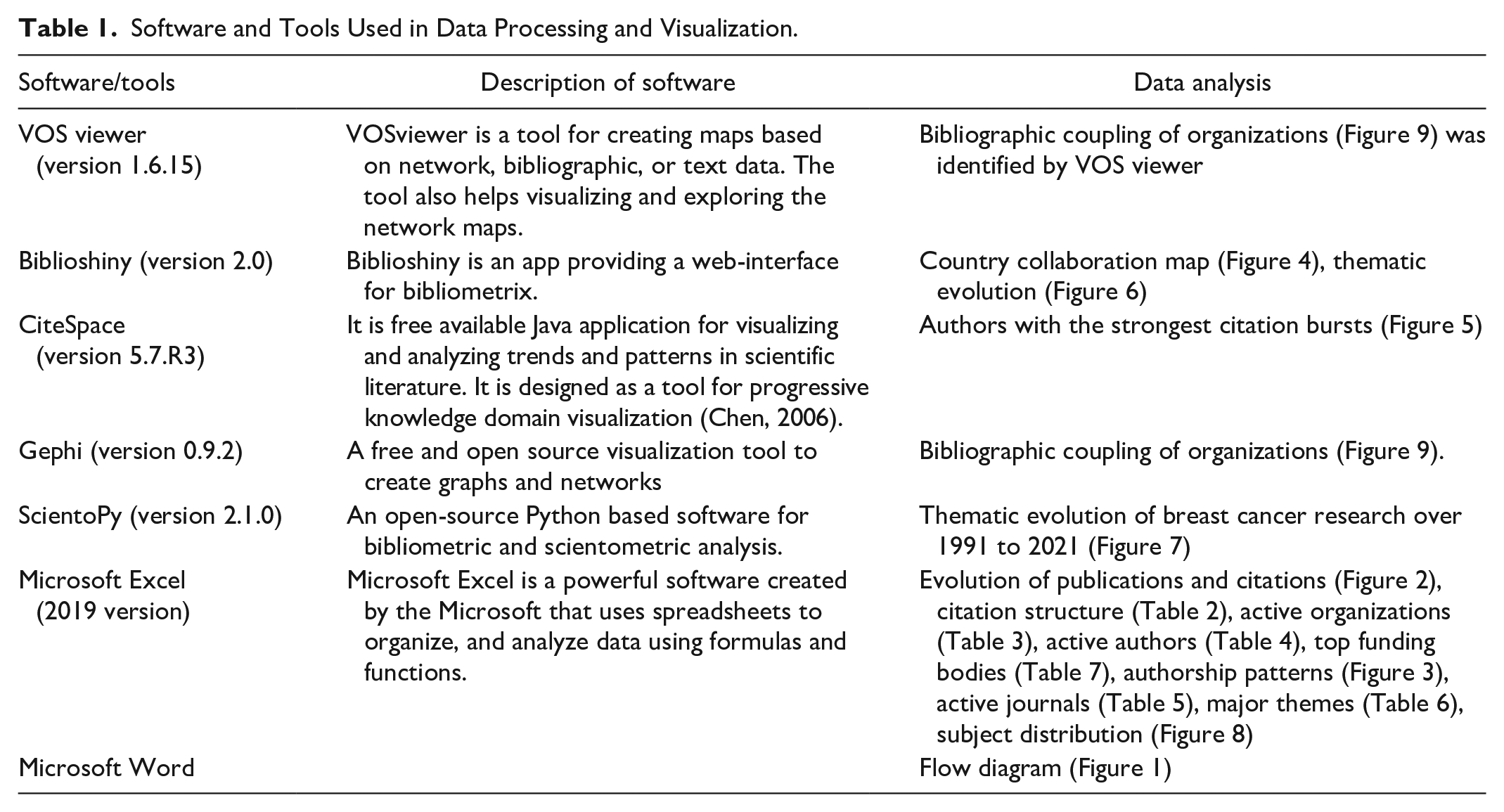
The data were processed, analyzed, and visualized using the tools listed in Table 1.
Software and Tools Used in Data Processing and Visualization.
Funding Bodies
The Web of Science data contains brief information of funding bodies in its indexing record of published research. The data related to funding sponsors were part of bibliographic information provided by the relevant publishers to the WoS. Microsoft Excel was used to analyze the data on funding sponsors.
Results
General Overview of the Results
Researchers affiliated with Pakistani institutions have published 1,605 peer-reviewed publications on breast cancers consisting of 1,344 articles, 41 proceeding papers, 215 review papers, and 5 book chapters. These publications have cumulatively received 29,297 citations with an average of 18.25 citations per publication. Articles had an average of 17 citations per publication. On the other hand, the proceeding papers and review articles had a higher average of 25 citations per publication. Book chapters had the lowest average (n = 3.6) of citations per publication. There was an average of four authors per publication. Therefore, a total of 6,520 authors affiliated with 1,864 organizations contributed to the 1,605 studies. It was found that the breast cancer research prepared by the authors affiliated with Pakistan has been published in 645 international and local journals and has used 4,310 keywords. Furthermore, 88 countries collaborated in preparing these 1,605 publications.
Volume and Chronological Growth of Breast Cancer Research in Pakistan
Pakistani researchers started researching breast cancer in the early 1990s. The first significant research publication on the topic was published in 1991 in the country. However, till the start of the 20th century, the research output was low and inconsistent. With the onset of the 21st century, the country has been producing a regular but limited number of research publications on breast cancer each year. However, there was increased activity observed during the last 6 years (2015–2020). More than 71% of the total breast cancer publications originating from Pakistan were published during that period. These were the years when the country started producing breast cancer-related publications in triple digits, 104, 132, 180, 218, 251, and 259, respectively. Figure 2 shows the evolution of publications and citations of breast cancer research in Pakistan.
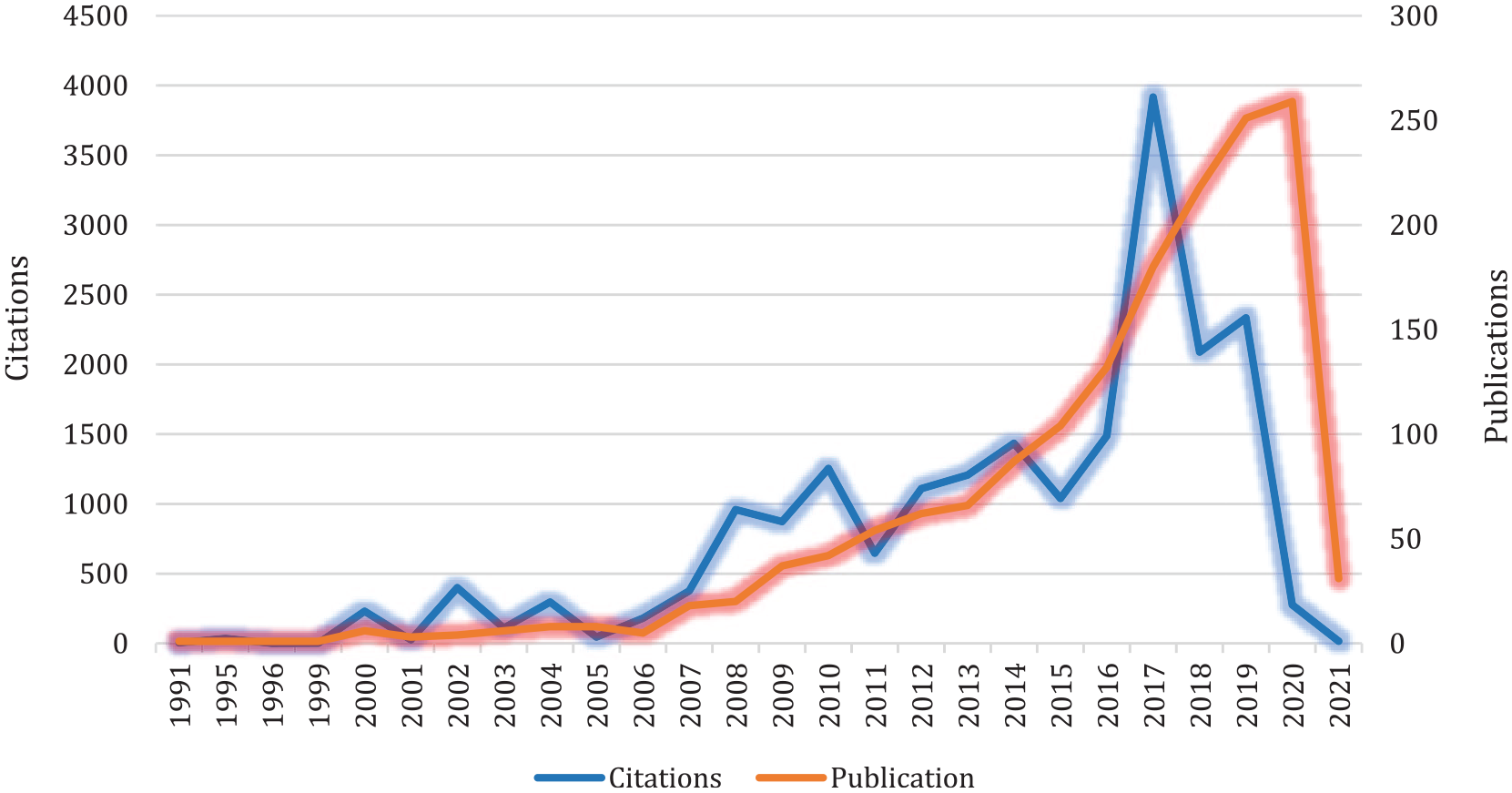
Evolution of publications and citations of breast cancer in Pakistan.
Citation Impact of the Research
Figure 2 and Table 2 highlight the growth in the number of citations of breast cancer publications from Pakistan over the last three decades. It was found that they were all well received and had been cited 29,297 times till the time of this study. These research publications had an average of 18.25 citations per publication, and the research articles had received about 78% of the total citations. However, review papers and conference proceedings had better citation averages than the research articles. The highest number of citations (n = 7,473) were received by publications published in the year 2012, followed by the ones published in 2017 (n = 3,917) with 25.5% and 13.37% of the total citations, respectively. The citation structure of breast cancer publications provided in Table 2 indicates that the highest number of publications (n = 164) were cited in the year 2018, followed by 2019 with 163 cited publications.
Citation Structure of Breast Cancer Research in Pakistan.
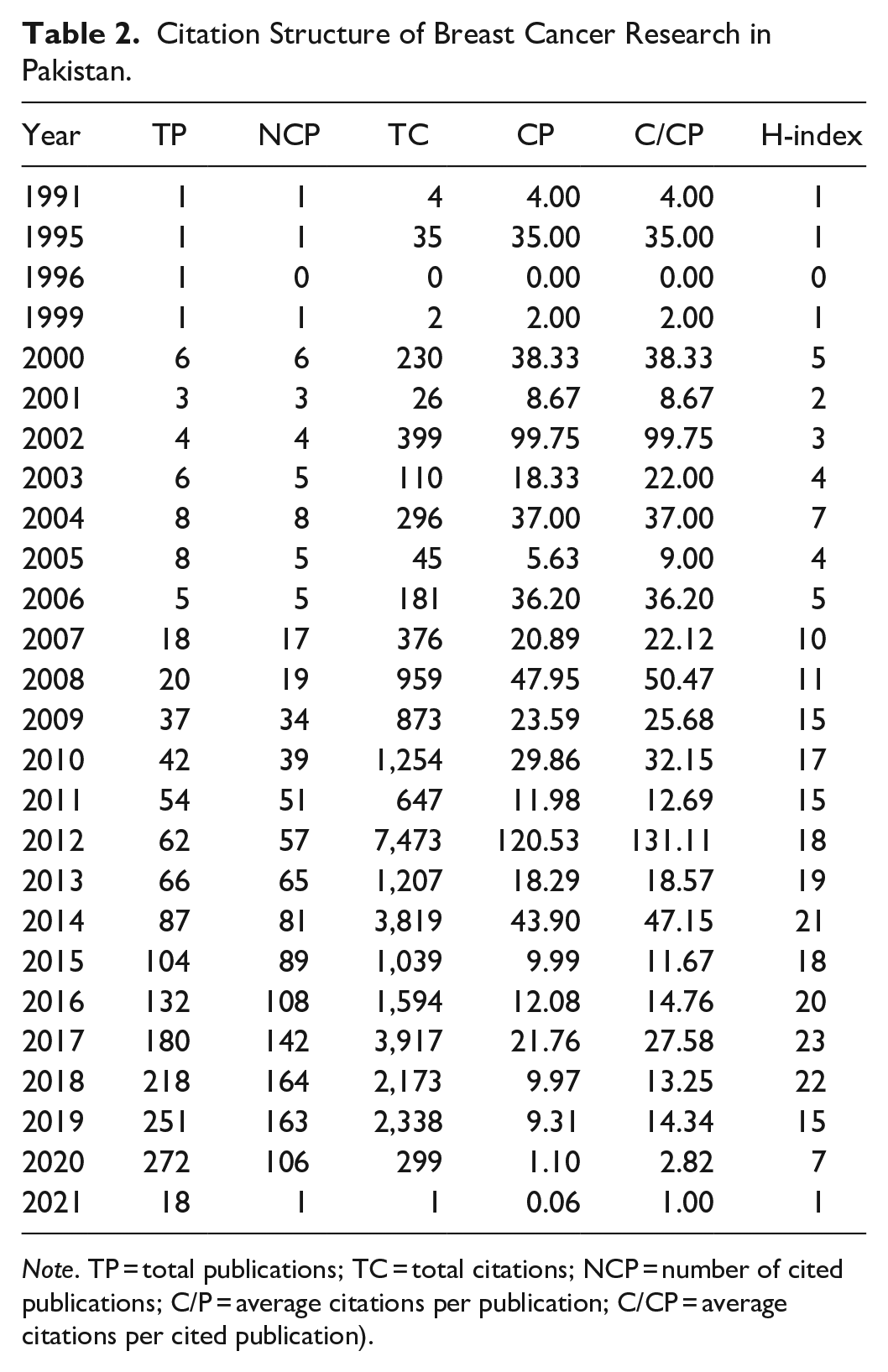
Note. TP = total publications; TC = total citations; NCP = number of cited publications; C/P = average citations per publication; C/CP = average citations per cited publication).
Authorship Patterns
Figure 3 displays the authorship patterns results of the analysis. Breast cancer research in Pakistan has been collaborative in nature as researchers have preferred to research in teams. Single author studies constituted less than 2% (n = 26) of the total research output on the topic. Three-author (n = 242) studies were the most common followed by the five (n = 234) and four (n = 225) authors studies. The highest number of authors who collaborated on a study was 627 (Fitzmaurice et al., 2019). Numbers on the x-axis show the number of authors.

Authorship patterns of breast cancer research in Pakistan.
Top Collaborating Countries
Figure 4 presents a geographic map of countries collaborating with Pakistan in breast cancer research. The Pakistani researchers have collaborated with 88 countries globally. Most of those collaborations were with China (n = 164), the United States of America (n = 156), the United Kingdom (n = 94), and Saudi Arabia (n = 92). Saudi Arabia was the only country representing the Arab region in the top collaborating countries.

Top collaborating countries.
Most Productive Institutions
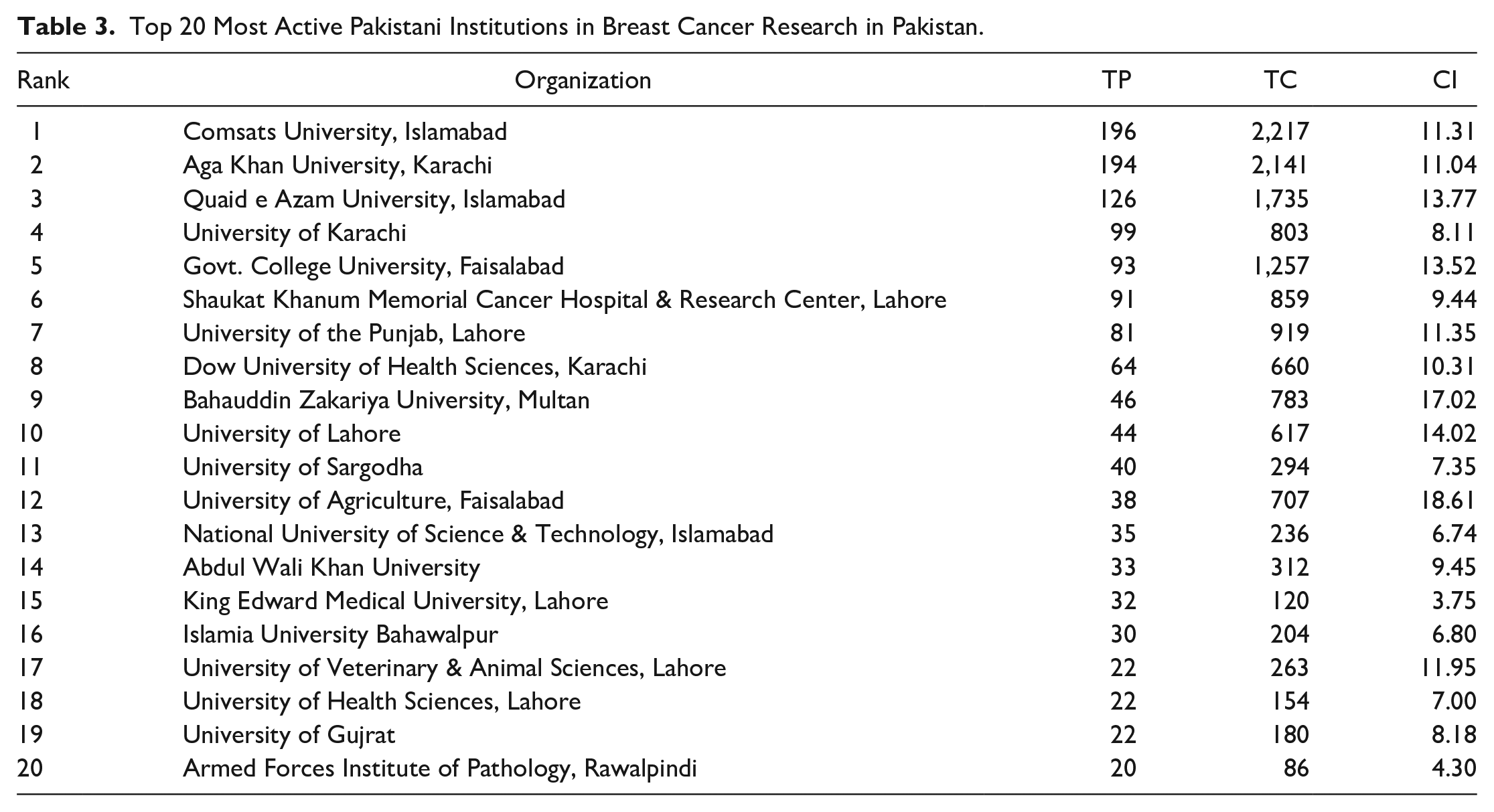
Table 3 presents the most influential Pakistani institutions whose affiliated authors were actively producing breast cancer research. COMSATS University and Agha Khan University were the most active organizations with 196 and 194 publications, and 2,217 and 2,141 citations, respectively. The Quaid e Azam University was the other prominent institution producing more than 100 publications. On the other hand, Shaukat Khanum Memorial Cancer Hospital & Research Center was the only non-teaching and oncology institute in the list of top producers.
Top 20 Most Active Pakistani Institutions in Breast Cancer Research in Pakistan.
Most Prolific Authors
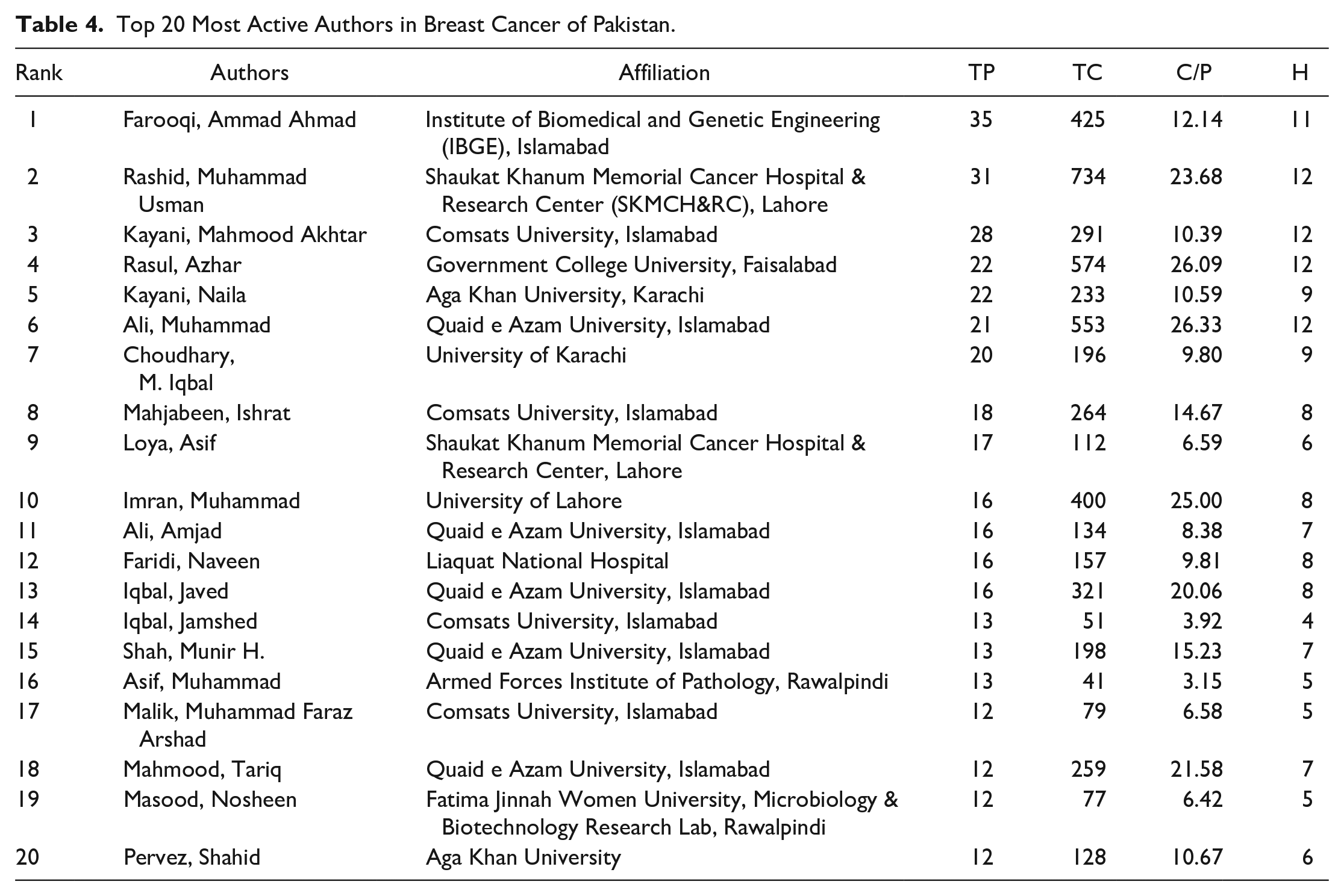
Table 4 presents the list of the 20 most prolific authors who have been actively publishing research on breast cancer. Ammad Ahmad Farooqi (35 publications) affiliated with IBGE, Islamabad, and Muhammad Usman Rashid (31 publications) affiliated with SKMCH&RC were the top contributors. Muhammad Usman Rashid’s published work had the highest number of citations (n = 734) with an average of 23.68 citations per publication. Of the 20 most prolific authors, five authors are affiliated with Quaid e Azam University, four with COMSATS University, and three were affiliated with Aga Khan University.
Top 20 Most Active Authors in Breast Cancer of Pakistan.
Authors With the Strongest Citation Bursts
The citation bursts help identify the manuscripts that received the attention of research community in a certain period (Zhou et al., 2019). Figure 5 shows the top 15 authors who had the strongest citation bursts on their documents during the 1991 to 2021 period. The red line in the green color line in the last column of the figure, represents the period of citation bursts. Mahmood Akhtar Kiyani had the strongest citation burst with a burst strength of 6.73, which lasted from 2011 to 2015. Zeba Aziz was second on the list with a citation burst strength of 6.67 that lasted from 2008 to 2010. The weakest burst (burst strength = 3.93) was recorded for Azhar Rasul that lasted for 2 years.

Top 15 Authors with the strongest citation bursts.
Preferred Journals
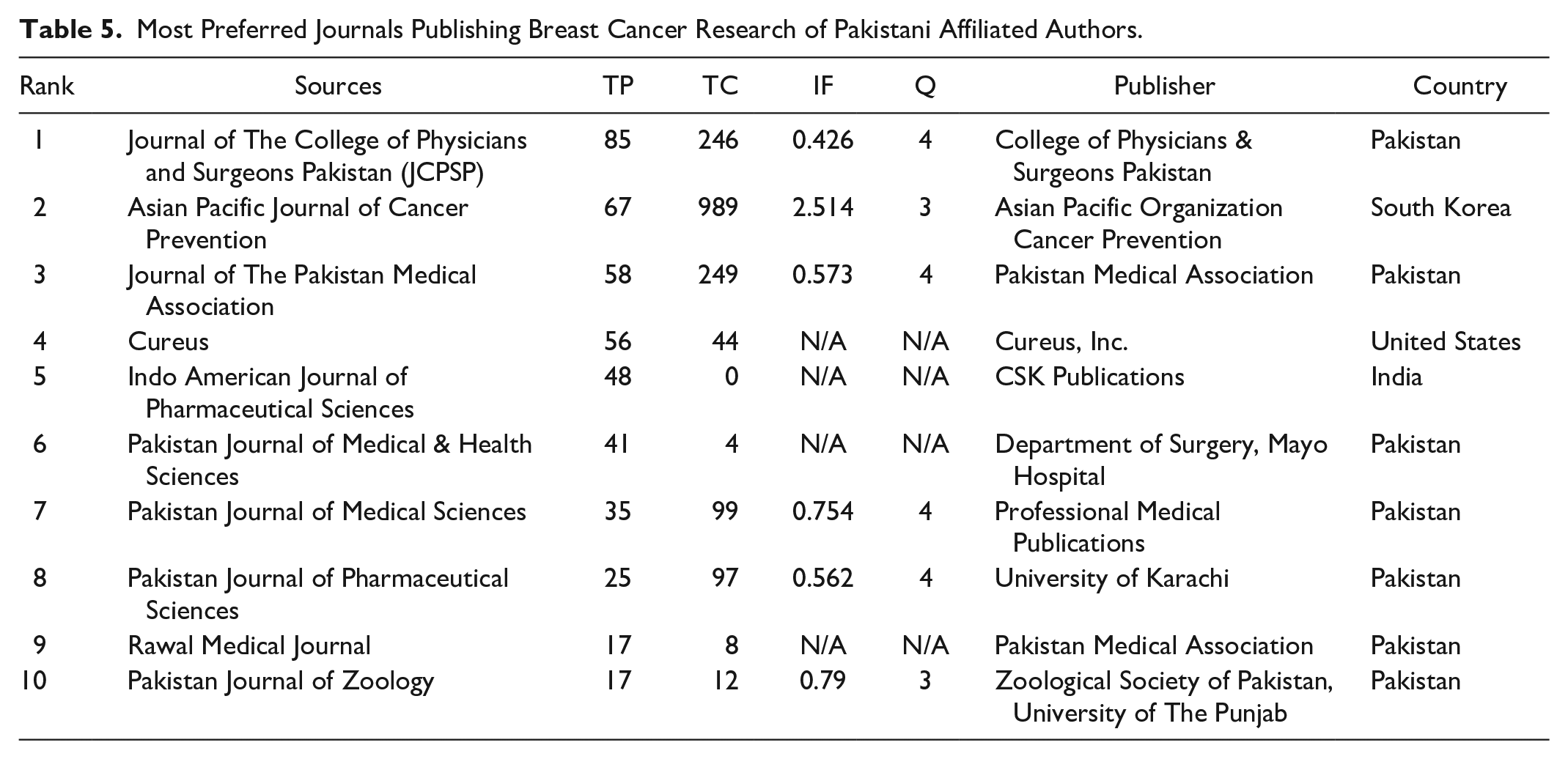
The breast cancer research being conducted in Pakistan was published in 645 local and international sources. Table 5 shows the 10 most preferred journals. The impact factor of these journals was obtained from the latest Journal Citation Reports (JCR). Data analysis revealed that a majority of the highly preferred journals were published locally in Pakistan and were listed in the third and fourth quartiles of JCR. The Journal of the College of Physicians and Surgeons Pakistan (JCPSP) had published the highest number of publications (n = 85) on the topic, followed by the Asian Pacific Journal of Cancer Prevention (n = 67) and the Journal of the Pakistan Medical Association (n = 58).
Most Preferred Journals Publishing Breast Cancer Research of Pakistani Affiliated Authors.
Author Keywords and Thematic Evolution
Table 6 presents the main themes and their temporal evolution between 1991 and 2021. It was found that the term “breast cancer” has been used in 378 publications and was the most frequently used keyword. Furthermore, the theme attracted the highest number of citations (2,912). While the keyword “breast cancer” has been used throughout the study period, its frequency of use increased in recent years. The generic term “cancer” has also been used in more than a hundred publications. The term “nanoparticles” attracted the most citations with the best citation average of 35.64.
Main Topics of Breast Cancer Research Between 1991 and 2021.

Figure 6 provides a three-field plot of the main themes and their evolution over time divided into three different periods that is, 1991 to 2000, 2001 to 2010, and 2011 to 2021. It shows “breast carcinoma,” “breast cancer,” and “chemotherapy” were the most frequently used keywords and themes during the last decade of the 20th century. Newer themes such as “cytotoxicity,” “polymorphism,” “survival,” and “gemcitabine” emerged during the first decade of the 21st century. However, the term “breast cancer” has remained popular among breast cancer researchers throughout the study period. Data in Figure 7 highlights that from 2016 to 2021, more than 40 documents per year were published that had used the term “breast cancer.” The terms “cancer,” “apoptosis,” “cytotoxicity,” “anticancer,” and chemotherapy were the other terms that occurred frequently during recent years. Furthermore, the term “breast cancer” has been used in more than 80% of the analyzed documents during the last 5 years, and the term “cancer” in nearly 100% of the analyzed documents.

Three-field plot of thematic evolution of breast cancer research over 1991 to 2021.
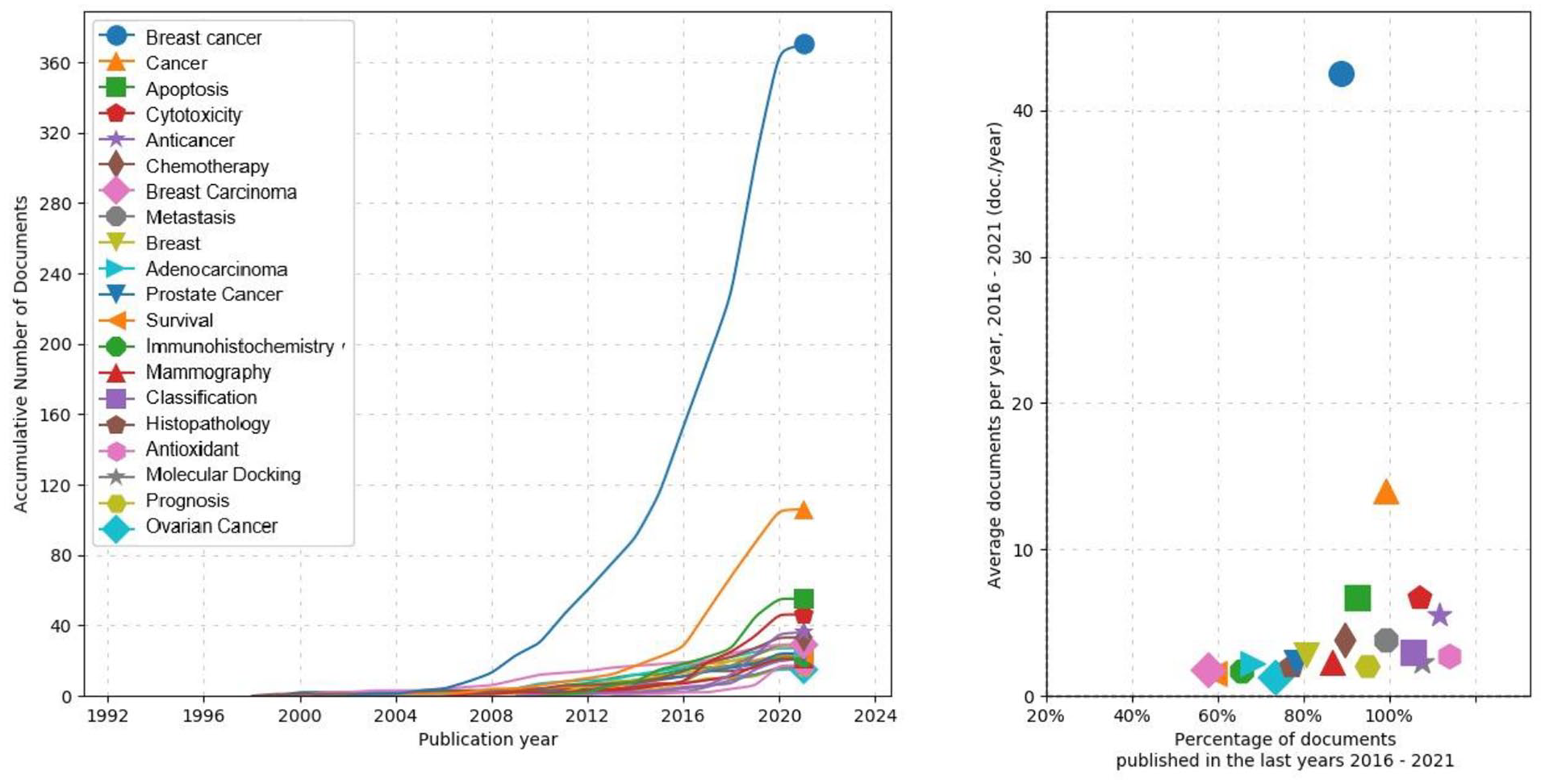
Thematic evolution of breast cancer research over 1991 to 2021.
Research Areas
The WoS database has certain predefined subject categories, and the breast cancer research in Pakistan was dispersed under these predefined subject categories. The highest number of publications were published under the subject categories of oncology (n = 516), medicine general internal (n = 371), and pharmacology pharmacy (n = 163). The three categories at the bottom of the list were related to computers, engineering, and the environment. Figure 8 presents an overview of the subject distribution of breast cancer research.

Subject distribution of breast cancer research of Pakistan.
Bibliographic Coupling of Authors, Countries, and Journals
Bibliographic coupling happens when two other documents cite the same document. Bibliographic coupling indicates similarities between the authors, documents, journals, and institutions. The two citing documents are considered related and the number of references of the third document shared by the citing documents determines the strength of the coupling. Figure 9 displays the bibliographic coupling of 20 Pakistani institutions that had at least produced 20 publications on breast cancer. Different clusters were represented by different colors. The bibliographic coupling of organizations indicated a strong link strength of Quaid e Azam University and demonstrated its connections with the University of the Punjab, University of Karachi, and the University of Gujrat. Shaukat Khanum Memorial Cancer Hospital & Research Center can be seen taking the center stage being the only specialized cancer hospital and research institute.
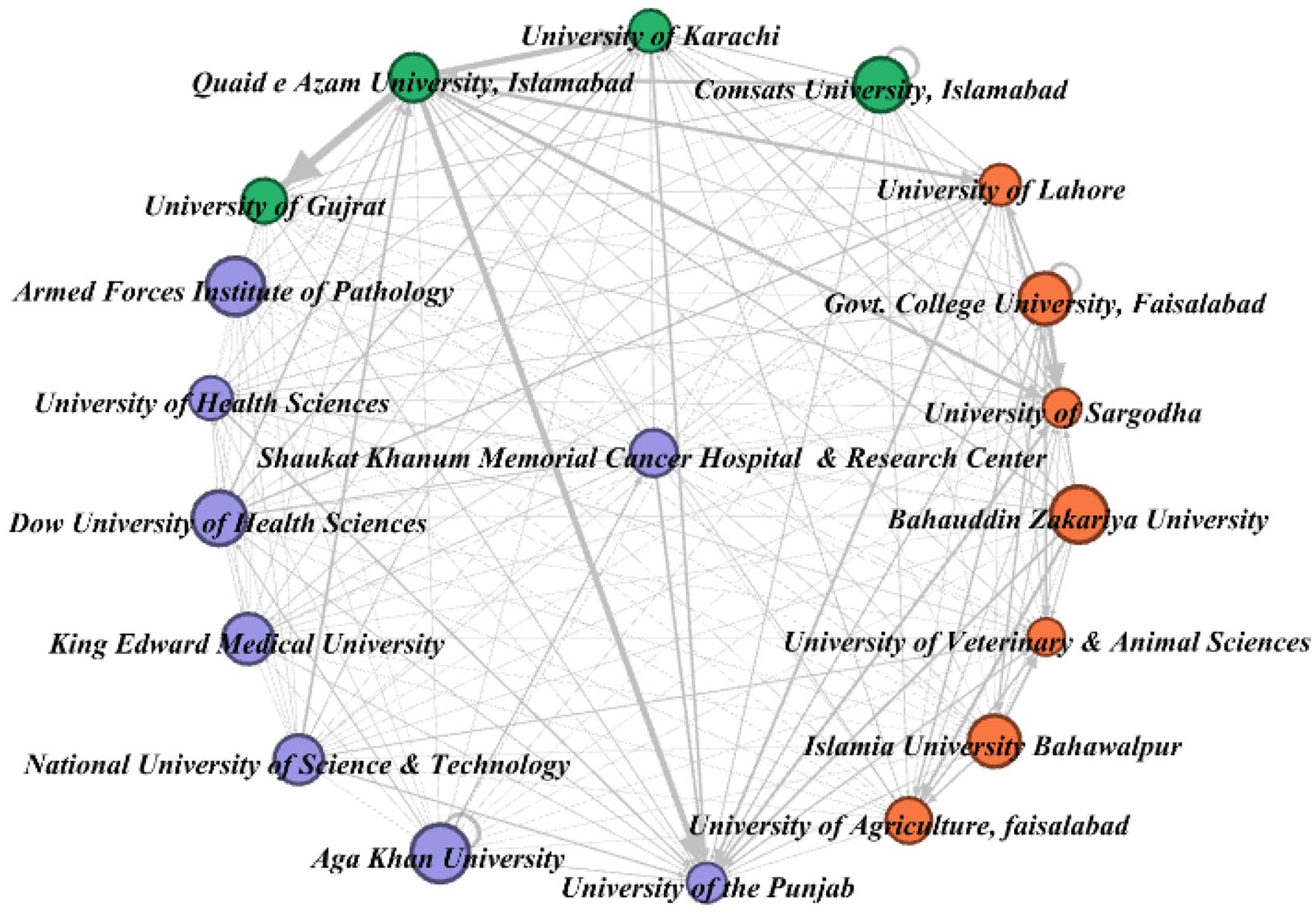
Bibliographic coupling of organizations with minimum 20 documents. Twenty meet the criteria.
Funding Agencies
Research publications on cancer are proxies for cancer research activities and are the major yields of research funding. The connection of funding in cancer research is the interplay between research activity and publications output (Eckhouse et al., 2008). Breast cancer research in Pakistan has received funding from various national and international funding bodies. The Higher Education Commission of Pakistan was the highest sponsor of breast cancer research in the country. Among the international funding bodies, the National Natural Science Foundation of China has funded the highest number of research studies (n = 66), followed by the National Institute of Health, and the Department of Health Human Services of the USA with 31 studies each. Table 7 displays the top 10 funding sponsors of breast cancer research in Pakistan.
Top 10 Funding Agencies Sponsoring Breast Cancer Research in Pakistan.

Discussion
The bibliometric properties of 1,605 publications that met the inclusion criteria of the research study were analyzed in this study. It was found that there has been a growing trend in research on breast cancer in Pakistan, and the number of studies originating from the country has been steadily increasing. There was also an upward trend observed in the analyzed studies’ citations that remained high till 2017 before declining in recent years. The bibliometric analysis showed that most of the selected publications had been authored by three to six authors. It is understandable from the perspective of a developing country where few authors can publish alone. Importantly, the number of authors did not seem to affect the citation impact of publications with 10 or fewer authors. The articles published by more than 10 authors received more citations per document than those authored by fewer than 10 authors. This might be attributed to the bigger size of the collaborative teams that performed better than smaller groups in terms of producing more citable work. Further research into the correlation between the number of team members and their level of collaboration in an article could yield interesting results.
The COMSATS University and the Aga Khan University contributed the highest number of articles, while IBGE, Islamabad, and the Shaukat Khanum Memorial Cancer Hospital & Research Center had the most productive authors. In the most productive authors list, the SKMCH&RC authors were ranked 2nd and 9th, while authors from COMSATS University were ranked 3rd, 8th, 14th, and 17th. The authors from the second most productive institute, the Aga Khan University, were found to be on the 5th and 20th place on the list. It should be noted that these are all highly productive organizations engaged in research on a variety of subjects, except SKMCH&RC, which is a specialized center for cancer research. Interestingly, there were no government-run hospitals or cancer centers on the list of productive organizations even though they routinely cater to a high number of cancer patients. This might be due to a lack of research infrastructure in these organizations as well as a lack of appropriate government funding and interest.
The term citation burst is used to define a quick increase in the number of citations a publication receives in a specified period. A citation burst may indicate a trend or a particular interest of researchers in that specific publication during the bursting period (Zhang et al., 2018). In our study, a publication by Yaseen Bhurgari had the largest citation bust with the highest number of citations between 1991 and 2021 making it the most important study from Pakistan during the time frame.
China had the maximum number of collaborations with Pakistan. This was followed by collaborations between the United States of America, the United Kingdom, and the Kingdom of Saudi Arabia, respectively. A high number of collaborative projects was observed between China and Pakistan despite a language barrier. This might be due to the mutual understanding between the two countries on increasing cooperation on various scientific levels. On the other hand, there was virtually no collaboration with Pakistan’s neighbor despite similarities in language and culture as well as geographical closeness. It appears that science remains subservient to political issues whereas it should be exactly the opposite. Exchange of students and postdocs could be cost-effective and easier if geographical neighbors can overcome their political differences.
Seven out of 10 journals where the researchers chose to publish were local. The Journal of College of Physicians and Surgeons, Pakistan, was ranked first in the list of journals used by researchers for publishing articles on breast cancer. Interestingly, an Indian journal was ranked fifth on the list for publishing breast cancer research articles originating from Pakistan. This implies that scientists were not being held back by prejudice or politics. Globally, Pakistan is ranked 45th in terms of research on breast cancer while India is ranked 13th. Pakistani researchers could benefit greatly by collaborating with researchers in India in this particular area of research. The research showed that most of the breast cancer research in Pakistan was being funded by the Higher Education Commission (HEC) of Pakistan. China’s National Natural Science Foundation and the USA’s National Institute of Health were other funding agencies identified. Apart from China, there were no other regional funding agencies found. The results depict dense local collaboration in addition to international collaboration, with local journals being preferred, and strong bibliographic coupling between local authors. All this speaks for better research output in the future.
The results of the subject dispersion analysis shed some light on the overall diversity of research. It has become apparent that Pakistan has progressed from mere epidemiological and case report studies to researching the biomedical, biochemical, and biotechnological aspects of breast cancer research. The citation impact of publications originating from the country has also been significant given that Pakistan is a developing third-world country. The analysis of keywords highlighted a similar trend. The newer keywords and subjects added to the list of keywords showed more basic and applied research with the generation of original and new knowledge about the local prevalence of the disease and its pathological dynamics.
We observed a sharp increase in the number of citations from 2015 to 2017 that suddenly declined thereafter. This can be due to the incomplete citation life cycle of the recent publications.
The results of this bibliometric analysis can be interpreted in several ways. The inception of the HEC has given a boost to the overall academic research in Pakistan, particularly in the health and medical sector. Pakistan has seen the establishment of several new universities in the new millennium. This has also added to the increased output of biomedical research in the country. However, the current research output is not in line with the scale of the challenge. Pakistan has a huge population that suffers from breast cancer. The HEC has suffered from cuts in its local funding and has also decreased the number of overseas scholarships it offers. This policy change has adversely affected the research output in this important area of research and must be reversed. Pakistan needs to get back on track to finding the solutions for its problems indigenously instead of just importing them.
Recent epidemiological estimates have projected an increase in the lifetime risk of breast cancer, a decrease in the average age of females diagnosed with breast cancer, an increase in the cost of surgical interventions, and an increase in the morbidity and mortality related to the disease (Zaheer et al., 2019). Pakistan needs to develop a strong cancer research program that connects the high patient output institutions like public sector general and specialized cancer hospitals for collaborative work. The country needs to prioritize cancer research and formulate a strategy to decrease the incidence of the disease, modify the causative factors, and educate the public about early detection and treatment. There needs to be work done on reducing the taboos related to the diagnosis and treatment of breast cancer in Pakistani society. Local, regional, and global collaborations and funding opportunities need to be exploited and political differences set aside to combat this deadly disease.
Limitations and Future Research Directions
This study is limited by the use of only the WoS database for data collection. The data for this study was retrieved on February 11, 2021. Any documents published between the date of data retrieval and the date of publication of this study have not been accounted for. This study provided a bibliometric overview, however, a systematic review on breast cancer research may shed further light on this topic. A study comparing the breast research output of Pakistan with other similar developing countries would be a good addition to the current body of knowledge on breast cancer. As the WOS was the only database used for this study, bibliometric studies using other citation and abstract databases such as PubMed and Scopus might be worthwhile.
Conclusion
Research on the subject of breast cancer has grown from 1 publication in 1991 to 272 publications in 2020, totaling 1,605 publications for the 200 million strong country. The scientists of Pakistan have been publishing in teams nationally as well as internationally with scientists in China, USA, and the UK. Ammad Ahmed Farooqui of IBGE Islamabad was the most productive author while Comsats University, Aga Khan University, and Quaid e Azam University were highest publishing institutions. HEC funded most of the research while JCPSP, a local journal, was the leading journal publishing breast cancer research on subjects ranging from oncology to public health and computational models of the disease. From the perspective of total population and disease burden, more research studies are needed to guide the policy guidelines for treatment and prevention.
Footnotes
Acknowledgements
The authors would like to acknowledge the support of Prince Sultan University for paying the Article Processing Charges (APC) of this publication.
Declaration of Conflicting Interests
The author(s) declared no potential conflicts of interest with respect to the research, authorship, and/or publication of this article.
Funding
The author(s) received no financial support for the research, authorship, and/or publication of this article.
