




Abstract
Despite the economic statistics from recent years indicating outstanding economic recovery in disaster-affected areas after the Wenchuan Ms 8.0 Earthquake, the causes of these macro-economic changes remain ambiguous. The Chinese Government set up the counterpart assistance policy to aid post-disaster reconstruction after the Wenchuan Ms 8.0 Earthquake in 2008; however, whether the changes seen in the economic statistics can be attributed to this policy remains unclear. This article uses the difference-in-differences model to evaluate the effects of counterpart assistance on economic development in disaster areas. Thirty-nine severely affected counties were chosen as research objects and divided into a treatment group (18 recipient counties) and a control group (non-recipient counties). Empirical results indicate the counterpart assistance policy helped to significantly improve the real GDP and GDP growth rate per capita in the treatment group. Counterpart assistance influenced the real GDP principally by increasing investment in fixed assets, employment, urbanization level, and fiscal expenditure. The findings of this study deepen our understanding of counterpart assistance within the Chinese context.
Keywords
Introduction
For the past three decades, the frequency of natural disasters on Earth has increased (Peng et al., 2018). Approximately 10,000 natural disasters have occurred worldwide since 1970, affecting 7 billion people and causing an estimated economic loss of 2 trillion dollars. These figures are continuously increasing (EM-DAT2012). Natural disasters are one of the greatest challenges facing the human race, causing a significant threat to life and economic development, as well as putting enormous pressure on efforts toward sustainable development worldwide. China is one of the countries most blighted by natural disasters (Peng et al., 2017; Xu et al., 2017). In view of economic growth theory, there is debate as to whether natural disasters severely affect growth and development (Richard, 1996). From the perspective of traditional neoclassical economics, disasters destroy both material and human capital, breaking the original trend toward economic development. Therefore, disaster is accepted as an immense barrier to economic growth (Cavallo et al., 2013). In contrast, endogenous growth theory does not provide an explicit answer. For example, the notion of Schumpeterian creative destruction concedes that damage caused by negative impacts can serve as a catalyst for capital reinvestment and processes of updating materials and processes, which may generate higher economic growth (Cuaresma et al., 2008; Gignoux & Marta, 2016; Loayza et al., 2012). According to empirical studies, no consensus has been reached on the positive and negative impacts of natural disasters on economic growth. Chhibber and Laajaj (2007) described four effects of natural disasters on per capita economic growth. In the short term, the disaster has a negative impact on economic growth (Noy, 2009; Raddatz, 2007; Rasmussen, 2004), while in the longer term, these impacts on growth may be different, according to related studies (Caselli & Malhotra, 2004; Hochrainer, 2009; Tavares, 2004).
On one hand, natural disasters can have a significant impact on economic development and on the other, an influx of capital and new technologies, as well as policy support during periods of post-disaster reconstruction, may facilitate economic growth. These opposite effects may cause vastly different outcomes for disaster areas. Studies have reported that government expense, human resources, technological progress, and the disaster-affected population are all likely to have an impact on economic growth (Borensztein et al., 2009; Lis & Nickel, 2010; Melecky & Raddatz, 2011; Noy & Nualsri, 2011). Furthermore, all such factors are related to reconstruction policy. Post-reconstruction policies are direct responses to the effects of disasters. The varied scientific value and execution strengths of policy formation may cause differences in the impacts on economic growth.
An 8.0-magnitude earthquake occurred on May 12, 2008, in Wenchuan County, Sichuan Province. The Wenchuan Earthquake affected 417 counties in 10 provinces (cities) and covered an area of approximately 500,000 km2. After the Wenchuan Earthquake occurred, the Government of China (GOC) issued a series of post-reconstruction policies aiming to recover social and economic order, improve economic quality, and promote leapfrog development in the disaster area as soon as possible. Therefore, the evaluation of the impact of post-construction policies is necessary and of great concern. The Wenchuan Earthquake serves as an appropriate case for such evaluation. Zeng (2012) assessed the effect of post-disaster reconstruction policies using fuzzy comprehensive evaluation based on affected households in poor villages and found that all affected households were satisfied with post-disaster reconstruction. Furthermore, Li et al. (2013) obtained victims’ views of the Wenchuan Earthquake and post-disaster reconstruction through a questionnaire, with most reporting overall satisfaction with the post-disaster policies implemented; however, respondents reported higher expectations around livelihood projects, such as industrial development, employment opportunities, and entrepreneurship. Yang et al. (2017) believed that a “human-oriented” perspective should provide the basis for reconstruction after the Wenchuan Earthquake and, as such, evaluated the satisfaction of residents in the affected area. In short, existing studies have predominantly employed survey tools or other forms of qualitative assessment, and have mainly focused on factors at the level of the individual.
Currently, the reconstruction process in the affected area has been completed and the economy has returned to normal. Therefore, it is necessary to quantitatively and macroscopically evaluate post-disaster reconstruction policies in the wake of the Wenchuan Earthquake. Only a few macroscopic studies have evaluated economic recovery in the disaster area using simple statistical indexes. For example, Cao (2018) calculated the economic scale, industrial structure, investment and consumption, financial revenue and expenditure, and residents’ income, analyzing the data changes before and after the earthquake to review the effects of post-disaster reconstruction. Using this method, it is difficult to see the real effects of post-disaster reconstruction policies, especially the effects associated with the counterpart assistance policy in the Chinese context.
This article aims to evaluate the GOC’s counterpart assistance program and its impact on the local economy. The effect of the counterpart assistance policy on economic development in recipient counties was quantitatively studied using the difference-in-differences (DID) model. These analyses can be used by the governments of other countries in disastrous conditions.
Study Area
Brief Introduction to the Study Area
According to the Central Government division, 39 counties in Sichuan Province were reported as extremely severely affected (10 counties) and severely affected (29 counties) by disaster, both of which were used as the study area in the current study. The study area is located in the transition belt from the Qinghai-Tibet plateau to the Sichuan Basin, an area that is predominantly mountainous (Figure 1). Within this region, there are many areas with the potential for geographical disasters, such as landslides and debris flow, which are characteristically associated with widespread damage and are an enormous threat to life. In addition, the study area has a vulnerable ecological environment and is associated with low economic development.
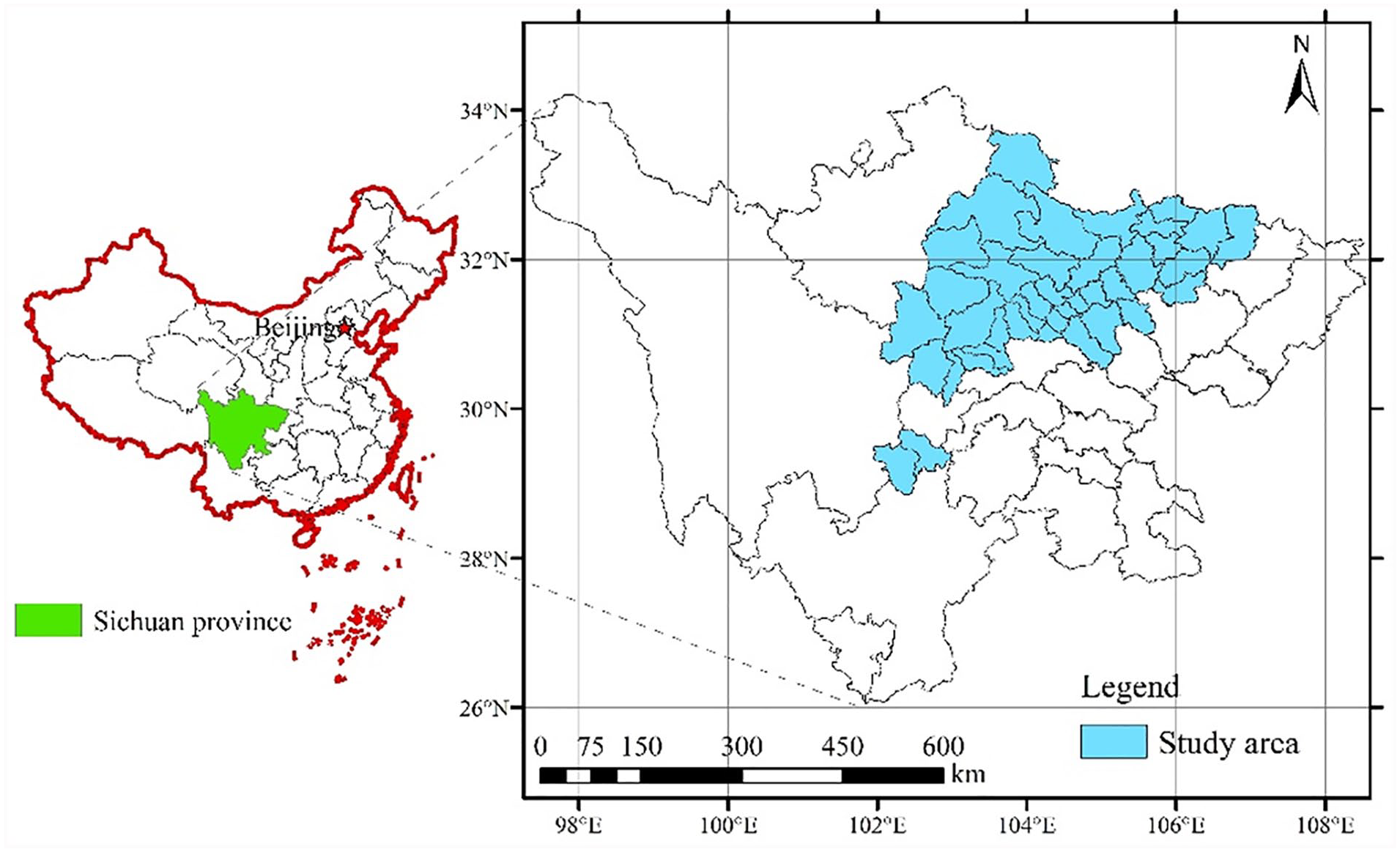
Locations of the study area.
Counterpart Assistance Policy
The GOC issued the Overall Planning for Reconstruction after the Wenchuan Earthquake on May 26, 2008, 14 days after the earthquake’s occurrence, which determined the mode of post-disaster reconstruction under state guidance, with the support of the counterpart assistance policy. On June 11, 2008, the GOC issued the Counterpart Assistance Program for Reconstruction after the Wenchuan Earthquake (hereinafter referred to as the Counterpart Assistance Program), which determined the post-disaster counterpart assistance for 20 provinces (e.g., Guangdong, Shandong, and Shanghai). According to the requirements dictated by “one province assisting one severely affected county,” counterpart assistance focused on 18 severely affected counties in Sichuan Province and some severely affected counties in Gansu Province and Shanxi Province. Counterpart assistance in response to the Wenchuan Earthquake represents a special occurrence of post-disaster reconstruction, focused mainly on the recovery of productivity, economic development, and people’s livelihoods.
According to the Counterpart Assistance Program, supporting provinces (cities) provide an annual amount of counterpart assistance no lower than 1% of their local fiscal revenue in the last year, for 3 successive years. Supporting provinces (cities) not only use the capital to rebuild the damaged infrastructure but also help update the original (possibly backward) industrial layout in the disaster area, cultivating a number of new industrial cooperations, parks, and characteristic agricultural products and processing bases. In addition, the development of the tourism industry has become a highlight of recovering disaster areas.
By March 2010, 18 supporting provinces (cities) for 18 recipient counties in Sichuan Province determined 3,136 counterpart assistance projects, which claimed an assistance amount of 75.1 billion RMB. Among them, 2,974 counterpart assistance projects were under construction and 50.2 billion RMB of assistance capital was available. Besides this, 1,864 projects have been completed and put into service. All counterpart assistance projects were essentially complete by the end of September 2010. The details for these projects are given in Figure 2.

Counterpart assistance of 18 supporting provinces (cities) for 18 recipient counties in Sichuan Province after the Wenchuan Ms 8.0 Earthquake.
Recovery Effect on Major Economic Indexes in the Disaster Area
The major economic indexes in recipient counties before and after the Wenchuan Earthquake, along with their fluctuations and trends, were intuitive indexes used to analyze economic recovery and development. In this study, the fluctuation trends of major economic indexes (e.g., real GDP and GDP growth rate per capita, industrial structure, total retail sales of consumer goods, and fiscal revenue) in the disaster area from 2005 to 2016 were analyzed, which provided a foundation for quantitatively analyzing the effect of the counterpart assistance policy.
The data take the year of the Wenchuan earthquake as the standard, selecting the county (city, district) level data before and after 2008 for the research, and finally selecting the relevant data from 2005 to 2016. The indicators include real GDP, real GDP growth rate per capita, investment in fixed assets, the proportion of the employed population, fiscal revenue and expenditure, and so on. All data were selected from the Sichuan Statistical Yearbook (2006–2017).
Changes in real GDP
The real GDP of 18 recipient counties reached 232.296 billion RMB in 2016, nearly 3 times that in 2008, indicating outstanding economic recovery. It is worth noting that the economy of scale in 18 recipient counties recovered to the level of before the Wenchuan Earthquake in 2009, which can be attributed to the quick response of the Government to infrastructure reconstruction after the earthquake. This series of policies significantly promoted economic development in the disaster area and prevented violent fluctuations in economic gross (Figure 3A).

Real GDP and industrial structure in 18 recipient counties (A), and real GDP growth rate per capita in 18 recipient counties and Sichuan Province (B) from 2005 to 2016.
Changes in industrial structure
With respect to changes in industrial structure, the proportion of primary industry in the 18 recipient counties dropped from 22.94% in 2007 to 16.08% in 2016; in other words, the proportions of secondary and tertiary industries increased significantly. The industrial structure in the 18 recipient counties was further optimized during post-disaster reconstruction (Figure 3A).
Real GDP growth rate per capita in the 18 recipient counties and Sichuan Province
The real GDP growth rate per capita in the 18 recipient counties decreased dramatically in the year of the earthquake. The growth rate decreased to −21.63%, which was 37.06% lower than before the earthquake. Affected by the earthquake, the real GDP growth rate per capita in the whole province is decreased by 4.74% in the same year. However, the real GDP growth rate per capita in the 18 recipient counties began to recover in 2009, nearing conditions before the earthquake and even exceeding them. Furthermore, the real GDP growth rate per capita in the 18 recipient counties reached as high as 126.53% in 2009, which was 48.16% higher than in 2007 (Figure 3B). Finally, the real GDP growth rate per capita in the 18 recipient counties was always higher than the average growth rate in the whole province, which could be related to the implementation of the counterpart assistance policy.
Based on the observations of major economic indexes across the 18 recipient counties, economic development within the reconstruction planning period recovered (or even exceeded) the level of economic development before the earthquake, which demonstrates the comprehensive success of economic development in the disaster area. However, these observations are only a preliminary judgment of the economic indexes in the recipient counties. Whether the changes to these economic indexes can be attributed to counterpart assistance remains to be seen. Specifically, to what extent did the counterpart assistance policy influence economic recovery in the recipient counties? The specific mechanism of effect for counterpart assistance is discussed further in the following sections.
Method
Horizontal comparison and vertical comparison are two common methods used to assess the effects of a single policy on economic growth (Zhong & Lu, 2018). The vertical comparison refers to the comparison of economic growth in the same region before and after policy implementation. However, the vertical comparison does not account for changes to economic growth in other regions. The horizontal comparison refers to the comparison of economic growth between the region with policy implementation and other regions without. Similarly, this method does not account for changes to economic growth between the region with policy implementation and other regions without.
The DID model accounts for horizontal and vertical changes and is often used to evaluate the effects of a policy or event (Deng et al., 2019). Furthermore, it is widely used in sociology and economic research. Simply put, one policy is viewed as a natural experiment and select references that are not influenced by the policy are introduced into samples to investigate the “net effects” of the policy on certain indexes. Social practice is different from natural experiments, so the DID approach may not always find an appropriate control group. Considering this article’s research objectives, a suitable control group was readily available, making the DID approach applicable in this article.
DID Model
The DID model has predominantly applied in studies through regression analysis. In this study, a regression model considering policy effects in two stages was used (Shao et al., 2017):

In this DID model,
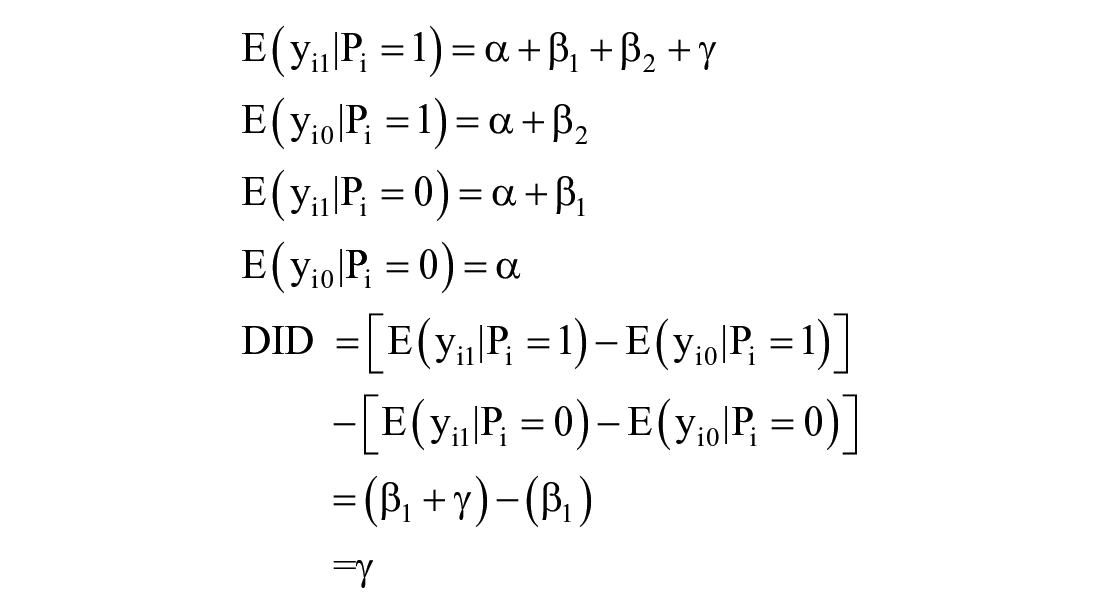
Using the regression model in two periods, the interaction term “dummy variables” in the regression analysis represents the effect of policy implementation. The policy effect under the significance of the DID model can be obtained through mixed regression based on panel data in two stages.
Setting of the DID Model
In the present study, the effects of the counterpart assistance policy in response to the Wenchuan Earthquake were analyzed based on county-level data. The implementation effect of the counterpart assistance policy and its effects on economic growth in recipient counties were assessed. It is worth noting that the parameter estimation of policy effect in the DID model has a strict premise of the parallel trend hypothesis. In other words, no effects are generated from post-disaster reconstruction policies if there is no earthquake. In this case, the average changes in economic growth are the same for the treatment and control groups. In this study, 18 severely affected counties that received counterpart assistance were used as the treatment group, while 21 severely affected counties that did not receive counterpart assistance were used as the control group. The average changes in GDP for the two groups before the Wenchuan Earthquake (2001–2007) are shown in Figure 4.
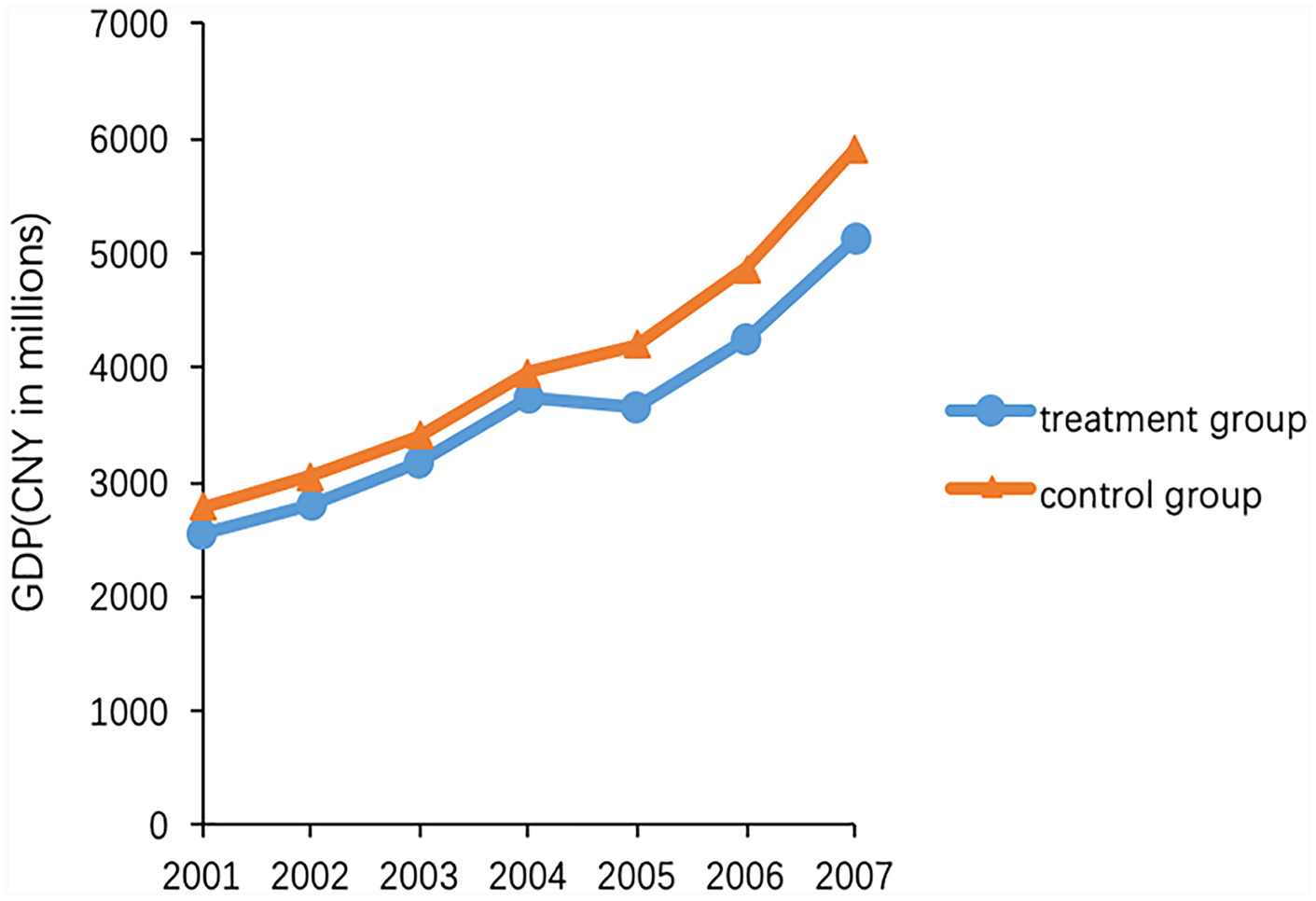
Average changes in economic growth before the earthquake in the treatment and control groups.
From Figure 4, it can be observed that the annual average GDP in both the treatment and control groups continuously increased. The temporal changes in annual average GDP for the two groups were basically parallel, indicating that 21 counties in the control group met the premise of the parallel trend hypothesis and were applicable to the DID model.
Therefore, a two-stage model was constructed, as follows:

where
Specification of Relevant Control Variables
In the DID model,
With reference to the practices of Ramcharan (2007) and Fleisher et al. (2010), the logarithm for regional real investment in fixed assets (lnasset) was used to express capital influencing factors on economic growth. Due to significant numerical fluctuations in the real investment of fixed assets, the logarithm was calculated. In this study, the real investment of fixed assets in comparable prices (2005) was used. With reference to the studies conducted by Cai et al. (2004), Ramcharan (2007), Bai et al. (2012) and Inglesi-Lotz (2016), the proportion of the employable population (labor) was used as a labor influencing factor on the economy. The proportion of the urban residential population within the total population (urban) was used as an urbanization index to measure the effects of structural factors on the economy in different regions. With reference to the studies conducted by Salinas and Aksoy (2006), Asimakopoulos and Karavias (2016), and Karagöz and Keskin (2016), the logarithm of actual fiscal expenditure (lnfiscal) was used as a policy control variable.
Simply put, control variables were selected predominantly from capital, labor, urbanization, and institutional factors, with an aim to minimize possible errors upon the use of the DID model. A statistical description of the variables is shown in Table 1.
Statistical Description of Variables.

Note. SD = standard deviation.
Measurement Results and Analyses
Stationary Test and Selection of Data and Test of the Panel Data Model
The stationary test of parameters in the DID model has to be conducted prior to the regression analysis of the panel data in order to prevent spurious regression. Compared with sequential data, panel data integrate time sequence and cross-section data, which determines the necessity of the unit root test. Data applied in this study were typical short-panel data due to the short-time dimension (T) and multiple individual dimensions (T < n). Therefore, the Harris Tzavalis (HT) test and Fisher Augmented Dickey Fuller (Fisher-ADF) test applicable to short-panel data were selected for the unit root test to be carried out on the data. The results demonstrated that the p values for the logarithm of real GDP (lngdp), GDP growth rate per capita (rgdp), the logarithm for real investment in fixed assets (lnasset), proportion of the employed population (labor), and the logarithm for real fiscal expenditure (lnfiscal) were smaller than 0.01, which decidedly rejects the original hypothesis for the unit root. The urbanization rate (urban) was also found to reject the original hypothesis with a 10% significance level, which is relatively stationary. In other words, data were stationary and could be applied to a panel regression.
The Hausman test was conducted using lngdp and rgdp as dependent variables. Results demonstrated that p values were 0.000. These two parameters firmly reject the original hypothesis (i.e., the random effect is unrelated to the explanatory variables). For this reason, the regression analysis model used in this study employs the fixed effect model rather than the random effect model (the specific test process is shown in the Supplemental Material).
Counterpart Assistance: Impact on Real GDP and the Mechanism of Impact
In this study, the real GDP was used as an index measure of economic development and as an explained variable in the regression. The OLS regression of the fixed effect was performed using Stata 14. The OLS regression results are shown in Table 2.
Regression Results for Counterpart Assistance Policy Impacts on the Real GDP.

Note. t statistics in parentheses.
p < .1. **p < .05. ***p < .01.
The regression results, using the real GDP as a dependent variable, are listed in Table 2. Model (a1) concerned the impacts, action direction, and action degree of the counterpart assistance policy on economic development in the recipient counties. Models (a2)–(a5) predominantly investigated the action mechanism of the counterpart assistance policy and its impact path on reconstruction in the recipient counties. Besides this, the differences between channels were compared. In conjunction with the economic growth theory, the investment in fixed asset, labor, urban, and fiscal expenditure were used in the DID model as control variables. The effects of these variables on the explained variables were controlled to increase the regression accuracy when determining counterpart assistance effects on economic development in the recipient counties.
From the regression results, it can be observed that R2 for all of the regression models was approximately 80%, indicating a high degree of explanation between the independent and dependent variables. The integrity of the model was significant. Moreover, the variables were relatively significant and their directions basically aligned with the expectations of the study which were to obtain reasonable results. The control variables for investment in fixed assets, urbanization, and fiscal expenditure were significantly positively correlated with GDP, indicating that these control variables had positive impacts on GDP. Looking at potential action pathways, the regional economy exhibits a positive correlation with investment in fixed assets and fiscal expenditure. However, attention must be paid to the coefficient of the interaction term (tp). The coefficient of tp reflects the implementation effect of the counterpart assistance policy and has profound policy connotations.
The interaction term (tp) between the time factor—the most important policy factor in the model (a1)—and the regional factor was significantly positive at a 1% significance level, indicating a positive impact of the counterpart assistance policy on real GDP. This result supports the notion that the counterpart assistance policy plays an important role in economic recovery in recipient counties. In this study, the mean for lngdp was 12.92 and the corresponding real GDP was calculated as e12.92 = 40839.903 billion RMB. The coefficient of tp was 0.078. This means lngdp increased to 12.998 due to the policy factor and the corresponding real GDP was e12.998 = 44152.945 billion RMB. Therefore, the GDP increased by approximately 8.11% as a result of the counterpart assistance policy. This demonstrates significant positive impacts of the counterpart assistance policy on the regional economy. Accordingly, the counterpart assistance policy, which was implemented by the Government after the Wenchuan Earthquake, significantly promoted economic recovery and development in the disaster area, achieving the expected effect.
In view of other control variables, the impact factors for investment in fixed assets, urbanization level, and fiscal expenditure on GDP were significantly positive, which fully supports the notion of the promotion effect of these control variables on economic development in the disaster area. It is worth noting that the impact of urban on real GDP was positive with a 1% significance level and the corresponding impact factor was relatively high, indicating that higher urbanization was conducive to the growth of the total real GDP. The disaster area associated with the Wenchuan Earthquake comprises predominantly mountainous terrain and has a low level of urbanization. The proportion of the urban resident population is approximately 30% of the total population. Furthermore, the migration of the rural population to cities increases resource utilization in urban areas, which may help to develop the scale effect and promote economic development.
Models (a2–a5) investigated the action mechanism of the counterpart assistance policy—that is, policy impact paths on economic development in the disaster area. The measures that China’s Government adopted to influence economic recovery in the disaster area, as well as the scientific and execution forces of reconstruction planning, were vital to the disaster area. These four models found that the counterpart assistance policy produced positive impacts on real GDP through increased investment in fixed assets, employment, urbanization level, and fiscal expenditure. The coefficient of the intersection term between the policy and labor was 0.137. Accordingly, the mean lngdp increased from 12.92 to 13.057. This result indicates that the counterpart assistance policy could significantly facilitate economic growth by increasing employment. From subsidies provided to the production recovery in the early stages following the disaster, the counterpart assistance policy was not only beneficial to the stabilization of victims’ livelihoods through increases in employment but was also pivotal to economic recovery and long-term development in the disaster area. Notably, the impact factor of the counterpart assistance policy on the real GDP of regions through improvements to urbanization level reached 0.599, which increased the mean of lngdp from 12.92 to 13.519, with the corresponding real GDP calculated as e13.519 = 74340.778 billion RMB. This demonstrates that improvements to the urbanization level significantly promoted economic growth. However, this could not be achieved without attention paid to the recipient counties in a reasonable urban planning system. Although the Wenchuan Earthquake caused tremendous economic losses in the disaster area, the post-disaster reconstruction carried with it new development opportunities. During the implementation of the counterpart assistance policy, assisting parties positively contributed to post-disaster urban planning and believed that different regional spaces should assume different functions. Local governments paid more attention to a reasonable infrastructure layout, environmental administration, and ecological recovery. A more reasonable layout of urban space was beneficial for the migration of the rural population to urban areas, which also promoted local economic development.
Counterpart Assistance: The Impact on Economic Growth per Capita and the Mechanism of Impact
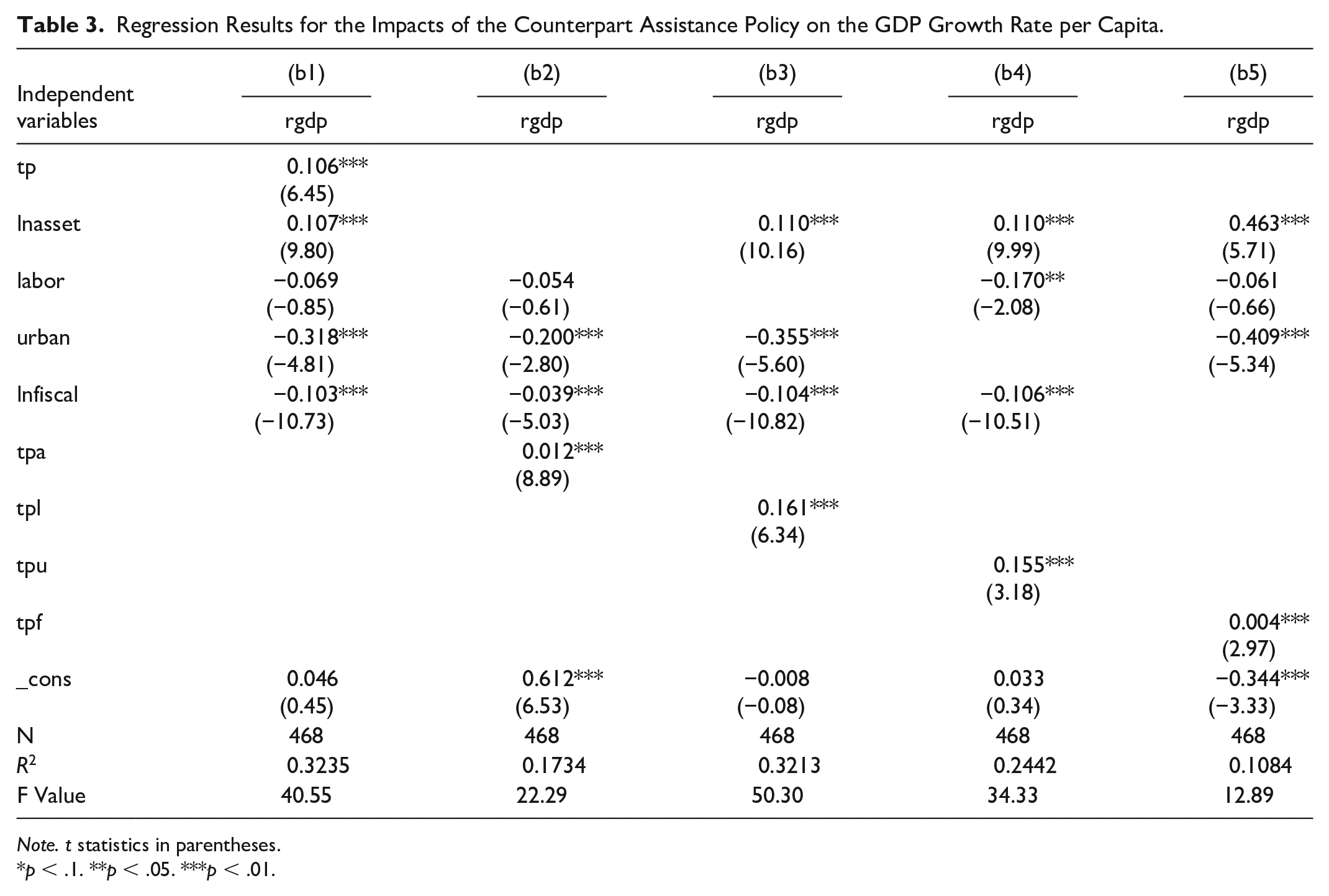
To further investigate the impacts of the counterpart assistance policy on economic growth in the disaster area, the GDP growth rate per capita was used as the explained variable for regression. Stata 14 was used for the OLS regression of the fixed effect. The OLS regression results are given in Table 3.
Regression Results for the Impacts of the Counterpart Assistance Policy on the GDP Growth Rate per Capita.
Note. t statistics in parentheses.
p < .1. **p < .05. ***p < .01.
The regression results for the use of the GDP growth rate per capita as a dependent variable are shown in Table 3. Model (b1) predominantly covers the impacts of the dummy variable of the policy factor on post-disaster economic growth in the recipient counties. Models (b2)–(b5) covered the impacts of specific measures on post-disaster economic development by combining the policy factor and specific measures; this was then used to evaluate the effects of the different measures. Control variables, including the investment in fixed assets, labor, urbanization, and fiscal expenditure, were added into the regression model in order to reduce the error associated with the models.
From the results of the above regression analysis, it can be seen that the regression coefficients of most variables passed testing with a 1% significance level, indicating the significant impact of the independent variables on the dependent variables. The p value corresponding to the F value was 0.000, indicating the models’ inherent integrity.
Model (b1) demonstrated that the dummy variable of the policy factor (tp) produced significantly positive impacts on the GDP growth rate per capita at the 1% significance level, which upholds the benefit of the counterpart assistance policy to the GDP growth rate per capita. The regression coefficient of the policy factor was 0.106. Given the same conditions, the GDP growth rate per capita in recipient counties was 0.106% higher than in the control group which demonstrates the important positive impacts of the counterpart assistance policy on economic recovery in the disaster area. Accordingly, the implementation of the counterpart assistance policy may accelerate economic recovery and development in the recipient counties. Viewed with the other control variables, investment in fixed assets (lnasset) significantly positively affected the GDP growth rate per capita. Therefore, increasing investment in fixed assets could increase the GDP growth rate per capita. Specifically, increased investment in fixed assets could repair damaged facilities, refine public amenities such as transport and medical treatment, offer greater employment opportunities, and facilitate economic recovery in the disaster area. In the longer term, post-disaster investment in fixed assets by the assisting parties was actually an opportunity to optimize the spatial utilization structure. Moreover, investment in fixed assets was found to be conducive to sound economic development and may also create production and service ability in the future. It is important to note that the impacts of urban and lnfiscal on the GDP growth rate per capita were significantly negative. Such negative impacts may be related to the “hysteresis effect.” Moreover, the expanding fiscal expenditure may crowd out private capital, which could reduce the efficiency of capital usage. Therefore, increased fiscal expenditure may lead to negative impacts on the GDP growth rate per capita.
It can be seen from Models (b2–b5) that the impact factor of the interaction term between the counterpart assistance policy and specific measures on the real GDP growth rate per capita was significantly positive. This supports the notion that the impact of counterpart assistance policy on the real GDP growth rate per capita could be strengthened with increases in investment in fixed assets, employment rate, urbanization level, and fiscal expenditure. Specifically, labor demonstrated the most significant positive impact. Given the same conditions, the real GDP growth rate per capita increased by 0.161 units by increasing 1% of labor. This revealed that increasing employment facilitated economic recovery and the real GDP growth rate per capita in recipient counties. Through the counterpart assistance policy, local governments offered greater employment opportunities to survivors in the disaster area, which was conducive to their quality of life and facilitated local economic recovery and development. The impact factors of investment in fixed assets, urbanization, and fiscal expenditure on the real GDP growth rate per capita were 0.0116, 0.155, and 0.0038, respectively. These factors also significantly facilitated economic growth in the recipient counties.
Comprehensive Performance of the Counterpart Assistance Policy
Other economic indexes of the treatment and control groups were analyzed using the DID model principle. Changes in the growth rate of industrial structure (sum of the proportions of secondary and tertiary industries in the total GDP), the total retail sales of consumer goods, and fiscal revenue were calculated (Table 4).
Estimates Results of Difference-in-Differences.

Note. The above variables are all mean growth rates calculated via: (1) the ratio of the current value minus the value in the previous period; and (2) the sum of the growth rate for all years divided by the number of years. Furthermore, △2−△1 refers to the DID value.
From Table 4, it can be seen that the annual average growth rates of industrial infrastructure, total retail sales of consumer goods, and fiscal revenue in the 18 recipient counties were positive during the periods 2006~2008 and 2009~2016. Moreover, the relevant growth rates were significantly higher than those in the control group. Accordingly, the 18 recipient counties achieved rapid economic recovery and development. Importantly, the annual average growth rate of the total retail sales of consumer goods in the control group was 15.81% during 2006~2008, while the annual average growth rate of the total retail sales of consumer goods in the treatment group was negative. This is because the growth rate of the total retail sales of consumer goods in 2008 decreased to −20.43% due to the Wenchuan Earthquake, which decreased the annual average growth rate to a negative value within 3 years. The economy in the 18 recipient counties recovered during 2009–2016. The annual average growth rate of the total retail sales of consumer goods reached nearly 19%, which is higher than in the control group for the same period. In conclusion, the annual average growth rate of the total retail sales of consumer goods in the treatment group was significantly higher than in the control group. Moreover, the treatment group demonstrated optimization of industrial infrastructure, increases in fiscal revenue, and sound economic recovery.
In summary, the 18 recipient counties achieved higher growth rates in industrial infrastructure, total retail sales of consumer goods, and fiscal revenue compared with the treatment group in the 10 years following the Wenchuan Earthquake. These 18 recipient counties have undergone fast economic recovery and development which supports expectations associated with the counterpart assistance policy to generate positive impacts.
Discussion
The GOC formulated policies related to counterpart assistance for areas in China affected by the Wenchuan Earthquake and devised the principle of “one province assisting one severely affected county.” As a measure in the context of China, the counterpart assistance policy accelerated post-disaster economic recovery. Of course, further reflections on how to develop the maximum effect of counterpart assistance policy are needed. For example, the GOC can refine the institutional incentive behind counterpart assistance and connect counterpart assistance policy with performance assessment. Consequently, the counterpart assistance was changed from political mobilization to a policy incentive that could stimulate the enthusiasm of all parties involved. In addition, the benefit of the balance between the assistance supplier and receiver should be considered, such as establishing a long-term cooperative relationship within labor and facilitating industrial interaction between two parties. This was conducive to the transfer of one-party benefits to a win-win outcome.
Post-disaster reconstruction is a complex systematic project that involves economic, social, and cultural elements. This study only analyzes the effect of economic recovery, showing the effectiveness of the counterpart assistance policy. Returning to the essence of economics, the promotion of a policy for economic recovery remains inseparable from several factors of economic growth: capital investment, labor force, technological progress, and so on. An effective post-disaster reconstruction policy is based on the scientific distribution of these economic input factors. The formulation of new policy needs to start from the natural environment and disaster situation and comprehensively consider various factors. Future studies could start from multiple other perspectives to examine the effect of post-disaster reconstruction, not just the level of economic growth. In addition, future studies should try to include more explanatory variables to produce a better model fit, to further investigate the mechanism of the effect of post-disaster reconstruction policy.
Conclusion
With a lack of consensus in the literature around natural disasters and economic growth, this study first attempted to provide an outline of the relationship between the two. The principal influencing factor—the policy—is acknowledged. Second, the effects of the counterpart assistance policy were evaluated based on the case of the Wenchuan Earthquake. Furthermore, a qualitative description of the recovery degree of select major economic indexes in recipient counties was made. Subsequently, a quantitative analysis of the impact and impact pathway of the counterpart assistance policy on economic growth in recipient counties was conducted using a DID model. Simultaneously, the major economic indexes in the recipient counties were evaluated using the DID approach. A control group meeting a strict hypothesis premise should be selected when using the DID model. In this study, 39 severely affected counties were chosen as research objects and divided into a treatment group (18 recipient counties) and a control group (non-recipient counties). Both groups met the same variation trend hypothesis and were applicable in the DID model; however, for other applications, the control group used in the DID model must be selected very carefully.
The counterpart assistance policy achieved outstanding results in the study period since the occurrence of the Wenchuan Earthquake in 2008. The policy not only generated significantly positive effects on the real GDP growth rate and GDP growth rate per capita in the recipient counties but also promoted economic recovery, demonstrated by increases in fiscal revenue and total retail sales of consumer goods. Therefore, the implementation of the counterpart assistance policy should be considered an important first priority when the threat of natural disaster approaches. The action mechanism of the counterpart assistance policy is evaluated and discussed using the DID model. This analysis revealed that the counterpart assistance policy is capable of generating significantly positive (indirect) effects on local economies through increases in terms of investment in fixed assets, employment rates, urbanization level, and fiscal expenditure. Among these, the urbanization level is the principal influencing factor behind the real GDP, showing an impact factor of 0.599. The proportion of the employed population is the principal influencing factor behind the GDP growth rate per capita, with an impact factor of 0.161. These impact mechanisms provide valuable insight into the formulation of reconstruction policies following the occurrence of natural disasters.
Reconstruction policy toward disasters should be formulated in a dispassionate manner, starting with a careful look at the relevant empirical facts concerning the range of possible catastrophes. Earthquakes, hurricanes, and unexpected global pandemic crises will always occur, but the costs they incur, both directly and in response, can be reduced with effective reconstruction policies. Thus, governments should design policies that search for the best consequences after disasters. Aside from implementing policies, governments should pay considerable attention to the evaluation of a reconstruction policy. The simple descriptive statistical analysis employed in the existing studies is insufficient to comprehensively and scientifically evaluate the effectiveness of policy implementation. In this study, the economic effects associated with the counterpart assistance policy after the Wenchuan Earthquake were evaluated using the DID model. Similarly, other aspects of the reconstruction policy, such as the satisfaction of residents and social impact, were evaluated using the DID model. In this way, post-disaster reconstruction policy can be evaluated and adjusted more thoroughly (Figure 5).

Discussions on perfecting counterpart assistance.
Supplemental Material
sj-pdf-1-sgo-10.1177_21582440211033573 – Supplemental material for What Promotes Post-Earthquake Economic Recovery: The Role of Counterpart Assistance Policy After the Wenchuan Ms 8.0 Earthquake, China
Supplemental material, sj-pdf-1-sgo-10.1177_21582440211033573 for What Promotes Post-Earthquake Economic Recovery: The Role of Counterpart Assistance Policy After the Wenchuan Ms 8.0 Earthquake, China by Li Peng, Qianyu Li, Wei Deng and Ying Liu in SAGE Open
Footnotes
Declaration of Conflicting Interests
The author(s) declared no potential conflicts of interest with respect to the research, authorship, and/or publication of this article.
Funding
The author(s) disclosed receipt of the following financial support for the research, authorship, and/or publication of this article: This research was supported by the National Natural Science Foundation of China (Grant Number 41771194; Grant Number 42071222).
Ethics
This study does not involve the ethical issues of animal and human studies.

Supplemental Material
Supplemental material for this article is available online.
References
Supplementary Material
Please find the following supplemental material available below.
For Open Access articles published under a Creative Commons License, all supplemental material carries the same license as the article it is associated with.
For non-Open Access articles published, all supplemental material carries a non-exclusive license, and permission requests for re-use of supplemental material or any part of supplemental material shall be sent directly to the copyright owner as specified in the copyright notice associated with the article.
