




Abstract
Various programs have been developed in different countries to encourage physical activity (PA) of older adults; however, older adults themselves have rarely been included in the development of such interventions. This article explores the meanings that people aged 50 years and above attribute to PA and their own engagement in PA, in the framework of a social-ecological model (SEM). In particular, we focus on the motivations and barriers they identified to their PA. We draw on focus group interviews with 44 older adults between the ages of 50 and 80 years, based in Estonia. Our findings suggest that it is important to use an expanded definition of PA (in older age), to include the diverse and perhaps unexpected ways in which people use their bodies and keep fit in different contexts. Based on our findings, we offer developments to existing versions of the SEM, highlighting the interconnectedness of all of its levels and propose ways to encourage PA of older adults.
Introduction
Population aging is a global phenomenon and never before has the proportion of older adults been as high as it is today. The number of people aged 65 years or older worldwide is projected to grow to 21.5% of the global population in 2050 (World Health Organization [WHO], 2015). Older adults make up 19.4% of the population of the European Union (Eurostat, 2019).
Being physically active has advantages across the lifespan. For older adults, it positively impacts quality of life, mental and physical health, helping to prevent or alleviate a number of health issues, such as depression, obesity, premature death, and age-related diseases, including coronary heart disease, hypertension, stroke, Type 2 diabetes, colon cancer, and breast cancer (Blair & Brodney, 1999; Department of Health, 2009; Huai et al., 2013; Musich et al., 2017; Voelcker-Rehage et al., 2016; Warburton et al., 2006).
While PA, exercise, and physical fitness are closely related concepts, each has a specific meaning. PA is defined as any bodily movement produced by skeletal muscles that require an energy expenditure (Caspersen et al., 1985). PA includes muscle activity during exercise, sports, and physical activities performed as part of daily living, occupation, leisure, or active transportation (Garber et al., 2011). Exercise is a subcategory of PA that is planned, structured, repetitive, and is focused on improvement or maintenance of one or more components of physical fitness (Caspersen et al., 1985; Dasso, 2019; WHO, 2018). Physical fitness refers to a set of health and performance-related attributes, that include cardiorespiratory endurance, muscular fitness and strength, body composition, and neuromotor fitness (Caspersen et al., 1985; Garber et al., 2011).
Promoting exercise among the older population is a core public health issue (Langhammer et al., 2018). To achieve health benefits, adults aged 65 years and older should get at least 150 min of moderate-intensity aerobic activity per week, 75 min of vigorous aerobic activity per week, or a combination of both, in bouts of 10 min and more (Tremblay et al., 2011; WHO, 2010). In addition, muscle-strengthening activities should be done two or more days a week (WHO, 2018), and it is recommended to be physically active for 6 months or longer to improve balance and prevent falls (Sherrington et al., 2017).
Despite these well-known mental, physical, and cognitive health benefits, studies conducted in EU countries have shown a decline in PA in later life. According to the latest Eurobarometer physical activity survey, 71% people aged 55 years and older did no vigorous PA and 56% had not engaged in moderate PA in the past 7 days (TNS Opinion & Social, 2018). Since 1980s, there has been increasing interest in developing ecological models and applying them in research and health promotion practices (Cochrane & Davey, 2008; Golden & Earp, 2012; Lang & Rayner, 2012; Levin Martin et al., 2009; McLaren & Hawe, 2005; Register-Mihalik et al., 2017; Sallis et al., 2006, 2008; Stokols, 1992). Not only does the social-ecological model (SEM) recognize the importance of psychosocial factors in behavior change, it also pays attention to understanding the importance of the dynamic person–environment relations, recognizing the complexity of human life (McLaren & Hawe, 2005). SEM involves five interconnected levels: individual, intrapersonal, institutional, community, and policy (McLeroy et al., 1988).
This article focuses on understanding experiences of PA of older adults, aged 50 years and above, conceptualized in the framework of SEM. We focus on meanings that physically more and less active older adults attribute to PA and how they make sense of their own engagement in PA. We pay particular attention to the barriers and motivators they identify to their involvement in PA. We also seek to contribute to the development of the SEM, drawing on these experiences and perspectives.
This article focuses on the following research questions:
Conceptual Framework: Social-Ecological Perspectives on Public Health and PA of Older Adults
Ecological models of health behavior are aimed at developing policy interventions at several levels (Sallis et al., 2008). The SEM, first described by Bronfenbrenner (1977), was applied by McLeroy et al. (1988) in public health and health promotion. McLeroy et al. (1988) stated that health behavior is influenced at five levels: individual (knowledge, attitudes, beliefs, self-efficacy, behavior), interpersonal (families, friends, social networks), institutional (services, formal, and informal rules), community (local and state laws and policies), and public policy (local and state laws and policies). While McLeroy et al. (1988) did not specify environmental factors in their model, these factors have been an essential part of ecological models in health promotion in later approaches and indicate people’s interaction with their physical and sociocultural environment (Sallis et al., 1998, 2006; Stokols, 1992).
Different levels of the model influence and support each other (Golden & Earp, 2012). The SEM can assist in the development of effective interventions (McLaren & Hawe, 2005). Multilevel interventions are more effective in changing behavior when members of target groups are motivated and have knowledge to make healthy choices (Sallis et al., 2008). While several multilevel programs exist in different countries (e.g., the United States, the Netherlands), aimed at increasing PA of older adults, they are commonly limited to interventions on two to three levels, as noted by Kok et al. (2008).
In their review of systematic reviews, Zubala et al. (2017) concluded that public health interventions aimed at increasing the PA of older adults have all too frequently focused on psychological and cognitive theories, have used a top-down approach instead of a whole-system approach, and have not involved older adults themselves in developing public health programs. Boulton et al. (2017) have noted that there are only four studies (Hickey et al., 1996; Hooker et al., 2011; Reger-Nash et al., 2003; Sullivan-Marx et al., 2011), where 50+ people had a prominent role in designing and developing interventions to increase PA among older adults. All these studies took place in the United States, where older adults were involved in consultation, cooperation, colearning, and collaboration. Positive results were reported in levels of PA and high satisfaction with the developed interventions. Boulton et al. (2020) conclude that policy makers and practitioners should provide PA programs of for older adults, aimed specifically for their age groups and are easy to access. Boulton et al.’s (2017) is the only study that has included older adults in developing PA programs for their age groups based specifically on the SEM model. As a result of a focus group study conducted in the United Kingdom, the authors found that a dynamic relationship of different effects on all five SEM levels helps to develop interventions that take into account optimal conditions for promoting PA among older adults.
In making sense of experiences of PA of older adults in Estonia, we take as our starting point the SEM originally described by McLeroy et al. (1988).
Contextual Background: PA and Older Adults in Estonia
The health care system of the Soviet Union, which Estonia was a part of until 1991, mainly limited its public health policy to basic interventions such as infection treatment, while the prevention of noncommunicable diseases was not undertaken (McKee, 2007). Public health care services in countries of the former Soviet Union are still mainly focused on hygiene, sanitation, and communicable disease control, rather than health promotion and intersectoral action for health. The Baltic states (Estonia, Latvia, and Lithuania) stand out in this regard, having benefited from significant financial and technological aid to develop health promotion since they joined the EU in 2004 (Rechel et al., 2014).
In Estonia, cardiovascular diseases (CVDs) are the main cause of early disability and death (before 65 years of age). Compared with Estonia’s closest neighbors Latvia and Lithuania and other former republics of the Soviet Union, mortality attributable to CVD is lower in Estonia. However, in contrast to other European countries, the mortality rate for CVD is nearly twice as high or higher (Townsend et al., 2015). Therefore, strategies influencing CVD risk factors, that is, lifestyle, have an essential role in improving health outcomes. This requires improvement of health behavior in Estonia, including the promotion of PA.
Older adults who participated in this study are based in Estonia, which regained independence from the Soviet Union in 1991. Most research participants were born and have lived a significant proportion of their lives under the Soviet regime, which shapes their relationship to PA. Characteristically to totalitarian regimes, participation in sports was promoted as part of an ideological agenda, to demonstrate to the rest of the world the economic, social, and educational well-being in the Soviet Union. Practicing sports was almost mandatory for adults. Exercise breaks were organized for employees at workplaces and they were required to participate in sports-oriented propaganda events. The collapse of the Soviet Union was followed by the breakdown of the sports management system in Estonia in the early 1990s. The system was gradually restored through reorganization into sports clubs. However, while the club-based system has included the majority of children and youths in regular sporting activities, the same cannot be said about adults.
Although national surveys (TNS EMOR, 2013, 2015) conducted in Estonia show a positive trend of leisure-time PA among older adults, PA levels are still rather low. Being in the age group 50+ increased the odds for physical inactivity 2.07 to 4.74 times compared with the youngest age group (15–24 years). The results of the latest National Physical Activity Survey in Estonia indicate that more than one half (55%) of adults older than 50 years do not exercise or play sport regularly (less once a week or not at all; Turu-Uuringute AS, 2020). The main obstacles behind not exercising or playing a sport for those belonging to the 50+ age group were fatigue (40%), feeling unwell (35%), lack of interest or motivation (25%), and the spread of the coronavirus (16%). The main factors that contribute to regular exercise or playing sports for this age group were support of family or peers (24%), employer’s support in covering part of the sporting expenses (18%), and the presence of an instructor (15%). A total of 53% of 50-year-olds or older individuals pointed out that they would like to exercise significantly more or somewhat more than they do now and 89% replied that they had not taken part in fitness events as participants during the past 12 months.
Research Design
This research is located in a social constructionist epistemology, focusing on how older adults make sense of PA in their lives. We used qualitative methodology. Our approach was largely inductive, centering on what PA means for the research participants, but guided by the SEM as a theoretical framework, which led us to structure our analysis and findings according to the levels provided by the model.
Sampling and Data Collection
Data were collected via nine semi-structured focus group interviews (in total, 44 participants) in 2018, with people aged 50+ years and based in four major cities in Estonia: Tallinn, Tartu, Haapsalu, and Narva. The participants were divided into nine focus groups based on their self-reported level of exercise: As a basis for this classification, we asked all potential research participants to indicate their level of exercise per week (by this, we meant purposeful exercise/playing sports, not activities such as doing housework, gardening). We classified those who reported their level of exercise as above 150 min/week as exercising (five focus groups) and those below it as not exercising/minimally exercising (four focus groups; see Table 1). Focus groups consisted of four to six participants. All focus groups, except two in the largest city Tallinn, were mixed-gender. The purpose of single-gender focus groups was to facilitate sharing gendered experiences and meanings related to PA in older age, as some of these (e.g., issues related to the body) might be more comfortable to discuss in single-gender settings. The gender aspect of PA in older age was of interest to the researchers and was covered as a topic in the interviews. Due to space restrictions, we were not able to discuss in this article how PA is gendered in older age.
Overview of the Sample (N = 44).

The interviews explored what PA means for older adults and inquired about their personal experience with exercise more specifically and PA more broadly in the present and in the past. In addition, participants who classified themselves as exercising less than 150 min/week were asked about factors that hinder them from exercising (more). Those respondents who exercise more than 150 min/week were inquired to describe what keeps them active. Both groups were asked to propose interventions that would encourage older people to be more active. Interviewees were free to add additional ideas about PA, beyond the interview questions. The duration of the interviews was between 1 hr 15 min and 2 hr, and the interviews were recorded on a voice recorder, with the informed consent of the participants. According to the ethics requirements of Tallinn University that the authors are affiliated with, sociological qualitative research involving capable adults does not require ethics committee approval. We follow the general research ethics principles provided by the Code of Ethics of the International Sociological Association (2001).
Participants
Our study focused on older adults. In existing research, the notion of an “older adult” has been defined somewhat differently. The term has been used to refer to people older than 50 years, as well as those aged 65 years and older. We rely on previous studies (Meyer et al., 2005; van Stralen et al., 2009; Watson et al., 2016) which have also taken age 50 years as the starting point of older adulthood. Because qualitative research focusing on older adults’ PA has not been conducted in Estonia before, we aimed to map the experiences of a broader age group of adults, to facilitate future research focusing on a particular age group more narrowly.
To find participants, Author 1 made a post on his Facebook wall where he described the study and invited people aged 50 years and older to take part in it. It was described in the post that people living in Estonia, aged 50 years and older, regardless of their level of exercise, were welcome to participate. The post was shared 270 times suggesting that the information was widely shared (we acknowledge the limitations of recruiting research participants through social media—this strategy might have prevented us from reaching older people who do not use social media). In addition, information about the study was also circulated through regional sports unions and local Rotary clubs. From all the people who showed interest in participating, 44 were randomly selected and invited to interviews (Table 1). We opted for this sampling strategy because the number of people interested in participating in the study (in total, 85 signed up—including 58 women and 27 men) exceeded the number of interviews planned for the study. The selection of participants is representative of those who signed up to participate, in terms of gender and self-reported levels of exercise.
Data Analysis
Audio recordings were transcribed verbatim, and Atlas.ti 8 software (Atlas.ti Scientific Software Development GmbH, Berlin, Germany) was used for data analysis and coding.
As a method of analysis, we used thematic analysis (inspired by Braun & Clarke, 2006). Interview transcripts were divided between the two authors for coding, following jointly established coding principles. We relied on investigator triangulation (Denzin, 2006) as our main approach to help increase the validity of our findings and performed open inductive coding of all interviews in Atlas.ti, followed by a more focused coding, guided by the levels of SEM. Subsequently, working together, we grouped all codes into thematic groups and merged our codes, guided by our research questions and SEM as our conceptual framework.
Main Findings: Developing an SEM for PA of Older Adults
We present our findings according to five levels of the SEM: individual, interpersonal, institutional, community, and policy. The discussion under each level is presented according to into the most relevant themes that emerged from the interviews.
Individual Level
Conceptualizations of PA
Research participants understood being physically active in two main ways (Figure 1):
Regular training and workouts with the purpose of working out; doing a particular sport regularly.
Certain activities in everyday life and work provide adequate physical activity with no need for additional workouts.
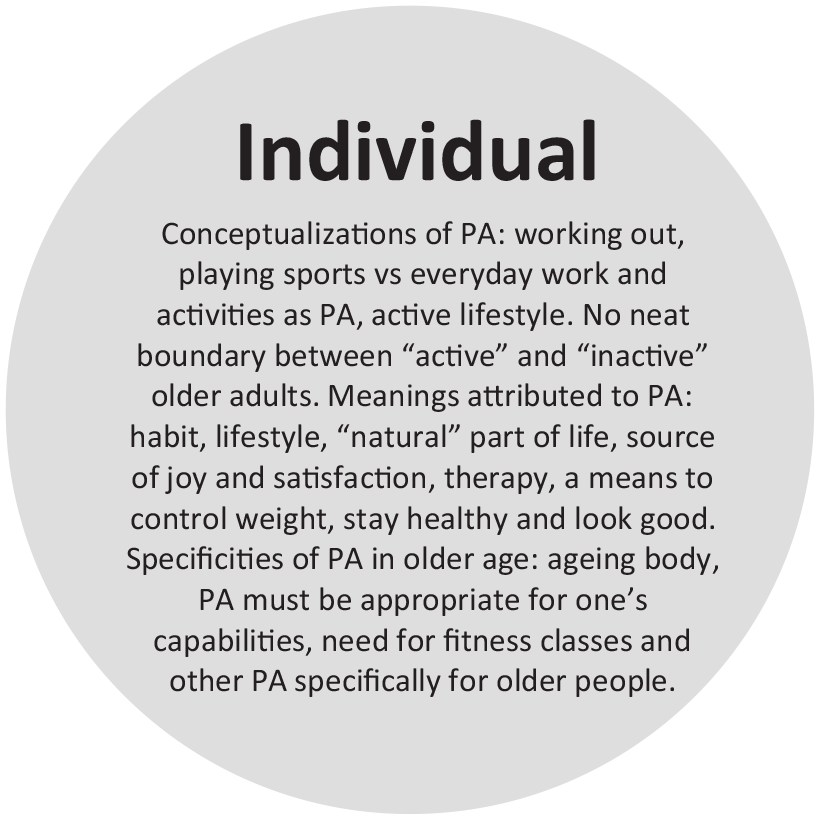
An individual level.
These conceptualizations reflected research participants’ own relationship to PA. While we initially compiled the focus groups according to the participants’ self-reported level of exercise and labeled them as “physically active” and “physically less active/inactive,” our analysis of the interview material suggests that such a neat division cannot easily be made.
Particularly those who trained regularly and actively pursued different sports spoke of exercise as an essential part of their lives. Most in this group had been doing sports their entire lives and continued this in their older age. Among them were a few former professional athletes, former and current sports instructors, and competitive senior athletes. These experiences and affiliations help to understand the importance placed on PA and exercise in the lives of these participants. The meanings attributed to PA also illuminate research participants’ motivations behind exercise.
Being physically active was talked about as a habit or lifestyle, a “natural” part of life: You’ll develop a habit, a need. For example, the need to run. You’ll feel good. (female, 52 years)
Being physically active was associated with emotions such as joy and satisfaction as well as with pleasant physical sensations that sports brings: For me, doing sports or moving does not mean a solemn commitment, but just a way to enjoy yourself. (female, 65 years)
Exercising was seen a form of therapy, for both the body and the mind: For example, rowing is pure therapy for me. I used to work for eight hours and this helped me to totally clear me head. (female, 54 years)
Negative consequences of even short breaks from exercising were highlighted: I feel like if I haven’t done anything [physical] for a week for instance, then I feel kind of unwell and I become anxious. (male, 62 years)
Although typically less explicitly articulated, motivations related to aging and particularly health in older age were also brought up: It’s related to health. It’s like, how do you say it, an advance. Now, at the age of 50 I work out, so that I could also do it at the age of 60 and 70. My principle is to deal with your health for health’s sake. I don’t want to kill myself. I also want to be able to be active in 10 and 20 years, with my knee joints and everything. There’s nothing wrong with me now. According to the latest test, I am physically 35 years old. But I also want to feel good in 20 years. (male, 50 years)
Research participants conceptualized PA in diverse ways. Most of those who did not necessarily (regularly) work out or engage in sports did not see themselves as inactive people, as they described their everyday lives and activities as providing them with adequate PA. The rejection of the label of a “physically inactive” person is not surprising, given that this is a stigmatized identity that few want to assume. As perhaps a way to challenge the stigma around this label, research participants challenged the idea that PA should always be equated with participation in particular sports or involve regular workouts. Instead, they advocated the idea that being physically active means living an active life more generally and being immersed in various everyday activities that involve moving one’s body: I also think that in our age, physical activity is a kind of lifestyle: walking the dog, taking walks with your family, grandchildren, riding a bike and so on. It doesn’t have to mean going to the gym, sitting there and working out. It’s my way of living that I move every day. (female, 52 years)
Research participants—both those who regularly pursued sports as well as those who did not—emphasized the importance of various kinds of (regular) everyday activities that should count as important sources of PA activity and fitness for older people (commuting to work, maintaining the household and garden, dancing, traveling, walking the dog, etc.). In addition, the self-perceptions of the research participants also challenge this binary division. Very few participants, even the least active ones, compared with others, assumed the self-image of an “inactive” person.
Body weight and diet
The link between exercise and body weight was a prominent theme in the interviews. According to the research participants, regular exercise helps to control weight and is beneficial for health and physical appearance: If you ask me what motivates me then it’s the great feeling when I come from a run, have showered, and the knowledge that I did it. But seriously, yeah, it’s the weight and generally just the looks, too. And I want to live long. Really simple reasons. (female, 50 years)
Linked to this, the topic of nutrition was also raised in the focus groups. Diet is obviously important for achieving the desired body weight and appearance, but it should also be combined with PA: Diet is the basis of it all, but only by changing your diet, even if you lose weight, you still won’t improve your physical condition. (female, 61 years)
“Everything starts from the childhood”: The role of childhood experiences in becoming physically (in)active in later life
Existing SEMs have primarily focused on people’s motivation to become and stay physically active in their current lives and circumstances. Our findings suggest the importance of considering the entire life course and particularly the role of PA in childhood and youth in being and staying physically (in)active in older age.
Without being specifically asked about their childhood and youth, our research participants provided narrative accounts of how they became a physically (in)active people, typically referring back to their childhood and youth. Reasons why one is physically (in)active today were located in these earlier experiences: Because I lived so close to the [home district/local] park, it was since my childhood the place where . . . At that time, there was only one car per hour. And then we could just go to the park, it was something like 300 meters from us. So, my main sports began from that park. (male, 50 years)
Most of such narratives were produced by people who exercised actively in older age. Our respondents claimed that it was almost inevitable for one to be doing some kind of sport in their childhood. According to them, doing sports was if not compulsory in the Soviet era (for most of our participants, this would have been between the 1960s and 1980s) then certainly a strong social norm.
The role of the institutional environment of this time, particularly schools and sports clubs, was seen as significant in immersing them in physical activity and cultivating this habit for life: I have participated in sports since childhood. Mostly I started with basketball, plus some other things. They ran me around everywhere. I think I competed for my school in all sport. They always pushed me to compete. First it was basketball and then horse riding. Riding is like a contagious disease that you cannot cure. So, I do horse-riding to this day, have done it now more than 40 years. (female, 52 years)
The role of parents, coaches, and physical education teachers was mentioned as those who inspired or boosted their sports habit: It looks like I am one of those lucky people who had a very charismatic physical education teacher. And in this small rural school our music and art teachers happened to be not so charismatic. So, I guess I got my interest in sports from there, or I could say, got infected with a sports “bug.” (female, 50 years)
The participants compared their childhood in the Soviet era with opportunities today. It was claimed that at that time, children did not have many choices regarding how to spend their time. This was seen to have contributed to many taking up sports: It’s difficult to compare [today] with the Soviet times, because back then, nobody had anything to do. You were bored. You could choose between smoking or playing football with someone, right. Of course, most people did both. (male, 64 years)
Also, those who did not engage in exercise during the time of the interviews pointed to particular experiences in earlier stages of their lives which prevented them from forming a habit of exercise: It was at the end of my preschool when my mum took me by hand to the swim class in Aia street [one of the few swimming pools in Tallinn in the Soviet era]. The instructor gave me a look of contempt and said: “We are not taking you.” Well, I was a somewhat bigger child. And there went my career in sport. Physical education class was a torture for me. I had spectacles at that time, I was strongly short-sighted, which got worse. At the time, it was thought that a physical effort is not good for me. I didn’t do anything. (female, 53 years)
In some cases, current (self-assessed) good health was associated with intense PA in childhood and youth, even for those participants who were not physically active at the time of conducting the interview: The last time I played sports was in 1969 and this was an intense physical effort. I think that I’m still more or less alive because of this foundation that I got then. It was good. (male, 64 years)
Research participants who had been exposed to sports in their childhood believed that cultivating PA in people should be done in childhood and within families. Several participants emphasized that parents and grandparents should encourage their children and grandchildren to do sports, respectively.
While these narratives of childhood and youth illustrate how physically active older selves were formed, they at the same time indicate the importance of factors beyond the individual level, such as the institutional and community levels, and how individual experience is profoundly shaped by these settings.
Specificities of PA in older age
The life course perspective also helps to illuminate changes to people’s PA as they become older and to shed light on how people understand these transformations.
Overall, research participants who had been physically active previously continued to be active also in older age. However, intensity and nature of physical activity changed for many as they became older. Several participants referred to physical limitations related to aging bodies: The ageing of the body [frightens me]. I know it very well. I already hide it in such a way that I do not participate 100% in [group] workouts [. . .] I cannot keep up with these 18-year-olds in the fitness class. I feel like I’m going to vomit, like after doing aerobics for eight hours. (female, 50 years)
The importance of choosing PA and exercise that are “appropriate” for one’s age and health was emphasized: You have to do what you are capable of doing, this gives you joy. If you start doing what you are not capable of, it will start to distress you and you won’t get joy from it. (male, 73 years)
Overall, the research participants did not see older age as an insurmountable obstacle that prevents people from being physically active: It’s in your own head. If the person wants to [be physically active] then they’ll always find an opportunity for it. (female, 73 years)
Whether one was physically (more) active or less active/inactive had more to do with whether one had cultivated the habit of being physically active, or in other words, become a physically active person/assumed this identity, in the course of one’s lifetime.
Interpersonal Level
The role of similarly aged peers
Research participants emphasized the importance of the social aspect in keeping fit (Figure 2). The company of others was seen as important motivation in staying active: But it’s actually still really great to have a buddy or a girlfriend or a friend somewhere who tells you how what to do. You’re coming and that’s it. They decide. Not in the sense that they force, but they actually motivate you. It’s great. (female, 54 years)
Particularly those research participants who had self-identified as inactive pointed out that initiators from the same age group would be needed to involve them in exercise: There must be initiators like us, older people. A leader has to emerge from somewhere. And the leader gathers a group of people who have more or less similar interests. (male, 69 years)

An interpersonal level.
This highlights the importance of training companions of the same age who are perceived as having similar experiences and fitness levels.
The role of family
According to the research participants, the family plays a great role in the development of a lifelong habit of PA: But it all starts, like we said about ourselves, it all starts at home, starts with the family. And now it’s just our duty to make sure our children and grandchildren keep at the physical activity, that they would be the generation to pass this thing on. (female, 65 years)
In several cases, when talking about the motivation of family members, this also included companion animals. Dogs were frequently mentioned as important family members whose care necessitates daily PA: I think the most important thing is that when you’re retired you should get a dog. . . . Don’t get a very active dog but something moderate. For example, I walk my dog four times a day, half an hour on average. (male, 80 years)
The role of an instructor
The important role of an instructor was mentioned, particularly for (more) inactive people who may lack necessary knowledge and skills to start exercising and fear the danger of injury or overexercising. Those who exercise regularly pointed out that direct feedback from an instructor is much better than finding instructions on exercising on the internet: For a while, I regularly went to the gym, there was personal instruction, a month of training on my own, then again the personal instructor supervised me. He knew how to motivate me, it was really good – I saw how my physical ability, my skill, precision of my movement visibly improved. (male, 64 years)
Institutional Level
The role of the employer
The respondents emphasized the role of the employer in providing opportunities for increasing PA through acting as a role model, enabling flexible work hours, organizing joint sport events, and providing sports benefits (Figure 3). Sports-related events were seen to unite the employees and beneficial for the overall atmosphere of the organization. The respondents pointed out that the participation of the management is important and inspiring: And of course, the management has to come along, in the sense that first they set an example, and second, then they’ll know that unfortunately now we have to spend a couple of days on things like this. It’s important for their staff and for health. (female, 50 years)

An institutional level.
According to the research participants, employers should promote family sports, and organize and sponsor events where different generations could participate in PA and exercise together, referring to the Soviet era where employers encouraged fitness activities for families: There used to be a nice word “work collectives” . . . There would be family events and outdoor activities . . . Because it wouldn’t be quite right if 50+ would do sports completely separately from their family. It’s good if they could go somewhere together. (male, 70 years)
Respondents mentioned existing initiatives by companies where the employer finances participation in sports clubs and competitions as positive examples. However, it was also noted that this is not common practice and employees should be more proactive in negotiating sports benefits from employers: Let’s just say that I have probably been lucky because our employer promotes doing sports in every way. This means that many sports clubs in Tartu are also free, you just have to go and join. (female, 54 years)
It was considered important that employers provide flexible work hours that enable working older adults or those with other commitments to choose a suitable time and place to exercise: Female, 52: Well, my work contract is also really great because I do not have fixed working hours . . . And so I can afford to go to a fitness class at 11 for example, then take a shower, and I can have a longer lunch break. (female, 52 years)
Respondents found that training for employers could be a key to developing workplace fitness, for them to understand the importance of fitness for employees and their productivity: I think that there are not enough seminars or other things just for the heads of the organizations, managers, owners, maybe – these guys should be told that you know, boys, if your employees do sports it means they will not be ill so often, meaning they can be more productive at work. (male, 54 years)
Sports organizations
Participants highlighted specific issues that older people may face when exercising, drawing attention to the fact that sports clubs generally lack programs and services suitable for seniors. They would like to see more consideration of older people’s needs in the organization of sports, arguing that this would help make senior citizens more physically active. For example, they noted that most training facilities and physical exercise classes cater to the needs and preferences of younger and/or able-bodied and healthy people: Actually, sports clubs are mainly [. . .] aimed at young, healthy, fit people. Maybe there could be some days for a very low fee or even some completely free days, just for older people. (female, 52 years)
Older people may also feel socially uncomfortable participating in such fitness classes, due to their age: I can’t go to some [group] fitness classes when I’m 60+. Because I feel ashamed. I am fat, I’m old. I’d want there to be a place that has fitness classes for people above 50 years old. And they could be cheaper and give you the first push. If you’ve attended fitness classes all your life, you won’t look at the price so much, but you’ll want to feel safe going there. I don’t want to see slim babes in tight clothes who would look down on me. (female, 50 years)
The issue of cost was also mentioned as a possible barrier to older people’s exercise and sports. Discounts for senior citizens were seen as an important policy measure to encourage senior citizens’ physical activity: Yoga has been very popular here and those yoga classes cost even 15-20 euros per class. This is expensive for someone in my age. (male, 50 years)
Regardless of some discounts, it was seen as expensive for older adults to join sports clubs, especially activities like group fitness classes and tennis.
The activity of sports federations was criticized because it is generally aimed at high-performance sport. Instead, according to the respondents, they should be interested in having as wide an influence as possible and involving people from different age groups. Older people could be involved in volunteer work, for example, when organizing competitions: Federations should support recreational sports and older hobby athletes more, either . . . I don’t mean financially, but like moral support, to involve them in organizing, invite them to participate in organizing competitions. It doesn’t always have to be children helping there. They could invite other people, too. (female, 52 years)
Sports clubs should develop as organizations, and there should be suitable activities for different generations in the same club, as this would have a positive effect on developing a lifelong fitness habit: The senior won’t feel so old if they wear the same club brand as their grandchildren. Otherwise it’s like . . . you belong to some embroidery club. (female, 53 years)
Health care system and physicians
The interviewees’ experiences with the system of family physicians indicate that advice on PA is provided rarely and the focus is rather on eliminating the consequences of physical inactivity. Yet, such advice is needed: In my opinion the general practitioner [GP] is very important. If the GP scares the patient a little then it gets things going. (Laughing) . . . We can’t be very democratic all the time [. . .], sometimes you need to be more pushy. (male, 80 years)
Respondents thought that people often just visit the occupational health doctor as required by the law and only go to their physician when the health issue is extremely serious. This attitude was especially considered common for men: Go to the clinic and see who’s there! There [in the waiting area] are mostly women. Men don’t see the doctor without good reason. You must have a very serious problem to see the doctor. (male, 73 years)
Community Level
The role of municipal government
The interviewees emphasized the role of the local municipality in creating an environment suitable for PA and providing services that promote it (Figure 4). Existence of sports facilities that are maintained throughout the year is a prerequisite for regular physical PA. Local municipalities should ensure the dissemination of information on PA for older adults and provide services, including transportation to sports facilities, affordable access, and advice from instructors: People are old and have no routines whatsoever –, then really maybe some parish or some local government, should find some initiator who would take these elderly people out or make them do something or organize something. (male, 69) Municipal governments can support for example with transport and other such things so that people could actually attend. (female, 50 years)
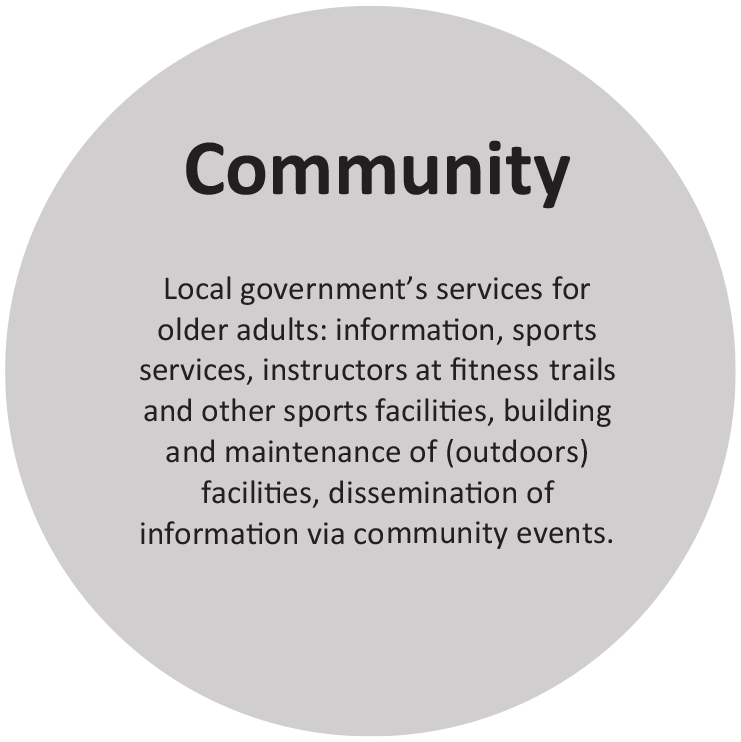
A community level.
Courses in several fields of recreational education, which includes sports, are free of charge for seniors, except sports training. The circle of physically active people could be widened by providing free fitness classes and training: We have for example free foreign language courses. Free classes [for] 50+ [people]. Free computer training. But there are no such free fitness classes. [. . .] If they’d put together a group, 50+ gymnastics or pilates for free, for 80 classes for example, lasting a month and a half, I would go, too. (female, 56 years)
Sports facilities, landscape, and infrastructure
Respondents considered it important to practice outdoor activities and pointed out that these are virtually free of charge. Regular practicing of outdoor activities is promoted by the existence of sports facilities near home. Respondents deemed the network of sports facilities and their accessibility good. In the past 20 years, the central government and local municipalities have built light traffic tracks which have become very popular among practitioners of PA and increased the number of physically active people: I’ve been doing outdoor sports for years. And there has been a great change after our parishes or the Road Administration built these light traffic roads. After that it’s like the people have all come outside. (female, 57 years)
Although more gyms have been built and existing gyms have improved, the respondents pointed out that the limited capacity of indoor facilities, especially the swimming pools, is a problem: If more people take up swimming then the overpopulated swimming pools will . . . then you’ll only have room to stand up in the water. (male, 62 years)
The role of the instructor/coach
Respondents thought that the lack of instructors on the trails where older adults mainly go or would like to go is a problem. There is need for instructors among older adults but there are no organizers in the community who would arrange the service: People are already kind of hoping that there could also be, well, like instructors or teachers at the recreational trails who would instruct you. (female, 65 years)
Factors of community life
Civil societies are becoming increasingly active in Estonia, and many community festivals are held. Community activity is stronger, especially in smaller residential districts. Respondents found that community days would present a good opportunity to promote PA and exercising, and invite people to trial classes: I think that the community and village, well, let’s call them a village, somewhere in Õismäe or wherever, that village in my neighborhood, the organizing of the community, well, like there are all these, I don’t know, Uus Maailm days, Kalamaja days, Õismäe days. And in connection with these, just to inform about these places, right. To inform a lot, organize these trial. . . you know, invite to trial classes. But the informing should not be done via TV. (female, 52 years)
Policy Level
Government policies
The greater part of the public sector support for sports in Estonia goes to youth sports (Figure 5). Respondents found that while practicing physical activity is mostly self-financed in the case of older adults, greater support from the government could increase the number of physically active people: Well, yes, it is even in the interest of the state that people practice the right lifestyle, a healthy lifestyle. (female, 52 years)

A policy level.
A suggestion was made that a state-financed annual health checkup should be mandatory for people aged 50 years and above, to prevent health problems: Actually, diagnostics could be by government or municipal government, let’s say, mandatory . . . So that when you’re 50 and over 45 at some age you start reporting to I don’t know who. That you have to get a medical examination at a certain age. (male, 50 years)
Role models
Participants emphasized the importance of the example set by public figures for PA. In recent years, sports and health organizations in Estonia have involved role models (politicians, entertainers, athletes) in national campaigns financed by the central government or the European Commission (e.g., European Week of Sport). Role models are effective when they are approximately of similar age and their own training intensity is moderate and accomplishable. The positive examples of heads of state and municipal governments were pointed out specifically: Actually, in general, I think Estonia is lucky because we’ve somehow happened to have ministers and some state heads up there the kind who are physically active. A very athletic state in that regard. (female, 54 years)
Media campaigns
Concerning public sector media campaigns for physical fitness, it was thought that their extent and coverage should be increased. The media consumption of older adults is mainly centered on television and radio. Messages about PA received from the media have an influence and inspire to be physically active: Role models [are important], people listen to the radio and watch TV a lot, especially when they drive TV. It does influence lifestyle choices. (female, 50 years)
Interviewees found that the topic of physical fitness has not been discussed sufficiently in the media. There is a shortage of popular advice on keeping fit that would be easy to understand and follow: I would also like to say that in the daily media there aren’t enough articles on topics that are popular science, not described very scientifically or describing the extremes but just those explanatory things and examples maybe. (male, 71 years)
Discussion
In this article, we analyzed the experiences and meanings of PA for adults aged 50 years and older, drawing on focus group interviews conducted in Estonia. Our analysis was based on SEM (McLeroy et al., 1988). Based on our findings, we present a modified SEM model, highlighting the interconnectedness of its levels.
At the individual level, the following meanings were attributed to PA and exercise: a habit; a lifestyle; a “natural” part of life; a source of joy and satisfaction; a form of therapy; and a means to control weight, stay healthy, and look good. Specificities of PA in older age were mentioned, such as the aging body, the need for PA to be appropriate for one’s capabilities, and the need for fitness classes and other PA specifically for older people.
PA encompasses a broader range of activities, such as sports, muscle training, activities of moderate intensity, vigorous intensity, and lifestyle-based strategies for increasing PA (Nyman et al., 2018). We identified two main conceptualizations of PA provided by the research participants: working out purposefully (including playing sport) and counting various everyday activities at work and at home as PA. The research participants regarded both exercise as well as various forms of everyday activities involving bodily movement as valuable forms of PA in older age.
At the interpersonal level of the SEM, social support of others helps to motivate people to be physically active. McNeill et al. (2006) and Smith et al. (2017) in their systematic overview pointed out that for older adults, this mainly means the support of their family. The number of social contacts might be decreased with age, but according to Carstensen et al. (1999), this is an adaptive process. People participating in our study emphasized the importance of family, but also mentioned the value of exercising with others of similar age, regardless of whether they are friends or strangers.
At the institutional level, separate resources and attention should be given to the training of GPs in order for the physically inactive seniors to receive more advice and guidance on how to start exercising. PA has become a prescription to maintain health, and according to some previous studies (Kerse et al., 2005; Lhussier & Carr, 2008), having knowledge of health-related programs and recommendations from the medical professionals has a positive impact to increase levels of PA of older adults.
Ensuring the good health and mental and physical capacity of working-age older adults would be facilitated by the promotion of PA by employers, who in turn need training concerning best practices. High work stress and work demands have been found to have a negative impact on PA (Kirk & Rhodes, 2011). It is therefore important to increase employers’ awareness of the effect of PA on health. Conn et al. (2009) in their meta-analysis found that PA interventions at the workplace do not only increase the general level of PA but also decrease absences, increase job satisfaction, and decrease job stress. Sports clubs currently are not targeting the whole population. In cooperation with local governments, existing sport services should be extended to include senior groups.
At the community level, the awareness and favorable attitude of the community leaders toward programs that support PA is important. Local municipalities could increase the level of exercise of older adults by subsidizing sports clubs to provide affordable sporting services, ensuring transportation to exercise classes, disseminating information via local media and community events, and building and maintaining sporting facilities.
Similarly to the study of Samra et al. (2019), we found that older adults want to participate in exercise groups and programs that are suitable for their level of physical fitness. Local governments can help to initiate fitness classes for older adults and to employ instructors for sports clubs and fitness trails. Instructors who conduct community-based trainings to older people should be appropriately qualified. Exercises tailored to the participants’ physical capacity and individual needs are a key part in the success of a training lesson (Hawley-Hague et al., 2016)
The availability of nearby sporting facilities that can be used in various ways and all year round plays a central role in creating opportunities for PA. Compared with younger age groups, the physical environment can have a more significant effect on the PA of older adults because they are more vulnerable to physical environment obstacles (Barnett et al., 2016; Iwarsson, 2005). The importance of sports facilities has been emphasized in several studies (Cerin et al., 2017; Hartley & Yeowell, 2015; Heath et al., 2006), but climatic conditions should also be considered when planning such facilities. Previous studies (Aspvik et al., 2018; Lees et al., 2005; Sugiyama & Thompson, 2007) have shown that bad weather, doubts about the safety of exercising conditions, and fear of falling influence activity levels of older adults. Our findings align with these and indicate that cold weather and darkness and unmaintained and icy fitness trails were significant reasons behind not exercising.
At the policy level, legislation could be implemented that requires people aged 50 years and above to undergo annual medical checkups. Targeted support for sports federations from the state budget would contribute to the wider spread of senior sports, more events would take place, and new exercise groups would be created.
To change general attitudes and awareness, the central government should finance relevant media campaigns and programs (Cavill & Bauman, 2004). Campaigns should be target group based (Kamada et al., 2013), the main channels being television and radio.
Interactions between the different levels of influence are at the core of SEMs (Sallis et al., 2006).
Our findings also suggest that all levels of the model are closely interlinked and even inseparable (Figure 6). At the individual level, the narratives of becoming physically (in)active spoke of the participants’ personal identity and its formation. At the same time, no narrative is ever only personal. The participants highlighted the importance of parents, teachers, friends, and coaches, thus centering on the interpersonal. The perceived environment and community at the time of their youth—particularly schools and sports clubs—were emphasized as the key places where they were immersed in physical activity. Indeed, the entire Soviet era could be thought of as an element of this perceived environment or context. This was tightly linked with state policies of the time, which created infrastructure for (particular) sports and maintained its affordability.
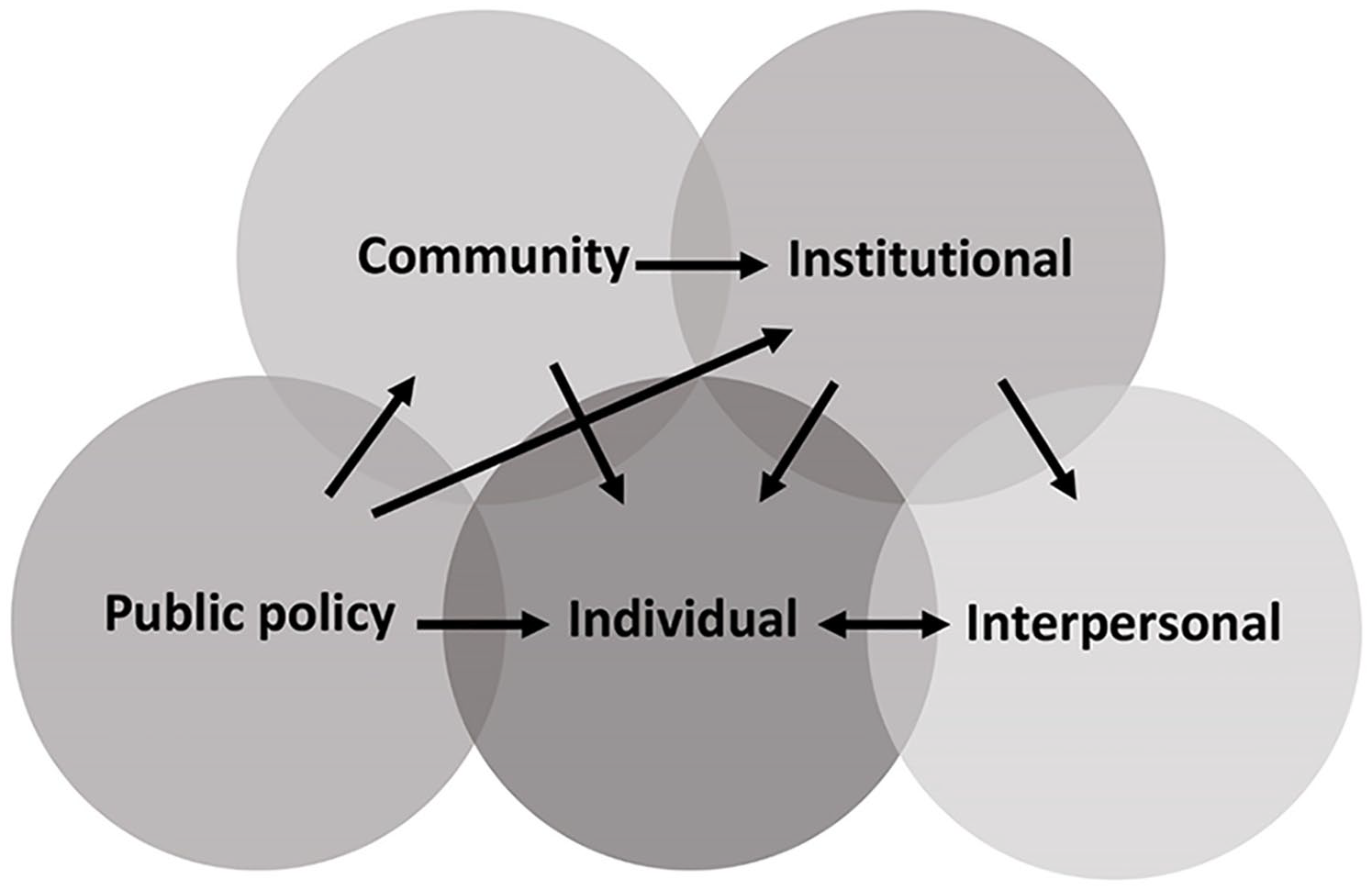
A social-ecological model for promoting physical activity among older adults (adapted by the authors).
Based on these insights, we argue that studies of PA of older adults and SEM models should pay more attention to the life course, that is, how experiences of the past form a habit of physical activity in older age. Our findings thus help to illuminate how the identity or even a habitus of a physically (in)active person is formed and how this is expressed through narrative means. Therefore, a consideration of the entire life course is important, not just a snapshot of a person’s PA and perceptions about it in older age. Knowledge about people’s motivations to be active earlier in their lives or the reasons why they quit sports in the past, including institutional environments and factors that enabled or hindered this, could be useful in encouraging them to take up PA again.
In addition, our study highlighted other significant interconnections between the levels. Interventions on the public policy level (legislation, appropriations from the state budget, media, and campaigns) influence the individual level (increase in attitudes and awareness, requirement for health checkup at the age of 50+ years), the institutional level (tax incentives for employers), and the community level (grants from the state budget for local municipalities to build sports facilities and for sports clubs). At the community level, the greatest role is played by municipal governments who influence in the context of this study at the institutional level primarily sports clubs (broadening of service models and introducing services) and employers (training and motivating in regard to health awareness) through support systems. Ensuring the dissemination of information in the community and making available fitness trails and sports facilities is an important prerequisite for changing behavioral attitudes at the individual level. Attitudes and awareness at the individual level and the functioning of social networks at the interpersonal level are also influenced by health-aware employers (creating conditions for employees) and sports clubs (services designed for seniors) at the institutional level.
A good example of overlap between different levels is the position of sports clubs which, on one hand, are located at the institutional level (independent legal persons providing sports-related services, with their own formal and informal regulations), while on the other hand they also fit at the community level (receiving subsidies from the local government to cover part of the cost of rent, price of services, etc.; providing services to members of the community; organizing community events).
As a limitation of this article, while it covered the experiences of older adults of a broad age range (50+ years), it did not discuss the specificities of particular age groups, such as retired people. Also, intersecting with age, other categories, such as gender, class, and ethnicity/race, significantly shape the ways in which older adults engage in and make sense of PA. This is an important perspective to take up in future qualitative research on the PA of older adults.
Conclusion
This study is the first in Eastern Europe proposing possible solutions at all five levels of the SEM to increase the PA levels of people aged 50 years and older, based on experiences of this age group. The recommendations were based on input from 50+ adults in Estonia. Applying SEM in a way that emphasizes all its levels and their interconnections in policy making provides excellent opportunities to improve health outcomes of older adults (King & Sallis, 2009). In addition to a multilevel approach, for older adults to participate in PA, the designed activities have to be simple at both the practical and emotional levels (Boulton et al., 2017). Based on the model, we claim that creating prerequisites and conditions for increasing the PA of middle-aged and seniors requires cooperation between different sectors, and this area needs specific attention as well as material resources. Applying such an approach can be difficult because it requires participation of partners from diverse fields such as city planning, transportation services, and health promotion along with support from those in power and their willingness to foster change (Sallis et al., 2006).
Golden and Earp (2012) analyzed 157 different health promotion interventions and concluded that most were applied at an individual level and very few at the community or policy level. Moreover, they emphasized that interventions targeting the public policy level and more than one or two levels of the SEM simultaneously are rare.
In conclusion, we find that applying the SEM at all its levels is an effective instrument for developing policy recommendations for the PA of older adults.
Footnotes
Acknowledgements
We would like to thank Jorma Sarv for his useful comments and suggestions that helped us to develop the social-ecological model.
Declaration of Conflicting Interests
The author(s) declared no potential conflicts of interest with respect to the research, authorship, and/or publication of this article.
Funding
The author(s) received no financial support for the research, authorship, and/or publication of this article.
Ethics
In Estonian universities, no ethics committee approval is required for social science research which entails interviews with capable adults. Prior to conducting interviews, we obtained informed consent from our research participants to participate in the study.
